Our next in the series ‘Behind the Scenes of the Year of the Dealer’ returns to The Bowes Museum and the film that focuses on the antique dealers W. F. Greenwood & Sons – you can see the final version of the film HERE. This post follows more rapidly on the previous blog post (9th October 2026) as we slowly catch up with the weekly rhythm of the ‘Behind the Scenes of the Year of the Dealer’ blog posts.
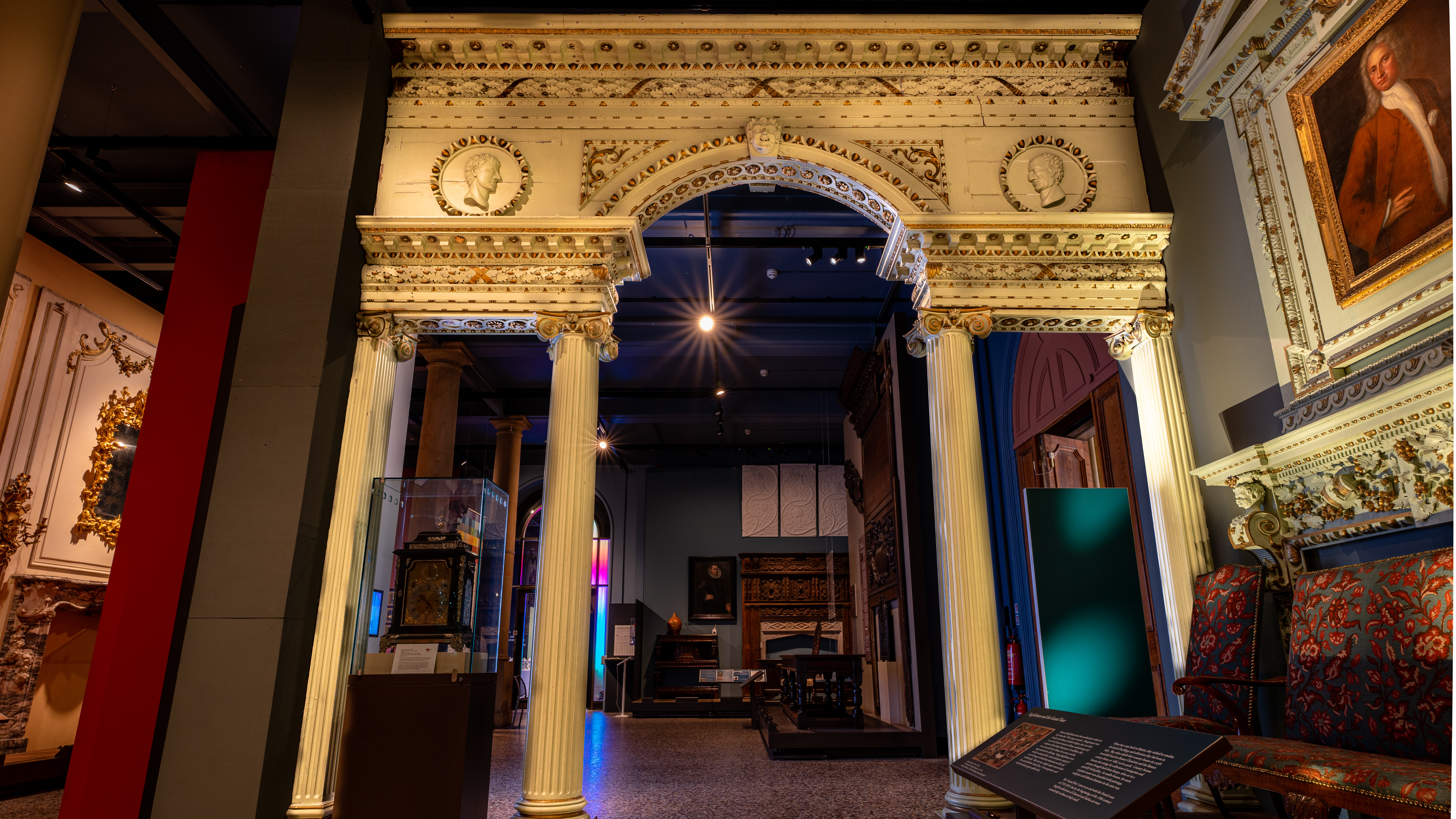
Part of the panelling (c.1750) from Gilling Castle, sold by W. F. Greenwood & Sons to The Bowes Museum in 1962. Photograph, Year of the Dealer Research Project, University of Leeds and The Bowes Museum.
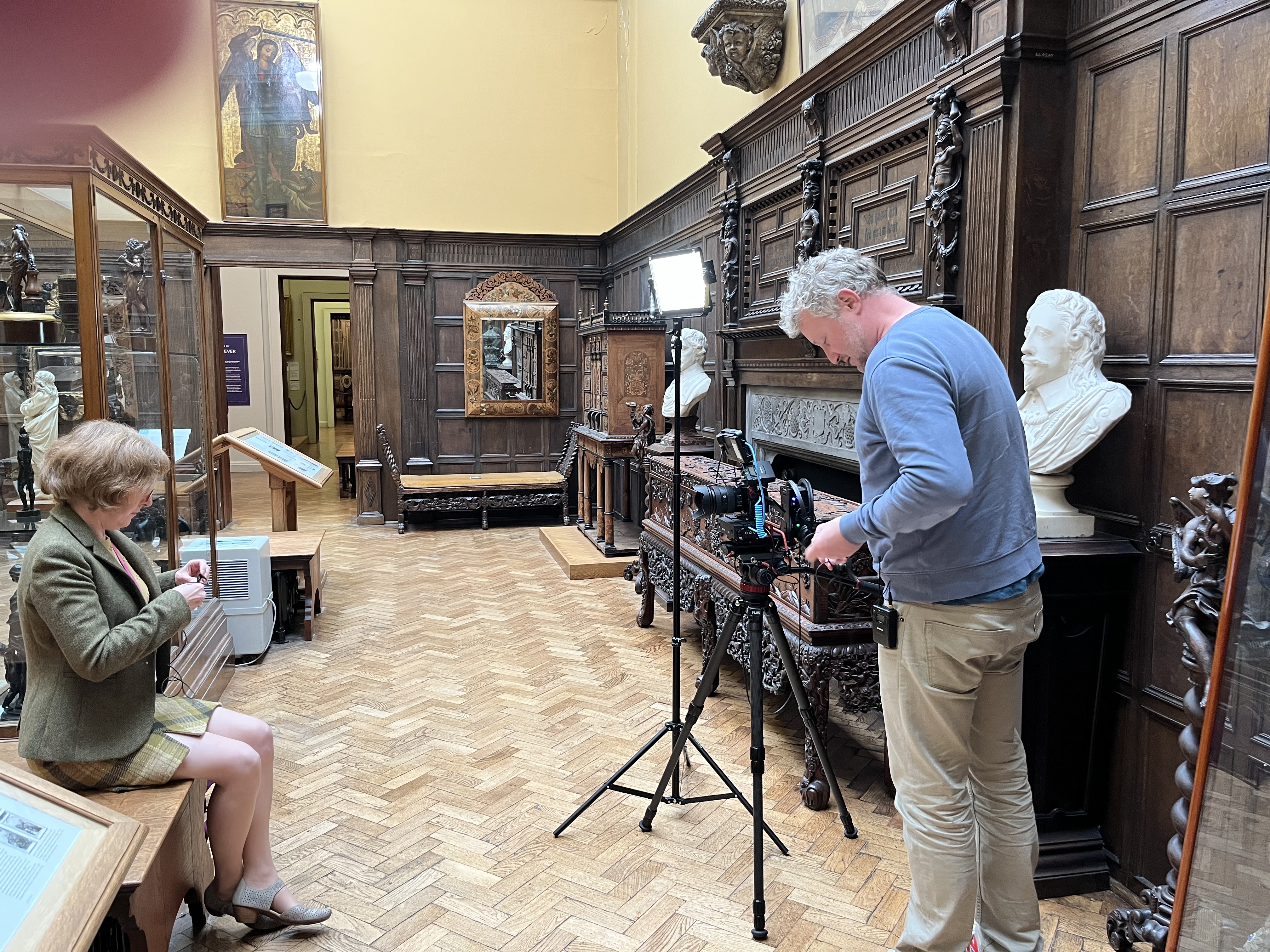
We have posted some blog posts on W. F. Greenwood & Sons in the research blog already – see Blog 4th July 2014 and 25th May 2019 and would not wish to repeat information already highlighted in the previous blog posts and in the Year of the Dealer film. So, we thought our readers might like to know a little more about how the Year of the Dealer films were assembled (it also illustrates how complicated the films were to make!). And it gives us a chance to celebrate the brilliant work of Patrick Bannon, our photographer and film-maker extraordinaire! Here (below) is Patrick on site filming for the Lady Lever Art Gallery Year of the Dealer films.
Patrick Bannon (right) with Fiona Slattery Clark (curator, Decorative Arts at National Museums Liverpool) filming at Lady Lever Art Gallery. Photograph, Year of the Dealer Research Project, University of Leeds.
For each film, we started with a research script, usually of about 5 or 6 minutes worth of audio recording in length, for cutting back to 2 or 3 minutes (mostly), and a set of images. I would first work out a sequence of images in dialogue with the script and then we (Mo and I…the avatars) would record the 5 or 6 minutes of audio. The audio recording for the avatars was always done at our home in the recording studio (ha..I wish!…it was in our spare single bedroom…..see also the Behind the Scenes of the Year of the Dealer No.5 for another brief mention of our ‘recording studio’). We used two high quality audio recorders that had been acquired in 2014 for an earlier part of the Antique Dealer Research Project – for the Antique Dealer Oral History interviews project (one can see how interwoven the various parts of the Antique Dealer Research Project are!). The audio recordings formed the basis of our raw material for Patrick to do his magic in piecing together the audio, the photograph still images, his digital film sequences, and the digital film on site video recordings at the various museum locations. So there was quite a complicated set of resources and practices brought together for the final YoD films.
For the W. F. Greenwood & Sons YoD Film we had two sets of audio recordings – Mo and I (the avatars) and a sequence Patrick cut in from the oral history interview we did with retired antique dealer Tony Lumb back in 2014 – (Tony sadly passed away in December 2025). We also had the extra video/audio recording of Stephen Erskine (Visitor Assistant at The Bowes Museum – Stephen has since retired) introducing the panelling at the museum, which also needed a script for Stephen to work with.
All this required careful identification of the appropriate sequences in the two audio recordings, cut and pasting the audio into the Year of the Dealer film, adding in the video and audio filming sequences at The Bowes Museum, precisely cutting in the sequences of images, and then balancing and levelling the audio sequences to smooth out any background noise and sound levels, aligning images to relevant audio, adding the captions to the images and adjusting the light levels for some of the images, to create the seamless digital film – and all done as if by magic by Patrick!
And of course, whilst we had scripts and images and museum objects to work with, it was also very much a process of trial and error in the construction of the actual films themselves – as Patrick himself said in a recent interview we did with him for our assessment of the research impact of the project, ‘….it was great working in that way because it’s been quite original and innovative’.
Do look out for the next in the series of ‘Behind the Scenes of the Year of the Dealer’.
Our next in the series ‘Behind the Scenes of the Year of the Dealer’ returns to Preston Park Museum and the film that focuses on the antique dealers Fenton & Sons of London – you can see the final version of the film HERE.
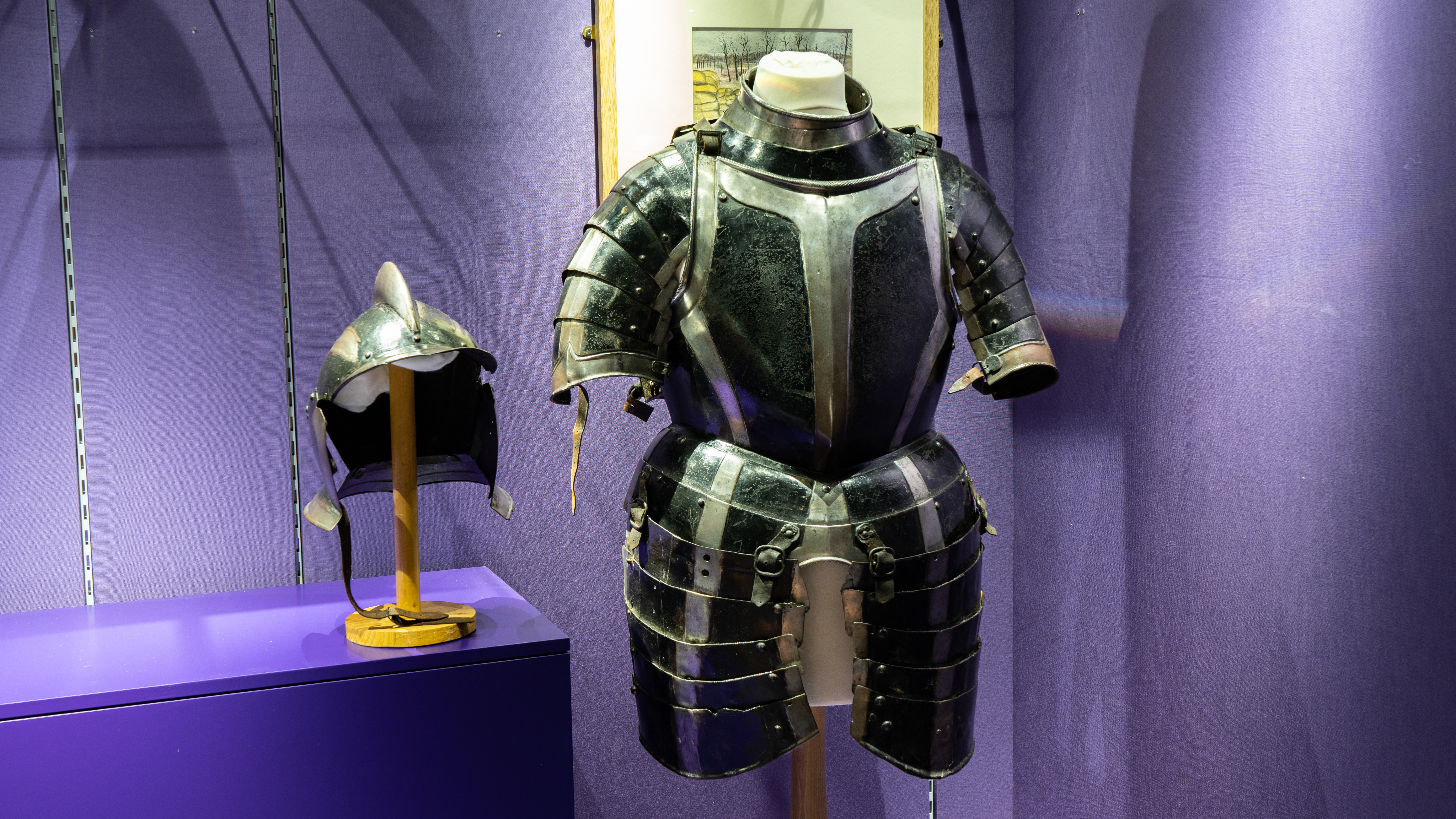
Perhaps one of the most interesting behind the scenes information about the Fenton & Sons Year of the Dealer film is that the suit of armour featured in the Preston Park Museum YoD film is the same suit we borrowed from Preston Park Museum for the SOLD! exhibition we staged at The Bowes Museum in 2019.
17th Century demi-suit (half suit) of armour. Photograph Year of the Dealer project University of Leeds and Preston Park Museum.
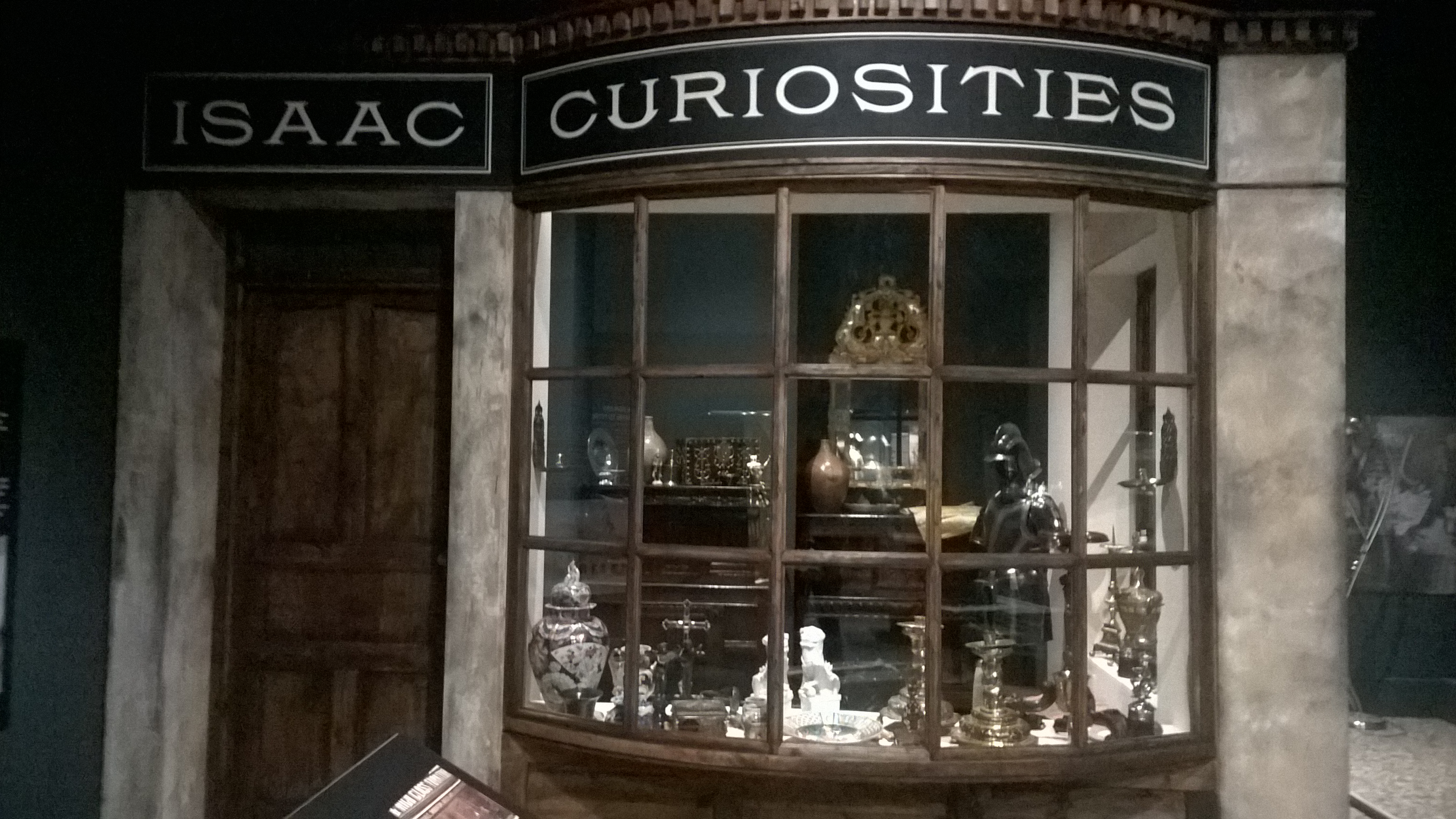
You can still read the SOLD! exhibition catalogue HERE its free as a PDF. In the SOLD! exhibition, the Fenton & Sons half suit of armour was part of the display of ‘curiosities’ we arranged within the recreated ‘Old Curiosity Shop’, which was like a mini exhibition within the main SOLD! exhibition – another snippet of intel was that we originally planned to have two recreated antique shops in the SOLD! exhibition, one from the mid 19th century (the shop we recreated, which is in the photograph below) and one from the mid 20th century – unfortunately budgets intervened! You can read a little more about the recreated Old Curiosity Shop in the SOLD! exhibition catalogue, in the short essay by Simon Spier (who is now curator of Ceramics and Glass at the V&A Museum at South Kensington in London!).
It is quite hard to spot the half suit of armour as it was mixed up with a whole shop full of curiosities – but you can see it, together with its helmet, just to the right, near the window of the recreated shop (below).
‘The Old Curiosity Shop’ at the SOLD! Exhibition at The Bowes Museum (2019). Photograph courtesy of The Bowes Museum.
Our recreated shop in the SOLD! exhibition was deliberately modelled on Charles Dickens famous ‘Old Curiosity Shop’ (1841) – . Charles Dickens described the shop in novel as – ‘one of those receptacles for old and curious things which seem to crouch in every corner of this town….There were suits of mail standing like ghosts in armour, here and there; fantastic carvings brought from monkish cloisters; rusty weapons of various kinds; distorted figures in china, and wood, and iron, and ivory; tapestry, and strange furniture that might have been designed in dreams.’ (Dickens, Old Curiosity Shop, (1841), p.3).
Our colleagues at Preston Park Museum were exceptionally generous with their loans of arms and armour for the SOLD! exhibition (such objects were an essential part of the Old Curiosity Shop display), and their generosity continued with their participation in the Year of the Dealer digital film project too of course!
Do look out for the next in the series of ‘Behind the Scenes of the Year of the Dealer’…there will be another blog post very soon!
Our next in the series ‘Behind the Scenes of the Year of the Dealer’ returns to the V&A South Kensington and the film that focuses on the important role that women antique dealers have played in the antique trade, and in the development of public museums – you can see the final version of the film HERE. And apologies for the slight delay in our weekly Posts – we are having a few problems with the migration of the YoD films from the University ‘Mediasite’ to the new ‘Panopto’ site, so currently the films are not working. We are on the case with our IT Team at the University and will have the films back working again in the next few days [update 20th September 2026……the YoD films are working again (apart from just 5 films that still need recoding)..thanks to Ralph Mackinder and Fiona Blair at the University of Leeds!…we will have the remaining 5 fixed by early this week).
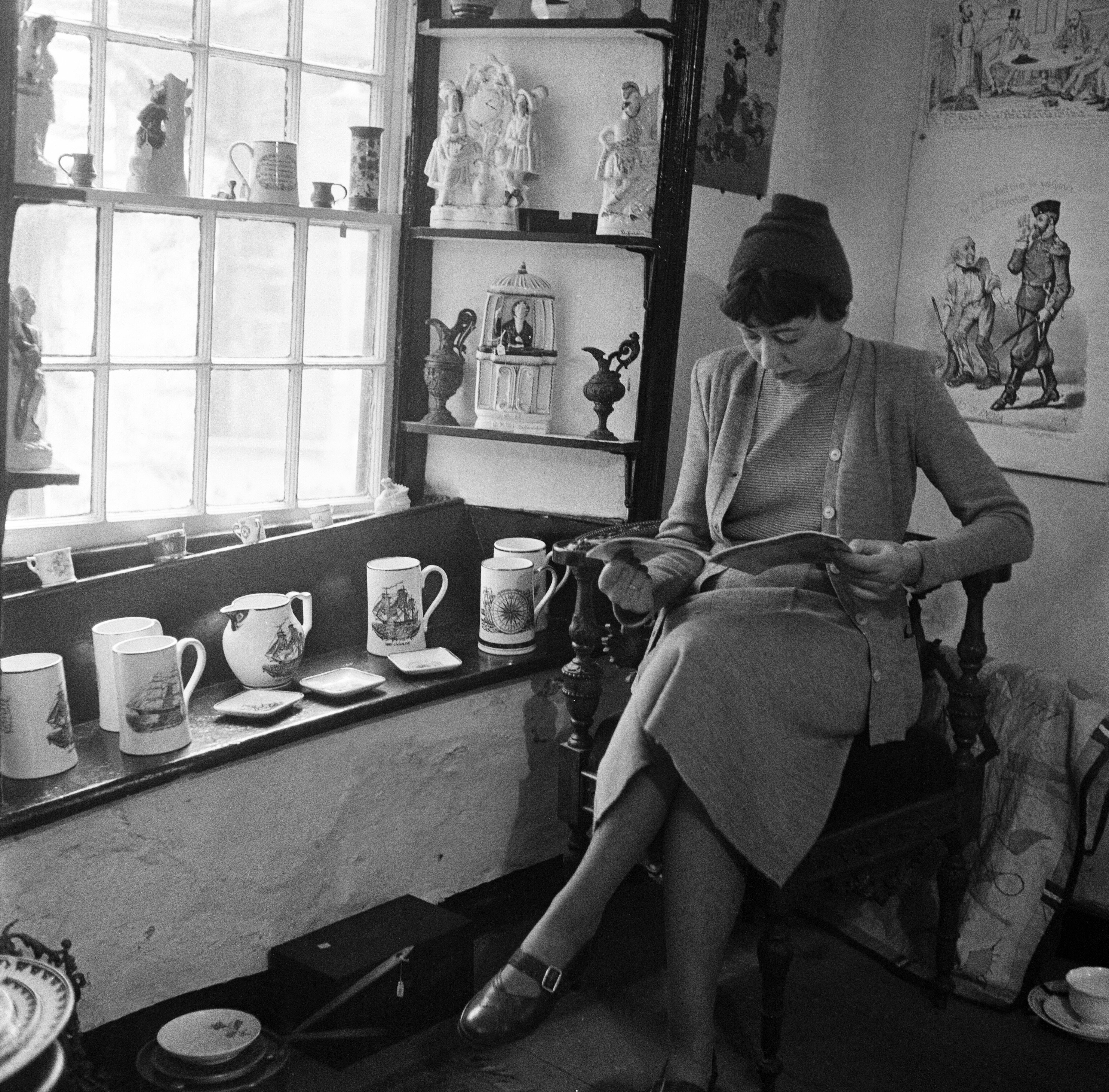
Anyway, our film on Women Antique Dealers at the V&A South Kensington is one of three films on this subject in the Year of the Dealer films; as well as the V&A film we also have films on the same subject at The Bowes Museum and at Preston Park Museum (we will highlight some of the behind the scenes stories of those films later in our ‘Behind the Scenes of the Year of the Dealer’ series).
Antique shop in The Old Salthouse, St Ives, Cornwall, 15th February 1954. (Photo by Bela Zola/Mirrorpix/Getty Images). Image copyright Getty Images.
We thought it was vital to highlight the role of women antique dealers as a special part of the project and, as the three profiled films in the YoD Project demonstrate, there have been some highly influential women antique dealers. Several important women antique dealers are featured in the YoD films at the V&A, Bowes Museum and Preston Park Museum, including (as you will see when you watch the films) dealers such as Jane Clarke (c.1794-1859), who was perhaps the most famous women antique dealer of the 19th century. If you want to read more about Jane Clarke do take a look at Jean Hemmingway’s essay ‘Millinery and Old Lace: Miss Jane Clarke of Regent Street’, Textile History, volume 43, no.2, November 2012, pp.200-222.
There were dozens of other women antique dealers we could have highlighted in the YoD films but could not find museum objects that were currently on display for the films to highlight interesting stories for the visiting public. That said, there must be hundreds of objects in museums that have associations with women dealers so perhaps there will be a future project that reveals these important stories. Interestingly our antique dealer map project (see on the main antique dealer project website HERE) highlights more than 250 women antique dealers trading in Britain from c.1900 to c.1960, and there will be hundreds more I’m sure in the period after 1960 to 2000 once we get round to being able to add more data into the map (we are working on that!).
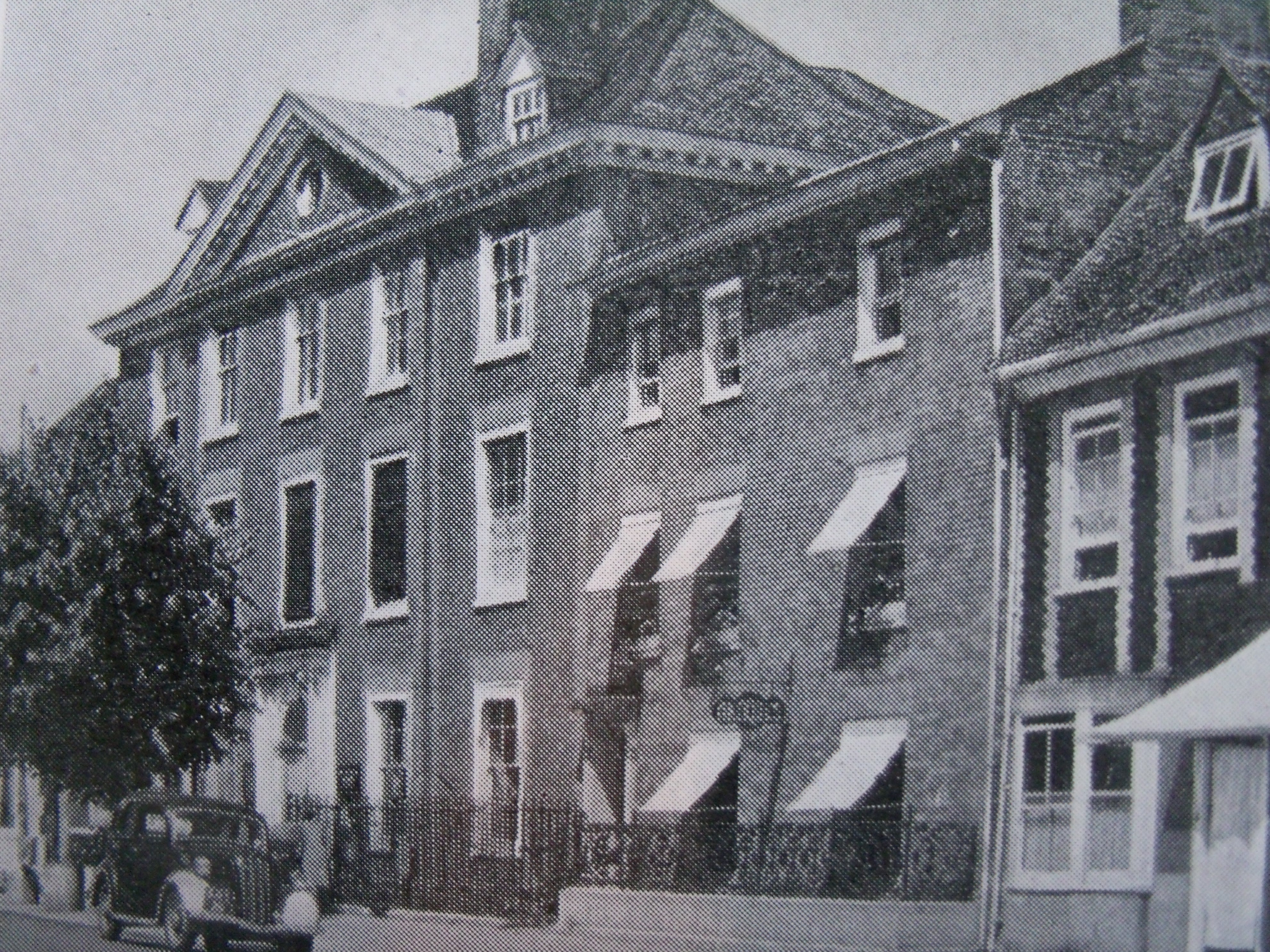
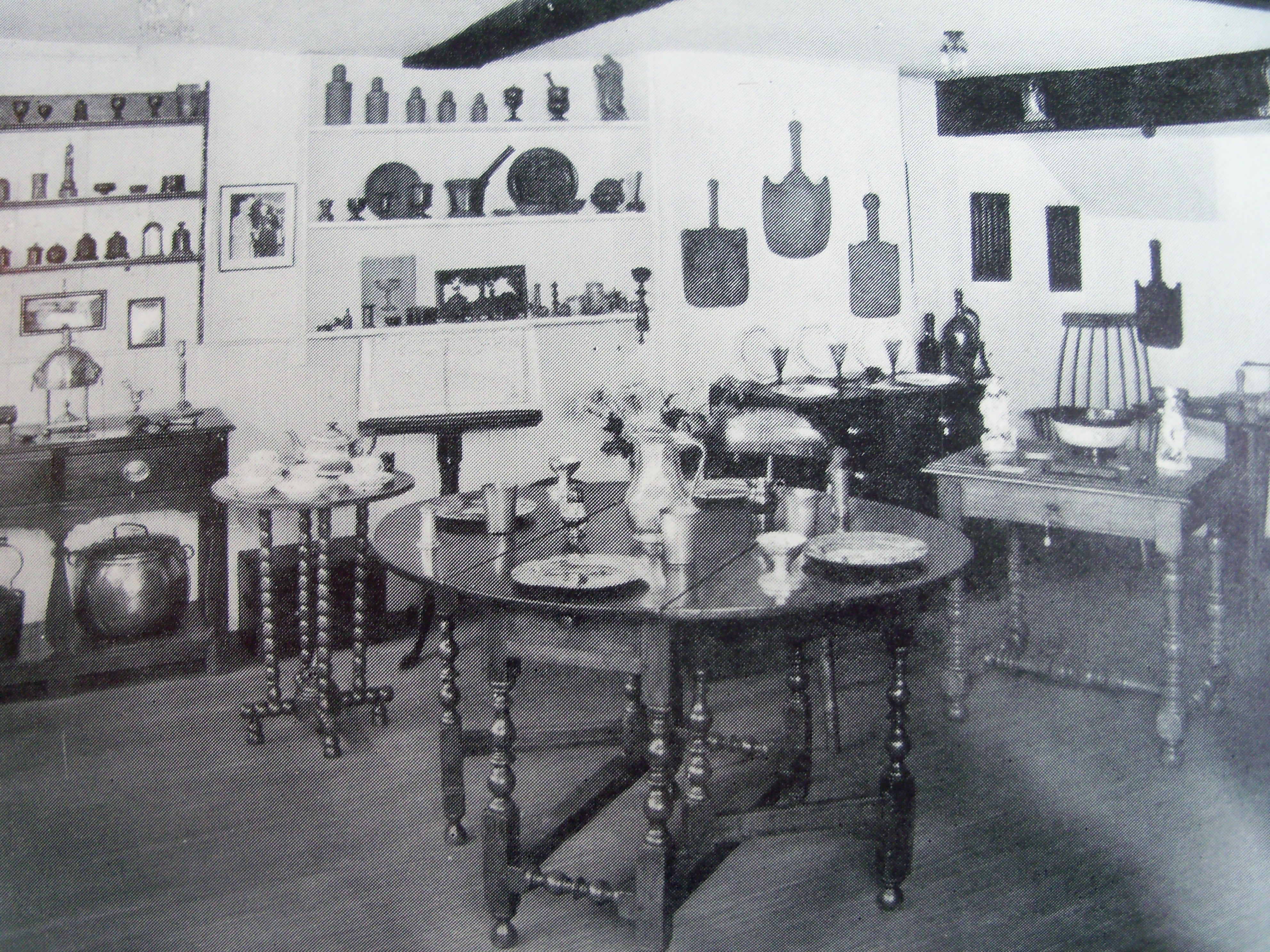
One dealer we would have loved to include more information on was Jane Toller, but we could not find a museum object currently on display at one of our 5 partner museums that was sold to the museum by Jane. Jane opened an antique shop in St. Christopher’s Place in London in 1937, before meeting her future husband, the antique dealer Charles Toller in the same year and setting up a highly successful antique dealing business specialising in ‘Treen’ (small wooden objects). They eventually moved their business to The Old Rectory in Marlow, Buckinghamshire in the 1940s (see below), and then Eton High Street in the 1950s (see below). As well as being a successful antique dealer, Jane and Charles also published widely on collecting antiques – Jane also composed an autobiography of her life as an antique dealer, ‘Living with Antiques‘ in 1968.
Charles & Jane Toller antique shop, The Old Vicarage, Marlow, Bucks., c.1948. Photograph ‘Antique Collector‘ magazine, September 1948).Charles & Jane Toller antique shop, High Street, Eton, c.1953, full of treen that they specialised in. Photograph ‘Antiques Yearbook‘ (Tantivy Press, 1953).
We have to catch up with the missing weekly Behind the Scenes of the Year of the Dealer, so will be posting 2 more blog posts in the coming week to get us back up to speed with our weekly posts. But in the meantime, do look out for a couple more blog posts in the coming week.
Our next in the series ‘Behind the Scenes of the Year of the Dealer’ returns to the V&A Museum and the film that focuses on the dealer Dean Tuck – you can see the final version of the film HERE.
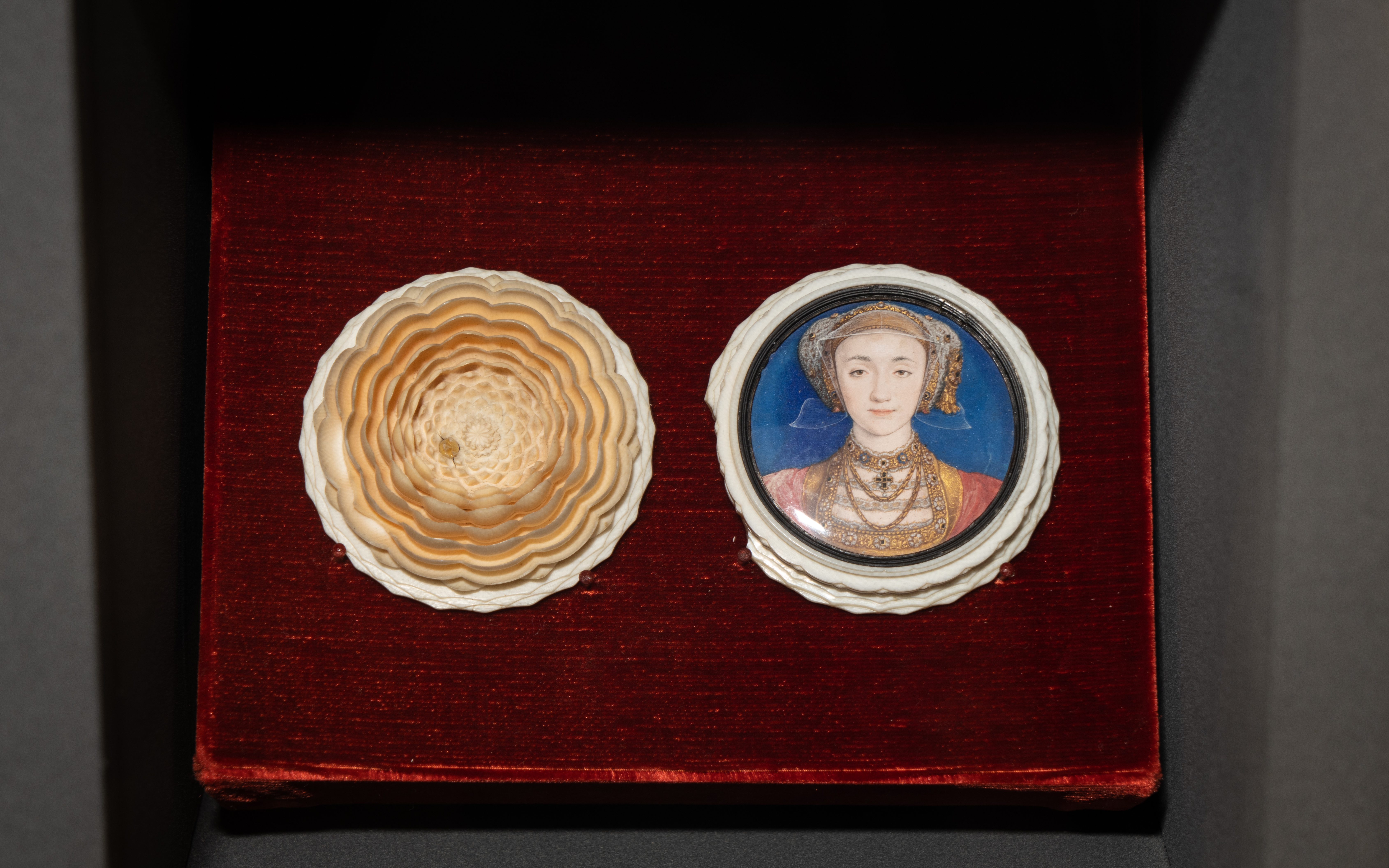
The focus on a dealer such as Dean Tuck was unusual for the Year of the Dealer project films primarily because Tuck’s acquisition of the Hans Holbein the Younger portrait miniature of Anne of Cleves predated the establishment of the V&A Museum in the early 1850s – Tuck acquired the miniature in 1826, as the YoD film indicates. Tuck was one of only two dealers featured in all 50 films whose sale of objects predate 1850 – the other is Thomas Walesby, who bought and sold the famous four-poster bed from Stowe House in 1848 and features in Lady Lever Art Gallery films (you can see the Walesby film HERE).
However, we wanted to highlight that ‘antique dealers’ and ‘antique dealing’ has a history that predates the establishment of ‘decorative art’ museums in the 1850s – plus we just loved the portrait miniature that Dean Tuck bought and sold!
Portrait Miniature of Anne of Cleves by Hans Holbein the Younger, 1539. Image, The Year of the Dealer Project and the V&A Museum.
As with all the other films in the YoD series we had many more images that we might have included in the Dean Tuck film – we had a few images of ‘antiquarian’ interiors for example. This one (below), a beautiful pen and ink drawing of the library at Bromwell House, Brislington, near Bristol, c.1825, which shows the kind of interiors that were fashionable with antiquarian collectors of the type that Dean Tuck would have supplied in the 1820s and 1830s.
W.H. Bartlett, The Library, Bromwell House, Bristol, c.1825, pen and ink drawing. Image copyright Bristol’s Museums & Galleries.
We eventually settled on the E.W. Cooke, The Antiquary’s Cell (1835), primarily because the painting is also in the collections of the V&A Museum. One other thing we could not find space to mention in the film is that the 17th century chair in the middle of Cooke’s painting is believed to have been the chair sold to Cooke by the antique dealer’s Edward and George Hull of Wardour Street, London, in 1835 – for more on Hull see my Biographical Dictionary and Nineteenth Century Antique and Curiosity Dealers (free, online at White Rose Research Online HERE).
E.W. Cooke, The Antiquary’s Cell, oil on canvas, 1835. FA.42 [O]. Image copyright V&A Museum.
There were other aspects of Dean Tuck’s life as a dealer in the 1820s and 1830s that we did not have space to include. For example, Tuck had a close business relationship with the famous art and antiques dealer Henry Farrer (1798-1866); they bought and sold lots of antiques together. Farrer was also Executor in Dean Tuck’s Last Will and Testament in 1838.
The other reason we wanted to include Dean Tuck in the V&A films is that his wife, Charlotte Tuck, continued his antique dealing business after his death and one of the themes in the Year of the Dealer films, as you will have noticed, is on women antique dealers and we wanted to highlight that this history also has a long genealogy.
Watch out next week for another ‘Behind the Scenes of the Year of the Dealer’.
Here is another blog post in our series of ‘Behind the scenes of the Year of the Dealer’ – this time some further background information on the making of the film focused on the antique dealers Phillips of Hitchin in the digital trail at Temple Newsam. Here’s the finished film on the YoD website.
Phillips of Hitchin is featured in three of the Year of the Dealer films – this one at Temple Newsam, plus one film at Lady Lever Art Gallery and one film at the V&A (we will highlight the other films in later blog posts in the series of ‘Behind the Scenes of the Year of the Dealer’). We were not short of photographs for the Phillips of Hitchin films as we have a very large number of photographs of Phillips’ galleries at The Manor House in Hitchin thanks to Jerome Phillips who so generously donated the archive of the business to the Brotherton Library at the University of Leeds in 2015.
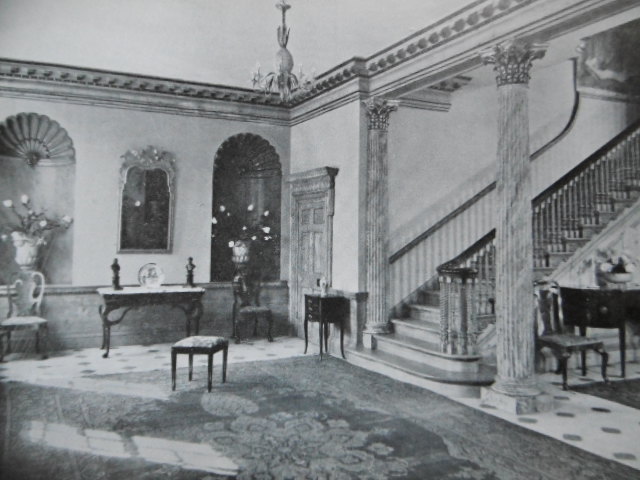
However, we needed to be careful about the number of images we included in the final film in order to ensure that the images we did include had sufficient time on screen for the viewers. There were literally scores of images that we could have used, but we hope the ones that made the final cut are interesting enough. Anyway, to whet your appetite for the range of images in the archive (which, just to remind you, you can view by appointment at the Brotherton Library at the University of Leeds), here’s a few photographs that did not make the final version of the Phillips of Hitchin Temple Newsam film. Below is a photograph of the entrance hall at the Manor House taken in c.1964, just a few years after the sale of the chair featured in the film to Temple Newsam in 1960.
Phillips of Hitchin, entrance hall at The Manor House, Hitchin, c.1964. Image, Antique Dealer Research Project University of Leeds.
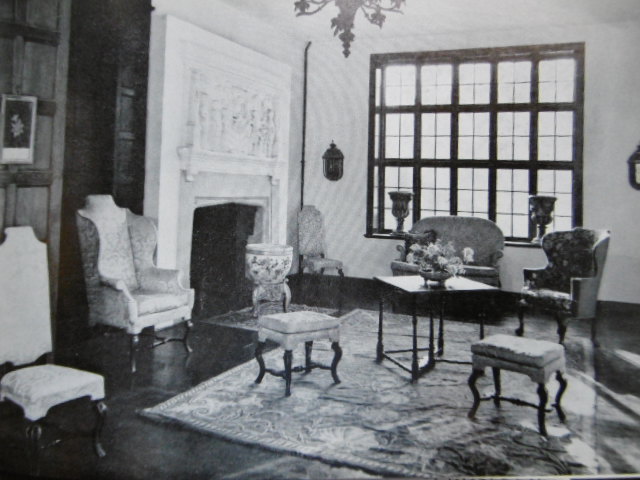
And here is another photograph (see below) of one of the interior showrooms at The Manor House also from the 1960s – this time an image of the ‘Tudor Hall’ (as it was called) in c.1964. [Thanks to our friend Chris Coles we have a fascinating update on the photograph – the Queen Anne suite of furniture at the front of the photograph was from Aldby Park, North Yorkshire – see Adam Calvert Bentley and Ardgowen Antiques]
Phillips of Hitchin, interior of the ‘Tudor Hall’ at The Manor House, Hitchin, c.1964. Image, Antique Dealer Research Project University of Leeds.
The ‘Tudor Hall’ did not really date from the 16th century, despite its appearance, but was constructed in the early 20th century as part of an expansion of the showrooms at The Manor House. In 1910, The Manor House had 50 rooms of antiques (rising to 80 rooms by the start of the First World War in 1914/15), including specific rooms devoted to the display and sale of ‘Oriental Porcelain’, ‘English Porcelain’, ‘English Pottery’, ‘Cottage Furniture’, ‘Domestic Metalwork’, ‘Oriental Rugs’, as well as rooms fitted out as ‘period rooms’ such as a ‘Queen Anne Parlour’, a ‘Georgian Parlour’, and ‘Georgian’ and ‘Hepplewhite’ bedrooms. It also had an ‘Armoury’ and rooms devoted to ‘French Furniture’ and ‘Textiles’ – so a full range of objects that keyed into major collecting and furnishing interests at the time. By the time that Phillips of Hitchin sold the chairs to the various museums in the 1960s they had become a much more specialised antique dealing business and were one of the leading dealers in antique English furniture.
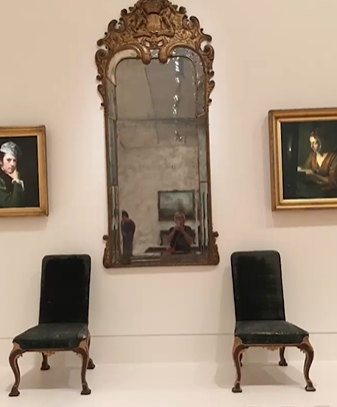
As you will see in the Phillips of Hitchin film, the chair sold to Temple Newsam in 1960 was one of a set of 6 chairs that were sold by Phillips of Hitchin at the time. One was sold to the V&A, a pair were sold to the Metropolitan Museum of Art in New York and the remaining pair to the National Gallery of Victoria in Melbourne, Australia. One snippet of information about the image we used in the film showing the pair of chairs in the museum in Melbourne, Australia is that the person reflected in the mirror in the middle of the photograph is actually Jerome Phillip’s wife, Barbara!…..she very kindly sent us the photograph when she was on holiday with Jerome in Australia back in 2022.
Pair of 18th century chairs sold by Phillips of Hitchin to National Gallery of Victoria, Melbourne, Australia in the early1960s on display in 2022. Photograph courtesy of Barbara Phillips.
There will be more ‘Behind the Scenes of the Year of the Dealer’ next week, so do keep you eye of the blog.
Our first in this new series of Behind the Scenes of the Year of the Dealer is on one of the films at the V&A South Kensington – Frank Partridge & Sons and The Great Bed of Ware – here’s the film
This film is about average in terms of the length of all the YoD films at films at 3 minutes 40 seconds, but it was planned to be a bit longer at nearly 5 minutes. This was too long for a trail; we thought that about 4 minutes was the longest we should make the films – this was to factor in that some viewers may watch the films on their phone in front of the object in the museum – so we cut quite a lot of information about the more recent history of Frank Partridge & Sons out of the film and moved that information to the Frank Partridge films at The Bowes Museum, Preston Park Museum, Temple Newsam, and Lady Lever Art Gallery (Partridge is the only dealer represented in all 5 museum film trails). We edited the script to reduce the running time of the V&A Partridge film; there were also too many images as well, which meant they appeared and disappeared on screen too rapidly, so we removed some of the images to allow the images that remained a little more time on screen.
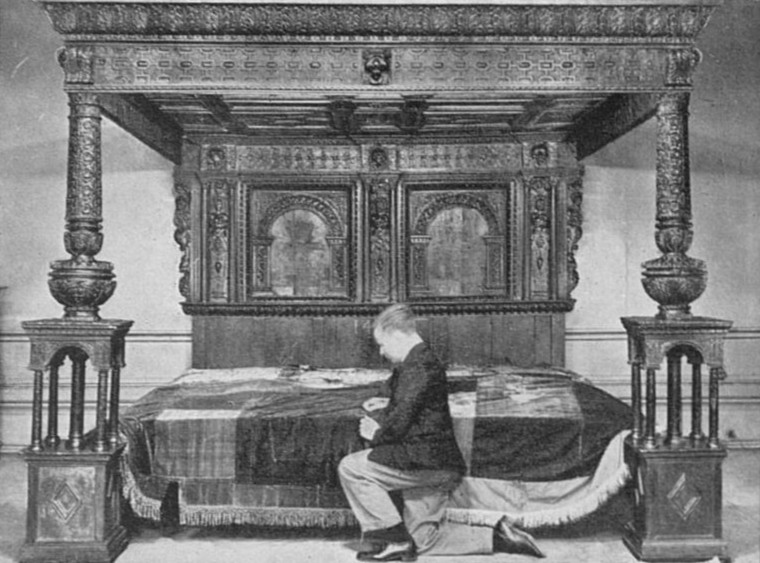
One of the images we removed was this photograph of the Great Bed of Ware at Frank Partridge’s shop at 26 King Street, St. James’s in London in 1931 (see below). The photograph shows a man kneeling in front of the bed – perhaps this is Frank Partridge, but we couldn’t be sure and as we had other images of the bed in Partridge’s shop we included those instead.
The Great Bed of Ware at Frank Partridge’s antique shop in London in 1931. Image from The Sphere, July 25th 1931.
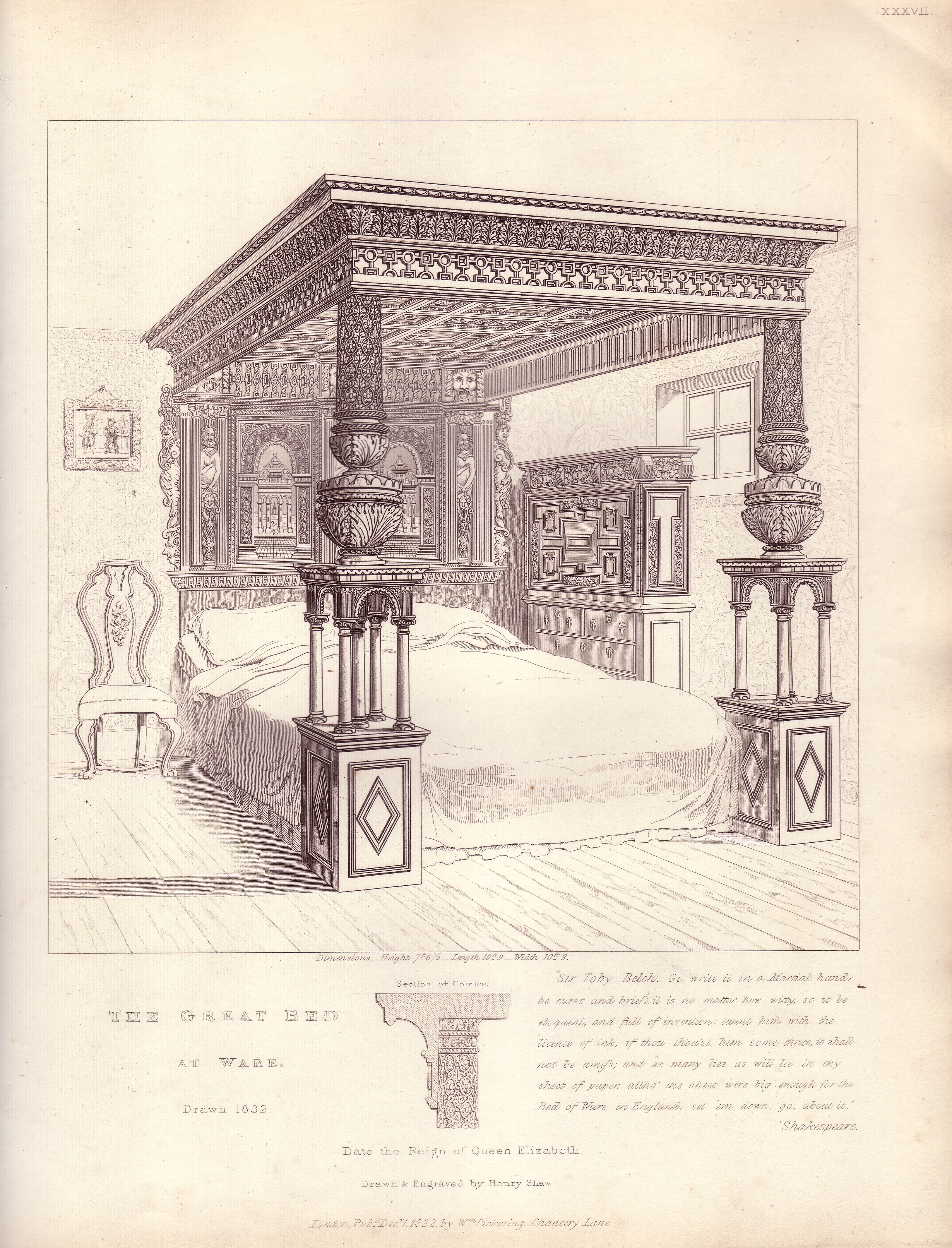
We also wondered about telling more of the story about the Great Bed of Ware – it has a long history, including being illustrated in Samuel Meyrick and Henry Shaw Specimens of Ancient Furniture (1836) (see below), one of the earliest depictions of the bed. But we really wanted to focus on the dealer, Frank Partridge, so decided not to include a more fulsome history of the bed. Such information is more commonly highlighted when the Great Bed of Ware is discussed anyway, and is available at the V&A and elsewhere.
The Great Bed of Ware, Samuel Meyrick and Henry Shaw, Specimens of Ancient Furniture (1836), plate 37.
One of the other changes we made was the representation of the house (the equivalent of the price of the antique to the price of a house at the time the antique was acquired by the museum is the common theme throughout all the YoD films) – we didn’t like the first attempt…the house looked too modern and a bit too ‘American’ (see below) (not that we have anything against Americans!), so we swapped the image for the more appropriate looking 1930s house (the bed was sold to the V&A in 1931) in the final version of the Frank Partridge & Sons digital film trial. We also decided that all the images of houses in the films should be images of houses dating from around the time that the dealer sold the object (the antique) to the respective museum, rather than this generic house image (below).
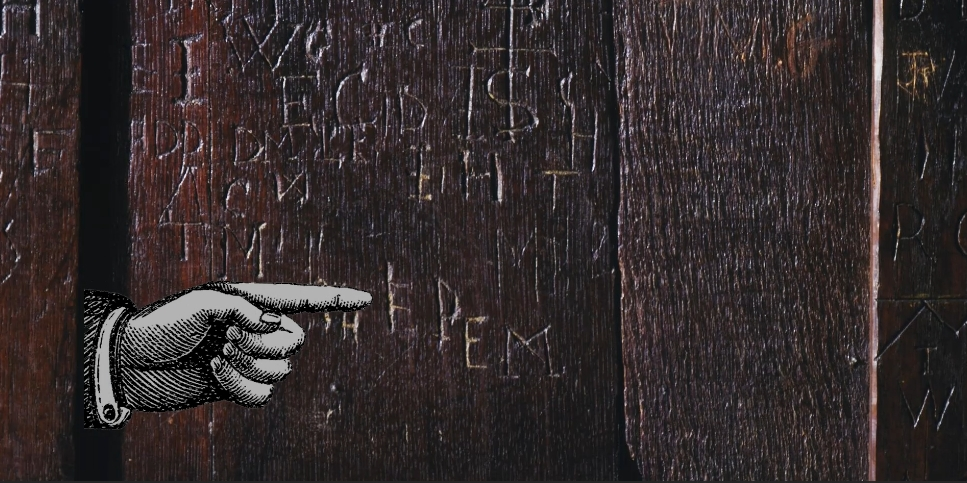
There were several other changes and edits to the film. I think we must have made at least 6 or 7 versions of each of the YoD films before we settled on the final versions – so that’s 50 films x 7…and enormous amount of work! For the V&A Partridge film one thing we debated about for a while was the use of what I called ‘the Monty Python Hand’ as a way of highlighting the carved initials ‘F.P.’ in the frame of the bed (see below).
We tried various ways of highlighting the initials but we quite liked the quirky-ness of the Victorian hand – we used the hand in some of the other YoD films too. Patrick Bannon, who made all the films for us, also voiced the script for the extract from Frank Partridge’s memoirs in the V&A Partridge film – Partridge was originally from Hertfordshire, rather than the Wirral though (where Patrick is from)…so a bit of artistic license (as well as questions of economy) was needed!
See next week for more Behind the Scenes of the Year of the Dealer 2.
After many years of invigorating research and work, the digital film trails for the Year of the Dealer project are finally launched today, Thursday 11th June!
As many of our readers will know, The Year of the Dealer is a project that began 4 or 5 years ago, and it’s taken an enormous effort, working with a brilliant team at the University of Leeds and colleagues at our 5 Year of the Dealer collaborating partner museums – The Bowes Museum, Lady Lever Art Gallery, Preston Park Museum, Temple Newsam, and the V&A South Kensington – to finally launch the digital film trails.
You can watch all the films here – on the Year of the Dealer main project website, but also on all five partner museum websites too – we hope you enjoy watching the films – but you can also go and see the antiques highlighted in the films at each of our five partner museums.
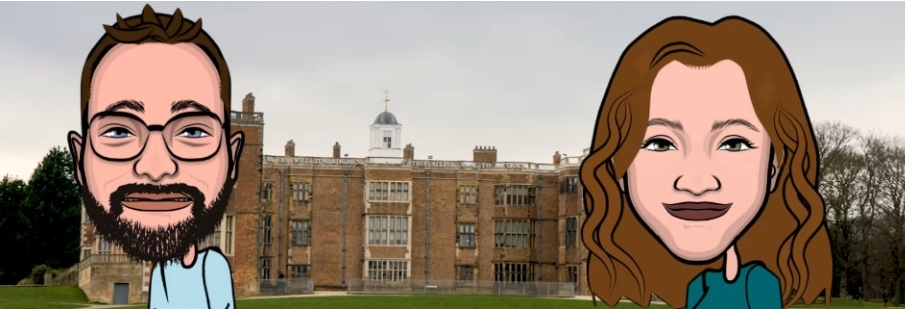
Focusing on ten familiar objects at each of the five museums, the films highlight how some of our most prized treasures ended up in collections and reveal their hidden histories as ‘antiques’. Guided by two friendly avatars, Mark and Mo (see below) – with introductions by respective museum directors, curators and collections officers – 50 antiques and over 40 antique dealer histories are explored.
Mark and Mo – the avatar guides in the Year of the Dealer digital film trails. Image, The Year of the Dealer project, University of Leeds.
The films reveal the fascinating stories of the dealers who sold the antiques to the museums – including Edgar Gorer, a leading specialist in antique Chinese porcelain, who sadly perished in the sinking of the Lusitania in 1915; and antique dealer Frank Partridge, who miraculously survived the same disaster.
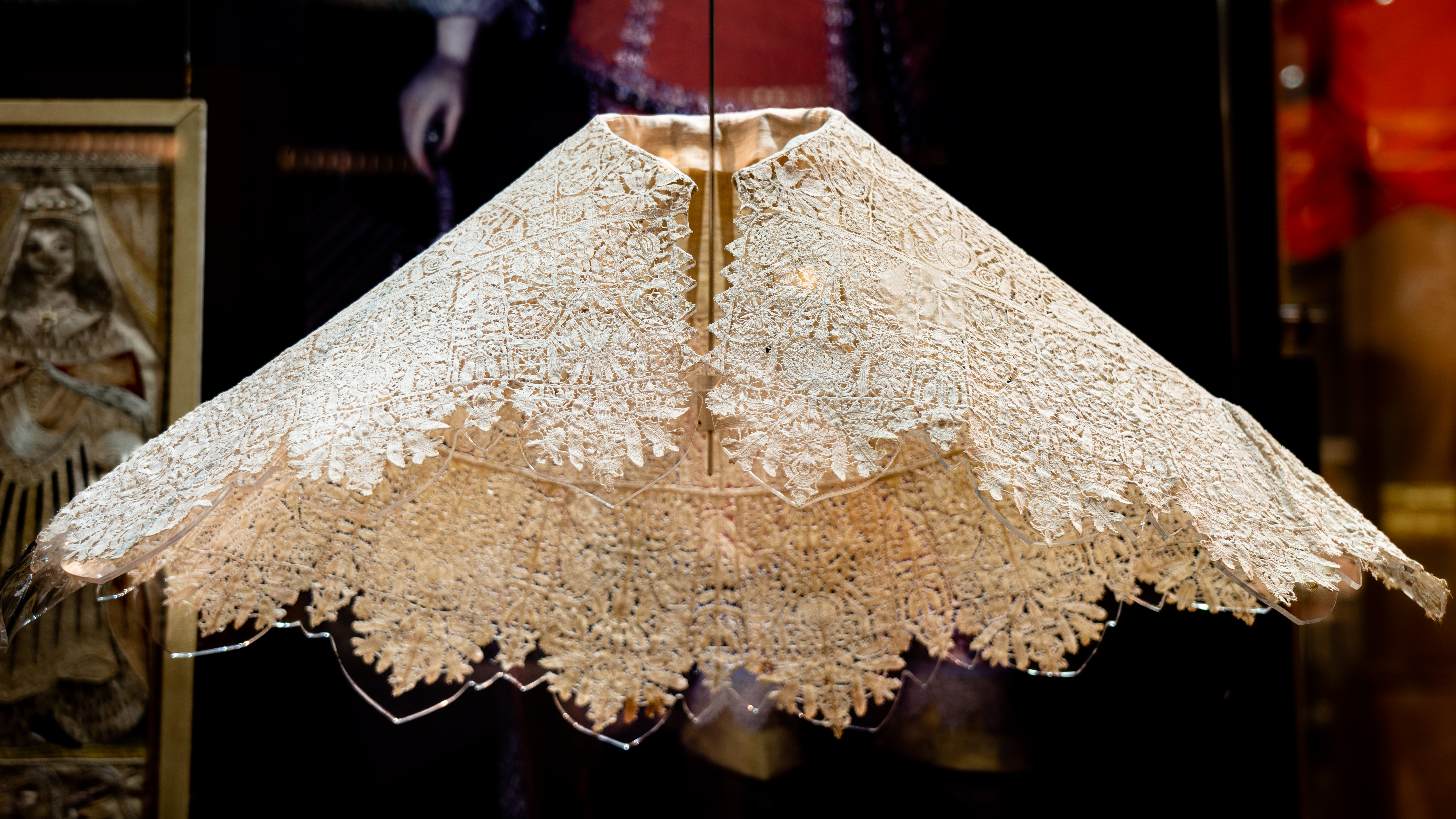
Several films highlight the important role that women have played in the history of antique dealing. One features an antique lace collar on display at The Bowes Museum in Barnard Castle, originally from the collection of Jane Clarke, one of the most prominent antique dealers of the 19th century (see below).
17th century Lace Collar, part of the Year of the Dealer digital film trail at The Bowes Museum, Barnard Castle. Image, The Year of the Dealer Project, University of Leeds & The Bowes Museum.
The Year of the Dealer project draws together several years of research, including museum and dealers’ archives, auction catalogue records and oral history interviews, to bring these previously little-known stories to life.
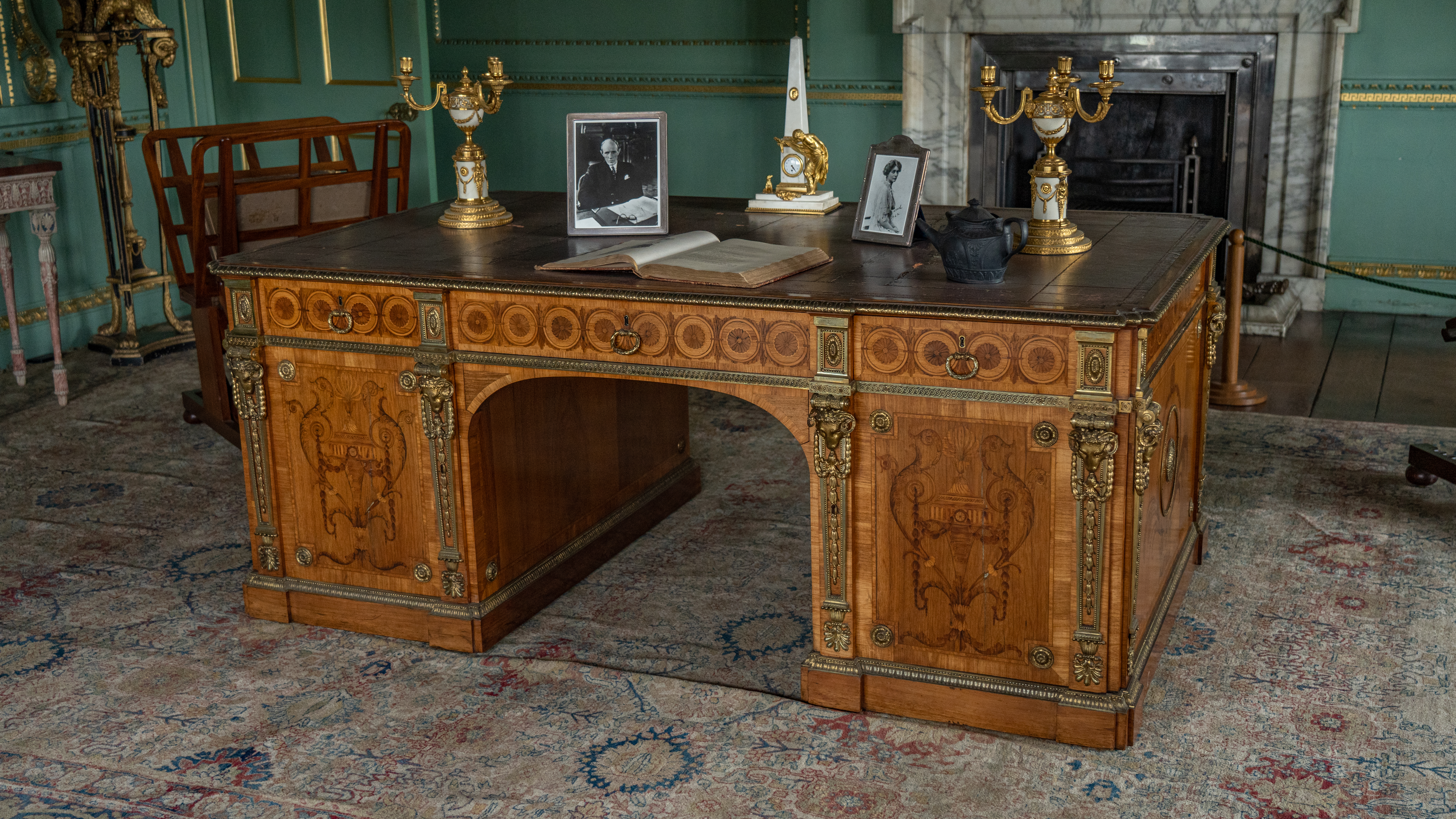
Other antiques in the digital film trails include the important library table, made by Thomas Chippendale in the 1770s for Harewood House in Yorkshire, sold to Temple Newsam, Leeds in 1964 by H. Blairman & Sons for a world record price of 41,000 guineas (see below);
The Harewood Library Desk, c.1770, part of the Year of the Dealer digital film trail at Temple Newsam, Leeds. Image, The Year of the Dealer project, University of Leeds & Temple Newsam, Leeds Museums & Galleries.
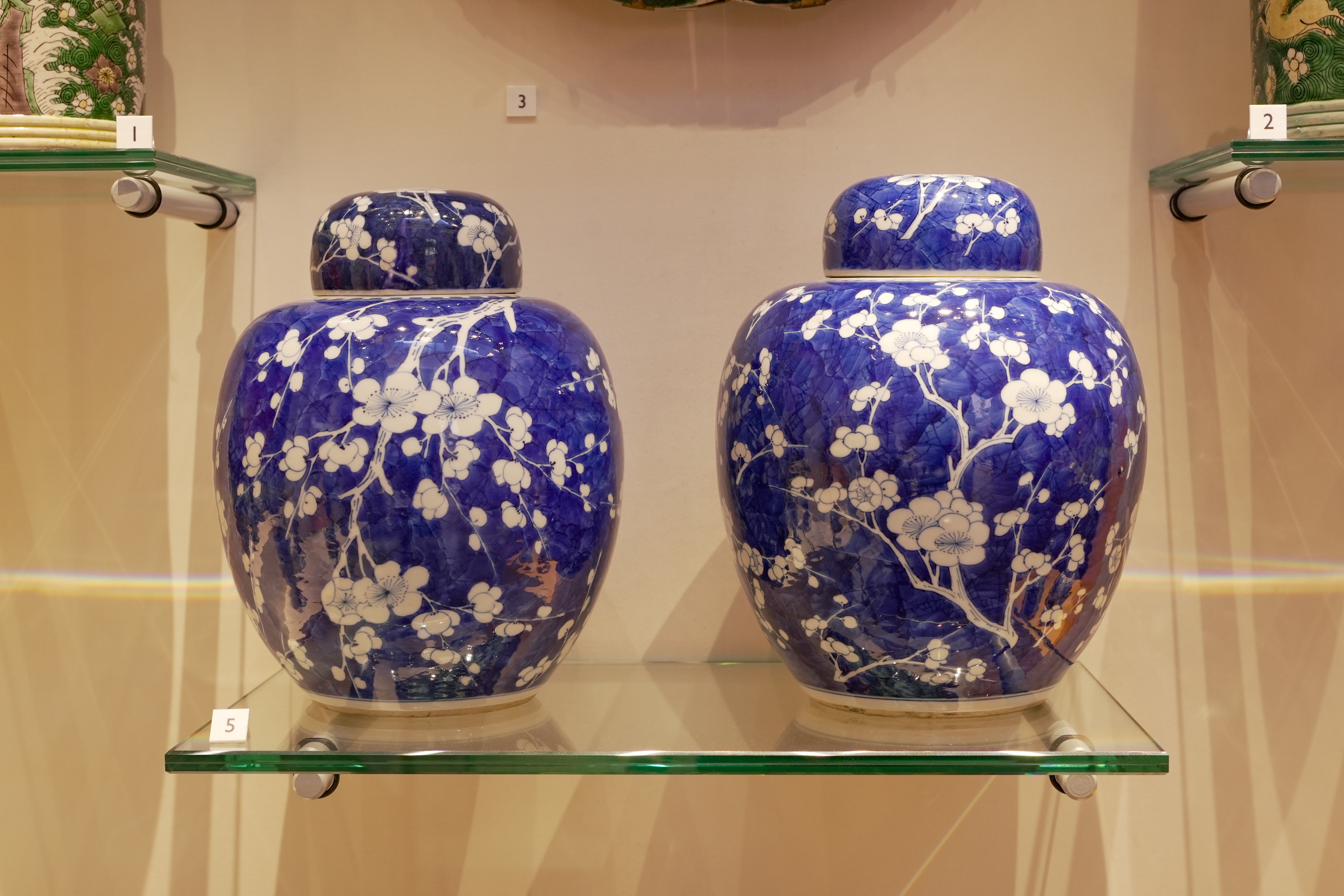
A rare pair of 17th century Chinese ‘Prunus’ pattern jars, sold by the special dealer in Chinese Works of Art Edgar Gorer to the collector William Hesketh Lever in 1911 for the spectacular sum of £6,500 (equivalent to as much as £3.8 million at the time) and now at Lady Lever Art Gallery (see below).
A pair of Chinese 17th century ‘prunus’ jars, part of the Year of the Dealer digital film trail at Lady Lever Art Gallery. Image, The Year of the Dealer project, University of Leeds & Lady Lever Art Gallery, Port Sunlight.
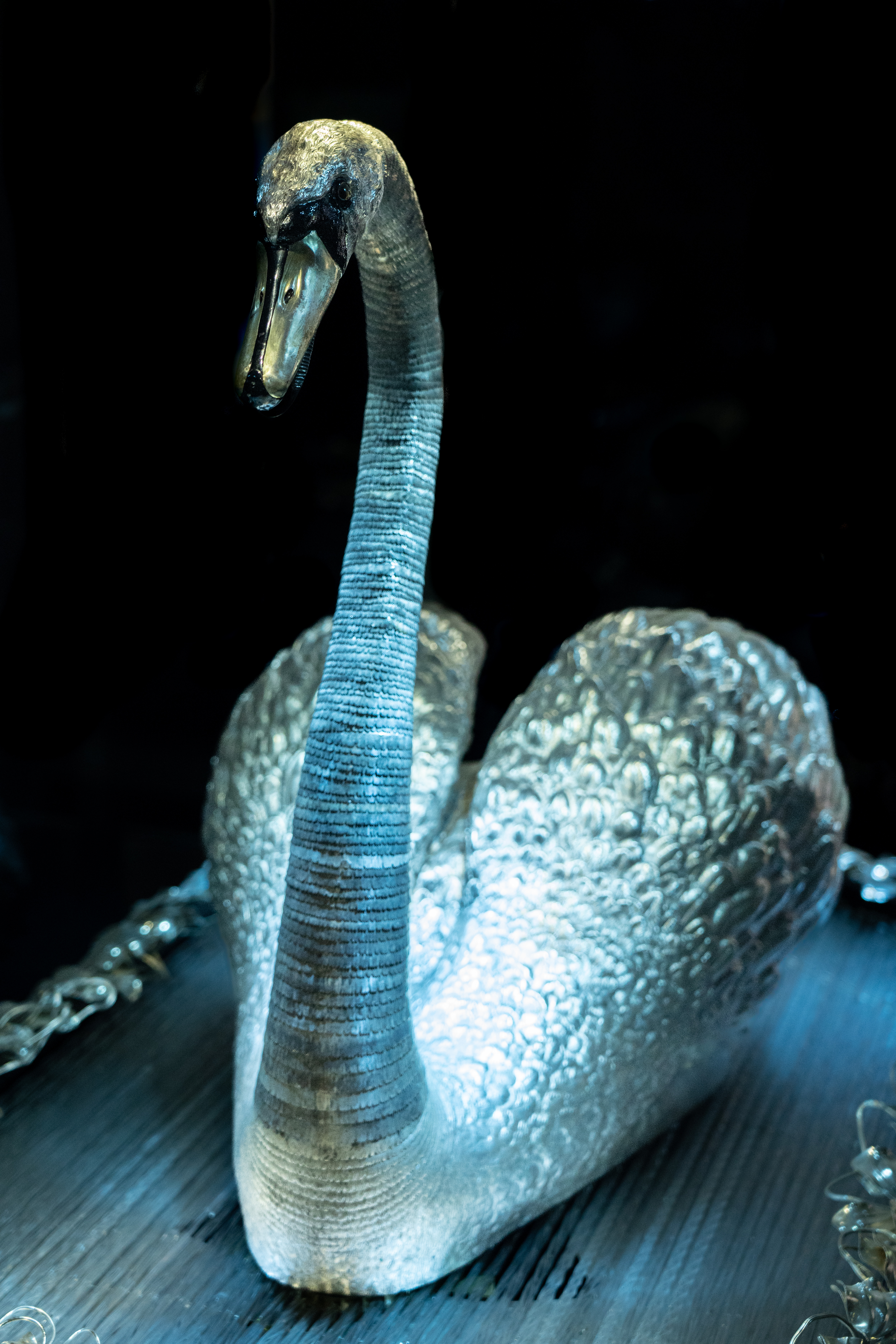
The Bowes Museum’s famous 18th century silver swan automaton, acquired by John and Josephine Bowes from the dealers Briquet and Samper of Paris in 1872 for about £200 (see below).
18th century silver swan automaton, part of the Year of the Dealer digital film trail at The Bowes Museum, Barnard Castle. Image, The Year of the Dealer project, University of Leeds & The Bowes Museum.
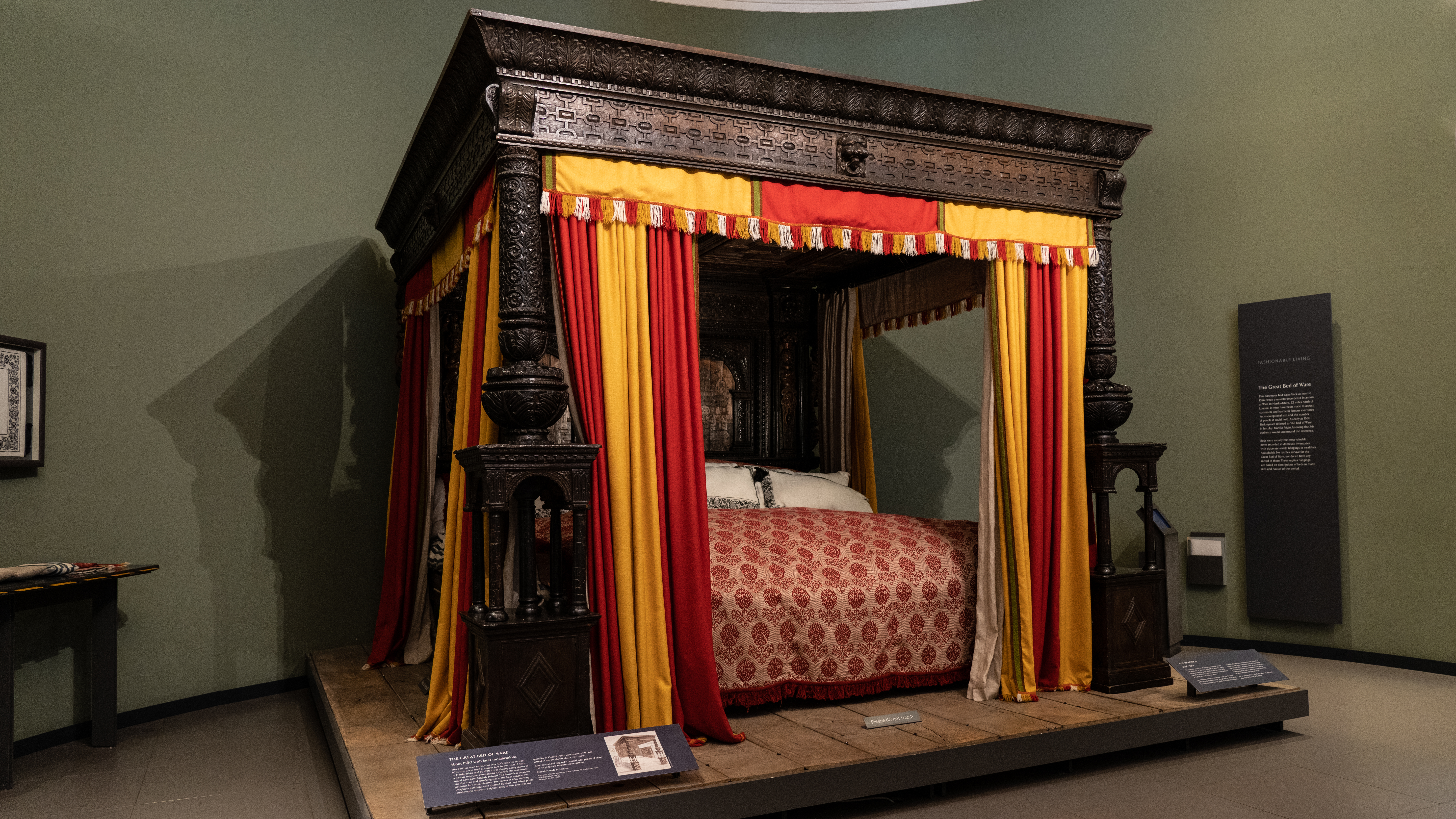
The Great Bed of Ware, sold by the antique dealer Frank Partridge to the V&A Museum in 1931 for £4,060 (see below).
The Great Bed of Ware, part of the Year of the Dealer digital film trail at the V&A South Kensington. Image, The Year of the Dealer project, University of Leeds & V&A South Kensington.
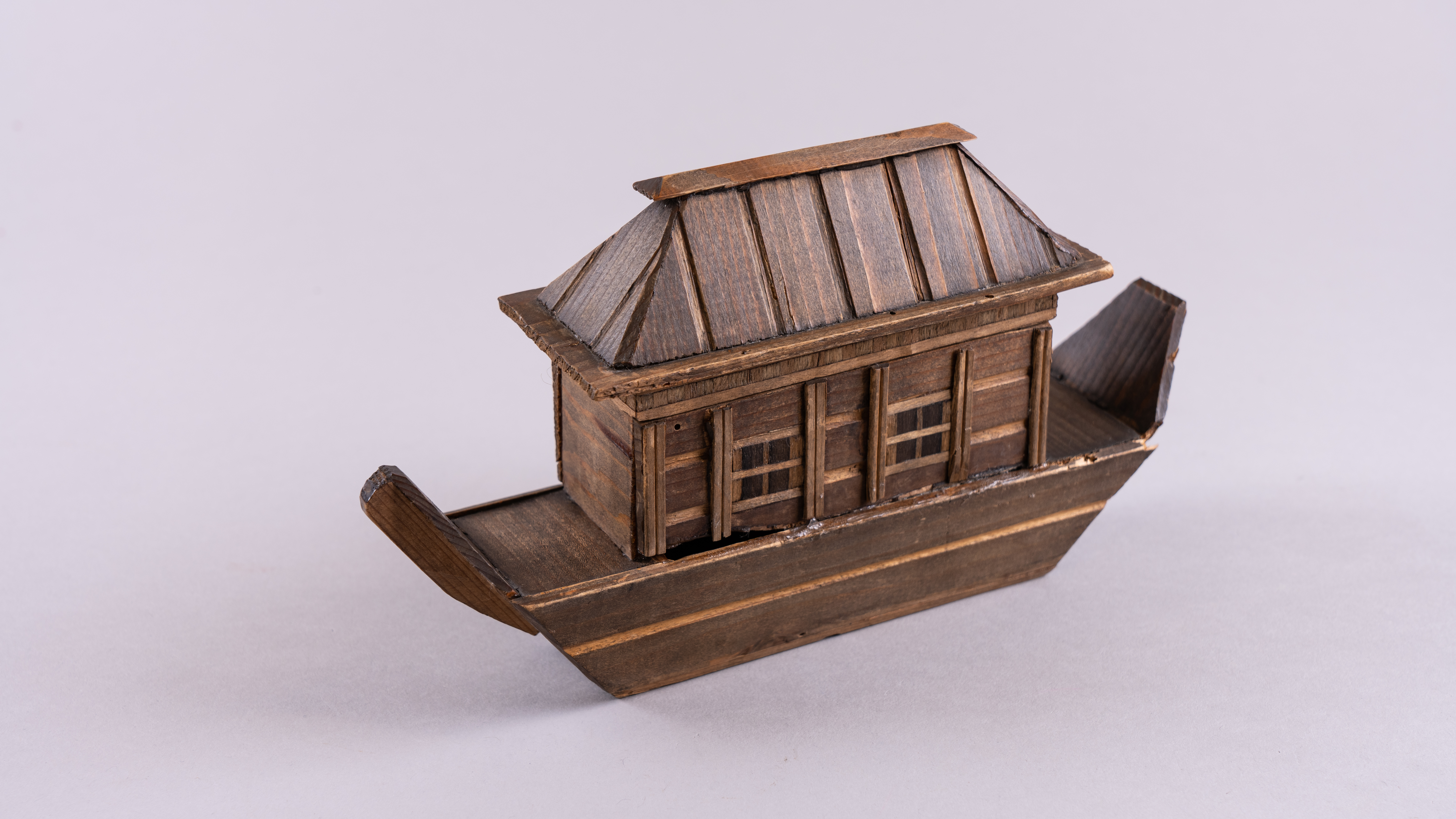
There are also some much more humble objects sold by antique dealers to museums, such as this toy Noah’s Ark c.1900, sold to Preston Park Museum, Stockton, in 1969 by Caedmon Antiques of Whitby for a few pounds (see below).
Toy Noah’s Ark, c.1900, part of the Year of the Dealer digital film trail at Preston Park Museum, Stockton. Image, The Year of the Dealer project, University of Leeds & Preston Park Museum, Stockton.
We hope you enjoy the Year of the Dealer films, and that it will encourage you to think further about the role that antique dealers have played in the development of collections.
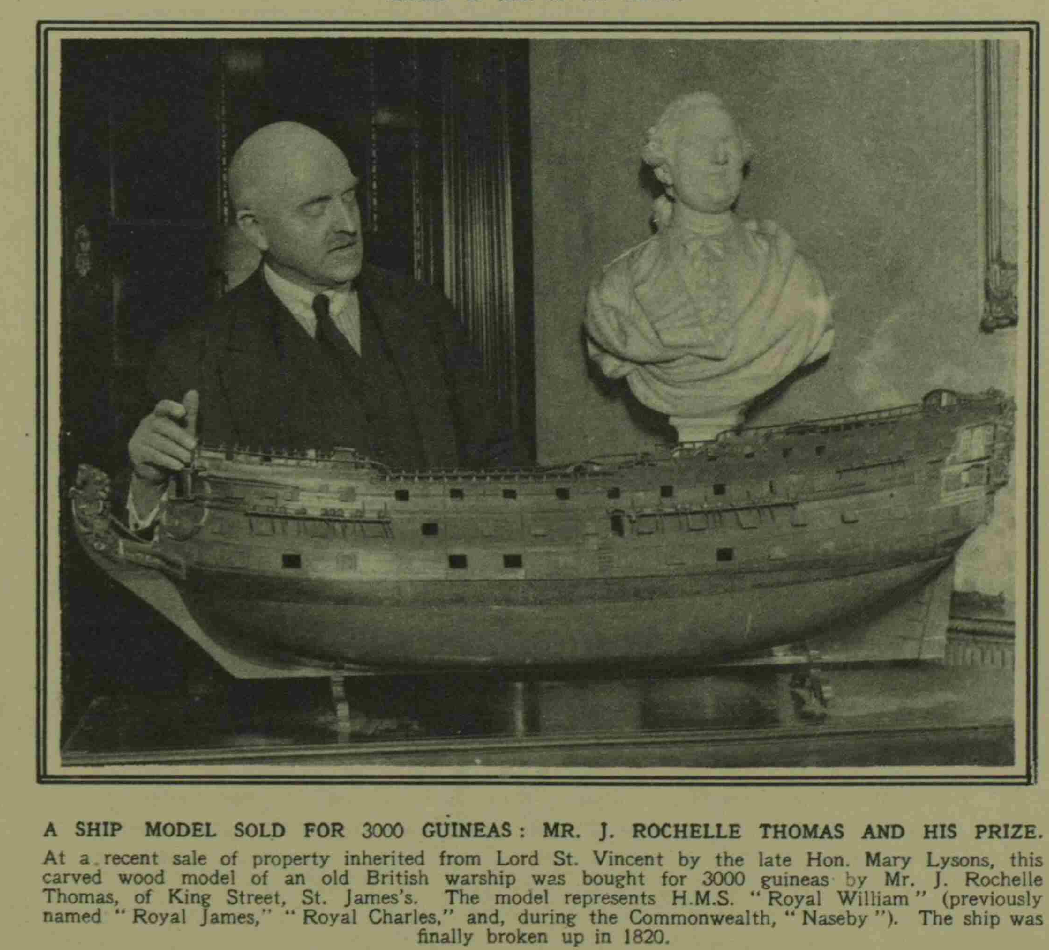
Our friend Chris Coles very kindly sent me a photograph of the antique dealer J. Rochelle Thomas (thank you Chris!), and as it’s quite unusual to have photos of historical antique dealers I thought I’d make a blog post about Rochelle Thomas – as you’ll see, he was a very important dealer, but appears (like most of the important dealers of the past) to have been lost to history! Anyway, here’s the photo from Chris:
J. Rochelle Thomas with a model ship, from Illustrated London News, April 21st 1928, p.675. Kind thanks to Chris Coles.
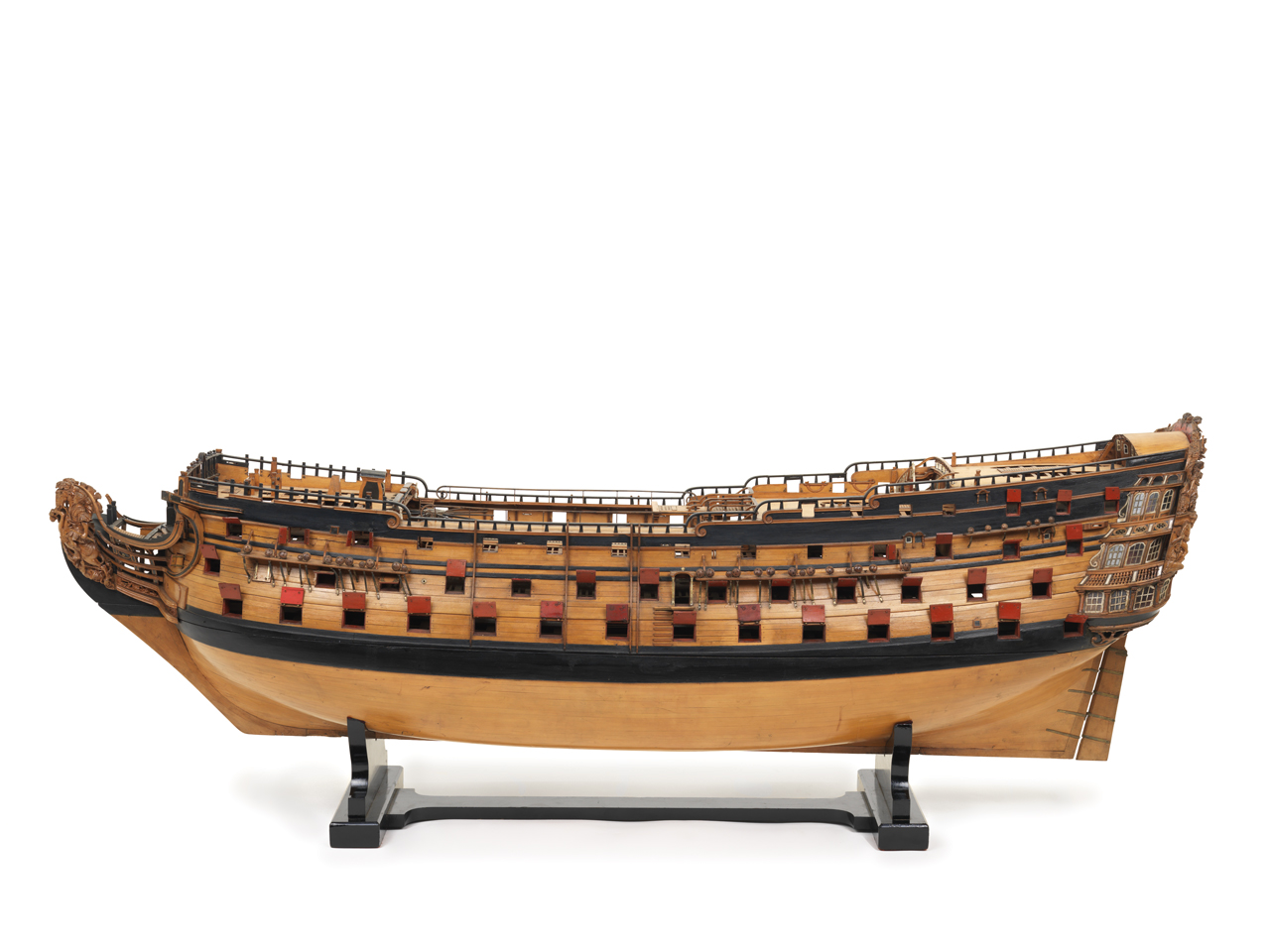
The photograph shows Joseph Rochelle Thomas (1865-1938) with a wooden model of the warship ‘Royal William’ (1719) scale 1.48, and made in 1719. As the report states, Rochelle Thomas bought the ship model (I guess in 1928) for 3,000 guineas (£3,150), an enormous sum (hence the newspaper report), which would have been as much as £1.3m at the time – in relative income value – see measuring worth.com The model is now in the National Maritime Museum at Greenwich (not on display); it seems to have been acquired by the museum through the antique dealer J.M. Botibol, who had a well known antique shop in Hanway Street in London in the period. Chris tells me that the ship was advertised as ‘seen by appointment at Mr. Botibol’s shop’. It may be that Rochelle Thomas and Botibol bought the ship model in partnership with one another (this was, and still is, a common practice in the antique trade).
Royal William (1719) wooden ship model 1.48 scale. 440mm x 1365mm x 320mm. National Maritime Museum, Greenwich, London. Image National Maritime Museum, Greenwich.
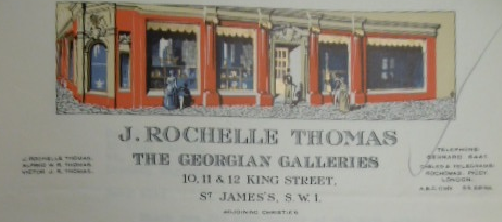
J. Rochelle Thomas was a very well established antique dealer by the 1920s; the business would later expand to New York selling to many wealthy American collectors, including scores of English antiques to Henry Francis du Pont (1880-1969); du Pont’s collections of American antiques remain at Winterthur Museum in Delaware, USA. Indeed, here’s an image of J. Rochelle Thomas’ London shop from a letter sent to du Pont in 1931, which was right next door to Christie’s King Street auction rooms. The premises occupied by Rochelle Thomas are now part of Christie’s auction rooms.
Letterhead, J. Rochelle Thomas, King Street, St. James’s, London, 1931. Photograph Antique Dealers Research Project, University of Leeds.
By this date (the 1930s), the J. Rochelle Thomas business was run by Joseph and his two sons Victor Joseph Rochelle Thomas (1887-1958) and Alfred William Rochelle Thomas (1886-1965). By the early 1950s Rochelle Thomas had opened a shop in New York, at 1166 Second Avenue – our friend Chris Jussel (formerly of Verney & Jussel, leading antique dealers in the USA) and a fount of knowledge about ‘old’ dealers, tells us that J. Rochelle Thomas’ shop in New York was run by Peter Thomas, (Joseph’s grandson), and that it occupied the former warehouse premises of Day, Meyer, Murray & Young; they had no shop window and so, as Chris says, it was an unusual move but the business continued to be a success given Rochelle Thomas’ reputation. Chris remembers visiting the Rochelle Thomas shop in the 1970s, when there were stacks of dinner services all over the floor. By the 1970s Rochelle Thomas opened a branch in Palm Beach, Florida, which, as Chris Jussel tells us, was run by Peter Thomas’ sons (Peter retired to Bermuda in the 1970s); the Palm Beach business traded into the 1980s but sadly Peter’s 2 grandsons died very young and the business closed in the 1980s – as Chris says, the end of a very important dealership. J. Rochelle Thomas sold many antiques to Francis du Pont (and many other American collectors) throughout the 20th century.
The Rochelle Thomas business began in 1859 (they celebrated a centenary year in 1959, according to some of their business letterheads) in Birmingham in the UK. It was started by Henry Thomas, who appears to have been born in about 1815 – the 1861 Census records Henry as aged 48 and working as an ‘ironmonger’ in Birmingham; by 1871 he was working as a ‘cutler’. His son, Joseph Rochelle Thomas (the man in the photograph) was born in 1865 and by the 1890s was described in the Census (1891) as ‘Dealer in Old Bank Notes’; by the 1911 Census Rochelle Thomas was describing himself as ‘Dealer in Pictures, Furniture and Porcelain’, and by 1921 he was ‘Dealer in Works of Art’. His sons, Victor and Alfred, both started working for their father’s antique dealing business from an early age and ran the business following Joseph Rochelle Thomas’ death in 1938. The business was also known as ‘The Georgian Galleries’. J. Rochelle Thomas was elected first President of the British Antique Dealers’ Association in 1918 as well as being a member of several international dealer associations (in Paris, Brussels and New York); so he was a highly respected dealer in the opening decades of the 20th century.
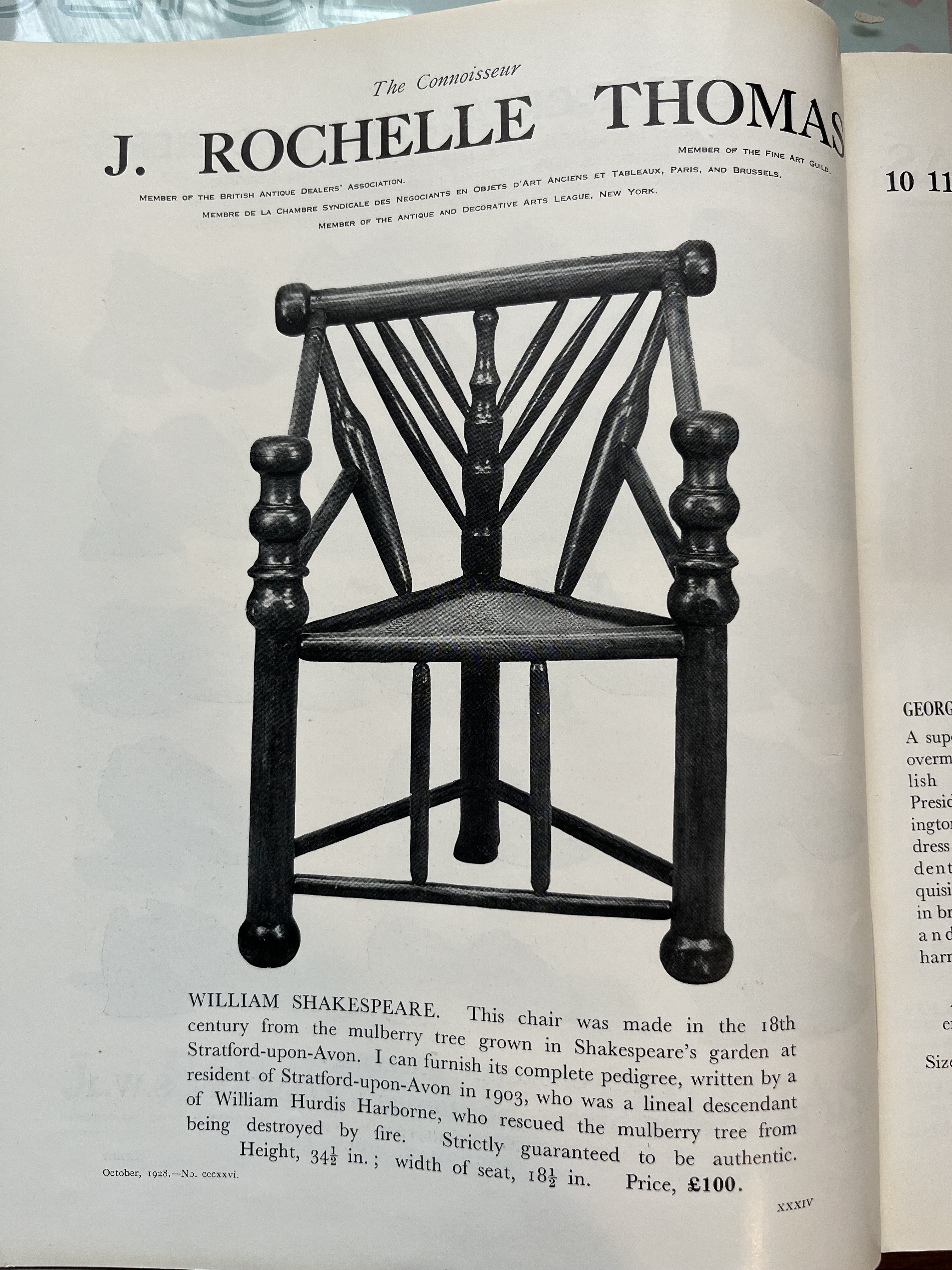
J. Rochelle Thomas appears to have been fascinated by objects that had interesting historical associations – in this sense he was certainly an antiquarian – and often advertised such objects in his sales advertising campaigns in magazines such as Apollo and The Connoisseur. One example (of many!) is an advert for a chair made from the famous (infamous!) mulberry tree wood from Shakespeare’s house in Stratford-on-Avon – if you’re interested in Shakespearian mulberry tree ‘relics’ do have a look at my essay on the subject (see – Mark Westgarth, ‘Well Authenticated Blocks’ in Shakespeare’s Afterlife in the Royal Collections edited by Sally Barnden, Gordon McMullan, Kate Retford and Kirsten Tambling, (Oxford University Press, 2025), pp.103-111)
Advertisement for J. Rochelle Thomas, The Connoisseur October 1928. Photograph Antique Dealer Research Project, University of Leeds.
The advert in The Connoisseur October 1928 illustrates an 18th century triangular chair, allegedly made from the wood of the famous mulberry tree – it was priced at £100. Not sure where the chair is now, but if anyone recognises it, do let me know!
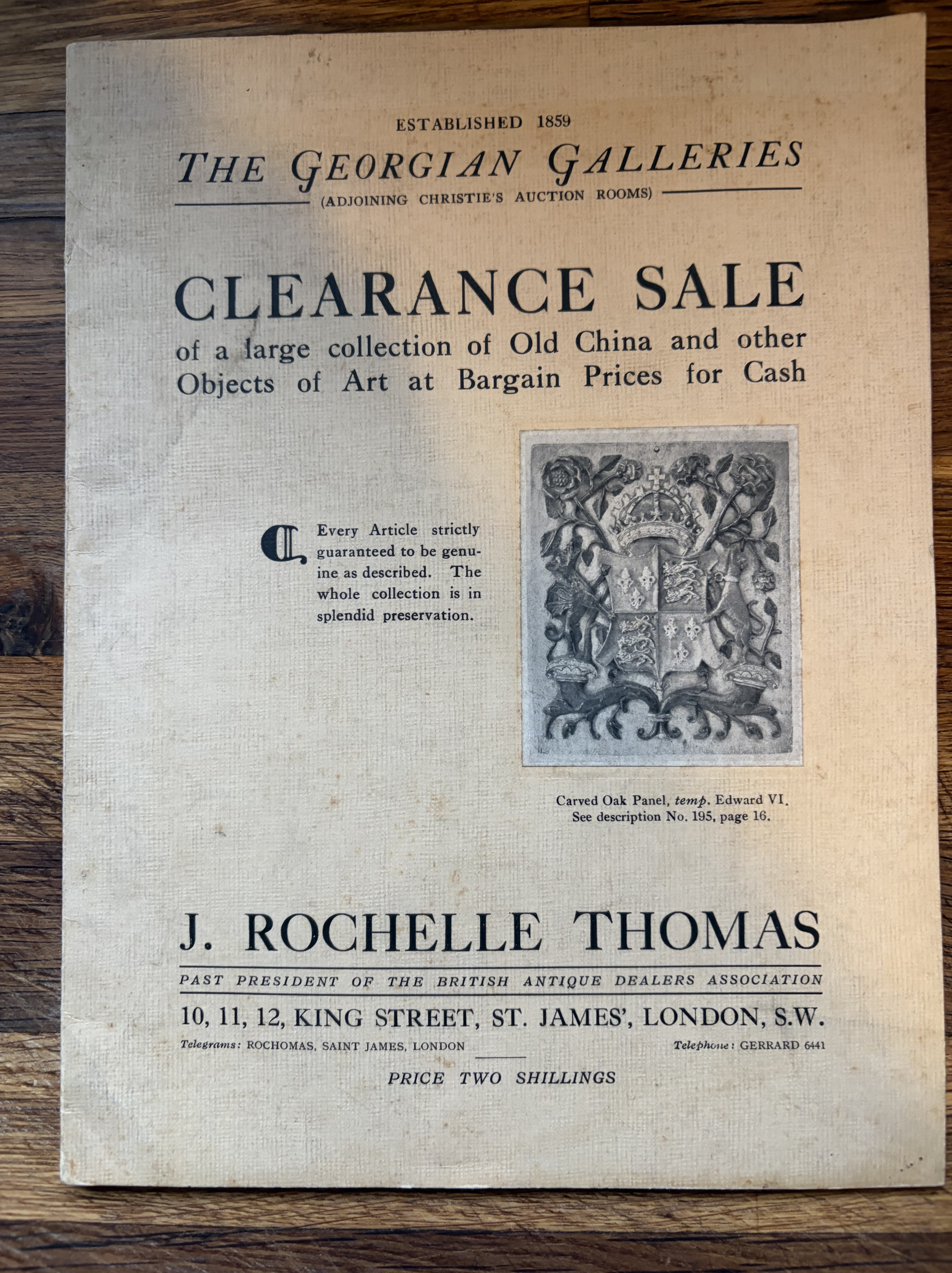
Coincidently a while ago I acquired an old sales catalogue produced by J. Rochelle Thomas in 1923 which also contains several items for sale with significant historical associations. The catalogue was issued to facilitate a ‘Clearance Sale’ that Rochelle Thomas undertook in 1923 as part of a refurbishment of his shop in King Street, St. James’s. As the catalogue states, ‘To my customers, as I am about to make extensive alterations to my premises I find it necessary to hold a Clearance Sale of the greater portion of my stock, and I am doing so at 50 per cent. in every case below the original marked prices in order to realise promptly.’ Here’s the cover of the catalogue:
J. Rochelle Thomas sales catalogue, 1923. Photograph Antique Dealers Research Project, University of Leeds.
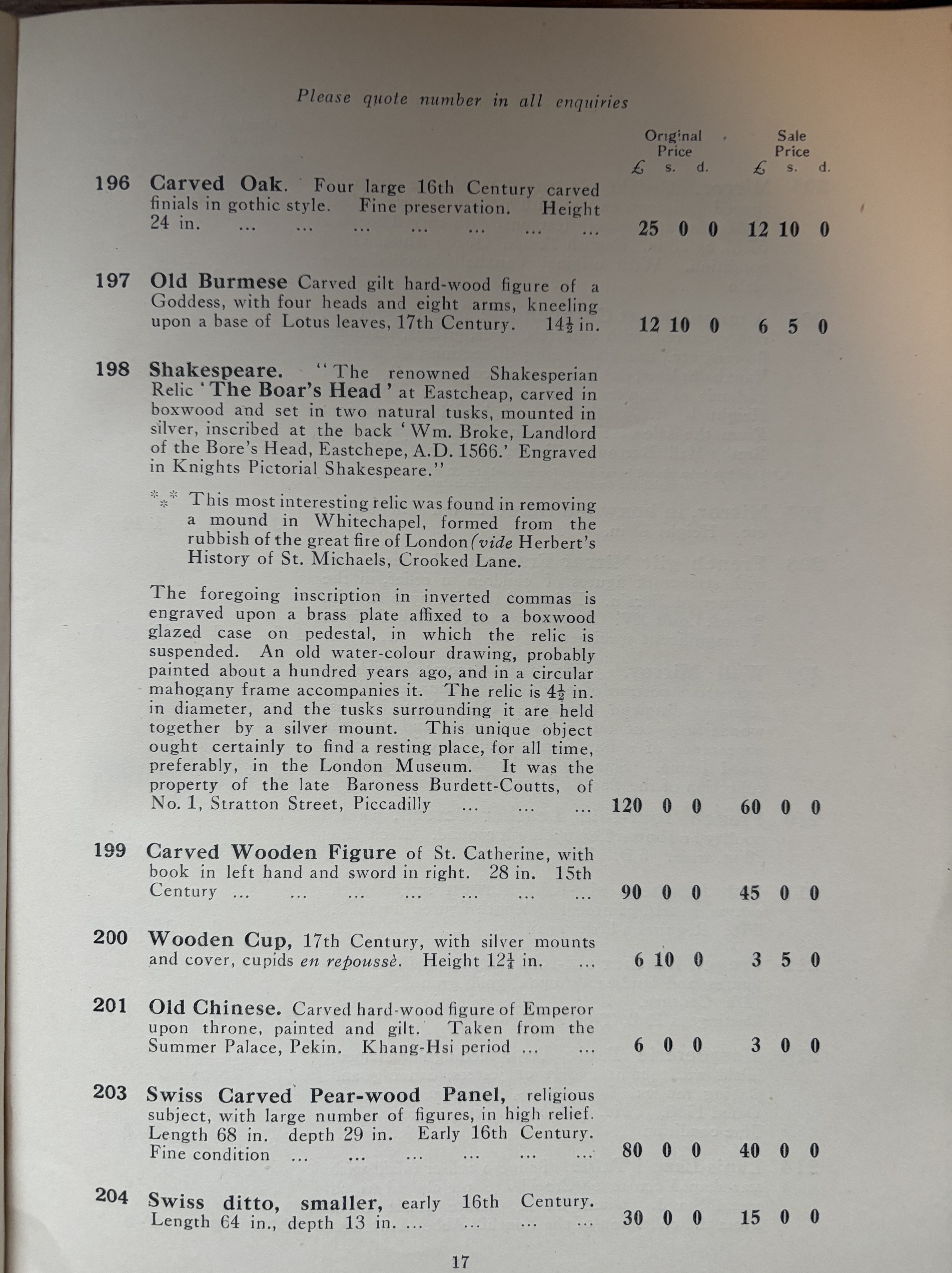
Sadly the catalogue does not have any photographs of the items for sale except the front cover image of what is described as ‘Carved English Royal Coat of Arms, Period Edward the 6th; fine preservation. A great rarity’ (priced at £37.10.0s, reduced from £75). The catalogue has more than 750 antiques for sale at 50% discount, including some important historical ‘relics’. Item 198 for example (see below) ‘The renowned Shakespearian Relic ‘The Boar’s Head’ at Eastcheap, carved in boxwood and set in two natural tusks’ and priced at £60 (reduced from £120). This was a famous object in the 19th century, having been in several collections, including that of the antiquary Thomas Windus FSA (1778-1854).
J. Rochelle Thomas sales catalogue, 1923. Photograph Antique Dealers Research Project, University of Leeds.
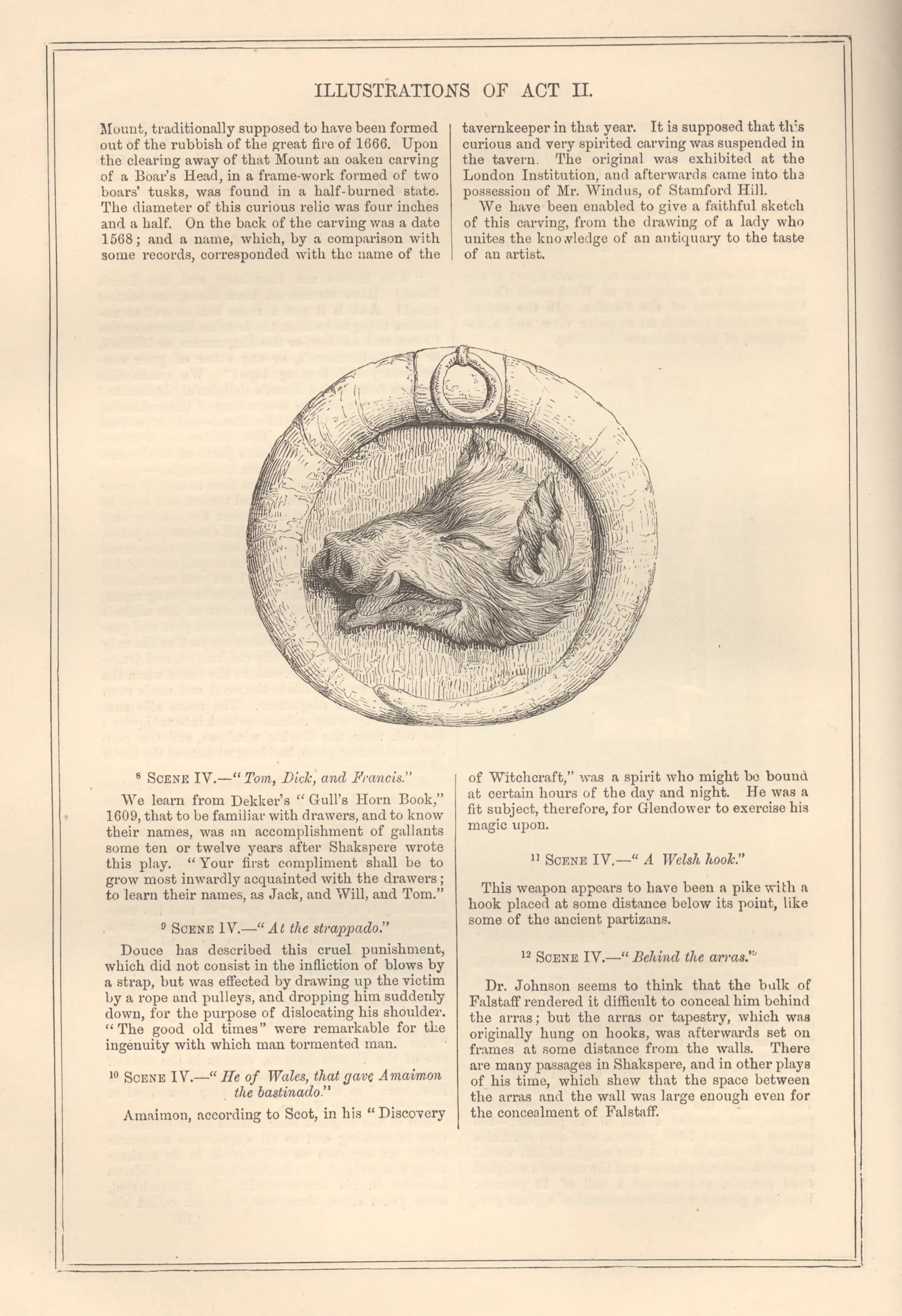
The ‘Boar’s Head’ was offered for sale at the auction of the collection of Thomas Windus in 1855 where it was reportedly sold for £25 and 4 shillings to the Shakespeare scholar James Halliwell-Phillipps (1820-1889), editor of a lavish Shakespeare Folio edition at the time. It was illustrated in The Pictorial Edition of the Works of Shakespeare edited by Charles Knight (volume 1, 1839-42) – (see below).
The Pictorial Edition of the Works of Shakespeare edited by Charles Knight (volume 1, 1839-42).
However, the ‘Boar’s Head’ also appeared in the auction of the Windus collection sold by Ansley Windus (Thomas Windus’ son) in 1868, so perhaps it remained unsold at the 1855 auction or was retained by the family. According to the 1923 J. Rochelle Thomas catalogue the ‘Boar’s Head’ was the ‘property of the late Baroness Burdett-Coutts’ (1814-1906); it was offered for sale at £60 (discounted from £120). This important historical object has also subsequently disappeared so if anyone knows where it is, do let me know!
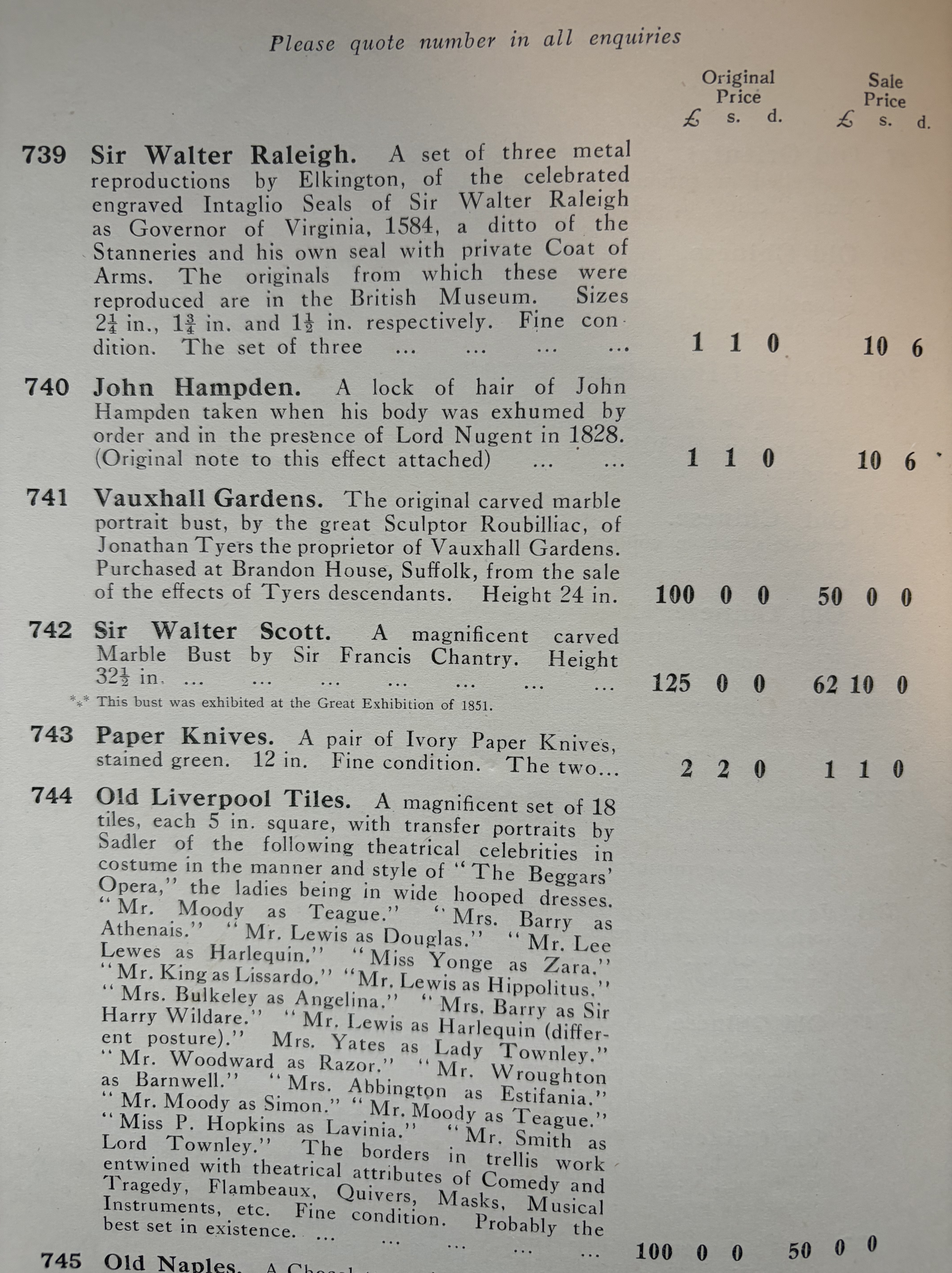
Another object offered for sale in the J. Rochelle Thomas catalogue has been easier to trace – Item 741 – ‘The original carved marble portrait bust, by the great Sculptor Roubilliac, of Jonathan Tyers the proprietor of Vauxhall Gardens. Purchased at Brandon House, Suffolk, from the sale of the effects of Tyers descendants.’ (£50, discounted from £100) – (see below):
J. Rochelle Thomas sales catalogue, 1923. Photograph Antique Dealers Research Project, University of Leeds.
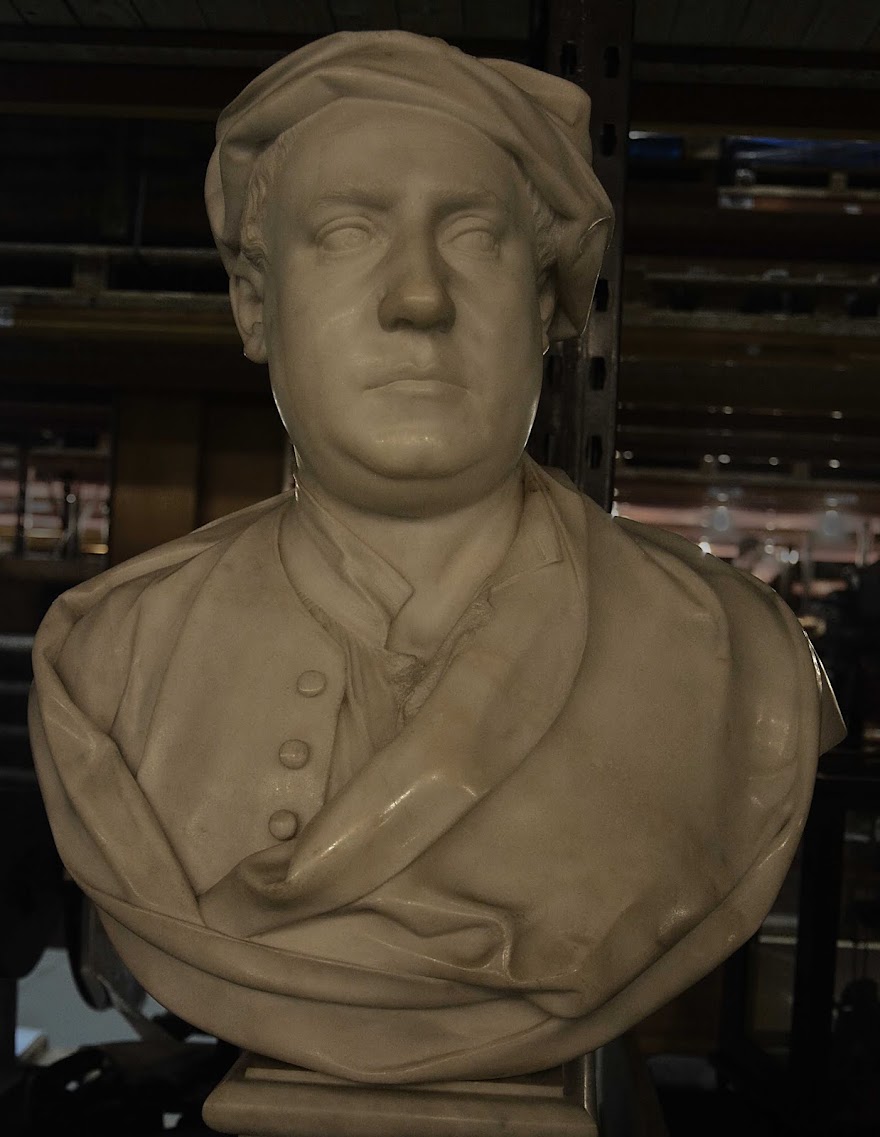
Here’s the sculpture (thanks to a photograph by David Bridgwater – see his blog HERE):
Louis F. Roubiliac (1702-1762) bust of Jonathan Tyers (1702-1767), c.1738. Birmingham Museums. Photograph David Bridgwater.
The marble bust is in the collections of Birmingham Museums, who acquired it in 1956 from the art dealer Frank Sabin. It has an illustrious antique dealer history though. It was acquired (it seems together with a terracotta bust of the same subject) by the well-known Norfolk-based antique dealer Rueben Levine (1865-1927) at the Brandon House auction sale in 1919 (see my blog post on the Levine family of dealers (27th July 2025) HERE. The terracotta bust was sold by G. Levine to the Victoria & Albert Museum in 1927 for £50 and remains in the V&A (see HERE). The marble version of the bust was sold at auction at Sotheby’s in 1927 (24th June 1927, Lot 77), and may have passed through several collections before it was eventually acquired by Birmingham Museums in 1956.
And so, a little photograph of Joseph Rochelle Thomas, kindly sent to us by Chris Coles, opened up a rich seam of research into one of the leading antique dealers of the 20th century – thank you Chris & Chris!
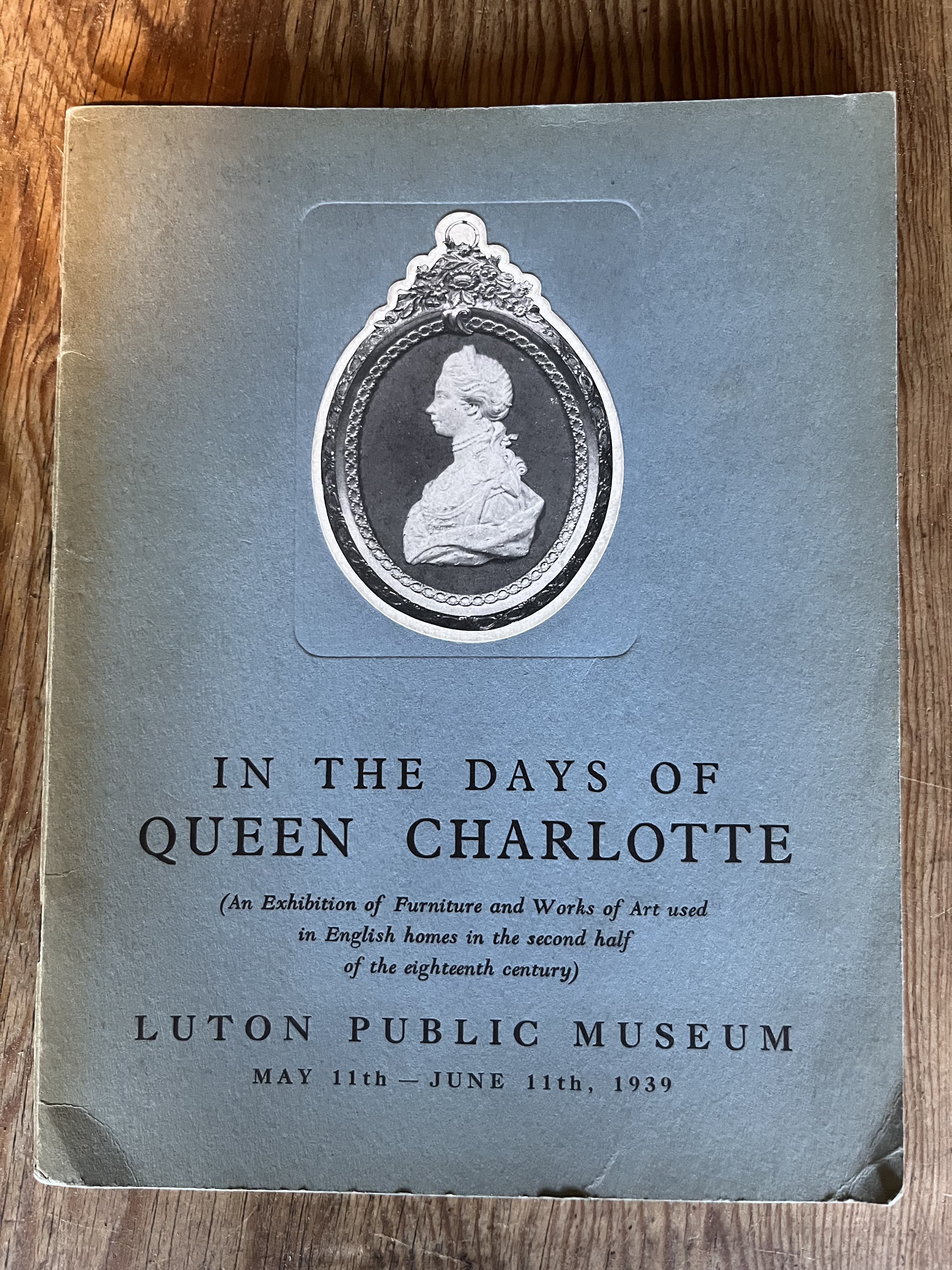
The relationships between the antique trade and public museums is an expansive and complex subject, and there’s not really enough space in a short blog post to do the subject any real justice at all. But a recent addition to the antique dealer project archive of antique dealer ephemera is worth highlighting as it is further evidence of the fascinating dialogue between antique dealers and the public museum. The ephemera in question is a rare survival, an exhibition catalogue of the exhibition ‘In the Days of Queen Charlotte‘ held at Luton Public Museum in May to June 1939.
Exhibition catalogue, Luton Public Museum, ‘In the Days of Queen Charlotte’, May-June 1939. Image, Antique Dealer Research Project, University of Leeds.
The exhibition was organised in collaboration with the British Antique Dealers’ Association and exhibitors included most of the leading antique dealers of the day, such as H. Blairman & Sons, Frank Partridge & Sons, M. Harris & Sons, H. M. Lee, Mallett & Son, S.J. Phillips, S. W Wolsey, Stoner & Evans, J. Rochelle Thomas, and many more. It built on the success of the famous ‘Art Treasures‘ exhibition held at Grafton Galleries in 1928 (also under the auspices of the BADA) and the antique dealers exhibition at Christie’s auction rooms in 1932. However, there was a key distinction between these earlier exhibitions and the Luton Museum exhibition, which was of course that the 1939 exhibition was held in a public museum. I believe this was one of the earliest of what one might call hybrid exhibitions (those staged by the antique trade in public museums) that took place in Britain, and was a catalyst for the much more ambitious collaborations between the antique trade and public museums in the form of public exhibitions that took place later in the 20th century, at The Victoria & Albert Museum in 1962 (organised by CINOA, the International Confederation of Dealers in Works of Art), and again at the V&A Museum in 1968 (organised by the BADA as part of the celebrations of the Golden Jubilee of the establishment of the BADA (1918)). There was also similar dealer exhibitions in public museums in Europe, all organised by CINOA, the earliest of which appears to have been held at the Rijksmuseum in Amsterdam in 1936, with similar exhibitions at the Musee des Arts Decoratifs in Paris in 1954 and at the Historisch Museum in Amsterdam in 1970. And perhaps the most ambitious of these initiatives was the exhibition, ‘The Grand Gallery‘, staged at the Metropolitan Museum of Art in New York in 1974 (again organised by CINOA) and which was partly staged to celebrate the additions to the Metropolitan Museum collections acquired through or gifted by, the New York based antique dealers Joseph and Ernest Brummer.
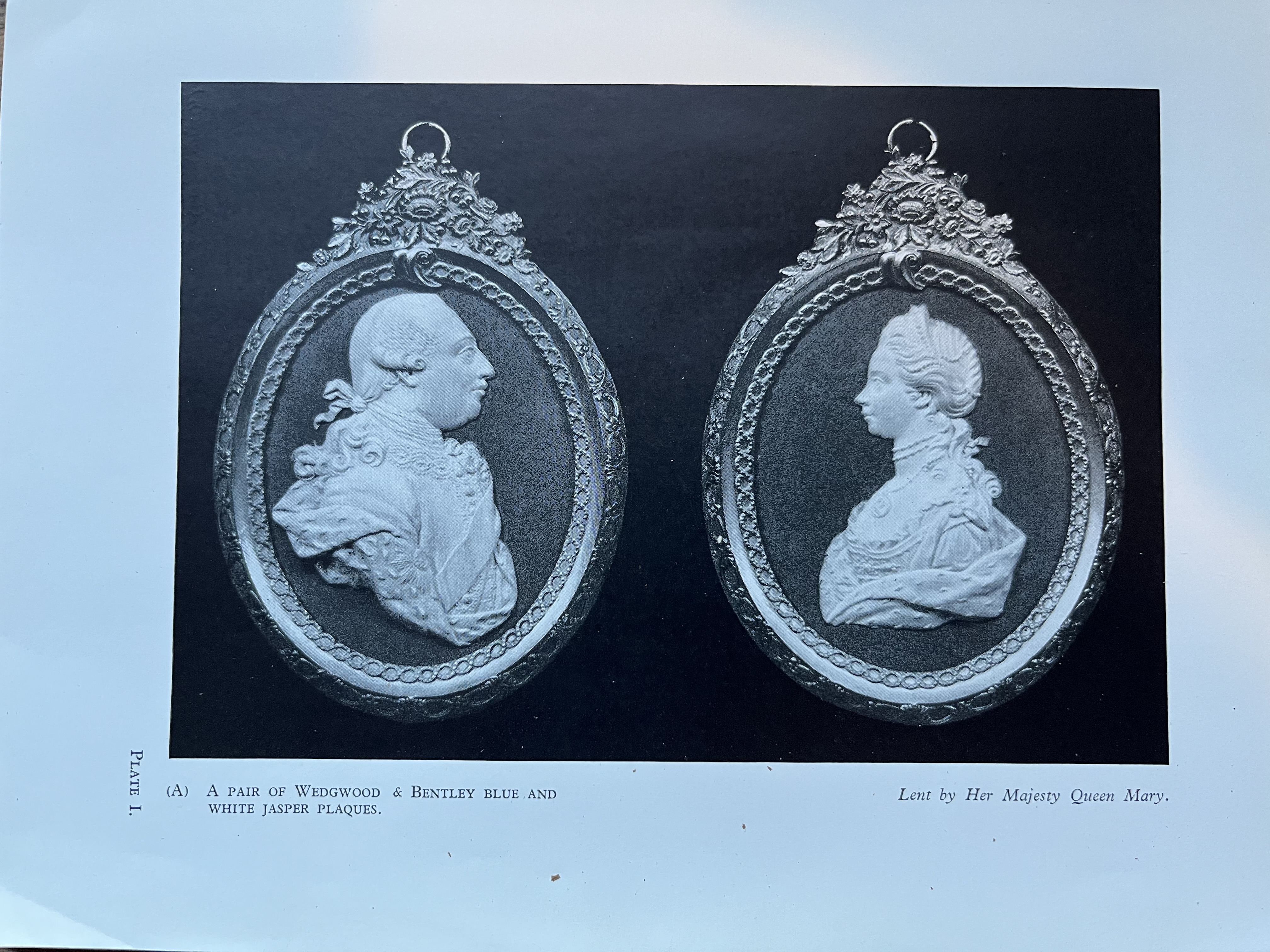
The exhibition at Luton Public Museum, like the other later exhibitions at the various museums, was partly for public education – the exhibitions often had antiques loaned by influential collectors for example. At the Luton Public Museum exhibition, Queen Mary (an avid collector of antiques) loaned a pair of 18th century Wedgwood & Bentley jasper plaques (c.1780), and the Duke of Kent loaned a collection of 20 stipple engravings of members of the Royal Family (published in 1806).
Plate from Luton Public Museum exhibition catalogue, 1939. Photograph, Antique Dealers Research Project, University of Leeds.
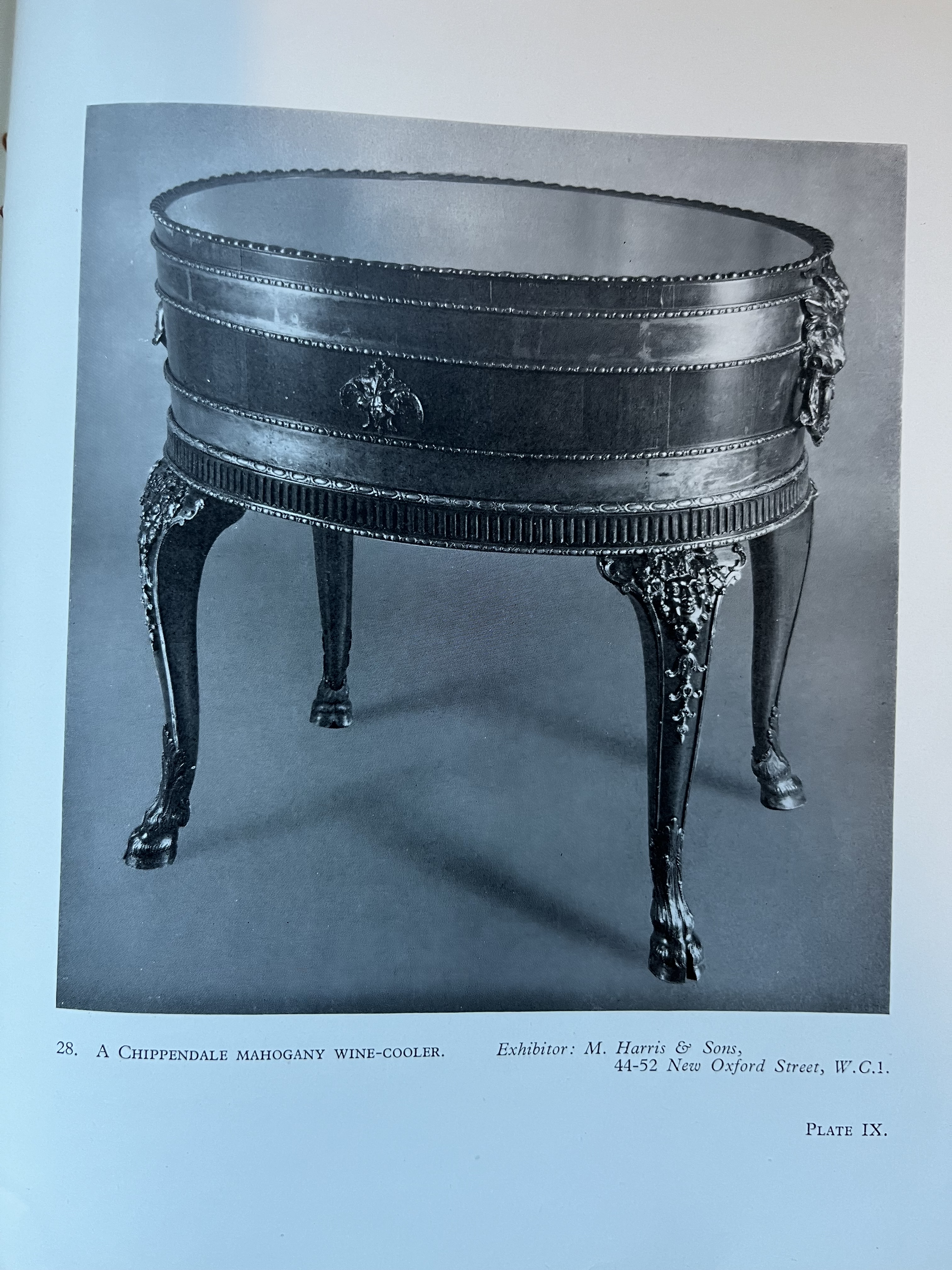
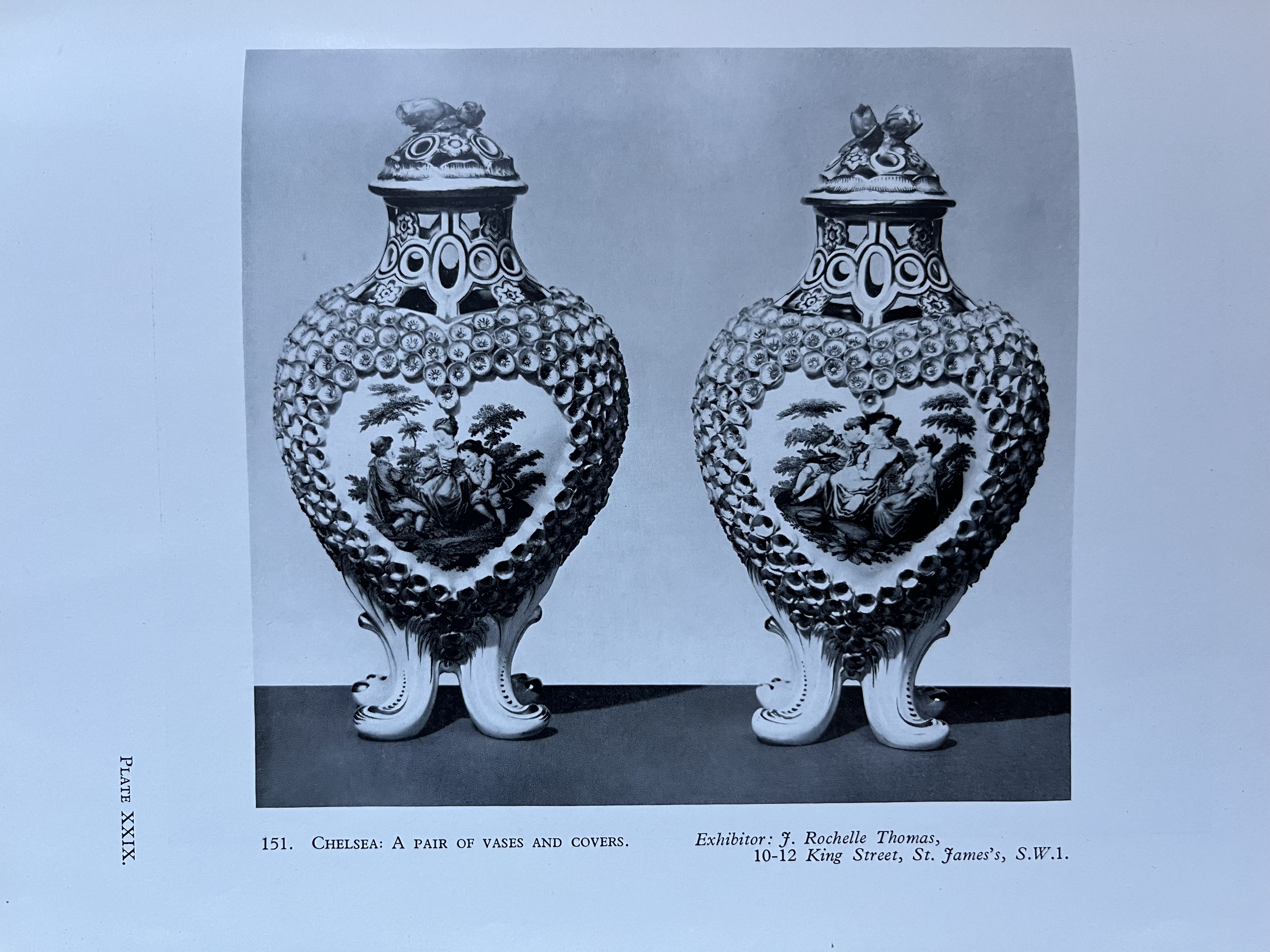
Of course one of the main purposes of these antique dealer organised public museum exhibitions was to showcase, and sell, antiques displayed by antique dealers. Indeed, at the Luton Public Museum exhibition all the objects on display, apart from the loans by Queen Mary and the Duke of Kent, were offered for sale – Moss Harris & Sons offered this 18th century wine cooler (see below) and J. Rochelle Thomas, a pair of 18th century vase and covers (see below).
‘A Chippendale Mahogany Wine-cooler’, exhibited by M. Harris & Sons at the Luton exhibition, 1939. Photograph, Antique Dealer Research Project, University of Leeds.‘A Pair of Chelsea vases and covers’, exhibited by J. Rochelle Thomas at the Luton Public Museum exhibition, 1939. Photograph, Antique Dealer Research Project, University of Leeds.
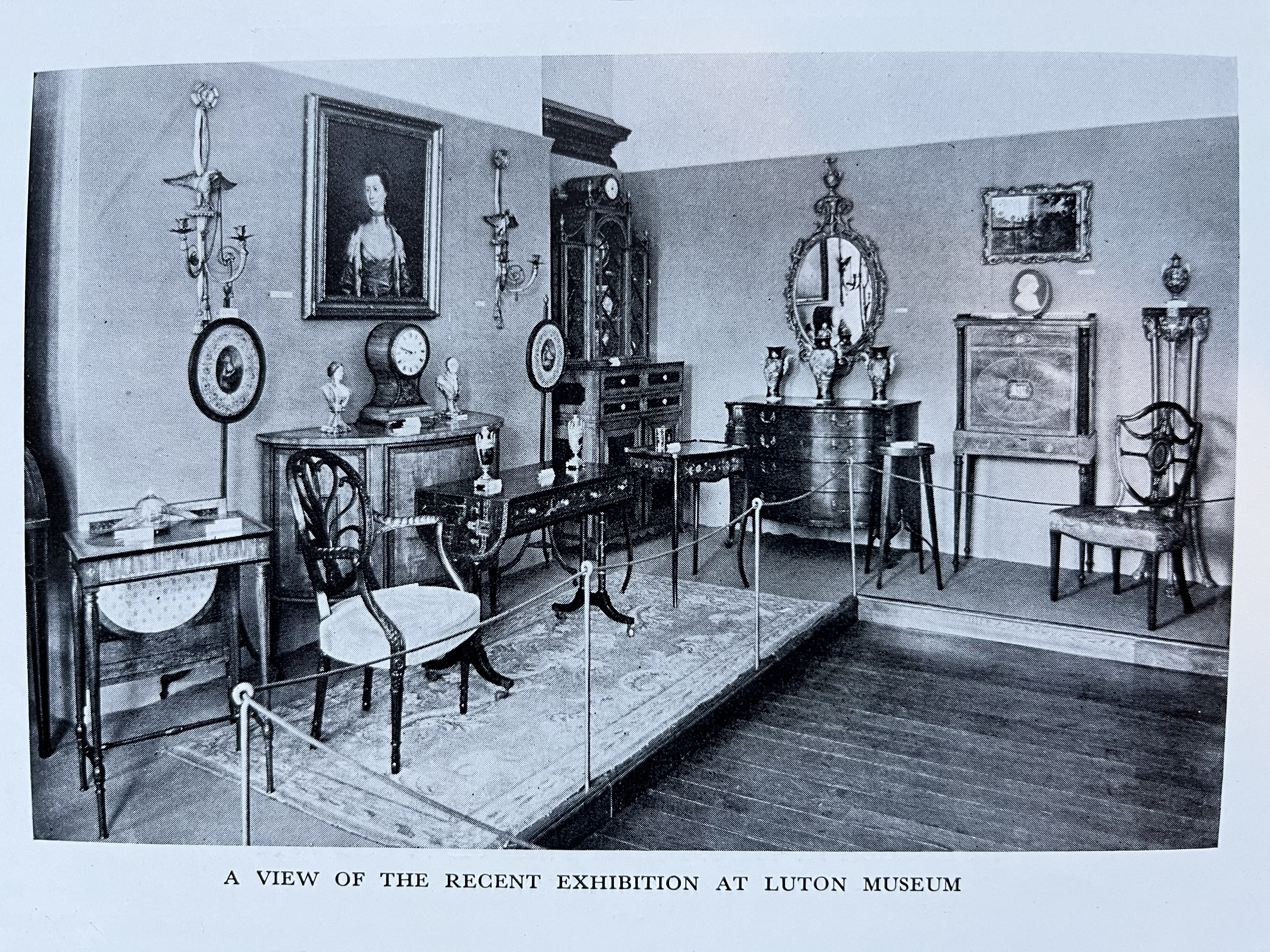
The arrangement of the exhibits at the museum also seemed to mirror the displays of antiques at major antique fairs at the time – such as those at the Antique Dealers Fair held at the Grosvenor House Hotel from 1934 – as one might expect of course – the overlap between modes of display in the worlds of commerce and in the public museum are often much closer than one thinks.
The Luton Public Museum ‘In the Days of Queen Charlotte‘ exhibition, 1939, from Connoisseur, September 1939. Photograph, Antique Dealer Research Project, University of Leeds.
Indeed, all of these antique dealer organised exhibitions draw further attention to the close relationship between the market for antiques (as figured in the presence of antique dealers) and the role of the public museum as a frame for ‘decorative art’ (also known as ‘antiques’ of course). The exhibition I curated at The Bowes Museum back in 2019 – ‘SOLD! The Great British Antiques Story‘, was partly an attempt to draw the attention to the symbiotic relationship between the realm of the art market and the so-called ‘disinterested’ realm of the public museum. If you are interested, you can read more about this in the SOLD! exhibition catalogue – still available, for FREE, as a PDF download via the Antique Dealer Research Project Website HERE.
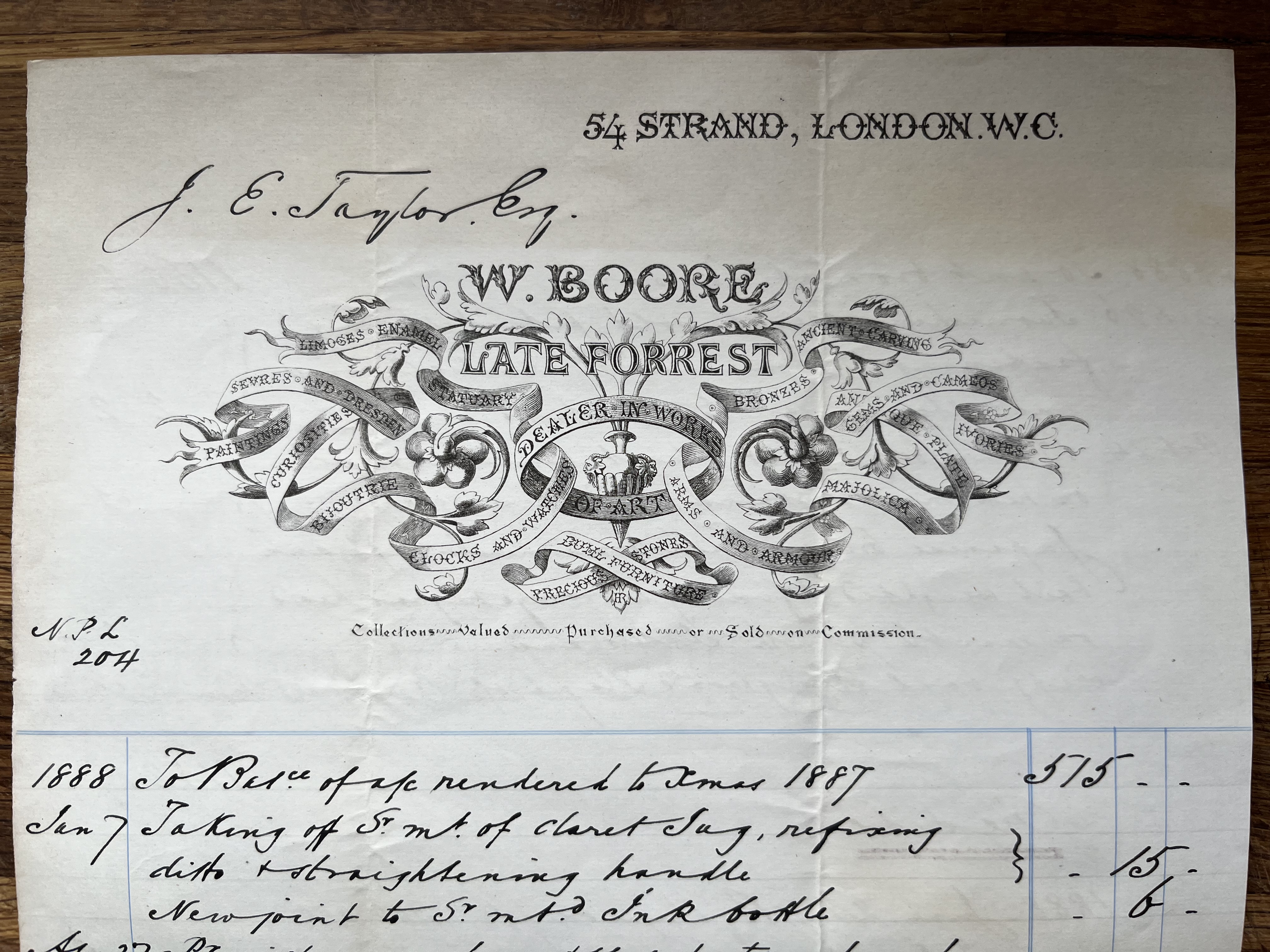
A very recent acquisition to the growing archive of antique dealer ephemera, gathered as part of the wider antique dealer research project, is a fascinating cache of invoices from the dealer William Boore (1815-1902), dating from the late 1880s to mid 1890s.
Invoice, W. Boore to J.E. Taylor, 1888. Private collection.
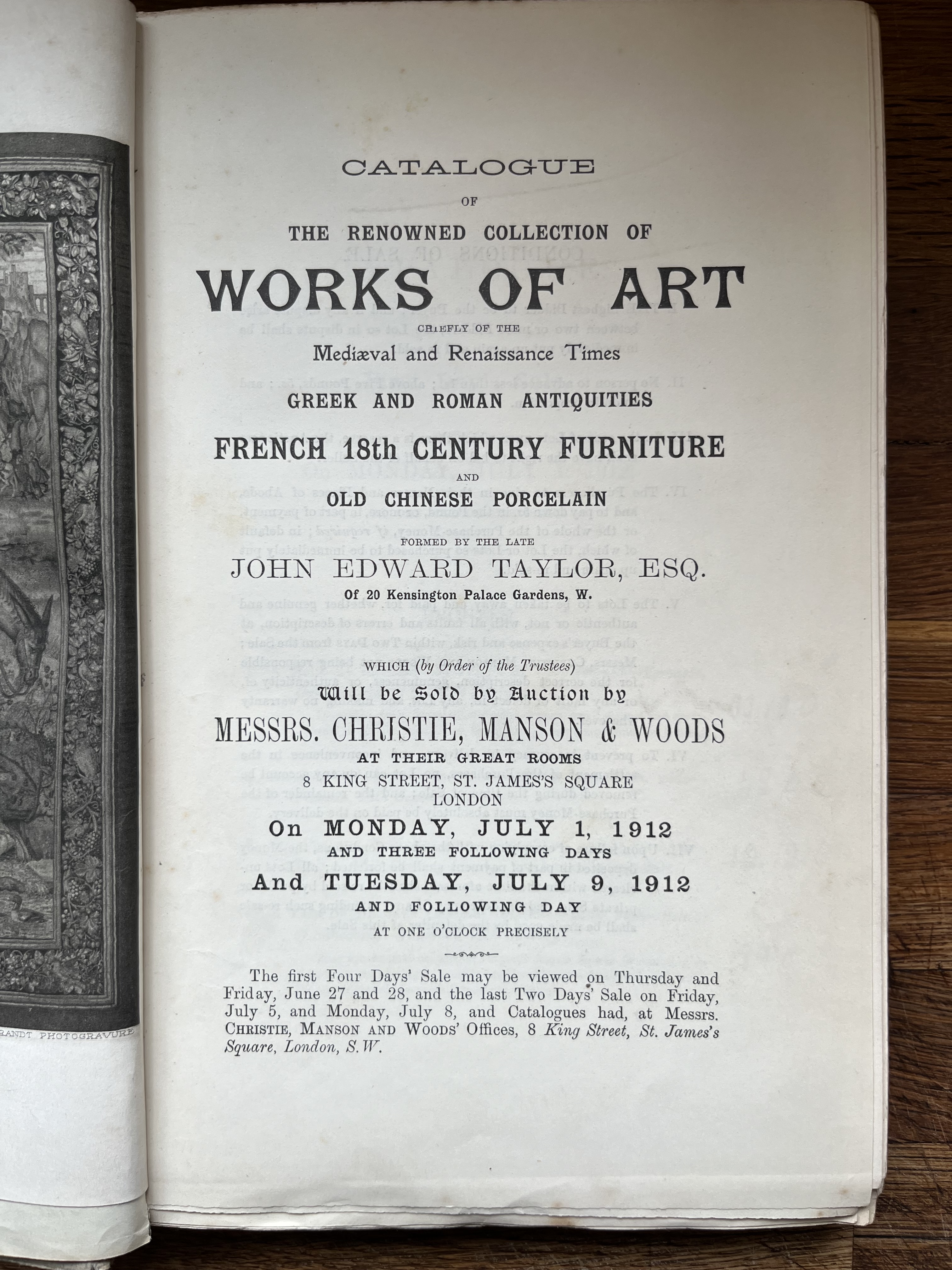
They relate to sales of antiques and jewellery by the dealer William Boore to John Edward Taylor (1830-1905), the prominent newspaper proprietor and owner of the Manchester Guardian, which had been founded by his father John Edward Taylor (1791-1844). John Edward Taylor the younger was a major art collector; he donated many watercolour paintings to The Whitworth Art Gallery in Manchester and to the Victoria & Albert Museum in London in the 1890s. His extensive collection of paintings, sculptures a very wide range of antiques was sold at auction by Christie’s in 1912, following the death of his widow, Martha Elizabeth Taylor (1828-1912). Here (below) is a cover of the auction catalogue of Taylor’s collection.
Christie’s auction catalogue of the John Edward Taylor collection; July 1912. Private collection.
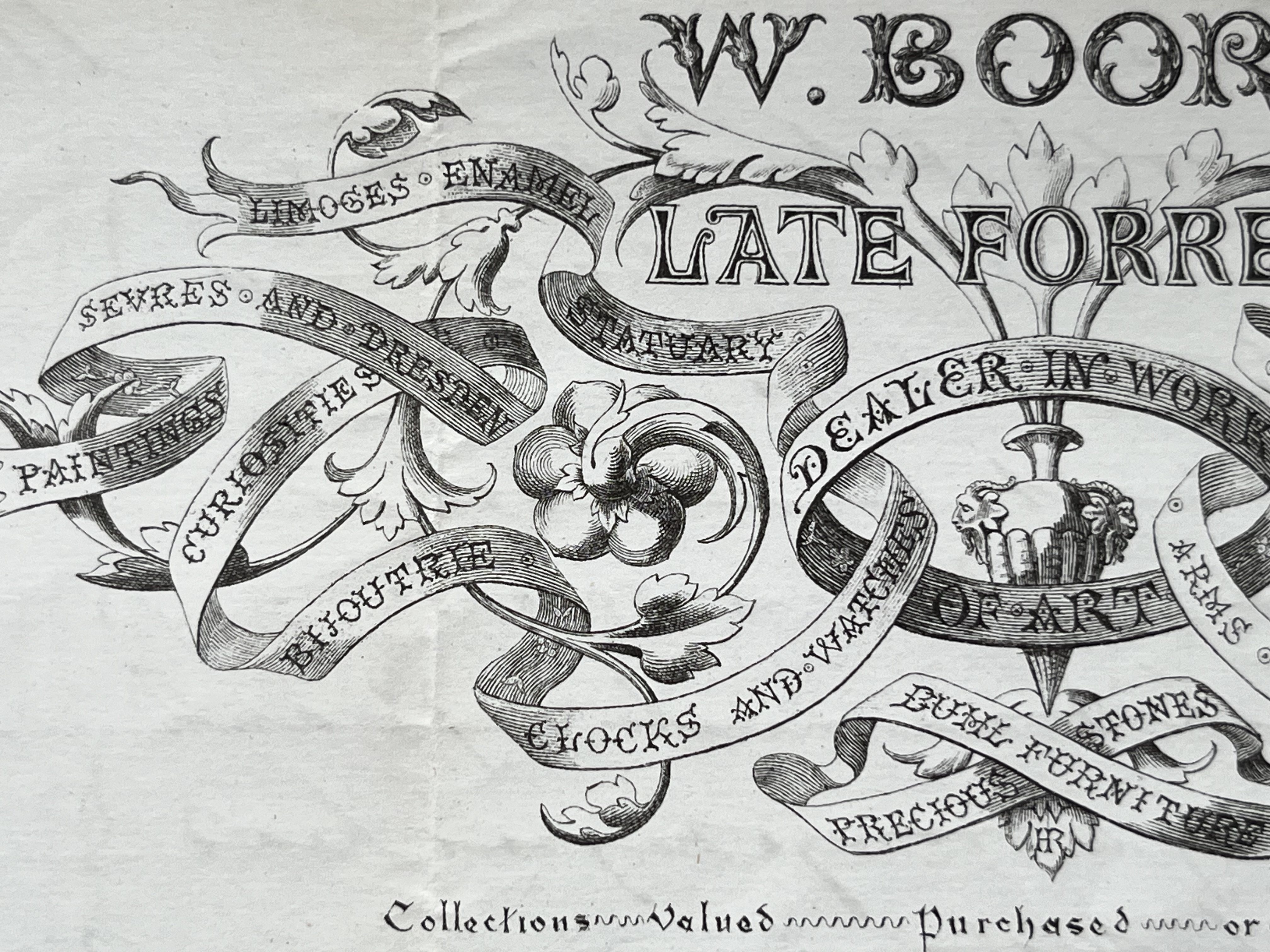
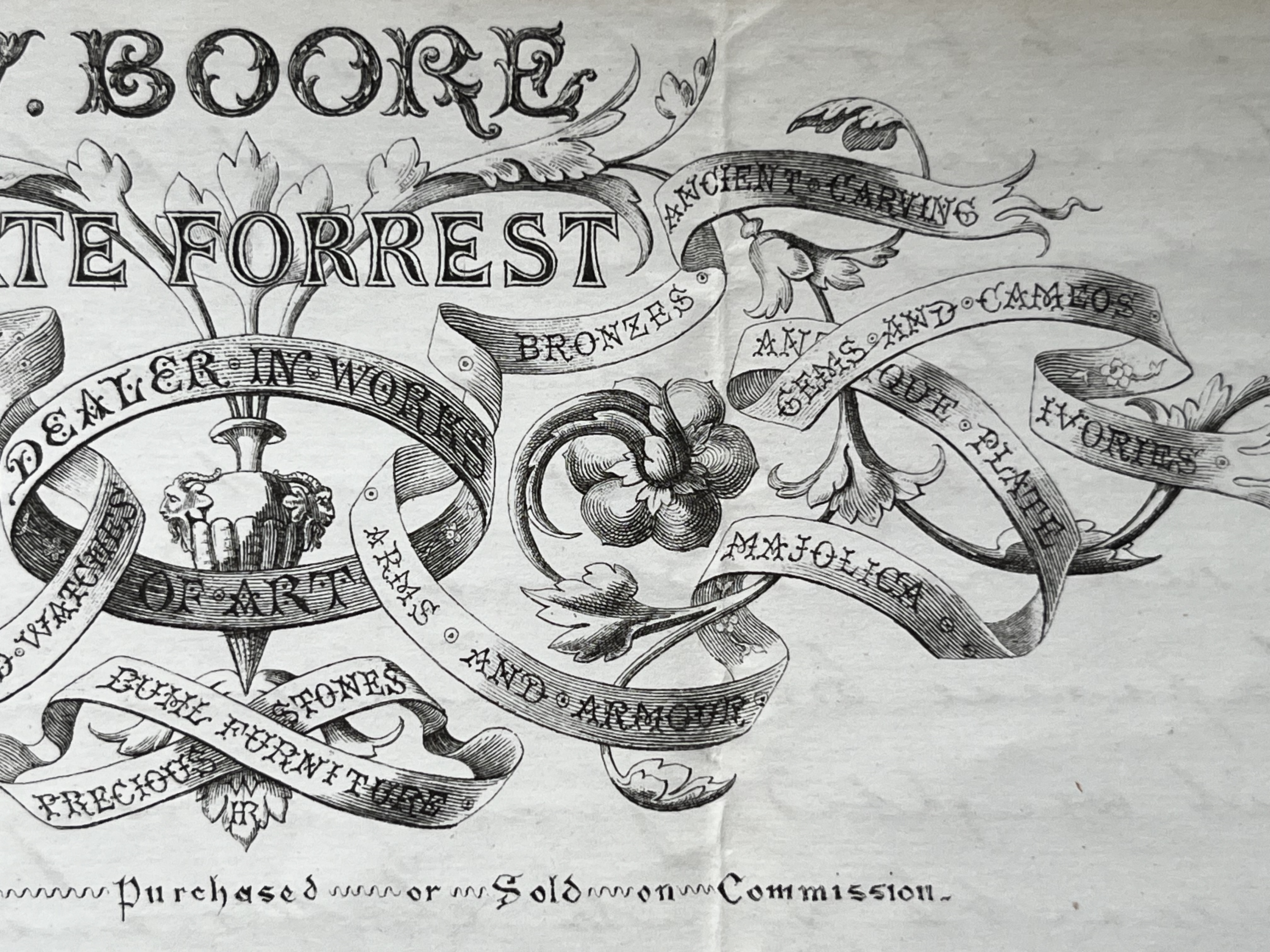
But of course, whilst this research blog is interested in collectors such as Taylor, it’s much more interested in the antique dealers that helped to assemble such collections. In fact, as well as the contents of the invoices of course and what they tell us about Taylor’s buying activities, what prompted me to acquire the cache of letters was the printed invoice headings themselves – ‘W. Boore, Late Forrest’ as they state – which connects William Boore with one of the most famous antique dealers of the 19th century, William Forrest (1798-1854).
Indeed, the writer George Retford, publisher of the famous Art Sales: a history of sales of pictures and other works of art (2 vols. 1888), described William Forrest as ‘the best informed dealer of his day’. He began trading in Edinburgh in the 1820s, but by the late 1830s he was in London at 54 Strand trading as ‘jeweller and dealer in silver plate and curiosities’. He died in Paris on 14th October 1854. Forrest sold antiques and curiosities to all the major collectors of the first half of the 19th century, including Ralph Bernal (1783-1854) and A.W. Franks (1826-1897); he was also a regular buyer at key auction sales such as those at Strawberry Hill, the collection assembled by Horace Walpole (1717-1797) and sold by the auctioneer George Robins (1777-1847) in 1842, and at the auction of the contents of Stowe in 1848.
It seems that William Boore not only took over Forrest’s shop in Strand, but also seems to have continued the business? He certainly seems to have deliberately drawn from the high profile and reputation that Forrest had amongst collectors of antiques by highlighting Forrest’s name in his invoices. What is also interesting (to me at least!) is how Boore highlights in his invoice headings of a range of antiques and curiosities that hark back to the practices of early 19th century dealers such as Forrest. The printed invoice heading, dating from late 1880s, lists a range of objects that would have been very familiar to Forrest in the 1840s – ‘Paintings, Curiosities, Sevres and Dresden [porcelains], Limoges Enamel, Statuary, Bijoutrie [jewellery, trinkets], Clocks & Watches, Precious Stones, Buhl Furniture [Boulle], Bronzes, Ancient Carvings, Arms & Armour, Gems and Cameos, Antique Plate [silver], Ivories, Majolica [ceramics]…all under the main heading of ‘Dealer in Works of Art’ – (see below).
Invoice, W. Boore to J.E. Taylor, 1888. Private collection.Invoice, W. Boore to J.E. Taylor, 1888. Private collection.
Boore continued the tradition of Forrest, selling antiques to major collectors of course; as well as selling to John Edward Taylor, William Boore also counted George Salting (1835-1909), who left his collections of paintings to the National Gallery, his prints and drawing to the British Museum, and his antiques to the Victoria & Albert Museum, as a customer.
And if you are interested in finding out more about dealers such as William Forrest, you can always consult my Biographical Dictionary of 19th century antique & curiosity dealers (2009 & 2011) – it’s FREE and online at the White Rose Research Online
And for those provenance researchers out there – the invoices from William Boore don’t seem to point to any of the objects that were sold at Christie’s in 1912? But I’ll keep looking!
And thanks to Sarah Chalkie Cloonan for directing our attention to the auction sale(s) of the stock of William Boore, sold at Christie’s in London in May 1902 – there appear to have been 2 auction sales over 3 days, 5th-7th May 1902. The first was devoted to the ‘Extensive and Valuable Stock of Jewels and Old English Plate of Mr. William Boore; the second was devoted to the ‘Valuable Stock of Old Sevres, Dresden and English Porcelain and Objects of Art, Decorative Furniture, Old Chinese Porcelain etc’. Boore died on 28th March 1902 at his house Clifton Cottage, Oatlands Park, Surrey, aged 87; he left a considerable sum of money, £97,704. 7s. 1d.
Sarah also directed our attention to William Boore’s daughter, Mabel Frances Boore (1862-1950) (William and his wife Stella had two daughters, Mabel and Ada Stella Boore). Mabel F. Boore donated dozens of pieces of antique silver (perhaps legacies of her father William) to the V&A Museum in 1939.