Posts tagged ‘The Ashmolean Museum’

October 25, 2026

Behind the Scenes of the Year of the Dealer 16 – R.A. Lee at Temple Newsam

Our next in the series ‘Behind the Scenes of the Year of the Dealer’ returns to Temple Newsam and the film that focuses on the antique dealer R.A. Lee – you can see the final version of the film HERE.

For this ‘Behind the Scenes’ we can recount a fascinating story about Ronald A. Lee, as told to us by his daughter Georgina Gough. You can also hear Georgina in the YoD films telling us about her father and the R.A. Lee business, both in the Temple Newsam film of course, and in the other YoD film devoted to R.A. Lee at the V&A South Kensington. We also did an oral history interview with Georgina as part of the Voices of the Trade strand of the research project – you can read more about that HERE.
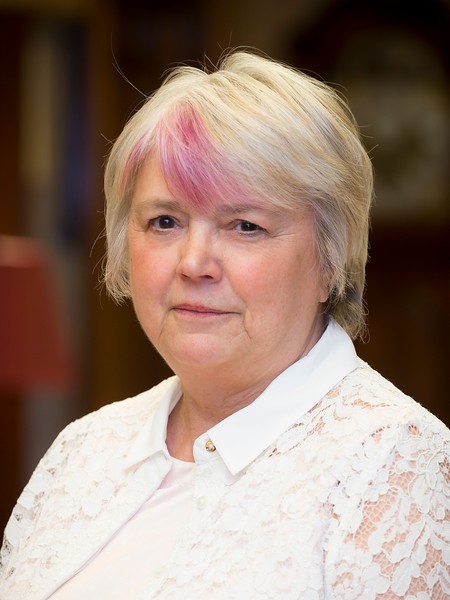
Georgina Gough. Photograph courtesy of Georgina Gough, 2015.

Georgina’s story is related to another object that Ronald Lee sold to a museum, this time a ’13th century Ciborium’ sold to The National Museum of Scotland in Edinburgh by R.A. Lee in 1966. As some of our readers will know, originally there were to be 7 YoD trails, before Covid 19 intervened, and The National Museum of Scotland was initially part of the larger group of museums we had planned for the YoD trails. In fact, as well as the five existing YoD partner museums (Temple Newsam, Lady Lever Art Gallery, The Bowes Museum, V&A Museum and Preston Park Museum), we had also included The Ashmolean Museum as part of the YoD, but for various reasons, all arising from the Covid pandemic, we could no longer include The Ashmolean Museum and National Museum of Scotland. The YoD was an awful lot of work, so maybe creating films of another 20 objects in another 2 museums would have been a bit of a stretch; but Ronald Lee’s Ciborium would certainly have been part of the YoD films at National Museum of Scotland had they gone ahead.

Anyway, Georgina’s story about her father does help us highlight yet another example of the relationship between antique dealers and public museums and recounts a lovely story about her father, Ronald Lee and his wife Betty. As Georgina recalls, Ronald bought his wife Betty a present, a small pierced 13th century copper-gilt circular foot, seemingly from the base of a cup or a bowl – Ronald gave Betty this small part-object sometime in the 1950s (see below). Ronald paid £30 for the 13th Century circular foot, and Georgina recalls that Betty placed the small object on the mantlepiece at home – which at that date would have been Ormeley Lodge on Ham Common to the south west of London.
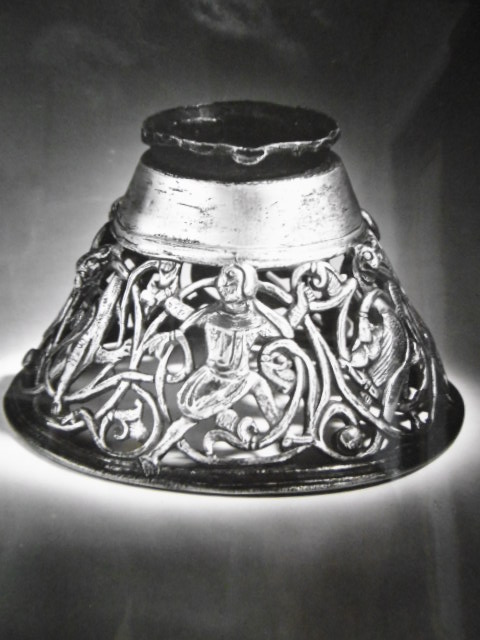
13th century Cooper-gilt circular foot that Ronald Lee gave to his wife Betty. Photograph, Antique Dealer Research Project, University of Leeds.

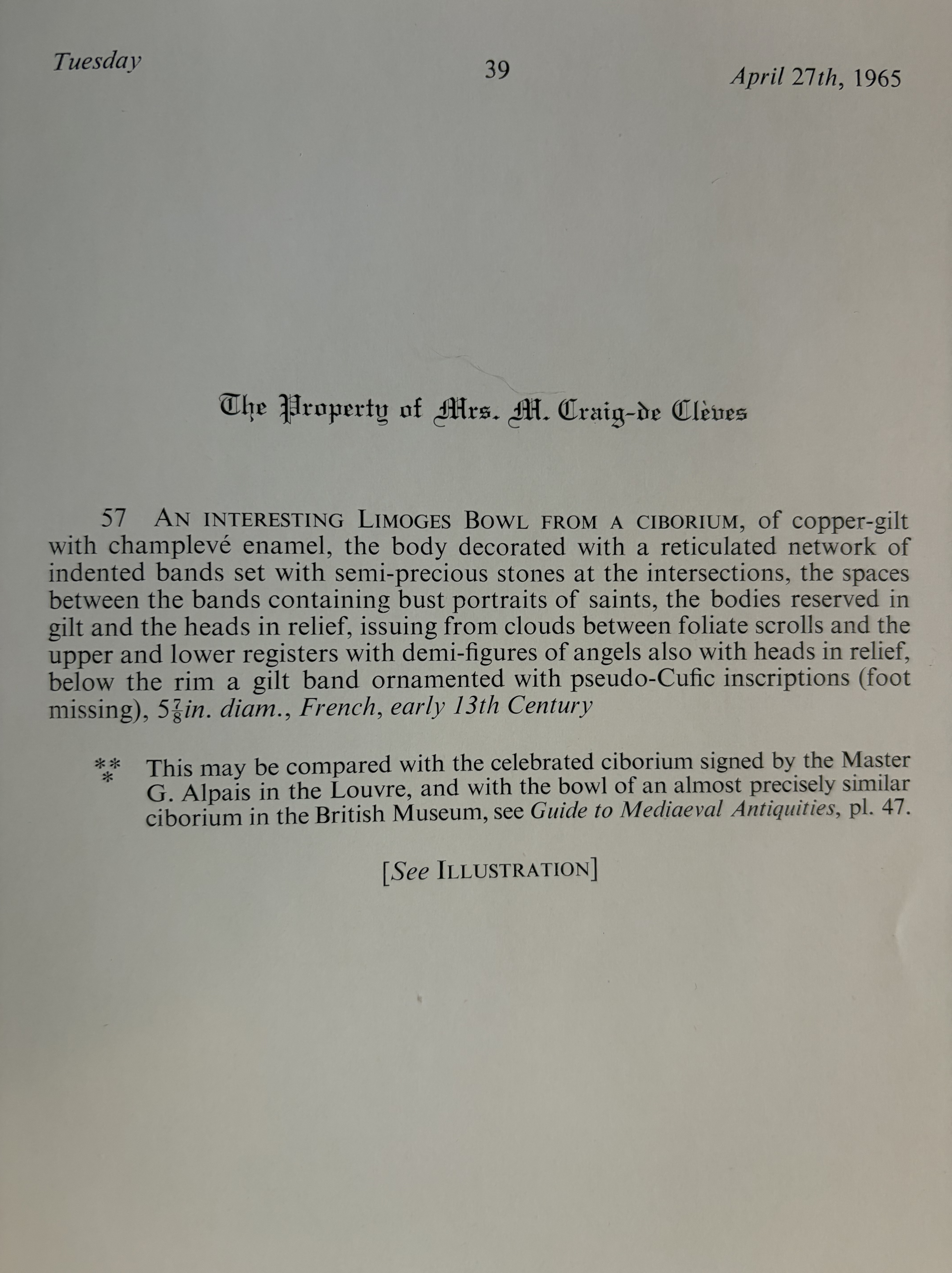
In late April 1965, Ronald went, as usual, to a view an auction sale at Sotheby’s in New Bond Street – ‘Highly Important Medieval Works of Art, Limoges Painted Enamels and a St. Porchaire Salt’ (Sale Tuesday 27th April 1965). Amongst the things he saw was Lot 57, ‘AN INTERESTING LIMOGES BOWL FROM A CIBORIUM, of copper-gilt with champleve enamel…..(foot missing)…French, early 13th Century’, The Property of Mrs. M. Craig-de Cleves’. (see below).
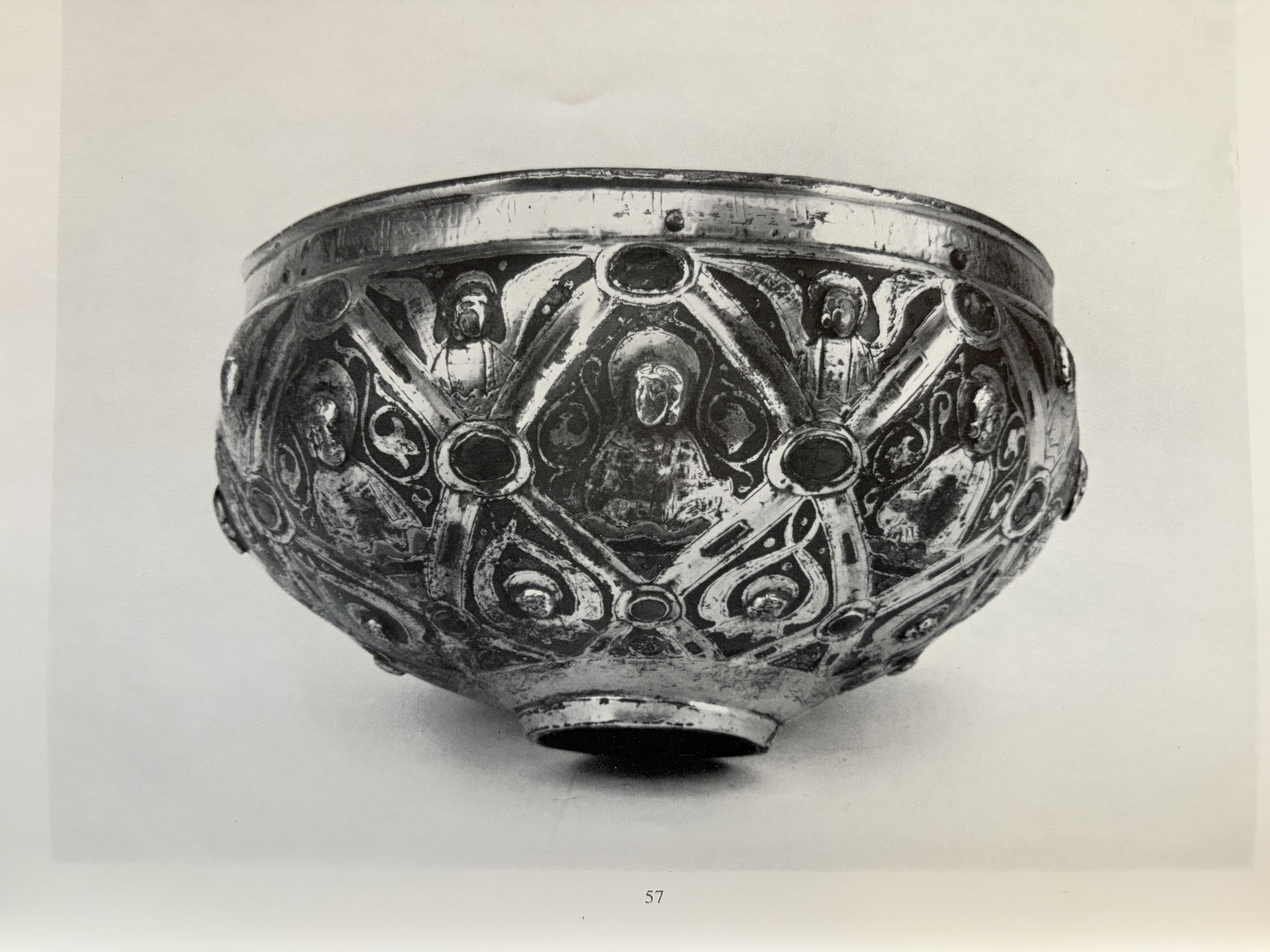
13th Century Ciborium Bowl. Sotheby’s auction sale April 27th 1965, Lot 57. Photograph Sotheby’s.
Auction catalogue entry for the 13th Century Ciborium Bowl, Sotheby’s Lot 57, auction sale 27th April 1965.

Like many antique dealers, Ronald seems to have had a form of photographic memory and he recalled the small copper-gilt foot on the mantlepiece at home. Georgina remembers the story, which was also reported in the Press at the time – her father rushed home, popped the circular foot in his pocket and returned to Sotheby’s where he surreptitiously offered the foot to the bowl – and like Cinderella’s slipper if fitted perfectly!

Ronald bought the bowl, paying £2,600 for it at the auction. The newspaper report quoted Ronald – ‘he supposed it would still have to belong to his wife, but if any museum was really anxious to have it, they might be willing to let it go’. Georgina does not recall how such a conversation went, but Ronald offered the bowl, now with its foot, in a selling Exhibition of Works of Art and Antiques held at his home/shop at Byfleet Manor in Surrey in June 1965, where it was fully described, and was one of only 3 full colour images in the catalogue (see below).
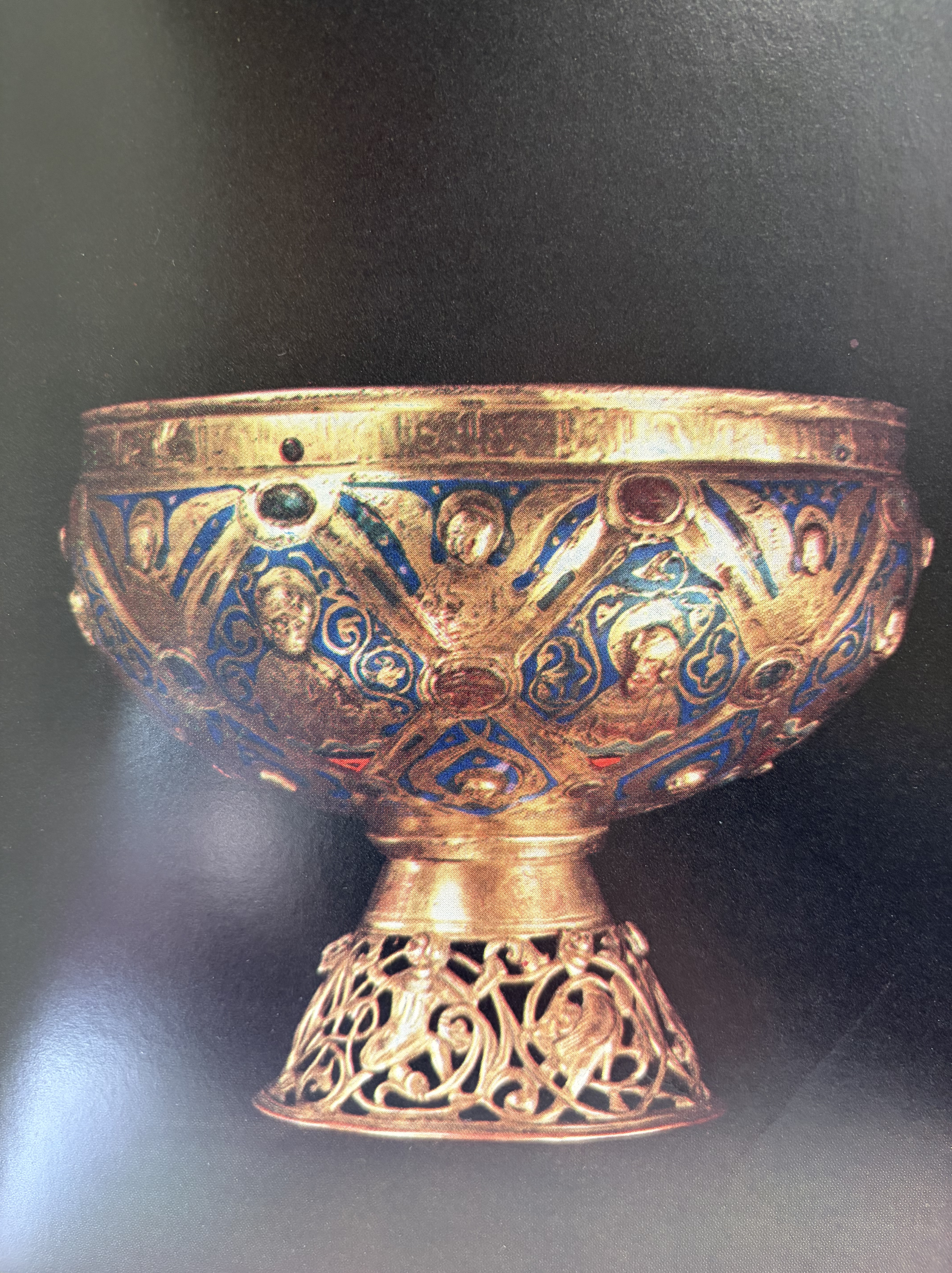
13th Century Limoges Ciborium illustrated in the R.A. Lee Exhibition of Works of Art and Antiques, June 1965. Photograph, Antique Dealer Research Project, University of Leeds.

Of course R. A. Lee did sell the Ciborium Bowl with its foot – it was sold in August 1966 to the National Museum of Scotland for £8,500. It remains in their collection – see HERE.
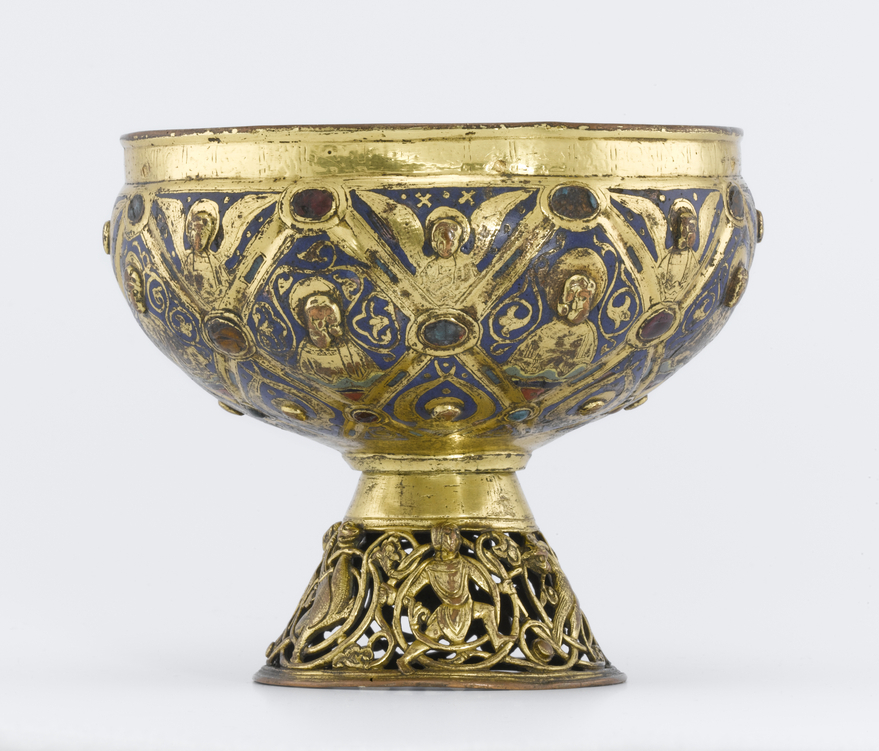
Ciborium, French, probably 19th century. National Museums Scotland. Acquired with contributions from Friends of the Royal Scottish Museum, The Railton Bequest and HM Treasury, 1966. Photograph, copyright NMS.

Perhaps the sad part of the story is not that Ronald sold his wife’s present (Betty must have agreed), but that the Ciborium has subsequently been reassessed and is now thought to be a 19th century copy. Notwithstanding this, Ronald Lee’s reuniting the foot to the bowl is such a brilliant story and one we would have told had we managed to include National Museum of Scotland in the YoD digital trails!

[I am reminded that we’ve highlighted the story about R A Lee and the ciborium before…in the blog in July 2017 but it’s such a lovely story!….and was nearly 10 years ago!….but do read the earlier version too!]

Do look out for the next in the series of ‘Behind the Scenes of the Year of the Dealer’.

Mark

June 26, 2019

Year of the Dealer starts!

We are very excited to announce that the ‘Year of the Dealer’ project has officially started – the new project website is being constructed (thanks to Peter Edwards in University of Leeds, Arts, Humanities & Cultures Faculty IT team) – you can see the new website here – Year of the Dealer website 

The ‘Year of the Dealer’ project is a collaboration between the University of Leeds, the University of Southampton, 7 major national and regional museums (The Victoria & Albert Museum, The National Museum, Scotland, The Ashmolean Museum, The Lady Lever Art Gallery, The Bowes Museum, Temple Newsam, Preston Park Museum and the Stanley & Audrey Burton Gallery), together with a regional community theatre (The Witham, Barnard Castle) and one of the UK’s leading antique dealing businesses (H. Blairman & Sons). The project runs from 1st June 2019 until 31st May 2020 and is an ‘Impact and Engagement’ project funded (£100,000) by the Arts and Humanities Research Council (AHRC). Over the next 12 months  the Year of the Dealer will be organizing a series of events, activities and museum object trails, using the research arising from the AHRC funded (£231,592) research project ‘Antique Dealers: the British Antique Trade in the 20th century’ AH/K0029371/1 (2013-2016).

C. Charles, Brook Street shop interior, c.1903. Photograph, Connoisseur 1903.

Through these events and activities the project aims to draw attention to the relationships between the art market and public museums and to share expertise, experience and perspectives among stakeholders and to increase public engagement with the significance of the history of the antique trade in British cultural life.

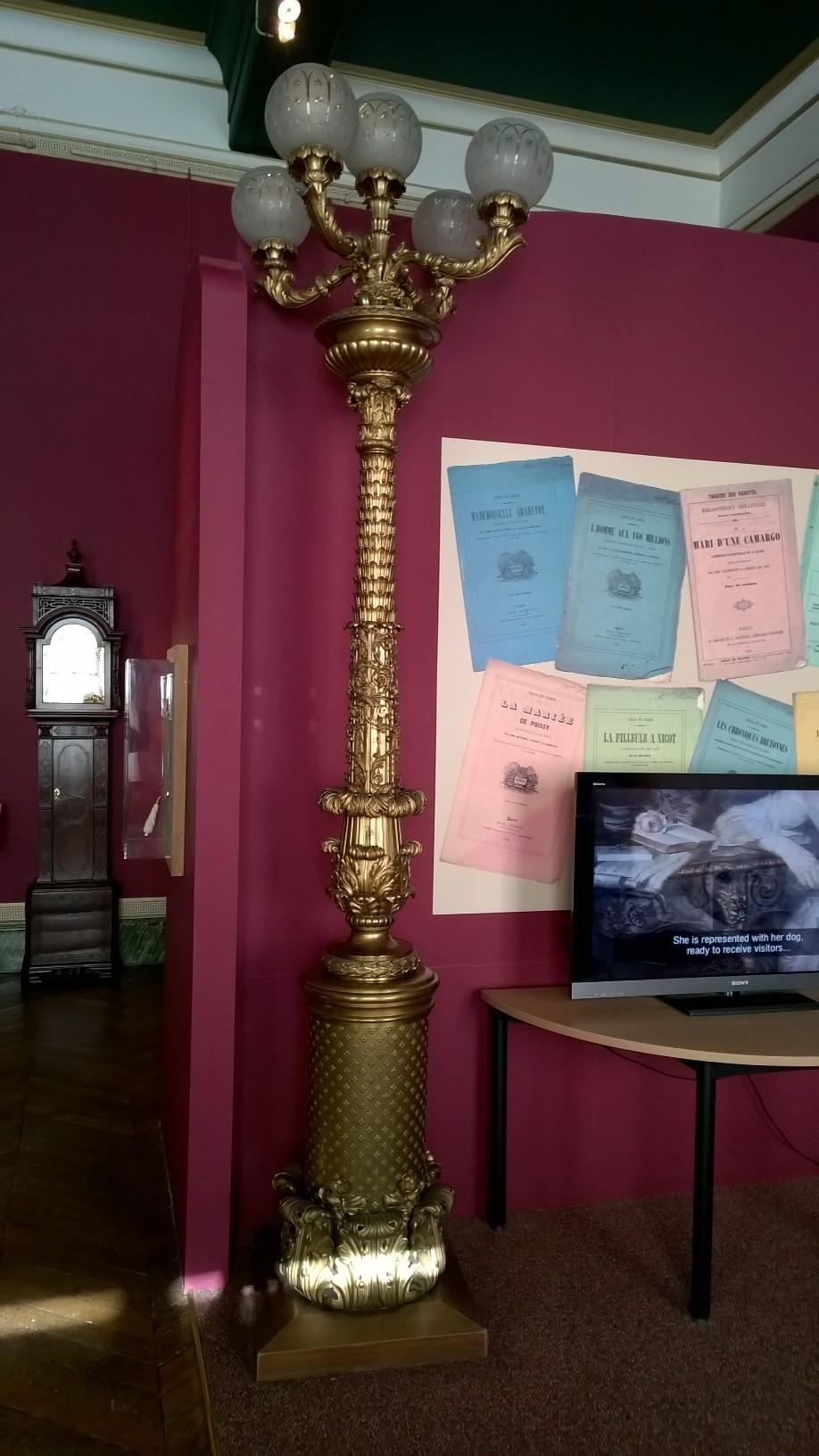
The Year of the Dealer will reveal new and previously marginalised stories of world-renowned and familiar museum objects through the co-production of a series of 7 museum ‘hidden history’ trails; each trail will have a curated selection of up to 20 museum objects foregrounding the history of antique dealers in the biography of the museum object.  So, for example, at The Bowes Museum, we will be drawing renewed attention to some of the museum objects by telling the story about the antique dealers who sold the object to the museum – this rare pair of gilded bronze lamps, made by William Collins in 1823………..

One of a pair of gilded bronze lamps at The Bowes Museum. Photograph, antique dealers project 2018.

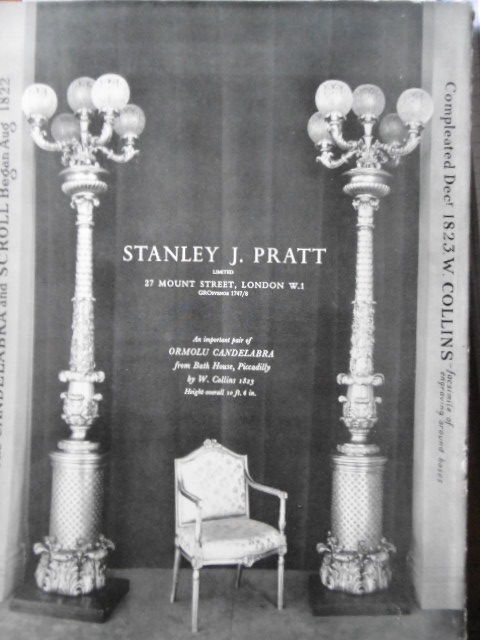
…………………..will be reinterpreted through the Year of the Dealer trail in the museum as a pair of lamps sold to the Bowes Museum in 1960 by Stanley J. Pratt, a leading antique dealer then trading in ultra-fashionable Mount Street, London.  How Pratt acquired the lamps and how they ended up at The Bowes Museum will be key elements in the ‘story’ about the objects. Stanley Pratt came from a well-known family of antique dealers dating back into the 19th century; indeed the Pratt family of dealers were established, according to their own publicity, in 1860, and so sold the lamps to The Bowes Museum in their centenary year!

Advertisement by Stanley J. Pratt illustrating the pair of gilded bronze lamps. Connoisseur, June 1960.

Besides the 7 museum trails, the project will also stage 4 art market themed knowledge exchange workshops and 3 public engagement ‘In Conversation’ events, hosted by the partner museums. The workshops will consider the relationships between the art market and public museums, drawing in historical and contemporary perspectives and will also consider the challenges and future opportunities for the relationships between museums and the art market.  The ‘In Conversation’ events invite key art market professionals, museum professionals, academics and commentators to discuss and debate the subject of the art market and public museums – all the events will be free, thanks to the Arts and Humanities Research Council (AHRC) funding.

Other activities as part of the Year of the Dealer project include museum front of house staff and volunteer training workshops at each of the 7 partner museums to ensure that the project research and objectives are disseminated and cascaded to the front-line interface with the public.

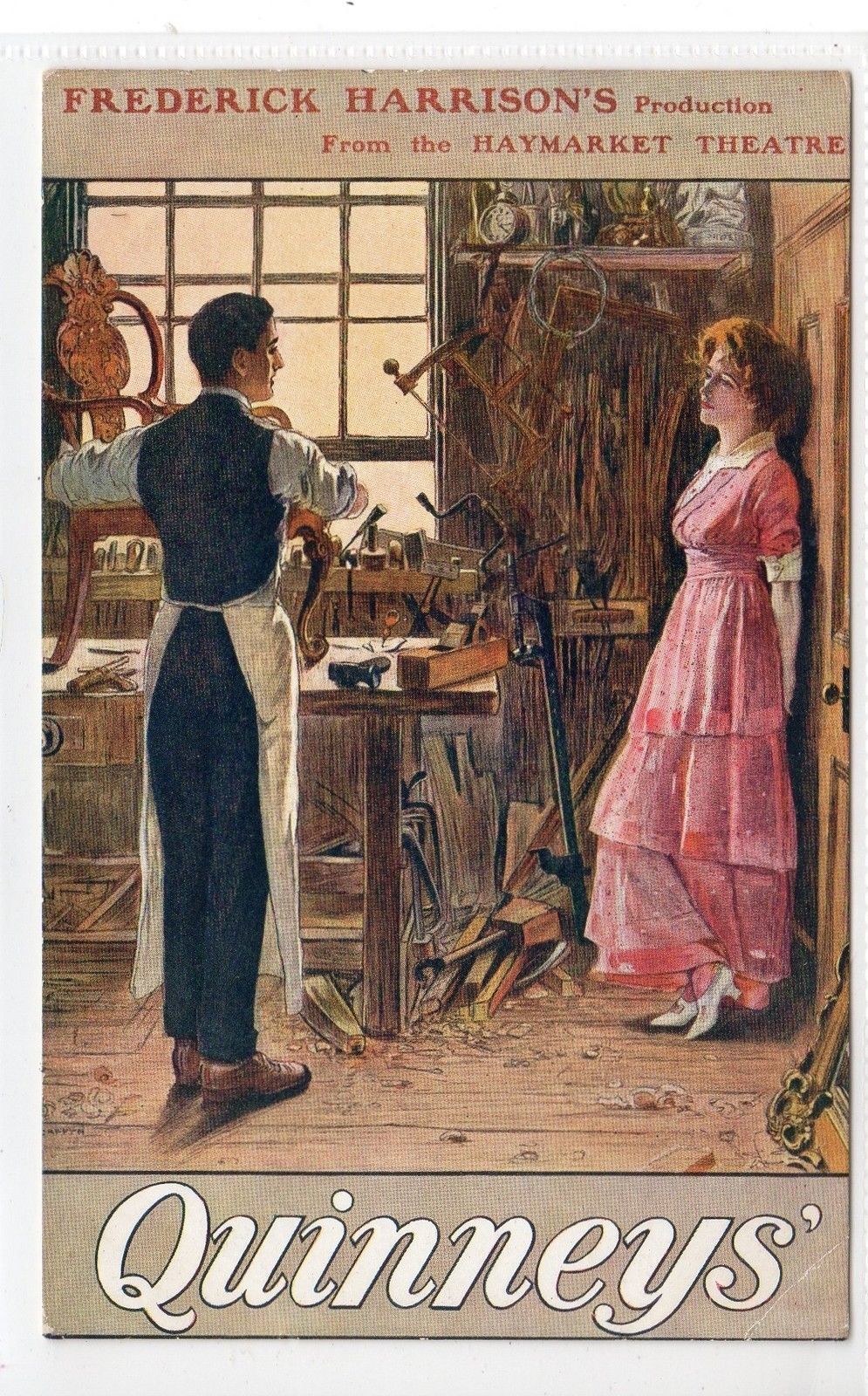
We will also be re-staging the play ‘Quinney’s (1915) at the Witham Theatre, Barnard Castle, and are organizing an associated workshop, ‘Dealing with Authenticity’ at The Bowes Museum, Barnard Castle.

Poster for Quinney’s production at Birmingham Theatre, 1925.

‘Quinney’s’ is the story of the fictional antique dealer Joseph Quinney. The play and the workshop aim to critically engage the general public with the central role that ‘authenticity’ has played in the art market, and to explore and critique the trope of the antique dealer as a problematic character, often associated with fakes and forgeries and the ‘love of money’. The workshop will be interdisciplinary in scope, drawing on theatre and performance studies and material culture studies as well as the history of antique dealers.

As you can see, there are plans for a very rich series of events, activities and collaborations over the course of the Year of the Dealer project – but we have a great team to help deliver the project – my colleague from University of Southampton, Dr Eleanor Quince, and Vanessa Jones, our project administrator, and my colleagues at the University of Leeds, Professor Jonathan Pitches and Dr George Rodosthenous, and of course all of the curators and staff at the all 10 collaborating partners and a small team of PhD research students to help keep the project on track!……it’s no doubt going to be exhausting, but we hope it will also be a really engaging project…and one that will have real Impact!

We hope to see you at some of the events – we already have some events fixed in the project calendar…so do keep an eye on the project website and the antique dealers research blog.

Mark

Home Subjects

a working group dedicated to the display of art in the private interior, c. 1715-1914

The Period Room: Museum, Material, Experience

An International Conference hosted by The Bowes Museum and The University of Leeds

H. Blairman & Sons Ltd

A research project investigating the history of the antiques trade in Britain in the 19th & 20th centuries

Museum Studies Now?

'Museum Studies Now?' is an event which aims to discuss and debate museum and heritage studies education provision.

The Burlington Magazine Index Blog

art writing * art works * art market

East India Company at Home, 1757-1857

A research project investigating the history of the antiques trade in Britain in the 19th & 20th centuries