Posts tagged ‘R.A. Lee’

October 25, 2026

Behind the Scenes of the Year of the Dealer 16 – R.A. Lee at Temple Newsam

Our next in the series ‘Behind the Scenes of the Year of the Dealer’ returns to Temple Newsam and the film that focuses on the antique dealer R.A. Lee – you can see the final version of the film HERE.

For this ‘Behind the Scenes’ we can recount a fascinating story about Ronald A. Lee, as told to us by his daughter Georgina Gough. You can also hear Georgina in the YoD films telling us about her father and the R.A. Lee business, both in the Temple Newsam film of course, and in the other YoD film devoted to R.A. Lee at the V&A South Kensington. We also did an oral history interview with Georgina as part of the Voices of the Trade strand of the research project – you can read more about that HERE.

Georgina Gough. Photograph courtesy of Georgina Gough, 2015.

Georgina’s story is related to another object that Ronald Lee sold to a museum, this time a ’13th century Ciborium’ sold to The National Museum of Scotland in Edinburgh by R.A. Lee in 1966. As some of our readers will know, originally there were to be 7 YoD trails, before Covid 19 intervened, and The National Museum of Scotland was initially part of the larger group of museums we had planned for the YoD trails. In fact, as well as the five existing YoD partner museums (Temple Newsam, Lady Lever Art Gallery, The Bowes Museum, V&A Museum and Preston Park Museum), we had also included The Ashmolean Museum as part of the YoD, but for various reasons, all arising from the Covid pandemic, we could no longer include The Ashmolean Museum and National Museum of Scotland. The YoD was an awful lot of work, so maybe creating films of another 20 objects in another 2 museums would have been a bit of a stretch; but Ronald Lee’s Ciborium would certainly have been part of the YoD films at National Museum of Scotland had they gone ahead.

Anyway, Georgina’s story about her father does help us highlight yet another example of the relationship between antique dealers and public museums and recounts a lovely story about her father, Ronald Lee and his wife Betty. As Georgina recalls, Ronald bought his wife Betty a present, a small pierced 13th century copper-gilt circular foot, seemingly from the base of a cup or a bowl – Ronald gave Betty this small part-object sometime in the 1950s (see below). Ronald paid £30 for the 13th Century circular foot, and Georgina recalls that Betty placed the small object on the mantlepiece at home – which at that date would have been Ormeley Lodge on Ham Common to the south west of London.
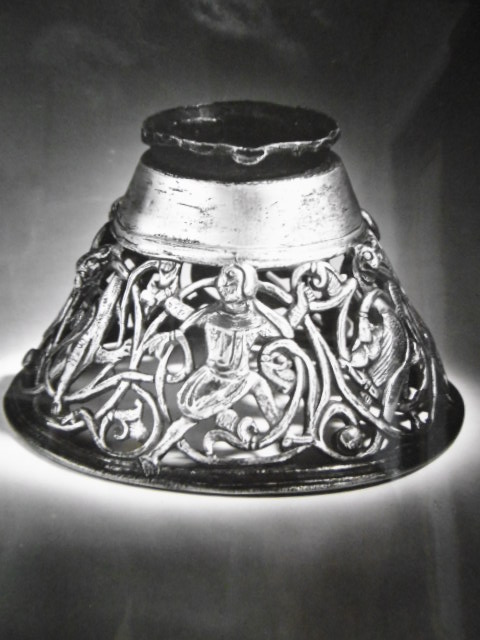
13th century Cooper-gilt circular foot that Ronald Lee gave to his wife Betty. Photograph, Antique Dealer Research Project, University of Leeds.

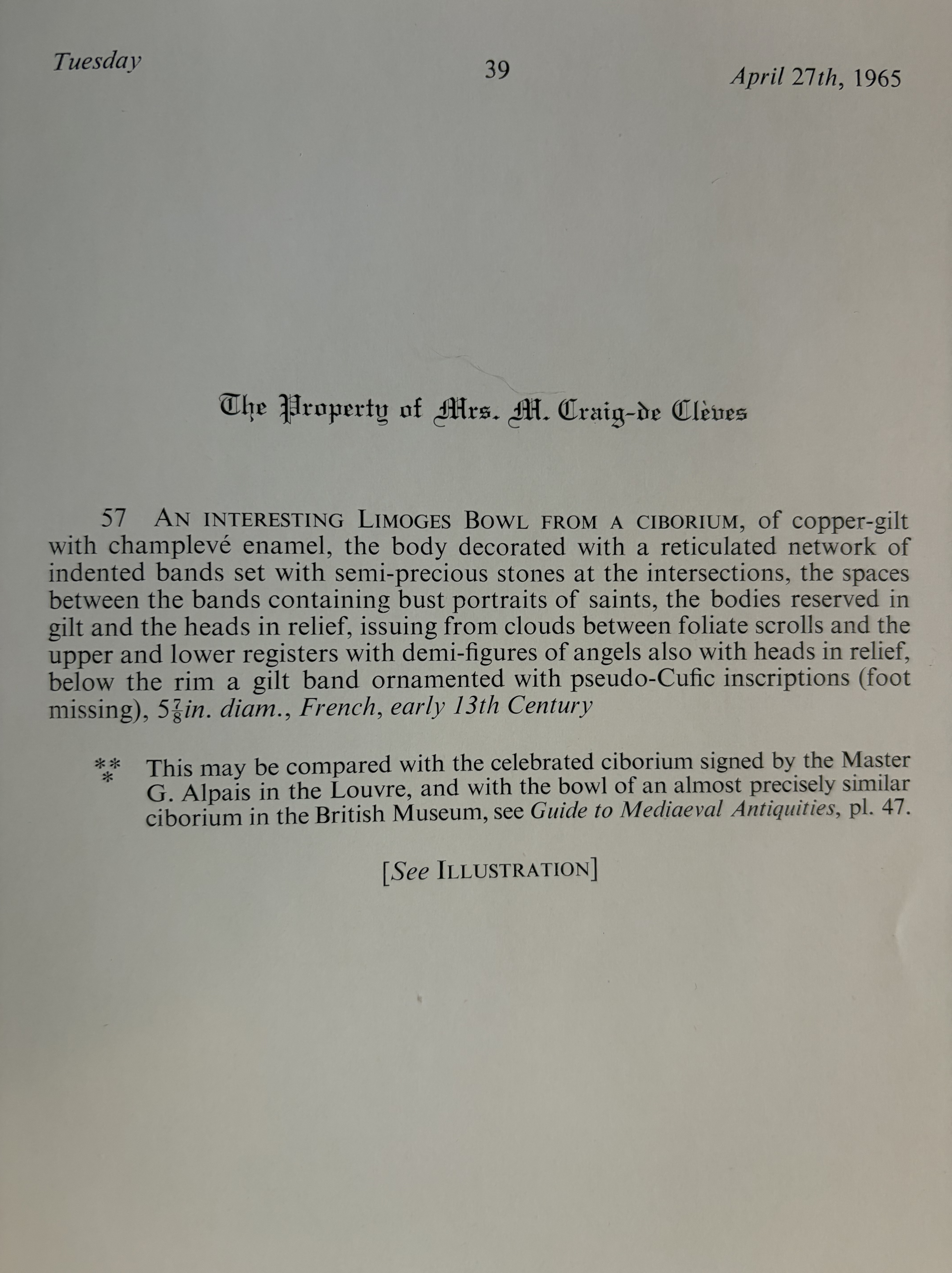
In late April 1965, Ronald went, as usual, to a view an auction sale at Sotheby’s in New Bond Street – ‘Highly Important Medieval Works of Art, Limoges Painted Enamels and a St. Porchaire Salt’ (Sale Tuesday 27th April 1965). Amongst the things he saw was Lot 57, ‘AN INTERESTING LIMOGES BOWL FROM A CIBORIUM, of copper-gilt with champleve enamel…..(foot missing)…French, early 13th Century’, The Property of Mrs. M. Craig-de Cleves’. (see below).
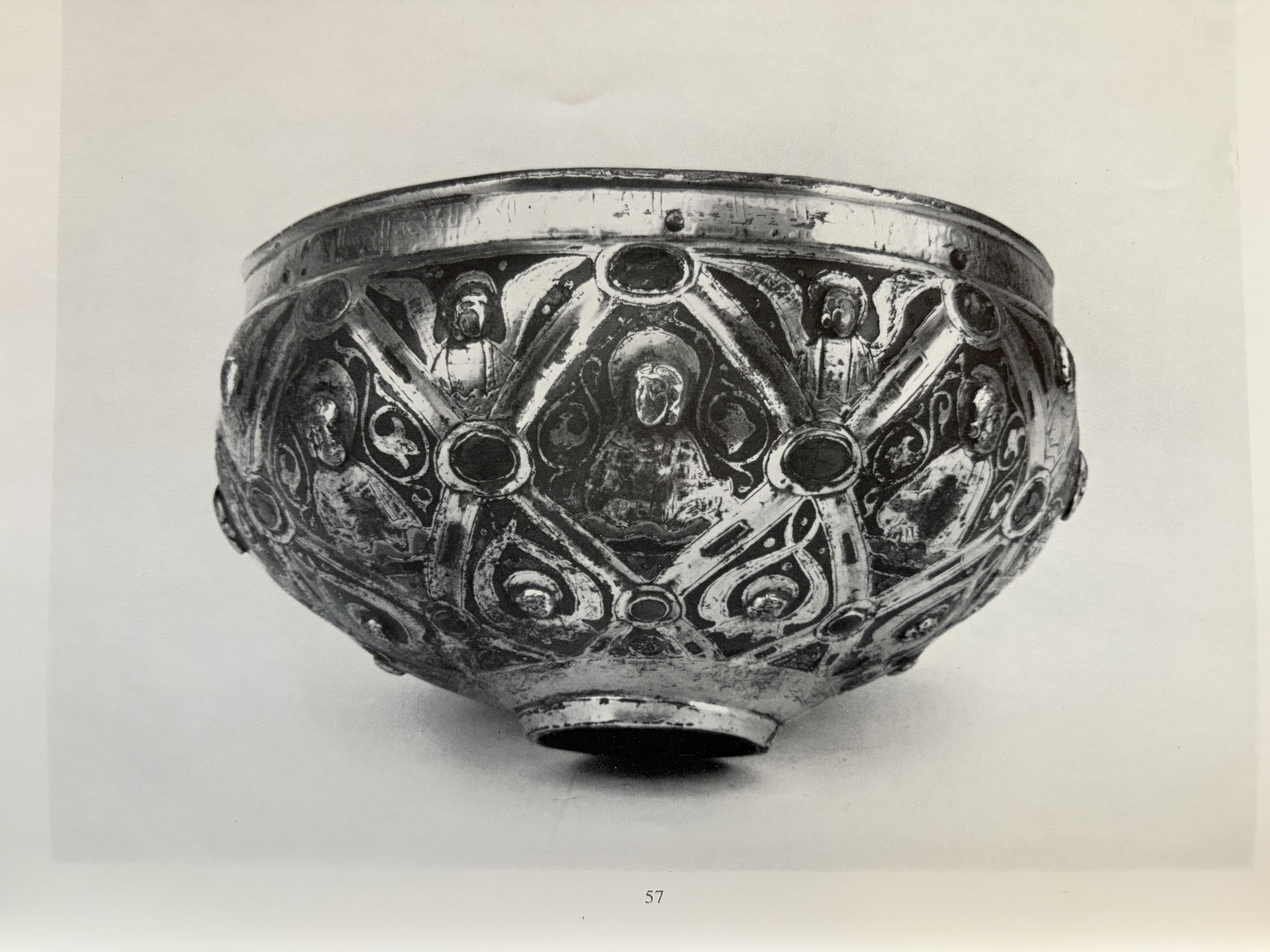
13th Century Ciborium Bowl. Sotheby’s auction sale April 27th 1965, Lot 57. Photograph Sotheby’s.
Auction catalogue entry for the 13th Century Ciborium Bowl, Sotheby’s Lot 57, auction sale 27th April 1965.

Like many antique dealers, Ronald seems to have had a form of photographic memory and he recalled the small copper-gilt foot on the mantlepiece at home. Georgina remembers the story, which was also reported in the Press at the time – her father rushed home, popped the circular foot in his pocket and returned to Sotheby’s where he surreptitiously offered the foot to the bowl – and like Cinderella’s slipper if fitted perfectly!

Ronald bought the bowl, paying £2,600 for it at the auction. The newspaper report quoted Ronald – ‘he supposed it would still have to belong to his wife, but if any museum was really anxious to have it, they might be willing to let it go’. Georgina does not recall how such a conversation went, but Ronald offered the bowl, now with its foot, in a selling Exhibition of Works of Art and Antiques held at his home/shop at Byfleet Manor in Surrey in June 1965, where it was fully described, and was one of only 3 full colour images in the catalogue (see below).
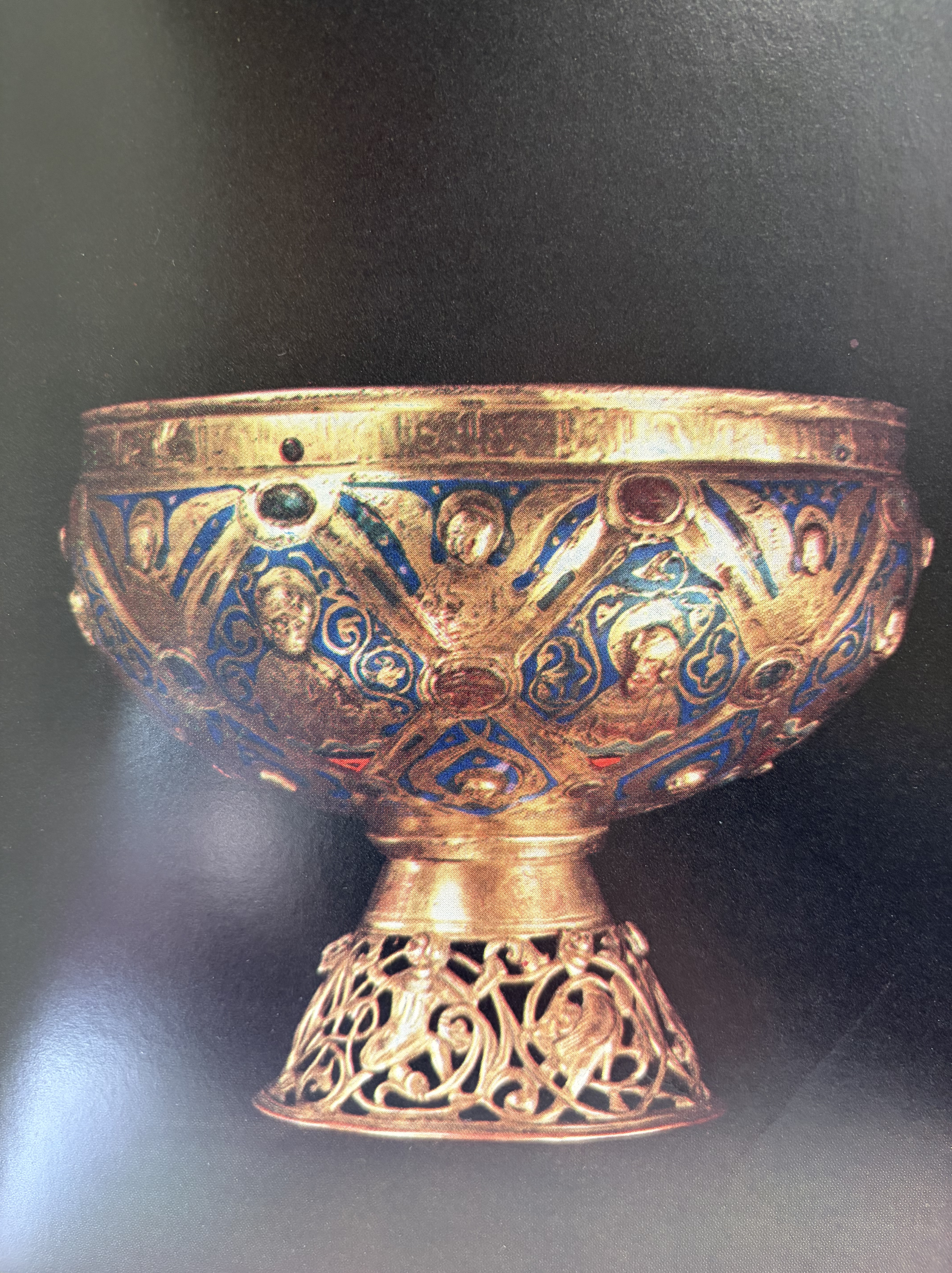
13th Century Limoges Ciborium illustrated in the R.A. Lee Exhibition of Works of Art and Antiques, June 1965. Photograph, Antique Dealer Research Project, University of Leeds.

Of course R. A. Lee did sell the Ciborium Bowl with its foot – it was sold in August 1966 to the National Museum of Scotland for £8,500. It remains in their collection – see HERE.
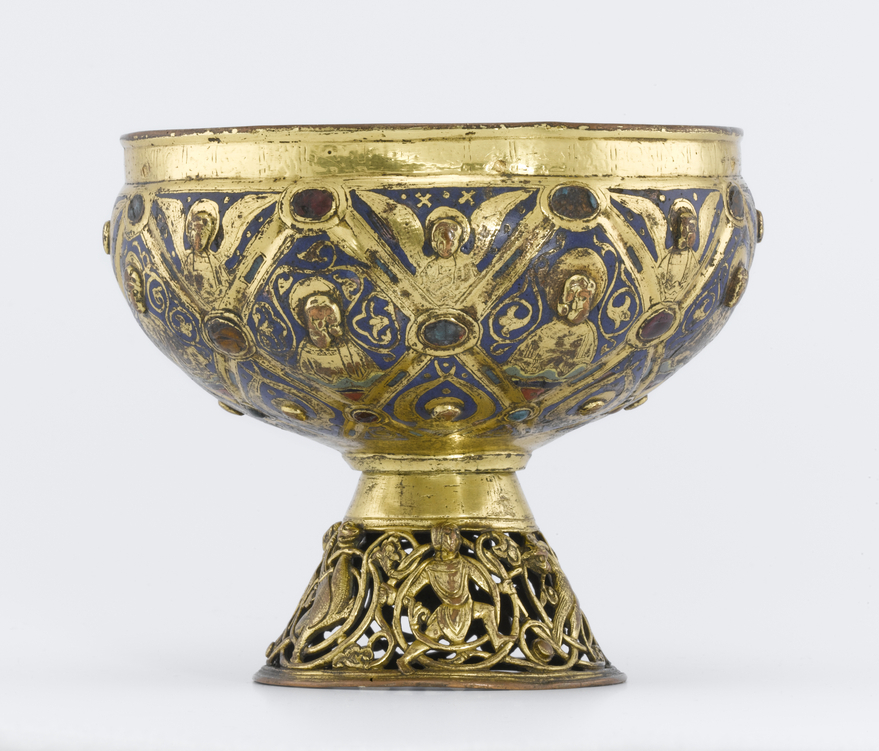
Ciborium, French, probably 19th century. National Museums Scotland. Acquired with contributions from Friends of the Royal Scottish Museum, The Railton Bequest and HM Treasury, 1966. Photograph, copyright NMS.

Perhaps the sad part of the story is not that Ronald sold his wife’s present (Betty must have agreed), but that the Ciborium has subsequently been reassessed and is now thought to be a 19th century copy. Notwithstanding this, Ronald Lee’s reuniting the foot to the bowl is such a brilliant story and one we would have told had we managed to include National Museum of Scotland in the YoD digital trails!

[I am reminded that we’ve highlighted the story about R A Lee and the ciborium before…in the blog in July 2017 but it’s such a lovely story!….and was nearly 10 years ago!….but do read the earlier version too!]

Do look out for the next in the series of ‘Behind the Scenes of the Year of the Dealer’.

Mark
March 31, 2021

More Antique Dealer Archives – Kent Gallery Ltd albums

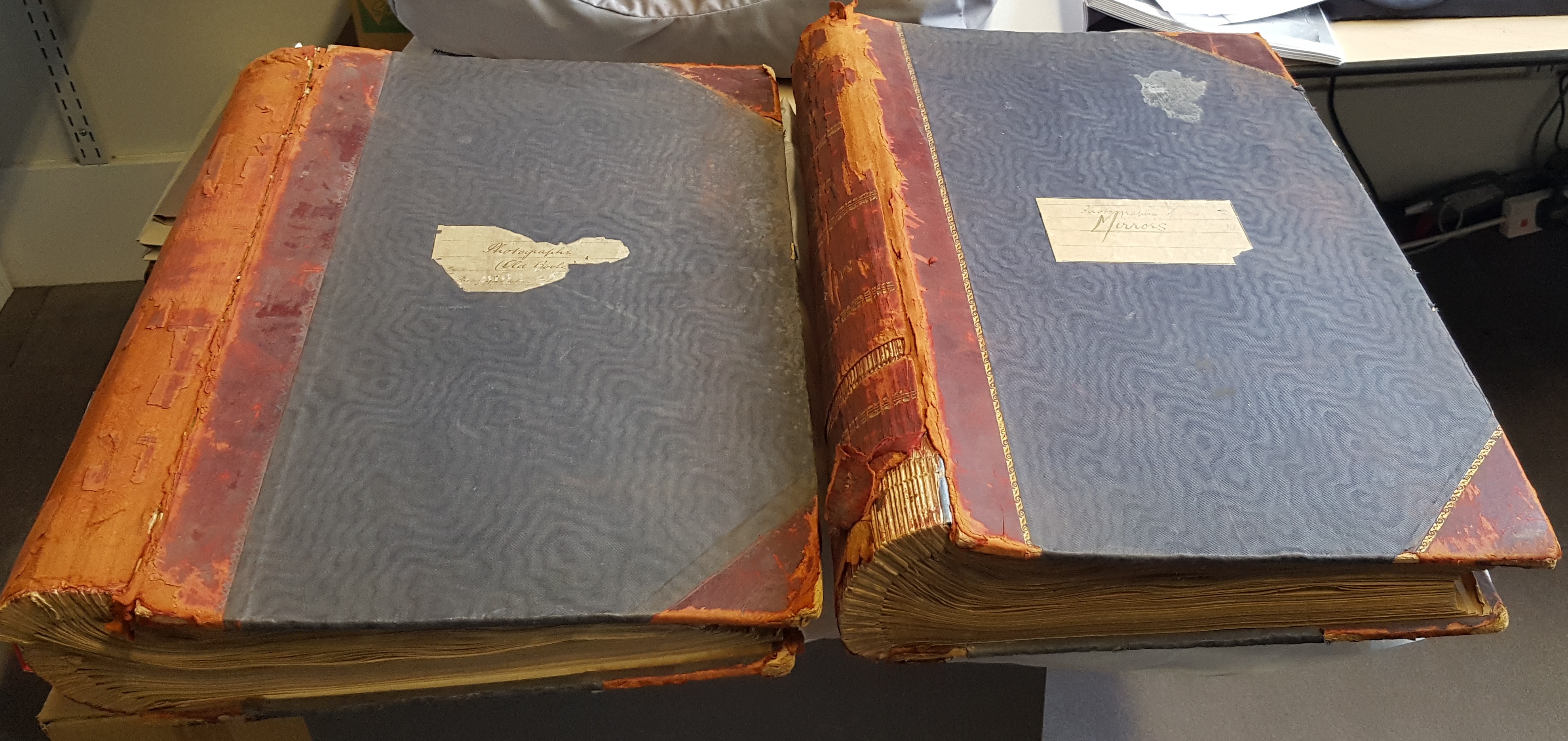
The collection of antique dealer archives at the Brotherton Library Special Collections (BLSC) at the University of Leeds has a new donation – two fascinating photograph albums, dating from c.1920-1930, illustrating the stock of the well-known and highly important antique dealer furniture dealers’ Kent Gallery Ltd. The albums have been generously donated to the BLSC by the V&A Museum – thanks to Kate Hay, Assistant Curator, Furniture, Textiles and Fashion at the V&A and her colleagues Leela Meinertas (Senior Curator of Furniture at the V&A) and Christopher Marsden (Archivist at the Archive of Art & Design) – and thank you to Karen Sayers, archivist at the Brotherton Library Special Collections, for accepting the donation!

Kent Gallery photograph albums, c.1920. Photograph courtesy of Kate Hay, 2021.

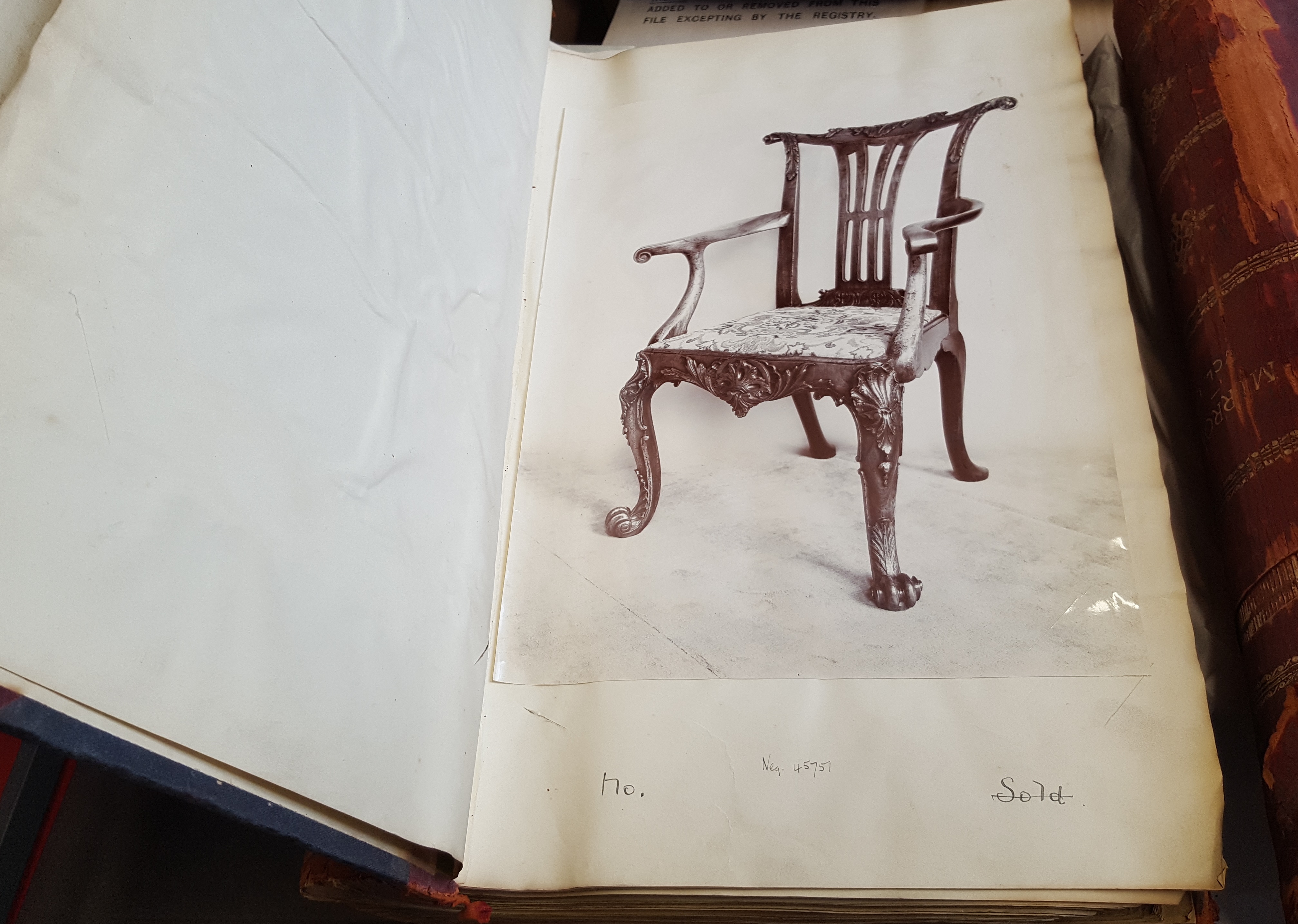
Kate and I came across the photo albums back in 2017 when I was with Kate at Blythe House (the V&A Museum stores) whilst we were looking over some other antique dealer related material, and I immediately had a sense that the albums were created by the antique dealers’ Kent Gallery. I’d seen Kent Gallery photographs many times previously and, like many leading antique dealer photographs, they have a very distinctive appearance – often the objects are photographed against particular backgrounds or are framed in a particular way. Here’s some examples of the photographs in the Kent Gallery albums – the albums are quite large format (c.20 inches high); they are (despite looking a bit shabby at present) quite grand leather finished and gilt-tooled albums. The photograph albums were used by Kent Gallery as inventories of stock, as well as perhaps to show customers what was available for sale, and acting as catalysts for asking customers what kinds of antique furniture they might be interested in purchasing.

Kent Gallery Album, c.1920-1930. Photograph courtesy of Kate Hay, 2021.

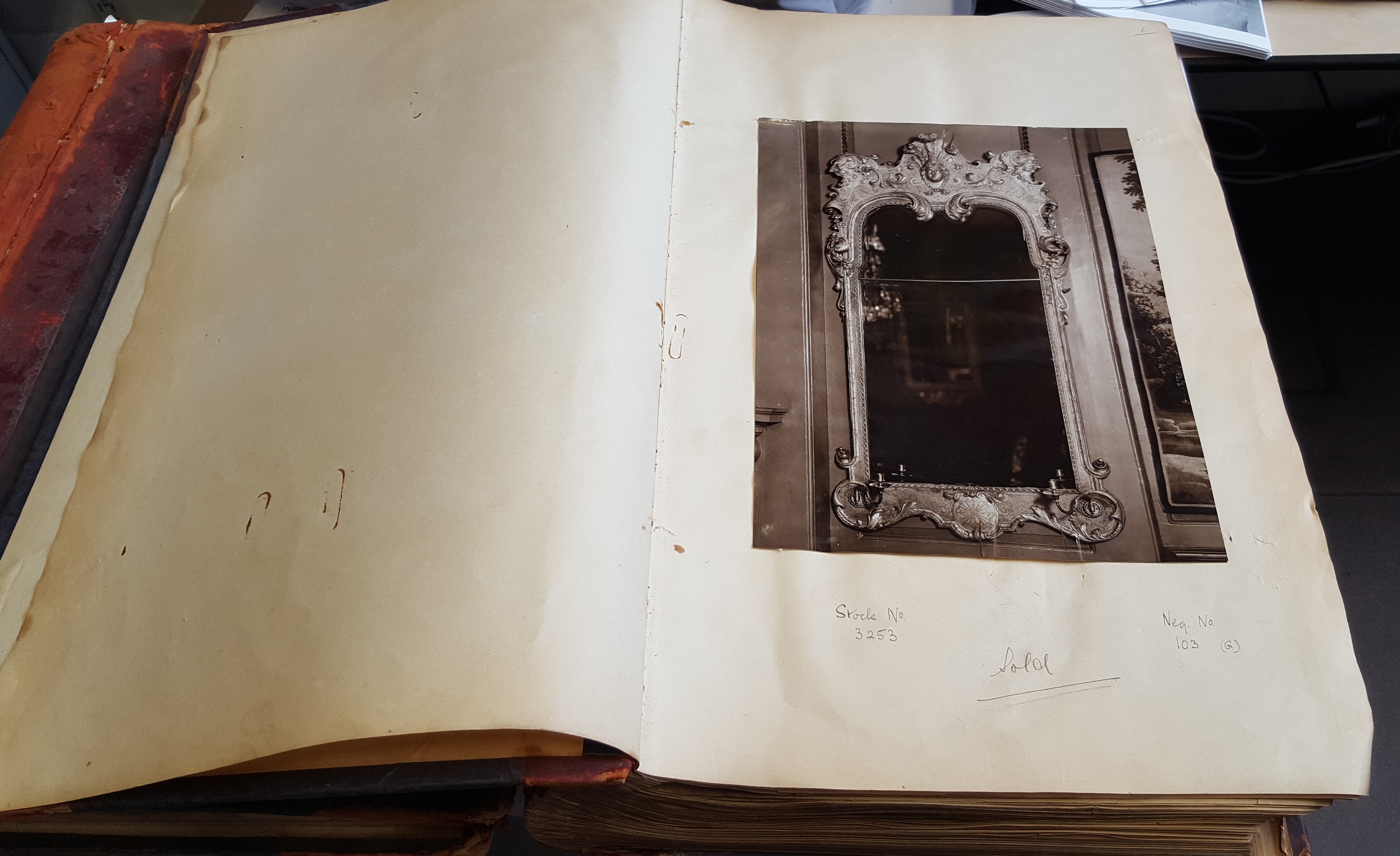
The 18th century chair in the photograph (above), from one of the albums, has an annotation indicating that it had been ‘Sold’ and includes a negative number for the photograph. The photograph below, shows an 18th century giltwood mirror (also indicated as ‘Sold’), and the negative number, but in this page the object is also inscribed with a stock number.

Kent Gallery photograph album, c.1920-1930. Photograph courtesy of Kate Hay, 2021.

Photograph albums such as these seem to have been relatively common among leading dealers from the early 1900s until the 1960s. I’ve seen examples created by several well-known dealers, such as Mallet & Son, M. Harris & Sons and W.F Greenwood & Sons – indeed, I posted a blog entry on the W.F. Greenwood & Sons photograph album on this blog in July 2014 – see earlier blog post here.

Kate Hay did some further research on the albums and discovered that they had been given to the V&A Museum by the antique dealer Ronald A. Lee in 1973, but had never been accessioned into the V&A collection – it’s fitting therefore that the albums are coming to the BLSC, which, as you may know, also has a collection of R. A. Lee material donated by Ronald Lee’s daughter Georgina Gough.

Kent Gallery were one of the leading dealers in antique furniture in the opening decades of the 20th century, trading from various locations in London – the main headquarters of the business was in Conduit Street. The business was established by Edward Horace Benjamin, who, by the early 1920s had been joined by Lionel Harris Junior (b.1903) and Maurice Harris (b.1900), the sons of the well-known dealer Lionel Harris (1852-1943). The Harris family had extensive antique dealing interests – they owned ‘The Spanish Gallery’, (aka ‘The Spanish Art Gallery’) one of the leading dealers in Spanish work of art in the period; and Lionel Jnr and Tomas Harris (1908-1964) also operated their own antique dealing businesses in the 1920s and 1930s.

Kent Gallery was one of the Harris families’ specialist antique dealing businesses – with a speciality, from the 1920s, for selling antique English furniture. The business was one a number of antique dealers in the period that seem to have focused on selling English furniture, no doubt spurred on by the publication of key texts such as Percy Macquiod’s A History of English Furniture (1904-1908) and Macquoid and Edwards’ Dictionary of English Furniture (1924-1927). Indeed, many of the photographs in these volumes were supplied by dealers such as Kent Gallery, Moss Harris & Sons and Frank Partridge & Sons.

Some other Kent Gallery material which I’ve collected over the years or which has been kindly sent to the antique dealer research project also demonstrates the tightly imbricated relationships between the development of scholarship on English furniture and the market for antiques in the period. For example, our friend Chris Jussel, formerly of the leading dealers Vernay & Jussel, sent us an invoice back in 2019 which records the sale of a ‘Sheraton mahogany two-door bookcase’ sold by Kent Gallery to Arthur S. Vernay Inc (a precursor to Vernay & Jussel), in September 1931 for £1,120.

Invoice, Kent Gallery, 1931. By kind courtesy of Chris Jussel.

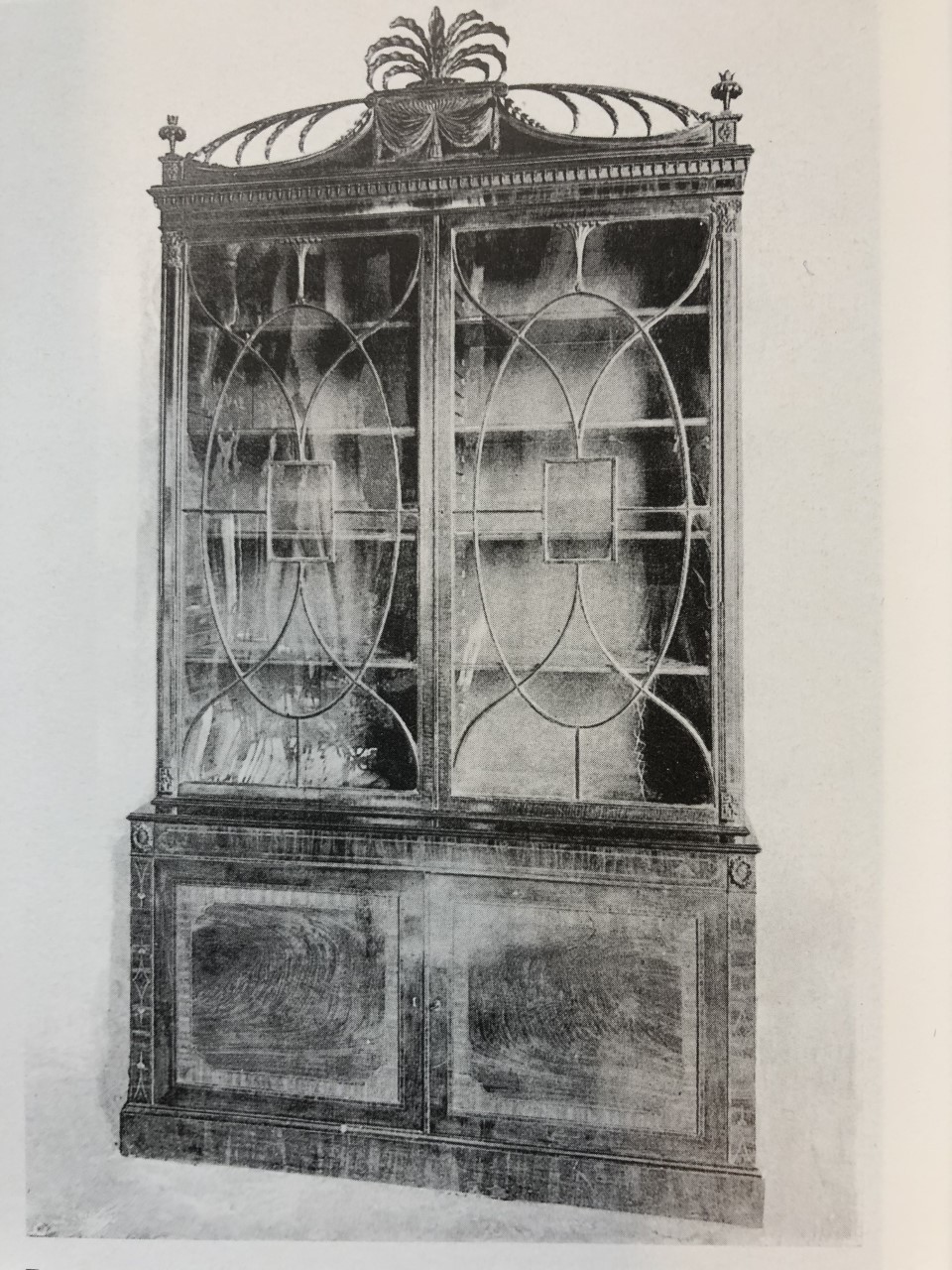
The bookcase, as the Kent Gallery invoice highlights, was formerly in the collections of the well-known American collector of antiques Francis P. Garvan (1875-1937), as well as that of the collector F.C. Hunter; but had also been previously illustrated in Percy MacQuoid’s A History of English Furniture (1904-1908) in the volume titled, The Age of Satinwood, ‘figure 185’. Illustrated below is the very bookcase.

‘Mahogany and Satinwood Book-case. Property of F.C. Hunter’. Percy MacQuoid, A History of English Furniture, The Age of Satinwood, (1904-1908), figure 185.

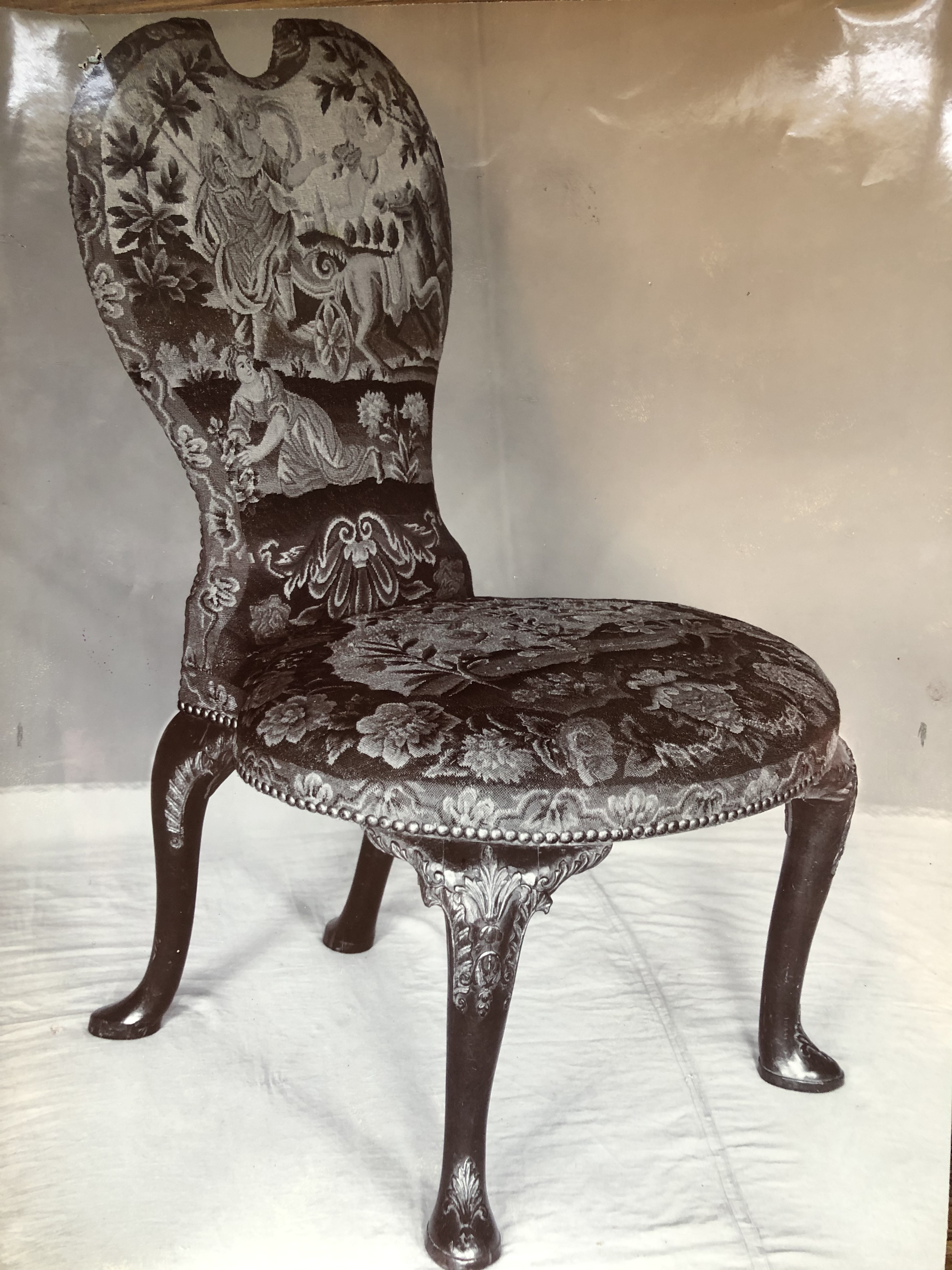
In the antique dealer project archives we also have a very small cache of loose photographs from Kent Gallery – I picked these up about 10 years ago, from Ebay, in a small collection of photographs of antique furniture which includes photos from the dealers Basil Dighton, G. Jetley, Robersons and Gill & Reigate. The Kent Gallery photographs have a distinctive style, as I mentioned. This ‘George I’ chair, for example, (see below) from the cache of photographs, is similarly framed and has the same background to the Kent Gallery album photograph of the mahogany chair (see above).

Photograph of a ‘George I mahogany + gilt wig chair’; photograph c.1927. Kent Gallery. Antique Dealer Archive.

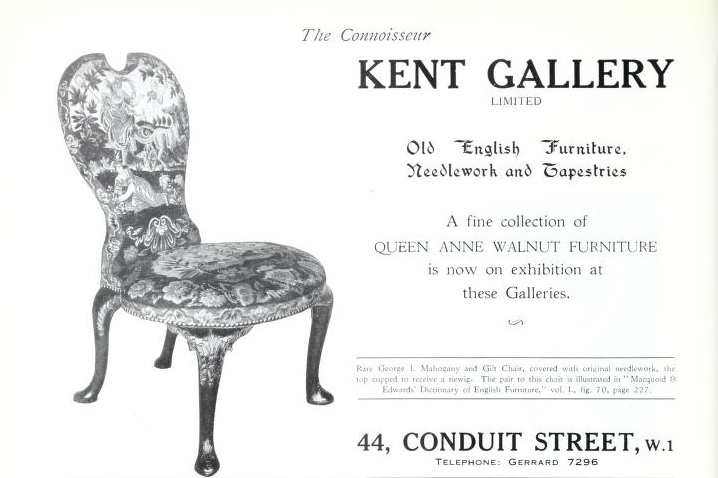
The verso of the photograph of the ‘George I’ chair has a Kent Gallery stamp. Thanks to Chris Coles, who kindly send us a photograph of the advertisement in The Connoisseur in 1927 from Kent Gallery, which illustrates the chair and which helps us date the Kent Gallery albums to c.1920-1930.

Kent Gallery advertisement, The Connoisseur 1927. Courtesy of Chris Coles.

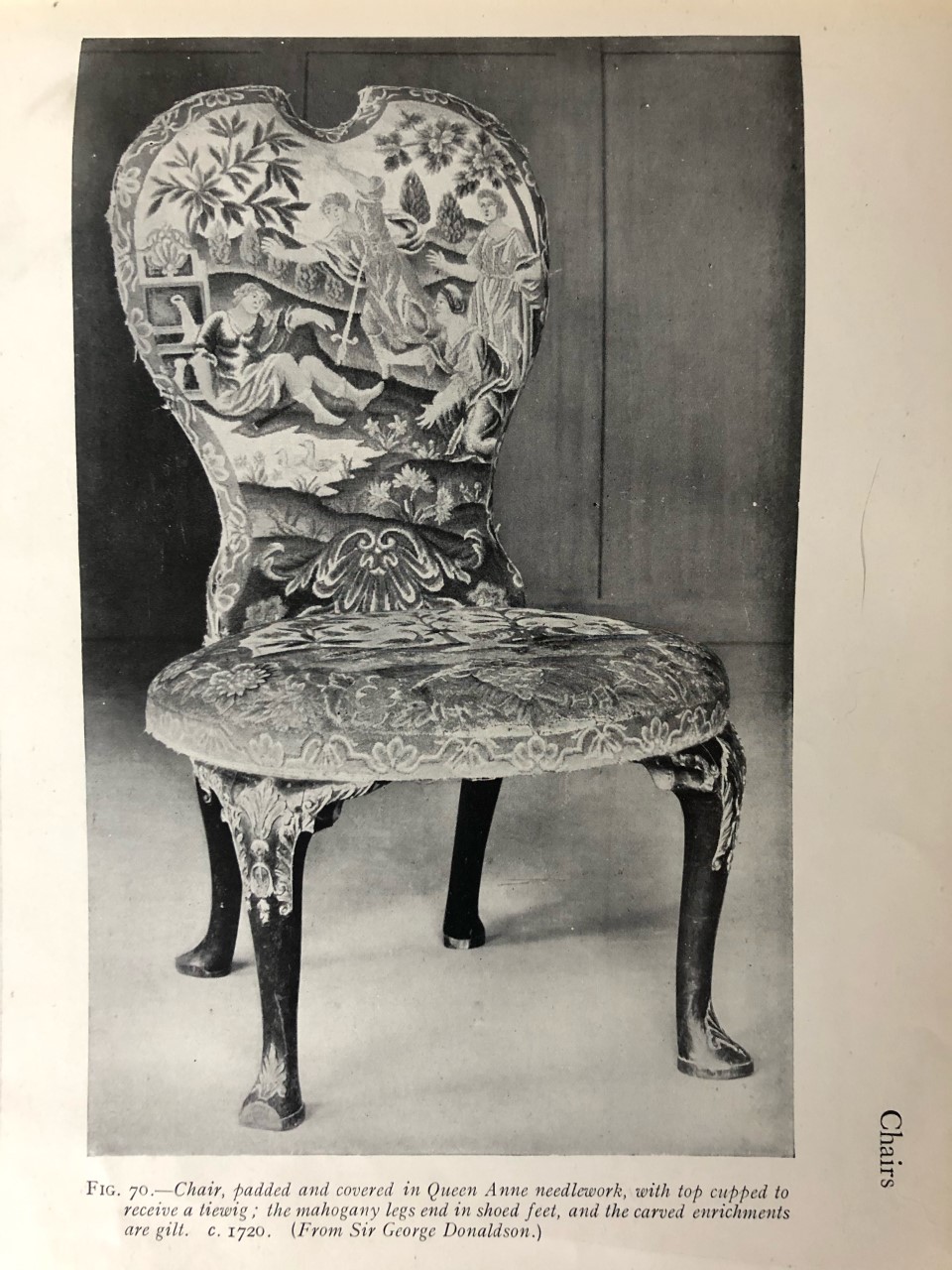
Thanks also to Chris Jussel and Chris Coles, who both pointed out to me that this chair is one of a set – there are two from the set in the Metropolitan Museum, New York, and another pair are also in the collections at the Lady Lever Art Gallery in Port Sunlight, near Liverpool. One of chairs was also illustrated in Macquoid and Edwards Dictionary of English Furniture (vol I. 1924), p.227, (which is also mentioned in the Kent Gallery advert) where it had a provenance to the collection of Sir George Donaldson (1845-1925). The Kent Gallery chair is evidently from the same set, with some minor differences (the Kent Gallery chair has brass studs to the seat covering for example).

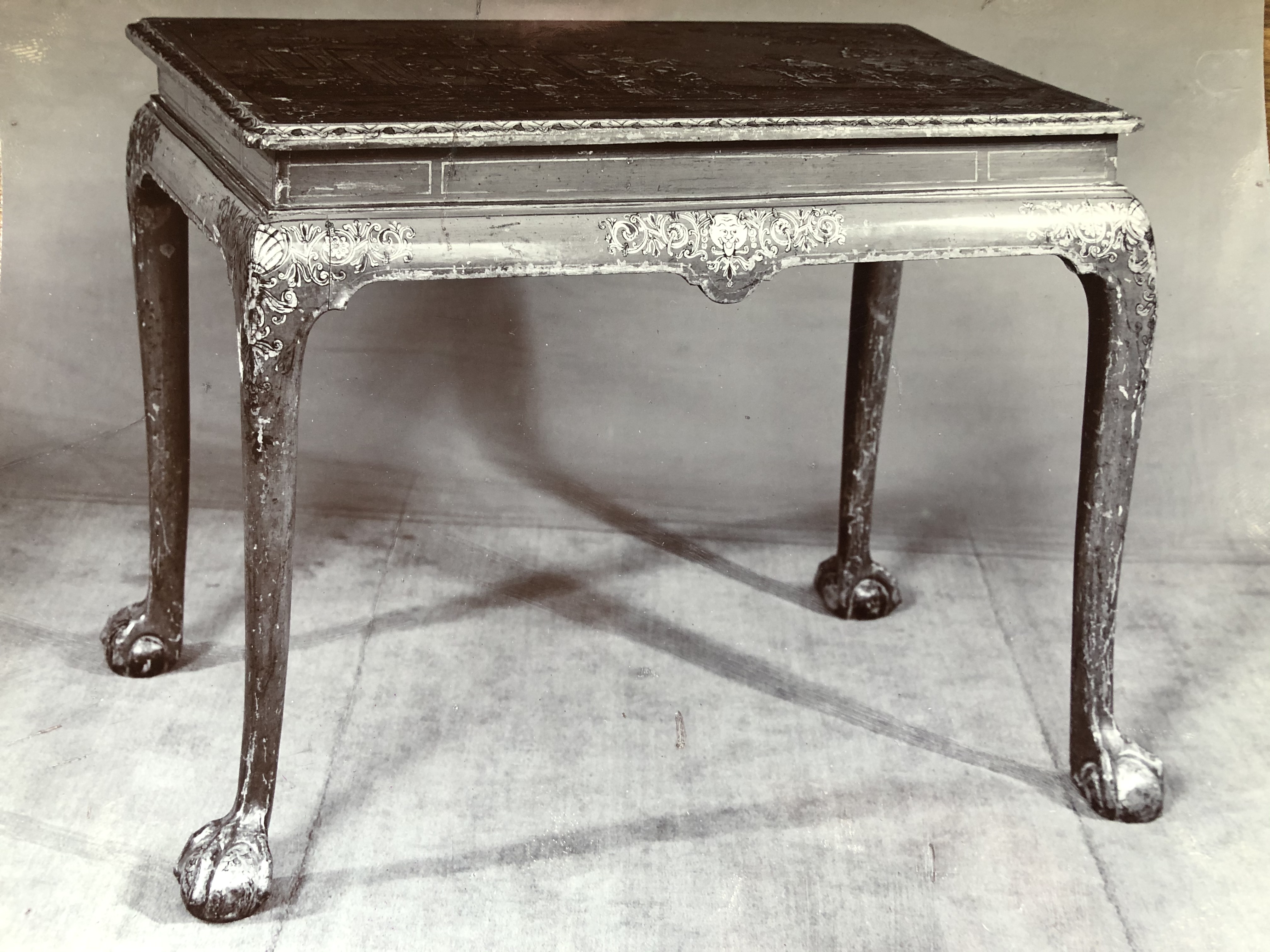
The photograph of the lacquer table, (below), is also from the small cache of photographs from Kent Gallery.

Photograph of lacquer table, ‘c.1710’: Kent Gallery. Antique Dealer Archive.

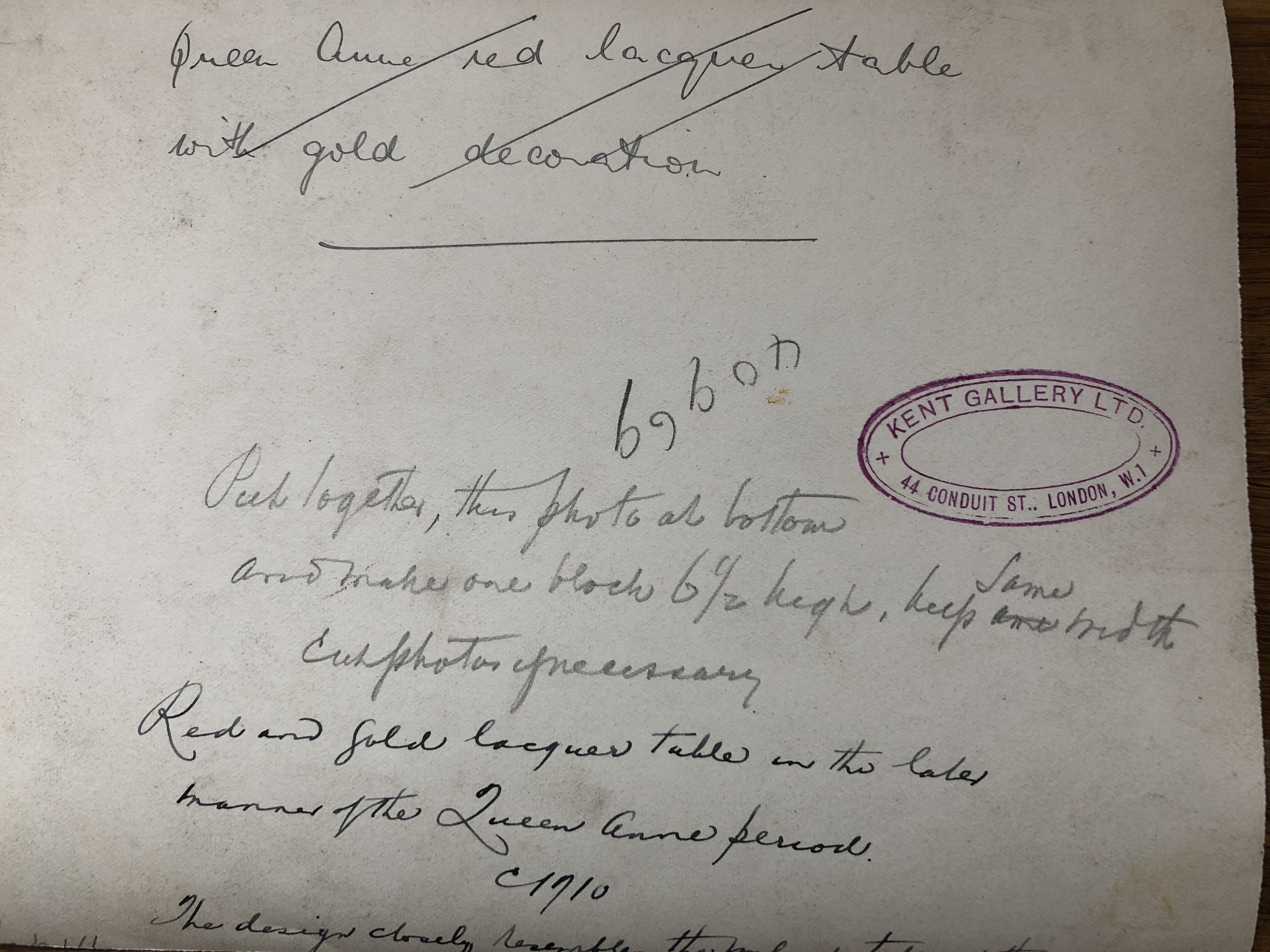
The verso of the photograph also shows the Kent Gallery stamp and with an inscription (in pencil) indicating that the photograph was being used in some publication (perhaps as part of an advertisement in Apollo or The Connoisseur magazines?). The inscription in ink describes the object – ‘Red and Gold lacquer table in the later manner of the Queen Anne period c1710’.

Verso of photograph of lacquer table, ‘c1710’; Kent Gallery. Antique Dealer Archive.

As you can see, Kent Gallery dealt in the highest quality antique English furniture in the period. The Kent Galley photograph albums are a rare survival of material from one of the leading antique dealers of the early 20th century – we are so grateful to Kate and the V&A for their very generous donation of the albums to the Brotherton Library Special Collections – once they have been quarantined, cleaned and conserved the albums will be available for researchers – I for one, can’t wait to have another look at them!

Mark

Home Subjects

a working group dedicated to the display of art in the private interior, c. 1715-1914

The Period Room: Museum, Material, Experience

An International Conference hosted by The Bowes Museum and The University of Leeds

H. Blairman & Sons Ltd

A research project investigating the history of the antiques trade in Britain in the 19th & 20th centuries

Museum Studies Now?

'Museum Studies Now?' is an event which aims to discuss and debate museum and heritage studies education provision.

The Burlington Magazine Index Blog

art writing * art works * art market

East India Company at Home, 1757-1857

A research project investigating the history of the antiques trade in Britain in the 19th & 20th centuries