Archive for July, 2026

July 27, 2026

Behind the Scenes of the Year of the Dealer 6 – Phillips of Hitchin at Temple Newsam

Here is another blog post in our series of ‘Behind the scenes of the Year of the Dealer’ – this time some further background information on the making of the film focused on the antique dealers Phillips of Hitchin in the digital trail at Temple Newsam. Here’s the finished film on the YoD website.

Phillips of Hitchin is featured in three of the Year of the Dealer films – this one at Temple Newsam, plus one film at Lady Lever Art Gallery and one film at the V&A (we will highlight the other films in later blog posts in the series of ‘Behind the Scenes of the Year of the Dealer’). We were not short of photographs for the Phillips of Hitchin films as we have a very large number of photographs of Phillips’ galleries at The Manor House in Hitchin thanks to Jerome Phillips who so generously donated the archive of the business to the Brotherton Library at the University of Leeds in 2015.

However, we needed to be careful about the number of images we included in the final film in order to ensure that the images we did include had sufficient time on screen for the viewers. There were literally scores of images that we could have used, but we hope the ones that made the final cut are interesting enough. Anyway, to whet your appetite for the range of images in the archive (which, just to remind you, you can view by appointment at the Brotherton Library at the University of Leeds), here’s a few photographs that did not make the final version of the Phillips of Hitchin Temple Newsam film. Below is a photograph of the entrance hall at the Manor House taken in c.1964, just a few years after the sale of the chair featured in the film to Temple Newsam in 1960.
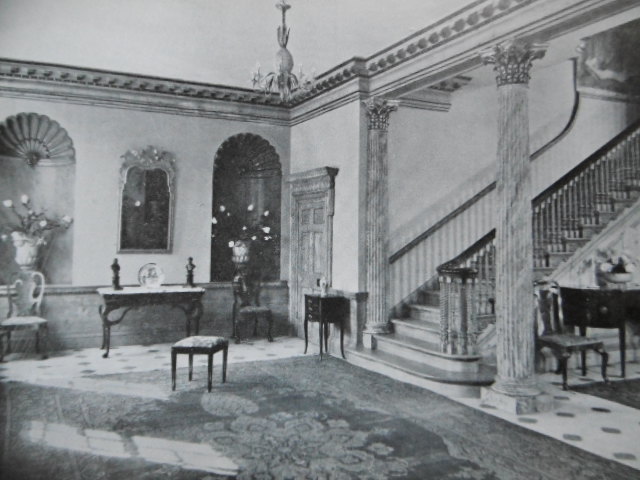
Phillips of Hitchin, entrance hall at The Manor House, Hitchin, c.1964. Image, Antique Dealer Research Project University of Leeds.

And here is another photograph (see below) of one of the interior showrooms at The Manor House also from the 1960s – this time an image of the ‘Tudor Hall’ (as it was called) in c.1964. [Thanks to our friend Chris Coles we have a fascinating update on the photograph – the Queen Anne suite of furniture at the front of the photograph was from Aldby Park, North Yorkshire – see Adam Calvert Bentley and Ardgowen Antiques]
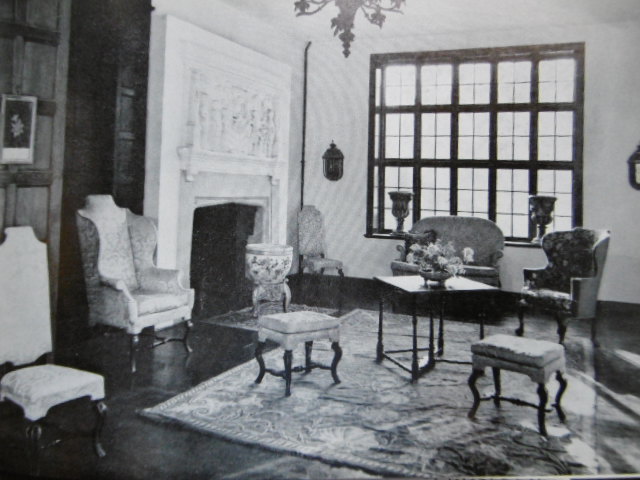
Phillips of Hitchin, interior of the ‘Tudor Hall’ at The Manor House, Hitchin, c.1964. Image, Antique Dealer Research Project University of Leeds.

The ‘Tudor Hall’ did not really date from the 16th century, despite its appearance, but was constructed in the early 20th century as part of an expansion of the showrooms at The Manor House. In 1910, The Manor House had 50 rooms of antiques (rising to 80 rooms by the start of the First World War in 1914/15), including specific rooms devoted to the display and sale of ‘Oriental Porcelain’, ‘English Porcelain’, ‘English Pottery’, ‘Cottage Furniture’, ‘Domestic Metalwork’, ‘Oriental Rugs’, as well as rooms fitted out as ‘period rooms’ such as a ‘Queen Anne Parlour’, a ‘Georgian Parlour’, and ‘Georgian’ and ‘Hepplewhite’ bedrooms. It also had an ‘Armoury’ and rooms devoted to ‘French Furniture’ and ‘Textiles’ – so a full range of objects that keyed into major collecting and furnishing interests at the time. By the time that Phillips of Hitchin sold the chairs to the various museums in the 1960s they had become a much more specialised antique dealing business and were one of the leading dealers in antique English furniture.

As you will see in the Phillips of Hitchin film, the chair sold to Temple Newsam in 1960 was one of a set of 6 chairs that were sold by Phillips of Hitchin at the time. One was sold to the V&A, a pair were sold to the Metropolitan Museum of Art in New York and the remaining pair to the National Gallery of Victoria in Melbourne, Australia. One snippet of information about the image we used in the film showing the pair of chairs in the museum in Melbourne, Australia is that the person reflected in the mirror in the middle of the photograph is actually Jerome Phillip’s wife, Barbara!…..she very kindly sent us the photograph when she was on holiday with Jerome in Australia back in 2022.
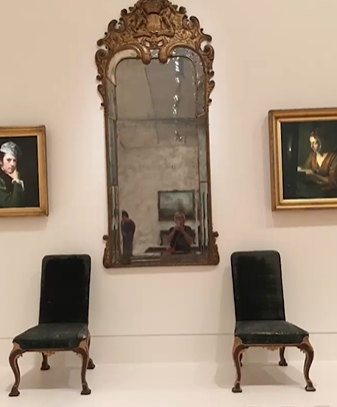
Pair of 18th century chairs sold by Phillips of Hitchin to National Gallery of Victoria, Melbourne, Australia in the early1960s on display in 2022. Photograph courtesy of Barbara Phillips.

There will be more ‘Behind the Scenes of the Year of the Dealer’ next week, so do keep you eye of the blog.

Mark
July 20, 2026

Behind the Scenes of the Year of the Dealer 5 – John Bell of Aberdeen at The Bowes Museum

Here’s some more behind the scenes ‘gossip’ on the making of the Year of the Dealer films – this time the John Bell of Aberdeen film at The Bowes Museum – you can watch the final version of the film HERE. You can also read a little more about John Bell of Aberdeen in an earlier post on the research blog – ‘Antique Shops Then & Now‘.

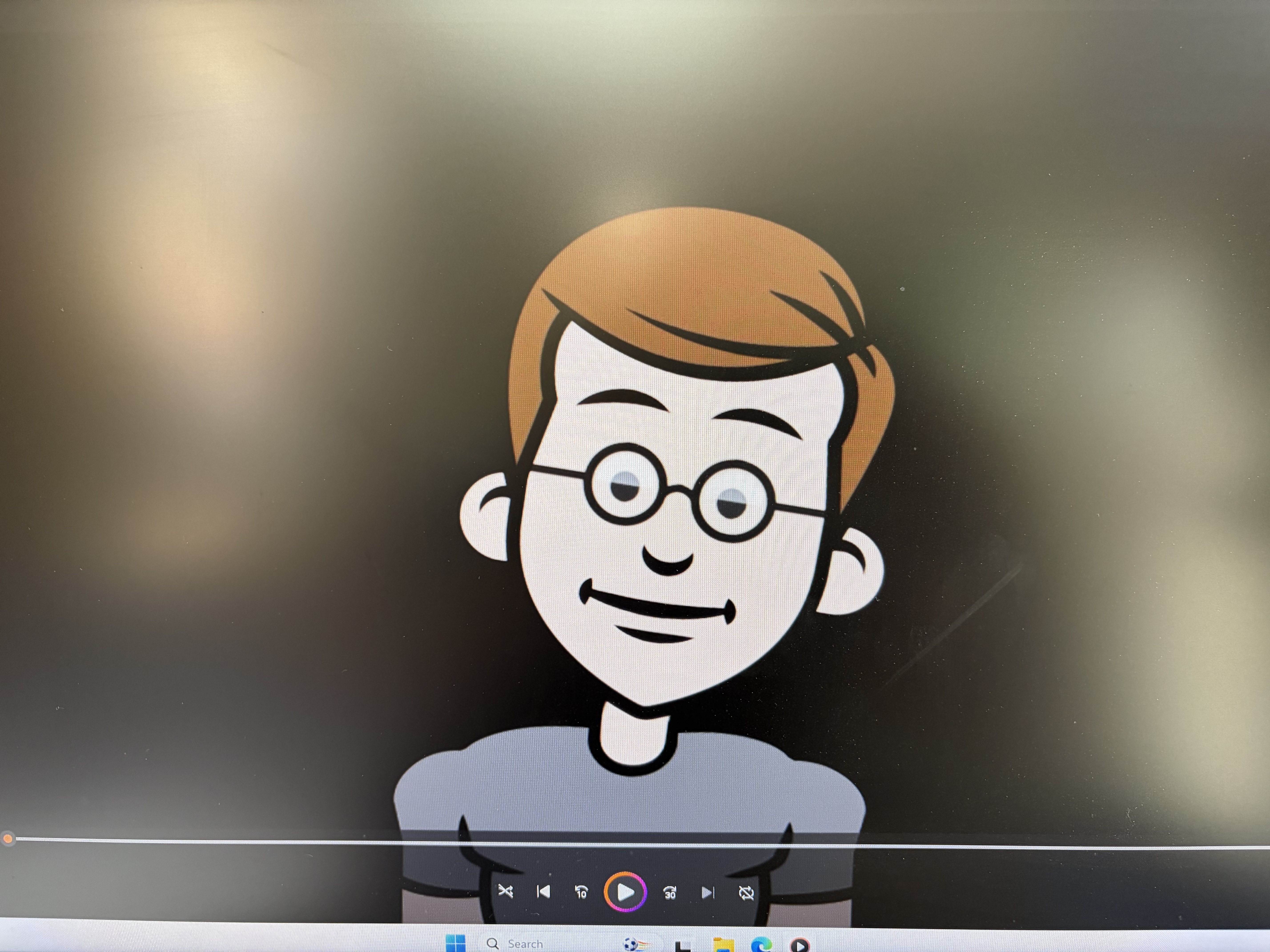
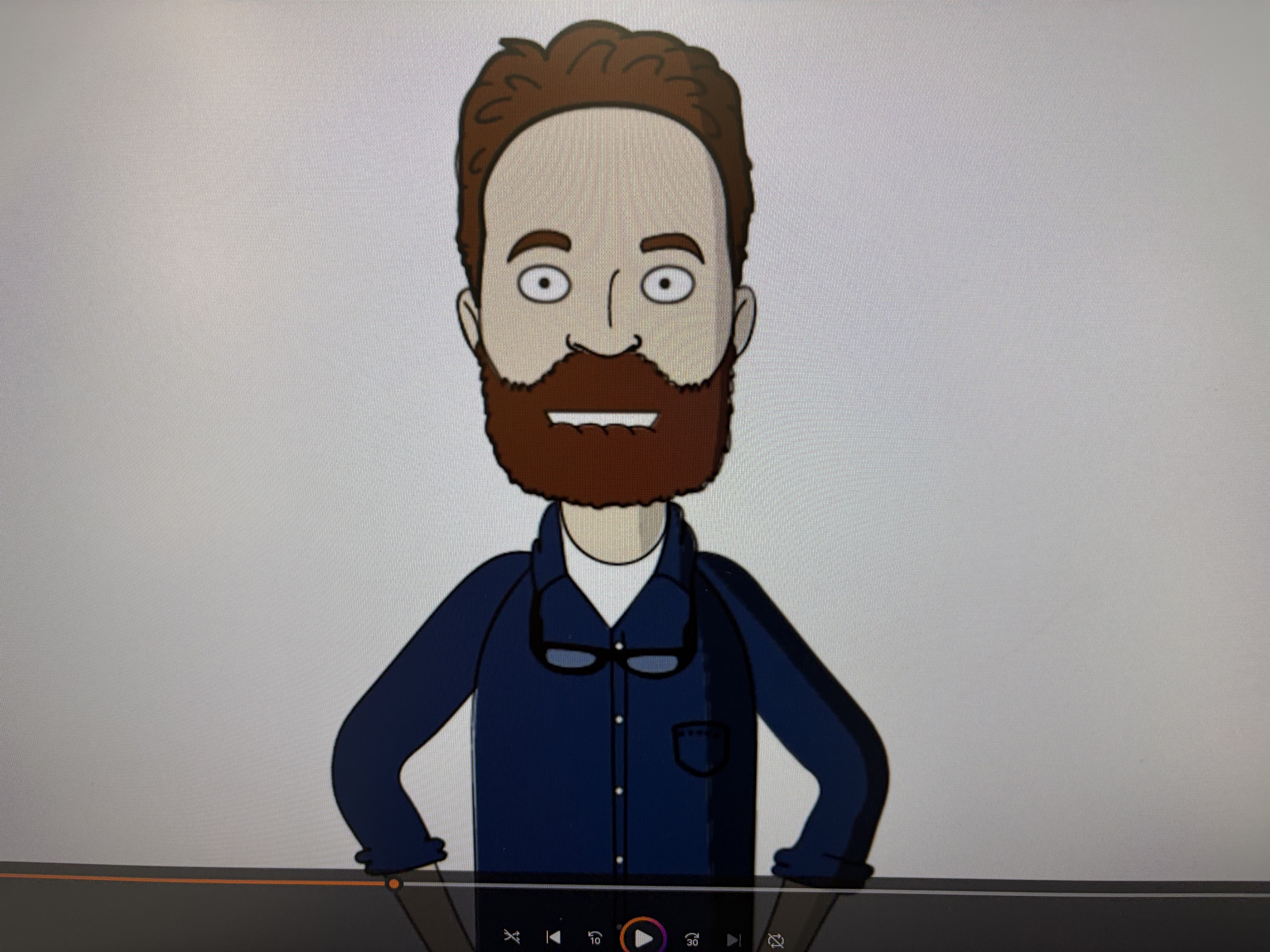
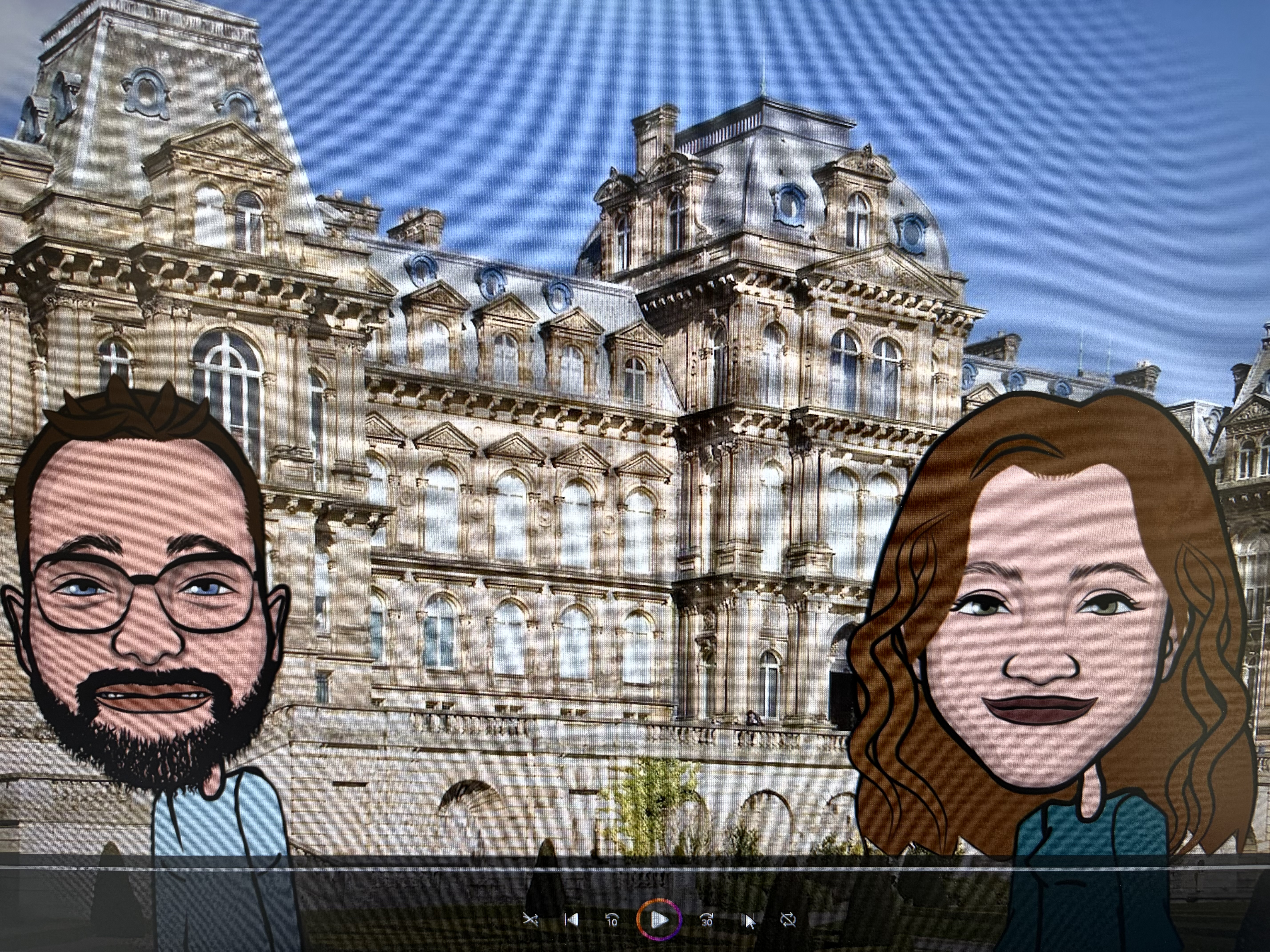
One thing we were still working on in the early drafts for the John Bell film was how the avatars would look and sound – we eventually ended up with two avatars that we thought represented Mark and Mo relatively well in all five sets of films (see below – the final avatars with The Bowes Museum in the background).

Final avatars for the Year of the Dealer films. Image, Antique Dealer Research Project, University of Leeds.

A Big Reveal (for those that do not already know this of course) is that the Mark avatar voice is me of course (Mark); the Mo avatar voice is actually my lovely wife Mo! We had considered hiring other people (or indeed some professional actors) to be the voices of Mark and Mo but the work required was impossible to fit into a defined time period and needed to be spread over many months to accommodate various edits etc., so it was extremely difficult to cost it for an external supplier and very hard to work up a firm schedule.

One extra complication of this was that any edits and new lines of audio (of which there were many) had to be recorded in exactly the same environment and conditions to match in with the existing audio. We could not afford to record the audio in a Sound Studio – we actually recorded the audio at home in my then home office – or ‘bedroom 3’ as it was! This brought up many challenges – we had, for example, some very loud Wood Pigeons in the garden and often had to wait for sound breaks in their cooing before pressing ‘record’ on the audio recorders!

The early drafts of the visual material for the avatars that Patrick Bannon (our brilliant film-maker) worked on were often quite something! Here’s one of the early drafts of the Mark avatar (see below). We thought this looked a bit too cartoon-like (and a bit too young!).

First attempt at Marks’ avatar, Year of the Dealer films. Image, Antique Dealer Research Project, University of Leeds.

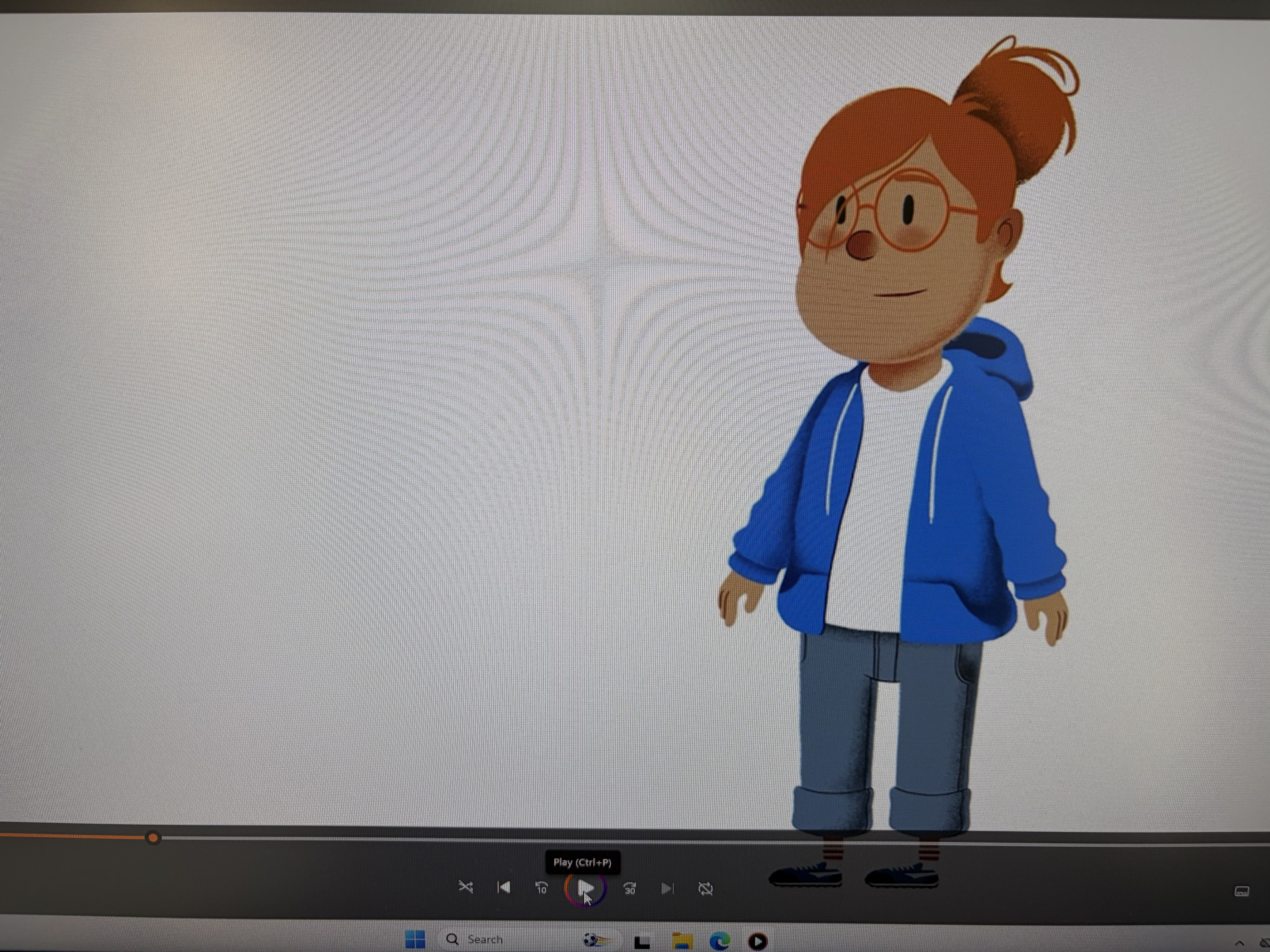
And here’s a similar early draft of the Mo avatar (see below) – which we also thought looked a bit too cartoon-like (we were also not sure why Mo’s early avatars were stuck in a forest either!)

First attempt at Mo’s avatar, Year of the Dealer films. Image, Antique Dealer Research Project, University of Leeds.

Patrick sent us various other ideas before we eventually settled on the final versions of the avatars – here’s a couple more versions (see below) – this one is getting a bit closer to the finished version of the Mark avatar, but still looked a bit too stern…..and perhaps a bit too much like a ‘psycho-killer’!

Another attempt at Mark’s avatar, Year of the Dealer films. Image, Antique Dealer Research Project, University of Leeds.

And another early version of the Mo avatar (see below) – which we thought maybe made the Mo avatar look a bit too ‘Gen Z’ .

Another attempt at Mo’s avatar, Year of the Dealer films. Image, Antique Dealer Research Project, University of Leeds.

As you might appreciate there was an awful lot of work in creating and producing the films and a lot of decisions to be made; we would like to thank Patrick again for all his hard work (and patience!) on various drafts, iterations and edits.

Look out for next week’s blog for another ‘Behind the Scenes of the Year of the Dealer’.

Mark

July 14, 2026

Behind the Scenes of the Year of the Dealer 4 – S. J. Phillips at Preston Park Museum

Here’s more on our Behind the Scenes of the Year of the Dealer theme with some behind the scenes ‘gossip’ on the making of the digital film trail for S.J. Phillips, the world famous antique silver dealers, at Preston Park Museum, Stockton-on-Tees – here’s the finished film on the YoD website.

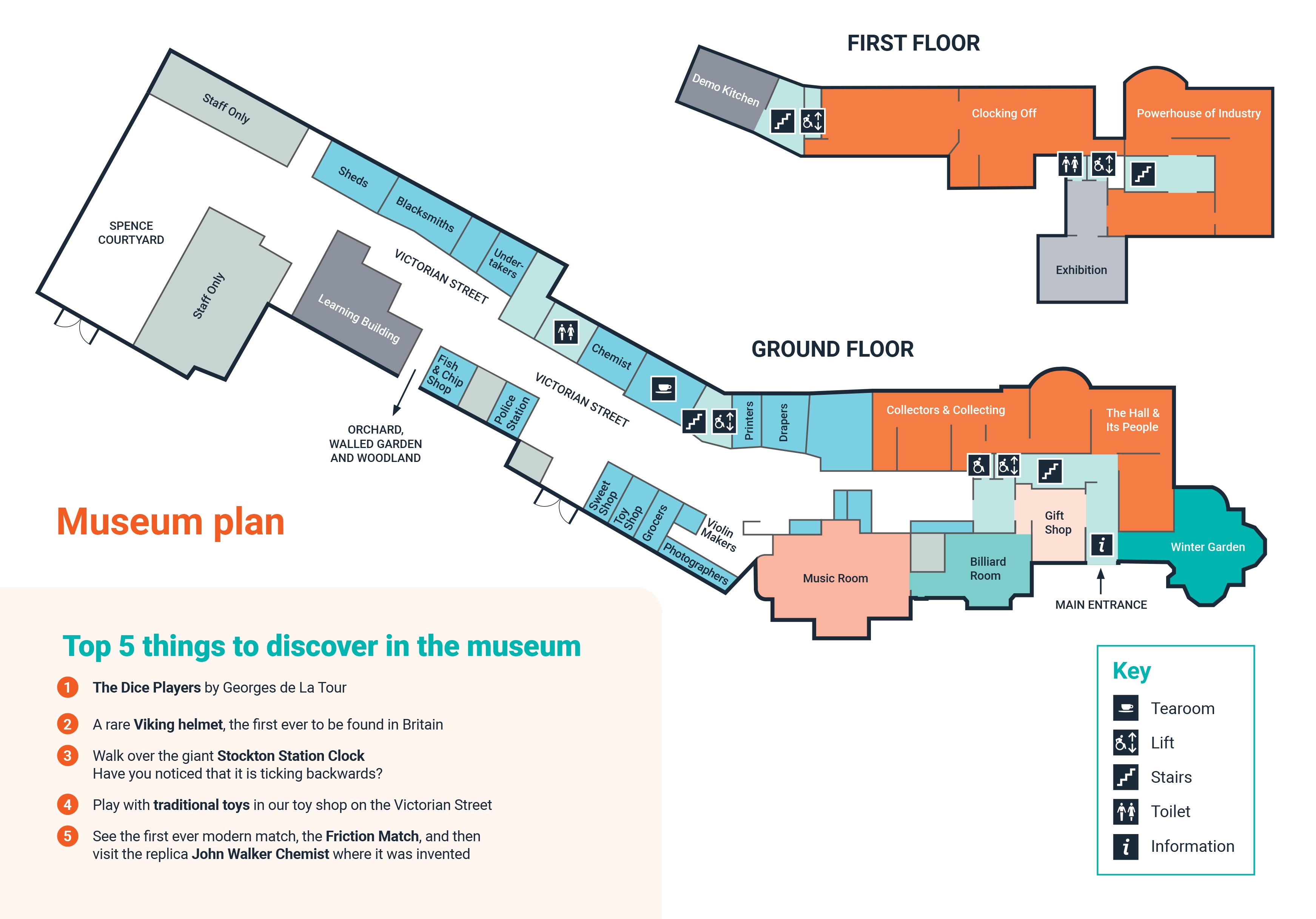
The films we made at Preston Park Museum were amongst the most complicated of all five museum digital film trails. Mainly because the Year of the Dealer project took so long to complete that by the time we launched all the films in June 2026 Preston Park Museum had undergone a major refurbishment of its displays. As a consequence, six of the ten objects we focused on in the films had been moved to museum storage and were no longer on display. This meant that we couldn’t use floorplans to locate the objects for viewers that wished to go to see the objects in real life at the museums (as we did in the other four museums) – you may have noticed that there are no floorplans in the Preston Park Museum digital film trails?

Preston Park Museum floor plan prior to major refurbishment. Image, Preston Park Museum.

As a result of the refurbishment at Preston Park Museum we also decided we should only use the photographs we took of the interior displays at Preston Park prior to refurbishment in a very limited way so as not to confuse the viewers watching the films, (and any subsequent museum visitors).

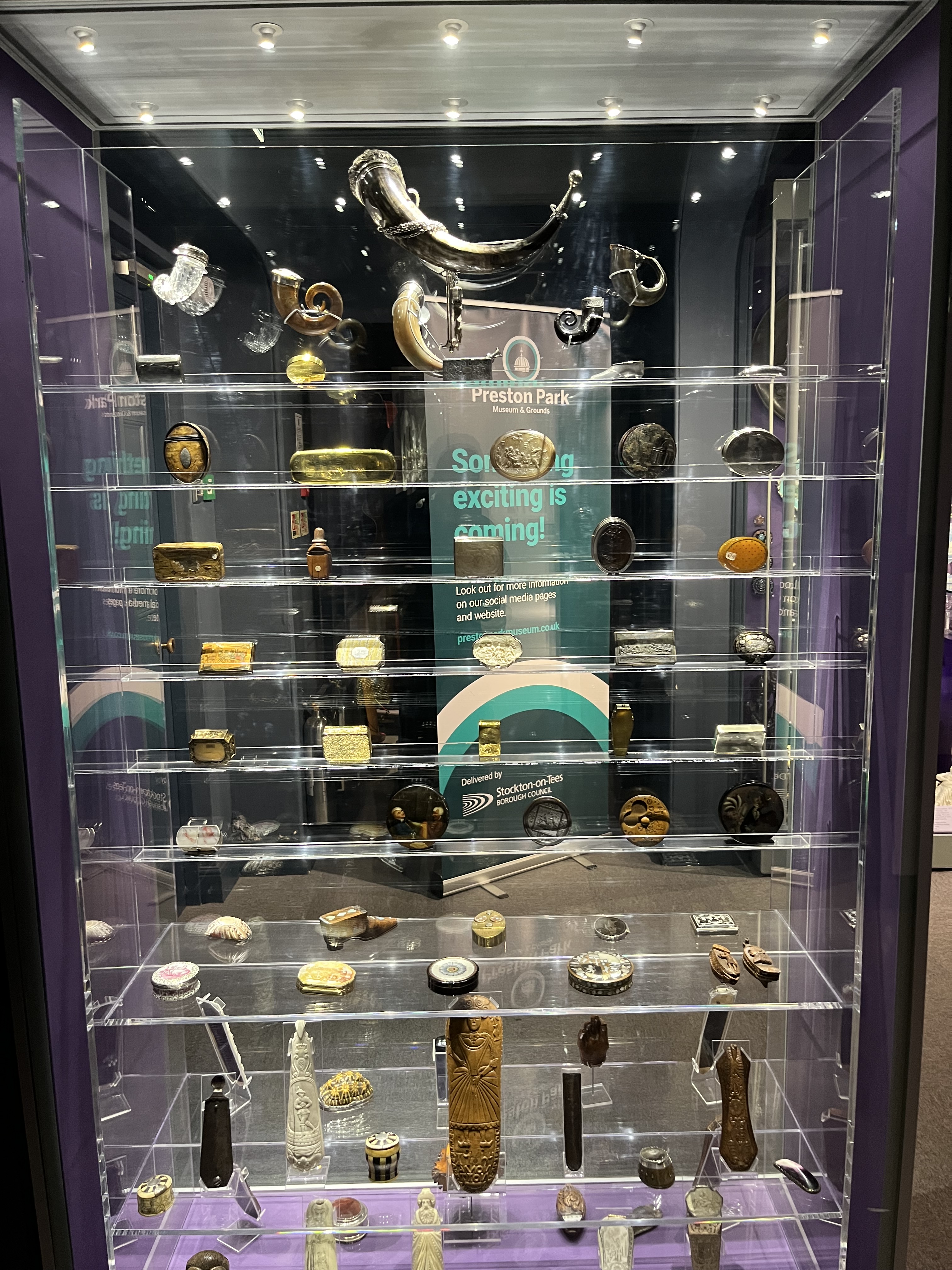
Display at Preston Park Museum, now no longer in the galleries at the museum. Image, Year of the Dealer project and Preston Park Museum 2026

This photograph (above) for example, was initially going to feature prominently in the main introductory film for Preston Park Museum, as well as in the S. J. Phillips and Law, Foulsham & Cole films, but we felt we couldn’t really highlight the image as much as we initially planned, due to the display being remodelled during the Preston Park Museum refurbishment.

The photograph shows the silver powder flask highlighted in the S. J. Phillips film (top middle) as well as the small 18th century snuff box featured in the Law, Foulsham & Cole film at Preston Park Museum (righthand side, 3rd row down, the yellow coloured oval box) – both objects are now in storage at Preston Park Museum along with the majority of the other objects on display in the glass case and we only used close-up versions of the photograph in the S.J. Phillips and Law, Foulsham & Cole films.

This small detail is hardly noticeable in the actual films of course, but it reminded us a lot about how long the project took to complete and how complicated projects can be – but also how important it is to be flexible when working with partners!

Mark

July 11, 2026

S.W. Wolsey – Photo Archive – the ‘Lovely Hall’ bed

Whilst our ‘Behind the Scenes of the Year of the Dealer’ posts are ongoing for the next 12 months we thought the blog also needs to continue to post our research updates on the antique dealer research project. So, this blog post focuses on one of our usual themes of stories and information from the antique dealer archives. This time it’s the famous dealer in antique oak furniture and related objects, S.W. Wolsey (1895-1980).

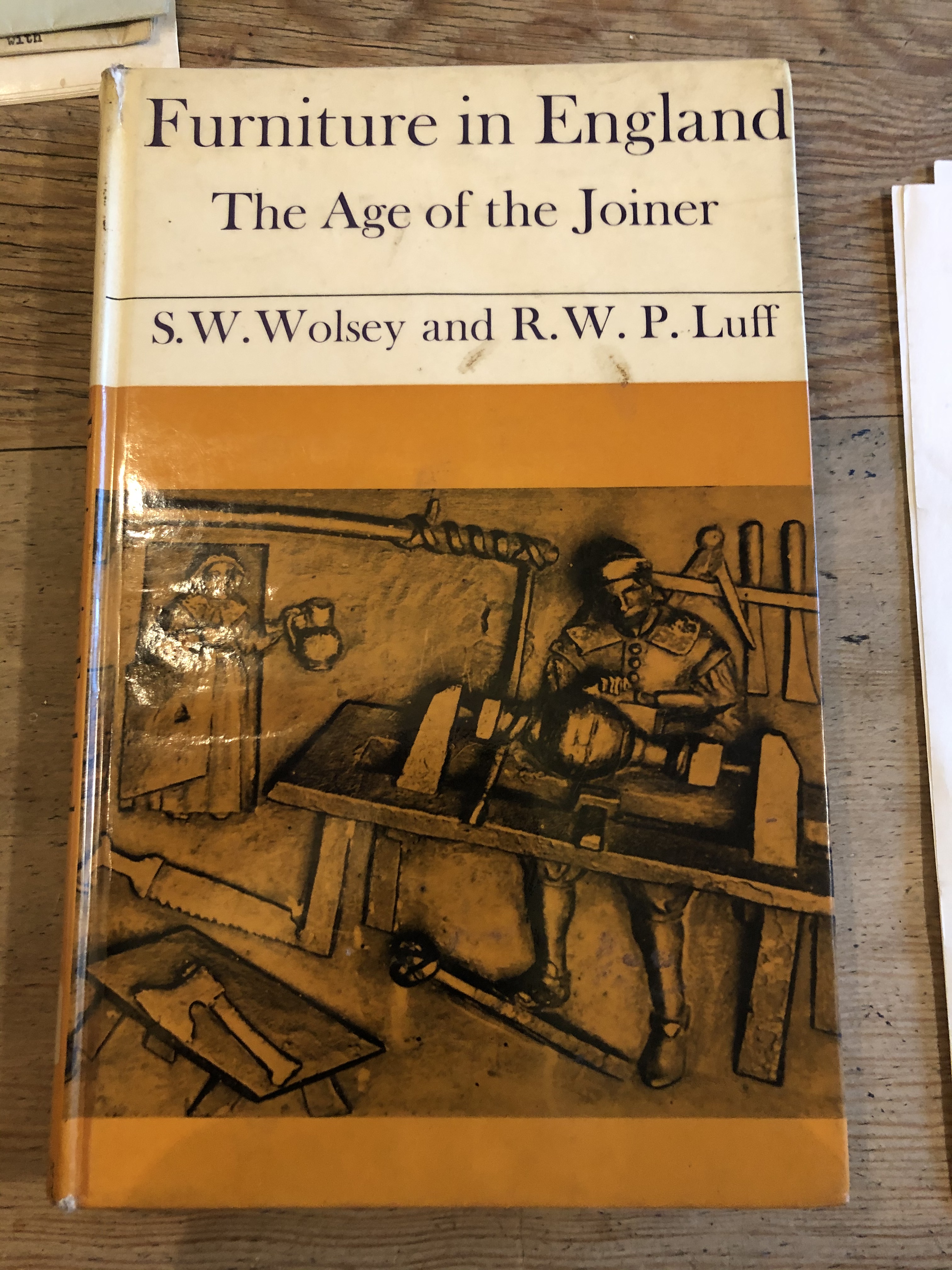
We were recently very fortunate to receive a donation of a large number of albums of photographs (of antique oak furniture and objects) that formed the stock of S.W. Wolsey. The albums were kindly donated to the project by Richard Marshall, who recently administered the Estate of the Luff family – thanks again to Richard! Peter Luff was a great friend of Sam Wolsey – Luff and Wolsey wrote a well-known book, Furniture in England: The Age of the Joiner (Arthur Barker Ltd., London, 1968). Indeed, several photographs in the Wolsey archive photograph albums donated by Richard Marshall were also used in the Furniture in England book.

Furniture in England, The Age of the Joiner – S.W. Wolsey & R.W.P. Luff (1968). Image, Antique Dealer Research Project, University of Leeds.

We have posted on S.W. Wolsey on the research blog before (see blog post S.W. Wolsey and Peter Luff 31st December 2020), but just to remind readers, Samuel Wilfred Wolsey was one of the leading dealers in antique oak furniture in the middle decades of the 20th century; the photograph albums contain images of some of the most important oak furniture that passed through the firm of S.W. Wolsey, many of which are now in prominent public museums.

There are scores of objects to highlight in the photograph albums but one example stands out as particularly interesting – especially as it has a long history going back to the start of the ‘modern’ antique trade in the opening decades of the 19th century (see my book The Emergence of the Antique and Curiosity Dealer 1815-1850: the commodification of historical objects (Routledge, 2020), pp.61-72, if you are interested to read more about this.

The object in question is the ‘Lovely Hall’ bed – a 16th century four-post bed that was first illustrated in Samuel Rush Meyrick and Henry Shaw, Specimens of Ancient Furniture (1836) – (see below).

S.W. Wolsey advertisement for the sale of the ‘Lovely Hall’ bed, June 1961. Photograph, Antique Dealer Research Project, University of Leeds.

In Specimens of Ancient Furniture (1836) the bed was described by Samuel Rush Meyrick as ‘Bedsted of the Time of Henry the Eight, in the possession of the Rev. Wm. Allen, Lovely Hall, near Blackburn.’ Meyrick’s description continues – ‘This interesting example, which unfortunately has lost its true cornice, no doubt highly enriched, was observed by Mr. Allen in the course of his professional duties, in administering to a dying parishioner the last consolations of religion, and purchased by him after the decease of the sick person from his heir.’ (Specimens, (1836), p.39).

Lovely Hall, Salesbury, near to Blackburn in Lancashire, dates from c.1600 and was owned by the Starkie family from the 1750s until the 1960s, so perhaps Rev. Allen rented the hall from the Starkie family. The bed was transferred to Holme Cliviger Hall, near Burnley, also in Lancashire, sometime after the 1830s, becoming property of the Whittaker family who owned Holme Hall.

Holme Cliviger Hall (also known as Holme Hall). Image from Robert Wade photostream.

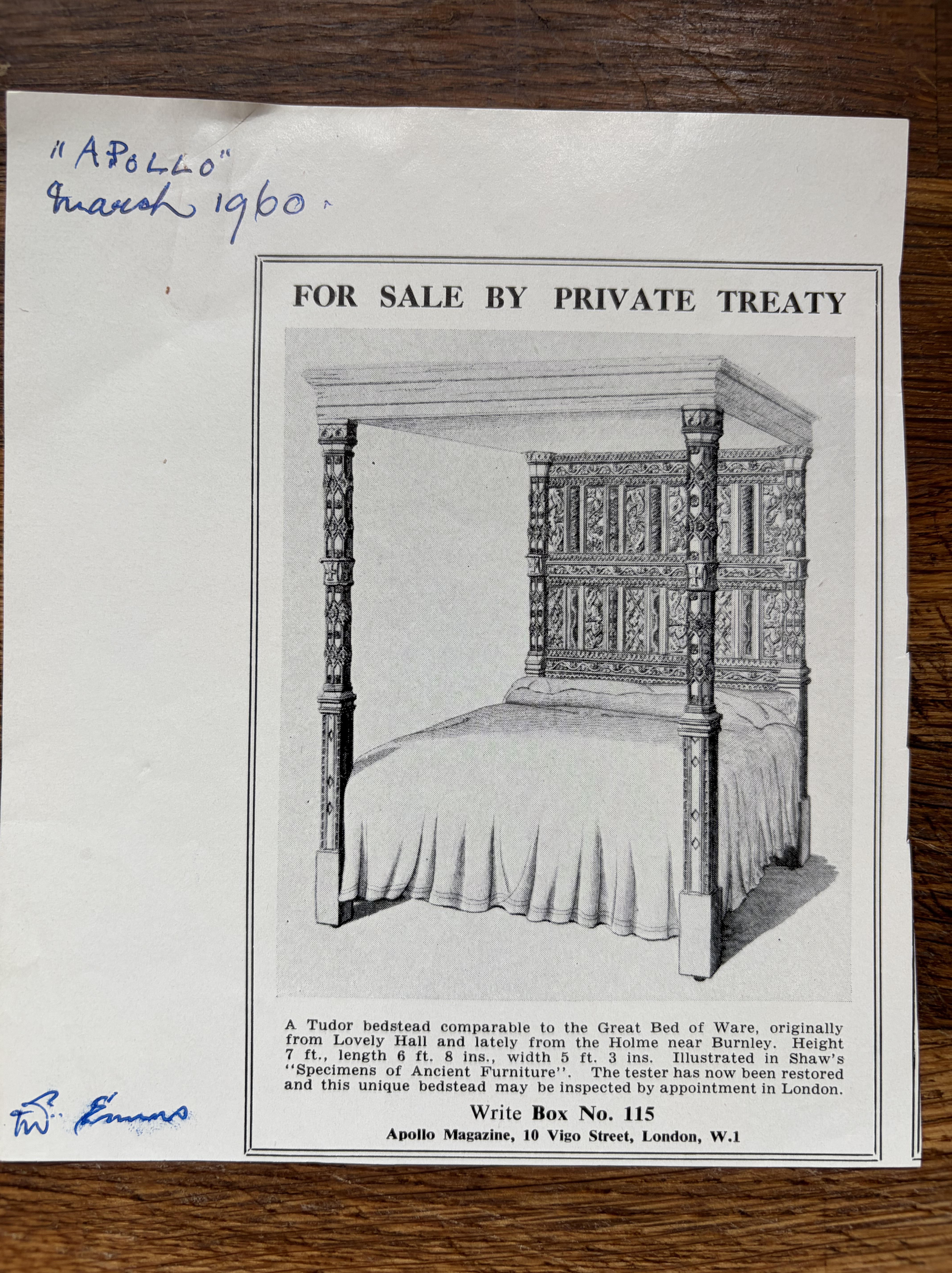
Despite the bed being illustrated in Specimens in 1836 it seems to have been unrecorded again until it appeared on the market in 1960, when it was acquired by S.W. Wolsey. According to some notes by S.W. Wolsey associated with the S.W. Wolsey photograph albums, Wolsey acquired the bed from direct decedents of the Whittaker family. This may be true, but the Whittaker’s sold Holme Hall in 1950 and Wolsey bought the bed from a private collector then living in Putney in South West London (who was not called Whittaker, but may indeed have been a member of the family). The collector had advertised the bed ‘For Sale’ in Apollo magazine in March 1960 (see below) mentioning that the bed was ‘lately from the Holme near Burnley’.

Advert for the sale of the bed, Apollo, March 1960. Image, Antique Dealers Research Project, University of Leeds.

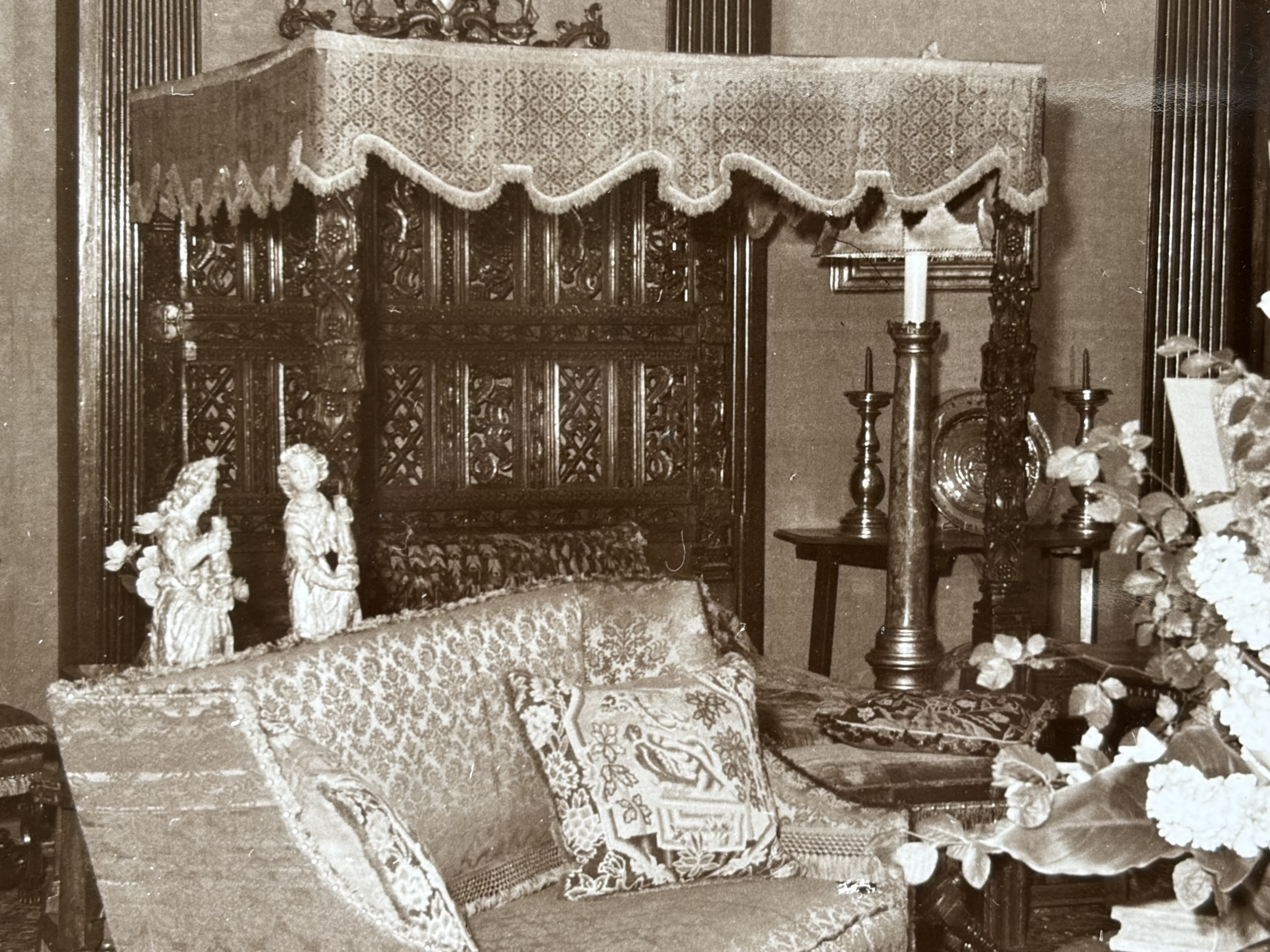
Wolsey displayed his important purchase as a key centrepiece on his stand at the Grosvenor House Antique Dealers Fair in London in June 1961 (see below).

S.W. Wolsey stand at the Grosvenor House Antiques Fair 1961. S.W. Wolsey photograph albums.

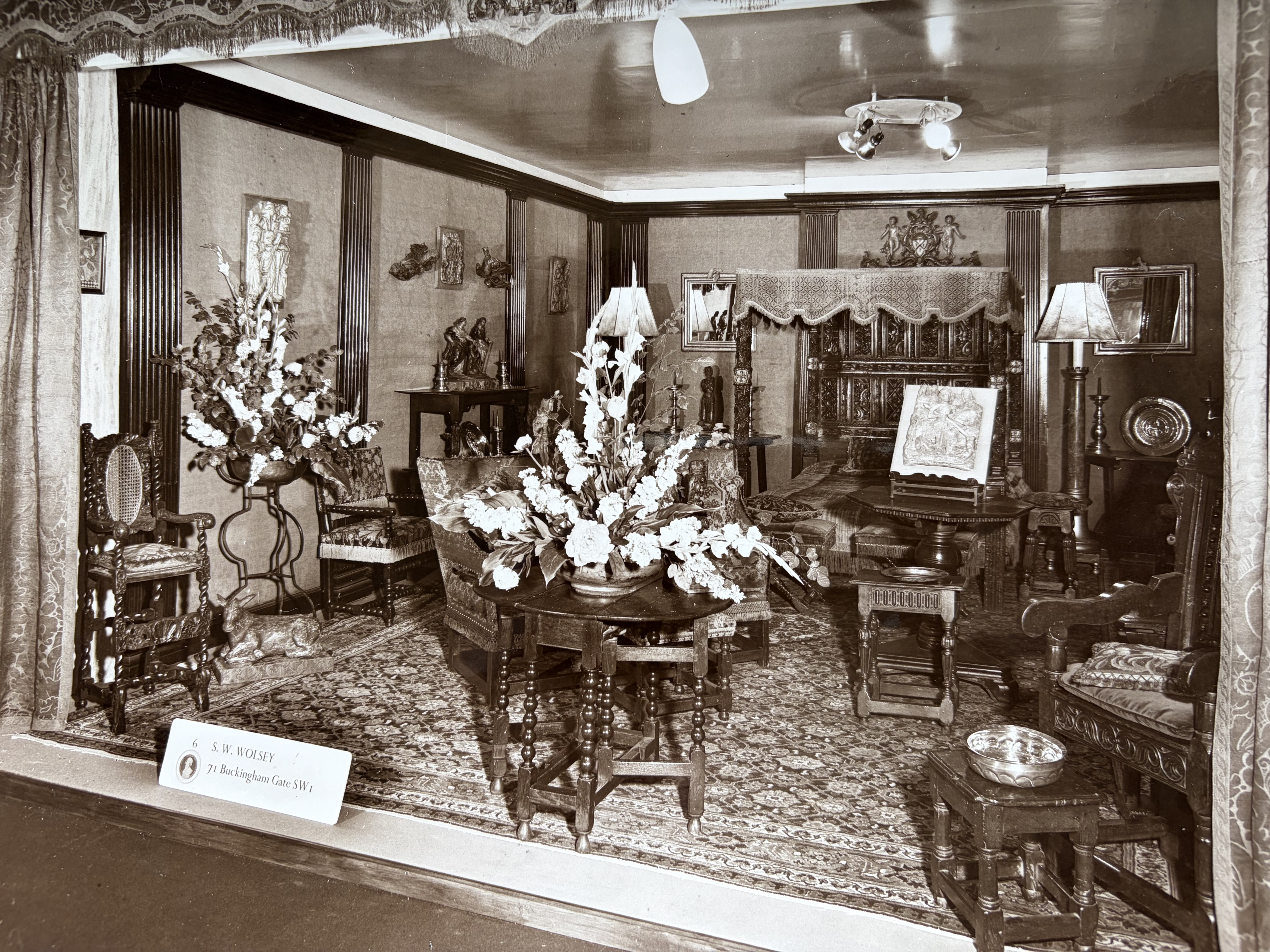
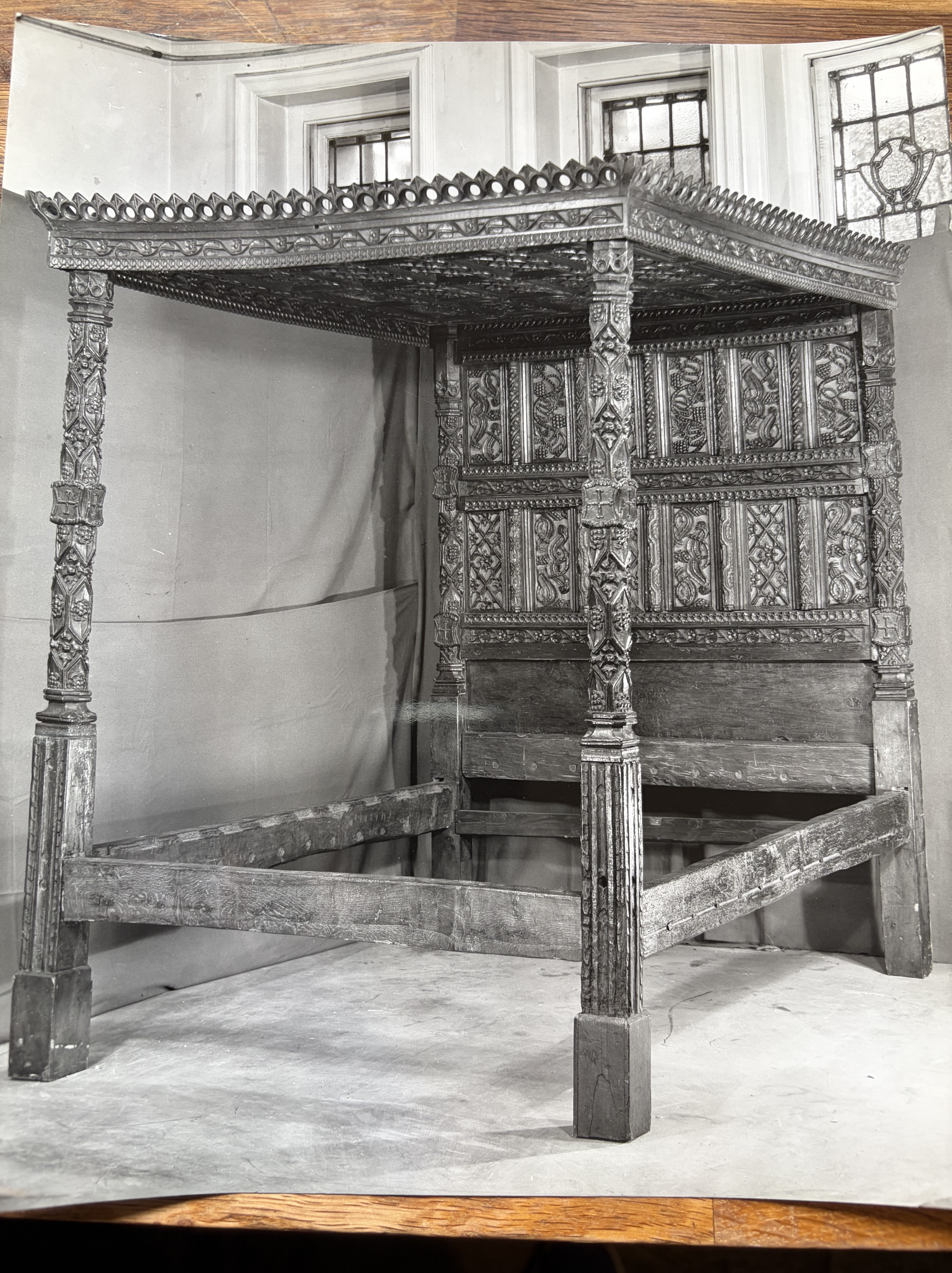
The S.W. Wolsey photograph albums also have several photographs of the bed and details of the frame and carvings, including a photograph of the bed fully assembled in Wolsey’s shop in Buckingham Gate, London (see below).

The bed fully assembled in S.W. Wolsey shop at Buckingham Gate, London. S.W. Wolsey photograph albums.

Henry Shaw’s illustration of the bed in Specimens (1836) shows it with a plain cornice. As mentioned, Meyrick’s commentary on the bed highlighted that it had ‘lost its true cornice’ by the 1830s. This was something that S.W. Wolsey also speculated upon in his notes associated with the photograph albums – writing ‘It appears that, following the publication of the Shaw book in 1836, an elaborate and expensive ‘Gothic’ canopy was made for the bed no doubt under the influence of a book by A. Welby Pugin…’ (perhaps Wolsey meant Gothic Furniture in the style of the 15th century designed and etched by A.N.W. Pugin (London, 1835).

The advertisement of the bed for sale states ‘the tester [canopy/cornice] has now been restored’ but does not indicate how old the restoration might be; it’s probable that the tester was replaced in the 19th century as Wolsey suggests. The Wolsey photographs include some wonderful detailed images of the tester (see below), which as we know is a 19th century copy in the 16th century style; and the headboard (see below) which dates from the 16th century.

Bed tester (canopy) (19th century). S.W. Wolsey photograph albums.
Bed head (16th century). S.W. Wolsey photograph albums.

It’s interesting that in Wolsey’s display of the bed at the Grosvenor House Antiques Fair (1961), he chose to cover the canopy with a textile hanging – perhaps a compromise to appease the Grosvenor House Antiques Fair vetting committee?

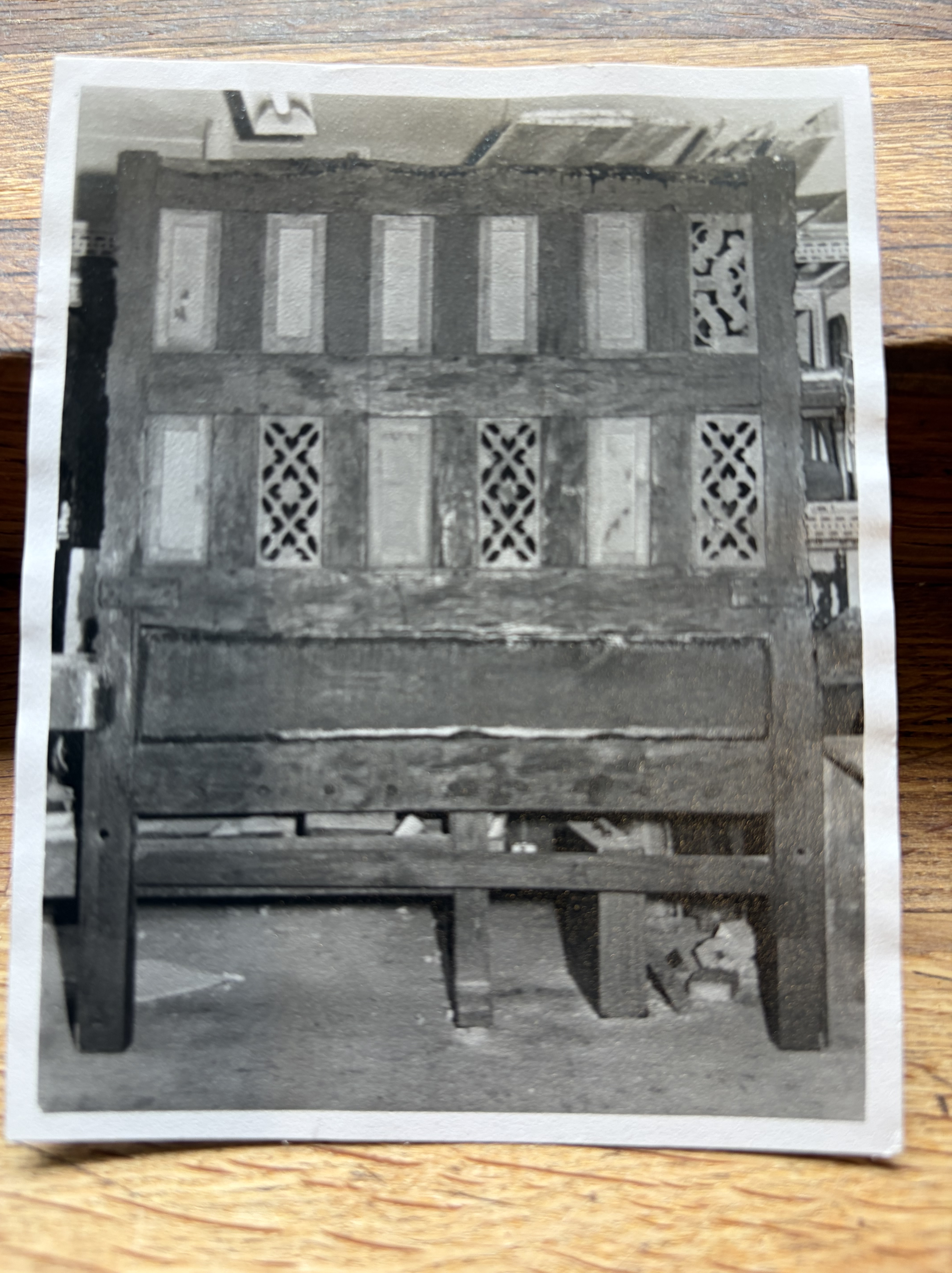
The photographs associated with the bed in the Wolsey photograph albums also include some absolutely fascinating images of the rear of the headboard (see below), which seem to have been taken in a storeroom (perhaps at Wolsey’s shop?). They seem to show various old repairs to the headboard – just as one might expect given that the bed is over 400 years old.

Back of the headboard for the bed. Photograph from the S.W. Wolsey photograph albums.

These important photograph albums will be making their way to the Brotherton Library at the University of Leeds in due course. But the key question (for me at least) is where this very famous bed is today? If anyone knows, do send me a note!

Mark

July 6, 2026

Behind the Scenes of the Year of the Dealer 3 – Charles Duveen at Lady Lever Art Gallery

Here’s more behind the scenes ‘gossip’ on the Year of the Dealer films – this time the Charles Duveen (C. J. Charles) film at Lady Lever Art Gallery – you can see the film here

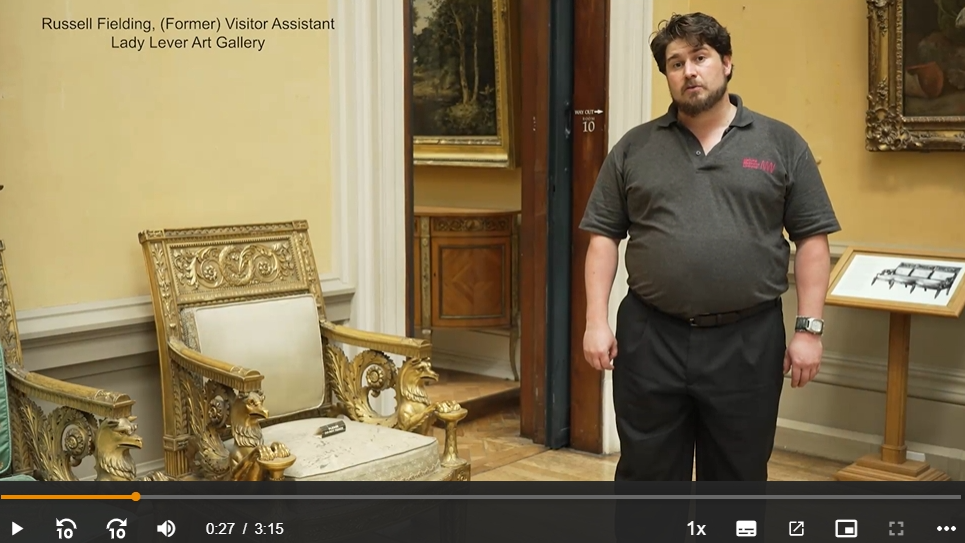
We were fortunate in this film that Russell Fielding, one of the visitor assistants at Lady Lever Art Gallery who introduced the suite of antique Italian furniture, was also an enthusiastic amateur actor – his enunciation in his introduction to the suite is fantastic! Russell sadly is no longer working at Lady Lever Art Gallery – perhaps he is treading the boards somewhere?

Screenshot from The Year of the Dealer film at Lady Lever Art Gallery with Russell Fielding. Year of the Dealer project, University of Leeds.

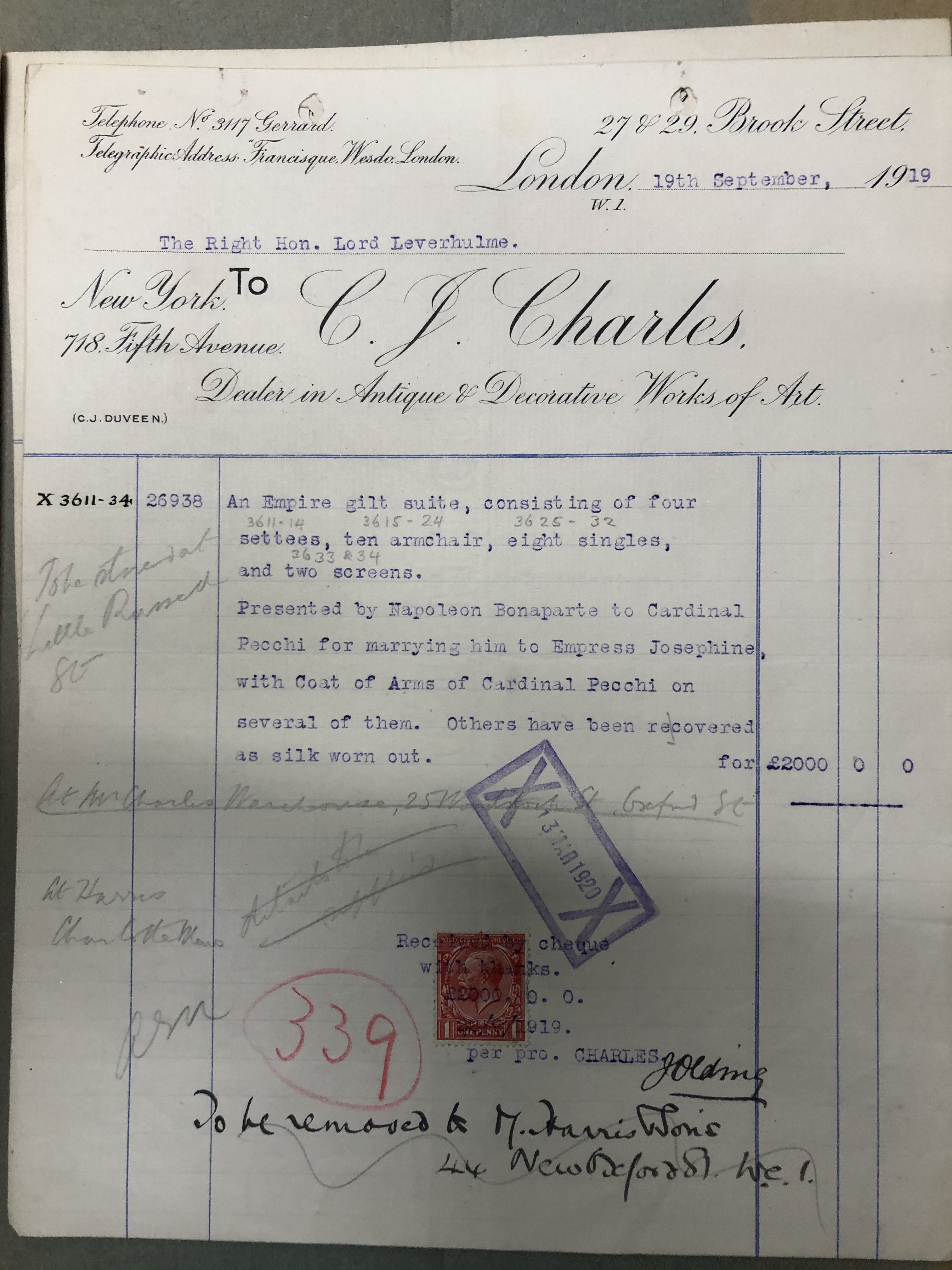
There were numerous edits to the script for the Charles Duveen film at Lady Lever Art Gallery – we had to cut some sections to keep to our sub-4 minute rule. So a section (lasting about 35 seconds) telling the story about the early history of the Duveen dynasty of antique dealers (the family is of Dutch Jewish extraction, but started out in Britain in Hull of the east coast of England in the 1840s) was cut. As was a short section (about 40 seconds) on the significance of the close relationships between collectors and networks of antique dealers – this was illustrated in the image of C. J. Charles’ invoice for the suite of Italian furniture (see below – the image of the invoice was actually included in the film).

Invoice from C.J. Charles for suite of Italian furniture to Lord Leverhulme, 19th Sept 1919. Courtesy of Lady Lever Art Gallery archives.

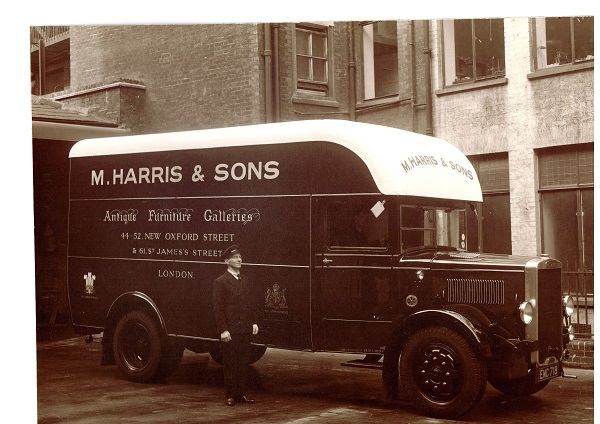
The handwritten notes on the invoice illustrate the tightly grouped network of London antique dealers that Lord Leverhulme used as key suppliers for his antique collecting activities. Moss Harris & Sons were one of Leverhulme’s most trusted antique dealers and Leverhulme regularly acquired antiques from Moss Harris’ Oxford Street shop. One of the the handwritten pencil notes on the invoice indicate that the suite acquired from C. Charles was located at ‘Mr. Charles’ warehouse, 25 Woodstock Street, Oxford Street‘ (which was just off Oxford Street and New Bond Street near to Charles’ shop in Brook Street). Another note (in pen) states ‘To be removed to M. Harris & Sons 44 New Oxford Street WC1‘. A shipment by Moss Harris’s van (see below) would be the most efficient way of getting antiques from various London antique dealers to Leverhulme’s various houses.

M. Harris & Sons delivery van, c.1935. Photograph courtesy of John Hill.

Unfortunately, we could not fit either of these fascinating details into the script and audio for the C. Charles film at Lady Lever Art Gallery, but we did get this lovely image of M. Harris van in one of the films focused on M. Harris & Sons at Lady Lever Art Gallery though!

See next week for more Behind the Scenes of the Year of the Dealer

Mark

Home Subjects

a working group dedicated to the display of art in the private interior, c. 1715-1914

The Period Room: Museum, Material, Experience

An International Conference hosted by The Bowes Museum and The University of Leeds

H. Blairman & Sons Ltd

A research project investigating the history of the antiques trade in Britain in the 19th & 20th centuries

Museum Studies Now?

'Museum Studies Now?' is an event which aims to discuss and debate museum and heritage studies education provision.

The Burlington Magazine Index Blog

art writing * art works * art market

East India Company at Home, 1757-1857

A research project investigating the history of the antiques trade in Britain in the 19th & 20th centuries