As some of the readers of the Antique Dealers Blog already know, for the last 18 months I’ve been very busy working as ‘guest curator’ on an exhibition called ‘SOLD!’ at The Bowes Museum based on over 10 years of research on the history of Antique Dealing in Britain – and we can now announce the forthcoming opening (on 26th January 2019) of the exhibition! Here is the poster, with the stunning bronze by Antico of c.1490-1500, acquired by the V&A Museum through the dealer Horace Baxter in 1960, as the ‘poster boy’.
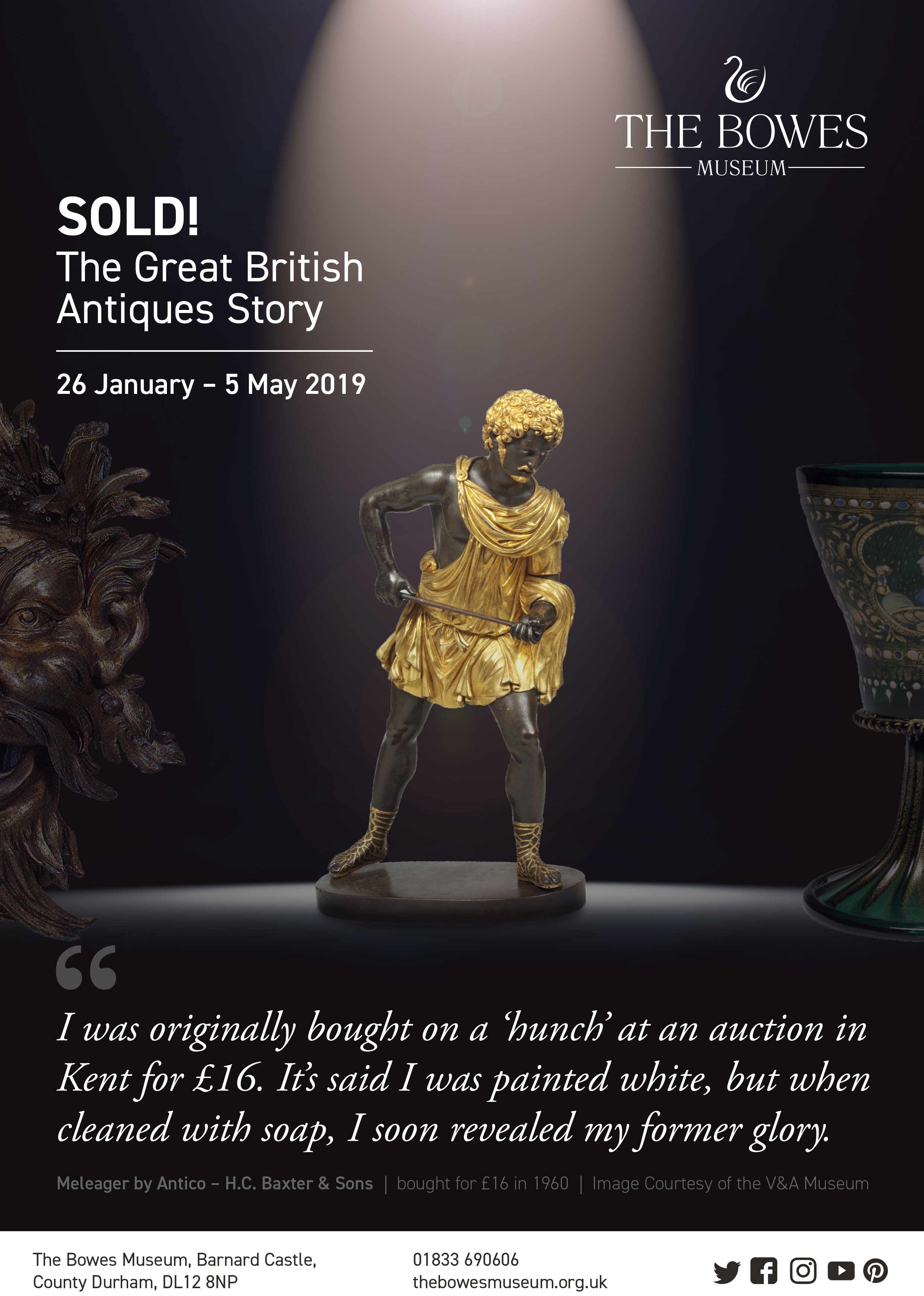
SOLD! Poster
SOLD!, which opens on 26th January 2019, brings together more than 40 world-class objects, from various museums, including the V&A, the British Museum, The Royal Armouries, Royal Collection, The Lady Lever Art Gallery and Temple Newsam, as well as objects from the collections at The Bowes Museum itself, and loans from private collections never seen in public before, to tell the ‘hidden histories’ of the objects with a focus on the history of antique dealing. One of my PhD students (Simon Spier) is working as the project research assistant helping with the assembly of the recreation of an ‘old curiosity shop’ which will be part of the display and interpretation for SOLD! – you can follow Simon’s activities in the special Twitter feed we have developed – see https://twitter.com/Bowes_GBAS
Besides ‘Antico’ from the V&A Museum…(which I have been calling a ‘Horace Baxter’ – indeed, I have been calling all the objects in the exhibition by the name of the dealer who sold them which has been very confusing for many museum curators! – so the ‘Antico’ is a ‘Horace Baxter’; we also have a ‘Henry Farrer’ (a very rare 16th century Venetian glass goblet – sold by Farrer to the South Kensington Museum (now the V&A Museum) in 1854 for £30.0.0) – you can just see the edge of the green glass goblet to the right of the ‘Baxter’ in the poster above; and a ‘David Tremayne’ – the wonderful 18th century bronze mask, sold to The Bowes Museum by David Tremayne in 1966 – you can just the bronze mask to the left of the ‘Baxter’ (sorry, the ‘Antico’) in the poster.
We have a wonderful range of objects in SOLD!, including this amazing demilance suit of armour of c.1620 from the Royal Armouries, (Tower Armouries Collection in London), which was acquired via the well-known specialist dealer in ‘ancient armour’ Samuel & Henry Pratt from their ‘The Gothic Hall’ just off New Bond Street in 1840.

S. & H. Pratt – (1840) – Demilance suit of armour, c.1620. Photograph courtesy of The Royal Armouries.
As part of SOLD! we have objects that passed through the hands of major 19th century dealers such as E.H. Baldock, John Webb and George Durlacher; and in the 20th century, major dealers such as Frank Partridge, M. Harris & Sons, H. Blairman & Sons, Mallett & Son, Wartski, Hotspur, S.J. Phillips, and Bluett & Son…plus many more besides.
One of the major dealers we have focused on is Phillips of Hitchin; mainly because we have the Phillips of Hitchin archives at the Brotherton Library Special Collections at the University of Leeds. And here’s a very rare photograph of the Phillips of Hitchin shop in c.1905, with Frederick W. Phillips (centre) the chap that established the firm in 1882, and Hugh Phillips (his brother) to the right (we don’t know who the third person is) – the photograph was taken just a few years before Frederick Phillips bought the ‘Gothic Cupboard’ and sold it to Robert Mond (see below).
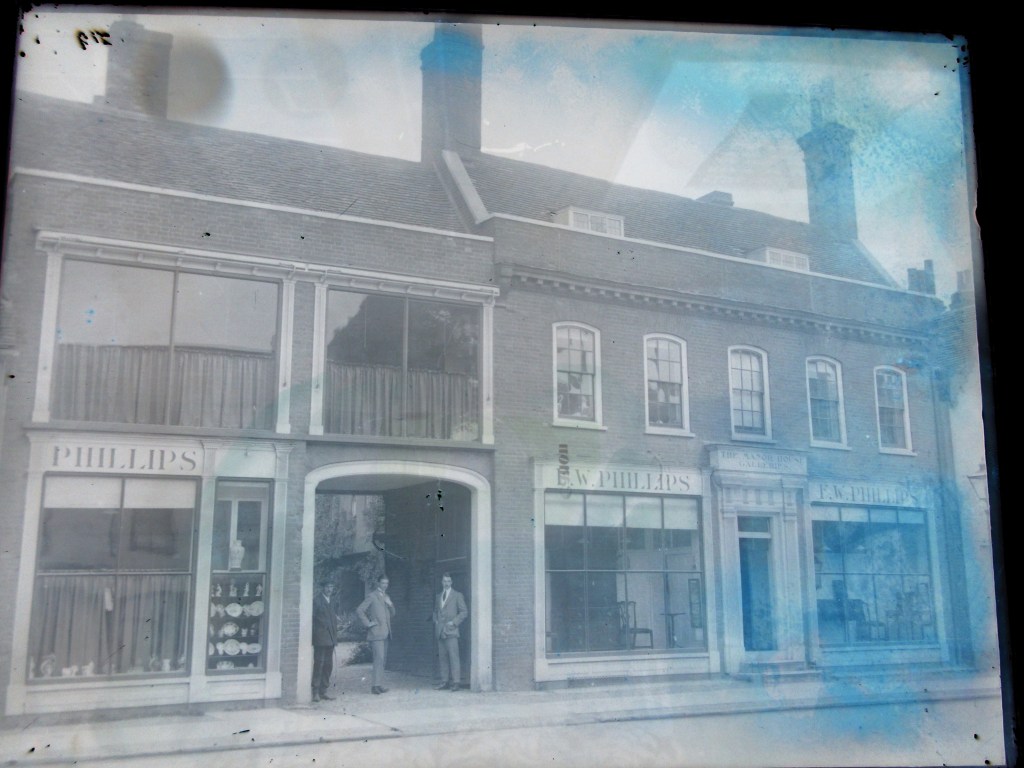
F.W. Phillips (Phillips of Hitchin) shop, Hitchin, c.1905. Digital copy of glass-plate negative courtesy of the V&A Museum.
Jerome Phillips, the grandson of Frederick Phillips, kindly identified the people in the photograph – and Kate Hay at the V&A Museum and her volunteers generously made a digital copy from the original glass-plate negative (part of the Phillips of Hitchin material that is, at present, at the V&A stores).
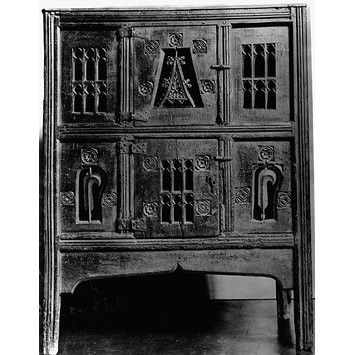
There are also couple of objects from the V&A Museum in the exhibition that were sold by Phillips of Hitchin – this Gothic cupboard (known as ‘Prince Arthur’s Cupboard’ in the early 20th century when it was acquired by the V&A Museum) was sold by F.W. Phillips (Phillips of Hitchin) to the well-known collector Robert Mond in 1912 for £220.0.0. – Mond donated it to the V&A in the same year.

F.W. Phillips (Phillips of Hitchin) ‘Gothic Cupboard’ c.1500-1600. Sold by F.W. Phillips in 1912. Photograph courtesy of the V&A Museum.
The other Phillips of Hitchin object in the exhibition is the famous ‘Medal Cabinet’ by the 18th century cabinetmaker William Vile (c.1700-1767), of c.1760, which was sold by PoH to the V&A in 1963 for £10,000.
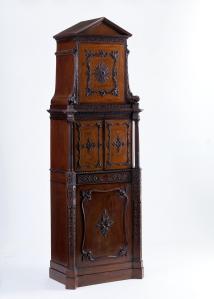
Phillips of Hitchin (1963). George III mahogany medal cabinet, c.1760. Photograph courtesy of the V&A Museum.
The exhibition will also have a wide range of exceptionally rare antique dealer archives, and a range of dealer ephemera, to bring to life the history of the antique trade. But there are also some spectacularly rare objects in SOLD! – indeed, one of the key premises of the exhibition is to show some very familiar, world-class museum objects, but to ‘reframe’ them through the narrative of the art market; and to bring the previously marginalized story of antique dealing more directly, and more explicitly, into the spaces of the public museum – and to provoke us all (museum curators, academics, and the public) to reflect on why the art market has often been suppressed and dislocated from the narratives of the history of art that the museum presents us with.
We hope that the ‘SOLD!’ exhibition will be a catalyst for increased public engagement with these previously marginalized stories.
I’ll be updating the blog with regular progress reports on SOLD! as we move towards the opening of the exhibition on 26th January 2019 – I do hope that we will see as many people who can make it to SOLD! at Bowes Museum and I hope to say ‘hello’ if I am about at the exhibition.
Mark