Posts tagged ‘Wardour Street’

August 4, 2026

Behind the Scenes of the Year of the Dealer 7 – Dean Tuck at the V&A South Kensington

Our next in the series ‘Behind the Scenes of the Year of the Dealer’ returns to the V&A Museum and the film that focuses on the dealer Dean Tuck – you can see the final version of the film HERE.

The focus on a dealer such as Dean Tuck was unusual for the Year of the Dealer project films primarily because Tuck’s acquisition of the Hans Holbein the Younger portrait miniature of Anne of Cleves predated the establishment of the V&A Museum in the early 1850s – Tuck acquired the miniature in 1826, as the YoD film indicates. Tuck was one of only two dealers featured in all 50 films whose sale of objects predate 1850 – the other is Thomas Walesby, who bought and sold the famous four-poster bed from Stowe House in 1848 and features in Lady Lever Art Gallery films (you can see the Walesby film HERE).

However, we wanted to highlight that ‘antique dealers’ and ‘antique dealing’ has a history that predates the establishment of ‘decorative art’ museums in the 1850s – plus we just loved the portrait miniature that Dean Tuck bought and sold!
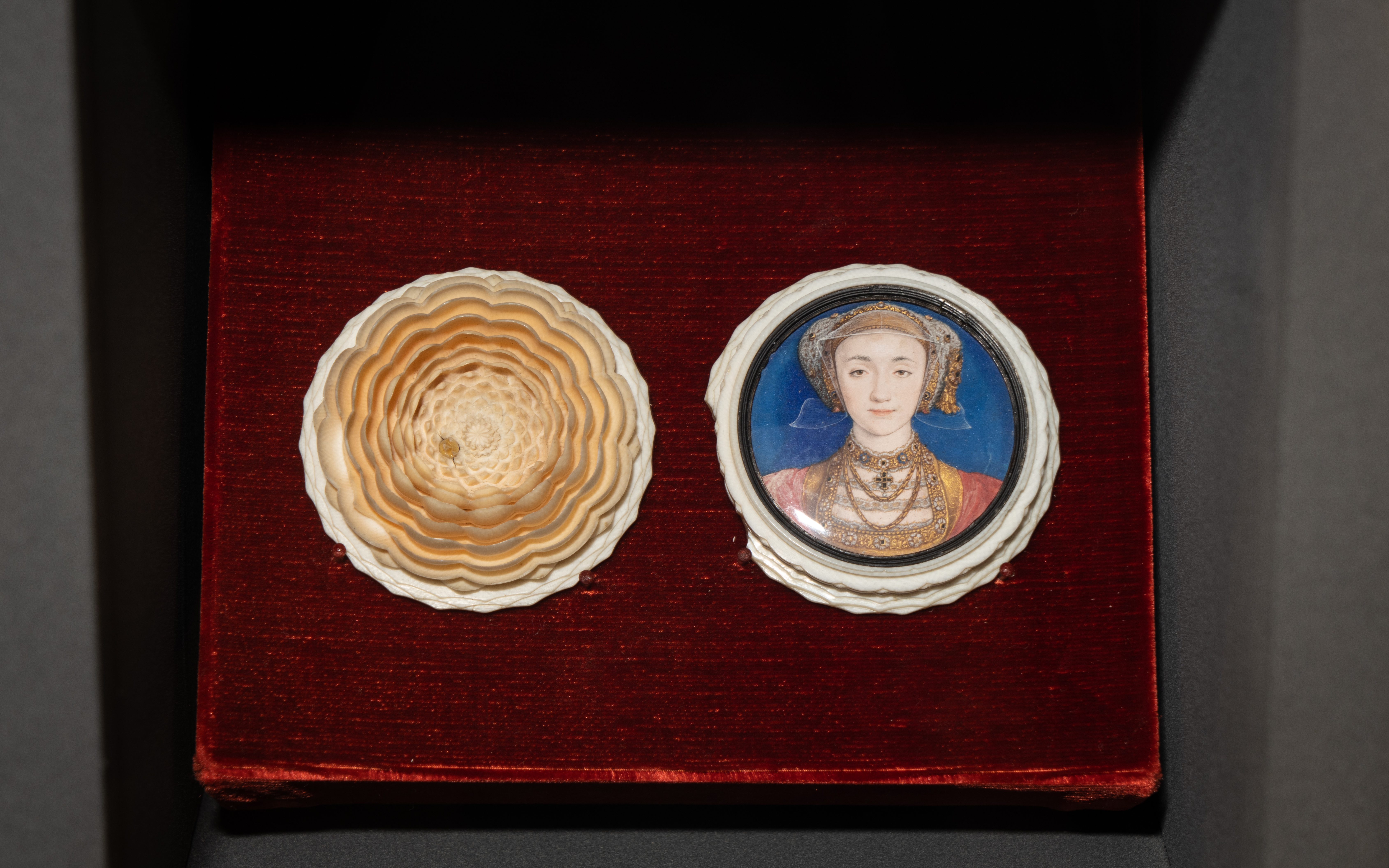
Portrait Miniature of Anne of Cleves by Hans Holbein the Younger, 1539. Image, The Year of the Dealer Project and the V&A Museum.

As with all the other films in the YoD series we had many more images that we might have included in the Dean Tuck film – we had a few images of ‘antiquarian’ interiors for example. This one (below), a beautiful pen and ink drawing of the library at Bromwell House, Brislington, near Bristol, c.1825, which shows the kind of interiors that were fashionable with antiquarian collectors of the type that Dean Tuck would have supplied in the 1820s and 1830s.

W.H. Bartlett, The Library, Bromwell House, Bristol, c.1825, pen and ink drawing. Image copyright Bristol’s Museums & Galleries.

We eventually settled on the E.W. Cooke, The Antiquary’s Cell (1835), primarily because the painting is also in the collections of the V&A Museum. One other thing we could not find space to mention in the film is that the 17th century chair in the middle of Cooke’s painting is believed to have been the chair sold to Cooke by the antique dealer’s Edward and George Hull of Wardour Street, London, in 1835 – for more on Hull see my Biographical Dictionary and Nineteenth Century Antique and Curiosity Dealers (free, online at White Rose Research Online HERE).

E.W. Cooke, The Antiquary’s Cell, oil on canvas, 1835. FA.42 [O]. Image copyright V&A Museum.

There were other aspects of Dean Tuck’s life as a dealer in the 1820s and 1830s that we did not have space to include. For example, Tuck had a close business relationship with the famous art and antiques dealer Henry Farrer (1798-1866); they bought and sold lots of antiques together. Farrer was also Executor in Dean Tuck’s Last Will and Testament in 1838.

The other reason we wanted to include Dean Tuck in the V&A films is that his wife, Charlotte Tuck, continued his antique dealing business after his death and one of the themes in the Year of the Dealer films, as you will have noticed, is on women antique dealers and we wanted to highlight that this history also has a long genealogy.

Watch out next week for another ‘Behind the Scenes of the Year of the Dealer’.

Mark

July 16, 2014

Ramus Brothers, Dealers in Works of Art

Our friend and colleague Andy Ramus, great grandson of the famous Henry Ramus ‘Fine Art Dealer’, very kindly sent us a link to his latest blog entry on Ramus: see Andy’s blog here:

Andy Ramus Blog

I’ve had a series of very productive and convivial email exchanges with Andy over the last few years as part of my own research into the development of the 19th century antique and curiosity trade, and Andy very generously shared his own research into the Ramus family with me – Thank you again Andy!

Andy sketches out a fascinating story of the Ramus family of art dealers and their partners and art dealer colleagues in the late 19th and early 20th centuries. Henry Ramus & Company, ‘Fine Art Dealers’ were trading at 68 Wardour Street, London in c.1900, after moving from Manchester where Ramus was a ‘picture-frame maker’ – for those of you that follow these things, the business move from ‘picture-frame maker’ to ‘art dealer’ is a familiar pathway for 19th century art dealers.

As far as the Antique Dealer project is concerned, Henry Ramus will regrettably not be included in our database for the project – his primary trading activities as a ‘Fine Art’ dealer will exclude him from the current project, which, as you’ll know, focuses on the ‘decorative art’ trade, and dealers in antiques. We’ll explain more about the structure of the research focus in our introductory essays on the (soon to be seen) interactive website – it is on it’s way by the way!….Henry’s cousin, Isaac Ramus (1827-1901), was a ‘Dealer in Works of Art’ at various addresses in London in the second half of the 19th century; his business eventually settled in Piccadilly, London, and in 1901, after his death, was continued by his sons Jacob and Albert as Ramus Brothers, Dealers in Works of Art’ – Isaac, Jacob and Albert WILL be in our project database.

Andy’s blog also very usefully directs attention to the dealer practice of the ‘ring’ or ”knockout’ (see Andy’s blog for more details) – the history of which is also something we’ll be investigating as part of the antique dealer project…..so keep your eye on the outputs!

Thanks again Andy!

Mark

Home Subjects

a working group dedicated to the display of art in the private interior, c. 1715-1914

The Period Room: Museum, Material, Experience

An International Conference hosted by The Bowes Museum and The University of Leeds

H. Blairman & Sons Ltd

A research project investigating the history of the antiques trade in Britain in the 19th & 20th centuries

Museum Studies Now?

'Museum Studies Now?' is an event which aims to discuss and debate museum and heritage studies education provision.

The Burlington Magazine Index Blog

art writing * art works * art market

East India Company at Home, 1757-1857

A research project investigating the history of the antiques trade in Britain in the 19th & 20th centuries