Posts tagged ‘British Museum’

May 16, 2026

A late 19th century Antique Dealer – W. D. Cutter

The history of antique dealing is littered with fascinating ephemera – dealer catalogues, invoices, letters, drawings and sketches, stock books, sales books and photograph albums. Some of the most interesting survivals are auction sale catalogues, often generated when a dealer makes changes to a business (sales of surplus stock when moving to different premises for example), or when a dealer retires, or dies. One such catalogue recently joined the collection of antique dealer ephemera that are such important resources for the antique dealer research project.

The catalogue presents ‘The Extensive and Valuable Stock of Works of Art, the property of Mr W.D. Cutter of Great Russell Street, who is retiring from business’ which was was sold over 3 days, 14th -16th May 1924. It gives us a unique insight into the remaining trading stock of an important and well-known (in the late 19th century at least) antique dealer.
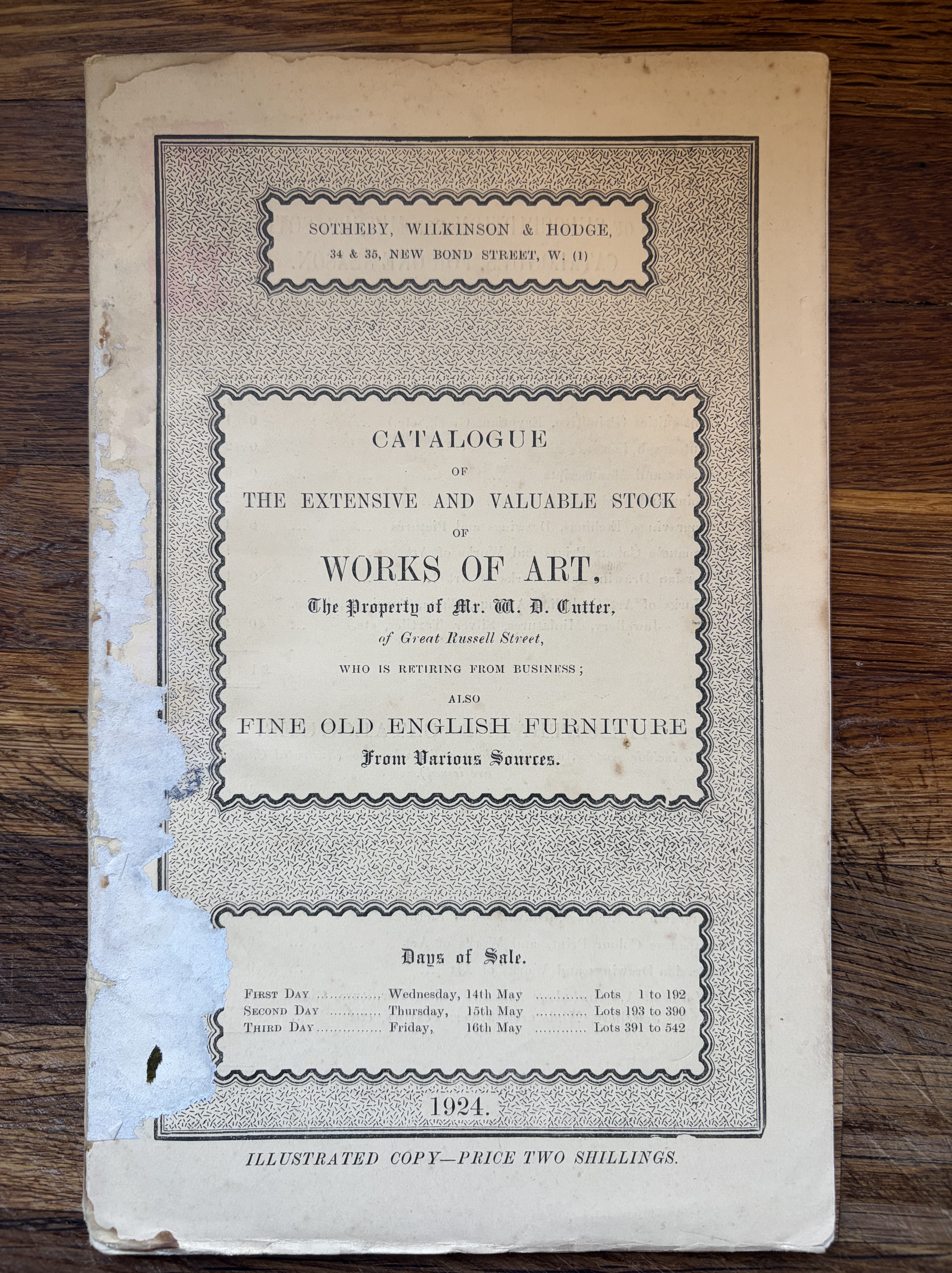
Catalogue of the auction sale of the stock of W.D. Cutter; Sotheby, Wilkinson & Hodge, London 1924. Image, Antique Dealer Research Project, University of Leeds.

William Doherty Cutter (born c.1848) traded as ‘antique furniture dealer and curiosity dealer’ at 36 Great Russell Street, London in the 1880s, but the business can be traced back to as early as the 1860s, so may have been started by William’s father or mother or other member of the Cutter family. Cutter’s were well known as suppliers of ‘curiosities’ of natural history and ethnography to the British Museum from the late 1860s to c.1900 – their shop was very close to the British Museum in Great Russell Street. Cutter is mentioned in Provenance: Twelve collectors of ethnographic art in England 1760-1990′ edited by H. Waterfield and J.C.H. King (2006), as well as having a short entry in my Biographical Dictionary of 19th century Antique and Curiosity Dealers (2009). He appears to have been a very important antique dealer, now little known of course; he was active at the famous Hamilton Palace auction sale in 1882, buying a small number of Lots, including ‘a large cameo, with three heads in profile’ (Lot 2166) for £7.0.0. Both of Cutter’s daughters, Marjorie Doherty (born c.1896) and Eva (born c.1890) worked for their father in his antique dealing business – (it’s said that Eva took over the business in c.1890, but this can’t be true as she would have only just been born).

What’s fascinating about the auction catalogue of Cutter’s stock is the sheer range and quality of the antiques he held in stock in 1924. This extends far beyond the natural history and ethnographic specimens that Cutter’s are said to have supplied to the British Museum in the second half of the 19th century. The auction sale had 499 Lots of Cutter’s stock, which ranged from bronzes, ivories, Chinese and European porcelain, silver, clocks, marble and terracotta sculptures, Chinese hardstone carvings and cloisonne, as well as some antique furniture, an array of objet d’art and a small number of paintings.

This range of ‘antiques’ is typical of late 19th and early 20th century collecting interests of course, but Cutter seems to have also been something of a specialist in Renaissance bronzes. Lot 135, for example, ‘A FINE INKSTAND, of the school of Riccio…’ (see below, centre – Andrea Briosco, called Riccio, (1470-1532)). The bronze inkstand was sold to ‘Kerin’ for £30 (equivalent to about £13,630, as ‘income value’, according to Measuringworth.com.) Gerald Kerin formed a partnership with the dealer Alfred Spero in 1928 – both Kerin and Spero were dealers based in London specialising in Renaissance bronzes and bought heavily at the Cutter auction sale.

Lot 49 (see below bottom left) ‘A VERY FINE 15th CENTURY IVORY GROUP of ‘The Adoration of the Magi 6 1/2 in.’ was bought by the dealer ‘Garabed’ for £7 & 10 shillings (equivalent to about £3,400). A. Garabed was well-known dealer trading at Pall Mall Safety Deposit, Carlton Street, London at the time. And Lot 153, ‘A VERY FINE FIGURE OF A POPE, in pear-wood, coloured to imitate bronze, full-length in vestments, standing with right arm raised, 6 7/8 in.’,(below bottom right) sold to the dealer ‘Lewis’ for £3 & 10 shillings (equivalent to about £1,590). Lewis could be any number of antique dealers of the Lewis family in the 1920s.
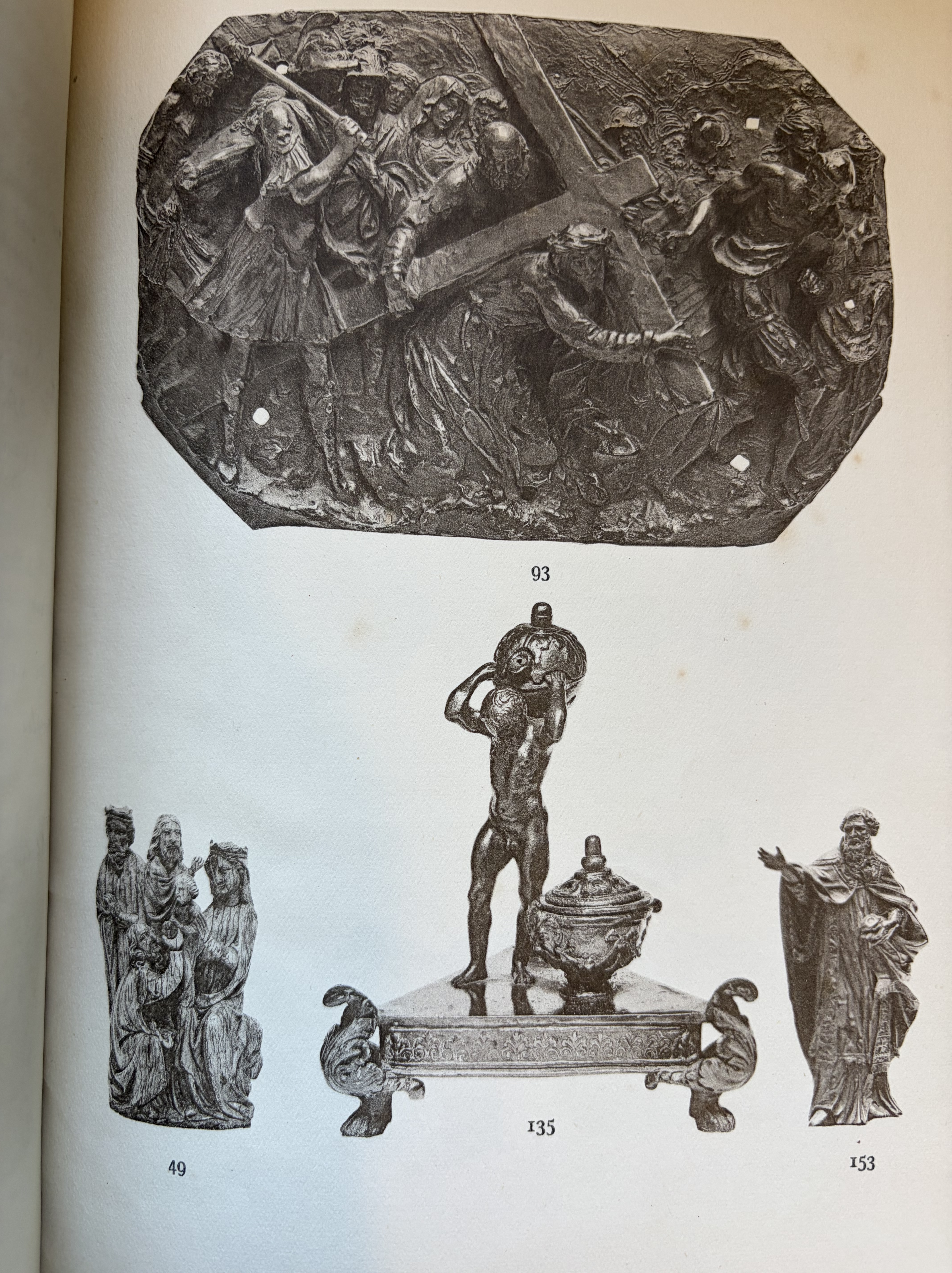
Auction catalogue of the W.D. Cutter sale, May 1924. Photograph, Antique Dealer Research Project, University of Leeds.

Lot 93,(see above, top middle) ‘A FINE 16th CENTURY PLAQUE of Christ bearing the Cross, a ”cire perdu” casting, with figures in very high relief (up to 1 1/2 in.), oblong, octagonal, 9 1/2 in. by 6 1/2 in.’, was sold to Alfred Spero for £40 (equivalent to £18,170) – the most expensive object sold at the Cutter auction. Alfred Spero was trading from a shop at 33 King Street, St. James’s in London in the 1920s, right next to Christie’s auction rooms.

The bronze shown in Cutter’s stock is a well-known casting, previously attributed to Ferdinando Tacca (1619-1686), but is now said to be by Francesco Fanelli (1608-1661). There are three known versions of bronze, in different shapes and sizes, in museum collections in the USA. One version, rectangular in shape, in the collections of The Minneapolis Institute of Art (see below).
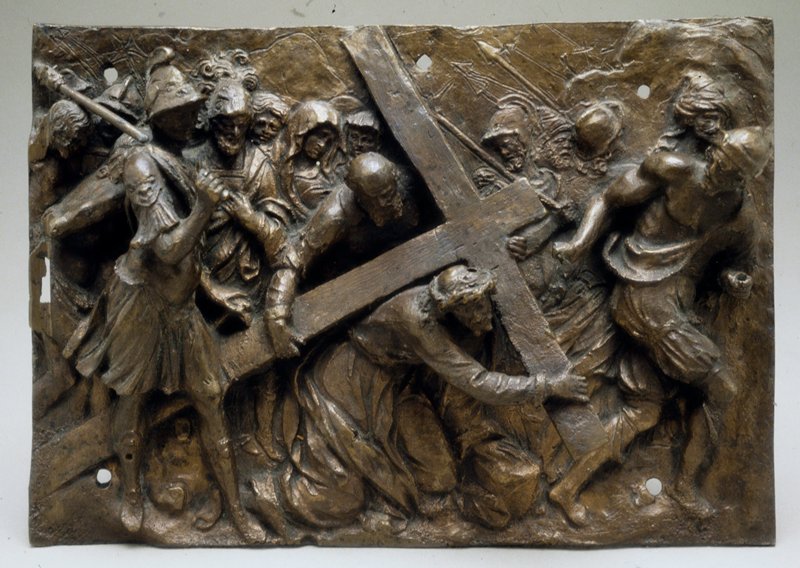
Francesco Fanelli (1608-1661), Christ bearing the cross, mid-17th century. Minneapolis Institute of Art, USA, (66.43.1) The Christina N and Swan J. Turnblad Memorial Fund. Image Minneapolis Institute of Art.

Two other versions are octagonal in shape, the same as the example in the Cutter auction. These are in the collections at The Metropolitan Museum of Art in New York and at the Spencer Museum of Art, Kansas, USA (see below).
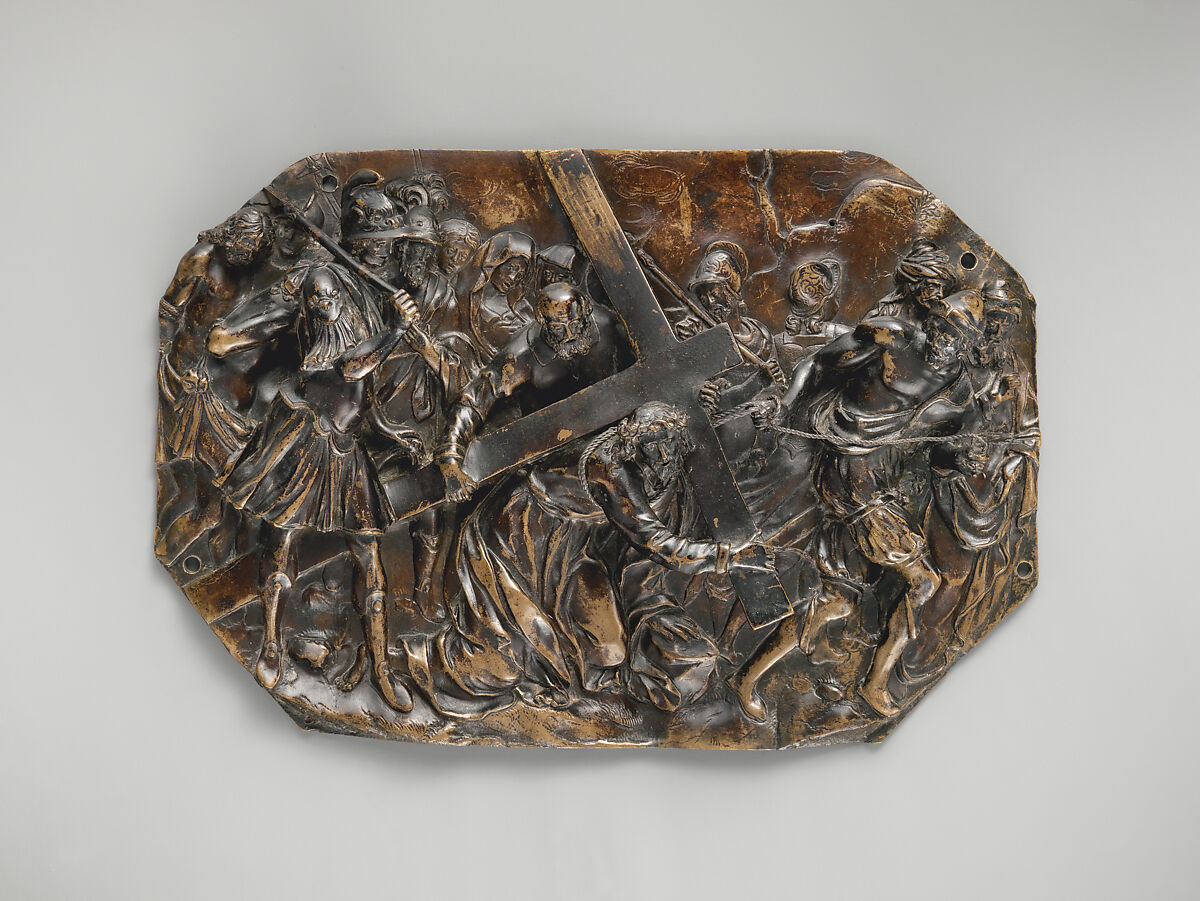
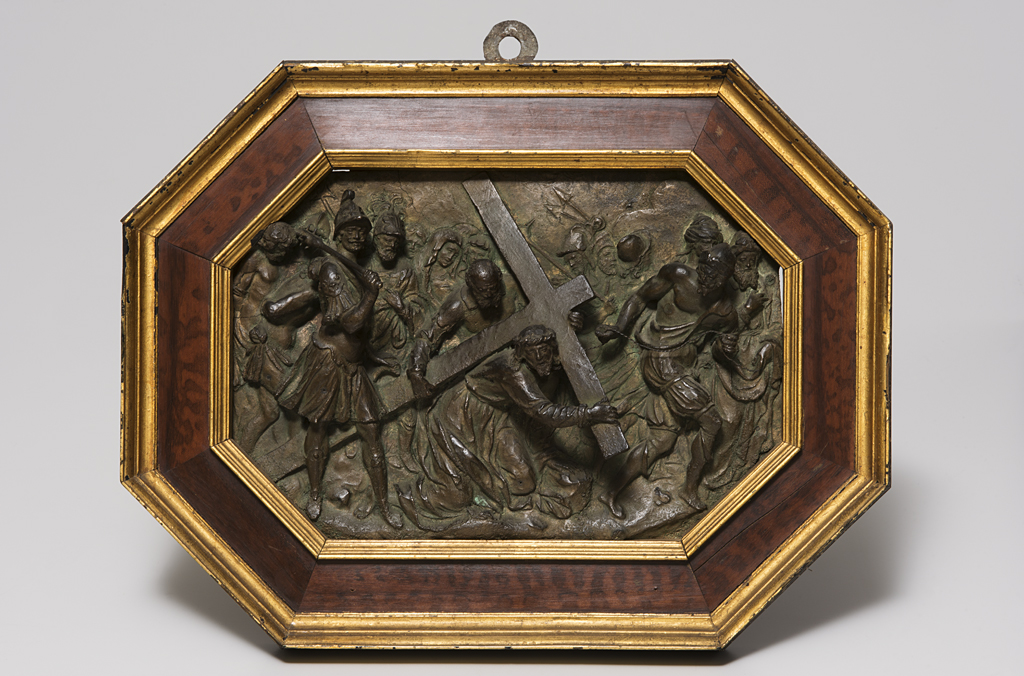
Francesco Fanelli (1608-1661), Christ bearing the Cross, mid-17th century. Metropolitan Museum of Art, New York, USA. Image, Metropolitan Museum of Art, New York.
Francesco Fanelli (1608-1661), Christ bearing the Cross, mid 1600s. Spencer Museum of Art, Kansas. Image copyright Spencer Museum of Art, Kansas, USA.

The Metropolitan Museum of Art and the Spencer Museum of Art examples show different fixing holes and other variations, so cannot be the Cutter example, which raises the possibility that Cutter’s example is a previously unrecorded, and as yet unlocated, example of this famous bronze.

Other examples of Renaissance bronzes in the W.D. Cutter auction sale include Lot 128, ‘AN EARLY EQUESTRIAN FIGURE, in pseudo-classical costume, 8 in.’ (sold again to Kerin, at £3.0.0.) (see below top left).
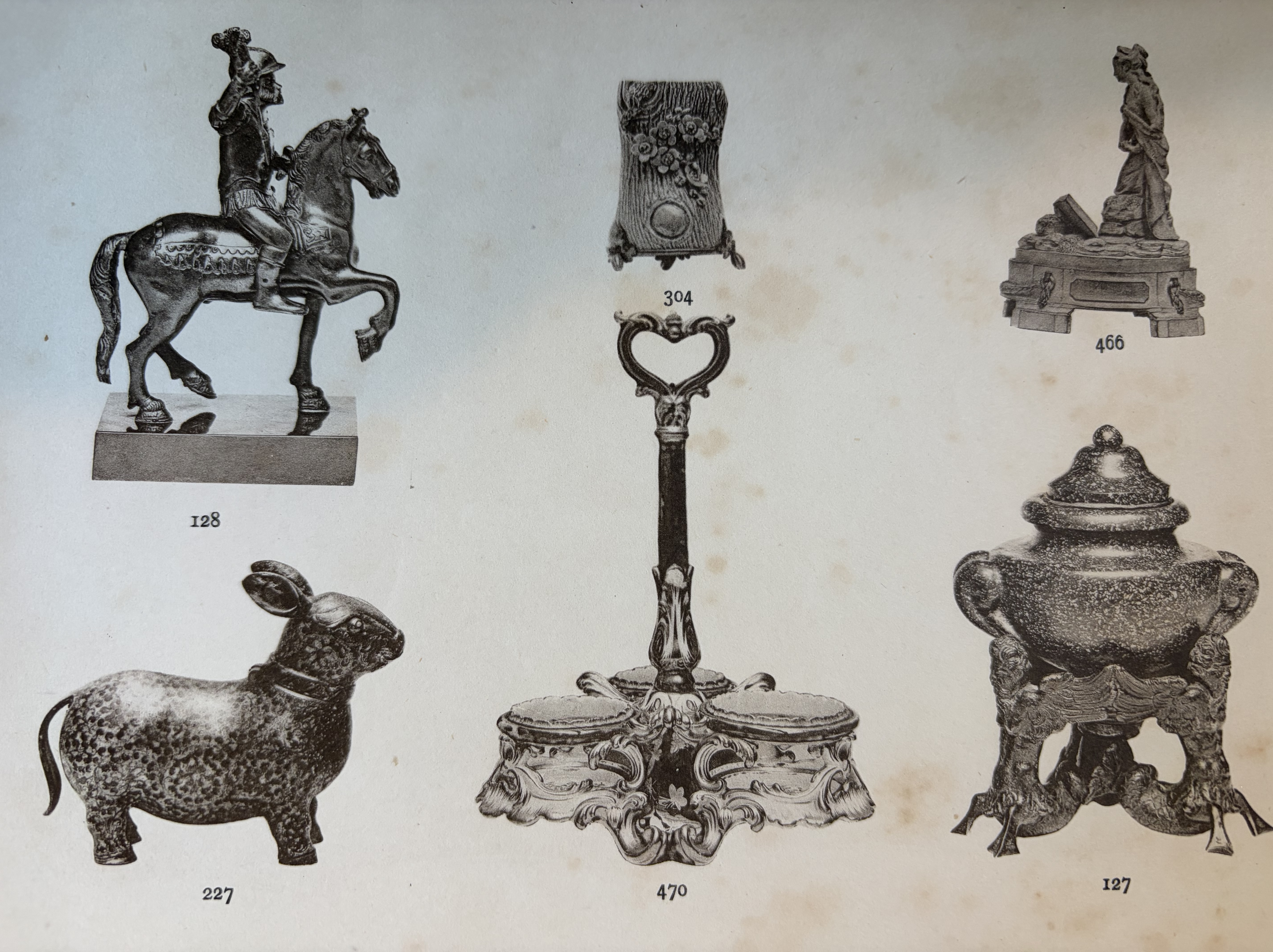
Auction catalogue of the W.D. Cutter sale, May 1924. Photograph, Antique Dealer Research Project, University of Leeds.

And a bronze sculpture of a man (below, right), Lot 138, ‘A FINE 16th CENTURY FIGURE of a man, with curling hair and beard, standing nude with head turned to right and looking downwards, both arms bent with fingers open 15 1/2 in.’ This was sold for £20.0.0. (to a buyer who’s name is too hard to decipher?).
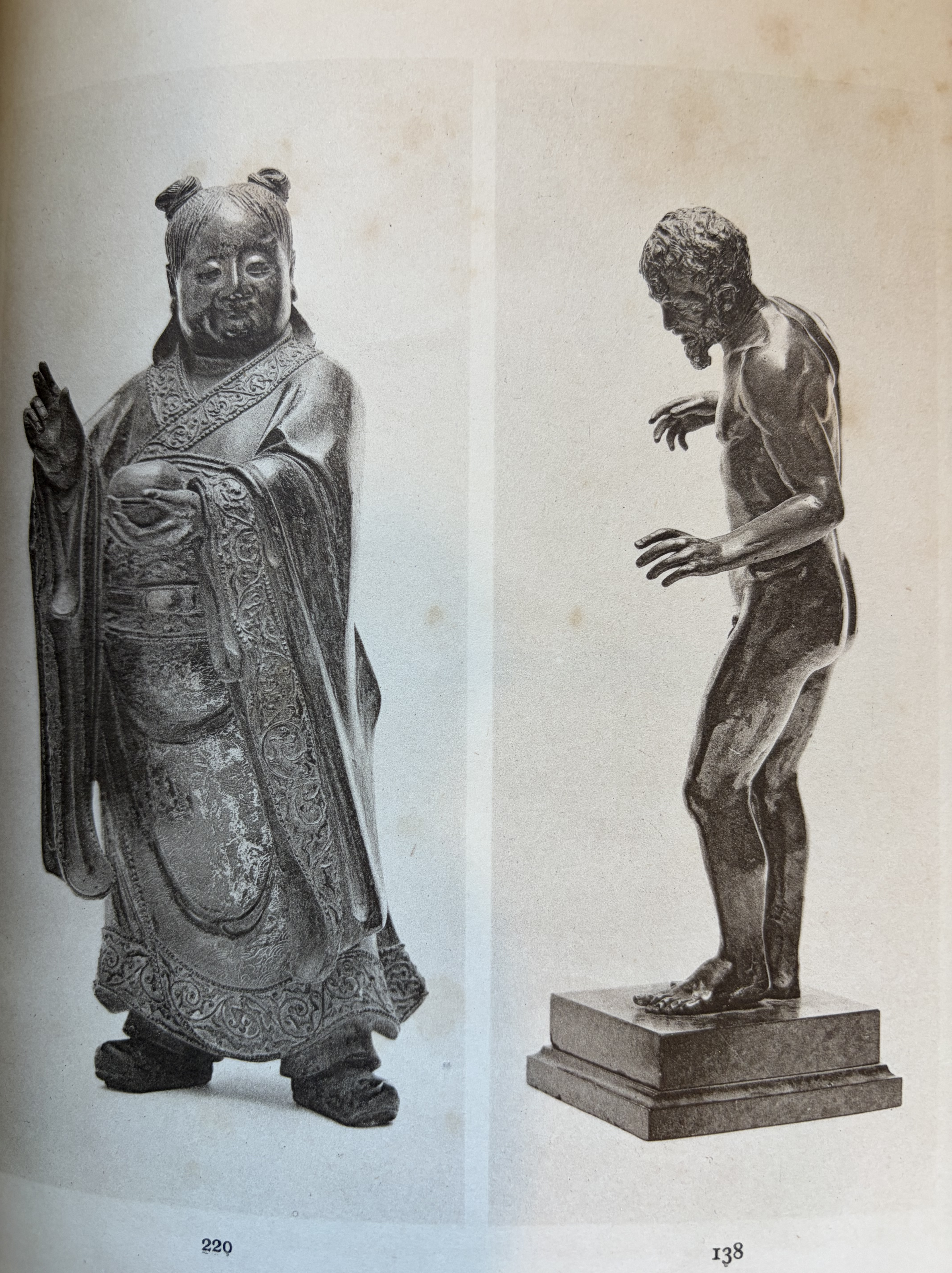
Auction catalogue of the W.D. Cutter sale, May 1924. Photograph, Antique Dealer Research Project, University of Leeds.

The Cutter auction catalogue is a rare document of the stock of a formerly well-known, but now forgotten, antique dealer, and illustrates the high quality stock that W.D. Cutter held. The catalogue will be joining the range of antique dealer ephemera at the Brotherton Library at the University of Leeds in due course.

Mark
December 2, 2018

SOLD! A Major Exhibition at The Bowes Museum

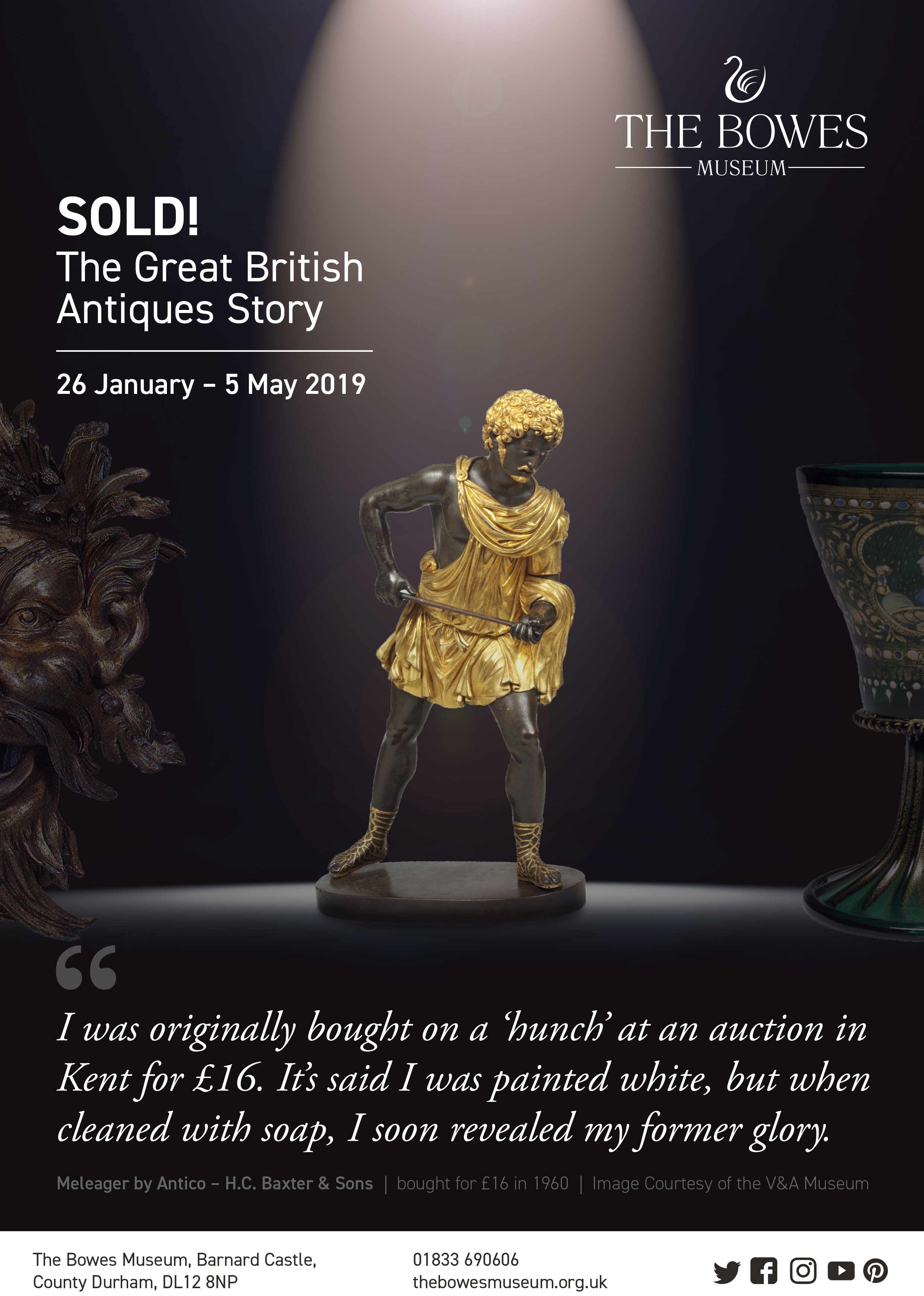
As some of the readers of the Antique Dealers Blog already know, for the last 18 months I’ve been very busy working as ‘guest curator’ on an exhibition called ‘SOLD!’ at The Bowes Museum based on over 10 years of research on the history of Antique Dealing in Britain – and we can now announce the forthcoming opening (on 26th January 2019) of the exhibition!  Here is the poster, with the stunning bronze by Antico of c.1490-1500, acquired by the V&A Museum through the dealer Horace Baxter in 1960, as the ‘poster boy’.

SOLD! Poster

SOLD!, which opens on 26th January 2019, brings together more than 40 world-class objects, from various museums, including the V&A, the British Museum, The Royal Armouries, Royal Collection, The Lady Lever Art Gallery and Temple Newsam, as well as objects from the collections at The Bowes Museum itself, and loans from private collections never seen in public before, to tell the ‘hidden histories’ of the objects with a focus on the history of antique dealing.  One of my PhD students (Simon Spier) is working as the project research assistant helping with the assembly of the recreation of an ‘old curiosity shop’ which will be part of the display and interpretation for SOLD! – you can follow Simon’s activities in the special Twitter feed we have developed – see  https://twitter.com/Bowes_GBAS

Besides ‘Antico’ from the V&A Museum…(which I have been calling a ‘Horace Baxter’ – indeed, I have been calling all the objects in the exhibition by the name of the dealer who sold them which has been very confusing for many museum curators! – so the ‘Antico’ is a ‘Horace Baxter’; we also have a ‘Henry Farrer’ (a very rare 16th century Venetian glass goblet – sold by Farrer to the South Kensington Museum (now the V&A Museum) in 1854 for £30.0.0) – you can just see the edge of the green glass goblet to the right of the ‘Baxter’ in the poster above; and a ‘David Tremayne’ – the wonderful 18th century bronze mask, sold to The Bowes Museum by David Tremayne in 1966 – you can just the bronze mask to the left of the ‘Baxter’ (sorry, the ‘Antico’) in the poster.

We have a wonderful range of objects in SOLD!, including this amazing demilance suit of armour of c.1620 from the Royal Armouries, (Tower Armouries Collection in London), which was acquired via the well-known specialist dealer in ‘ancient armour’ Samuel & Henry Pratt from their ‘The Gothic Hall’ just off New Bond Street in 1840.

S. & H. Pratt – (1840) – Demilance suit of armour, c.1620. Photograph courtesy of The Royal Armouries.

As part of SOLD! we have objects that passed through the hands of major 19th century dealers such as E.H. Baldock, John Webb and George Durlacher; and in the 20th century, major dealers such as Frank Partridge, M. Harris & Sons, H. Blairman & Sons, Mallett & Son, Wartski, Hotspur, S.J. Phillips, and Bluett & Son…plus many more besides.

One of the major dealers we have focused on is Phillips of Hitchin; mainly because we have the Phillips of Hitchin archives at the Brotherton Library Special Collections at the University of Leeds. And here’s a very rare photograph of the Phillips of Hitchin shop in c.1905, with Frederick W. Phillips (centre) the chap that established the firm in 1882, and Hugh Phillips (his brother) to the right (we don’t know who the third person is) – the photograph was taken just a few years before Frederick Phillips bought the ‘Gothic Cupboard’ and sold it to Robert Mond (see below).

F.W. Phillips (Phillips of Hitchin) shop, Hitchin, c.1905. Digital copy of glass-plate negative courtesy of the V&A Museum.

Jerome Phillips, the grandson of Frederick Phillips, kindly identified the people in the photograph – and Kate Hay at the V&A Museum and her volunteers generously made a digital copy from the original glass-plate negative (part of the Phillips of Hitchin material that is, at present, at the V&A stores).

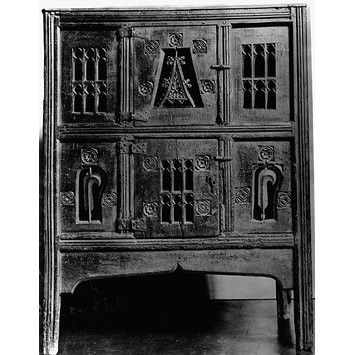
There are also couple of objects from the V&A Museum in the exhibition that were sold by Phillips of Hitchin – this Gothic cupboard (known as ‘Prince Arthur’s Cupboard’ in the early 20th century when it was acquired by the V&A Museum) was sold by F.W. Phillips (Phillips of Hitchin) to the well-known collector Robert Mond in 1912 for £220.0.0. – Mond donated it to the V&A in the same year.

F.W. Phillips (Phillips of Hitchin) ‘Gothic Cupboard’ c.1500-1600. Sold by F.W. Phillips in 1912. Photograph courtesy of the V&A Museum.


The other Phillips of Hitchin object in the exhibition is the famous ‘Medal Cabinet’ by the 18th century cabinetmaker William Vile (c.1700-1767), of c.1760, which was sold by PoH to the V&A in 1963 for £10,000.

Phillips of Hitchin (1963). George III mahogany medal cabinet, c.1760. Photograph courtesy of the V&A Museum.


The exhibition will also have a wide range of exceptionally rare antique dealer archives, and a range of dealer ephemera, to bring to life the history of the antique trade.  But there are also some spectacularly rare objects in SOLD! – indeed, one of the key premises of the exhibition is to show some very familiar, world-class museum objects, but to ‘reframe’ them through the narrative of the art market; and to bring the previously marginalized story of antique dealing more directly, and more explicitly, into the spaces of the public museum – and to provoke us all (museum curators, academics, and the public) to reflect on why the art market has often been suppressed and dislocated from the narratives of the history of art that the museum presents us with.

We hope that the ‘SOLD!’ exhibition will be a catalyst for increased public engagement with these previously marginalized stories.

I’ll be updating the blog with regular progress reports on SOLD! as we move towards the opening of the exhibition on 26th January 2019 – I do hope that we will see as many people who can make it to SOLD! at Bowes Museum and I hope to say ‘hello’ if I am about at the exhibition.

Mark


July 26, 2017

More new archives! H.M. Lee & R.A. Lee archives arrive at University – and an object biography

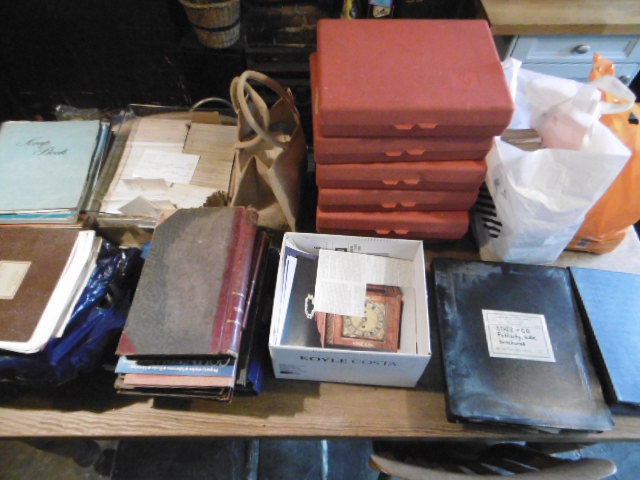
Our corpus of antique dealer archives continues to expand – this week we accepted delivery of the archive of the world famous antique dealers Henry Morton Lee and Ronald A. Lee, generously donated to the Brotherton Library Special Collections at the University of Leeds by Georgina Gough, the daughter of Ronald Lee. The archive (shown below before deposit in the Special Collections) comprises a selection of stock books, sales ledgers, press cuttings and photographs of stock, together with what appears to be a complete run of stock cards, dating from the 1920s to the 1990s.

H.M. Lee and R.A. Lee archive. Brotherton Library Special Collections.

The Lee family antique dealing business began in Kingston on Thames just after WWI (Henry Morton Lee began as a hairdresser in London, counting King Edward VII as a customer); Ronald Lee joined his father in the business in 1931 before eventually setting up on his own in 1949 – the business closed in the 1990s.

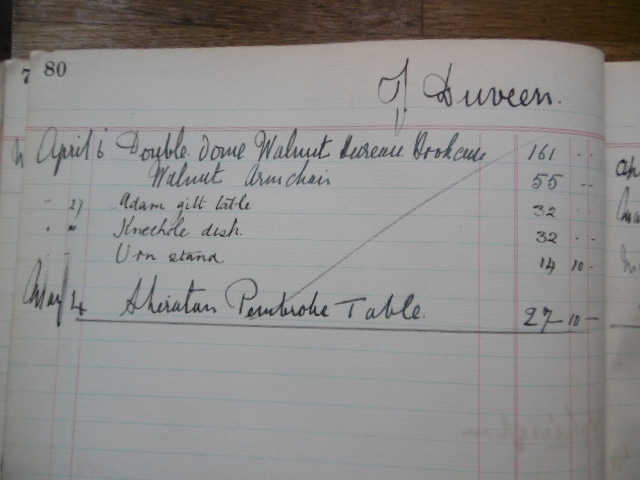
During the 1920s and 1930s Henry Lee sold a vast array of objects to many of the most important dealers of the day, including Joseph Duveen (1869-1939), the son of Joseph Joel Duveen of the world-renowned Duveen dynasty of dealers – here’s just one page of sales to Duveen, in 1927 – Henry sold him, amongst other things, ‘a Double Dome Walnut Bureau Bookcase..£161.0.0’ and a ‘Walnut armchair £55.0.0.’ –  very fashionable, and very expensive, objects in the 1920s and 1930s.

Lee Archive, sales ledger – entry for Duveen, 1927. Brotherton Library Special Collections, University of Leeds.

Ronald Lee, like his father Henry, was a highly successful dealer, and was also an expert on clocks – especially the clockmaker Joseph Knibb and family (Ronald wrote the biography of the Knibb family of clockmakers in 1965 – still a key work on the subject).  Ronald sold an astonishingly wide range of objects, to collectors and museums all over the world – a key driver for Lee appears to have been the historical significance of objects (as well as their beauty of course);  he was clearly an antiquarian dealer, demonstrated by the historical importance of many of the objects he sold –

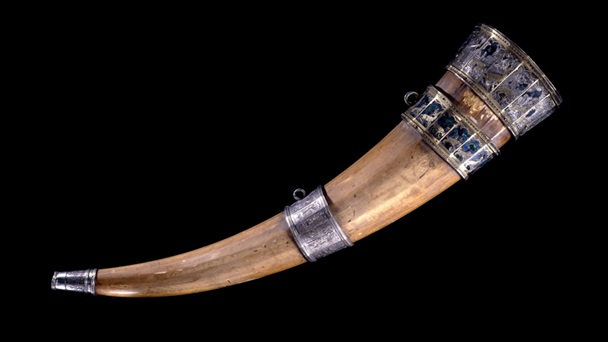
The Savernake Horn for example – sold (in partnership with the well-known silver dealer S.J. Phillips) to the British Museum in 1975.

The Savernake Horn, 1100-99 with 14th century mounts. Image copyright The British Museum.

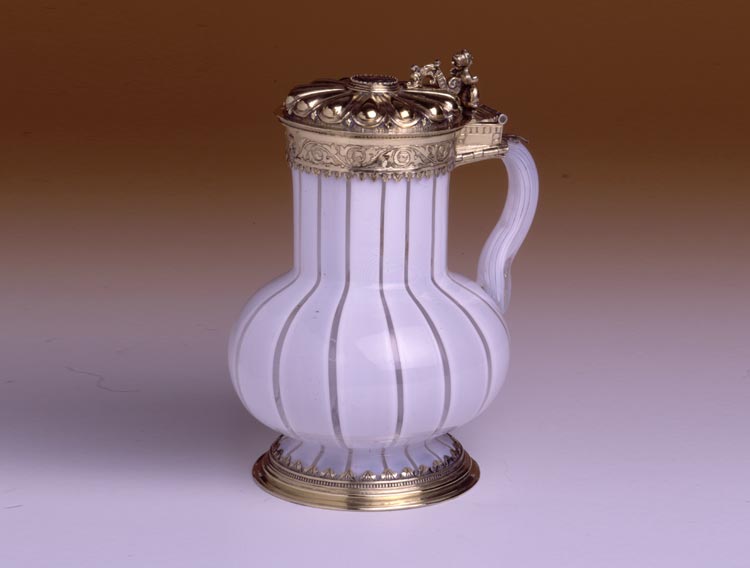
And the so-called ‘Katherine Parr Pott’, (see below) sold to the Museum of London in 1967 – this glass tankard, with silver mounts dated 1546-47, emblazoned with the arms of Sir William Parr, was bought by Ronald Lee from Sudeley Castle – the glass body is now believed to be an 18th or 19th century replacement. The tankard has an illustrious history, having been acquired by the collector Horace Walpole in 1758 (cost £2.19.0) and sold at the dispersal of the Collections at Strawberry Hill (Walople’s house) in 1842 and bought by John Dent for £3.13.6 – the Dent-Brocklehurst family, at Sudeley Castle, Gloucestershire, sold the Parr Pot to Ronald Lee in 1967, before Lee sold the tankard to the Museum of London for £18,214.00 in the same year.  The tankard was subject to an Export Stop because of its historical significance; according to the archive it seems that Lee had initially and successfully negotiated a sale to the Boston Museum of Fine Art in the USA, but funds were raised through the British Government, The Art Fund, The Pilgrim Trust and the Goldsmiths Company to save the tankard for the Nation.

The Parr Pot. Image copyright, The Museum of London.

The ‘Parr Pot’ is just one of a wide range of fascinating stories about the acquisitions made by Ronald Lee in the Lee archive…there are far too many to recount in a short blog post, but it is worth retelling the story of the acquisition, and subsequent sale, of one of the most interesting objects that Ronald Lee sold – the story demonstrates the significance of ‘Object Biographies’ in the conceptualization (and reconceptualization) of objects – it is also a story that re-embeds the significance of the narrative of the personal into these now very public objects.

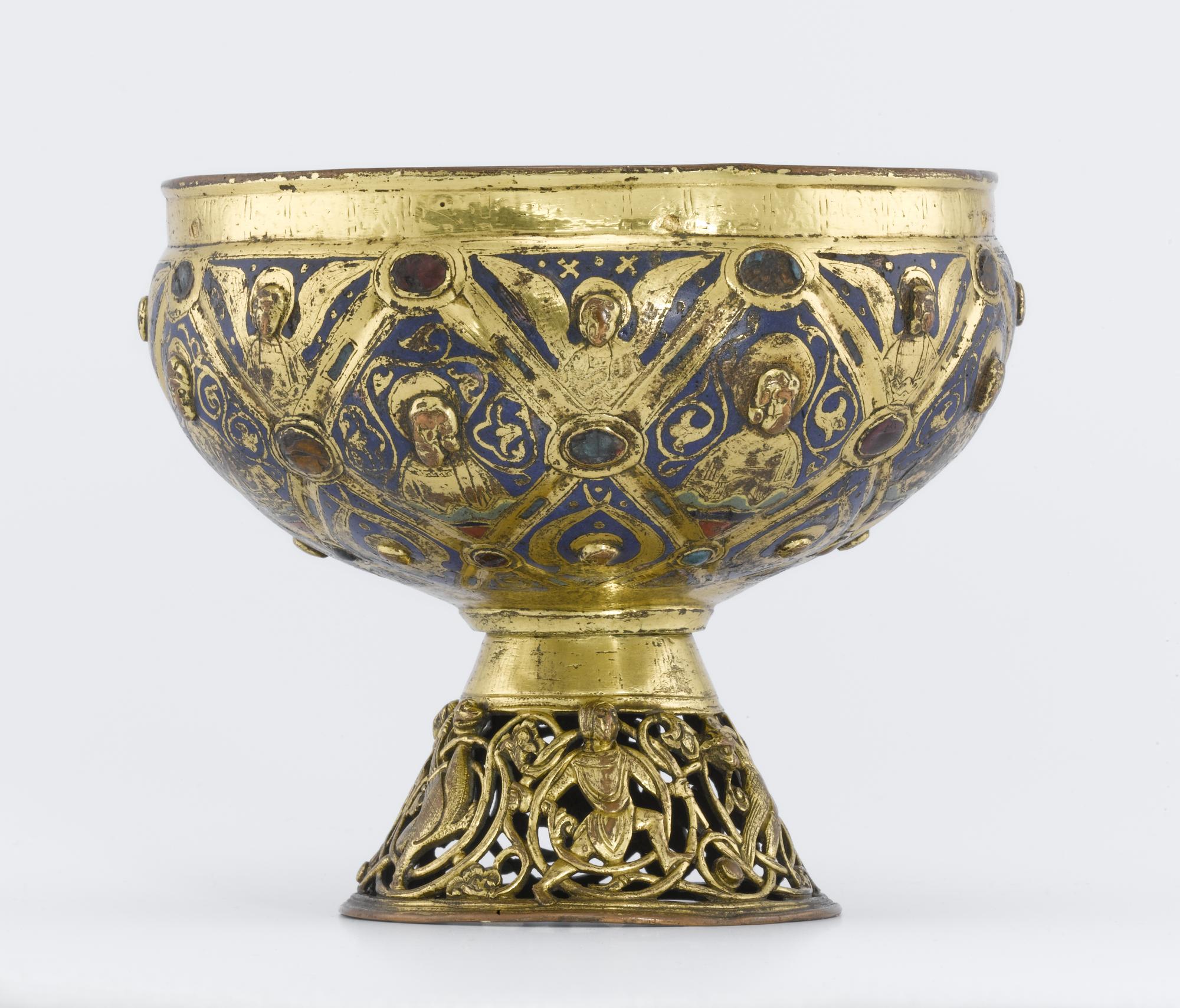
Anyway, in 1966 Ronald Lee negotiated the sale of what was then considered to be an exceptionally rare 13th century Limoges enamel Ciborium to the (then) Royal Scottish Museum (now National Museum of Scotland).

Ciborium, in the 13th century style – probably 19th century. Photograph copyright National Museum of Scotland.

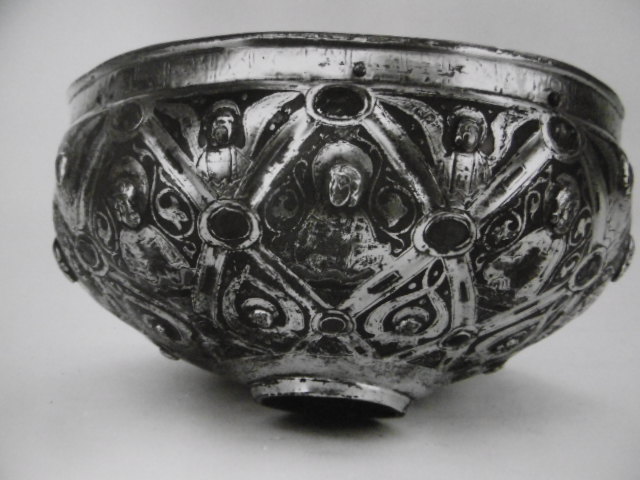
Lee spotted the bowl of the Ciborium, then lacking it’s foot at an auction sale at Sotheby’s in April 1965.

Ciborium Bowl, lacking foot – photograph copyright Sotheby’s 1965.

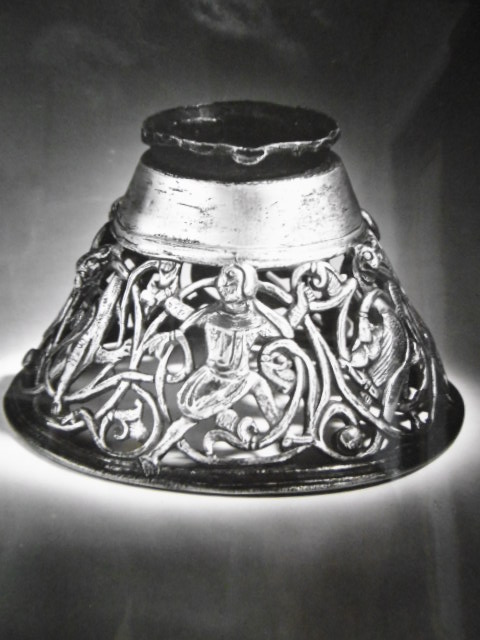
He had, a few years earlier, again it seems at a Sotheby’s auction, acquired the stem/foot from a similarly dated object, and which (so Georgina Gough, Ronald Lee’s daughter tells us) Ronald had given to his wife as a little present –

Ciborium Foot; Photograph, Lee Archive, Brotherton Library Special Collections, University of Leeds.

Seeing the bowl at Sotheby’s presented the opportunity of reuniting the foot and bowl and Ronald Lee had to do the right thing  – (it must be a common practice in all antique dealer families that objects are inherently unstable….and always subject to potential future sale…). The story was reported in the Press at the time, recounting the breathless moment when the foot and bowl fitted together as one – rather like the story of Cinderella and the glass slipper!

But anyway, Lee offered the Ciborium, now with its foot, to the Royal Scottish Museum in 1966, and the then Keeper of Art, Cyril Aldred, approved the acquisition and the object entered the collections in Edinburgh.  The Ciborium was lauded as a major acquisition, it was one of the most expensive objects ever acquired by sale by the museum at that time – costing £8,500 – an enormous sum in 1965.  It was related to the Master Alpais, the creator of the 13th century Ciborium in the collections of the Louvre Museum in Paris, and to a similiar Ciborium in the collections at the British Museum in London; the world renowned scholar and curator at the Victoria and Albert Museum, John F. Hayward considered these comparisons and the significance of the Ciborium in an extensive article ‘A Newly discovered Limoges ciborium’ in Connoisseur (vol CLIX, pp.240-1). So consensus at the time, from leading experts, curators, and one of the leading antique dealers, was that the Ciborium was of the 13th century, and possibly associated with the workshop of the Master Alpais.

But authenticity is also an unstable concept – indeed, if we can borrow, and slightly amend, a phrase from Georg Simmel (1858-1918), the philosopher and critic, and founder of the discipline of anthropology, (he writes that ‘value is not a property of objects, but a judgement by a subject’), then perhaps we can say that authenticity is also not a property of an object, but a judgement by a subject –  Time, and, more importantly, new knowledge structures have repositioned the Ciborium, and it now considered to be a 19th century copy – for a full, and excellent account of the art historical and scientific analysis of the Ciborium at NMS and a comparison with that at the British Museum  see ‘The Heritage of ‘Maitre Alpais’ edited by Susan La Niece, Stefan Rohrs and Bet McLeod, (British Museum Press, 2010).

There is no moral to this story as such – I hesitate to rehearse the notion ‘caveat emptor!’, especially as I am writing about antique dealers, and I’m conscious that to rehearse this story is also to further embed the trope of the dealer as ‘problematic’ in the cultural consciousness – but it remains a fascinating story about an object, and how its meaning, and significance, is reframed as it moves between discrete, but intimately interconnected realms.  As this story recounts, the meaning of the Ciborium shifted as it moved between the realms of objects of commerce and economic value to those of heritage and museums, but, crucially, it retained its commodity status, and its status shifted again as new approaches and methods established, (indeed constituted) the authenticity of the object.

But for me, being an old Romantic, the enduring story about the Ciborium is the very human story of Georgina’s recalling that the foot of the Ciborium was a present (albeit temporary) for Mrs Lee.

All the while these objects acquire significant status in museums, they remain as catalysts for innumerable personally situated memories, of the private, intimate relationships we have with things.

Mark

Home Subjects

a working group dedicated to the display of art in the private interior, c. 1715-1914

The Period Room: Museum, Material, Experience

An International Conference hosted by The Bowes Museum and The University of Leeds

H. Blairman & Sons Ltd

A research project investigating the history of the antiques trade in Britain in the 19th & 20th centuries

Museum Studies Now?

'Museum Studies Now?' is an event which aims to discuss and debate museum and heritage studies education provision.

The Burlington Magazine Index Blog

art writing * art works * art market

East India Company at Home, 1757-1857

A research project investigating the history of the antiques trade in Britain in the 19th & 20th centuries