Posts tagged ‘Minneapolis Institute of Art’

May 16, 2026

A late 19th century Antique Dealer – W. D. Cutter

The history of antique dealing is littered with fascinating ephemera – dealer catalogues, invoices, letters, drawings and sketches, stock books, sales books and photograph albums. Some of the most interesting survivals are auction sale catalogues, often generated when a dealer makes changes to a business (sales of surplus stock when moving to different premises for example), or when a dealer retires, or dies. One such catalogue recently joined the collection of antique dealer ephemera that are such important resources for the antique dealer research project.

The catalogue presents ‘The Extensive and Valuable Stock of Works of Art, the property of Mr W.D. Cutter of Great Russell Street, who is retiring from business’ which was was sold over 3 days, 14th -16th May 1924. It gives us a unique insight into the remaining trading stock of an important and well-known (in the late 19th century at least) antique dealer.
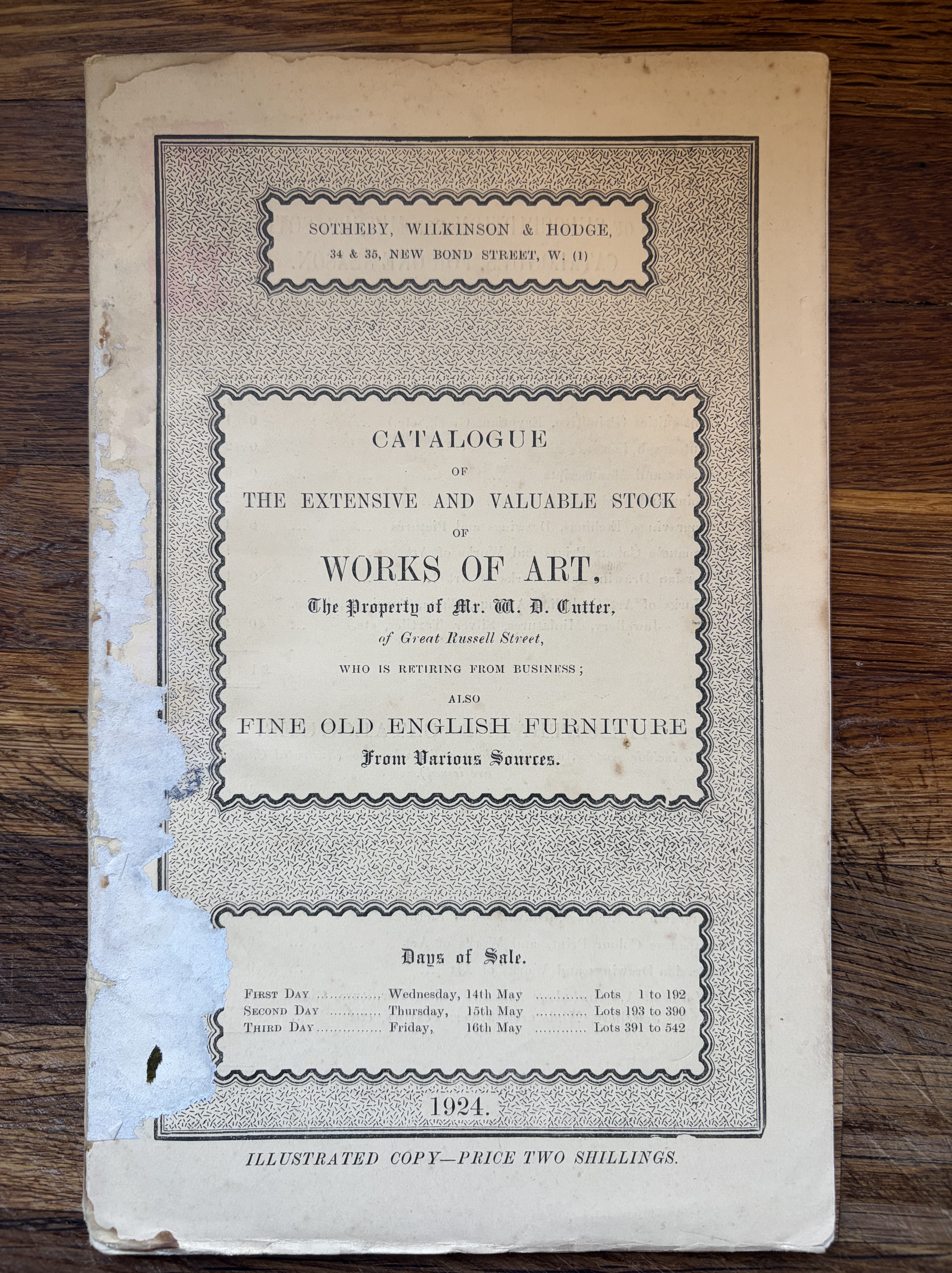
Catalogue of the auction sale of the stock of W.D. Cutter; Sotheby, Wilkinson & Hodge, London 1924. Image, Antique Dealer Research Project, University of Leeds.

William Doherty Cutter (born c.1848) traded as ‘antique furniture dealer and curiosity dealer’ at 36 Great Russell Street, London in the 1880s, but the business can be traced back to as early as the 1860s, so may have been started by William’s father or mother or other member of the Cutter family. Cutter’s were well known as suppliers of ‘curiosities’ of natural history and ethnography to the British Museum from the late 1860s to c.1900 – their shop was very close to the British Museum in Great Russell Street. Cutter is mentioned in Provenance: Twelve collectors of ethnographic art in England 1760-1990′ edited by H. Waterfield and J.C.H. King (2006), as well as having a short entry in my Biographical Dictionary of 19th century Antique and Curiosity Dealers (2009). He appears to have been a very important antique dealer, now little known of course; he was active at the famous Hamilton Palace auction sale in 1882, buying a small number of Lots, including ‘a large cameo, with three heads in profile’ (Lot 2166) for £7.0.0. Both of Cutter’s daughters, Marjorie Doherty (born c.1896) and Eva (born c.1890) worked for their father in his antique dealing business – (it’s said that Eva took over the business in c.1890, but this can’t be true as she would have only just been born).

What’s fascinating about the auction catalogue of Cutter’s stock is the sheer range and quality of the antiques he held in stock in 1924. This extends far beyond the natural history and ethnographic specimens that Cutter’s are said to have supplied to the British Museum in the second half of the 19th century. The auction sale had 499 Lots of Cutter’s stock, which ranged from bronzes, ivories, Chinese and European porcelain, silver, clocks, marble and terracotta sculptures, Chinese hardstone carvings and cloisonne, as well as some antique furniture, an array of objet d’art and a small number of paintings.

This range of ‘antiques’ is typical of late 19th and early 20th century collecting interests of course, but Cutter seems to have also been something of a specialist in Renaissance bronzes. Lot 135, for example, ‘A FINE INKSTAND, of the school of Riccio…’ (see below, centre – Andrea Briosco, called Riccio, (1470-1532)). The bronze inkstand was sold to ‘Kerin’ for £30 (equivalent to about £13,630, as ‘income value’, according to Measuringworth.com.) Gerald Kerin formed a partnership with the dealer Alfred Spero in 1928 – both Kerin and Spero were dealers based in London specialising in Renaissance bronzes and bought heavily at the Cutter auction sale.

Lot 49 (see below bottom left) ‘A VERY FINE 15th CENTURY IVORY GROUP of ‘The Adoration of the Magi 6 1/2 in.’ was bought by the dealer ‘Garabed’ for £7 & 10 shillings (equivalent to about £3,400). A. Garabed was well-known dealer trading at Pall Mall Safety Deposit, Carlton Street, London at the time. And Lot 153, ‘A VERY FINE FIGURE OF A POPE, in pear-wood, coloured to imitate bronze, full-length in vestments, standing with right arm raised, 6 7/8 in.’,(below bottom right) sold to the dealer ‘Lewis’ for £3 & 10 shillings (equivalent to about £1,590). Lewis could be any number of antique dealers of the Lewis family in the 1920s.
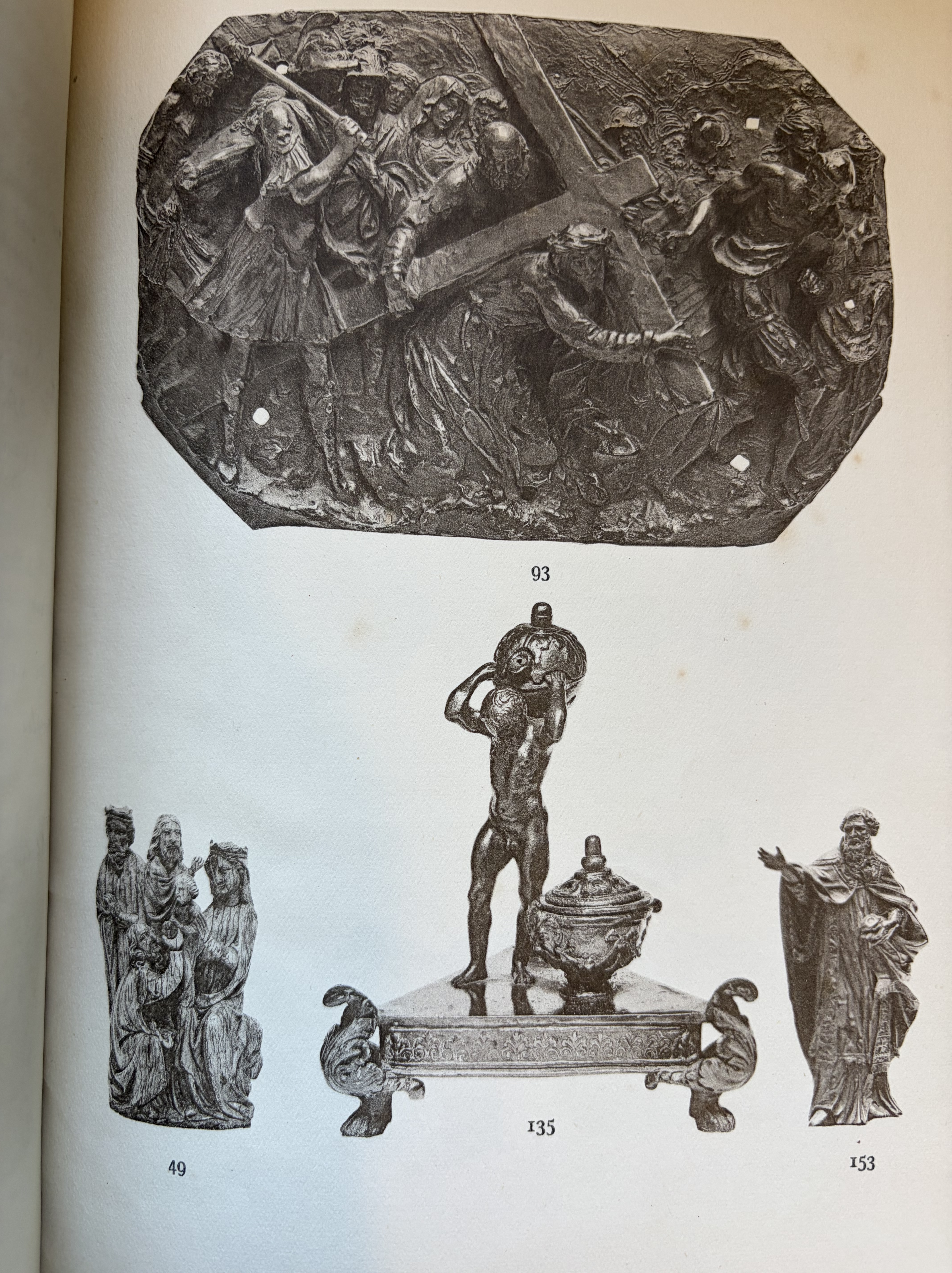
Auction catalogue of the W.D. Cutter sale, May 1924. Photograph, Antique Dealer Research Project, University of Leeds.

Lot 93,(see above, top middle) ‘A FINE 16th CENTURY PLAQUE of Christ bearing the Cross, a ”cire perdu” casting, with figures in very high relief (up to 1 1/2 in.), oblong, octagonal, 9 1/2 in. by 6 1/2 in.’, was sold to Alfred Spero for £40 (equivalent to £18,170) – the most expensive object sold at the Cutter auction. Alfred Spero was trading from a shop at 33 King Street, St. James’s in London in the 1920s, right next to Christie’s auction rooms.

The bronze shown in Cutter’s stock is a well-known casting, previously attributed to Ferdinando Tacca (1619-1686), but is now said to be by Francesco Fanelli (1608-1661). There are three known versions of bronze, in different shapes and sizes, in museum collections in the USA. One version, rectangular in shape, in the collections of The Minneapolis Institute of Art (see below).
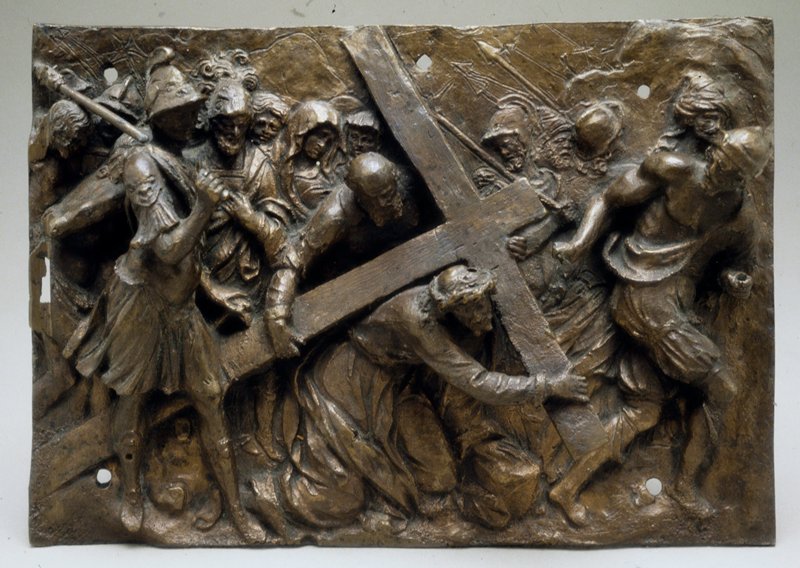
Francesco Fanelli (1608-1661), Christ bearing the cross, mid-17th century. Minneapolis Institute of Art, USA, (66.43.1) The Christina N and Swan J. Turnblad Memorial Fund. Image Minneapolis Institute of Art.

Two other versions are octagonal in shape, the same as the example in the Cutter auction. These are in the collections at The Metropolitan Museum of Art in New York and at the Spencer Museum of Art, Kansas, USA (see below).
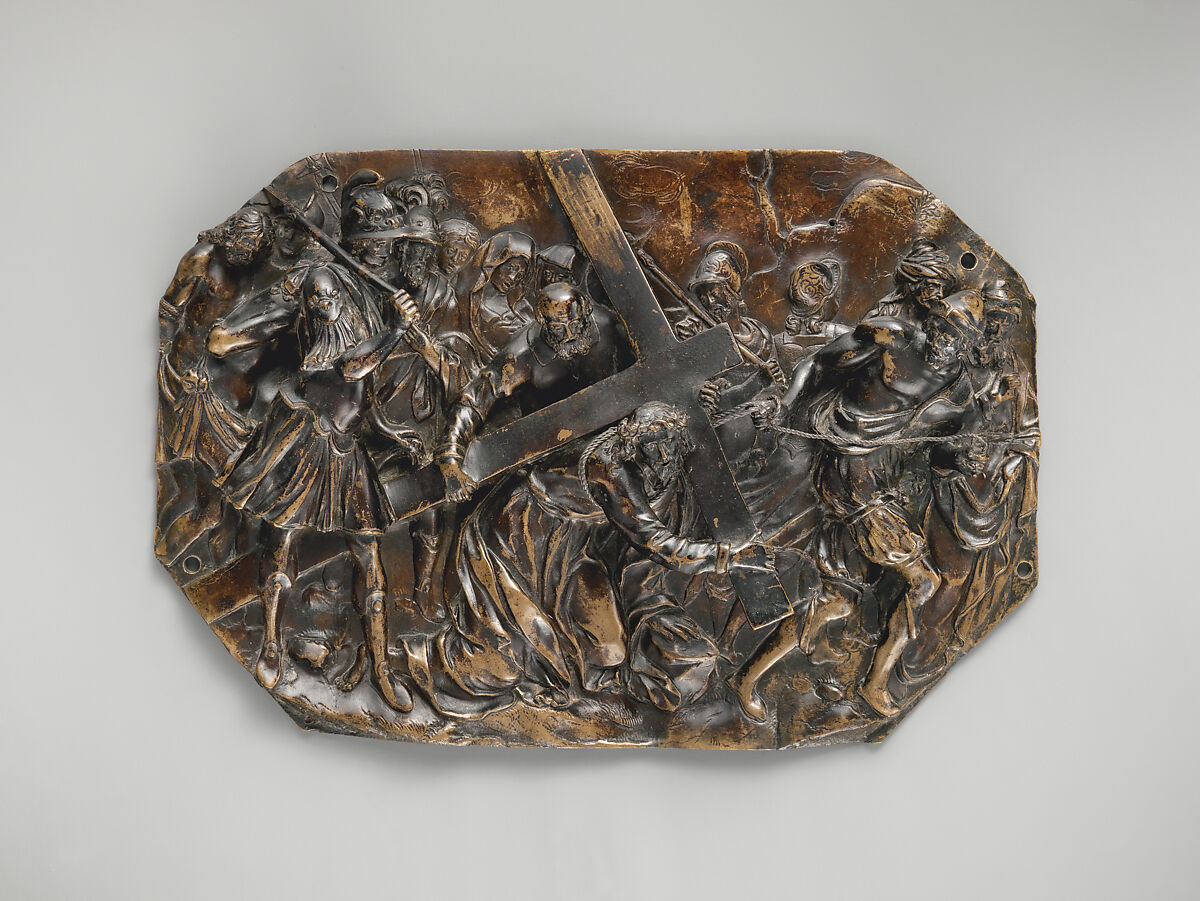
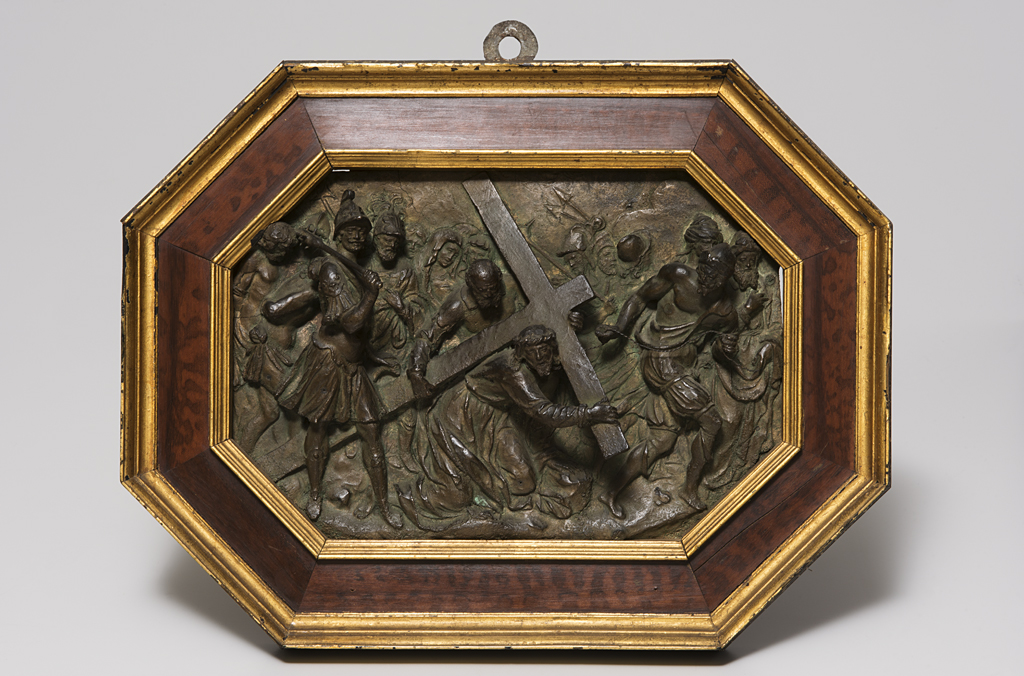
Francesco Fanelli (1608-1661), Christ bearing the Cross, mid-17th century. Metropolitan Museum of Art, New York, USA. Image, Metropolitan Museum of Art, New York.
Francesco Fanelli (1608-1661), Christ bearing the Cross, mid 1600s. Spencer Museum of Art, Kansas. Image copyright Spencer Museum of Art, Kansas, USA.

The Metropolitan Museum of Art and the Spencer Museum of Art examples show different fixing holes and other variations, so cannot be the Cutter example, which raises the possibility that Cutter’s example is a previously unrecorded, and as yet unlocated, example of this famous bronze.

Other examples of Renaissance bronzes in the W.D. Cutter auction sale include Lot 128, ‘AN EARLY EQUESTRIAN FIGURE, in pseudo-classical costume, 8 in.’ (sold again to Kerin, at £3.0.0.) (see below top left).
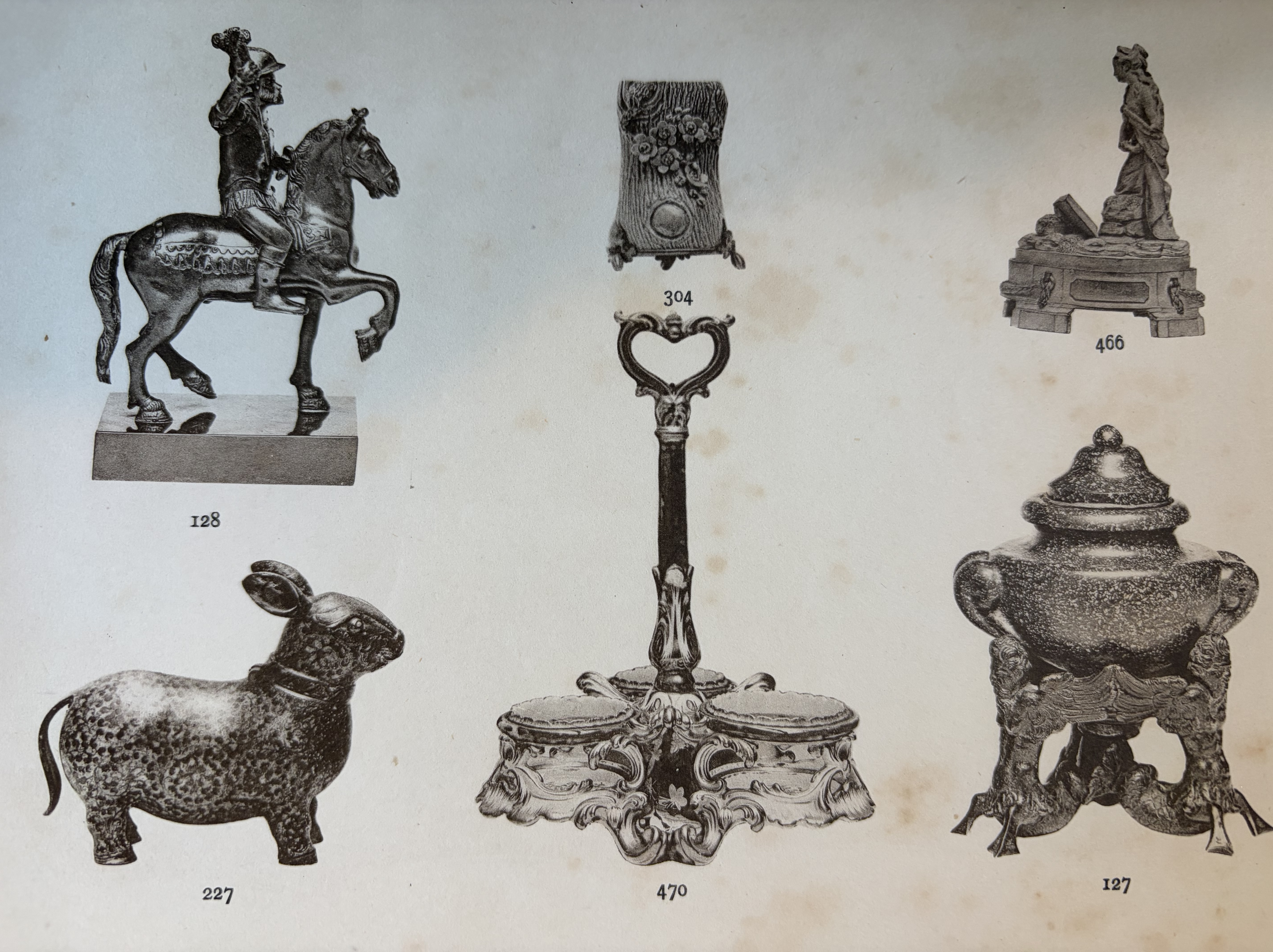
Auction catalogue of the W.D. Cutter sale, May 1924. Photograph, Antique Dealer Research Project, University of Leeds.

And a bronze sculpture of a man (below, right), Lot 138, ‘A FINE 16th CENTURY FIGURE of a man, with curling hair and beard, standing nude with head turned to right and looking downwards, both arms bent with fingers open 15 1/2 in.’ This was sold for £20.0.0. (to a buyer who’s name is too hard to decipher?).
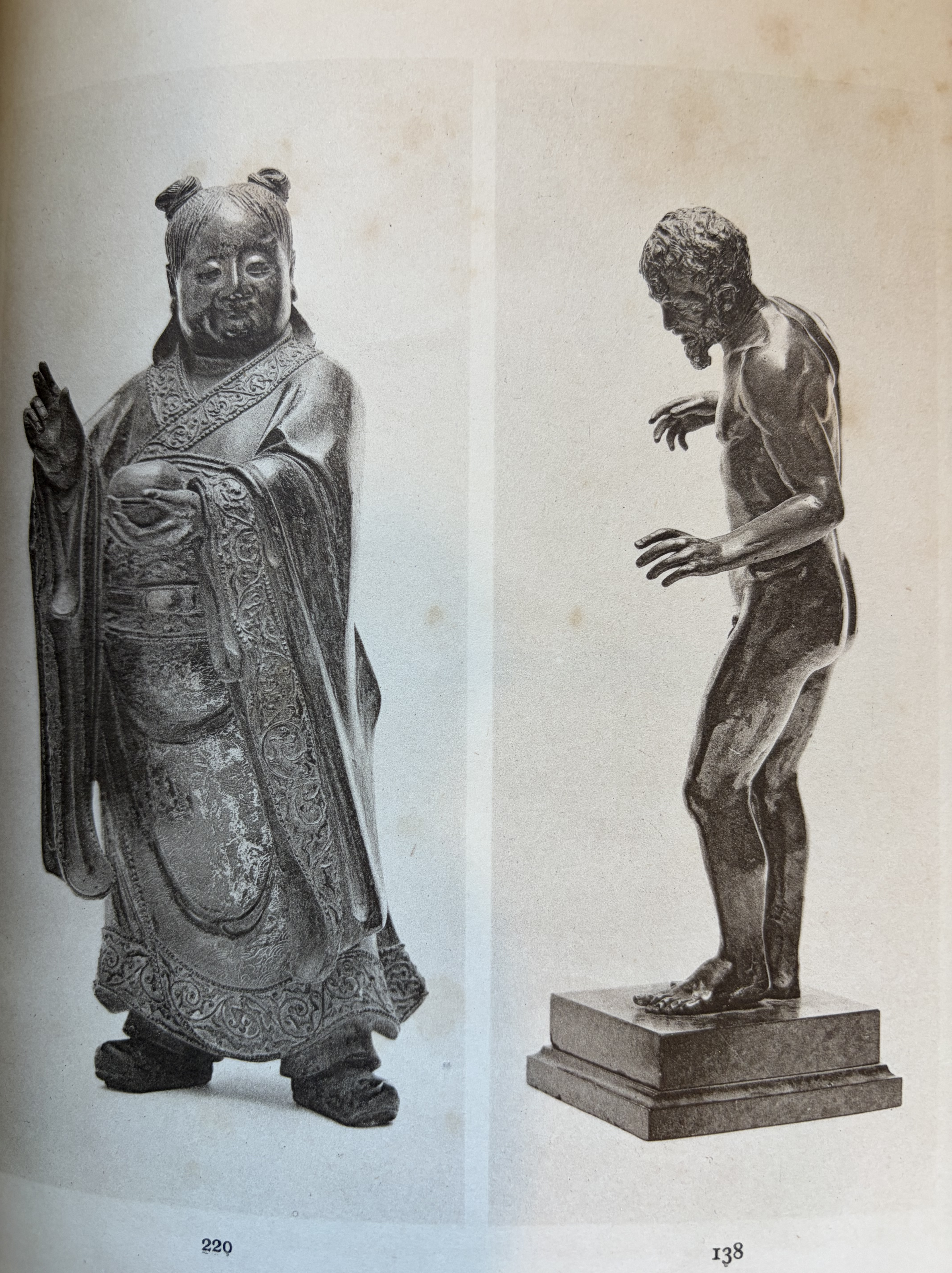
Auction catalogue of the W.D. Cutter sale, May 1924. Photograph, Antique Dealer Research Project, University of Leeds.

The Cutter auction catalogue is a rare document of the stock of a formerly well-known, but now forgotten, antique dealer, and illustrates the high quality stock that W.D. Cutter held. The catalogue will be joining the range of antique dealer ephemera at the Brotherton Library at the University of Leeds in due course.

Mark
April 17, 2015

Gill and Reigate in The Minneapolis Institute of Arts

The museum archives at Minneapolis Institute of Arts are a fantastic resource for researching the synergies between the development of museum collections and the history of the antique trade. Thanks again for all their help with the Antique Dealers research project to Jennifer Olivarez and Dawn Fahlstrom in the curatorial offices at MIA!  As I discovered, the ‘object files’ at MIA record scores of transactions with antique dealers, both in the USA (as you would expect), and via the British trade (as you would expect!).

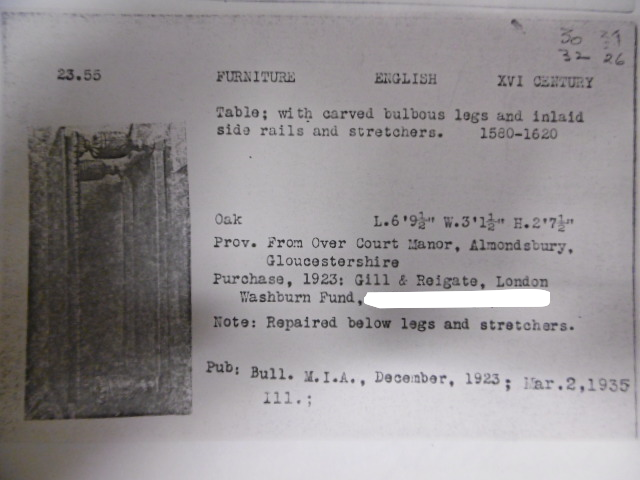
This accession record card (ref 23.55) for a ‘XVIth Century table’, which entered the collections at MIA in 1923 (facilitated by the Washburn Fund), records just one of those transactions, and also highlights the relationships between the museum and the market. The accession record card describes a ‘table: with carved bulbous legs and inlaid side rails and stretchers, 1580-1620’ – ‘from Over Court Manor, Almondsbury, Gloucestershire’ – with a ‘Note: repaired below legs and stretchers’. The table was purchased from the British based antique dealers Gill& Reigate (who also had a branch in New York in the 1920s – hence, I expect, the sale direct to MIA).

gill and reigate 1923

Museum Accession Record Card, 23.55. ‘Furniture, English XVI Century’. Showing accession of a XVIth century table, supplied by Gill & Reigate in 1923 (purchase price redacted). Courtesy of Minneapolis Institute of Arts. Photo MW 2015.

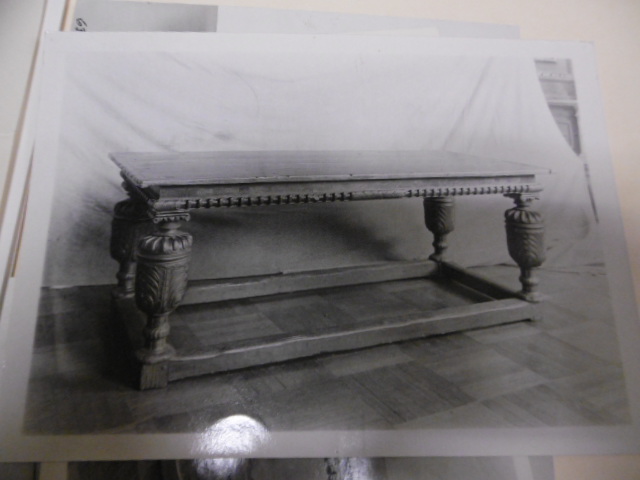
The archive file also contains a copy of the black & white photograph of the table (which is the vertically displayed photocopy image in the accession record card above) – and which appears to be original Gill & Reigate dealer record photograph –

gill and reigate 1923 3

Museum object file 23.55. Photograph of XVIth century table. Courtesy of The Minneapolis Institute of Arts. Photo MW 2015.

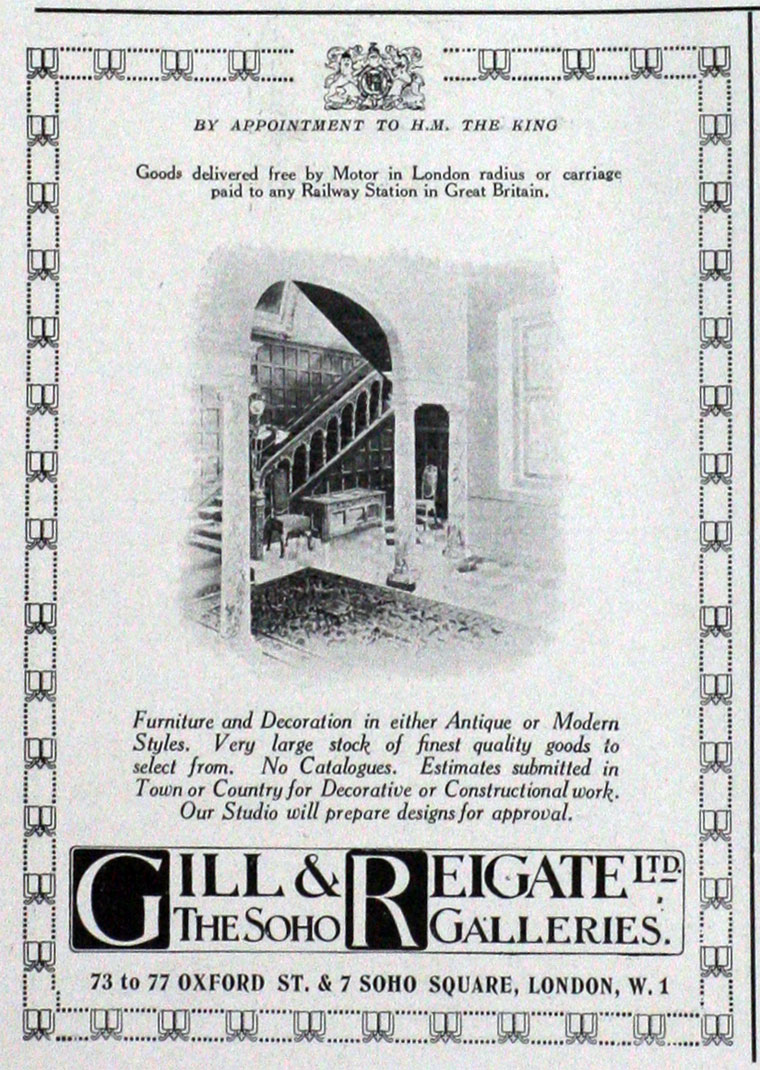
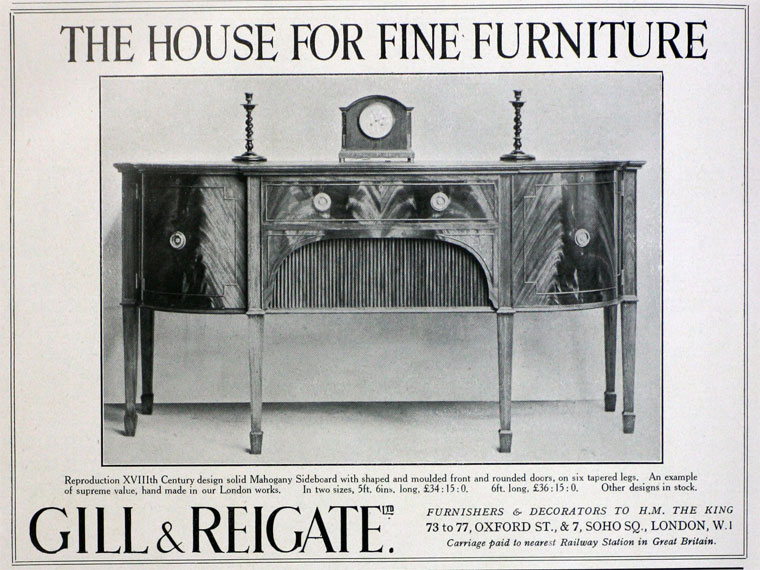
The antique dealers, decorators, and furniture manufacturers and retailers, Gill & Reigate Limited were trading at 73-77 Oxford Street and at 7 Soho Square, London when they supplied the table to The Minneapolis Institute of Art.  The firm were established in the 1890s, and by the 1920s were already well-patronised enough to have been granted a Royal Warrant.  These advertisements from the 1920s illustrate the changing locations of the firm, as they moved from Oxford Street and Soho Square in the 1910s and 1920s (also trading as ‘The Soho Galleries’)……

G and R 1921

Advertisement for Gill & Reigate, 1921.

G and R 1927

Advertisement for Gill & Reigate, 1927.


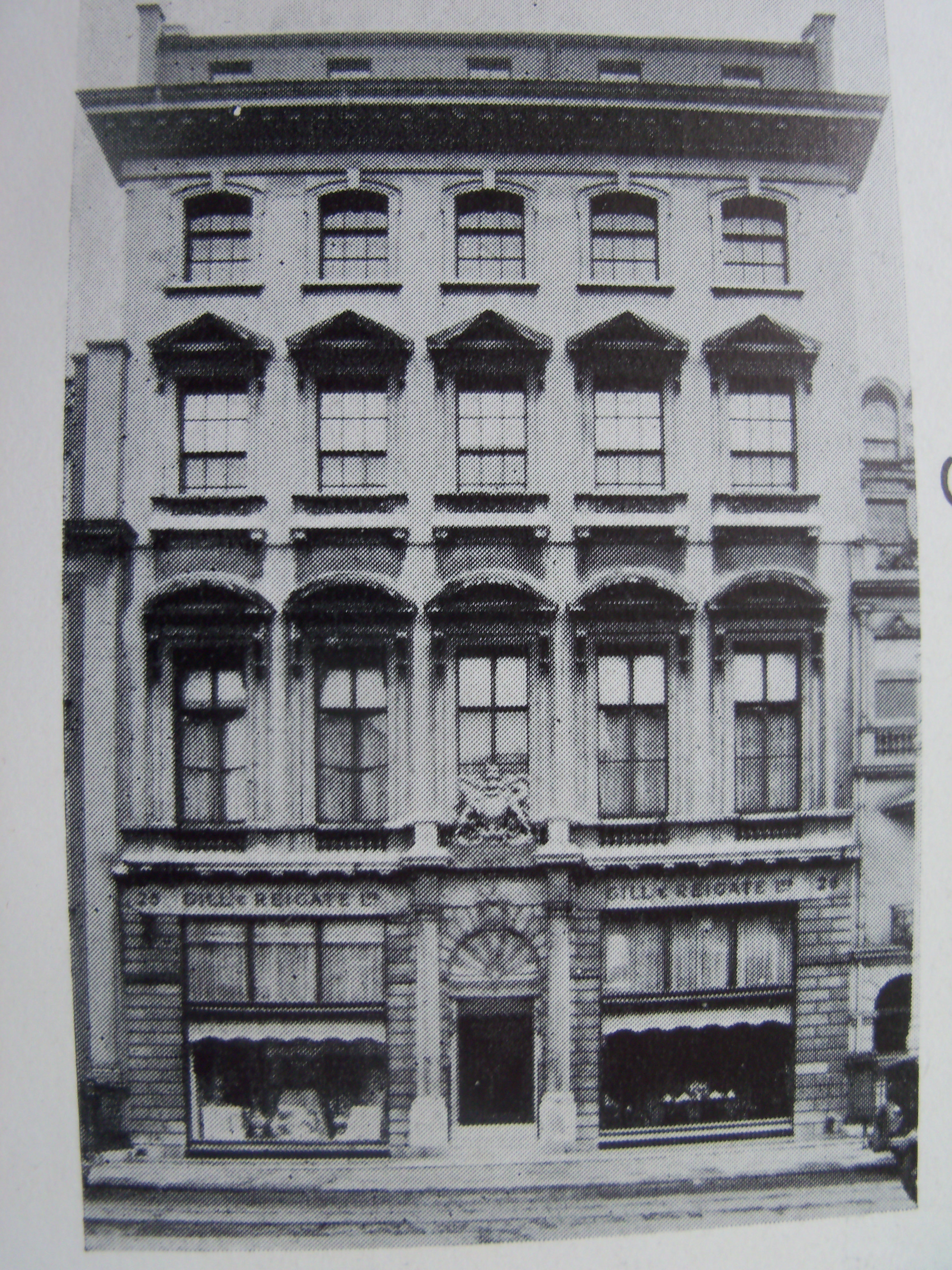
…………to these very elegant premises in George Street, London W1 in the early 1930s (see below).

Gill and Reigate 25 26 George Street London June 1937 Conn

Gill & Reigate, 25-26 George Street, London W1, c.1930.

The archive at MIA also contains a letter from Gill & Reigate, from their Oxford Street address, dated 17th August 1923, addressed to Russell A. Plimpton Esq., who had only a couple of years earlier (1921) taken up the post of Director of Minneapolis Institute of Arts.


gill and reigate 1923 1

Letter from Gill & Reigate Limited, to Russell Plimpton, Minneapolis Institute of Arts, 17th August 1923. Museum object file 23.55. Courtesy of The Minneapolis Institute of Arts. Photo MW 2015.

The letter is essentially part of an exchange between Gill & Reigate and the Director at MIA focused on establishing the provenance, and by extension of course the authenticity, of the table – and this (authenticity) was something that was becoming ever more important in the period – if you are interested do look up Stefan Muthesius’s important and groundbreaking essay on this subject, ‘Why do we buy Old Furniture? aspects on the authentic antique in Britain, 1870-1910’ (Art History, vol. 11, No.2, pp. 231-254, June 1988).

Anyway, the letter states that the table ‘originally stood in Overcourt Manor, Almondsbury, Gloucestershire’, and continues, ‘Overcourt is an old Elizabethan Manor, and the table was in the possession of the Cann-Lippincott’s who were Lords of the Manor. The table had only lately been moved from there to Whitechurch, Salop, where Mr Gill procured it.’ What the writer of the letter  omits to say is the link between Over Court and Whitechurch…..it would be interesting to know how and why the table ended up in Whitechurch where Mr Gill ‘procured it’….but maybe I fall into the trap of rehearsing the trope of the dealer as ‘problem’…and the history of antique dealers is much more complex, and richly patterned, that that old chestnut!

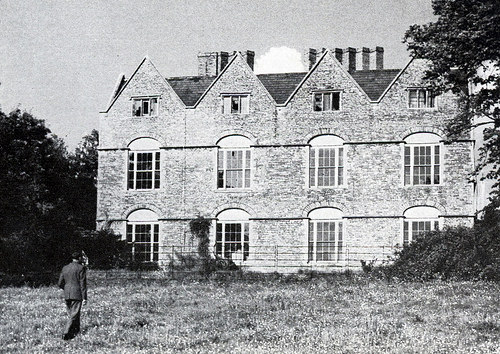
Incidentally, Over Court Manor unfortunately no longer exists, it was destroyed by fire in 1977.  Apparently only the gate arch to the Manor remains….

Overcourt Manor

Over Court, Almondsbury, undated, but maybe early c.1970s?. Photo Paul B. Townsend – wikicommons.

There’s much more to say about the fabulous archives at Minneapolis Institute of Arts……so do keep your eye on the Antique Dealer Project Blog.

Mark

April 13, 2015

Antique Dealers, ‘Period Rooms’ and Museums

Following my short and pithy Tweet re the dealer Seligmann and the maquette for a period room, now on display at Minneapolis Institute of Art we have, thanks to Jennifer Komar Olivarez, Curator of Decorative Art, Textiles and Sculpture at MIA, discovered more about the maquette.  And it’s an unexpected, and fascinating history, and one that draws further attention to the significance of social and cultural networks in the circulation and consumption of ‘antiques’ – something that the ‘Antique Dealers’ research project is keen to explore.

seligmann model MIA

Maquette of the Grand Salon of the Hotel de la Bouexiere. Minneapolis Institute of Art. Photo MW 2015.

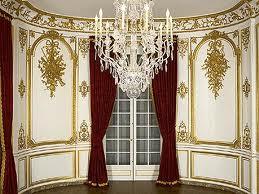
The maquette itself, (13in x 23in x 16 ins high) was a model for the Grand Salon of the Hotel de la Bouexiere, from Paris, which was designed 1731-1733, for Jean Gaillard de la Bouexiere (1676-1759), who grew wealthy as a tax collector for the Royal Crown in the 1st half of the 18th century. Here’s one end of the room as you see it at MIA –

hotel bouexiere

Grand Salon, Hotel de la Bouexiere, (c.1731-33). Minneapolis Institute of Art. Photo Wikicommons.

What is interesting about the room (for us), and the maquette specifically, is the ‘trade’ history of it. It seems that the maquette was made by the antique architectural salvage dealer and interior decorator and furniture manufacturer, Robert Carlhian, sometime in the early 1920s.

I was interested to note that the business records of Carlhian (est 1867, and closed c.1988) had been acquired by The Getty (ref 930092 if you’re interested). Carlhian were mainly based in Paris, but had branches in New York, Buenos Aires and Cannes; and during the period 1945-1966 they had a branch in London, in conjunction with the art dealer Wildenstein….so I guess they qualify to be included in the current ‘Antique Dealer’ research project (if we accept the broad definition of ‘antique dealer’ – you’ll need to re=read some of the earlier blog posts to follow the umbra and penumbra of what constitutes ‘antique dealers’ to follow this line of thought).

It seems that the room was sold to the Metropolitan Museum in New York, before being purchased by Minneapolis Institute of Art in 1983.  John Harris, in his excellent survey of the trade in architectural elements – Moving Rooms: the trade in architectural Salvage (Yale, 2007), suggests that the room was acquired by the dealers Dalva Brothers and sold to MIA in 1978 (see Harris, (2007), p.169). Dalva Brothers traded in New York and were established by 1933, but, as far as I know did not have a branch in Britain? The maquette was a gift to MIA from Leon and David Dalva – I guess as part of the purchase.

I also understand that at some stage Arnold Seligmann, Rey & Co also had some dealings with the circulation of the Grand Salon from Hotel de la Bouexiere. What is interesting (to us, as investigators of the history of the Antique Trade) is the networks and connections in these transactions – it’s not so surprising I guess, but no less significant, that the ‘antique trade’ play such a key role in the eventual presentation of this historical object in the public domain.

Mark


March 22, 2015

Project Research in the USA

Just arrived in New York, for the first leg of a mammoth research field trip to the USA, as part of the AHRC Antique Dealer project. We’ll be investigating museum archives at the Metropolitan Museum of Art, here in New York, before heading up to Boston Museum of Fine Arts on Saturday 28th March for similar research. From there I head to Philadelphia, then Wilmington, to The Winterthur on 31st March to look at the dealer archives held at The Winterthur (Vernay, Needham and Koopman – all British-related antique dealers of course). Then on Saturday 4th April off to Chicago, to look at the Chicago Institute of Art archives; then on Wednesday 8th April I’m heading across to Minneapolis and the Minneapolis Institute of Art for a few days to investigate their archives. And finally, on this exhausting tour, ending up in Los Angeles at the Getty Research Institute during 11th-18th April to consult the dealer archives there (French & Co and Durlacher…as well as Duveen of course).

The rationale for this extensive research trip to USA is to investigate the relationships between the British Antique trade and the development of public museums in America – the connections are considerable. We’re also planning do undertake some oral history interviews whilst we’re here in USA, and have some very significant figures in the history of the antique trade lined up for interview!

I’ll be posting updates on the blog on the discoveries (research-wise), so do keep an eye on the Blog!
Mark

Home Subjects

a working group dedicated to the display of art in the private interior, c. 1715-1914

The Period Room: Museum, Material, Experience

An International Conference hosted by The Bowes Museum and The University of Leeds

H. Blairman & Sons Ltd

A research project investigating the history of the antiques trade in Britain in the 19th & 20th centuries

Museum Studies Now?

'Museum Studies Now?' is an event which aims to discuss and debate museum and heritage studies education provision.

The Burlington Magazine Index Blog

art writing * art works * art market

East India Company at Home, 1757-1857

A research project investigating the history of the antiques trade in Britain in the 19th & 20th centuries