Posts tagged ‘Jane Clarke’

June 11, 2026

The Year of the Dealer Digital Film Trails Launched!

After many years of invigorating research and work, the digital film trails for the Year of the Dealer project are finally launched today, Thursday 11th June!

As many of our readers will know, The Year of the Dealer is a project that began 4 or 5 years ago, and it’s taken an enormous effort, working with a brilliant team at the University of Leeds and colleagues at our 5 Year of the Dealer collaborating partner museums – The Bowes Museum, Lady Lever Art Gallery, Preston Park Museum, Temple Newsam, and the V&A South Kensington – to finally launch the digital film trails.

You can watch all the films here – on the Year of the Dealer main project website, but also on all five partner museum websites too – we hope you enjoy watching the films – but you can also go and see the antiques highlighted in the films at each of our five partner museums.

Focusing on ten familiar objects at each of the five museums, the films highlight how some of our most prized treasures ended up in collections and reveal their hidden histories as ‘antiques’. Guided by two friendly avatars, Mark and Mo (see below) – with introductions by respective museum directors, curators and collections officers – 50 antiques and over 40 antique dealer histories are explored.

Mark and Mo – the avatar guides in the Year of the Dealer digital film trails. Image, The Year of the Dealer project, University of Leeds.

The films reveal the fascinating stories of the dealers who sold the antiques to the museums – including Edgar Gorer, a leading specialist in antique Chinese porcelain, who sadly perished in the sinking of the Lusitania in 1915; and antique dealer Frank Partridge, who miraculously survived the same disaster.

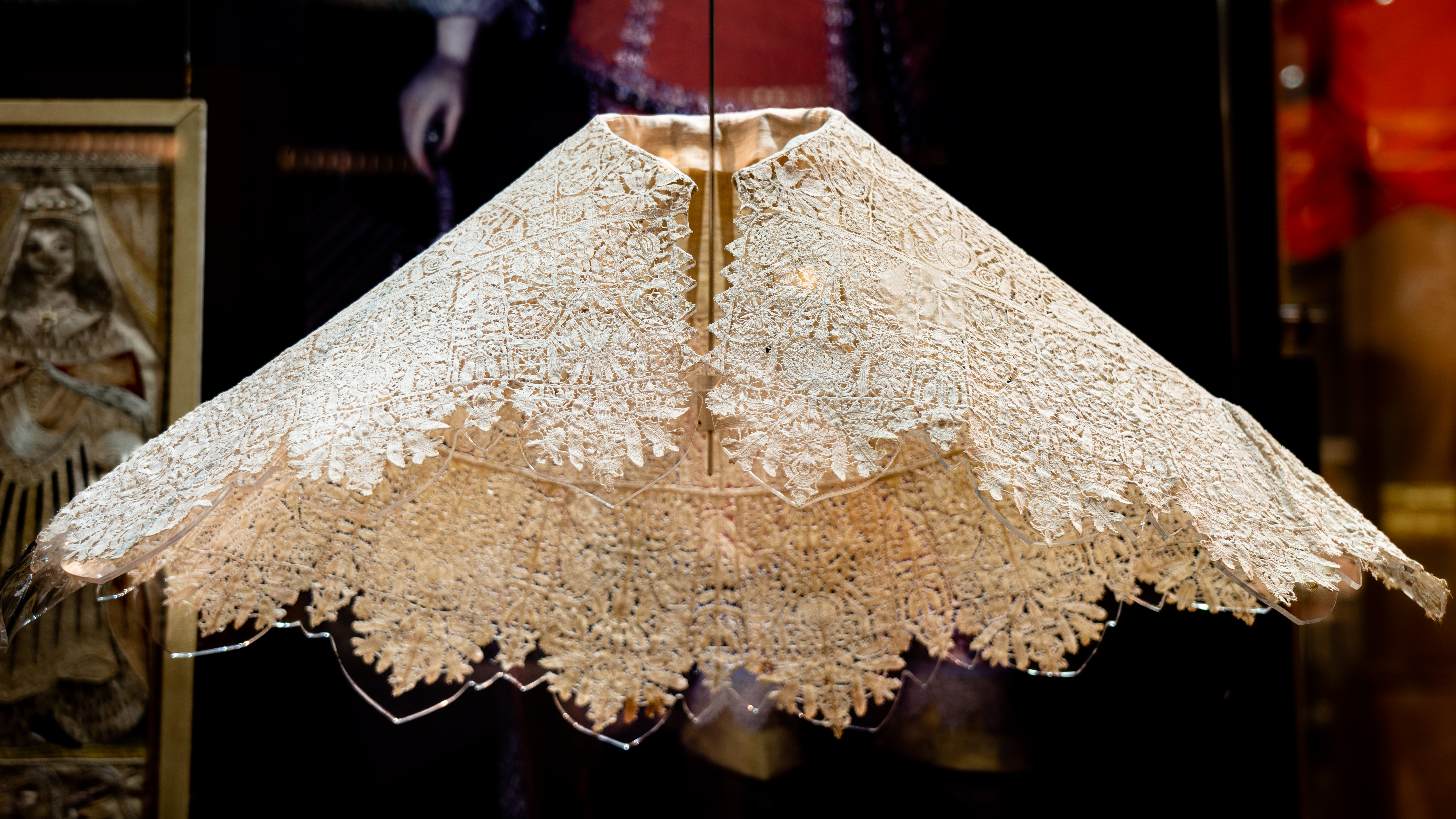
Several films highlight the important role that women have played in the history of antique dealing. One features an antique lace collar on display at The Bowes Museum in Barnard Castle, originally from the collection of Jane Clarke, one of the most prominent antique dealers of the 19th century (see below).

17th century Lace Collar, part of the Year of the Dealer digital film trail at The Bowes Museum, Barnard Castle. Image, The Year of the Dealer Project, University of Leeds & The Bowes Museum.

The Year of the Dealer project draws together several years of research, including museum and dealers’ archives, auction catalogue records and oral history interviews, to bring these previously little-known stories to life.

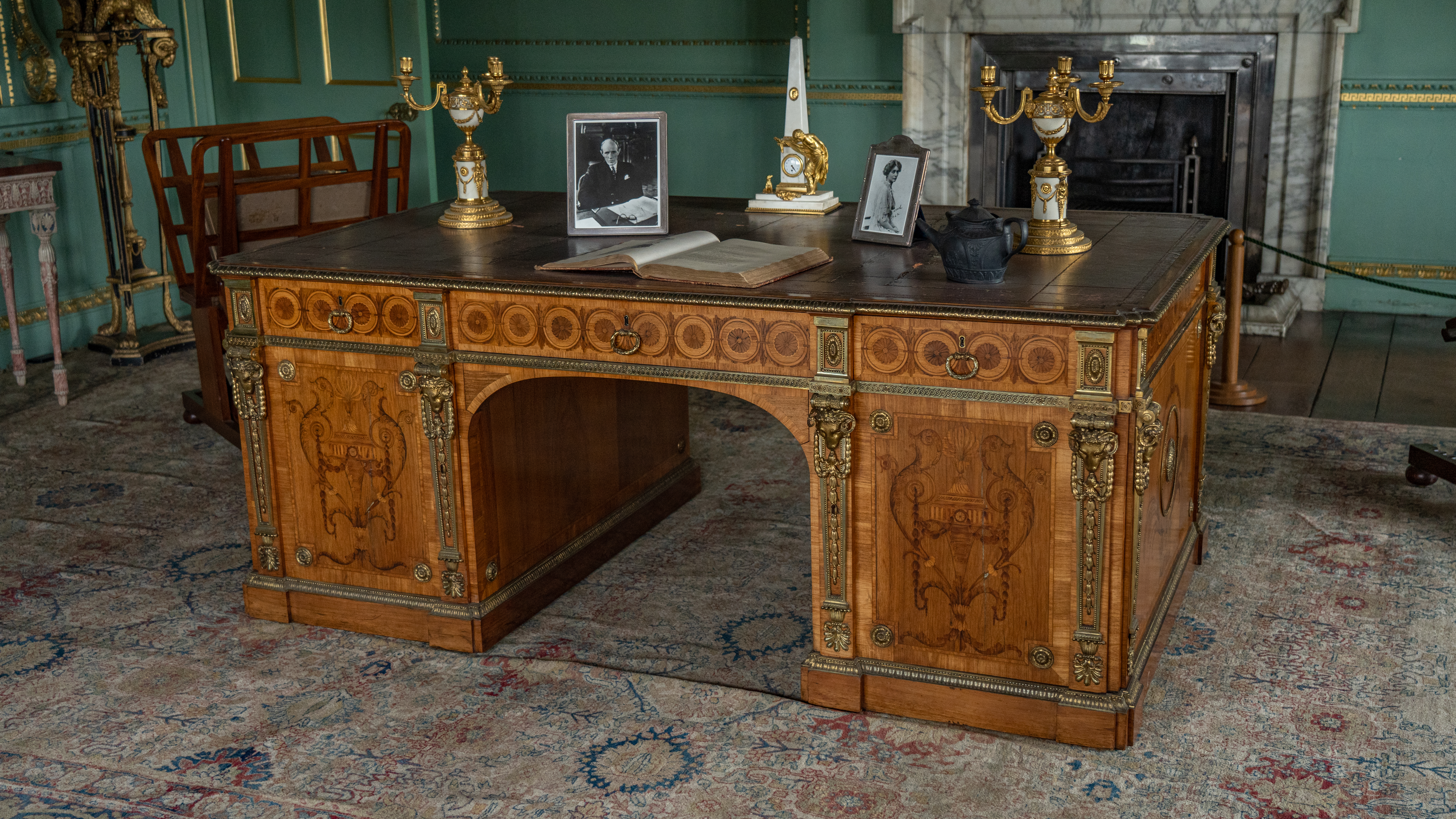
Other antiques in the digital film trails include the important library table, made by Thomas Chippendale in the 1770s for Harewood House in Yorkshire, sold to Temple Newsam, Leeds in 1964 by H. Blairman & Sons for a world record price of 41,000 guineas (see below);

The Harewood Library Desk, c.1770, part of the Year of the Dealer digital film trail at Temple Newsam, Leeds. Image, The Year of the Dealer project, University of Leeds & Temple Newsam, Leeds Museums & Galleries.

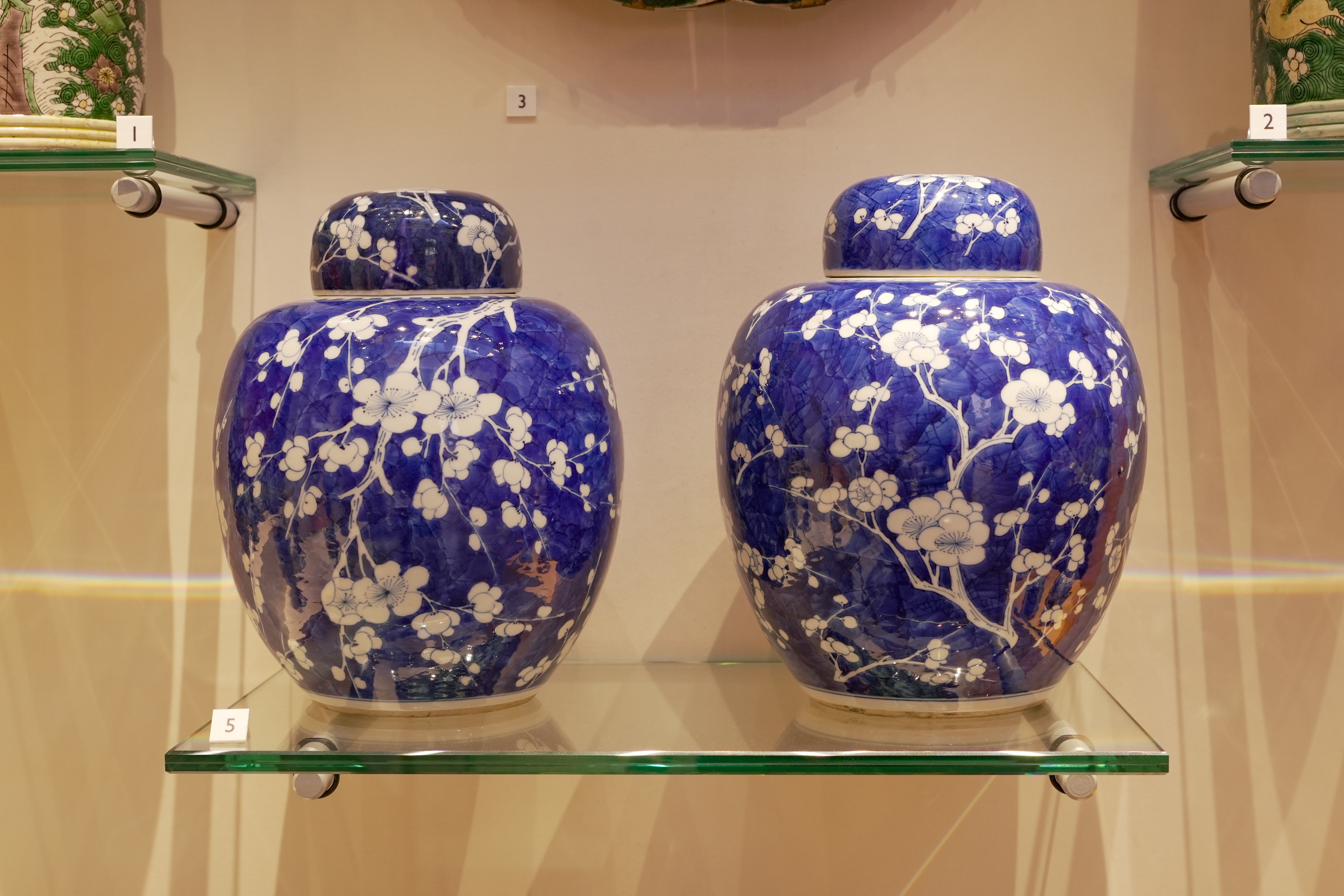
A rare pair of 17th century Chinese ‘Prunus’ pattern jars, sold by the special dealer in Chinese Works of Art Edgar Gorer to the collector William Hesketh Lever in 1911 for the spectacular sum of £6,500 (equivalent to as much as £3.8 million at the time) and now at Lady Lever Art Gallery (see below).

A pair of Chinese 17th century ‘prunus’ jars, part of the Year of the Dealer digital film trail at Lady Lever Art Gallery. Image, The Year of the Dealer project, University of Leeds & Lady Lever Art Gallery, Port Sunlight.

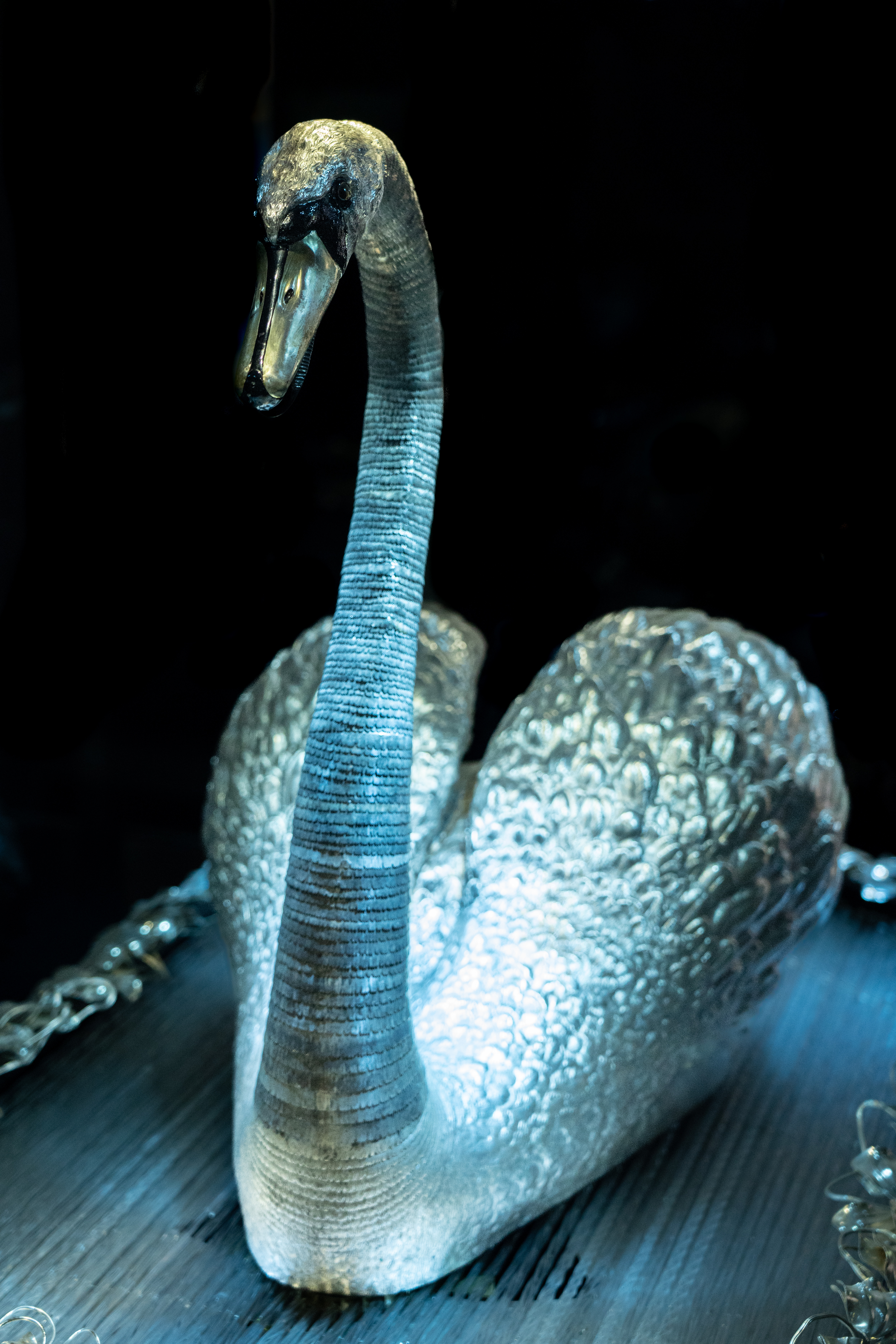
The Bowes Museum’s famous 18th century silver swan automaton, acquired by John and Josephine Bowes from the dealers Briquet and Samper of Paris in 1872 for about £200 (see below).

18th century silver swan automaton, part of the Year of the Dealer digital film trail at The Bowes Museum, Barnard Castle. Image, The Year of the Dealer project, University of Leeds & The Bowes Museum.

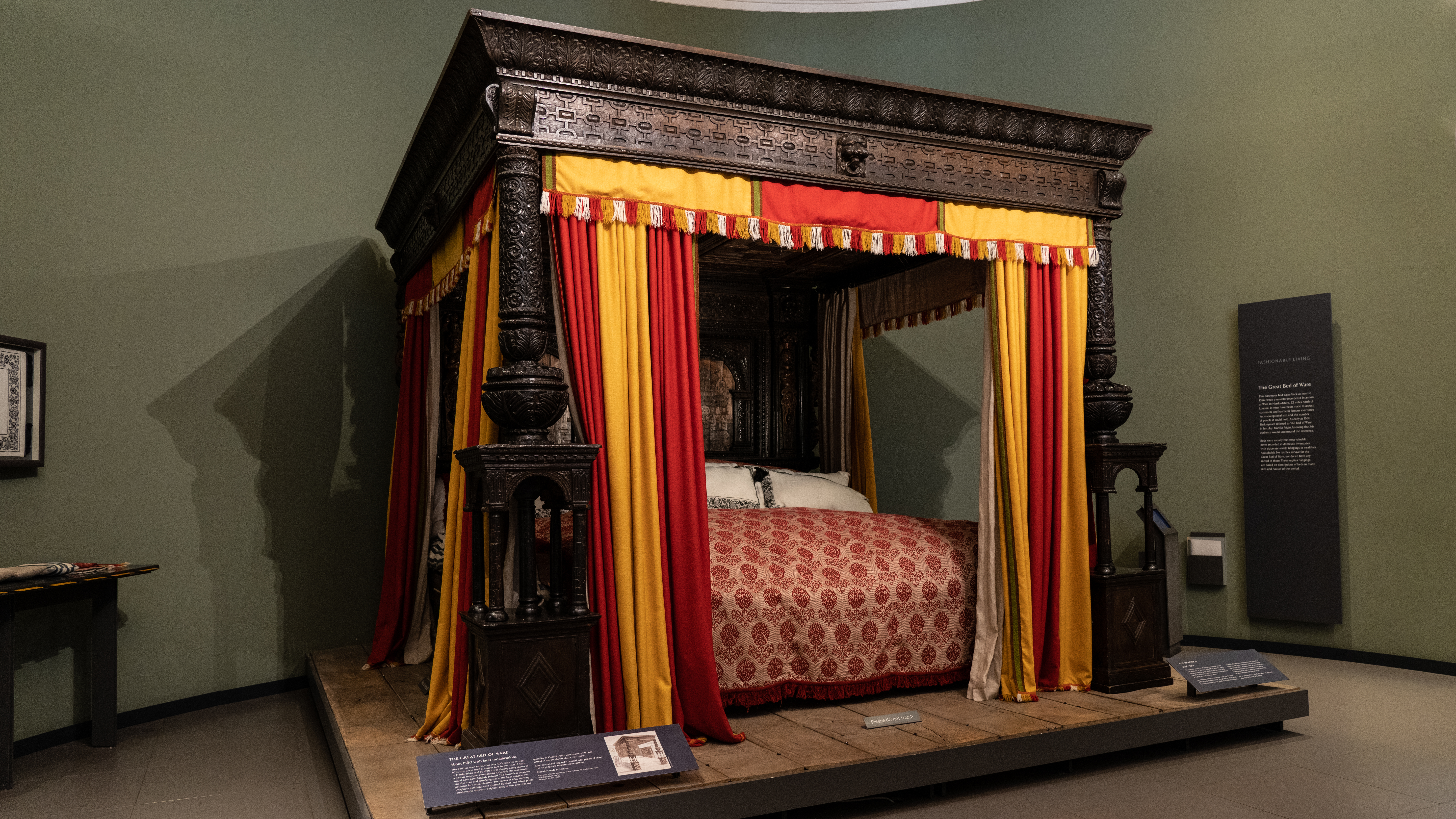
The Great Bed of Ware, sold by the antique dealer Frank Partridge to the V&A Museum in 1931 for £4,060 (see below).

The Great Bed of Ware, part of the Year of the Dealer digital film trail at the V&A South Kensington. Image, The Year of the Dealer project, University of Leeds & V&A South Kensington.

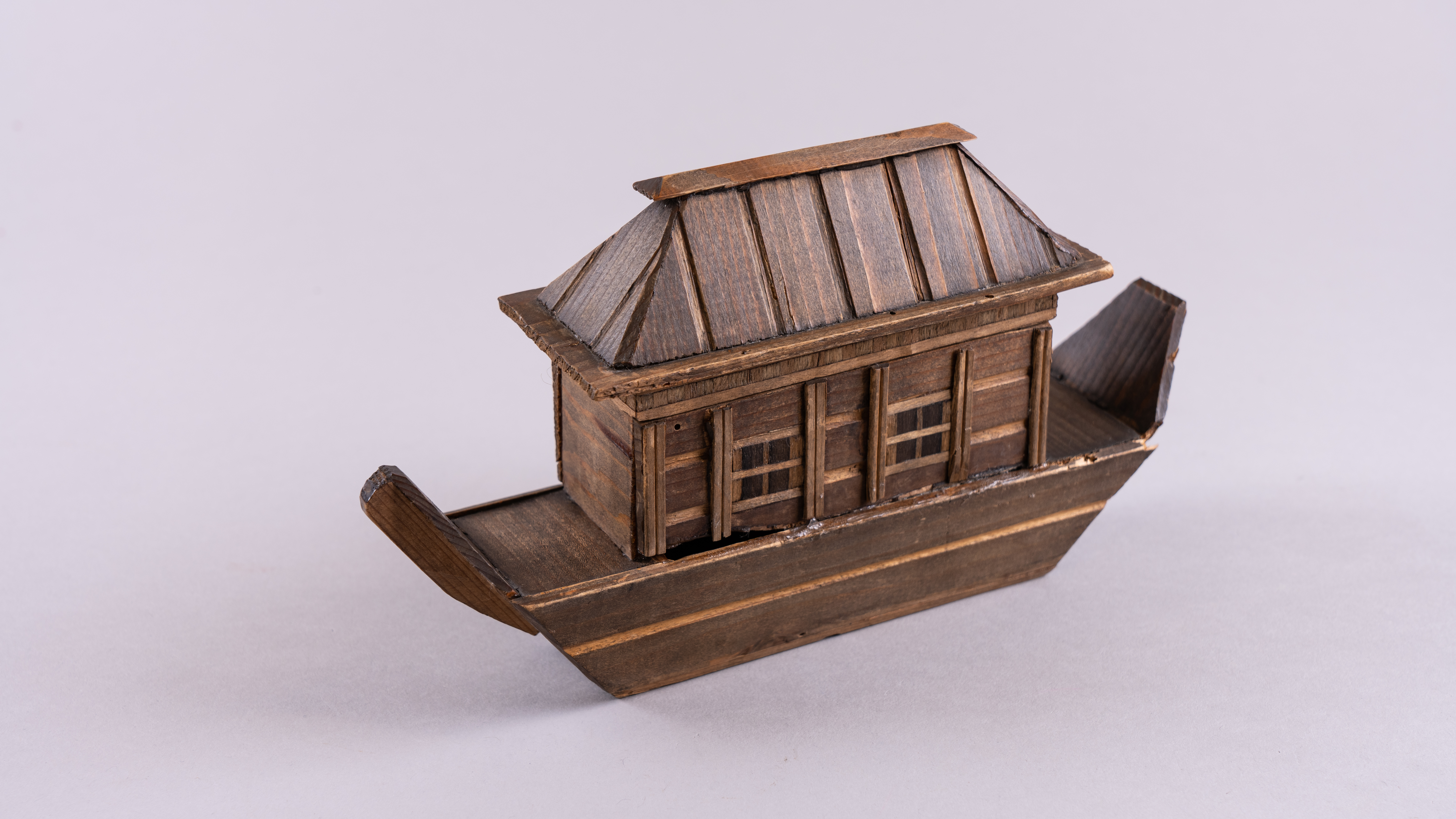
There are also some much more humble objects sold by antique dealers to museums, such as this toy Noah’s Ark c.1900, sold to Preston Park Museum, Stockton, in 1969 by Caedmon Antiques of Whitby for a few pounds (see below).

Toy Noah’s Ark, c.1900, part of the Year of the Dealer digital film trail at Preston Park Museum, Stockton. Image, The Year of the Dealer project, University of Leeds & Preston Park Museum, Stockton.

We hope you enjoy the Year of the Dealer films, and that it will encourage you to think further about the role that antique dealers have played in the development of collections.

Mark

May 8, 2021

‘She is now of the family of Champcommunal and other money makers’: women, antiques and interiors in mid twentieth-century London

[our friend and colleague, Dr Clare Taylor, from Open University, is our guest blogger again for this blogpost – thank you again Clare for taking the time to share your research – you can also read Clare’s other blogpost from 19th Feb 2021, HERE].

Mark

Here’s Clare Taylor’s blogpost:

‘Many of the names behind leading antique dealers were men, but women’s role in the business equally deserves to be uncovered and celebrated, as Mark’s 2015 posts on the early B.A.D.A. member Clara Millard revealed [HERE & HERE]. Women, too, have a long association with the trade [Mark – indeed they do, the dealer Jane Clarke (c.1794-1859), who specialised in ‘antique lace’, was a major dealer in the middle decades of the 19th century – see also my dictionary of 19th century antique dealers – White Rose Depository ] and at least one female dealer looked back to the eighteenth-century to advertise her shop. Anne Austen adapted the c.1754 trade card of James Wheeley, a paper hanging warehouseman on Aldersgate Street, for her own business on New Bond Street, which was visited by Prince Henry of Battenberg in 1912 [Mark – see Anne Austin in the Antique Dealer Project Map website too – HERE ]. Austen kept Wheeley’s cartouche and shop scene but changed the name and address. She also adapted the wording, removing the wallpaper manufacturing element from Wheeley’s card and substituting ‘common papers’ with the presumable more valuable ‘Chinee papers’ or Chinese wallpapers, adding ‘New Chairs & Horse Glass designs by the ingenious Mr. Chippendale’ to the list of items she sold.

Trade Card for Anne Austin’s gallery, c.1913. Copyright Trustees of the British Museum. Courtesy of Clare Taylor.

Austen’s card suggests she was fitting up interiors, and decorating was frequently thought of as the preserve of amateurs who gave ‘advice’, but became nevertheless an important area for women seeking work (and an income) in the early years of the twentieth century and often went hand in hand with the trade in antiques. Sybil Colefax (1875-1951) was in just such a position in the 1920s. These women trod a difficult path, as Virginia Woolf’s description of Sybil in a letter of 1930 to Vanessa Bell conveys, since in Woolf’s view Sybil ‘is now of the family of Champcommunal and other money makers’, ‘a hardened shopkeeper’, whose society life of leisure has been replaced by a working life such as that of Elspeth Champcommunal (1888-1976), the then Editor of Vogue magazine.

Trade Card for Sybil Colefax Limited, n.d. Bodleian Library, Oxford. Image courtesy of Clare Taylor.

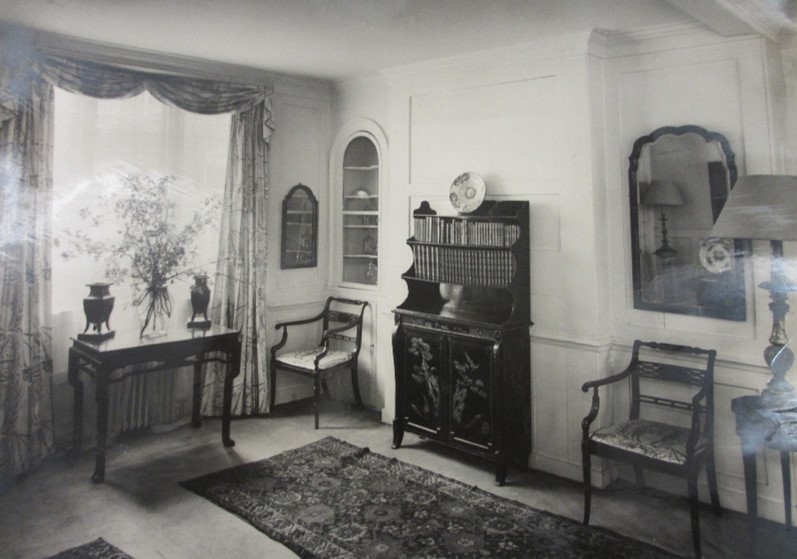
Sybil’s name is now synonymous with the decorators Colefax & Fowler, and although her role in that firm might have been short lived (1938-46) and her contribution since eclipsed by those of John Fowler and Nancy Lancaster, Sybil’s knowledge of antiques was built up over a much longer timeframe. She had started out before the Second World War working for Stair & Andrew, establishing their decorating department on the first floor at Bruton Street, so her early knowledge may well have been gleaned from working with their stock, although according to her biographer later ‘forays into Bond Street…brought her into contact with many London dealers’. Her trade card certainly highlighted that she supplied ‘Antique furniture, glass, china with a special feature of Regency pieces’ and it was a lighter version of Edward Knoblock’s Regency taste which she promoted with painted and gilded chairs, console tables and textiles in plain satin or printed with Regency-style motifs such as bay leaf circlets and lyres.

Drawing Room at Sybil Colefax’s home on Lord North Street, London, photographed after 1941. Bodleian Library, Oxford. Image courtesy of Clare Taylor.

Her own manuscript, ‘On Houses’, also signified the importance of the setting in which antiques were placed, warning that ‘ You lose half the effect of a fine Queen Anne writing table or bookcase or walnut chairs…when they’re set among some dull creton [sic] or linen covers of poor design and washy colour’. It also seems that clients recognised her expertise in antiques as well as interiors. During the War she kept her business going whilst helping out at the Red Cross depot and in May 1940, a desperate Marquess of Anglesey, for whose wife, Marjorie Manners, Sybil had decorated a bedroom at Plas Newyyd, wrote that he had no money and no jewels (‘except as will belong to the children, as they want them’) to send to the Red Cross sale. He sought Sybil’s advice to authenticate a piece of furniture, asking, ‘What about the Empire piece. Do you think it has a History? Or can you say with authority that it comes from Malmaison? Can you advise me whether it could be written over as famous and historical and sent to the Lord Mayor?’

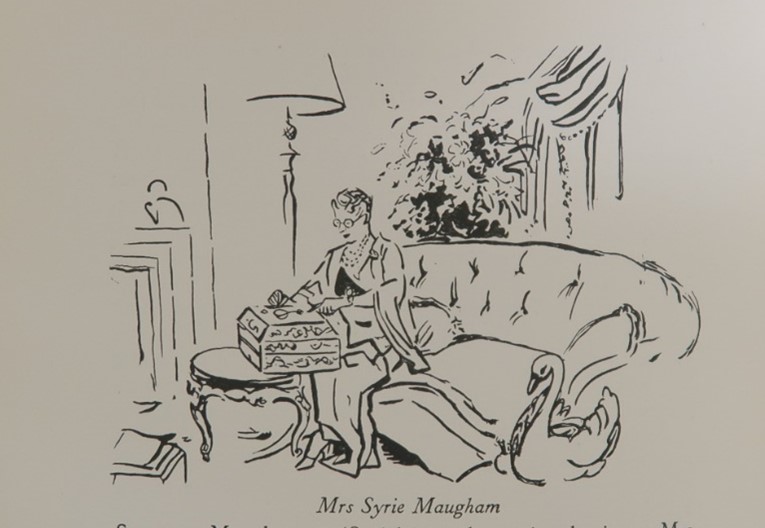
A key element of the Regency Revival taste for which Sybil Colefax was admired was decorated and painted furniture, a taste which is still with us today. From the early 1920s such pieces were sold by the decorator Syrie Maugham (1879-1955) from her shop on Baker Street, who had a reputation for ‘pickling’, bleaching and painting in white pieces from eighteenth-century commodes to mirror frames.

Sketch of Syrie Maugham at work from Cecil Beaton’s The Glass of Fashion 1954. Image courtesy of Clare Taylor.

Liberty’s, Heal’s and Peter Jones on Sloane Square also sold painted pieces, supplied in the case of Peter Jones not only by Maugham but by the artists Ambrose Thomas (‘The Marquis d’Oisy’) and Margaret Kunzer. By 1930 Kunzer had been recruited to head a Department of Decorative Furniture for the shop, and during the early 1930s a painting studio was established in nearby Ixworth Place to feed in stock, run by a young John Fowler. Stock sold out at the first exhibition held in the Department and demand continued to grow. One determinant was clearly price. Kunzer went on buying trips and had a regular supplier in Suffolk who repaired pieces ready for painting (a Mr Head in Sudbury) but she also bought pieces closer to home once paying £10 in the Caledonian market (also a source of pieces for Syrie Maugham) for ‘a small pine tallboy, a writing table, several chairs and a tray’ which all needed only minor repairs before being painted. However, Kunzer also had a keen eye for what would sell, recalling in 1982 that at an exhibition held early in 1935 it was Regency pieces that were most in demand as they were suited to customers who were increasingly living in smaller scale flats and houses.

These examples, of Anne Austen, Sybil Colefax, Syrie Maugham and Margaret Kunzer, illustrate some of the different ways in which women contributed to the trade in antiques in the interwar years and after, and offer tantalising glimpses of the networks within which these women operated and their role in promoting new tastes.

Clare Taylor.

April 29, 2021

Antique Dealing & Department Stores

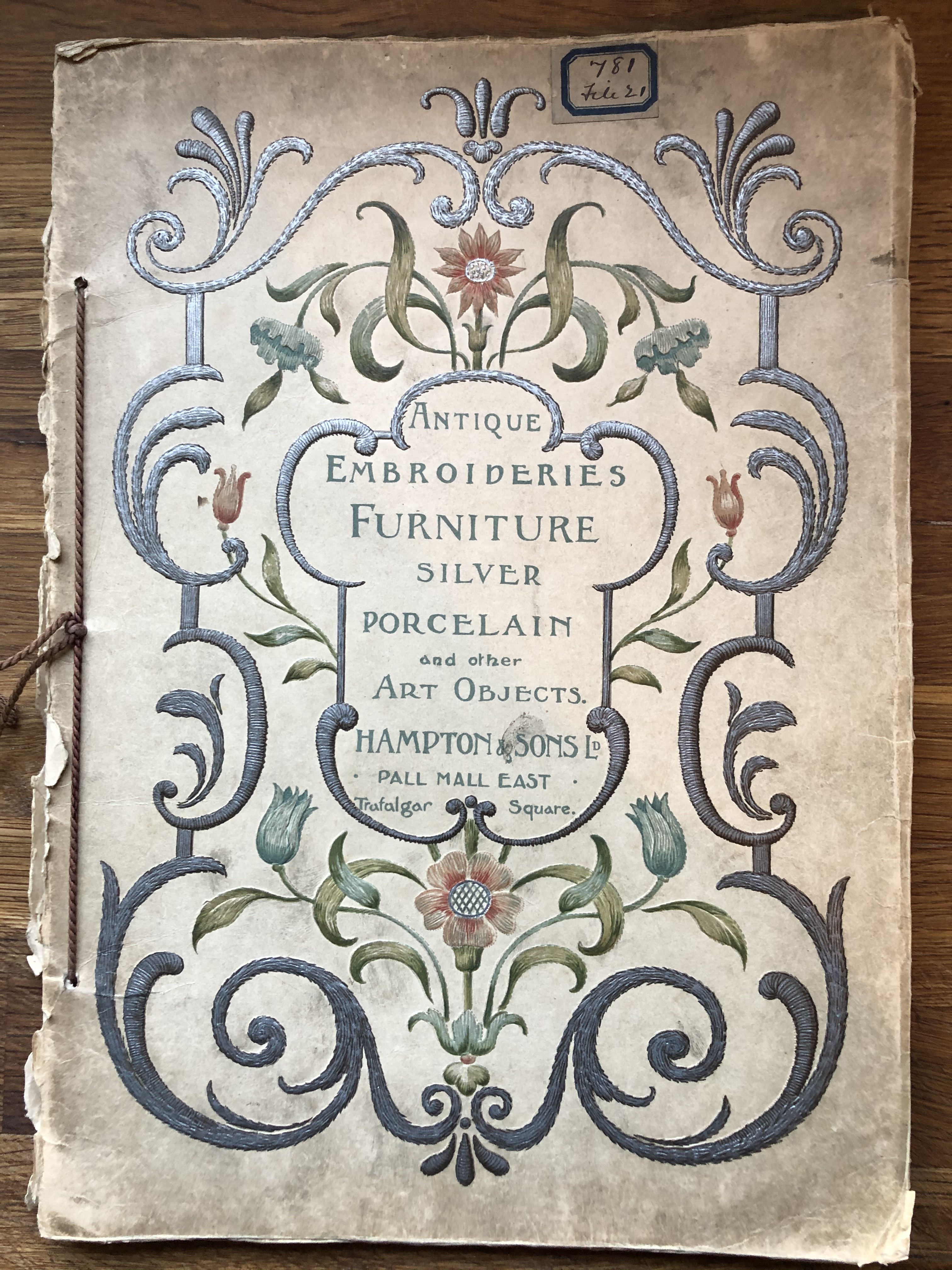
One of the latest acquisitions to the growing archive of antique dealer ephemera is a rare sales brochure, dating from c.1900, from Hampton & Sons Limited, Pall Mall East, London, of ‘Antique Embroideries, Furniture, Silver, Porcelain and other Art Objects’. It’s a very elaborate brochure, with a colour printed and embossed cover and full of black and white, and some colour photographs, of the stock of antiques that Hampton had for sale.

Hampton & Sons Ltd., Sales Brochure, c.1900. Image Antique Dealers Research Project, University of Leeds.

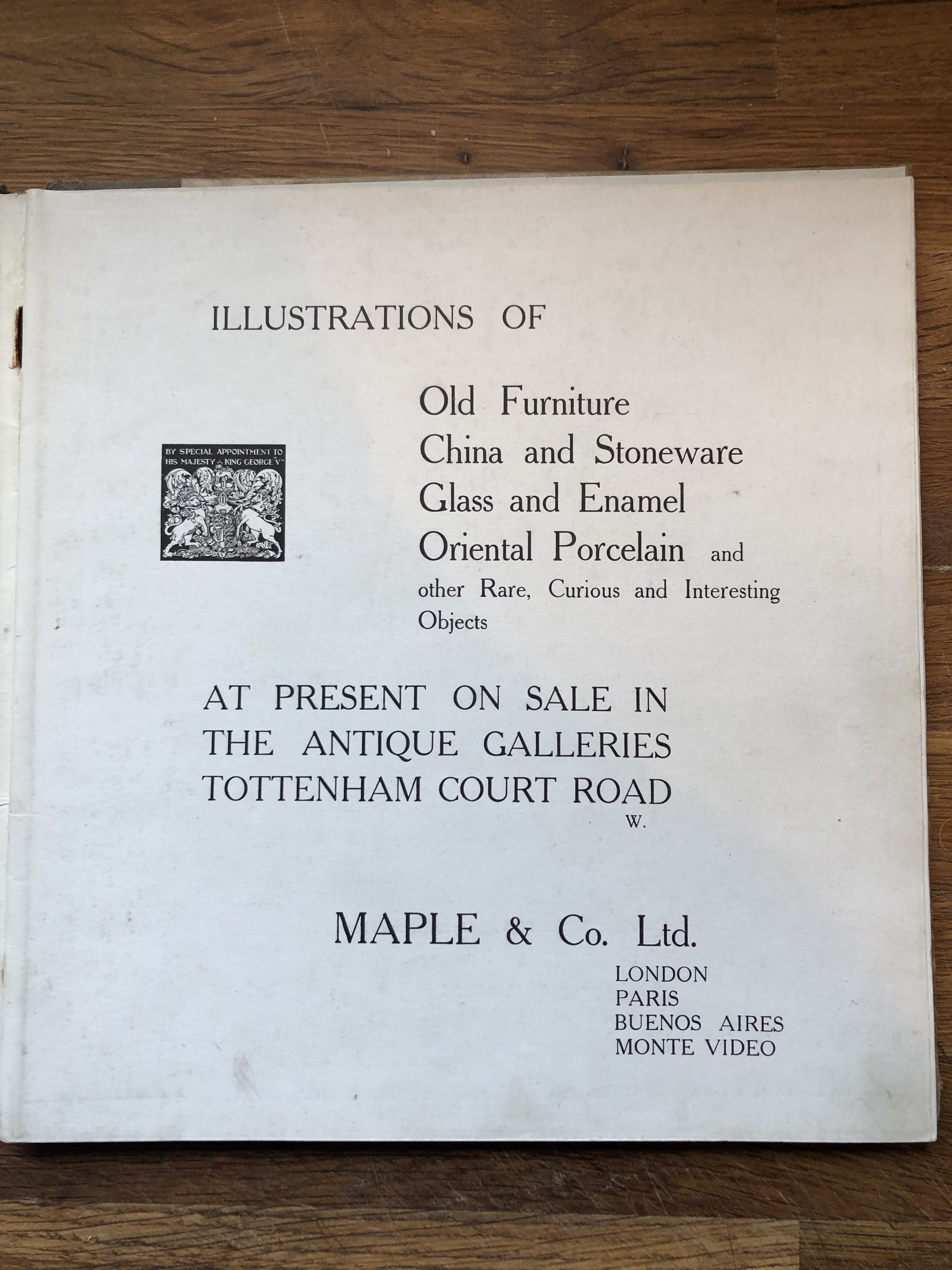
Hampton & Sons were established in 1830 by William Hampton, trading in Cranbourne Street, London, selling general household items and furniture and expanded to a large general furnishing and department store in East Pall Mall, London, in 1869. Many department stores in London in the period c.1900, such as Debenham & Freebody, the 19th century department store business that eventually became Debenhams, and the furnishing store Maple & Co. Ltd., of Tottenham Court Road, developed ‘Antique Departments’ within their stores – here, for example, is a sales brochure produced by Maple & Co in c.1915, also in the Antique Dealer Research Project archives.

Maple & Co. Ltd., sales brochure for antiques, c.1915. Image, Antique Dealers Research Project, University of Leeds.

(For more on antiques and department stores see also our blog post on November 2nd 2014 by Chris Coles). Like these other department stores, Hampton & Sons antiques department sold a wide range of antiques. They described themselves as ‘Decorators, Furnishers’ and ‘Dealers in Antiques’ in the frontispiece to their sales brochure – with ‘Antique Furniture’, ‘Old Tapestries’, ‘Embroideries and Laces’, ‘Old Arms and Armour’, ‘Old Silver’, Sheffield Plate and Porcelain, ‘Old Copper Ware’ and ‘Curios’ all listed in the contents of the brochure.

Hampton & Sons Ltd., Sales Brochure, c.1900. Image Antiques Dealers Research Project, University of Leeds.

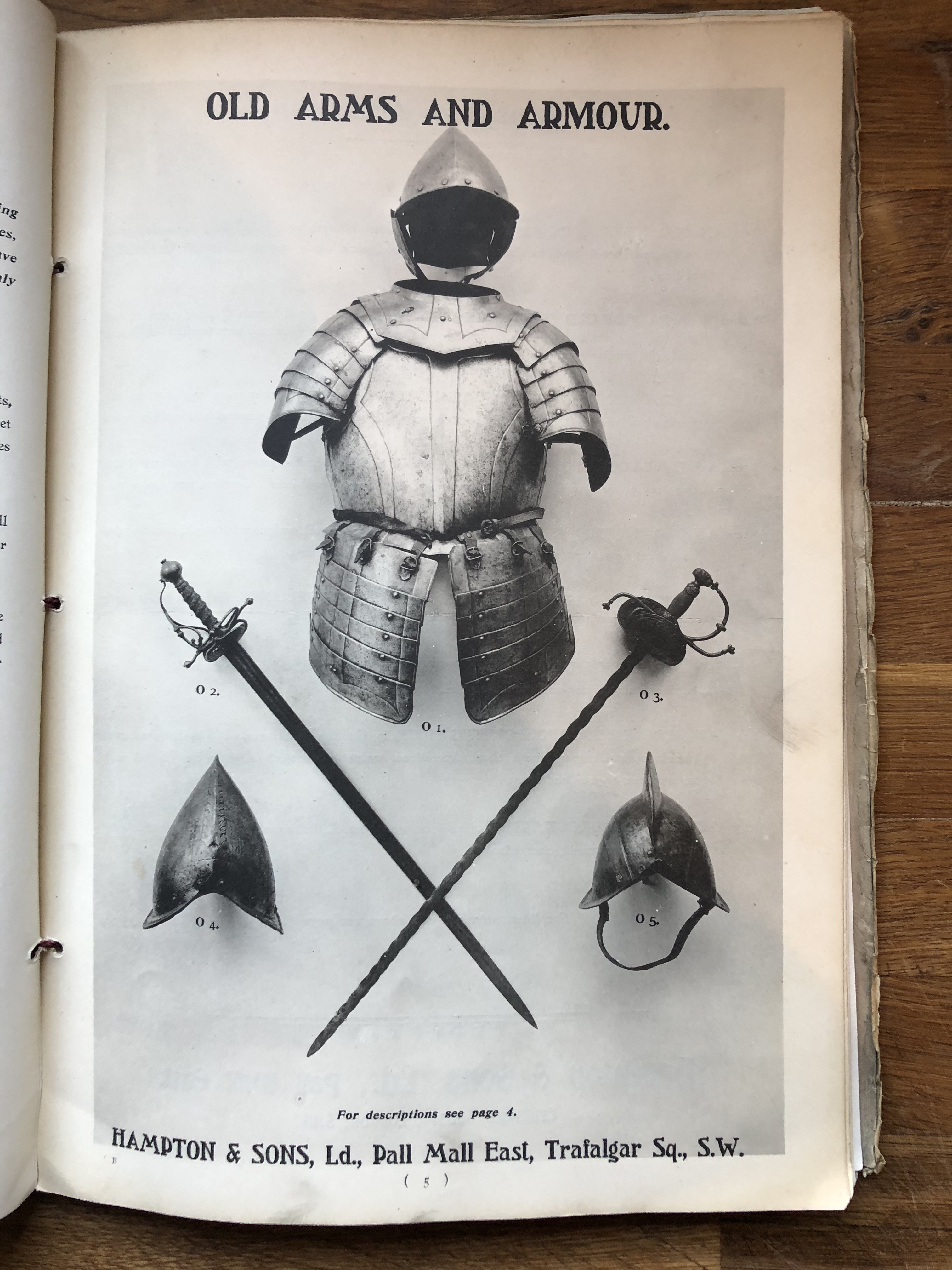
In the Introduction to the brochure Hampton & Sons write that ‘The steady and continuous growth of the Department…rendered it absolutely necessary to make extensive additions to the Show-rooms’ that they had ‘recently constructed for the display of Antiques’ (Hampton & Sons, brochure, p.1). The sales brochure illustrates the very wide range of antiques that the business sold in the period around 1900. Here is a page showing ‘Old Arms and Armour’, including ‘A Demi-Suit of Bright Steel Armour…of the XVIIth century, from the celebrated Melges collection’, (Brochure, p.4) – numbered as item ‘O1.’ in the photograph.

Hampton & Sons sales brochure c.1900. Image, Antique Dealers Research Project, University of Leeds.

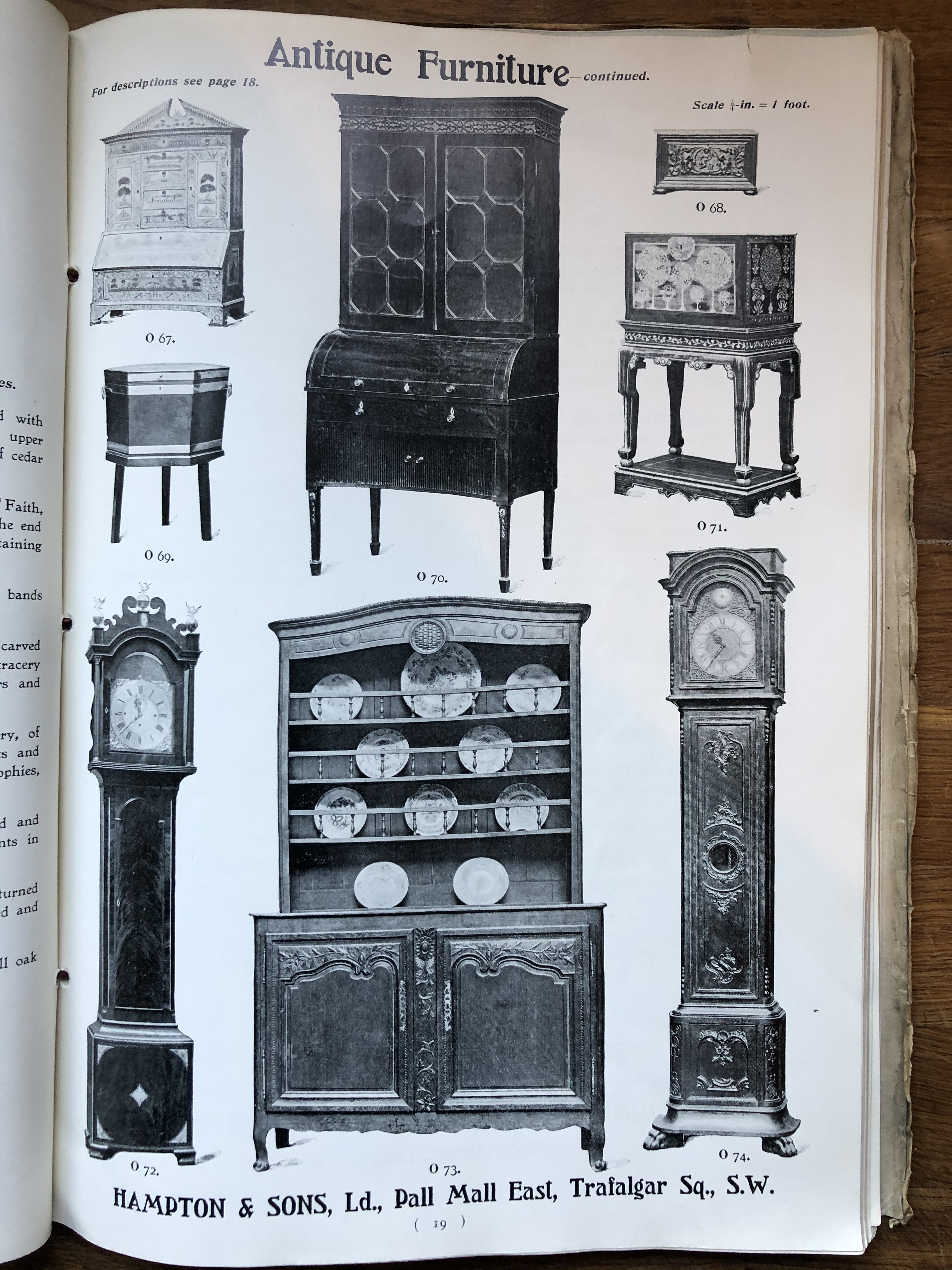
Among the photographs of antique furniture is this page, showing 18th century English and French antique furniture and clocks, is a fascinating cabinet on stand (right side of photograph, numbered ‘O71.’), described as ‘an old cabinet, of rosewood, richly inlaid with conventional representations, in ivory, of trees and flowering plants….’; and an equally interesting ‘Old English Miniature Bureau Bookcase’ (show top left, numbered ‘O67’)…an ‘Important example’ as the caption states. This, of course, as we now know, is a late 18th century example from Vizagapatam, India.

Hampton & Sons, Sales Brochure, c.1900. Image, Antique Dealers Research Project, University of Leeds.

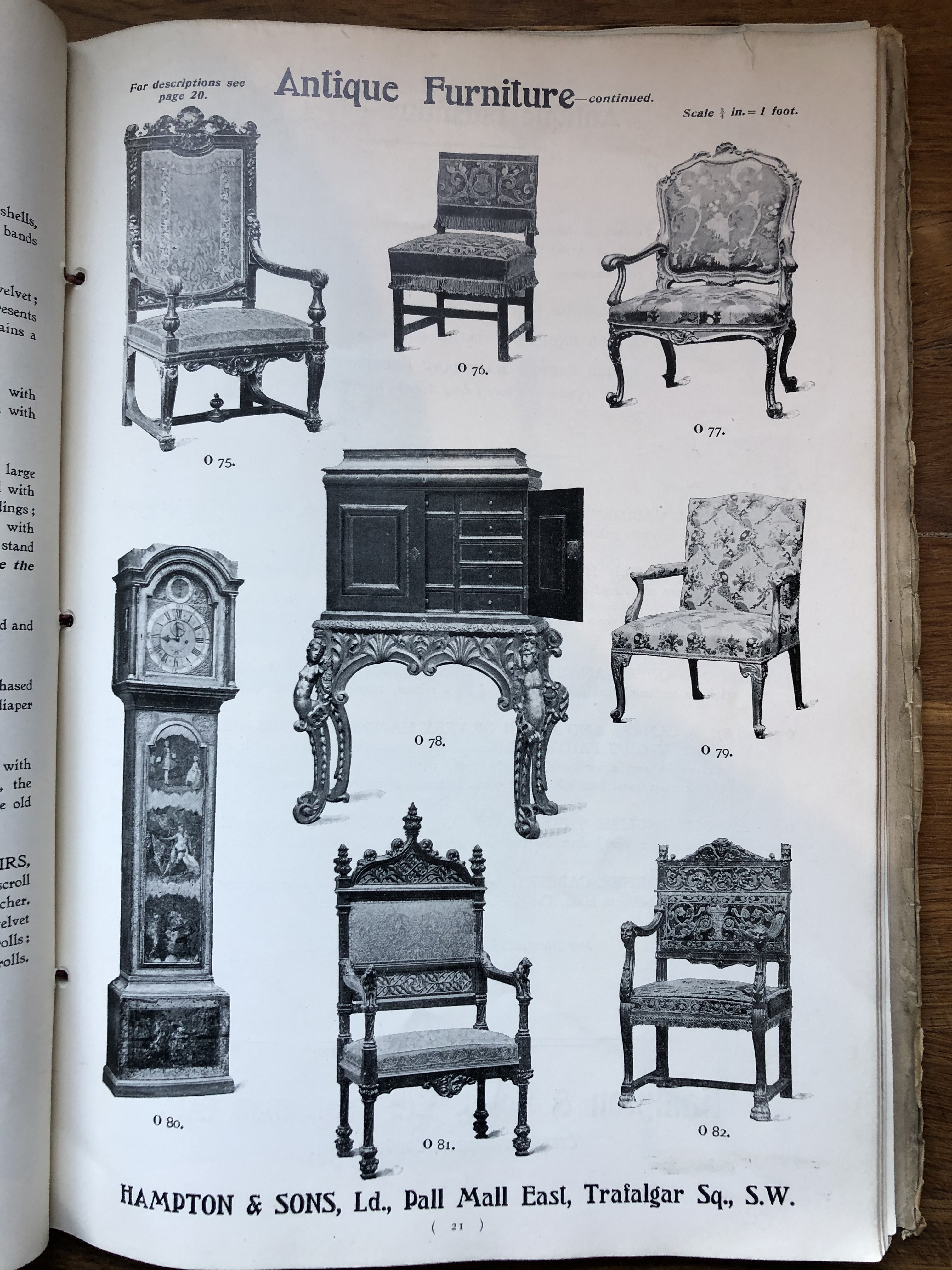
Another of the pages devoted to antique furniture includes another cabinet on stand, this time described as ‘A Very Fine Old Ebony Cabinet….Formerly the property of Oliver Cromwell. From Olivers Stanway, once the residence of the Eldred family’; (numbered O78.’) – the cabinet is also illustrated in Arthur Hayden Chats on Old Furniture (1905), p.99, where it is reproduced by ‘permission of Messrs. Hampton & Sons’ and obviously from the brochure here.

Hampton & Sons, Sales Brochure, c.1900. Image, Antiques Dealers Research Project, University of Leeds.

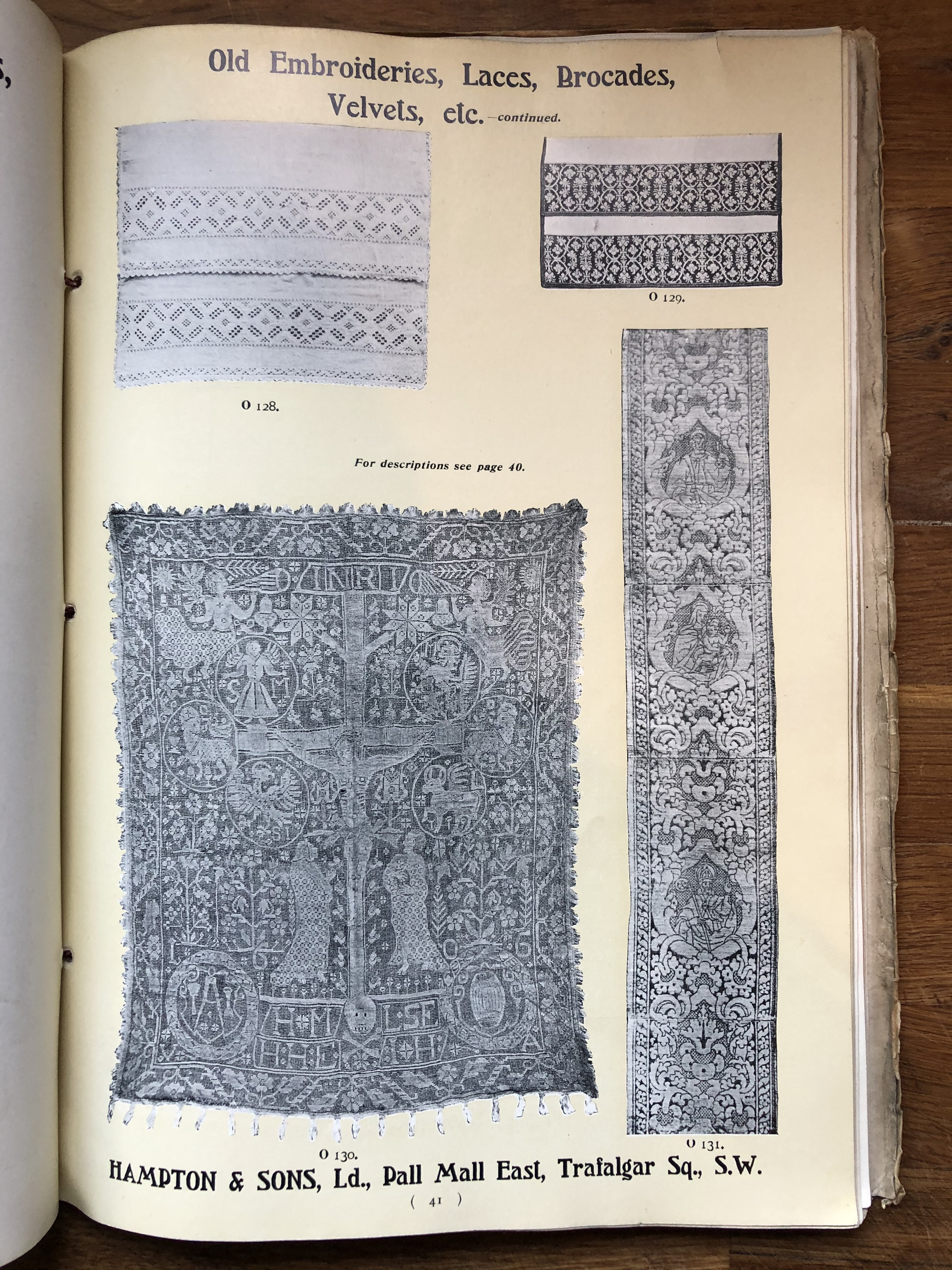
There is also an extensive selection of antique textiles and lace in the sales brochure; antique textiles and lace were highly fashionable at the time, but antique lace in particular had also been a key part of the antique markets since the early 19th century, perhaps most famously with Jane Clarke, who operated the ‘Antique Lace Warehouse’ at 154 Regent Street, London in the 1830s and 1840s. In the Hampton & Sons brochure there is a fabulous ‘Banner of Old Italian Lacis’, ‘dated 1606’, ‘a very fine and interesting specimen’ as it was described; (numbered ‘O130’).

Hampton & Sons, Sales Brochure, c.1900. Image, Antique Dealers Research project, University of Leeds.

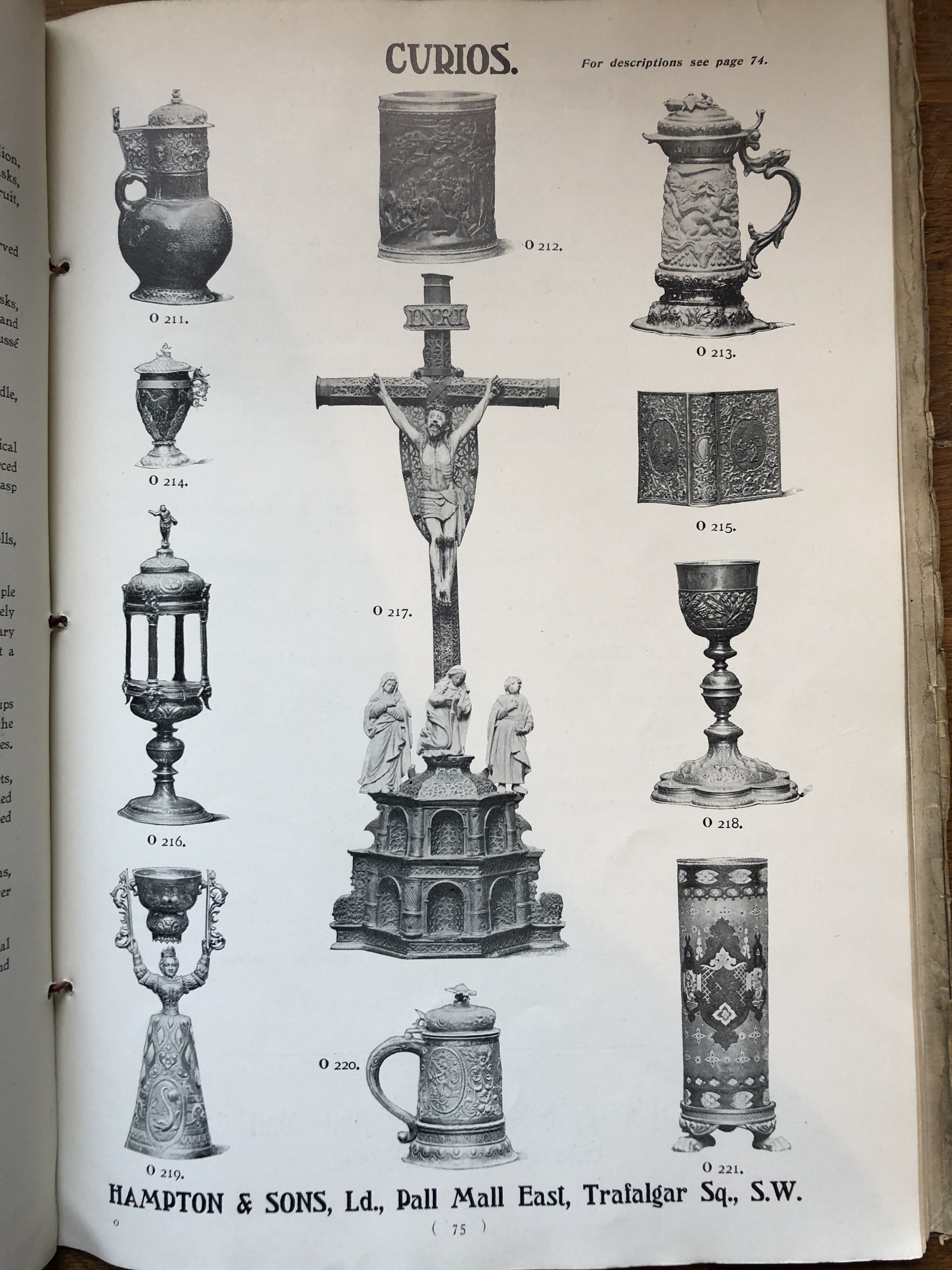
There is also a page devoted to the ubiquitous ‘Curios’, which included an ‘Elizabethan Brown Glazed Ware Jug’ (numbered ‘O211’) top right in the photograph below, together with ‘Ivory Tankards’, ‘Silver and Metal Gilt Monstrances’, and ‘a Pair of Chinese Carved Cylindrical Spill Vases’ (numbered ‘O212’) top centre – these are carved Bamboo brush pots which appear to have been later mounted in silver, probably in Europe.

Hampton & Sons, Sales Brochure, c.1900. Image, Antique Dealers Research Project, University of Leeds.

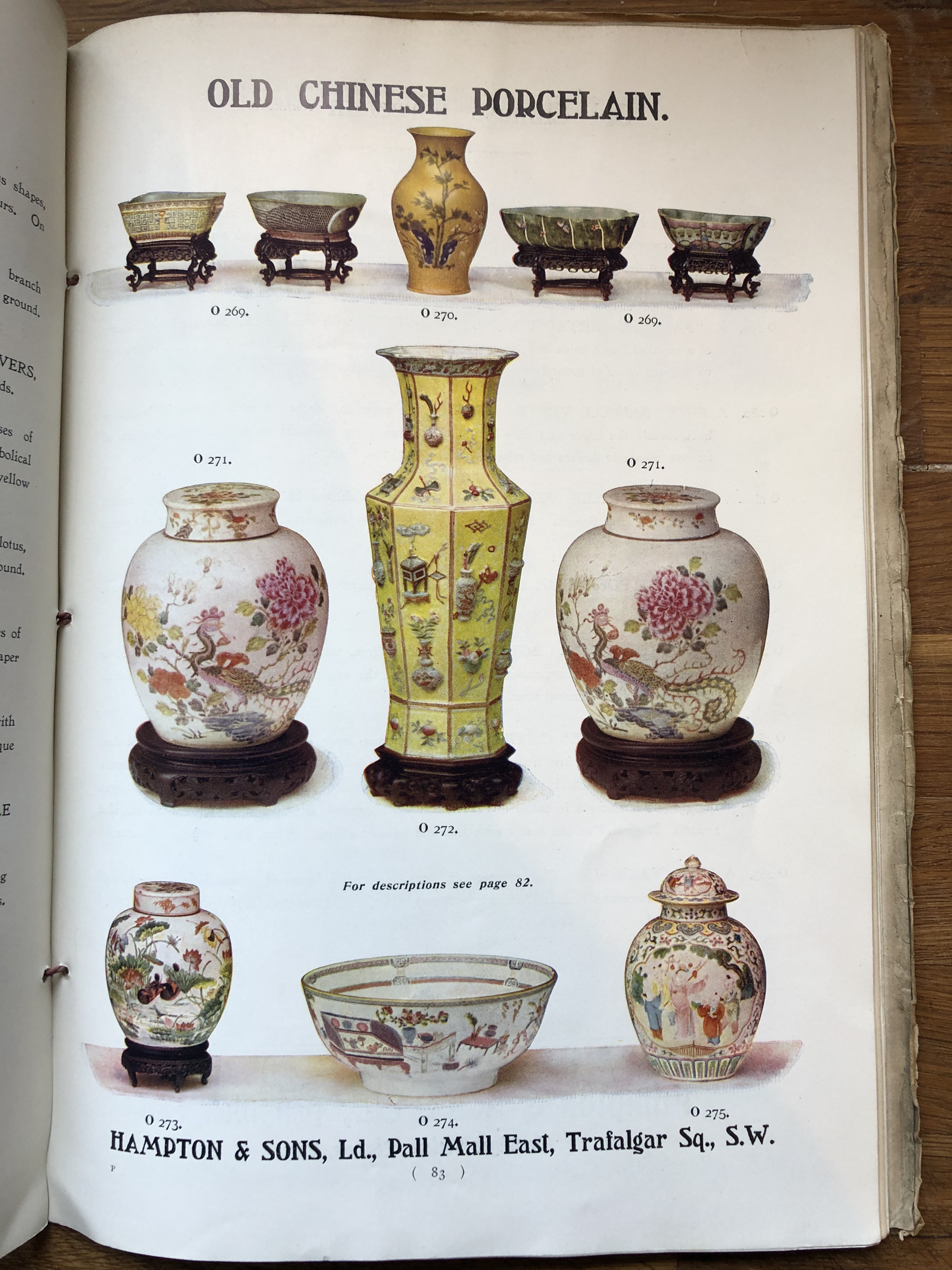
And finally, no antique department store would have been complete at the time without some collections of antique Chinese ceramics, and here are a couple of pages from the brochure illustrating Hampton & Sons collections of ‘Old Chinese Porcelain’. This page (below) showing 18th century polychrome porcelain, including an interesting vase ‘on Imperial Yellow Ground’ (centre, numbered ‘O272’):

Hampton & Sons, Sales Brochure, c.1900. Image, Antique Dealers Research Project, University of Leeds.

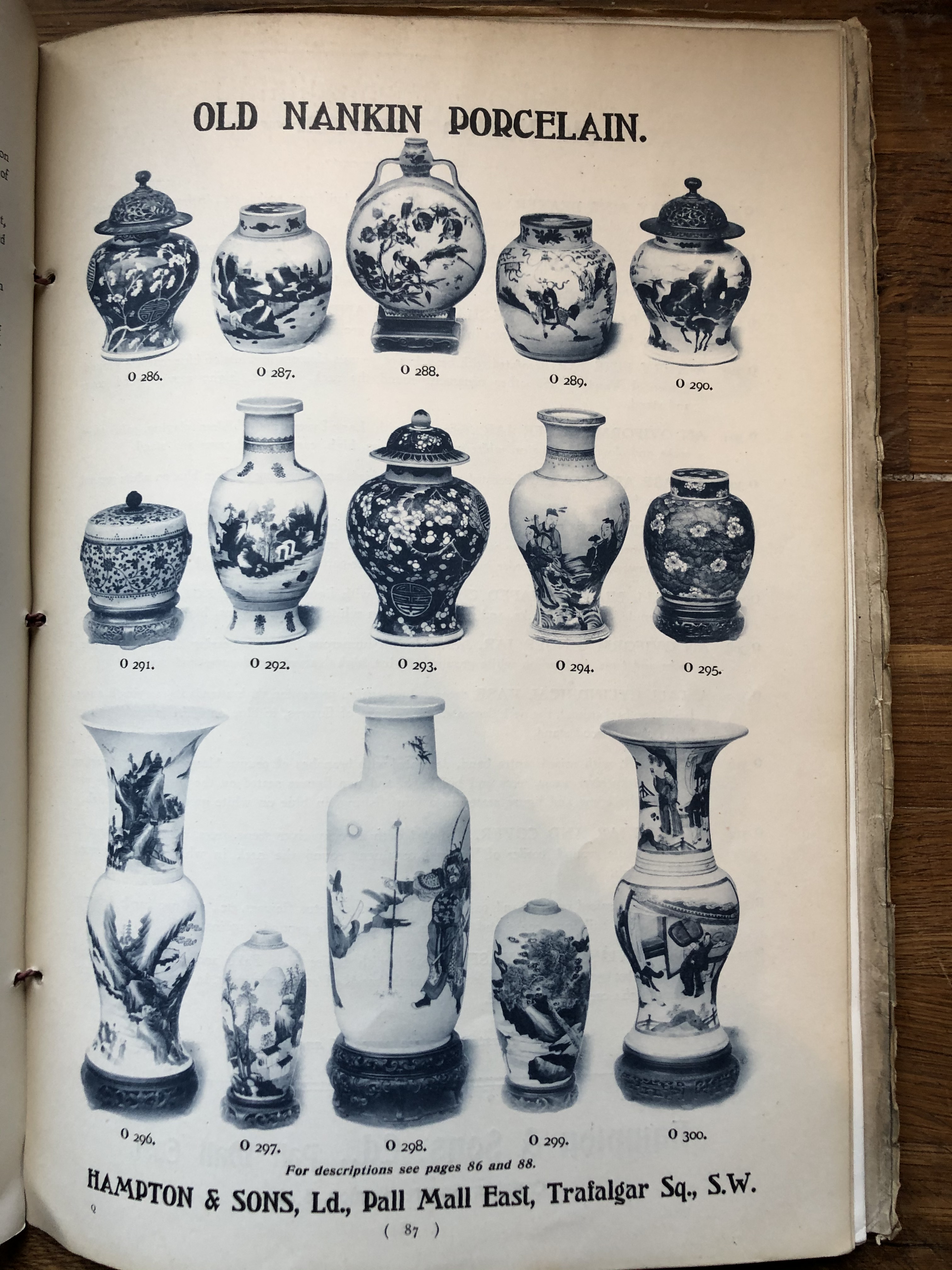
And this page (below), showing ‘Old Nankin Porcelain’, from the extensive collections of blue & white Chinese porcelain at Hampton & Sons.

Hampton & Sons, Sales Brochure, c.1900. Image, Antique Dealers Research Project, University of Leeds.

The Hampton & Sons sales brochure is a rare and fascinating survival of antique dealing in the period c.1900, and will be making its way to the antique dealer archives at the Brotherton Library Special Collections at the University of Leeds in due course.

Mark

Home Subjects

a working group dedicated to the display of art in the private interior, c. 1715-1914

The Period Room: Museum, Material, Experience

An International Conference hosted by The Bowes Museum and The University of Leeds

H. Blairman & Sons Ltd

A research project investigating the history of the antiques trade in Britain in the 19th & 20th centuries

Museum Studies Now?

'Museum Studies Now?' is an event which aims to discuss and debate museum and heritage studies education provision.

The Burlington Magazine Index Blog

art writing * art works * art market

East India Company at Home, 1757-1857

A research project investigating the history of the antiques trade in Britain in the 19th & 20th centuries