April 6, 2015

Vernay Archives at Winterthur

The antique dealer related archives at The Winterthur are an amazing resource, and the archive team there, led by Jeanne Solenksy, are simply great; they are certainly the most accommodating of archive teams (thank you to all!). And thanks again also to Chris Jussel (see previous blog posts) for donating the archive of Vernay & Jussel, and that of J.J. Wolff, to Winterhur archives – it was such a generous, and insightful, thing to do….without such ‘blue sky’ thinking we would not have such rich resources to investigate the history of the antique trade. As you probably know, antique dealer archives in public archive collections are very rare indeed.

Anyway, as readers of the blog may also know (see previous blog posts), the dealer Arthur Stannard Vernay (c.1877-1960) was one of the most important dealers operating in the USA in the period prior to WWI and up to the 1960s. He was born in Weymouth, in the UK, and Chris Jussel tells us, (in the oral history interview we did last week) that Arthur Vernay was originally called Arthur Avant, but changed his name to ‘Vernay’ in about 1903 or 1904 when he came to the USA. Vernay eventually had shops in New York, and in Boston, Massachusetts, but he also had a shop in London, at 217 Piccadilly, probably in the late 1910s-20s, (217 Piccadilly may also be the same location as Vernay’s address at Trafalgar House, 1 Waterloo Place?); Vernay also took a house at 51 Berkeley Square in the late 1920s, which also possibly operated as a showroom too.  So whilst he is primarily an antique dealer with associations in the USA, he qualifies as a suitable subject for the present ‘Antique Dealers in Britain in the 20th century’ project by virtue of his shop in London.

FYI – Vernay is also famous for his interest in collecting animal specimens, many of which he donated to the American Museum of Natural History, in New York – indeed the ‘Vernay-Faunthorpe Hall of South Asiatic Mammals‘ named in 1930 after Vernay and his friend and fellow explorer Colonel John Faunthorpe, remains at the AMNH.

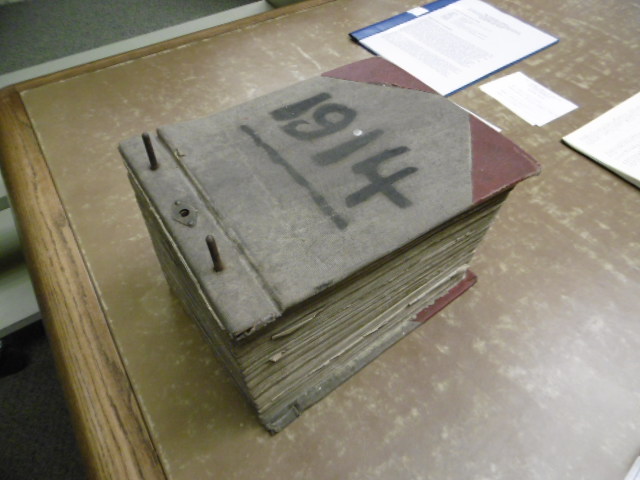
The sales ledgers at Wintherthur contain all the sales made by Arthur Vernay from 1914 until the 1960s; from 1940 the business was continued by Chris Jussel’s father, Stephen Jussel, (Chris took over the business in 1972). The business records prior to 1914 were destroyed by fire, but the remaining early business records are a fascinating research resource, and contain detailed stock books and sales ledgers as well as other ephemera.  This example (below) is the 1914 sales ledger, and the copy invoice (image below) is to ‘Mrs J. P. Morgan’ wife of the famous collector; it is dated December 1914 and describes ‘One Chippendale pole screen with petit point frame, circa 1760’…sold for the princely sum of $450.

Vernay 1914 2

Vernay sales ledger, 1914. Coll 739 04×126.37. Courtesy, The Winterthur Library: Joseph Downs Collection of Manuscripts and Printed Ephemera.

vernay dec 1914 sale

Vernay copy invoice, December 1914. Coll. 739 04×126.37. Courtesy, The Winterthur Library: Joseph Downs Collection of Manuscripts and Printed Ephemera.

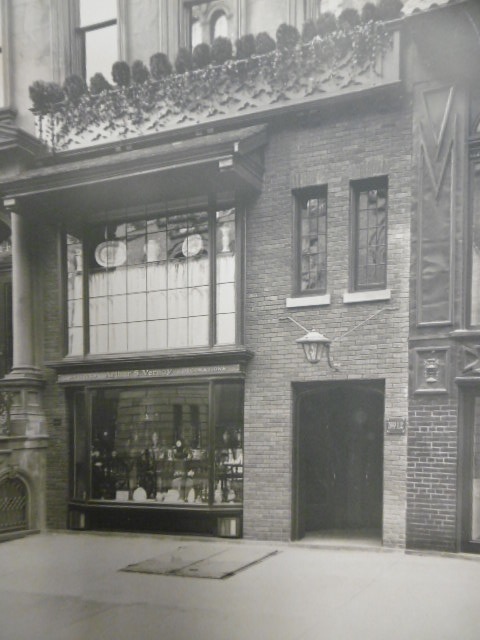
Vernay opened his first shop at East 45th Street, in New York in 1906 (the archives at Winterthur have a printed announcement dated March 1906) – his first premises are shown below.

vernay shop e 45th st ny 1910?

Arthur Vernay, first shop (1906) at East 45th Street, New York. Image c.1910. Coll. 739 07×56 Series IV. Courtesy, The Winterthur Library: Joseph Downs Collection of Manuscripts and Printed Ephemera.
The archives also have some photographs of one of the rooms in the interior of Vernay’s first shop, probably taken in c.1910 – which show what must have been a typical assembly of ‘antique’ objects of interest to collectors and furnishers in the period.

vernay 1st int 1910

Vernay shop interior, East 59th Street, New York, c.1910. Coll. 739 07×56 Series IV. Courtesy, The Winterthur Library: Joseph Downs Collection of Manuscripts and Printed Ephemera.

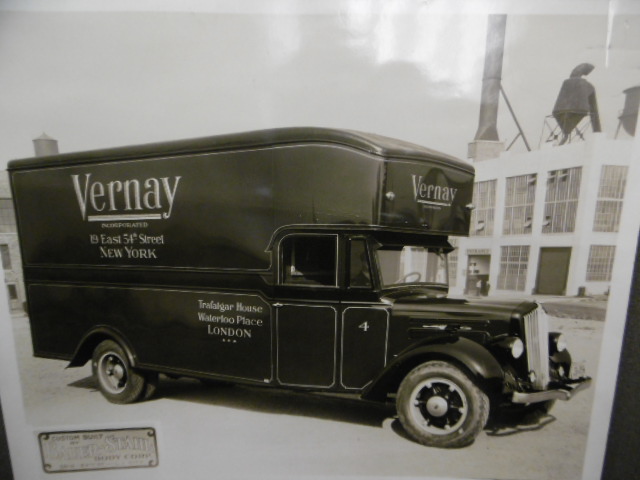
The archives also have a photograph of Vernay’s first delivery van, with it’s own livery! – (Chris Jussel tells me that the van was a Packard type, and was a bespoke model, and quite expensive) – as befitting the culturally significant goods that Vernay sold!

vernay van

Vernay delivery van c.1930s. Coll. 739 04×56 Series IV. Courtesy, The Winterthur Library: Joseph Downs Collection of Manuscripts and Printed Ephemera.

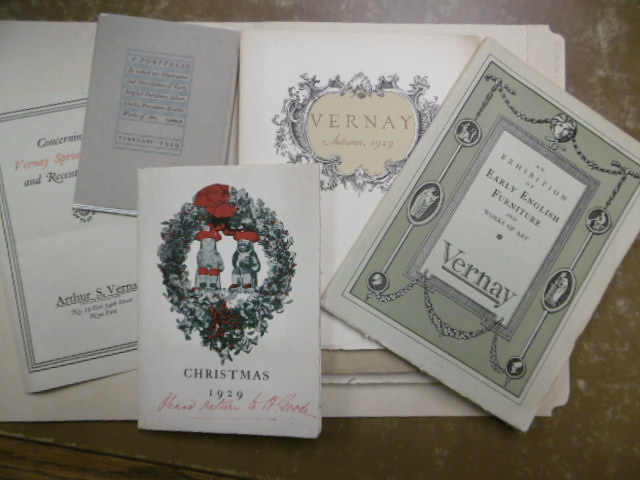
Like many other antique dealers we are studying, (and as previous entries on the Antique Dealer blog have highlighted) Vernay regularly produced catalogues of his stock of antiques, and staged temporary exhibitions to generate interest in particular kinds of objects, or periods/styles and etc. The archive also contains examples of this ephemera, and they clearly demonstrate how sophisticated an operation the Vernay business was. Here’s a selection from the late 1920s –

vernay 1929

Vernay catalogues, 1920s. Coll. 739 04×126.77. Courtesy, The Winterthur Library: Joseph Downs Collection of Manuscripts and Printed Ephemera.

And a selection from the 1940s –

vernay 1944

Vernay catalogues from the 1940s. Coll. 739 04×126.123. Courtesy, The Winterthur Library: Joseph Downs Collection of Manuscripts and Printed Ephemera.

There’s so much more to say about the Vernay, Vernay & Jussel, and the Wolff archives at Winterthur, they are an astonishing survival, and an amazing resource. We certainly hope to do further research on Vernay, and develop this as a potential ‘case study’ for the forthcoming edited book on the ‘British Antique Trade in the 20th Century’ which will be one of the outputs for this AHRC funded research project.

Mark


April 5, 2015

New Project Volunteer Researchers – introducing Graham Panico

I forgot to mention, before I came away on this extended research trip to the USA, that we have a new project volunteer – Graham Panico. I met Graham a few weeks ago at the Dorman Museum in Middlesbrough, and he has enthusiastically stepped forward to help with the research for the project!…Thank you Graham!

By way of introduction, here is a short biography on Graham – (we hope that Graham will compose a blog entry – he mentioned something on the significance of Antique Fairs, which would be fascinating….)

Mark

‘Graham, as a young undergraduate, discovered the world of Art Deco and the associated ceramics of its British variation – at a time in the early 1980’s when the style was experiencing a renewed popularity amongst those collectors and dealers ‘in the know’ and aware of its emerging and growing market. He began to collect hand-decorated, but mass-produced, examples of pottery and other Art Deco objects that could be found in shops and at flea markets and fairs all across the North East of England and having graduated in 1985, his growing collection formed the basis of an initial opening stock as he began to deal, like many collectors before him, in 20th Century Decorative Art later that year.

Having opened his first shop within an Antiques Centre in Darlington in 1986 Graham moved to larger premises in 1987. This allowed an expansion into furniture and furnishings and a wider eventual dateline applied to the stock which traversed the Gothic Revival of the 19th Century to the post-modernism of the 1980s and was supported by a varied customer base of private collectors and trade buyers until 2005. From 2006 the skills and knowledge Graham accrued in a retail context have increasingly been applied in academic environments and he has taught on the contextual studies modules of various undergraduate programmes in the North East and in London. He considers the business of dealing in design to be a very flexible one and since the closure of his shop, Graham has continued to sell antiques, art and 20th Century design via specialist fairs, through auction and occasionally online.’

April 1, 2015

The semantics of the antique trade

One (just one) of the research objectives of the Antique Dealers project is to map, analyse and contextualise the changing language of description and classification used by the antique trade over the period 1900-2000 – and our interactive website (soon to be officially launched) will begin the process of tracking the huge variety of classifications and descriptions that reflect, as well as act as catalysts for, the specialist marketing practices deployed by, and developed by, the trade.  So, for example, some of the questions we are thinking about are when, and where, did antique dealers begin to call themselves ‘Old English Furniture Dealers’, and when/where did ‘antique furniture dealers’ emerge to be a dominant trade classification/description…or when/where did ‘Old Chelsea Porcelain’ emerge as a description deployed by antique dealers…or ‘Old Irish Glass’….?

The language of description and layering of classifications suggest subtle (and sometimes less so subtle) positioning within the complex collecting and classificatory structures of the antique markets over time.

Within the archives of the Metropolitan Museum are some interesting examples of the changing landscape of antique dealer descriptions –

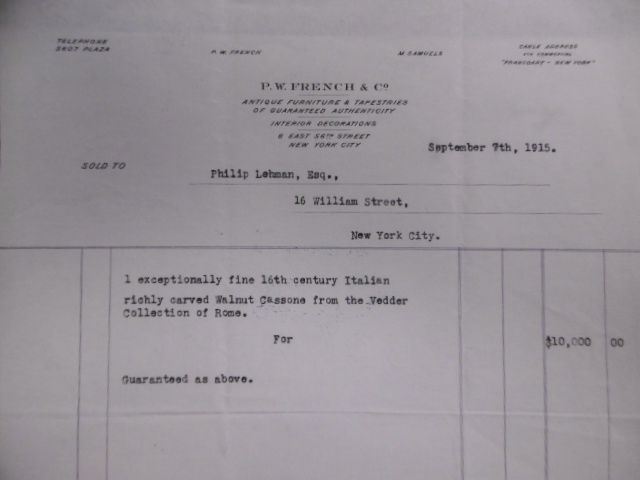
french invoice 7.9.15 det

Invoice from French & Co, 1915, Box 37 Folder 40, Robert Lehman papers, The Metropolitan Museum of Art Archives. Courtesy of the Metropolitan Museum of Art Archives.

Here, (above) in 1915, the well-known dealers, French & Co, describe themselves as selling ‘Antique Furniture and Tapestries of Guaranteed Authenticity’, and also list ‘Interior Decorators’ as a practice.  Later letterheads and invoices issued by French & Co., in the 1950s, for example, classify them as selling ‘Works of Art’.

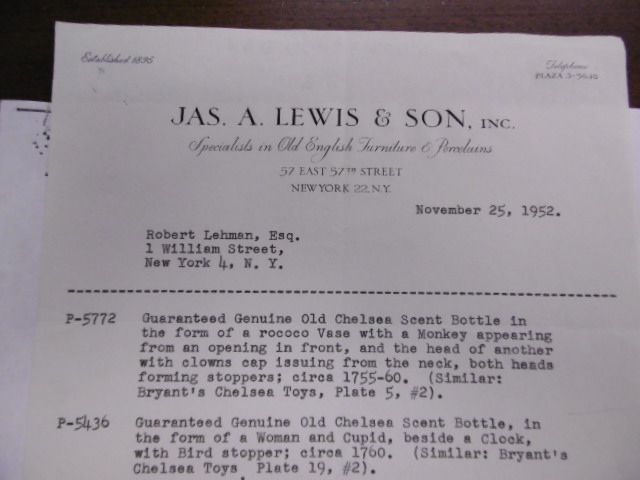
By contrast, an invoice issued in 1952 by James A. Lewis & Son Inc., the American branch of the London antique dealers, indicated that they were ‘Specialists in Old English Furniture & Porcelains’ –

lewis inv 25.11.52 det

Invoice from James Lewis & Son, 1952, Box 38 Folder 15, Robert Lehman papers. The Metropolitan Museum Archives. Courtesy of The Metropolitan Museum Archives.

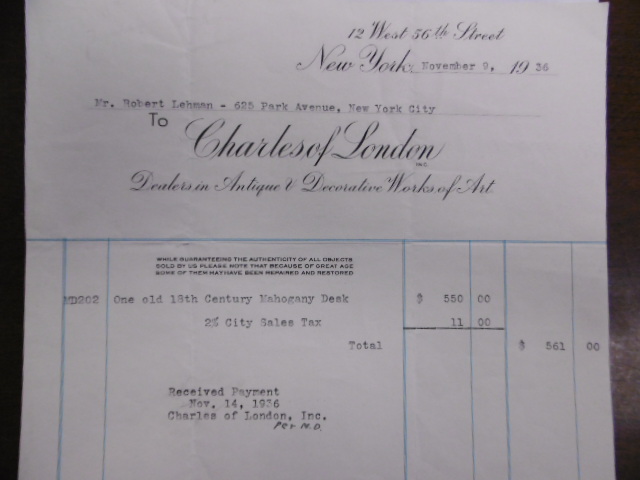
Whereas ‘Charles of London’ (Charles Duveen, we encountered in previous blog entries) described themselves as ‘Dealers in Antique & Decorative Works of Art’ in 1936 – (see below) –

charles inv 9.11.36

Invoice from Charles of London, 1936, Box 37 Folder 12, Robert Lehman papers. The Metropolitan Museum of Art Archives. Courtesy of The Metropolitan Museum Archives.


And the specialist ceramics (as we might say today) dealer H.R. Hancock described themselves in an invoice of 1934 as dealers in ‘Old Chinese Porcelain, Furniture and Works of Art’ – (see below) –

hancock inv 9.10.34 det

Invoice, H.R. Hancock, 1934, Box 38 Folder 2, Robert Lehman papers. The Metropolitan Museum of Art Archives. Courtesy of The Metropolitan Museum Archives.

An investigation of the framework of meanings behind these changes and shifts are a key part of the antique dealer research project.

Mark

March 30, 2015

Oral History Interview with Chris Jussel

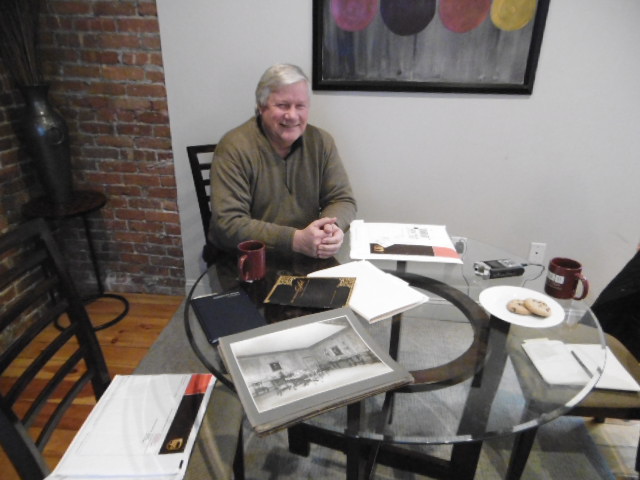
Thanks to Chris Jussel, formerly of Vernay & Jussel, and J.J. Wolff Antiques in New York, for coming to meet me in Boston MA to do an oral history interview as part of the Antique Dealers research project. The interview with Chris will be part of the growing archive of oral history interviews with members of the antique trade that will be made available via the project websites soon. As well as being one of the most prominent antique dealers in America, Chris, as you probably know, was also formerly the presenter on the USA version of ‘Antiques Roadshow’, as well as Vice President of Sotheby’s Trust and Estates Division (1999-2003) and Vice President of Samuel T. Freeman & Co auctioneers between 2007-2009 – he is currently a private art and antiques consultant. Here’s Chris, in the little apartment I’ve rented for my short stay in Boston –

Chris Jussel March 2015

Chris Jussel, in Boston, March 2015.

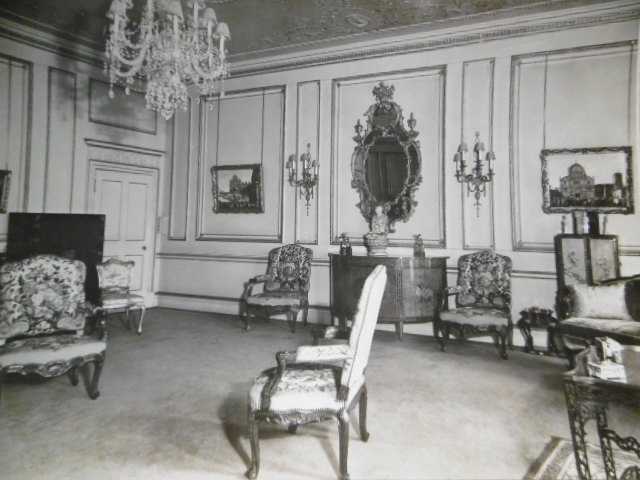
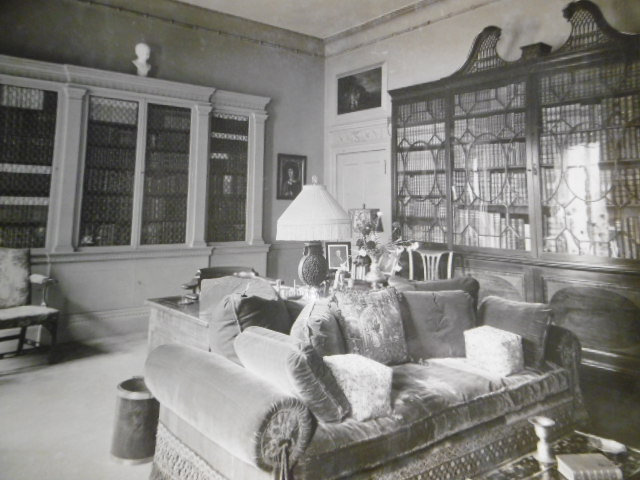
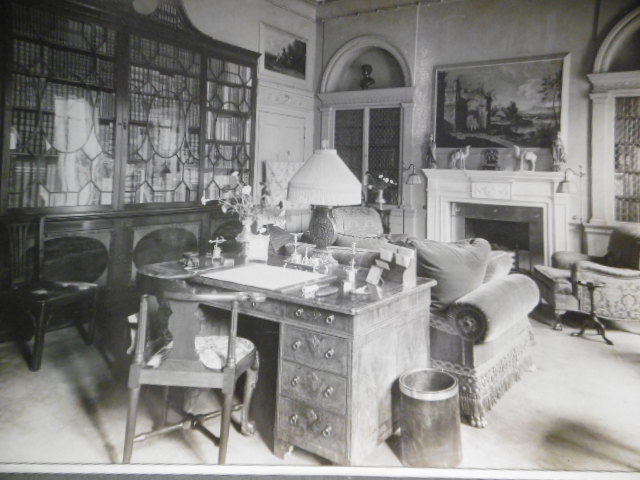
Chris told us about the early beginnings of Arthur Vernay, who opened his antique gallery in New York in c.1906; by 1925 Vernay had a 5 storey building filled with antiques and was one of the most important dealers in New York in the period.  Vernay, was actually born in England, in Weymouth we believe, so the links to the British trade here are important.  Chris also allowed me to copy a set of fabulous B&W photographs of the interiors of Arthur Vernay’s house at 51 Berkeley Square, London, taken during the late 1920s – the images are a potent illustration of the taste for furnishing with antiques in the 1920s. Here’s some of the photographs –

Vernay 1927-29 7

Arthur Vernay, 51 Berkeley Square, London house interior, c.1929. Image courtesy of Chris Jussel.

Vernay 1927-29 6

Arthur Vernay, 51 Berkeley Square, London house interior, c.1929. Image courtesy of Chris Jussel.

Vernay 1927-29 8

Arthur Vernay, 51 Berkeley Square, London house interior, c.1929. Image courtesy of Chris Jussel.

The interview with Chris was fascinating and wide ranging – he told us about the history of his father joining the firm of Arthur Vernay in 1928, and then how the business was continued by his father after Vernay retired in 1940 – before Chris joined the firm in 1972 and renamed the business Vernay & Jussel. Chris consolidated the business in 1978 with the purchase of the then well established dealership J.J. Wolff.  Chris closed the business in 1994 to develop other extensive business interests.

Amongst other antique dealers that Chris recalled were Partridge & Sons, French & co and Stair – some of the most important English furniture dealers in the history of the antique trade.  Chris also told us about the complex practices and processes of the antique trade in the period – including some fascinating anecdotes about dealers such as ‘Charles of London’ (Charles Duveen – see previous blog post for some further info on Charles) and many other characters in the trade. The interview will be a very valuable contribution to the evolving history of the antique trade!

Mark


March 29, 2015

More on early 20th century antique dealers in New York

Following the blog post on ‘searching for Duveen’ in the streets of New York I thought it would be interesting to find the former locations of some of the other antique dealers I encountered in the archives at the Metropolitan Museum of Art in New York – it’s also the opportunity to share some of the fascinating archive documents in the archives (thanks again to Melissa Bowling, one of the archivists at the Met Museum for helping with the research for the Antique Dealer project!) Most of the dealer galleries dating from the early part of the 20th century seem to have been demolished in the continual processes of renewal of the architectural landscape of New York city, (as you’ll see in the comments below) – but I did find one building that still remains (although no longer the premises of an antique dealer).

Some of you may know of the dealership ‘C.Charles’ – he was a brother of the famous Joseph Duveen; he was, apparently, not allowed to use the trading name of ‘Duveen’ (there’s only ONE Duveen I guess), so began trading as ‘C. Charles’ in London in the opening decades of the 20th century, and by the 1930s was trading as ‘Charles of London’ in the USA. Here’s a fascinating invoice from ‘Charles of London’ dated November 9th 1936, for an ‘Old 18th Century Mahogany Desk’, sold to the famous American collector Robert Lehman for $550 – (I couldn’t trace this object in the Met Museum collections….).

charles inv 9.11.36

Invoice ‘Charles of London’ November 9th, 1936. Box 37, Folder 12, Robert Lehman Papers, The Metropolitan Museum of Art Archives. Courtesy of the Metropolitan Museum Archives.

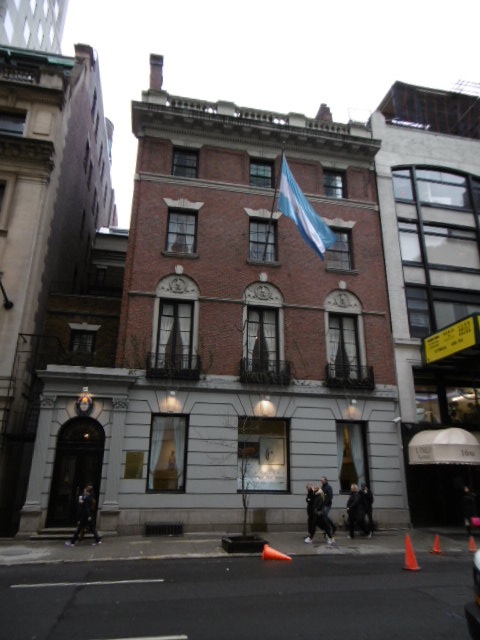
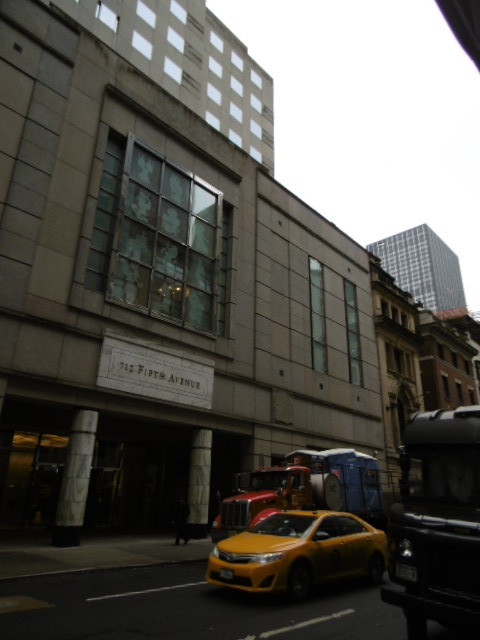
In my walks around New York searching for the locations of former antique dealer galleries I found Charles Duveen’s gallery at 12 West 56th Street – a very elegant (as one might expect) building, designed in a similar vein to Joseph Duveen’s spectacular purpose built gallery on 5th Avenue (see previous blog post).

Charles 12 west 56th  st NY

Charles of London former gallery at 12 West 56th Street New York. Photo MW March 2015.
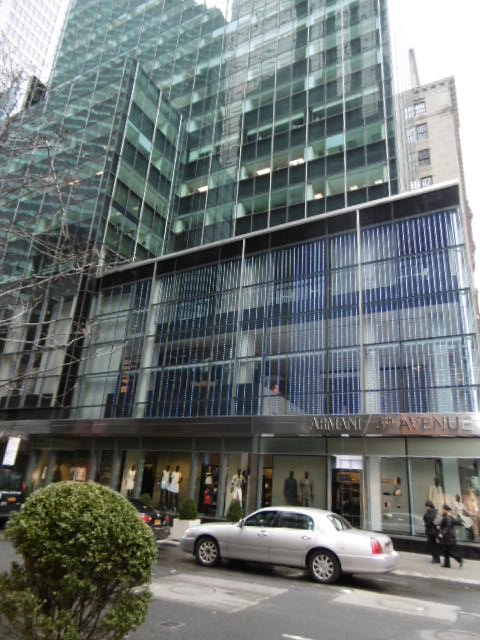
There were a few other letters and invoices from dealers I found in the archives, and I managed to find the former locations of the dealers – as I say, sadly the buildings themselves no longer exist. The location of the galleries of the famous antique dealers French & Co at 6 East 56th Street are now (maybe appropriately!) occupied by Armani –

former French and Co 6 East 56th st NY

Former location of French & Co (1916). Photo MW March 2015.

French and Co were at 6 East 56th Street, New York by 1916, as this invoice (again photographed by kind permission of the Metropolitan Museum Archives) demonstrates –

french invoice 7.9.15 det

Invoice, French & Co., 1916. Box 4, Folder 16, Durr Friedley Records, 1906-1918 (1917-1918) The Metropolitan Museum of Art Archives. Courtesy of the Metropolitan Museum Archives.

(I’ll come back to the contents of the invoice itself in another blog post…).

French & Co had moved to 210 East 57th Street by the 1930s, but again the building they occupied no longer remains…..

former French and co 210 East 57th st NY

Former location of French & Co, 210 East 57th Street, New York in the 1930s. Photo MW March 2015.

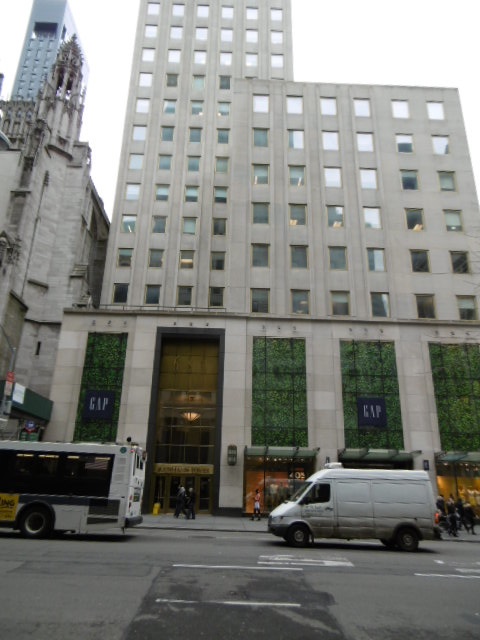
And here’s the former location of the dealer A.S. Drey, ‘Antique Paintings and Works of Art’, who, according to a note in the Metropolitan Museum of Art Archives moved to 680 5th Avenue, New York in 1929. The location is now occupied by shops and offices.

former Drey 680 5th Ave NY

Former location of A.S. Drey, 680 5th Avenue, New York in 1929. Photo MW March 2015.

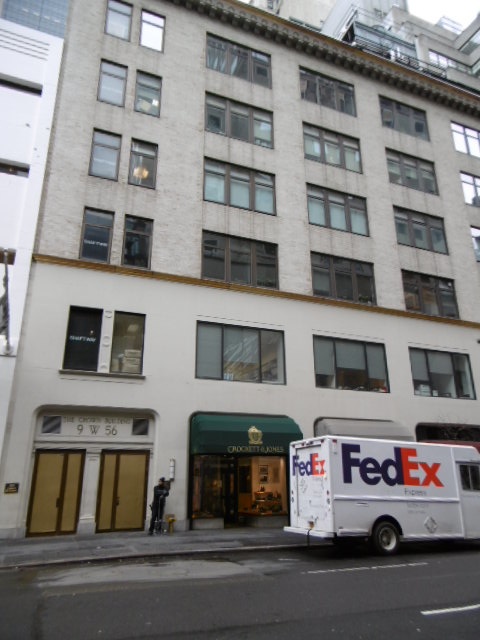
And, just for the record, I also found the former New York locations at 6 West 56th Street for Frank Partridge & Sons (they were at this address from at least the early 1920s until at least the late 1960s – Partridge & Sons, like many of the dealers highlighted in this blog, are no longer trading).

former Partridge shop 6 West 56th st NY

Former location of Frank Partridge & Sons, 6 West 56th Street, New York. Photo MW March 2015.


And the locations of ‘Arnold Seligmann, Rey & Company Incorporated’ trading at 7 West 36th Street, New York in 1916, are now shops and offices….

former Seligmann shop 7 West 36th st NY

Former location of Arnold Seligmann, Rey & Co., 7 West 36th Street, New York. Photo MW March 2015.

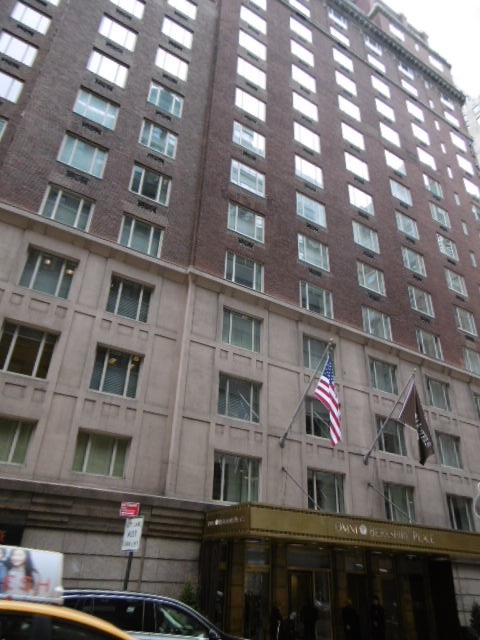
Likewise the former location of the antique dealer and interior decorators ‘White Allom’ (led by Sir Charles Allom) at 19 East 52nd Street, New York in 1914, are now occupied by an hotel.

former White Allom 19 East 52nd st NY

Former location of the galleries of White Allom, 19 East 52nd Street, New York in 1914. Photo MW March 2015.

As you can see, the archives at the Met Museum were a catalyst for a fruitful perambulation around a (very cold) New York….
Mark


March 24, 2015

Searching for Duveen in the USA

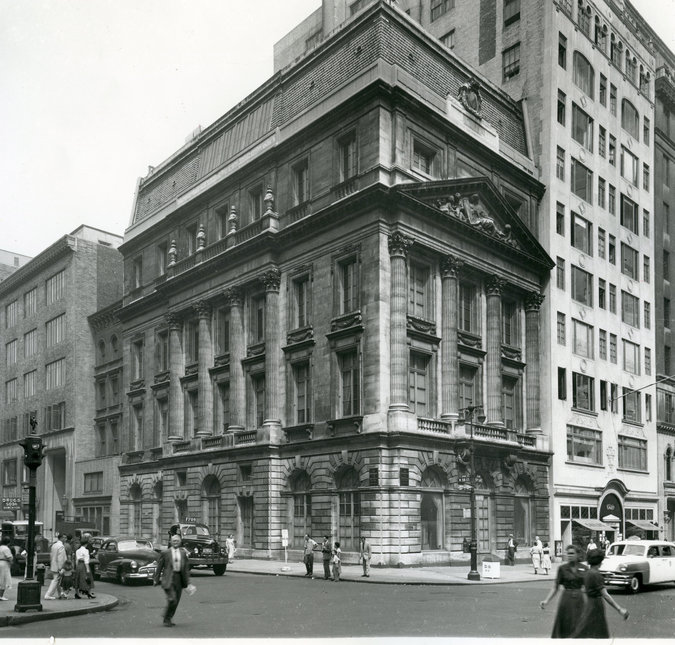
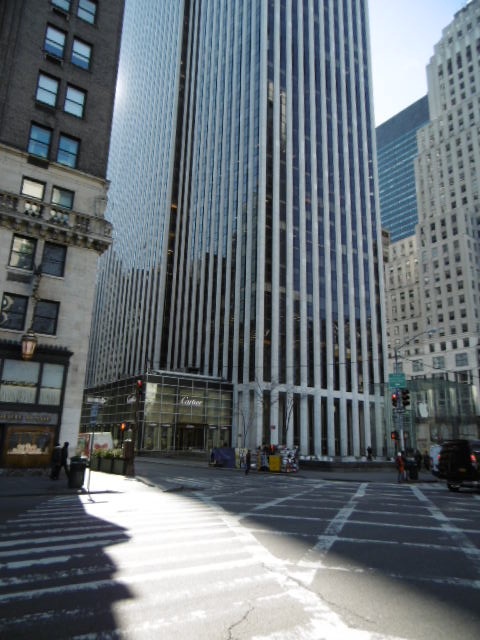
As many of those that have knowledge of and undertake research into the history of the art market will know, the art dealer Joseph Duveen (1869-1939) has been the subject of several books and essays. The archives of Duveen are located (predominantly) at the Getty Research Institute in Los Angeles – they have even been digitized and are available on-line at Duveen Archives and are a fantastic resource.  The ‘House of Duveen’ continues to fascinate researchers and writers – and here is not the place to rehearse those publications – but whilst I was in New York anyway, I thought it would be interesting to find the locations of Duveen Galleries (the Antique Dealer project is not called ‘a Cultural Geography’ for nothing!) Duveen’s original gallery (shown below), was located at 1 East 56th Street, on the junction with 5th Avenue, and was built in c.1913, designed by Horace Trumbauer and Rene Sergent. The gallery was demolished in 1953, and the location remains an open street space, with the stores of Cartier and Apple set back from 5th Avenue, occupying the block.

duveen 1953

Duveen Gallery, 1 East 56th Street, New York, in 1953.


Duveen location of 5th avenue shop

Location of the former Duveen Gallery (photo March 2015)

Duveen chose a very significant location for his New York gallery – right at the southern edge of Central Park, on 5th Avenue, the heart of the power of culture/culture of power in New York at the time that had the gallery constructed.  The art dealer Paul Durand-Ruel (the subject of a major exhibition at the National Gallery in London at present) also located his gallery in this area, at 12 East 57th Street in 1913.

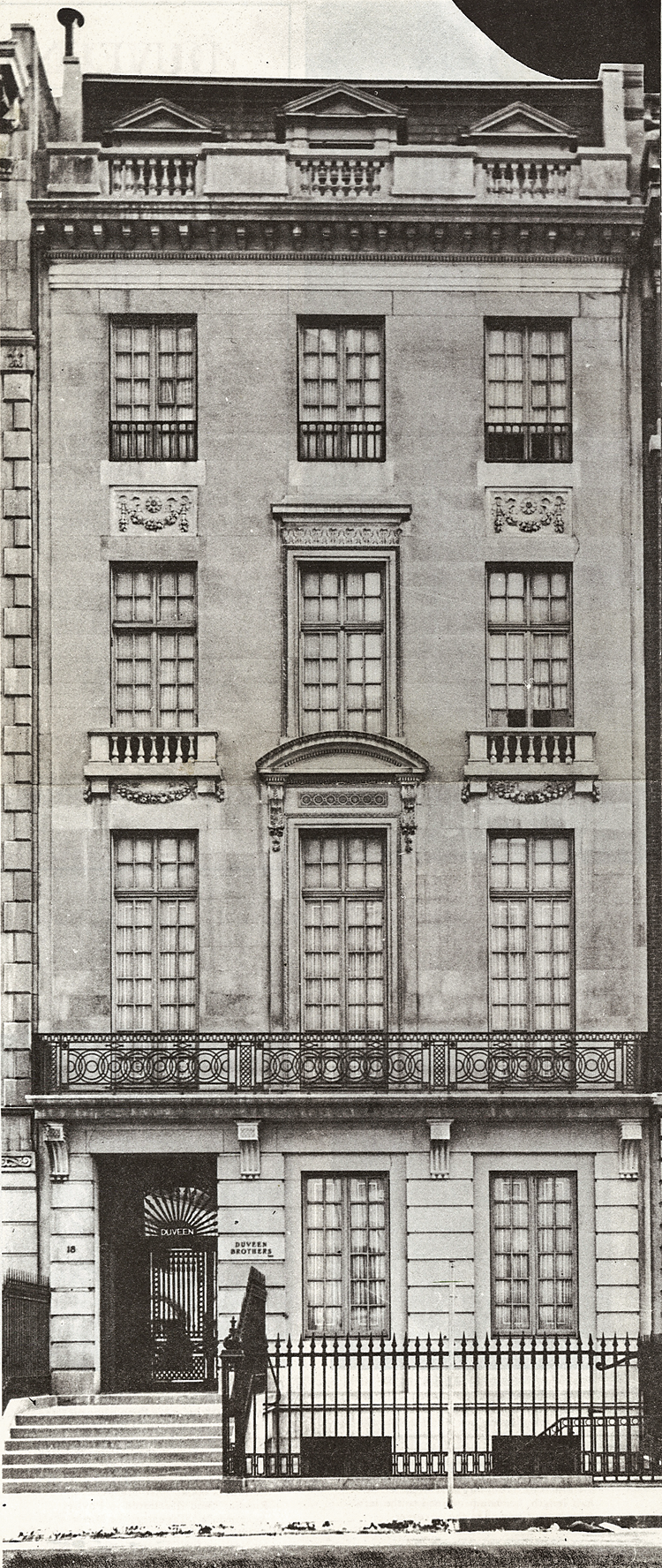
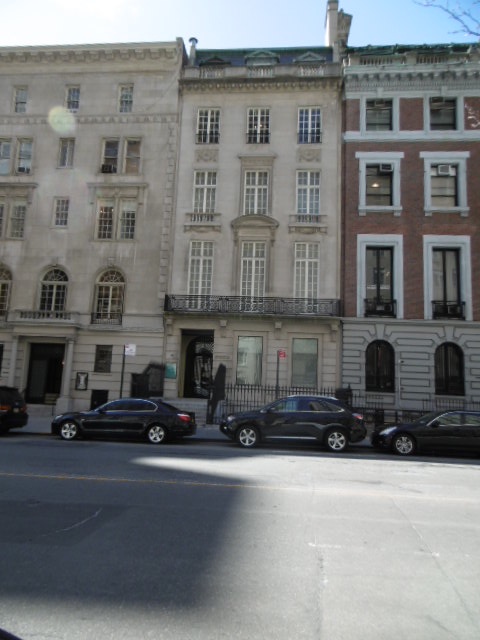
But what is interesting (to me, anyway) is where Duveen relocated the gallery during the following decades….just a 5 minute walk from the location at East 56th Street, to 18 East 79th Street. This new location, was right opposite the Metropolitan Museum.

Duveen 18 east 79 street

Duveen Gallery 18 East 79th Street, 1963,

Duveen 18 East 79th st

Former Duveen Gallery (now Acquauella Gallery). 2015.


Duveen’s new gallery, (shown left, in c.1964), still remains – it was acquired by the art dealers ‘Acquauella Gallery’ in the 1960s – (see image right, taken in March 2015).


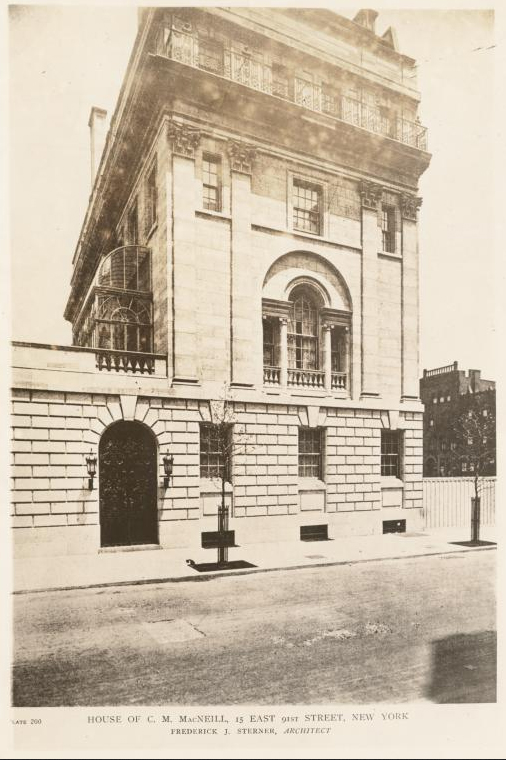
I also did a little more research (isn’t the web a fabulous, and fabulously quick, research resource!) on Duveen’s private house in New York. His house was at 15 East 91st Street, further north up from the Metropolitan Museum. Duveen bought the house in 1923 – it was designed by F.J. Sterner in 1916 – and had it enlarged by no less architect than John Russell Pope, who apparently added a 2 storey art gallery to the building – suggesting that the home/business was a synchronic space? duveen's home in New York 15 east 92st St

Duveen Home 15 East 91st st

Former location of the private house of Joseph Duveen at 15 East 91st Street. (March 2015).

Duveen’s home was demolished in 1940 – and a large block of apartments now occupies the site.

Mark

March 22, 2015

Project Research in the USA

Just arrived in New York, for the first leg of a mammoth research field trip to the USA, as part of the AHRC Antique Dealer project. We’ll be investigating museum archives at the Metropolitan Museum of Art, here in New York, before heading up to Boston Museum of Fine Arts on Saturday 28th March for similar research. From there I head to Philadelphia, then Wilmington, to The Winterthur on 31st March to look at the dealer archives held at The Winterthur (Vernay, Needham and Koopman – all British-related antique dealers of course). Then on Saturday 4th April off to Chicago, to look at the Chicago Institute of Art archives; then on Wednesday 8th April I’m heading across to Minneapolis and the Minneapolis Institute of Art for a few days to investigate their archives. And finally, on this exhausting tour, ending up in Los Angeles at the Getty Research Institute during 11th-18th April to consult the dealer archives there (French & Co and Durlacher…as well as Duveen of course).

The rationale for this extensive research trip to USA is to investigate the relationships between the British Antique trade and the development of public museums in America – the connections are considerable. We’re also planning do undertake some oral history interviews whilst we’re here in USA, and have some very significant figures in the history of the antique trade lined up for interview!

I’ll be posting updates on the blog on the discoveries (research-wise), so do keep an eye on the Blog!
Mark

February 22, 2015

More on Connell & Sons, Glasgow – and BADA

We’ve discovered a bit more about James Connell & Sons (the ‘Art Dealers’) in Glasgow (see earlier blog post on Connell).  Thanks to Mark Dodgson, Secretary General, and Riley Grant, membership Secretary, at The British Antique Dealers’ Association (BADA) who very kindly emailed us a PDF copy of the full catalogue for the ‘Art Treasures Exhibition 1932’. The exhibition, ‘under the auspices of The British Antique Dealers’ Association’, was held at Christie’s auction rooms in King Street, London, October 12th to November 5th, 1932.

There are lots of fascinating things in the catalogue itself, not least the kind of stock that antique dealers sold in the 1930s – but there’s too much to outline here in a short blog post! However, amongst the exhibitors was our friend ‘James Connell & Sons’ – at this date trading at 26 Old Bond Street, London, and also at 75 Vincent Street, Glasgow.

As readers of this Blog will know, we regularly highlight the overlapping trading practices of the ‘Antique Trade’, and drew attention to the fact that James Connell & Sons, were, conventionally at least, classified as ‘Picture Dealers’ – and you’ll know that we disrupted the smoothness of such classificatory parameters in our earlier Blog post on an exhibition catalogue of ‘A Few Examples of Old Furniture of Fine Character and Quality’ that Connell & Sons staged at their Glasgow gallery in c.1915 (see earlier blog post).

In the ‘Art Treasures’ exhibition of 1932 Connell also exhibited objects…but again, not paintings, but ‘antiques’ – including ‘A George II stool c.1745’; See image here – sorry about the poor quality- connell

They also exhibited ‘A George II mahogany chest of drawers, c.1755’, and ‘A Balloon bracket clock, c.1790’ – and despite there being a small section at the exhibition devoted to pictures, Connell & Sons did not contribute to that section of the exhibition. So, it seems, on this evidence at least, that Connell & Sons continued to trade in antique furniture from at least c.1915, up to the 1930s, and whilst all the time classified at ‘art dealers’.

This is not to say of course that other ‘picture dealers’ did not also sell ‘antiques’, nor of course that ‘antique dealers’ did not sell pictures….but maybe it points towards a more complex network of overlapping practices that are not captured by the trading classifications of ‘art dealer’, ‘antique dealer’ and etc…and, as you know, part of the objective of the current research project is to explore these shades of grey (there’s an up to date allusion for you!) –  the umbra, penumbra and antumbra of the antique trade…

Mark


February 15, 2015

More on the changing landscape of the antique trade

More news on the changing landscape of the antique trade (see blog posts on ‘Bullard’ October 2014, and the changing face of Mount Street in London, October 2014, as well as a post on the ‘Changing Landscape’ in November 2013). Yet another well-known, and long established dealership, has withdrawn from the high street. Arthur Brett & Sons, Norwich, who were established in 1860, are finally closing their shop at 42 Giles Street, Norwich.  James Brett, the great-grandson of Jonathan Brett, the founder of the firm, is the third generation of the family business, and is finally giving up the shop – although James is not actually retiring.  He will continue to trade, but not from retail premises – this, as readers of this blog will know, rehearses a pattern of changing practices in the antique trade that began in the opening decade of the 21st century.

brett 2

The Brett family of antique dealers. Copyright Brett family & Sworders Auctioneers, courtesy of Sworders.

This picture (above) of the Brett family is from the forthcoming auction sale of the contents on 42 Giles Street, undertaken by Sworders at their Standsted auction room on Tuesday 17th February 2015 – (and thanks to Diane Baynes for very kindly emailing a PDF of the introductory pages to the auction catalogue!) There is also an interesting report on the forthcoming auction and the history of the Brett family of dealers, with some comments from James Brett, by Anna Brady in the ‘Dealers’ Diary’ pages in the Antique Trade Gazette this week – see ATG.

brett 1

Sworders auction catalogue of the Brett Collection, 17th Feb 2015. Copyright Sworders. Courtesy of Sworders.

Sworders sold the contents of the workshops of Brett & sons in 2010, and this final ‘clearing out’ of the showrooms is symptomatic of the changes to the practices of certain parts of the trade; the ‘End of an Era’?…maybe, but ‘change’ has, as this research project is discovering, always been part of the history of the antique trade.

Mark

February 14, 2015

Mallett & Son Antiques – dealer ephemera from the 1890s and 1990s.

Mallett cats

A collection of Mallett Antiques sales catalogues, 1990s.

Materials related to the antique trade continue to be donated to the project – thank you again dealers! John Smith, a very good friend to the project, posted us a stack of old dealership catalogues – from the leading London antique dealers Mallett & Sons, and dating from the 1990s. The catalogues are, of course, relatively common, and can be picked up at second-hand book shops (and indeed charity shops) anywhere in the country – BUT, what makes the catalogues that John has kindly posted to us unique is that these are marked and annotated staff copies, with prices marked (and whether the objects were sold) of the objects illustrated. These are a fantastic resource on pricing structures (in the 1990s) for a leading dealership – there are also cost prices and suggested sale prices in some of the catalogues (I’m not revealing those here of course….the analysis of that is part of the research into the history of the discrete (and discreet!) practices of the antique trade itself).

Mallett cats 2

Mallett catalogue, 1990s.

The pages in the catalogues are fascinating though – here’s a page from one of the catalogues (dated 1997), and labelled in pen, in the top right-hand corner on the cover as ‘Nicholle’s’) – which illustrates as ‘Queen Anne walnut wing chair, c.1710’, and priced at £80,000 – marked in red ‘SOLD’; and a ‘needlework panel, c.1710, framed in a modern low table’, priced at £19,500.

mallett cats 1

Mallett catalogue, 1990s.

And, another (above) – left page – ‘French, early 19th century cache pots, 1800/1820’, priced at £15,000 (top) and £24,000 (bottom) – the bottom pair are marked ‘SOLD’; and (right page) a ‘pair of 18th century Chinese parrots’ at £7,500. Changing fashions in antiques, even in so short a time ago as the 1990s, may have made some of these prices look quite ambitious, and some look like bargains…..

Mallett of course are still trading (see Mallett Antiques) – they were established in 1865, in the West Country (in Bath, Avon….Mallett’s are now, as many readers will know, owned by Stanley Gibbons Group, and celebrate 150 years this year!…I hope there’s a party?) – anyway, I thought it would be interesting to show some early ephemera associated with Mallett.

Here’s an invoice (below) from ‘Mallett & Son’, dated 1900, to ‘H.F. Swann Esq.’ The invoice describes, amongst other things, a ‘Chest of Chippendale drawers’, sold for ‘£2’, together with ‘a Chippendale table’, (£5). Mallett were at this date trading from 36, 37 & 43 Milsom Street, Bath, and described themselves as ‘Dealers in New and Antique English and Oriental Jewellery, Plate & Objets d’Art’.

Mallett inv 1901

Invoice from Mallett & Son, dated 1900. Copyright Private collection.

Mallett invoices

Invoices from Mallett & Son, c.1899-1920. Copyright Private collection.

The invoice is one a small cache of invoices (see above) from Mallett dating from c.1899 to c.1920 that are currently part of a private collection – but will be donated to the antique dealer project in due course. This small collection also gives a fascinating insight into the early history of one of the world’s most important ‘Antique Dealers’.

Mark

Home Subjects

a working group dedicated to the display of art in the private interior, c. 1715-1914

The Period Room: Museum, Material, Experience

An International Conference hosted by The Bowes Museum and The University of Leeds

H. Blairman & Sons Ltd

A research project investigating the history of the antiques trade in Britain in the 19th & 20th centuries

Museum Studies Now?

'Museum Studies Now?' is an event which aims to discuss and debate museum and heritage studies education provision.

The Burlington Magazine Index Blog

art writing * art works * art market

East India Company at Home, 1757-1857

A research project investigating the history of the antiques trade in Britain in the 19th & 20th centuries