October 19, 2014

The generosity of scholars!

I had the great pleasure of meeting Heidi Egginton this week whilst I was in London – Heidi is an emerging scholar, just completing a PhD at the University of Cambridge under the supervision of Professor Peter Mandler. Heidi’s PhD looks at the craze for collecting old furniture, bric-à-brac, and curiosities during the late-nineteenth and early-twentieth centuries. She is especially interested in the ways in which a taste for historic furnishings, and knowledge of the decorative arts and craftsmanship, circulated among a popular audience after the 1900s. Of course, there are many intersections that resonate with the Antique Dealer Project, and it was fascinating to hear how her research is progressing – and,  with such a wonderfully generous gesture, Heidi sent us some information on some early 20th century dealers she has been discovering – including sending us a massive spreadsheet with over 200 dealer names and locations from the Shrewsbury trade directories (c.1900-1940)….amazingly generous!…Thank you Heidi!

Heidi has also very kindly agreed to post some blog entries for the project, based on some research she has undertaken – so what this space for Heidi’s blog posts – we have quite a community of interest developing around the Antique Dealer project!

Mark


October 12, 2014

Alfred Bullard Inc.,- further reflections on changing practices

The recent shifts in the taste for ‘antique furniture’ continue to impact on the changing landscape, and practices, of the trade in antique furniture – of a particular type anyway….the ‘new antiques’ such as Danish Designer furniture continues to thrive…illustrative of the shift to the contemporary that is the driver for the market at present.  The announcement of the auction sale by Stair, Auctioneers and Appraisers in the USA of the ‘Collection and Inventory’ of Alfred Bullard Inc., in their auction on 25th & 26th October 2014, draws further attention to the significance of these shifts in taste.

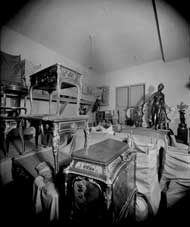
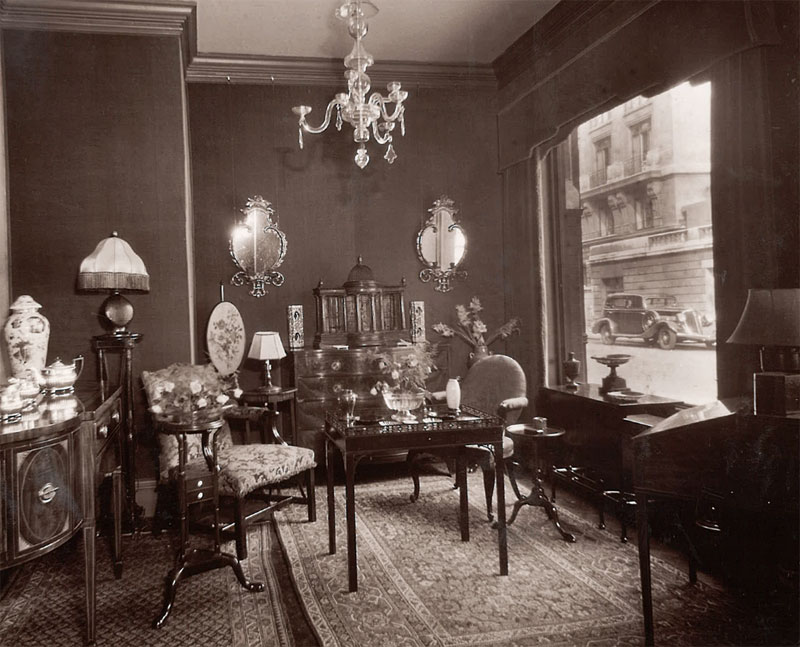
Bullard-London-Shop-Interior-1

Alfred Bullard shop interior, c.1930.

Bullard are just one of a number of antique furniture dealers that have either changed their patterns of trading, downsized, or ceased trading altogether in the last 10 years or so – and, as you may know, part of the catalyst for the current investigation of the history of the antique trade is to track, assess and critically analysis this shift.

Alfred Bullard may be an American firm of antique dealers (and therefore seemingly outside the remit of the present research project), but they were originally established in Britain in the 1920s (and therefore part of the ‘cultural geography of the British trade). They have been trading in 18th and early 19th century English Furniture since the 1950s in Philadelphia, USA. According to our research Bullard was established in Newport Pagnell, Wales by the early 1920s, before moving to premises off Park Lane in London by 1925. They already had a branch in Philadelphia USA by 1950, and consolidated both the UK and USA operations in Philadelphia by 1965.  The firm is a testament to the importance of the transatlantic antiques trade throughout the 20th century and were one of a number of dealers operating at the very top of the trade in antiques in the period.

We should say that whilst the shop of Bullard Inc., may disappear from the high street, the firm itself will continue through Bill Bertolet, who will now continue to act as ‘advisor’ to clients – but the shift in practice is also a further testament to the changing panorama of the antique trade in the late 20th and early 21st century.

Mark

October 5, 2014

The London trade in microcosm-the changing face of Mount Street

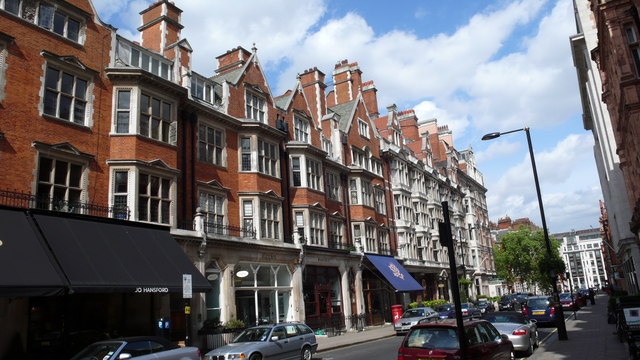
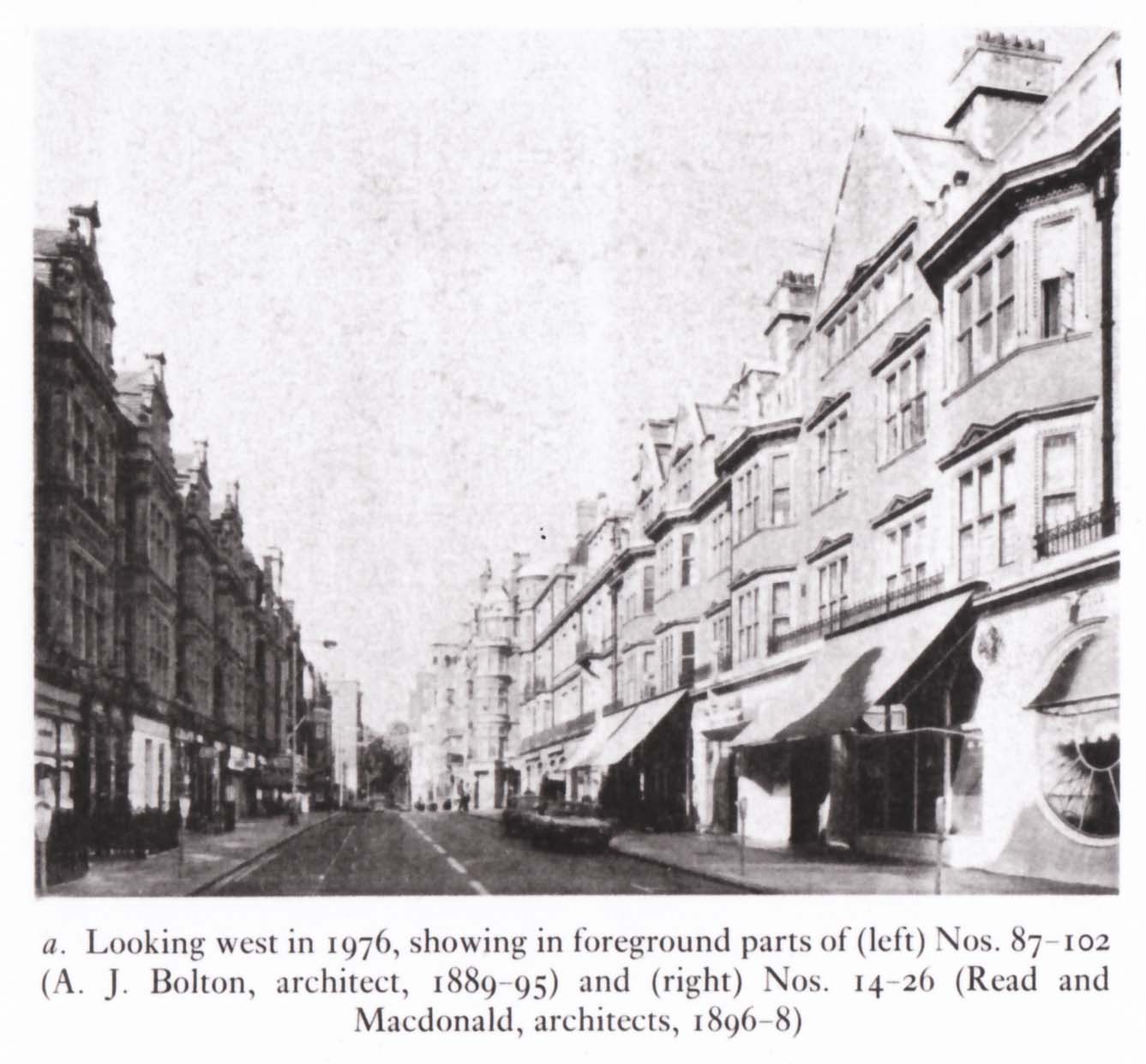
Mount Street in more recent times. The architecture remains but the focus of the street has changed forever.

Mount Street in more recent times. The architecture remains but the focus of the street has changed forever.

You'll have to take my word for it as this is the best image I can find, but most of the shops here, pictured in 1976, are antique dealers.

You’ll have to take my word for it as this is the best image I can find, but most of the shops here, pictured in 1976, are antique dealers.

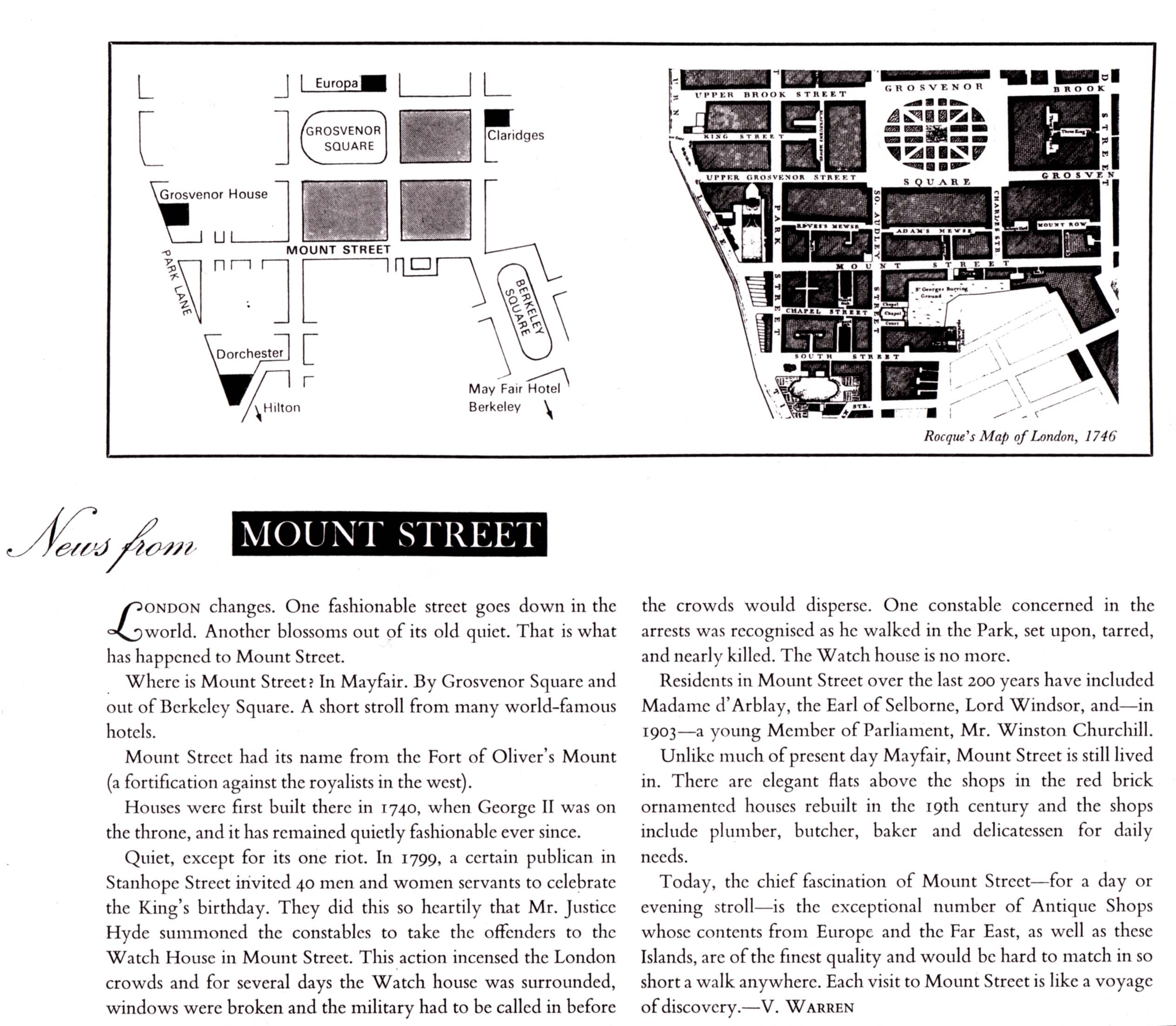
Located off of Berkeley Square and between Grosvenor Square and Piccadilly, Mount Street is an idyllic location that has long been described as the heart of what estate agent Peter Wetherell still describes as the Mayfair village. Looking at the immaculate rows of late Victorian shop fronts, now largely filled with fashion retailers, clothiers and the like it is easy to forget that this one street alone used to provide the addresses of an extraordinarily high number of dealers at the Grosvenor House Fair.

Nowadays the exceptional general dealer Kenneth Neame and the Asian art specialist A J Speelman remain the only dealers with ground floor shop fronts in the street (though others do operate by appointment from 1st floor premises) but in the past the street was visited by every serious wealthy collector as a matter of course. As the project continues and more data is gathered then a more complete picture of the sheer numbers of dealers in the street will emerge but my own list comprises the following:

Barling of Mount Street (Oriental art)

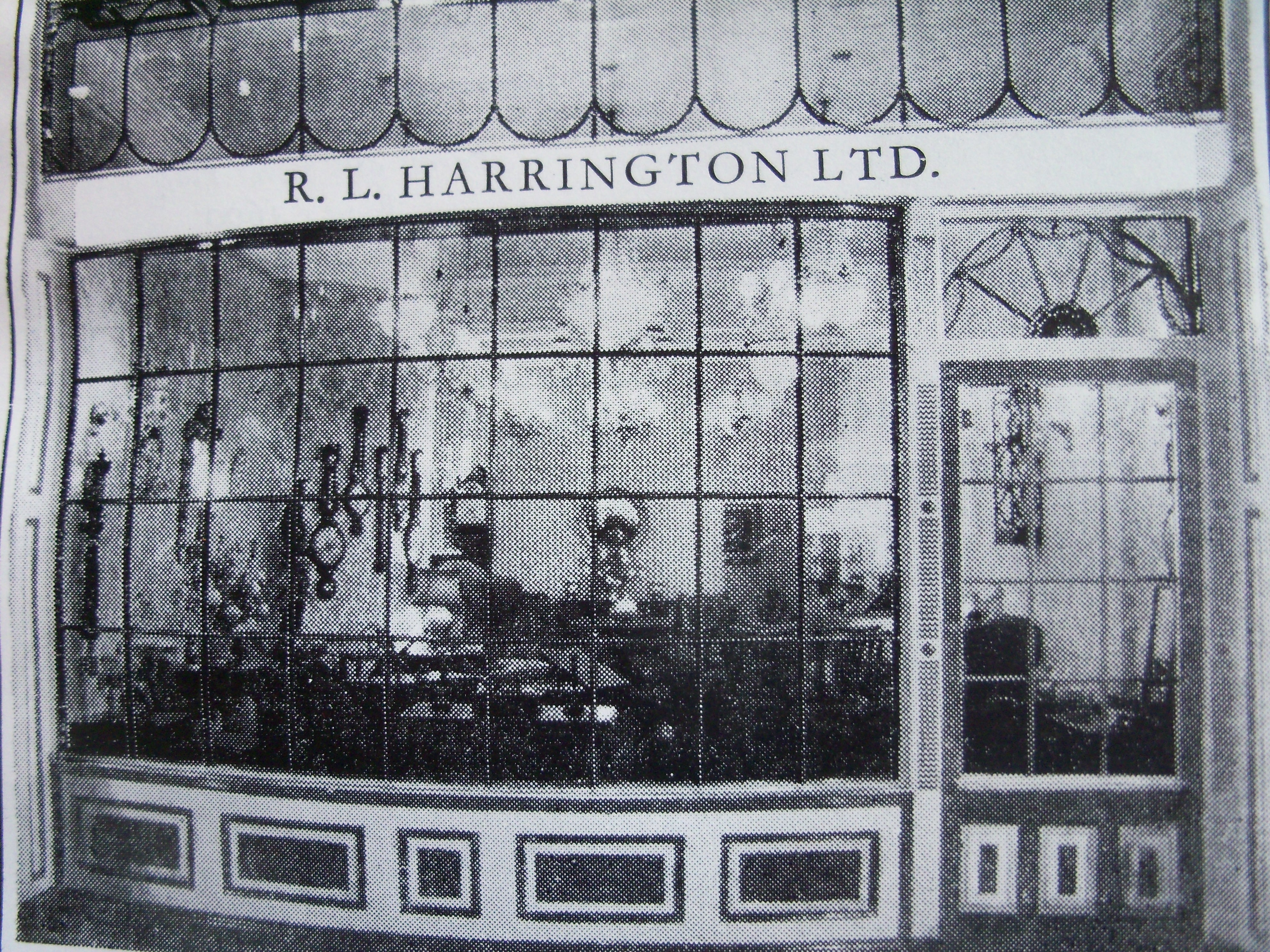
R L Harrington (English furniture and related objects)

The dealer R L Harrington at 120-121 Mount Street in 1961

The dealer R L Harrington at 120-121 Mount Street in 1961

John Keil (English furniture dealer with premises in Knightsbridge and, in times past, Bristol and Bath)

Stanley J Pratt (antique fireplaces and accessories)

Trevor (English furniture)

Stair and Co (one of the pre-eminent English furniture dealers-see Mark’s earlier post)

Pelham Galleries (English and French furniture plus Chinoiserie decoration)

H Blairman and Sons (Regency and later furniture and decorative arts)

John Sparks (Oriental art)

Mansour Heskia (rugs and carpets)

Alistair Sampson (early English pottery and country furniture)

Mount Street Galleries (still exists but different scope-the emphasis has switched from furniture to contemporary art)

Patrick Jefferson (English furniture and associated objects)

Walter Waddingham (English furniture)

Gerard Hawthorn (Oriental art)

Marks Antiques(Antique silver and Faberge)

Bruford (jewellery and silver)

Quite a selection I’m sure you’ll agree.

Hopefully the images give something of a flavour of this remarkable street but if you were lucky enough to see the area in its antiques heyday and have images to share then please get in touch.

Nowadays the largest concentrations of dealers in London are in Kensington Church Street, Portobello Road and the Fulham Road. With South Audley Street (at the end of Mount Street and another traditional heartland of the trade) also beginning to attract  fashion brands the Mayfair trade will never quite be the same again. My advice would be to visit whilst you still can, even if just to window shop. There are still some remarkable pieces to see here and who knows-you may be a part of the trade’s fight back against the multinational giants.

Chris Coles,

Project volunteer.

The last paragraph says it all. An undated entry for the street kept in the Westminster Archive.

The last paragraph says it all. An undated entry for the street kept in the Westminster Archive.

September 28, 2014

Oral History Interview – Jerome Phillips

We interviewed Jerome Phillips earlier this month – of the well-known dealers ‘Phillips of Hitchin’, established in the 1880s, and still trading from the same address at the Manor House in Hitchin.  Jerome, photographed below is sitting in the main entrance hall at the Manor House.  P1000018

The firm of Phillips of Hitchin was begun by Jerome’s grandfather, F.W. Phillips in c.1884, and Jerome told us about the history of the business, and his experiences since he joined the firm in the early 1960s.  The interview with Jerome will form part of the oral history archive of the antique trade and will be available via the project websites later this year, so keep your eye on the developments as the project progresses.

Mark

August 21, 2014

The Architecture of the Trade – antique, second-hand, and reproduction furniture

A longer than usual Blog entry – but the issues are complex! – I recently visited Tyne & Wear archives (at the Discovery Museum in Newcastle) to have a look at the archive of an antique dealer named Robertson, trading in Newcastle in the 1960s and 1970s. Unfortunately we couldn’t find the archive! I did have a reference (1556) from the National Archives site (honest!) and it suggested that the archive was in Newcastle, but there’s no record of it at T&W archives – more digging is needed.

Anyway, I didn’t waste the day, I had a look at the archive of George Hobbs Limited, which dates from c.1921 up to 1967. Investigating the Hobbs archive has directed attention again to key issues we are dealing with in the research for the project – we’ve had endless discussions about this! And that is who/what we include in our ‘cultural geography’ of the antique trade. The main point here is that any history of the antique trade needs to address both the mutability of the term ‘antique’ (more on that in a future blog entry), and the hybridity of antique trade itself. Historically the ‘Antique Trade’ has involved a complex overlapping of practices and initiatives. Hobbs is a good case in point.

George Hobbs is not listed under ‘antique dealers’ in the trade directories in the period 1920s-1950s, but is firmly categorised under ‘Furniture Dealers’  or ‘Furniture Brokers’- in the period in question this would normally indicate that Hobbs was a ‘second-hand’ furniture dealer.  You’ll already see a key point here…when does ‘second-hand’ furniture become ‘antique’ – the notion is too complex to deal with here in a short blog entry, but it’s worth holding that thought for now.

What is interesting about the Hobbs archive though is how it illustrates how ‘trade directory’ classifications are themselves a meta-classificatory form, one that smooths out, elides and indeed often obscures the complex nature of antique trade.  The stock books of Hobbs clearly demonstrate this (to me anyway!) –  the early stock books of the firm (dating from 1930s) clearly show that the majority of the furniture that they sold was described as ‘antique’ – here’s a few examples:

‘Old Chippendale armchair’ which was listed as valued at £1.0.0. [this is pre-decimal currency] in January 1939. Again, there’s not space here to deal with the semantic field but it’s worth noting the descriptive term ‘Old’….

‘Antique Mah[ogany] Bow Chest’, which was bought for £7.0.0. [this is pre-decimal currency) in August 1944, and sold for £29.10.0 [they did quite well out of this transaction!] in September 1945.

‘Antique Mahogany DL [drop leaf] table’ which was bought at the auction house of Anderson & Garland in September 1944 for £3.5.0. and following some restoration costing £3.19.0, was sold in January 1945 for £22.0.0.

There are many more examples in the stock books in the 1930s and mid 1940s of the sales of ‘antique furniture’, alongside quite obvious ‘second-hand’ and household furniture – things such as ‘4ft Hair Mattress’ bought for £5.10.0. in May 1945, and sold later that same month for £8.5.0. What is striking is that by the early 1950s the stock books clearly indicate that the selling of ‘antique’ furniture by Hobbs was much less common and second-hand furniture seems to have become much more the main trading activity of the firm. There may, of course, be some very specific reasons for the gradual change in the trading activities, but the point is that all the while that Hobbs was selling ‘antiques’ the firm remained in the trade directories at least, as ‘furniture brokers’.

Searching for ‘Hobbs’ in the trade directories in the archives at the Discovery Museum also illustrates a, by now, familiar pattern of practices that form, morph into, the ‘antique trade’ (if you’ve read my Dictionary of 19th Century Antique & Curiosity Dealers (2009/2011) you’ll read about this formation – (sorry for the plug there…I still have some copies btw if you’re interested!…).

Anyway, the firm of ‘George Hobbs Limited’ was incorporated in 1925 (as ‘Cabinet Makers and House Furnishers’…yet another practice!) – they appear to begin with ‘James Hobbs’ listed as ‘Chair Manufacturer’ at 14 Pilgrim Street, Newcastle, in trade directories in 1874; James Hobbs is then listed as ‘Cabinetmaker’ in 1886, before a listing as ‘Furniture Broker’ in 1889, when his son, George Hobbs, was also listed at 88 Pilgrim Street, as ‘Furniture Dealer’.  George Hobbs continues to be listed in the trade directories in the early 1900s to the 1920s as ‘Furniture Broker’.

This ‘problem’ in terms of classification is helpful though, as it directs attention to the complex nature of the history of the antique trade. Indeed, here’s another example to reinforce (and complicate) the point – it’s also an opportunity to show some photographs of another archive that I recently acquired, and that will be a useful resource for the research project of course!

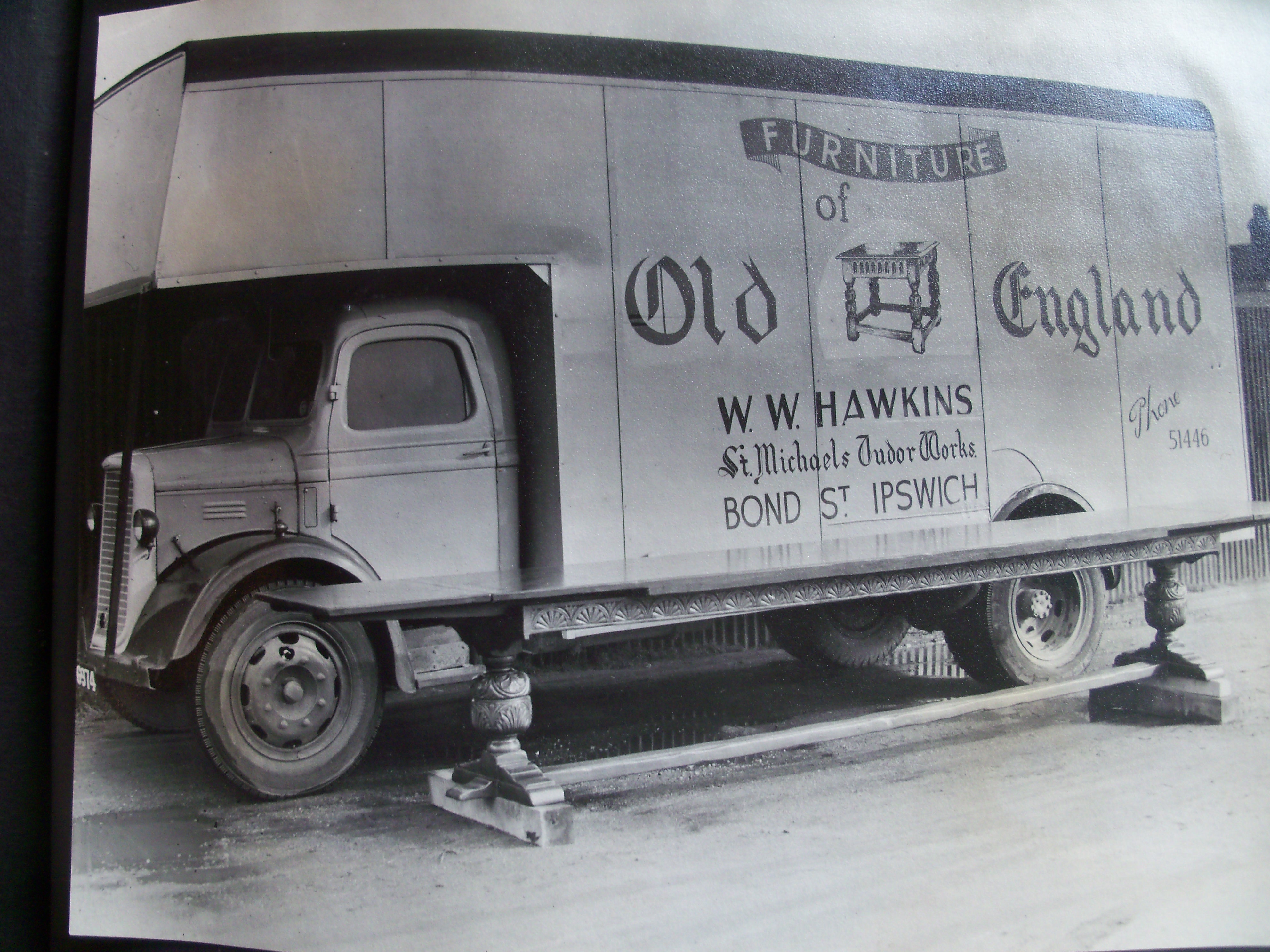
The archive is from the firm of W.W. Hawkins, St. Michaels Tudor Works, Bond Street, Ipswich, Suffolk, and is composed of a number of albums of photographs and working drawings of furniture designs, and dates from c.1917 to to c.1960. Hawkins supplied ‘handmade, hand-carved’ reproduction furniture – the ‘Furniture of Old England’ as the livery on their vans indicated:

100_3732

W.W. Hawkins delivery van, c.1950.

100_3733

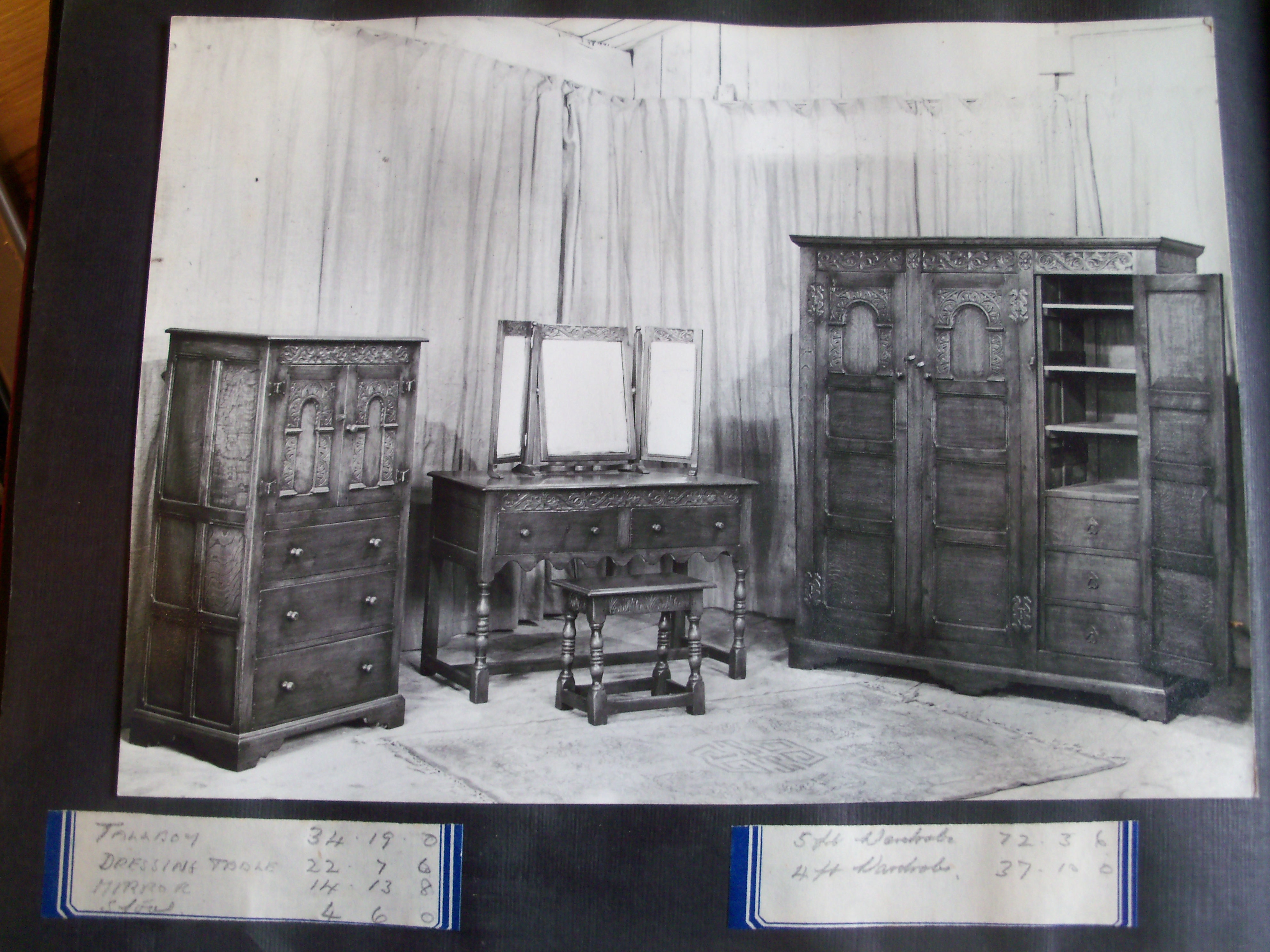
Reproduction furniture made by W.W. Hawkins c.1950.

And here’s an example of the kind of oak furniture (sometimes described as ‘Jacobethan’) – for those that are interested, the descriptions, left to right, are: ‘Tallboy, £34.19.0; Dressing Table £22.7.0.; Mirror £14.13.0. Stool £4.6.0.; 5ft Wardrobe £72.3.6.; 4ft Wardrobe £37.10.0.’

100_3730

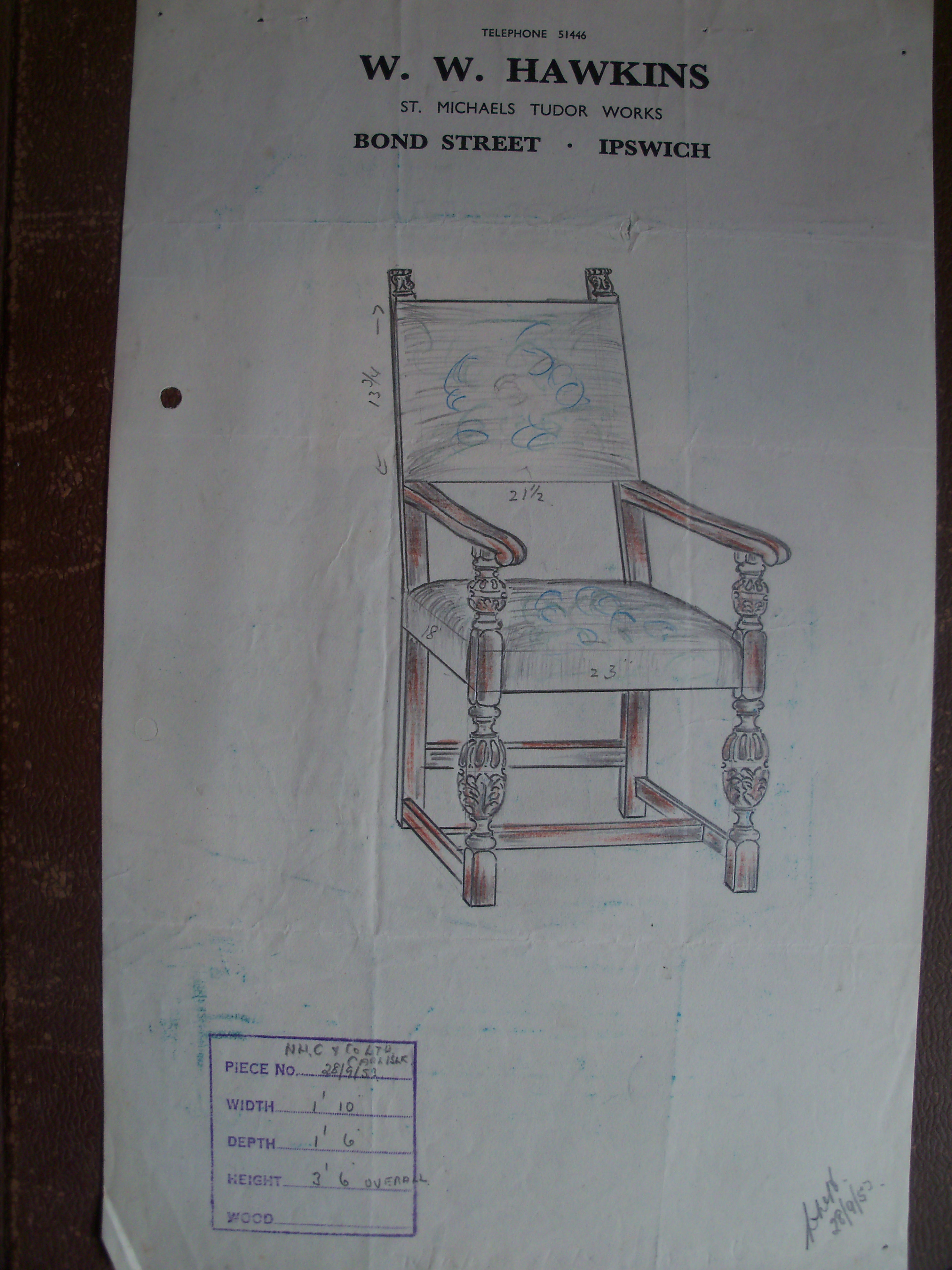
Design for a chair: W.W. Hawkins – design dated 1953.

Here’s also a design for a late 17th century style armchair. The archive is a fascinating insight into the fashion for reproduction antique furniture in the period.

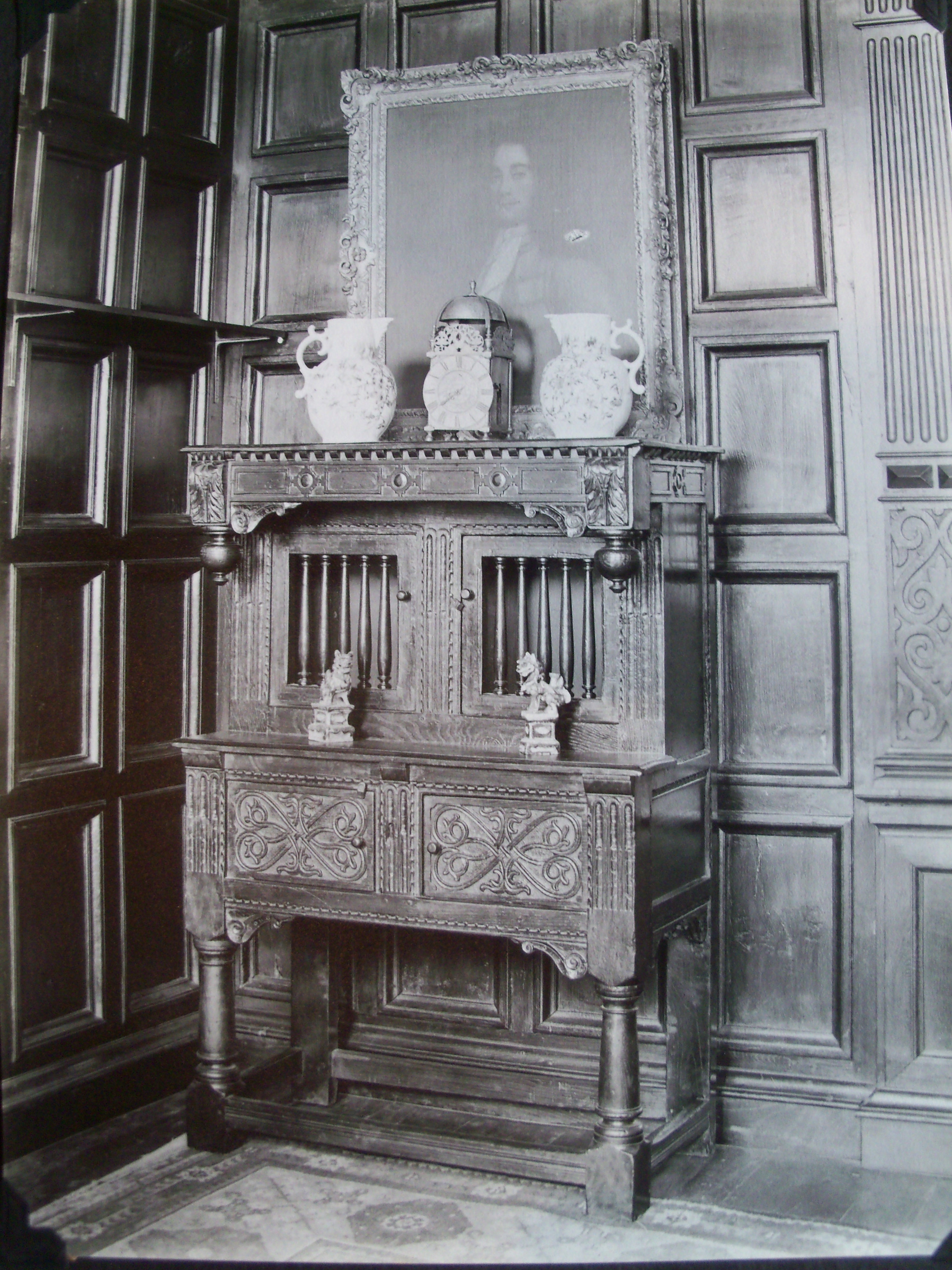
I can’t categorically say that Hawkins sold ‘antique’ furniture as well as manufacturing reproduction antique furniture, but one of the photograph albums certainly appears to have illustrations of genuine antique furniture – they may have been models for the craftsworkers at Hawkins of course – this example (below) is one of a number of pieces in an album dated c.1917-1927 that appear to be genuine examples.

100_3734


But even if Hawkins did not actually retail antique furniture there are plenty of examples of ‘antique furniture manufacturer’s’ also selling genuine antique furniture alongside the practice of furniture making, and, as I’ve suggested above, this was a practice through which the ‘antique trade’ as we now understand it, emerged. There are many other hybrid forms of course, ‘Interior Decorators’ is just one that automatically comes to mind, and part of the objectives of the present research project is to ‘unpack’ (as we say in academia!) these complex practices….

Mark

August 16, 2014

Frank Partridge & Sons – donation of materials

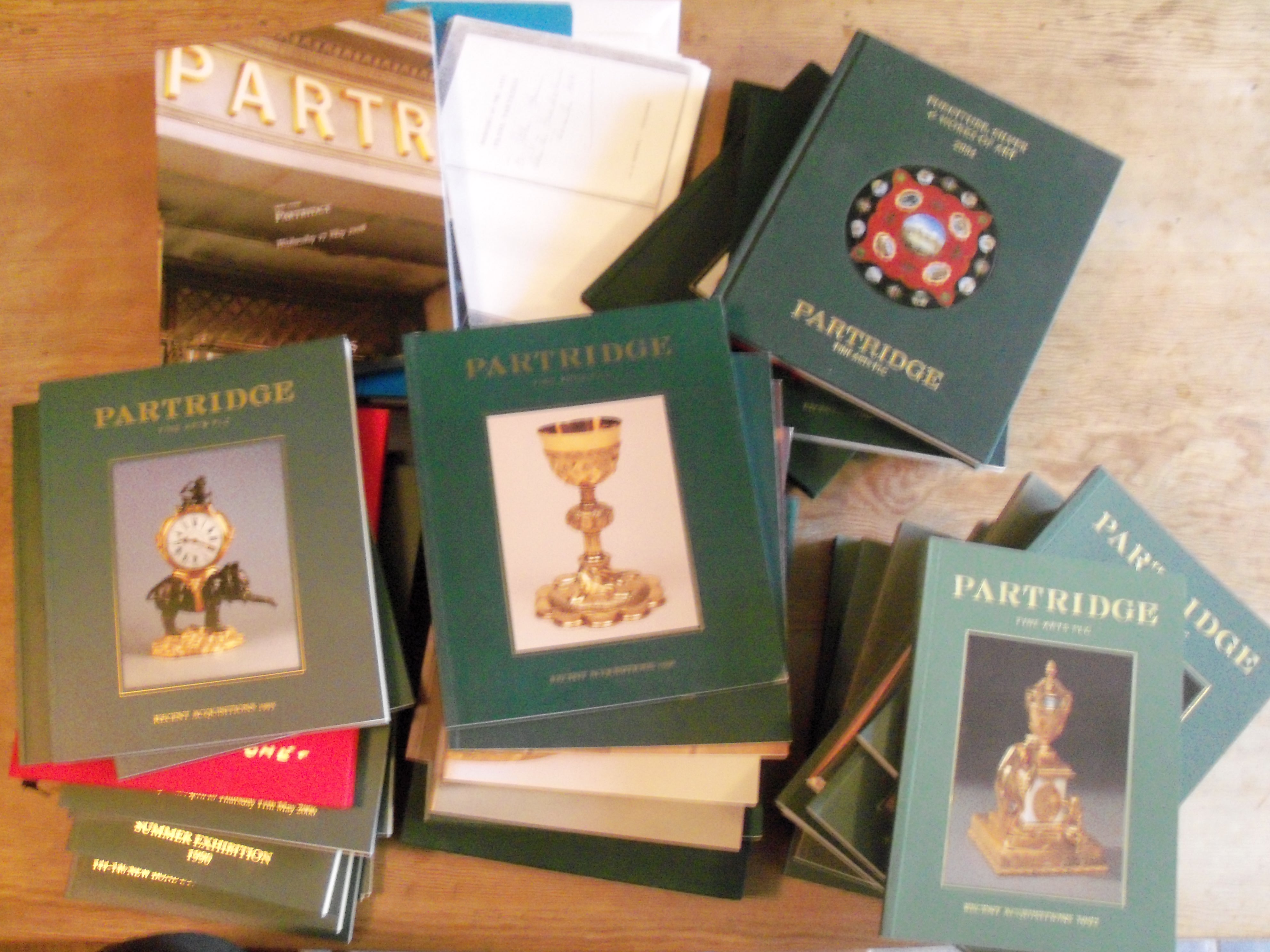
The antique trade continues to be exceptionally generous to the research project – Anthony Smith, formerly with the well-known dealers Frank Partridge & Sons (Partridge Fine Arts) serving as accountant, company secretary and finance director for almost 28 years, very kindly donated a whole stack of Partridge catalogues (1974-2007) to the project – as well as other ephemera, including a photocopy of Memoirs of the late Frank Partridge (published in 1961) and a copy of the prospectus issued at the time of the company’s flotation on the Stock Market in 1989.

100_3726


These materials are a fantastic resource for the project, so we owe a big thank you to Anthony!

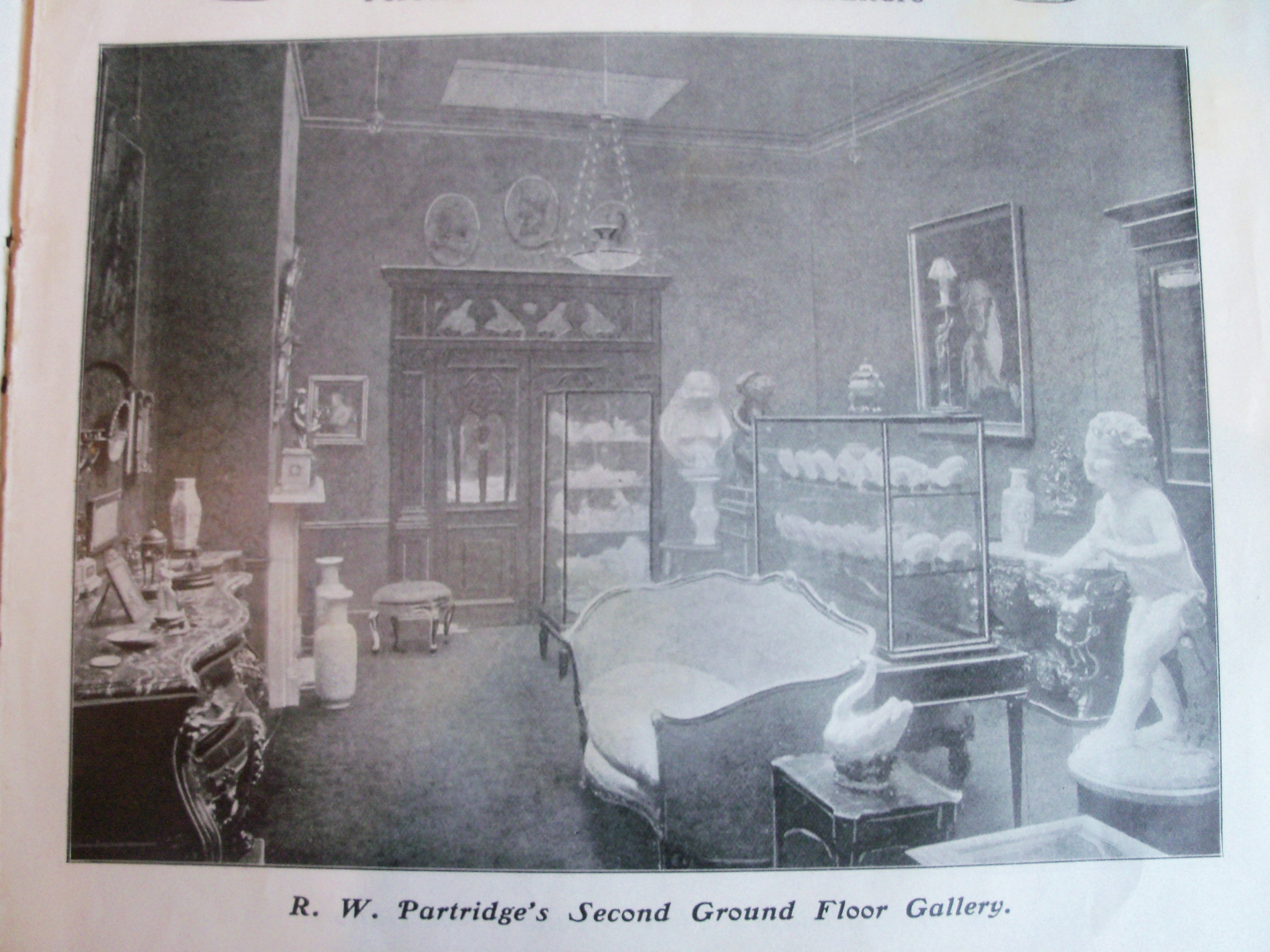
One of the interesting aspects that have emerged in the initial investigation of the catalogues is the presentation of the Partridge business in the early and late 20th century. This follows on from some of the earlier posts on the Antique Dealer project blog (see entries on images of dealer shops) – here, again, is the photograph of the shop of ‘R.W. Partridge’ in 1914 – R.W. Partridge, was Robert Partridge, the elder brother of Frank Partridge, who established his antique business in the 1890s, prior to Frank opening his own shop in King Street, St James’s, in London in 1900.


Partridge second floor gallery

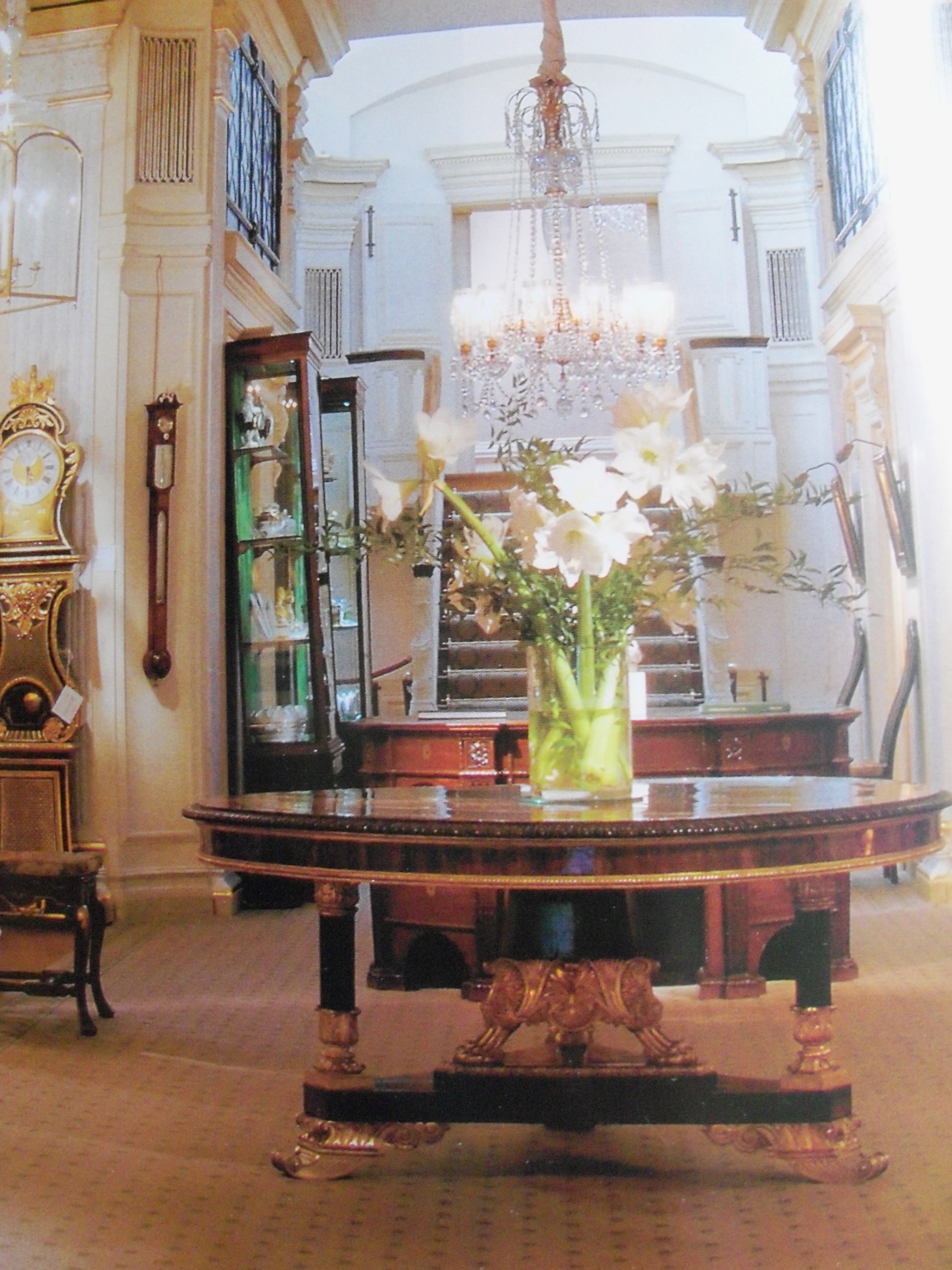
Robert’s shop, in the early 20th century, one can see, is arranged in much the same way as that of the more recent displays at Frank Partridge – here is an image of the antique business of Frank Partridge & Sons (then called Partridge Fine Arts) in c.2007 – perhaps Robert’s is a little more packed with material, but the general arrangement is similar at least…


100_3729100_3728

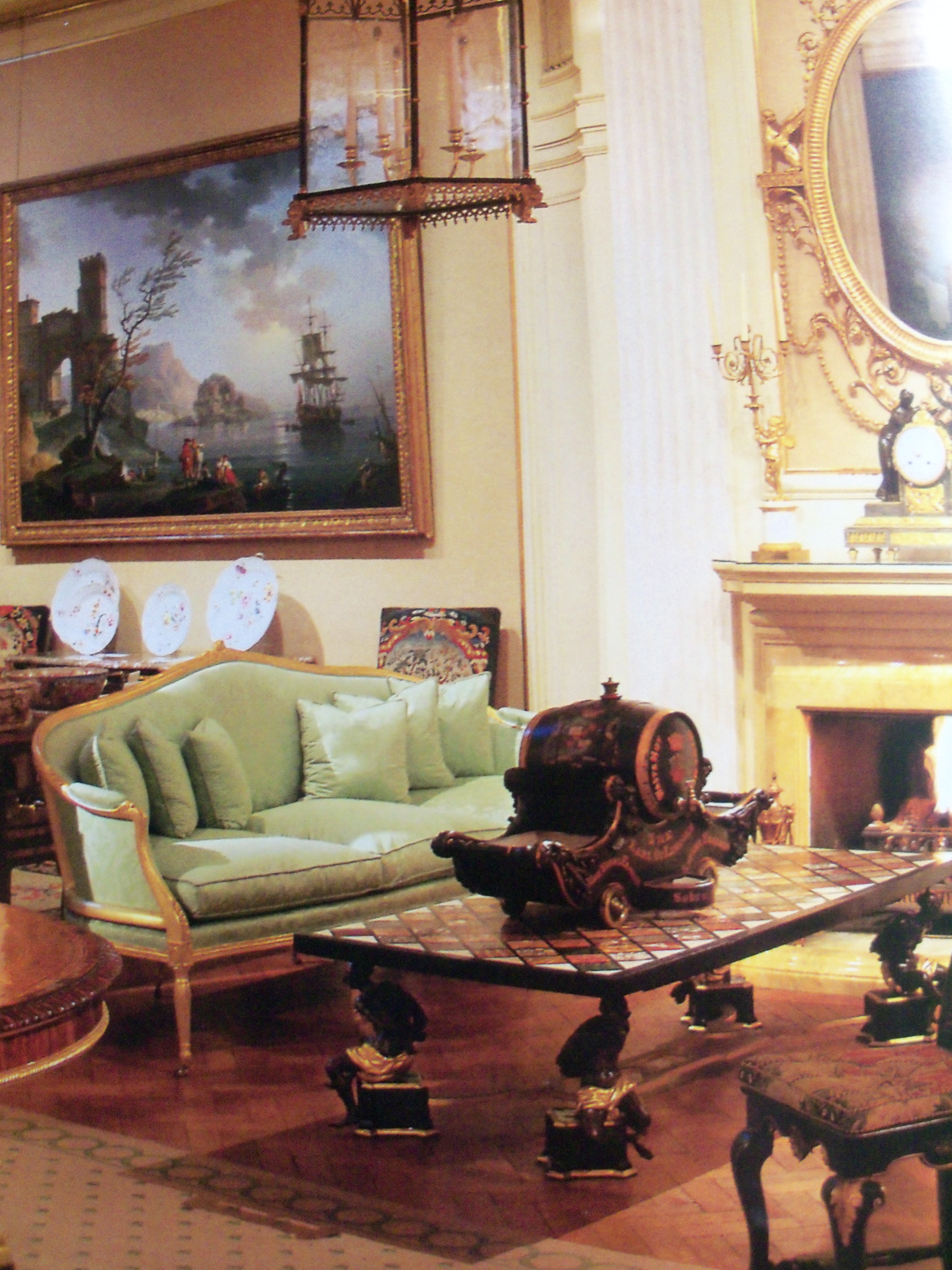
And below that image is a further photograph of Partridge’s galleries in the same brochure of c.2007, this time with a showroom arranged as a room setting. This is a subtle marketing technique, and one wonders when this kind of display was adopted by the antique trade?….perhaps it crossed from house furnishers? Perhaps from museum displays? But either way, there’s a distinctive marketing narrative being set up here….a subtle projected imagining.

There’s much more to say about these arrangements of objects….objects on the syntagmatic plain…the arrangement of objects in real space….they tell a story, and the project will be investigating these dynamics over the next few years…

Mark

August 13, 2014

Oral History Interviews – Bill Beaton

We completed another of our oral history interviews on Monday 11th August – up at Kinross in Scotland, with William (Bill) Beaton.  Bill is in his 80s and retired from antique dealing about 25 years ago!  He started his antique dealing activities with his father, Walter Beaton, in about 1946 just after WWII, at his father’s shop at 37 Albert Square, Dundee.  Walter had opened his shop in c.1930, following 10 years working for an antique dealer in Dundee named Norries, and Bill continued the business in Dundee until his father retired in 1963, when Bill took over and subsequently moved the shop to Perth in 1970. Both Walter and Bill were members of BADA – Bill acted as Vice President at one stage.

Bill Beaton (right) with Henry Fotheringham, c.1965. Copyright Perthshire Advertiser.

Bill Beaton (right) with Henry Fothringham, c.1965. Copyright Perthshire Advertiser. Courtesy of Bill Beaton.

Here is Bill (on the right), in c.1965, with his friend and colleague Henry Fothringham (a member of the Angus family, who also traded as an antique dealer, under the trading name of Grantully Castle Antiques), at the ‘Scottish Antiques Fair’.  Incidentally Bill was one of the founders of the Scottish Antiques fair, which was held in Edinburgh between 1964 and the mid 1970s. Here’s Bill’s stand at the fair, in c.1965.

Courtesy of Bill Beaton.

Courtesy of Bill Beaton.

Bill and I talked for a few hours and he recalled his first country house auction sale, (Cusworth Hall, near Doncaster, in the 1950s – where his father had put him under the watchful guidance of the well-known dealer Walter Waddingham of Harrogate) and memories of fellow dealers, and objects that passed through his hands – including a rare painting by the 17th century artist Melchoir de Hondecoeter (bought from a furniture dealer in Harrogate in the 1960s) and a ‘Chippendale’ double partners desk from a well-known (Royal) Scottish country house!

Amongst the many interesting things that Bill’s father sold was an 18th century  French clock by Jacques Droiz Leschot, which was also noticed by the writer of the Antique Yearbook for 1950 – who writes;

‘We found in the main Albert Square [in Dundee], number 37, the shop of Mr. W.S. Beaton [Bill’s father], where the 18th century mahogany furniture, the fine silver, the glass and Chinese porcelain were polished and in splendid condition, where a collection of snuff boxes was up to Bond Street standard, and where a gold and enamelled singing-bird clock by Jacques Droiz Leschot was one of the most precious works of art we had seen for many a month. You must visit Dundee and Beaton.’ (Antiques Yearbook, 1950, p.557).

Bill still remembered the clock after all those years, and actually found a B&W photograph of it!

Photograph courtesy of Bill Beaton.

Photograph courtesy of Bill Beaton.

You will be able to listen to the interview with Bill in a few weeks, once we’ve edited it and uploaded it to the project website.

Mark

August 3, 2014

Antique Markets and Centres

The research for the antique dealer project is progressing, and we’re now very near to launching the interactive project website – keep your eyes open!

One interesting ‘theme’ for further investigation that has emerged during these early phases of the research is the development of ‘antique centres’ and ‘antique markets’. They are now such a familiar sight of course, with places such as Helmswell, in Lincolnshire (the largest ‘antique centre’ in Europe) but our research is starting to uncover the significance of a particular moment in the development of antique centres in Britain.  It seems that the mid to late 1960s saw an increasing number of antique centres appearing all over the country. The Soho Antique Arcade, for example, which opened in in St. Anne’s Court, off Wardour Street in London in 1966 – see below.

Soho Arcade

There were earlier arcades of course, (the architectural form and commercial innovations developed from the early 19th century – particularly in London with developments such as The Burlington Arcade (1819) – and earlier Antique Centres – the London Silver Vaults in Chancery Lane is perhaps the earliest antique centre, dating back to 1885.

In terms of Antique Centres, the Red Lion Antique Market in Portobello Road was opened as early as 1951, but it seems that the 1960s was a particular period for an expansion in the antique markets and centres.  Camden Passage, London (1960), Bermondsey, London (early 1960s), Chelsea, London (1965), as well as antique markets and centres in the regions – Birmingham (1966); Bath, Guinea Lane (1968); Halifax, Yorkshire (1969); Woburn Abbey (1967) – sadly closed last year. We’ve traced more than 50 of them so far in the period 1950-1980.

The doyen of the London Antique Centres is no doubt Bennie Gray, who established his first antique centre in Bartlett Street, London in 1964.  Gray did not invent the form, but refined it prodigiously, opening The Antique Hypermarket, Kensington, (1968), Antiquarius, Chelsea (1970) Alfies, North London (1976) – (see left), Alfies Antique Market 1970s


and finally the eponymous Grays, Davies Street (1977) – (below). Grays The phenomena of antique centres and markets, their naming (they seem to borrow heavily from American culture in the 60s?), and what they tell us about the changing cultural geography of the antique trade are key questions for the project – we’ll keep you posted on further developments.

Mark

July 27, 2014

Thomas Rohan, Dealer and Author – and ‘Quinney’

Some of you may be aware of the novels about an antique dealer called ‘Quinney’, in the writings of Horace Annesley Vachell – Vachell published a number of novels about the adventures of Quinney, starting in 1914, with the original novel, called ‘Quinneys’.  The novels are interesting period pieces and tell us a lot about the characterisations of the antique dealer in the first half of the 20th century – and part of the research for the current project will be focusing on an investigation of these literary constructions, and their meanings and influence on the characterisation of the antique dealer in the wider public domain.  One interesting result of the popularity of Vachell’s novels is the number of real dealerships called ‘Quinneys’ that emerged, right across the country – we’ve traced at least 11 so far; as far as I know there is only one dealership named ‘Quinnney’s’ left trading…in Warwick.

100_3712

The novels themselves are fascinating, and contain lightly veiled characterisations of real dealers – a ‘Mr Pheasant’ is quite obviously an allusion to the well-known London dealer ‘Partridge’ for example – and there are several other fictional dealers that seem to relate to factual ones – ‘Primmer of Bath’ could only be Mallett I suppose, and ‘Gustavus Lark’, who ‘wore a cut-away coat, with an orchid in the lapel of it’….and was ‘smoking an imposing cigar’, in one scene from the original novel ‘Quinneys’…is this the infamous Duveen?….

One fact that is less well known is that Vachell based his character Quinney on the real dealer Thomas Rohan, who was trading in Bournemouth in the first quarter of the 20th century. Rohan was himself a very successful author, publishing many books on collecting and on the antique trade itself – most famously in ‘Confessions of a Dealer’ (1924)

Here’s a photograph of Thomas Rohan, and an image of his first shop: 100_3710100_3709Rohan, as I mentioned, was also a prolific author, publishing many books, mainly on collecting, such as ‘Old Beautiful’ (1926)…as well as writing novels – his novel ‘Billy Ditt, the Romance of a Chippendale Chair’ (1932) traces the fortunes of a chair, made by Thomas Chippendale in the 18th century, as it passed through various hands – I can’t say it’s a literary masterpiece, but it is an intriguing book, and of course, is crucial to our cultural understanding of the history of the antique trade itself.

One exciting development (for me anyway!) is that I recently managed to acquire this short manuscript from a book dealer: 100_3708

The MS is only a short document, entitled ‘People that I have met’; it is undated and unsigned, but seems to date from c.1920, and I am certain that this is part of the original writings of Thomas Rohan.  It contains musings on his life as a dealer, and on the collectors that he sold antique objects.  Quite apart from this being a lucky and serendipitous find, it’s also now a brilliant resource for the antique dealer project and will play a key role in the research into the literary characterisations of the dealer…watch this space!

Mark

July 16, 2014

Ramus Brothers, Dealers in Works of Art

Our friend and colleague Andy Ramus, great grandson of the famous Henry Ramus ‘Fine Art Dealer’, very kindly sent us a link to his latest blog entry on Ramus: see Andy’s blog here:

Andy Ramus Blog

I’ve had a series of very productive and convivial email exchanges with Andy over the last few years as part of my own research into the development of the 19th century antique and curiosity trade, and Andy very generously shared his own research into the Ramus family with me – Thank you again Andy!

Andy sketches out a fascinating story of the Ramus family of art dealers and their partners and art dealer colleagues in the late 19th and early 20th centuries. Henry Ramus & Company, ‘Fine Art Dealers’ were trading at 68 Wardour Street, London in c.1900, after moving from Manchester where Ramus was a ‘picture-frame maker’ – for those of you that follow these things, the business move from ‘picture-frame maker’ to ‘art dealer’ is a familiar pathway for 19th century art dealers.

As far as the Antique Dealer project is concerned, Henry Ramus will regrettably not be included in our database for the project – his primary trading activities as a ‘Fine Art’ dealer will exclude him from the current project, which, as you’ll know, focuses on the ‘decorative art’ trade, and dealers in antiques. We’ll explain more about the structure of the research focus in our introductory essays on the (soon to be seen) interactive website – it is on it’s way by the way!….Henry’s cousin, Isaac Ramus (1827-1901), was a ‘Dealer in Works of Art’ at various addresses in London in the second half of the 19th century; his business eventually settled in Piccadilly, London, and in 1901, after his death, was continued by his sons Jacob and Albert as Ramus Brothers, Dealers in Works of Art’ – Isaac, Jacob and Albert WILL be in our project database.

Andy’s blog also very usefully directs attention to the dealer practice of the ‘ring’ or ”knockout’ (see Andy’s blog for more details) – the history of which is also something we’ll be investigating as part of the antique dealer project…..so keep your eye on the outputs!

Thanks again Andy!

Mark

Home Subjects

a working group dedicated to the display of art in the private interior, c. 1715-1914

The Period Room: Museum, Material, Experience

An International Conference hosted by The Bowes Museum and The University of Leeds

H. Blairman & Sons Ltd

A research project investigating the history of the antiques trade in Britain in the 19th & 20th centuries

Museum Studies Now?

'Museum Studies Now?' is an event which aims to discuss and debate museum and heritage studies education provision.

The Burlington Magazine Index Blog

art writing * art works * art market

East India Company at Home, 1757-1857

A research project investigating the history of the antiques trade in Britain in the 19th & 20th centuries