This is a longer than usual blog-post; it derives from my recent research on objects at The Bowes Museum and the history of the antiques trade.
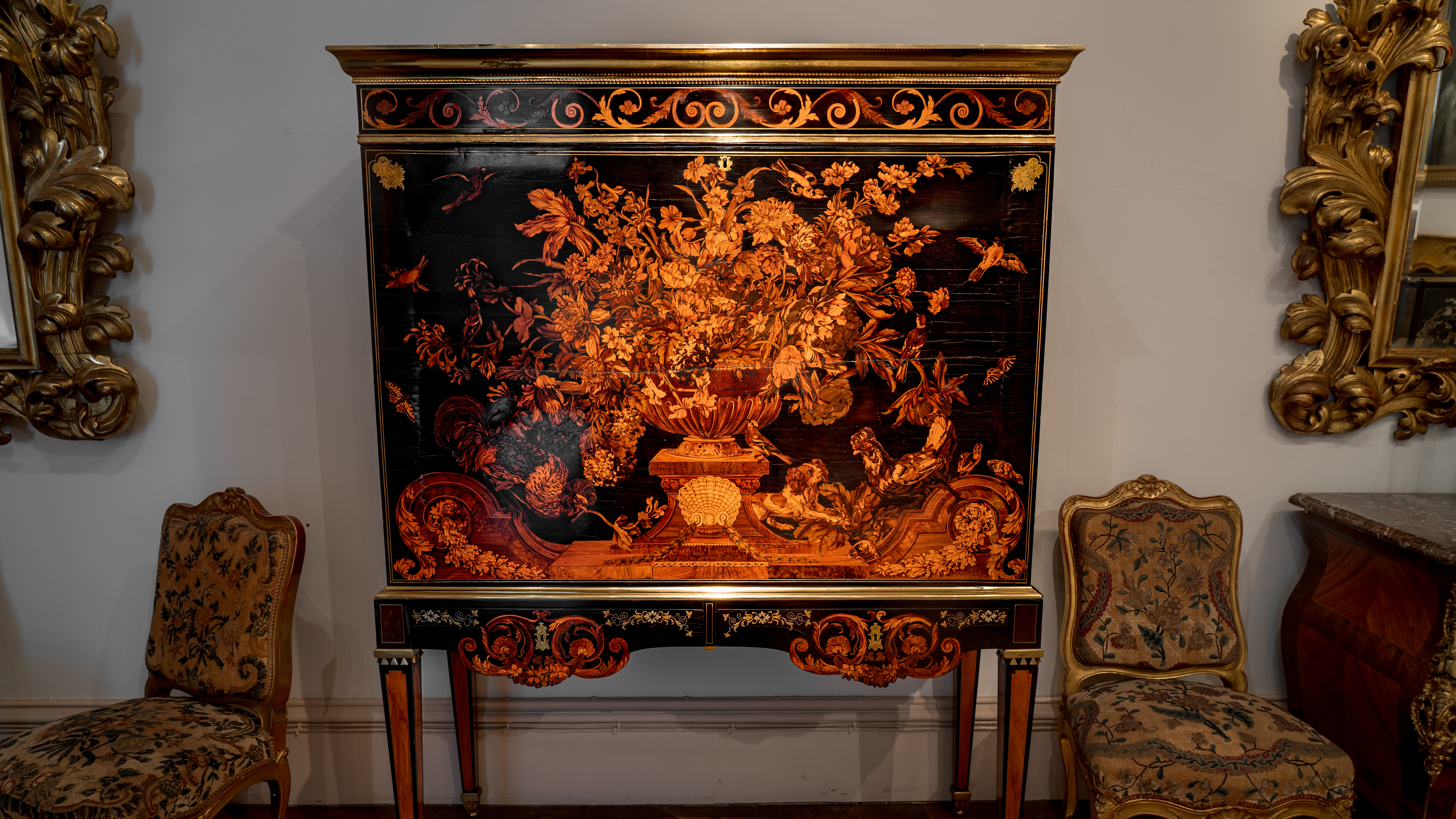
Anyway, I recently was honoured and delighted to have been asked by The Bowes Museum to choose my favourite object from the collections as part of their project to celebrate 125 years since the museum opened. My favourite object is ‘The Warwick Cabinet’; it’s a very well-known object, one that has been thoroughly studied by many leading historians of furniture and design. It is a piece of 18th century furniture of quite extraordinary craftsmanship, made in London in the 1770s by Mayhew & Ince, one of the leading firms of cabinetmakers and is immensely important for the history of English furniture.
The Warwick Cabinet. Image courtesy of The Bowes Museum.
But this is not a commentary on the design and aesthetic qualities of this object, beautiful though it certainly is. What I’m really interested in is when, how, and why, the Warwick Cabinet arrived at The Bowes Museum in the first place. My interest in The Warwick Cabinet is part of my continuing research into the history of shopping for ‘antiques’ – and the Warwick Cabinet very usefully draws attention to this on-going fascination with ‘old’ things at two distinctive moments. It’s a story that begins with the Earls of Warwick, who in the 18th century purchased a ‘second-hand’ (but not yet ‘antique’) 17th century French marquetry panel and ends with the purchase of the Warwick Cabinet by The Bowes Museum in 1979.
So, the Earls of Warwick and their ‘old’ marquetry panel – it’s not known exactly when or where the panel was acquired, but it seems likely that it was purchased by either Francis, 1st Earl of Warwick (d.1773) or his son, George, 2nd Earl of Warwick (d.1816) in Paris; or it may have been imported, possibly by a cabinetmaker, and purchased by one of the Earls in London. Whatever the truth, in the 1770s the 2nd Earl commissioned the well-known cabinetmakers Mayhew & Ince to make a new and fashionable piece of furniture incorporating this discarded fragment of 17th century French furniture. This was, incidentally, something of a specialism of Mayhew & Ince in the 18th century – they supplied, for example, a pair of commodes and corner cupboards ensuite using a similar technique of incorporating elements of older furniture for Lord Exeter at Burghley House, Lincolnshire, in 1767.
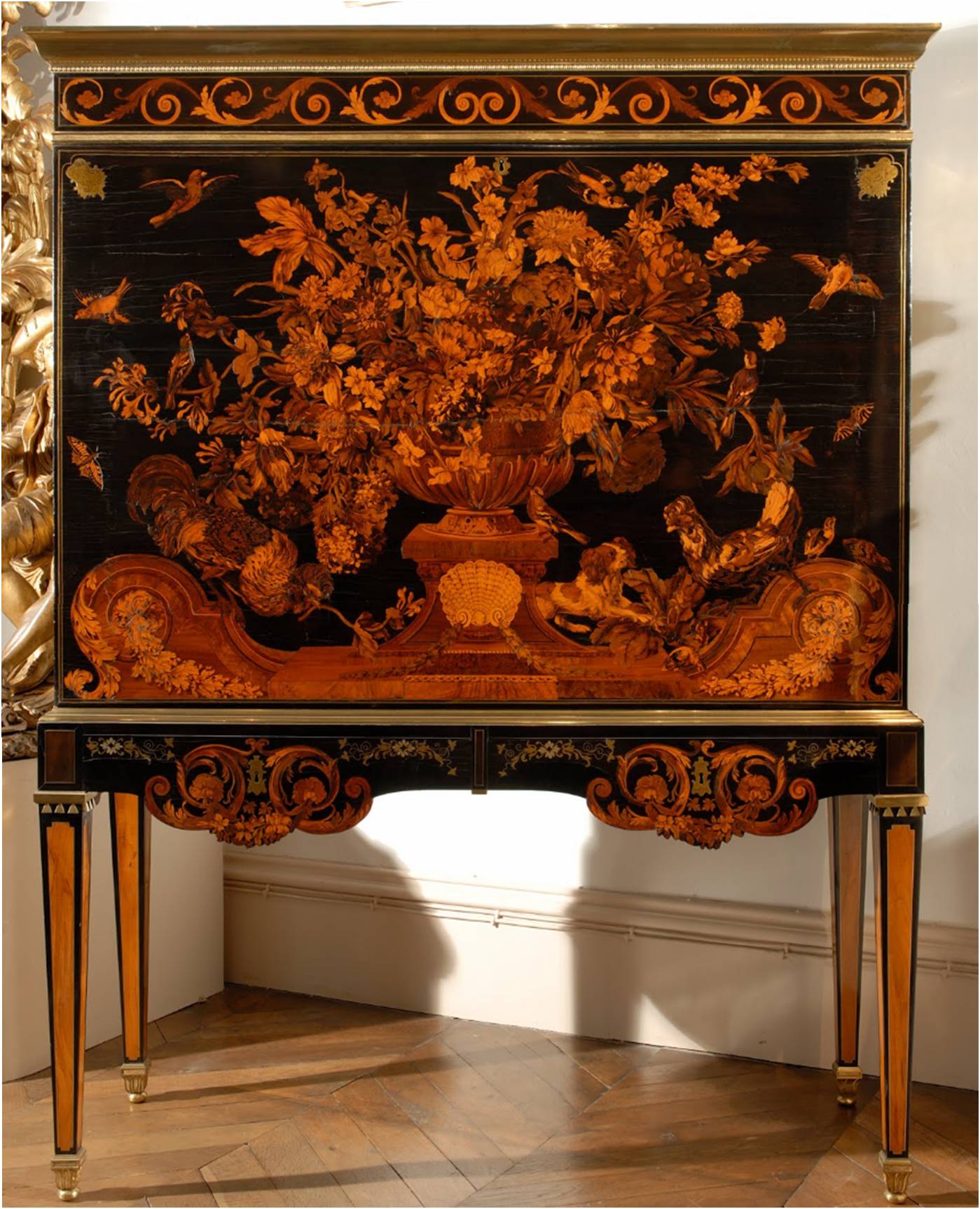
The marquetry panel in the Warwick Cabinet was possibly previously a table top and was almost certainly made for the French Royal Court of Louis XIV; it is thought to have been made by the famous French cabinetmaker André Charles Boulle (1642-1732). I guess we can’t say whether the 2nd Earl enjoyed this 17th century marquetry panel for its ‘oldness’ (it’s antiquarian value) or just admired the bravura display of the art of marquetry, but his recycling of this salvage from the past is something that underscores our own contemporary interest in ‘antiques’.
The Earl’s of Warwick were justly proud of their new and fashionable cabinet and it attracted several comments in the journals and diaries of visitors to Warwick Castle in the 18th century. And as interest in ‘old furniture’ began to accelerate during the 19th century the cabinet was loaned to the famous Manchester Art Treasures Exhibition in 1857, (it still bears the red printed labels from the 1857 Exhibition pasted to the back of the cabinet), where it was described in the guidebook to the exhibition as ‘a magnificent example of inlay in coloured woods…as fine a specimen of its kind, perhaps, as exits’.
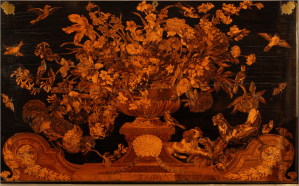
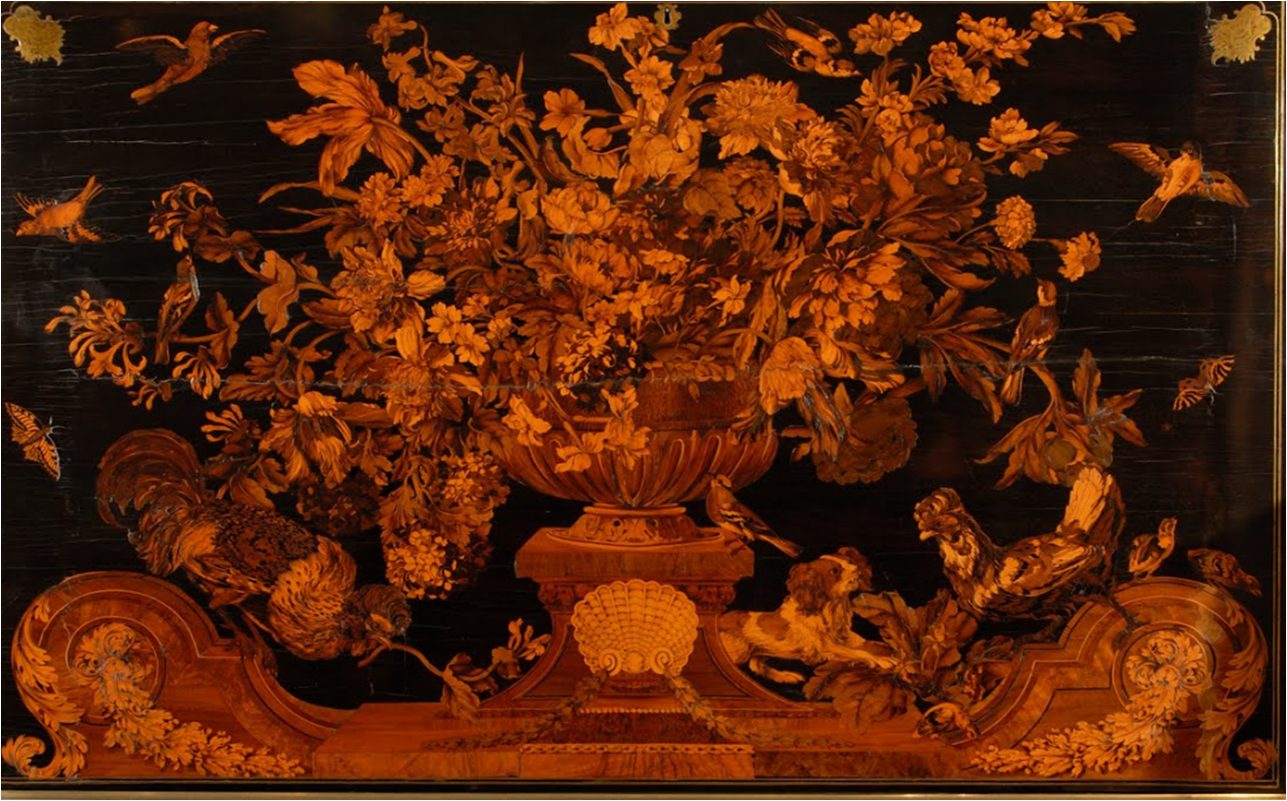
Warwick Cabinet front panel. Image courtesy of The Bowes Museum.
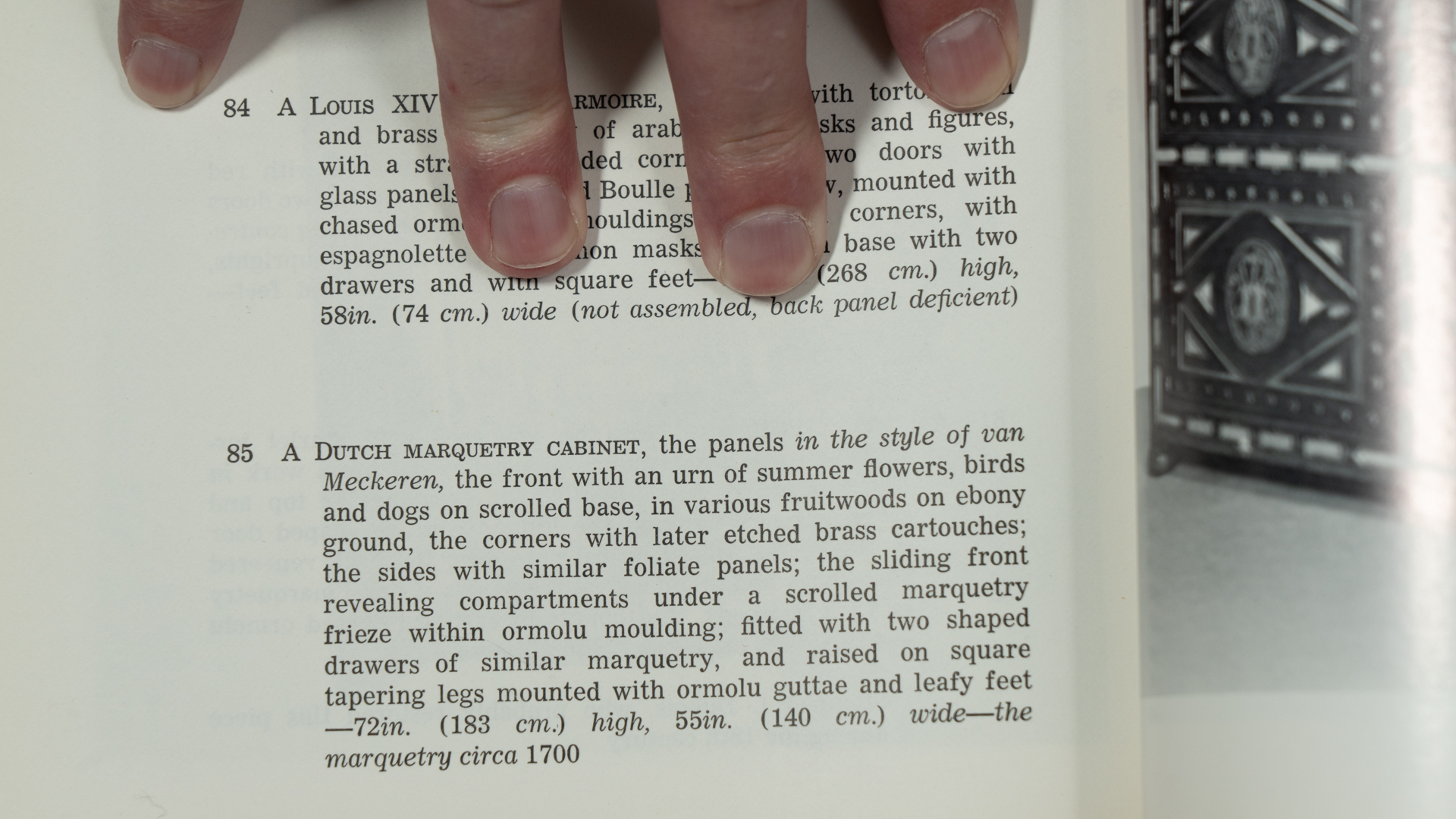
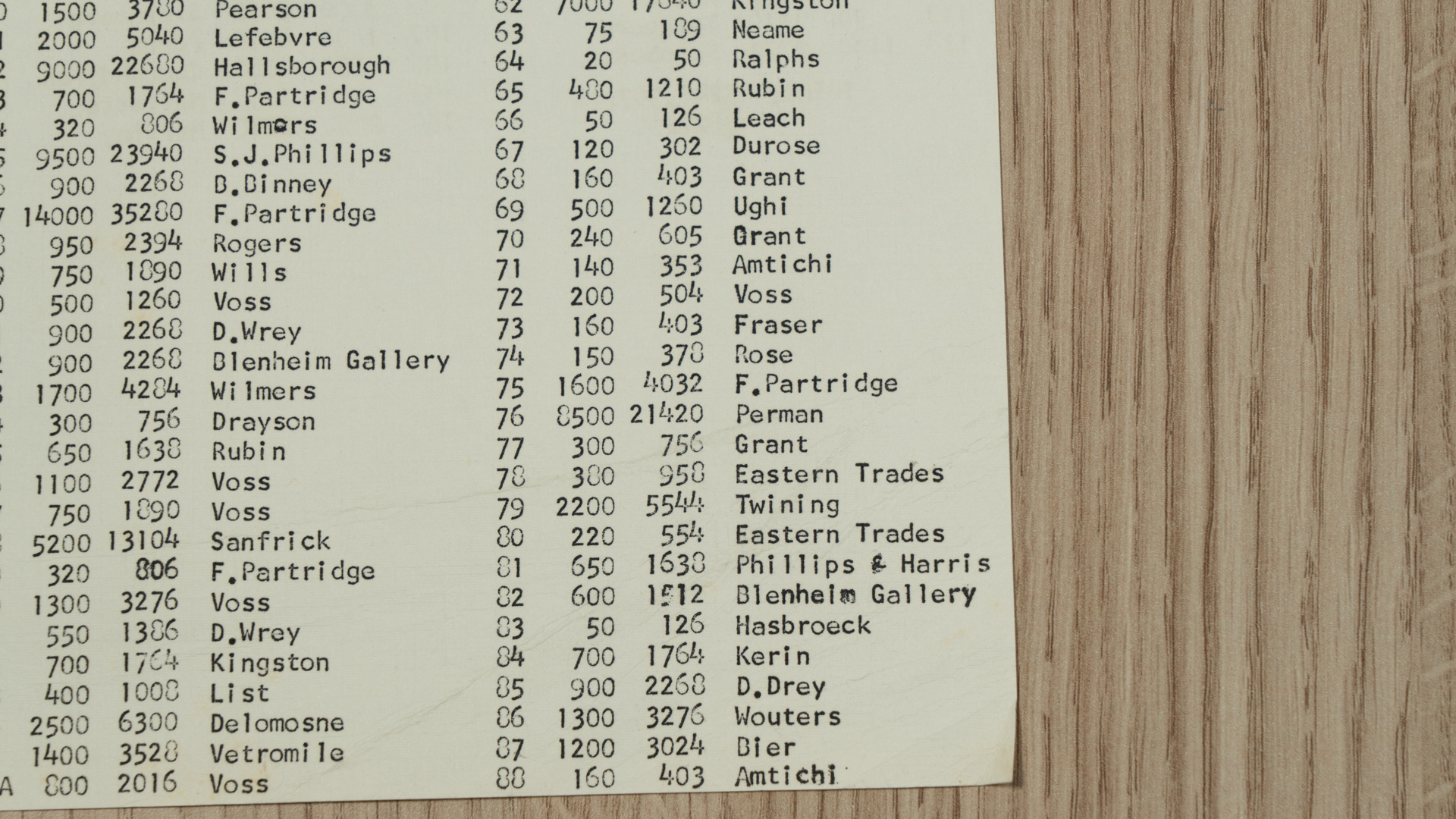
The cabinet remained in the collections of the Earl’s of Warwick until it began it’s more recent peripatetic journey from Warwick Castle in the late 1960s and was sold by the Trustees of the Warwick Castle Resettlement as part of a series of auction sales in 1968. Anecdotally it’s said that the increasing pressure of visitors to Warwick Castle in the 1960s meant that corridors needed to be cleared of clutter and the Warwick Cabinet just happened to be in one of the corridors, having been removed there from its location in the State Bedroom to allow the famous suite of 17th century Brussels tapestries in the Bedroom more light and space to be seen by visitors – an interesting example of the pressures of an increasing interest in ‘old things’ (a.k.a. heritage) acting as a catalyst for putting ‘old things’ into circulation on the art market – ‘heritage’ and the art market are two worlds that are much more intimately connected that one might think. Anyway, the particular auction sale in which the cabinet appeared was a sale of ‘Important French & other Continental Furniture & Works of Art’ at the auction house of Christie’s in London on 30th May 1968. It was lot 85 in the auction and was elaborated described as ‘A Dutch Marquetry Cabinet, the panels in the style of van Meckeren the front with an urn of summer flowers, birds and dogs on a scrolled base, in various fruitwoods on ebony ground…’. We now know of course, thanks to evolving scholarship, that the Warwick Cabinet is an important example of English furniture, but it would be fair to say that scholarship on the firm Mayhew & Ince was in its infancy during the 1960s. The cabinet was sold for 900 guineas (a guinea was equivalent to £1 plus 1 shilling) at the auction in 1968, a comparatively reasonable sum, no doubt a result of it being ascribed as Dutch furniture, which was much less popular than French or English furniture at the time. One could speculate that it might have attracted even more interest had it been more accurately catalogued as English furniture. Indeed, during the 1960s English furniture was on the up, with 2 successive world record prices achieved at auction – in 1965 the famous Chippendale library table from Harewood House, Yorkshire made 41,000 guineas at auction, following on closely from the previous record auction price for English furniture of 25,000 guineas achieved in 1961 for a commode attributed to Thomas Chippendale from the collections at Raynham Hall, Norfolk.
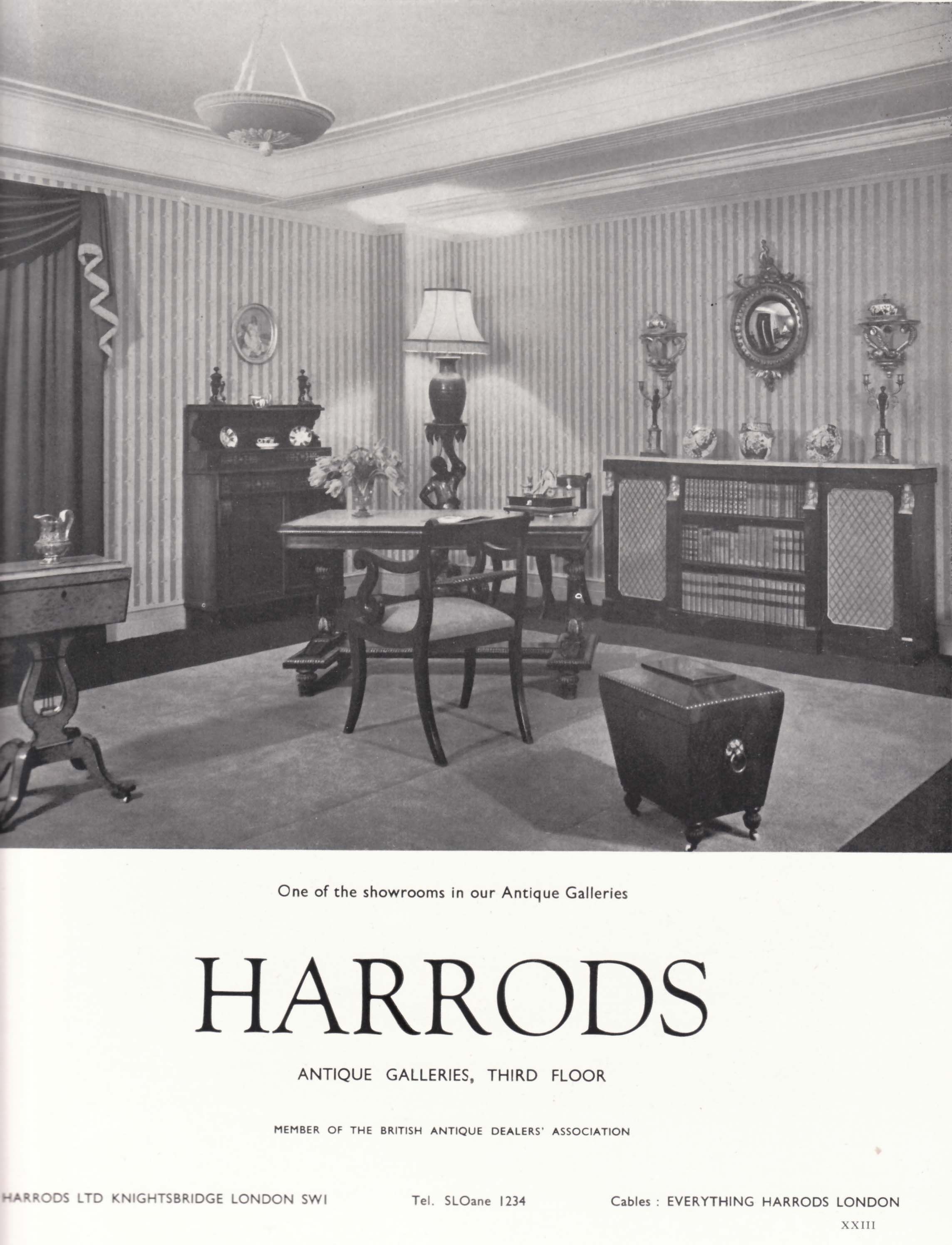
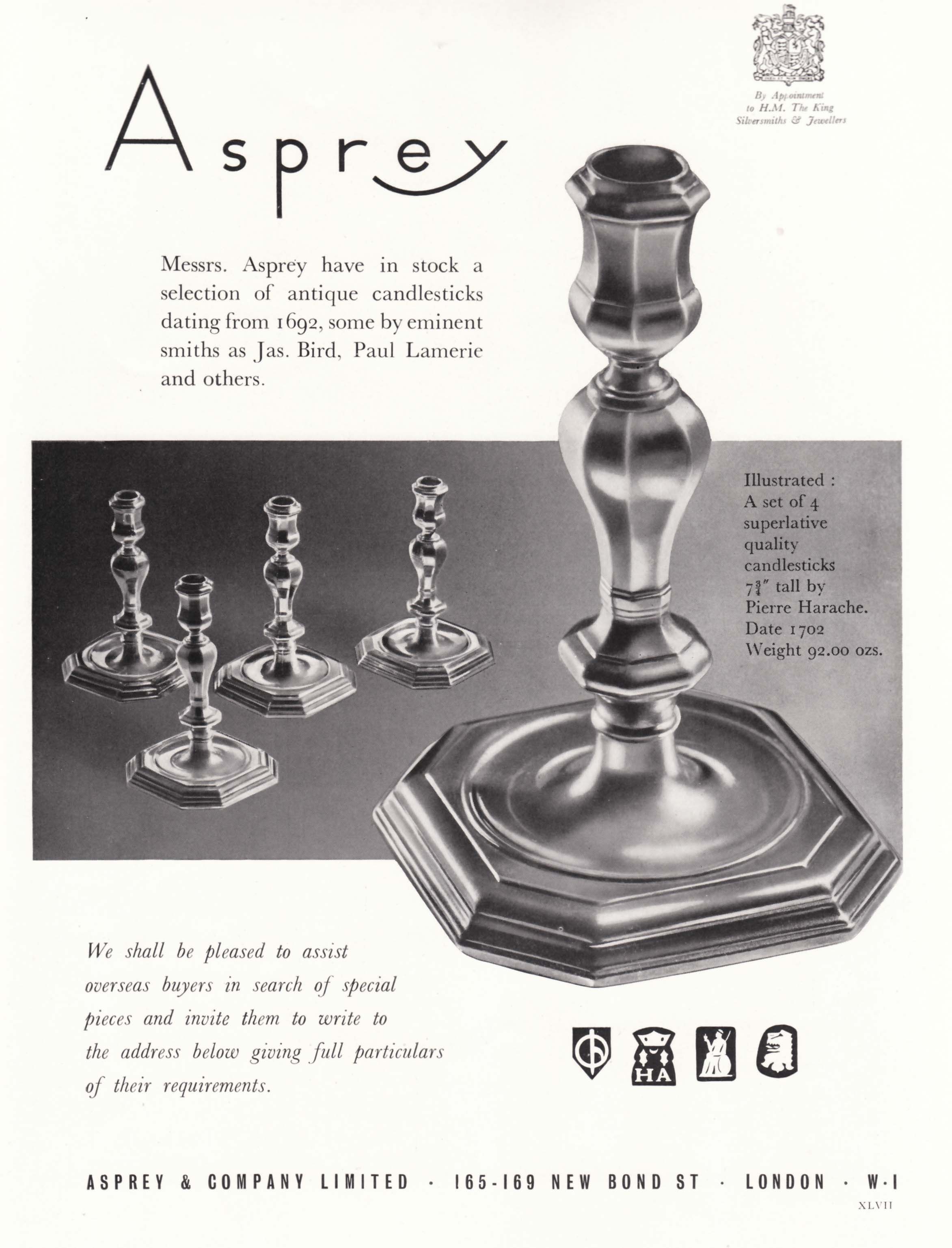
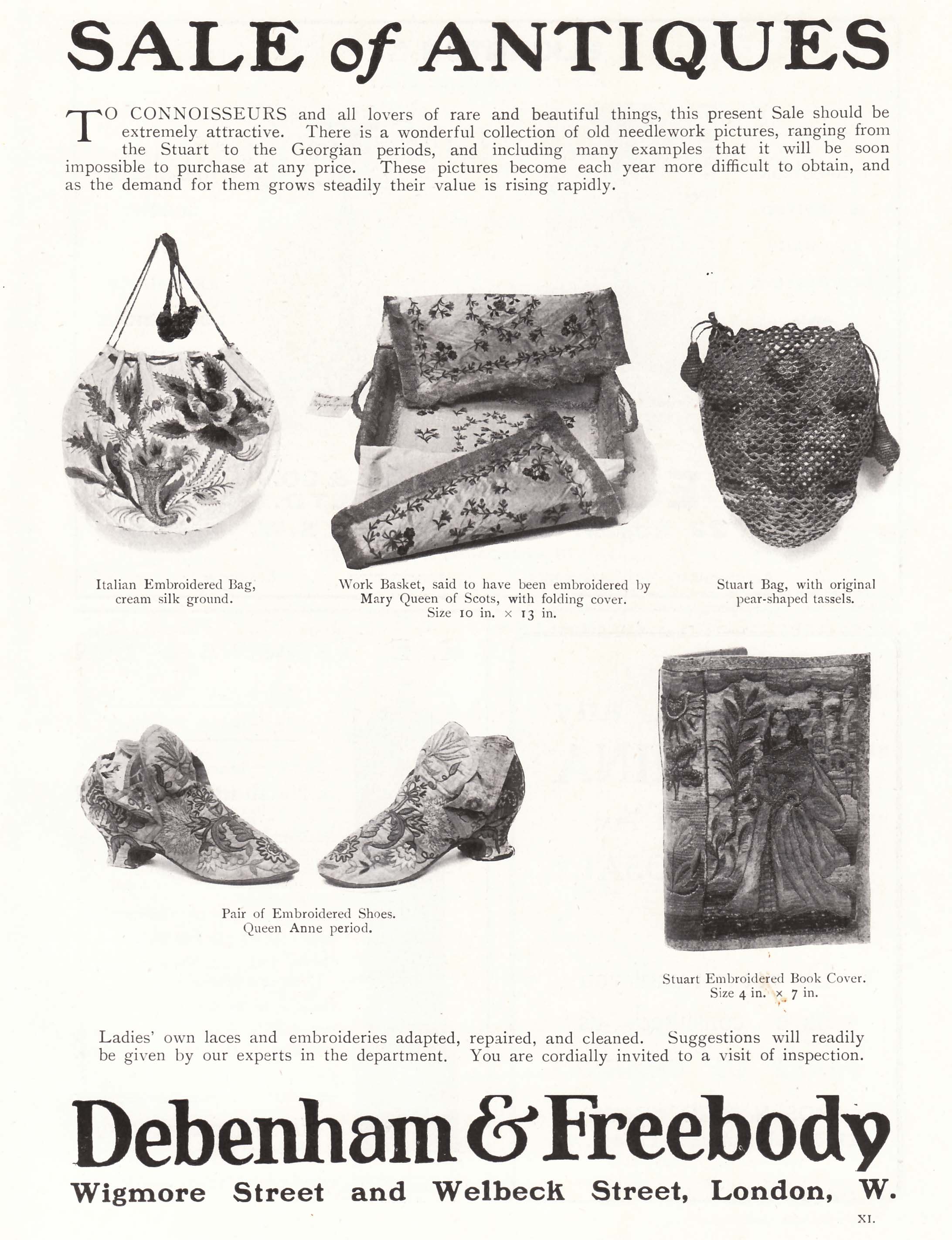
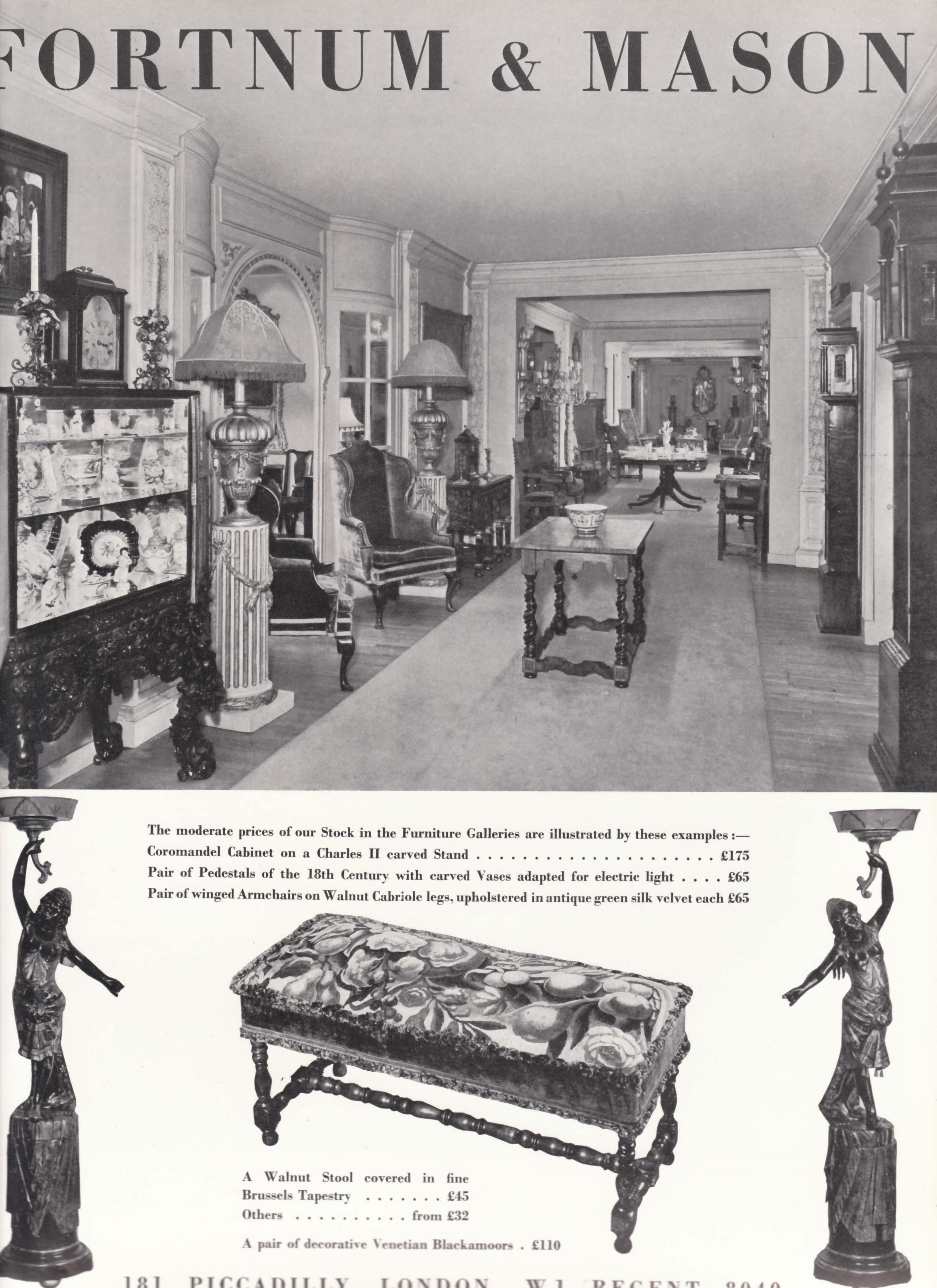
The Warwick Cabinet was bought at the 1968 auction by well-known dealer in antique continental furniture and works of art, David Drey, then trading in the ultra-fashionable King’s Road, Chelsea, in London. Drey opened his antique shop in 1951 and was a member of the illustrious dynasty of art and antiques dealers which began in Munich in the 1860s with famous art dealer A.S. Drey. David Drey appears to have very quickly sold the cabinet to the luxury department store Asprey’s. The fact that it was bought by a high-class luxury goods department store and not one of the many specialist antique English furniture dealers at the time gives us a further fascinating insight into the history of antique dealing (a subject very close to my heart); and brings us back to the subject of shopping for antiques, this time in the 20th century. Asprey’s had been founded in 1781 as a silk printing business, but by the 20th century they had become a luxury emporium, making and retailing silver, luxury watches and jewellery. Like many ‘department stores’ Asprey’s opened an ‘antique department’ during the opening decades of the 20th century – Harrods did the same in c.1900, as did the department store Debenham’s – then known as ‘Debenham & Freebody’ – who had an extensive series of ‘antique departments’ in their store in 1909, including ‘old glass’ and ‘antique lace’. Indeed, such was the success of Debenham & Freebody’s antique departments that they opened a separate antique store in Welbeck Street, London, in 1923. The retailing of antiques by department stores such as Harrods, Asprey and Debenham’s also highlights the accelerating interest in antiques as fashionable furnishings in the early 20th century. Incidentally, Asprey’s antique department consolidated its position in the world of antique dealing by absorbing the internationally famous London antique dealer R.A. Lee (established in the 1940s) in the 1990s. The merger was one of a number of high profile mergers and acquisitions of antique dealing businesses at the time, indicative of the over-heated money-fuelled antiques markets of the 1980s and 1990s.
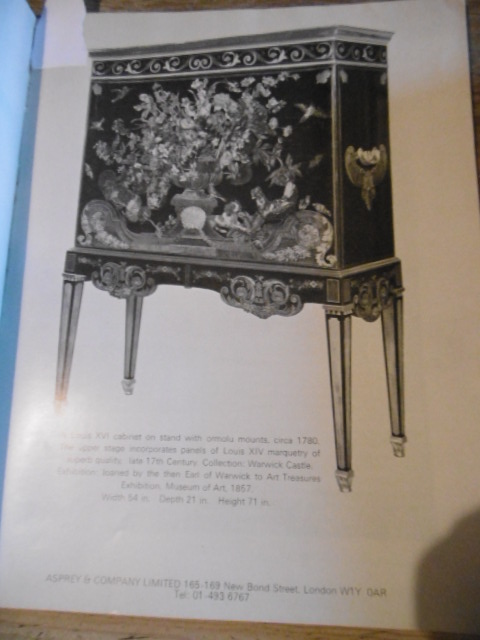
Asprey displayed the Warwick Cabinet on their stand at the world-famous Grosvenor House Antiques Fair in 1969, then the premier event of the UK antiques calendar. At this date it was then thought to be piece of French furniture of the Louis XVI period, dating to c.1780 but incorporating a panel of 17th century French marquetry; it was described as such by Asprey’s in their advertisement of the cabinet in the magazine Connoisseur July 1969.
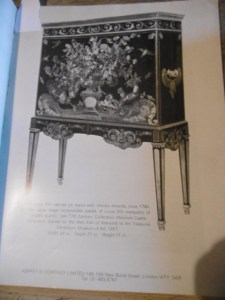
Warwick Cabinet, Asprey advertisement, Connoisseur, July 1969.
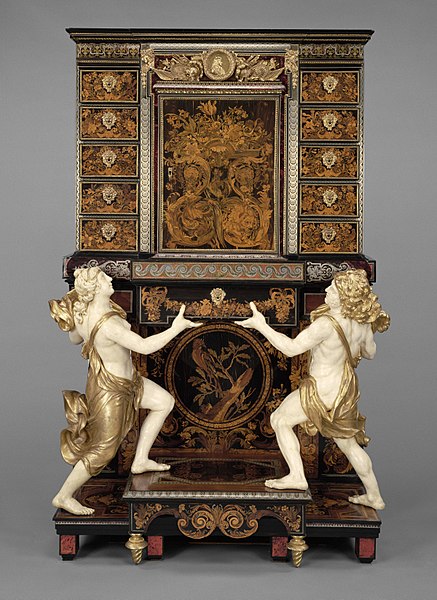
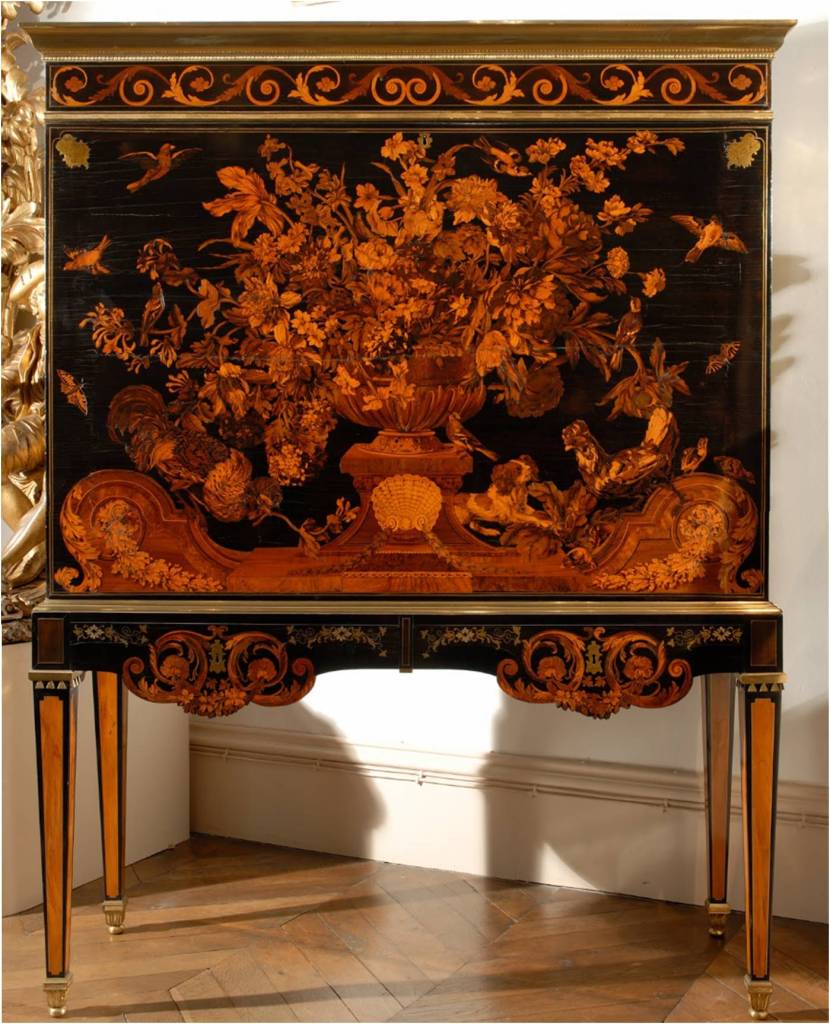
The cabinet was bought by a private collector based in London in the same year and remained in that collection for 10 years, when in 1979, and by then correctly ascribed as English rather than French or Dutch furniture, it was sold to the Getty Museum in the USA. Ironically, the Getty probably wanted to acquire the Warwick Cabinet because of its panel of 17th century French marquetry (to this day they have very little English furniture in their collections). Indeed, The Getty Museum had (in 1976) only recently acquired one of their most spectacular pieces of French furniture, a 17th century French marquetry cabinet on stand attributed to André Charles Boulle, the suggested maker of the Warwick Cabinet front panel.
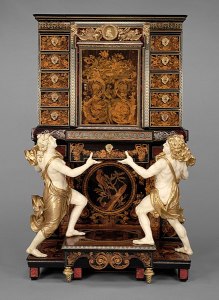
Cabinet on Stand, attributed to A.C. Boulle, c.1680. Getty Museum, USA. Wikicommons.
However, the significance of the cabinet to British cultural history was recognised and the Reviewing Committee for the Export of Works of Art placed a temporary export stop on the cabinet, allowing time for a UK museum to raise the funds to match the then purchase price of £80,000. Norman St. John Stevas, then Arts Minister in the Thatcher Government, withheld the export license because the cabinet was considered to be of ‘outstanding national importance’. The Warwick Cabinet was saved for the nation. A ‘Rare Antique, comes North’, as the local newspapers reported at the time, and it began a new life in the collections at The Bowes Museum.
And so, I guess what interests me about my ‘Favourite Object’, is less so much about what objects actually are and more about the afterlives of objects; how they are put into motion, circulate and come to a temporary rest – and that’s a story that could be told about every object at The Bowes Museum, indeed every object in every museum.
Mark