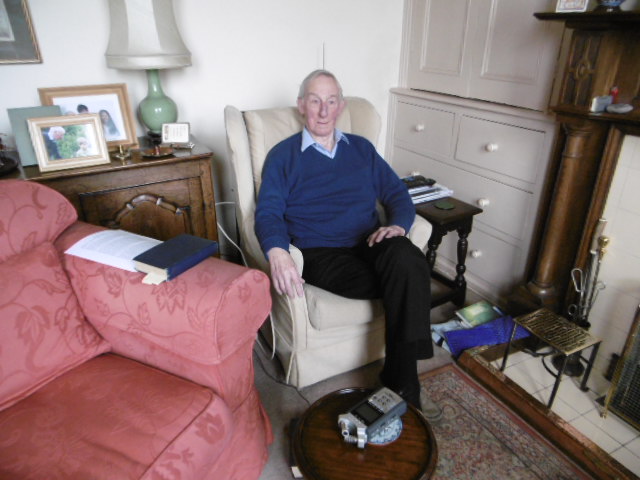
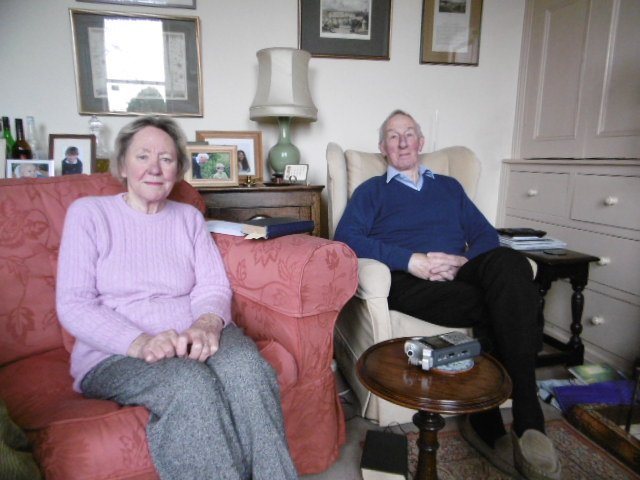
We were very sad indeed to hear that Tony Lumb, of the very well-known antique dealers Charles Lumb & Sons of Harrogate, Yorkshire, passed away over the Christmas period. Tony, together with his wife Mary, was a great supporter of the Antique Dealers Research Project at the University of Leeds – in fact we conducted an oral history interview with Tony and Mary (and James Lomax, former curator at Temple Newsam, Leeds) back in 2014 and we have very fond memories of Tony and Mary – they both came along to the premier of our film of the play ‘Quinneys’ (1915) which we made in 2021, screened at York Picture House in November 2021.
Tony Lumb at home in Knaresborough, 2014. Photograph, Antique Dealers Research Project, University of Leeds.
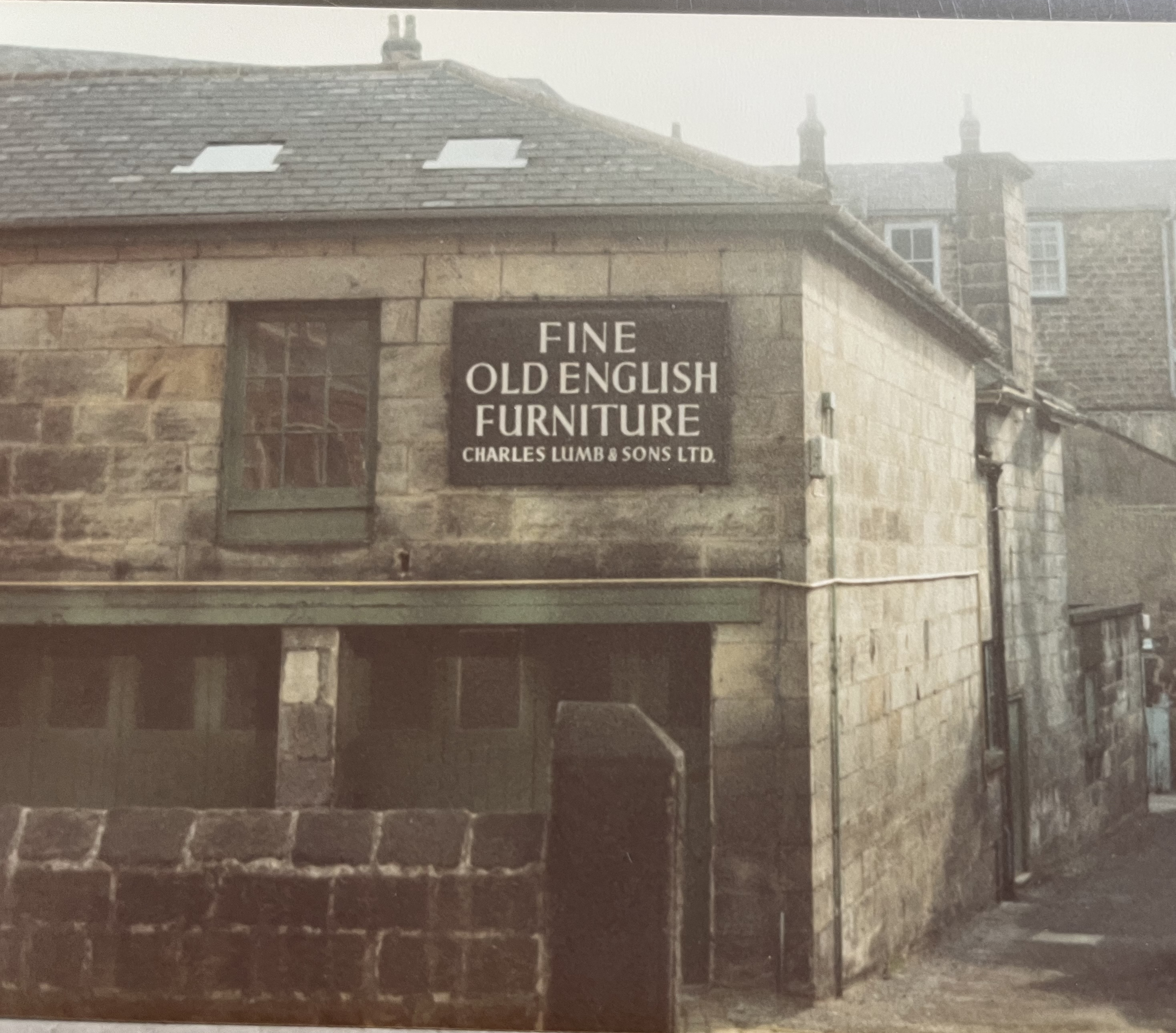
Tony was born in 1935 and joined his family antique dealing business, Charles Lumb & Sons, in 1956 after completing his National Service. The business had been started by Tony’s grandfather, Charles Lumb (1878-1963), who was born in Dewsbury, Yorkshire in 1878 and trained as a cabinetmaker; he established Charles Lumb & Sons as antique dealers in Harrogate in 1907. Below is a photograph of one of the early business premises of Charles Lumb, a small 19th century workshop where Charles Lumb traded from just after the end of the First World War in 1918 or 1919 – the photograph is from the 1980s, when Charles Lumb & Sons still owned the property and used it as a store for their stock of antiques.
Charles Lumb & Sons, Montpellier Street/Montpellier Mews, Harrogate; shop/workshop opened in about 1918/19. Photograph courtesy of Tony and Mary Lumb.
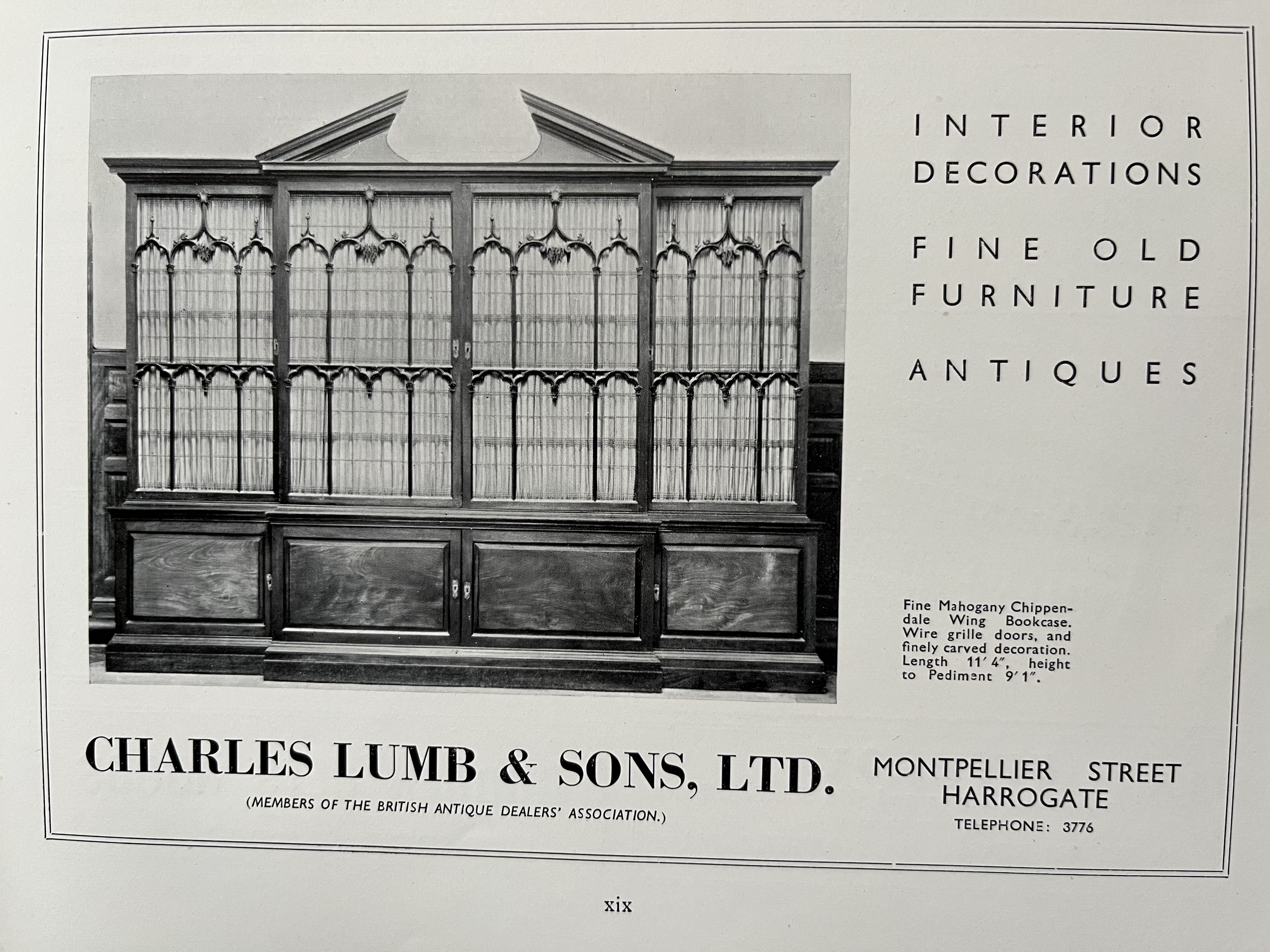
Charles Lumb opened a shop in Swan Road in Harrogate in the early 1920s, before moving to larger premises in Montpellier Street, Harrogate in the 1930s. Below is an advertisement produced by Charles Lumb & Sons in 1938, trading from their Montpellier Street address.
Charles Lumb & Sons, advertisement, Apollo, August 1938. Photograph, Antique Dealers Research Project, University of Leeds.
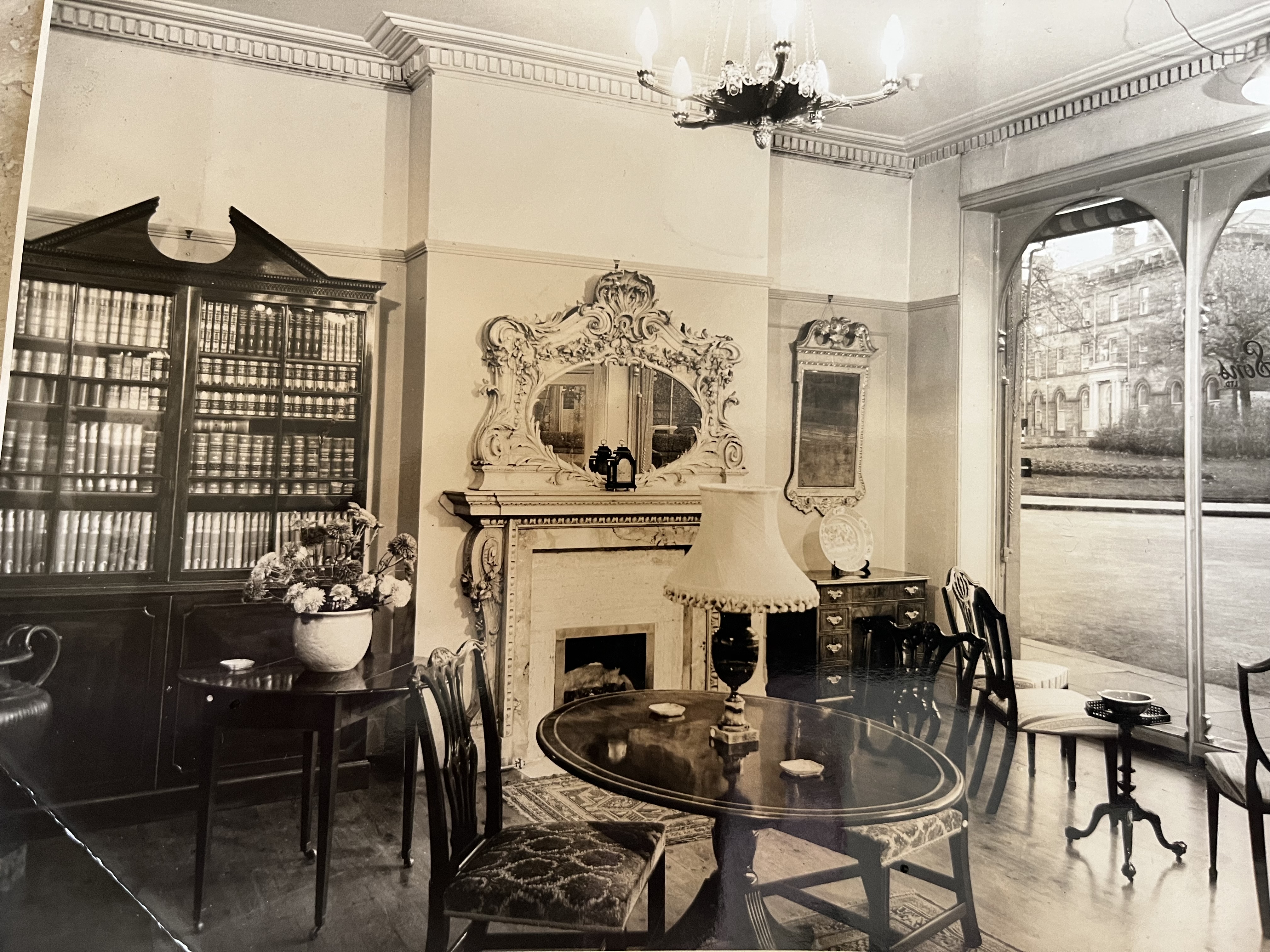
Tony’s father, Frank Lumb and his uncle Reg, together with Tony, ran the antique business after Charles Lumb died in 1963. By then they had moved the business, opening a new shop at 34 Montpellier Parade, Harrogate in 1947, and were one of the most important antique dealers in the UK. Below is a photograph of Charles Lumb’s shop at Montpellier Parade in 1954, just a couple of years before Tony Lumb joined the business in 1956.
Charles Lumb & Sons, Montpellier Parade shop interior, 1954. Photograph courtesy of Tony and Mary Lumb.
When Reg Lumb died in 1976 Frank, with Tony and Mary, continued to run the antique dealing business; Frank Lumb was working in the antique shop until his early 90s; he died aged 97 in 1993. Tony and Mary finally closed Charles Lumb & Sons in 2012.
Mary and Tony Lumb, 2014. Photograph, Antique Dealers Research Project, University of Leeds.
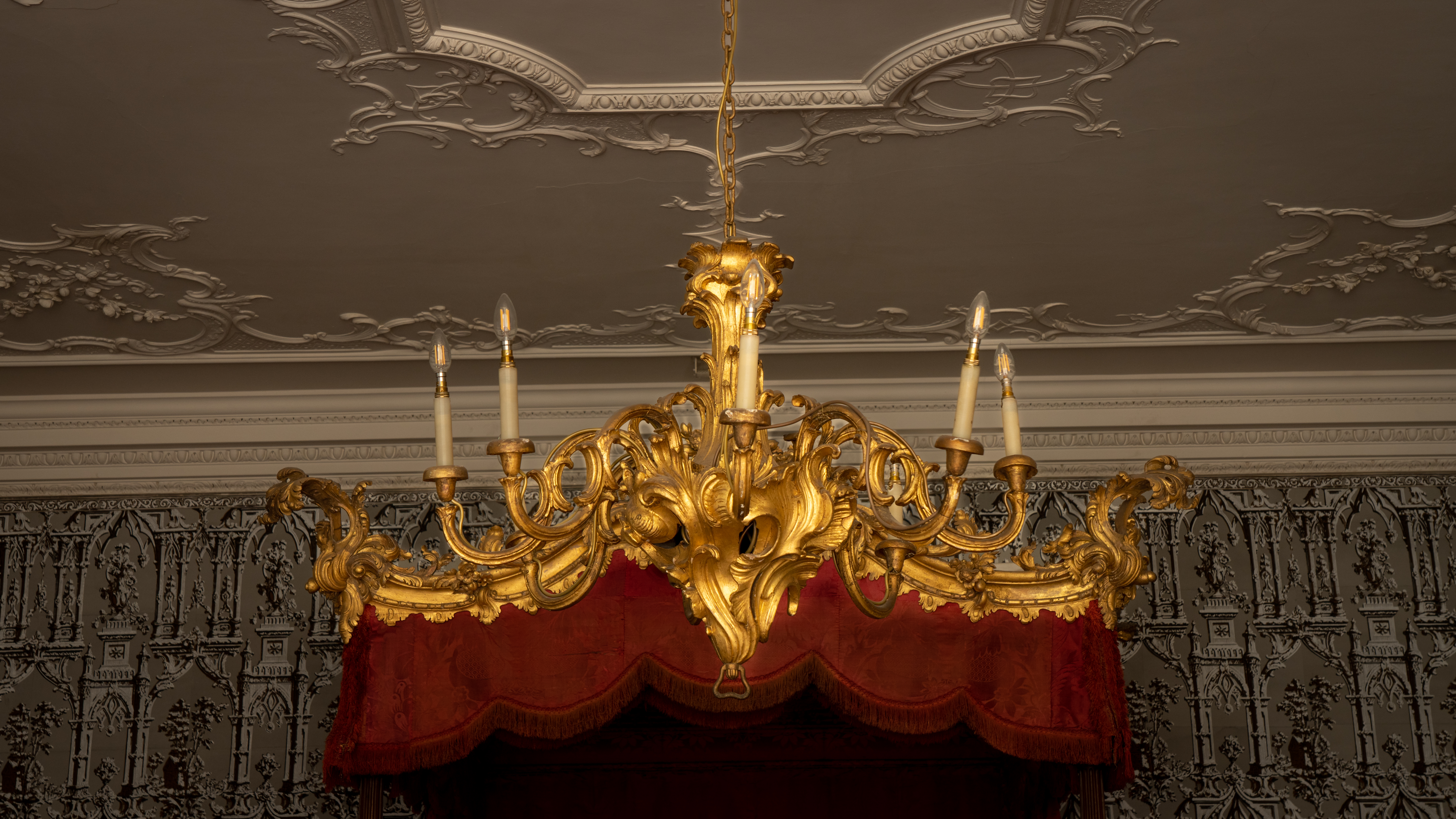
Tony served on the Council of the British Antique Dealers Association (BADA) in the 1970s, and served as Vice President of the BADA during the early 1980s. He was always interested in the developments of the Antique Dealers Research Project at the University of Leeds, and were so sorry to hear that he had passed away. We were particularly sorry that Tony will not see the launch of the Year of the Dealer project (which launches on 1st March 2026) – Charles Lumb & Sons are the subject of one of the ‘dealer trails’ films at Temple Newsam, the country house museum near Leeds. This wonderful 18th century Dutch giltwood chandelier (see below) is featured in the short film focused on Charles Lumb & Sons – (the chandelier was sold to Temple Newsam by Charles Lumb & Sons in 1950, for £159 and 10 shillings).
18th century Dutch giltwood chandelier at Temple Newsam, Leeds. Photograph, Antique Dealers Research Project, University of Leeds and Leeds Museums & Galleries.
We send our sincerest condolences to Mary and the Lumb family.
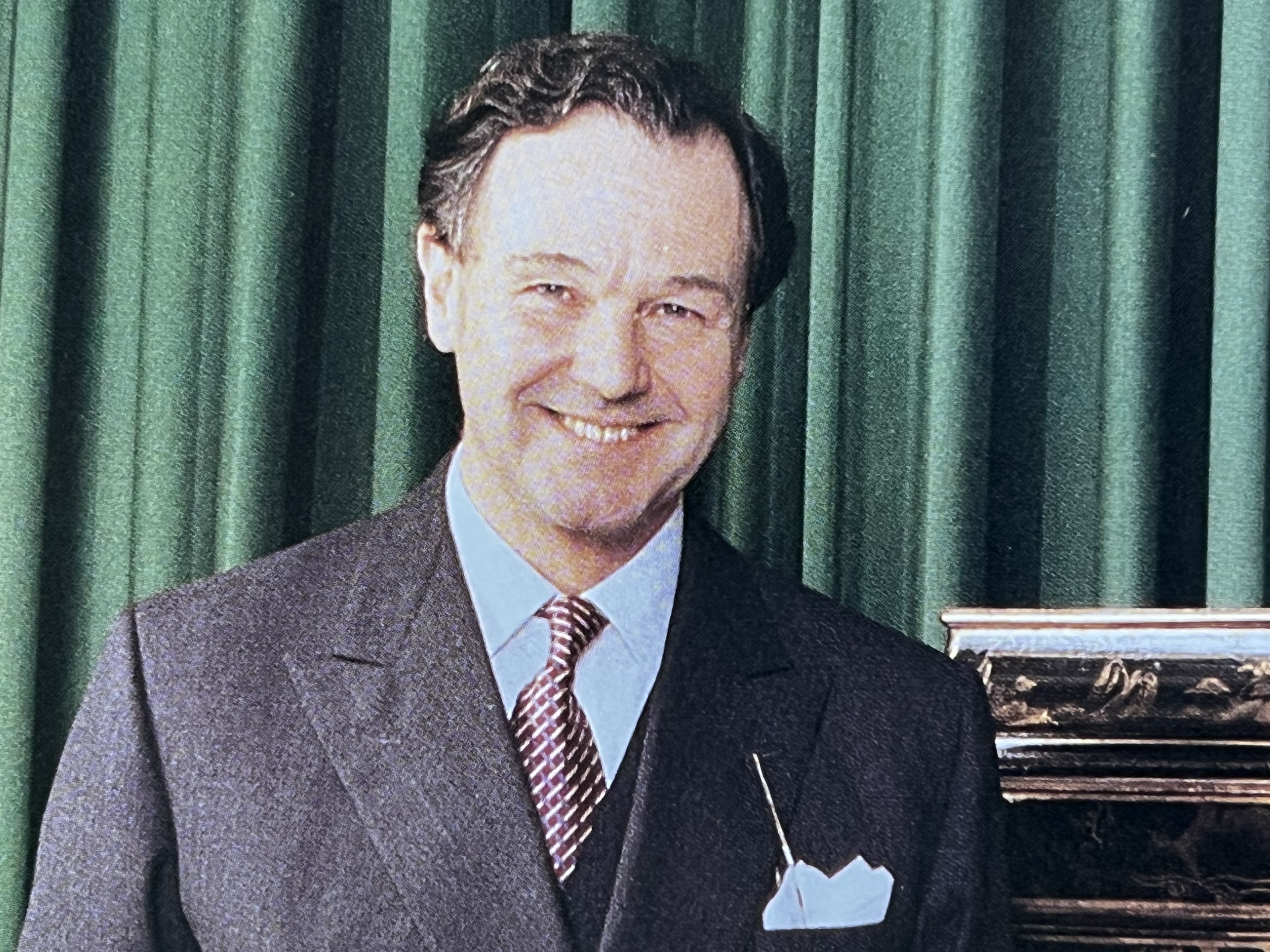
It is with very great sadness that we heard that Robin Kern sadly passed away on 2nd November. We have our own reflections on Robin and on the antique dealing business of Hotspur further below, but Chris Coles, who undertook our oral history interview with Robin back in 2016, has also composed a personal tribute to Robin.
Robin Kern, of Hotspur Limited, in 1999. Photograph courtesy of Robin Kern.
A Personal Tribute to Robin Kernfrom Chris Coles
Mark has very kindly allowed me to write a few words about Robin Kern. I first met Robin whilst still working at the British Museum. I had fortuitously seen an advert in the Antiques Trade Gazette that Mark had placed, asking for volunteers for the Antique Dealers Project. Thankfully I applied and was accepted and Mark very kindly allowed me to conduct some of the oral history interviews. One of those interviews was with Robin Kern at his beautiful home in Notting Hill. I had previously met Robin some years before at his premises in Kinnerton Mews, having already closed the Lowndes Street shop. I had actually visited him as a result of a visitor to my department at the BM who had told me that she was researching dummy boards. I knew that Robin had a pair in stock at that time and suggested that she went to see him. She emailed me afterwards to say how well she had been treated and that I should go and see him myself and I did. This bringing together of academics and researchers and members of the trade was entirely typical of the way that Robin conducted himself and it was no surprise at all that some of his best friends, and greatest clients, included the likes of Christopher Gilbert buying for Temple Newsam and Sir Nicholas Goodison the expert on Matthew Boulton and barometers. As John Hill said so perfectly in his eulogy at Robin’s funeral
‘He was a gifted mentor, using his passion for diplomacy and his velvet touch……Robin and Brian built a strong bond of friendship and trust between like-minded souls and Hotspur was to feel a bit like a private members club’.
When I interviewed Robin for the project he spoke with understandable pride about some of the many famous private collections he had helped to form such as those for the McAlpine family, Jon Gerstenfeld, Fred Krehbiel and Jon Bryan. It is no exaggeration to say that Hotspur took the marketing of purely English furniture and works of art to a new level amongst the trade and virtually every great collection of such pieces will include something that passed through the firm’s hands at one stage or another.
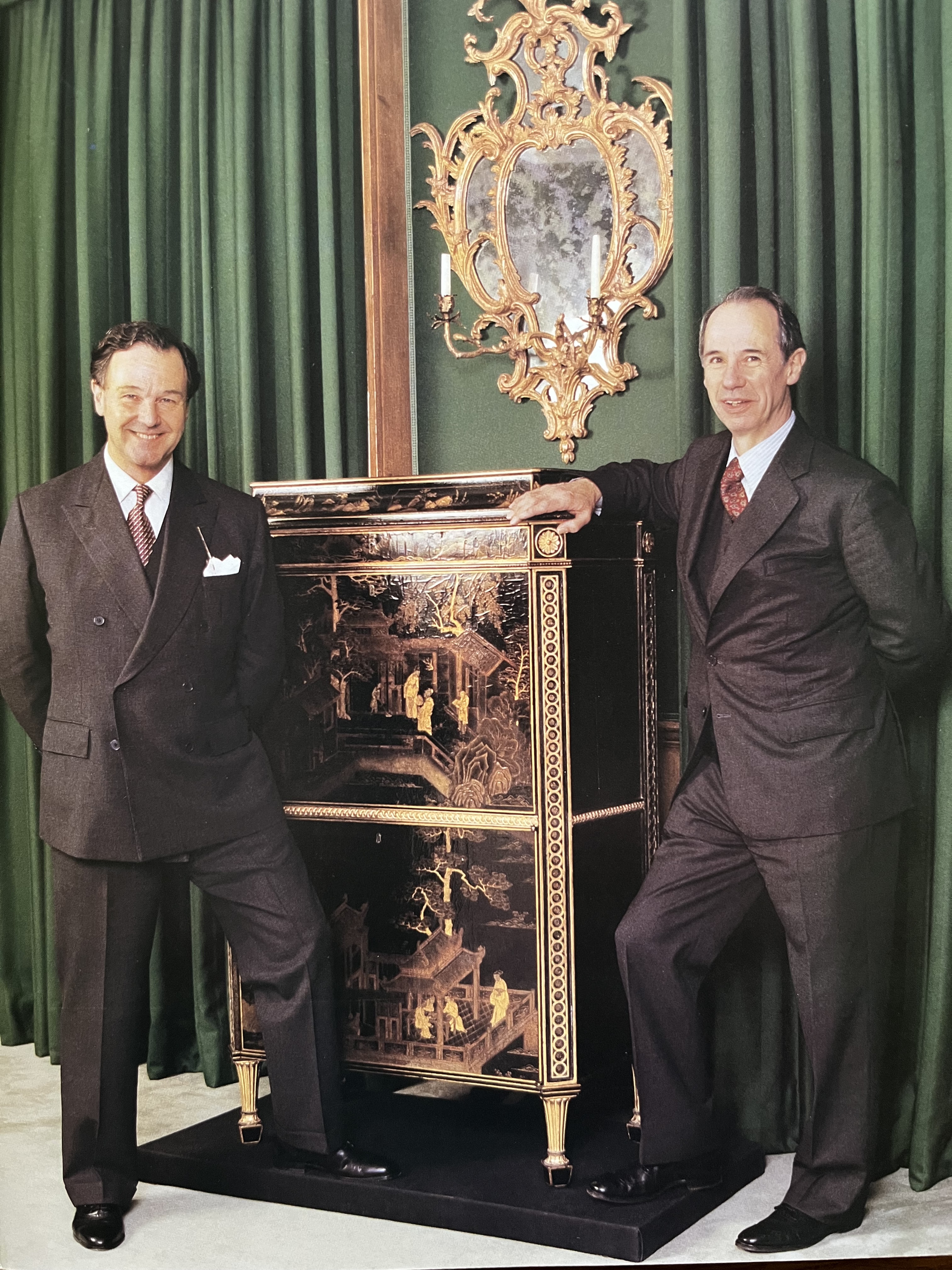
When conducting the oral history interviews, it was always our policy to get a photograph of the interviewee for use in the relevant section on the website. Robin was insistent that we use the image of him and his brother Brian with the Chippendale lacquer secretaire, now at Temple Newsam (see photograph below), that featured in the Hotspur anniversary book. He didn’t want anyone to be under the impression that the firm’s success was down to him alone and wanted Brian, who had already tragically passed away by that time, to get his full share of the credit. The two brothers took over running the firm in the most difficult of circumstances, both of their parents having been killed in a tragic car crash. Under the brothers’ stewardship, however, the firm flourished and moved on to the next level and the respect and affection for Robin was obvious from the remarkable turnout for his funeral which was attended by almost everyone involved in the current high end furniture trade and plenty in other branches of the antiques trade as well.
Robin’s generosity towards the Antique Dealers Project was cemented by his decision to give all of the remaining copies of the Hotspur anniversary book to Mark for use as university prizes and this, again, was typical of his outlook in life, always trying to help others and never hinder.
All of us involved in the furniture trade in Britain and America owe a huge debt of gratitude to Robin for raising the profile and standard of dealing in our area and for his personal kindness and generosity. He was a titan of the trade who will be sadly missed and I send my condolences to his widow Odile, herself also a great dealer, and the rest of the Kern family.
Robin Kern (1938-2024) – Thank you Chris for your contribution to the Antique Dealers Research Blog. Robin’s obituary was also published in the Antiques Trade Gazette (ATG 23rd November 2024), p.79 (composed by his friend, Simon Phillips of Ronald Phillips Limited, London). Below are my own reflections on Robin and the significance of the antique dealers’ Hotspur Limited.
Robin Kern with his brother Brian at Hotspur with the black lacquer secretaire from Harewood House, Yorkshire, sold to Temple Newsam, Leeds, in 1999. Photograph, Robin Kern.
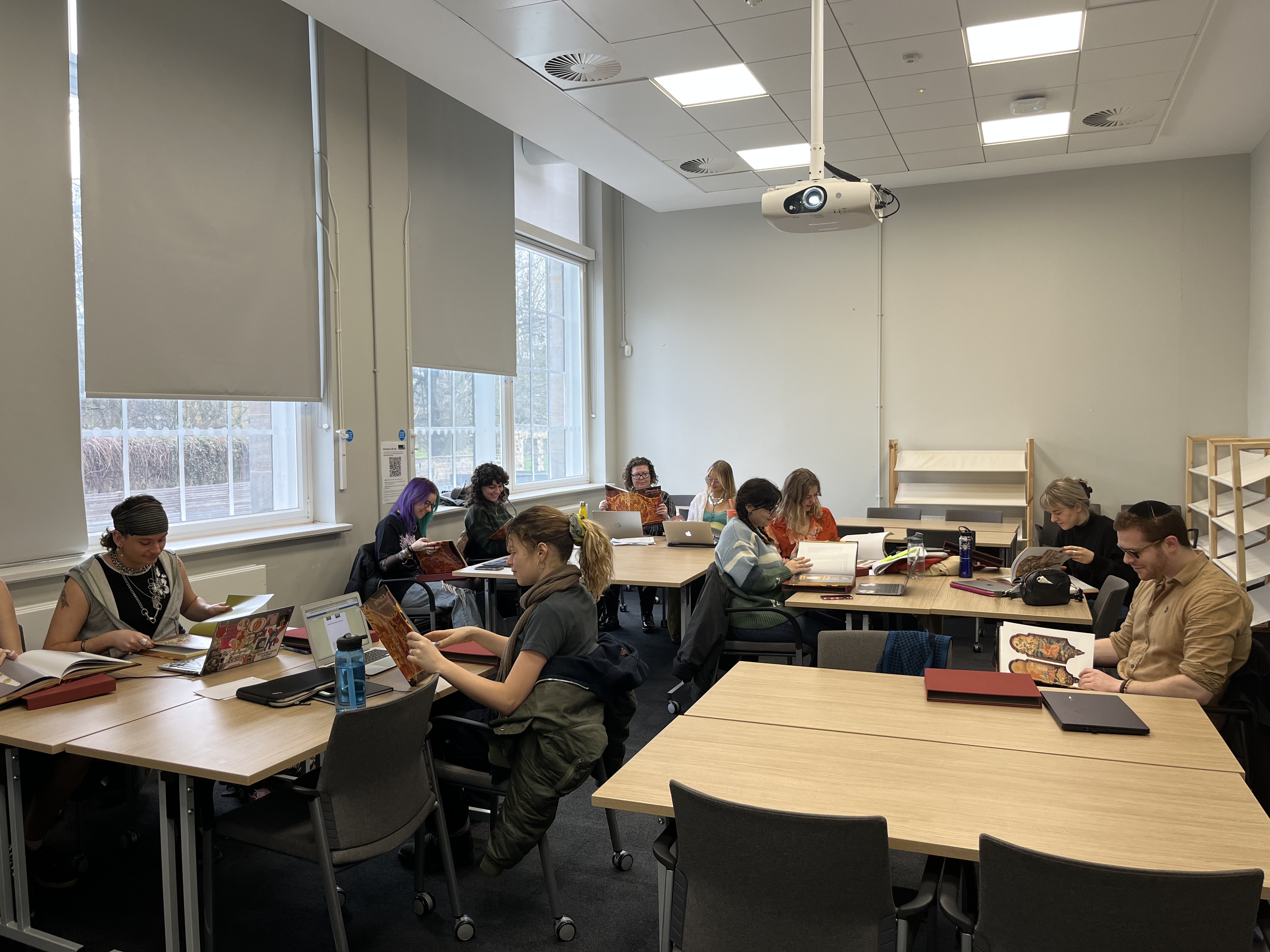
I remember meeting Robin in London at his store in Chelsea, back in 2018. I had driven down from Leeds to collect a very large pile of copies of the book published to celebrate the 80th anniversary of the founding of Hotspur (2004) Hotspur: Eighty Years of Antiques Dealing which, with typical generosity (as Chris mentioned above) Robin had given to the Antique Dealer Research Project to distribute to students enrolled on the module I teach at the University of Leeds (called ‘Antique Dealers: the market for ‘decorative art’ from curiosities to retro’). It is a 3rd year undergraduate module, the focus of which I believe is unique in UK universities, and which I’ve been running for almost 10 years now. Robin give us dozens and dozens of spare copies of the Hotspur book, which I distribute each year to eager students studying the history of antique dealing. Here’s a photograph of the undergraduate students enjoying the book from 2023 (and which I also would send to Robin as evidence of the real impact of his generosity!)
BA students with copies of ‘Hotspur’ in 2023. Photograph, University of Leeds.
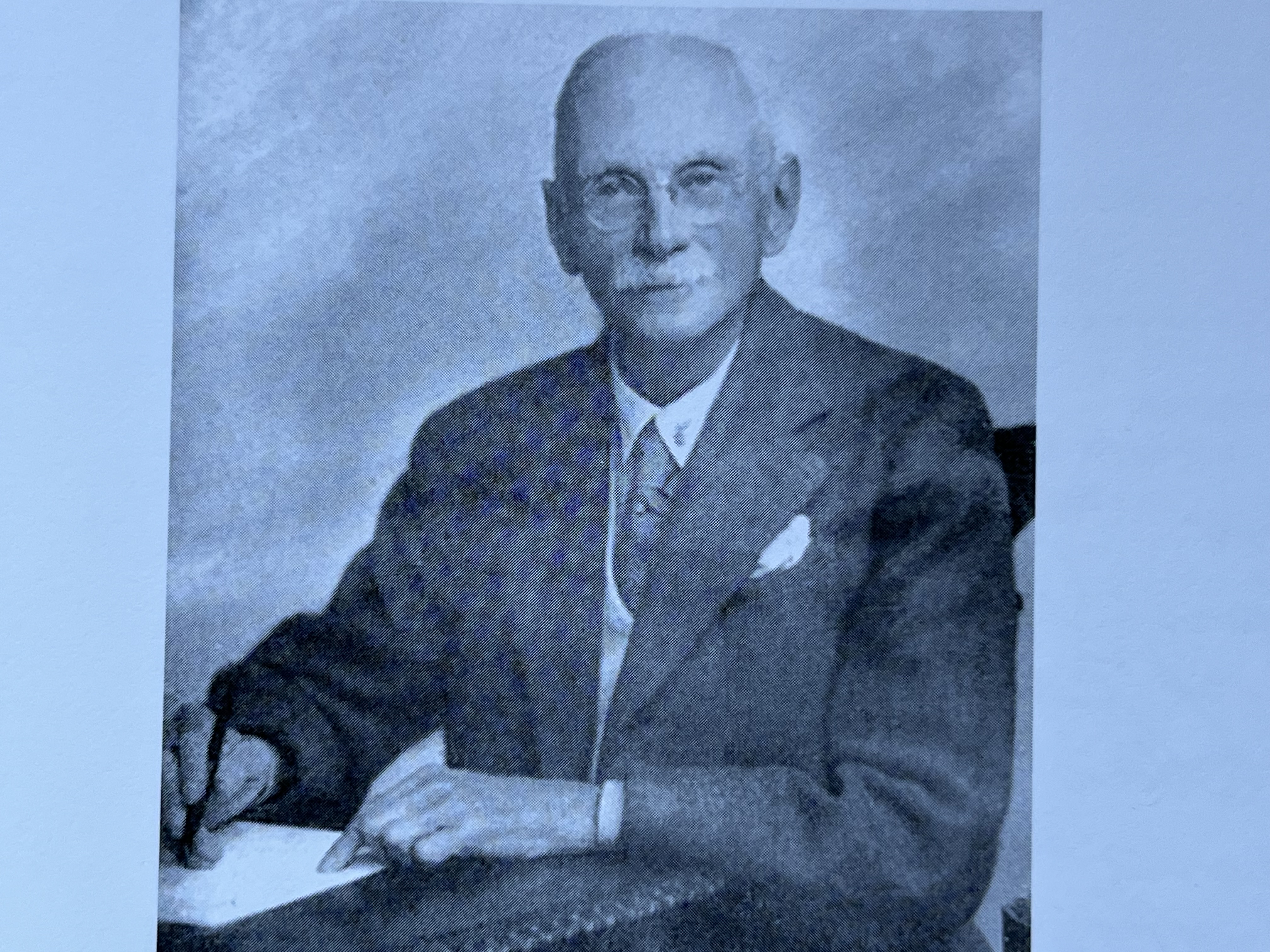
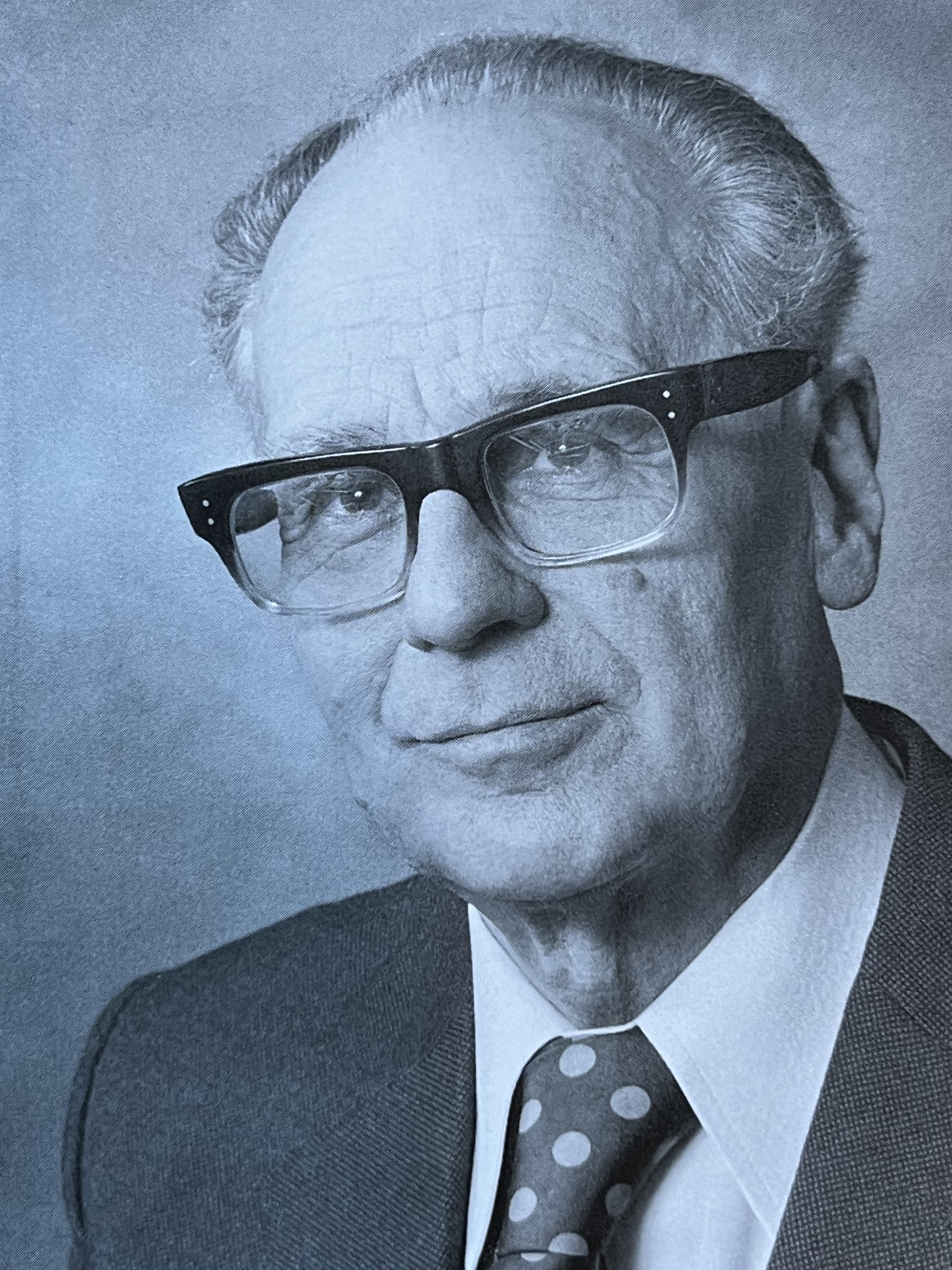
The antique dealing business, Hotspur Limited, was founded by Robin’s grandfather, Frederick Kern (see below) together with Robin’s father, Robert (Rob) Kern (see below) in 1924. Frederick had been a director of the London branch of the decorators and antique dealers Carlhain and Beaumartz, as Nicholas Goodison described in the history of Hotspur, ‘[Frederick] was with the firm for twenty years until it closed in 1914, and was then briefly in business at 27 Soho Square as a director of Monday, Kern and Herbert, where he was in charge of the ‘Antique Department and Reproductions” (Goodison & Kern, Hotspur: eighty years of antiques dealing (Two Associates, London, 2004), p.19.
Frederick Kern (1868-1958) in c.1955. Photograph, Robin Kern.Robert Kern in 1974. Photograph Robin Kern.
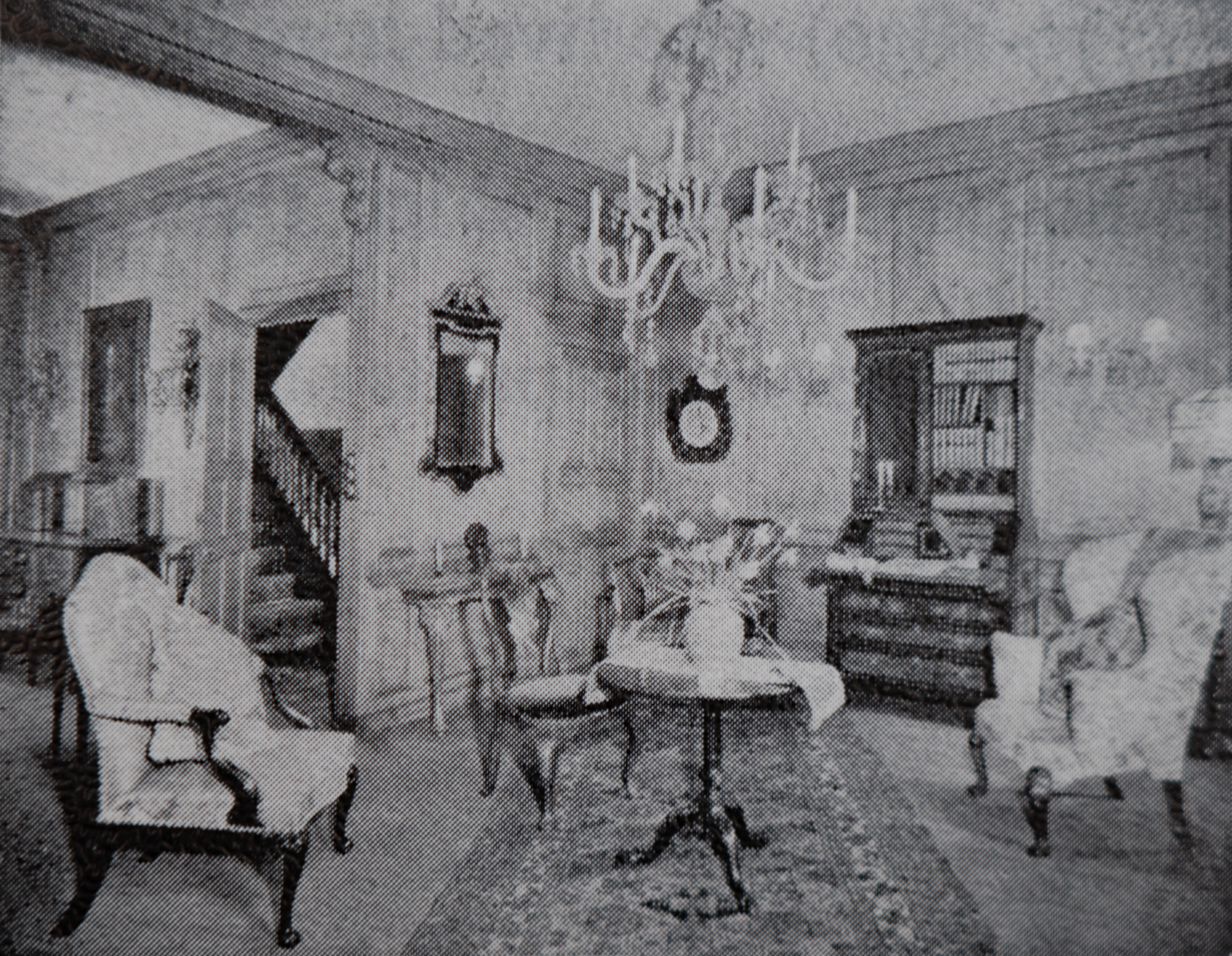
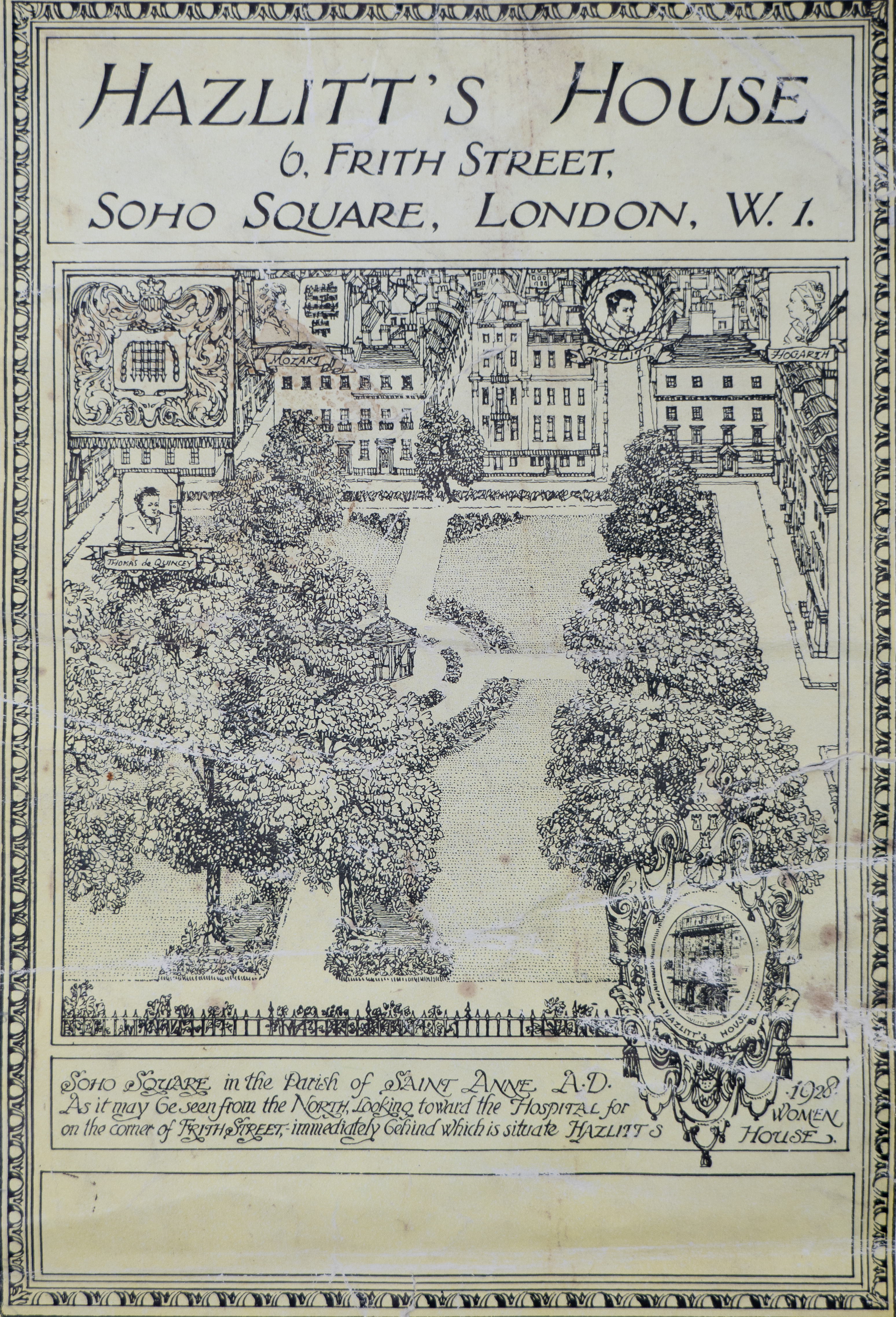
Hotspur’s first antique shop was at 16 Buckingham Palace Road in London, before moving to 6 Frith Street, near Soho Square in London by the late 1920s. The building in Frith Street occupied by Hotspur Ltd was formerly the home of the writer William Hazlitt (1778-1830) and the interiors were perfect for displays of English antique furniture that Hotspur were famous for buying and selling.
Hotspur Limited, 6 Frith Street, London, interior. Photograph, Robin Kern.Sales brochure produced by Hotspur in 1928. Photograph, Antique Dealer Research Project University of Leeds.
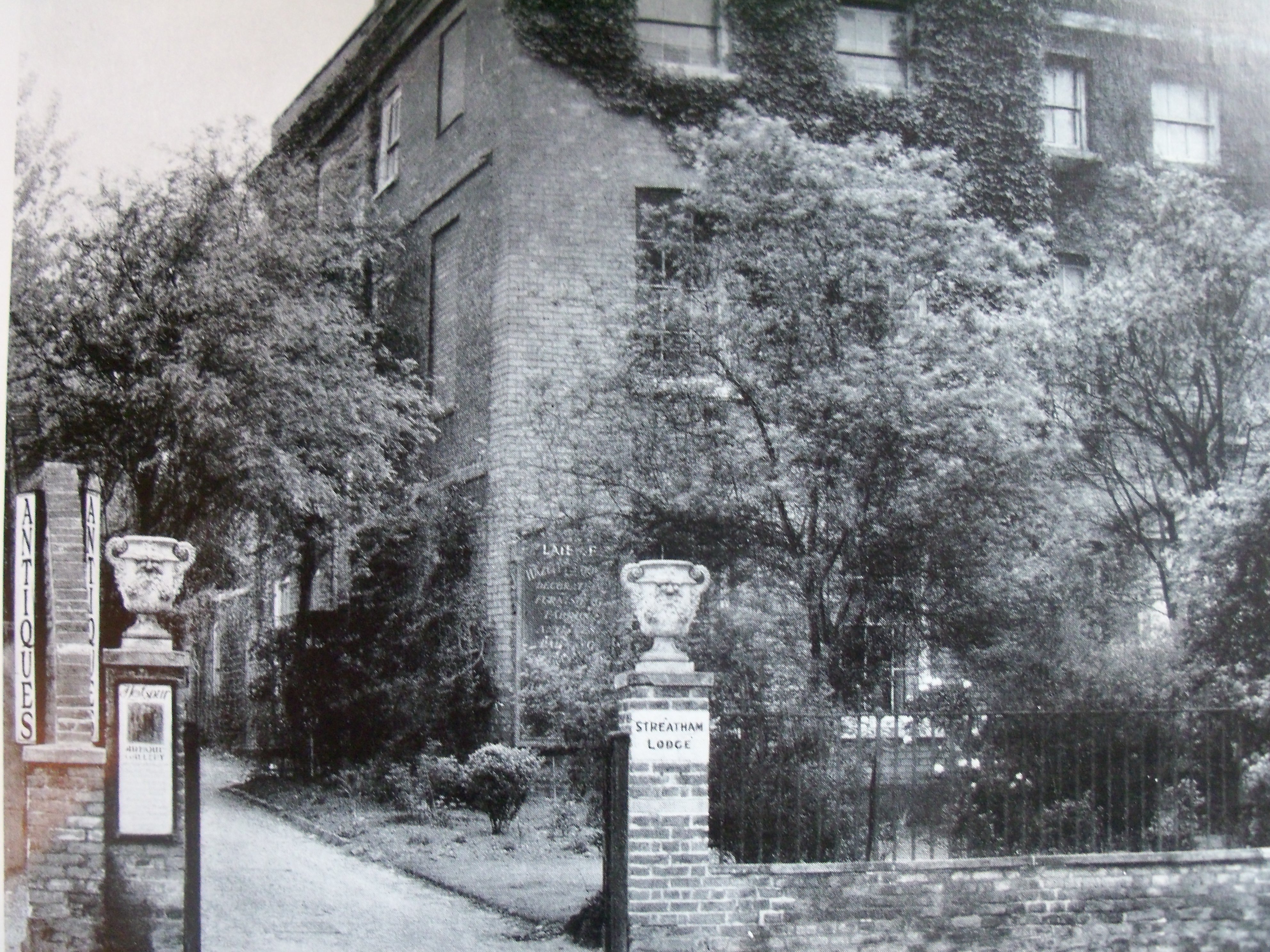
In 1939, to avoid bombing during the Second World War, Hotspur relocated to Streatham Lodge, Richmond, a rather grand 17th century house, again with period rooms ideal for the display of English antique furniture.
Streatham Lodge, the business location of Hotspur from 1939 to 1951. Photograph, Robin Kern.
In 1951 Frederick and Rob Kern moved Hotspur back to central London, to 14 Lowndes Street, a very smart street near Belgrave Square, and in 1956 Robin joined his father in the business, followed by his younger brother Brian in 1963. Robin and Brian’s father and mother, Rob and Betty, were tragically killed in a road accident in 1977. Brian retired from the business in 1999, but Robin continued, finally closing the doors in 2008.
Hotspur were one of the leading dealers in the highest quality antique furniture, especially English furniture of the ‘classic’ period 1680-1830. As Chris mentions (above) they helped build many of the most important collections of antique furniture in the mid-to-late-20th century in both the UK and the USA. Hotspur were also central to building of the antique furniture collection of Noel Terry (1899-1979), which remain on display at Fairfax House in York
Our memories of Robin are of a highly principled and exceptionally generous person. We are privileged to have included Robin and Hotspur as part of the Antique Dealers Research Project at the University of Leeds. Indeed, we are working quickly to make the oral history interview that we undertook with Robin and Chris Coles available to listeners (we are just sorting out the images so we can make that interview live on the project website). You may also be interested to hear that Hotspur are one of the antique dealers that are highlighted as part of the Year of the Dealer digital trails – the sale of the Harewood House secretaire (and the story of Hotspur), shown above, is one of the 10 objects in the digital trail at Temple Newsam, Leeds. We hope to have news of the launch of the Year of the Dealer trails in January, so do keep you eye on the Blog.
But before that, we send our sincerest condolences and best wishes to Robin’s family and friends.
The first of our THREE In Conversation events as part of the AHRC funded ‘Year of the Dealer’ project (2019-2020) was held at the Lady Lever Art Gallery, Port Sunlight, near Liverpool on Thursday 21st November -there are TWO further In Conversation events; one at Temple Newsam, Leeds on Thursday 23rd April 2020; and a final In Conversation at the Victoria & Albert Museum, London, on Thursday 7th May 2020.
The In Conversation events are themed around an on-going, public-facing conversation on the historical and contemporary relationships between the art market and museums and the wider research project to investigate the history of antique dealing in Britain in the 19th and 20th centuries – a subject explored in the original AHRC funded project ‘Antique Dealers: the British Antique Trade in the 20th century, a cultural geography’ (2013-2016) and the various research initiatives and projects that both underpinned and have been subsequently developed from, this fascinating and previously very little studied area of British cultural life – you can of course follow all the projects associated with this strand of research in our new project website ‘Antique Dealers’ at the University of Leeds.
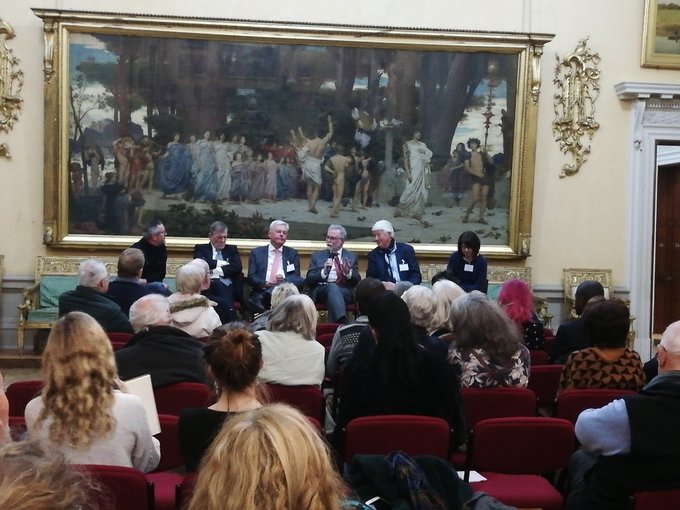
Our In Conversation at the Lady Lever Art Gallery was focused on the collecting activities of William Hesketh Lever (1851-1925), the founder of the Lady Lever Art Gallery – with a theme of collecting and the art market ‘Then & Now’ – the market for decorative art (or Antiques as one might also call them) in the late 19th and early 20th century and the market for decorative art/antiques today. We had a very distinguished panel of experts for the In Conversation – from right to left in the photograph below are Sandra Penketh, Director of Art Galleries and Collections Care at National Museums, Liverpool; Robin Emmerson, curator emeritus, Lady Lever Art Gallery; Colin Simpson, Principal Museums Officer, Wirral Museums; Prof Nick Pearce, Professor of Art History at Glasgow University; Peter Woods, antique dealer and collector and me – Mark Westgarth, University of Leeds. We also had an excellent and packed audience of interested and interesting people – including lots of people from the local area and with associations with the Lady Lever Art Gallery – but it was good to see people from much further afield too – some had travelled all the way from London and the South East of England! Thank you to everyone on the Panel and everyone who attended for making the event such a success!
In Conversation at the Lady Lever Art Gallery, 21st November 2019.
The discussion and debate was lively and informative, with each of the participants on the Panel offering reflections on the art market, collecting and museums from historical and contemporary perspectives (from various ‘stakeholders’ if you like – museum professionals, academics, and professional antique dealers and collectors) . There were also some great questions from the assembled audience. I don’t think we exhausted the theme at all (certainly not in the relatively short time we had for the ‘In Conversation’) – indeed, its just as well we have many more events and activities as part of the ‘Year of the Dealer’ project!
It was great to see the project had so engaged the participants, and bodes well for future events. I’d like to thank everyone at the Lady Lever Art Gallery – Sandra Penketh, Alyson Pollard, Dave Moffat – and the events team at Lady Lever – Joel, Caroline, Nina and Kimmi – and all the support staff, for all of their help with the development and delivery of the In Conversation. And of course the Year of the Dealer project team, Eleanor, Vanessa, Simon and Gemma, for all their hard work too.
Do keep a look out for future events as part of the ‘Year of the Dealer’ project each of the In Conversation events are free to attend (bookings will open soon for the Temple Newsam and V&A Museum events) – we also have a wine reception for each on the In Conversations (if you needed any further incentive to come along of course!). We hope to see you at Temple Newsam and at the V&A Museum next year. Do keep you eye on the events pages on the Year of the Dealer project website.
Thank you to Frances Allitt and the team at the Antiques Trade Gazette (ATG) for the news piece on the launch of the SOLD! The Year of the Dealer project. Frances composed a short promotional piece in the ATG this week – See – ATG Year of the Dealer. We have been busy in planning meetings the last few weeks, at the V&A Museum, Lady Lever Art Gallery, Temple Newsam and at the University of Leeds, settling on final dates for some of the planned events and activities – you can follow updates on the Year of the Dealer project website – Click Here.
In the coming weeks we are planning further project meetings with the rest of the project partners. There’s still a lot of work to do, but the Year of the Dealer is beginning to take shape and the final lists of the 20 objects that will form each of the proposed curated ‘dealer trails’ through the galleries at the 7 major museum partners are coming together. We can give you an exclusive preview of just one of the 20 key objects identified for the ‘Year of the Dealer’ antique dealer trail for Temple Newsam in Leeds –
Library Table, c.1770, by Thomas Chippendale; formerly at Harewood House, near Leeds, now at Temple Newsam, Leeds. Photograph courtesy of Leeds Museums & Galleries
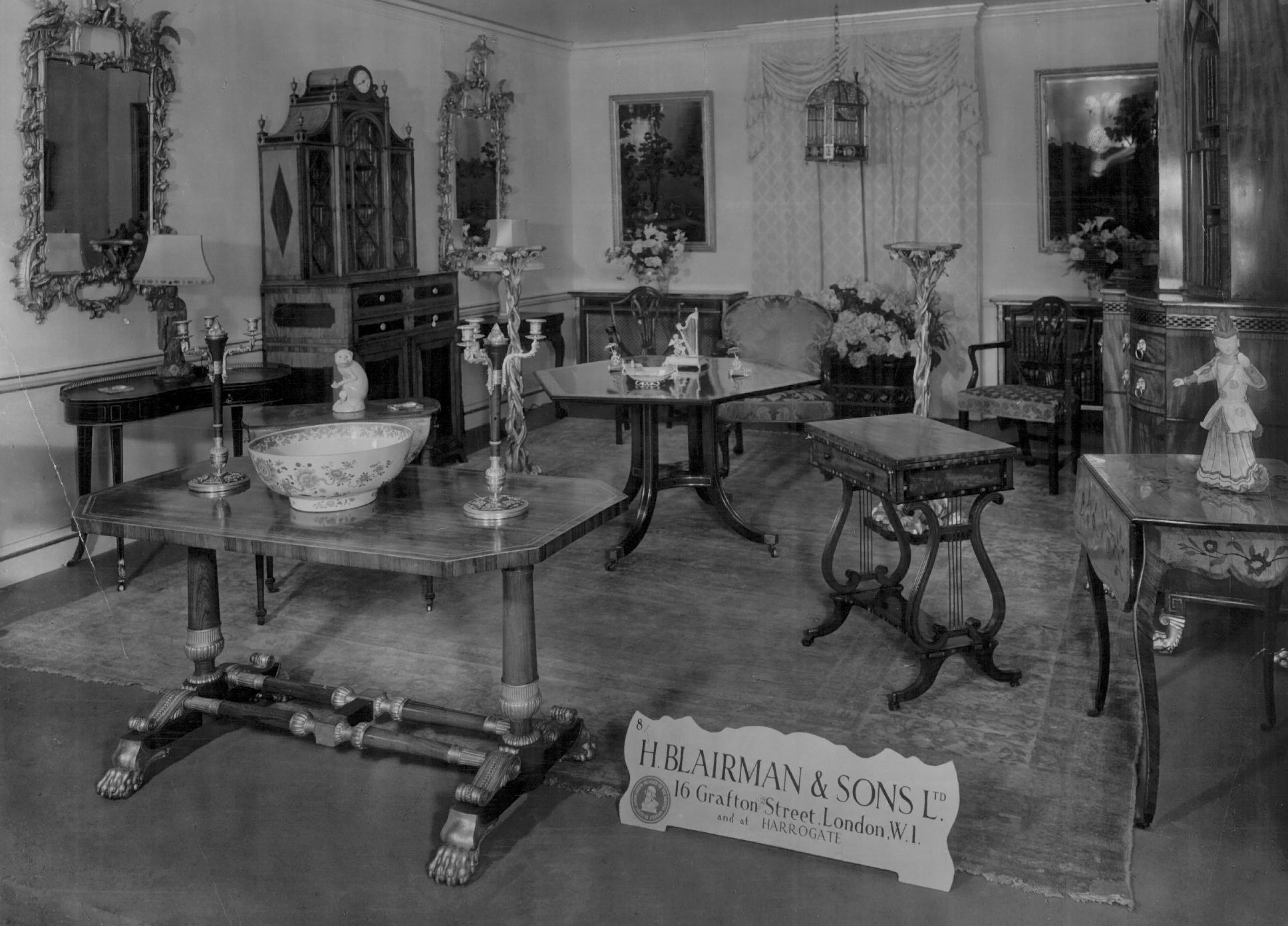
And here it is – the famous Library Table made by Thomas Chippendale, c.1770 for Harewood House, near Leeds. The ‘Year of the Dealer’ trail will obviously mention Chippendale in the story about the Library Table but the main focus of the trails will be the stories about the antique dealers that lie behind the acquisition of the objects by the museums. For the Harewood Library Table the story we will be foregrounding is how it was acquired by Temple Newsam through the antique dealers’ H. Blairman & Sons in July 1965. The Library Table was purchased by the antique dealer George Levy, Director of H. Blairman & Sons, at Christie’s auction sale of artworks from Lord Harewood’s estate in London on 1st July 1965 (the table was lot 57). Blairman’s were established in 1884 and George Levy had joined the business in 1949 – here’s the H. Blairman & Sons stand at the famous Grosvenor House Antiques Fair, London, in June 1950, the year after George Levy joined the business.
H. Blairman & Sons stand at the Grosvenor House Antiques Fair 1950. Photograph courtesy of H. Blairman & Sons.
The 1965 auction sale of the Harewood Library Table generated a great deal of interest at the time – one anonymous reporter writing in Tatler 30th June 1965, the day before the auction, wrote, ‘There is little doubt that such an item will cause a lively stir in the saleroom and I shall be surprised if it does not eventually reach five figures.’ Martin Levy (the son of George Levy), and who remains the owner and director of H. Blairman & Sons, recalls that his father persuaded the group of Yorkshire businessmen who had agreed to support the acquisition of the Harewood table for Leeds Museums & Galleries, that he should bid the agreed limit of 40,000 guineas ‘plus one’ at the Christie’s auction – this was to ensure that if Blairman entered the bidding on the ‘wrong foot’ so to speak – i.e. if they entered the bidding at say 20,000 guineas and their maximum bid was 40,000 guineas, they may end up with a bid at 39,000 guineas, with the opposition having the bid of 40,000 guineas…so a bid of ‘plus one’ would potentially secure the object – indeed, George Levy’s suggestion proved prescient, as the final and successful auction bid was 41,000 guineas!
41,000 guineas (a guinea is £1 + 1 shilling) equated to £43,050 in 1965 and was at the time acknowledged as a world record price for a piece of English furniture. This was indeed an enormous sum for a piece of antique furniture; the equivalent value today would be about £2,450,000 (see Measuring Worth.com). It’s always difficult to work out relative values of course, and the notion of a ‘world record price’ is no less complex – Gerald Reitlinger (The Economics of Taste, volume 3, 1963 and which was obviously published slightly before the auction sale of the Harewood Library Table) cites several ‘world record’ prices for English furniture – (Reitlinger’s data is derived from artworks circulating on the auction market of course…we don’t know about any values from private treaty sales…). Reitlinger cites 10,000 guineas (£10,605) in at an auction in 1928, paid for a Queen Anne console table with matching mirror and torcheres (what is often called a ‘trio’), and sold from the collections of Earl Howe, as the world record auction price for English furniture in the 1920s; although Reitlinger also notes the sale, in 1921, of one of the famous ‘Raynham Commodes’, (also attributed to Chippendale) which made £3,900 (equating to £1,721,000 today).
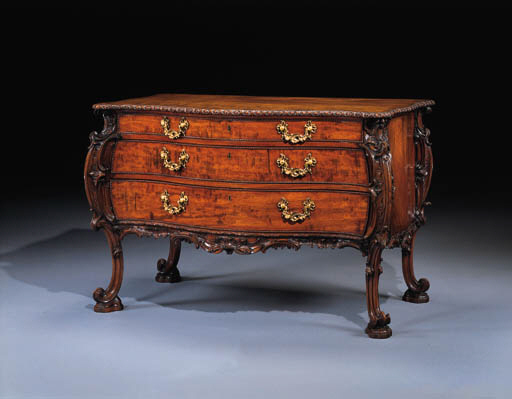
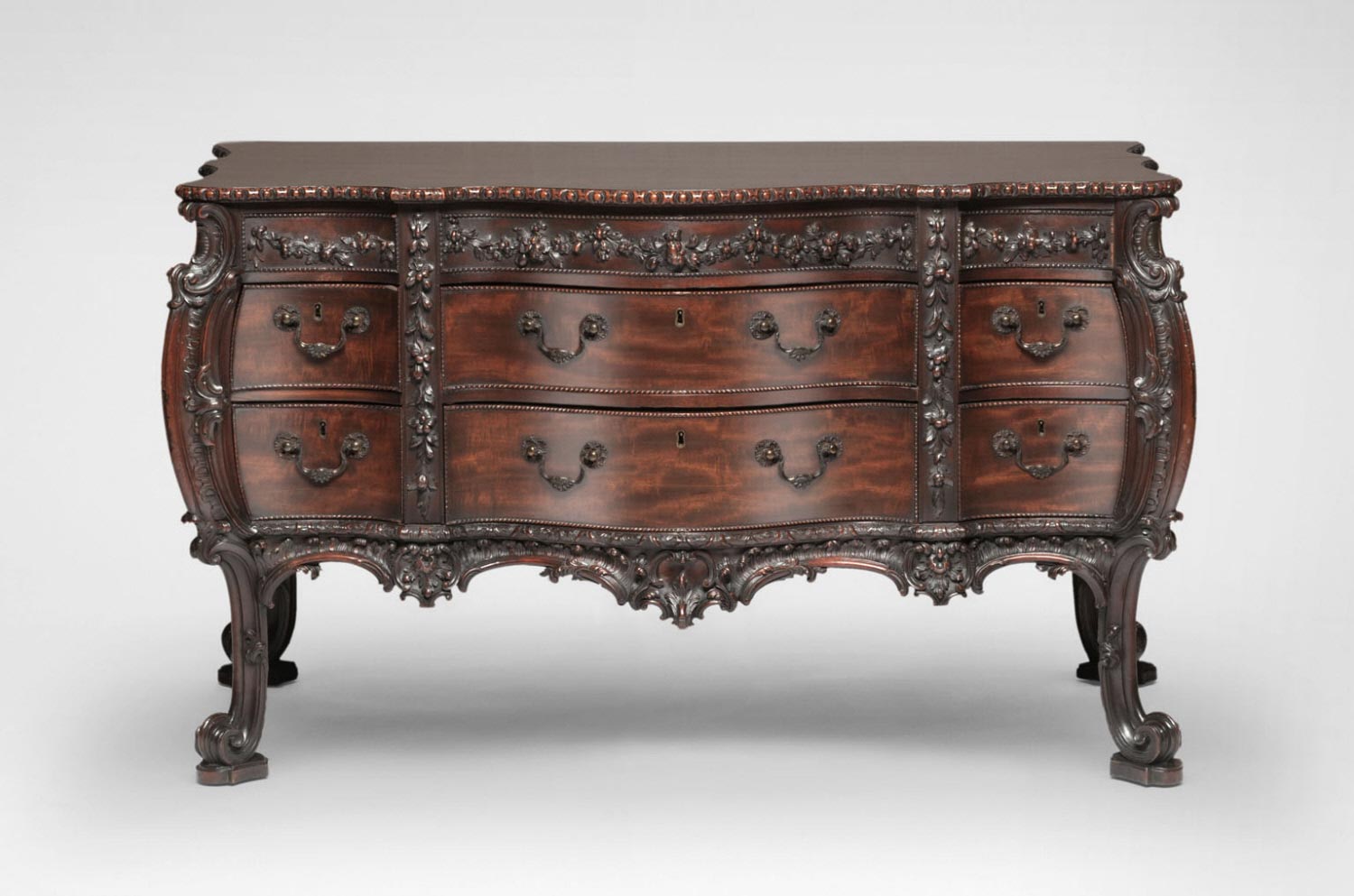
According to Reitlinger the ‘world record’ of £10,605 of 1928 stood until 1961 when he recorded that one of the famous ‘Rainham Commodes’ (also called ‘Raynham’) was sold in New York for £25,000 – I’m not so sure about this?…According to the newspaper reports at the time (30th June 1961) the piece that sold for £25,000 in New York was, and I quote, ‘an Adam-Chippendale satinwood and mahogany marquetry serpentine-front commode in the French taste. A masterpiece of design probably executed by Chippendale himself.’ The ‘Rainham Commode’ is, as many of you will know, a mahogany commode (sans marquetry) – here’s a couple of illustrations of ‘Rainham/Raynham’ model commodes – left is an 18th century mahogany commode, described as ‘possibly supplied to…Raynham Hall, Norfolk’ and which was sold at Christie’s New York in 1998 (for c. $1,500,000) at the auction sale of the stock of the New York antique dealer French & Co. This commode incidentally was previously in the stock of the antique dealer Walter Waddingham, of Harrogate, in 1955, and was shown by Waddingham at the famous Grosvenor House Antiques Fair in the same year. On the right is an acknowledged ‘Raynham Hall’ commode – this one is now at the Philadelphia Art Museum in the USA, and was acquired in 1941 having been in the collections of both H.H. Mulliner (1861-1924) and William Randolph Hearst (1863-1951).
18th century commode, sold at the auction sale of the stock of the dealer French & Co. – Christie’s New York 1998. Photograph copyright Christie’s New York. 18th century commode, from Raynham Hall, Norfolk. Philadelphia Museum of Art, USA. Purchased with the John D. McIllhenny Fund, 1941. Photograph copyright Philadelphia Museum of Art.
The history of the ‘Rainham’ and ‘Raynham’ commodes is also complicated by the fact that the well-known collector of English furniture, H. H. Mulliner, purchased Rainham Hall, which is in Essex, in 1920 as a suitable home for his extraordinary collection of antique English furniture; Mulliner’s collection is said to have included a commode from Raynham Hall, Norfolk – so maybe there is more unravelling to do on these ‘Raynham’ and ‘Rainham’ commodes?
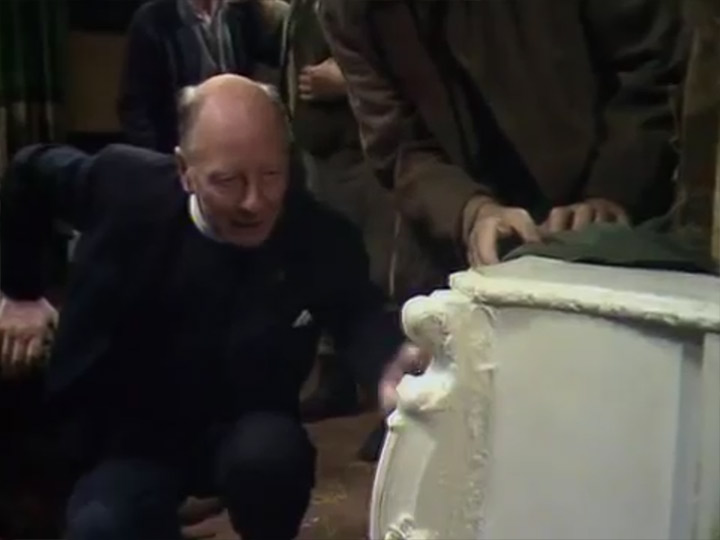
The Norfolk Raynham Commode was actually made much more famous in the popular television series’ Tales of the Unexpected (1980), in a version of Roald Dahl’s short story ‘Parson’s Pleasure‘ (1959). In the TV version, in which John Gielgud plays the crooked antique dealer ‘Cyril Boggis’, Mr Boggis stumbles across a piece of Chippendale furniture in an old farmhouse – and the model for the piece of Chippendale furniture is the ‘Raynham Commode’ – you can just see the commode, painted white, in this film still from the episode of Tales of the Unexpected.
Still from ‘Parson’s Pleasure’ in Tales of the Unexpected (1980).
Roald Dahl was a very keen collector of antique furniture himself, and specifically mentions the Raynham commode in his short story – as Dahl writes; ‘He knew, as does every other dealer in Europe and America, that among the most celebrated and coveted examples of eighteenth-century English furniture in existence are the three famous pieces known as ‘The Chippendale Commodes’….coming out of Raynham Hall, Norfolk.’ (Parson’s Pleasure, in Kiss, Kiss, p.78). Dahl mirrors the real-life history of the Raynham commode in his story – during the negotiations between ‘Mr Boggis’ and the farmers who own the commode, one of the farmers (‘Bert’) asks his fellow farmer to fetch ‘that bit of paper you found at the back of one of them drawers’ (Parson’s Pleasure, in Kiss, Kiss, p.82) – this proved to be the original bill for the commode, supplied by Thomas Chippendale; mimicking an article by the furniture historian Herbert Cescinsky published in Burlington Magazine in June 1921 which highlighted the presence, then as now, lost, of the original bill for one of the ‘Raynham’ commodes.
But anyway, besides this fascinating interweaving of fact and fiction in the history of the Raynham Commodes, what we hope that the Year of the Dealer trails will draw attention to is the complex relationships between cultural value and economic value. Indeed, if we take the Measuring Worth.com calculations for these auction sale values of English furniture we can see that the notion of a ‘World Record price’ is a notoriously difficult thing to nail down. For example, the economic value of the Queen Anne ‘trio’ sold in 1928 of 10,000 guineas (£10,605) was the equivalent of c.£5,000,000; and the ‘Rainham Commode’ sold in 1961 for £25,000 (if indeed it was the ‘Rainham Commode) was the equivalent of just £1,881,000. So technically the Queen Anne ‘trio’ sold in 1928 still holds the ‘world record’ for a piece of English furniture sold at auction, even surpassing the auction sale of the Harewood Library Table in 1965 (equivalent of £2,450,000).
But then again, there’s more to ‘World Records’ that merely economic calculations; they are complex cultural and social signifiers that both transcend and complexify the blunt instrument of economic value.
We are very excited to announce that the ‘Year of the Dealer’ project has officially started – the new project website is being constructed (thanks to Peter Edwards in University of Leeds, Arts, Humanities & Cultures Faculty IT team) – you can see the new website here – Year of the Dealer website
The ‘Year of the Dealer’ project is a collaboration between the University of Leeds, the University of Southampton, 7 major national and regional museums (The Victoria & Albert Museum, The National Museum, Scotland, The Ashmolean Museum, The Lady Lever Art Gallery, The Bowes Museum, Temple Newsam, Preston Park Museum and the Stanley & Audrey Burton Gallery), together with a regional community theatre (The Witham, Barnard Castle) and one of the UK’s leading antique dealing businesses (H. Blairman & Sons). The project runs from 1st June 2019 until 31st May 2020 and is an ‘Impact and Engagement’ project funded (£100,000) by the Arts and Humanities Research Council (AHRC). Over the next 12 months the Year of the Dealer will be organizing a series of events, activities and museum object trails, using the research arising from the AHRC funded (£231,592) research project ‘Antique Dealers: the British Antique Trade in the 20th century’ AH/K0029371/1 (2013-2016).
C. Charles, Brook Street shop interior, c.1903. Photograph, Connoisseur 1903.
Through these events and activities the project aims to draw attention to the relationships between the art market and public museums and to share expertise, experience and perspectives among stakeholders and to increase public engagement with the significance of the history of the antique trade in British cultural life.
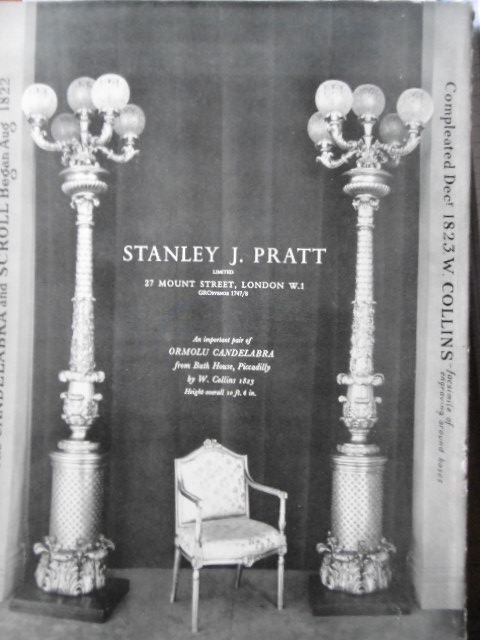
The Year of the Dealer will reveal new and previously marginalised stories of world-renowned and familiar museum objects through the co-production of a series of 7 museum ‘hidden history’ trails; each trail will have a curated selection of up to 20 museum objects foregrounding the history of antique dealers in the biography of the museum object. So, for example, at The Bowes Museum, we will be drawing renewed attention to some of the museum objects by telling the story about the antique dealers who sold the object to the museum – this rare pair of gilded bronze lamps, made by William Collins in 1823………..
One of a pair of gilded bronze lamps at The Bowes Museum. Photograph, antique dealers project 2018.
…………………..will be reinterpreted through the Year of the Dealer trail in the museum as a pair of lamps sold to the Bowes Museum in 1960 by Stanley J. Pratt, a leading antique dealer then trading in ultra-fashionable Mount Street, London. How Pratt acquired the lamps and how they ended up at The Bowes Museum will be key elements in the ‘story’ about the objects. Stanley Pratt came from a well-known family of antique dealers dating back into the 19th century; indeed the Pratt family of dealers were established, according to their own publicity, in 1860, and so sold the lamps to The Bowes Museum in their centenary year!
Advertisement by Stanley J. Pratt illustrating the pair of gilded bronze lamps. Connoisseur, June 1960.
Besides the 7 museum trails, the project will also stage 4 art market themed knowledge exchange workshops and 3 public engagement ‘In Conversation’ events, hosted by the partner museums. The workshops will consider the relationships between the art market and public museums, drawing in historical and contemporary perspectives and will also consider the challenges and future opportunities for the relationships between museums and the art market. The ‘In Conversation’ events invite key art market professionals, museum professionals, academics and commentators to discuss and debate the subject of the art market and public museums – all the events will be free, thanks to the Arts and Humanities Research Council (AHRC) funding.
Other activities as part of the Year of the Dealer project include museum front of house staff and volunteer training workshops at each of the 7 partner museums to ensure that the project research and objectives are disseminated and cascaded to the front-line interface with the public.
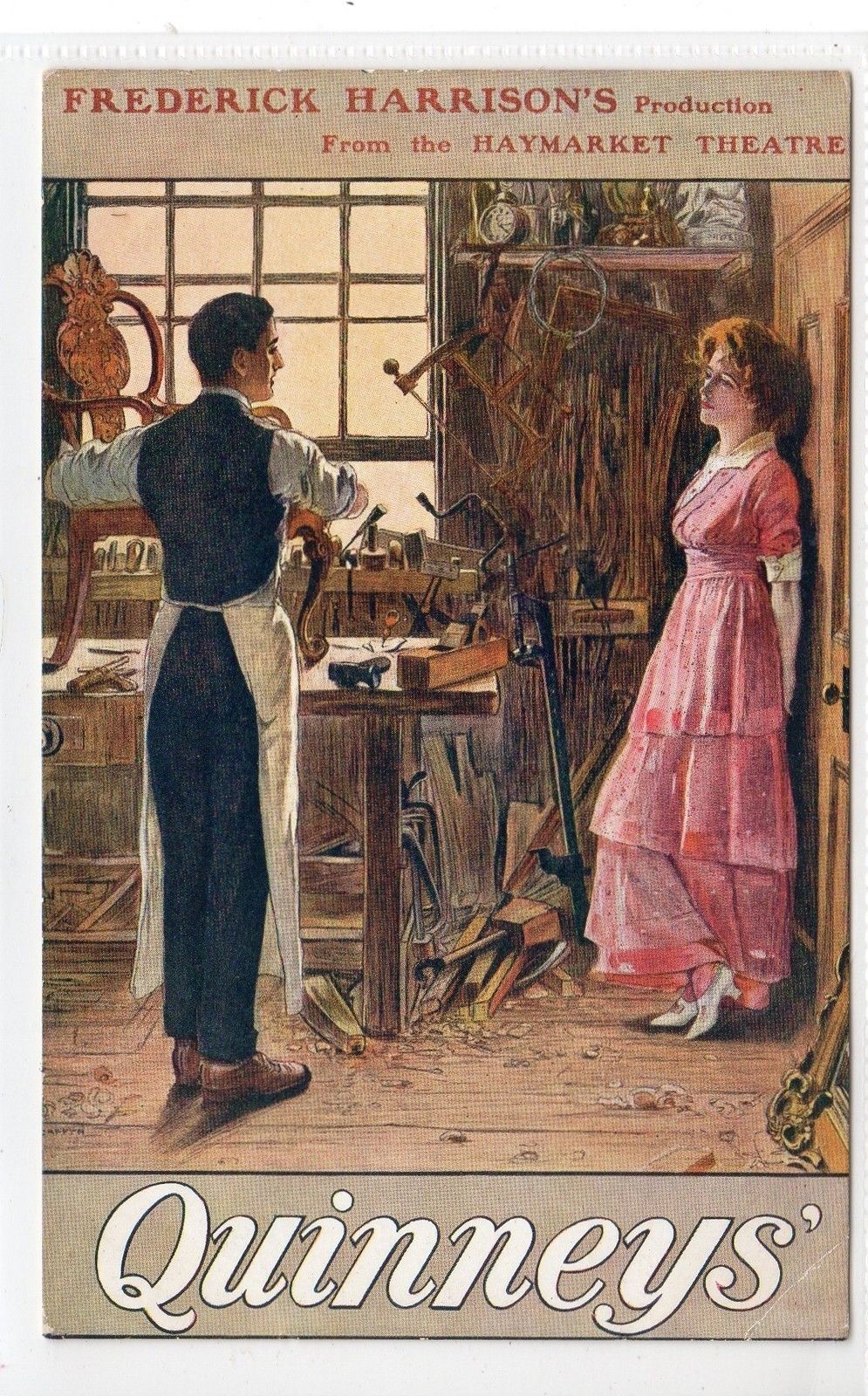
We will also be re-staging the play ‘Quinney’s (1915) at the Witham Theatre, Barnard Castle, and are organizing an associated workshop, ‘Dealing with Authenticity’ at The Bowes Museum, Barnard Castle.
Poster for Quinney’s production at Birmingham Theatre, 1925.
‘Quinney’s’ is the story of the fictional antique dealer Joseph Quinney. The play and the workshop aim to critically engage the general public with the central role that ‘authenticity’ has played in the art market, and to explore and critique the trope of the antique dealer as a problematic character, often associated with fakes and forgeries and the ‘love of money’. The workshop will be interdisciplinary in scope, drawing on theatre and performance studies and material culture studies as well as the history of antique dealers.
As you can see, there are plans for a very rich series of events, activities and collaborations over the course of the Year of the Dealer project – but we have a great team to help deliver the project – my colleague from University of Southampton, Dr Eleanor Quince, and Vanessa Jones, our project administrator, and my colleagues at the University of Leeds, Professor Jonathan Pitches and Dr George Rodosthenous, and of course all of the curators and staff at the all 10 collaborating partners and a small team of PhD research students to help keep the project on track!……it’s no doubt going to be exhausting, but we hope it will also be a really engaging project…and one that will have real Impact!
We hope to see you at some of the events – we already have some events fixed in the project calendar…so do keep an eye on the project website and the antique dealers research blog.
The SOLD! exhibition at The Bowes Museum is going very well; we’ve had lots of very positive and encouraging comments and visitors seem to like the Show – it’s running until the 5th May, so there’s still plenty of time to see the exhibition. But I also thought you would like to know of my parallel exhibition, due to open very soon at The Stanley & Audrey Burton Gallery at the University of Leeds – I’m keeping myself busy!
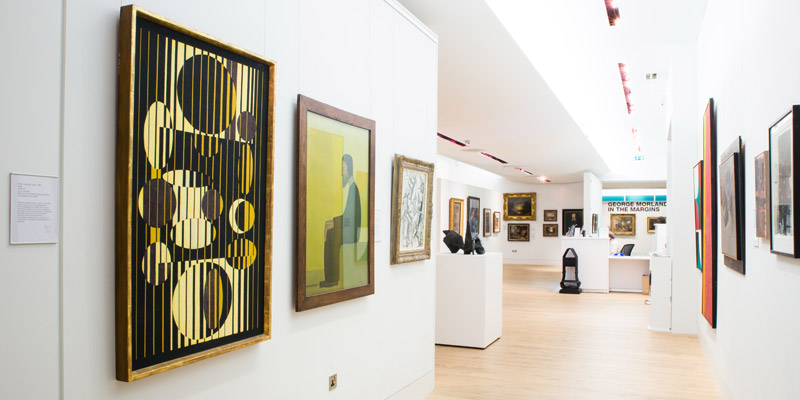
This new exhibition, called Antique Dealers: Buying, Selling and Collecting, will open at the Stanley & Audrey Burton Gallery at the University of Leeds on Monday 4th March 2019 and runs until 25th May 2019. Here’s the gallery –
The Stanley & Audrey Burton Gallery, University of Leeds. Photograph, copyright University of Leeds.
– it’s a great space – although we are only going to be using the Education Room Space in the SABG as it’s a much smaller exhibition, but I still hope that it will draw further attention to the significance of the history of Antique Dealers to British cultural life. I’m still finishing the Text Panels and the object labels for this one, but they will be all ready for the printers this coming week.
The Antique Dealers exhibition is focused on the extraordinary range of antique dealer archives that have been so generously donated to the Brotherton Library Special Collections at the University of Leeds. As you may know, we have several highly important antique dealer archives at the University of Leeds library – including the archives of Phillips of Hitchin, Ronald A. Lee, Roger Warner, and H.C. Baxter & Sons. We’ve focused on just three of the archives for the Antique Dealers exhibition at the University – those of Phillips of Hitchin, Ronald A. Lee and Roger Warner – and have brought a few objects that the dealers sold to Temple Newsam, Leeds, back into dialogue with the original archive material. Just to whet your appetite here’s a few examples of the objects coming on loan from Leeds Museums & Galleries to the Antique Dealers exhibition at the SABG in Leeds.
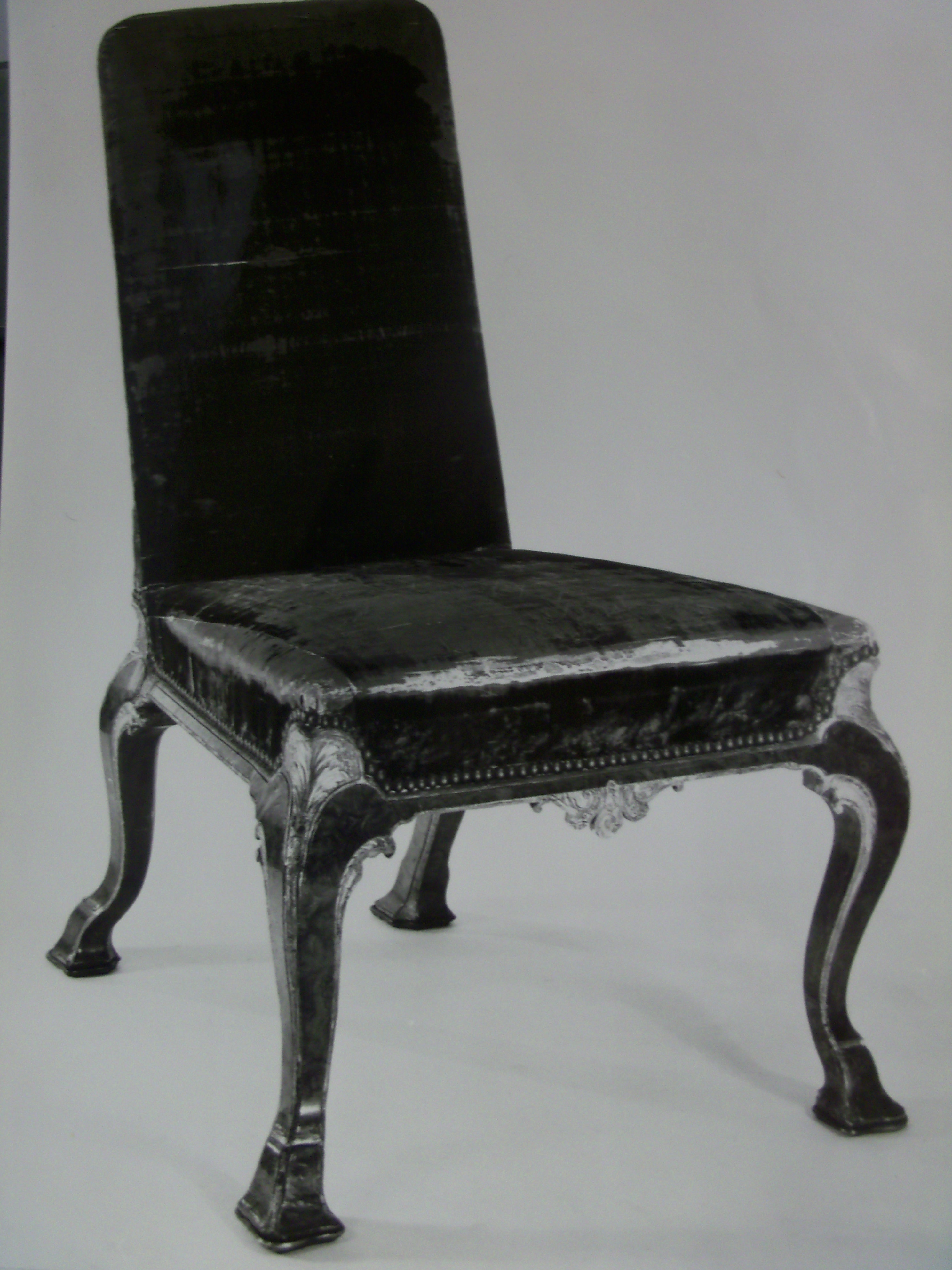
From Temple Newsam, this historically important early 18th century side-chair from Houghton Hall in Norfolk, sold by Phillips of Hitchin to Temple Newsam in 1960.
Early 18th century Walnut side chair, sold by Phillips of Hitchin to Temple Newsam, 1960. Photograph from the Phillips of Hitchin archives, BLSC University of Leeds.
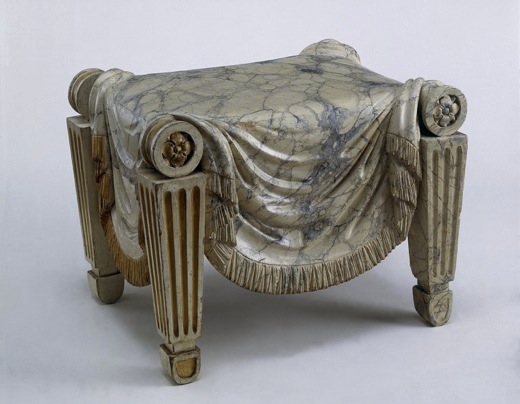
And also from Temple Newsam, this amazing painted stool, designed by C.H. Tatham and painted to imitate marble, which was sold to Temple Newsam in 1975 by the antique dealer Ronald A. Lee –
Painted stool designed by C H Tatham, c.1800; sold by R.A. Lee to Temple Newsam in 1975. Photograph Leeds Museums & Galleries.
We have also had an extraordinary range of objects on loan from the private collections of the Warner family – from Simon Warner, Deborah Warner and Sue Ashton, the son and daughters of the well-known antique dealer Roger Warner (1913-2003) – these are some wonderfully ‘curious’ objects that remained in Roger Warner’s collection until he died in 2003. We are so grateful to the Warner family for so generously loaning the objects that formerly belonged to Roger Warner – and especially to Simon Warner for so kindly delivering the objects to the University!
I’ll update the Blog on the progress on the exhibition in the coming week – and hope that people get a chance to see the new Antique Dealer exhibition at the Stanley & Audrey Burton Gallery, University of Leeds during the period it is on – 4th March to 25th May 2019 – it’s a FREE exhibition!
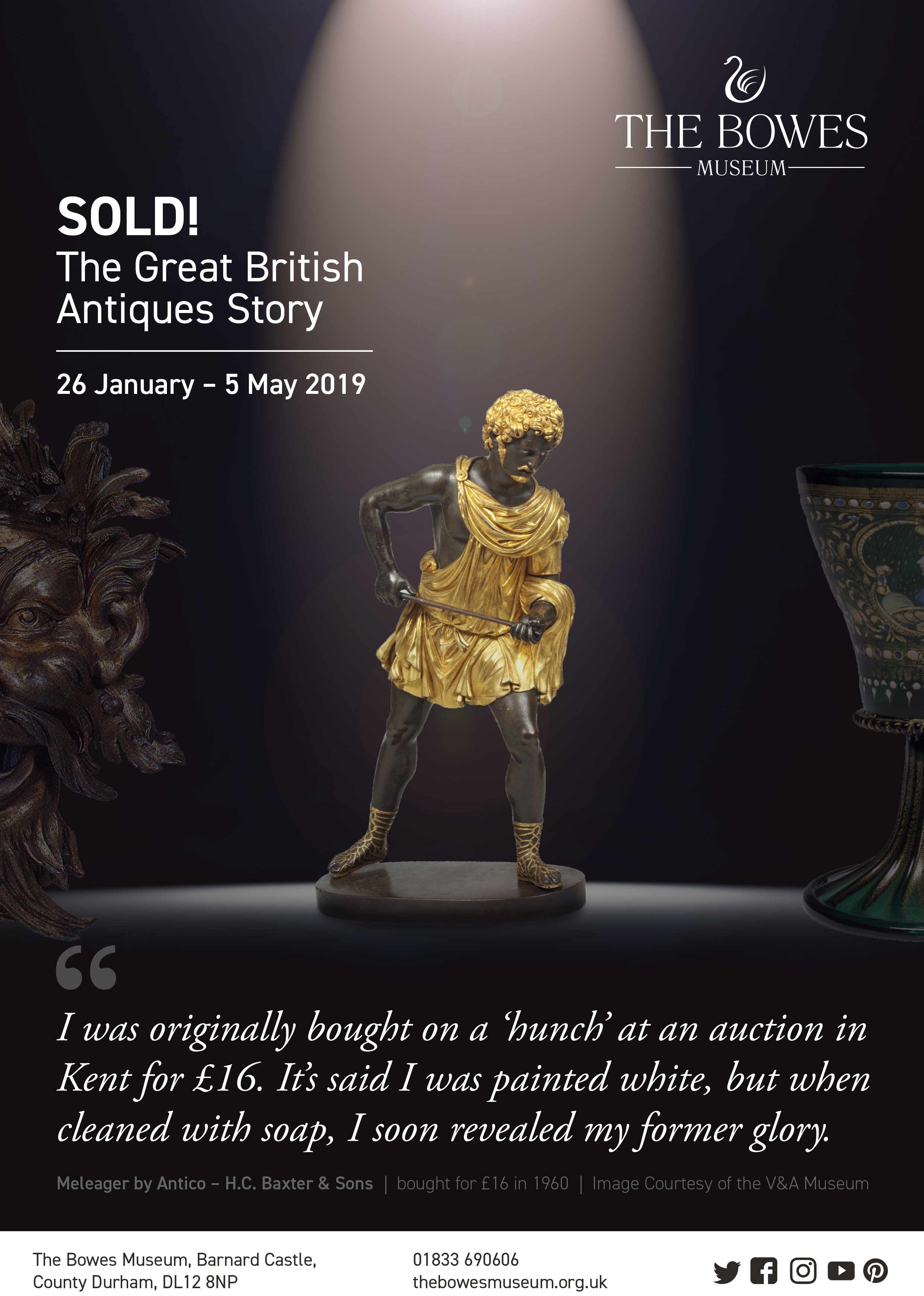
As some of the readers of the Antique Dealers Blog already know, for the last 18 months I’ve been very busy working as ‘guest curator’ on an exhibition called ‘SOLD!’ at The Bowes Museum based on over 10 years of research on the history of Antique Dealing in Britain – and we can now announce the forthcoming opening (on 26th January 2019) of the exhibition! Here is the poster, with the stunning bronze by Antico of c.1490-1500, acquired by the V&A Museum through the dealer Horace Baxter in 1960, as the ‘poster boy’.
SOLD! Poster
SOLD!, which opens on 26th January 2019, brings together more than 40 world-class objects, from various museums, including the V&A, the British Museum, The Royal Armouries, Royal Collection, The Lady Lever Art Gallery and Temple Newsam, as well as objects from the collections at The Bowes Museum itself, and loans from private collections never seen in public before, to tell the ‘hidden histories’ of the objects with a focus on the history of antique dealing. One of my PhD students (Simon Spier) is working as the project research assistant helping with the assembly of the recreation of an ‘old curiosity shop’ which will be part of the display and interpretation for SOLD! – you can follow Simon’s activities in the special Twitter feed we have developed – see https://twitter.com/Bowes_GBAS
Besides ‘Antico’ from the V&A Museum…(which I have been calling a ‘Horace Baxter’ – indeed, I have been calling all the objects in the exhibition by the name of the dealer who sold them which has been very confusing for many museum curators! – so the ‘Antico’ is a ‘Horace Baxter’; we also have a ‘Henry Farrer’ (a very rare 16th century Venetian glass goblet – sold by Farrer to the South Kensington Museum (now the V&A Museum) in 1854 for £30.0.0) – you can just see the edge of the green glass goblet to the right of the ‘Baxter’ in the poster above; and a ‘David Tremayne’ – the wonderful 18th century bronze mask, sold to The Bowes Museum by David Tremayne in 1966 – you can just the bronze mask to the left of the ‘Baxter’ (sorry, the ‘Antico’) in the poster.
We have a wonderful range of objects in SOLD!, including this amazing demilance suit of armour of c.1620 from the Royal Armouries, (Tower Armouries Collection in London), which was acquired via the well-known specialist dealer in ‘ancient armour’ Samuel & Henry Pratt from their ‘The Gothic Hall’ just off New Bond Street in 1840.
S. & H. Pratt – (1840) – Demilance suit of armour, c.1620. Photograph courtesy of The Royal Armouries.
As part of SOLD! we have objects that passed through the hands of major 19th century dealers such as E.H. Baldock, John Webb and George Durlacher; and in the 20th century, major dealers such as Frank Partridge, M. Harris & Sons, H. Blairman & Sons, Mallett & Son, Wartski, Hotspur, S.J. Phillips, and Bluett & Son…plus many more besides.
One of the major dealers we have focused on is Phillips of Hitchin; mainly because we have the Phillips of Hitchin archives at the Brotherton Library Special Collections at the University of Leeds. And here’s a very rare photograph of the Phillips of Hitchin shop in c.1905, with Frederick W. Phillips (centre) the chap that established the firm in 1882, and Hugh Phillips (his brother) to the right (we don’t know who the third person is) – the photograph was taken just a few years before Frederick Phillips bought the ‘Gothic Cupboard’ and sold it to Robert Mond (see below).
F.W. Phillips (Phillips of Hitchin) shop, Hitchin, c.1905. Digital copy of glass-plate negative courtesy of the V&A Museum.
Jerome Phillips, the grandson of Frederick Phillips, kindly identified the people in the photograph – and Kate Hay at the V&A Museum and her volunteers generously made a digital copy from the original glass-plate negative (part of the Phillips of Hitchin material that is, at present, at the V&A stores).
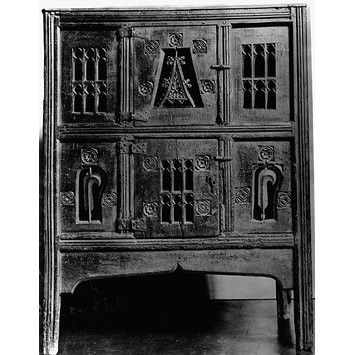
There are also couple of objects from the V&A Museum in the exhibition that were sold by Phillips of Hitchin – this Gothic cupboard (known as ‘Prince Arthur’s Cupboard’ in the early 20th century when it was acquired by the V&A Museum) was sold by F.W. Phillips (Phillips of Hitchin) to the well-known collector Robert Mond in 1912 for £220.0.0. – Mond donated it to the V&A in the same year.
F.W. Phillips (Phillips of Hitchin) ‘Gothic Cupboard’ c.1500-1600. Sold by F.W. Phillips in 1912. Photograph courtesy of the V&A Museum.
The other Phillips of Hitchin object in the exhibition is the famous ‘Medal Cabinet’ by the 18th century cabinetmaker William Vile (c.1700-1767), of c.1760, which was sold by PoH to the V&A in 1963 for £10,000.
Phillips of Hitchin (1963). George III mahogany medal cabinet, c.1760. Photograph courtesy of the V&A Museum.
The exhibition will also have a wide range of exceptionally rare antique dealer archives, and a range of dealer ephemera, to bring to life the history of the antique trade. But there are also some spectacularly rare objects in SOLD! – indeed, one of the key premises of the exhibition is to show some very familiar, world-class museum objects, but to ‘reframe’ them through the narrative of the art market; and to bring the previously marginalized story of antique dealing more directly, and more explicitly, into the spaces of the public museum – and to provoke us all (museum curators, academics, and the public) to reflect on why the art market has often been suppressed and dislocated from the narratives of the history of art that the museum presents us with.
We hope that the ‘SOLD!’ exhibition will be a catalyst for increased public engagement with these previously marginalized stories.
I’ll be updating the blog with regular progress reports on SOLD! as we move towards the opening of the exhibition on 26th January 2019 – I do hope that we will see as many people who can make it to SOLD! at Bowes Museum and I hope to say ‘hello’ if I am about at the exhibition.
As followers of the Antique Dealer blog will be aware, one aspect of the continued development of the Antique Dealer research project has been an investigation into the emergence and role of themed exhibitions staged by antique dealers over the course of the 20th century. Indeed, as a platform for dissemination of information on antiques and as a mechanism for the marketing of antiques, these exhibitions very usefully draw attention to the deep synergies between structures of knowledge and the art market. Dealers have regularly organised selling exhibitions of course – the famous ‘Summer Exhibitions’ held by the leading New Bond Street dealership Frank Partridge & Sons from the 1950s to the 1980s, were opportunities to showcase new stock and for the swish private preview parties for the exhibitions, which were significant events in the social calendar. Such exhibitions were attended by the most influential collectors, museum curators, interior decorators and antique dealers. But what is of particular interest to the research project are the more scholarly, thematic exhibitions that antique dealers have staged over the years. These exhibitions, which remain a regular part of the current practices of antique dealing at the top of the antique trade, demonstrate the discrete, focused and scholarly contributions that many antique dealers have made to the knowledge of antiques – such exhibitions have often been accompanied by museum-type catalogues composed by antique dealers who are acknowledged as leading specialists in their field.
We are very fortunate that in the recent additions to the Phillips of Hitchin archive (again very generously sent up to us in Leeds by Jerome Phillips, who found the extra material whilst tidying up some stores – thank you again Jerome!) we now have a range of material that illustrates the detailed planning and execution of a range of ground-breaking exhibitions held by Phillips of Hitchin during the 1970s and 1980s. Jerome organised these immensely influential selling exhibitions on specific furniture types – a model, unsurprisingly, that was also being adopted in public museums such as Temple Newsam in Leeds at the time (see, for example the exhibitions on ‘School Furniture’ organised by the furniture history scholar Christopher Gilbert at Temple Newsam in 1978 and a similar exhibition at Temple Newsam on ‘Common Furniture’ in 1982).
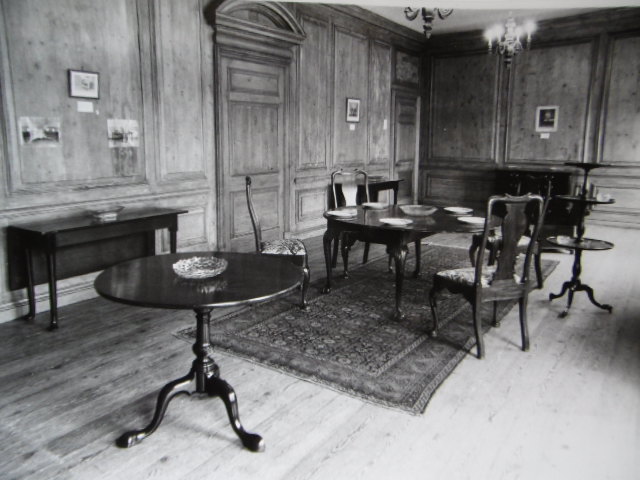
The Phillips of Hitchin exhibitions in June 1981 and June 1984 (staged to coincide with the Grosvenor House Antiques Fair held each June (except 1981) in London) are key examples of these types of antique dealer exhibitions. In 1981 the exhibition on ‘Dining Room Furniture 1730-1830’ was a scholarly project, with antique furniture placed in rooms to mirror the social use of the objects at the time they were made – rather like a ‘period room’ setting that was also so popular in museums at the time.
Phillips of Hitchin exhibition ‘Dining Room Furniture 1730-1830’ June 1981. Photograph Phillips of Hitchin archives, Brotherton Library Special Collections, University of Leeds.
Here’s another room at The Manor House, Phillips of Hitchin’s shop, with the assembly of some furniture suggestive of a more rustic dining space. The exhibition had a fully illustrated catalogue – Jerome remains a leading scholar on antique furniture and wrote many essays on the subject that appeared in publications such as Antique Collector; it’s also worth mentioning that in 1978 Jerome composed the new Introduction to the reprint of R.W. Symonds Masterpieces of English Furniture and Clocks (first published in 1940).
Phillips of Hitchin exhibition ‘Dining Room Furniture 1730-1830’ June 1981. Photograph, Phillips of Hitchin archives, Brotherton Library Special Collections, University of Leeds.
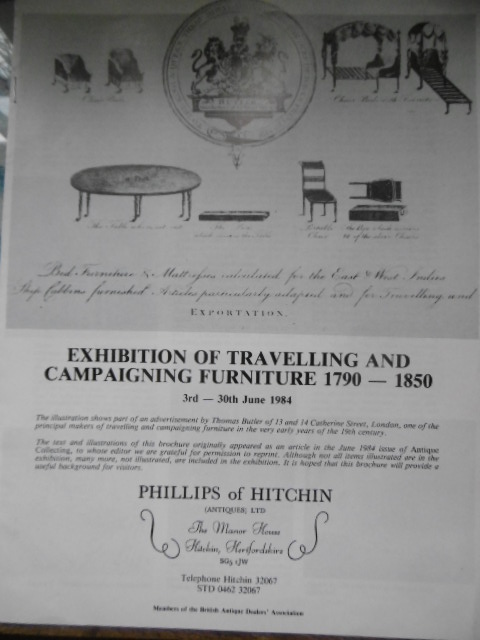
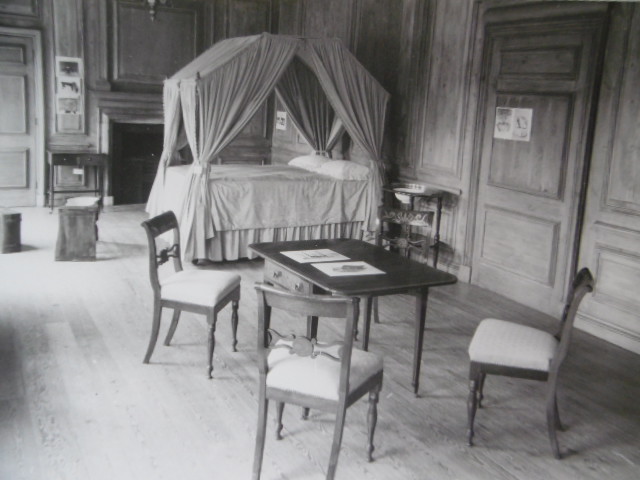
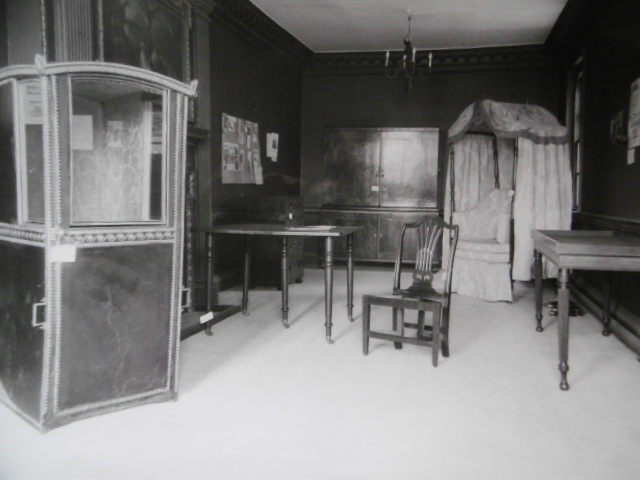
Phillips of Hitchin’s exhibitions on dining furniture might be considered as relatively conventional, and of course they were more than just museum-type scholarly projects and also offered the opportunity for potential buyers to imagine new schemes for their dining rooms. Jerome’s next exhibition, in June 1984, was of a type that was more ground-breaking, for the antique trade at least (as I mentioned, museums such as Temple Newsam were already organising exhibitions focused on specialist furniture types in the 1970s). The ‘Travelling and Campaigning Furniture 1790-1850’ exhibition in 1984 involved considerable primary research and was again accompanied by a catalogue with a discursive essay on the historical development of travelling and campaigning furniture.
Phillips of Hitchin catalogue for Exhibition of Travelling and Campaigning Furniture 1790-1850.
The Travelling and Campaigning Furniture exhibition was obviously more specialist in nature, as I imagine was the audience for the exhibition – specialist collectors of ‘metamorphic’ furniture and museum curators perhaps? But the exhibition itself was a considerable success, according to the detail in the Phillips of Hitchin archives on the exhibition. Indeed, reading the archive one cannot but admire the research and the time and effort that went into the planning and delivery of these exhibitions.
Phillips of Hitchin exhibition ‘Travelling and Campaigning Furniture 1790-1850’ June 1984. Photograph, Phillips of Hitchin archive, Brotherton Library Special Collections, University of Leeds.
The new parts of the Phillips of Hitchin archive contains numerous photographs of the actual exhibitions, together with correspondence and supplementary detail on the planning of the exhibitions themselves – it’s a wealth of material that helps us to understand the objectives and complex nature of these scholarly and selling events.
Phillips of Hitchin exhibition ‘Travelling and Campaigning Furniture 1790-1850’ June 1984. Photograph, Phillips of Hitchin archive, Brotherton Library Special Collections, University of Leeds.
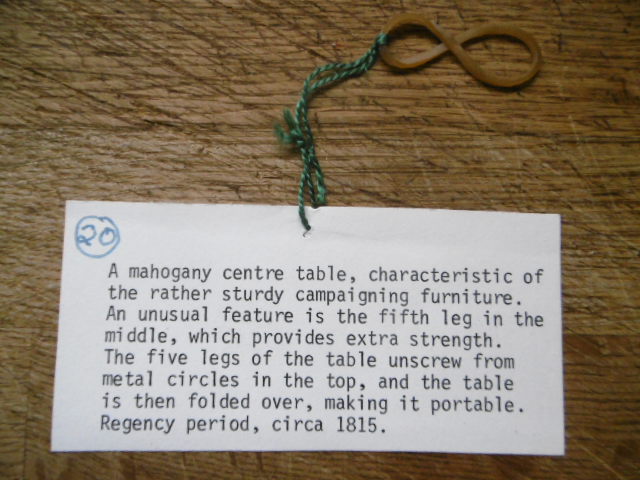
One further thing, and something that also demonstrates the richness of the archives that Jerome so generously donated to Leeds University, is that Jerome also saved the object labels from the exhibition! …..and here’s just one of a number of those labels from an object from the ‘Travelling and Campaigning Furniture 1790-1850’ exhibition.
Phillips of Hitchin exhibition ‘Travelling and Campaigning Furniture 1790-1850’ June 1984, object label. Phillips of Hitchin archive, Brotherton Library Special Collections, University of Leeds.
There’s more to say about the significance of these scholarly selling exhibitions organised by dealers such as Phillips of Hitchin and we are fortunate to have such archive material to help us to continue to explore and analyse the cultural history of the British antique trade.
As readers of the Antique Dealer research blog will know, we have recently posted more ‘Where is it Now?’ objects, illustrating images from some of the early 20th century photograph stock albums in the Phillips of Hitchin archive, now at the Brotherton Library Special Collections. We thought you would be interested, and amused perhaps, to hear about a kind of reverse of the ‘Where is it Now?’ theme (a kind of ‘Here it is Now!’) – i.e. the catalyst for this blog post was not an illustration of an object in the PoH archive, attempting to set up a link from the archive to the outside world, but rather a photograph of an object in a public museum, that links back to the archive. Indeed, the photograph generated an investigation of other museum collections, which has further demonstrated the international significance of the Phillips of Hitchin archive.
Anyway, the PoH archive was generously donated to the Brotherton Library Special Collections by Jerome Phillips, the 3rd generation of antique dealers associated with the business that has always been located at The Manor House, Hitchin since it was established in 1884. Jerome retired in 2014, and as many of you will know, is still in regular contact with us at the university; we often update him on the progress with his family business archive – Jerome is, after all, a living extension to the archive!
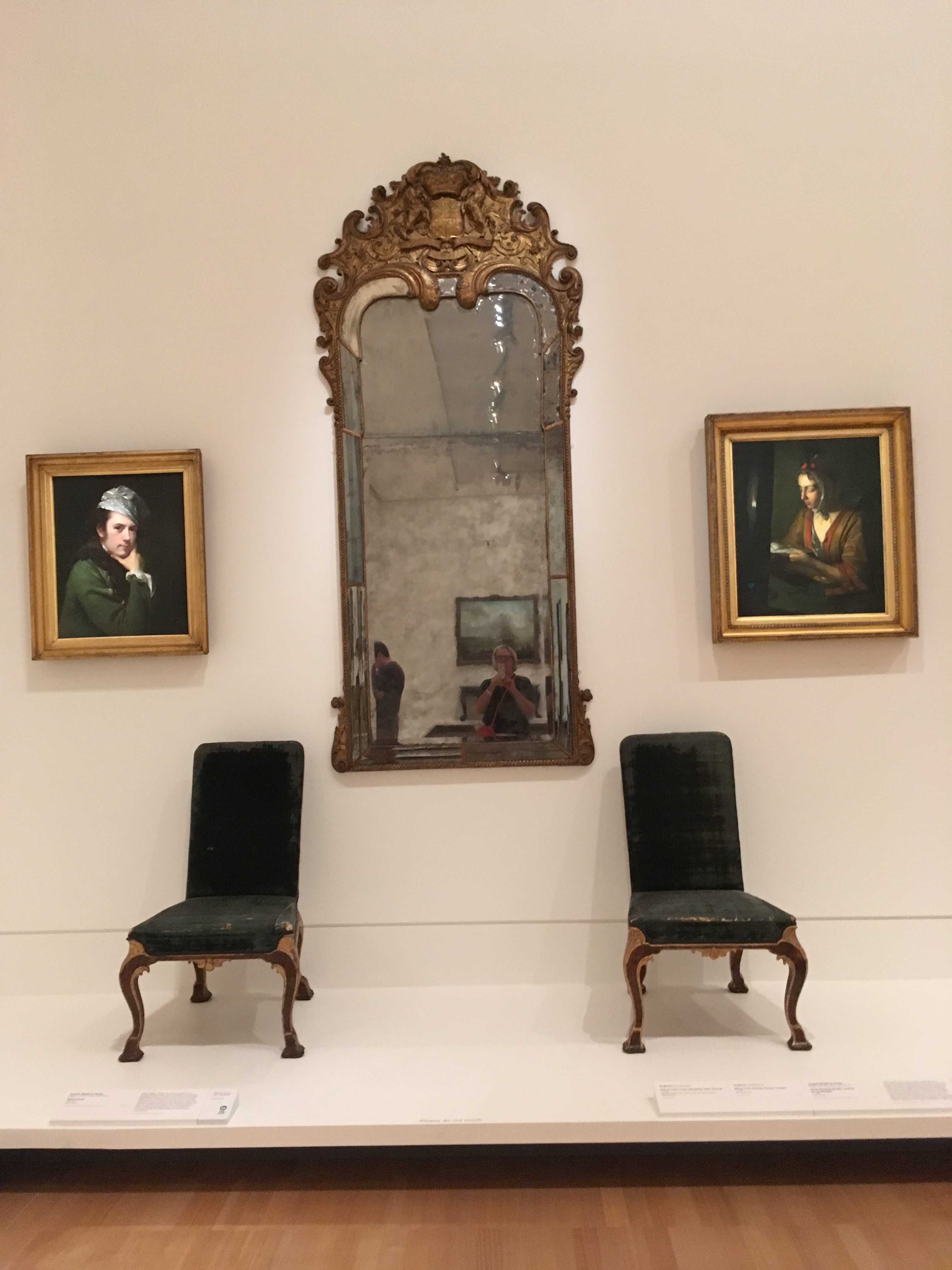
Jerome emailed us recently following an update from us on the archive, and mentioned that his wife, Barbara, was in Australia, and had been to the National Gallery of Victoria in Melbourne and whilst there she spotted a pair of chairs that Phillips of Hitchin had sold to the (then) Victoria State Gallery, Melbourne, in 1961. Here is Barbara’s photograph of the chairs in situ (you can also spot Barbara reflected in the 18th century mirror!).
Pair of Houghton Hall chairs at the National Gallery of Victoria, Melbourne. Photograph courtesy of Barbara Phillips, 2017.
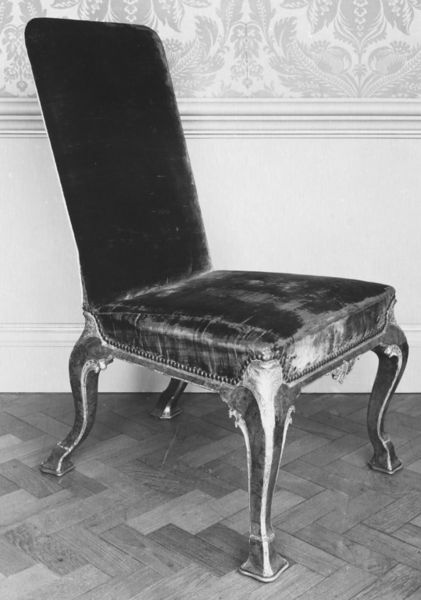
Houghton Hall chair, Temple Newsam House, Leeds. Photo c.1960, courtesy of Temple Newsam House, Leeds.
The chairs are related to a set of chairs at Houghton Hall, Norfolk, a very large suite of furniture, including 2 settees, made by Richard Roberts in the period c.1720; the chairs were acquired by the Gallery of Victoria through the Felton Bequest in 1961, through Phillips of Hitchin (see here for a link to the museum catalogue entry).
The pair of chairs now in Australia came from a set of six chairs acquired by Phillips of Hitchin in 1960; Jerome tells us that he thinks his father bought the 6 chairs at auction (not direct from Houghton Hall) – update 23.06.19 – the set of six chairs were sold at Sotheby’s, 29th January 1960, lot 117. PoH then sold the chairs to four different museums in 1960 and 1961. One chair from the set was sold to Temple Newsam House, Leeds in June 1960, for the sum of £275.00, and described, in the PoH archive invoice as ‘a walnut and parcel gilt chair ensuite with chairs at Houghton Hall’. The chair in the first B&W photograph is the Temple Newsam House example, photographed in c.1960.
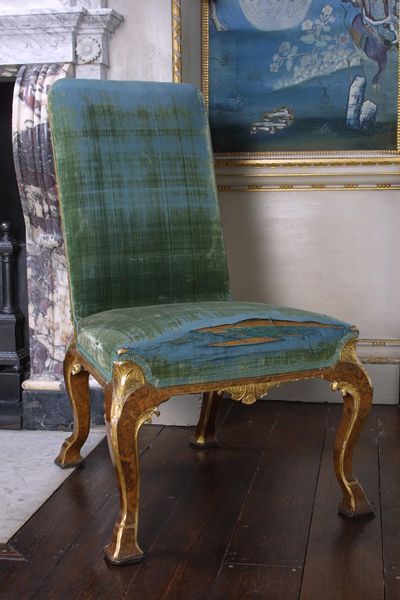
Another single chair was sold to the Victoria & Albert Museum in London in the same year.
Houghton Hall chair, Victoria & Albert Museum. Photograph c.1960. Copyright V&A Museum.
It seems quite strange perhaps that one of the pair of chairs were split up into single objects, rather than being retained as a pair (or indeed retaining the set of 6 chairs together), but the rationale, in the 1960s, was to distribute key examples of objects across as many museums as possible in order to allow more distributed access – this kind of materiality of things was a dominant idea in a period when object-based study was a key element in the structures of knowledge.
It’s interesting to note that the more recent acquisition by the V&A of the remaining large suite of furniture to which these 6 chairs relate, as part of the 2002 Acceptance in Lieu Scheme for the Inheritance Tax Settlement of the Cholmondeley Estate, has stipulated that the remaining suite of furniture remains in situ at Houghton Hall.
Chair in situ at Houghton Hall, Norfolk. Photograph copyright V&A Museum.
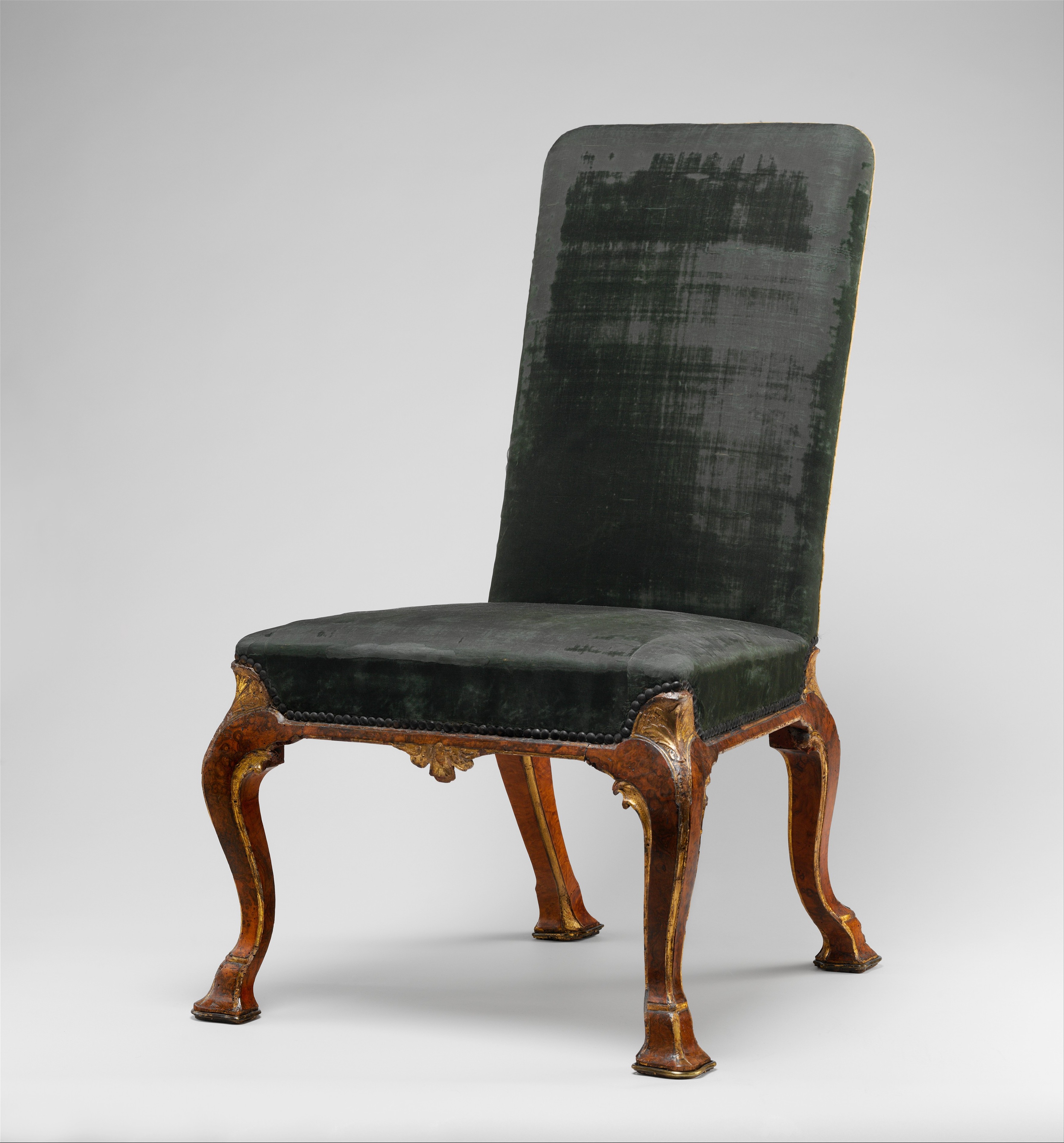
The last pair of chairs from the set of 6 acquired by Phillips of Hitchin were sold by the dealers in 1960 to the Metropolitan Museum in New York, through the Harris Brisbane Dick Fund. Here is a link to the online catalogue for the chairs.
‘Houghton Hall’ chair, c.1720. Metropolitan Museum of Art, New York. Photograph, Metropolitan Museum of Art, 2017.
And so, in this little example of the acquisition and distribution of this suite of Antique Furniture we can see not only the significant role of the antique dealer in the dissemination of objects across three Continents…..but also the shifting significance of the notion of historical context, cultural heritage, and museum collecting policies in the last 50 years or so. And with that, the growing sense of the significance of the Phillips of Hitchin archive now held at the University of Leeds.
The Antique Dealer Project Conference generated a great deal of positive discussion and feedback – thank you again to everyone that participated and contributed during the 2 days – and to those that helped with the organisation….we could not have delivered the conference without so much help and enthusiastic interest from everyone involved.
We are working on some analysis of the conference, summaries of the sandpits and etc – and our team of Postgraduate students who worked so hard during the conference are also hard at work compiling the analysis…that should be ready soon and will be distributed to all conference delegates, and uploaded to the project website.
The project conference was also a strategic part of the Antique Dealer research project itself, and so as part of the analysis we are also continuing to evaluate the research ‘Impact’ of the project. Research Impact, as those in the world of academia will know, is now a key aspect of all university research projects – and is a fundamental part of the REF (Research Excellence Framework). The REF is the quality assessment mechanism that all UK research intensive universities participate in, every 5 years or so – the next REF exercise is due to be in 2020. Anyway, as part of the research impact for the Antique Dealers project we are keen to capture and assess how the research has effected (impacted upon) anyone outside of the world of academia.
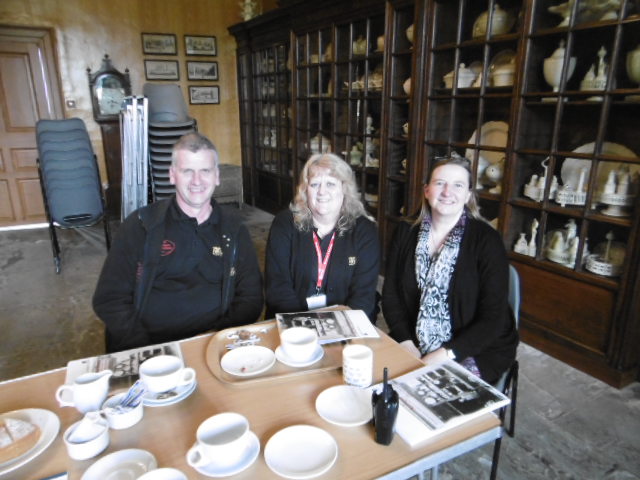
And talking to Bobbie Roberton (Keeper) and Rachel Conroy (Curator) at Temple Newsam House, they mentioned how much the staff at Temple Newsam House enjoyed the conference, and how many new things about the collections at Temple Newsam they had learned as a result of the conference – so this was an opportunity made in heaven for our Research Impact! I hot-footed it to Temple Newsam last week to have a chat with the TN staff. We staged an informal ‘focus-group’ feedback session, with tea and cake generously provided by Temple Newsam! Here are some of the staff who give their time so generously too – left to right – Michael Clark, Lyn Crispin and Helen Clayton (who’s father is also an antique dealer!…) – also present was Debra Crossley, but she had to leave before I took the photograph….
Temple Newsam House staff – Michael Clark, Lyn Crispin and Helen Clayton.
There were so many positive comments from Michael, Lyn, Helen and Deborah – they tell me that it was so illuminating having Antique Dealers talking about the objects at Temple Newsam, and that they had not realised how significant the antique trade had been in the development of the collections. One of the really positive outcomes of the conference is that Michael, Lyn, Helen and Deborah have all indicated that they will share their new knowledge with the public visitors coming to TN….now that IS a real result!
Thank you again to all the staff at TN for all their help and enthusiastic support to the Antique Dealers Research project.






 antiquedealersblog