Our next in the series ‘Behind the Scenes of the Year of the Dealer’ is focused on the Samuel Richards film at Lady Lever Art Gallery – you can see the final version of the film HERE
Samuel Richards (1859-1927) is quite well known for a provincial antique dealer and there is a lot of information on him and his antique shops that we could have included in the film – but of course, we needed to keep the films shorter than 3 or 4 minutes; we were thinking that many people might watch the films on their phones so were guided by social media programmes such as TikTok and Instagram on maximum lengths of the films.
We had a lot of images of the hand-drawn, lithographed catalogues that Richards produced from the 1880s to c.1914 – there a small number of libraries that hold a few examples of Richards catalogues (V&A National Art Library in London for example) and the Brotherton Library at the University of Leeds holds some copies in the John Evan Bedford Library of Furniture History The Library at University of Leeds also has one bound copy very generously gifted to the Brotherton Library by the antique dealer Simon Myers (a great supporter of the antique dealer research project!) – you can read about Simon’s donation in one of the earlier post on the research blog HERE. We have also done a few blog posts on Richards and his catalogues over the years – see HERE. HERE.
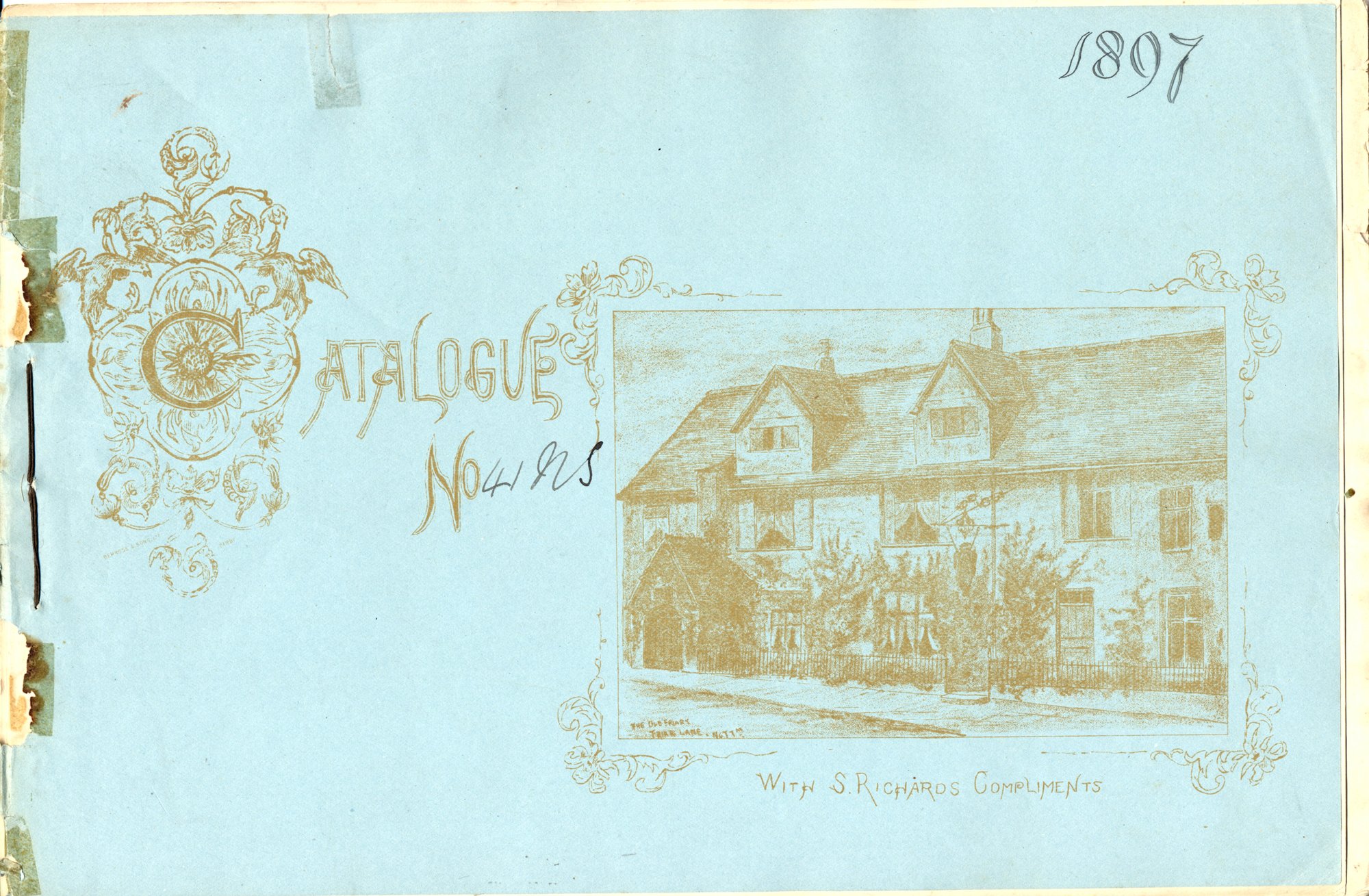
Most copies of the Richards catalogues are bound together in hardback volumes but the John Evan Bedford Collection at The Brotherton Library has a few single examples which retain their original covers, exactly as they would have been sent out in the 1890s (see below).
S. Richards catalogue, 1897, cover. Image copyright The Brotherton Library, University of Leeds. Bedford Collection C426.
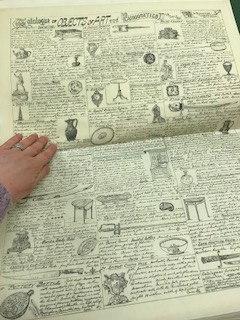
Such examples are rare with the original covers but the John Evan Bedford collection also has an exceptionally rare large scale single sheet (similar in size to A2 paper size, about 17 inches by 24 inches), ‘Catalogue of Objects of Art and Curiosities’ issued by Richards in the same period – I’m not aware of any other examples in this format (see below).
S. Richards, single sheet catalogue, c.1890s, in the John Evan Bedford Library of Furniture History, University of Leeds.
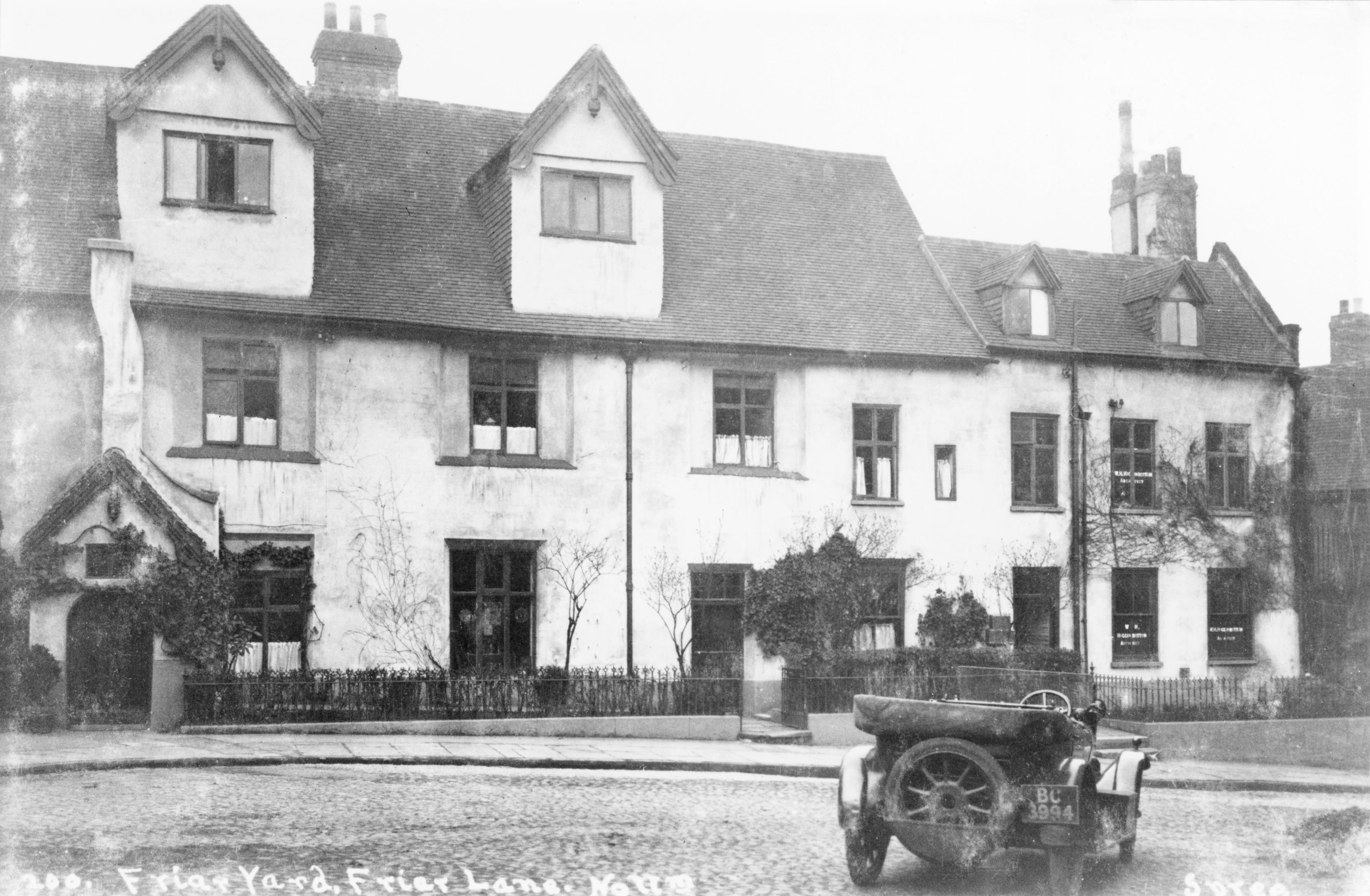
We also had quite a few images of Richards’ shops, many of which we used in the Year of the Dealer film at Lady Lever Art Gallery. One of the images of Richards’ antique shop that we might have used, had we had more space/time in the film, is this image (see below) of The Old Friary, Nottingham c.1900. It’s from Nottingham Local Studies Library and potentially shows the only known image of Samuel Richards (see front, centre), but we decided not to use it as we could not be sure the man in the image was in fact Samuel Richards.
The Old Friary, Nottingham, c.1900. Image copyright Nottingham City Council. Nottingham Local Studies Library.
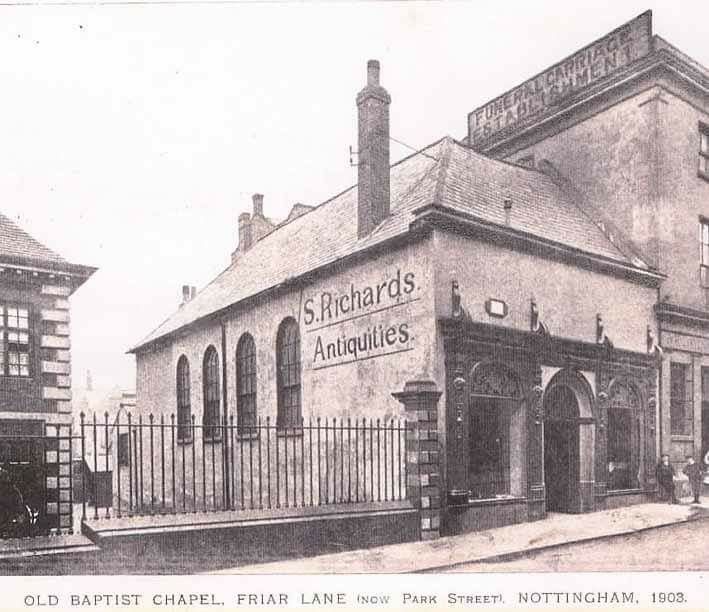
In subsequent research we have also recently discovered that as well as his 2 shops in Nottingham (The Old Priory and in Houndgate, Nottingham), Richards also had a shop in the ‘Old Baptist Chapel’ on Friar Lane, Nottingham (see below), in what seems like a very early repurposing of a redundant chapel as an antique shop (much more common in the 1970s onwards).
S. Richards, antique shop in the Old Baptist Chapel, Friar Lane, Nottingham, 1903. Private Collection.
Look out for more ‘Behind the Scenes of the Year of the Dealer’ next week.
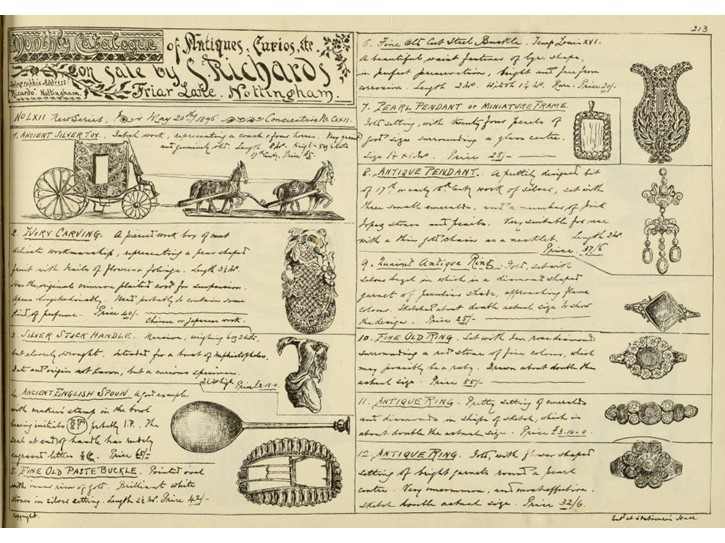
Readers of the Antique Dealers’ blog will be aware that we have previously posted a couple blog entries on the antique dealer Samuel Richards (1859-1927) (see blog posts November 2018 & June 2014). Richards is well-known for producing charming and detailed lithographed catalogues of his stock of antiques, which he issued monthly (with a few exceptions) from the early 1890s until the period around the First World War. Richards’ catalogues are quite rare – there are a few copies at the Victoria & Albert Museum Art Library in London, bound together in a couple of volumes. We also have a small number of bound copies in the John Evan Bedford Library of Furniture History at the Brotherton Library Special Collections at the University of Leeds, thanks to the very generous bequest of the late John Bedford (1941-2019). The Brotherton Special Collections also has a couple more bound copies of Richards catalogues, very generously bought at auction (in Nottingham no less) in 2018 and donated by our friend and keen supporter of the antique dealer research project, Simon Myers, of the antique dealer R.N. Myers & Sons of Gargrave in North Yorkshire (thank you again Simon).
Samuel Richards, Nottingham, Catalogue of Stock, May 20th, 1896. Photograph, Antique Dealers’ Research Project, University of Leeds.
Richards drew the illustrations in the catalogues himself, producing them monthly and sending them out to collectors all over the UK – although Richards quite often felt the need to apologise for missing a month (due to sheer volume of work, he says) in some of the monthly catalogues.
Samuel Richards, Nottingham, catalogue of stock of antiques, April 1912. Photograph, Antique Dealers Research Project, University of Leeds.
Whilst such lithographed catalogues produced by antique dealers were not unique to Richards (see blog post of the catalogues produced by A. W. & F. Little, of Bristol, in the same period – Blog Post February 2022), Richards seems to have been particularly prolific.
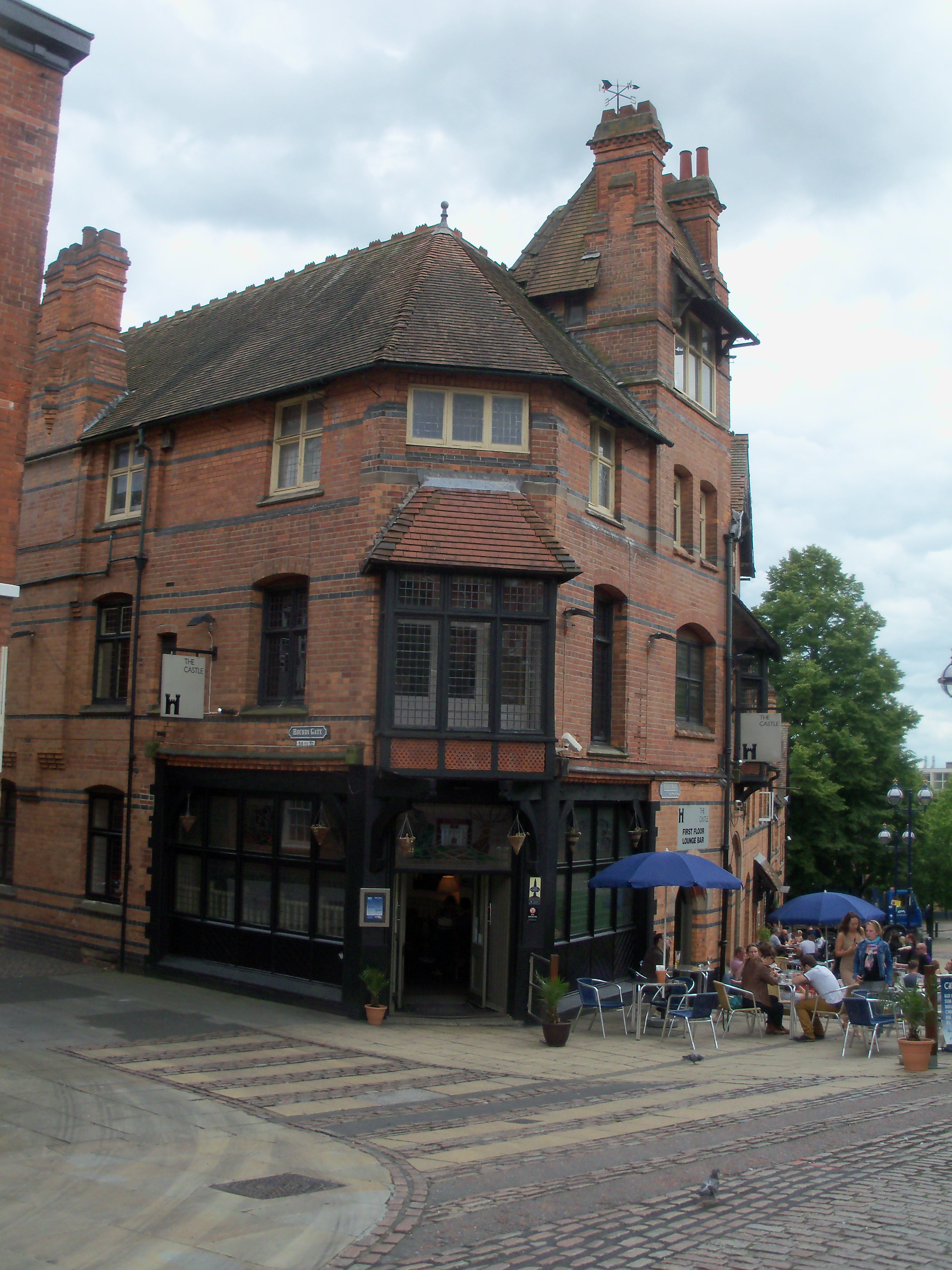
As a result of these fascinating catalogues, we have been doing more research on Samuel Richards over the past few months and have discovered new information about his activities an antique dealer in the period 1890s to 1920s. Richards was born in Nottingham in 1859, and died in Loughborough in 1927. He appears to have run his antique dealing business in Nottingham, but lived most of his life in Loughborough. The Census (1901) records Richards aged 42, a ‘dealer in antiquities’ (as antiques were often called at the time), living at 1 Park Street, Loughborough, with his wife Maud (aged 38), his son Arthur (aged 9), and daughters Winifred (aged 5) and Nora (aged 4), together with a servant, Fanny (aged 16). Richards appears to have owned or rented another property in Herrick Road in Loughborough at the same time. Richards antique shops were located in Nottingham, at 77 Houndgate and at The Old Friary, Friary Lane – he seems to have operated from both premises from the 1890s until his retirement from business in c.1919 – his son Arthur (1891-1976) appears to have worked with his father in the antique shops from about 1908, perhaps until his father’s retirement in c.1919. Richards shop at 77 Houndgate was crammed full of antiques (see photograph from 1892, below) typical of the material he illustrated in his monthly catalogues.
Samuel Richards antique shop, 77 Houndgate, Nottingham, 1892. Photograph, Antique Dealers Research Project, University of Leeds.
You can just make out the exterior appearance of Richards’ Houndgate antique shop in the title page of some of his catalogues – see below).
Samuel Richards, catalogue of stock of antiques, 1891. Photograph, Antique Dealer Research Project, University of Leeds.
And as mentioned in the previous blog post in June 2014, the building that housed Richards’ Houndgate antique shop still exists (see below).
Building that housed Samuel Richards antique shop, photographed in 2014. Photograph, Antique Dealers Research Project, University of Leeds.
Richards’ other shop, The Old Friary in Friary Lane, Nottingham, was a much more famous building. He appears to have rented The Old Friary from the early 1890s until c.1919. The Old Friary was a 17th century building, rebuilt as part of a much earlier series of buildings that were part of Whitefriars Priory (built c.1276).
The Old Friary, Nottingham, c.1927, just shortly prior to its demolition. Image courtesy of Getty Images as part of the Year of the Dealer project 2023.
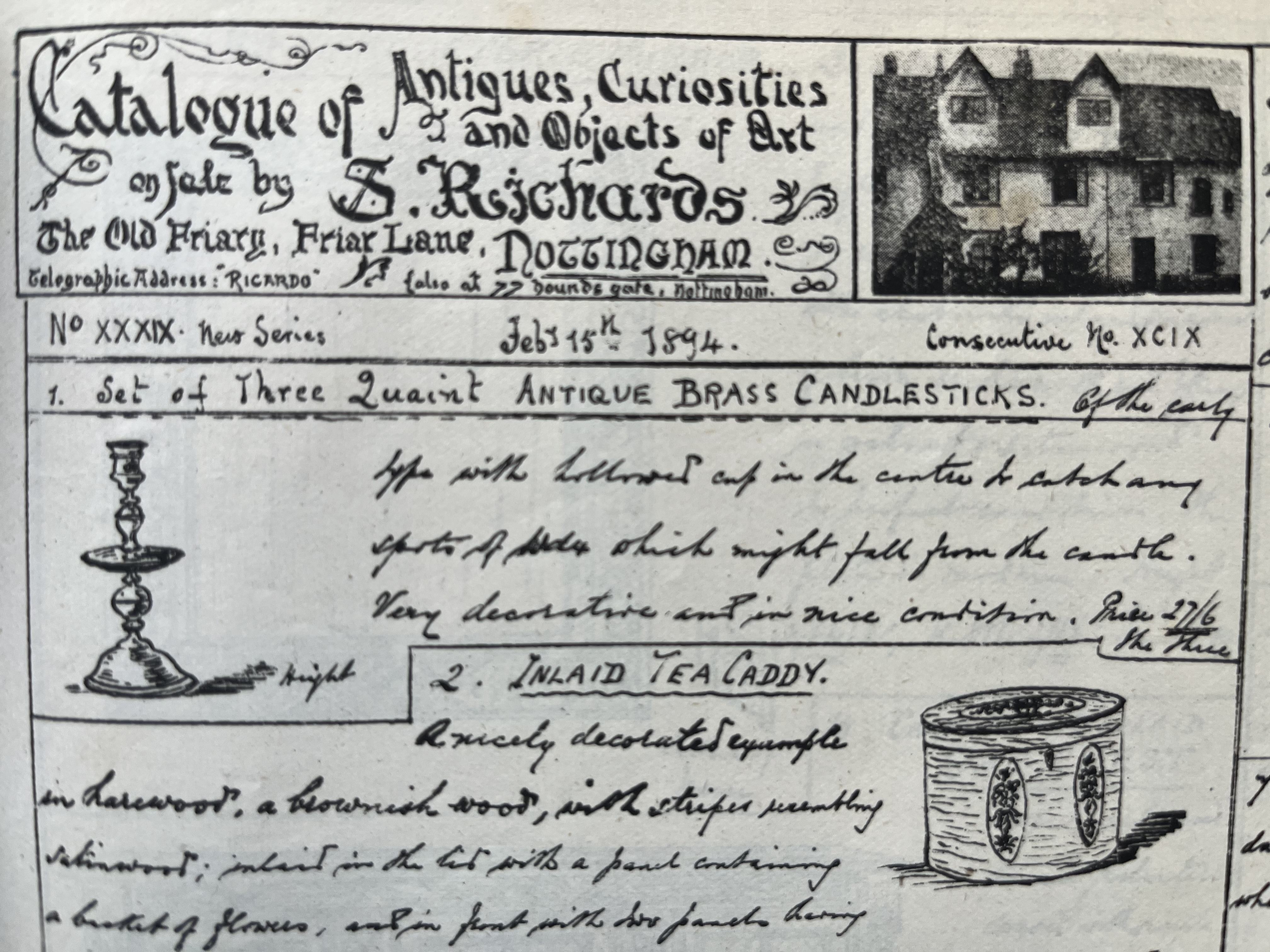
The Old Friary was also partly rebuilt in the 16th century and more famous for its associations with Dorothy Vernon (1544-1584) of Haddon Hall fame; Vernon is supposed to have lived at the Old Friary with her husband John Manners (1534-1611). In 1902 Charles Major published his famous romance novel ‘Dorothy Vernon of Haddon Hall’ which may have increased traffic to Richards’ shop. Certainly, such historic associations would have been of interest to an antiquary such as Richards and to his customers. The Old Friary was demolished in 1927. You can also just make out a photograph of The Old Friary in the title page of some of his catalogues of stock of antiques (see below).
Samuel Richards, catalogue of stock of antiques, February 1894. Photograph, Antique Dealer Research Project, University of Leeds.
We also have some exciting news about Samuel Richards – he is the focus of one of our Year of the Dealer Project digital trails (see Year of the Dealer Project) – at the Lady Lever Art Gallery at Port Sunlight, near Liverpool. Richards sold a large amount of ‘antique straw-work’ objects to Sir William Lever in 1915, one specimen of which we have included in the Year of the Dealer trail at the Lady Lever (see below). So, keep your eye out for the official launch of the Year of the Dealer trails this summer.
Mark
Early 19th century Straw-work box. French. Sold by Samuel Richards to William Lever in 1915. Lady Lever Art Gallery, Port Sunlight. Photograph, Antique Dealer Research Project, University of Leeds.
The antique dealer research archives had a new addition last week, a bound copy of the very rare lithographed catalogues issued by the Nottingham antique dealer Samuel Richards in the late 1890s. The catalogues came up for auction at Mellors & Kirk in Nottingham (appropriately) last May, and Ian Wilkinson, the Rare Book Specialist at the auctioneer very kindly alerted us to the forthcoming sale. But thanks to the generosity of Simon Myers of the antique dealers R.N. Myers & Son, North Yorkshire, who also spotted the catalogue and offered to buy it and donate it to the Brotherton Library Special Collections, the catalogue is now part of the Brotherton Library Special Collections of antique dealer related archives and associated material. Simon is the 4th generation of dealers in the firm that still bears his great grandfathers’ name – the business was also, like the business of S. Richards, trading in the 1890s, so it was quite fitting that Simon donated the catalogues. Indeed, Simon has been a keen follower of the research project for a number of years, but his donation of the Richards catalogues was an exceptionally generous thing to do – he popped across to the Brotherton Library last week to hand over the catalogue, which is now available for researchers.
S. Richards, ‘Monthly Catalogue of Antiques, Curios etc for sale’ 1890-1899′. Photograph, copyright Mellors & Kirk, auctioneers, Nottingham, 2018.
The catalogues produced by Samuel Richards are exceptionally rare – the bound copies that Simon donated date from January 15th 1890 to March 15th 1899; there are a few examples (dating from 1890-1915) in the National Art Library at the V&A Museum, but there are no copies in the British Library – I know of two other copies in a private collection, but given the ephemeral nature of the catalogues (they were designed to be posted to collectors and are lithographed on very flimsy paper and can’t have been produced in any significant quantities), they must not survive in any numbers.
We are very encouraged by the support that many antique dealers have shown to the Antique Dealers Research project, and Simon’s generosity is a reflection of the wider support of the project over the past few years.