Archive for ‘Uncategorized’

September 30, 2023

Antique Shops in Visual Culture II

Following on from the last Blog Post (which seemed to go down very well with readers), I thought I would continue the theme of Antique Shops in visual culture and focus on a few more images of antique shops, both exteriors and interiors, that are part of a growing archive of paintings we have as part of the research projects on the history of antique dealing. We can start with an example from quite a well-known series of images of antique shops by the artist John Cole (1903-1975). Cole was the son of the English landscape artist Rex Vicat Cole (1870-1940) and from a long line of well-known artists. Cole was particularly fascinated by the street scenery of London and produced a series of paintings of shops fronts especially in London, during the 1940s and 1950s. He seems to have a special fondness for antique shop fronts, and captured dozens of antique shops, most now long gone of course, in key locations such as Kensington Church Street, Avery Row and Christopher’s Place. We’re fortunate enough to have an example in our archive. A painting from the 1940s of 2 antique shops in New Bond Street, London.

John Cole (1903-1975) New Bond Street antique shops, c.1940. Oil on canvas. Private collection.

To the right is the shop of the antique silver dealers Arthur & Co., at 36 New Bond Street. Arthur & Co. were trading as antique dealers from at least 1900; by 1936 they had incorporated the business of the well-known antique silver dealer Reginald Davis. Arthur & Co. were right next door to Sotheby’s the auctioneers, when Cole captured their shop. To the left of Arthur & Co is the shop of Lewis & Lewis, one of the shops of the famous Lewis family of dealers, perhaps of James Lewis & Sons, the well-known antique dealer with shops in London and New York in the 1930s and 1950s. It’s interesting that Lewis & Lewis have a ‘sale’ ongoing in their shop in Cole’s painting – their shop window is full of a fascinating range of antiques.

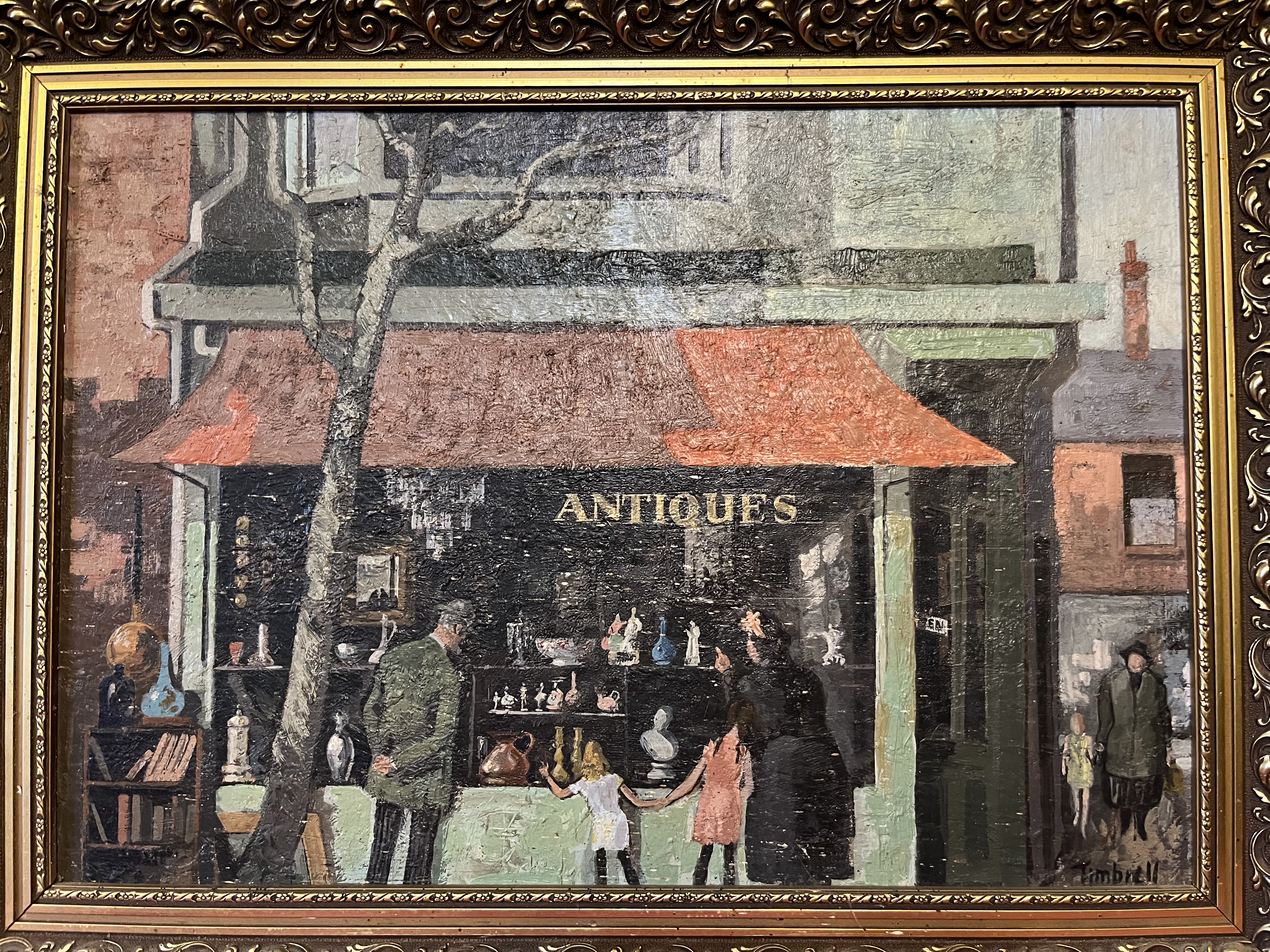
Another painting of an antique shop, from about the same period, 1960s, in the archive collection is by a less illustrious painter than John Cole; Frederick James Timbrell (1905-1992).

Frederick James Timbrell (1905-1992), ‘The Corner Shop’, c.1960. Oil on panel. Private collection

Timbrell was born in Lambeth, London and his painting of an (as yet unknown) antique shop is a charming rendition and, according to the label on the back, it was offered for sale at 30 guineas, a fair sum of money back in the 1960s. If anyone recognises the shop, do let me know!

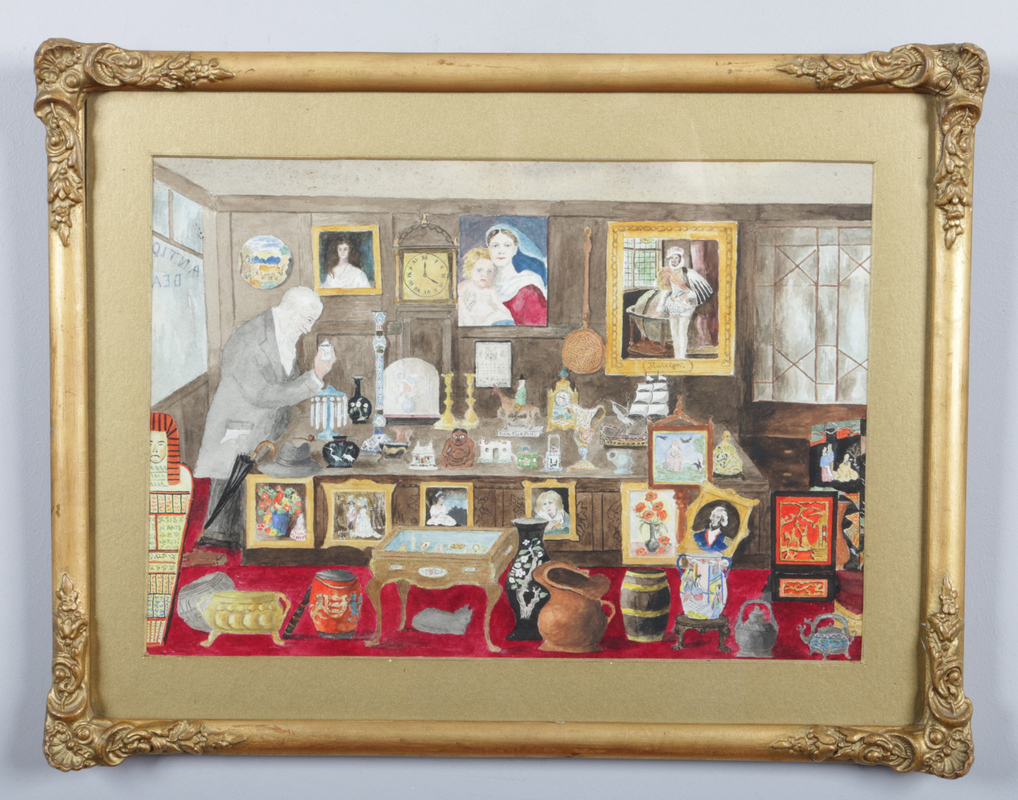
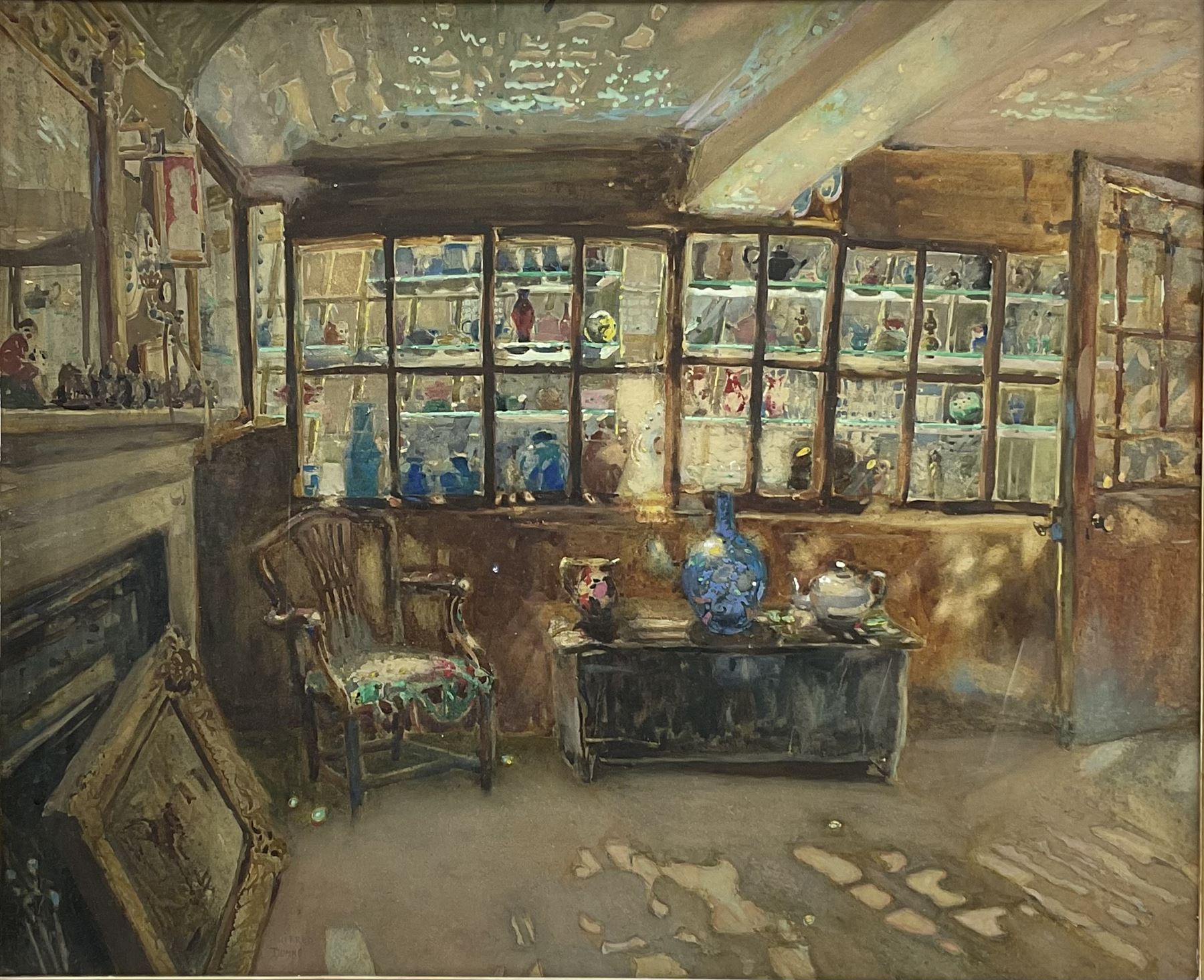
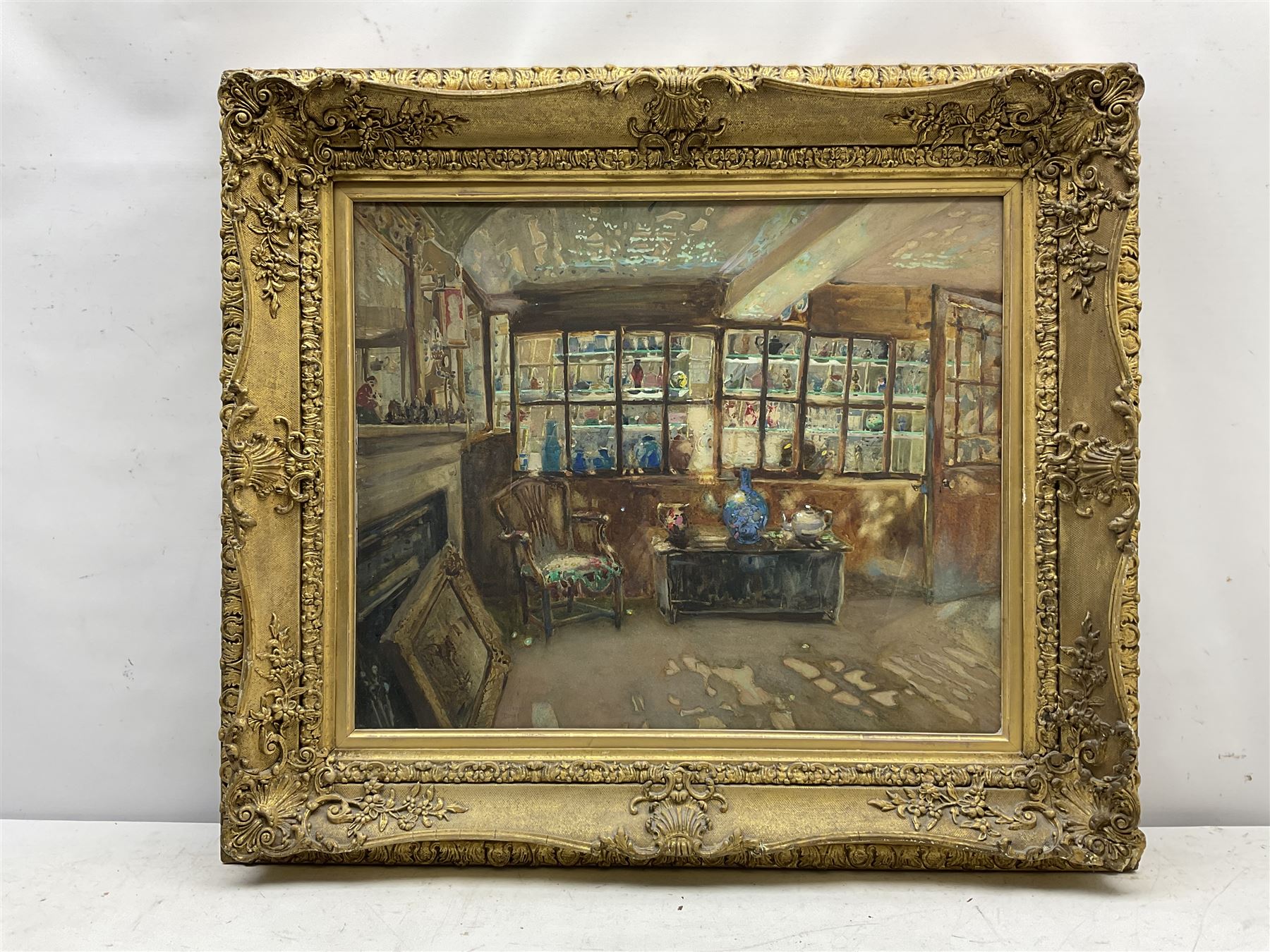
One final image of an antique shop (for this Blog post anyway) is, by contrast, a painting of an antique shop interior. This one, a beautifully atmospheric watercolour and gouache by the talented female artist Winifred Donne (1880-1922), titled ‘The Old Curiosity Shop’ was painted in about 1910.

Winifred Donne (1880-1922), ‘The Old Curiosity Shop’, c.1910. Watercolour and gouache. Private collection.

Donne was the wife of the artist Walter James Donne (1863-1948); Donne’s painting of the Old Curiosity Shop seems to be a representation of an interior of an actual shop, but it’s not known where the shop was located. Donne lived for a time in Yorkshire, so perhaps it was one of the many ‘curio’ shops in York, Scarborough and etc in the early 20th century?

Winifred Donne (1880-1922), ‘The Old Curiosity Shop’, c.1910. Watercolour & gouache. Private collection.

Winifred Donne maybe a relatively forgotten female artist today, but at the time of her death in 1922, (she died tragically young, aged only 42) she was famous enough for Walker’s Galleries, in New Bond Street, London, no less, to organise a Memorial Exhibition of her work in Nov-Dec 1924.

Exhibition Catalogue, Winifred Donne Memorial Exhibition, 1924. Private collection.

Donne was described in the exhibition catalogue as ‘an artist with remarkable talent’. The commentary continues: ‘Watercolour was Winifred Donne’s favourite medium, though she was equally familiar with pastels and pen-and-ink…she exhibited with conspicuous success at the International Society and in the watercolour room at the Royal Academy.’ The exhibition included Donne’s painting of the ‘Old Curiosity Shop’ then in the possession of ‘Mr Robert Frank’ (see below, ‘No.44’), perhaps the art dealer Robert Frank?

Exhibition catalogue, Winifred Donne Memorial Exhibition 1924. Private collection.

These representations of antique shops are a clear demonstration of the enduring significance of the ‘antique and curiosity shop’ in visual culture, and in British cultural life. I’ll post more on paintings of antique shops in future blog posts on the antique dealers blog.

Mark
July 30, 2023

Antique Shops in Visual Culture I

As readers of the antique dealers Blog will know, we’ve been acquiring antique dealer ephemera for many years now – dealer catalogues, photographs and archives, as part of the on-going research project into the history of the antique trade in Britain. Much of this material, including the extraordinary collection of antique dealer archives, is housed at the Brotherton Library Special Collections at the University of Leeds.

More recently, we’ve been seeking out paintings depicting antique shops – we recently acquired, for example, a naïve painting (oil on canvas, c.1880, signed ‘M. Davis’) of the shop of Mr Deadman at an auction in The Netherlands of all places – ‘Ye Old Beckenham Curio Shoppe’ (see below). The shop depicted in the painting was in High Street, Beckenham in Kent (the building, which appears to be 16th century, was demolished by the 1930s). Frederick William Deadman (either the same dealer or perhaps a relative) was still trading as an antique dealer in the late 1930s – from a shop in Station Road, Freshwater on the Isle of Wight.

M. Davis ‘Ye Old Beckenham Curio Shoppe’, oil on canvas 24 in x 17 in; c.1880. Private Collection.

This painting has been added to our growing collection of paintings of antique shops, all of which demonstrate how important the idea of the antique shop has been in British cultural life. An earlier acquisition, of an equally naïve painting, illustrates this point. The painting, a watercolour, (10.5 in x 15 in, by H. Middleton-Holding, c.1910) of an antique shop in York Street, London, was acquired at auction in Shaftesbury, Dorset in 2019. It’s also a rather naïve work, but is charmingly rendered (see below):

H. Middleton-Holding, ‘York Street, Westminster, London’ watercolour, (10.5 in x 15 in), c.1910. Private Collection.

The artist has copied an engraving of the same scene, much more competently rendered and published in The Daily Chronicle on Tuesday September 27th in either 1904 or 1911, a copy of which is pasted to the backboard of the painting (see below) – (unfortunately, the actual year of the publication is obscured by some brown paper tape). The newspaper article outlines the history of the buildings in York Street, London and their occupiers, including the political philosopher Jeremy Bentham (1748-1832) and the highwayman Dick Turpin (1705-1739).

Backboard of the watercolour by H. Middleton-Holding. Private Collection.

The main shop in the scene, No. 32 York Street, was the location of a well-known female antique dealer, Mrs Amelia Jane Hardingham, who owned several antique shops in York Street (nos. 28-32), and began trading as an antique dealer in about 1900, in Waterloo Road, London. According to the article in The Daily Chronicle no.32 York Street was famous as the home of the artist George Morland (1763-1804) – perhaps that is why H. Middleton-Holding painted the scene again?

Amelia Hardingham’s shop was also captured in a photograph in c.1910 (see below).

A. Hardingham, Dealer in Works of Art, 32 York Street, London, c.1910. Photograph, The Victoria & Albert Museum, copyright V&A Museum.

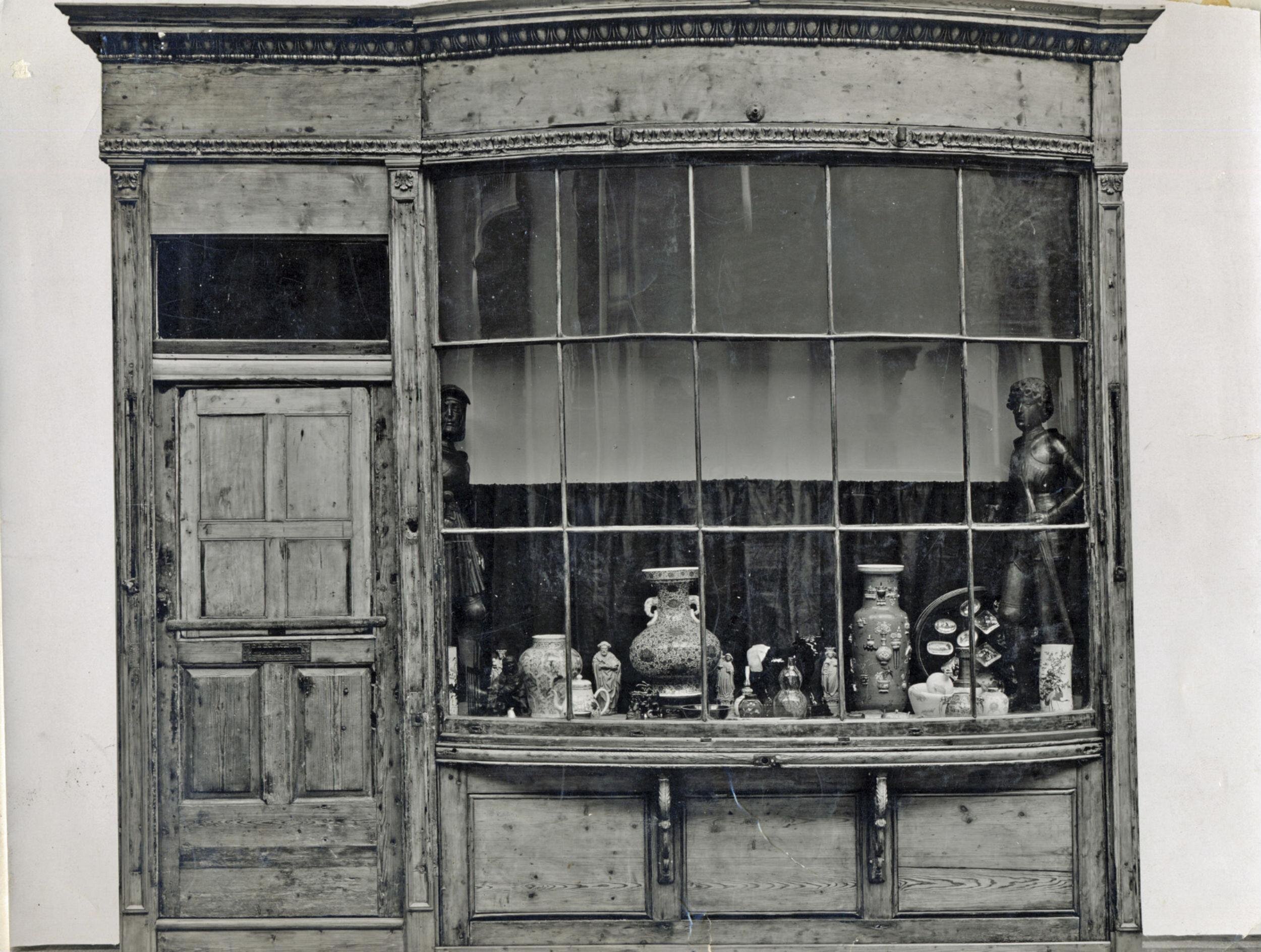
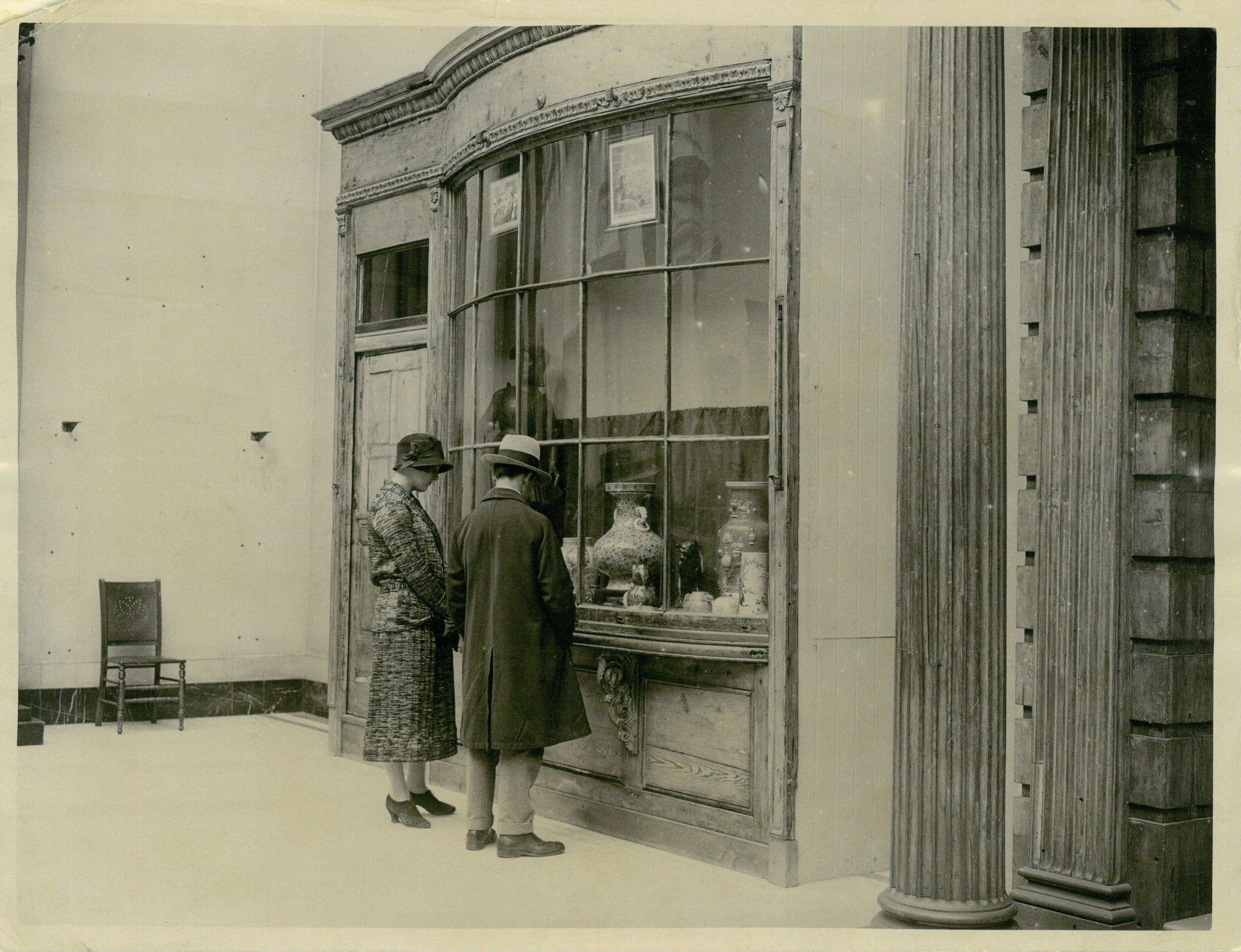
Amelia Hardingham’s antique shop was swept away when the buildings on York Street were demolished in 1923 to create ‘Petty France’, but the shop front of her shop was saved. It was gifted to the Victoria & Albert Museum by the Army Council (which owned the buildings) as a fine example of a late 18th century shop front. In fact, as those who visited the exhibition, ‘SOLD! The Great British Antiques Story‘ at The Bowes Museum in 2019, may remember we used an image of Amelia Hardingham’s shop front as part of the introductory interpretation at the exhibition. Indeed, when the 18th century shop front was put on display at the V&A in 1924, it was set up as a display reproducing Amelia Hardingham’s antique shop (see below).

18th century shop front on display at the V&A Museum, 1924 – W.88-1923. Photograph, The Victoria & Albert Museum. Copyright V&A Museum.

The antique shop display at the V&A Museum caused some consternation in the Press at the time, with some commentators questioning if it was appropriate that an antique shop display should be in a museum!

18th century shop front, displayed as an antique shop, at the V&A Museum in 1924. Photograph, The Victoria & Albert Museum. Copyright V&A Museum.

Readers of the Blog may also be interested to hear that women antique dealers (including Amelia Hardingham) are also the focus of some of our ‘Year of the Dealer‘ digital trails – we have ‘women antique dealer’ themes in our Trails at The Victoria & Albert Museum, The Bowes Museum and at Preston Park Museum as part of this project – so do keep your eyes open for our Year of the Dealer Trails public launch in September. As for paintings of representations of antique shops, we have acquired several other paintings over the last few years and will create another Blog post illustrating those in the next few months, so keep you eye on the Blog!

Mark
June 30, 2023

Early 19th Century Antique & Curiosity Dealers

The history of antique dealing (in it’s modern form at least) can be traced to the opening decades of the 19th century, and as part of the research project on the history of antique dealing we occasionally come across material dating from this very early period. There are examples of very rare sales catalogues produced by some of these early dealers – those that made it to the SOLD! exhibition at The Bowes Museum back in 2019 may remember we had on display some key examples of this rare material – a catalogue produced by the curiosity dealer and bookseller Horatio Rodd, who traded from Great Newport Street in London in the 1830s and 1840s, on loan from the collections at The National Art Library at the Victoria & Albert Museum.

Catalogue produced by Horatio Rodd, London 1842. National Art Library, V&A Museum; NAL:II.RC.L.32 Copyright The V&A Museum.

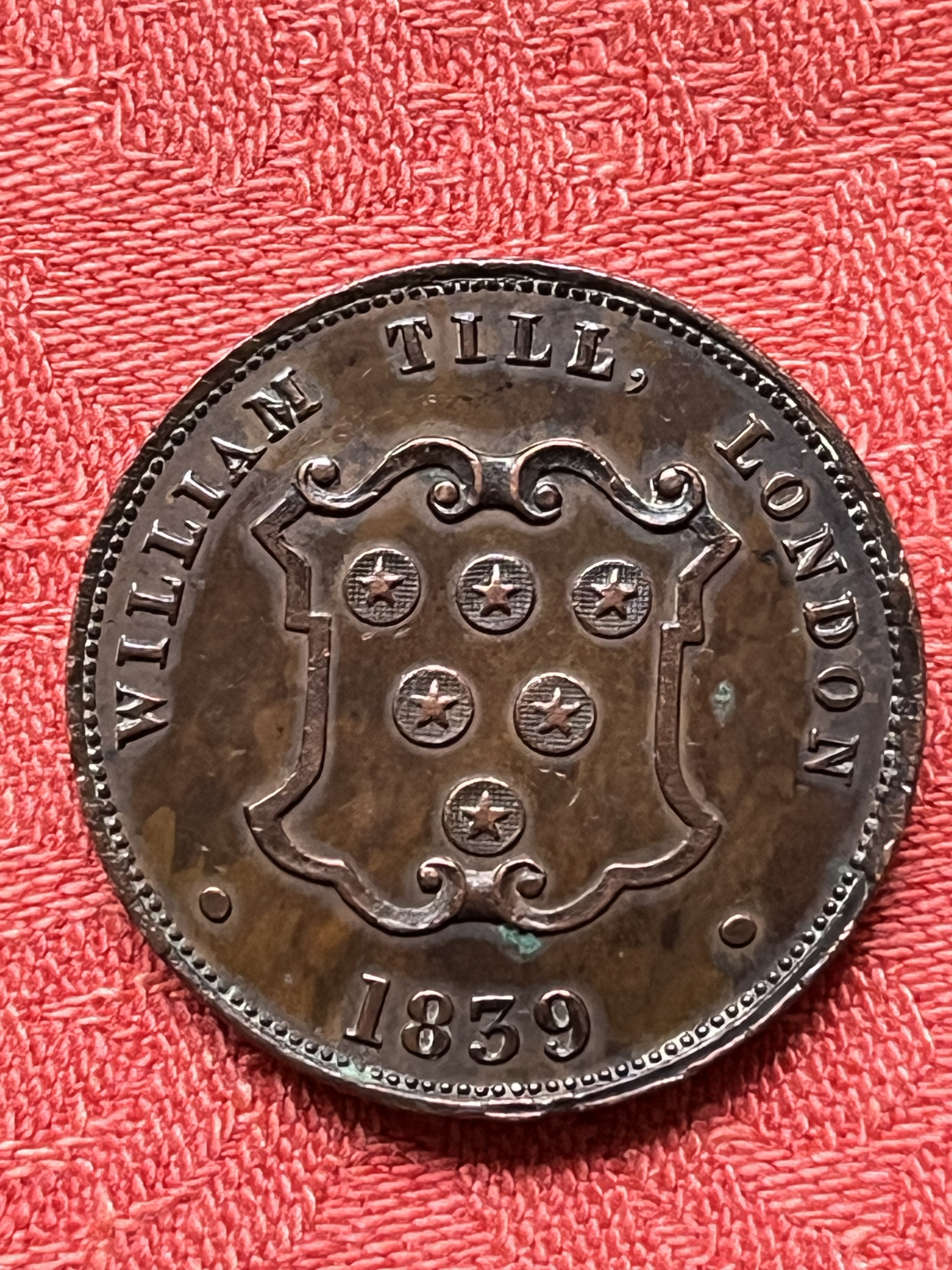
We have not managed to discover any early 19th century dealer catalogues (we are looking though!), but what did appear last week was an early 19th century copper trade token (26mm diameter) produced in 1839 by the well-known ‘curiosity dealer’ William Till (d.1844). Such tokens were produced from the late 18th century as a result of the coin shortages in Britain, but many traders continued to produce tokens as a form of advertising, as well as continuing to be used for payment for goods etc throughout the 19th century.

Trade Token, William Till, 1839. Photograph, Antique Dealers Research Project, University of Leeds.

I’m guessing that Till produced this token to advertise his business, and for collectors of modern coins, but perhaps it could also have been used to buy things from Till’s shop. Till was perhaps one of the most famous dealers in ‘ancient & modern coins’ in the period; he is recorded as ‘curiosity dealer’ at 17 Great Russell Street, London by 1832, and wrote an important work on ancient coins, An Essay on the Roman Denarius published in 1838. He was also one of the first members of the Numismatic Society, founded in 1836. Below is the verso of Till’s token, indicating his business as a ‘Dealer in ancient & modern coins, medals and antiques etc’.

Trade Token, William Till, 1839. Photograph, Antique Dealers Research Project, University of Leeds.

Till produced several versions of his token during the 1830s – in the above example he has included an emblem which seems to mirror the Arms of the Medici family, the enormously wealthy family based in Florence in the 15th and 16th centuries, founders of the Medici bank; the 6 balls in the cartouche in Till’s medal mimic the 6 balls in the Medici crest – Till seems to use it as a visual pun.

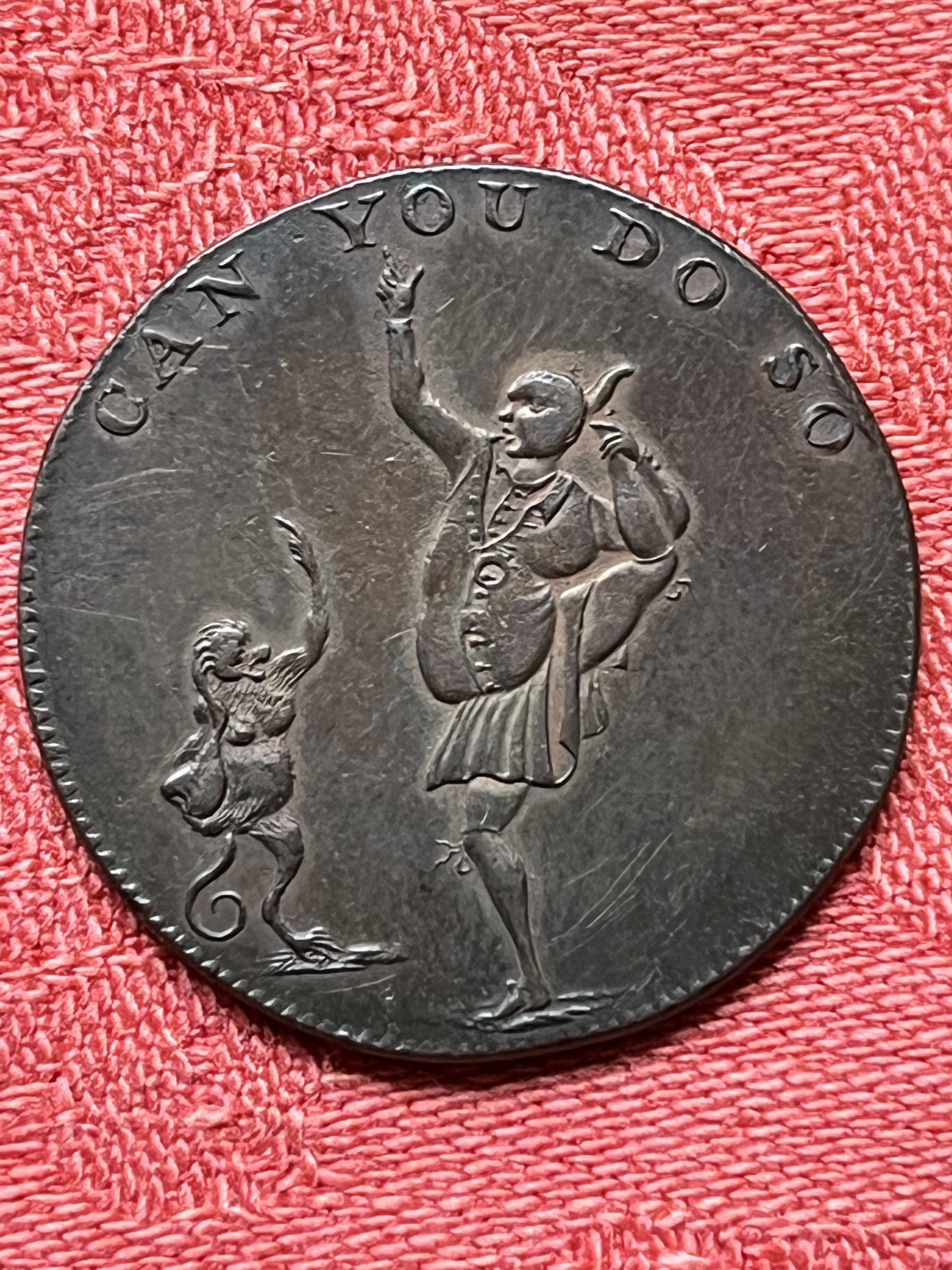
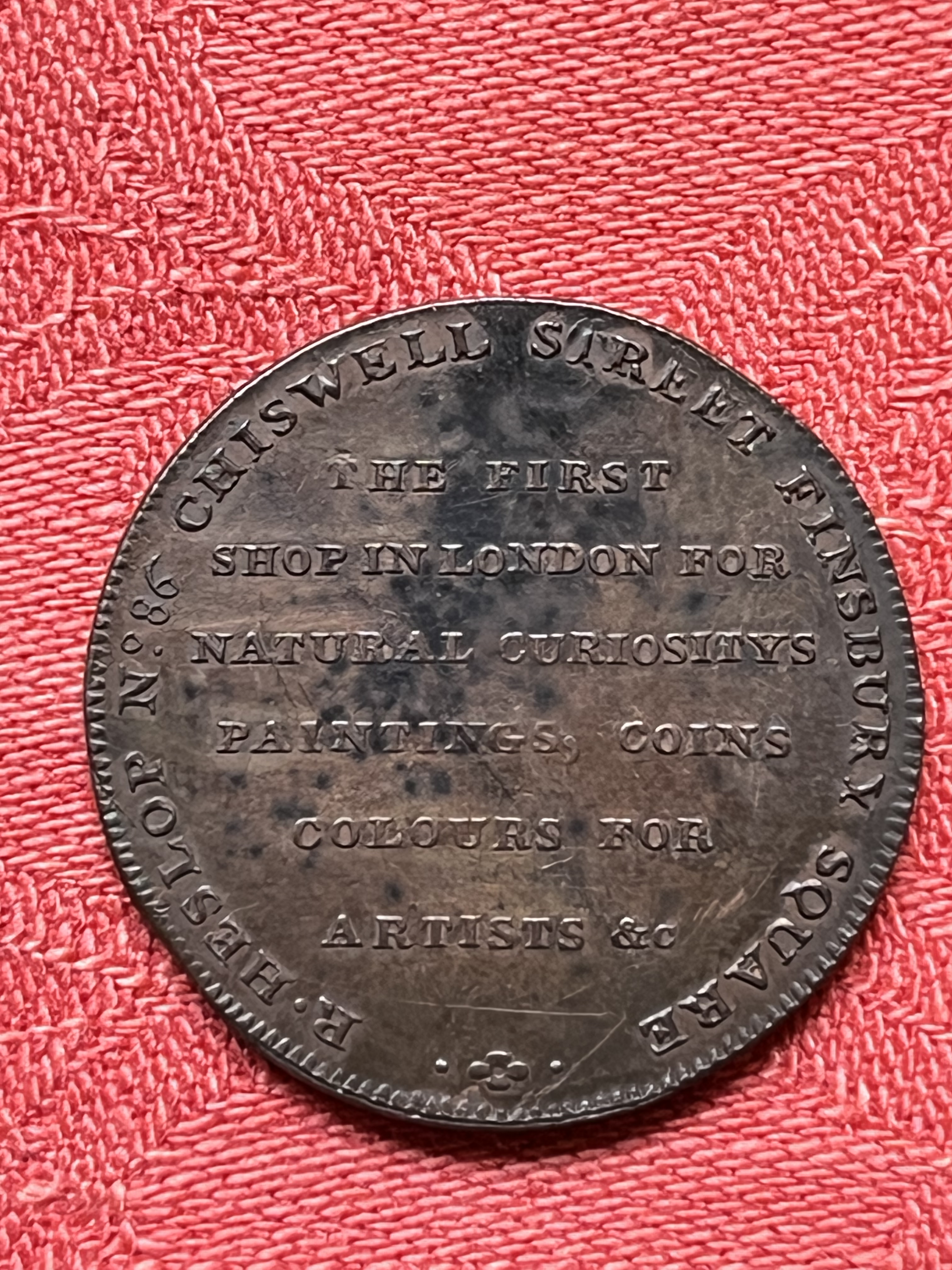
Curiously, a few years ago we also found another copper trade token produced by a ‘curiosity dealer’. This one produced by the dealer Robert Heslop, who traded from 62 Whitecross Street, London during the 1820s and 1830s. Heslop’s token, (also 26mm diameter), is said to very rare and to date from c.1795; it shows the famous 17th century contortionist Joseph Clarke, said to be the most extraordinary ‘posture master’, beneath the words ‘CAN YOU DO SO’.

Trade Token, Robert Heslop, c.1795 Photograph, Antique Dealers Research Project, University of Leeds.

The verso of Heslop’s token gives his address at 86 Chiswell Street, London and, like that of William Till, highlights Heslop’s trade – this time as a dealer in ‘Natural Curiosities, Paintings, Coins..’ and supplying ‘colours for artists’. It was very common for ‘curiosity dealers’ in the period to be involved overlapping markets and practices.

Trade Token, Robert Heslop, c.1795. Photograph, Antique Dealers Research Project, University of Leeds

Heslop’s token was also on display at the SOLD! exhibition at The Bowes Museum. And if you are interested in 19th century antique & curiosity dealers, you can find out more about them in my Biographical Dictionary of 19th Century Antique & Curiosity Dealers – it’s available FREE online at White Rose Depository.

Mark
May 30, 2023

More on Samuel Richards: a Nottingham antique dealer 1890s-1920s

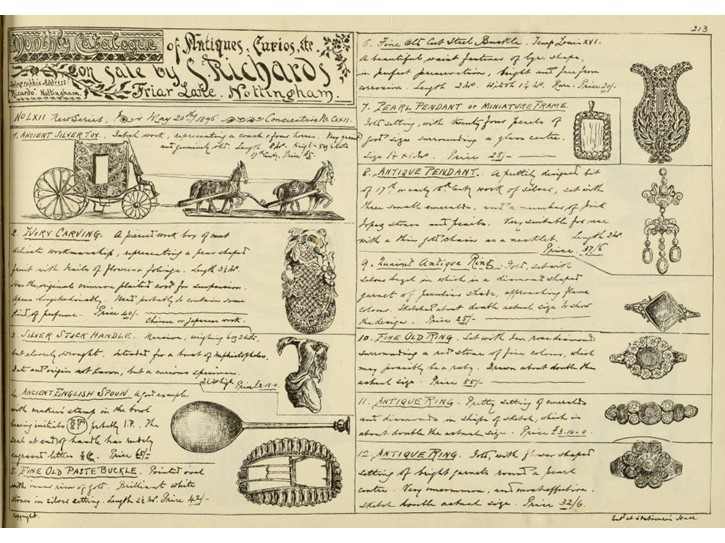
Readers of the Antique Dealers’ blog will be aware that we have previously posted a couple blog entries on the antique dealer Samuel Richards (1859-1927) (see blog posts November 2018 & June 2014). Richards is well-known for producing charming and detailed lithographed catalogues of his stock of antiques, which he issued monthly (with a few exceptions) from the early 1890s until the period around the First World War. Richards’ catalogues are quite rare – there are a few copies at the Victoria & Albert Museum Art Library in London, bound together in a couple of volumes. We also have a small number of bound copies in the John Evan Bedford Library of Furniture History at the Brotherton Library Special Collections at the University of Leeds, thanks to the very generous bequest of the late John Bedford (1941-2019). The Brotherton Special Collections also has a couple more bound copies of Richards catalogues, very generously bought at auction (in Nottingham no less) in 2018 and donated by our friend and keen supporter of the antique dealer research project, Simon Myers, of the antique dealer R.N. Myers & Sons of Gargrave in North Yorkshire (thank you again Simon).

Samuel Richards, Nottingham, Catalogue of Stock, May 20th, 1896. Photograph, Antique Dealers’ Research Project, University of Leeds.

Richards drew the illustrations in the catalogues himself, producing them monthly and sending them out to collectors all over the UK – although Richards quite often felt the need to apologise for missing a month (due to sheer volume of work, he says) in some of the monthly catalogues.

Samuel Richards, Nottingham, catalogue of stock of antiques, April 1912. Photograph, Antique Dealers Research Project, University of Leeds.

Whilst such lithographed catalogues produced by antique dealers were not unique to Richards (see blog post of the catalogues produced by A. W. & F. Little, of Bristol, in the same period – Blog Post February 2022), Richards seems to have been particularly prolific.

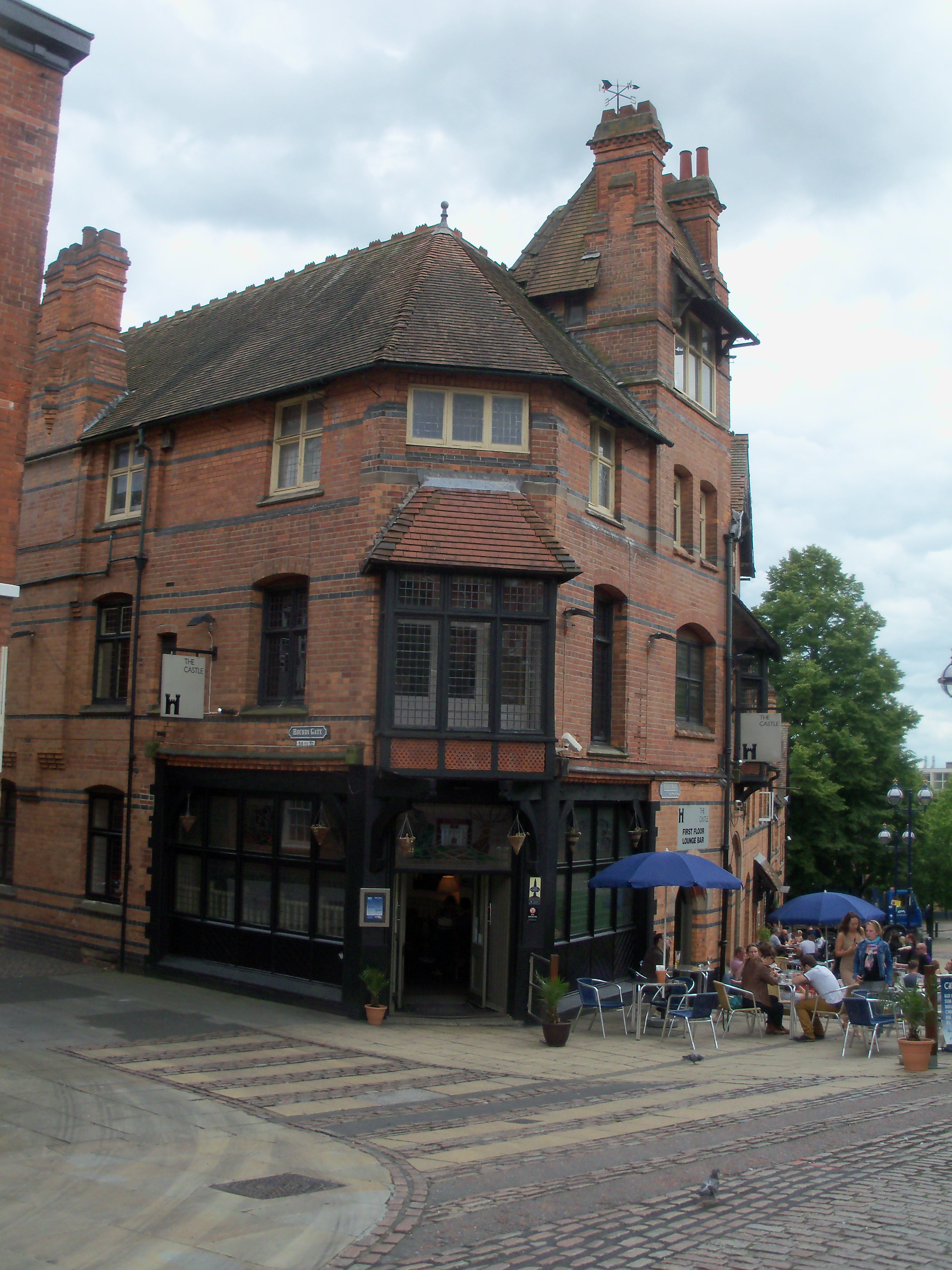
As a result of these fascinating catalogues, we have been doing more research on Samuel Richards over the past few months and have discovered new information about his activities an antique dealer in the period 1890s to 1920s. Richards was born in Nottingham in 1859, and died in Loughborough in 1927. He appears to have run his antique dealing business in Nottingham, but lived most of his life in Loughborough. The Census (1901) records Richards aged 42, a ‘dealer in antiquities’ (as antiques were often called at the time), living at 1 Park Street, Loughborough, with his wife Maud (aged 38), his son Arthur (aged 9), and daughters Winifred (aged 5) and Nora (aged 4), together with a servant, Fanny (aged 16). Richards appears to have owned or rented another property in Herrick Road in Loughborough at the same time. Richards antique shops were located in Nottingham, at 77 Houndgate and at The Old Friary, Friary Lane – he seems to have operated from both premises from the 1890s until his retirement from business in c.1919 – his son Arthur (1891-1976) appears to have worked with his father in the antique shops from about 1908, perhaps until his father’s retirement in c.1919. Richards shop at 77 Houndgate was crammed full of antiques (see photograph from 1892, below) typical of the material he illustrated in his monthly catalogues.

Samuel Richards antique shop, 77 Houndgate, Nottingham, 1892. Photograph, Antique Dealers Research Project, University of Leeds.

You can just make out the exterior appearance of Richards’ Houndgate antique shop in the title page of some of his catalogues – see below).

Samuel Richards, catalogue of stock of antiques, 1891. Photograph, Antique Dealer Research Project, University of Leeds.

And as mentioned in the previous blog post in June 2014, the building that housed Richards’ Houndgate antique shop still exists (see below).

Building that housed Samuel Richards antique shop, photographed in 2014. Photograph, Antique Dealers Research Project, University of Leeds.

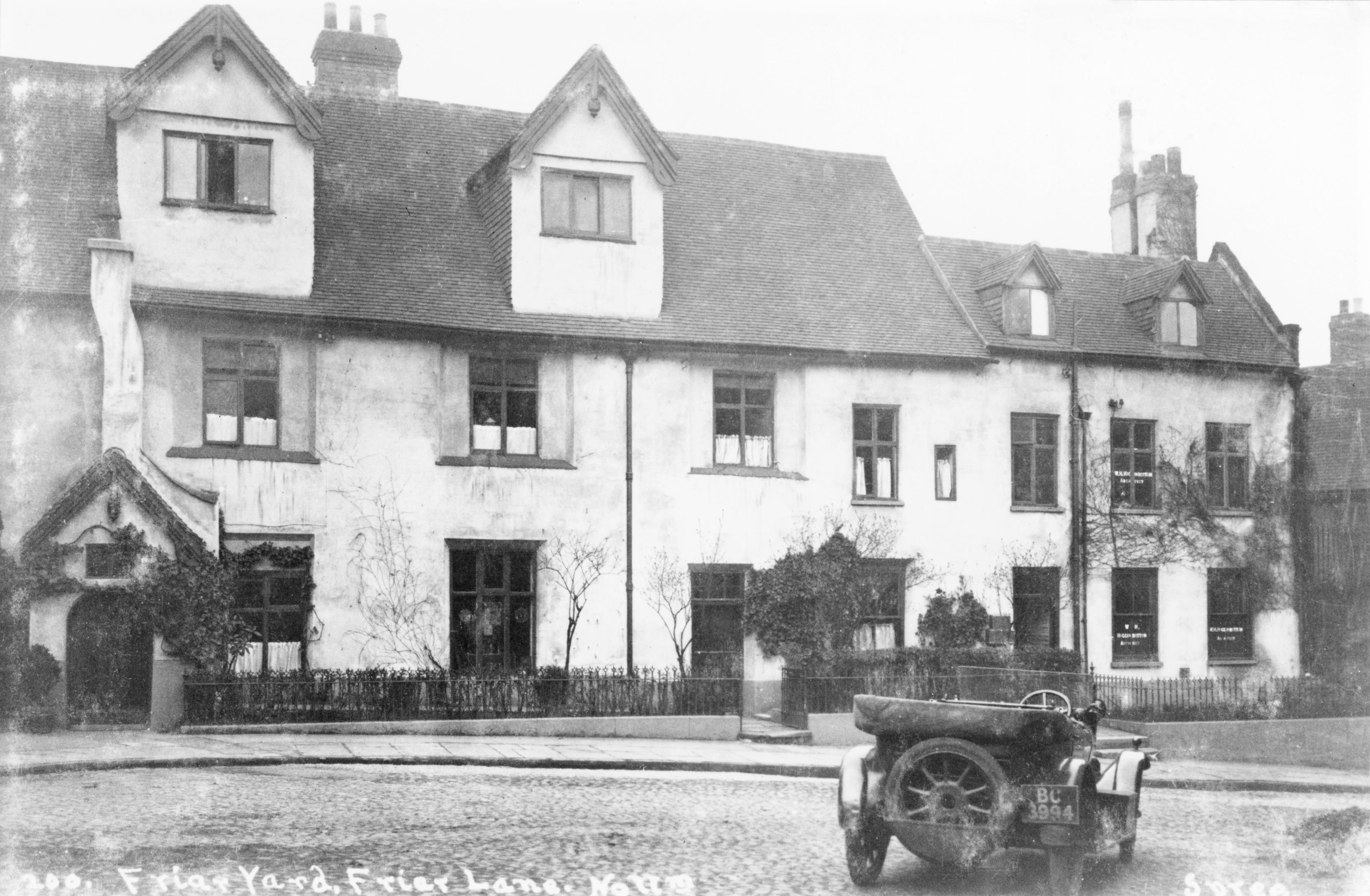
Richards’ other shop, The Old Friary in Friary Lane, Nottingham, was a much more famous building. He appears to have rented The Old Friary from the early 1890s until c.1919.  The Old Friary was a 17th century building, rebuilt as part of a much earlier series of buildings that were part of Whitefriars Priory (built c.1276). 

The Old Friary, Nottingham, c.1927, just shortly prior to its demolition. Image courtesy of Getty Images as part of the Year of the Dealer project 2023.

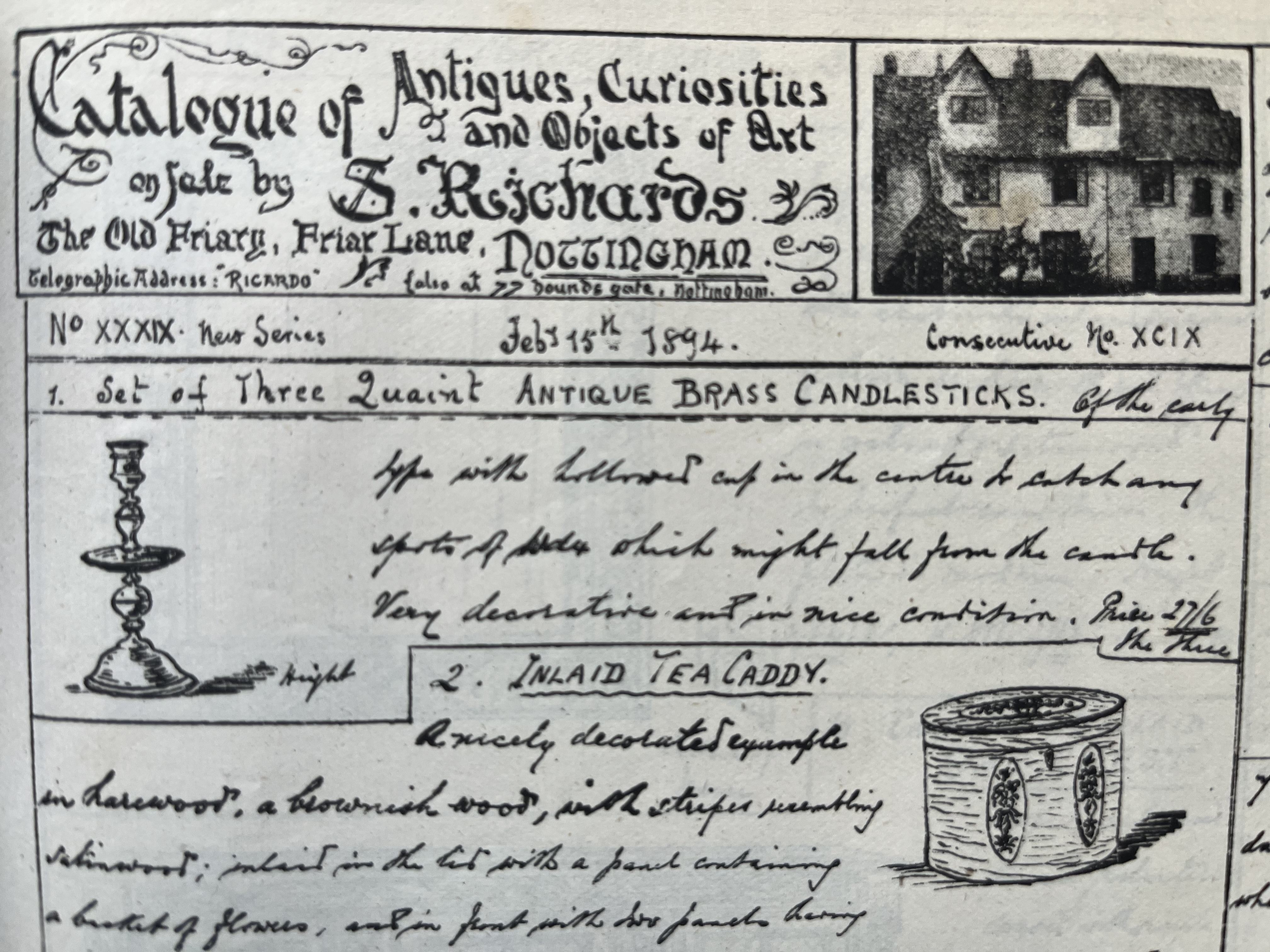
The Old Friary was also partly rebuilt in the 16th century and more famous for its associations with Dorothy Vernon (1544-1584) of Haddon Hall fame; Vernon is supposed to have lived at the Old Friary with her husband John Manners (1534-1611).  In 1902 Charles Major published his famous romance novel ‘Dorothy Vernon of Haddon Hall’ which may have increased traffic to Richards’ shop. Certainly, such historic associations would have been of interest to an antiquary such as Richards and to his customers.  The Old Friary was demolished in 1927. You can also just make out a photograph of The Old Friary in the title page of some of his catalogues of stock of antiques (see below).

Samuel Richards, catalogue of stock of antiques, February 1894. Photograph, Antique Dealer Research Project, University of Leeds.

We also have some exciting news about Samuel Richards – he is the focus of one of our Year of the Dealer Project digital trails (see Year of the Dealer Project) – at the Lady Lever Art Gallery at Port Sunlight, near Liverpool. Richards sold a large amount of ‘antique straw-work’ objects to Sir William Lever in 1915, one specimen of which we have included in the Year of the Dealer trail at the Lady Lever (see below). So, keep your eye out for the official launch of the Year of the Dealer trails this summer.

Mark

Early 19th century Straw-work box. French. Sold by Samuel Richards to William Lever in 1915. Lady Lever Art Gallery, Port Sunlight. Photograph, Antique Dealer Research Project, University of Leeds.
April 30, 2023

F.G. & C. Collins Antiques 1907-2006

This month’s blog post is one of our occasional series of invited contributors to the Antique Dealer Research Blog. We have a really fascinating blog on the history of the well-known antique dealers F.G. & C. Collins, of Wheathampstead, Hertfordshire, composed by Anne Atton, the grand-daughter of one of the founders of the business. We are very grateful to Anne for sharing her memories and research with the antique dealer research project – Thank You Anne!

Mark

Hi, my name is Anne Atton and I live in Wheathampstead, a rural village in Hertfordshire where my family ran a provincial antiques business. I retired as a Chartered Surveyor in 2020, having worked in both private and public sectors for 35 years. I have a keen interest in social history and my retirement has given me the opportunity to get involved in projects for the Wheathampstead History Society. I’m proud to share the story of my family’s antique business and I hope you enjoy learning about them as much as I did.

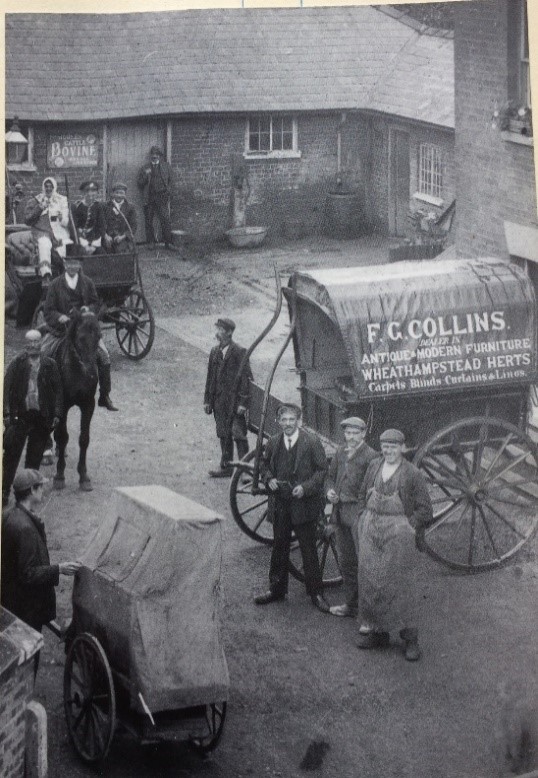
In this blog post, I reflect on 99 years of Collins Antiques, a successful antique dealership based in Wheathampstead, Hertfordshire. Starting in 1907, the business traded for 99 years, employing three generations, closing in 2006. The business evolved from selling second-hand furniture in a pub yard to the successful operation of two established retails stores selling 18th and 19th century antique furniture, together with an extensive restoration workshop.

F.G. Collins, pub yard, Railway Hotel, Wheathampstead, c.1910. Photograph courtesy of Anne Atton.

F. G. & C. Collins was founded by my great uncle Fred Collins and grandfather Charlie Collins, who were brothers from rural Wheathampstead in Hertfordshire. Frederick Collins was a talented cabinetmaker having completed his apprenticeship with the celebrated furniture business established by Sir Blundell Maple.

Charlie Collins, date unknown. Photograph courtesy of Anne Atton.

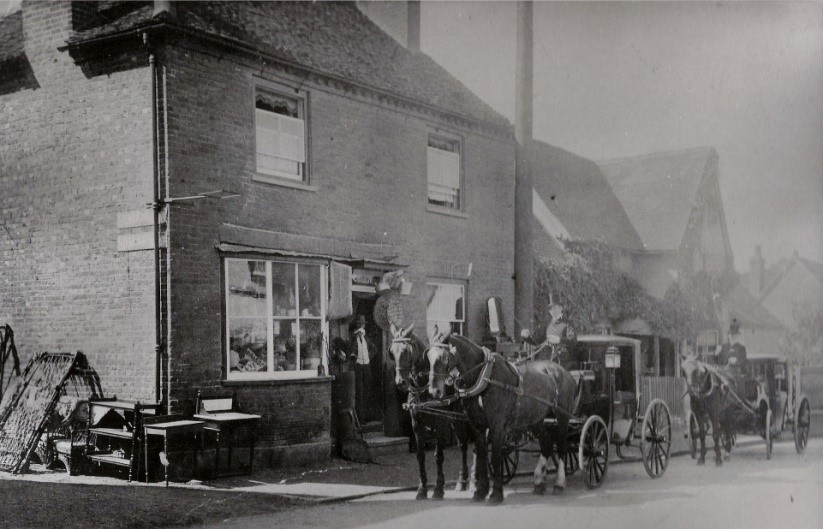
Charlie entered into partnership with his brother Fred in 1911, repairing and selling furniture from a small yard behind the Railway Hotel in Wheathampstead, before moving the business to 12 High Street, Wheathampstead (see photograph BELOW) . When money was tight, the brothers acted as cabbies, hiring horses from Tattershalls, the well-known auctioneers of horses. During the First World War their sisters looked after the business. After the War the brothers returned safely home to Wheathampstead from Europe and the Middle East, taking up the running of the business again.

F.G. & C. Collins, 12 High Street, Wheathampstead, c.1912. Photograph courtesy of Anne Atton.

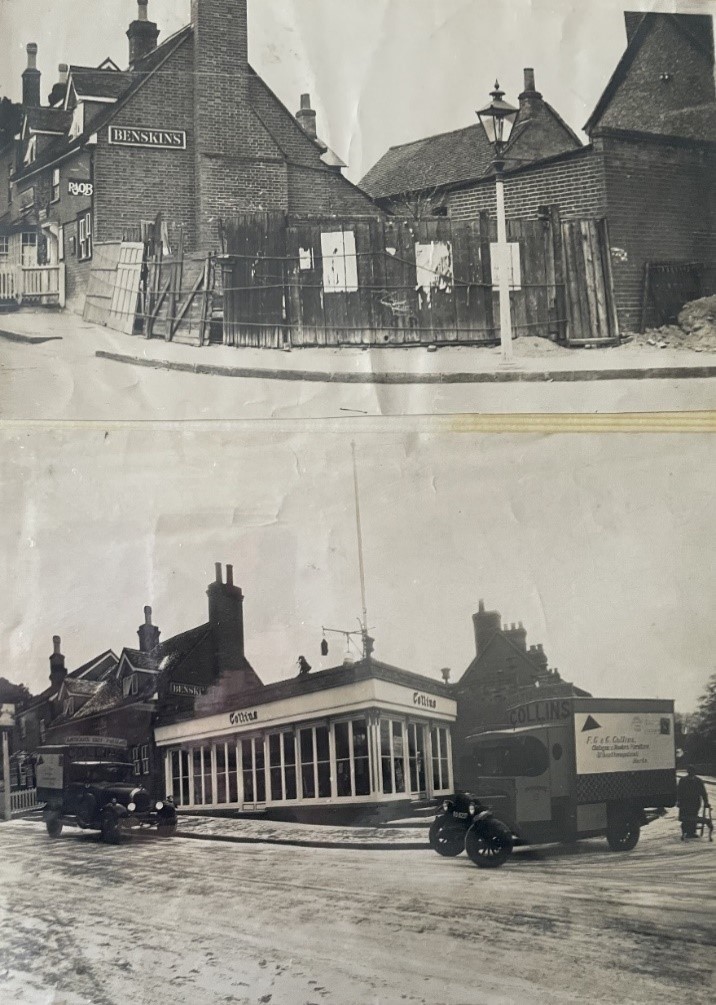
In 1926, Fred Collins bought 54 High Street, Wheathampstead, which consisted of a cottage and a small site next door; after which, Fred paid £12 for a Winter Garden from a demolished local country house, which was re-erected on the High Street site in 1931, creating the F.G. & C. Collins antique shop (see photograph BELOW).

54 High Street, Wheathampstead, in c.1926 (above) and in c.1931 (below) following the creation of F.G. & C. Collins’ antique shop. Photographs courtesy of Anne Atton.

Business invoices from the 1920s show show the diversity of the business – they acted as carpet-fitters, upholsterers and furniture removers. Collins had some illustrious customers at the time, including the playwright and critic George Bernard Shaw (1856-1950). In 1926 Charlie employed a cabinet-maker, who later retired aged 80. Work on each item of furniture was recorded in a scribbling diary bought from Boots (the Chemist), a practice that continued right up to the close of the business in 2006.

In 1930, Fred Collins rented outbuildings from the Town Farm, opposite the shop. These were later used for the storage of furniture of wealthy customers protecting their valuables during the London Blitz during the Second World War.

F.G. Collins, Town Farm, Wheathampstead, storage area (date unknown). Photograph courtesy of Anne Atton.

Fred Collins sadly died in 1936, leaving the shop at 54 High Street to his brother, Charlie and the other shop at 12 High Street to his widow, Olive Collins. In 1937 Charlie had the shop decorated for the Royal Coronation of King George VI, and with an array of furniture presented for sale on the pavement outside the shop (see photograph BELOW).

Collins Antiques, decorated for the Coronation of King George VI, 1937. Photograph courtesy of Anne Atton.

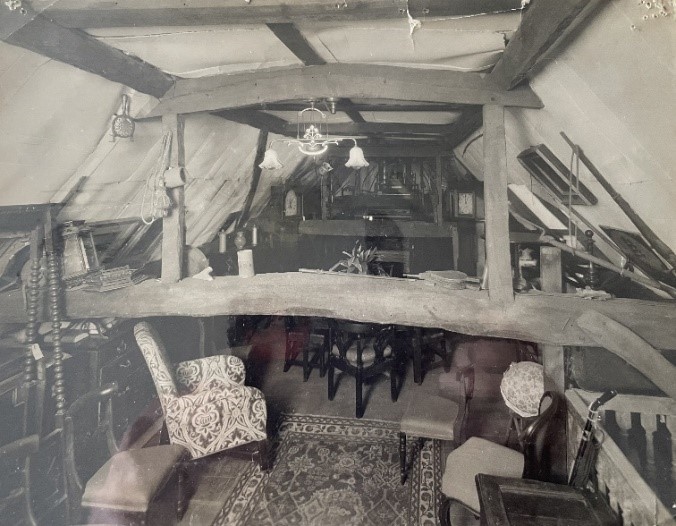
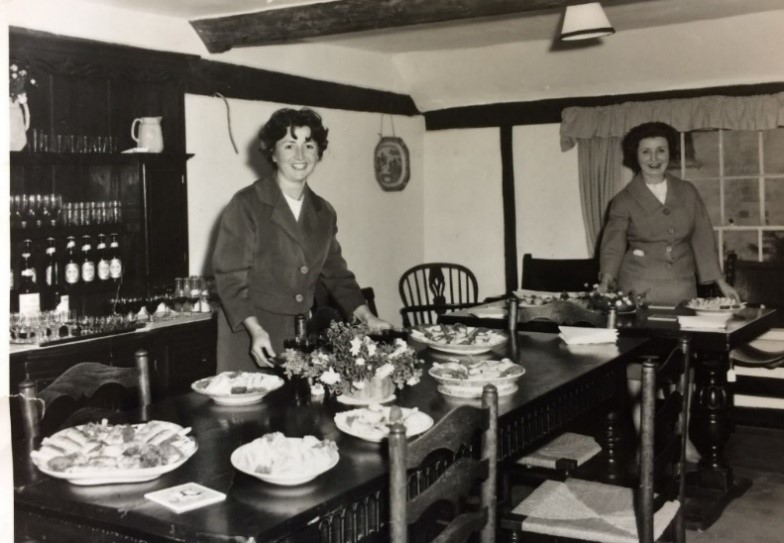
In 1939 Charlie rented a Georgian building, Barton House in Wheathampstead that had been subject to a ‘Clearance Order’ in 1938, and spent the next 17 years challenging the local council to save the building from demolition. Charlie eventually bought the building in 1955, repairing it and converting it to a new antiques showroom in the 1960s. It remained as a showroom until the firm closed in 2006.

Collins Antiques, Barton House, Wheathamsptead, 1960s. Photograph courtesy of Anne Atton.
Collins Antiques, Barton House, Wheathampstead, interior of showroom, 1960s. Photograph courtesy of Anne Atton.

In 1950, Charlie’s son, my father Sam Collins, joined the business, followed by my brother Michael in 1975. In the 1960s Charlie and Sam would often undertake buying trips to Ireland, sometimes staying their for over 1 month. The business also continued to diversify in the period, becoming a local agents for ‘Sunway Blinds’ and the ‘Sunresta’ bedding company. There were some exciting antiques acquired during the 1960s, including, in 1962, a pair of French 16th century walnut stalls, which Collins sold to York Minster – (BELOW is a photo of the stalls; the young girl sitting on the seat is Anne Atton (nee Collins)!

Anne Atton (nee Collins) in the 16th century stalls in 1962. Photograph courtesy of Anne Atton.

By 2001, as the interest in antiques started to wain, the main showroom of Collins Antiques was leased out. Sam Collins sadly passed away in 2004, and the business of Collins Antiques finally closed in 2006 – although my sister, Sarah Collins, continues the family tradition of buying and selling gifts and modern furniture and furnishings.

Anne Atton.

March 31, 2023

Godfrey Giles & Co – ‘antique dealers’

Yet more examples of historic ‘antique dealer’ booklets and catalogues keep turning up – this time our friend Thomas Lange, researcher at leading London based antique furniture dealers Ronald Phillips very generously send us a copy of a rare brochure from his own collection. Thomas has been a keen supporter of the Antique Dealer Research Project for many years and has often sent us information and historical material on the history of antique dealing – thank you again Thomas!

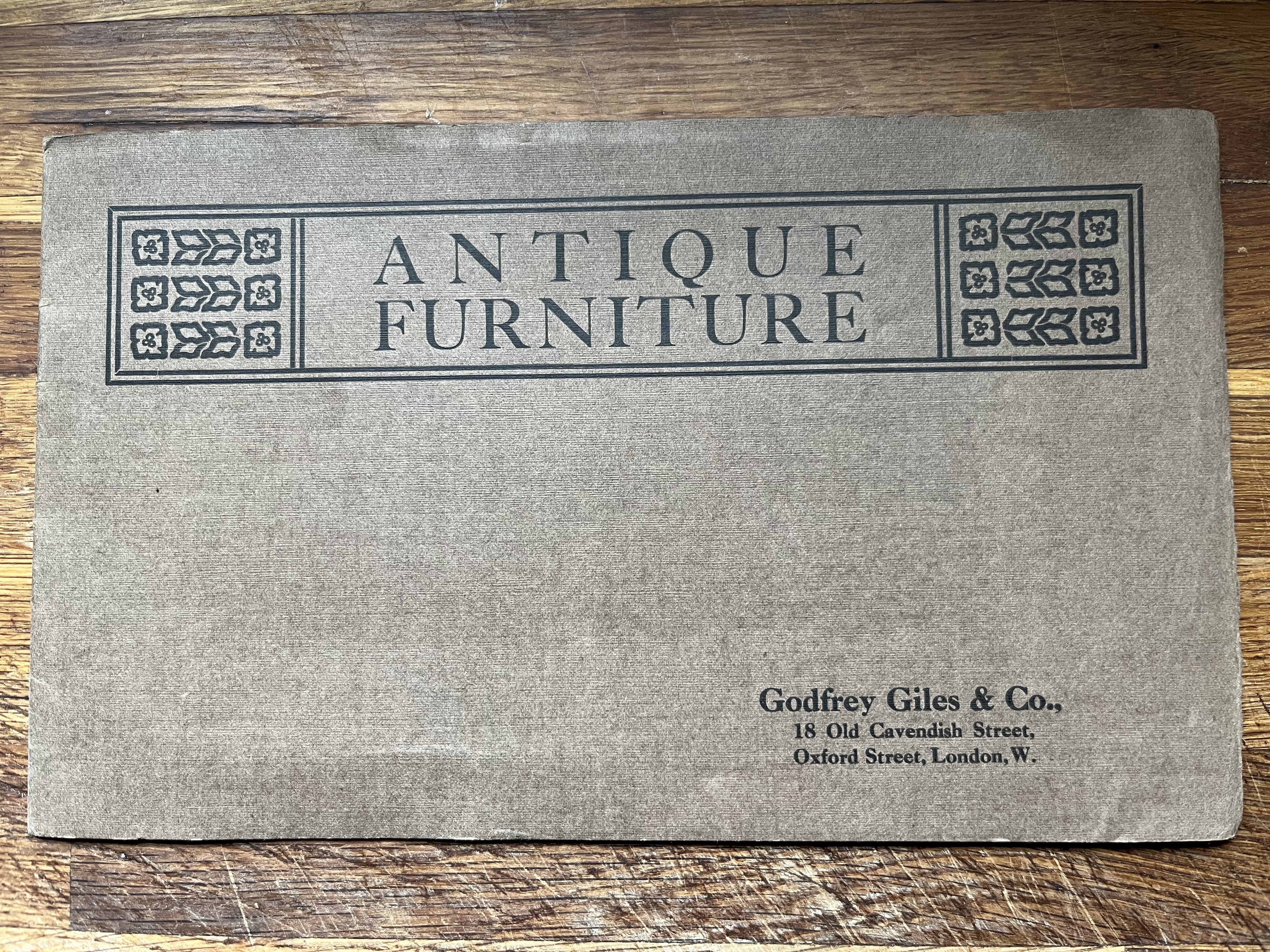
On this occasion Thomas discovered an antique dealer that had not previously been known to us – Godfrey Giles & Co, 18 Old Cavendish Street, London.

‘Antique Furniture’ – Godfrey Giles & Co. c.1915. Photograph, Antique Dealer Research Project, University of Leeds 2023.

Godfrey Giles were certainly not figured in our Antique Dealer Map website – but their absence can be explained by our research methodology; we have tended to concentrate on information about antique dealers from historic Trade Directories, Antique Dealer Guidebooks and Listings, and antique dealer advertisements etc. But of course such an approach misses many traders who operated at the periphery of the trade in antiques, and in overlapping practices such as furniture makers, decorators and general furnishers etc.

Godfrey Giles appears to have been this type of business. Indeed, they are classified as furniture manufacturers in the Furniture History Society’s ‘British and Irish Furniture Makers Online’ (BIFMO) database. The firm seems to have been flourishing in the 1890s, as ‘Decorators, Cabinetmakers and Upholsterers’, with various retail outlets in Kensington High Street, London (for ‘general furnishings’) and in Queen Street, London and New Cavendish Street, London (for ‘Decorative Furniture’ and ‘Antique Furniture’). Their New Cavendish Street shop was right next to another well-known ‘Decorator and Antique Dealer’ Gregory & Co.

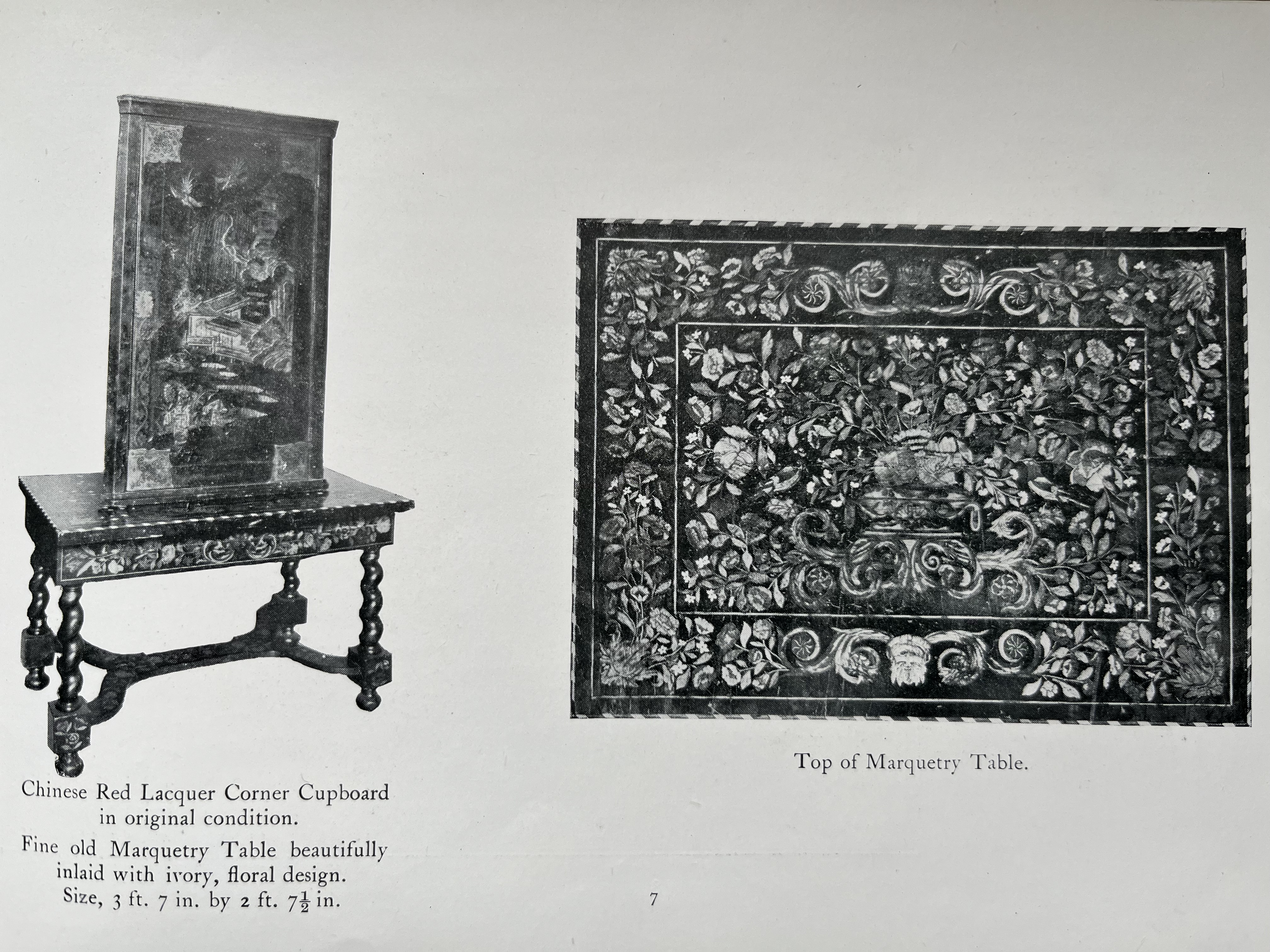
The brochure that Thomas kindly donated to us is undated, but appears to date from c.1915; it’s about 10 inches x 6 inches, contains just 8 pages, and is typical of the types of booklets produced by several antique dealers in the period. It illustrates examples of antique furniture for sale in Giles’ shop.

Godfrey Giles & Co., booklet c.1915 – illustrations of antique furniture. Photograph, Antique Dealer Research Project, University of Leeds, 2023.

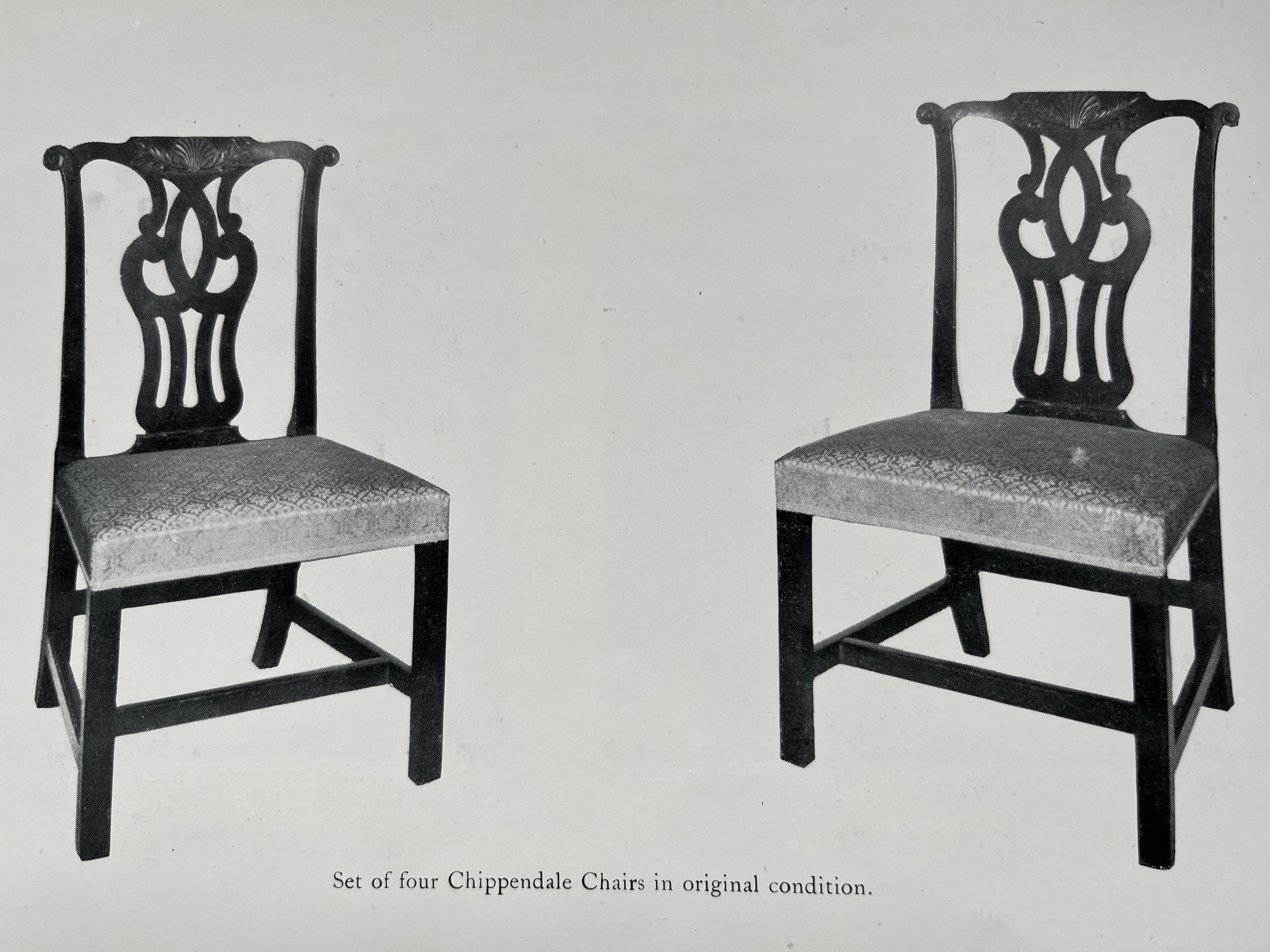
That Godfrey Giles, a ‘modern’ furniture maker and retailer, should also be selling antique furniture is no surprise of course, many furniture makers bought and sold antique furniture in the early 1900s as demand for antiques expanded in the period. As the booklet states, ‘The demand for antique furniture shows no signs of abating.’ The booklet has some interesting examples of antique furniture fashionable at the time. ‘Chippendale’ furniture was key of course, such as these ‘Chippendale Chairs’ described as ‘in original condition’ (see below):

Godfrey Giles & Co., booklet c.1915. Photograph, Antique Dealer Research Project, University of Leeds, 2023.

Our these ‘Chippendale’ tables, the right hand one described as ‘of the best period and in exceptionally fine condition’ (see below).

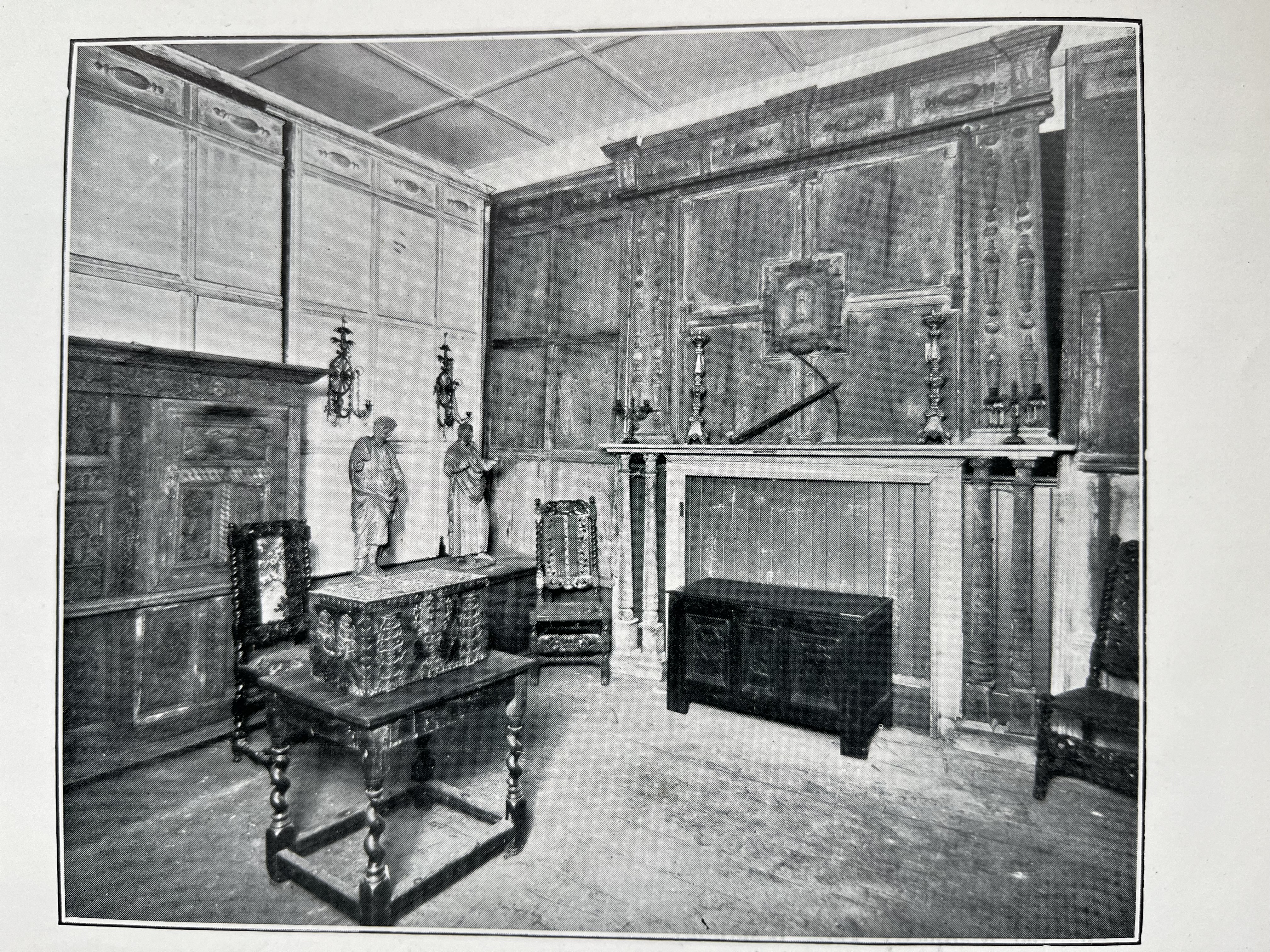
Antique oak furniture was also particularly popular in the early 1900s – the booklet mentions the ‘Oak Room’ at Godfrey Giles’ showroom, ‘unique and full of interest to collectors’. The room itself is described in the booklet as a ‘Fine example of a Jacobean Oak Room taken from Erdington Hall, Birmingham. Circa 1650.’

Godfrey Giles & Co., booklet c.1915. Photograph, Antique Dealers Research Project, University of Leeds, 2023

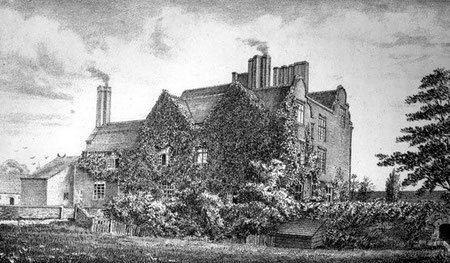
Erdington Hall was built in the mid 1600s, and was demolished in 1912, so this perhaps gives us a date for the Godfrey Giles & Co booklet.

Erdington Hall in 1879. Illustration from Harrison & Wills, ‘The Great Jennings Case’ (1879) – from https://billdargue.jimdofree.com/placenames-gazetteer-a-to-y/places-e/erdington/

The antique furniture illustrated in the booklet suggests that Godfrey Giles & Co were buying and selling high quality antiques. In fact Thomas Lange has spotted a ‘Queen Anne Mirror’ in the booklet that was later illustrated in the famous 3 volume ‘The Dictionary of English Furniture’ compiled by Percy Macquoid and Ralph Edwards in 1924. The mirror in Godfrey Giles & Co booklet (see below, shown right) is described as having ‘Original gilding’ –

Godfrey Giles & Co., booklet c.1915. Photograph, Antique Dealers Research Project, University of Leeds, 2023

The same mirror (see below) in ‘The Dictionary’ (see Volume 2, page 325, fig.45) was then owned by Mrs Percy Macquoid – perhaps, as Thomas suggests, Godfrey Giles & Co sold the mirror to the Macquoid’s? Illustrious customers indeed.

Percy Macquoid and Ralph Edwards – ‘The Dictionary of English Furniture’ (3 vols, 1924) volume 2, p.325.

We are so grateful to Thomas for so generously donating the Godfrey Giles & Co booklet to the Antique Dealer Research Project.

Mark

February 26, 2023

Waring & Gillow Italian Antiques Exhibition 1909

A new edition to the growing collection of Antique Dealer catalogues is a rare exhibition catalogue produced by the furniture makers and retailers Waring & Gillow in 1909. This ‘Exhibition of Italian Furniture and Pictures by Italian Artists’ took place at Waring & Gillow’s shop in Oxford Street in London.

Waring & Gillow Exhibition catalogue, 1909. Photograph, Antique Dealers’ Research Project, University of Leeds.

The exhibition included a very wide range of ‘antiques’ – ‘antique furniture’, ‘Old tapestries’, ‘sculptured marbles of historic interest’, ‘Bronzes’, ‘Old Majolica ware’, ‘Lace’, XVIth century Cathedral Vestments’ and paintings by ‘Old Masters’, as well as paintings by ‘Modern Italian Artists’ such as Pio Joris (1843-1921), Silvio Galimberti (1869-1956) and Filiberto Petiti (1845-1924) – the latter loaned by Queen Margherita of Savoy (1851-1926).

Waring & Gillow Exhibition Catalogue, 1909. Photograph, Antique Dealers’ Research Project, University of Leeds.

The ‘Modern’ paintings in the exhibition appear to have all been loans from various private collectors, no doubt an extra inducement for potential customers to come to buy the wide range of antiques in the exhibition, all of which were for sale. There were a small number of ‘Old Master’ paintings, which also appeared to have been loans (‘The Three Graces by Sarriboursi’, ‘The Annunciation by Francesco di Gentile’ and a ‘Madonna and Child and Saints Bernardo and Girolamo by Pinturicchio’); but there were also one or two ‘Old Paintings’ on sale at the exhibition – a pair of oil paintings on panel ‘of the Pier Della Francesca School’ (priced at £75 the pair), and a ‘XVth century Madonna and Child’ on panel (priced at £95).

The range of antiques for sale illustrates the evolving fashion for Italian interior decoration promoted by Waring & Gillow at the time. The catalogue even included an illustration of an ‘Italian Salon’ as one of the frontispiece images – the tapestries in the illustration were for sale in the exhibition, described as ‘Early XVIIth century’ the 7 tapestries were offered at £3,000 the set.

Waring & Gillow Exhibition Catalogue, 1909. Photograph, Antique Dealers’ Research Project, University of Leeds.

The exhibition included a wide range of antique furniture, including ‘XVth, XVIth and XVIIth century’ chairs and tables, coffers and cassone; this ‘Fine Italian Renaissance Credence’ in walnut (see below) was priced at £100.

Waring & Gillow Exhibition Catalogue, 1909. Photograph, Antique Dealers’ Research Project, University of Leeds.

And this ‘Table of old ”Verde Antico” marble, with ”Breccia Corallina” borders, was offered at £115 (see below).

Waring & Gillow Exhibition Catalogue, 1909. Photograph, Antique Dealers’ Research Project, University of Leeds.

Perhaps the most surprising ‘antiques’ for sale in the exhibition was a range of ecclesiastical vestments, including this ‘Renaissance Chasuble of the Sixteenth Century’ (one of 4 offered for sale) at £39.10s (see below). Although to be fair, the tradition of buying and selling antique textiles goes back to at least the early 19th century in terms of the history of antique dealing, and museums such as the South Kensington Museum (now the V&A Museum) had been assembling collections of antique textiles since it’s earliest days in the 1850s.

Waring & Gillow Exhibition Catalogue, 1909. Photograph, Antique Dealers’ Research project, University of Leeds.

That Waring & Gillow, one of the leading modern furniture retailers in the period, should be staging exhibitions of ‘antique furniture’ is of course not unusual; the firm was also buying and selling antique furniture alongside many modern furniture retailers at the time. The exhibition catalogue will be making it’s way to the collections of Antique Dealer material at the Brotherton Library Special Collections at the University of Leeds in due course.

Mark

December 30, 2022

Happy New Year to all our readers!

2022 is coming to a close – so we’d like to wish all readers and followers of the Antique Dealer Research Project blog a very Happy and Healthy New Year!

We thought a fitting image for a Happy New Year is the advertising calendar, produced by the antique dealer Charles Morse, for his very first antique shop, ‘Mr Pickwick’s Antiques’ in 1947 – and thanks again to Charlotte Morse (and Ben) for so kindly letting us use the image again.

Calendar, 1947, ‘Mr Pickwick’s Antiques’ (Charles Morse). Image courtesy of Charlotte Morse.

We will continue to post on the Research Blog in 2023 with our usual selection of posts on the history of antique dealing and various related themes. In April 2023 we will reach the 10th (yes 10th!) anniversary of the Antique Dealer Research Blog. Over the years we have amassed an archive of blog posts amounting to more than 120,000 words, and several hundred images – and in that time we have had more than 70,000 visits to the Research Blog – thank you all that read the blog!

Early in 2023 we’ll have some exciting news to report on the on-going Year of the Dealer project (see the Year of the Dealer project website at the University of Leeds), with the launch of our Year of the Dealer Digital Trails at a selection of our project collaborator museums – so do watch out for news of the Digital Trails in late February 2023.

Happy New Year Everyone!

Mark

October 30, 2022

A BADA President medal 1962-1964

As part of the Antique Dealer’s research project at the University of Leeds, we are constantly on the look out for rare ephemera and items associated with the history of antique dealing in Britain. Often material is very generously donated to us, but sometimes things appear on the market which we just have to acquire. One such object was this medal (see below), which turned up at auction in August.

The medal is silver-gilt, about 34mm in diameter, and has a pale blue and white silk ribbon attached. I’d never seen one of these medals before, so asked Mark Dodgson, Secretary General of the British Antique Dealers Association (BADA) about it – he tells me that they were awarded to BADA Presidents to acknowledge their work as Presidents of the organisation. The BADA, as many of you will know, was established in 1918. This particular medal was awarded to the antique dealer Nat D. Ayer by the BADA in 1964 in recognition of Ayer’s Presidency of the BADA between 1962 and 1964. The Verso of the medal has the inscription ‘Nat D. Ayer 38th President 1962-1964’.

Nat Ayer was a very well-known character in the British antiques trade in the Post WWII period. He appears to have begun trading in antiques immediately after the end of the Second World War, opening a shop in Quiet Street, Bath by 1946. Nat Ayer is perhaps also well-known as the son of the famous composer Nathanial Davis Ayer (1887-1952) who was also known as Nat D. Ayer; composer of such famous songs as ‘Oh, You Beautiful Doll’ (1911) and ‘If you were the only Girl in the World’ (1916), with the lyricist Seymour Brown (1885-1952), and for his work on the Ziegfeld Follies. Below is a cover for a music sheet for ‘Oh, You Beautiful Doll’.

Nat Ayer Snr. was born in Boston in the USA – below is a photograph of Nat Ayer in 1916. He settled in the UK, becoming very successful in the Music Hall and theatre scene in London in the 1910s and 1920s. Ayer appears to have been less successful in the 1930s; he was eventually declared bankrupt in 1938; he sadly passed away in 1952 aged 65, in Bath, Somerset. Perhaps Nat Ayer Snr was also instrumental in his son Nat Ayer Jnr. opening an antiques shop in Bath in the 1940s?

Nat Ayer Jnr. went on to be a highly successful antique dealer, and as well as being elected the President of the BADA, he moved his business Mount Street in London in about 1964, which was at the time one of the most important locations for high-end antique shops in London. It may have been when Nat Ayer opened his new shop in Mount Street that he met his long-term partner, H. Gustave, who worked as the manager of the Connaught Hotel located in Mount Street.

Nat Jnr., like his father, was also a composer and an accomplished pianist. Indeed, in one of our many Oral History interviews with member of the antique trade – in our interview with the antique dealer John Bly (see Oral History pages on the project website) – John recalls encountering Nat Ayer whilst viewing an auction sale in Bath with his father Frank Bly. John remembers the auction was on view in a cinema building and seeing a tall man with a smart fur collar on his coat, playing a piano – his father Frank told him – ‘that’s Nat Ayer’. And as part of his introduction to the antique trade, John Bly also worked for Nat Ayer, helping him on his stand at the world-famous Grosvenor House Antiques Fair in the 1960s. John recalls that Nat was famous for introducing stage settings on his stand at the GH Fair – in 1969, for example, Nat Ayer backed his stand with a huge photograph of the New York skyline, and created trompe l’oeil effects on the floor, creating diminishing perspective effects like in theatre sets. The result, John tells us, caused a sensation at the Fair. Here’s a photograph of Nat Ayer’s shop window in Mount Street from 1966, demonstrating the flamboyant stock, typical of Nat Ayer’s ‘look’.

Nat Ayer became well-known as an interior decorator as well as a leading antique dealer. ‘Ayer & Co’, as the business became known, continued trading until the mid 1970s, moving his shop to 26 Bruton Street in about 1972, a shop now occupied by one of the leading specialists in antique furniture, Ronald Phillips.

It’s not known how or why Nat Ayer’s BADA medal ended up for sale at auction, but it has now joined the growing collections of antique dealer ephemera at the University of Leeds.

Mark

September 30, 2022

American Antique Dealers – Francis Bannerman & Sons, New York, 1929

Our collection of catalogues produced by antique dealers had another fascinating addition in the last few weeks – a catalogue from Francis (Frank) Bannerman & Sons, dating from 1929. The catalogue is in quite a fragile condition (the paper used for the catalogue is rather thin) but it’s also quite thick, with more than 370 pages, and thousands of objects listed for sale throughout – it’s certainly one of the largest and most extensive antique dealer stock catalogues we’ve seen (so far).

Francis Bannerman & Sons, catalogue, 1929. Photograph Antique Dealers Research Project, University of Leeds.

The catalogue is titled, ‘War Weapons, Antique and Modern – Cannon, Pistols, Muskets, Rifles, Saddles, Uniforms, Cartridges’. The front cover, (shown above), has a photograph of one of the ‘Island Storehouses’ that Bannerman had in New York – and which was, as the catalogue description suggests, ‘one of the sights of New York’ and ‘the finest Military Museum in the City’. It’s certainly a very impressive building, in a ‘Romantic’ Gothic style, obviously deemed appropriate for the stock of antique and modern weapons.

Francis Bannerman (b.1851 in Dundee in Scotland) came to the USA with his parents in 1854 and began in business working with at his father’s ‘junk shop’ in New York, trading in ‘ship chandlery’ and ‘naval auction goods’ (as Appleton’s Cyclopedia of American Biography described it), which had been established in 1865. Bannerman developed the business further, opening his own stores selling antique weapons alongside the naval and army surplus stores he acquired from Government auction sales. Here (below) is Francis Bannerman, photographed in the 1920s.

Francis (Frank) Bannerman, c.1920s. Photograph, Antique Dealer Research Project, University of Leeds.

As a dealer in antique arms and armour, Bannerman continued a tradition that one can trace back into the early 19th century, with famous antique dealers such as Samuel Pratt (d.1849) and his brother Henry, who together with Samuel’s son, Samuel Luke Pratt (1805-1878), who ran a highly successful business trading in ‘ancient armour’ in New Bond Street, London, in the 19th century. Bannerman’s business in the 1920s draws from these traditions, but his business also seems to have acted as a wholesaler and supplier to several National Government’s during times of conflict. Hence, I guess, the large storehouses that Bannerman built in New York. Indeed, the images of the storerooms suggest a wide mixture of antique weapons and objects of antiquarian interest, alongside row upon row of rifles, many from Army and Navy stock from World War I; the weapons were sold for military re-use at the time. Here’s two images of the stores (apologies – the original photographs are very grainy):

Bannerman stores, New York, 1929. Photograph, Antique Dealer Research Project, University of Leeds.

The catalogue itself contains a mixture of ex-Government rifles, swords, clothing, tents, cannon etc., alongside some fascinating antique weapons, many of European origin from the Medieval Period onwards, including 16th century armour, spears and crossbows. The business also seems to have bought and sold weapons from indigenous (‘native’) populations from both the USA and around the world. Here, for example, is a rather problematically described series of ‘Bows and Arrows from Savage Tribes’:

Bannerman catalogue, 1929. Photograph Antique Dealer Research Project, University of Leeds.

There are also many rare collector’s pieces in the catalogue, some of which, the catalogue suggests, had been exhibited by Bannerman at the ‘British Empire Exhibition 1924’ at Wembley in London. Here (below) are some early wheelock and flintlock pistols from the 1924 Wembley Exhibition. The top image (‘C-WH’) is described in the catalogue as ‘Wheelock Sporting Gun, mid 17th century German’…’from Marquis of Ripon Collection’ and priced at $500.00.

Bannerman catalogue, New York, 1929. Photograph Antique Dealer Research Project, University of Leeds.

As well as photographs, the catalogue has hundreds of line drawings of arms and armour. This powder horn, priced at $250, from the 1812 War between Britian and the USA (1812-1815) is described as ‘Showing engagement June 29, 1813, between the British frigate, Junon, 30 guns, Capt. Sanders, and the Martin, 18 guns, Capt. Stenhouse.’ It was also described as ‘the only illustration known showing the engagement.’ The powder horn was apparently pawned by the descendants of the original owner, but never redeemed, and was sold to Bannerman by the heirs of the pawnbroking business.

Bannerman catalogue, New York, 1929. Photograph, Antique Dealer Research Project, University of Leeds.

The Bannerman catalogue is a rare survival, although I’m aware of the existence of a small number of other editions of the catalogue, and provides a unique insight into some of the intriguing overlaps between ‘antique dealing’ and other commercial operations.

Mark

Home Subjects

a working group dedicated to the display of art in the private interior, c. 1715-1914

The Period Room: Museum, Material, Experience

An International Conference hosted by The Bowes Museum and The University of Leeds

H. Blairman & Sons Ltd

A research project investigating the history of the antiques trade in Britain in the 19th & 20th centuries

Museum Studies Now?

'Museum Studies Now?' is an event which aims to discuss and debate museum and heritage studies education provision.

The Burlington Magazine Index Blog

art writing * art works * art market

East India Company at Home, 1757-1857

A research project investigating the history of the antiques trade in Britain in the 19th & 20th centuries