Archive for ‘Uncategorized’

August 28, 2016

Final Day in ‘Action Week’ on Phillips of Hitchin archives

‘Action Week’ at the Brotherton Library Special Collections came to a close on Friday – it was an exhausting, but very productive week of cleaning and cataloguing – and thank you again to everyone that helped out with the Phillips of Hitchin archives – to the team at Brotherton Special Collections – Sharon, Francis, Tim and Joanne, (and everyone else!); and to the volunteers in the archives Helen, Matt and Riza, and our Antique Dealer project volunteers, Heather, Pauline, Sue and Yiwen – it was such a great team effort!…. here’s four of the happy volunteers (see also pictures of the volunteers in previous blog posts) –

archive action week

Action Week volunteers – L-R, Yiwen, Pauline, Heather & Sue.

There’s still an awful lot of cleaning and cataloguing to do, but we made great progress on the Phillips of Hitchin archives – and made some new discoveries…the archive is certainly beginning to reveal the rich potential that we always knew it had. And from the huge variety of materials (sales ledgers, day-books, photograph albums, correspondence files, etc etc) some fascinating stories are emerging.

One of  the tasks we undertook was the cleaning and cataloguing of some of the scores of small (6 inch high) ‘photograph albums’; they appear to date from the early 20th century, and contain a huge variety of black & white photographs of antiques – the condition of the albums is mostly fair, but many of them need a little bit of care and attention; see below for an image of the cover of one of the albums –

photo album c1910

Photograph Album, c.1900, Phillips of Hitchin archives MS/1999/4/1. Photograph courtesy of The Brotherton Library Special Collections, University of Leeds.

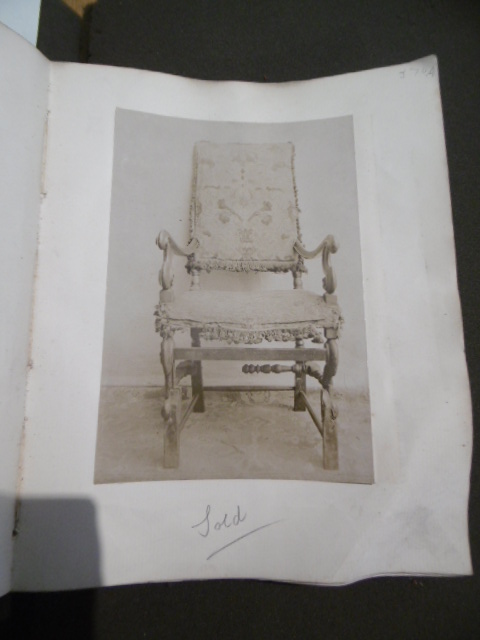
They contain fascinating images of the type of stock that Phillips of Hitchin traded in during  the late 19th and early 20th centuries; and there are some interesting objects – such as this late 17th century armchair, seemingly still with it’s original upholstery, but with a fascinating repair-job to the feet, which appears to have been added in the late 18th or early 19th century?

PoH MS1999.4.1.15

Photo Album, Phillips of Hitchin archives, MS1999/4/1/15. Photograph courtesy of The Brotherton Library Special Collections.

The pencil annotation below the photograph states ‘Sold’, but I wonder how long the chair retained it’s subsequent, practical, additions…and how long before it had a much more historically ‘sympathetic’ repair – if I’m honest, I quite like the old repair, it is, after all, a testimony to the history of the object.

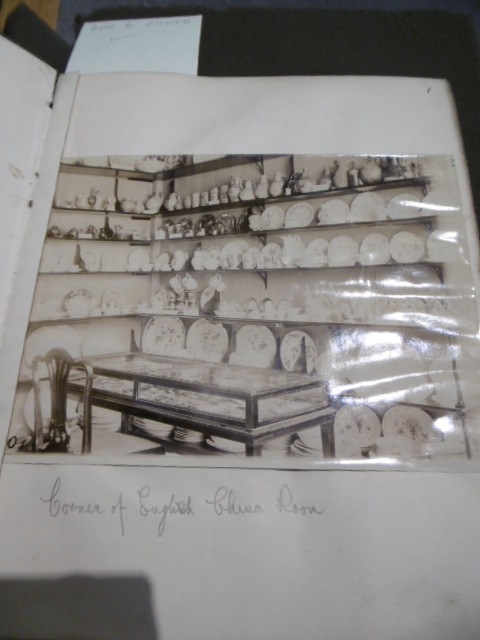
Within the Phillips of Hitchin archives, as one would expect, there are thousands of transactions with hundreds of other antique dealers – including the most high-profile dealers at the time – as well as all the major collectors and museums one could think of……..the archive also contains a wide range of photographs of the interior displays at Phillips of Hitchin. The especially interesting images are those taken during the late 19th and early 20th centuries – including this amazing image of the ‘Corner of the English China Room’ (c.1900), showing a wide range of antique ceramics, including some (now) seemingly exceptionally rare things!

PoH English Ceramics room MS1999.4.1.17

Phillips of Hitchin archives, photo of ‘Corner of English China Room’. MS1999/4/1/17. Photograph courtesy of The Brotherton Library Special Collections.

As I say, there is an exceptionally rich potential for further research into the Phillips of Hitchin archives – and, as followers to the Antique Dealer Research Project will know, we also have an oral history interview with Jerome Phillips, the 3rd generation of the family business, and donator of the archive to the Brotherton Library Special Collections; if you would like to hear about the history of the firm from the person that really knows about it do have a listen to the interview Here’s a link to the interview –

Interview with Jerome Phillips

We are continuing to clean and catalogue the Phillips of Hitchin archives in the coming months, and will post information on any interesting discoveries, so do keep your eye on the Research Blog.

Mark


August 25, 2016

More ‘Action Week ‘ work on the Phillips of Hitchin archives

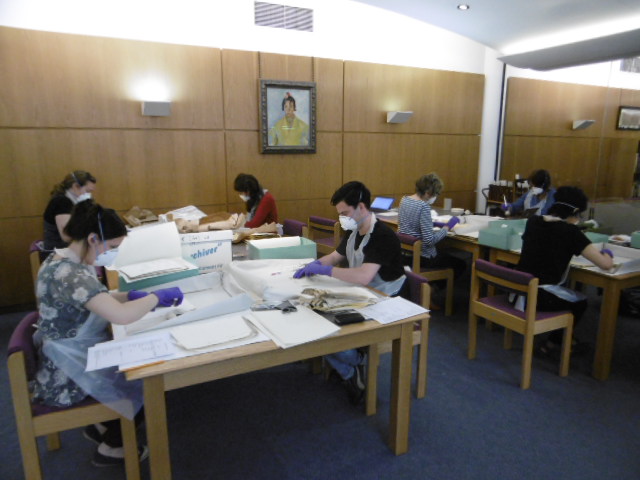
We are making steady progress this week on the enormous task of cleaning and cataloguing the Phillips of Hitchin archives at the Brotherton Library Special Collections at the University of Leeds. The Brotherton Library drafted in their Special Collections team, and extra volunteers, for the rest of the ‘Action Week’ project on the archive – special thanks to the hard work of Francis (conservator at the Brotherton Library), together with Sharon, (head conservator) and our team of volunteers, Sue, Pauline, Heather, Matt, Helen and Riza – we are getting through the masses of material now. Here’s the team in the Special Collections archive room at the Library, busy cleaning, all masked-up – it’s dangerous work!

action week volunteers new

Cleaning the Phillips of Hitchin Archives. L-to-R, Helen, Pauline, Heather and Matt (left-hand table) and Riza, Sue and Francis (right-hand table).

Considering that the archive had been stored in a garage in Hitchin for most of it’s life, (it dates from c.1880s-to present) the archive arrived at the Brotherton in generally good condition, although parts of the archive had been subject to damp and mould and pest – hence the need for masks and gloves for the cleaning.  The process of cleaning and cataloguing is a huge task though, and at present we are only able to undertake brief cataloguing – we’re hoping for some funding to extend and complete the task!

As one would expect, given the significance of the history of the business of Phillips of Hitchin, the archive is absolutely packed with fascinating information on high profile transactions – all yet to be discovered!…but we thought we’d give you a flavour of the kinds of material that is buried in the archive –

The client lists of Phillips of Hitchin is a veritable ‘who’s-who’ of major collectors of antiques, and hundreds of sales of museums world-wide.

The archive of Phillips of Hitchin covers over 120 years of antique dealing, and we are so grateful to Jerome Phillips, the last surviving member of this famous antique-dealing dynasty, for generously donating the archive to the Brotherton Library Special Collections, and the Centre for the Study of the Art & Antiques Market at the University of Leeds. It will, once we’ve finished cleaning and cataloguing it, be an astonishingly valuable resource for future researchers and scholars.

Mark

August 22, 2016

Phillips of Hitchin archives – action week at the Brotherton

At long last, we have started to catalogue and clean the Phillips of Hitchin archives – the archives, as you know, have been very generously donated to the Brotherton Library Special Collections at the University of Leeds by Jerome Phillips, the last owner of the world-famous antique dealers ‘Phillips of Hitchin’.  The business was established in the early 1880s, and remained at the Manor House, Hitchin since that time.

The archives will be a tremendous resource for scholars and researchers, but we have to get them catalogued and cleaned before we make them accessible – and that all takes time and funds!…We are making a start though, and this week The Brotherton Special Collections have devoted a whole week, and significant resources, to begin to clean and catalogue the extensive archives – there are at least 50 archive boxes to clean and catalogue…with thousands of individual items.

We have a team of archive specialists (including Sharon and Karen, the conservation and cataloguing experts) and a few eager volunteers working on the project – here are the volunteers (Yiwen, Pauline, Heather & Sue), working away, cleaning the materials –

archive action week 4

Archives Volunteers – L-R, Yiwen, Pauline, Heather and Sue.

As you can see, this is dangerous work!…the archives had been stored in a garage at The Manor House for decades, and require delicate cleaning and conservation – once this task is done, they are passed over to the cataloguers for basic level cataloguing – we are hoping for some funding for item level (i.e. individual letter/invoice/item) cataloguing…but at least we are making a start!

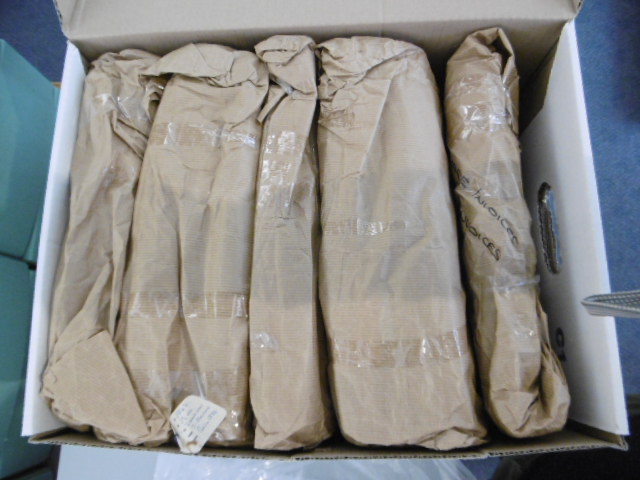
Even on this first day of cleaning and cataloguing the sheer quality of the Phillips of Hitchin archive is being revealed…and from these brown paper packages, treasures are emerging!

box 19 complete

Phillips of Hitchin Archive


packet corr 1960

A parcel of letters from the Phillips of Hitchin archive


We’ll update on progress and discoveries during this exciting ‘Archive Action Week’

Mark


July 25, 2016

‘BADA Voices’ Oral History Interview – John Bly

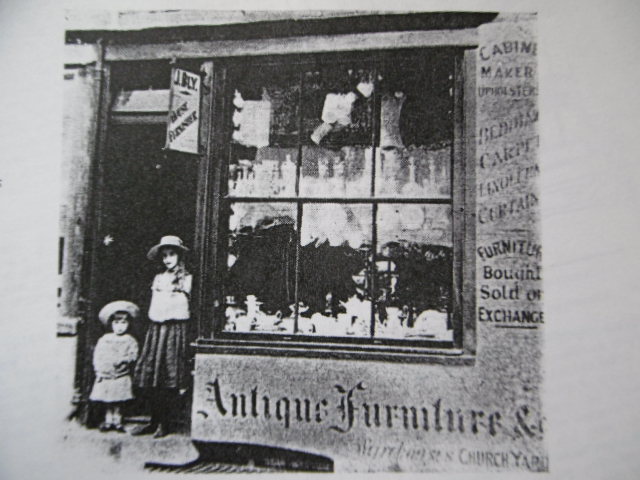
Print We did our 2nd in the new ‘BADA Voices’ Oral History interviews last week – this time in the interviewees’ chair was John Bly, of John Bly Antiques. John Bly Antiques was established by 1891, but the business itself has roots into the early 19th century, begun by John’s Great-Grand father William Bly, in Tring, Hertfordshire.  John’s grandfather, also called John Bly, operated as a cabinet-maker, house furnisher and dealer in antique furniture at 22 High Street, Tring by the early 1890s – and here’s an early photograph of the shop of ‘J.Bly’ at 22 High Street in 1907.

John Bly 22 High St Tring 1907

J. Bly, 22 High Street, Tring, 1907. Photograph from John Bly.

In a wonderfully engaging and fascinating interview, John tells us of the history of the Bly businesses, and of how he started in the antique trade over 50 years ago! John left school to work at Sotheby’s in Bond Street, London, where he was employed in the Silver Department, marking up lots for sale; he left Sotheby’s at the age of 19 to work for his father, Frank Bly, in 1960, and continues to run the business, with his son James, from locations in Tring and in the Kings Road, London.

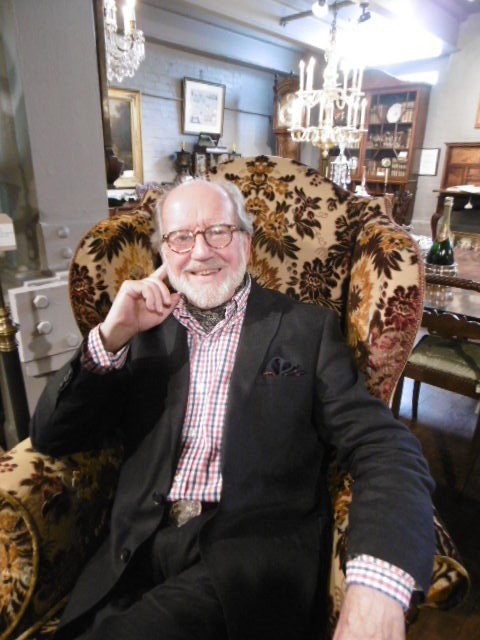
john bly 2016

John Bly, in London, 2016.

John’s infectious enthusiasm for the antique trade is evident in the conversation – he tells us of his first job, driving the Northampton-based antique dealer Jack Roberts’ around auctions and dealerships in the early 1960s; and of the importance of his two ‘mentors’, Michael Brett (then of Broadway, Worcestershire) and the Nat Ayer, of Bath and London – who was, so we learn, the son of the famous songwriter Nat D. Ayer (1887-1952) – writer of, amongst other songs, ‘If you were the only girl in the world…’ (1916)

John also tells us of his life as a T.V. personality – he is famous, as many of you will know, as one of the experts on the BBC ‘Antiques Roadshow’ – but he began his career as T.V. antiques expert as long ago as 1969/1970 on a show for Thames Television called ‘Looking at Antiques….’, before moving on to a programme in the mid 1970s called ‘Heirlooms’.  He has been on the ‘Antiques Roadshow’ since the 2nd series, in 1980.

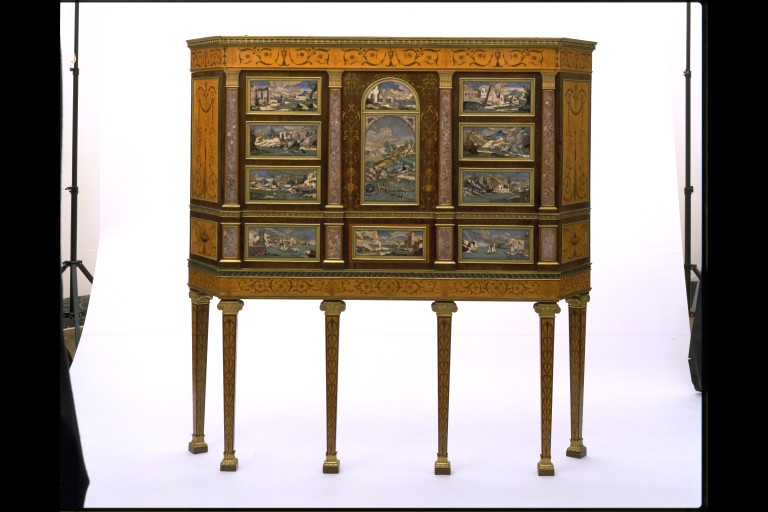
John’s father, Frank Bly, is perhaps most well-known for the sale of the famous ‘Kimbolton Cabinet’ to the Victoria & Albert Museum in 1949. John rehearses the fascinating tale of the acquisition, and eventual sale of the cabinet to the V&A, during the interview – it is, by now, quite a well-known story, but John’s regaling of how the cabinet was loaded on to the flat-bed truck, and covered in a tarpaulin sheet, is still worth hearing again.


kimbolton

The Kimbolton Cabinet, c.1775. Photograph, copyright the Victoria & Albert Museum, London.

John obvious positive energy comes across strongly in the interview, as he talks about the changes to the antique trade in the past few years, and the prospects for the future of ‘antiques’.  And as with all our other interviews, our interview with John will, once edited, be made available via the Antique Dealer project websites – keep you eye of the sites for updates.

Mark

July 9, 2016

First of the ‘BADA Voices’ oral history interviews – Peter Francis Cheek

We did our first in the ‘BADA Voices’ oral history interviews the other week. As you may have heard, or read in the Antiques Trade Gazette, the British Antiques Dealers’ Association have very generously sponsored the capture of a series of new oral history interviews, as a discrete extension to the Oral History research for the Antique Dealers project. Thank you again to the BADA for this generous support. Print

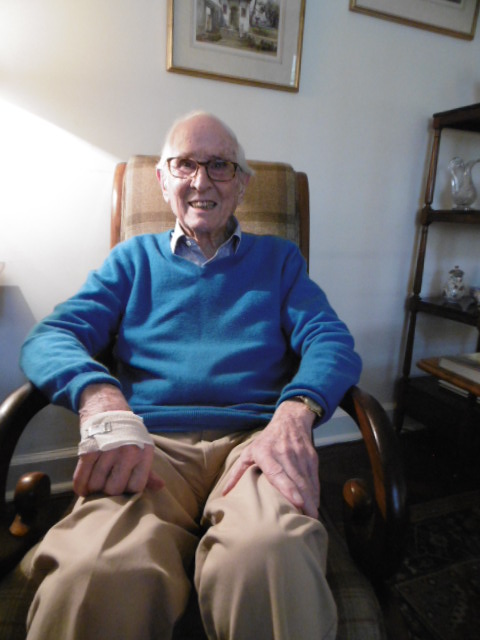
The first in the new series of ‘BADA Voices’ was with Peter Francis Cheek, formerly of ‘Peter Francis Antiques’.  Peter is now 94 years of age, and it was a fantastic opportunity to capture his reflections on more than 60 years in the antique trade.

Peter Cheek 2016

Peter Francis Cheek, at his London home, in 2016.

Peter started his life as an antiques dealer in 1949, following service in the army in World War II, after training as a carpenter in the late 1930s, and working for his father in his father’s second-hand and antique furniture business (his father’s business was called W. Johnson, after the previous owner of the firm) in the period 1947-1949. His father, interestingly, had been a Foreman for the firm of Howard & Sons, before setting up on his own in the late 1920s.

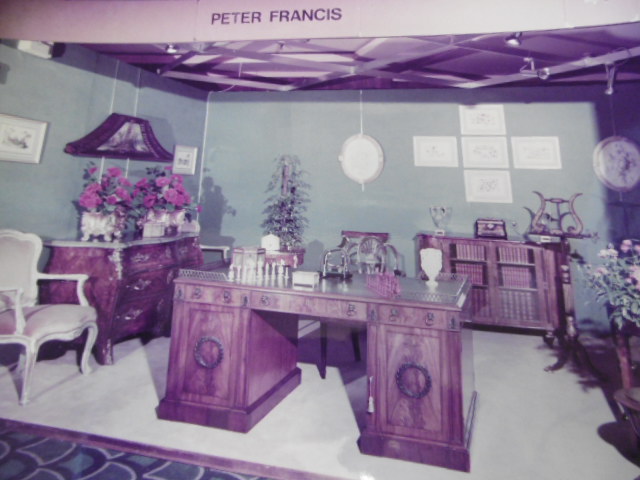
In this very engaging interview, Peter reflects on the changes to the antiques trade, and his experiences on the vetting committees at the Grosvenor House Antiques Fair during the 1980s, and as a member of the review committee for the export of antiques for the BADA during 1972-2000. And here is Peter’s stand at the 1984 Grosvenor House Antiques Fair.

Peter Francis stand GH 1984

Peter Francis’ Stand at Grosvenor House 1984. Courtesy of Peter Cheek.

Peter’s first shop was in Bowes Park, North London, before he purchased his father’s shop in Winchmore Hill (North London) – and as many of you will know, Peter Francis were located in Beauchamp Place, SW3 for 25 years, from 1954 until 1979, when Peter moved the business to 26 Museum Street, the former home of the equally well-known antique dealers, ‘Cameo Corner’ – indeed, it’s quite curious, although obviously understandable, how many antique dealers move into premises formerly occupied by other dealers – Peter’s shop in Beauchamp Place, for example, was also the former shop of the dealer Josephine Grahame-Ballin, who also had a shop in St. Albans.

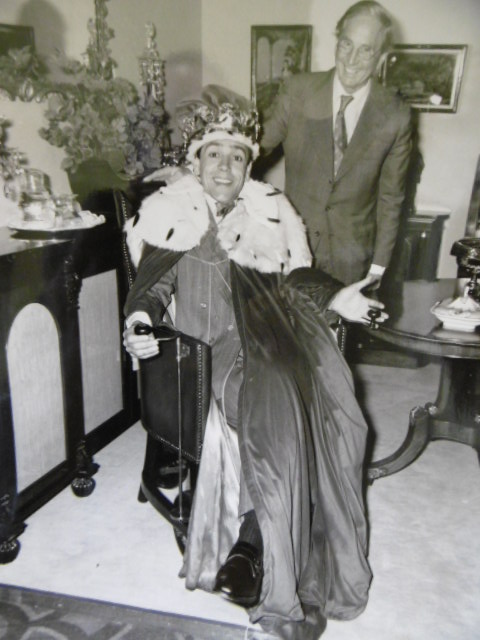
Peter had many fond memories of life in the antiques trade, including the time when the actor Robert Lindsay (himself now portraying an Antique Dealer called ‘Mr Bull’ in the TV comedy ‘Bull in a China Shop’!) attended the opening of the Grosvenor House Antiques fair in 1985, and was photographed sitting in an antique Invalid’s Chair on Peter’s stand – (Robert Lindsay was dressed as a character from the musical ‘Me and My Girl’, in which he was then starring…)

Peter C and R Lyndsay 1985

Peter Francis, with Robert Lindsay at the GH Antiques Fair 1985. Copyright untraced. Courtesy of Peter Cheek.

As with all of our Oral History interviews, including these new ‘BADA Voices’ extensions, our interview with Peter Cheek will appear on the Antique dealer Research project website in due course.

Mark


June 14, 2016

Reflections on the Antique Trade – John Hudson, Christie’s & James Oakley Antiques

We’ve had a huge amount of help and information on the history of the British Antique Trade from various people, and one of the most energetic supports of the project has been John Hudson – he has given us a variety of antique dealer ephemera, and also sent us these fascinating reflections on his life in the world of art & antiques, and from his time working at Christie’s auctioneers – and with the forthcoming celebrations of the 250th anniversary of Christie’s this year, we thought John’s memories would be of considerable interest. Anyway, Here’s John, in his younger days –

john h

John Hudson

And here are John’s reflections –

“Looking back to the some 50 years ago when I first started at Christie’s in 1965 behind the Front Counter, the entire staff, including overseas offices, was about 120, and a turnover of £4.5 million.  There were no Fax machines, photocopiers, the Internet, or digital cameras. The secretaries typed one off formal letters with a carbon copy, any mistake and the whole letter had to be redone!

  The Main London Salerooms advertised their sales in the Daily Telegraph and The Times on Mondays and Tuesdays respectively, with the occasional provincial auctioneer included. To be informed about sales in the provinces the trade would subscribe to a press cuttings agency , Romeike, who would cut out the relevant advertisements out of the local papers and about twice a week post the group of clippings. The arrival of the Antiques Trade  Gazette  and photocopier were the death knell of this service.

  At Christie’s there was a constant flow of private and trade clients  to the front counter (this was before any Regional Offices opened, the early 1970s saw the first two , Shropshire and the West Country; Scotland and Ireland were  a few years later) bringing in items for  inspection and valuation for possible sale and for this purpose there were three small rooms and later four, where items could be unpacked and discussed discretely; if a client only brought in a single item or so we would take it up to the relevant department to be looked at to save the “expert” ( Christie’s preferred the term Technical Advisor)  spending a lot of time going up and downstairs.  If there were several items or a piece of importance then of course some one would come and see the client. 

  Something I noticed about the trade clients, those who came with items to sell, tended to be those that covered the Country Sales, in many case  driving a significant mileage each week, bringing their discoveries as often they had no retail outlet.  Also we saw a few Brighton knockers and the Irish knockers.  I well recall one Brighton knocker telling me how they would advertise in the Shires, to say they were in the area, looking to buy pictures, silver, porcelain etc. when  one winter, they received a letter with a heading or something similar like:- ” Ivy Cottage , Lower *****,  *****shire. ” or words to the effect that the writer was a spinster and because of the weather she wished  in due course to move into the nearby town and had a considerable amount of silver , china and pictures etc she wished to sell.  There was no telephone number so the dealer and his associate changed their plans and immediately set off at short notice to see the lady concerned.  After a considerable time spent in a fruitless search for the cottage, they called in at the local police station.  The police checked their records and said as far as they were concerned the address didn’t exist and could it be that a local dealer or rival had written the letter!    

  Auction catalogues were available both illustrated and unillustrated, but with no estimates printed, and this in a curious way helped to alert if there was a possible sleeper, by undue interest, as verbal estimates were available on request.  Printed price lists  with the names of buyers as well as “bought in” names after the sale cost 5/- or 25p, often more than the cost of the original catalogue ( this was an historic quirk as the young clerks originally supplemented their income by writing up the catalogue with the prices realised and the buyers names for various members of the trade, some had as many as 20to 30 dealers covering the different categories charging 5/- each sale).   Although the porters in Christie’s weren’t allowed to bid for a client, senior staff were; history relates that the Chief Sales Clerk at Christie’s, before the Second World War, was able to employ a butler and gardener on the strength of his tips.  When I arrived at Christie’s South Kensington in 1977  the porters had been allowed to bid in sales with the previous firm Coes, and many of them were already home owners. 

  In London up to the early 1980s there was a furniture sale every day of the week each saleroom having their own designated day.  In the Season at Christie’s, which usually ran from late September, with perhaps a House sale or two earlier in the month, until July the following year, with a 3 week break at Christmas, would see:-

Monday, ceramics, English, Continental, or Chinese Porcelain

Tuesday, Watercolours/drawings/prints and or Japanese works of Art, or Works of Art & objects of vertu or Antiquities

Wednesday, Silver and or Jewellery,

Thursday, Furniture, Wine and sometimes Books

Friday, Paintings, various  categories, English, Continental, Old Masters, Modern British, Impressionist

Christie’s were renowned for selling in Guineas; this was because in the very early days the 0ne shilling difference was the vendors commission.  Guineas ceased on decimalisation in 1972.

  I should perhaps mention how I started my career in the Auction World.  At Christie’s the foreman Porter at the time Jim Taylor hired and fired the porters, unless they were student porters.  In the 1960s many of the porters had served in the same Regiment as the Partners (Directors) during WWII; also a number were related by marriage.  The young Clerks in the general office were selected by the Headmaster of a School near Pimlico who sent his brightest pupils, at the end of the Summer Term, just in time for the start of the new season.  The girls were interviewed by Mrs Andrews who ran the filing room. The Directors usually chose and interviewed their own secretary, sometimes a girl whose family might have an interesting Painting or Collection. 

  I was fortunate that my Great Uncle and Aunt had had antiques shops in both Bury Street and Duke Street since the 1920s till early 1960s, and had known many of the directors at Christie’s for a considerable time.  Christie’s was bombed by incendiaries during  WWII, but because there were fire pickets on duty during that night (a member of the picket John Hancock was working at Christie’s up until the 1980s) they were able to save the archives including all the auctioneers books since Christie’s foundation in 1766, as well as the day books going back to the 1840s.  Christie’s was rebuilt after WWII and re-opened in the Autumn of 1953.  Everything that came in for sale was able to be stored on the premises including furniture, it was only as late as about 1969 that the furniture was moved out to a warehouse (Hudsons just across the road from platform 1 at Victoria Station, ) now long gone.         

   My Great Uncle and Aunt were James Oakes and Amy Oakes. Uncle served in World War1 with the South Staffordshire Regiment, he was a skilled clock maker and in his house he had a Year Clock, a Month clock and an 8 day clock, all made by him. He was keen on engineering and always used to have a Buggatti car.   He had premises next to the Aolian Hall in Bond Street, opposite Sothebys, but moved to Bury St St James’s because of the noise from the musicians.  After World War II , he moved to Duke Street, St James’s. (Here’s an advertisement by James Oakes, in the Grosvenor House Antiques Fair Handbook, 1950).

James Oakes GH 1950

Grosvenor House Antiques Fair Handbook 1950 – James Oakes Antiques.

  After Christie’s was rebuilt in 1953 my Uncle supplied the clock in the main saleroom and in the anti-room, which were each situated above the main door.  My Aunt also had a shop, in The Old Bailey close to the Criminal Court, where she sold jewellery, early English porcelain, pocket watches,  and possibly silver.  Her shop was one of the few shops to survive the bombing in WWII and was pulled down in the 1950s.  My Uncle took out a 15 year lease (for I believe £5,000 a year) on a three storey building 121 New Bond Street in 1960, but died a year later.  So my Aunt took over the shop until the very late 1960s when sadly dementia took its toll and she was no longer able to continue.”

Fascinating stuff John…thank you for sharing this with the Antique Dealer Research project!

Mark


May 15, 2016

New Oral History Interview – Jonathan Harris, of Phillips & Harris

The latest in our series of Oral History Interviews with members of the Antique Trade was recorded last week. Our interviewee was the well-known antique dealer Jonathan Harris, formerly of Phillips & Harris, of Kensington Church Street, London. In an absolutely fascinating interview, full of personal reflections on his life as an antique dealer, Jonathan told us about how he started in the trade in the mid 1960s, following a brief spell at the auctioneers Christie’s, before he entered into partnership with Henry Phillips in Kensington, London in 1967.

J Harris

Jonathan Harris, at his London home. May 2016.

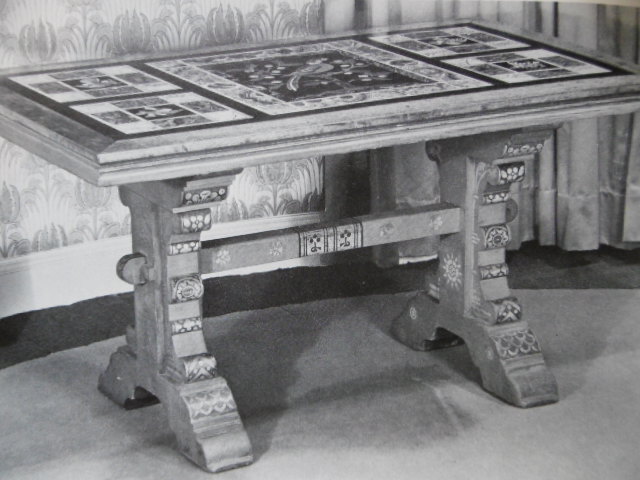
Jonathan’s eclectic interest in antique objects shaped the acquisitions for the business of Phillips & Harris – the shop in Kensington Church Street was always full of an amazing mixture of spectacular objects, from 16th century sculpture, to early 20th century furniture.  An example of Jonathan’s taste for the historically significant, and the visually stunning, is the centre table designed by the architect William Burges in c.1867, for Burges’ own home in Buckingham Street, London.

Jonathan sold the table to Lotherton Hall, part of Leeds Museums & Galleries, in 1971 (a similar table in is the collections at Birmingham Art Gallery and Museum).

burges table

Table, designed by William Burges, c.1867. Sold by Phillips & Harris to Leeds Museums & Galleries in 1971.

During the interview with Jonathan we had the pleasure of taking a brief tour of some of the objects that he had collected over the years; it was fascinating to hear what had interested Jonathan about the objects and why he had acquired them – Jonathan belongs to that great tradition of antiquarian collecting, where the discrete history of the objects is a rich catalyst for the deeper traditions of story-telling, and served to remind me of the importance of the ‘oral history’ research as a key part of the broader Antique Dealer project research activities.

As with all of our Oral Histories, our interview with Jonathan will soon be made available via the Antique Dealer project websites.

Mark


May 8, 2016

Conference ‘Impact’ – Temple Newsam staff….and the REF

The Antique Dealer Project Conference generated a great deal of positive discussion and feedback – thank you again to everyone that participated and contributed during the 2 days – and to those that helped with the organisation….we could not have delivered the conference without so much help and enthusiastic interest from everyone involved.

We are working on some analysis of the conference, summaries of the sandpits and etc – and our team of Postgraduate students who worked so hard during the conference are also hard at work compiling the analysis…that should be ready soon and will be distributed to all conference delegates, and uploaded to the project website.

The project conference was also a strategic part of the Antique Dealer research project itself, and so as part of the analysis we are also continuing to evaluate the research ‘Impact’ of the project.  Research Impact, as those in the world of academia will know, is now a key aspect of all university research projects – and is a fundamental part of the REF (Research Excellence Framework).  The REF is the quality assessment mechanism that all UK research intensive universities participate in, every 5 years or so – the next REF exercise is due to be in 2020. Anyway, as part of the research impact for the Antique Dealers project we are keen to capture and assess how the research has effected (impacted upon) anyone outside of the world of academia.

And talking to Bobbie Roberton (Keeper) and Rachel Conroy (Curator) at Temple Newsam House, they mentioned how much the staff at Temple Newsam House enjoyed the conference, and how many new things about the collections at Temple Newsam they had learned as a result of the conference – so this was an opportunity made in heaven for our Research Impact! I hot-footed it to Temple Newsam last week to have a chat with the TN staff.  We staged an informal ‘focus-group’ feedback session, with tea and cake generously provided by Temple Newsam! Here are some of the staff who give their time so generously too – left to right – Michael Clark, Lyn Crispin and Helen Clayton (who’s father is also an antique dealer!…) – also present was Debra Crossley, but she had to leave before I took the photograph….

tn focus group

Temple Newsam House staff – Michael Clark, Lyn Crispin and Helen Clayton.

There were so many positive comments from Michael, Lyn, Helen and Deborah – they tell me that it was so illuminating having Antique Dealers talking about the objects at Temple Newsam, and that they had not realised how significant the antique trade had been in the development of the collections. One of the really positive outcomes of the conference is that Michael, Lyn, Helen and Deborah have all indicated that they will share their new knowledge with the public visitors coming to TN….now that IS a real result!

Thank you again to all the staff at TN for all their help and enthusiastic support to the Antique Dealers Research project.

Mark

May 2, 2016

3 New Oral History Interviews – plus ONE goes LIVE!

Following the very positive comments from the conference delegates about our oral history interviews, we have now had time to update the Oral History Interview pages on the Antique Dealer project website – see Antique Dealers Website

Our updates include three recent interviews -first, we interviewed Andrew Jenkins, of Avon Antiques, Bradford-on-Avon.  Andrew came up to Leeds to see us, and we unusually conducted the interview in our offices at the University of Leeds.  Avon Antiques was established by Andrew in 1963; in a fascinating interview Andrew gave us his reflections on his considerable experience of over 50 years in the antique trade.

Andrew and Vibeke Jenkins, Avon Antiques.

Andrew and Vibeke Jenkins, Avon Antiques.

Our next interviewee was Tim Corfield, formerly of Corfield of Lymington, Hampshire, which was established by Tim’s father in 1966.  Tim told us about his life in the antique trade and of his work as an art and antiques agent through his new business of Corfield Morris Limited.

Tim Corfield, of CorfieldMorris. Photograph courtesy of Tim Corfield.

Tim Corfield, of Corfield Morris Ltd. Photograph courtesy of Tim Corfield.

And our third interviewee as part of our recent activities was with Dominic Jellinek.  Dominic, as some of your will know, worked at the world-renowned Chinese Works of Art dealers Bluett & Sons, London.  Dominic started with Bluett & Son in 1978, and stayed with them until they business eventually closed in the mid 1990s.

Dominic Jellinek, of Bluett & Sons, pictured with the Bluett archive.

Dominic Jellinek, of Bluett & Sons, pictured with the Bluett archive.

Dominic gave us a thoroughly detailed account of the history of Bluett, based on his extensive knowledge of the Bluett archive, as well as his many memories of the antique trade in the 1970s, 80s and 90s.

As usual, all of these interviews will be available to hear, once we have edited them and formatted them, so do keep your eye on the project websites.

ONE piece of GREAT NEWS, is that we have (thanks to the brilliant work of Matt Robson and Peter Edwards at the University) edited and formatted our interview with Jerome Phillips, of the famous dealership Phillips of Hitchin……the first of MANY!….do take a look at the ORAL HISTORY pages on the project website and have a listen…!

Mark

April 30, 2016

The project conference-a delegate’s view

As Mark’s two detailed posts have made clear, the conference was a great success. What I would like to explore further, however, is what the conference was like for me as a delegate and what those of you who did not attend missed!

Firstly, the staff at Temple Newsam were an absolute joy from start to finish. All conference delegates were given privileged behind the scenes access to much of the house, complicated by the fact that the property remained open to the public throughout. This meant that the visitor services staff in the house had to keep an eye on two different groups of visitors simultaneously and they managed what must have been a tricky task with consummate ease-whilst remaining good-natured and welcoming throughout. Thank you to you all.

So what did the conference provide to a delegate? Well, apart from some lovely food (the canapés at the reception on the first night were a particular highlight but everything supplied by Salts was rather lovely-thank you to their brilliant staff too) I suppose the most obvious benefit was the chance to meet like-minded people from many different professions but all with a particular interest in the antiques trade. There were museum professionals, academics, students, dealers, retired dealers, a charming lady from a tour company that specialised in trips around arts and crafts period houses in Britain for foreign visitors, representatives of both of the major UK trade associations, antiques journalists and the odd interested collector as well. A real mixture.

Antique Dealers Conference delegates.

Antique Dealers Conference delegates.

For me personally it was lovely to meet dealers whose items I had admired over the years and, in contrast to the often repeated line about not meeting your heroes, everyone was extremely pleasant and friendly and I spent many pleasant hours chatting away about the trade and dealers past and present.

The highlight of my participation in the project has been my involvement with the oral history interviews-both conducting interviews and transcribing them-and so I was looking forward to Eleanor’s talk with particular interest. It certainly didn’t disappoint and I think it convinced any remaining doubters of the importance of capturing the opinions of a range of dealers with contrasting specialisms. This all felt like a vindication of everyone’s hard work on the project so far.

Oak Passage, Temple Newsam.

Oak Passage, Temple Newsam House

Temple Newsam House

Temple Newsam House

The main staircase at Temple Newsam House

The main staircase at Temple Newsam House

A surprising number of delegates, myself included, had not visited Temple Newsam before and so another highlight was certainly the object in focus sessions. I chose to watch the Murray Cabinet being gently dismantled so as to demonstrate its many secret drawers and compartments, mainly because of that piece’s associations with Norman Adams (a firm that is a particular interest of mine).

Ian Fraser, with 'The Murray Cabinet', sold to Temple Newsam by Norman Adams in 1986.

Ian Fraser, with ‘The Murray Cabinet’, sold to Temple Newsam by Norman Adams in 1986.

However after we had each looked at our object of choice, we were then able to wander around the house and most of us made sure that we explored every available room in the time available to us.

The aforementioned evening reception finished off the day in fine style, and a special mention to the lovely music student who performed on the rather beautiful Broadwood concert grand to end a very interesting day.

Japji....our music student, from the University of Leeds, playing the historic Broadwood piano

Japji….our music student, from the University of Leeds, playing the historic Broadwood piano

The second day involved rather more participation than the first and most of us were thinking about our choice of sandpit sessions before we had even finished registration! As English furniture is my primary interest, there was never any doubt about my choice of session in part one (I went for the death of antique furniture discussion) but for my second sandpit, I decided against joining the love or money group as, working in a museum, that sounded rather too much like the day job that I had been only too happy to leave behind for a while! I chose to attend the sandpit on professions or pastimes instead.

The three talks in the morning were very interesting indeed and very contrasting in their styles.

Mark W introducing Martin Levy's talk.

Mark W introducing Martin Levy’s talk.

Martin Levy gave us a succinct and interesting run-down of Blairman’s history and left us in no doubt as to their significance in shaping the wider trade as a whole. Dominic Jellinek also gave us a brief history of Bluett’s, but concentrated rather more on the firm’s surviving archive and certainly left me thinking about the enormous potential of dealer archives and the ways in which they could be investigated (something Lizzie had also made very clear in her excellent talk on the Crowther archive on day 1). Finally, Chris Jussel’s talk was delivered more or less without notes and certainly without a PowerPoint presentation. I am much less a familiar with the way the trade developed in the US and found this talk extremely enlightening.

The group discussion between some of the oral history interviewees was heated at times with plenty of opposing views. One particular comment (the person responsible will remain nameless!) about the participants representing “the faded aristocracy of the antiques trade” provoked strong reactions from some of those concerned. However this was a rare example of fraying tempers, something that in itself was quite admirable when you consider some of the trade rivalries over the years.

'In Conversation' session

‘In Conversation’ session

I think it only fair to single out Mark Westgarth for particular praise at this point for having the vision to get the project started and for the tenacity to raise the necessary funds. The conference ran remarkably smoothly throughout, despite the problem with attempting to get so many delegates to stick to a timetable (something akin to herding cats) and this is in no small part due to the time that Mark and the project advisory board put into assessing the various scenarios and looking at where problems might arise.

In conclusion, the project was an extremely useful and enjoyable experience that provided the opportunity to learn, explore the collections of an exceptional house, make professional contacts and socialise with a diverse yet friendly group of like-minded enthusiasts. A fitting end to one phase of a quite remarkable research project.

Chris Coles
Lead volunteer.

Home Subjects

a working group dedicated to the display of art in the private interior, c. 1715-1914

The Period Room: Museum, Material, Experience

An International Conference hosted by The Bowes Museum and The University of Leeds

H. Blairman & Sons Ltd

A research project investigating the history of the antiques trade in Britain in the 19th & 20th centuries

Museum Studies Now?

'Museum Studies Now?' is an event which aims to discuss and debate museum and heritage studies education provision.

The Burlington Magazine Index Blog

art writing * art works * art market

East India Company at Home, 1757-1857

A research project investigating the history of the antiques trade in Britain in the 19th & 20th centuries