Posts tagged ‘department store antiques departments’

October 27, 2025

More Rare Antique Dealer Ephemera

Our collections of antique dealer ephemera continues to grow, with the latest addition a sales brochure/catalogue produced by a dealer previously unknown to us (that in itself is most unusual!). The catalogue is undated (as are many of these dealer catalogues) but seems to have been published sometime in the early 1920s. The previously unknown dealer is ‘The Furniture and Fine Art Depositories Ltd.’, who traded from what appears to be an department store (see previous blog posts on antiques in department stores 31st August 2025; 29th April 2021; 2nd November 2014). The shop was located in Park Street, Upper Street, Islington, London N1 (the location has a long association with antique dealing, especially in the Post Second World War period).
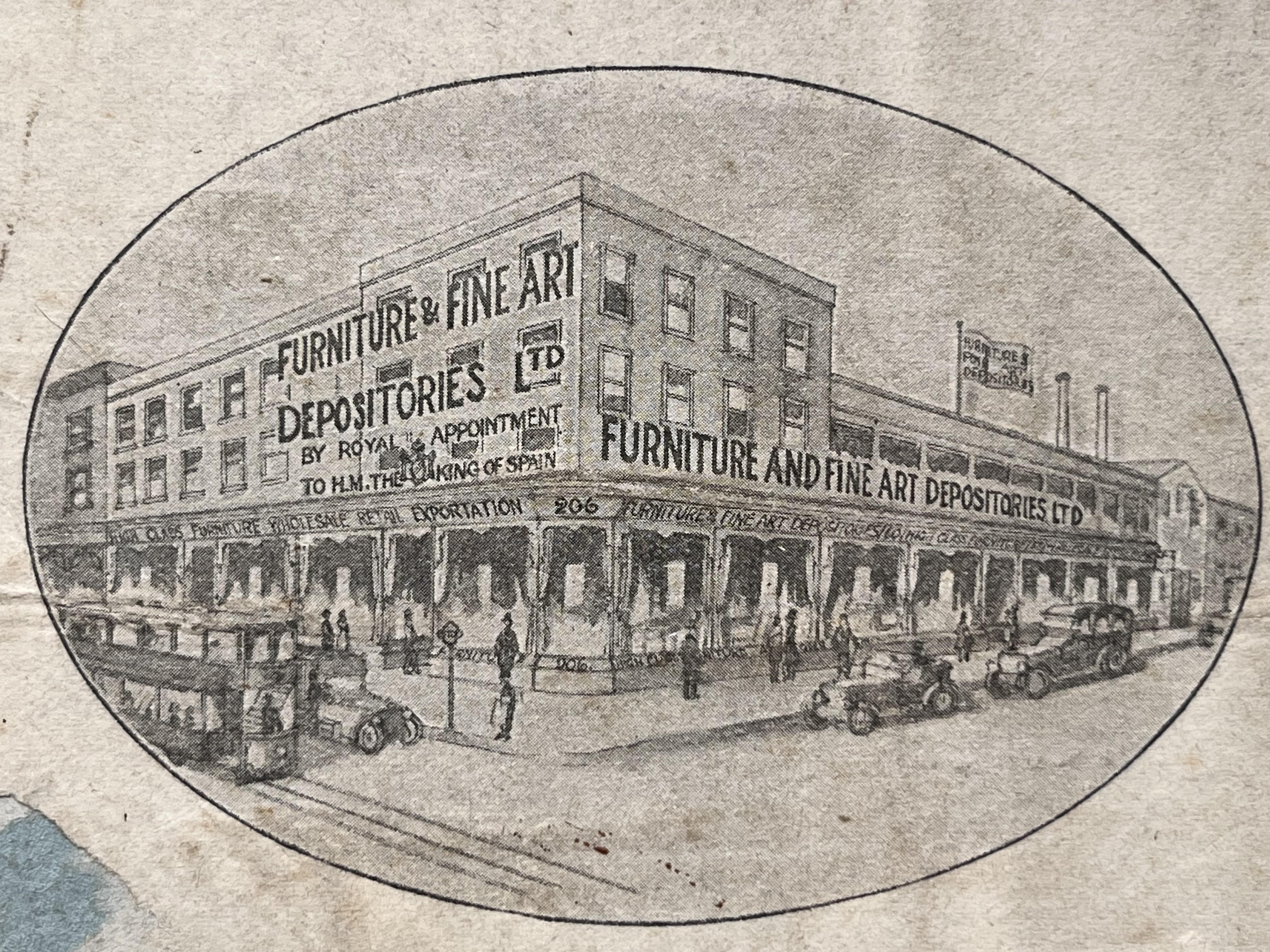
The Furniture and Fine Art Depositories Ltd. Shop in Park Street, Upper Street, Islington, London, c.1920. Photograph Antique Dealers Research Project, University of Leeds.

The business is not listed in any of the usual antique dealer directories, hence they appear to have been under the radar of the project. The business was established in the 1870s and seems to have been primarily involved in making and selling modern furniture (for which they won medals at the Paris Exhibition 1912 and the International Exhibition in Rome in 1912 – see below) and as general house furnishers; they also sold wallpapers, carpets and were contractors for interior decoration. However, the catalogue that the firm produced is very similar to other antique dealer’s catalogues of the period and is full of interesting examples of antique furniture.
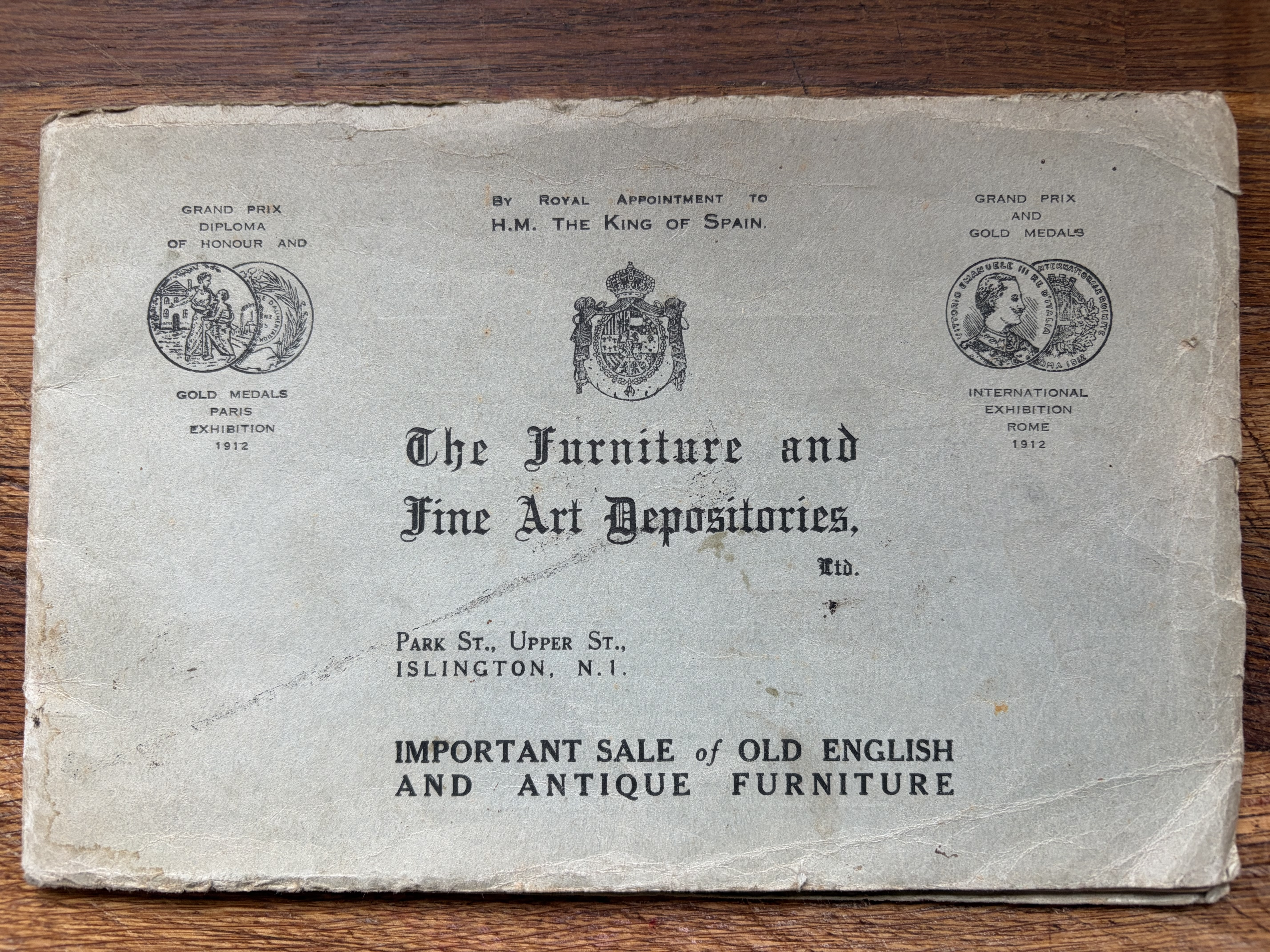
The Furniture and Fine Art Depositories Ltd., sales catalogue, c.1920. Photograph Antique Dealer Research Project University of Leeds.

What appears to be different about The Furniture and Fine Art Depositories Ltd., is their mode of business, which, as they state in the catalogue ‘…is not like that of the ordinary dealer in antiques or the general trader.’ As they elaborate, ‘The greater portion of the goods for disposal by the firm are entrusted to it by private owners, who pay a small commission of ten per cent. on sums for which the articles are sold.’ In the catalogue are dozens of photographs of antique furniture alongside a few pieces of modern reproduction ‘Queen Anne’ furniture, so fashionable at the time. For example, a ‘Chippendale Mahogany Settee’, priced at ‘27.10s.0d’; this was from the ‘the Furness Collection’; and an ‘Old Mahogany Circular Pedestal Table’, priced at ‘£15.0s.0d’ (see below):
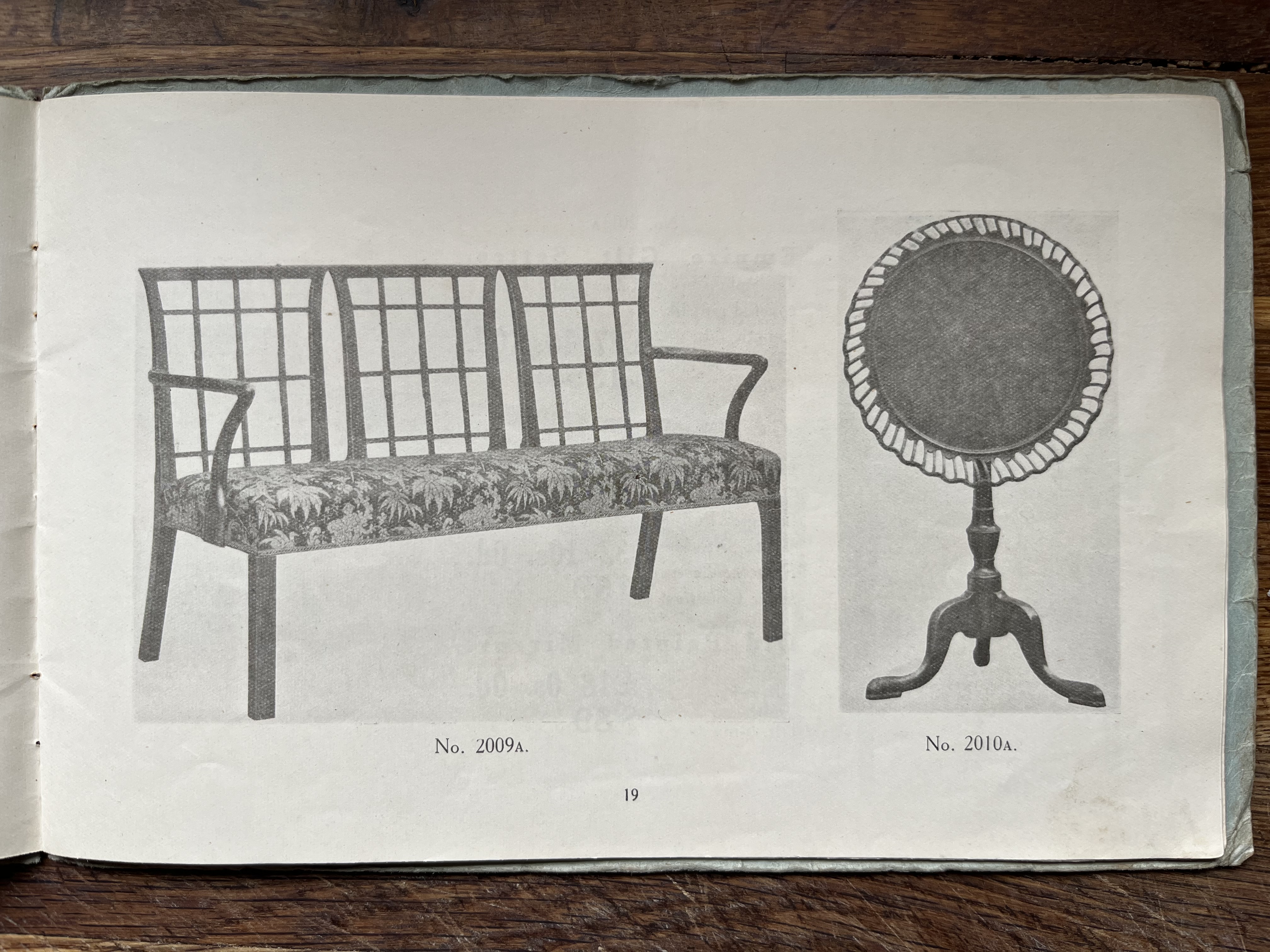
The Furniture and Fine Art Depositories Ltd., sales catalogue, c.1920. Photograph Antique Dealer Research Project University of Leeds.

An ‘Old English Mahogany Tambour Shutter Front Cabinet’ (priced at £12.15s.0d) is listed as from the ‘Earl of Essex Collection, Cassiobury Park’ – the house was sold by the 8th Earl of Essex in 1922 and demolished for its materials in 1927. Incidentally, the famous staircase c.1677-80 from Cassiobury Park (attributed to the carver Edward Pearce) was sold by the antique dealers Edwards & Sons of Regent Street, London to the Metropolitan Museum in New York in 1932 (see here). Also in the photograph (below) is a ‘Charles II Oak Chair’, ‘in excellent preservation’, priced at ‘£17.10s.0d.’
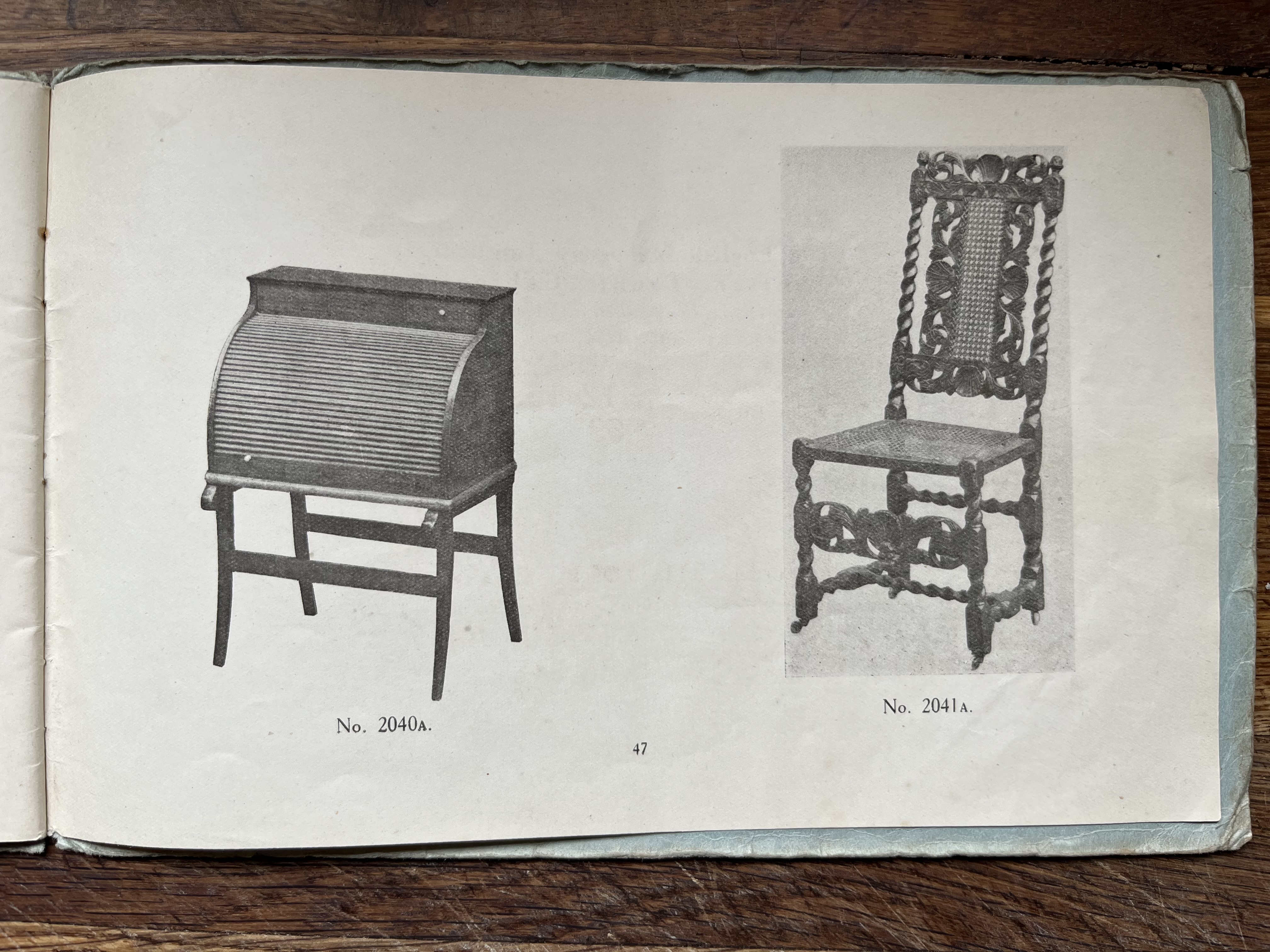
The Furniture and Fine Art Depositories Ltd., sales catalogue, c.1920. Photograph Antique Dealer Research Project University of Leeds.

Many of the antiques illustrated in the catalogue are rather too generic to be able to trace and locate, but I have been able to find one object illustrated in the catalogue – described (erroneously) as a ‘Chippendale Mahogany Side Table. With heavy marble top. Magnificently carved panelled back, supported by four massive carved legs with claw and ball feet’ – priced at £27.10s.0d’.
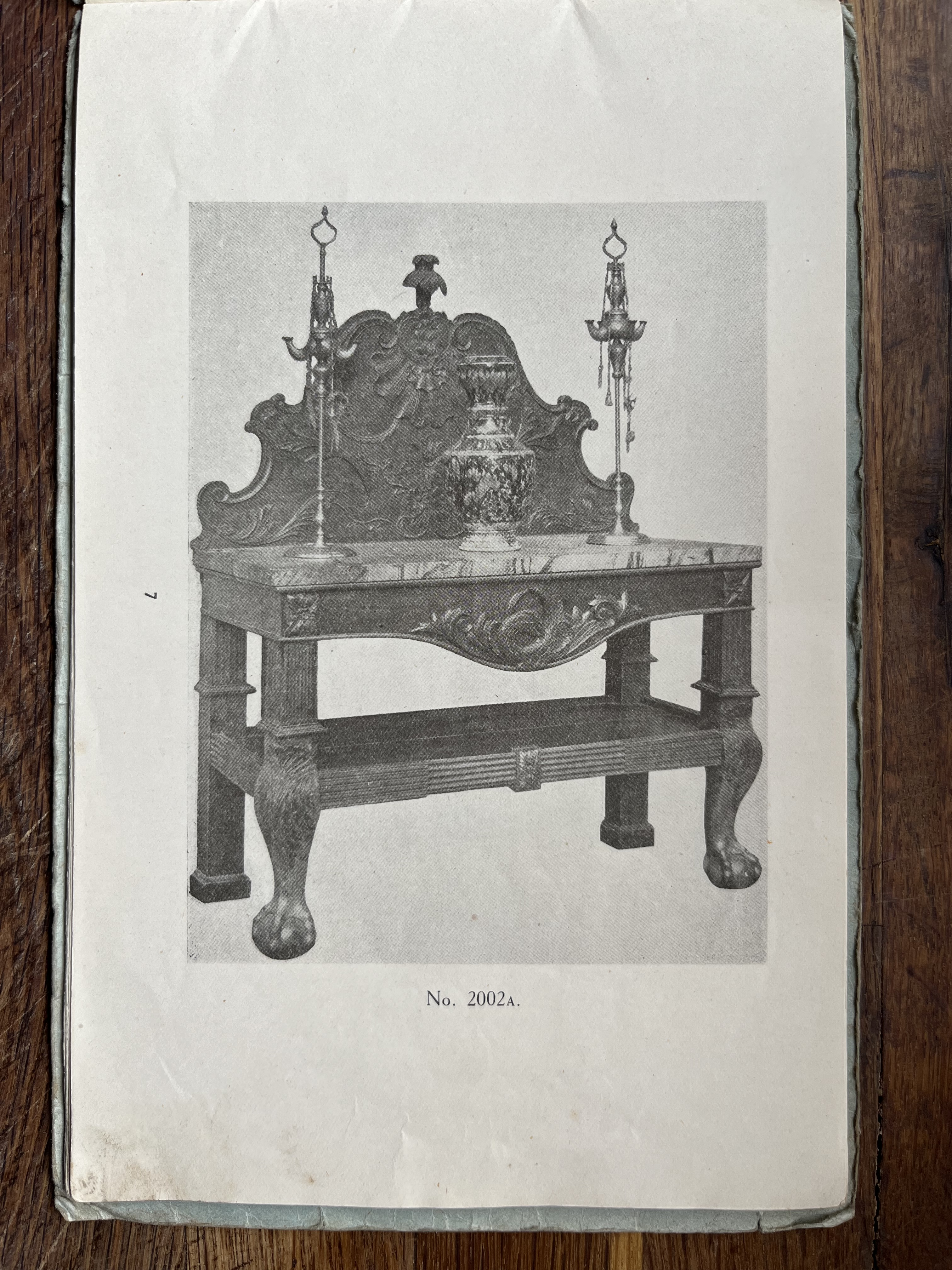
The Furniture and Fine Art Depositories Ltd., sales catalogue, c.1920. Photograph Antique Dealer Research Project University of Leeds.

The table came up for sale at Bonhams in August 2012 – see description here (see below for the Bonhams photograph) described as ‘A Mahogany Two-Tier Pier Table in the George III style’. The table had by 2012 lost its carved back and the marble was broken in two, but it retained an ivorine label for ‘Furniture and Fine Art Depositories Ltd., Park Street, Islington, By Appointment to H. M. The King of Spain’. Bonhams described the table as ‘possibly adapted from a larger 18th century table’; it sold for £275 including buyers premium. It’s worth highlighting that £27.10s.0d was worth about £5,400 (relative income value) in 1920.
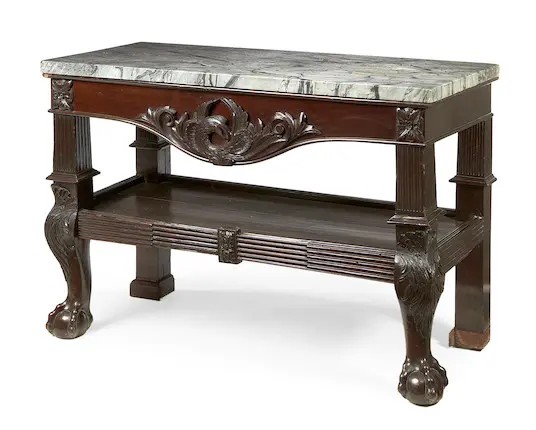
Side Table sold at Bonhams 2012. Photograph copyright Bonhams Auctioneers, 2012.

The Furniture and Fine Art Depositories Ltd., catalogue will be joining all the other antique dealer ephemera in the Brotherton Library, University of Leeds in due course.

Mark
August 31, 2025

More Antiques in Department Stores – Debenham & Freebody

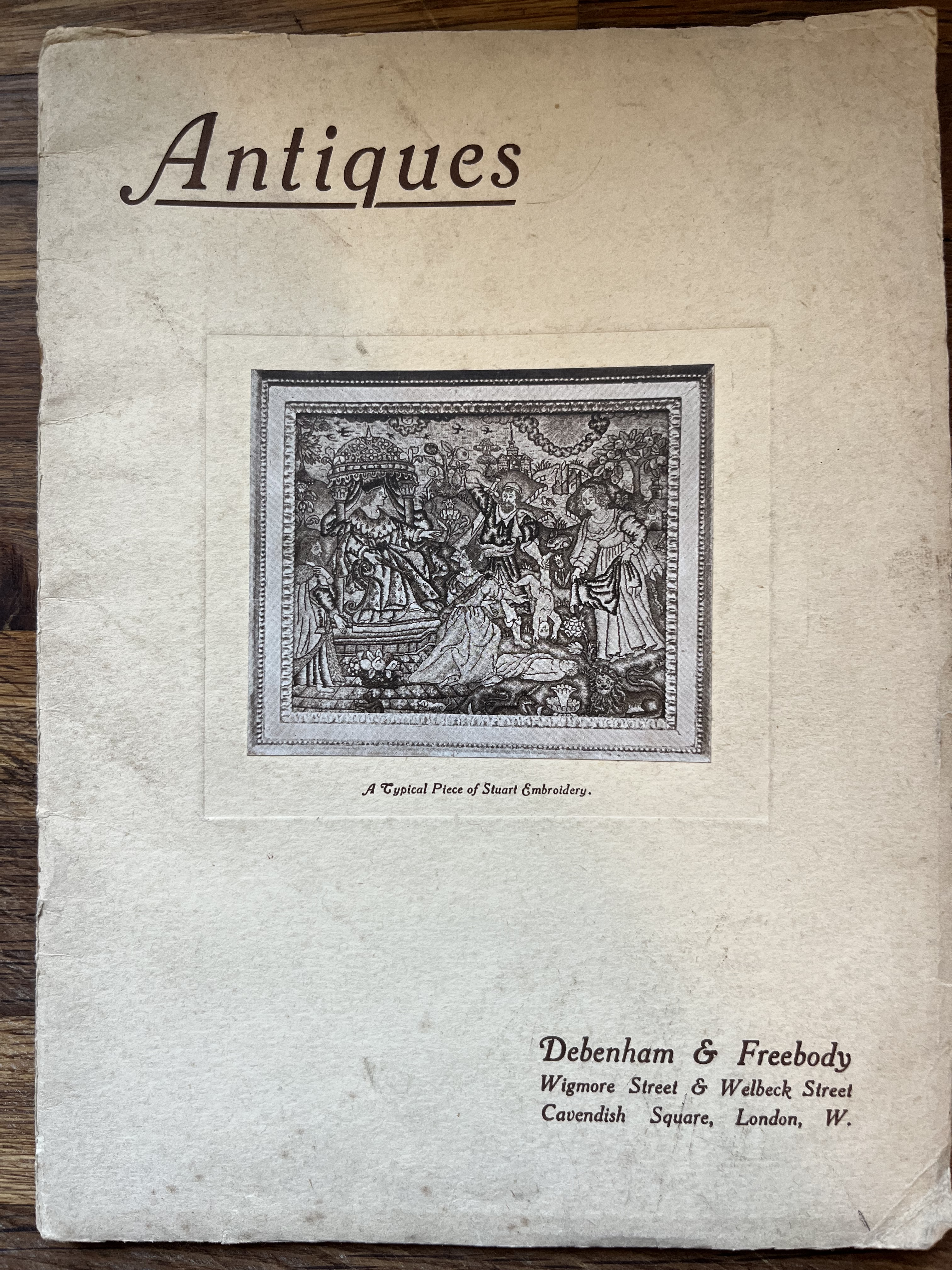
A recent addition to the corpus of antique dealer ephemera that the antique dealer project continues to gather is a rare sales catalogue produced by the London department store Debenham & Freebody in about 1910. The small paper catalogue (7.5 inches wide by 10 inches high) has 25 pages packed with images and listings of antiques that Debenham’s offered for sale.

Debenham & Freebody antiques sale catalogue, c.1910. Photograph, Antique Dealer Research Project, University of Leeds, 2025.

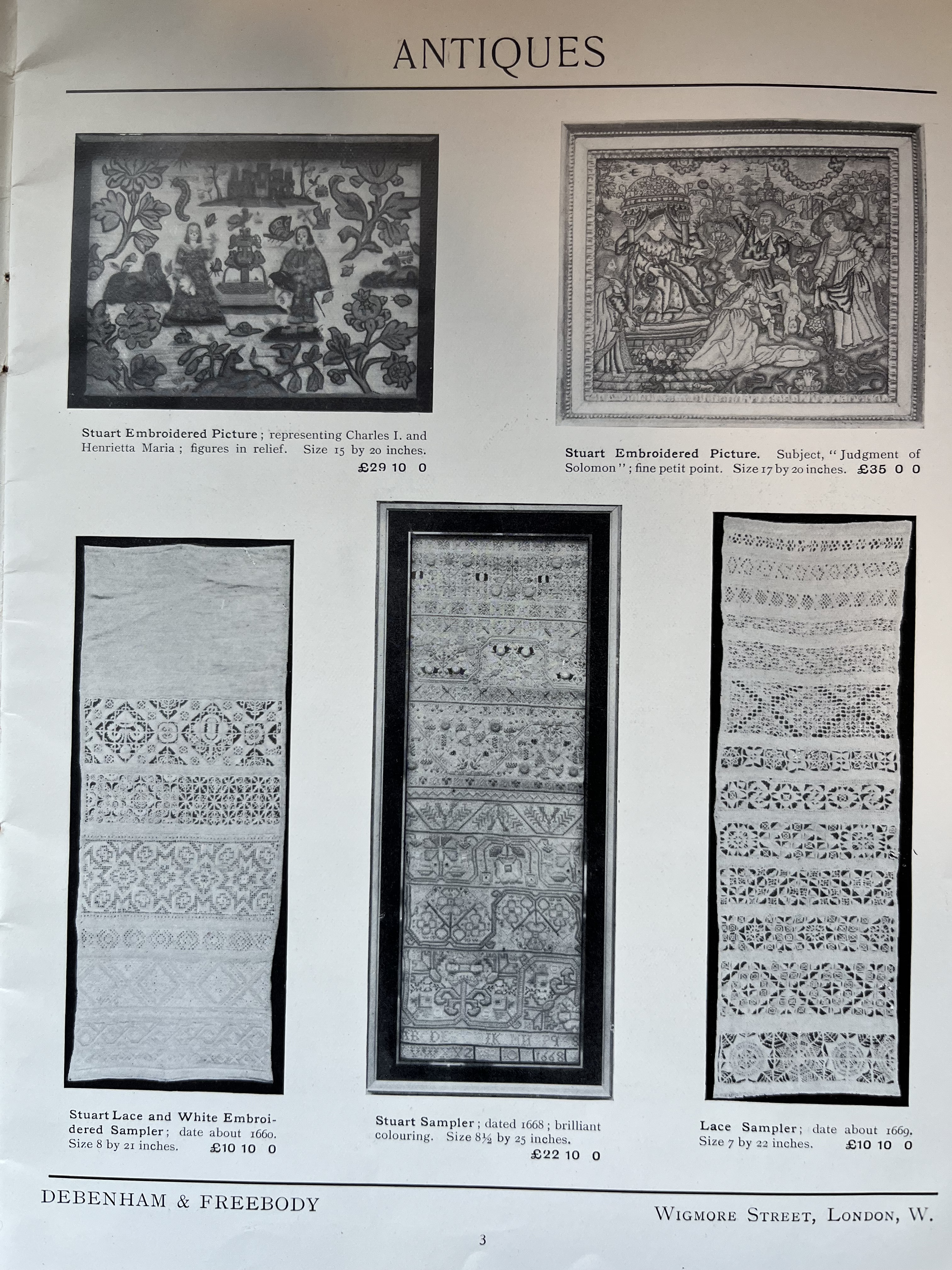
The Debenham and Freebody catalogue lists 246 items for sale, almost half of which are antique textiles, lace and embroideries, reflecting the keen interest in such objects in the early 20th century. Indeed, in the Introduction in the opening pages of the sales catalogue the writer emphasises the significance of women as consumers of antique textiles – ‘Ladies who are interested in home needle craft are informed that we have a very large number of quite inexpensive fragments and small pieces of brocades and galons suitable for making up into all kinds of fancy articles.’ Beyond these ‘fragments’ there were many rare items offered for sale, including rare ‘stumpwork’ embroideries and samples of antique lace (see below); the ‘Stuart Embroidered Picture, Subject, ‘Judgement of Solomon’ had a hefty price of £35.0.0. (equivalent at the time to as much as £28,000). The embroidery was also illustrated on the front of the sales catalogue, (see above) emphasising its importance.

Debenham & Freebody antiques sale catalogue, c.1910. Photograph, Antique Dealer Research Project, University of Leeds, 2025.

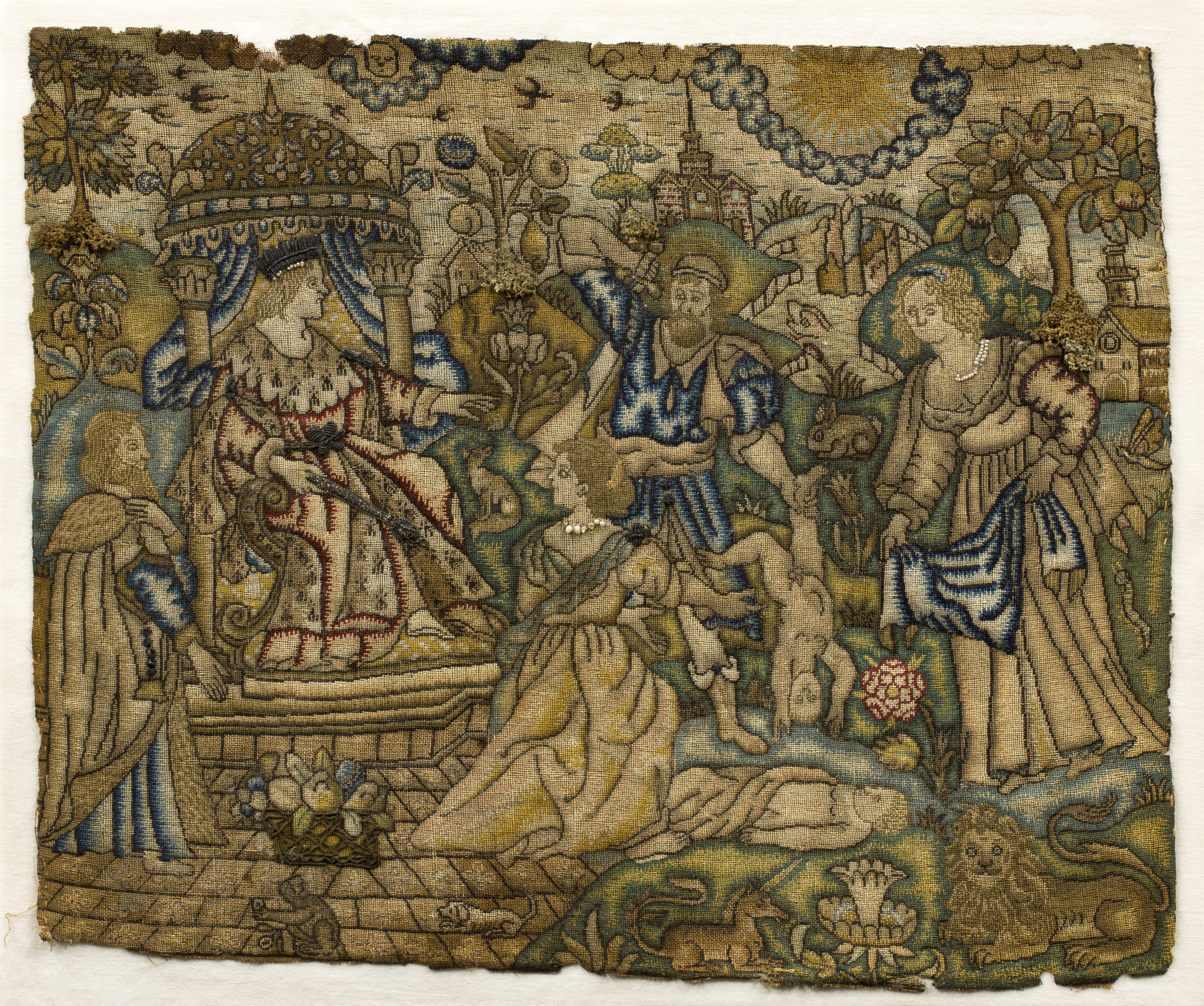
It seems likely likely that the ‘Stuart Embroidery’ illustrated in the Debenham & Freebody sales catalogue is the same one that is currently in the St. Louis Art Museum in Missouri in the USA. The subject is of course the same, but the addition of seed pearls around the necks of the two female figures to the centre and to the right suggests that the Debenham & Freebody embroidery and the St. Louis Art Museum example are the same. The St. Louis Museum of Art embroidery no longer has the giltwood frame (which was much later than the embroidery). The provenance for the St. Louis Art Museum embroidery suggests it was given to the museum in 1972 by Mrs. William A. McDonnell (Carolyn Vandergrift Cherry McDonnell), who married William A. McDonell (1894-1988) in about 1919; Carolyn’s husband was a prominent railroad executive and banker. It is not known who McDonnell purchased the embroidery from, but it is likely that it passed through other hands before it ended up in the USA.

The Judgement of Solomon, embroidery, 17th century. 7.1972, the Gift of Mrs. William A. McDonnell. Photograph, St. Louis Art Museum, Missouri, USA.

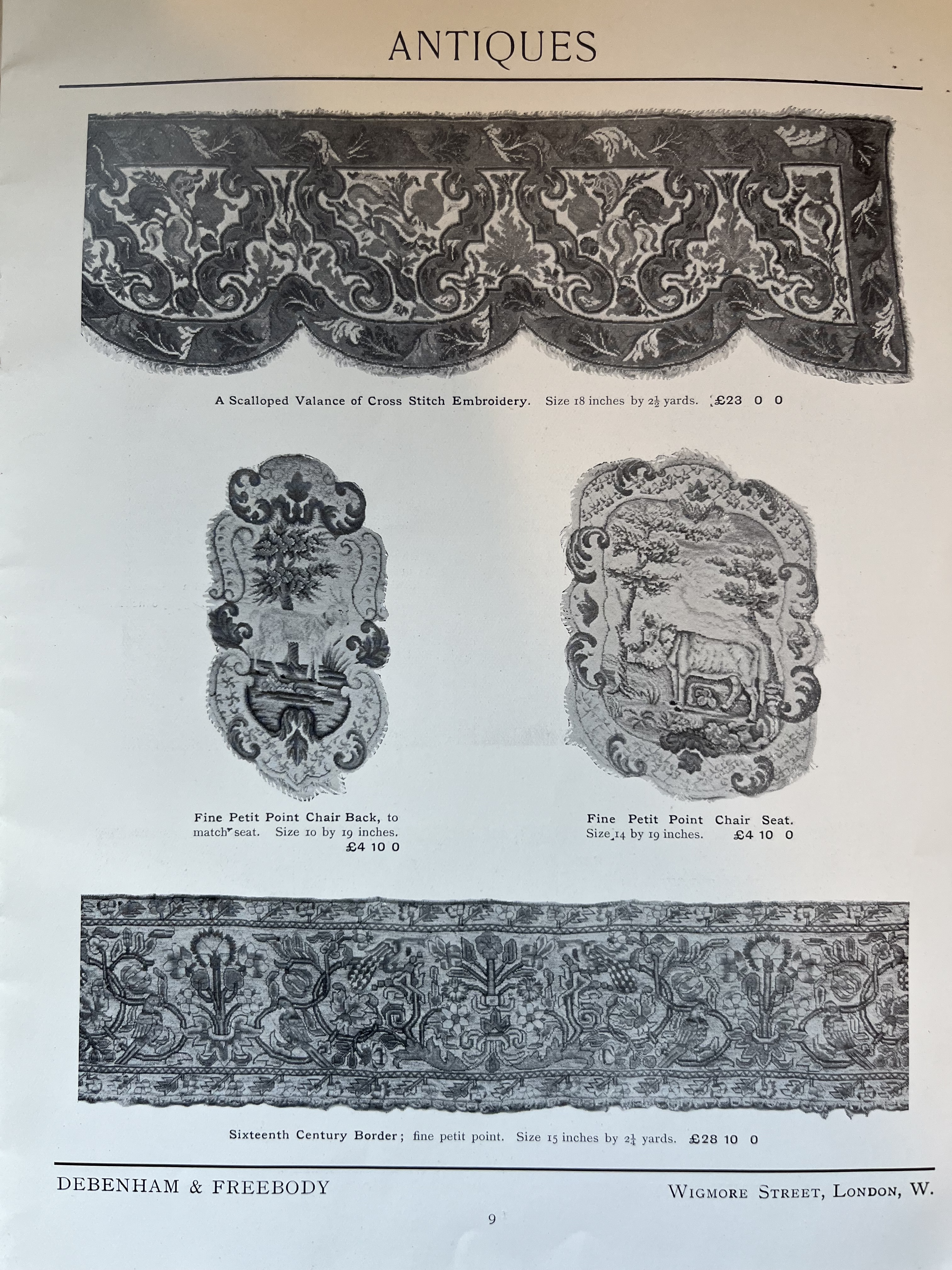
Other pages illustrate fragments suitable for embellishing antique furniture, or for display as relics of past crafts. The ‘Fine Petit Point Chair Back’ (£4.10.0) and ‘Chair Seat’ (£4.10.0) (see below) would potentially enhance an 18th century antique chair; or the ‘Sixteenth Century Border’ (£28.0.0.) (below) would be a fine addition to an antique oak interior, so fashionable at the time.

Debenham & Freebody antiques sale catalogue, c.1915. Photograph, Antique Dealer Research Project, University of Leeds, 2025.

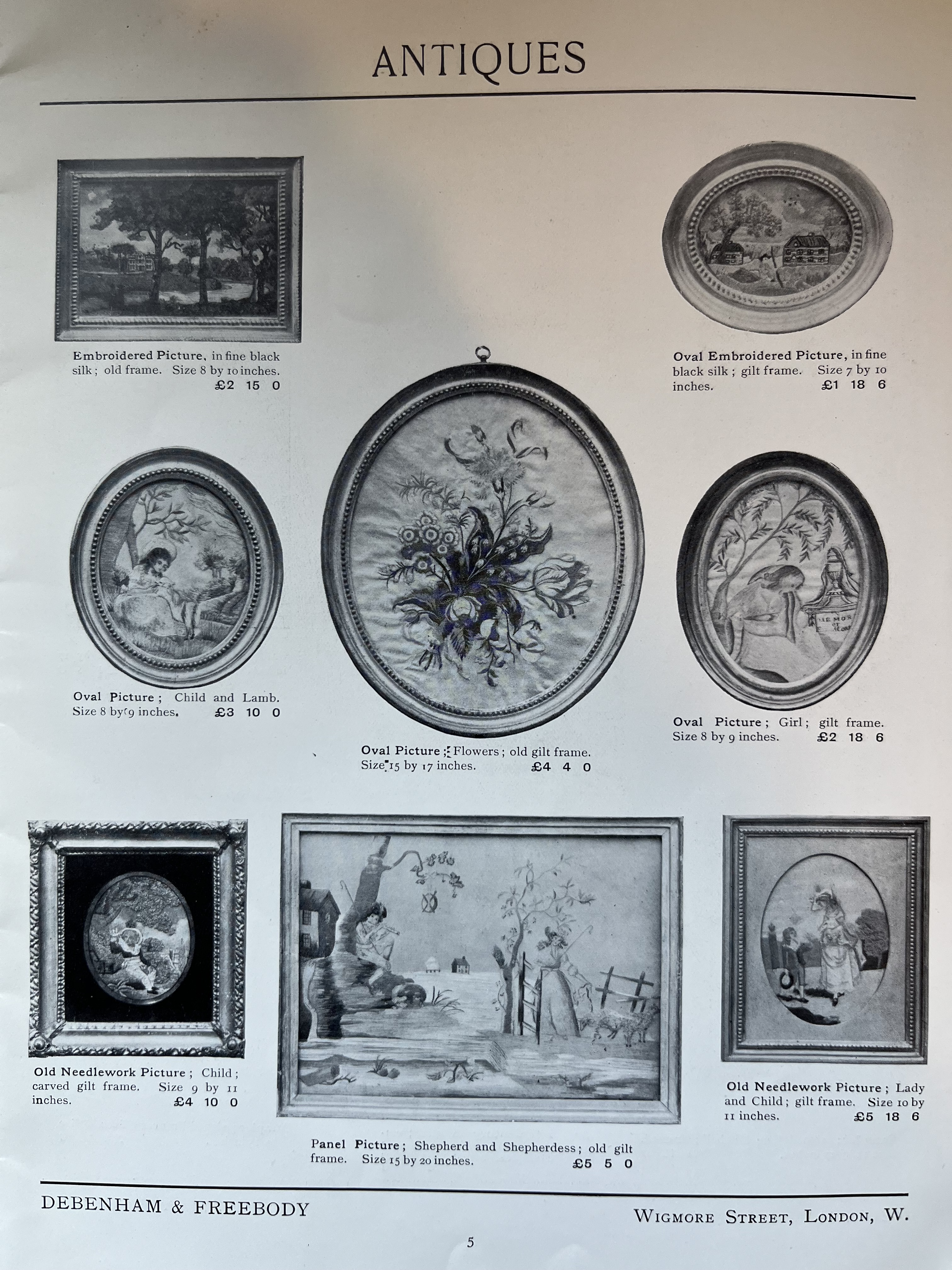
18th century, and even early 19th century needlework pictures (see below), also seemed to be very popular, keying into the 18th century and ‘Regency’ revivals that were generating interest in the period.

Debenham & Freebody antiques sale catalogue, c.1915. Photograph, Antique Dealer Research Project, University of Leeds, 2025.

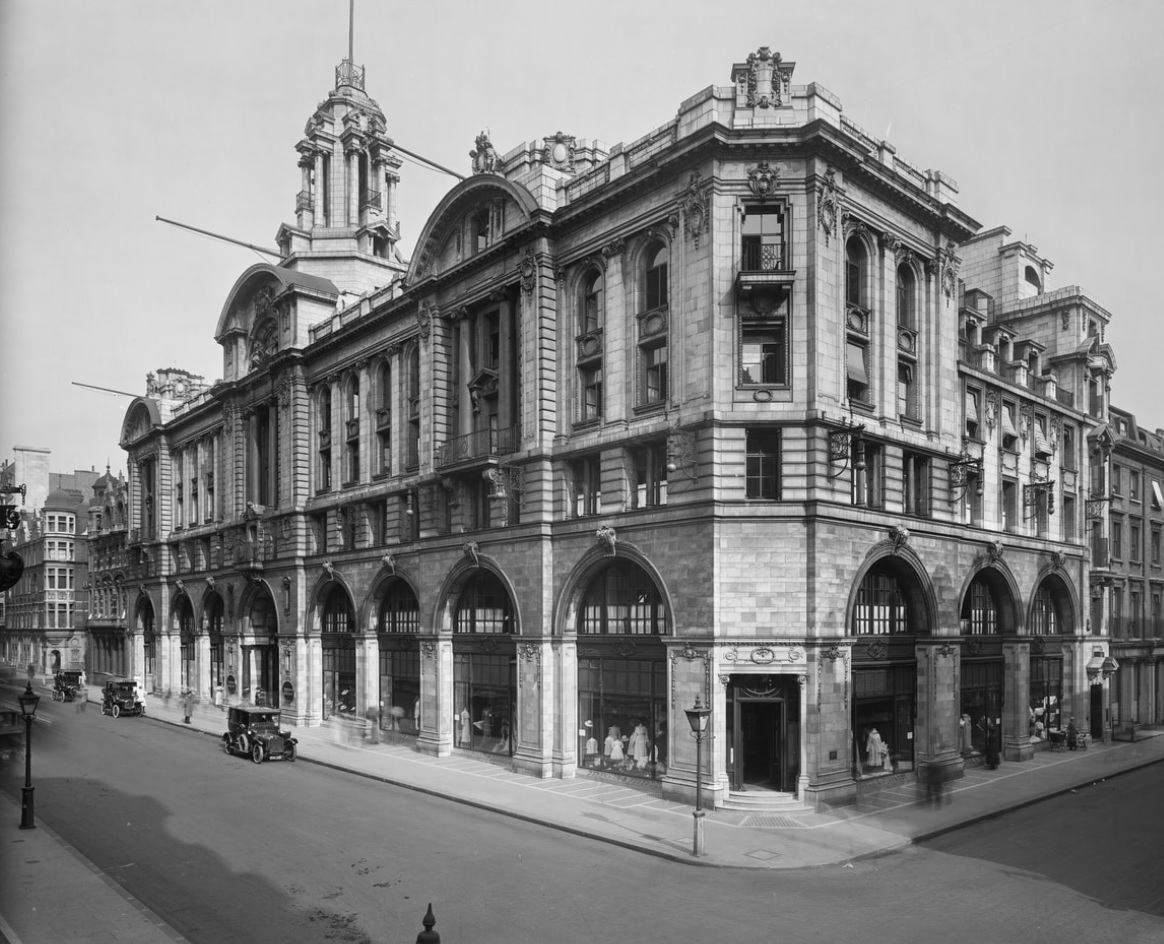
As previous blog post have indicated – see our post on a sales catalogue produced by the furniture retailer Hampton & Sons (see April 2021) and the earlier Guest Blog Post by our friend Chris Coles on antiques and department stores (see November 2014) – from the early 1900s department stores were key locations for the sales of antiques. Debenham & Freebody for example opened their department store in Wigmore Street, London in about 1909 and had an antiques department in the store right from the start. Their antiques department seemed to have been a great success and they moved the department to a dedicated and larger section in their Welbeck Street store in 1923.

Debenham & Freebody, Wigmore Street, c.1917. Photograph copyright Historic England Archive.

The rare Debenham & Freebody sales catalogue is a significant addition to the antique dealer archives, and will be joining the other antique dealer archives at the Brotherton Library Special Collections at the University of Leeds in due course.

Mark
November 2, 2014

Some surprising sources for antiques

One of the more interesting side effects of the constant fluctuations in taste and fashion in relation to the antiques trade is the emergence (and subsequent disappearance) of antiques departments in some slightly unexpected places.

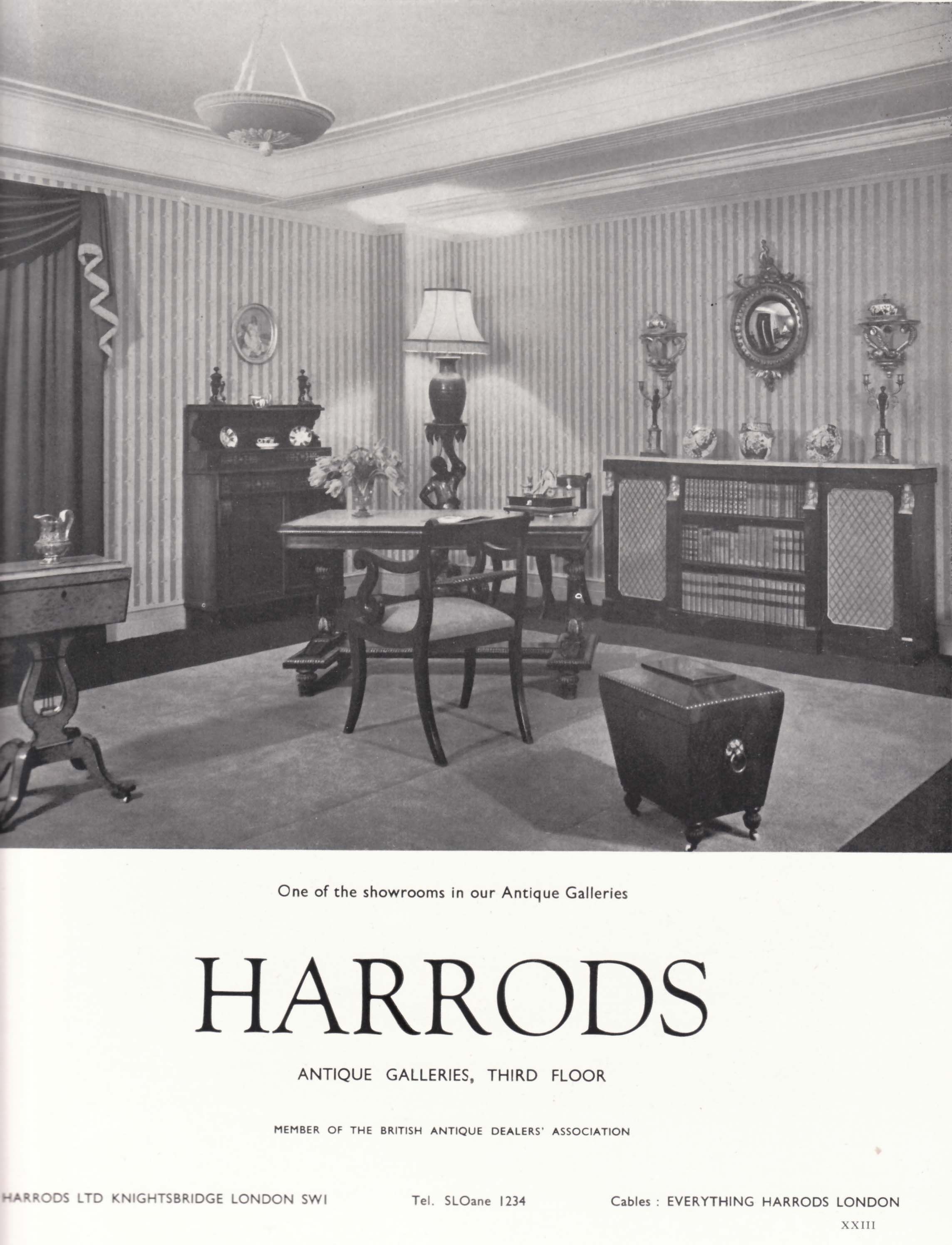
Those of you who have been collectors/connoisseurs/enthusiasts for some time will not need to be told that Asprey and Harrods were once very serious players on the London antiques scene. Both firms were members of the BADA (British Antiques Dealers Association) and exhibited at the celebrated Grosvenor House fair every year. They carried extensive stocks of furniture, textiles, silver, jewellery and porcelain etc. and traded at the very top of the market. Both firms had always been associated with luxury goods of course but neither were founded as antiques dealerships as such. Harrods does still have a small antiques section in its store but, as this image from 1951 shows, at one stage the department was very extensive indeed.

Harrods 1951

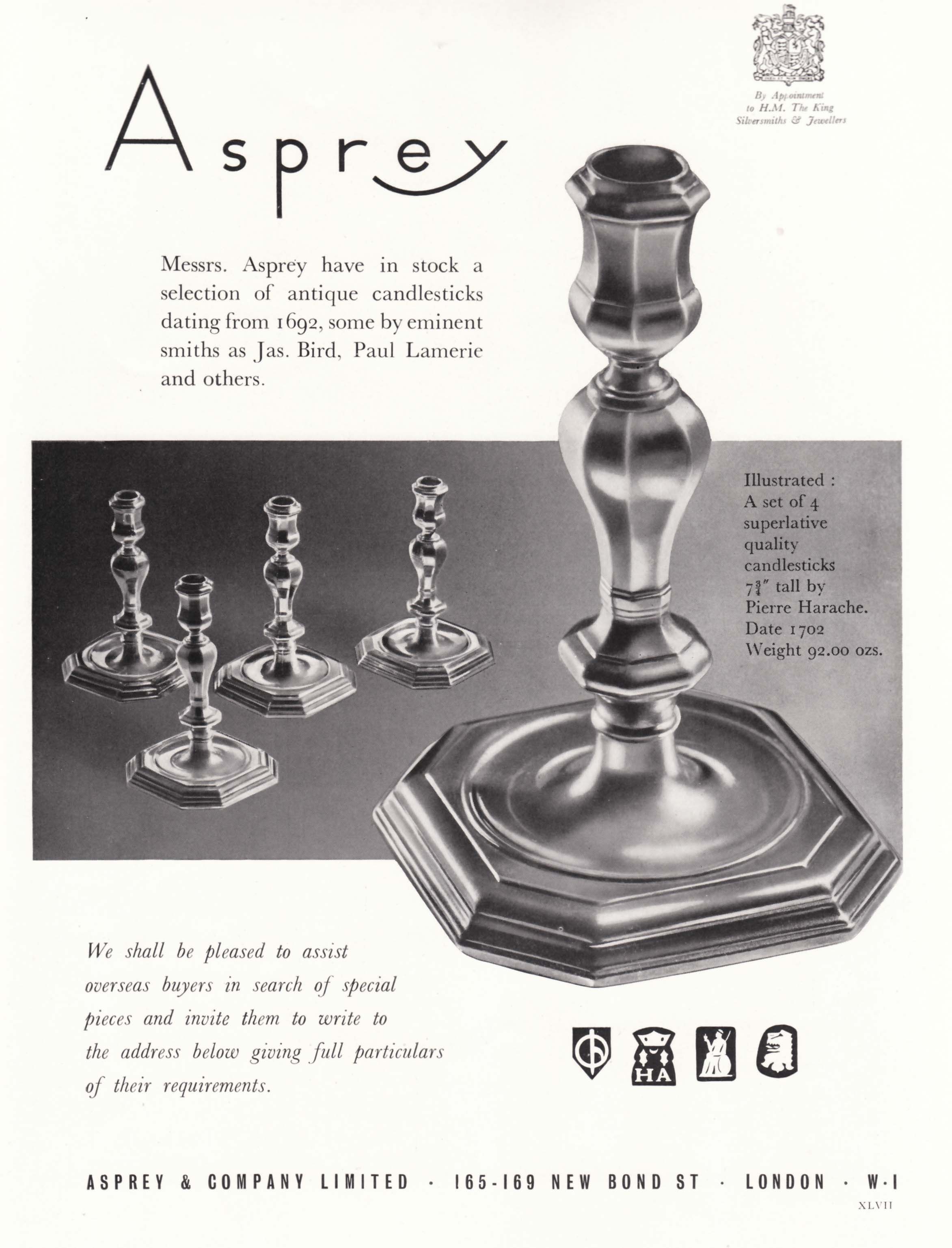
Asprey’s antiques department was the starting point for many celebrated dealers including silver specialist, and Antiques Roadshow expert, Alastair Dickenson who worked there between 1983 and 1996. Sadly the department is no longer operational though the firm does still retail antiquarian books. The image below is from an advert published in 1951.

Asprey 1951

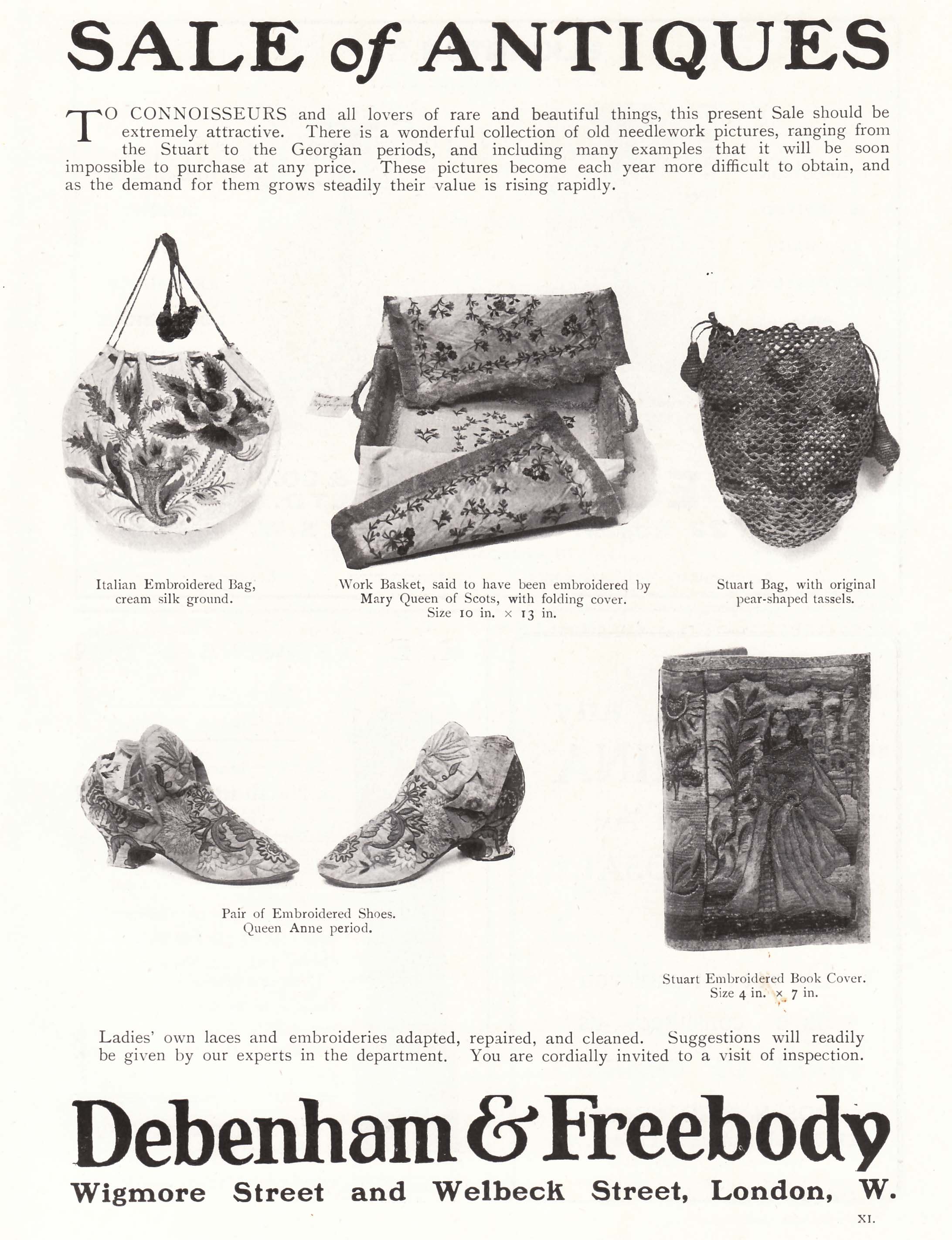
More surprising still are the following two firms that also had antiques departments in the past. Firstly Debenham and Freebody (yes, that Debenham’s). I bow to the greater experience of others but until I saw this advert from the Connoisseur in 1916 I had no idea that they had ever sold antiques. The advert below suggests that the antiques department was limited to textiles but what textiles! Some incredible examples of needlework including one piece possibly worked by Mary, Queen of Scots. Debenham’s flagship store straddling Wigmore Street and Oxford Street is still in place of course but unfortunately the collection of needlework is not.

Debenhams 1916

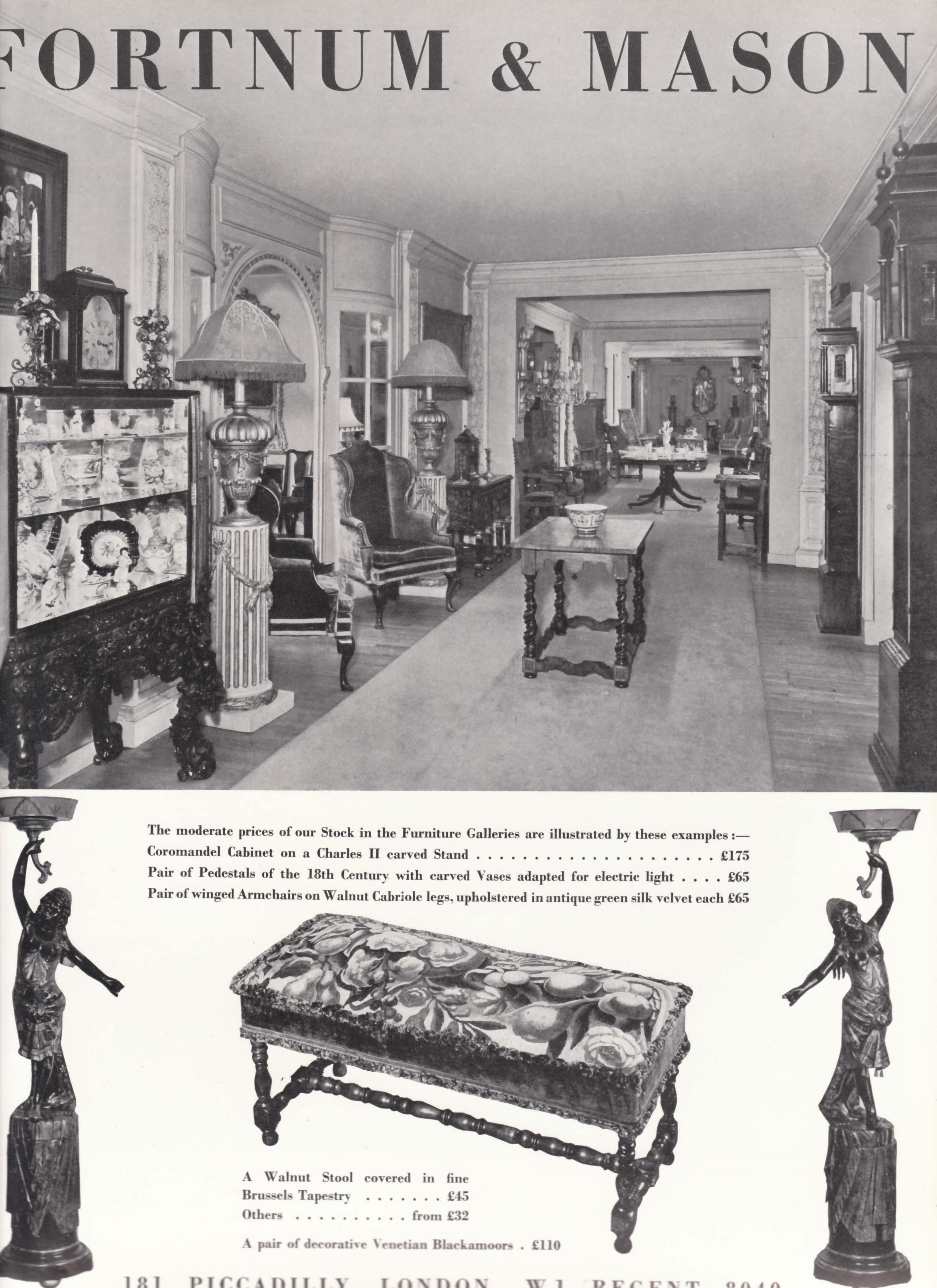
Finally we come to one of the country’s most prestigious retailers but one that I certainly wouldn’t associate with antiques. Fortnum and Mason has long been a foodie’s destination but, apparently, in the post-war period (this advert is from 1951 once again) you could also expect to see a fine selection of antiques. What I find particularly interesting about this advert is that the firm is taking a noticeably different approach to those illustrated above by concentrating on “moderate prices” as the primary selling point. That having been said, the beautifully laid-out gallery setting certainly leaves the viewer in no doubt that, however “moderate” the prices may have been, there are objects of real quality on sale here.

Forthum and Mason 1951

Who knows, perhaps during the next antiques boom we’ll witness the birth of the IKEA or Tesco fine antiques department…

Chris Coles,

Project volunteer.

Home Subjects

a working group dedicated to the display of art in the private interior, c. 1715-1914

The Period Room: Museum, Material, Experience

An International Conference hosted by The Bowes Museum and The University of Leeds

H. Blairman & Sons Ltd

A research project investigating the history of the antiques trade in Britain in the 19th & 20th centuries

Museum Studies Now?

'Museum Studies Now?' is an event which aims to discuss and debate museum and heritage studies education provision.

The Burlington Magazine Index Blog

art writing * art works * art market

East India Company at Home, 1757-1857

A research project investigating the history of the antiques trade in Britain in the 19th & 20th centuries