Posts tagged ‘Chris Coles’

November 29, 2025

J. Rochelle Thomas – The Georgian Galleries, London (and New York)

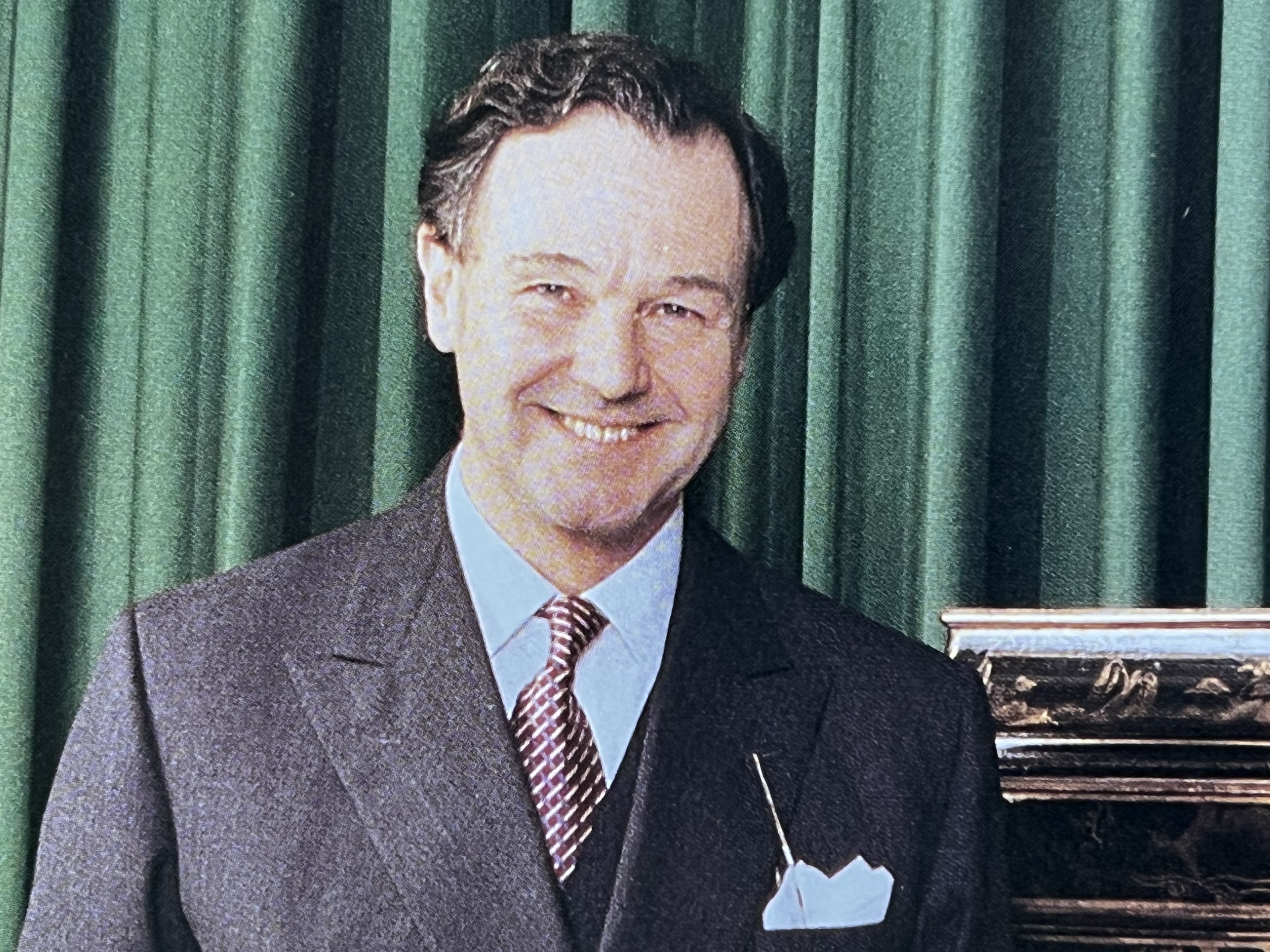
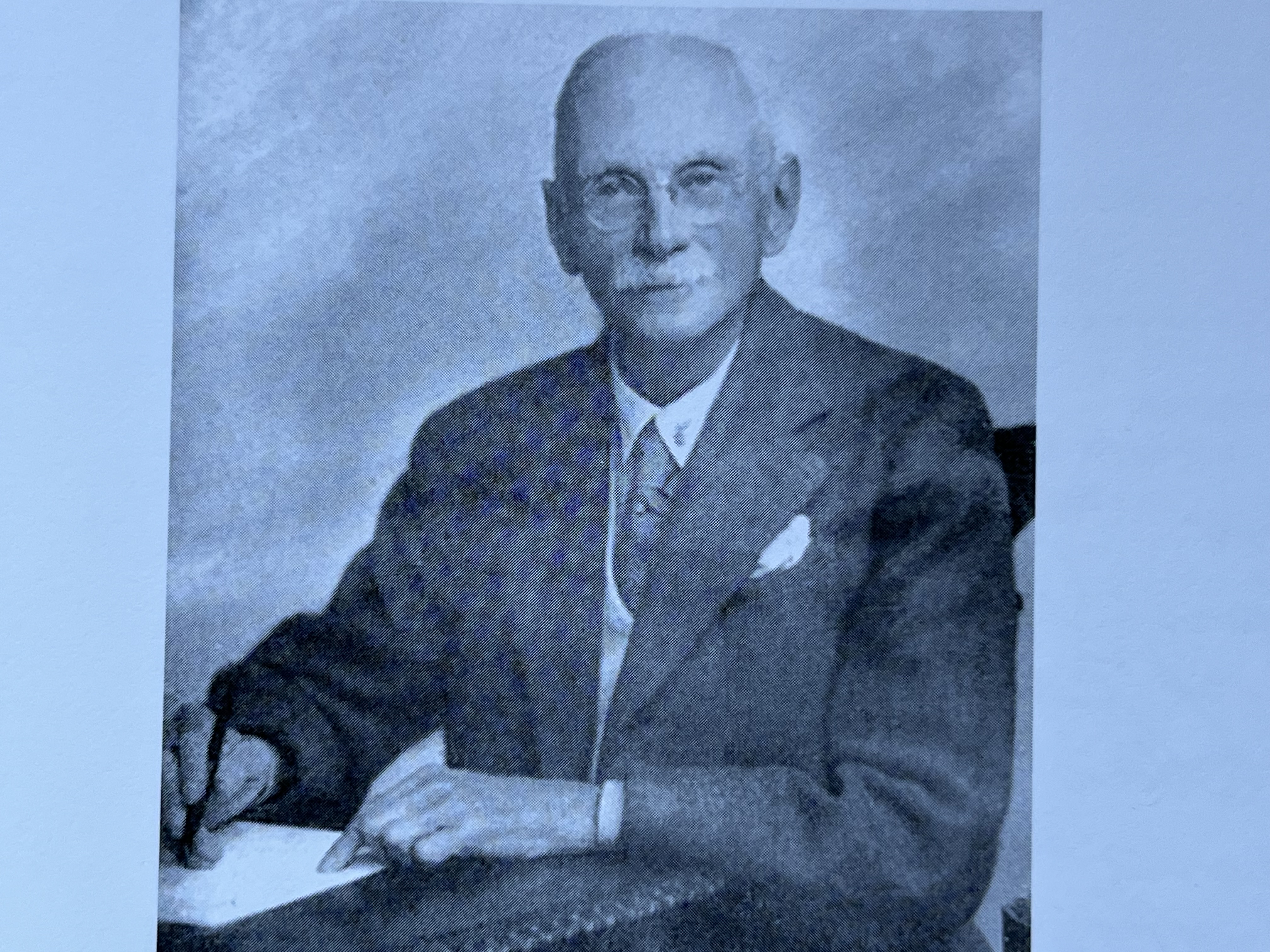
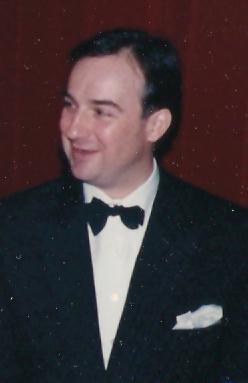
Our friend Chris Coles very kindly sent me a photograph of the antique dealer J. Rochelle Thomas (thank you Chris!), and as it’s quite unusual to have photos of historical antique dealers I thought I’d make a blog post about Rochelle Thomas – as you’ll see, he was a very important dealer, but appears (like most of the important dealers of the past) to have been lost to history! Anyway, here’s the photo from Chris:
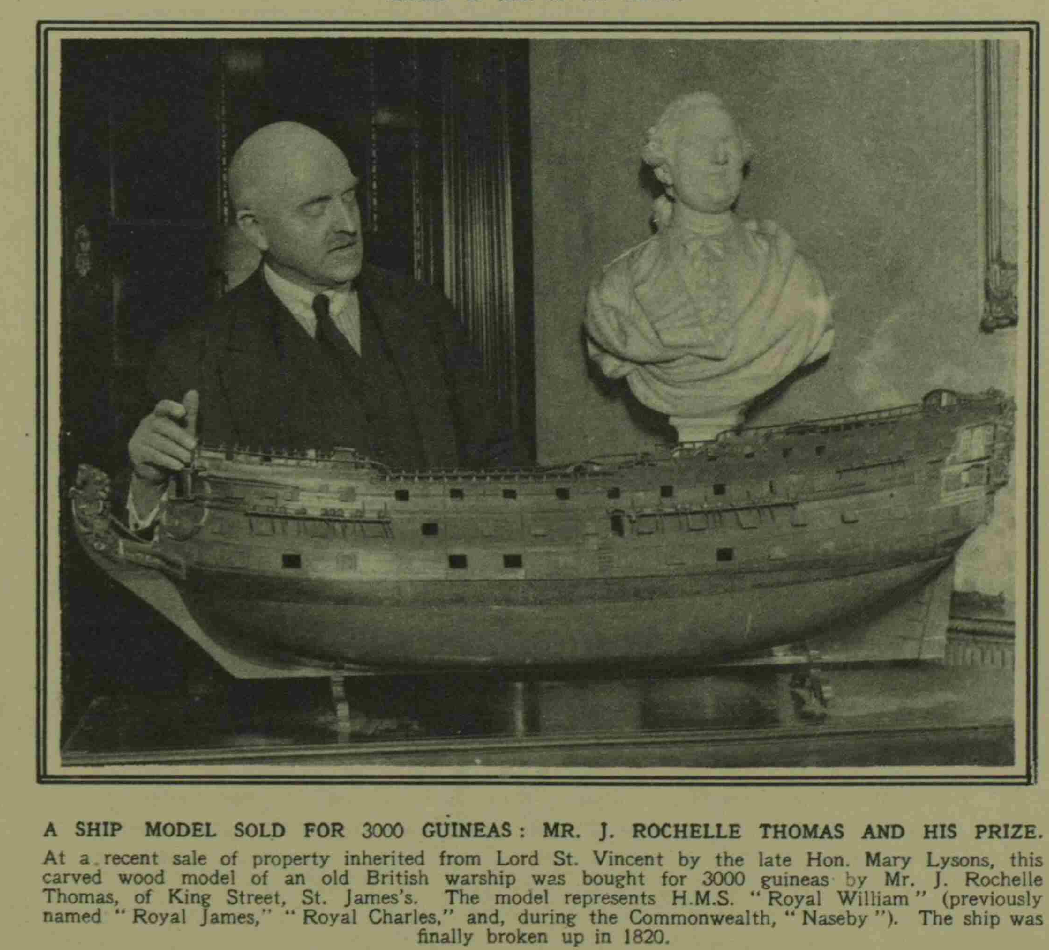
J. Rochelle Thomas with a model ship, from Illustrated London News, April 21st 1928, p.675. Kind thanks to Chris Coles.

The photograph shows Joseph Rochelle Thomas (1865-1938) with a wooden model of the warship ‘Royal William’ (1719) scale 1.48, and made in 1719. As the report states, Rochelle Thomas bought the ship model (I guess in 1928) for 3,000 guineas (£3,150), an enormous sum (hence the newspaper report), which would have been as much as £1.3m at the time – in relative income value – see measuring worth.com The model is now in the National Maritime Museum at Greenwich (not on display); it seems to have been acquired by the museum through the antique dealer J.M. Botibol, who had a well known antique shop in Hanway Street in London in the period. Chris tells me that the ship was advertised as ‘seen by appointment at Mr. Botibol’s shop’. It may be that Rochelle Thomas and Botibol bought the ship model in partnership with one another (this was, and still is, a common practice in the antique trade).
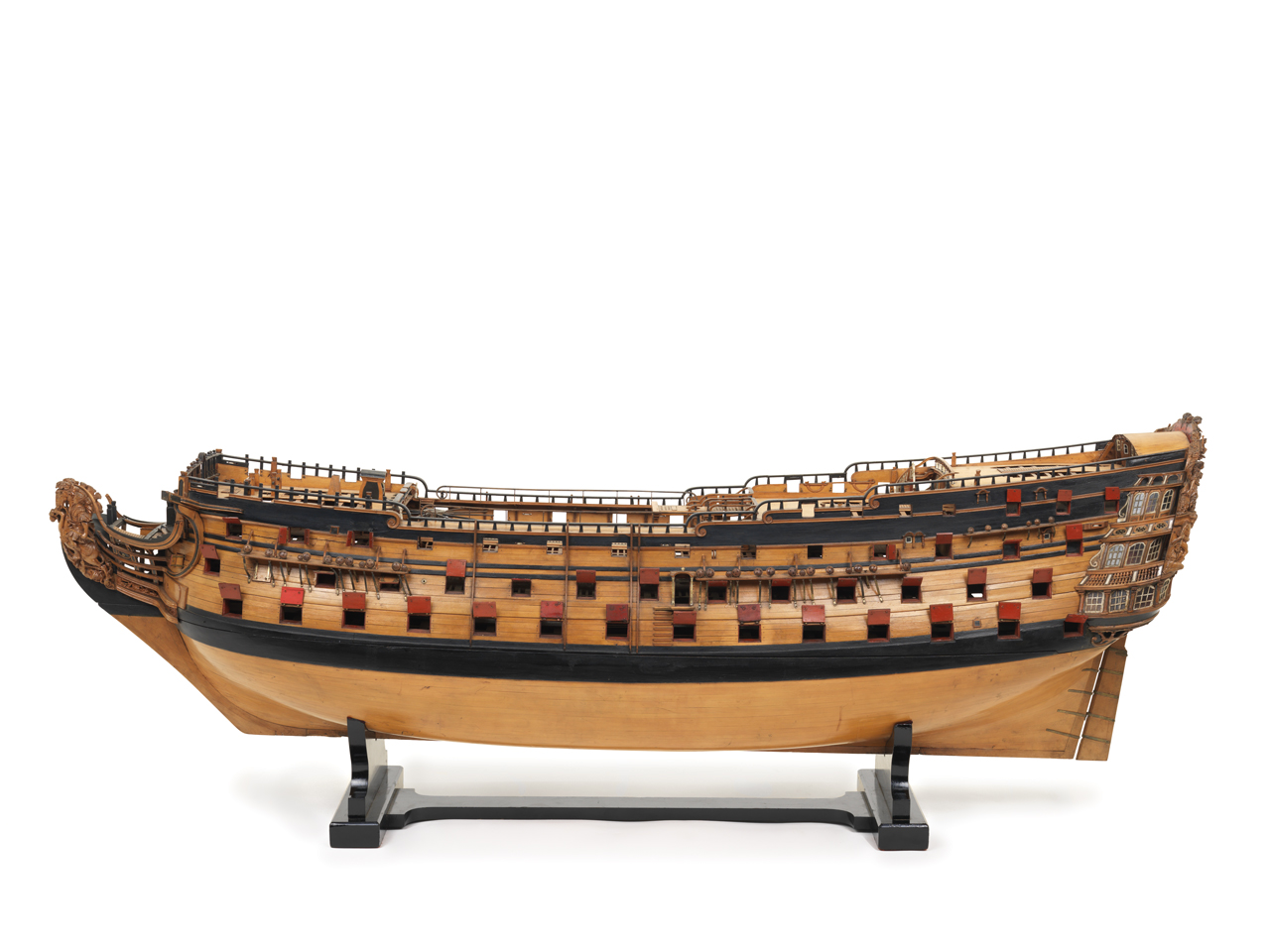
Royal William (1719) wooden ship model 1.48 scale. 440mm x 1365mm x 320mm. National Maritime Museum, Greenwich, London. Image National Maritime Museum, Greenwich.

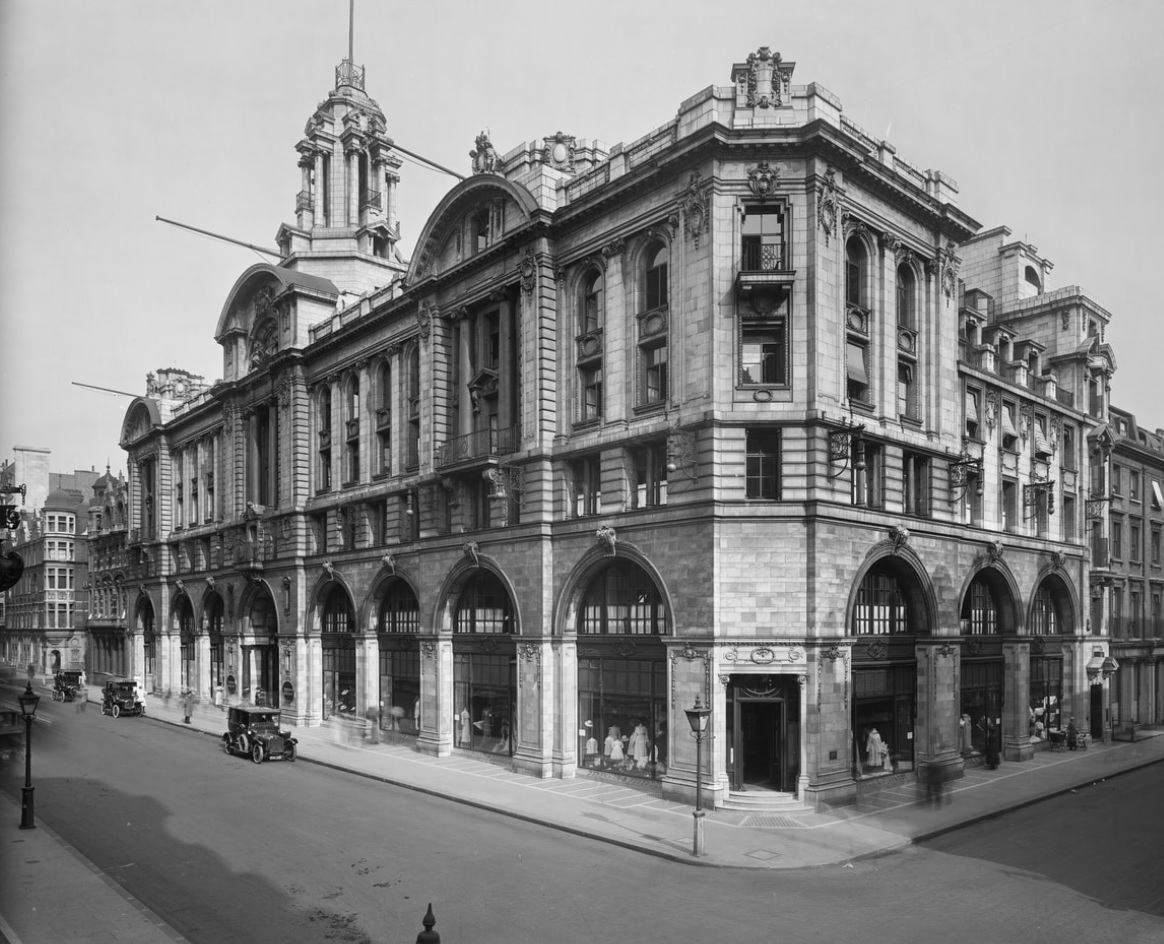
J. Rochelle Thomas was a very well established antique dealer by the 1920s; the business would later expand to New York selling to many wealthy American collectors, including scores of English antiques to Henry Francis du Pont (1880-1969); du Pont’s collections of American antiques remain at Winterthur Museum in Delaware, USA. Indeed, here’s an image of J. Rochelle Thomas’ London shop from a letter sent to du Pont in 1931, which was right next door to Christie’s King Street auction rooms. The premises occupied by Rochelle Thomas are now part of Christie’s auction rooms.
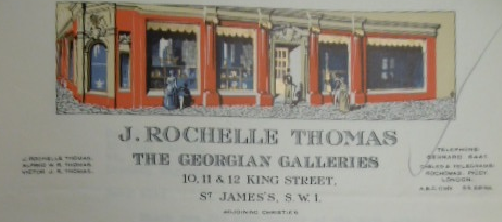
Letterhead, J. Rochelle Thomas, King Street, St. James’s, London, 1931. Photograph Antique Dealers Research Project, University of Leeds.

By this date (the 1930s), the J. Rochelle Thomas business was run by Joseph and his two sons Victor Joseph Rochelle Thomas (1887-1958) and Alfred William Rochelle Thomas (1886-1965). By the early 1950s Rochelle Thomas had opened a shop in New York, at 1166 Second Avenue – our friend Chris Jussel (formerly of Verney & Jussel, leading antique dealers in the USA) and a fount of knowledge about ‘old’ dealers, tells us that J. Rochelle Thomas’ shop in New York was run by Peter Thomas, (Joseph’s grandson), and that it occupied the former warehouse premises of Day, Meyer, Murray & Young; they had no shop window and so, as Chris says, it was an unusual move but the business continued to be a success given Rochelle Thomas’ reputation. Chris remembers visiting the Rochelle Thomas shop in the 1970s, when there were stacks of dinner services all over the floor. By the 1970s Rochelle Thomas opened a branch in Palm Beach, Florida, which, as Chris Jussel tells us, was run by Peter Thomas’ sons (Peter retired to Bermuda in the 1970s); the Palm Beach business traded into the 1980s but sadly Peter’s 2 grandsons died very young and the business closed in the 1980s – as Chris says, the end of a very important dealership. J. Rochelle Thomas sold many antiques to Francis du Pont (and many other American collectors) throughout the 20th century.

The Rochelle Thomas business began in 1859 (they celebrated a centenary year in 1959, according to some of their business letterheads) in Birmingham in the UK. It was started by Henry Thomas, who appears to have been born in about 1815 – the 1861 Census records Henry as aged 48 and working as an ‘ironmonger’ in Birmingham; by 1871 he was working as a ‘cutler’. His son, Joseph Rochelle Thomas (the man in the photograph) was born in 1865 and by the 1890s was described in the Census (1891) as ‘Dealer in Old Bank Notes’; by the 1911 Census Rochelle Thomas was describing himself as ‘Dealer in Pictures, Furniture and Porcelain’, and by 1921 he was ‘Dealer in Works of Art’. His sons, Victor and Alfred, both started working for their father’s antique dealing business from an early age and ran the business following Joseph Rochelle Thomas’ death in 1938. The business was also known as ‘The Georgian Galleries’. J. Rochelle Thomas was elected first President of the British Antique Dealers’ Association in 1918 as well as being a member of several international dealer associations (in Paris, Brussels and New York); so he was a highly respected dealer in the opening decades of the 20th century.

J. Rochelle Thomas appears to have been fascinated by objects that had interesting historical associations – in this sense he was certainly an antiquarian – and often advertised such objects in his sales advertising campaigns in magazines such as Apollo and The Connoisseur. One example (of many!) is an advert for a chair made from the famous (infamous!) mulberry tree wood from Shakespeare’s house in Stratford-on-Avon – if you’re interested in Shakespearian mulberry tree ‘relics’ do have a look at my essay on the subject (see – Mark Westgarth, ‘Well Authenticated Blocks’ in Shakespeare’s Afterlife in the Royal Collections edited by Sally Barnden, Gordon McMullan, Kate Retford and Kirsten Tambling, (Oxford University Press, 2025), pp.103-111)
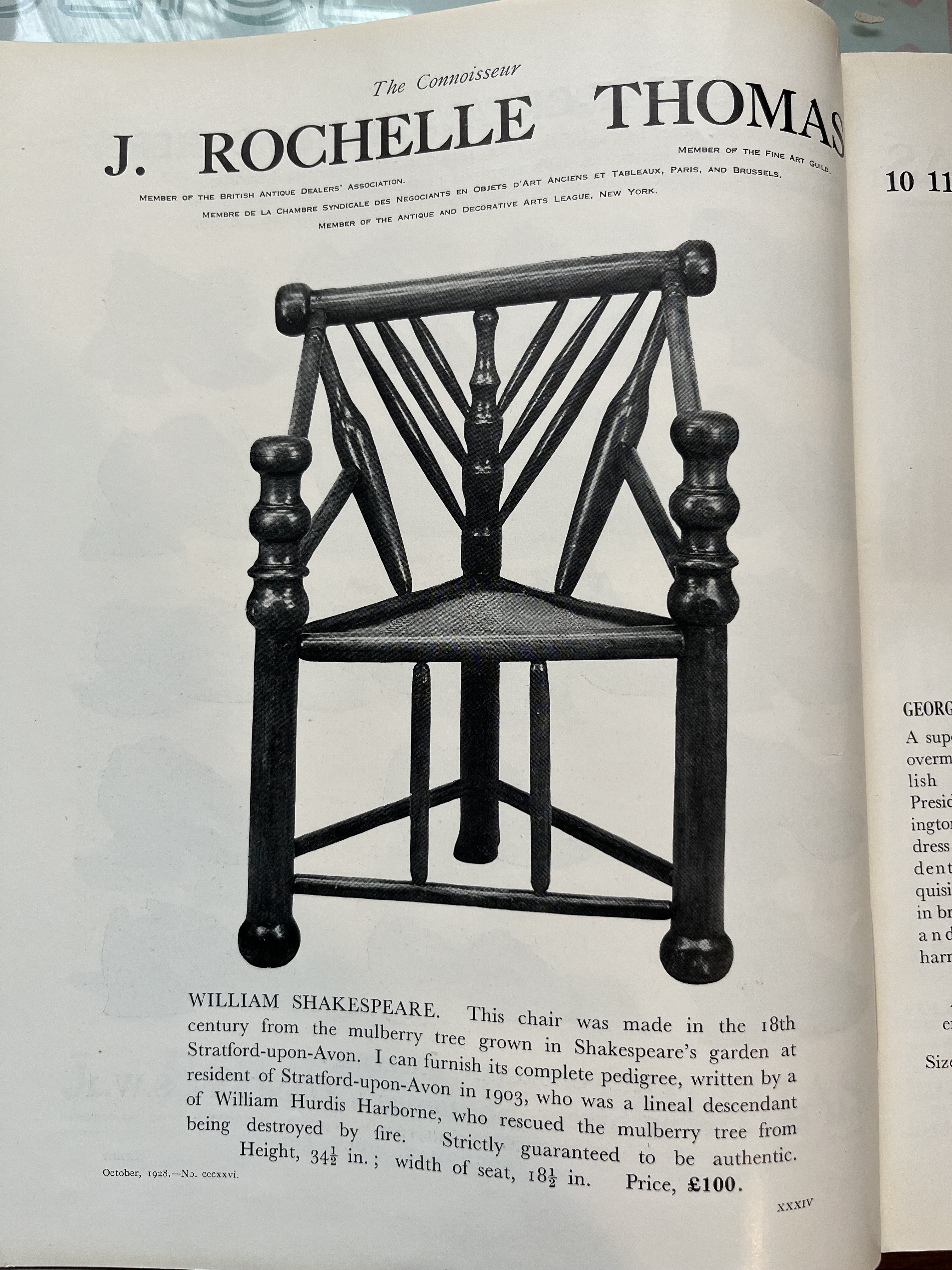
Advertisement for J. Rochelle Thomas, The Connoisseur October 1928. Photograph Antique Dealer Research Project, University of Leeds.

The advert in The Connoisseur October 1928 illustrates an 18th century triangular chair, allegedly made from the wood of the famous mulberry tree – it was priced at £100. Not sure where the chair is now, but if anyone recognises it, do let me know!

Coincidently a while ago I acquired an old sales catalogue produced by J. Rochelle Thomas in 1923 which also contains several items for sale with significant historical associations. The catalogue was issued to facilitate a ‘Clearance Sale’ that Rochelle Thomas undertook in 1923 as part of a refurbishment of his shop in King Street, St. James’s. As the catalogue states, ‘To my customers, as I am about to make extensive alterations to my premises I find it necessary to hold a Clearance Sale of the greater portion of my stock, and I am doing so at 50 per cent. in every case below the original marked prices in order to realise promptly.’ Here’s the cover of the catalogue:
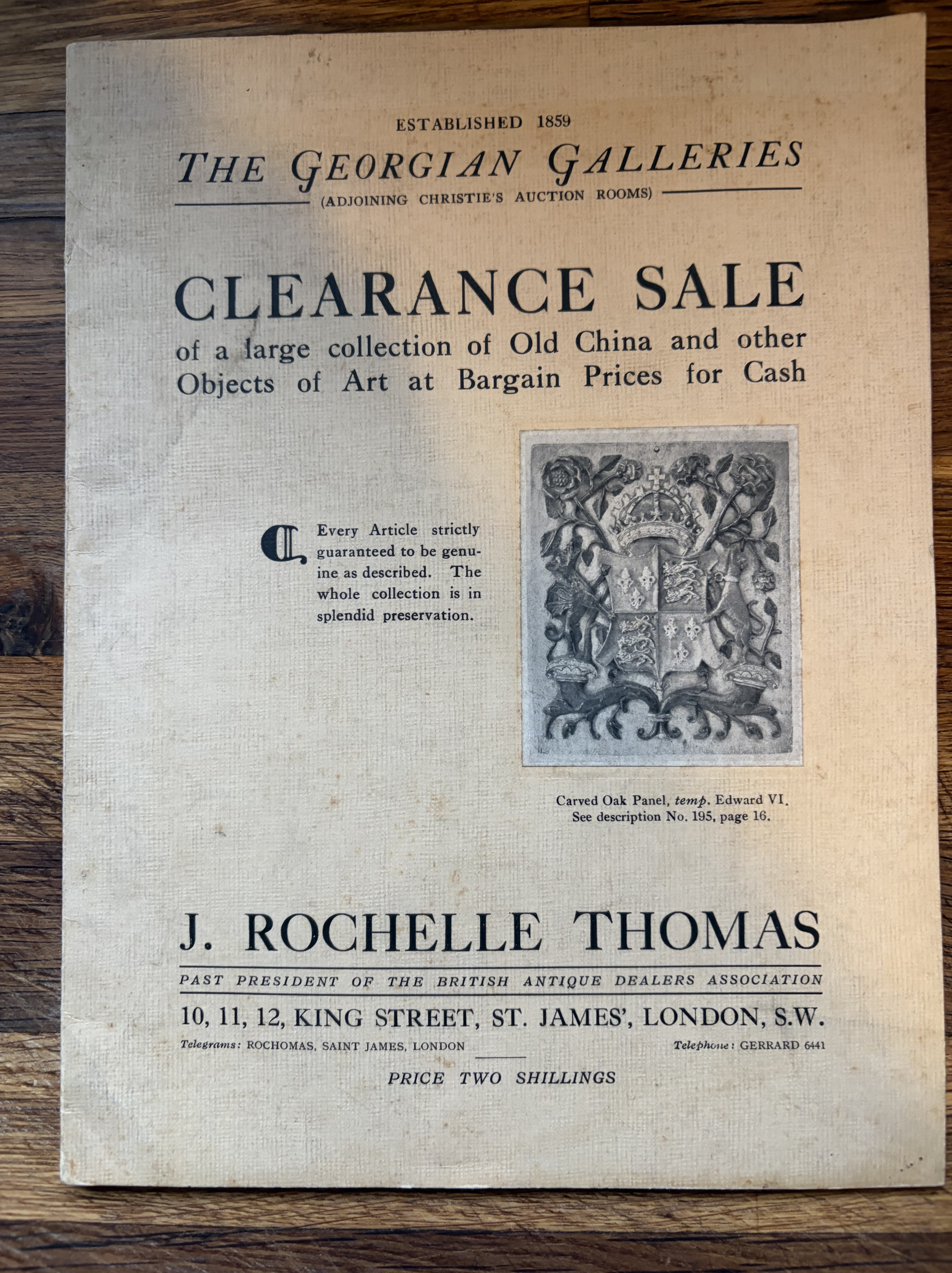
J. Rochelle Thomas sales catalogue, 1923. Photograph Antique Dealers Research Project, University of Leeds.

Sadly the catalogue does not have any photographs of the items for sale except the front cover image of what is described as ‘Carved English Royal Coat of Arms, Period Edward the 6th; fine preservation. A great rarity’ (priced at £37.10.0s, reduced from £75). The catalogue has more than 750 antiques for sale at 50% discount, including some important historical ‘relics’. Item 198 for example (see below) ‘The renowned Shakespearian Relic ‘The Boar’s Head’ at Eastcheap, carved in boxwood and set in two natural tusks’ and priced at £60 (reduced from £120). This was a famous object in the 19th century, having been in several collections, including that of the antiquary Thomas Windus FSA (1778-1854).
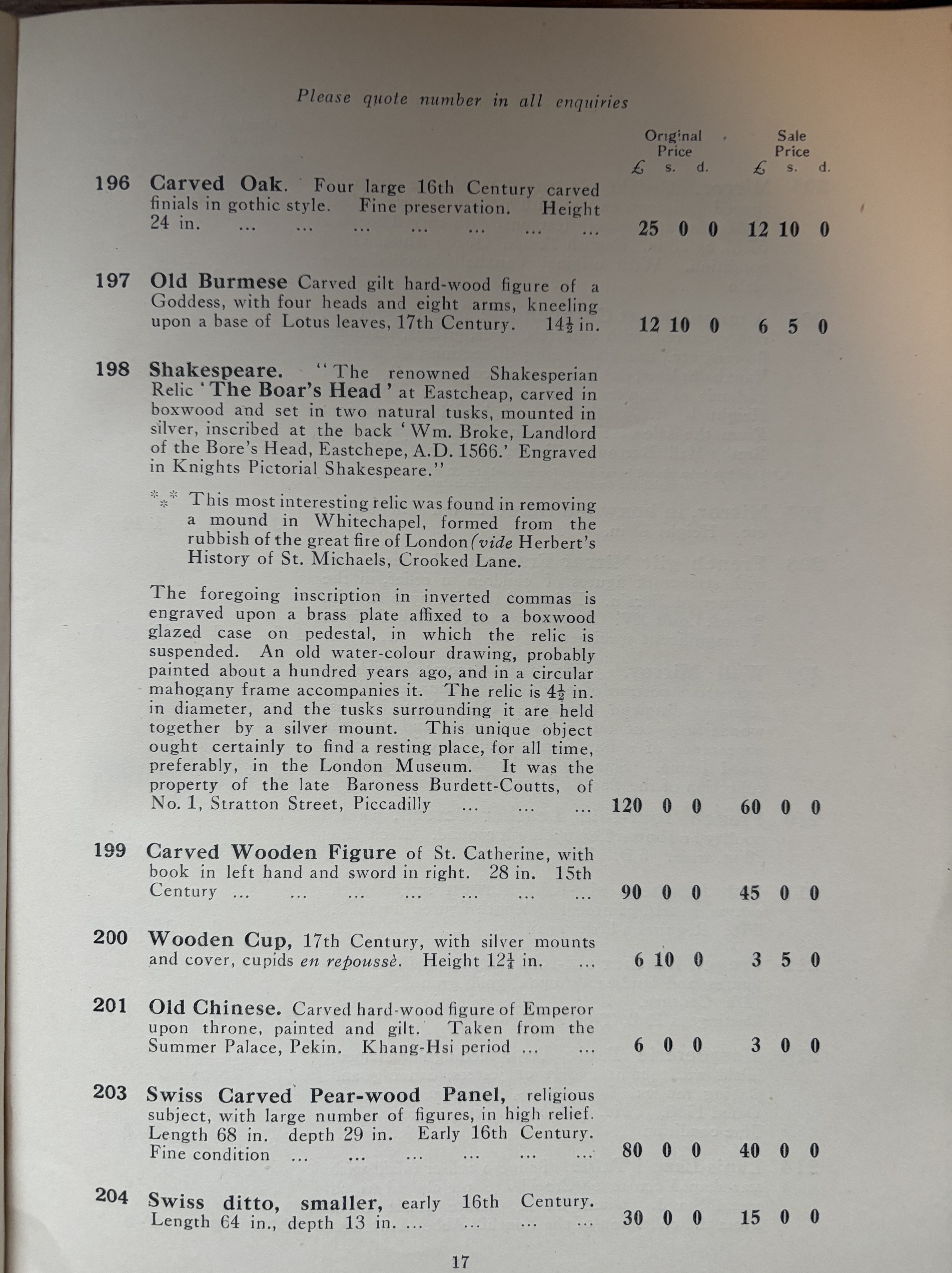
J. Rochelle Thomas sales catalogue, 1923. Photograph Antique Dealers Research Project, University of Leeds.

The ‘Boar’s Head’ was offered for sale at the auction of the collection of Thomas Windus in 1855 where it was reportedly sold for £25 and 4 shillings to the Shakespeare scholar James Halliwell-Phillipps (1820-1889), editor of a lavish Shakespeare Folio edition at the time. It was illustrated in The Pictorial Edition of the Works of Shakespeare edited by Charles Knight (volume 1, 1839-42) – (see below).
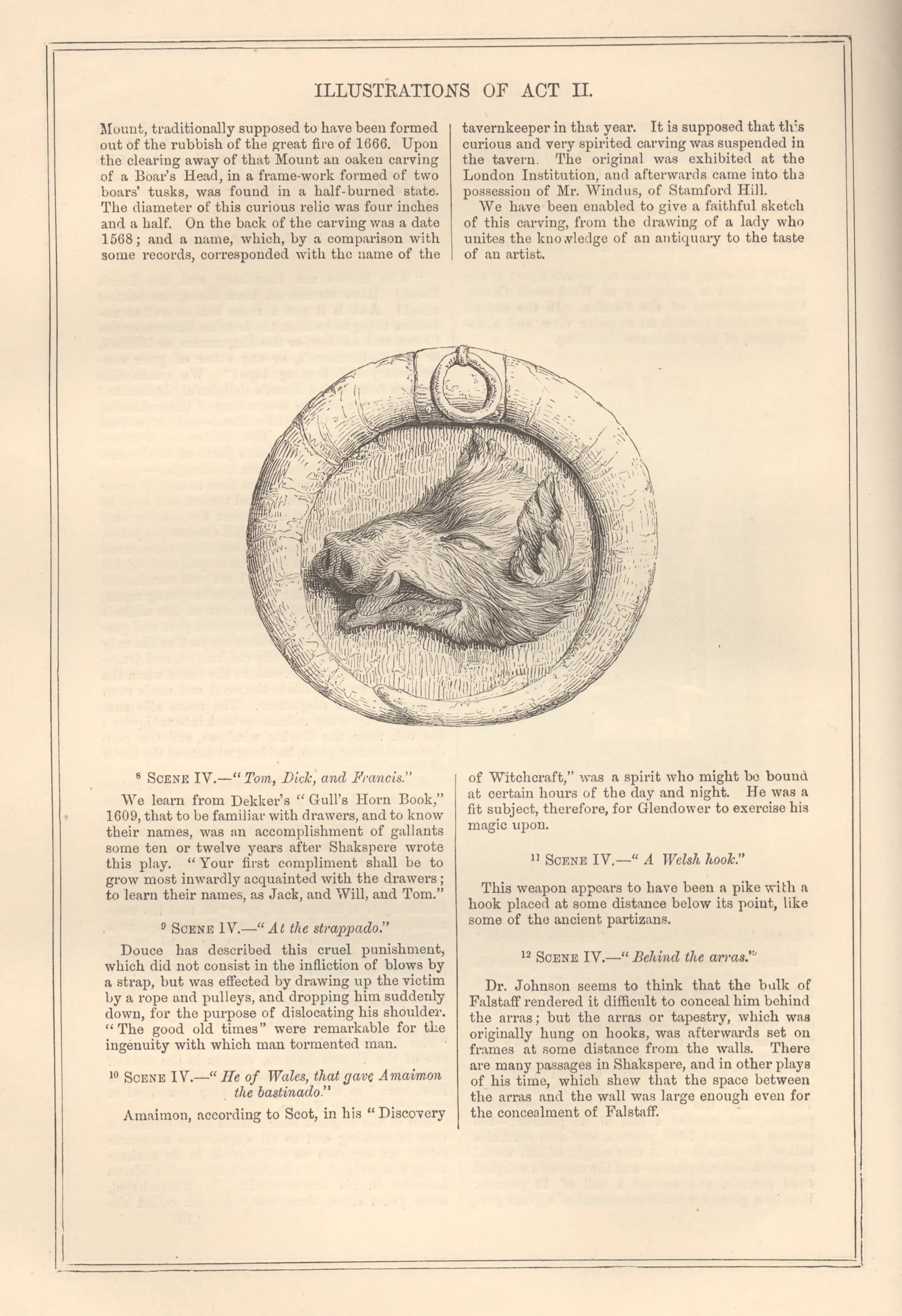
The Pictorial Edition of the Works of Shakespeare edited by Charles Knight (volume 1, 1839-42).

However, the ‘Boar’s Head’ also appeared in the auction of the Windus collection sold by Ansley Windus (Thomas Windus’ son) in 1868, so perhaps it remained unsold at the 1855 auction or was retained by the family. According to the 1923 J. Rochelle Thomas catalogue the ‘Boar’s Head’ was the ‘property of the late Baroness Burdett-Coutts’ (1814-1906); it was offered for sale at £60 (discounted from £120). This important historical object has also subsequently disappeared so if anyone knows where it is, do let me know!

Another object offered for sale in the J. Rochelle Thomas catalogue has been easier to trace – Item 741 – ‘The original carved marble portrait bust, by the great Sculptor Roubilliac, of Jonathan Tyers the proprietor of Vauxhall Gardens. Purchased at Brandon House, Suffolk, from the sale of the effects of Tyers descendants.’ (£50, discounted from £100) – (see below):
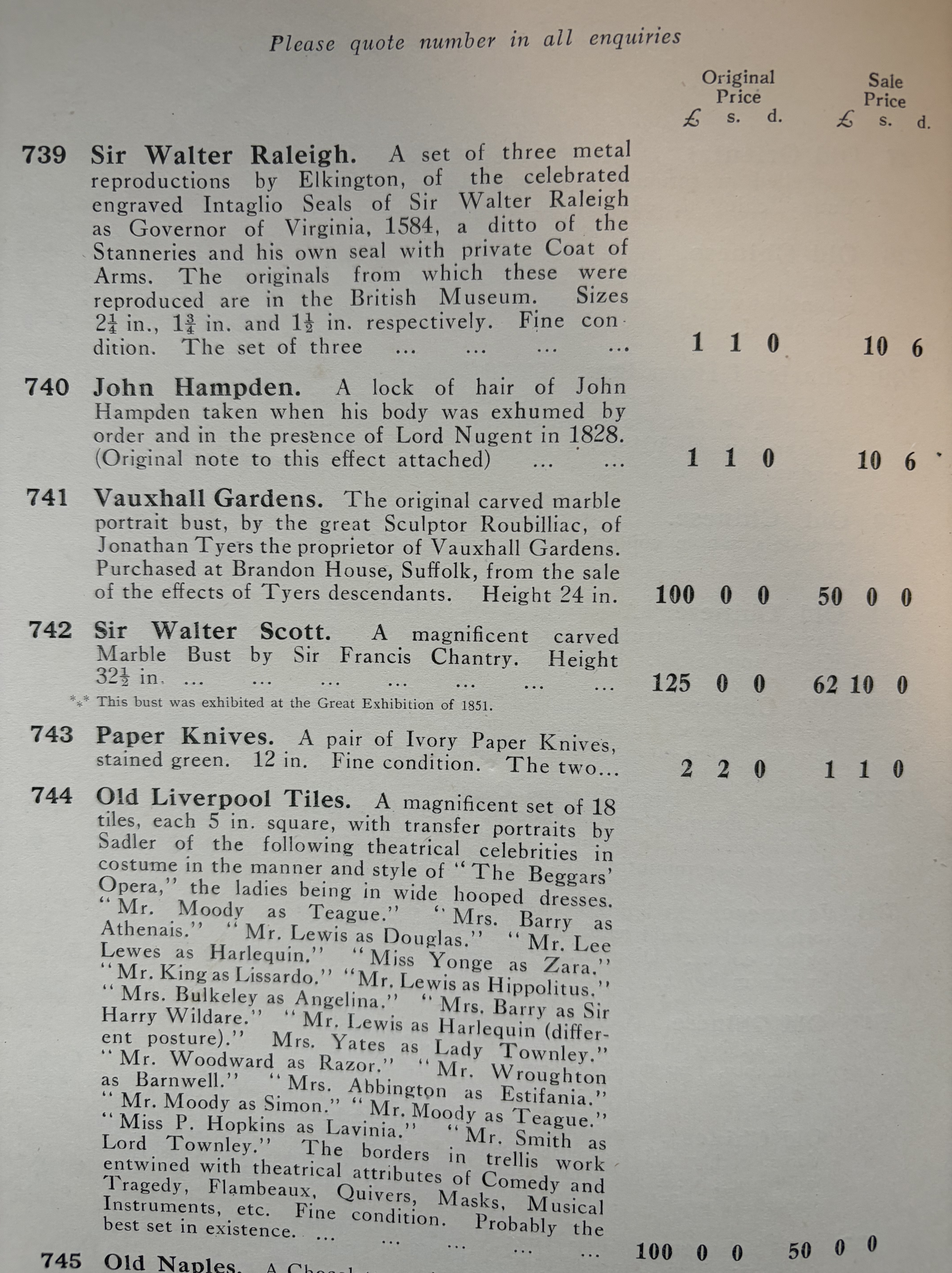
J. Rochelle Thomas sales catalogue, 1923. Photograph Antique Dealers Research Project, University of Leeds.

Here’s the sculpture (thanks to a photograph by David Bridgwater – see his blog HERE):
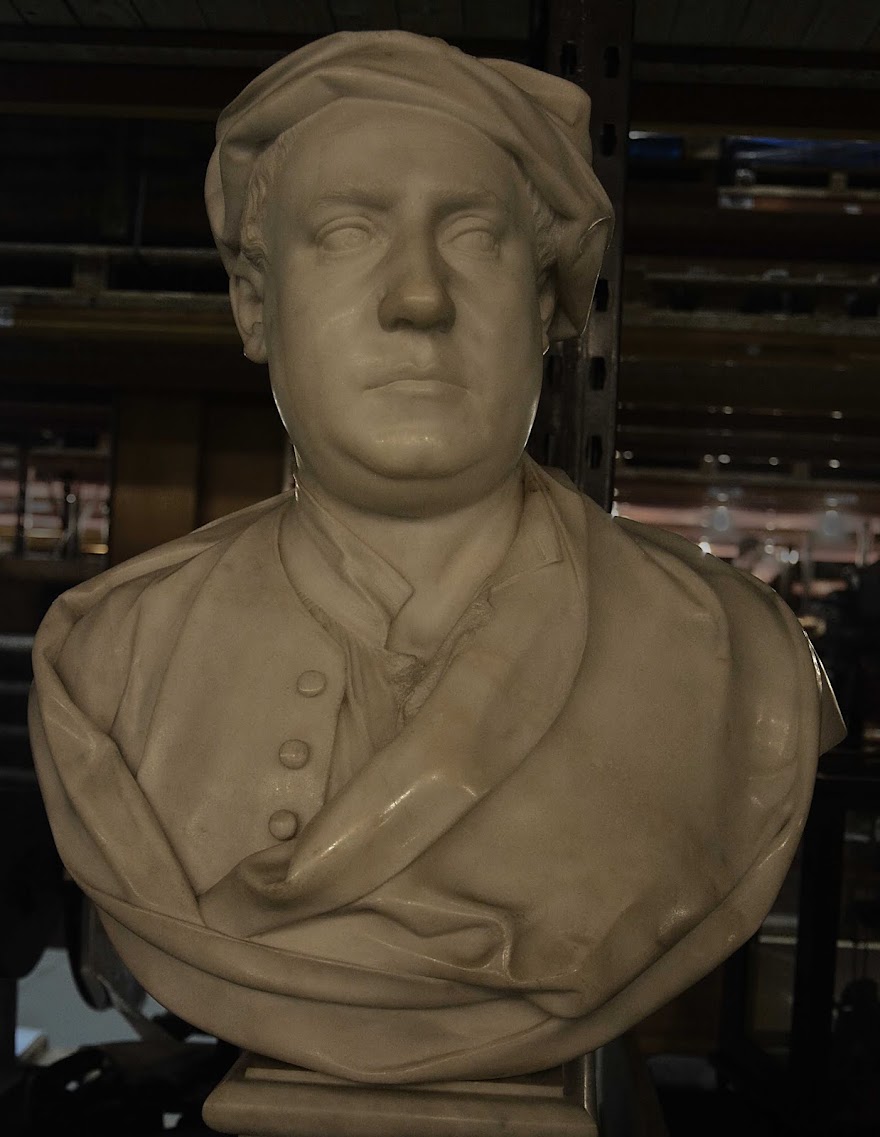
Louis F. Roubiliac (1702-1762) bust of Jonathan Tyers (1702-1767), c.1738. Birmingham Museums. Photograph David Bridgwater.

The marble bust is in the collections of Birmingham Museums, who acquired it in 1956 from the art dealer Frank Sabin. It has an illustrious antique dealer history though. It was acquired (it seems together with a terracotta bust of the same subject) by the well-known Norfolk-based antique dealer Rueben Levine (1865-1927) at the Brandon House auction sale in 1919 (see my blog post on the Levine family of dealers (27th July 2025) HERE. The terracotta bust was sold by G. Levine to the Victoria & Albert Museum in 1927 for £50 and remains in the V&A (see HERE). The marble version of the bust was sold at auction at Sotheby’s in 1927 (24th June 1927, Lot 77), and may have passed through several collections before it was eventually acquired by Birmingham Museums in 1956.

And so, a little photograph of Joseph Rochelle Thomas, kindly sent to us by Chris Coles, opened up a rich seam of research into one of the leading antique dealers of the 20th century – thank you Chris & Chris!

Mark
August 31, 2025

More Antiques in Department Stores – Debenham & Freebody

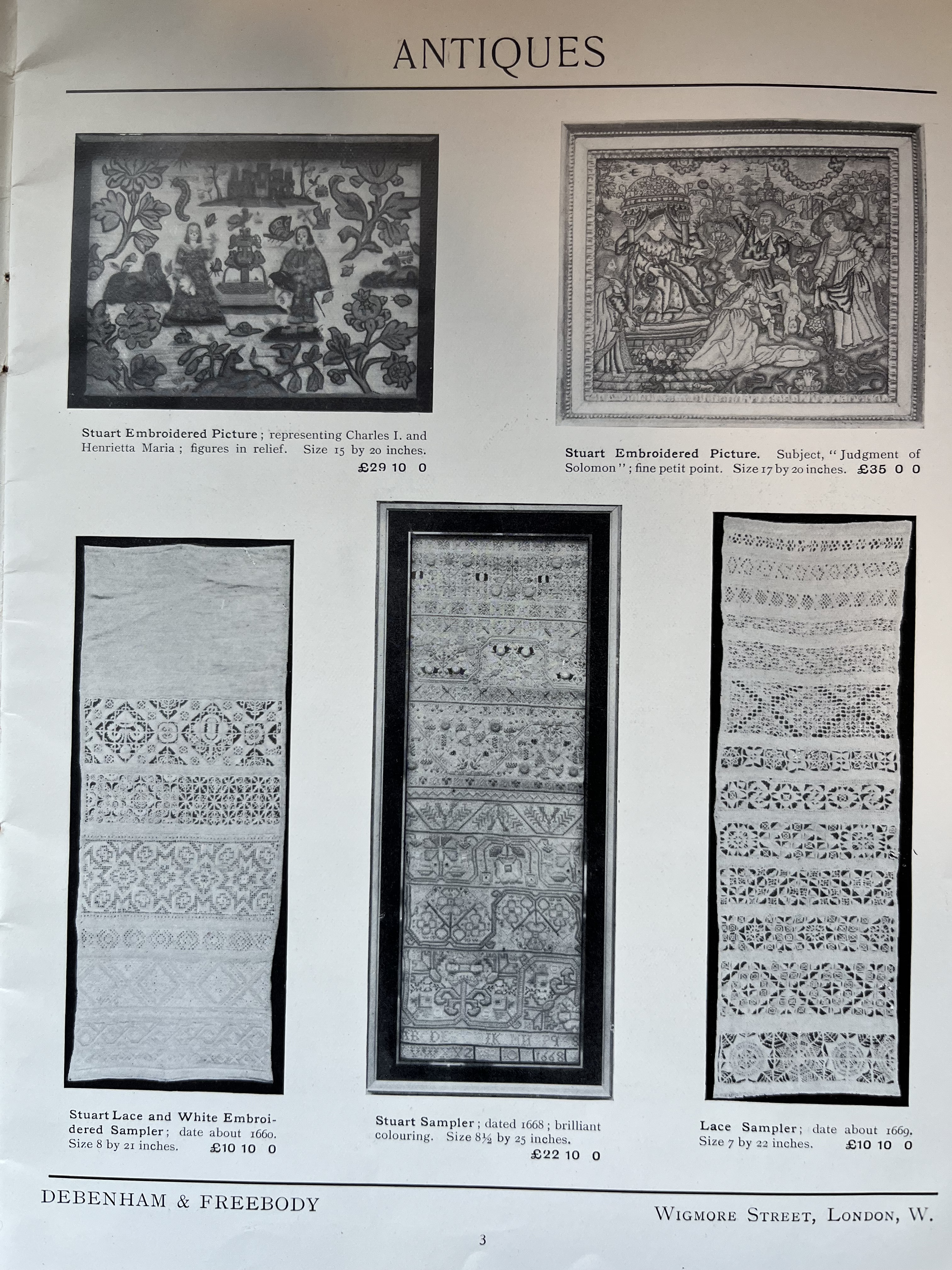
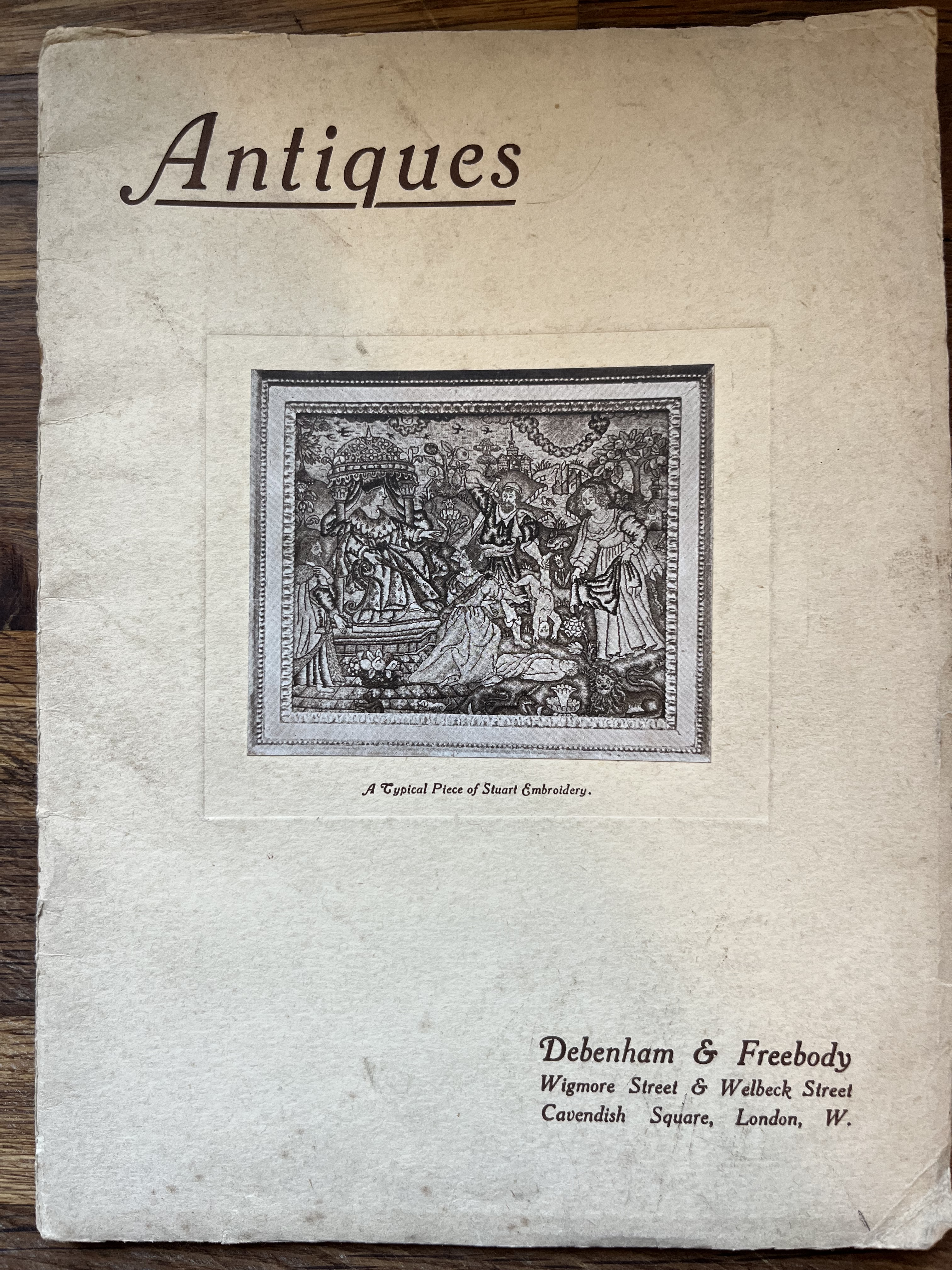
A recent addition to the corpus of antique dealer ephemera that the antique dealer project continues to gather is a rare sales catalogue produced by the London department store Debenham & Freebody in about 1910. The small paper catalogue (7.5 inches wide by 10 inches high) has 25 pages packed with images and listings of antiques that Debenham’s offered for sale.

Debenham & Freebody antiques sale catalogue, c.1910. Photograph, Antique Dealer Research Project, University of Leeds, 2025.

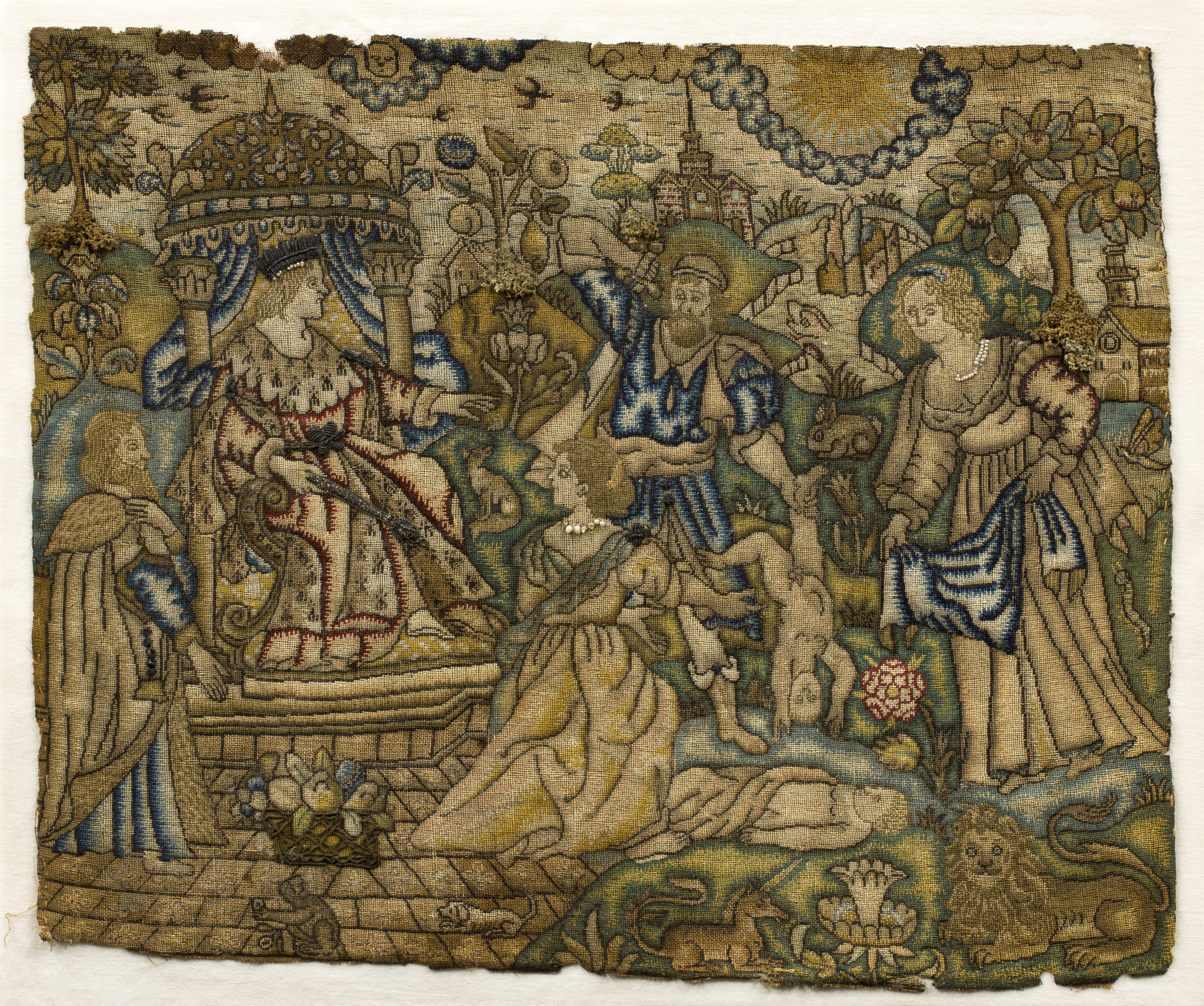
The Debenham and Freebody catalogue lists 246 items for sale, almost half of which are antique textiles, lace and embroideries, reflecting the keen interest in such objects in the early 20th century. Indeed, in the Introduction in the opening pages of the sales catalogue the writer emphasises the significance of women as consumers of antique textiles – ‘Ladies who are interested in home needle craft are informed that we have a very large number of quite inexpensive fragments and small pieces of brocades and galons suitable for making up into all kinds of fancy articles.’ Beyond these ‘fragments’ there were many rare items offered for sale, including rare ‘stumpwork’ embroideries and samples of antique lace (see below); the ‘Stuart Embroidered Picture, Subject, ‘Judgement of Solomon’ had a hefty price of £35.0.0. (equivalent at the time to as much as £28,000). The embroidery was also illustrated on the front of the sales catalogue, (see above) emphasising its importance.

Debenham & Freebody antiques sale catalogue, c.1910. Photograph, Antique Dealer Research Project, University of Leeds, 2025.

It seems likely likely that the ‘Stuart Embroidery’ illustrated in the Debenham & Freebody sales catalogue is the same one that is currently in the St. Louis Art Museum in Missouri in the USA. The subject is of course the same, but the addition of seed pearls around the necks of the two female figures to the centre and to the right suggests that the Debenham & Freebody embroidery and the St. Louis Art Museum example are the same. The St. Louis Museum of Art embroidery no longer has the giltwood frame (which was much later than the embroidery). The provenance for the St. Louis Art Museum embroidery suggests it was given to the museum in 1972 by Mrs. William A. McDonnell (Carolyn Vandergrift Cherry McDonnell), who married William A. McDonell (1894-1988) in about 1919; Carolyn’s husband was a prominent railroad executive and banker. It is not known who McDonnell purchased the embroidery from, but it is likely that it passed through other hands before it ended up in the USA.

The Judgement of Solomon, embroidery, 17th century. 7.1972, the Gift of Mrs. William A. McDonnell. Photograph, St. Louis Art Museum, Missouri, USA.

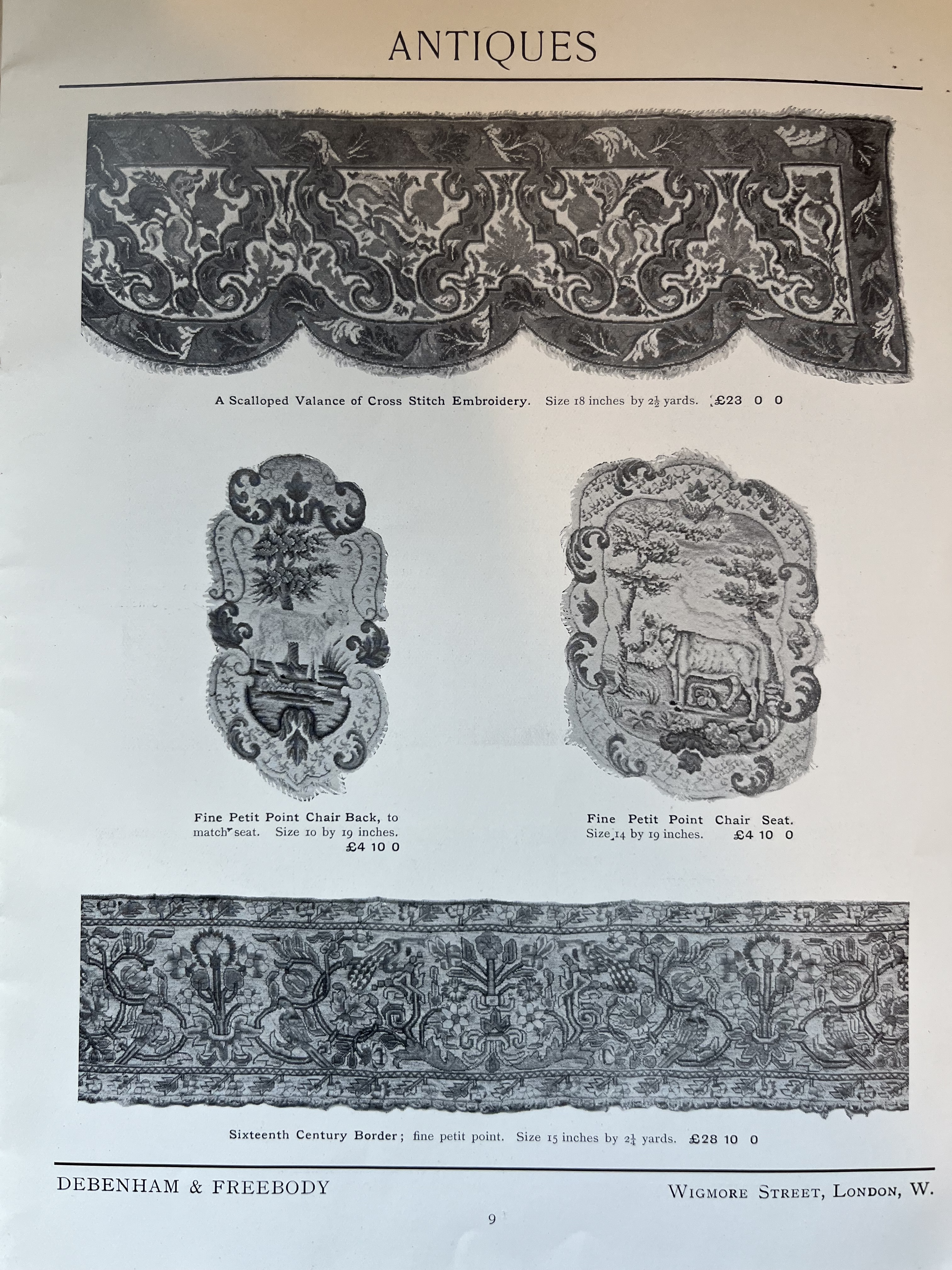
Other pages illustrate fragments suitable for embellishing antique furniture, or for display as relics of past crafts. The ‘Fine Petit Point Chair Back’ (£4.10.0) and ‘Chair Seat’ (£4.10.0) (see below) would potentially enhance an 18th century antique chair; or the ‘Sixteenth Century Border’ (£28.0.0.) (below) would be a fine addition to an antique oak interior, so fashionable at the time.

Debenham & Freebody antiques sale catalogue, c.1915. Photograph, Antique Dealer Research Project, University of Leeds, 2025.

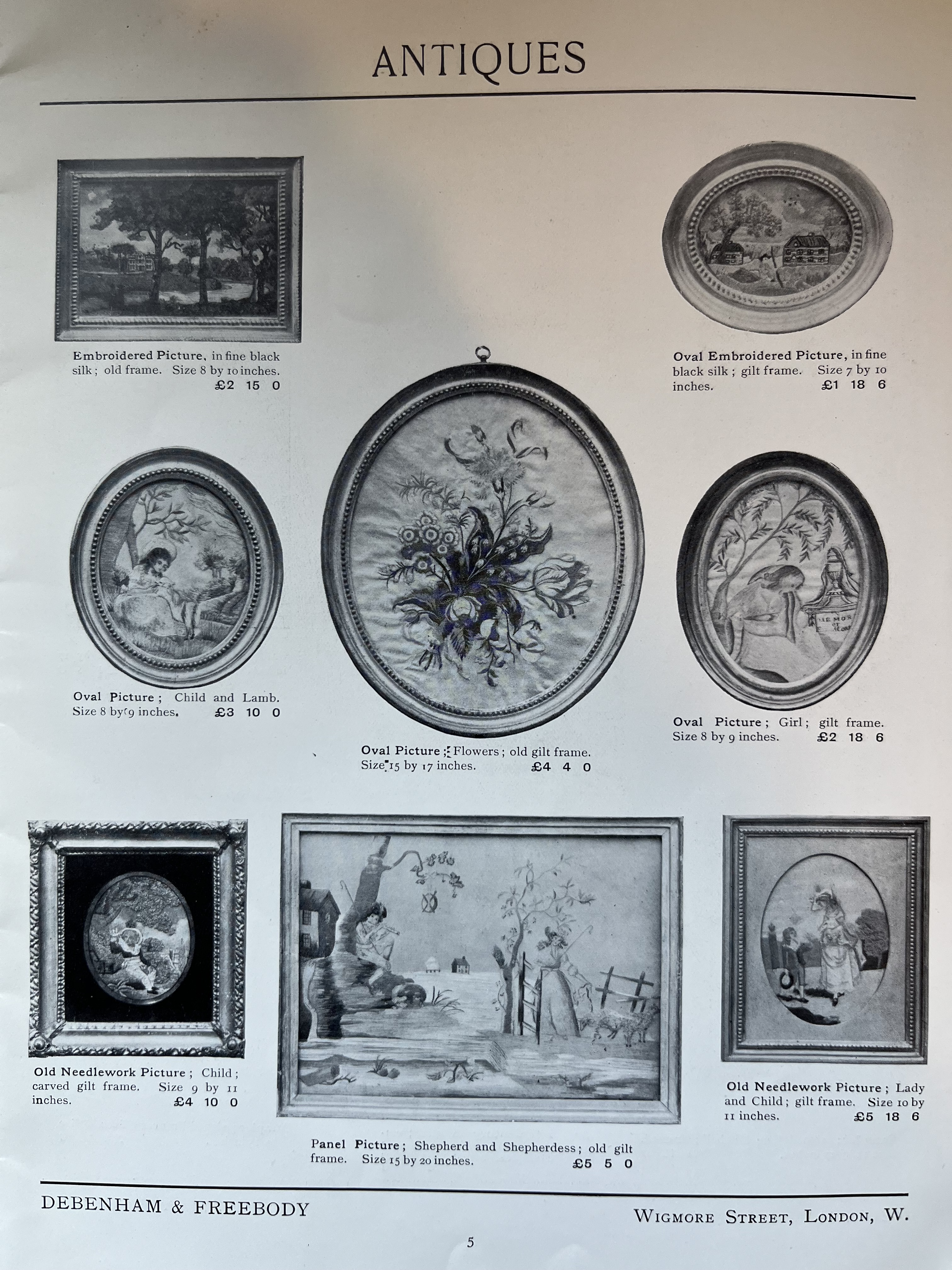
18th century, and even early 19th century needlework pictures (see below), also seemed to be very popular, keying into the 18th century and ‘Regency’ revivals that were generating interest in the period.

Debenham & Freebody antiques sale catalogue, c.1915. Photograph, Antique Dealer Research Project, University of Leeds, 2025.

As previous blog post have indicated – see our post on a sales catalogue produced by the furniture retailer Hampton & Sons (see April 2021) and the earlier Guest Blog Post by our friend Chris Coles on antiques and department stores (see November 2014) – from the early 1900s department stores were key locations for the sales of antiques. Debenham & Freebody for example opened their department store in Wigmore Street, London in about 1909 and had an antiques department in the store right from the start. Their antiques department seemed to have been a great success and they moved the department to a dedicated and larger section in their Welbeck Street store in 1923.

Debenham & Freebody, Wigmore Street, c.1917. Photograph copyright Historic England Archive.

The rare Debenham & Freebody sales catalogue is a significant addition to the antique dealer archives, and will be joining the other antique dealer archives at the Brotherton Library Special Collections at the University of Leeds in due course.

Mark

June 28, 2025

The 1932 Art Treasures Exhibition, London

A couple of months ago my friend and colleague Diana Davis very kindly sent me a link to a short black & white film of the 1932 Art Treasures Exhibition (thank you Diana!), and which obviously pricked my interest as it is full of objects that were being sold by antique dealers. You can watch the film in YouTube (it’s only 2 minutes 49 seconds long) HERE – the original film is part of the wide range of historic films and TV archives held by British Pathe (link HERE).

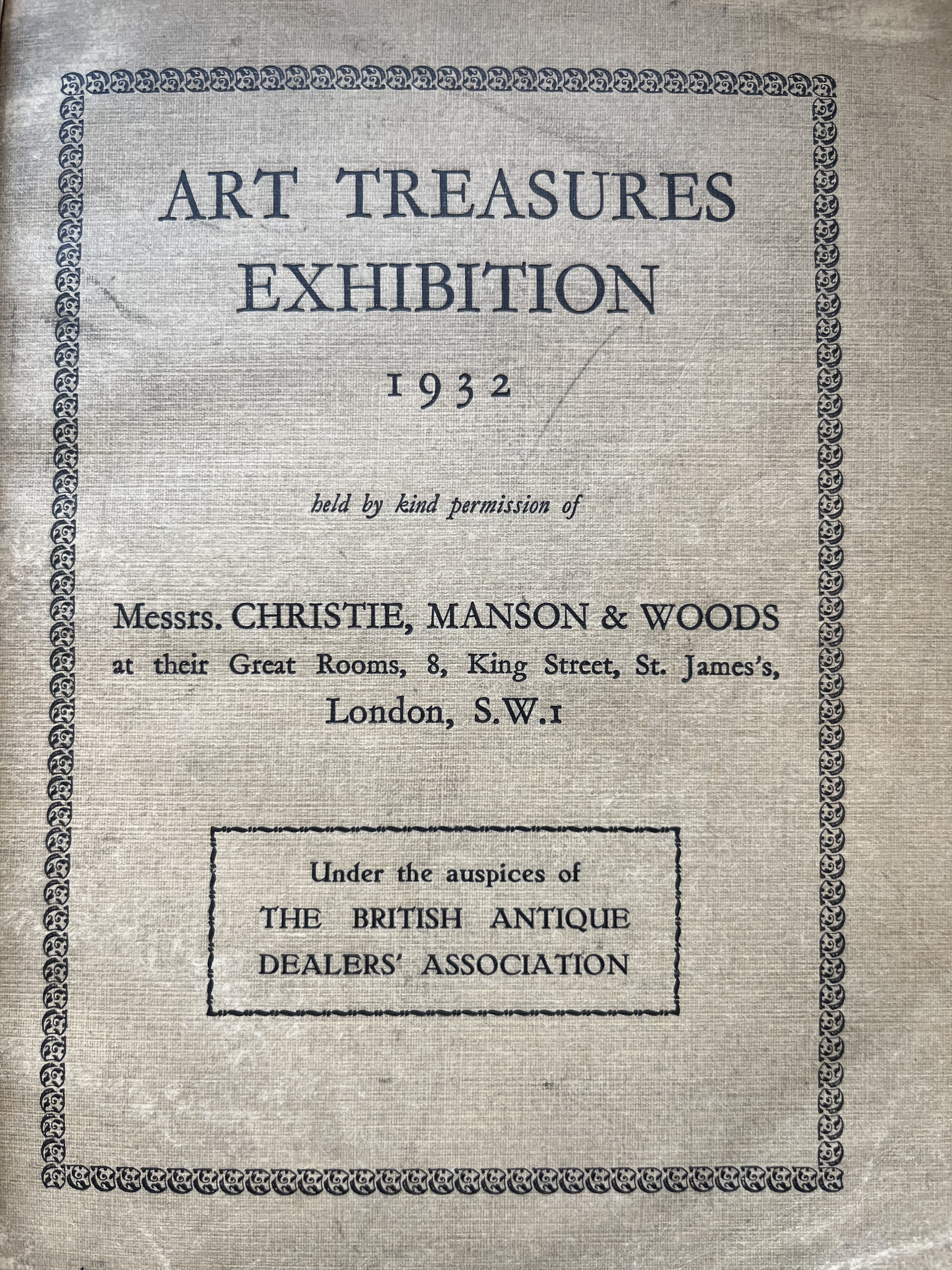
Art Treasures Exhibition 1932 catalogue, front cover. Photo Antique Dealers Research Project, University of Leeds.

The Art Treasures Exhibition, held at Christie’s auction rooms, King Street, London, 12th October to 5th November 1932 and organised by The British Antique Dealer’s Association (BADA) is fairly well-known amongst historians and those interested in the history of the art market. The 1932 exhibition followed on the success of the earlier BADA organised exhibition at Grafton Galleries, London in 1928. Both exhibitions prefigured the establishment of the Grosvenor House Antiques Fair (also known as ‘The Antique Dealers’ Fair’) which began in 1934 – (see also some older blog posts on The Grosvenor House Fair etc in January 31st 2021 and April 23rd 2015).

Fortunately, we have a copy of the 1932 Exhibition catalogue, so it’s possible to match up some of the objects in the film to those in the catalogue and find out which dealers are behind the objects, so I thought it would be an interesting exercise to do that!

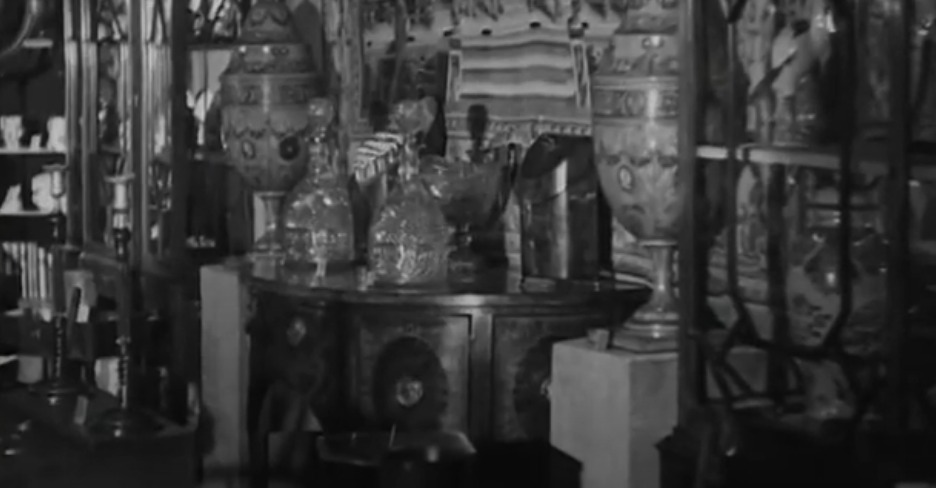
The film of the 1932 Exhibition is a fascinating period piece from the early 1930s, obviously created as a publicity newsreel for the exhibition. The narrator (unknown), guides the viewer to some of the highlights of the exhibition at the time, telling the background stories of some of the objects offered for sale by various antique dealers, but also offering a visual insight into the displays at the exhibition. Below, for example, is a screenshot of a general panning shot (do watch the YouTube film for effect) of one of the stands which appears to have a mixture of dealers’ objects – the large pair of urns are certainly item No.237 in the catalogue, ‘A pair of satinwood knife boxes, c.1790, originally made for Lord Northesk’ (the family seat is Ethie Castle, near Arbroath) and offered by the antique dealer Rice & Christy, Wigmore Street, London; the tapestry behind looks like it is No.285 ‘A Beauvais Tapestry, c.1790’, offered by The Spanish Art Gallery, Conduit Street, London; and the display cabinet to the left is certainly No.182 ‘A Chippendale China Cabinet, c.1765′ offered by M. Harris & Sons. So I guess this panning shot was of a collection of various dealers’ objects at the entrance to the exhibition, indicating the sheer range of things offered for sale?

Art Treasures Exhibition 1932, screenshot of general view.

The Exhibition had 1,380 objects, and the film obviously does not cover all of them, but there are 13 objects highlighted in the film, so for those that watch the film, here’s some information on the dealers who were behind the objects (and a little bit of information on where the objects are now, if it has been possible to trace them) – I’ll do this in the sequence of the objects highlighted in the film by the narrator:

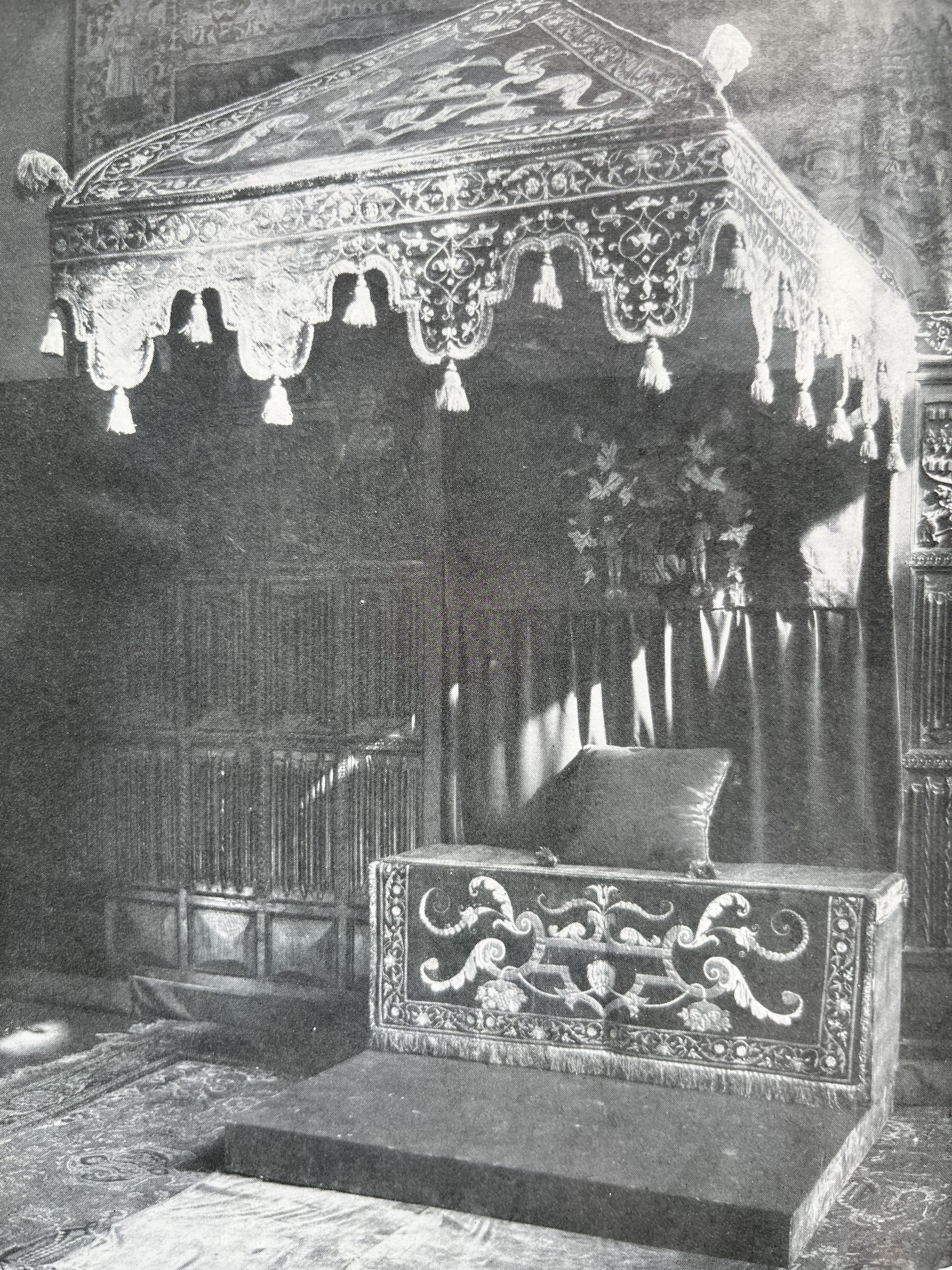
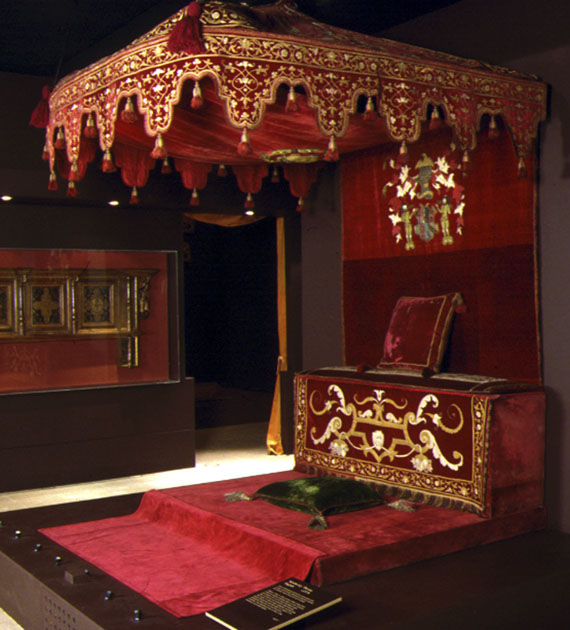
1st object – (see below) in the film the narrator spends a few moments on this object; it is also object No.1 in the catalogue: ‘An embroidered Throne used Queen Elizabeth, English 1578’; this was offered by the well-known London antique dealers Acton Surgey Ltd & Mallett & Son. Thanks to our friends William DeGregorio and Chris Jussel (in the USA) we know that the embroidered throne made its way into the collection of Sir William Burrell (1861-1958) and remains in the Burrell Collection in Glasgow (it is currently in storage at The Burrell – see below).

Art Treasures Exhibition catalogue 1932 – ‘An embroidered Throne used by Queen Elizabeth, English 1578’. Photograph, Antique Dealers Research Project, University of Leeds.
The ‘Kimberley Throne’, c.1554-1578, (14.217). The Burrell Collection, Glasgow. Photograph, The Burrell Collection, Glasgow.

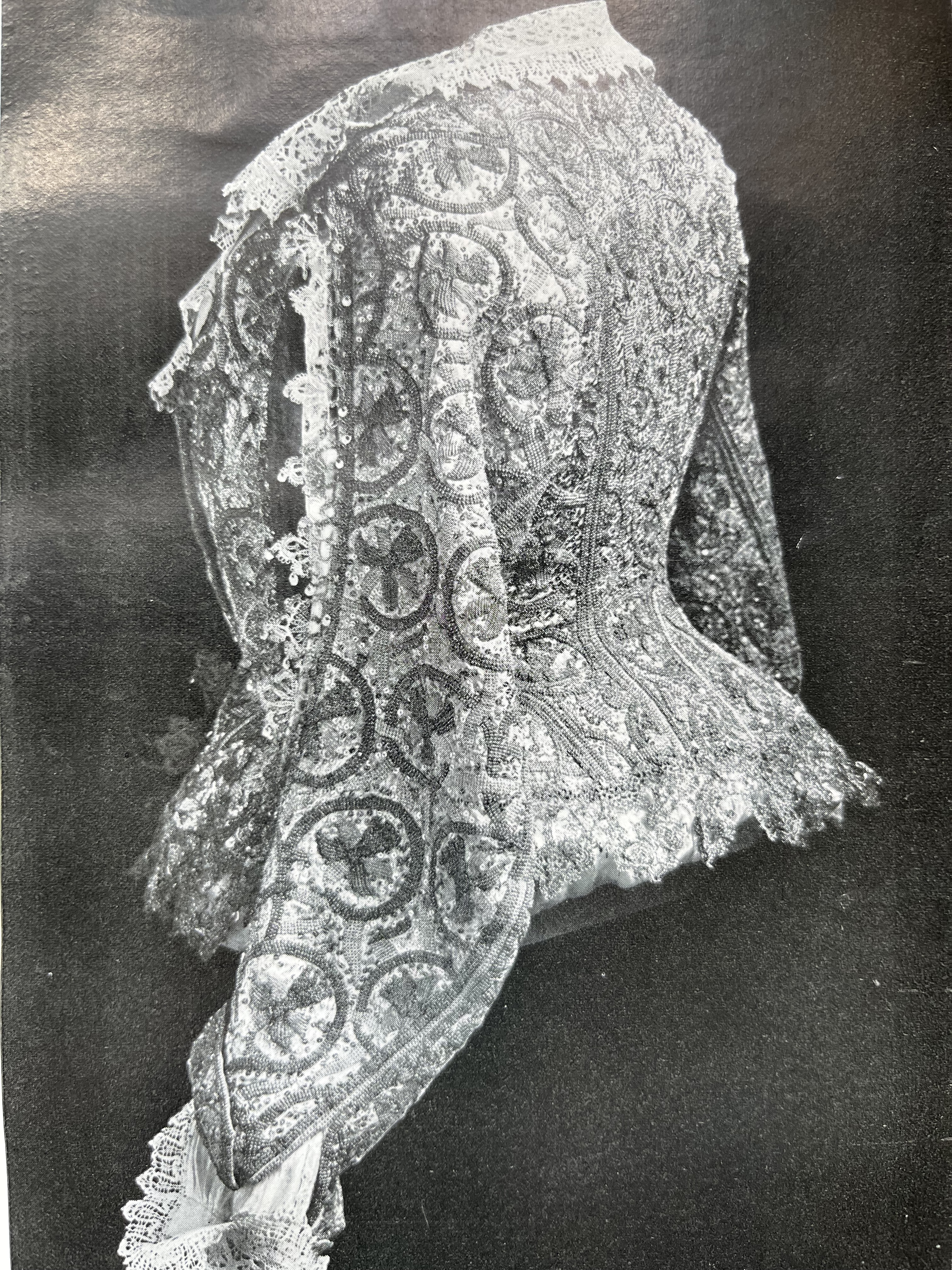
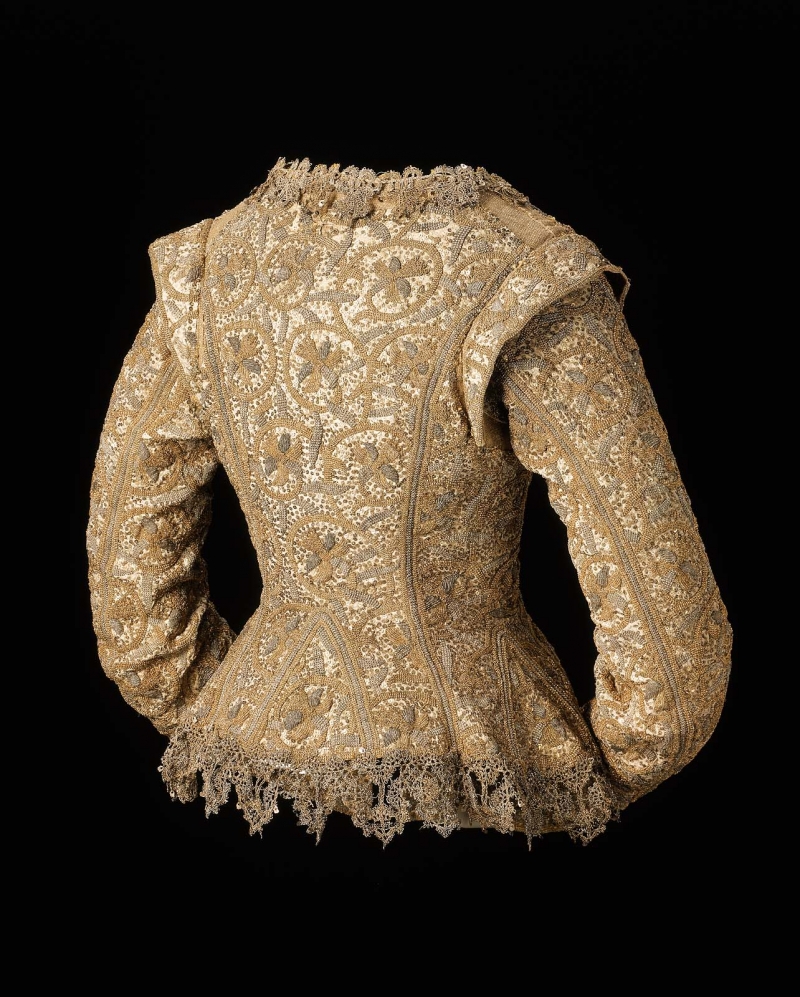
2nd object – (see below) mentioned by the narrator is No.2 in the exhibition catalogue, ‘A gold embroidered jacket, lace shirt, and gloves, English, late 16th century’; it was also offered by Acton Surgey Ltd; the jacket is now in the collections of Boston Museum of Fine Arts in the USA. It was purchased from Acton Surgey by the collector Elizabeth Day McCormick (1873-1957) in 1943 and gifted to the Boston MFA. It is not known what happened to the shirt or the gloves; and it has not also been possible to identify the ‘gold and enamelled jewel set with diamonds and rubies’ that the Narrator also mentions.

Art Treasures Exhibition catalogue 1932 – ‘A gold embroidered jacket, English, late 16th century’. Photograph, Antique Dealers Research Project, University of Leeds.
‘Women’s Jacket, English about 1610-15 with later alterations’. The Elizabeth Day McCormick Collection, Boston Museum of Fine Arts. 43.243. Image copyright Boston MFA.

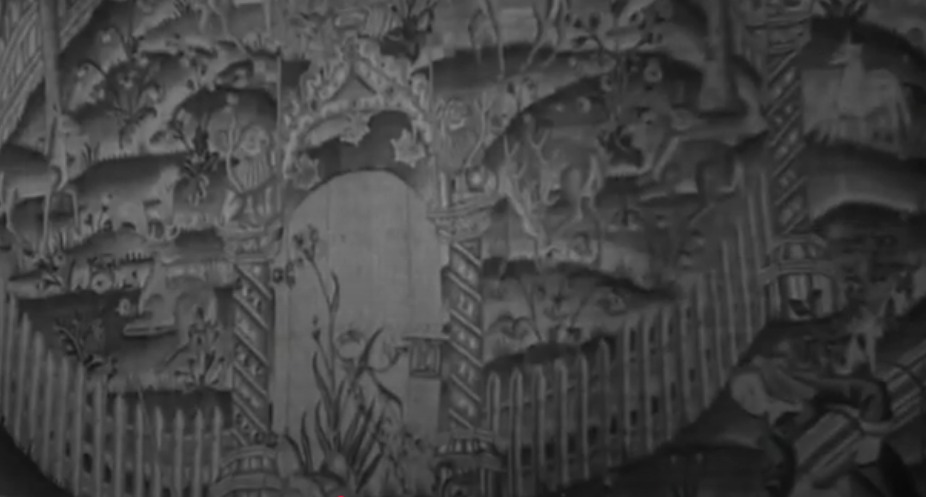
3rd object – (see below) the narrator describes a ‘Gothic tapestry, over 400 years old’, this is either No.270 or No.271 in the catalogue. Neither are illustrated in the catalogue, but are both described in the catalogue as ‘A panel of Gothic tapestry, Franco-Flemish, circa 1500’ and both are offered by The Spanish Art Gallery Ltd, Conduit Street, London. It has not been possible to trace the present whereabouts of the tapestry.

Art Treasures Exhibition 1932 film, screenshot of ‘Gothic tapestry’.

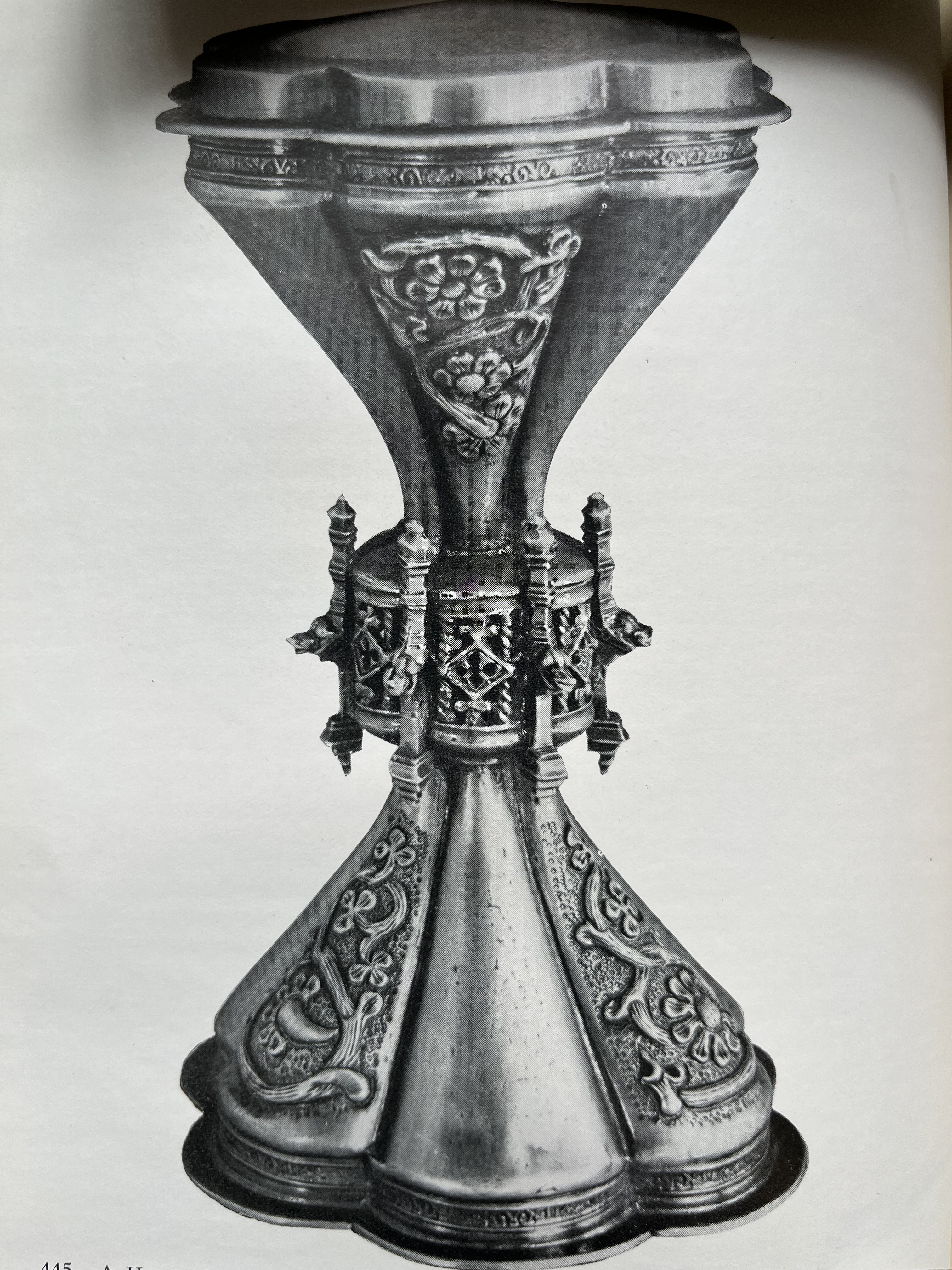
4th object – (see below) this is described by the narrator in the film as ‘a fine specimen of a Henry VII salt-cellar in hour-glass form’. This is No.445 in the catalogue; ‘A Henry VII silver-gilt standing salt, London 1505’. It is also illustrated in the catalogue, and was offered by the antique silver dealers Crichton Brothers, then trading at 22 Old Bond Street, London. It has not been possible to trace the Henry VII salt – the narrator in the film suggested that it was the only known piece of silver with the date 1505, so I guess if it does still exist, it must be easily identifiable? (our friend Chris Coles spotted the salt in a 1969 exhibition catalogue produced by The Goldsmiths Company….so perhaps the salt is in the collections of The Goldsmiths – thanks Chris!)

Art Treasures Exhibition catalogue 1932 – ‘A Henry VII silver-gilt standing salt, London 1505’. Photograph, Antique Dealers Research Project, University of Leeds.

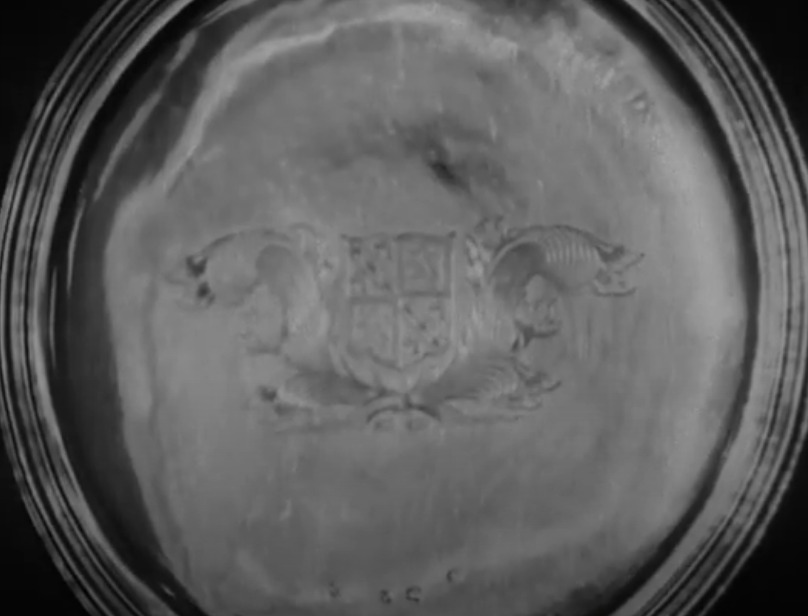
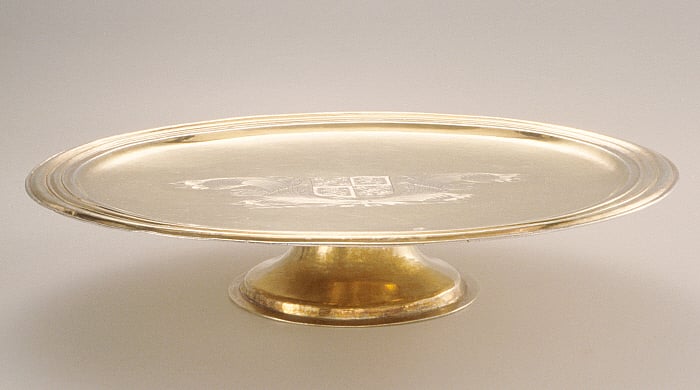
5th object – (see below) the narrator describes a ‘stand for a porringer or tankard….previously owned by the diarist Samuel Pepys’. This is No.618 in the catalogue – ‘The Charles II silver-gilt ‘Pepys’ tazza, London 1678′. It is not illustrated in the catalogue, but was also offered by the antique silver dealer Crichton Brothers. The ‘tazza’ is now in the collections of The Clark Institute in Massachusetts in the USA. It was commissioned by Samuel Pepys (1633-1703) in 1678 and was sold at Sotheby’s on 1st April 1931 (Lot 3) to Crichton Brothers, who appear to have sold it to the American silversmith and art curator Peter Guille of New York, who sold it to Robert Sterling Clark in 1946.

Art Treasures Exhibition 1932 film, screenshot of ‘Pepys’ ‘tazza”.
Footed Salver, silver-gilt, 1678/79. Clark Institute, 1955.298. Image copyright Clark Institute.

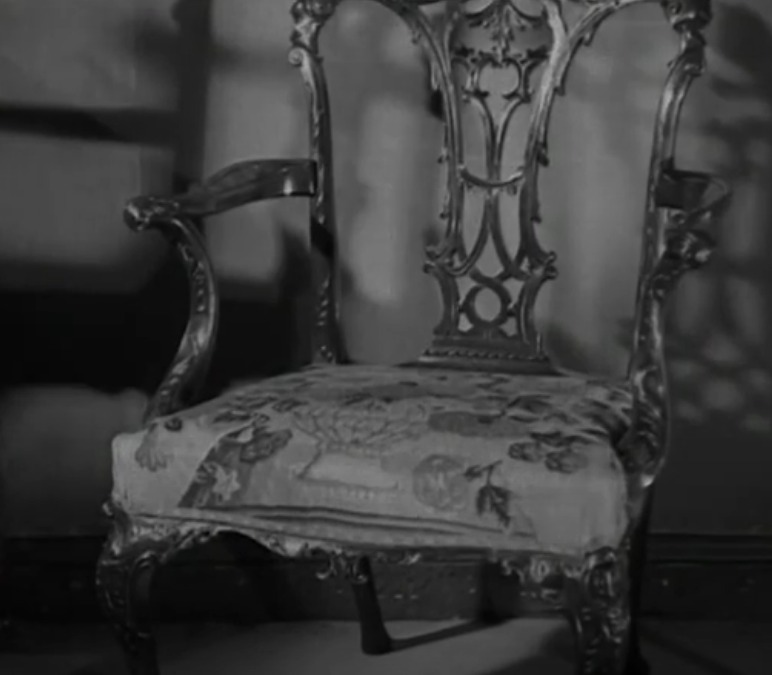
6th object – (see below) described by the narrator as a ‘Chippendale chair’, but I can’t find this chair (or even a set of them) listed in the exhibition catalogue; perhaps it was a late edition to the exhibition?

Art Treasures Exhibition 1932 film, screenshot of ‘Chippendale chair’.

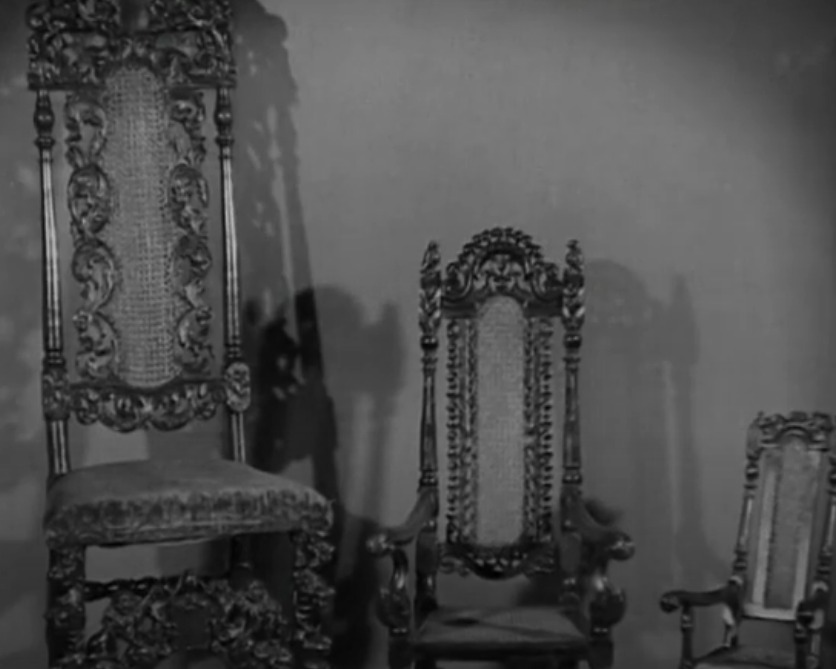
7th object – (see below) the narrator describes 3 walnut chairs, ‘made about 1690’. There are a number of such chairs in the exhibition catalogue, but without a photograph of them from the catalogue it has not been possible to identify which of the chairs the narrator is referring too? However, the centre chair, could be No.50 in the catalogue, ‘A William and Mary armchair of small size, circa 1690’, and said to have ‘traditionally been used by Queen Anne’; it was offered for sale by the well-known dealers Moss Harris & Sons.

Art Treasures Exhibition 1932 film, screenshot of ‘Walnut chairs’.

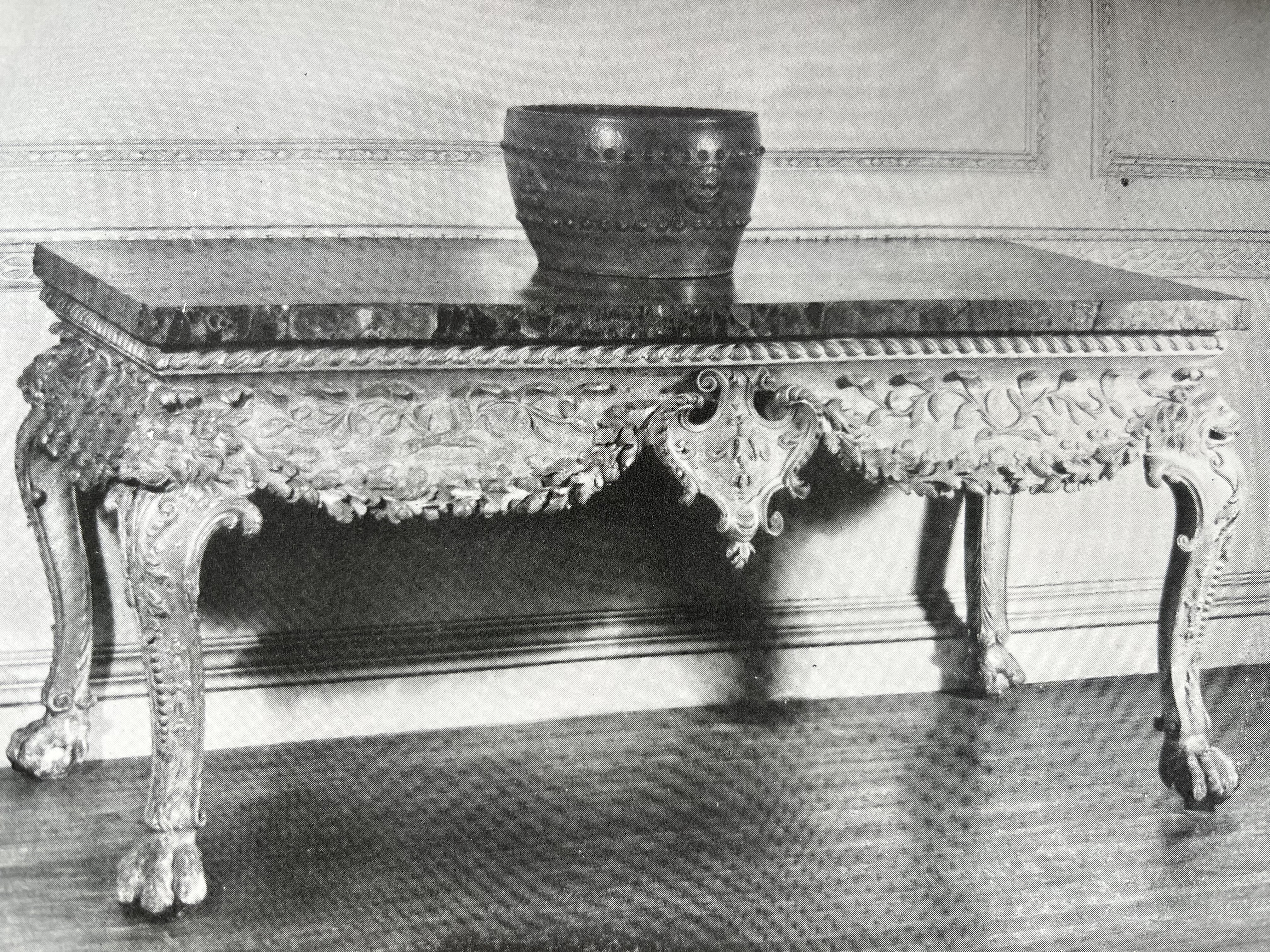
8th object – (see below) is described by the narrator as ‘a fine gesso table, formerly at Stowe’, is certainly No.121 in the Exhibition catalogue; it is illustrated and described as ‘A George II gilt side table…formerly at Stowe’ and was offered for sale by the antique dealer and interior decorator Gregory & Co., then trading at 27 Bruton Street, London. The table was originally sold at the auction sale of the contents of Stowe House in 1848, following the bankruptcy of the Duke of Buckingham.

Art Treasures Exhibition catalogue 1932 – ‘A George II gilt side table’. Photograph, Antique Dealers Research Project, University of Leeds.

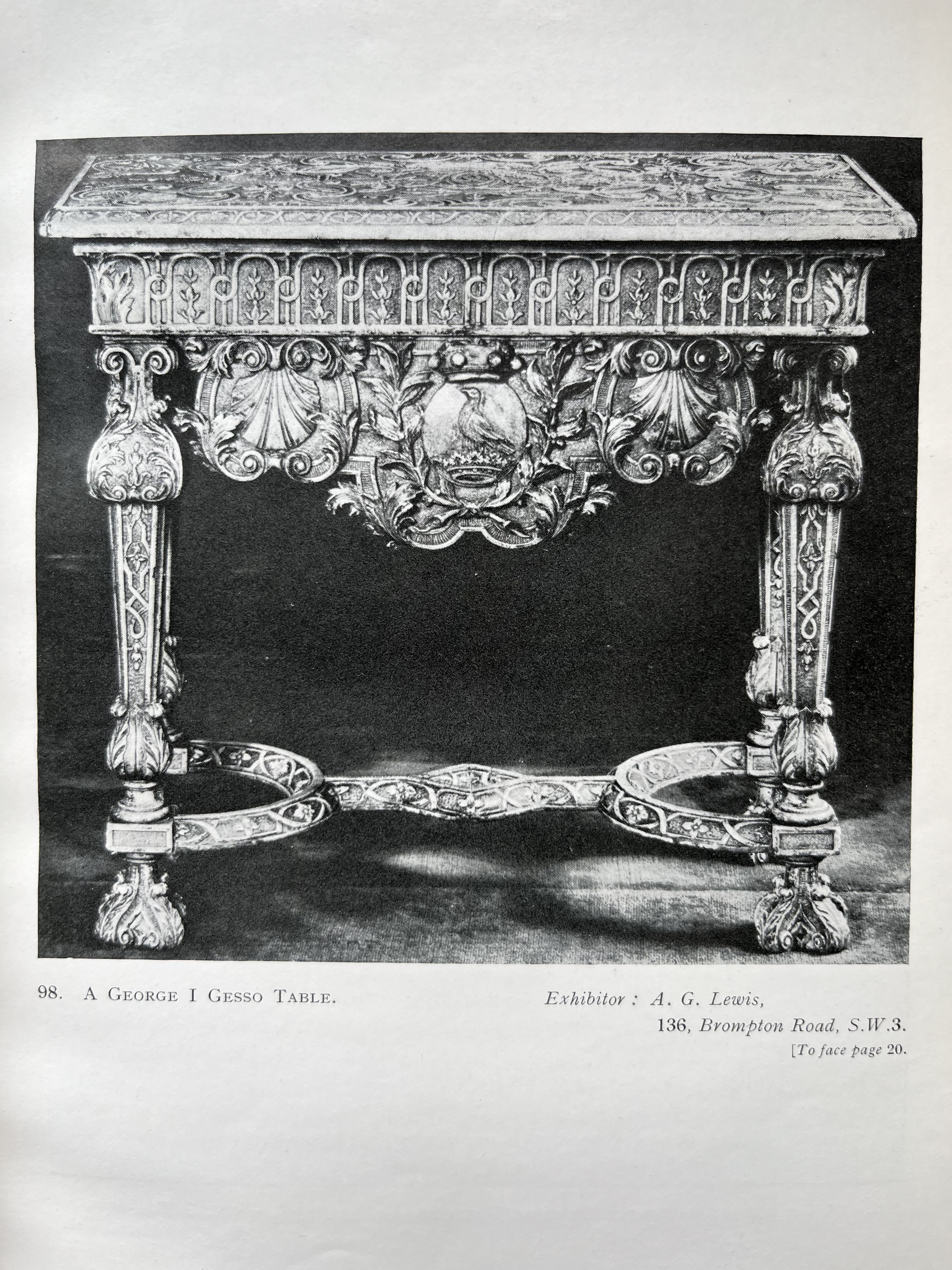
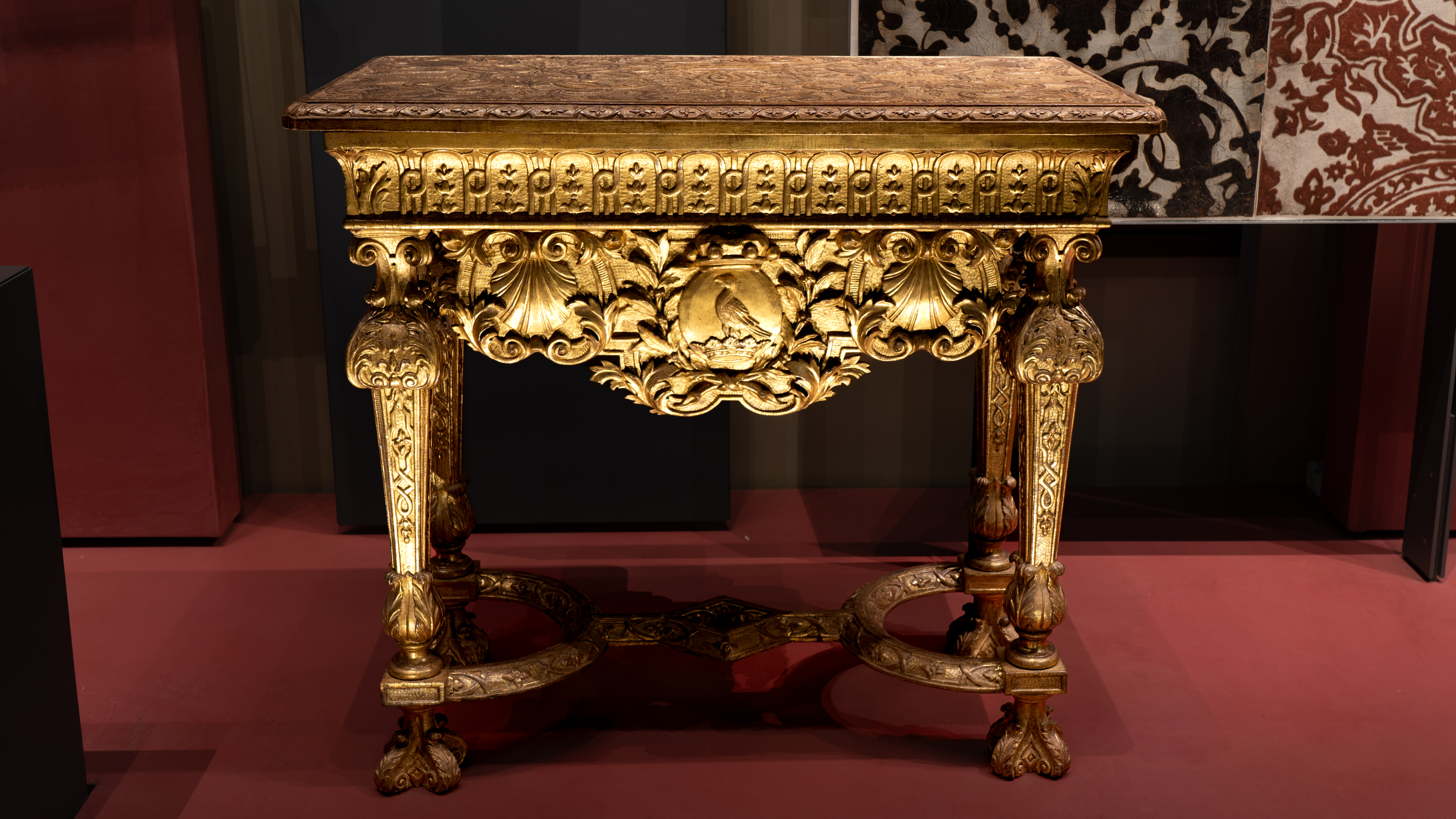
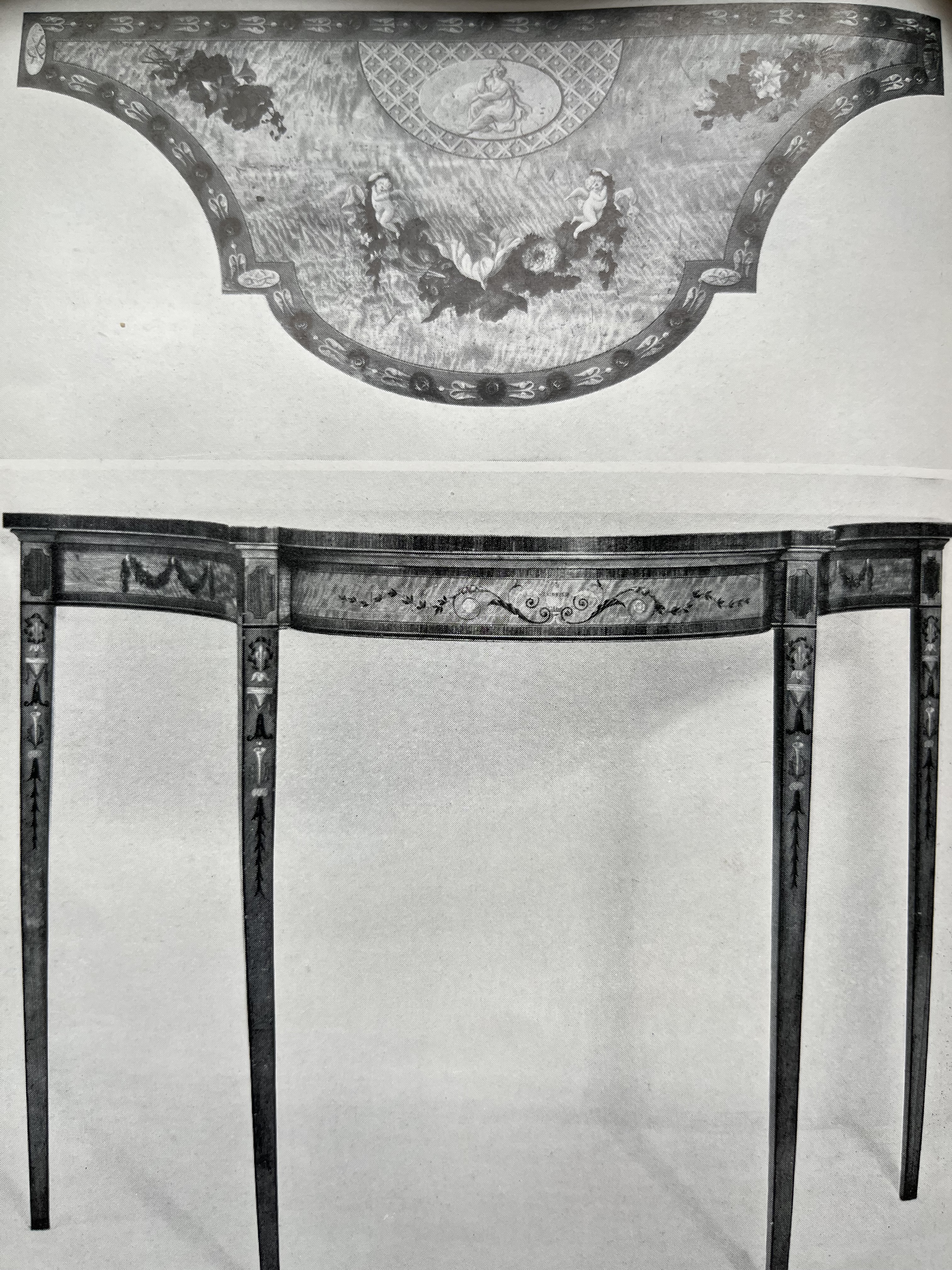
It has not been possible to trace the whereabouts of the side table, but interestingly, another giltwood side table from Stowe was on display at the 1932 Exhibition; No.98, ‘A George I gilt gesso table, circa 1715’, and offered for sale by the antique dealer A.G. Lewis, Brompton Road, London. This table (see below) is one of a pair (possibly three?) side tables associated with Stowe. In 1930, one table, (perhaps the same one in the 1932 exhibition?) was in the stock of the antique dealer Kent Galleries, Conduit Street (Kent Gallery are associated with The Spanish Gallery who offered the ‘Gothic tapestry’ at the 1932 Exhibition). One of the tables (perhaps the same one?) is now in the V&A Museum (see below too). The V&A table was sold to the V&A by the antique dealer Phillips of Hitchin in 1947, having been through the hands of a number of other antique dealers, including John Bly of Tring and Edinborough of Stamford. All of this highlights the significance of inter-dealer trading that sustained the antique trade for much of the 20th century.

Art Treasures Exhibition catalogue 1932 – ‘A George I gilt gesso table’. Photograph, Antique Dealers Research Project, University of Leeds.
The Stowe side table at the V&A Museum. Photograph, Year of the Dealer project, University of Leeds.

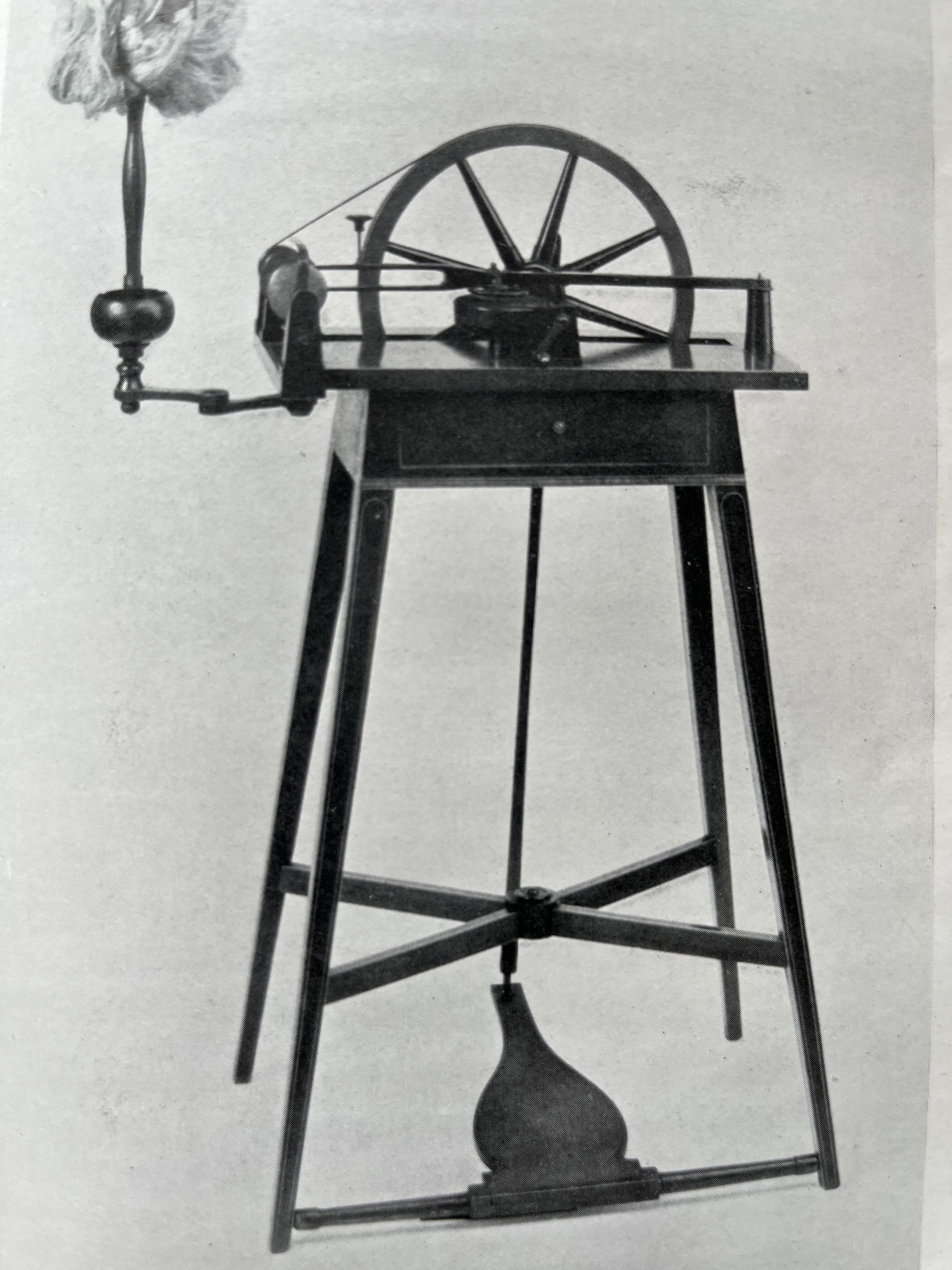
9th object – (see below) the narrator describes a ‘spinning wheel, perfectly usable today’ as the next object. It is a ‘Sheraton spinning wheel, circa 1790….made by John Planta, Fulneck’; it was No.231 in the catalogue and was illustrated and offered for sale by the antique dealer Law, Foulsham & Cole, South Molton Street, London. There are several such spinning wheels by Planta, who was based in Leeds in the late 18th century – one example (although not the one in the 1932 Exhibition), remains in the collections at Temple Newsam, near Leeds.

Art Treasures Exhibition catalogue 1932 – ‘A Sheraton spinning wheel, circa 1790’. Photograph, Antique Dealers Research Project, University of Leeds.

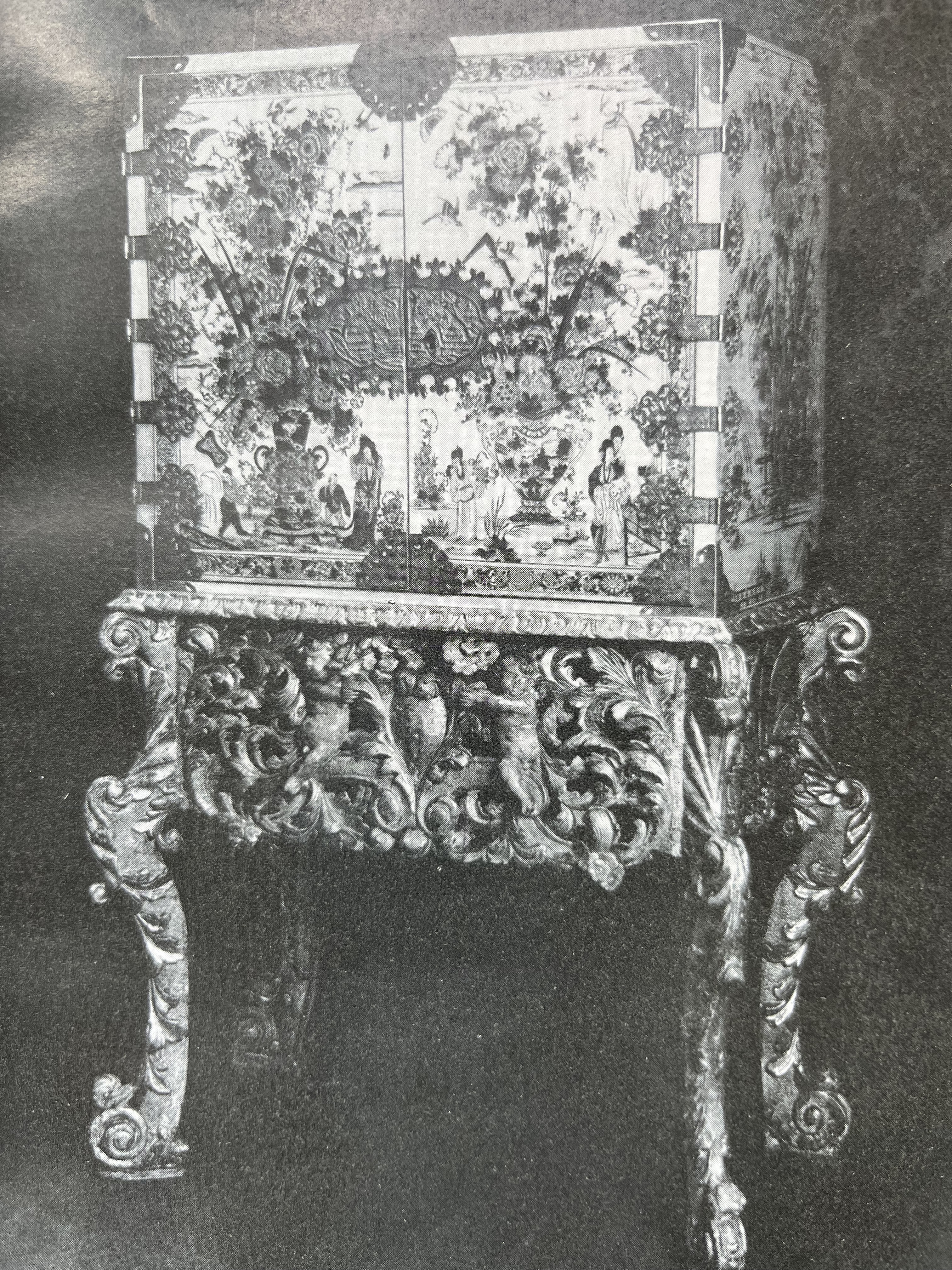
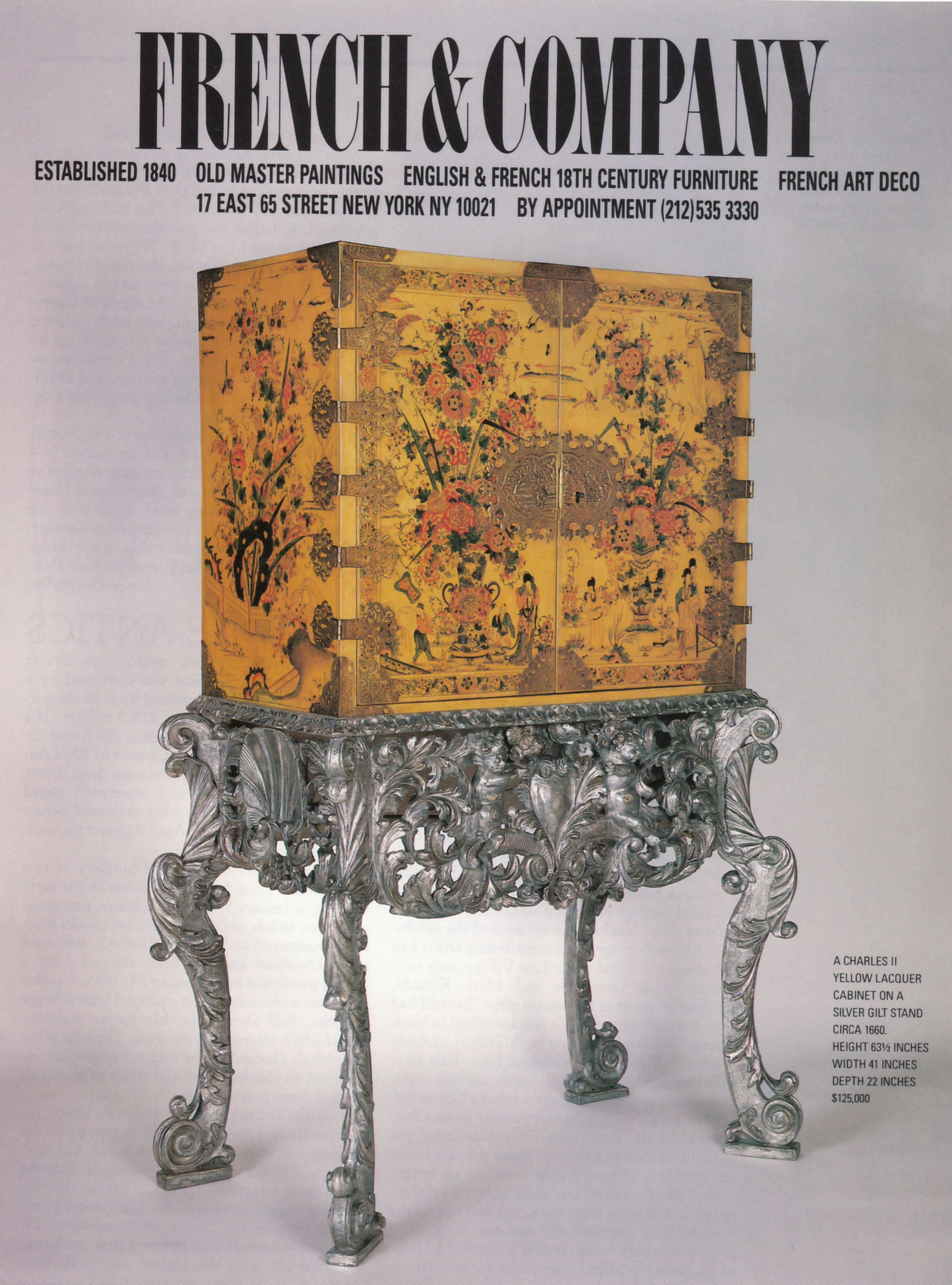
10th object – (see below) the narrator describes as a ‘rare cream lacquer cabinet, made towards the end of the 17th century’. This was No.31 in the catalogue, ‘a Charles II lacquer cabinet, circa 1680’ and was offered for sale by the dealer E.H. Benjamin, 39 Brook Street, London. White lacquer cabinets are the rarest of lacquer furniture, but even so it has not been possible to trace the cabinet – perhaps it has been lost? (Chris tells us that the cabinet on stand was in stock with the American antique dealers’ French & Co in 1987 (see below), so perhaps the cabinet is still in the USA?)

Art Treasures Exhibition catalogue 1932 – ‘A Charles II lacquer cabinet, circa 1680’. Photograph, Antique Dealers Research Project, University of Leeds.
French & Co advert, 1987. Image from Chris Coles.

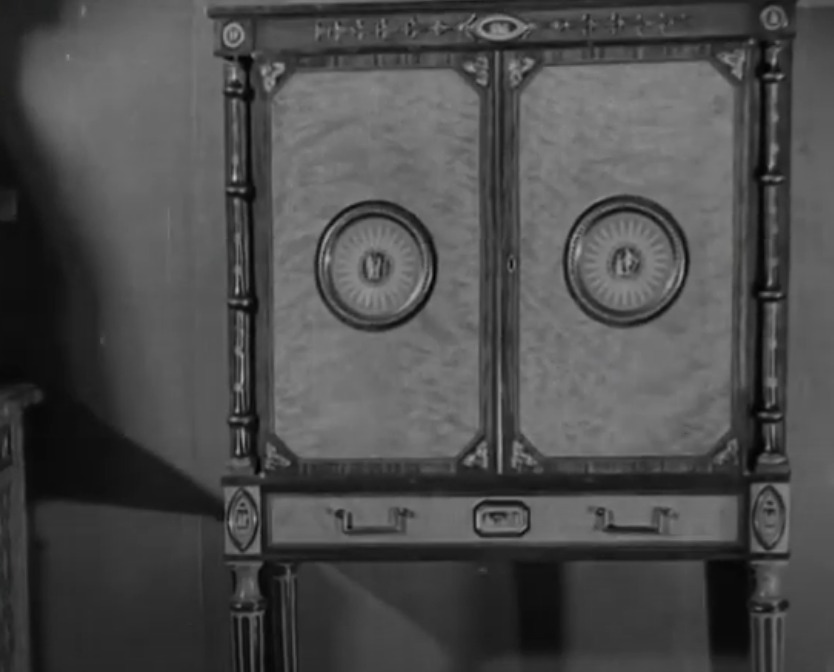
11th object – (see below) the narrator describes another cabinet, this time ‘a fine Adam satinwood example’ – he mentions that ‘it was purchased by the Queen at her recent visit to the exhibition’ (this would be Queen Mary, a very well-known collector of antiques). The cabinet is No.205 in the catalogue, described as ‘an Adam satinwood cabinet, circa 1780’, but is not illustrated; it was offered for sale by the antique dealer Mallet & Sons, one of Queen Mary’s favourite antique dealers. I can’t find the cabinet in Royal Collections, so perhaps the cabinet was sold from the collections or given away or was destroyed?

Art Treasures Exhibition 1932 film, screenshot of ‘Adam satinwood cabinet’.

12th object – (see below) the narrator describes ‘a lovely satinwood side table’, ‘one of Lord Nelson’s gifts to Lady Hamilton’. This is one of 3 tables on display at the exhibition, No.241, ‘a set of three satinwood tables, circa 1795’; they were illustrated and were offered for sale by the dealer A.G. Lewis. Like the film, the catalogue mentions that the tables were presented by Lord Nelson to Lady Hamilton. Given the provenance, it’s surprising I can’t find them anywhere? Two of the tables were in the collection of Arthur Sanderson (1846-1915), the well-known collector in Edinburgh; they are listed in the auction sale catalogue of Sanderson’s collection sold by Knight, Frank & Rutley, Hanover Square, London, June 14th-16th 1911 as Lot 540 ‘A PAIR OF SHERATON SHAPED FRONT SIDE-TABLES, which (together with Lot 541 A SHERATON BOOKCASE) were ‘said to have been made by Sheraton for Lord Nelson and given by him to Lady Hamilton at Naples’; (our friend Chris Coles tells me that the Nelson tables were in the collection of the antique dealer George Stoner (of Stoner & Evans) in 1912; and that one of the tables was in the stock of Moss Harris & Sons in 1935; Chris rightly suggests that as the three tables don’t exactly match, they are more likely to have been separated – thanks again Chris!)

Art Treasures Exhibition catalogue 1932 – ‘A set of three satinwood side tables, circa 1795’. Photograph, Antique Dealers Research Project, University of Leeds.

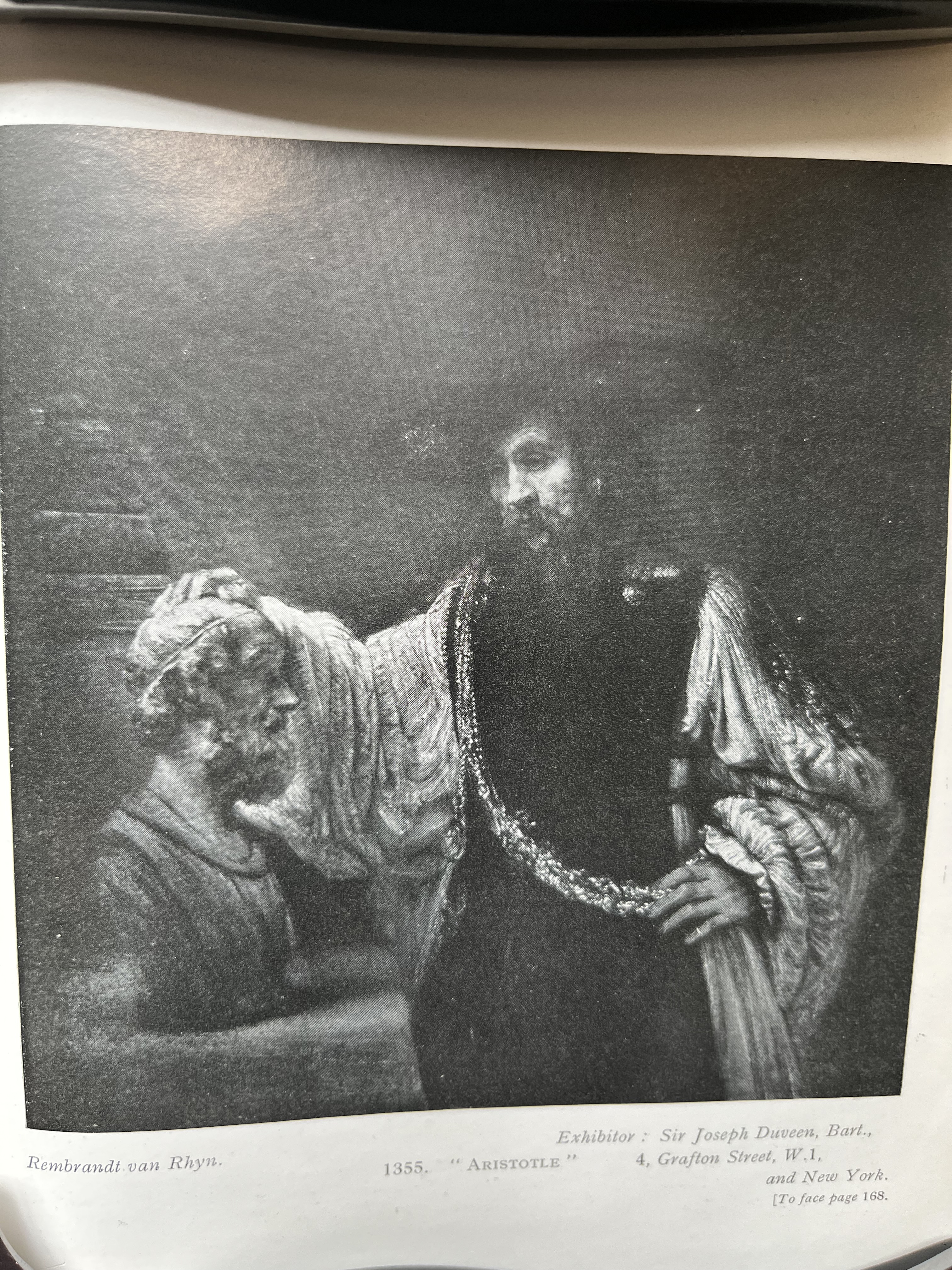
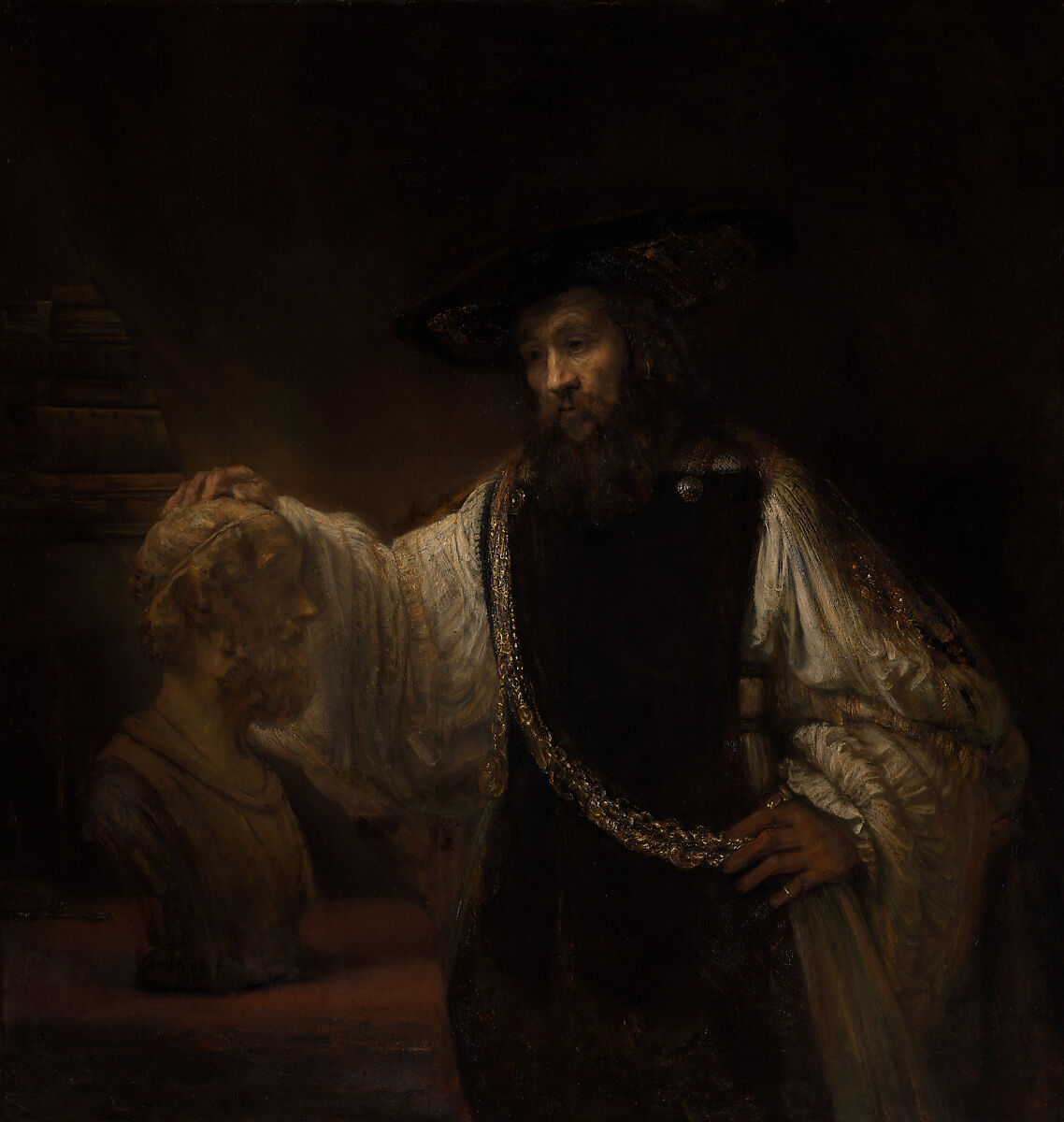
Finally, 13th object – the narrator highlights that this object (a painting by Rembrandt) is ‘the most valuable object here’. It is No.1355 in the exhibition catalogue, ‘Rembrandt van Rhyn (1606-1669), ‘Aristotle’, signed and dated 1653′. It was offered for sale by the world-famous art dealer Joseph Duveen (1869-1939). Duveen bought and sold the painting several times in the decades before the 1932 exhibition. He sold it to the art collector Alfred W. Erickson (1876-1934) in 1928 for $700,000, before buying it back and selling it to Erickson again in the mid 1930s for $590,000. It is now in the collections at the Metropolitan Museum of Art in New York, where it has been since 1961.

Art Treasures Exhibition catalogue 1932 – ‘Rembrandt van Rhyn….’Aristotle’. Photograph, Antique Dealers Research Project, University of Leeds.
Rembrandt (Rembrandt van Rijn) Aristotle with the bust of Homer (1653). Metropolitan Museum of Art, New York. 61.198. Image copyright Metropolitan Museum of Art, New York.

The film of the Art Treasures Exhibition 1932, together with the catalogue of the exhibition, gives a fascinating insight into the publicity for one of the major commercial art exhibitions of the period and is a further demonstration of the significance of the antique trade in the circulation and consumption of antiques (and paintings) and their role in the development of public museum collections – and thanks again to Diana for sending on the link to the film!

Mark
November 30, 2024

Remembering Robin Kern (Hotspur Ltd)

It is with very great sadness that we heard that Robin Kern sadly passed away on 2nd November. We have our own reflections on Robin and on the antique dealing business of Hotspur further below, but Chris Coles, who undertook our oral history interview with Robin back in 2016, has also composed a personal tribute to Robin.

Robin Kern, of Hotspur Limited, in 1999. Photograph courtesy of Robin Kern.

A Personal Tribute to Robin Kern from Chris Coles

Mark has very kindly allowed me to write a few words about Robin Kern. I first met Robin whilst still working at the British Museum. I had fortuitously seen an advert in the Antiques Trade Gazette that Mark had placed, asking for volunteers for the Antique Dealers Project. Thankfully I applied and was accepted and Mark very kindly allowed me to conduct some of the oral history interviews. One of those interviews was with Robin Kern at his beautiful home in Notting Hill. I had previously met Robin some years before at his premises in Kinnerton Mews, having already closed the Lowndes Street shop. I had actually visited him as a result of a visitor to my department at the BM who had told me that she was researching dummy boards. I knew that Robin had a pair in stock at that time and suggested that she went to see him. She emailed me afterwards to say how well she had been treated and that I should go and see him myself and I did. This bringing together of academics and researchers and members of the trade was entirely typical of the way that Robin conducted himself and it was no surprise at all that some of his best friends, and greatest clients, included the likes of Christopher Gilbert buying for Temple Newsam and Sir Nicholas Goodison the expert on Matthew Boulton and barometers. As John Hill said so perfectly in his eulogy at Robin’s funeral
‘He was a gifted mentor, using his passion for diplomacy and his velvet touch……Robin and Brian built a strong bond of friendship and trust between like-minded souls and Hotspur was to feel a bit like a private members club’.

When I interviewed Robin for the project he spoke with understandable pride about some of the many famous private collections he had helped to form such as those for the McAlpine family, Jon Gerstenfeld, Fred Krehbiel and Jon Bryan. It is no exaggeration to say that Hotspur took the marketing of purely English furniture and works of art to a new level amongst the trade and virtually every great collection of such pieces will include something that passed through the firm’s hands at one stage or another.

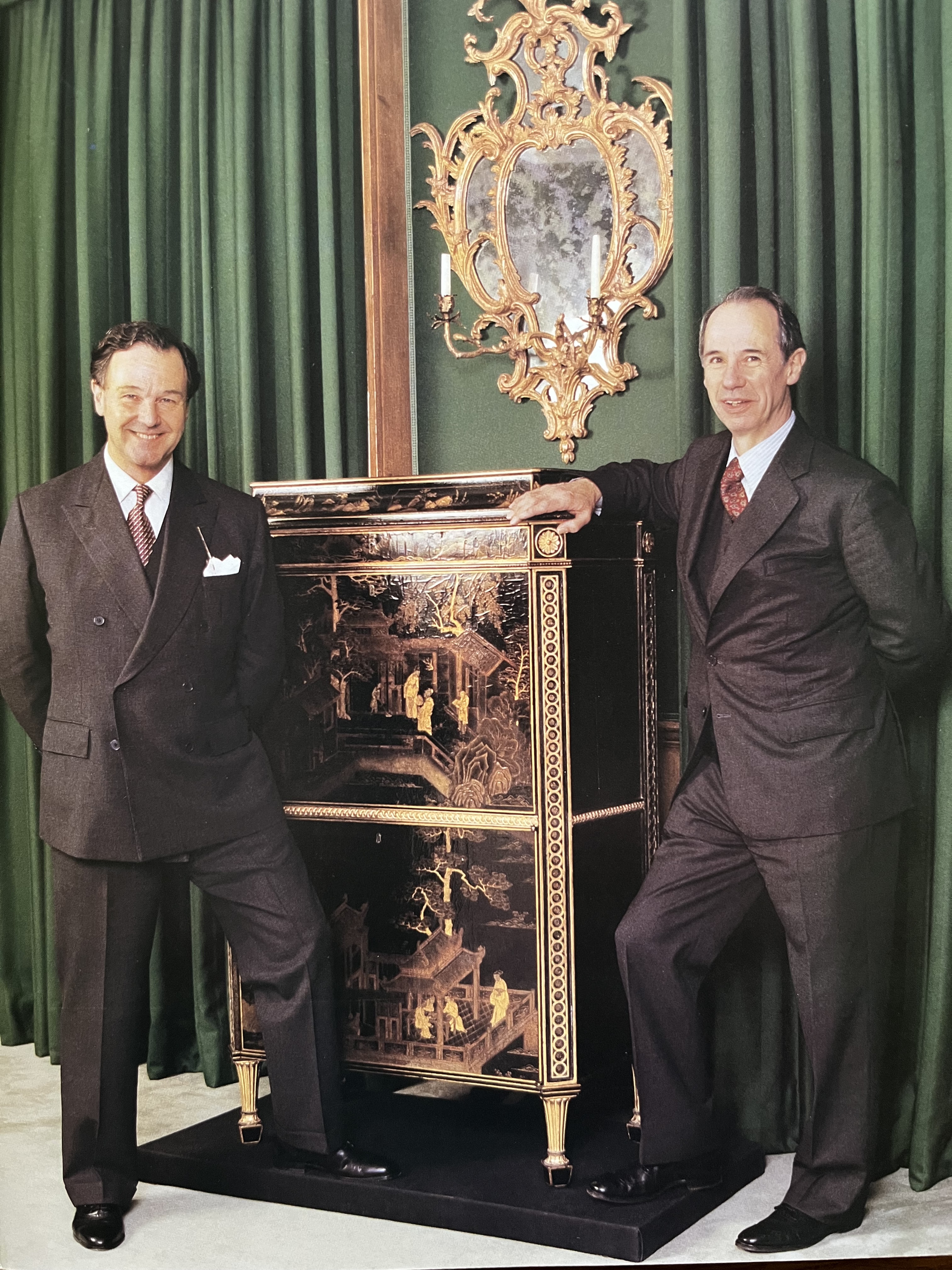
When conducting the oral history interviews, it was always our policy to get a photograph of the interviewee for use in the relevant section on the website. Robin was insistent that we use the image of him and his brother Brian with the Chippendale lacquer secretaire, now at Temple Newsam (see photograph below), that featured in the Hotspur anniversary book. He didn’t want anyone to be under the impression that the firm’s success was down to him alone and wanted Brian, who had already tragically passed away by that time, to get his full share of the credit. The two brothers took over running the firm in the most difficult of circumstances, both of their parents having been killed in a tragic car crash. Under the brothers’ stewardship, however, the firm flourished and moved on to the next level and the respect and affection for Robin was obvious from the remarkable turnout for his funeral which was attended by almost everyone involved in the current high end furniture trade and plenty in other branches of the antiques trade as well.

Robin’s generosity towards the Antique Dealers Project was cemented by his decision to give all of the remaining copies of the Hotspur anniversary book to Mark for use as university prizes and this, again, was typical of his outlook in life, always trying to help others and never hinder.
All of us involved in the furniture trade in Britain and America owe a huge debt of gratitude to Robin for raising the profile and standard of dealing in our area and for his personal kindness and generosity. He was a titan of the trade who will be sadly missed and I send my condolences to his widow Odile, herself also a great dealer, and the rest of the Kern family.

Robin Kern (1938-2024) – Thank you Chris for your contribution to the Antique Dealers Research Blog. Robin’s obituary was also published in the Antiques Trade Gazette (ATG 23rd November 2024), p.79 (composed by his friend, Simon Phillips of Ronald Phillips Limited, London). Below are my own reflections on Robin and the significance of the antique dealers’ Hotspur Limited.

Robin Kern with his brother Brian at Hotspur with the black lacquer secretaire from Harewood House, Yorkshire, sold to Temple Newsam, Leeds, in 1999. Photograph, Robin Kern.

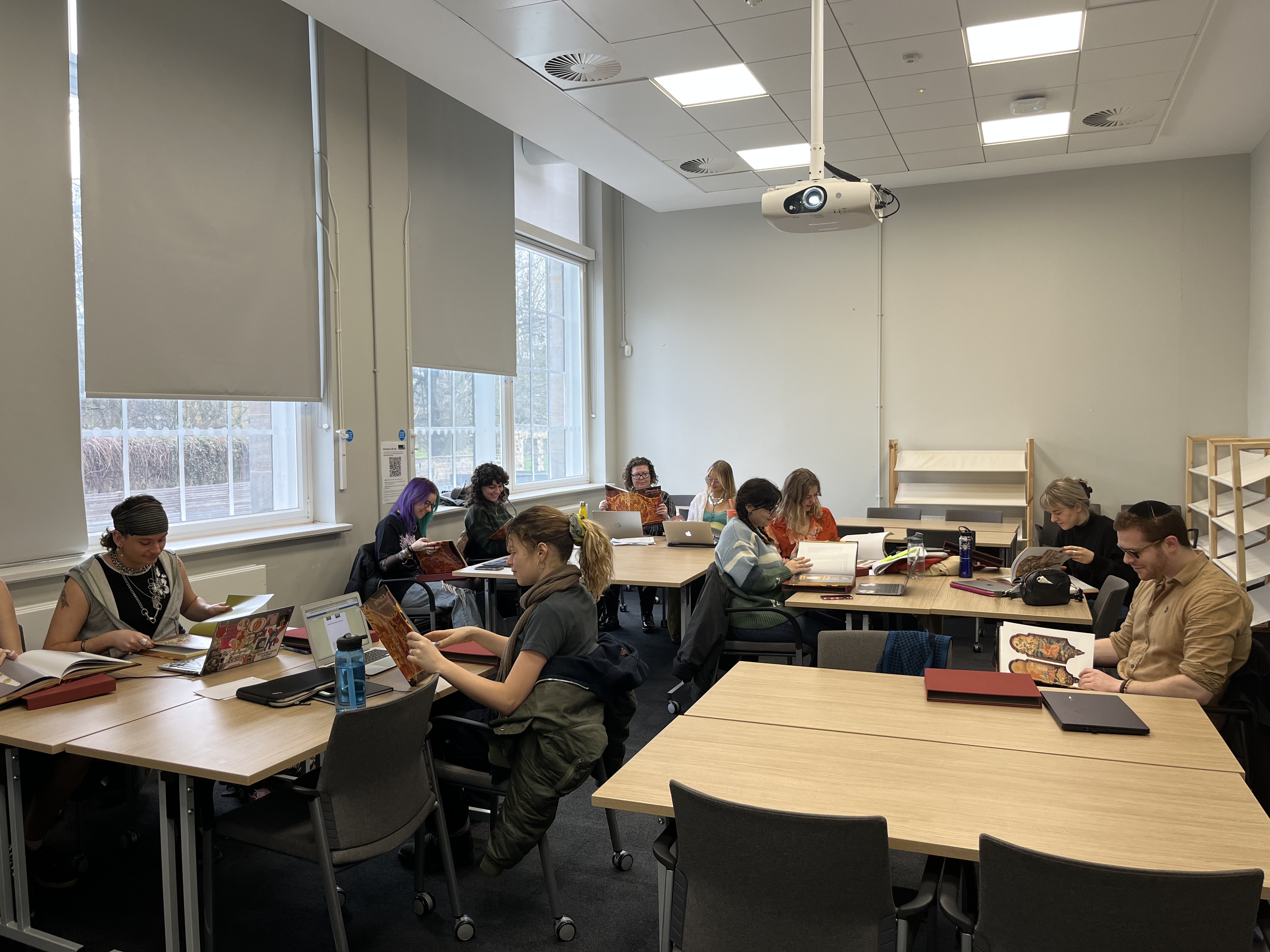
I remember meeting Robin in London at his store in Chelsea, back in 2018. I had driven down from Leeds to collect a very large pile of copies of the book published to celebrate the 80th anniversary of the founding of Hotspur (2004) Hotspur: Eighty Years of Antiques Dealing which, with typical generosity (as Chris mentioned above) Robin had given to the Antique Dealer Research Project to distribute to students enrolled on the module I teach at the University of Leeds (called ‘Antique Dealers: the market for ‘decorative art’ from curiosities to retro’). It is a 3rd year undergraduate module, the focus of which I believe is unique in UK universities, and which I’ve been running for almost 10 years now. Robin give us dozens and dozens of spare copies of the Hotspur book, which I distribute each year to eager students studying the history of antique dealing. Here’s a photograph of the undergraduate students enjoying the book from 2023 (and which I also would send to Robin as evidence of the real impact of his generosity!)

BA students with copies of ‘Hotspur’ in 2023. Photograph, University of Leeds.

The antique dealing business, Hotspur Limited, was founded by Robin’s grandfather, Frederick Kern (see below) together with Robin’s father, Robert (Rob) Kern (see below) in 1924. Frederick had been a director of the London branch of the decorators and antique dealers Carlhain and Beaumartz, as Nicholas Goodison described in the history of Hotspur, ‘[Frederick] was with the firm for twenty years until it closed in 1914, and was then briefly in business at 27 Soho Square as a director of Monday, Kern and Herbert, where he was in charge of the ‘Antique Department and Reproductions” (Goodison & Kern, Hotspur: eighty years of antiques dealing (Two Associates, London, 2004), p.19.

Frederick Kern (1868-1958) in c.1955. Photograph, Robin Kern.
Robert Kern in 1974. Photograph Robin Kern.

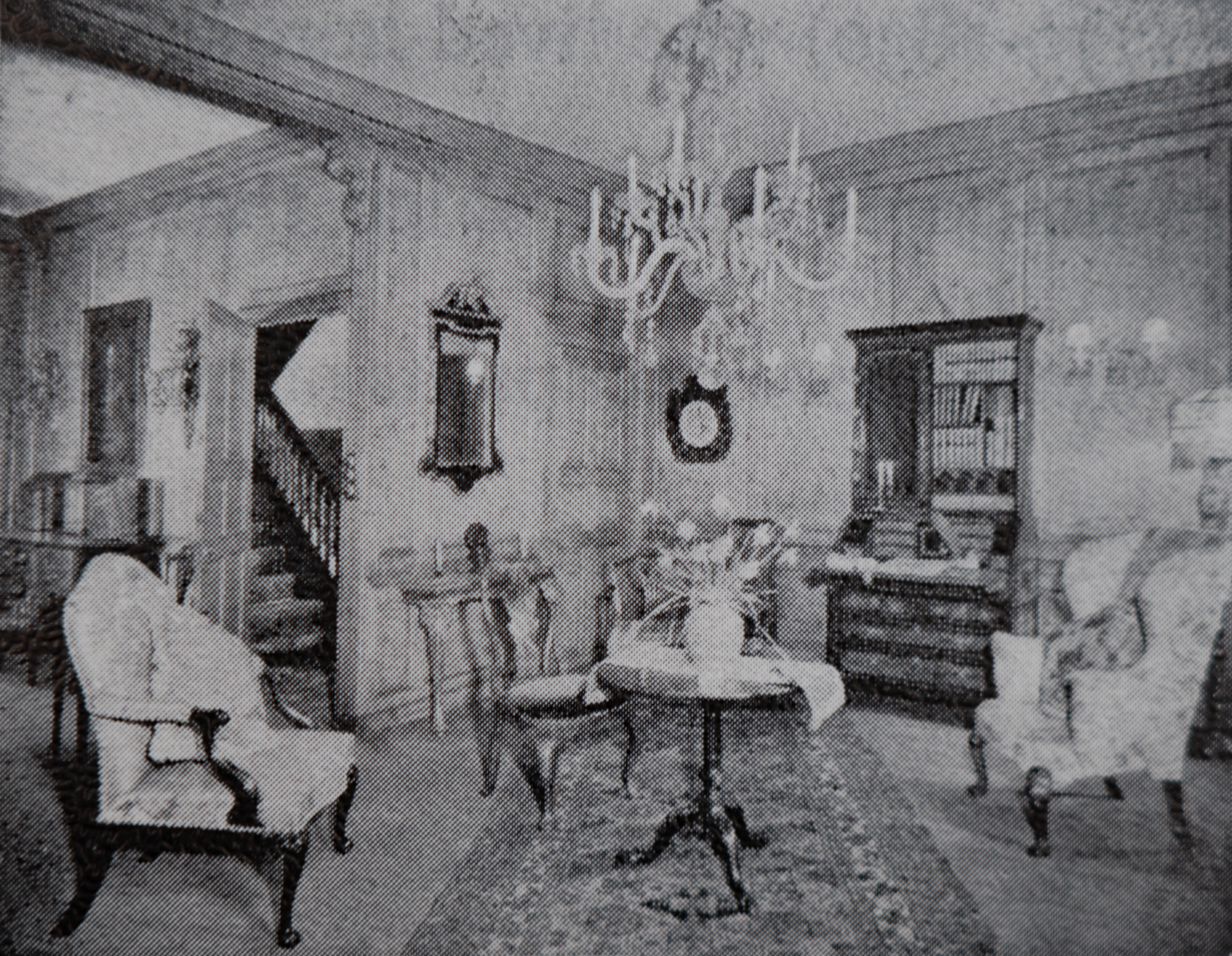
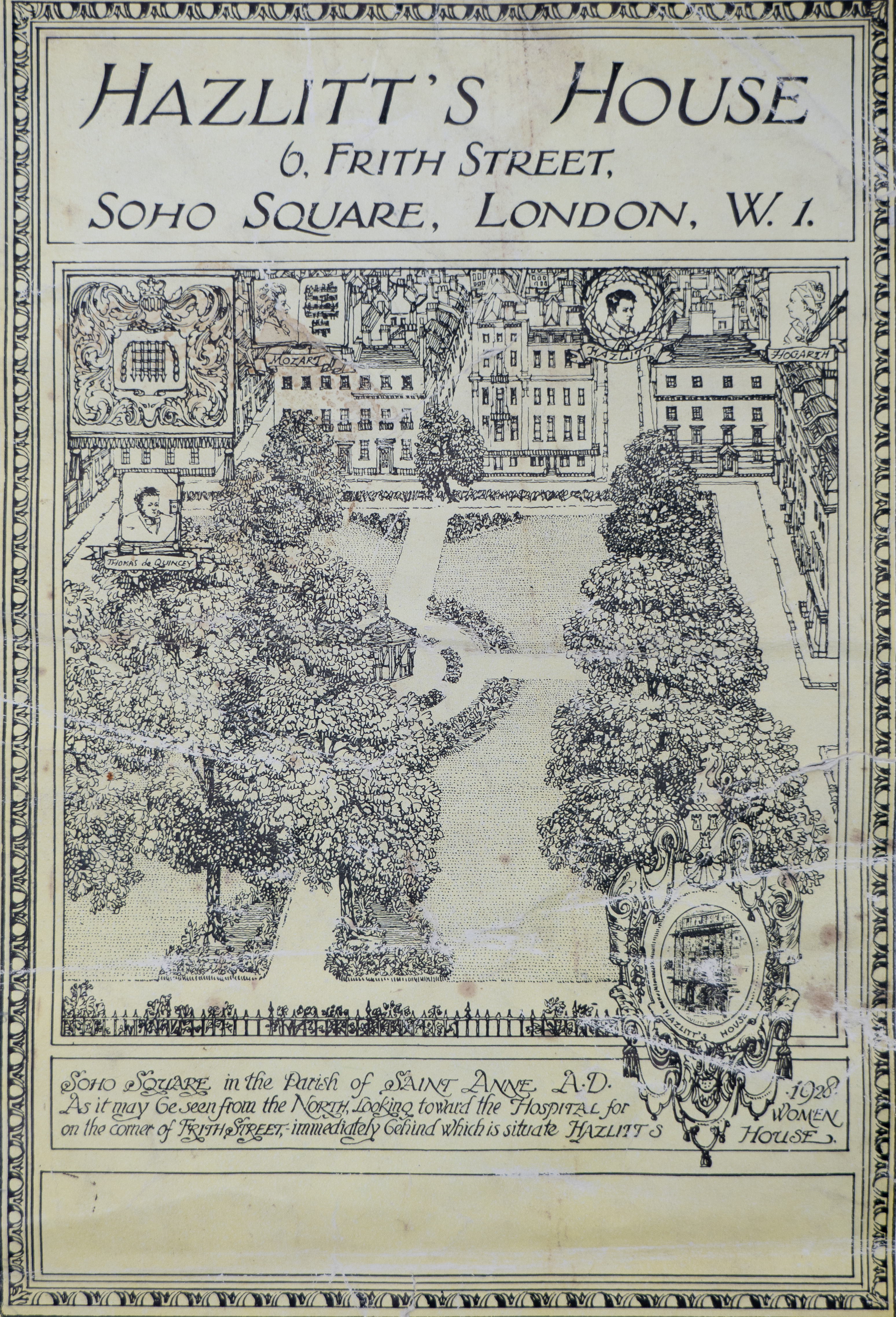
Hotspur’s first antique shop was at 16 Buckingham Palace Road in London, before moving to 6 Frith Street, near Soho Square in London by the late 1920s. The building in Frith Street occupied by Hotspur Ltd was formerly the home of the writer William Hazlitt (1778-1830) and the interiors were perfect for displays of English antique furniture that Hotspur were famous for buying and selling.

Hotspur Limited, 6 Frith Street, London, interior. Photograph, Robin Kern.
Sales brochure produced by Hotspur in 1928. Photograph, Antique Dealer Research Project University of Leeds.

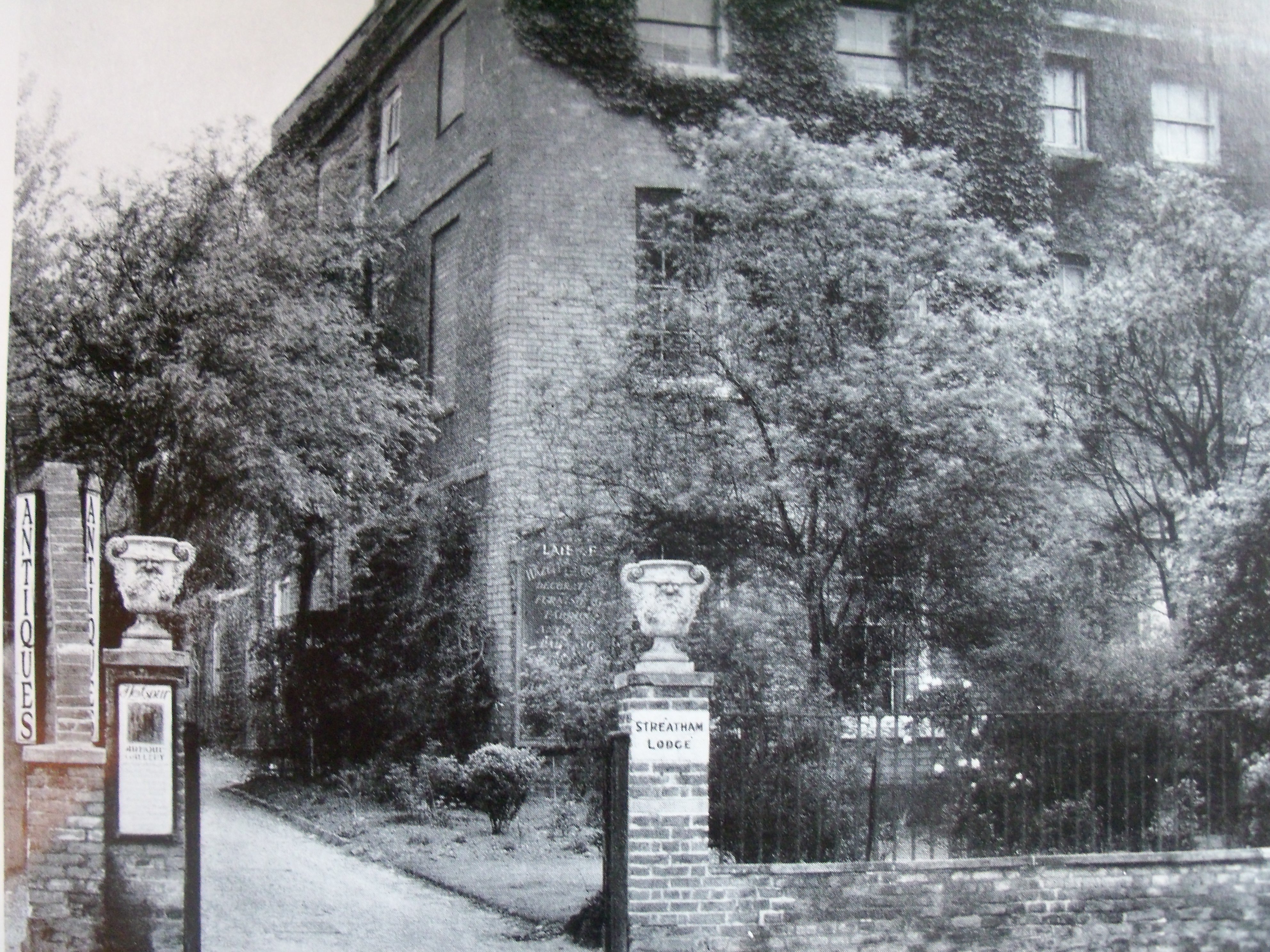
In 1939, to avoid bombing during the Second World War, Hotspur relocated to Streatham Lodge, Richmond, a rather grand 17th century house, again with period rooms ideal for the display of English antique furniture.

Streatham Lodge, the business location of Hotspur from 1939 to 1951. Photograph, Robin Kern.

In 1951 Frederick and Rob Kern moved Hotspur back to central London, to 14 Lowndes Street, a very smart street near Belgrave Square, and in 1956 Robin joined his father in the business, followed by his younger brother Brian in 1963. Robin and Brian’s father and mother, Rob and Betty, were tragically killed in a road accident in 1977. Brian retired from the business in 1999, but Robin continued, finally closing the doors in 2008.

Hotspur were one of the leading dealers in the highest quality antique furniture, especially English furniture of the ‘classic’ period 1680-1830. As Chris mentions (above) they helped build many of the most important collections of antique furniture in the mid-to-late-20th century in both the UK and the USA. Hotspur were also central to building of the antique furniture collection of Noel Terry (1899-1979), which remain on display at Fairfax House in York

Our memories of Robin are of a highly principled and exceptionally generous person. We are privileged to have included Robin and Hotspur as part of the Antique Dealers Research Project at the University of Leeds. Indeed, we are working quickly to make the oral history interview that we undertook with Robin and Chris Coles available to listeners (we are just sorting out the images so we can make that interview live on the project website). You may also be interested to hear that Hotspur are one of the antique dealers that are highlighted as part of the Year of the Dealer digital trails – the sale of the Harewood House secretaire (and the story of Hotspur), shown above, is one of the 10 objects in the digital trail at Temple Newsam, Leeds. We hope to have news of the launch of the Year of the Dealer trails in January, so do keep you eye on the Blog.

But before that, we send our sincerest condolences and best wishes to Robin’s family and friends.

Mark

August 17, 2021

The Generosity of Supporters

I’ve constantly amazed by the generosity of the many, many supporters to the antique dealer research project. Over the years we have had donations of archives, ephemera, books as well as funds, and crucially people’s time, all of which have not only helped the various strands of the research project but have also helped to build a community of interested, and interesting, people.

But I was truly touched when the postie called last week to deliver a parcel from our lead volunteer, Chris Coles. Chris, as many of you will know, has been helping with the project for many years, helping out with many aspects of the projects, from undertaking and transcribing several of our Oral History interviews, sending us data and information on the history of antique dealers, and generally being first in line to help out with project events. When he started as a volunteer on the research project Chris was working in the Prints and Drawings Department at the British Museum, but he has now moved on to be a consultant researcher for the antique furniture trade.

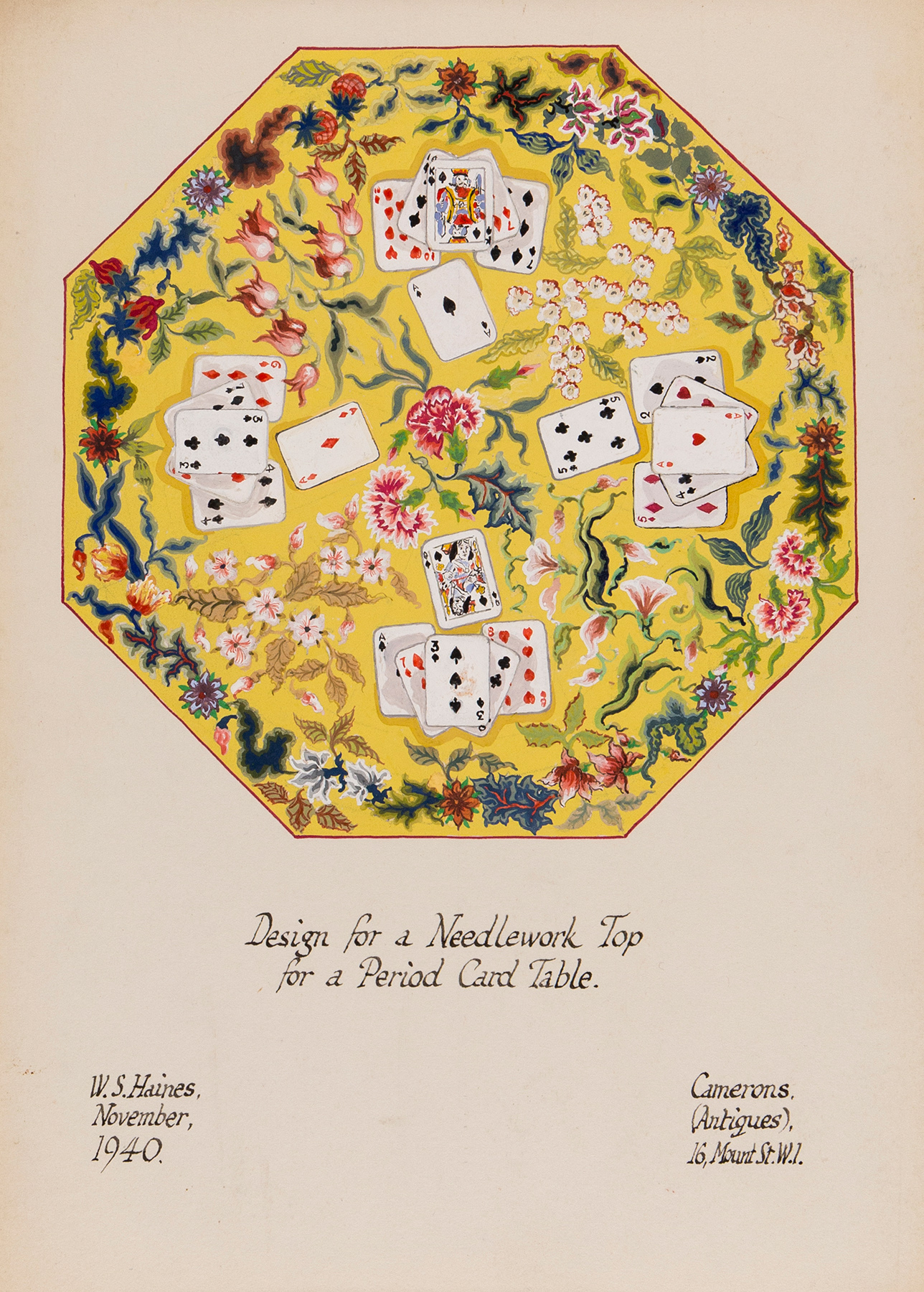
Chris was exceptionally generous to send us this beautiful watercolour design for a needlework top for a period card table, produced for the antique dealers’ Camerons of Mount Street, London in 1940.

Wilfred Stanley Haines (1905-1944) Design for a Needlework Top for a Period Card Table, November 1940 for Camerons (Antiques), London. Photograph, Abbott & Holder.

The design was created by Wilfred Stanley Haines (1905-1944), who worked for his family firm A. Haines & Son, tapestry restorers at 216 Merton Road, Wimbledon. W.S. Haines trained at William Morris & Co and was working at Morris & Co in 1936 but by the time the Second World War broke out Haines was working for his family firm. Chris tells us that there are several watercolour designs by W.S. Haines in the collections at the V&A Museum in London. Sadly Haines was killed in a bombing raid during the Second World War in 1944 whilst working as a fireman.

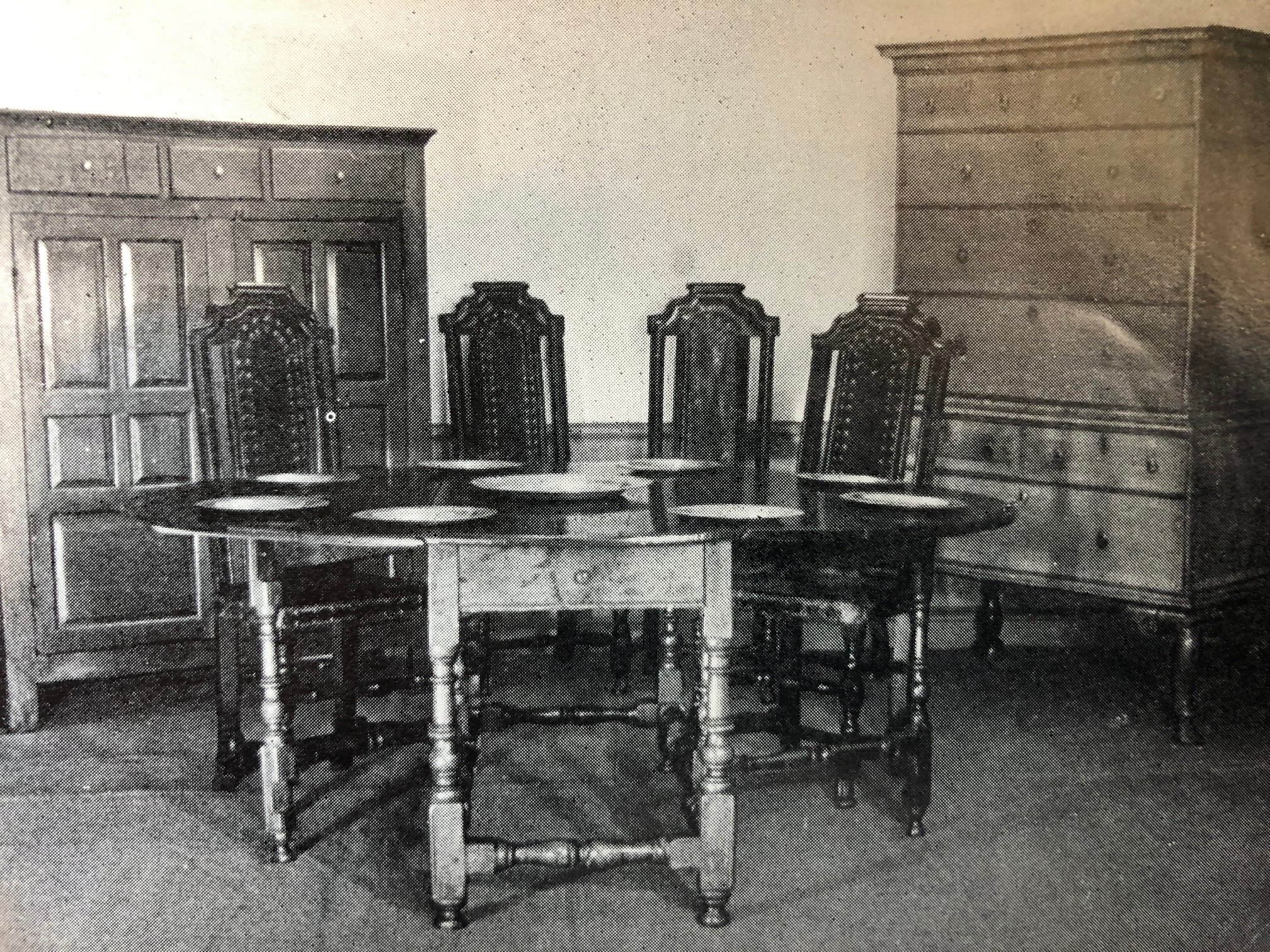
Camerons (Antiques) was established in c.1910 by Beatrice Cameron, initially at 16 Mount Street, before relocating to 67 Duke Street, St. James’s immediately after the Second World War. Cameron’s seem to have specialised in antique tapestries and panelled rooms in the 1930s and 1940s, hence I guess, the commissioning of the design for a needlework top for an antique card table. W.S. Haines produced several designs for needlework tops and covers for antique furniture in the early 1940s, including a design for a needlework cover for a ‘Chippendale chair, circa 1760’ for the antique dealer William Lee of 39 Stonegate, York – (thanks to Chris for sending us all this information!). Below is a photograph of William Lee’s antique shop interior at Stonegate, of c.1949.

William Lee, 39 Stonegate, York, interior, c.1949. Photograph, Antique Dealers Research Project, University of Leeds.

Chris very generously gifted the watercolour to the antique dealer project, in honour, he tells us, of John Hill (of Jeremy Antiques, formerly of the King’s Road) and (he says) of me (I am truly flattered and honoured). Chris also tells us that Tom Edwards at Abbott & Holder (where Chris purchased the watercolour) was also exceptionally generous with a discount in acknowledgment of the gift of the watercolour to the antique dealer research project.

Thank you to Chris and to Tom for such generous gestures, it is so encouraging, and touching, that you regard the research project so highly.

Mark

March 31, 2021

More Antique Dealer Archives – Kent Gallery Ltd albums

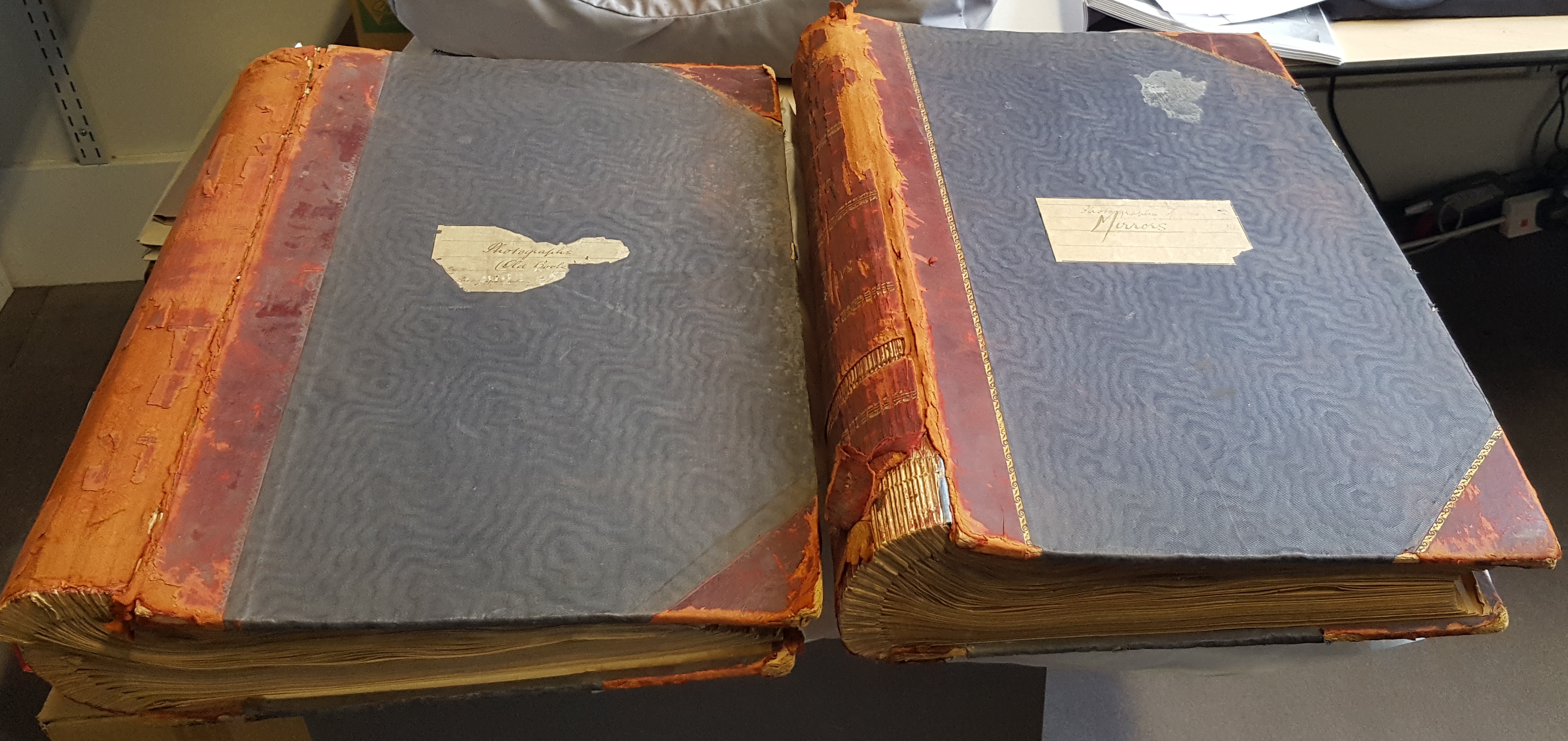
The collection of antique dealer archives at the Brotherton Library Special Collections (BLSC) at the University of Leeds has a new donation – two fascinating photograph albums, dating from c.1920-1930, illustrating the stock of the well-known and highly important antique dealer furniture dealers’ Kent Gallery Ltd. The albums have been generously donated to the BLSC by the V&A Museum – thanks to Kate Hay, Assistant Curator, Furniture, Textiles and Fashion at the V&A and her colleagues Leela Meinertas (Senior Curator of Furniture at the V&A) and Christopher Marsden (Archivist at the Archive of Art & Design) – and thank you to Karen Sayers, archivist at the Brotherton Library Special Collections, for accepting the donation!

Kent Gallery photograph albums, c.1920. Photograph courtesy of Kate Hay, 2021.

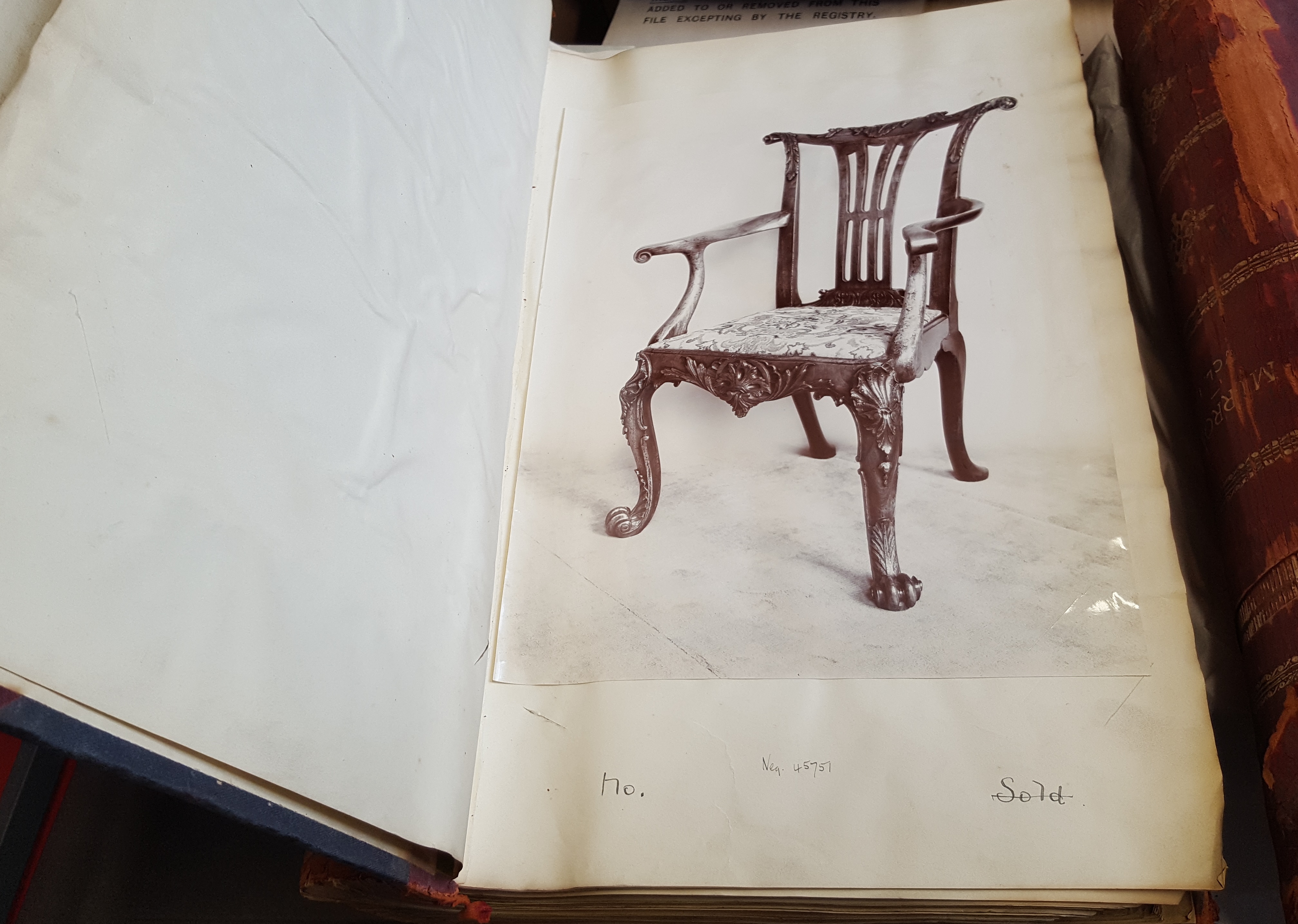
Kate and I came across the photo albums back in 2017 when I was with Kate at Blythe House (the V&A Museum stores) whilst we were looking over some other antique dealer related material, and I immediately had a sense that the albums were created by the antique dealers’ Kent Gallery. I’d seen Kent Gallery photographs many times previously and, like many leading antique dealer photographs, they have a very distinctive appearance – often the objects are photographed against particular backgrounds or are framed in a particular way. Here’s some examples of the photographs in the Kent Gallery albums – the albums are quite large format (c.20 inches high); they are (despite looking a bit shabby at present) quite grand leather finished and gilt-tooled albums. The photograph albums were used by Kent Gallery as inventories of stock, as well as perhaps to show customers what was available for sale, and acting as catalysts for asking customers what kinds of antique furniture they might be interested in purchasing.

Kent Gallery Album, c.1920-1930. Photograph courtesy of Kate Hay, 2021.

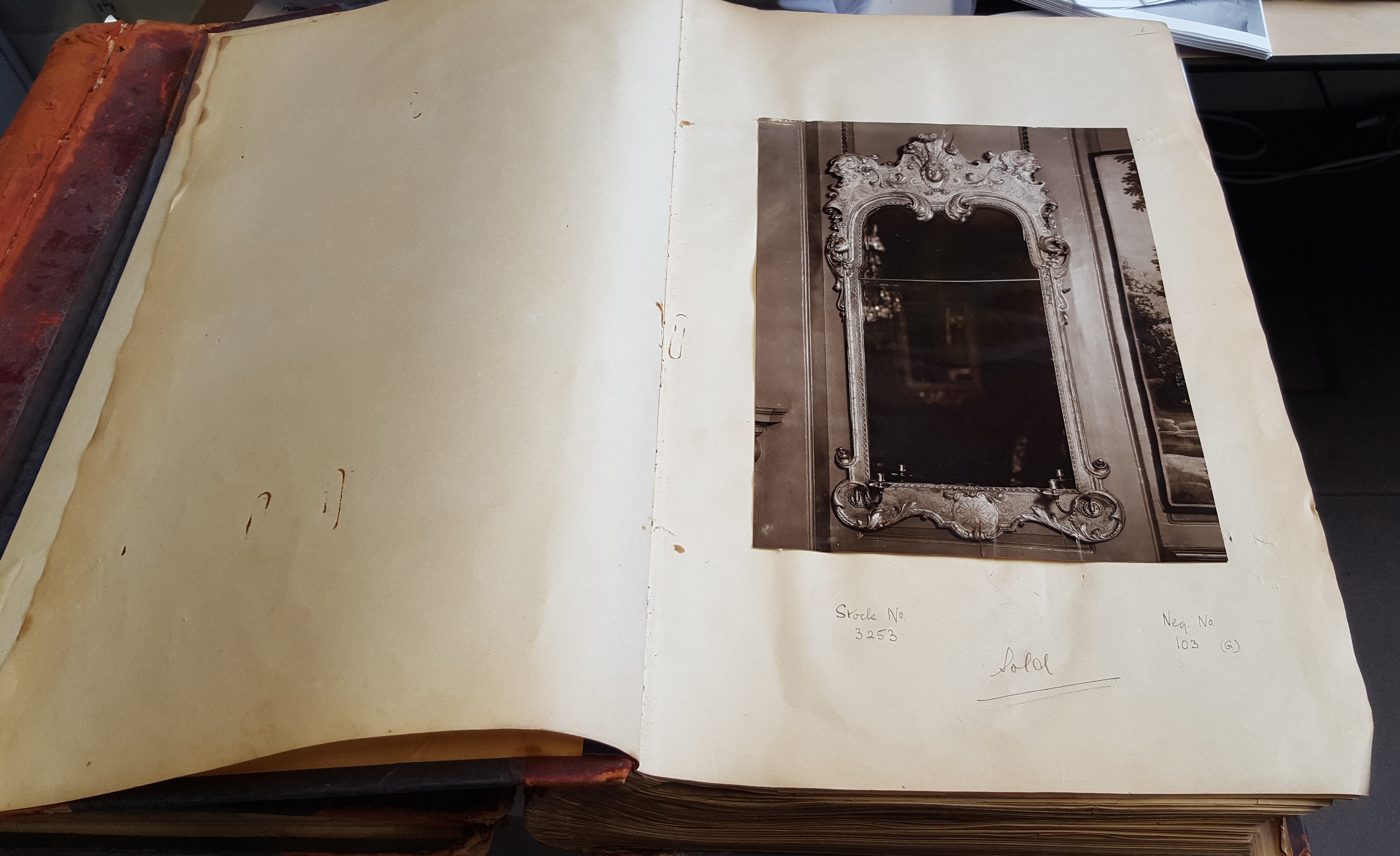
The 18th century chair in the photograph (above), from one of the albums, has an annotation indicating that it had been ‘Sold’ and includes a negative number for the photograph. The photograph below, shows an 18th century giltwood mirror (also indicated as ‘Sold’), and the negative number, but in this page the object is also inscribed with a stock number.

Kent Gallery photograph album, c.1920-1930. Photograph courtesy of Kate Hay, 2021.

Photograph albums such as these seem to have been relatively common among leading dealers from the early 1900s until the 1960s. I’ve seen examples created by several well-known dealers, such as Mallet & Son, M. Harris & Sons and W.F Greenwood & Sons – indeed, I posted a blog entry on the W.F. Greenwood & Sons photograph album on this blog in July 2014 – see earlier blog post here.

Kate Hay did some further research on the albums and discovered that they had been given to the V&A Museum by the antique dealer Ronald A. Lee in 1973, but had never been accessioned into the V&A collection – it’s fitting therefore that the albums are coming to the BLSC, which, as you may know, also has a collection of R. A. Lee material donated by Ronald Lee’s daughter Georgina Gough.

Kent Gallery were one of the leading dealers in antique furniture in the opening decades of the 20th century, trading from various locations in London – the main headquarters of the business was in Conduit Street. The business was established by Edward Horace Benjamin, who, by the early 1920s had been joined by Lionel Harris Junior (b.1903) and Maurice Harris (b.1900), the sons of the well-known dealer Lionel Harris (1852-1943). The Harris family had extensive antique dealing interests – they owned ‘The Spanish Gallery’, (aka ‘The Spanish Art Gallery’) one of the leading dealers in Spanish work of art in the period; and Lionel Jnr and Tomas Harris (1908-1964) also operated their own antique dealing businesses in the 1920s and 1930s.

Kent Gallery was one of the Harris families’ specialist antique dealing businesses – with a speciality, from the 1920s, for selling antique English furniture. The business was one a number of antique dealers in the period that seem to have focused on selling English furniture, no doubt spurred on by the publication of key texts such as Percy Macquiod’s A History of English Furniture (1904-1908) and Macquoid and Edwards’ Dictionary of English Furniture (1924-1927). Indeed, many of the photographs in these volumes were supplied by dealers such as Kent Gallery, Moss Harris & Sons and Frank Partridge & Sons.

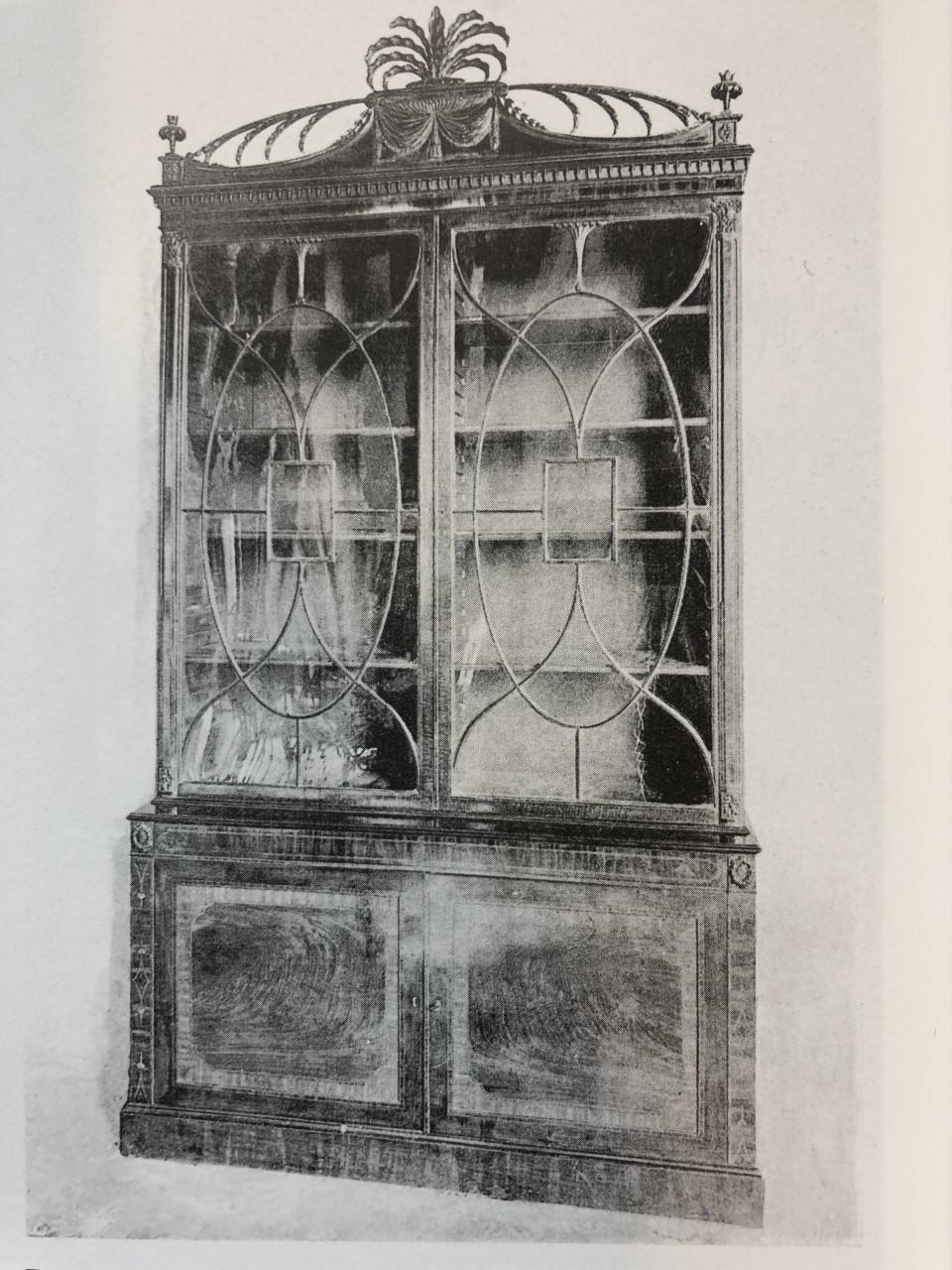
Some other Kent Gallery material which I’ve collected over the years or which has been kindly sent to the antique dealer research project also demonstrates the tightly imbricated relationships between the development of scholarship on English furniture and the market for antiques in the period. For example, our friend Chris Jussel, formerly of the leading dealers Vernay & Jussel, sent us an invoice back in 2019 which records the sale of a ‘Sheraton mahogany two-door bookcase’ sold by Kent Gallery to Arthur S. Vernay Inc (a precursor to Vernay & Jussel), in September 1931 for £1,120.

Invoice, Kent Gallery, 1931. By kind courtesy of Chris Jussel.

The bookcase, as the Kent Gallery invoice highlights, was formerly in the collections of the well-known American collector of antiques Francis P. Garvan (1875-1937), as well as that of the collector F.C. Hunter; but had also been previously illustrated in Percy MacQuoid’s A History of English Furniture (1904-1908) in the volume titled, The Age of Satinwood, ‘figure 185’. Illustrated below is the very bookcase.

‘Mahogany and Satinwood Book-case. Property of F.C. Hunter’. Percy MacQuoid, A History of English Furniture, The Age of Satinwood, (1904-1908), figure 185.

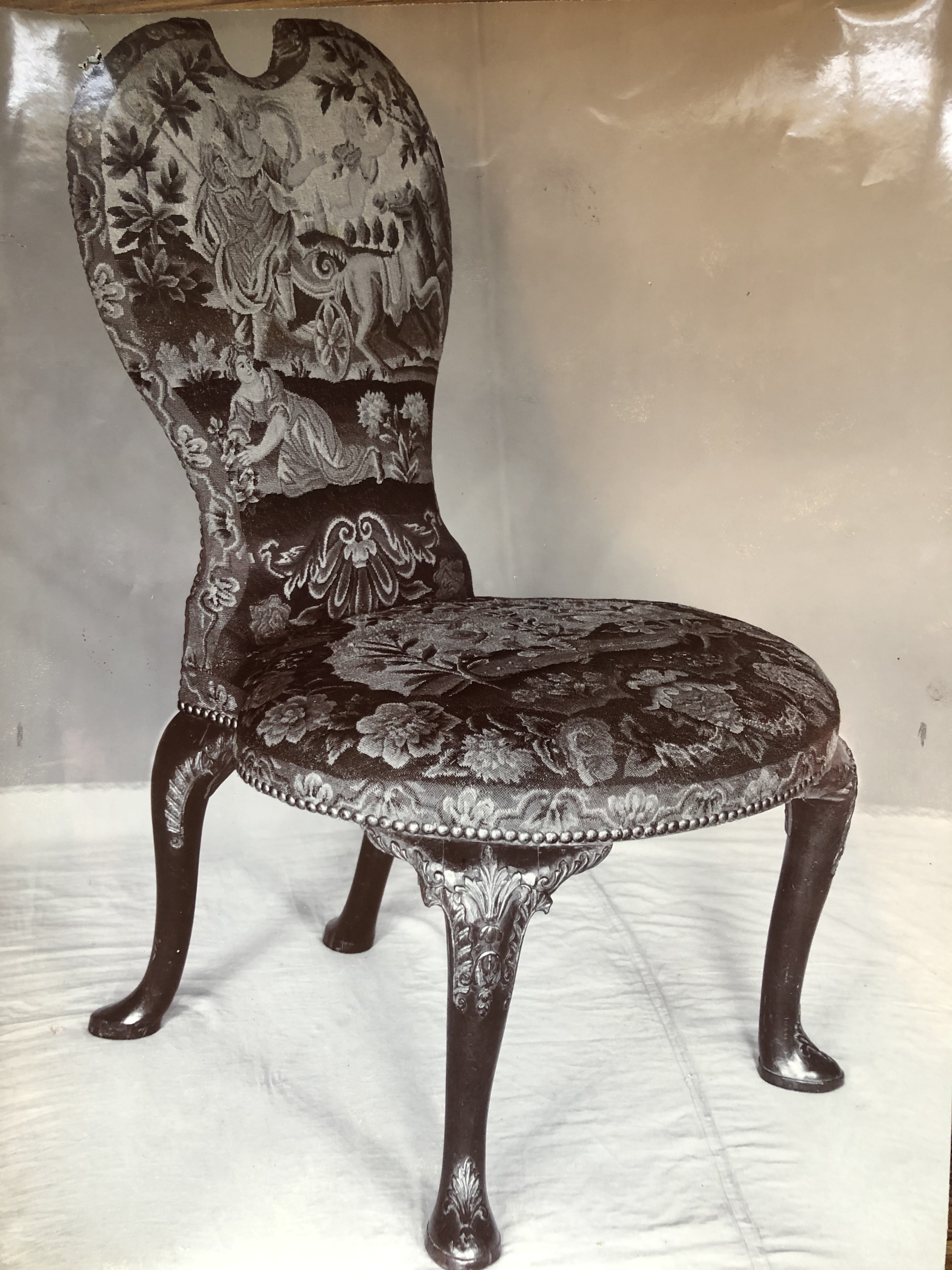
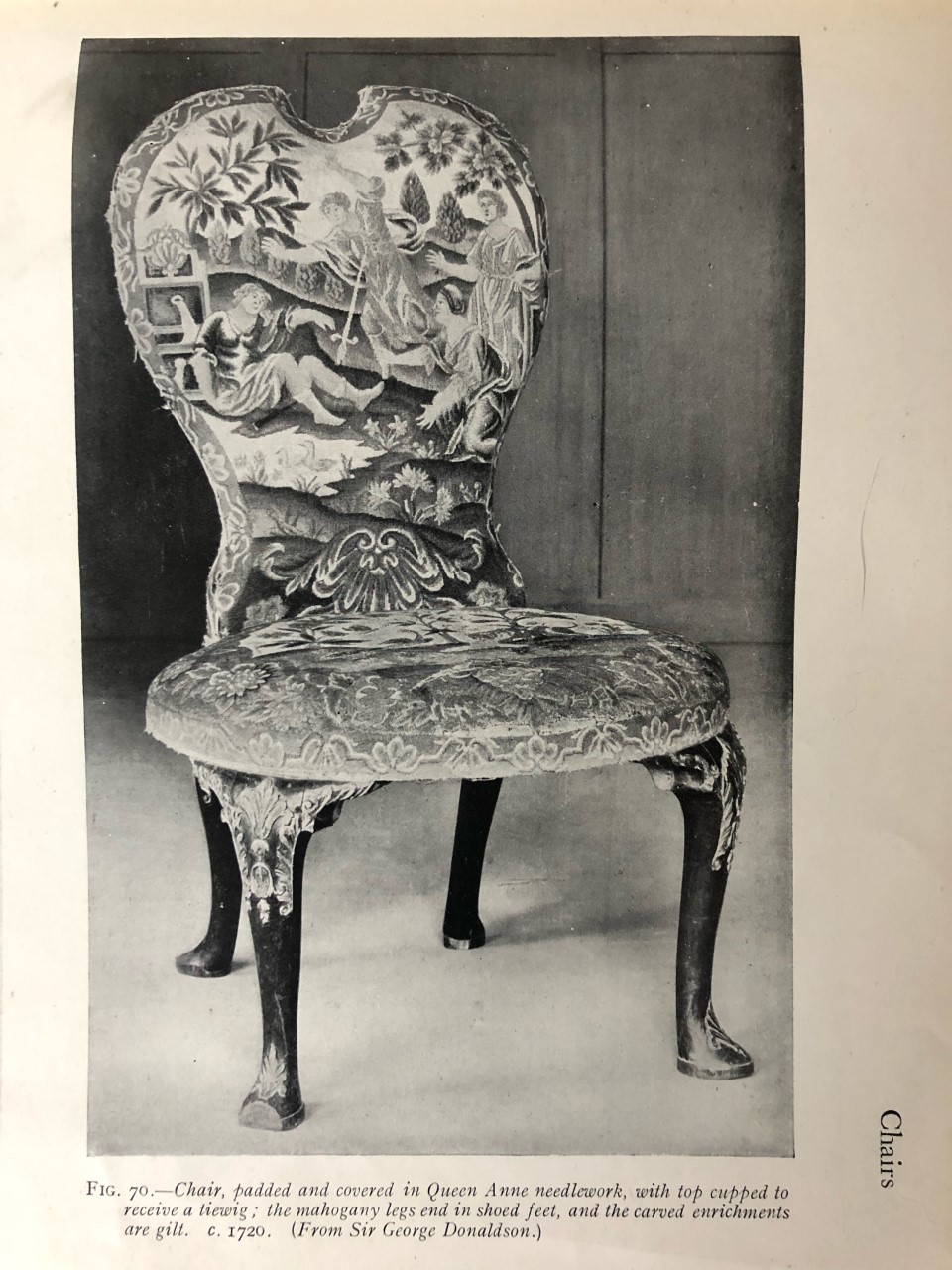
In the antique dealer project archives we also have a very small cache of loose photographs from Kent Gallery – I picked these up about 10 years ago, from Ebay, in a small collection of photographs of antique furniture which includes photos from the dealers Basil Dighton, G. Jetley, Robersons and Gill & Reigate. The Kent Gallery photographs have a distinctive style, as I mentioned. This ‘George I’ chair, for example, (see below) from the cache of photographs, is similarly framed and has the same background to the Kent Gallery album photograph of the mahogany chair (see above).

Photograph of a ‘George I mahogany + gilt wig chair’; photograph c.1927. Kent Gallery. Antique Dealer Archive.

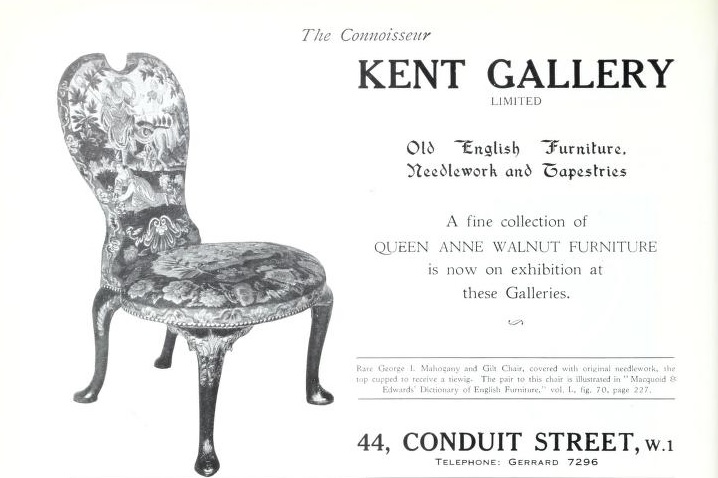
The verso of the photograph of the ‘George I’ chair has a Kent Gallery stamp. Thanks to Chris Coles, who kindly send us a photograph of the advertisement in The Connoisseur in 1927 from Kent Gallery, which illustrates the chair and which helps us date the Kent Gallery albums to c.1920-1930.

Kent Gallery advertisement, The Connoisseur 1927. Courtesy of Chris Coles.

Thanks also to Chris Jussel and Chris Coles, who both pointed out to me that this chair is one of a set – there are two from the set in the Metropolitan Museum, New York, and another pair are also in the collections at the Lady Lever Art Gallery in Port Sunlight, near Liverpool. One of chairs was also illustrated in Macquoid and Edwards Dictionary of English Furniture (vol I. 1924), p.227, (which is also mentioned in the Kent Gallery advert) where it had a provenance to the collection of Sir George Donaldson (1845-1925). The Kent Gallery chair is evidently from the same set, with some minor differences (the Kent Gallery chair has brass studs to the seat covering for example).

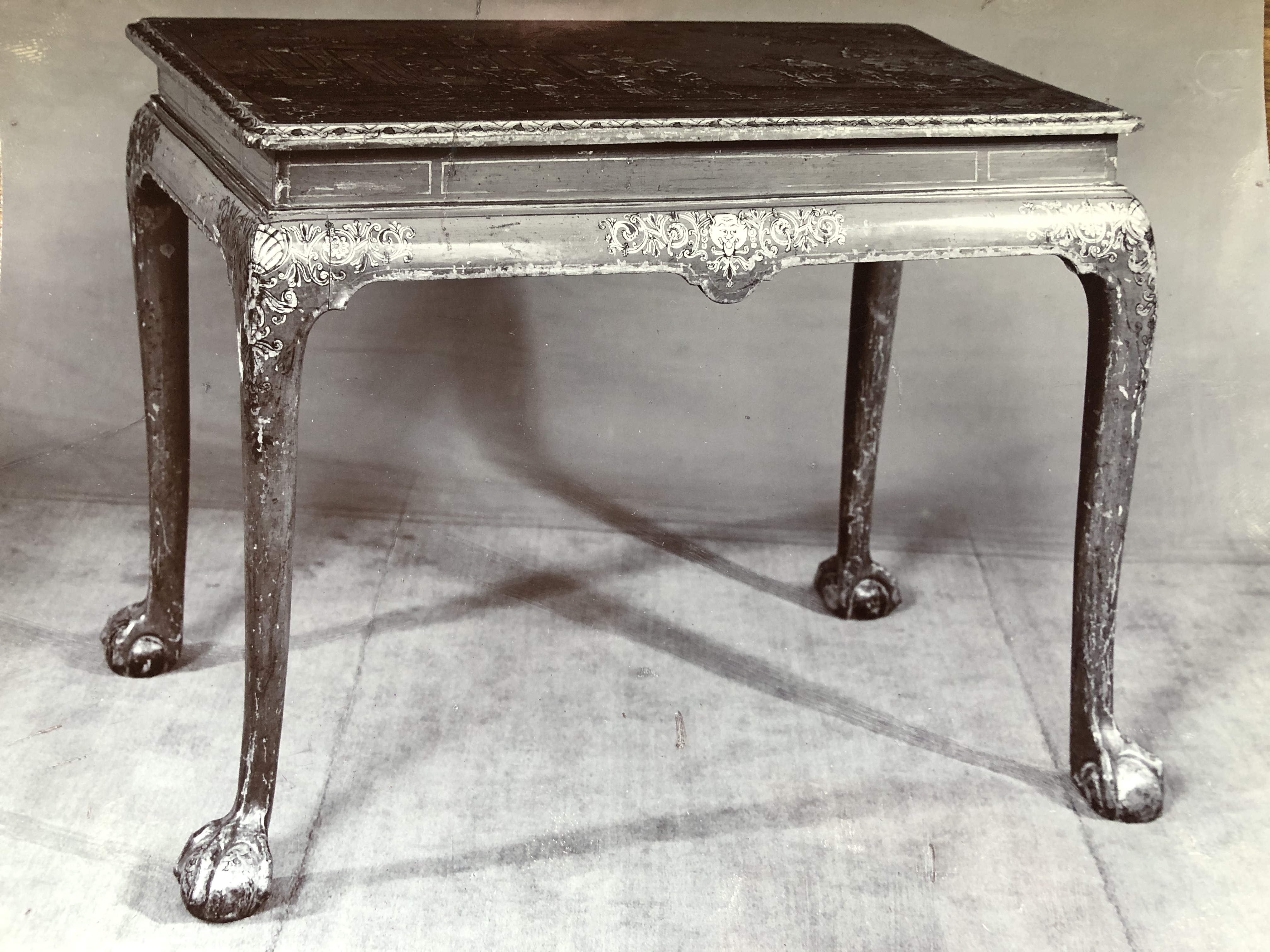
The photograph of the lacquer table, (below), is also from the small cache of photographs from Kent Gallery.

Photograph of lacquer table, ‘c.1710’: Kent Gallery. Antique Dealer Archive.

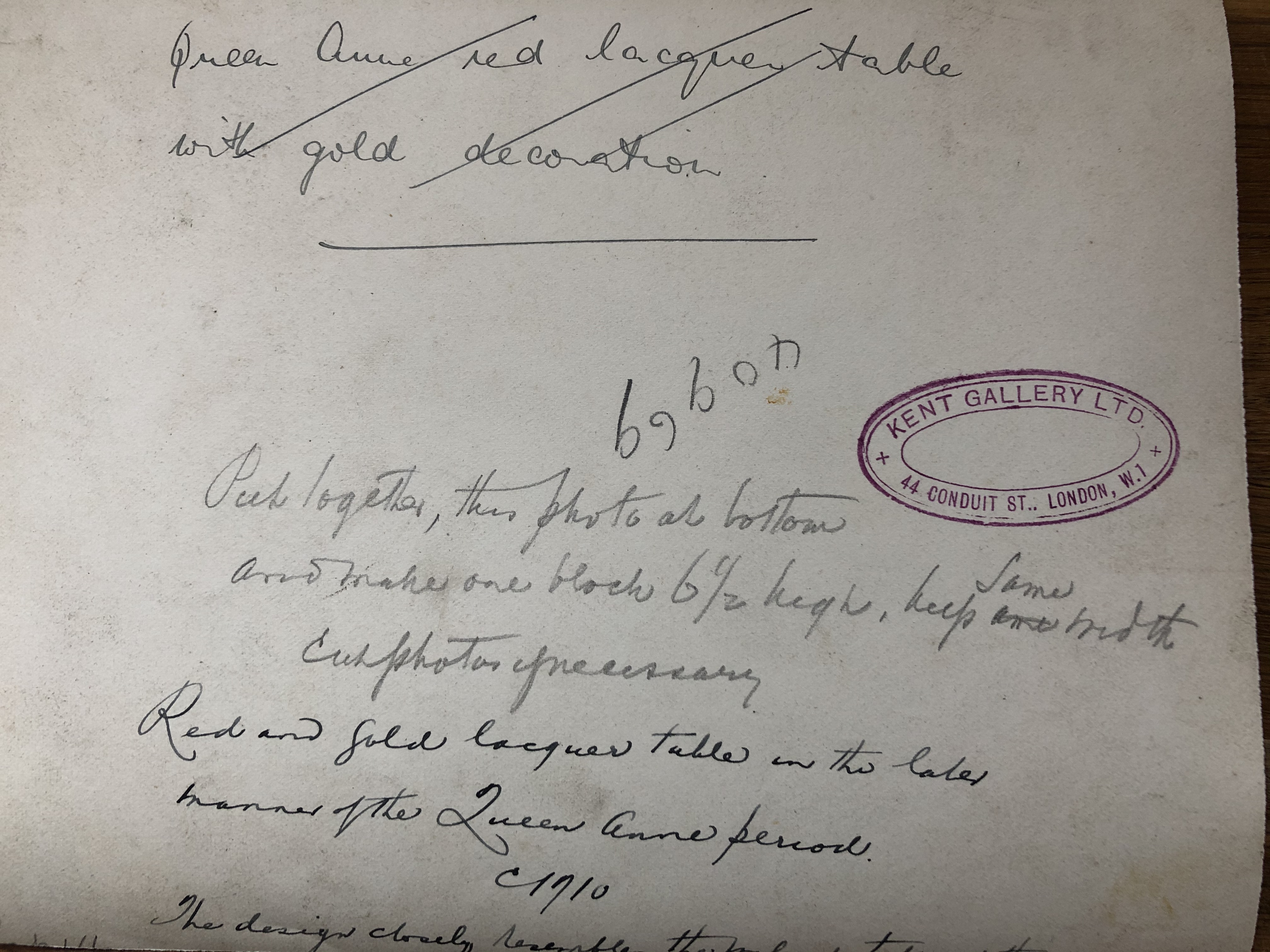
The verso of the photograph also shows the Kent Gallery stamp and with an inscription (in pencil) indicating that the photograph was being used in some publication (perhaps as part of an advertisement in Apollo or The Connoisseur magazines?). The inscription in ink describes the object – ‘Red and Gold lacquer table in the later manner of the Queen Anne period c1710’.

Verso of photograph of lacquer table, ‘c1710’; Kent Gallery. Antique Dealer Archive.

As you can see, Kent Gallery dealt in the highest quality antique English furniture in the period. The Kent Galley photograph albums are a rare survival of material from one of the leading antique dealers of the early 20th century – we are so grateful to Kate and the V&A for their very generous donation of the albums to the Brotherton Library Special Collections – once they have been quarantined, cleaned and conserved the albums will be available for researchers – I for one, can’t wait to have another look at them!

Mark

April 28, 2018

New Oral History Interview – David Fileman of Fileman Antiques

Thanks to Chris Coles, our Project Lead Volunteer, we have a new addition to our growing corpus of Oral History Interviews – we are now at number 38!  Our latest addition is an absolutely fascinating interview with David Fileman, a 3rd generation dealer of the specialist antique glass dealers Fileman Antiques, Steyning in Sussex.  We really appreciate Chris and David taking the time to record this interview and of course we are so grateful to the BADA for their invaluable support in enabling us to continue with the oral history research theme in the Antique Dealer research project.

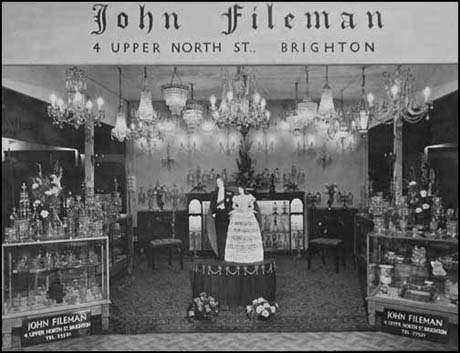
The business of Fileman was established in Brighton in the late 19th century by Morris Fileman, an electrical engineer and sometime pawnbroker – Morris is perhaps most famous for work to electrify Brighton Pier in the early 20th century.  The business was continued by David’s father John Fileman (d.1962) after he returned from War service in World War I; John developed the business into one of the leading antique glass specialists in the UK, supplying well-known antique glass dealers such as Arthur Churchill, Cecil Davis and W.G.T. (Tommy)Burne.

John Fileman Antiques, Brighton, antique fair stand, c.1960s. Photograph copyright Fileman Antiques.

Our interview with David again illustrates the complex over-lapping practices in the history of the British Antique Trade, illustrated here in a business that started in electrical engineering, developing, through the evolving interests of members of the business, into a leading specialist antique dealer and one who supplied many of the world’s most important antique dealers, including Jeremy Ltd, Mallett, Partridge, and Hotspur, with antique glass, lighting and spectacular antique chandeliers – a tradition that continues today, as their recent stand at the LAPADA Fair (2016) demonstrates.

Fileman – stand at LAPADA Fair 2016. Photograph copyright Fileman Antiques.

We will update the Oral History pages on the Antique Dealer Research project website in the next few days – but thanks again to David and Chris for such a brilliant interview.

Mark

August 29, 2017

New Oral History Interview – Michael Pick of Stair & Co.

Our Oral History Interviews with key members of the antique trade continues – thanks to the energy and enthusiasm of Chris Coles, our Lead Volunteer Researcher; and thanks again to the BADA, who so generously support these new ‘BADA Voices’ extensions to the Oral History research theme for the Antique Dealers project. 

Our new interview is with Michael Pick, who for many years worked at the well-known English Furniture dealers Stair & Company – Michael also worked at Frank Partridge & Co., so his experience at the top of the antique trade is very considerable indeed.

Michael Pick, in 1995, whilst at Stair & Co. Photograph courtesy of Michael Pick.

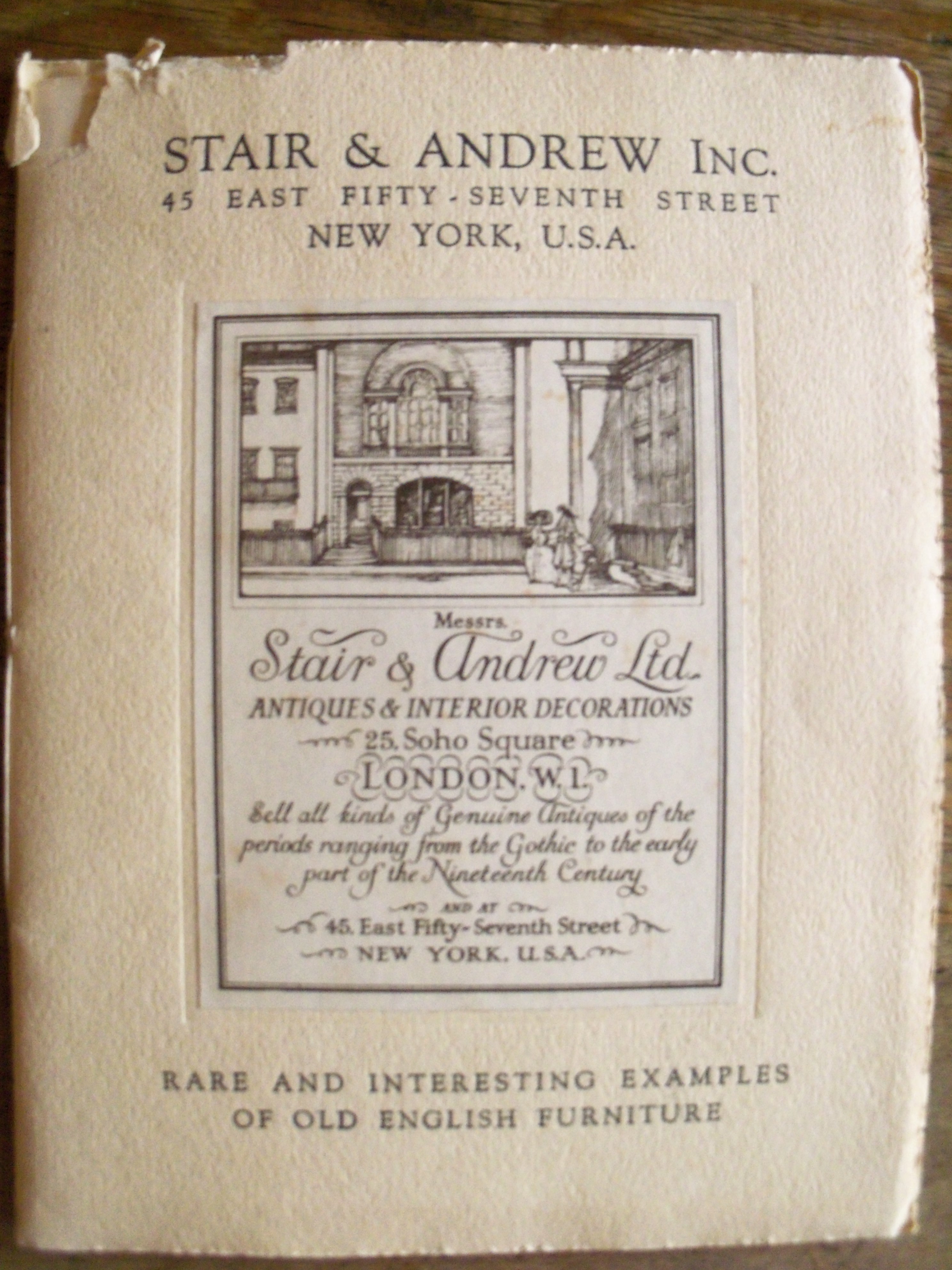
Catalogue of Stair & Andrew, c.1920s. Private collection.

Michael started his career in the antique trade in 1978, joining the firm of Stair & Co (established as Stair & Andrew in 1911) under the care and tutelage of Mary Holder, who had formerly worked for the dealership R.L. Harrington, which Stair & Co purchased in 1968. Michael stayed with Stair until 2000, when he joined Frank Partridge & Co., staying until 2006. For more information on Stair & Co., and Partridge & Sons, and many other dealers, please see our research project interactive website antiquetrade.leeds.ac.uk

During this highly engaging interview Michael told us how he was introduced to the world of antiques by the well-known writer on collecting, Bevis Hillier (who was at the time at Connoisseur Magazine) before he eventually obtained a position with Stair & Co in 1978. Michael reflected on his time at Stair & Co., recalling the regular buying trips with Mary Holder around the other London dealers, in the Fulham Road and Kensington Church Street in the 1970s and 1980s. As Michael suggested during the interview, the importance of American collectors to many British antique businesses, not least Stair & Co., was a key theme. Stair had opened shops in Palm Beach and Williamsburg in the USA after WWII, expanding their American operations that had been established by Stair & Andrew in New York in 1911.  Michael highlighted how crucial the UK-USA market was to the Stair business, recalling that Alastair Stair came to London 2 or 3 times a year with his wife Phyllis, buying 300 or so pieces on each trip to feed the appetite for American collectors and decorators.

As many of the followers of the Antiques Dealer project will be aware, Stair & Co was bought by the music mogul and antique collector Jules Stein (1896-1981)  (owner of MCA, Music Corporation of America and film star agent), in 1952; the business was sold to the financier David Murdoch in 1981 after the death of Stein. Michael tells us that the Stair business shifted slightly with the acquisition by Murdoch, moving to a much more eclectic look, a mixture of old and new, that is now so fashionable.  Indeed it seems that David Murdoch preferred this look, exemplified, as Michael tells us, in the collections that Murdoch assembled at his home ‘Casa Encantada’ in Bel Air, Los Angeles. This was a property originally built in the 1930s for the Hylda Boldt Webber, before being bought by the hotelier Conrad Hilton (1887-1979) who sold the house to Murdoch in 1979, shortly before Murdoch bought the Stair & Co business.  And here’s a an early photograph of ‘Casa Encantada’ (taken in 1939), when it was then owned by Mrs Boldt Webber.

Casa Encanada, Bel Air, Los Angeles, in 1939, the home of Mrs Boldt Webber. Photograph copyright University of California.

Murdoch apparently purchased the Bel Air mansion fully furnished from Conrad Hilton, before selling the contents and refurnishing the property with, then, very fashionable ‘English Antiques’. These recollections from Michael certainly reinforce the historical significance of the transatlantic trade in antiques, not just in the opening decades of the 20th century (as many people will know), but also how these significant exchanges continued throughout the 20th century.

Our interview with Michael continued with his reflections on his move to Frank Partridge & Sons in 2001; Michael recalled that the most significant change was not so much in the quality of the objects that Stair & Co and Partridge sold, but more in the sheer scale of the operations – Michael tells us that Stair & Co had just 3 members of staff, whilst Partridge had as many as 32 members of staff when he joined the firm.

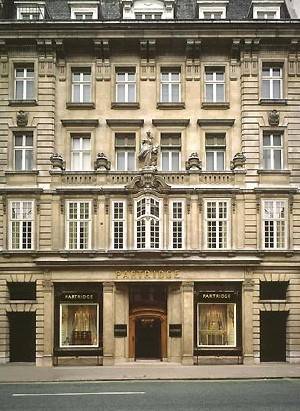
Partridge & Co., New Bond Street, London, c.2000.

There are many other fascinating observations on the history of the antique trade in our interview with Michael, from the changing taste in antiques, the presentation (and sales ticketing) of objects, to the increasing significance of Antique Fairs.

Like all of our other Oral History interviews with members of the antique trade, our interview with Michael will be available via the project websites, once our team have had a chance to edit the interview.  Our thanks go to Michael and Chris for all their help with the ‘Voices from the Trade’ oral history interviews project.

Mark


May 16, 2017

New Oral History Interview – Lanto Synge, from Mallett & Sons

Our latest Oral History Interview took place last week, with Lanto Synge in the interviewee chair. The interview was conducted by our lead project volunteer, Chris Coles (thank you again Chris!) and is part of our continued efforts to capture the Voices from the Trade as part of the ‘BADA Voices’ extension to the Oral History project (thanks again to the BADA for their support). 

Lanto, as many of you will know, worked at the world-famous antique dealers Mallett & Sons for almost 40 years, after joining the firm in 1969, rising through the ranks to ultimately become Chief Executive of the firm in 1997; Lanto eventually retired in 2009.

Lanto Synge, formerly of Mallet & Sons (Antiques). Photograph courtesy of Lanto Synge.

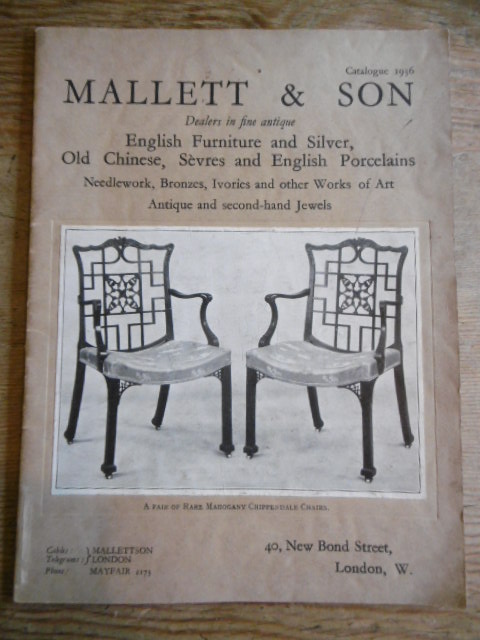
Catalogue from Mallett & Son, 1930s.

In this absolutely absorbing interview Lanto recalls the history of Mallet & Sons – they are one of the oldest antique dealing firms in the world, established in 1865 by John Mallett in Milsom Street, Bath, Somerset. During the interview Lanto reflected on his memories of working at the firm during the 1960s-1990s and describes the changes in marketing practices, the displays in the galleries (there were 28 rooms of antique furniture and objects in Mallett’s Bond Street showrooms by the time Lanto retired in 2009); he also recalls the various individuals involved in the business over the period he worked at Mallett.

Lanto was also instrumental in the development of Mallett’s antique business in Australia and during the interview he reflects on the expanding business for antiques in the 1980s.  There are some fascinating memories on many leading dealers and collectors, as well as observations on the role of the antique fair (especially The Grosvenor House Fair) in the developing antique trade.

Lanto is also a leading expert and author on the subject of antique textiles, and his enthusiasm, and expertise, is clearly expressed in a series of engaging reflections on the development of his interest in antique textiles and tapestries.  Our interview with Lanto, as with all of the other Oral History interviews we have undertaken for the Antique Dealers Research Project, will be edited and made available in due course.

Thank you again to Lanto and Chris Coles for taking the time to expand our Oral History strand of the research project.

Mark


April 25, 2017

Latest BADA Voices Oral History Interview

We recently completed the latest in our series of Oral History interviews, as part of the extension to the research theme under the ‘BADA Voices’ project –  and thank you again to Marco, Mark and the team at the BADA for generously supporting these new oral history interviews. Our latest interviewee was the leading antique furniture dealer John Hill, of Jeremy Limited; the interview was undertaken by Chris Coles, our Lead Volunteer for the Antique Dealers research project.

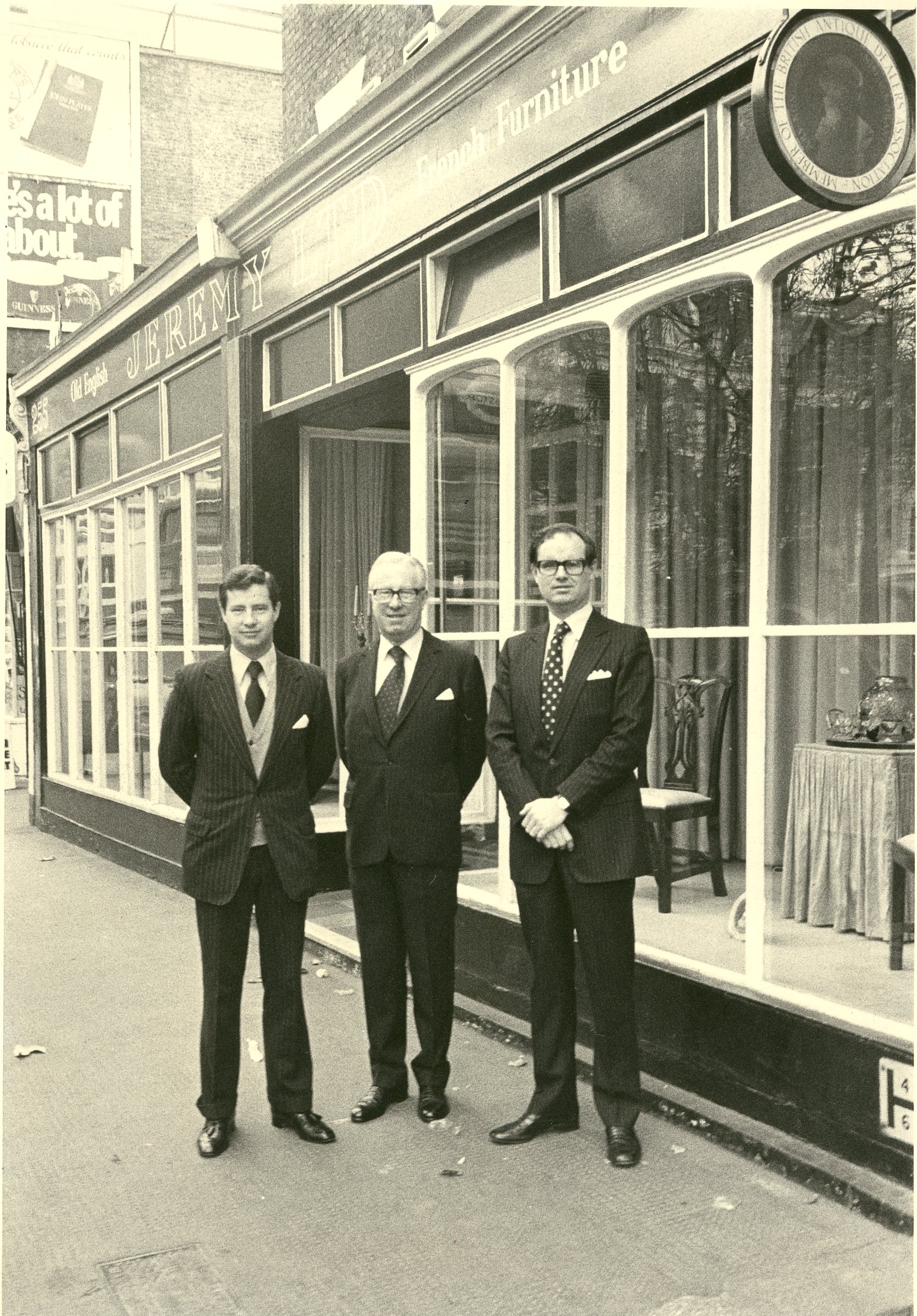
John, Geoffrey and Michael Hill, outside of Jeremy Limited. Photograph courtesy of John Hill.

During this absolutely fascinating interview, John recalls the early history of the business of Jeremy Limited, established in 1946 by John’s father Geoffrey Hill, and well-known for their shop in the King’s Road, London.  John tells us how the firm got its name (his father was known to friends as ‘Jeremy’) and of his memories of many other key members of the London antique trade, including John Partridge, Francis Egerton of Mallett & Son and Horace Baxter of H.C. Baxter & Sons (we have also, as followers of the research project will know, interviewed both John Partridge Jnr and Gary Baxter, Horace Baxter’s son).

John also offered some interesting reflections on the marketing techniques of the firm during the 1960s and 1970s, and some absorbing memories of the Mentmore auction sale, conducted by Sotheby’s in 1977 – considered to be one of the key country house sales of the 20th century.

As will all of our Oral History interviews, our interview with John will, as soon as we are able, be edited, approved, and uploaded to the project website.

Mark

Home Subjects

a working group dedicated to the display of art in the private interior, c. 1715-1914

The Period Room: Museum, Material, Experience

An International Conference hosted by The Bowes Museum and The University of Leeds

H. Blairman & Sons Ltd

A research project investigating the history of the antiques trade in Britain in the 19th & 20th centuries

Museum Studies Now?

'Museum Studies Now?' is an event which aims to discuss and debate museum and heritage studies education provision.

The Burlington Magazine Index Blog

art writing * art works * art market

East India Company at Home, 1757-1857

A research project investigating the history of the antiques trade in Britain in the 19th & 20th centuries