Posts tagged ‘antique dealer catalogues’

October 27, 2025

More Rare Antique Dealer Ephemera

Our collections of antique dealer ephemera continues to grow, with the latest addition a sales brochure/catalogue produced by a dealer previously unknown to us (that in itself is most unusual!). The catalogue is undated (as are many of these dealer catalogues) but seems to have been published sometime in the early 1920s. The previously unknown dealer is ‘The Furniture and Fine Art Depositories Ltd.’, who traded from what appears to be an department store (see previous blog posts on antiques in department stores 31st August 2025; 29th April 2021; 2nd November 2014). The shop was located in Park Street, Upper Street, Islington, London N1 (the location has a long association with antique dealing, especially in the Post Second World War period).
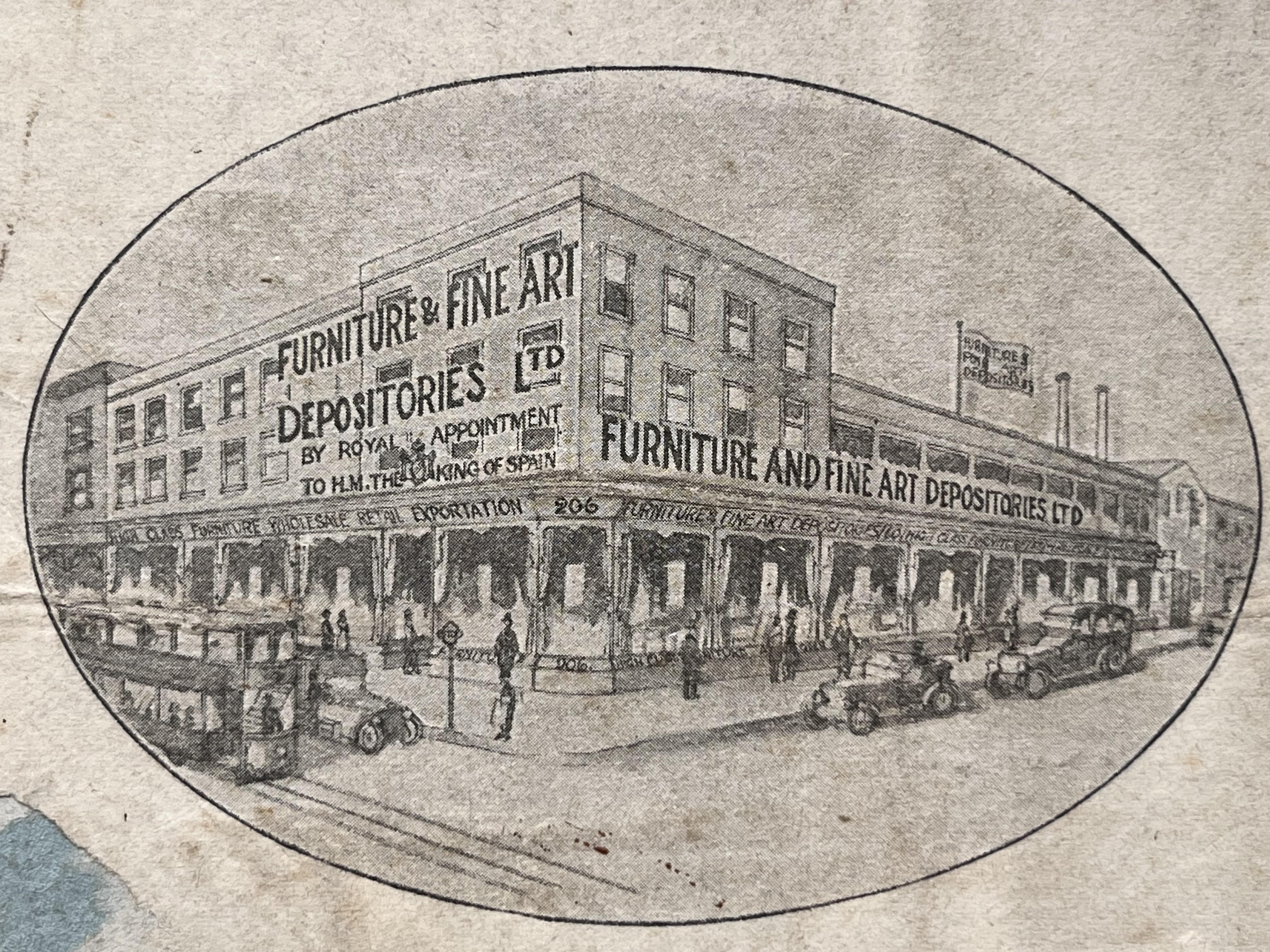
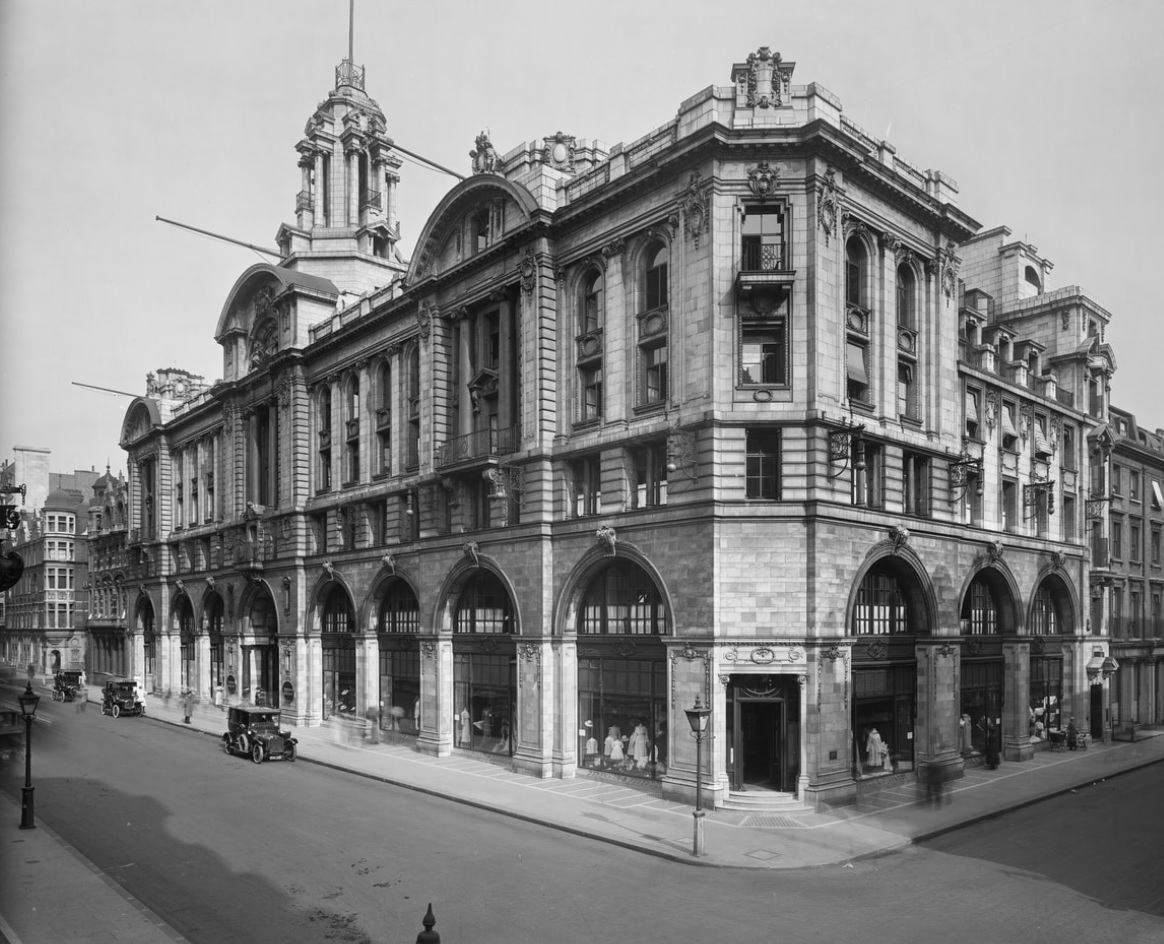
The Furniture and Fine Art Depositories Ltd. Shop in Park Street, Upper Street, Islington, London, c.1920. Photograph Antique Dealers Research Project, University of Leeds.

The business is not listed in any of the usual antique dealer directories, hence they appear to have been under the radar of the project. The business was established in the 1870s and seems to have been primarily involved in making and selling modern furniture (for which they won medals at the Paris Exhibition 1912 and the International Exhibition in Rome in 1912 – see below) and as general house furnishers; they also sold wallpapers, carpets and were contractors for interior decoration. However, the catalogue that the firm produced is very similar to other antique dealer’s catalogues of the period and is full of interesting examples of antique furniture.
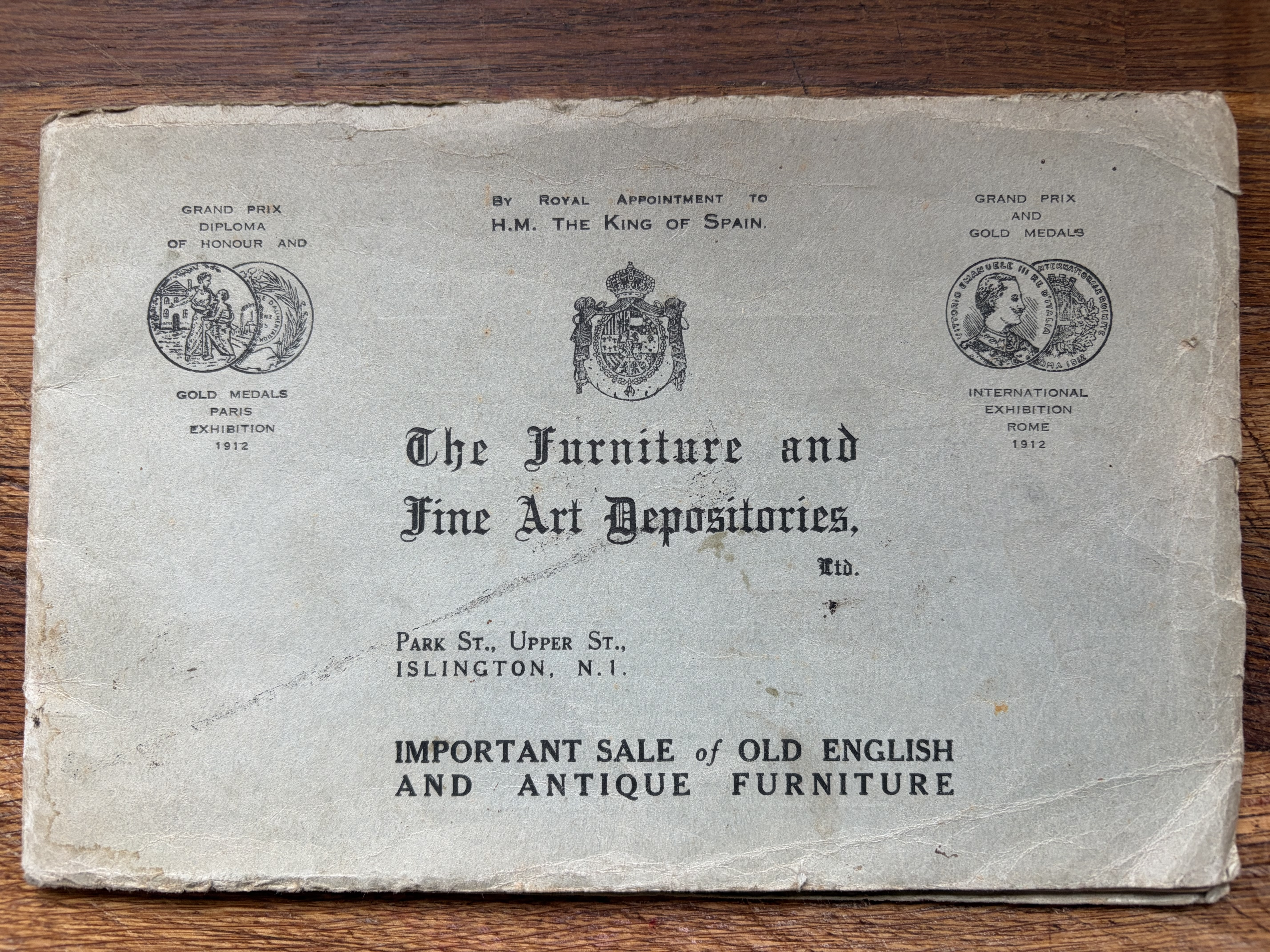
The Furniture and Fine Art Depositories Ltd., sales catalogue, c.1920. Photograph Antique Dealer Research Project University of Leeds.

What appears to be different about The Furniture and Fine Art Depositories Ltd., is their mode of business, which, as they state in the catalogue ‘…is not like that of the ordinary dealer in antiques or the general trader.’ As they elaborate, ‘The greater portion of the goods for disposal by the firm are entrusted to it by private owners, who pay a small commission of ten per cent. on sums for which the articles are sold.’ In the catalogue are dozens of photographs of antique furniture alongside a few pieces of modern reproduction ‘Queen Anne’ furniture, so fashionable at the time. For example, a ‘Chippendale Mahogany Settee’, priced at ‘27.10s.0d’; this was from the ‘the Furness Collection’; and an ‘Old Mahogany Circular Pedestal Table’, priced at ‘£15.0s.0d’ (see below):
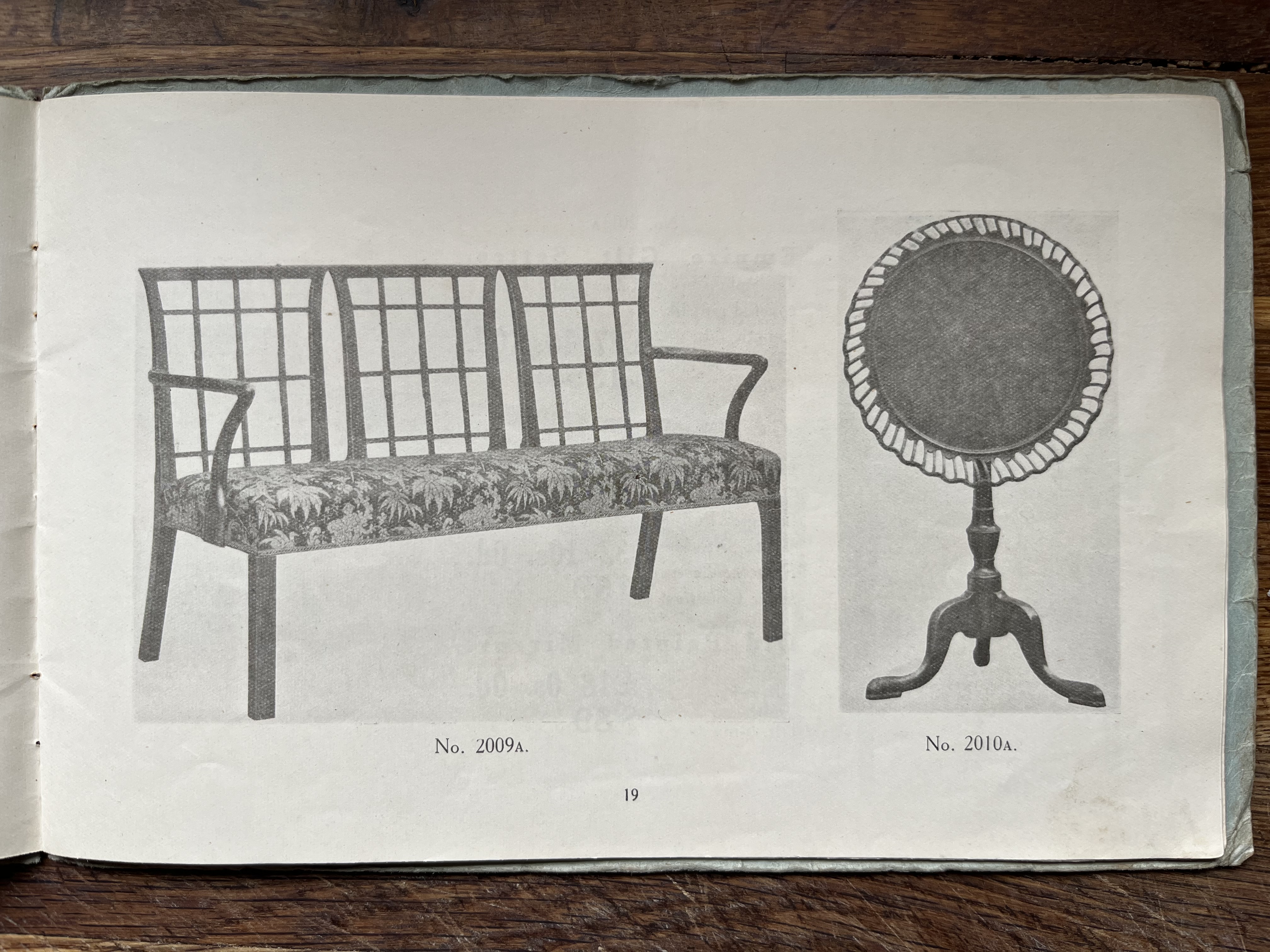
The Furniture and Fine Art Depositories Ltd., sales catalogue, c.1920. Photograph Antique Dealer Research Project University of Leeds.

An ‘Old English Mahogany Tambour Shutter Front Cabinet’ (priced at £12.15s.0d) is listed as from the ‘Earl of Essex Collection, Cassiobury Park’ – the house was sold by the 8th Earl of Essex in 1922 and demolished for its materials in 1927. Incidentally, the famous staircase c.1677-80 from Cassiobury Park (attributed to the carver Edward Pearce) was sold by the antique dealers Edwards & Sons of Regent Street, London to the Metropolitan Museum in New York in 1932 (see here). Also in the photograph (below) is a ‘Charles II Oak Chair’, ‘in excellent preservation’, priced at ‘£17.10s.0d.’
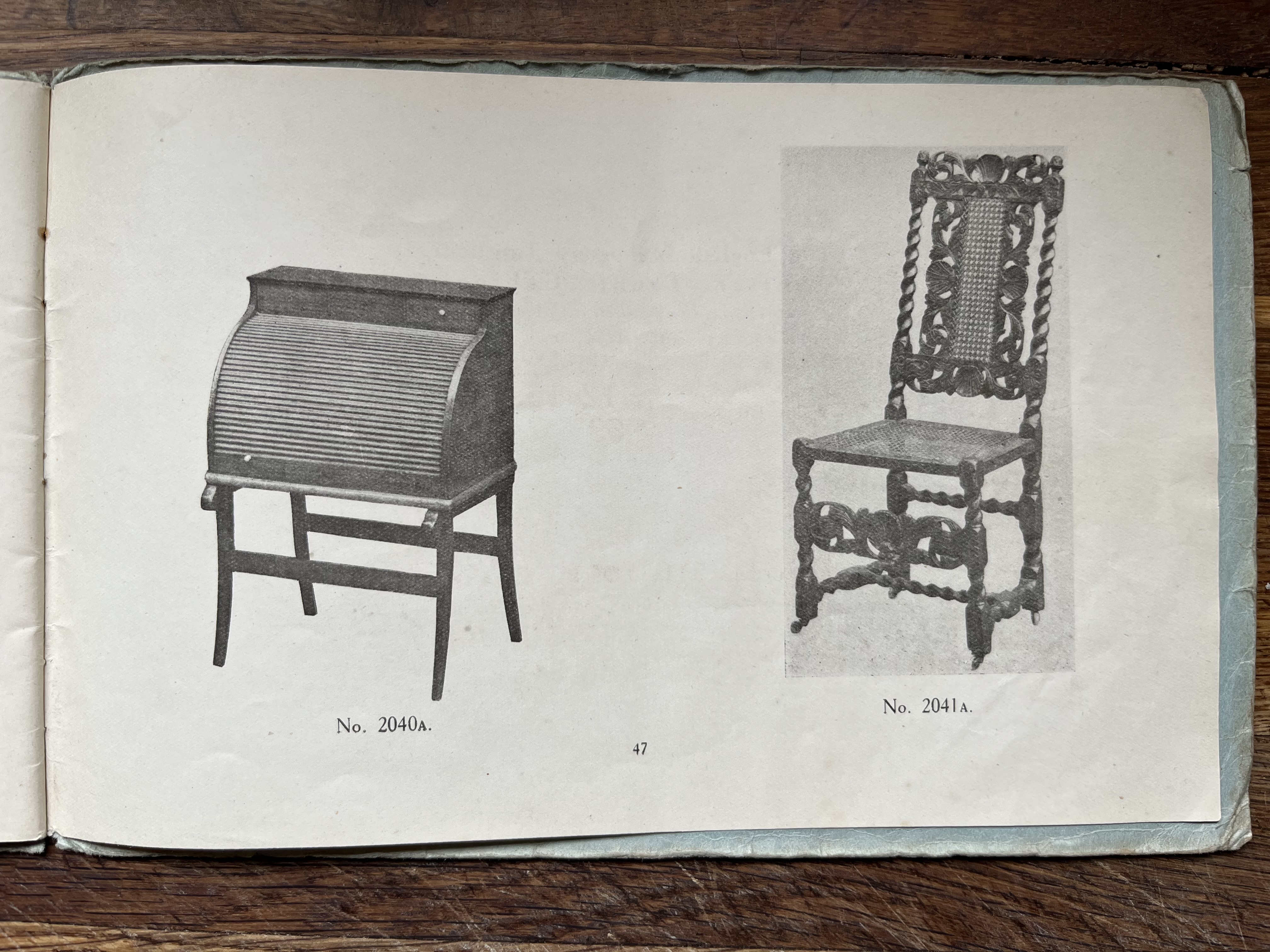
The Furniture and Fine Art Depositories Ltd., sales catalogue, c.1920. Photograph Antique Dealer Research Project University of Leeds.

Many of the antiques illustrated in the catalogue are rather too generic to be able to trace and locate, but I have been able to find one object illustrated in the catalogue – described (erroneously) as a ‘Chippendale Mahogany Side Table. With heavy marble top. Magnificently carved panelled back, supported by four massive carved legs with claw and ball feet’ – priced at £27.10s.0d’.
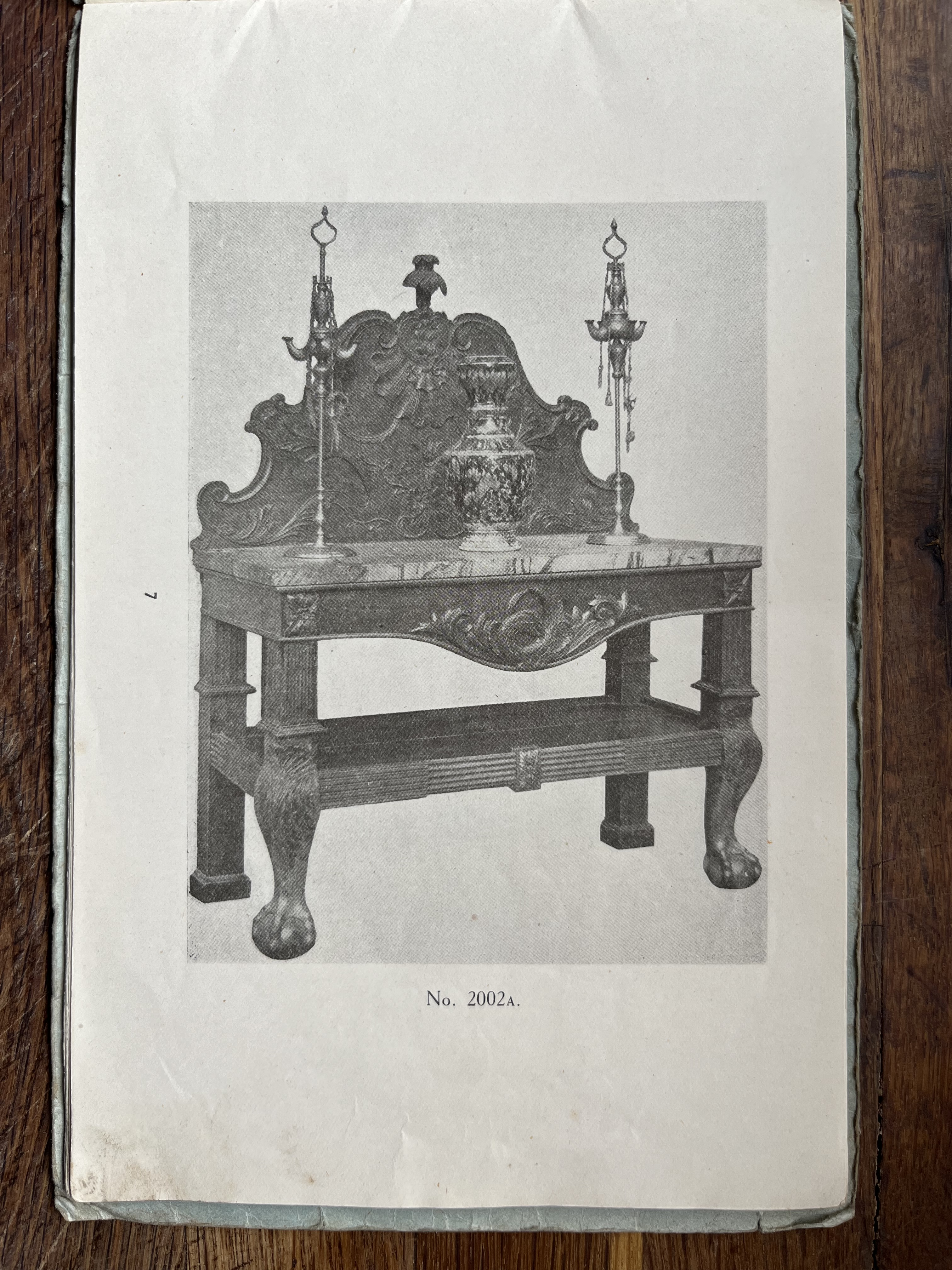
The Furniture and Fine Art Depositories Ltd., sales catalogue, c.1920. Photograph Antique Dealer Research Project University of Leeds.

The table came up for sale at Bonhams in August 2012 – see description here (see below for the Bonhams photograph) described as ‘A Mahogany Two-Tier Pier Table in the George III style’. The table had by 2012 lost its carved back and the marble was broken in two, but it retained an ivorine label for ‘Furniture and Fine Art Depositories Ltd., Park Street, Islington, By Appointment to H. M. The King of Spain’. Bonhams described the table as ‘possibly adapted from a larger 18th century table’; it sold for £275 including buyers premium. It’s worth highlighting that £27.10s.0d was worth about £5,400 (relative income value) in 1920.
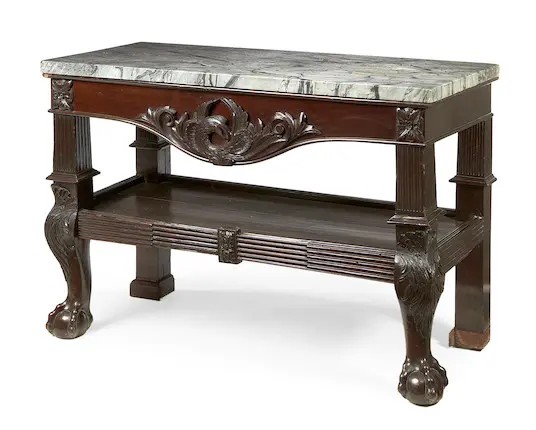
Side Table sold at Bonhams 2012. Photograph copyright Bonhams Auctioneers, 2012.

The Furniture and Fine Art Depositories Ltd., catalogue will be joining all the other antique dealer ephemera in the Brotherton Library, University of Leeds in due course.

Mark
August 31, 2025

More Antiques in Department Stores – Debenham & Freebody

A recent addition to the corpus of antique dealer ephemera that the antique dealer project continues to gather is a rare sales catalogue produced by the London department store Debenham & Freebody in about 1910. The small paper catalogue (7.5 inches wide by 10 inches high) has 25 pages packed with images and listings of antiques that Debenham’s offered for sale.

Debenham & Freebody antiques sale catalogue, c.1910. Photograph, Antique Dealer Research Project, University of Leeds, 2025.

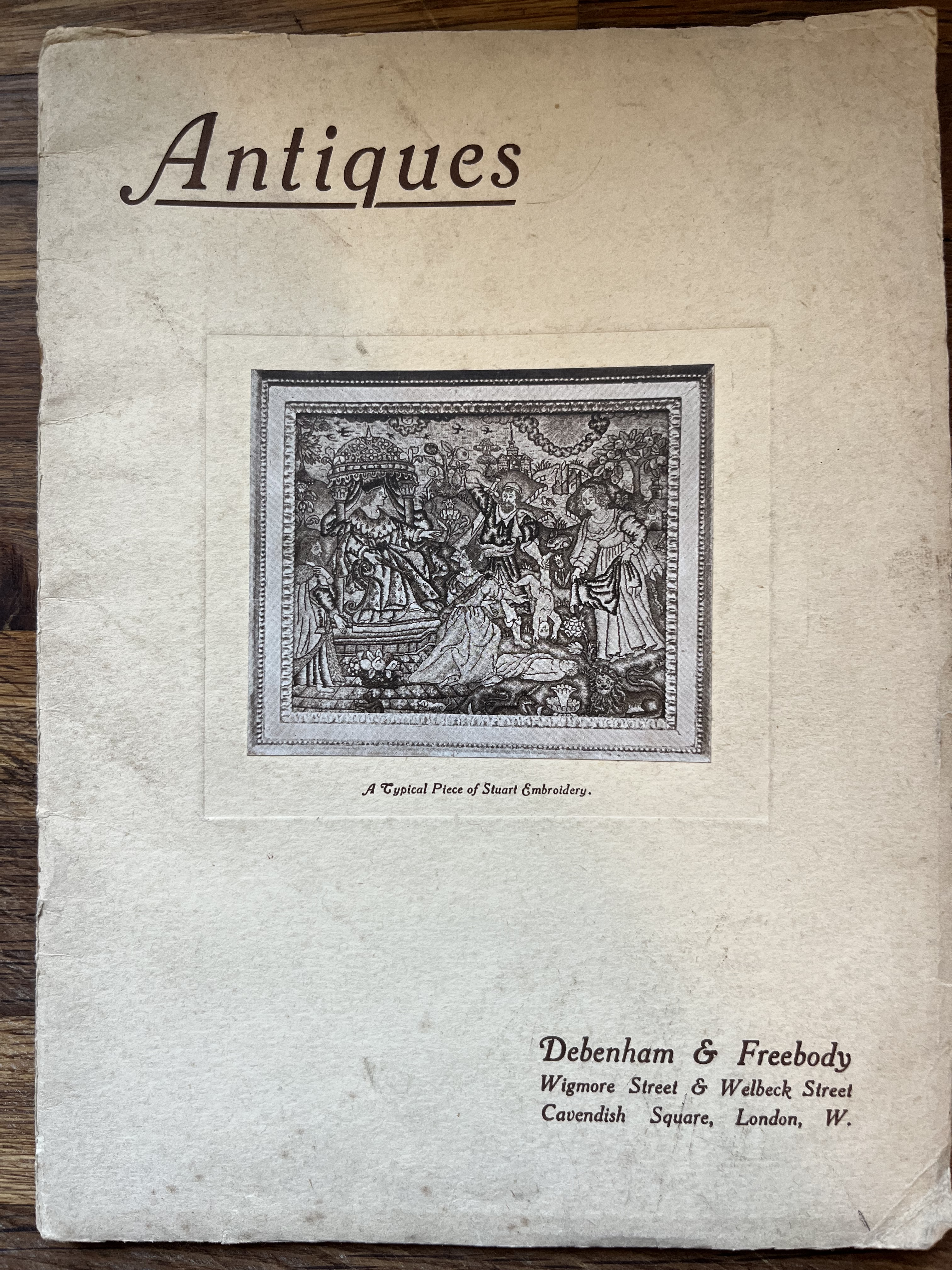
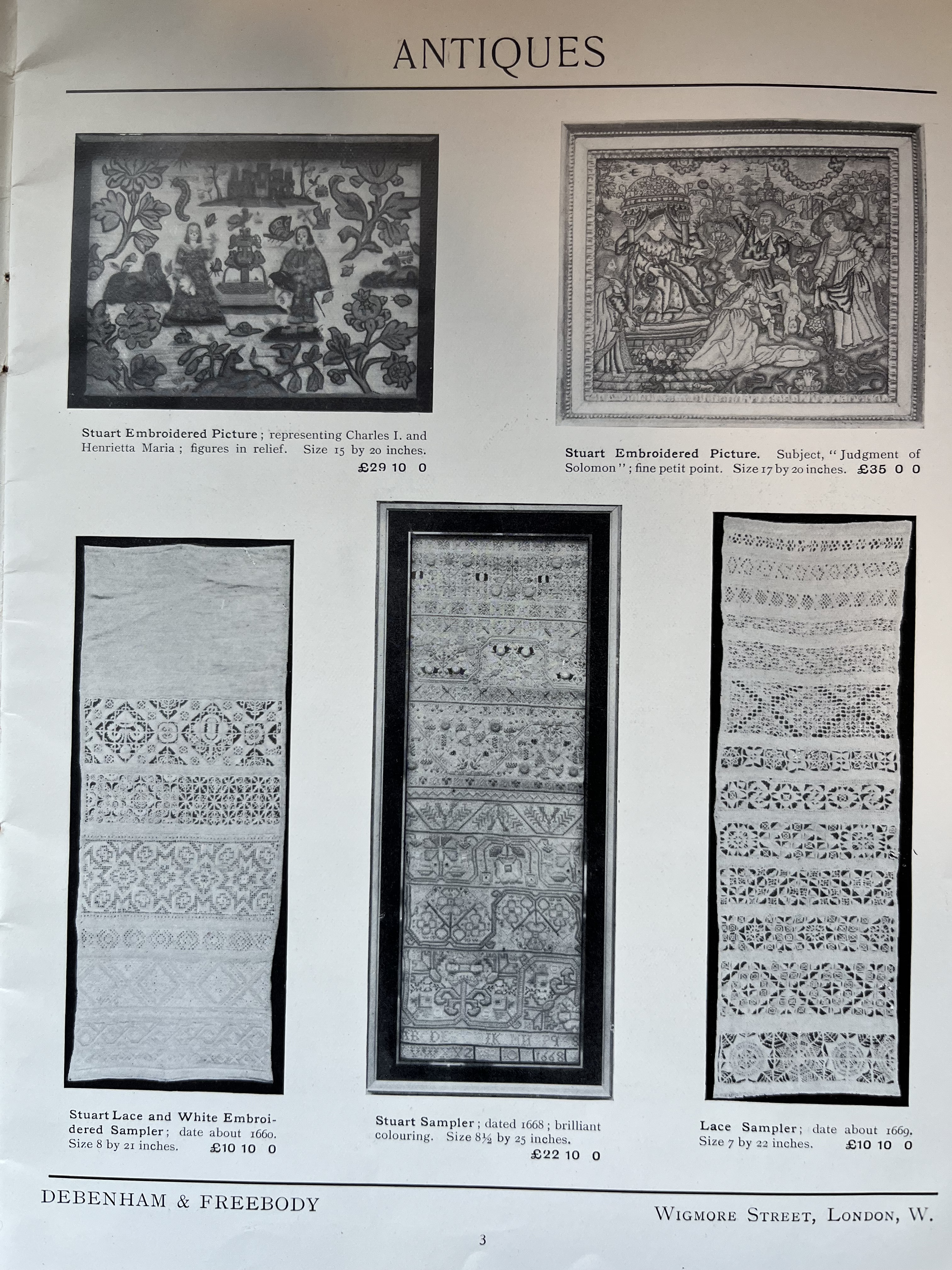
The Debenham and Freebody catalogue lists 246 items for sale, almost half of which are antique textiles, lace and embroideries, reflecting the keen interest in such objects in the early 20th century. Indeed, in the Introduction in the opening pages of the sales catalogue the writer emphasises the significance of women as consumers of antique textiles – ‘Ladies who are interested in home needle craft are informed that we have a very large number of quite inexpensive fragments and small pieces of brocades and galons suitable for making up into all kinds of fancy articles.’ Beyond these ‘fragments’ there were many rare items offered for sale, including rare ‘stumpwork’ embroideries and samples of antique lace (see below); the ‘Stuart Embroidered Picture, Subject, ‘Judgement of Solomon’ had a hefty price of £35.0.0. (equivalent at the time to as much as £28,000). The embroidery was also illustrated on the front of the sales catalogue, (see above) emphasising its importance.

Debenham & Freebody antiques sale catalogue, c.1910. Photograph, Antique Dealer Research Project, University of Leeds, 2025.

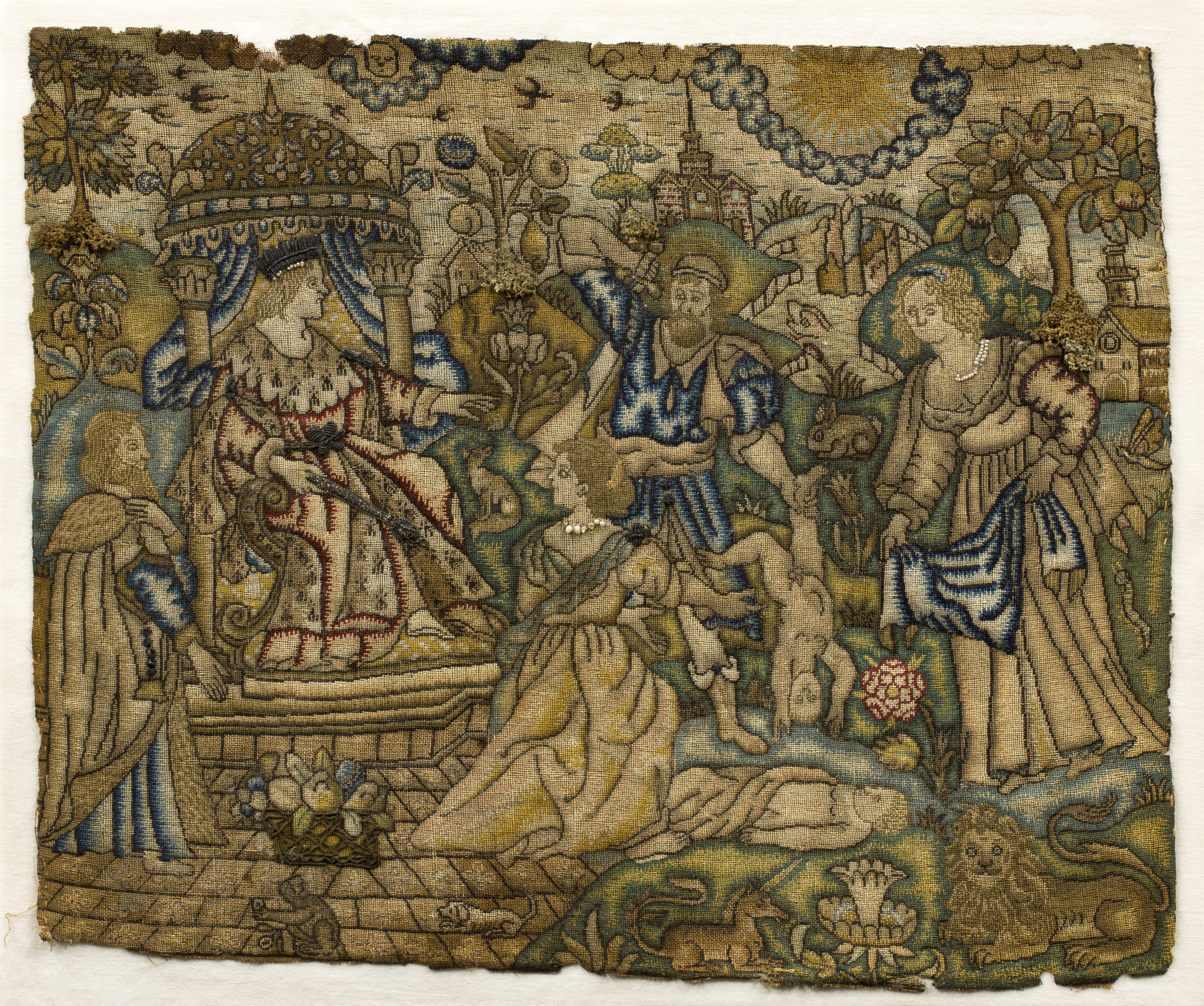
It seems likely likely that the ‘Stuart Embroidery’ illustrated in the Debenham & Freebody sales catalogue is the same one that is currently in the St. Louis Art Museum in Missouri in the USA. The subject is of course the same, but the addition of seed pearls around the necks of the two female figures to the centre and to the right suggests that the Debenham & Freebody embroidery and the St. Louis Art Museum example are the same. The St. Louis Museum of Art embroidery no longer has the giltwood frame (which was much later than the embroidery). The provenance for the St. Louis Art Museum embroidery suggests it was given to the museum in 1972 by Mrs. William A. McDonnell (Carolyn Vandergrift Cherry McDonnell), who married William A. McDonell (1894-1988) in about 1919; Carolyn’s husband was a prominent railroad executive and banker. It is not known who McDonnell purchased the embroidery from, but it is likely that it passed through other hands before it ended up in the USA.

The Judgement of Solomon, embroidery, 17th century. 7.1972, the Gift of Mrs. William A. McDonnell. Photograph, St. Louis Art Museum, Missouri, USA.

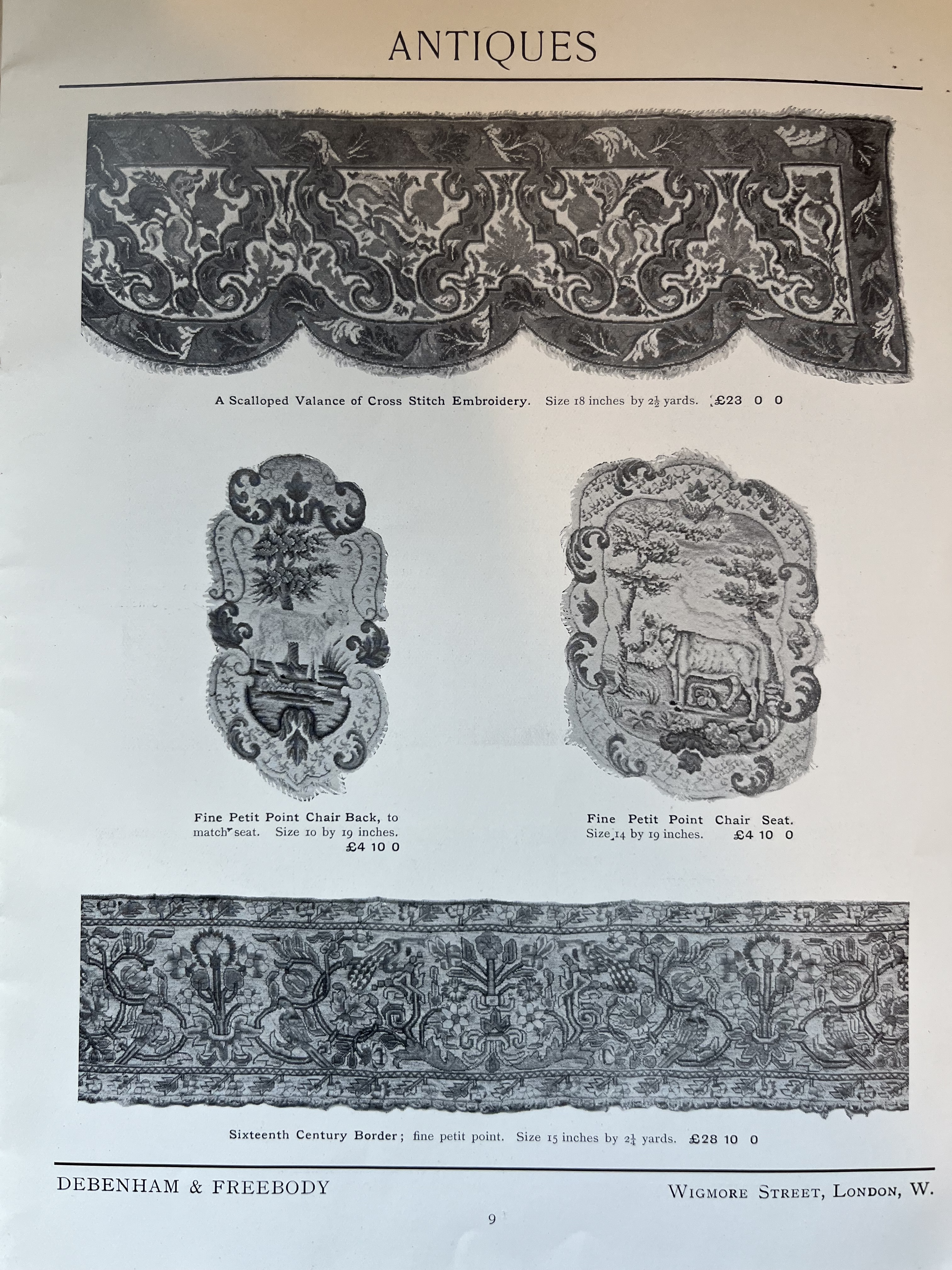
Other pages illustrate fragments suitable for embellishing antique furniture, or for display as relics of past crafts. The ‘Fine Petit Point Chair Back’ (£4.10.0) and ‘Chair Seat’ (£4.10.0) (see below) would potentially enhance an 18th century antique chair; or the ‘Sixteenth Century Border’ (£28.0.0.) (below) would be a fine addition to an antique oak interior, so fashionable at the time.

Debenham & Freebody antiques sale catalogue, c.1915. Photograph, Antique Dealer Research Project, University of Leeds, 2025.

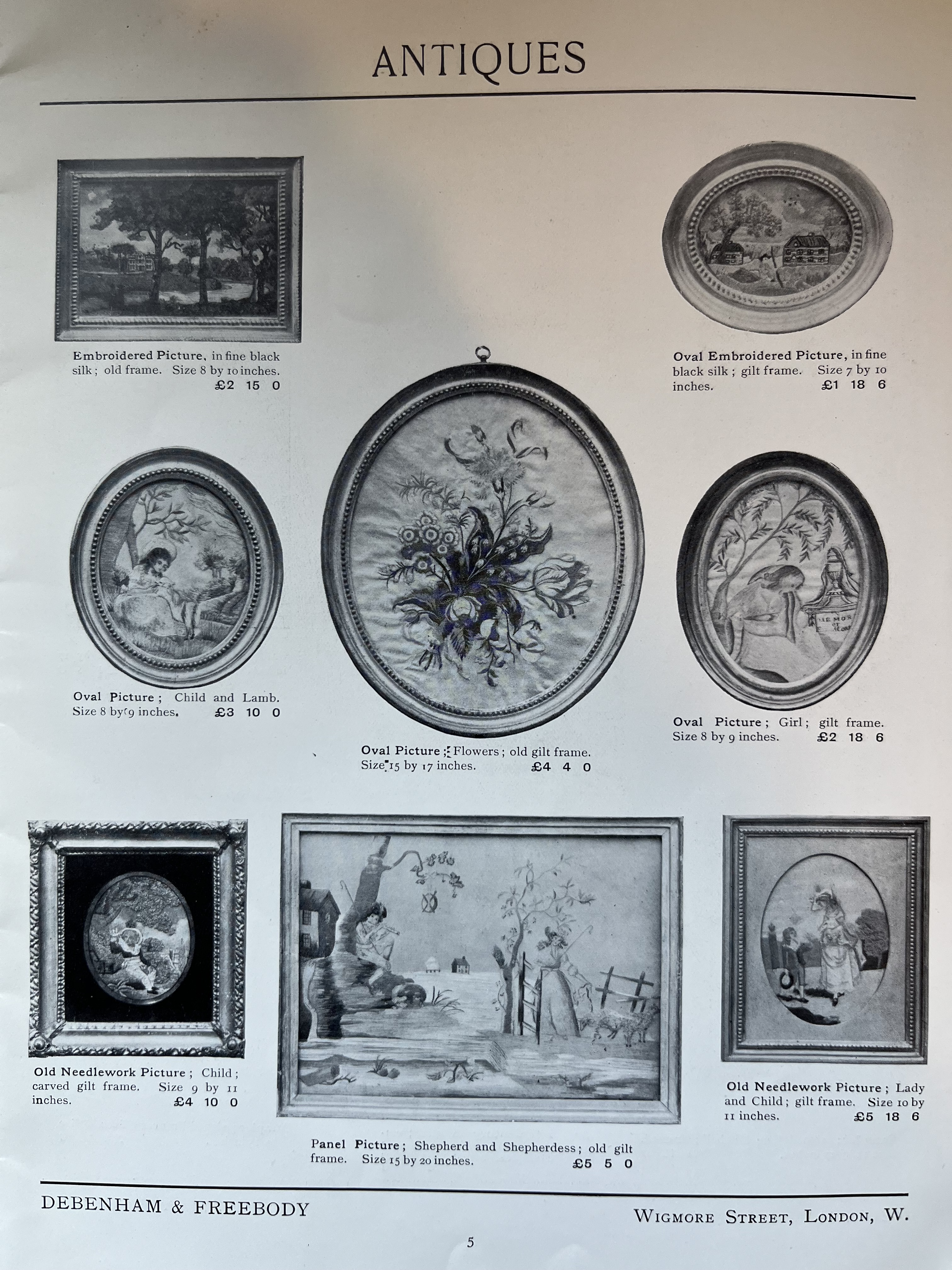
18th century, and even early 19th century needlework pictures (see below), also seemed to be very popular, keying into the 18th century and ‘Regency’ revivals that were generating interest in the period.

Debenham & Freebody antiques sale catalogue, c.1915. Photograph, Antique Dealer Research Project, University of Leeds, 2025.

As previous blog post have indicated – see our post on a sales catalogue produced by the furniture retailer Hampton & Sons (see April 2021) and the earlier Guest Blog Post by our friend Chris Coles on antiques and department stores (see November 2014) – from the early 1900s department stores were key locations for the sales of antiques. Debenham & Freebody for example opened their department store in Wigmore Street, London in about 1909 and had an antiques department in the store right from the start. Their antiques department seemed to have been a great success and they moved the department to a dedicated and larger section in their Welbeck Street store in 1923.

Debenham & Freebody, Wigmore Street, c.1917. Photograph copyright Historic England Archive.

The rare Debenham & Freebody sales catalogue is a significant addition to the antique dealer archives, and will be joining the other antique dealer archives at the Brotherton Library Special Collections at the University of Leeds in due course.

Mark
May 30, 2023

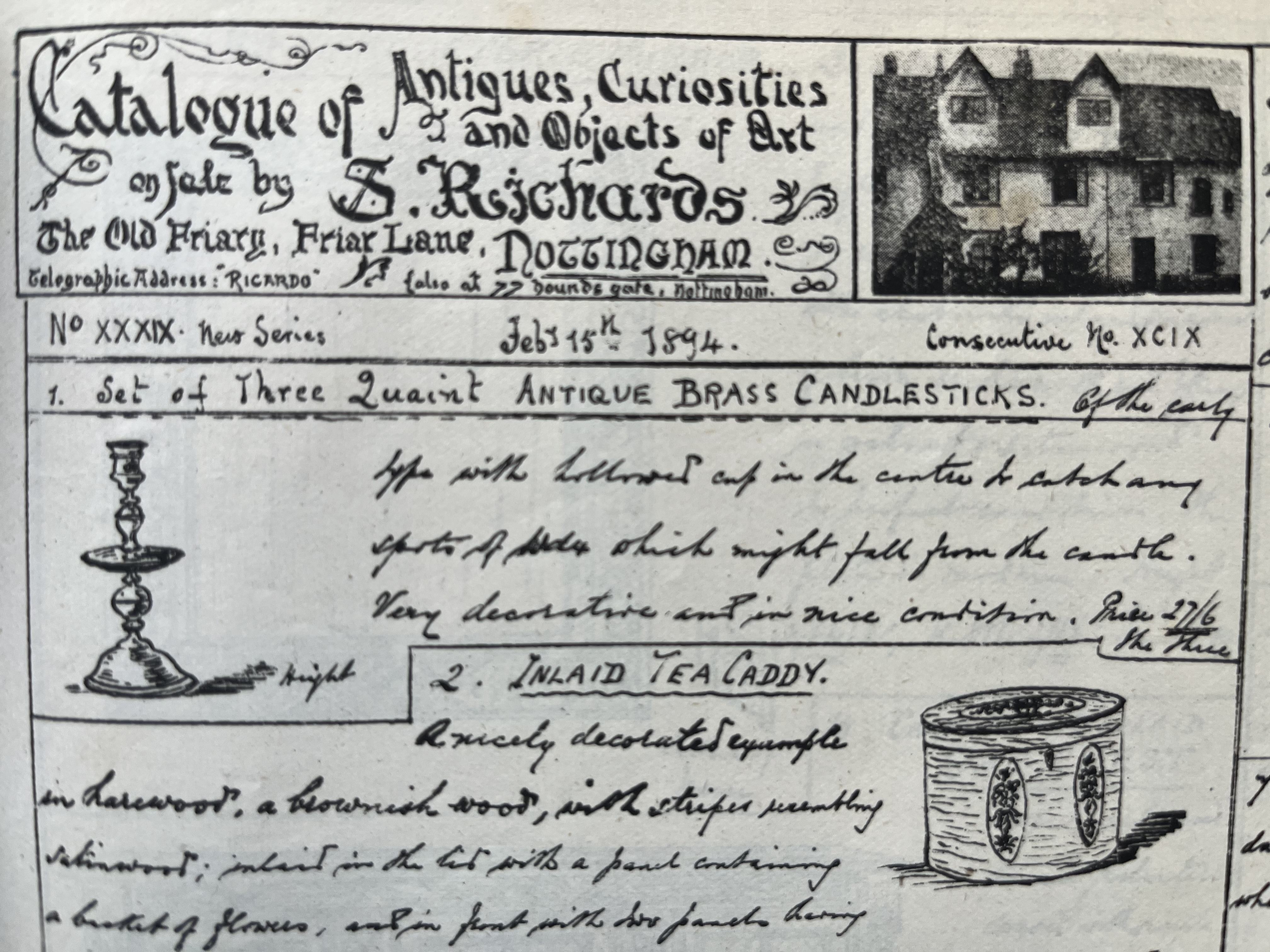
More on Samuel Richards: a Nottingham antique dealer 1890s-1920s

Readers of the Antique Dealers’ blog will be aware that we have previously posted a couple blog entries on the antique dealer Samuel Richards (1859-1927) (see blog posts November 2018 & June 2014). Richards is well-known for producing charming and detailed lithographed catalogues of his stock of antiques, which he issued monthly (with a few exceptions) from the early 1890s until the period around the First World War. Richards’ catalogues are quite rare – there are a few copies at the Victoria & Albert Museum Art Library in London, bound together in a couple of volumes. We also have a small number of bound copies in the John Evan Bedford Library of Furniture History at the Brotherton Library Special Collections at the University of Leeds, thanks to the very generous bequest of the late John Bedford (1941-2019). The Brotherton Special Collections also has a couple more bound copies of Richards catalogues, very generously bought at auction (in Nottingham no less) in 2018 and donated by our friend and keen supporter of the antique dealer research project, Simon Myers, of the antique dealer R.N. Myers & Sons of Gargrave in North Yorkshire (thank you again Simon).

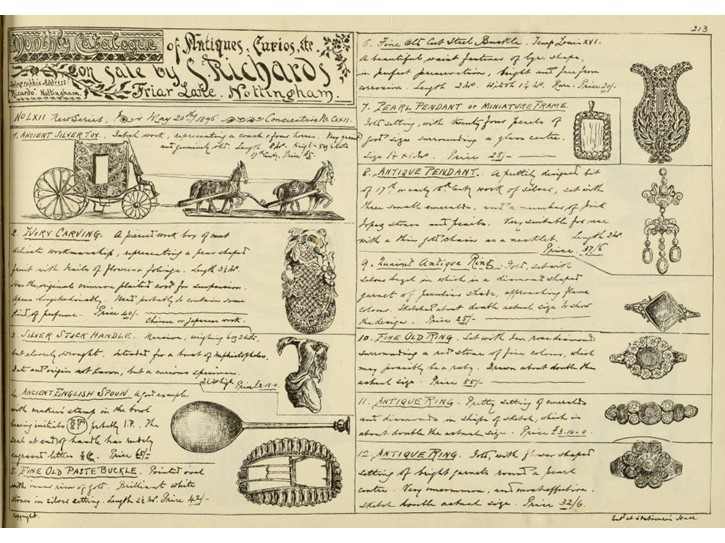
Samuel Richards, Nottingham, Catalogue of Stock, May 20th, 1896. Photograph, Antique Dealers’ Research Project, University of Leeds.

Richards drew the illustrations in the catalogues himself, producing them monthly and sending them out to collectors all over the UK – although Richards quite often felt the need to apologise for missing a month (due to sheer volume of work, he says) in some of the monthly catalogues.

Samuel Richards, Nottingham, catalogue of stock of antiques, April 1912. Photograph, Antique Dealers Research Project, University of Leeds.

Whilst such lithographed catalogues produced by antique dealers were not unique to Richards (see blog post of the catalogues produced by A. W. & F. Little, of Bristol, in the same period – Blog Post February 2022), Richards seems to have been particularly prolific.

As a result of these fascinating catalogues, we have been doing more research on Samuel Richards over the past few months and have discovered new information about his activities an antique dealer in the period 1890s to 1920s. Richards was born in Nottingham in 1859, and died in Loughborough in 1927. He appears to have run his antique dealing business in Nottingham, but lived most of his life in Loughborough. The Census (1901) records Richards aged 42, a ‘dealer in antiquities’ (as antiques were often called at the time), living at 1 Park Street, Loughborough, with his wife Maud (aged 38), his son Arthur (aged 9), and daughters Winifred (aged 5) and Nora (aged 4), together with a servant, Fanny (aged 16). Richards appears to have owned or rented another property in Herrick Road in Loughborough at the same time. Richards antique shops were located in Nottingham, at 77 Houndgate and at The Old Friary, Friary Lane – he seems to have operated from both premises from the 1890s until his retirement from business in c.1919 – his son Arthur (1891-1976) appears to have worked with his father in the antique shops from about 1908, perhaps until his father’s retirement in c.1919. Richards shop at 77 Houndgate was crammed full of antiques (see photograph from 1892, below) typical of the material he illustrated in his monthly catalogues.

Samuel Richards antique shop, 77 Houndgate, Nottingham, 1892. Photograph, Antique Dealers Research Project, University of Leeds.

You can just make out the exterior appearance of Richards’ Houndgate antique shop in the title page of some of his catalogues – see below).

Samuel Richards, catalogue of stock of antiques, 1891. Photograph, Antique Dealer Research Project, University of Leeds.

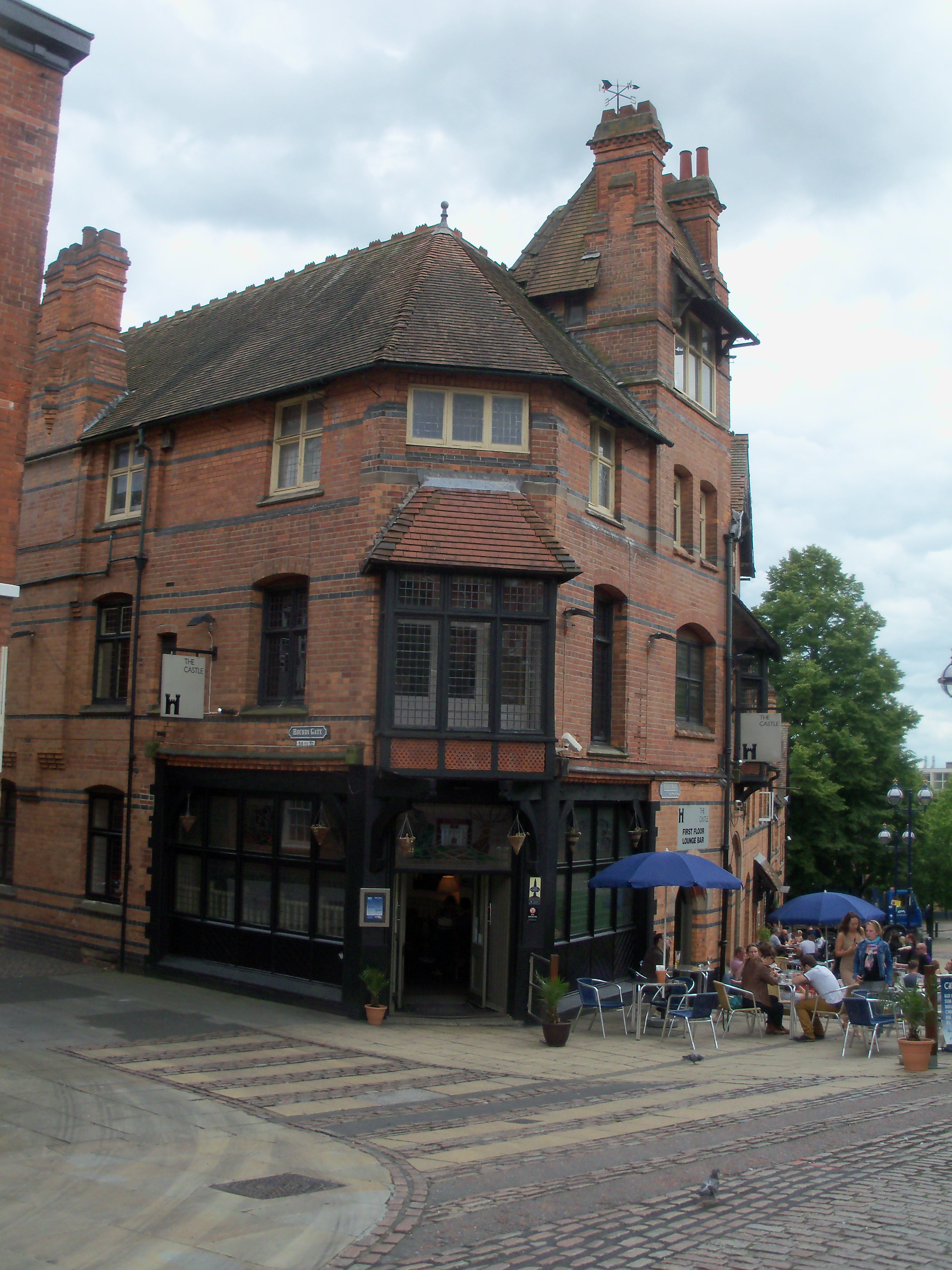
And as mentioned in the previous blog post in June 2014, the building that housed Richards’ Houndgate antique shop still exists (see below).

Building that housed Samuel Richards antique shop, photographed in 2014. Photograph, Antique Dealers Research Project, University of Leeds.

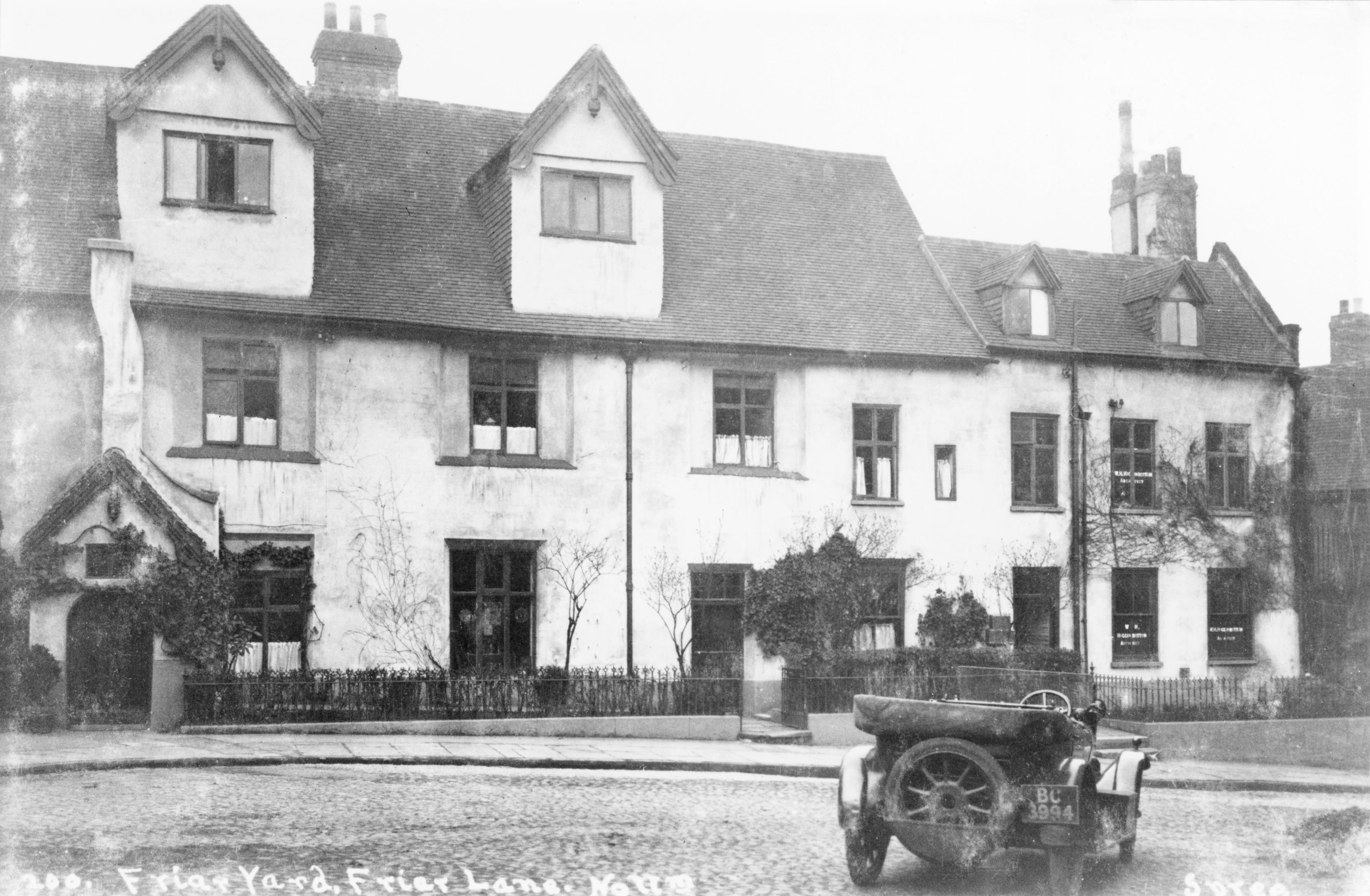
Richards’ other shop, The Old Friary in Friary Lane, Nottingham, was a much more famous building. He appears to have rented The Old Friary from the early 1890s until c.1919.  The Old Friary was a 17th century building, rebuilt as part of a much earlier series of buildings that were part of Whitefriars Priory (built c.1276). 

The Old Friary, Nottingham, c.1927, just shortly prior to its demolition. Image courtesy of Getty Images as part of the Year of the Dealer project 2023.

The Old Friary was also partly rebuilt in the 16th century and more famous for its associations with Dorothy Vernon (1544-1584) of Haddon Hall fame; Vernon is supposed to have lived at the Old Friary with her husband John Manners (1534-1611).  In 1902 Charles Major published his famous romance novel ‘Dorothy Vernon of Haddon Hall’ which may have increased traffic to Richards’ shop. Certainly, such historic associations would have been of interest to an antiquary such as Richards and to his customers.  The Old Friary was demolished in 1927. You can also just make out a photograph of The Old Friary in the title page of some of his catalogues of stock of antiques (see below).

Samuel Richards, catalogue of stock of antiques, February 1894. Photograph, Antique Dealer Research Project, University of Leeds.

We also have some exciting news about Samuel Richards – he is the focus of one of our Year of the Dealer Project digital trails (see Year of the Dealer Project) – at the Lady Lever Art Gallery at Port Sunlight, near Liverpool. Richards sold a large amount of ‘antique straw-work’ objects to Sir William Lever in 1915, one specimen of which we have included in the Year of the Dealer trail at the Lady Lever (see below). So, keep your eye out for the official launch of the Year of the Dealer trails this summer.

Mark

Early 19th century Straw-work box. French. Sold by Samuel Richards to William Lever in 1915. Lady Lever Art Gallery, Port Sunlight. Photograph, Antique Dealer Research Project, University of Leeds.
March 31, 2023

Godfrey Giles & Co – ‘antique dealers’

Yet more examples of historic ‘antique dealer’ booklets and catalogues keep turning up – this time our friend Thomas Lange, researcher at leading London based antique furniture dealers Ronald Phillips very generously send us a copy of a rare brochure from his own collection. Thomas has been a keen supporter of the Antique Dealer Research Project for many years and has often sent us information and historical material on the history of antique dealing – thank you again Thomas!

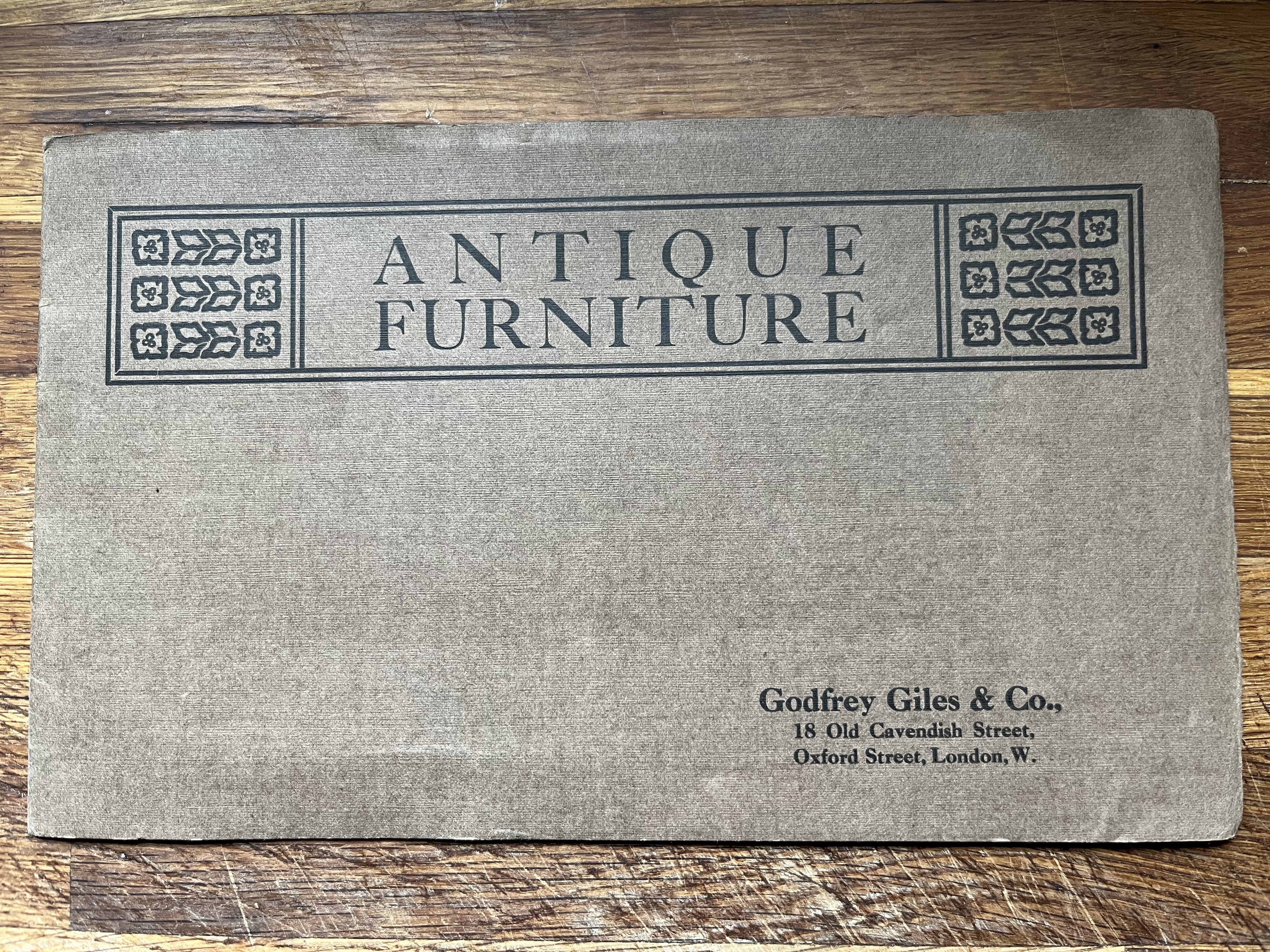
On this occasion Thomas discovered an antique dealer that had not previously been known to us – Godfrey Giles & Co, 18 Old Cavendish Street, London.

‘Antique Furniture’ – Godfrey Giles & Co. c.1915. Photograph, Antique Dealer Research Project, University of Leeds 2023.

Godfrey Giles were certainly not figured in our Antique Dealer Map website – but their absence can be explained by our research methodology; we have tended to concentrate on information about antique dealers from historic Trade Directories, Antique Dealer Guidebooks and Listings, and antique dealer advertisements etc. But of course such an approach misses many traders who operated at the periphery of the trade in antiques, and in overlapping practices such as furniture makers, decorators and general furnishers etc.

Godfrey Giles appears to have been this type of business. Indeed, they are classified as furniture manufacturers in the Furniture History Society’s ‘British and Irish Furniture Makers Online’ (BIFMO) database. The firm seems to have been flourishing in the 1890s, as ‘Decorators, Cabinetmakers and Upholsterers’, with various retail outlets in Kensington High Street, London (for ‘general furnishings’) and in Queen Street, London and New Cavendish Street, London (for ‘Decorative Furniture’ and ‘Antique Furniture’). Their New Cavendish Street shop was right next to another well-known ‘Decorator and Antique Dealer’ Gregory & Co.

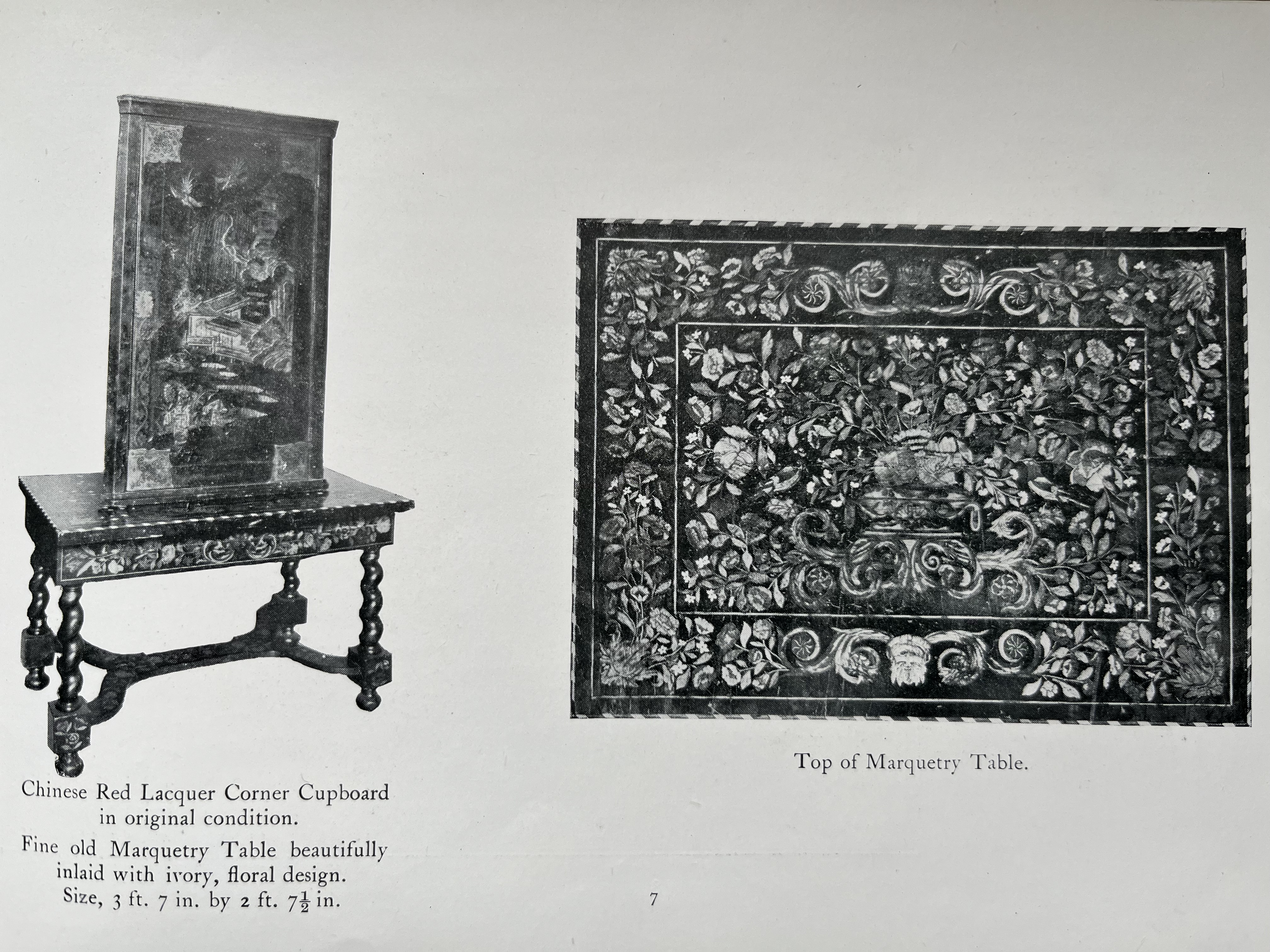
The brochure that Thomas kindly donated to us is undated, but appears to date from c.1915; it’s about 10 inches x 6 inches, contains just 8 pages, and is typical of the types of booklets produced by several antique dealers in the period. It illustrates examples of antique furniture for sale in Giles’ shop.

Godfrey Giles & Co., booklet c.1915 – illustrations of antique furniture. Photograph, Antique Dealer Research Project, University of Leeds, 2023.

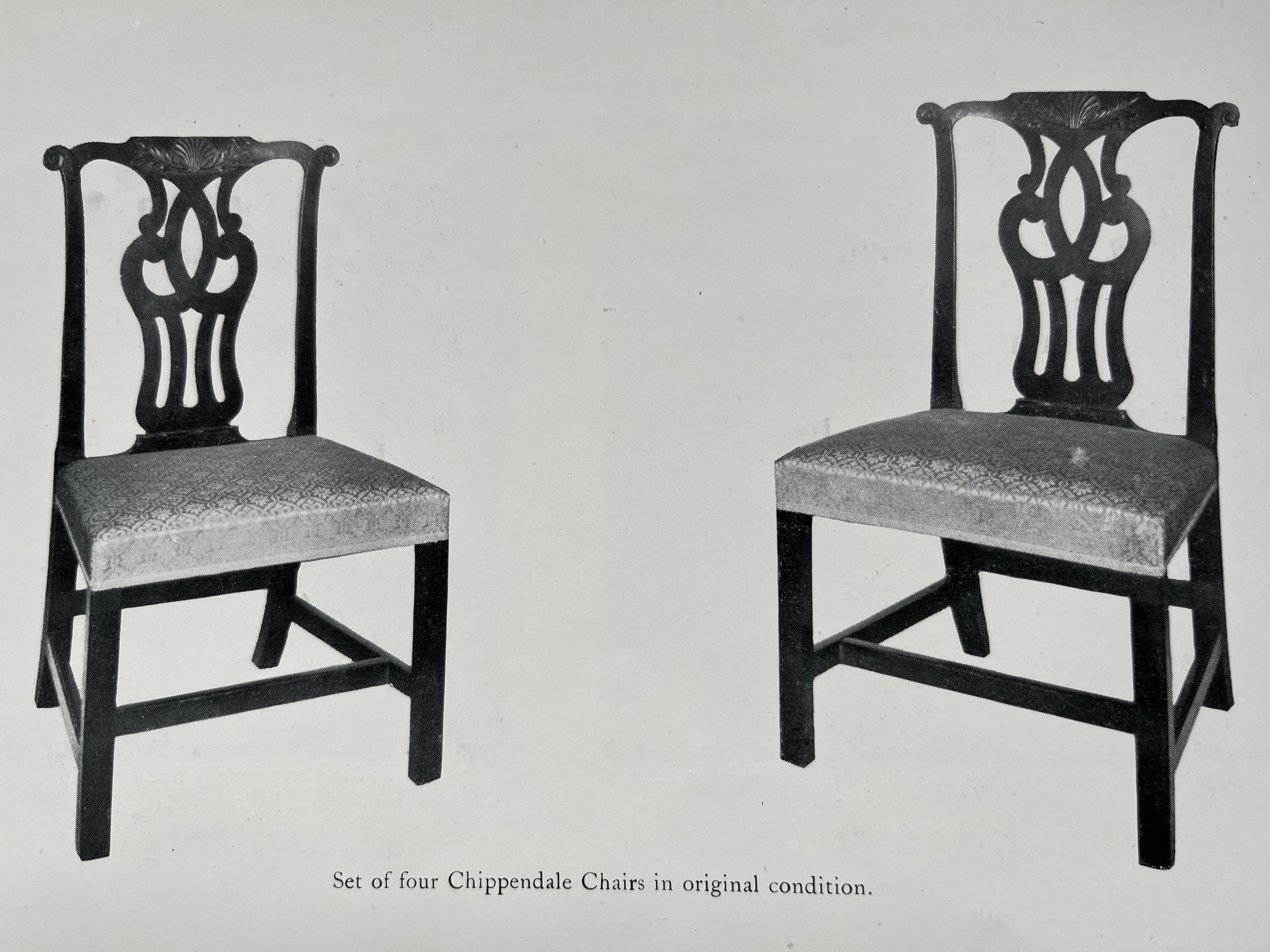
That Godfrey Giles, a ‘modern’ furniture maker and retailer, should also be selling antique furniture is no surprise of course, many furniture makers bought and sold antique furniture in the early 1900s as demand for antiques expanded in the period. As the booklet states, ‘The demand for antique furniture shows no signs of abating.’ The booklet has some interesting examples of antique furniture fashionable at the time. ‘Chippendale’ furniture was key of course, such as these ‘Chippendale Chairs’ described as ‘in original condition’ (see below):

Godfrey Giles & Co., booklet c.1915. Photograph, Antique Dealer Research Project, University of Leeds, 2023.

Our these ‘Chippendale’ tables, the right hand one described as ‘of the best period and in exceptionally fine condition’ (see below).

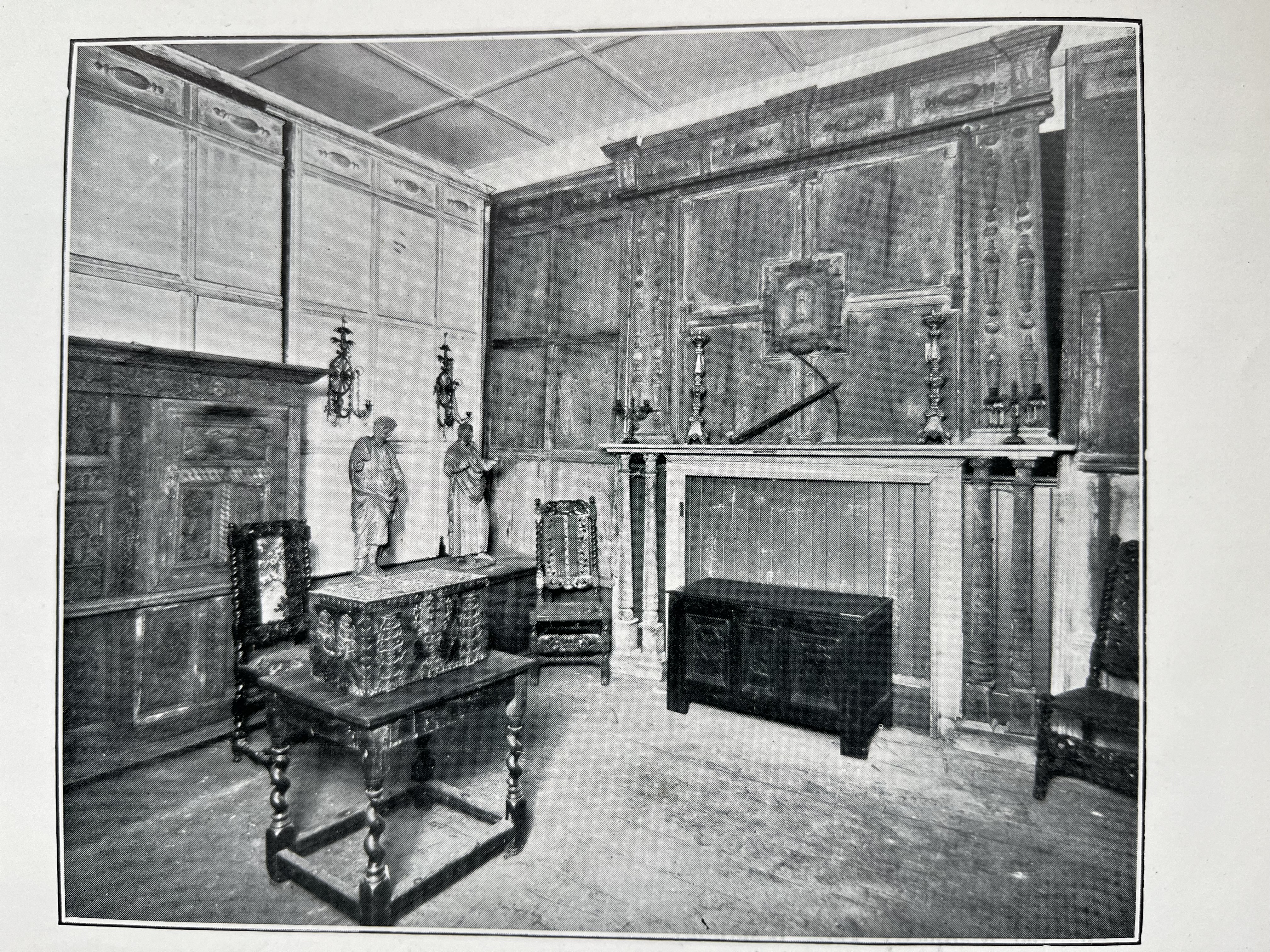
Antique oak furniture was also particularly popular in the early 1900s – the booklet mentions the ‘Oak Room’ at Godfrey Giles’ showroom, ‘unique and full of interest to collectors’. The room itself is described in the booklet as a ‘Fine example of a Jacobean Oak Room taken from Erdington Hall, Birmingham. Circa 1650.’

Godfrey Giles & Co., booklet c.1915. Photograph, Antique Dealers Research Project, University of Leeds, 2023

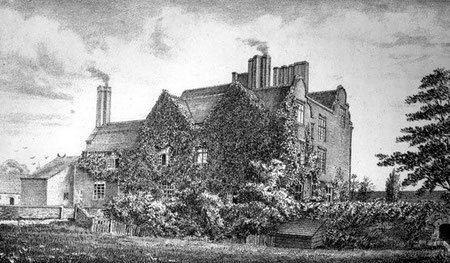
Erdington Hall was built in the mid 1600s, and was demolished in 1912, so this perhaps gives us a date for the Godfrey Giles & Co booklet.

Erdington Hall in 1879. Illustration from Harrison & Wills, ‘The Great Jennings Case’ (1879) – from https://billdargue.jimdofree.com/placenames-gazetteer-a-to-y/places-e/erdington/

The antique furniture illustrated in the booklet suggests that Godfrey Giles & Co were buying and selling high quality antiques. In fact Thomas Lange has spotted a ‘Queen Anne Mirror’ in the booklet that was later illustrated in the famous 3 volume ‘The Dictionary of English Furniture’ compiled by Percy Macquoid and Ralph Edwards in 1924. The mirror in Godfrey Giles & Co booklet (see below, shown right) is described as having ‘Original gilding’ –

Godfrey Giles & Co., booklet c.1915. Photograph, Antique Dealers Research Project, University of Leeds, 2023

The same mirror (see below) in ‘The Dictionary’ (see Volume 2, page 325, fig.45) was then owned by Mrs Percy Macquoid – perhaps, as Thomas suggests, Godfrey Giles & Co sold the mirror to the Macquoid’s? Illustrious customers indeed.

Percy Macquoid and Ralph Edwards – ‘The Dictionary of English Furniture’ (3 vols, 1924) volume 2, p.325.

We are so grateful to Thomas for so generously donating the Godfrey Giles & Co booklet to the Antique Dealer Research Project.

Mark

February 26, 2023

Waring & Gillow Italian Antiques Exhibition 1909

A new edition to the growing collection of Antique Dealer catalogues is a rare exhibition catalogue produced by the furniture makers and retailers Waring & Gillow in 1909. This ‘Exhibition of Italian Furniture and Pictures by Italian Artists’ took place at Waring & Gillow’s shop in Oxford Street in London.

Waring & Gillow Exhibition catalogue, 1909. Photograph, Antique Dealers’ Research Project, University of Leeds.

The exhibition included a very wide range of ‘antiques’ – ‘antique furniture’, ‘Old tapestries’, ‘sculptured marbles of historic interest’, ‘Bronzes’, ‘Old Majolica ware’, ‘Lace’, XVIth century Cathedral Vestments’ and paintings by ‘Old Masters’, as well as paintings by ‘Modern Italian Artists’ such as Pio Joris (1843-1921), Silvio Galimberti (1869-1956) and Filiberto Petiti (1845-1924) – the latter loaned by Queen Margherita of Savoy (1851-1926).

Waring & Gillow Exhibition Catalogue, 1909. Photograph, Antique Dealers’ Research Project, University of Leeds.

The ‘Modern’ paintings in the exhibition appear to have all been loans from various private collectors, no doubt an extra inducement for potential customers to come to buy the wide range of antiques in the exhibition, all of which were for sale. There were a small number of ‘Old Master’ paintings, which also appeared to have been loans (‘The Three Graces by Sarriboursi’, ‘The Annunciation by Francesco di Gentile’ and a ‘Madonna and Child and Saints Bernardo and Girolamo by Pinturicchio’); but there were also one or two ‘Old Paintings’ on sale at the exhibition – a pair of oil paintings on panel ‘of the Pier Della Francesca School’ (priced at £75 the pair), and a ‘XVth century Madonna and Child’ on panel (priced at £95).

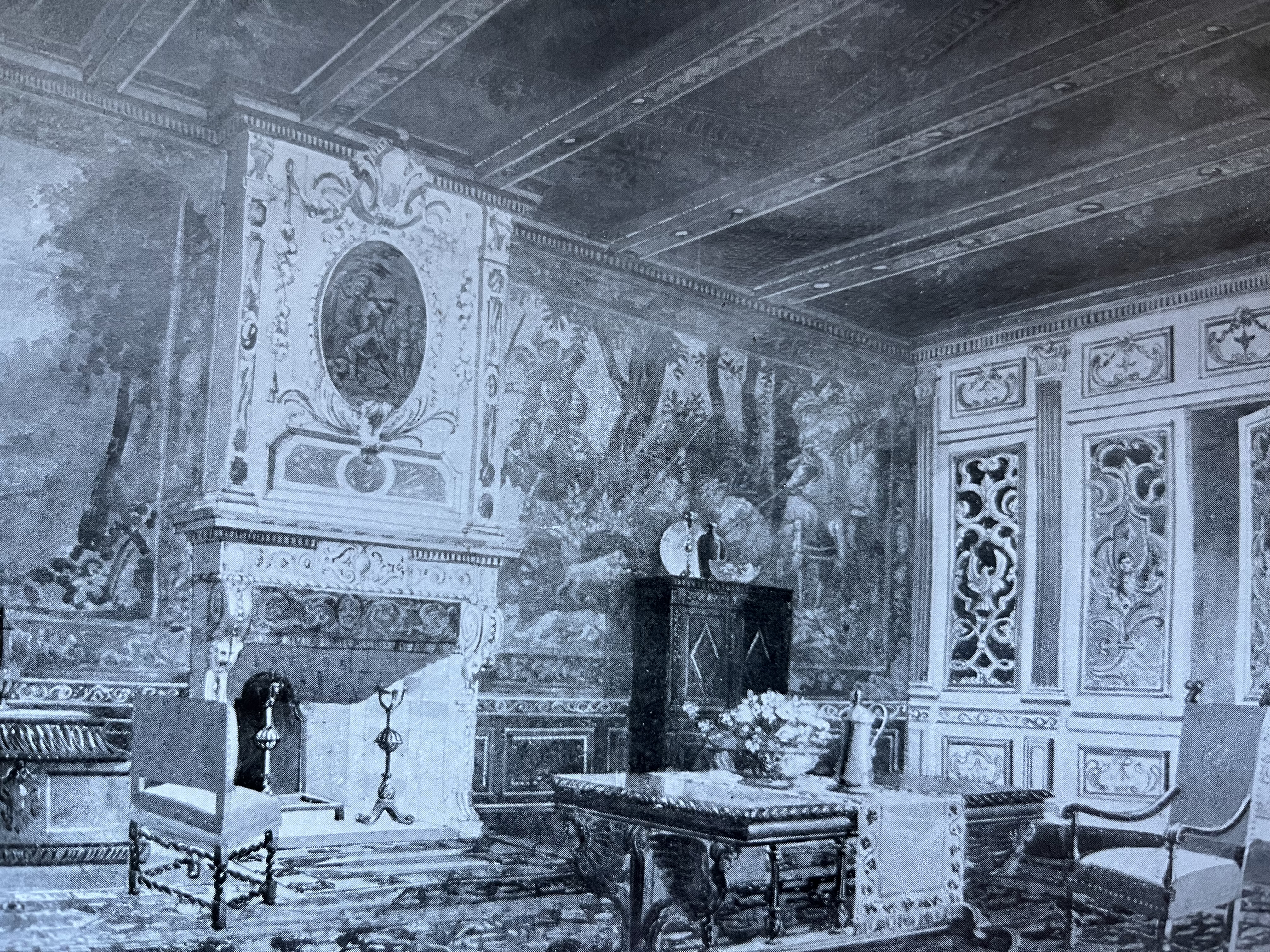
The range of antiques for sale illustrates the evolving fashion for Italian interior decoration promoted by Waring & Gillow at the time. The catalogue even included an illustration of an ‘Italian Salon’ as one of the frontispiece images – the tapestries in the illustration were for sale in the exhibition, described as ‘Early XVIIth century’ the 7 tapestries were offered at £3,000 the set.

Waring & Gillow Exhibition Catalogue, 1909. Photograph, Antique Dealers’ Research Project, University of Leeds.

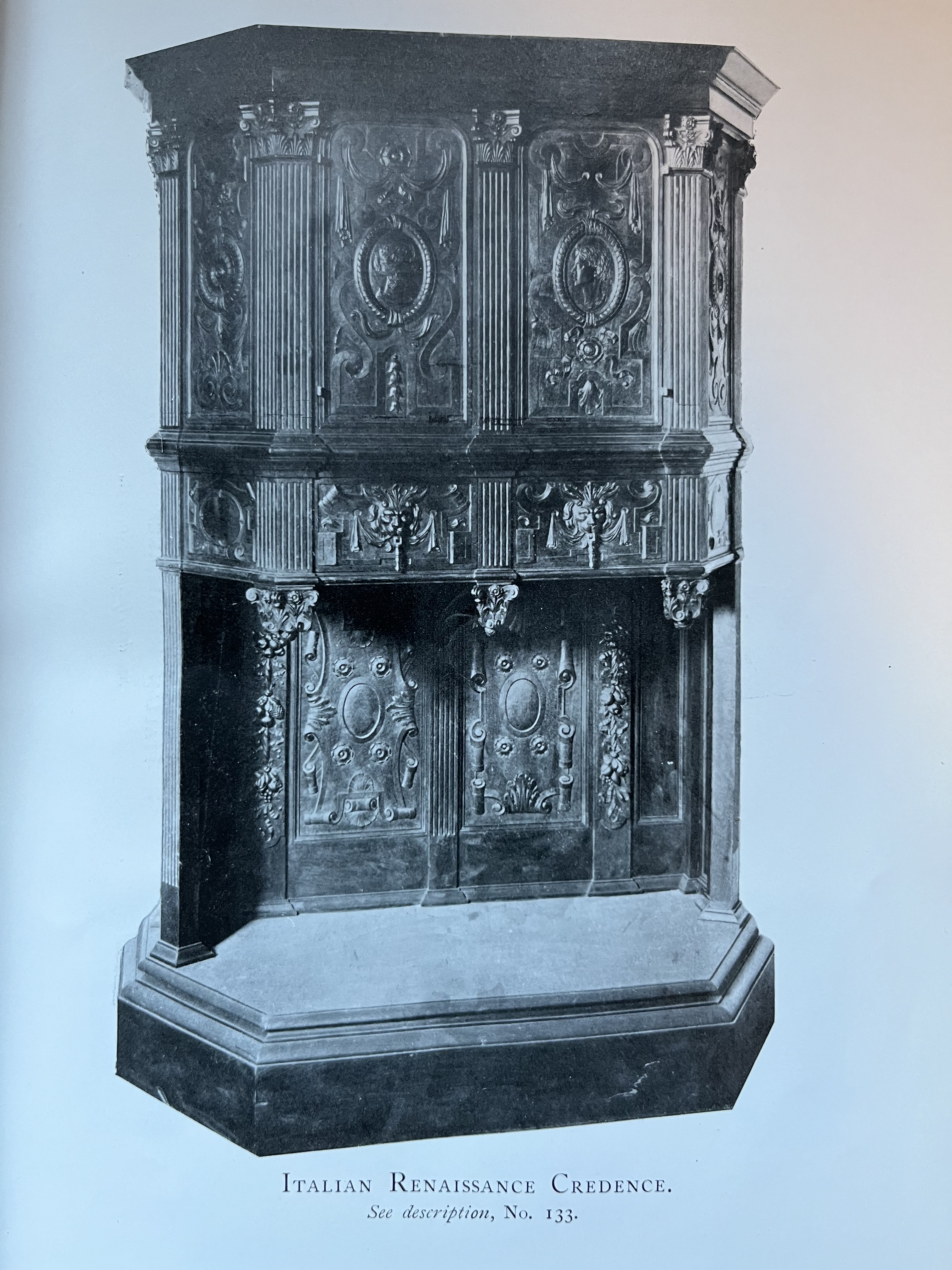
The exhibition included a wide range of antique furniture, including ‘XVth, XVIth and XVIIth century’ chairs and tables, coffers and cassone; this ‘Fine Italian Renaissance Credence’ in walnut (see below) was priced at £100.

Waring & Gillow Exhibition Catalogue, 1909. Photograph, Antique Dealers’ Research Project, University of Leeds.

And this ‘Table of old ”Verde Antico” marble, with ”Breccia Corallina” borders, was offered at £115 (see below).

Waring & Gillow Exhibition Catalogue, 1909. Photograph, Antique Dealers’ Research Project, University of Leeds.

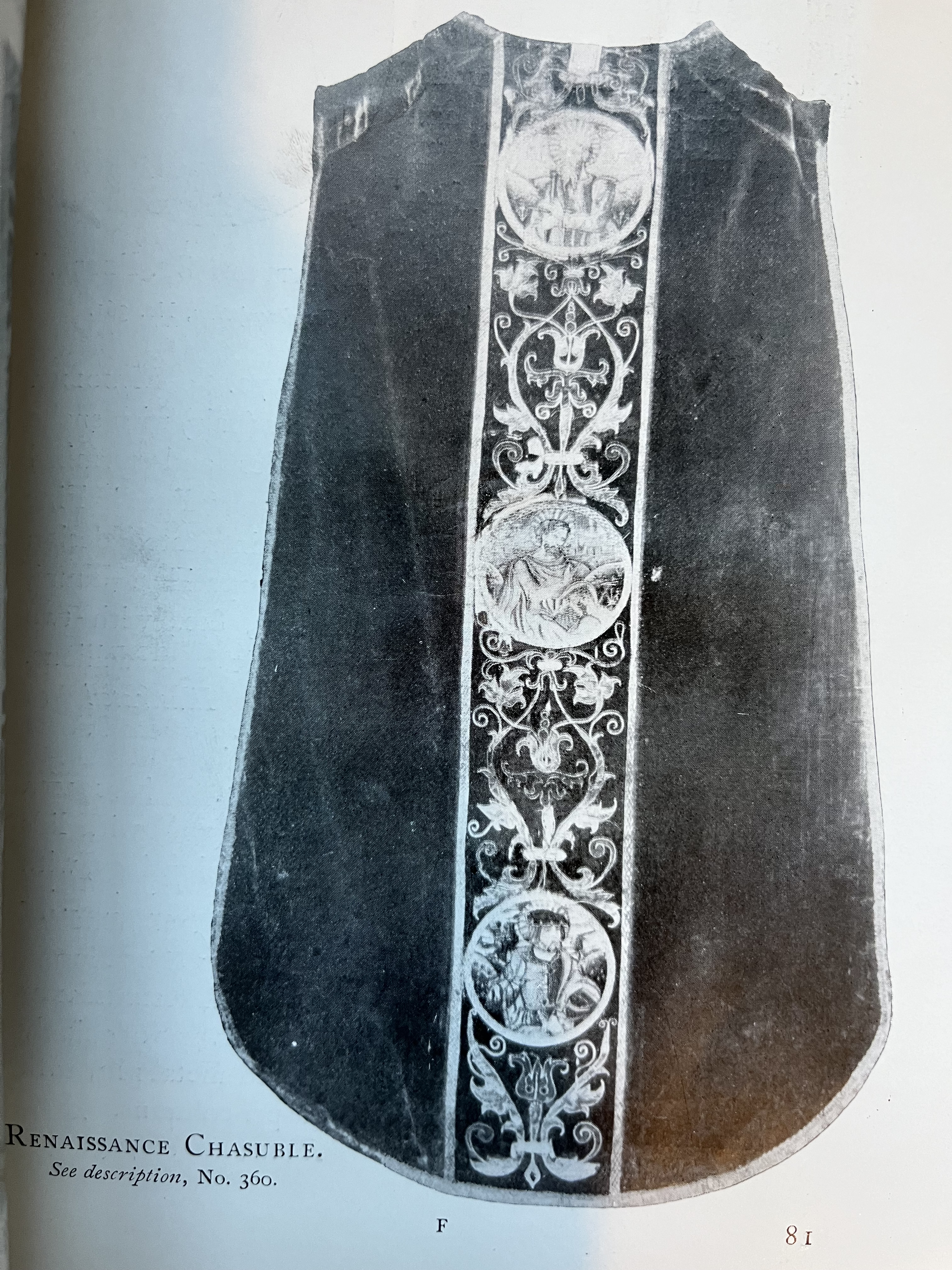
Perhaps the most surprising ‘antiques’ for sale in the exhibition was a range of ecclesiastical vestments, including this ‘Renaissance Chasuble of the Sixteenth Century’ (one of 4 offered for sale) at £39.10s (see below). Although to be fair, the tradition of buying and selling antique textiles goes back to at least the early 19th century in terms of the history of antique dealing, and museums such as the South Kensington Museum (now the V&A Museum) had been assembling collections of antique textiles since it’s earliest days in the 1850s.

Waring & Gillow Exhibition Catalogue, 1909. Photograph, Antique Dealers’ Research project, University of Leeds.

That Waring & Gillow, one of the leading modern furniture retailers in the period, should be staging exhibitions of ‘antique furniture’ is of course not unusual; the firm was also buying and selling antique furniture alongside many modern furniture retailers at the time. The exhibition catalogue will be making it’s way to the collections of Antique Dealer material at the Brotherton Library Special Collections at the University of Leeds in due course.

Mark
September 30, 2022

American Antique Dealers – Francis Bannerman & Sons, New York, 1929

Our collection of catalogues produced by antique dealers had another fascinating addition in the last few weeks – a catalogue from Francis (Frank) Bannerman & Sons, dating from 1929. The catalogue is in quite a fragile condition (the paper used for the catalogue is rather thin) but it’s also quite thick, with more than 370 pages, and thousands of objects listed for sale throughout – it’s certainly one of the largest and most extensive antique dealer stock catalogues we’ve seen (so far).

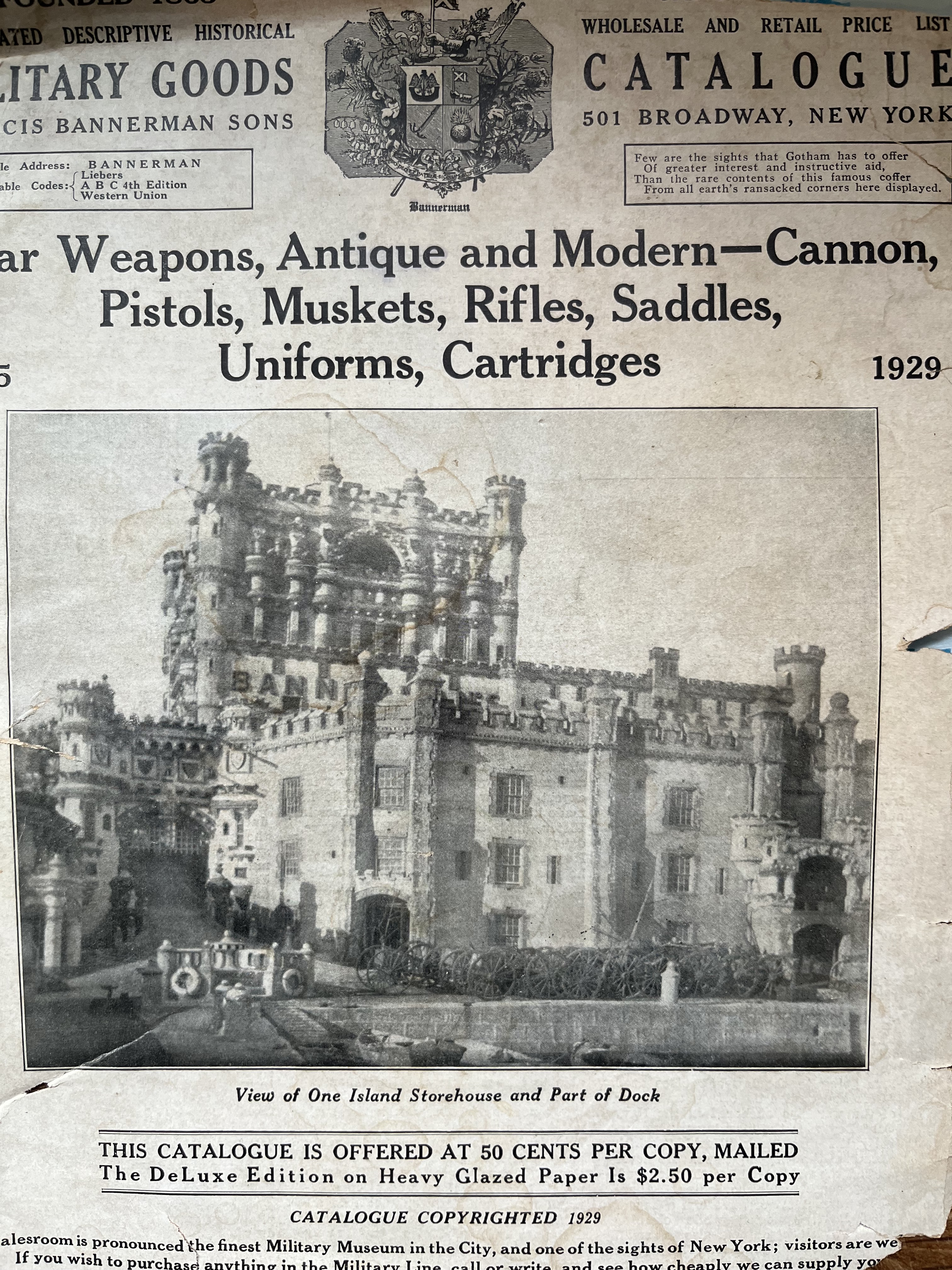
Francis Bannerman & Sons, catalogue, 1929. Photograph Antique Dealers Research Project, University of Leeds.

The catalogue is titled, ‘War Weapons, Antique and Modern – Cannon, Pistols, Muskets, Rifles, Saddles, Uniforms, Cartridges’. The front cover, (shown above), has a photograph of one of the ‘Island Storehouses’ that Bannerman had in New York – and which was, as the catalogue description suggests, ‘one of the sights of New York’ and ‘the finest Military Museum in the City’. It’s certainly a very impressive building, in a ‘Romantic’ Gothic style, obviously deemed appropriate for the stock of antique and modern weapons.

Francis Bannerman (b.1851 in Dundee in Scotland) came to the USA with his parents in 1854 and began in business working with at his father’s ‘junk shop’ in New York, trading in ‘ship chandlery’ and ‘naval auction goods’ (as Appleton’s Cyclopedia of American Biography described it), which had been established in 1865. Bannerman developed the business further, opening his own stores selling antique weapons alongside the naval and army surplus stores he acquired from Government auction sales. Here (below) is Francis Bannerman, photographed in the 1920s.

Francis (Frank) Bannerman, c.1920s. Photograph, Antique Dealer Research Project, University of Leeds.

As a dealer in antique arms and armour, Bannerman continued a tradition that one can trace back into the early 19th century, with famous antique dealers such as Samuel Pratt (d.1849) and his brother Henry, who together with Samuel’s son, Samuel Luke Pratt (1805-1878), who ran a highly successful business trading in ‘ancient armour’ in New Bond Street, London, in the 19th century. Bannerman’s business in the 1920s draws from these traditions, but his business also seems to have acted as a wholesaler and supplier to several National Government’s during times of conflict. Hence, I guess, the large storehouses that Bannerman built in New York. Indeed, the images of the storerooms suggest a wide mixture of antique weapons and objects of antiquarian interest, alongside row upon row of rifles, many from Army and Navy stock from World War I; the weapons were sold for military re-use at the time. Here’s two images of the stores (apologies – the original photographs are very grainy):

Bannerman stores, New York, 1929. Photograph, Antique Dealer Research Project, University of Leeds.

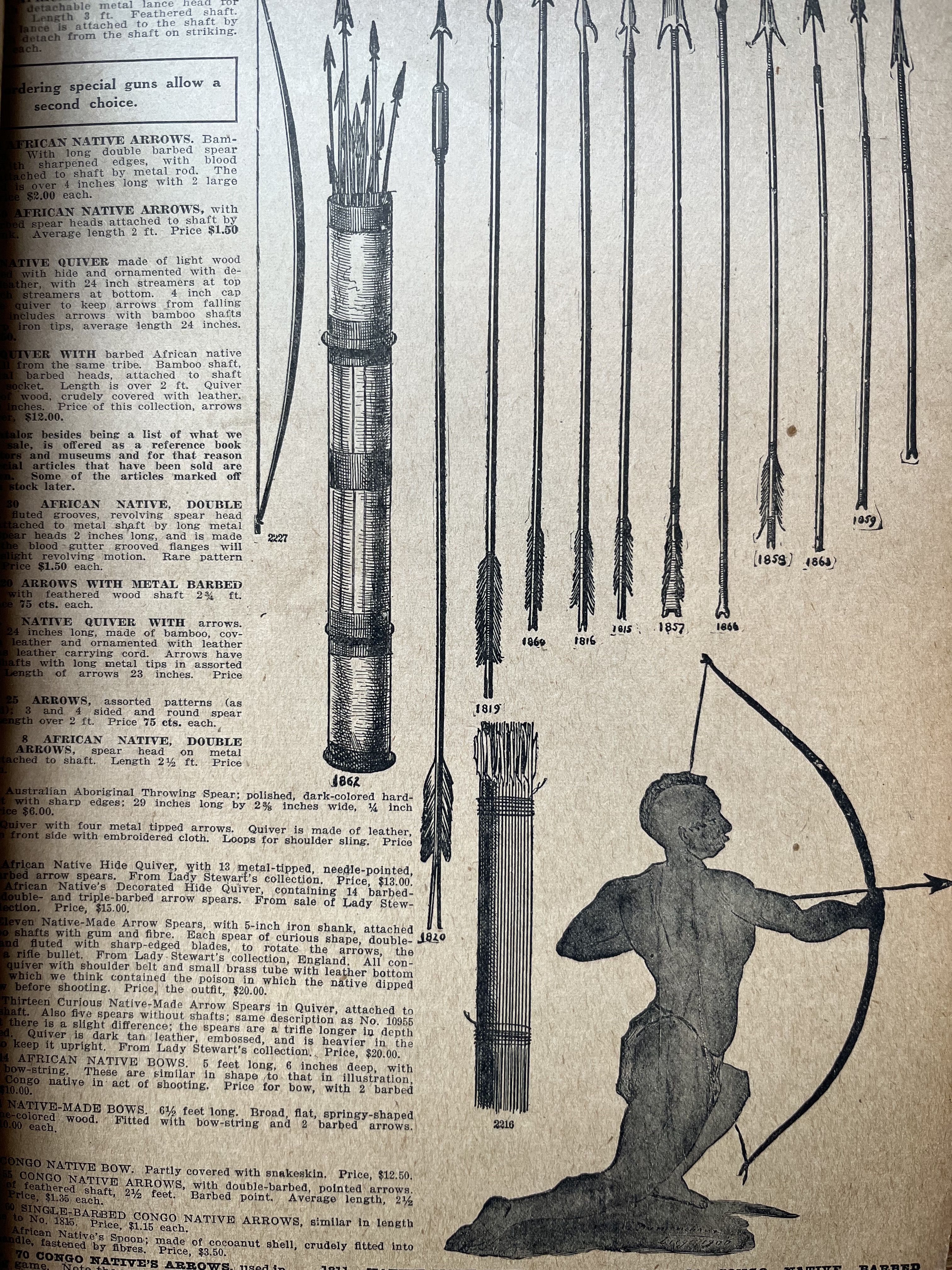
The catalogue itself contains a mixture of ex-Government rifles, swords, clothing, tents, cannon etc., alongside some fascinating antique weapons, many of European origin from the Medieval Period onwards, including 16th century armour, spears and crossbows. The business also seems to have bought and sold weapons from indigenous (‘native’) populations from both the USA and around the world. Here, for example, is a rather problematically described series of ‘Bows and Arrows from Savage Tribes’:

Bannerman catalogue, 1929. Photograph Antique Dealer Research Project, University of Leeds.

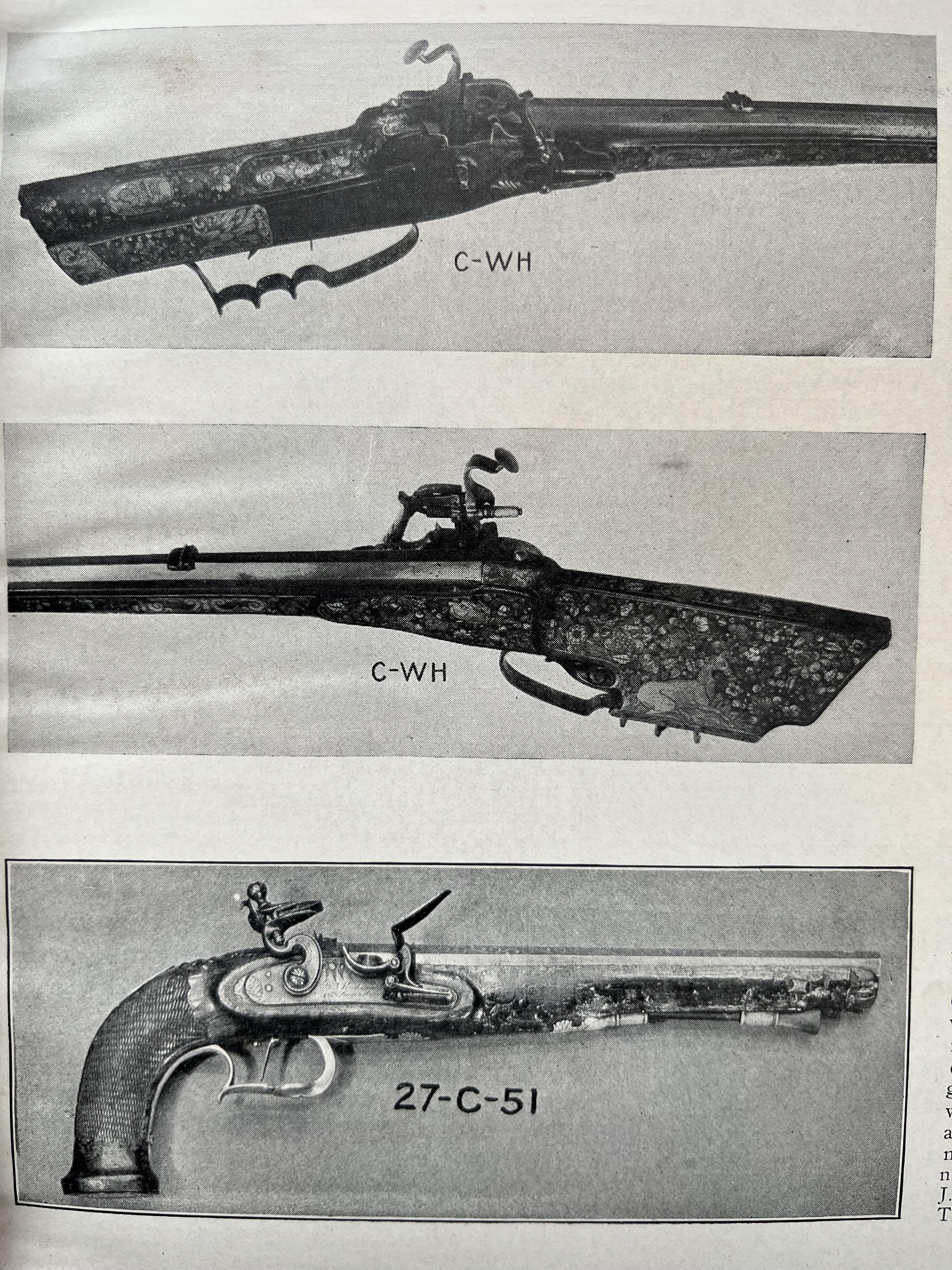
There are also many rare collector’s pieces in the catalogue, some of which, the catalogue suggests, had been exhibited by Bannerman at the ‘British Empire Exhibition 1924’ at Wembley in London. Here (below) are some early wheelock and flintlock pistols from the 1924 Wembley Exhibition. The top image (‘C-WH’) is described in the catalogue as ‘Wheelock Sporting Gun, mid 17th century German’…’from Marquis of Ripon Collection’ and priced at $500.00.

Bannerman catalogue, New York, 1929. Photograph Antique Dealer Research Project, University of Leeds.

As well as photographs, the catalogue has hundreds of line drawings of arms and armour. This powder horn, priced at $250, from the 1812 War between Britian and the USA (1812-1815) is described as ‘Showing engagement June 29, 1813, between the British frigate, Junon, 30 guns, Capt. Sanders, and the Martin, 18 guns, Capt. Stenhouse.’ It was also described as ‘the only illustration known showing the engagement.’ The powder horn was apparently pawned by the descendants of the original owner, but never redeemed, and was sold to Bannerman by the heirs of the pawnbroking business.

Bannerman catalogue, New York, 1929. Photograph, Antique Dealer Research Project, University of Leeds.

The Bannerman catalogue is a rare survival, although I’m aware of the existence of a small number of other editions of the catalogue, and provides a unique insight into some of the intriguing overlaps between ‘antique dealing’ and other commercial operations.

Mark

August 30, 2022

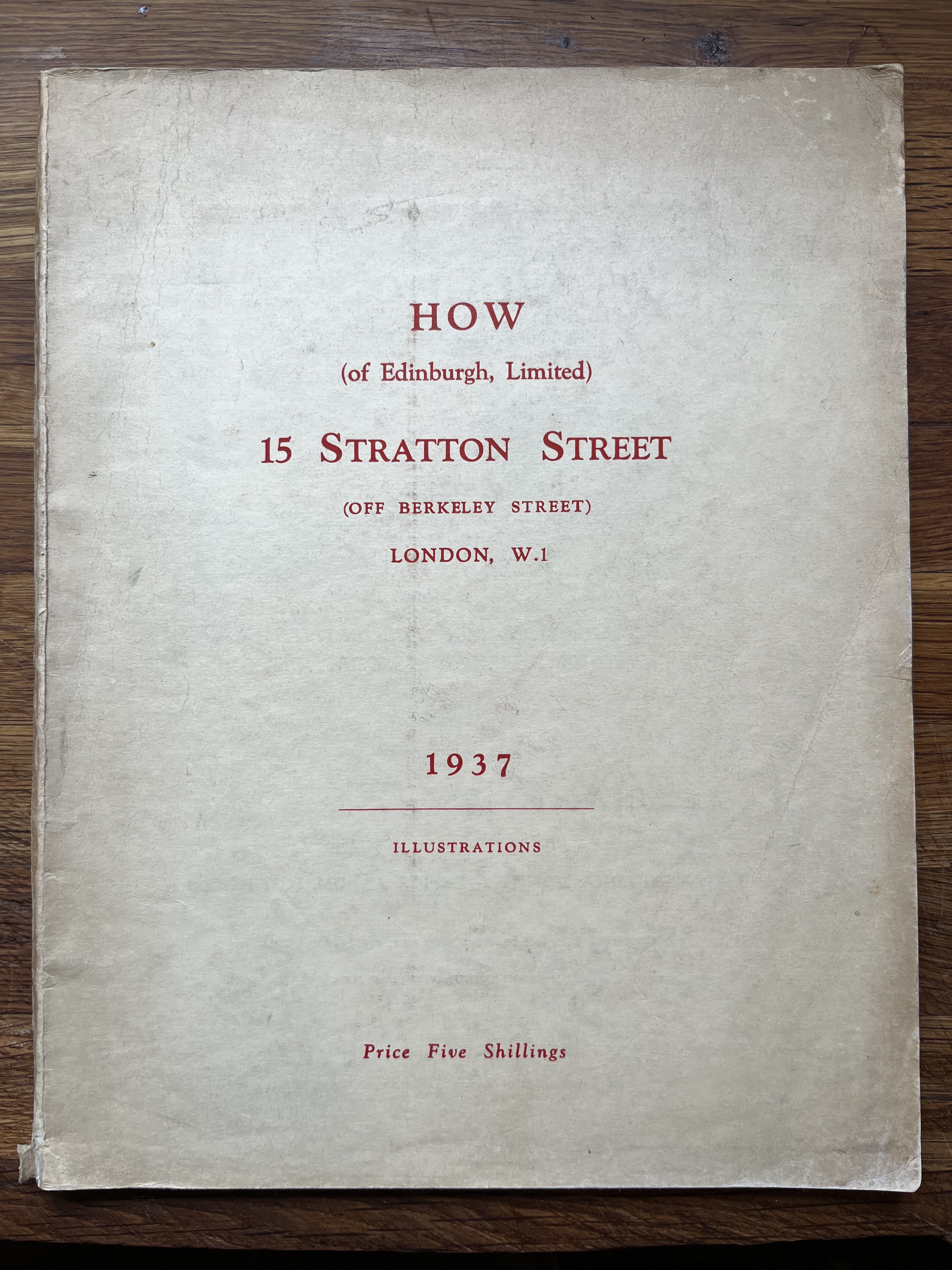
How (of Edinburgh, Limited) – rare antique dealer’s catalogue, 1937

Our collections of antique dealer catalogues have had a few more additions over the past months. The latest example of these rare pieces of ephemera is a catalogue produced in 1937 by the world-famous antique silver dealers How (of Edinburgh, Limited). As early 20th century antique dealer catalogues go, it’s quite a large, and obviously expensive to produce, catalogue of stock; it’s 12 inches high, by about 9.5 inches wide and contains 71 pages of black and white photographs of the antique silver that How (of Edinburgh, Limited) had in stock at the time. I guess such catalogues would be sent out to loyal customers, but you could also buy a copy of the How (of Edinburgh, Limited) catalogue for 5 shillings.

How (of Edinburgh, Limited) catalogue, 1937. Photograph, Antique Dealers Research Project, University of Leeds.

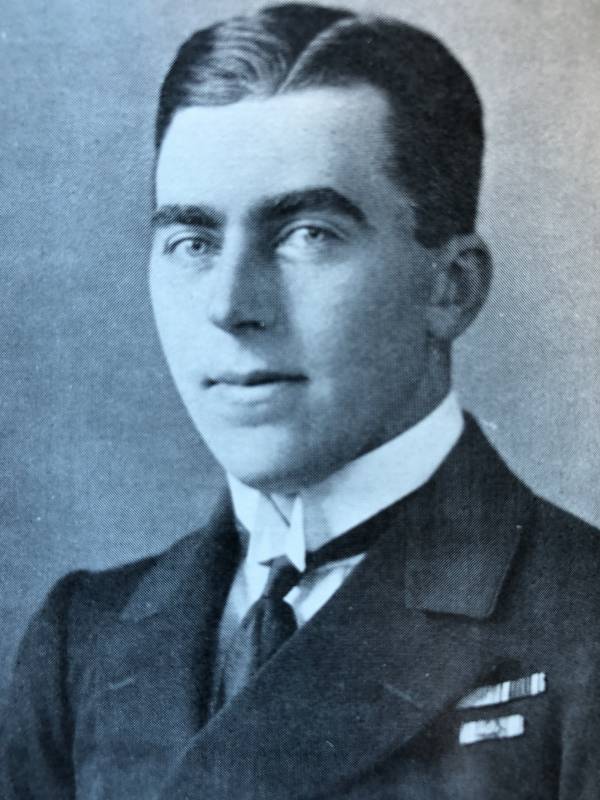
How (of Edinburgh, Limited) were established in 1930 by Lt-Commander George Evelyn Paget How (Royal Navy, retired) FSA, Scotland. George How was born in Edinburgh in 1894, and spent much of his youth with his uncle, Lord Cuncliffe, who apparently taught the young How about antique silver. He purchased his first piece of antique silver, a George II silver basting spoon for £32 6d in 1911 in Gibraltar, whilst he was a cadet in the Royal Navy; he still had the spoon in 1936, shortly before the issue date of the How (of Edinburgh, Limited) catalogue.

G.E.P. How, perhaps from the 1920s Photograph, Antique Collector Magazine, June 1935.

How (of Edinburgh, Limited) opened their first shop in North Street, Edinburgh, in 1930, before moving to fashionable Charlotte Square, Edinburgh by 1932. The business opened a shop in London by 1933, first in Berkeley Square, then Stratton Street (the location suggested in the dealer catalogue), before settling in Pickering Place, St. James’s after the Second World War.

George’s wife, Jane Prentice How (1915-2004) joined him in the business in the mid 1930s and was herself a leading expert on antique silver, a member of the Plate Committee at Goldsmiths Hall in London, and, by all accounts, a formidable antique dealer in her own right. Jane, known as ‘Mrs How’, continued the business of How (of Edinburgh, Limited) after the death of her husband. Many leading antique silver dealers of the day, including Hugh Jessop, John Bourdon-Smith and Brand Inglis, worked at How (of Edinburgh, Limited) at some stage in their careers as dealers.

The catalogue offers a fascinating insight into a leading antique silver dealer’s stock in the 1930s, including, as one might expect given the status of How (of Edinburgh, Limited) as one of the leading antique silver dealers, some rare and important examples of antique silver. Here, for example, is a rare, early, ‘Tigerware’ jug with silver-gilt mounts, made in London in 1556 – (see below):

How (of Edinburgh, Limited) catalogue, 1937. Photograph, Antique Dealers Research Project, University of Leeds.

Or this mid 17th century ‘Commonwealth’ period silver salver, made in London in 1657 – (see below):

How (of Edinburgh, Limited), catalogue 1937. Photograph, Antique Dealers Research Project, University of Leeds.

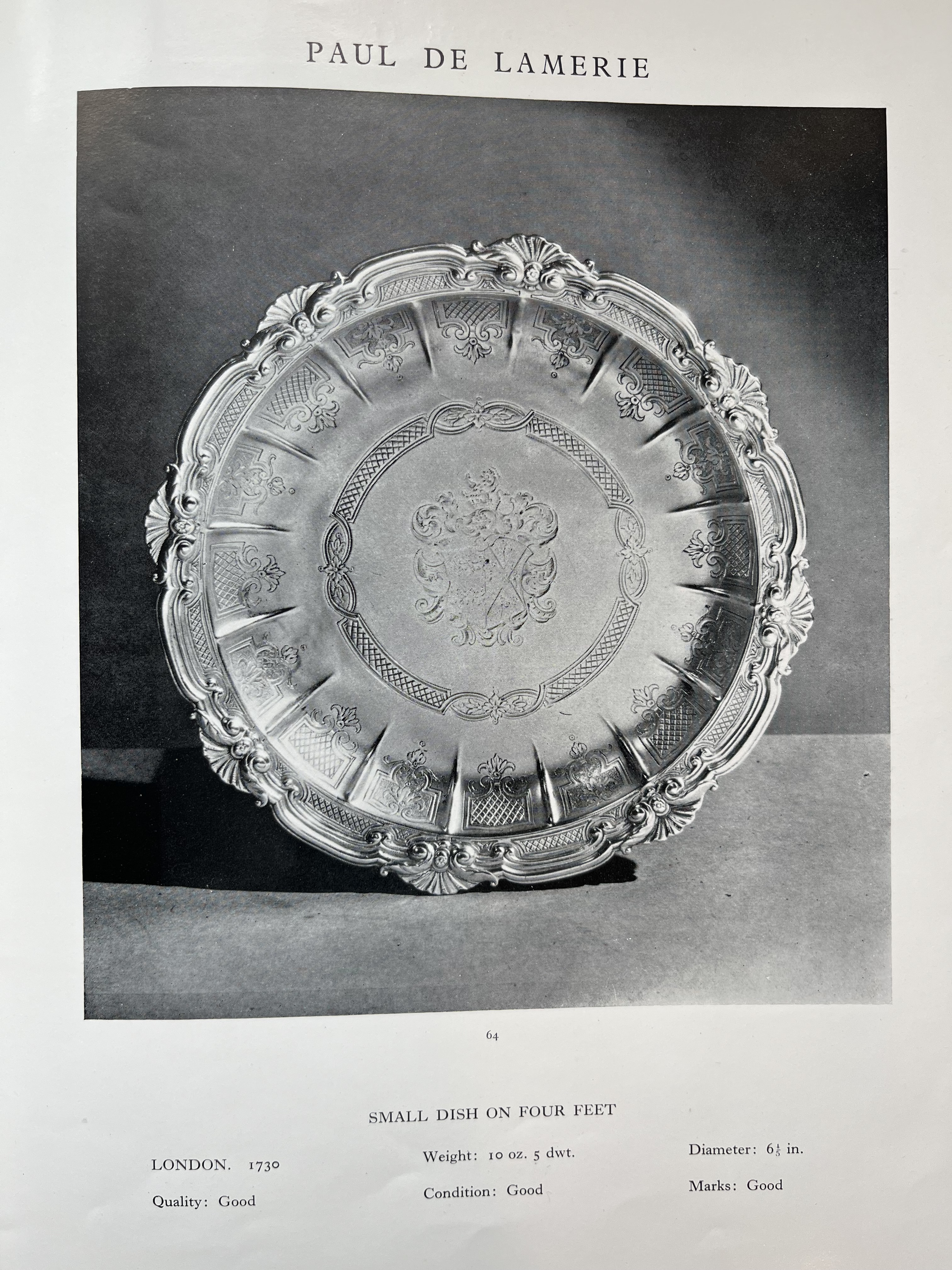
The stock also included examples of the work of the world famous silversmith Paul de Lamerie (1688-1751), always much sought after. Here, for example, is a silver ‘small dish on four feet’ (it’s actually a silver sweetmeat-dish), dating from 1730 – (see below):

How (of Edinburgh, Limited) catalogue, 1937. Photograph, Antique Dealers Research project, University of Leeds.

This dish, which appears to have been one of a pair, turned up at auction at Christie’s in London on 5th July 2005 (lot 19) in a sale of ‘Important Silver, the property of a European Collector’, when it sold for £7,200 (the Christie’s auction sale catalogue suggested that the engraved Arms in the centre were a later addition – (see below):

Christie’s Auction Catalogue (online), 5th July, 2005. Copyright, Christie’s.

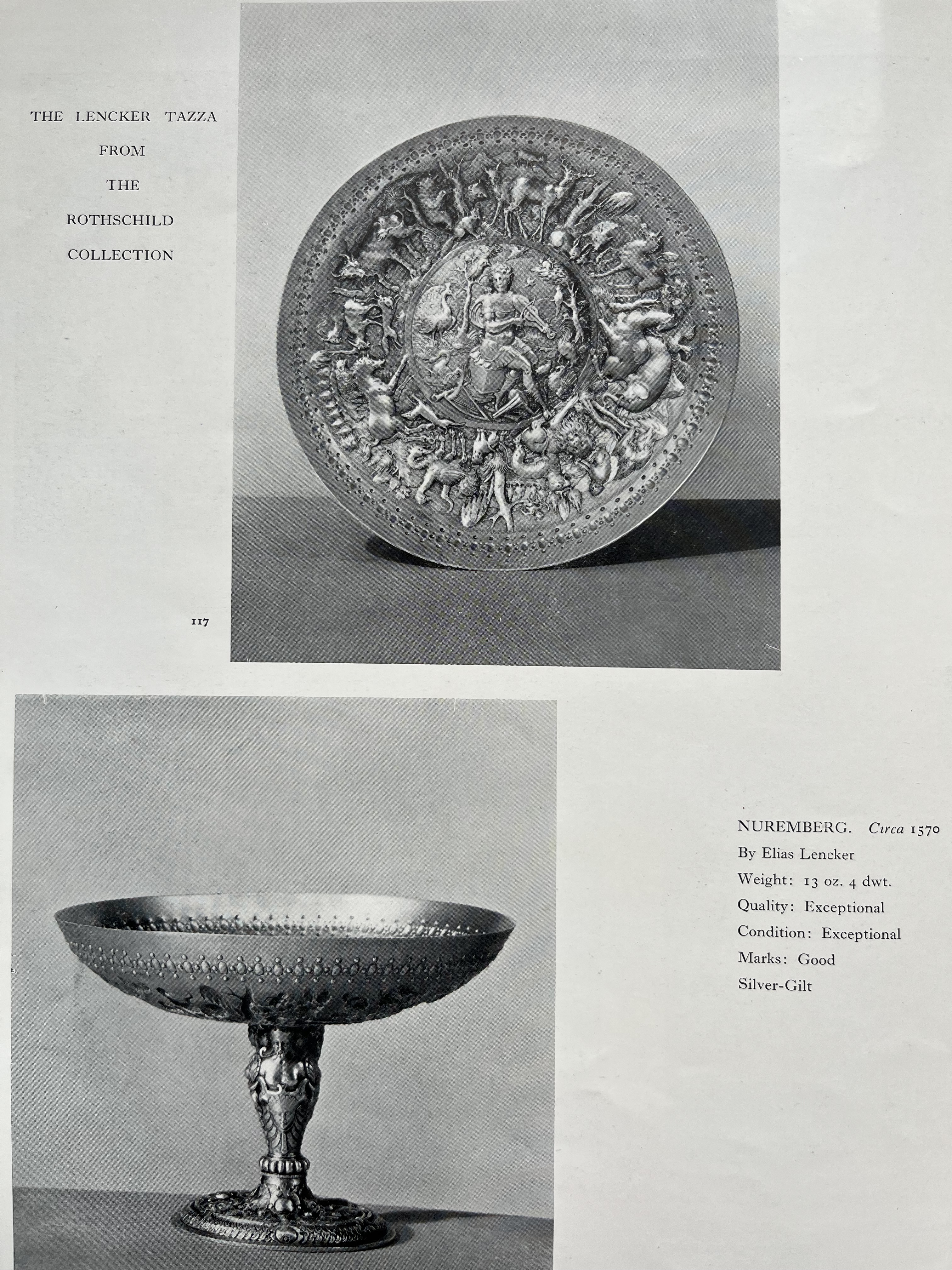
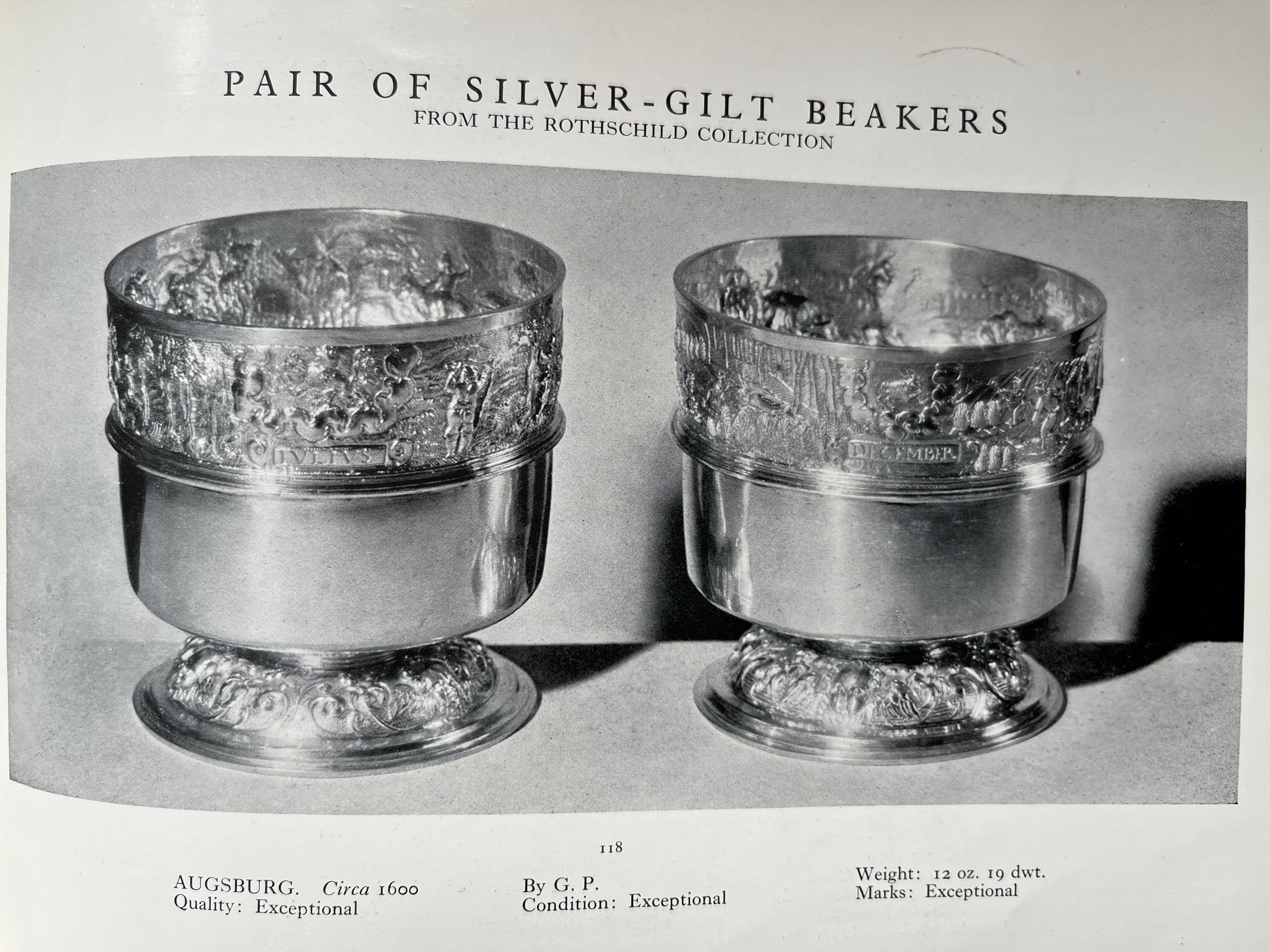
The How (of Edinburgh, Limited) catalogue also illustrates antique silver with very illustrious provenances. These examples, ‘The Lencker Tazza’ (silver-gilt, made by Elias Lencker in about 1570), and the silver-gilt beakers, made in Augsburg in about 1600, were both formerly owned by the Rothschild family – (see below):

How (of Edinburgh, Limited) catalogue, 1937. Photograph, Antique Dealers Research Project, University of Leeds.

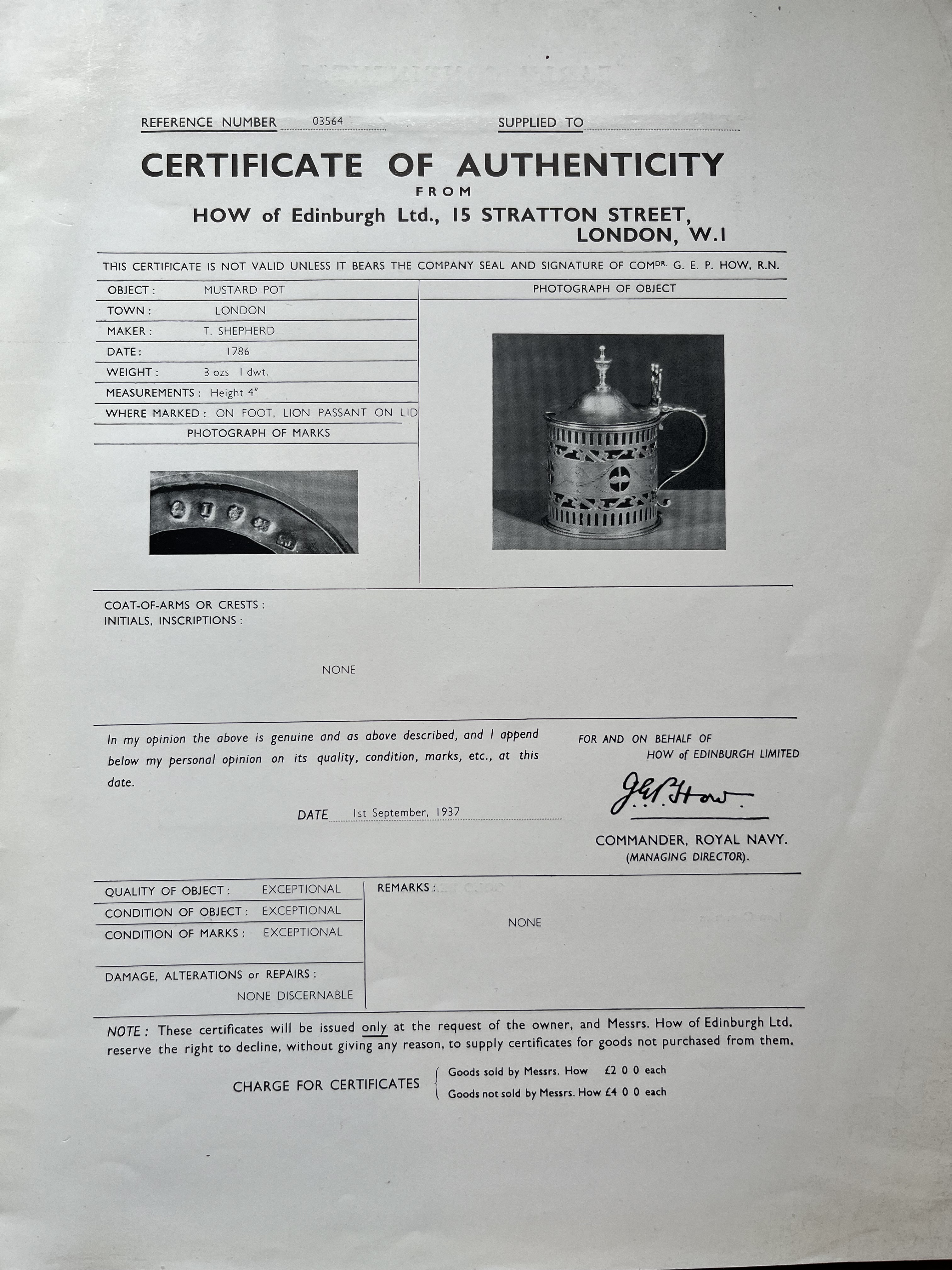
However, (I couldn’t resist the pun!) one of the most interesting (to me at least) aspects of the How (of Edinburgh, Limited) catalogue is the inclusion in the catalogue of an example of a ‘Certificate of Authenticity’ issued by How (of Edinburgh, Limited). The certificate also directly relates to some of the suggested categories and classifications beneath each of the photographs of the objects in the catalogue – ‘Quality of Object’ – ‘Condition of Object’ – ‘Condition of Marks’, graded variously as ‘Fair’, ‘Good’ and ‘Exceptional’ throughout the catalogue and, as one might expect, as ‘exceptional’ in the certificate example.

How (of Edinburgh, Limited) catalogue, 1937. Photograph, Antique Dealers Research Project, University of Leeds.

Many leading antique dealers and trade organisations, such as the BADA (British Antique Dealers Association) and LAPADA (The Association of Art and Antique Dealers) have offered certificates of authenticity, and many continue to do so, but the How (of Edinburgh, Limited) certificates of the 1930s demonstrate the long genealogy and enduring legacy of authenticity in the market for antiques.

Mark

April 30, 2022

More Antique Dealer Catalogues – Herbert Sutcliffe 1968

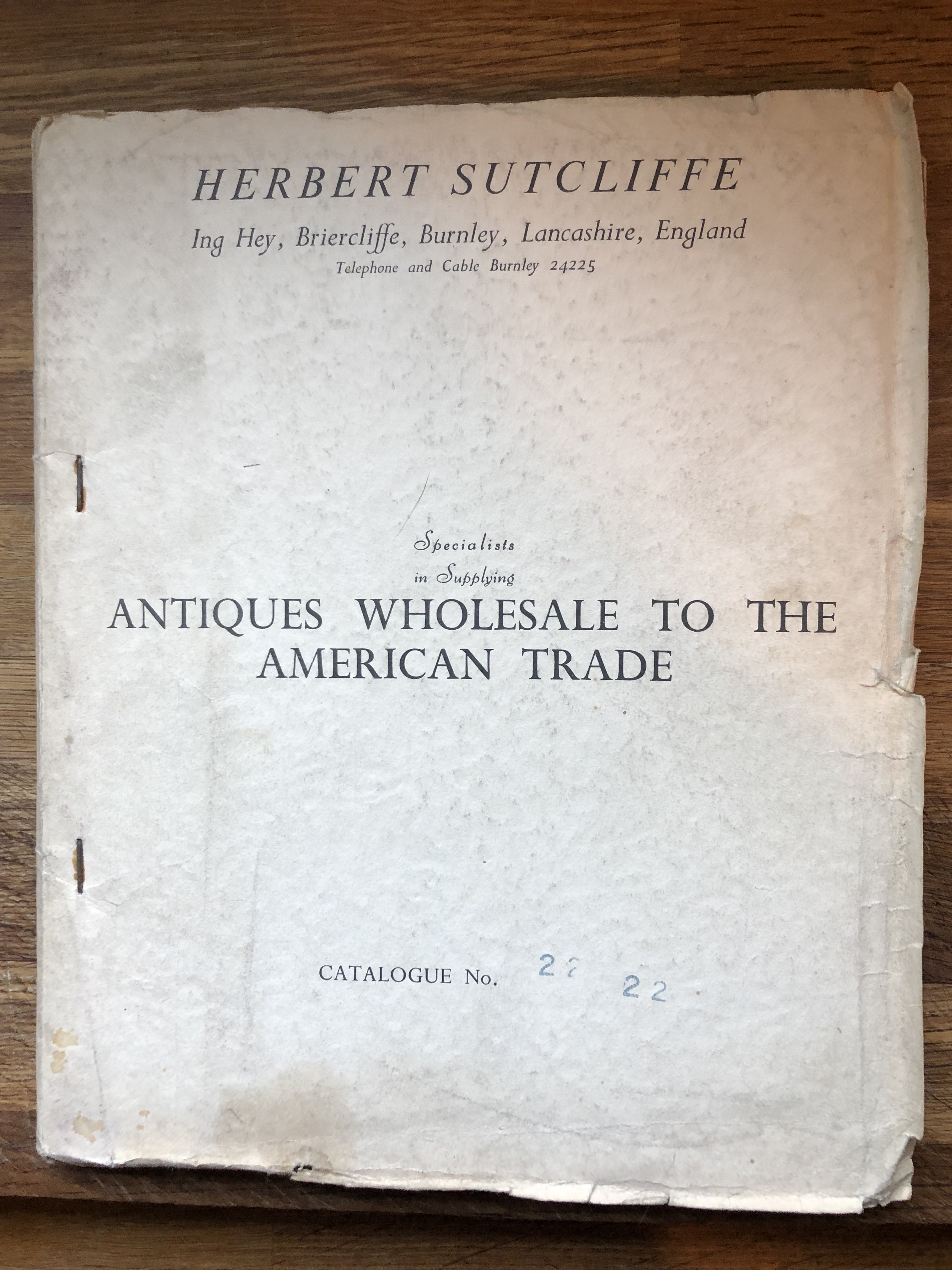
The most recent addition to the growing collection of catalogues issued by antique dealers is this rare copy of Antiques Wholesale to the American Trade by the dealer Herbert Sutcliffe, dating from 1968.

Catalogue, ‘Antiques Wholesale to the American Trade’ Herbert Sutcliffe, 1968. Photograph, Antique Dealer Research Project, University of Leeds, 2022.

Sutcliffe appears to have established his antique dealing business at Ing Hey, Briercliffe, Burnley in Lancashire in the late 1940s, expanding the business in the 1960s and 1970s to be a major player in the then very lucrative ‘Shipping Goods’ business, trading mainly with the USA and Canada. The catalogues, aimed specifically at the North American antique trade, were issued regularly by Sutcliffe to American customers for $3.50 subscription per copy. The issue we have is Catalogue No.22, and whilst undated, the information in the catalogue describing details of parcel post and surface and air freight shipping mentions USA Customs duty, stating that ‘items manufactured prior to 1868 are duty free’ – i.e. items over 100 years old, indicating the catalogue must date from 1968.

There are some fascinating photographs of the Sutcliffe business operation, with images of the offices – the catalogue mentions that there were 5 office staff looking after the orders. According to the catalogue, ‘telephoned, cabled and letter orders are received, upwards to 100 per day, to about 15 days after issue [of the catalogues], when most of the individual items are sold out.’

Herbert Sutcliffe Antiques, office, 1968. Photograph Antique Dealers Research Project, University of Leeds, 2022.

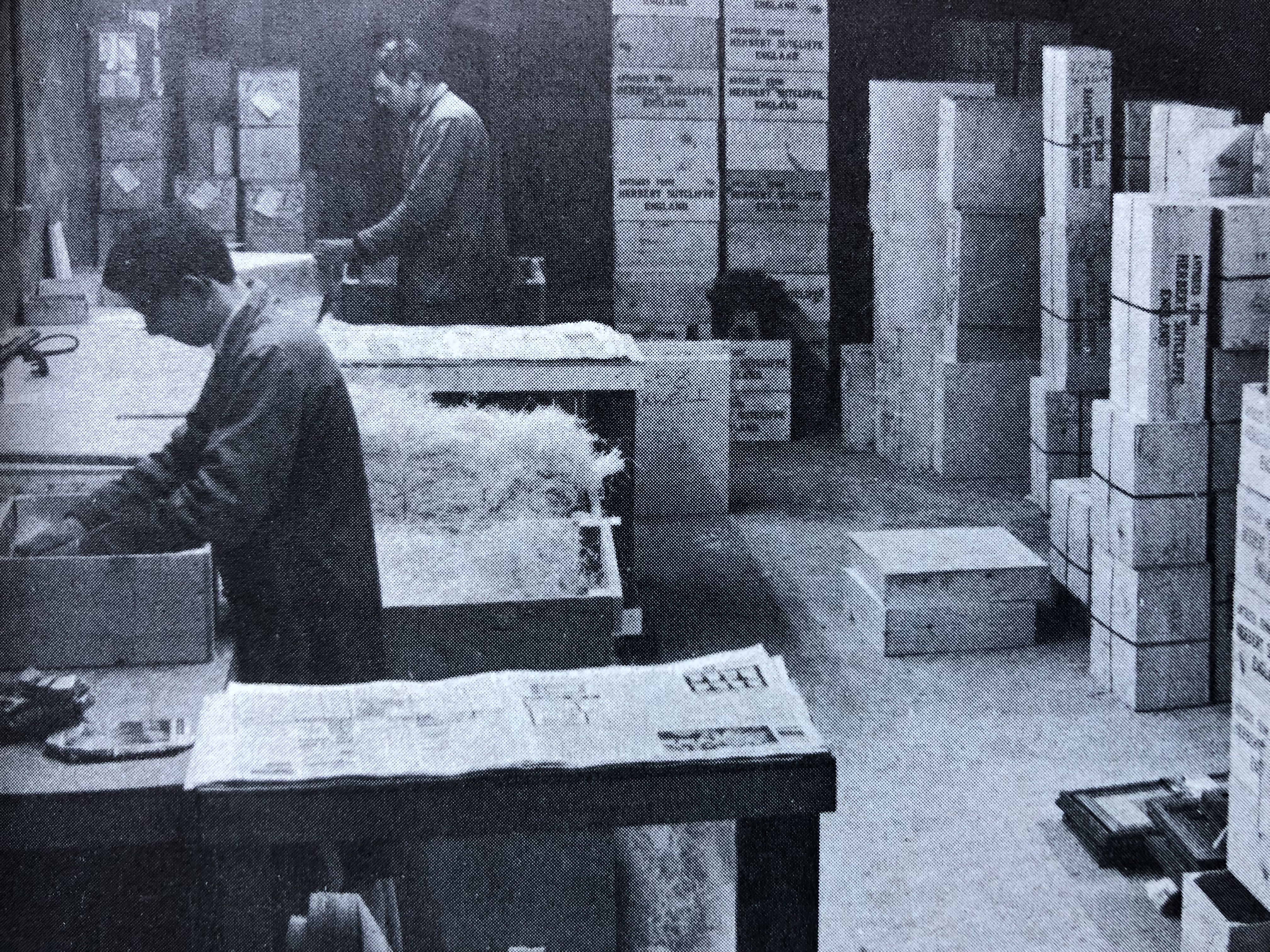
There are also some photographs of the Packing and Shipping Department at Herbert Sutcliffe (see below). The catalogue also contains extensive information on packing and shipping costs and the various methods of transport etc.

Herbert Sutcliffe Antiques, Packing and Shipping Office, 1968. Photograph Antique Dealers Research Project, University of Leeds, 2022.

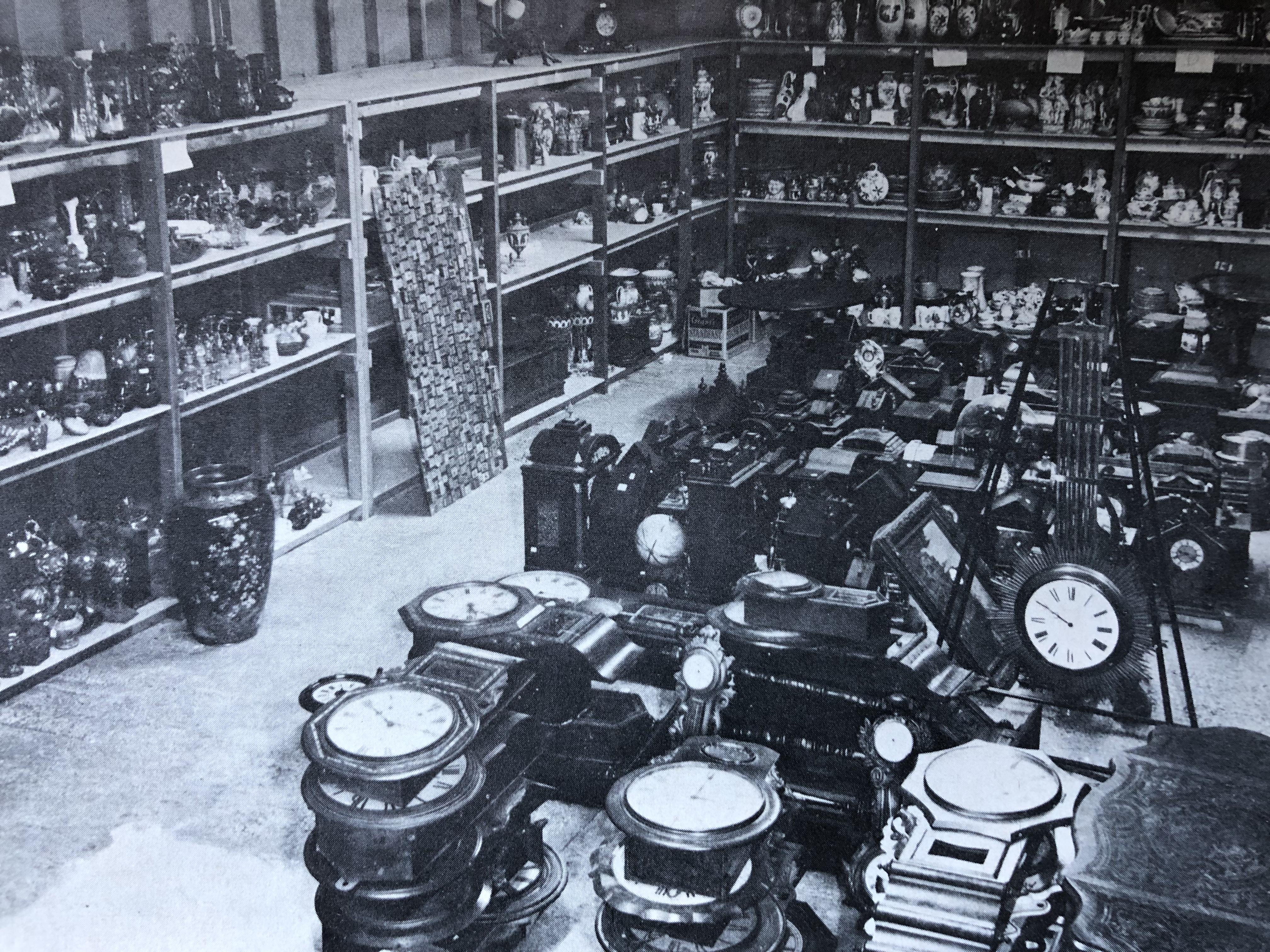
Images of the storerooms at the business reveal the enormous quantities of antiques that the business sold, with storerooms for antique glass, ceramics, metalwork, furniture, and extensive storerooms full of various types of antique clocks, from mantle clocks and wall clocks to longcase examples.

Herbert Sutcliffe Antiques, Storerooms for antique glass, ceramics and clocks, 1968. Photograph Antique Dealers Research Project, University of Leeds, 2022.

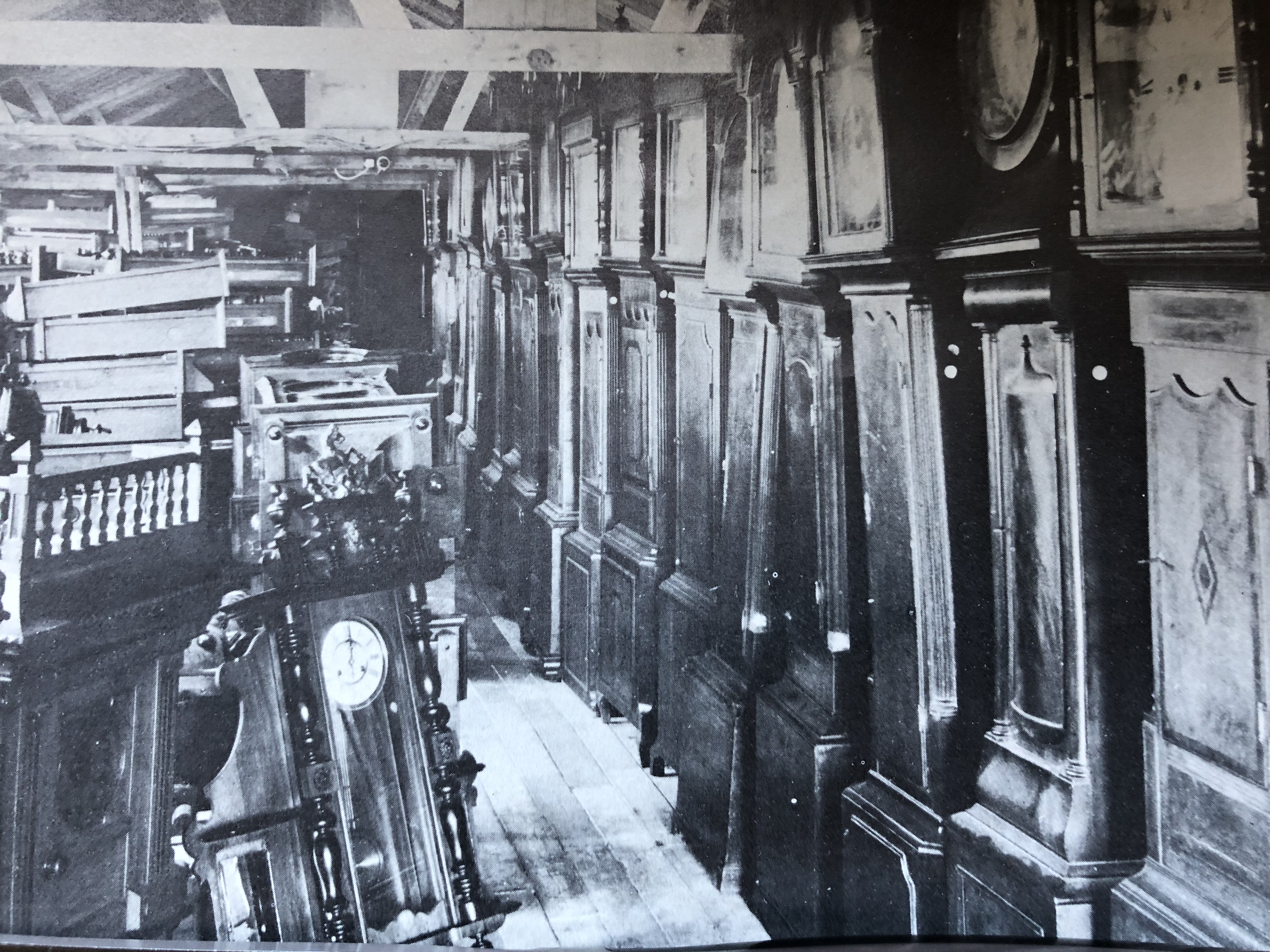
Below is a photograph of the storeroom for antique longcase clocks, which seems to have been a specialism of Herbert Sutcliffe Antiques. The catalogue usefully mentions that buyers should think about including small items that can be packed inside the cases of longcase clocks to save on shipping costs – freight shipping was costed by space, not weight.

Herbert Sutcliffe Antiques, Storerooms for antique glass, ceramics and clocks, 1968. Photograph Antique Dealers Research Project, University of Leeds, 2022.

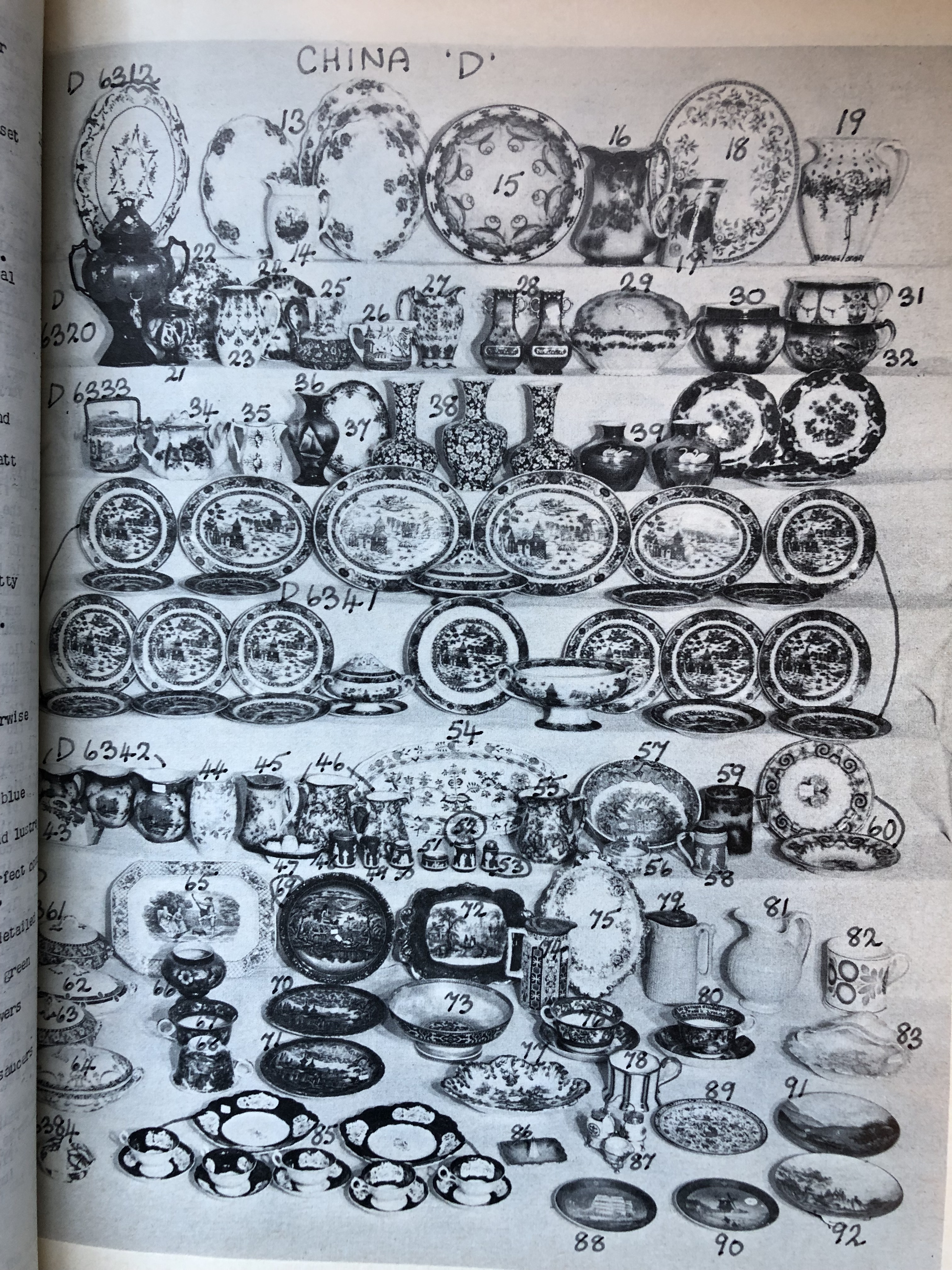
The catalogue itself is quite heavy, with more than 100 pages of antiques for sale, with each page illustrating dozens and dozens of antiques in various categories. The introductory information in the catalogue confidently states that each catalogue has ‘over three thousand individual offerings’, and that the business itself has ‘about one hundred and fifty thousand quantity lines’. Here are some examples of the category pages illustrating antiques for sale.

Herbert Sutcliffe Antiques, catalogue page for antique ceramics, 1968. Photograph Antique Dealers Research Project, University of Leeds, 2022.

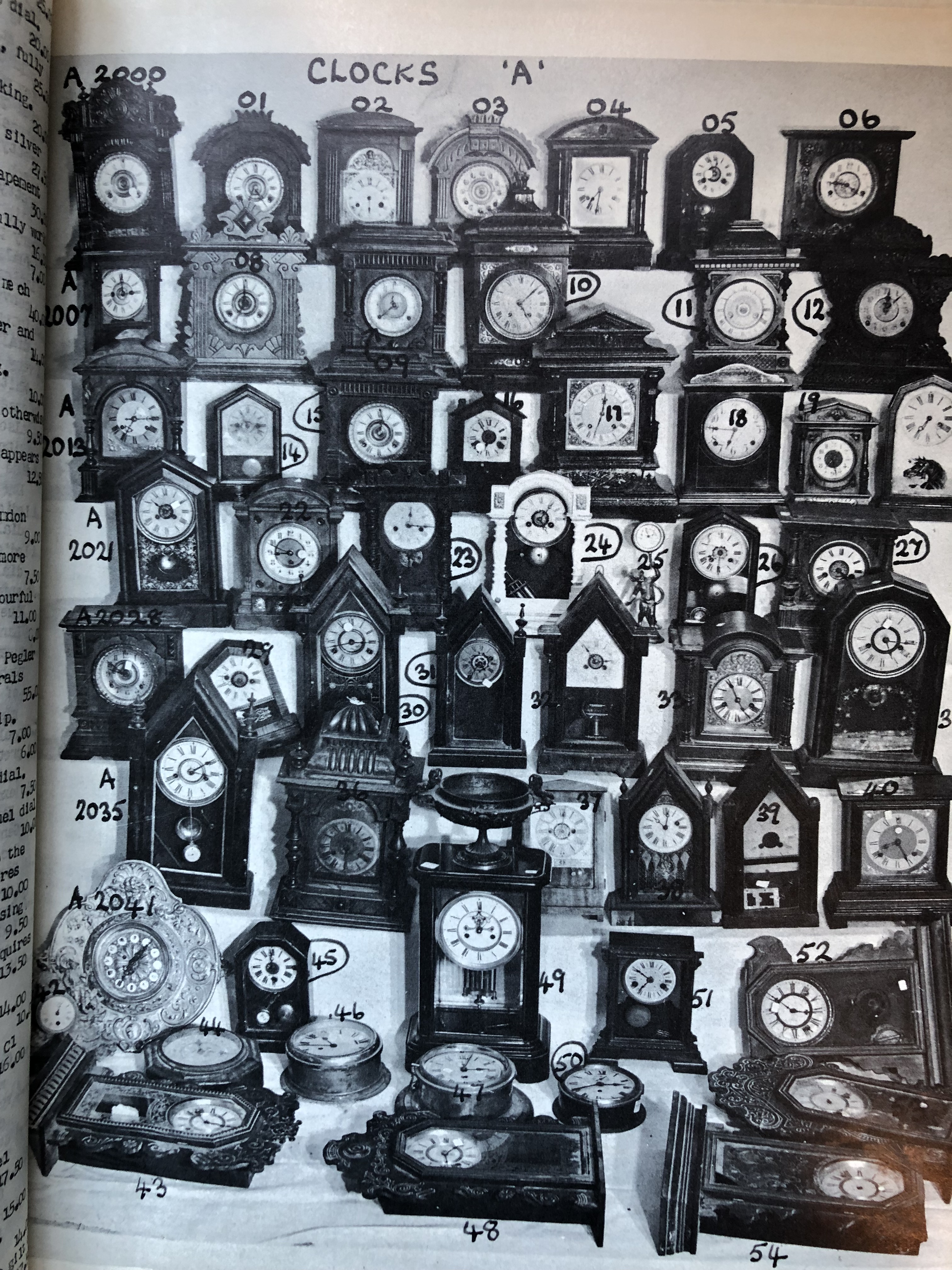
‘China ‘D’ (above), illustrates one page of antiques for sale, with each item having a number, so that customers could order by telephone or post; for example ‘D6315′ (which is the bowl, top row, middle, with ’15’ written on it) – in the catalogue list this is described as ‘Flo blue bowl by ‘Malkin’, Burslem 16” di.[diameter] From a chamber set. Perfect.’ ‘$15.00’. Most of the antique ceramics appear to be of relatively low quality and value, all appropriate for ‘Shipping Goods’. There are dozens of pages devoted to the sale of antique clocks – here’s just one example (below), mostly priced at between $9.00 and $20.00. The most expensive antique clock on the page is no.17, (row three, middle) priced at $55.00 and described as ‘Fine quality 19th c. Bracket clock 18” high. Casing richly decorated with brass-work. Bevelled glass to bezel. Ornate silver and brass dial. Mach [machine] for time and strike in good order. Casing has side handles and is dark patina. Gen.[generally] Snd. [sound].

Herbert Sutcliffe Antiques, catalogue page for antique clocks, 1968. Photograph Antique Dealers Research Project, University of Leeds, 2022.

There are only 7 pages devoted to illustrations of antique furniture, I guess the Sutcliffe business was more interested in volume sales of smaller antiques. The antique furniture is again generally of lower quality and value, mostly Victorian and Edwardian. Here is one of the pages of antique furniture (below).

Herbert Sutcliffe Antiques, catalogue page for antique furniture, 1968. Photograph Antique Dealers Research Project, University of Leeds, 2022.

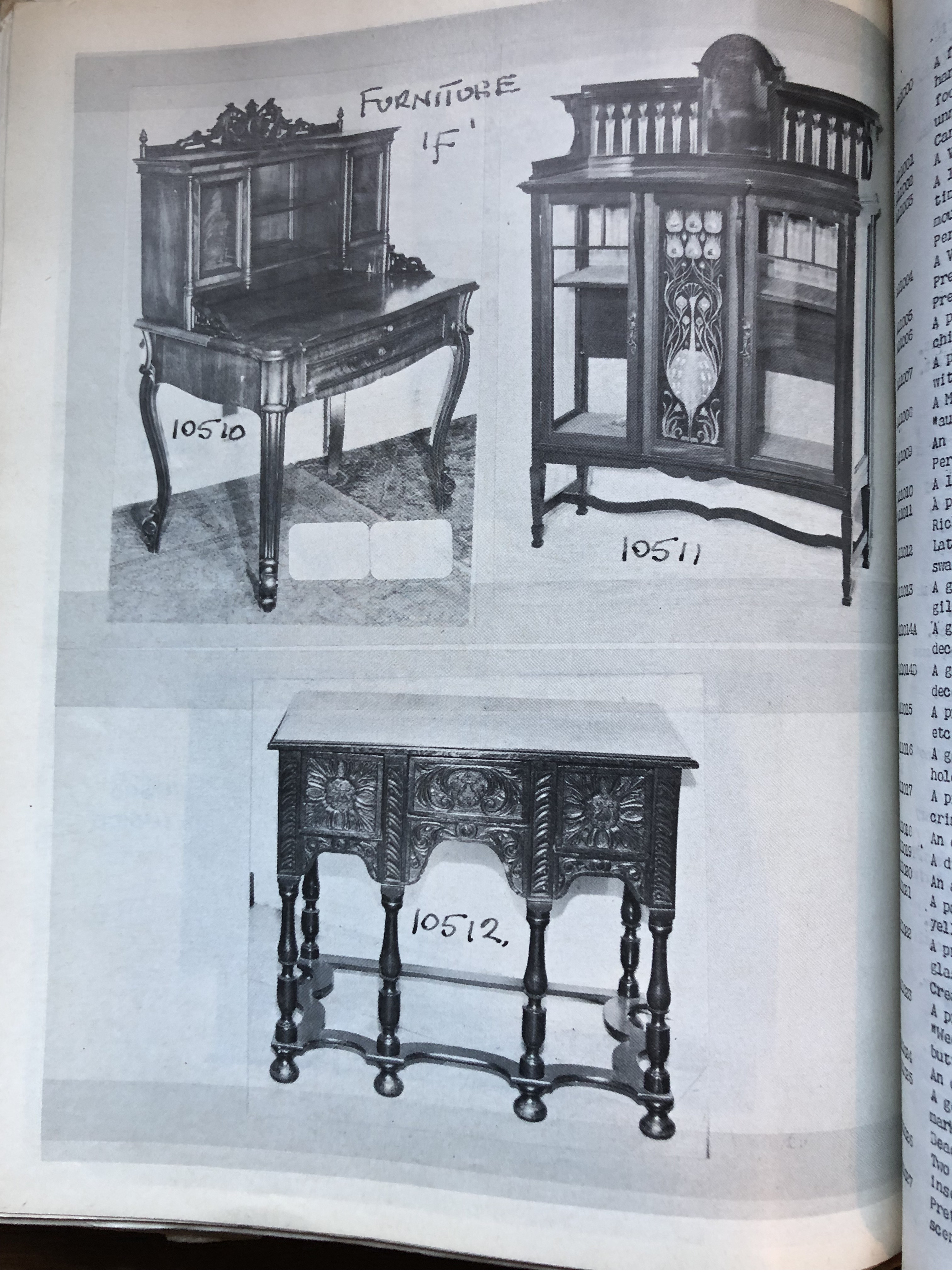
The antique furniture item ‘F 10510’ (top left) is described in the catalogue as ‘Cancelled’ – i.e. is must have been sold whilst the catalogue was in production; but looks like a mid-19th century Continental piece. Item ‘F 10511’ is described as ‘A pretty art nouveau style mahogany display cabinet. 45” wide 62” high. Note very pretty marketry [sic] panel to centre. of a stylised peacock. Rich colourful inlaid various woods with some oyster shell inserts. Ex. [excellent] patina. Very cln [clean] and snd [sound] cond.’ [condition]. It is priced at $85.00. The final item, ‘F 10512’ which looks like an early 18th century oak side table, but heavily re-carved in the 19th century, is described as ‘A pretty Victorian 17th century style carved oak loobey [sic]. 33” wide 29” high. 3 small drawers to the front. Richly carved front freeze [sic]. Exce. [excellent] patina. Very cln [clean] and snd [sound] cond.’ [condition]. It is priced at $175.00.

The Herbert Sutcliffe catalogue gives a fascinating insight into the Antique Shipping Goods trade in the 1960s and 1970s, which was of course a major part of the British Antique Trade in the Post World War II period. The catalogue will be making it’s way to the Brotherton Library Special Collections in due course.

Mark

February 27, 2022

Dealer Catalogues – A.W. & F. Little, c.1890-1900

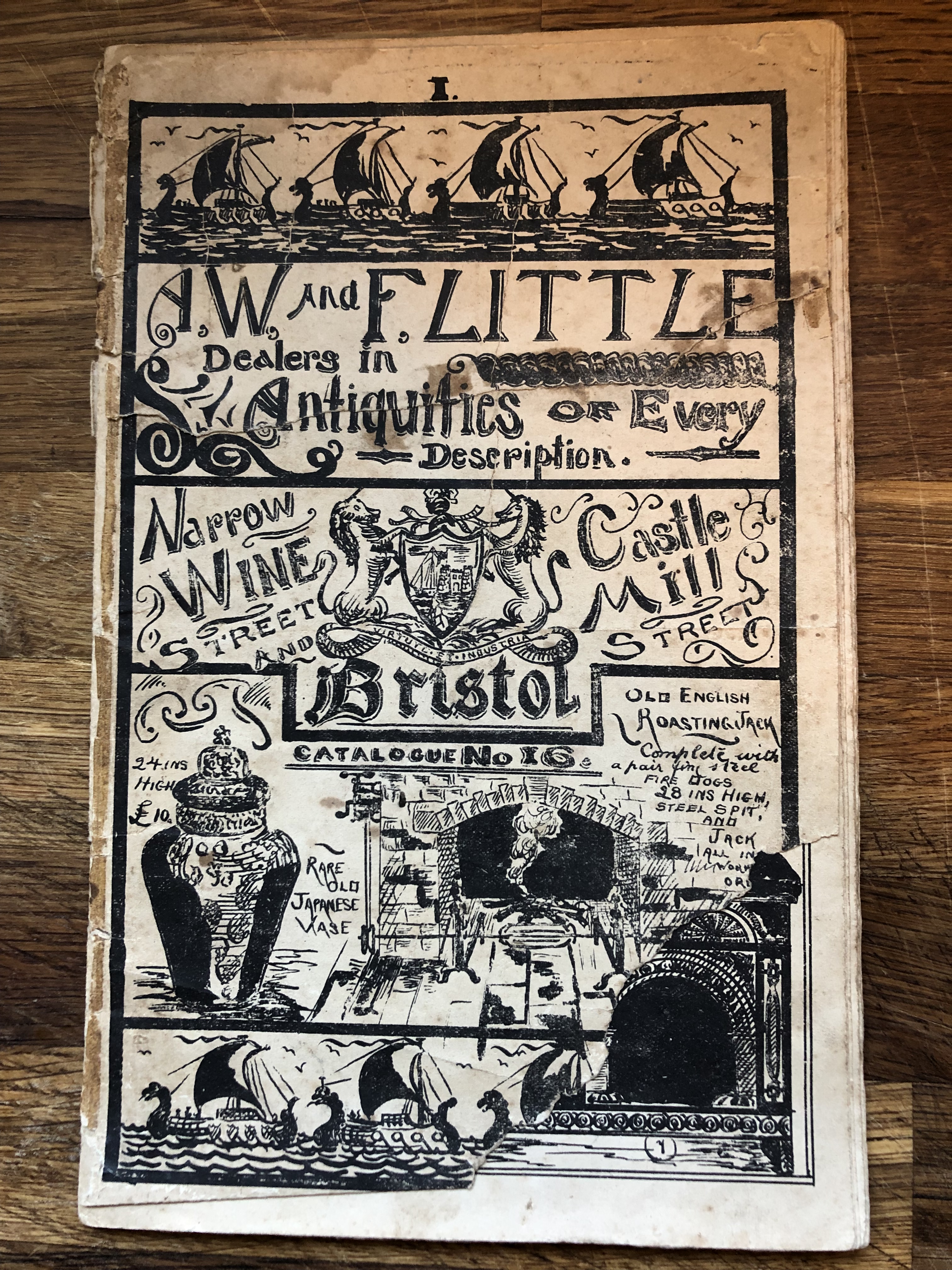
Old catalogues illustrating antiques for sale produced by antique dealers give a fascinating insight into how dealers described, classified and marketed antiques. The antique dealers research blog has showcased a number of antique dealer catalogues over the years – see, for example, our recent entry on the catalogue ‘Genuine Antique Furniture’ produced in c.1920 by the London based dealer Rueben Shenker (Blog Post, 30th September 2021). Our latest antique dealer catalogue is a very rare printed example produced by A.W. & F. Little of Bristol, dating from c.1890-1900.

A.W. & F. Little catalogue, c.1890-1900. Photograph Antique Dealers Research Project, University of Leeds.

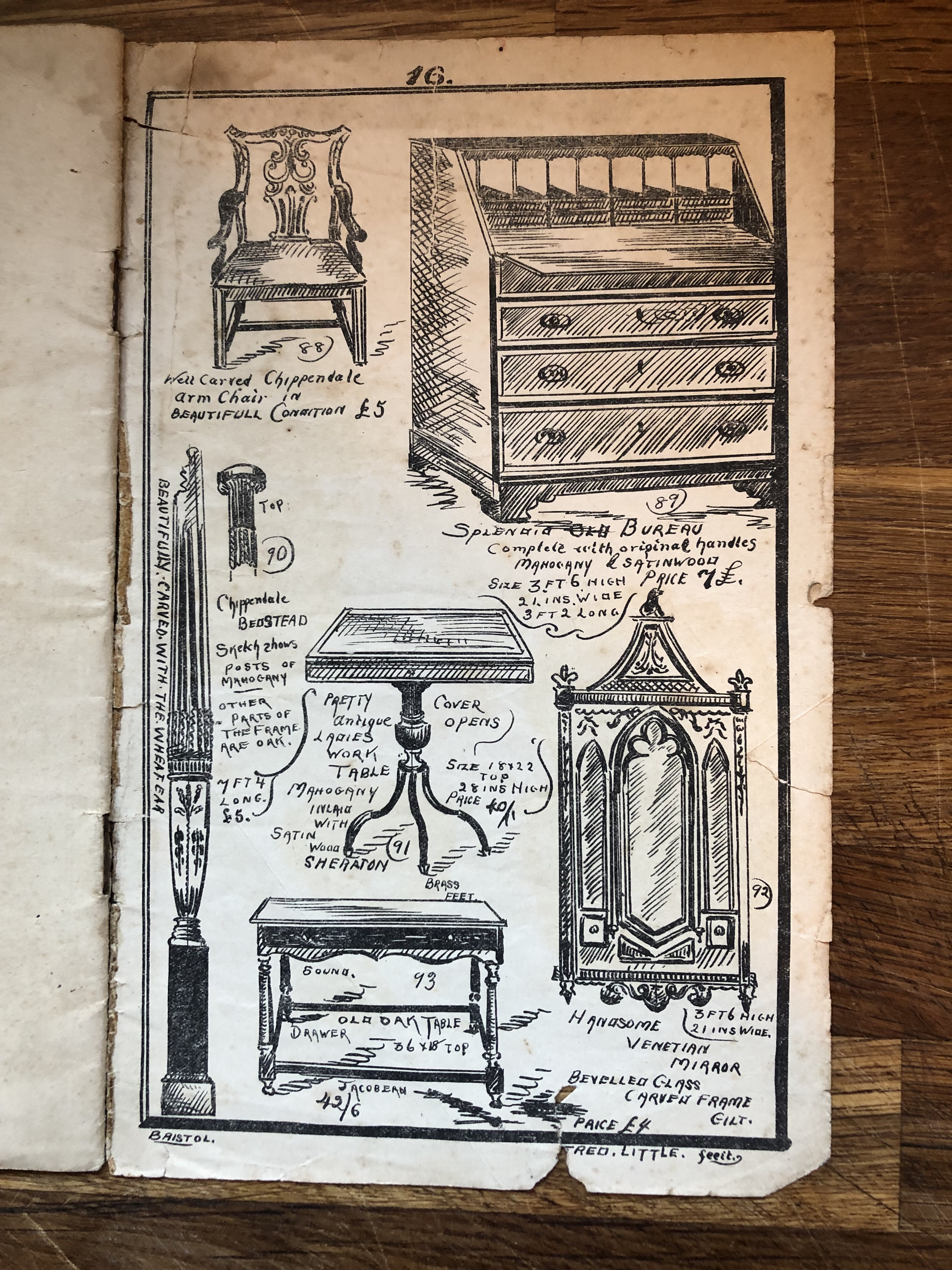
The catalogue is in a fragile state, as you can see – the cover has a section missing, bottom right corner, and there are a number of tears throughout, but it is a remarkable survival given the ephemeral nature of these things. According to his own publicity A.W. Little established his antique dealing business in Bristol in 1865. By the time the catalogue was produced, A.W. & F. Little, ‘Dealers in Antiquities of Every Description’ were trading from two shops in Bristol, one in Narrow Wine Street and the other in Castle Hill. Frederick Little (perhaps a son or brother?) produced this edition of the A.W. & F. Little catalogue in c.1890-1900 (this edition is number 16) – it is inscribed ‘FRED LITTLE fecit’ on the final page (see bottom right in the image below).

A.W. & F. Little catalogue, c.1890-1900. Photograph Antique Dealers Research Project, University of Leeds.

Frederick Little’s association with print media and design seemed to have continued, as by 1902 he was listed as ‘newsagent’ in Narrow Wine Street, Bristol, and as a ‘Commercial Photographer’ at 16 Castle Mill Street by 1914; so perhaps Frederick had left the antique dealing business early in the 20th century? Certainly, by 1924 A.W. Little was in a new partnership with T.G. Smith, at 20 Castle Green, Bristol, but Frederick Little seems to have held onto the Castle Mill Street shop.

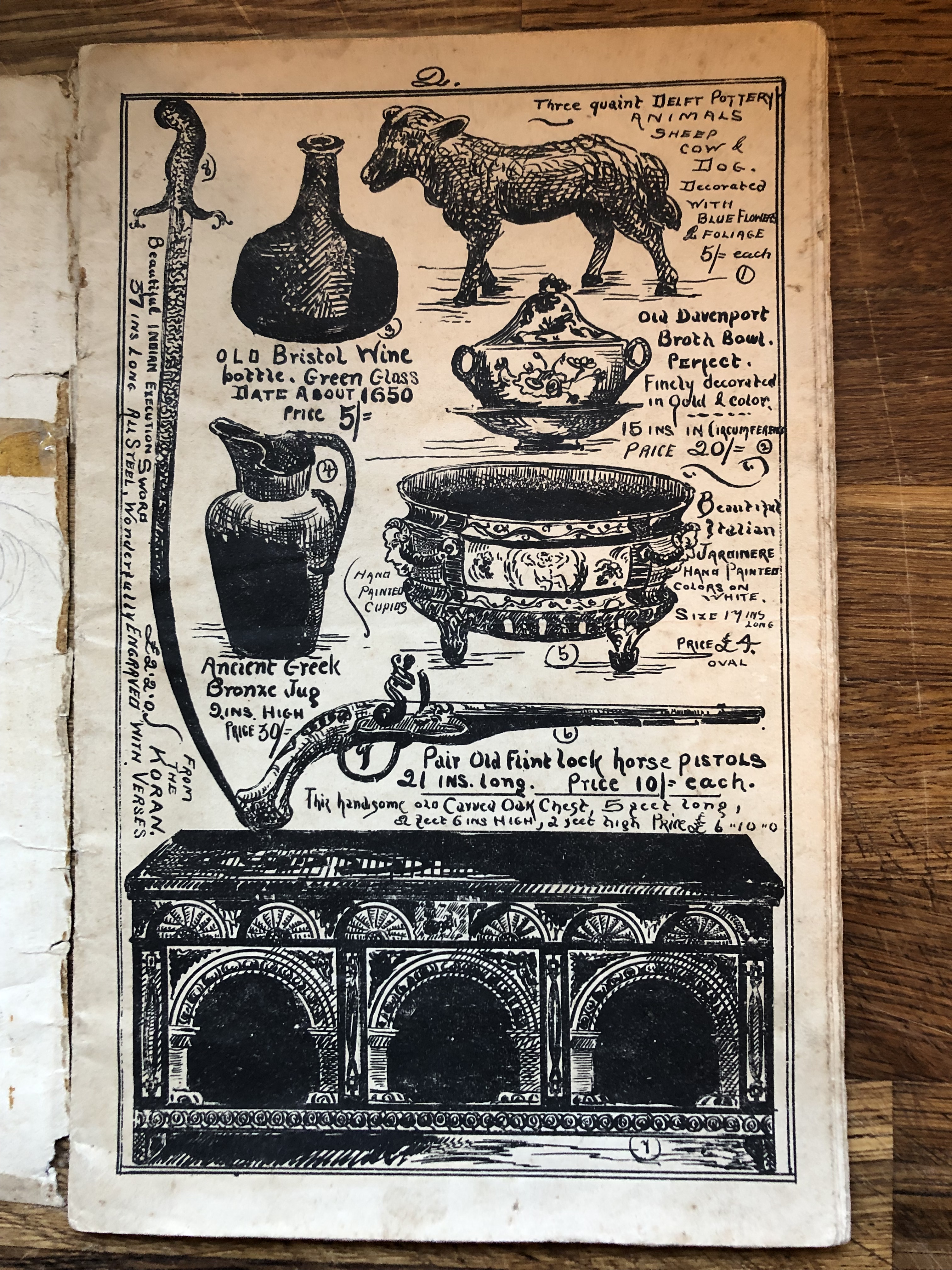
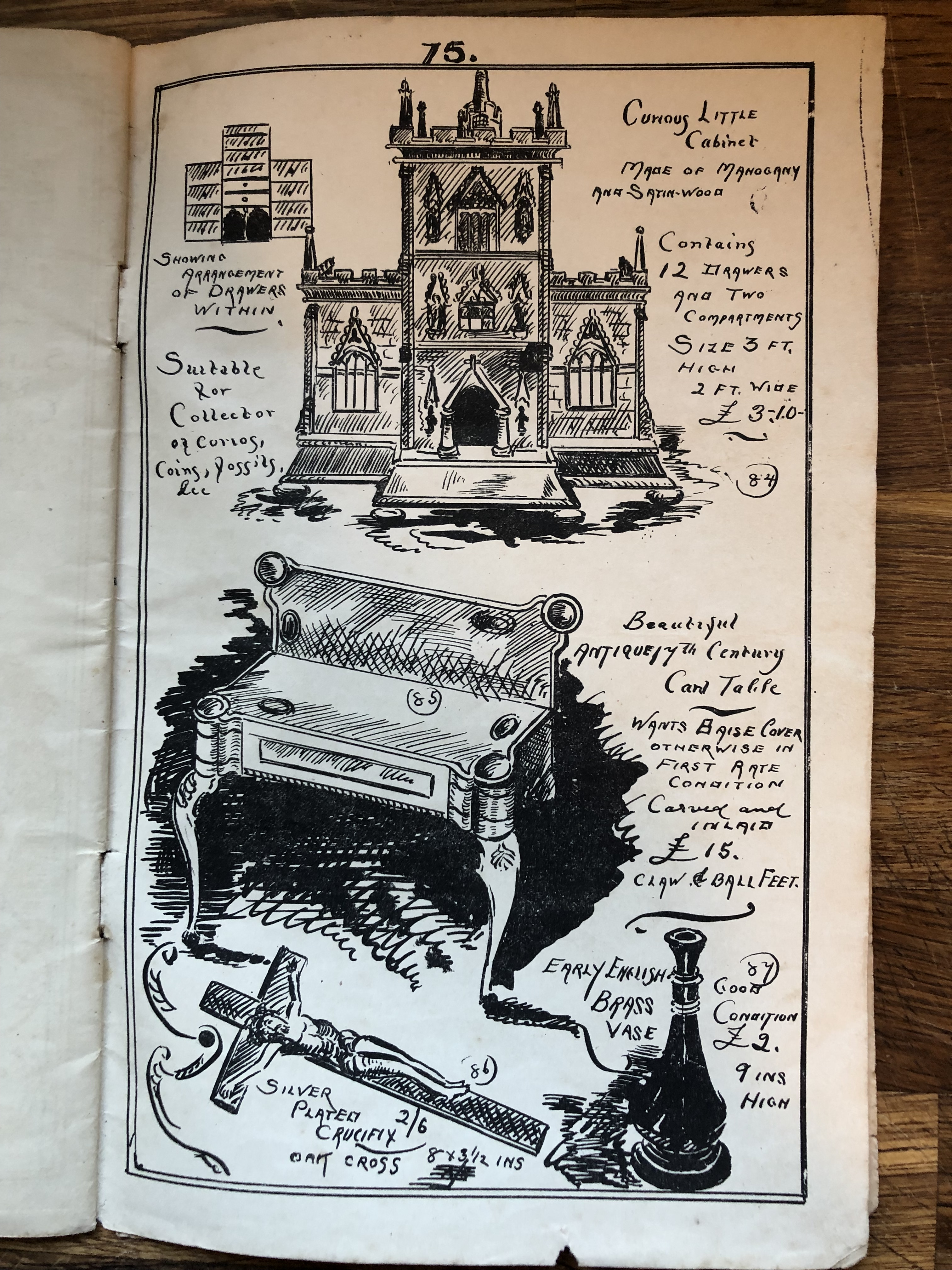
The catalogue itself has rather crudely drawn, lithographic, illustrations of various antiques that the business had for sale. The cover (page 1 above) shows a ‘Rare Old Japanese Vase, 24 ins High’, and priced at £10.’ Together with an ‘Old English Roasting Jack, complete with a pair fine fire dogs 28 ins High, Steel Spit and Jack, all in…’ (next words un-decipherable). The final page (page 16 above), also illustrates a variety of 17th and 18th century antiques, including a ‘Chippendale’ chair (£5), a ‘Sheraton’ ‘work table’ (11 shillings?), and a ‘Jacobean’ oak table (42 shillings and 6 pence). There are 16 pages in the catalogue, each one filled with little drawings of antiques for sale. Below is page 2, which rather neatly captures

A.W. & F. Little catalogue, c.1890-1900. Photograph Antique Dealers Research Project, University of Leeds.

the wide range of antiques that a dealer of c.1890-1900 would have for sale. Pottery and porcelain, in the form of an ‘Old Davenport Broth Bowl’ (20 shillings), ‘Three quaint Delft Pottery Animals….’ (5 shillings each), plus what looks like a rare maiolica ‘jardinière’ – described as ‘Beautiful Italian Jardinere, Hand Painted Colours on White’ (£4); ‘Old Bristol Wine bottle…date about 1650’ (5 shillings); an ‘Ancient Greek Bronze Jug’ (30 shillings); ‘a pair of Old Flintlock horse Pistols’ (10 shillings); an ‘Old Carved Oak Chest’ (£6, 10 Shillings); and a ‘Beautiful Indian Execution Sword…Engraved with Verses From the Koran’ (£2, 2 shillings). Page 15 in the catalogue (below) shows a ‘Curious Little Cabinet Made of Mahogany and Satin-wood’ (£3, 10 Shillings), as well as a ’17th [sic] century Card Table’ (actually an early 18th century example).

A.W. & F. Little catalogue, c.1890-1900. Photograph Antique Dealers Research Project, University of Leeds.

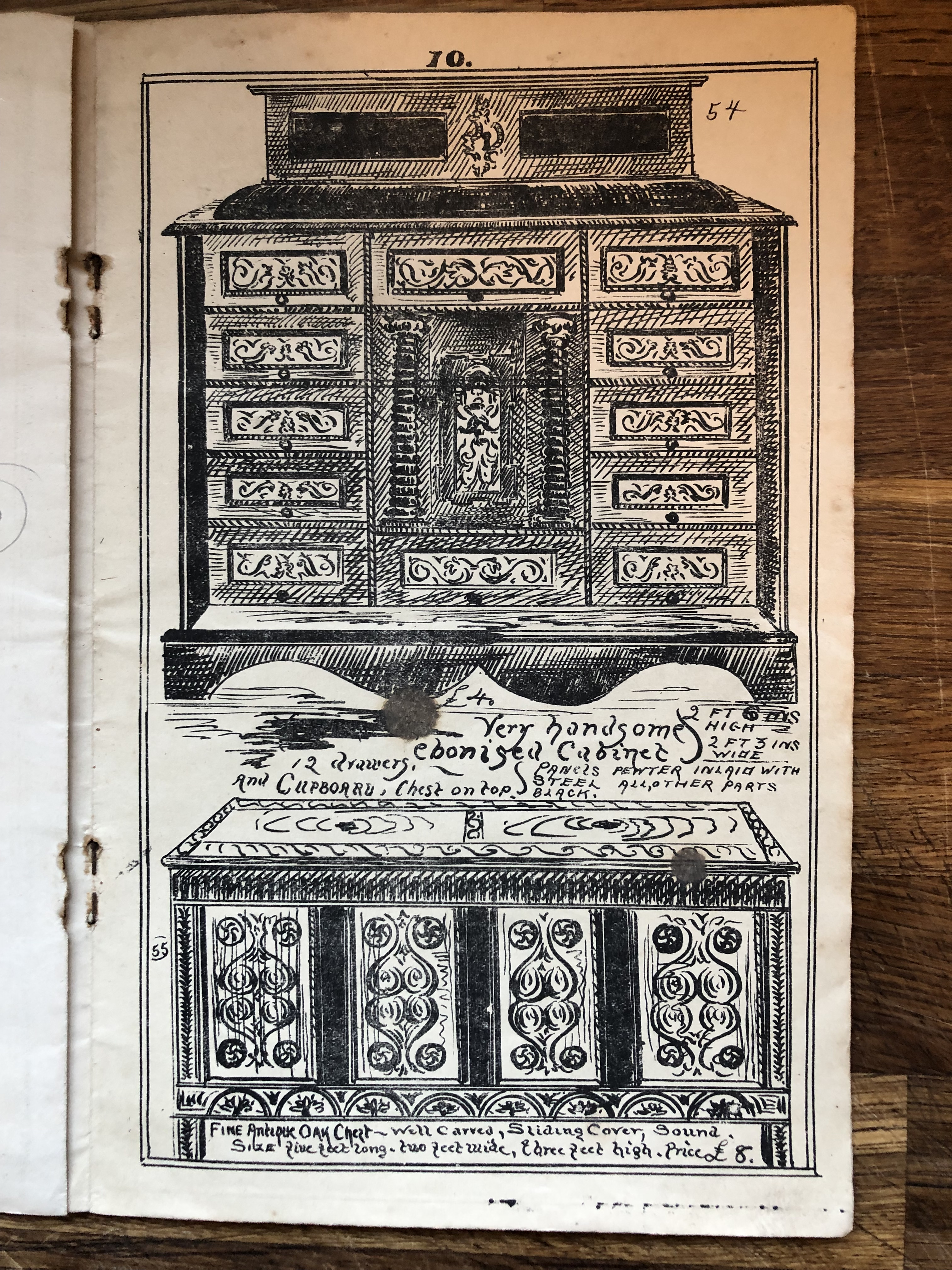
The other pages in the catalogue are similarly packed with illustrations of a wide range of antiques for sale, including this page (page 10, below), with a ‘Very Handsome Ebonized Cabinet’ inlaid with ‘Pewter’ and ‘Steel’ (£4) – perhaps an example of ‘Boulle work’?

A.W. & F. Little catalogue, c.1890-1900. Photograph Antique Dealers Research Project, University of Leeds.

Similar examples to the A.W. & F. Little catalogue were produced by the antique dealer Samuel Richards of Nottingham in the period 1880s-1920s (see blog post on 21st June 2014), see example below dating from April/May 1913.

S. Richards catalogue April/May 1913; private collection. Photograph Antique Dealers Research Project, University of Leeds.

The A.W. & F. Little catalogue will, like the other antique dealer catalogues illustrated in the research blog, be making its way to the Brotherton Library Special Collections at the University of Leeds in due course.

Mark
September 30, 2021

Antique Dealer Catalogues – Rueben Shenker c.1920

Our collections of historic antique dealer catalogues and brochures continues to expand. The latest edition is a rare sales catalogue issued by the antique dealer Reuben Shenker (1872-1952) in c.1920. Shenker was born in Russia and came to England, settling initially in Grimsby, North Lincolnshire with his parents. The family moved to London by 1910, and Reuben, together with his younger brother Isaac (1882-1959) established an antique dealing business, specialising in ‘early oak furniture’.

Rueben Shenker, ‘Genuine Antique Furniture’ dealer catalogue, c.1920. Image, antique dealer research project, University of Leeds.

Isaac Shenker seems to have worked for his brother Rueben – he is recorded as ‘assistant antique furniture’ in the 1910 Census, whilst Reuben is listed in the same Census as ‘antique dealer’. Isaac appears to have left his brother’s business in 1913, first trading from Holland Park Avenue, then, by 1928, from 118 Brompton Road, a location with a very high concentration of antique dealers in the period. Isaac became a BADA (British Antique Dealers’ Association) member by 1932, and seems to have been very successful, ending up with a shop in Old Bond Street by the late 1940s. The famous dealer in antique oak furniture, S.W. Wolsey, married Rueben Schenker’s daughter Isabel in 1922.

Rueben established his business in 1911, trading from Red Lion Street, London until 1936. He specialised in ‘early oak’, which was hugely popular for furnishers and collectors in the opening decades of the 20th century. In 1937 Reuben appears to have closed his Red Lion Street shop and became ‘manager’ of an antique dealing business, Coslyn Limited, who were based at St. Mary Abbott’s Terrace, London.

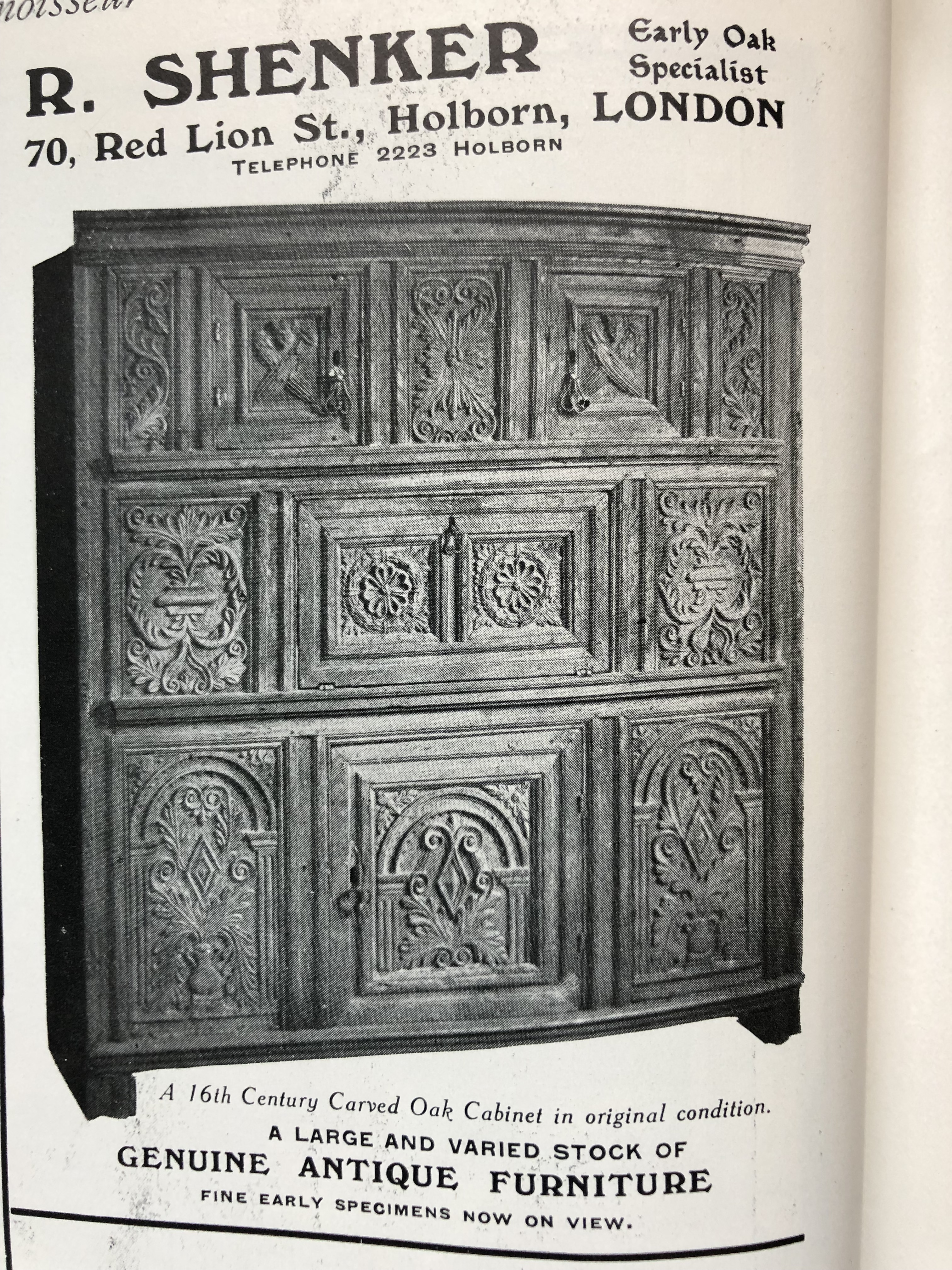
Advertisement, R. Shenker, from Connoisseur, June 1914. Image antique dealer research project University of Leeds.

Rueben’s ‘Illustrated Catalogue of Inexpensive Genuine Antique Furniture’ contains a series of photographs of various examples of 16th, 17th and 18th century furniture, and is dominated by ‘early oak’ specimens.

Rueben Shenker ‘Genuine Antique Furniture’ dealer catalogue c.1920. Image antique dealer research project, University of Leeds.

In his introductory remarks to the catalogue, Shenker draws attention to the popularity of ‘early oak furniture’. He writes, ‘In recent years Genuine Antique Furniture has come into greater favour with buyers of all tastes and classes than heretofore…..The most important and durable pieces are to be found in the early oak examples, which, while being quaint in design and workmanship, are the most useful for country residences.’

‘Old oak’ was indeed amongst the most popular tastes in the opening decades of the 20th century, with many specialist dealers emerging in the market. There was also a thriving trade in the sale of ‘old oak rooms’, recycling 16th and 17th century panelling and fittings into new old-style properties as collectors and furnishers wanted the ‘period room’ look. Dealers such as Lenygon & Morant, Frederick Litchfield, and perhaps most famously, Charles Roberson, did a brisk trade in the sale of period panelling and period rooms. Below is a photograph of a ‘Gothic Oak Room from Boughton Malherbe Manor House, Kent’, from Roberson’s sales catalogue, volume II of three volumes, also, like Shenker’s catalogue, dating from the early 1920s.

‘Gothic Oak Room from Boughton Malherbe Manor House, Kent’, from Roberson, ‘Antique Panelled Rooms, vol II’, c.1921. Image, antique dealer research project, University of Leeds.
Rueben Shenker ‘Genuine Antique Furniture’ dealer catalogue c.1920. Image antique dealer research project, University of Leeds.

Reuben continued in his introductory remarks in his catalogue, highlighting the increasing importance of authentic specimens, which was a special concern for collectors of ‘old oak’ in the period, and of his own his expertise as a dealer. Reuben writes, ‘Having specialised in early oak furniture for many years, I offer intending purchasers the benefit of my experience to guard them against unfair dealing…I may mention that I have a large clientele all over the world, which has been obtained by giving satisfaction and by honest dealing.’

Rueben Shenker ‘Genuine Antique Furniture’ dealer catalogue c.1920. Image antique dealer research project, University of Leeds.

Shenker’s catalogue is a rare survival of an antique dealer’s sales catalogue from the 1920s and will be joining the growing collection of antique dealer catalogues and ephemera and antique dealer archives at the Brotherton Library Special Collections at the University of Leeds in due course.

Mark
Home Subjects

a working group dedicated to the display of art in the private interior, c. 1715-1914

The Period Room: Museum, Material, Experience

An International Conference hosted by The Bowes Museum and The University of Leeds

H. Blairman & Sons Ltd

A research project investigating the history of the antiques trade in Britain in the 19th & 20th centuries

Museum Studies Now?

'Museum Studies Now?' is an event which aims to discuss and debate museum and heritage studies education provision.

The Burlington Magazine Index Blog

art writing * art works * art market

East India Company at Home, 1757-1857

A research project investigating the history of the antiques trade in Britain in the 19th & 20th centuries