Archive for ‘Uncategorized’

September 13, 2015

Antique Dealing in Scotland – Rosehaugh auction 1954

I’m on holiday in Scotland, but still thinking about ‘Antique Dealers’! – we are staying in  small cottage, a converted ‘powerhouse’ c.1900 which was formerly part of the enormous late 19th century house ‘Rosehaugh’, on the Black Isle, near Avoch – anyway whilst whiling away the hours in this beautiful place, I came across a little booklet in the cottage on the history of Rosehaugh (Rosehaugh, a house of its time, John Mills, Hilda Hesling, Magdalene MacLean and Kathleen MacLean, 1996). And antique dealers appear quite prominently in the story of the house – inevitably I would suggest!

The ‘big house’ no longer exists, it was extensively remodelled and extended in the 1890s by the architect William Flockhart, and was demolished in 1959.
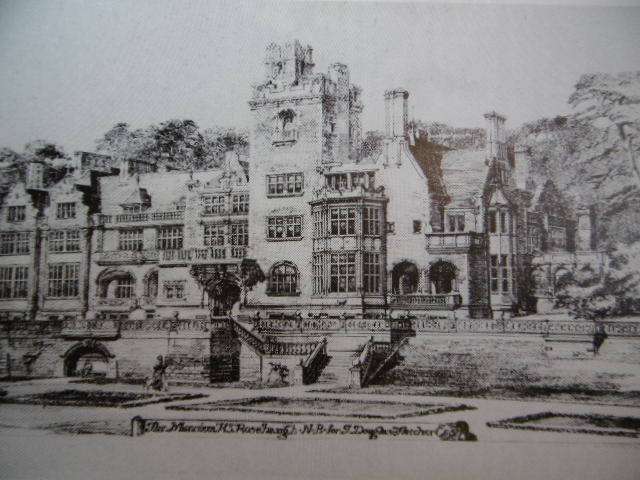
Rosehaugh House remodelling by W Flockhart 1883

William Flockhart’s presentation drawing for the proposed remodelling of Rosehuagh, 1893. Image copyright Avoch Heritage Association.
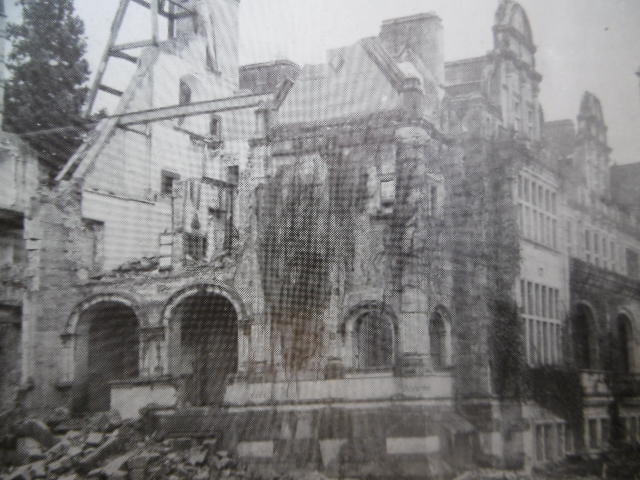
 

the demolition 1959 view from west

The demolition of Rosehaugh, 1959. Image copyright Avoch HA.

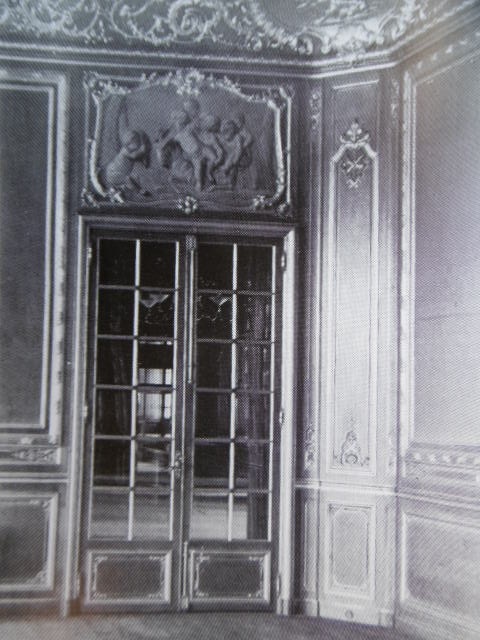
Both during the assembly and dismantling of Rosehaugh, prominent antique dealers played their role; during the construction of the house, J J Duveen supplied much of the historic panelling to the rooms, including this (seemingly) 18th century boiserie for the Drawing Room.
drawing room Duveen

The Drawing Room, Rosehaugh, c.1900. Panelling supplied by Duveen. Image copyright Avoch HA.

It’s probably no coincidence that William Flockhart, the architect of the remodelling at Rosehaugh, also designed the interiors of the New Bond Street showroom of Duveen. And according to the Rosehaugh booklet, Duveen also supplied some Boucher tapestries for the Drawing Room.

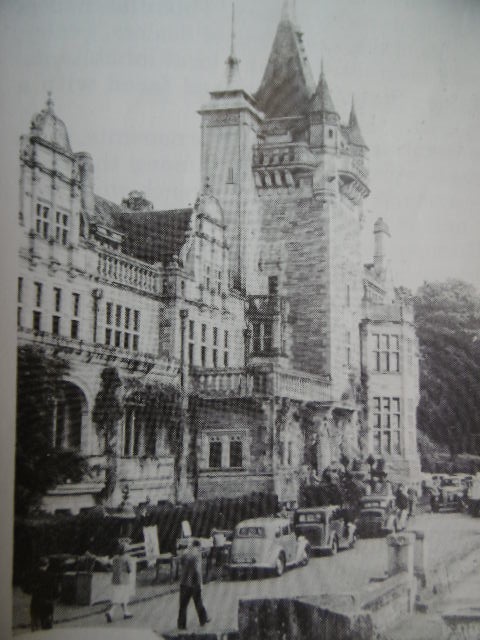
The dispersal auction sale also involved the antique trade; the auction was organised and conducted Thomas Love & Sons, Perth, the well-known antique dealers, house furnishers and, obviously, auctioneers, and took place in 1954. Love’s had consigned most of the more valuable contents to sale in London before conducting the auction on site at Rosehaugh – Love & Sons had been established in 1869, as auctioneers and general house furnishers, but also had a large antiques department as part of their business (the business closed in 2009).
the sale 1954 Tho Love and sons

The auction sale at Rosehaugh, 1954. Image copyright Avoch HA.

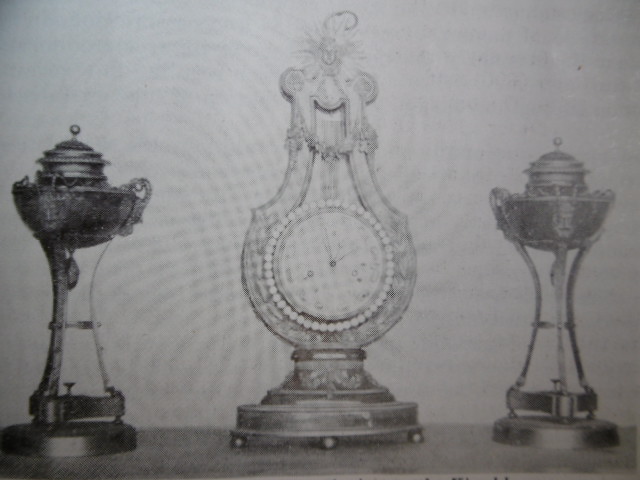
At the auction sale, which took place over 8 days in late August and early September 1954, a number of antique dealers made significant purchases. A dealer named John Beadle, from Hounslow, London, bought the French panelling that had been supplied by Duveen, paying £400 for the room and lighting fitments. Another object sold, although not known if it was bought by the trade, was a rare Sevres porcelain and ormolu mounted clock by ‘Kinable’ (lot 572, sold with a pair of pastel burners, for £310).
sale cat French clock by Kinable lot 572

Lot 572 in the Rosehaugh auction sale of 1954. ‘A clock by Kinable’. Image copyright Avoch HA.

Dieudonne Kinable (active c.1780-1825) was one of the most prominent clockmakers in Paris in the period, and examples of this ‘lyre’ model of Sevres clock are in several major museum collections, including the V&A, The Royal Collections, The Louvre and The Walters Art Museum in the USA.

Anyway, I thought it was interesting, if as I say perhaps inevitable, that the antique trade played such a central role in both the assembly and dispersal of what must have been a very significant collection of antiques.

Mark


September 2, 2015

The changing geography of the antique trade 1976-2000

Further to our summer competition on the top ten locations for antique shops in Britain in 1976, we thought it would be useful draw from the research into the antique shops of 1976 and do a comparison with the year 2000 – we do this in order to highlight again the academic objectives of the research project and draw further attention to some of the significant changes in the ecology of the antique trade over that period.

As many of you you already know, the British antique trade underwent a significant transformation around the time of the millennium – this was also one of the catalysts for the development of this particular research project – and a large number of antique dealers withdrew from the market or changed their patterns of activity during the last 15 years or so. The catalysts for this transformation are wide ranging and complex, driven as there were by rapid developments in technology, shifts in social behaviour, as well as changes in notions such as ‘expertise’ and the knowledge of objects of value – ‘expertise’ has been both decentered and recalibrated in the last 20 or so years.  Moreover, one of the key drivers for the rapid change in ‘taste’ in the last 20 years also appears to have been a more abstract shift towards the contemporary – the extraordinary rise in the market for contemporary art is just one of a number of symptoms of this shift. In the market for ‘antiques’ we have seen a significant decline in the interest for things such as antique furniture, alongside the increased interest in modern/contemporary and designer furniture and objects. This shift in value systems is of course a consequence of extremely complex social, cultural and political phenomena, and there is no space here to even begin to address the frameworks for these rapid changes – suffice to say that the antique trade has changed significantly over the last 15-20 years – and part of the objectives of the current research project is to investigate this shift.

Anyway, one of the pieces of evidence of the recent changes in the cultural geography of the trade is the shifting patterns and concentrations of antique shops in Britain – and you thought that our summer competition was just a piece of frivolous whimsy! And so we thought a comparison between 1976 and 2000 would be an interesting thing to do; and here are some of the results….they make very interesting reading (we are doing more analysis of this data of course!)

1976-2000 Antique locations – the TOP TEN as they were in the competition:

Brighton (96 dealers in 1976; 46 dealers in 2000) – down 48%

Bournemouth (61 dealers in 1976; 22 dealers in 2000) – down 64%

Bath (51 dealers in 1976; 54 dealers in 2000) – up 6%

Bristol (50 dealers in 1976; 24 dealers in 2000) – down 52%

Manchester (37 dealers in 1976; 21 dealers in 2000) – down 43%

Nottingham (36 dealers in 1976; 13 dealers in 2000) – down 64%

Chester (36 dealers in 1976; 22 dealers in 2000) – down 39%

Harrogate (35 dealers in 1976; 25 dealers in 2000) – down 29%

Sheffield (32 dealers in 1976; 16 dealers in 2000) – down 50%

Birmingham (32 dealers in 1976; 21 dealers in 2000) – down 34%

York (30 dealers in 1976; 10 dealers in 2000) – down 67%

Leeds (30 dealers in 1976; 9 dealers in 2000) – down 70%

Glasgow (30 dealers in 1976; 20 dealers in 2000) – down 33%

Oxford (29 dealers in 1976; 7 dealers in 2000) – down 76%

Windsor (29 dealers in 1976; 19 dealers in 2000) – down 34%

And London – (1233 dealers in 1976; 766 dealers in 2000) – down 38%

The figures themselves are somewhat of a blunt instrument, but they do point towards a significant change in the geography of the antique trade over that period. And beneath these figures are some further significant shifts and changes – an increase in ‘vintage’ and ‘retro’ objects can already be detected in the data for example.

As you can see, all of the top ten locations, apart from Bath, decreased significantly over the last 24 years of the 20th century.  The small increase in the number of dealers in Bath is mirrored in the increase in activity in locations such as Stow-on-the-Wold (1976 -11 dealers; 2000 – 30 dealers) and in other well-known antique centres such as Tetbury (10 dealers in 1976; 26 dealers in 2000), Cheltenham (21 dealers in 1976; 36 dealers in 2000) and Lewes (8 dealers in 1976; 21 dealers in 2000). But these relatively small increases in activity do not mask the rapid decline in the number of antique shops more generally – and this is a trend we are looking into further.

FYI – one of the most intriguing statistics for the concentrations of dealers was at the County level -now of course there are various explanations for the concentrations of antique dealers in a county area – not least of which would be the size of the county itself (and, as we know, county boundaries are always changing too, so comparisons are not always like-for-like).  But guess which county had the most antique dealers in 1976?…..no, it’s not Surrey (198), or Kent (228), or East Sussex (helped by Brighton, which had overall 215)….

Guessed yet?

It was Lancashire!…Yes, Lancashire…who’d have thought it (not me anyway!) – it had 240 dealers in 1976.

Now how many do you think it had in 2000?….

99.

I detect a North-South shift here….and this is very intriguing indeed – the social/cultural demography of the antique trade could be a fascinating barometer of the wider social demography of Britain?

Mark

August 22, 2015

Summer Competition – WINNERS!

Our Summer Competition closed yesterday – thank you to all who sent entries and tried to guess the top THREE locations for Antique Shops in Britain in 1976.  We had entries from all over the UK, we also had one entry from the USA! Thank you to all of those that entered the competition….we hope you enjoyed trying to work out the top three locations.

We are very pleased to announce that we have TWO winners!

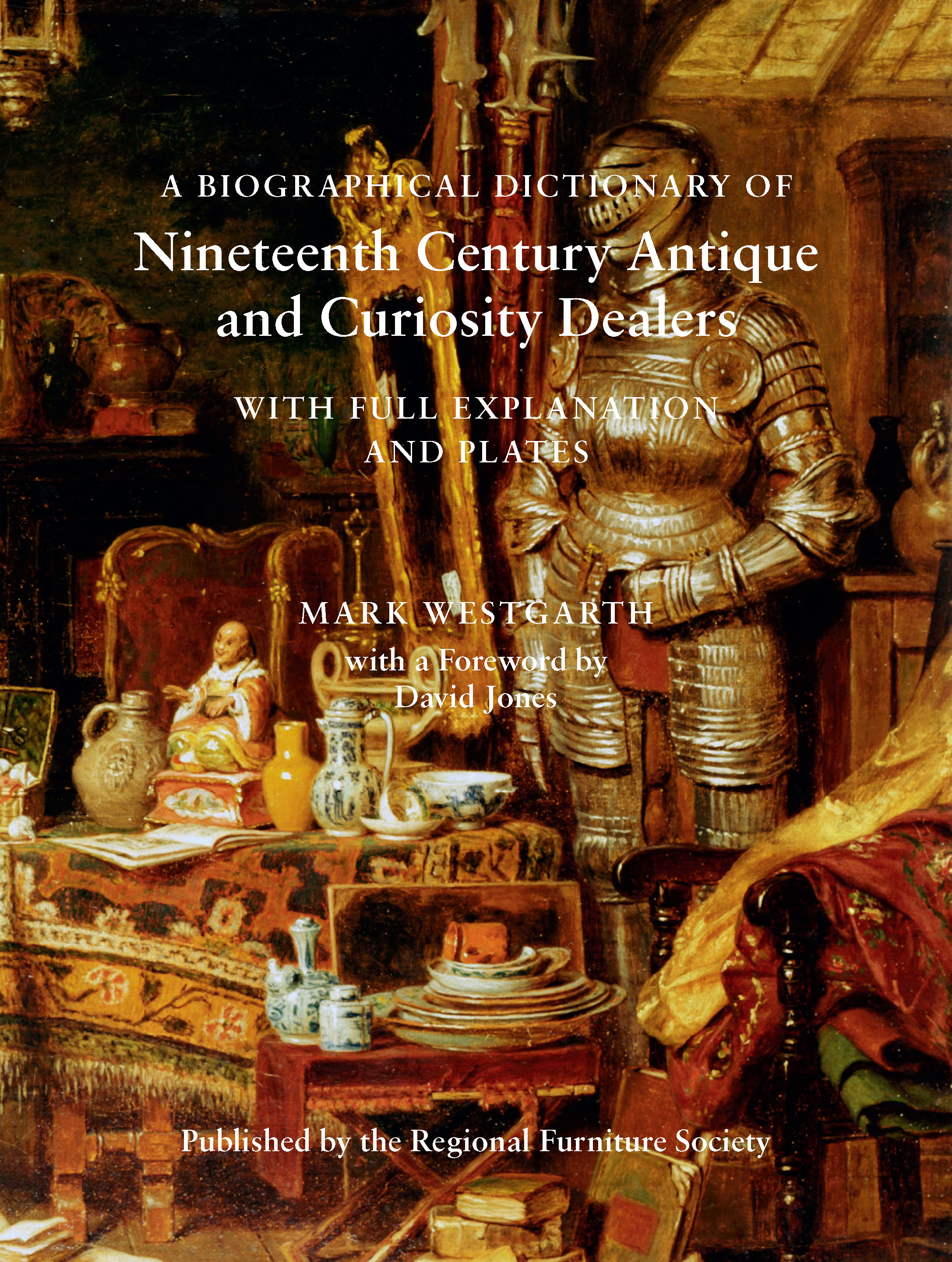
Patricia Walsh, from Lancashire, and Tony Loftus, from Yorkshire: well done to both of you – we will be posting your prizes – copies of ‘A Biographical Dictionary of 19th Century Antique & Curiosity Dealers’ – to you this week. Well done both!

Cover

The competition seemed to have been quite tough as none of the entries actually guessed all THREE of the top THREE locations for antique shops in 1976.  But of all the entries, Patricia and Tony both managed to guess TWO of the top THREE (Brighton & Bath), and we thought that they both deserved to win.

And so, you will all want to know the correct answers of course –

The TOP TEN locations (Cities/Towns) for antique shops in Britain in 1976 are:

  1. Brighton (96 dealers)
  2. Bournemouth (61 dealers)
  3. Bath (51 dealers)
  4. Bristol (50 dealers)
  5. Manchester (37 dealers)
  6. Nottingham/Chester (36 dealers)
  7. Harrogate (35 dealers)
  8. Sheffield/Birmingham (32 dealers)
  9. York/Leeds/Glasgow (30 dealers)
  10. Oxford/Windsor (29 dealers)
August 20, 2015

Even More Oral History Interviews! – Gary Baxter

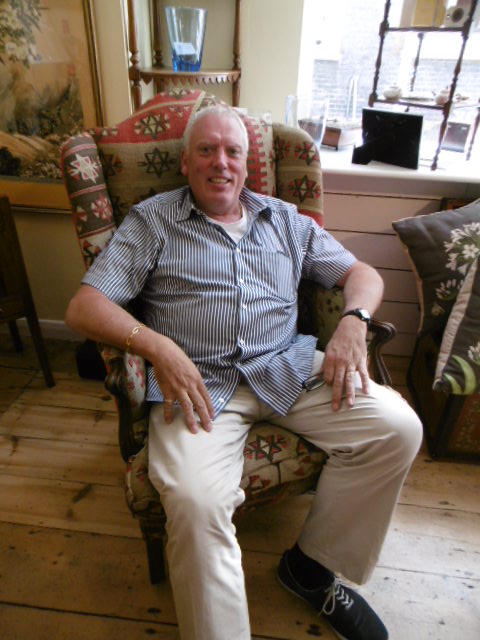
Our busy schedule of Oral History interviews continues apace this week – on Monday 16th August we interviewed Gary Baxter of the well-known Antique English Furniture specialist dealers H.C. Baxter & Sons. In an absolutely exemplary interview, full of rich historical detail, Gary told us about the beginnings of H.C. Baxter & Sons, established in the late 1920s in Chelsea, London. Here’s Gary in his new shop in Lewes, East Sussex, which he now shares with his sister.

Gary Baxter 2015

Gary Baxter, in Lewes, East Sussex, 2015.

Gary is one of the last in a generation and tradition of antique dealers that stretches back into the opening decades of the 20th century – something that the current research project is keen to map and investigate.

Horace Baxter

H.C.M.V.J. Baxter, c.1950s. Photograph courtesy and copyright of Gary Baxter.

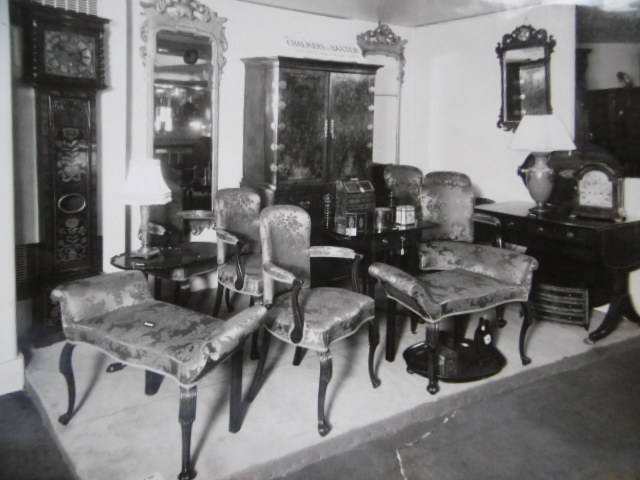
Gary told us about his grandfather, the marvelously named, Horace, Claude, Montague, Victor, John, Baxter – who established the business in 1927. H.C. Baxter – here (above) in a photograph kindly loaned to us by Gary. Horace began the firm in partnership with his sister Maud – (Mrs Maud Chalmers), in a business initially called ‘Chalmers and Baxter’. Indeed, it was as ‘Chalmers and Baxter’ that they showed as one of the antique businesses at the inaugural Grosvenor House Antiques Fair in 1934; as this photograph (again kindly loaned to us by Gary) of their stand at Grosveonr House in 1934 illustrates –

Chalmers and Baxter stand GH 1934

Chalmers & Baxter at Grosvenor House Antiques Fair, 1934. Photograph courtesy and copyright Gary Baxter.

Maude, who was, Gary tells us, much more interested in antique jewellery, opened her own separate antique jewellery shop in Knightsbridge by the mid 1930s, leaving Horace in the antique shop in Fulham Road, London.  Horace was joined in the business by his wife (Gary’s grandmother) Florence Ann Baxter, and later by Gary’s father, Terence Baxter, and his uncle, Roy, before Gary joined the business aged 17 in 1978.

In an interview full of absolutely fascinating detail (Gary should certainly have been an historian!) Gary told us about his memories of being taken around the antique shops and auction rooms of Brighton in the early 1960s, and of the extensive buying trips undertaken by his grandfather and father as they sought antique furniture for their dealer customers in London. H. C. Baxter, as many of you will know, were one of the leading trade suppliers of fine quality English 18th and early 19th century antique furniture during the second half of the 20th century. In our interview, lasting over 2 hours (thanks again Gary for your patience!), Gary described the structure of the antique trade and how it operated, changed, and declined during the course of the late 20th century – the interview will be of considerable interest to our research project, as well as being an exceptional resource for future historians of this fascinating cultural phenomena.

Mark


August 20, 2015

More Oral History Interviews – Daniel Bexfield

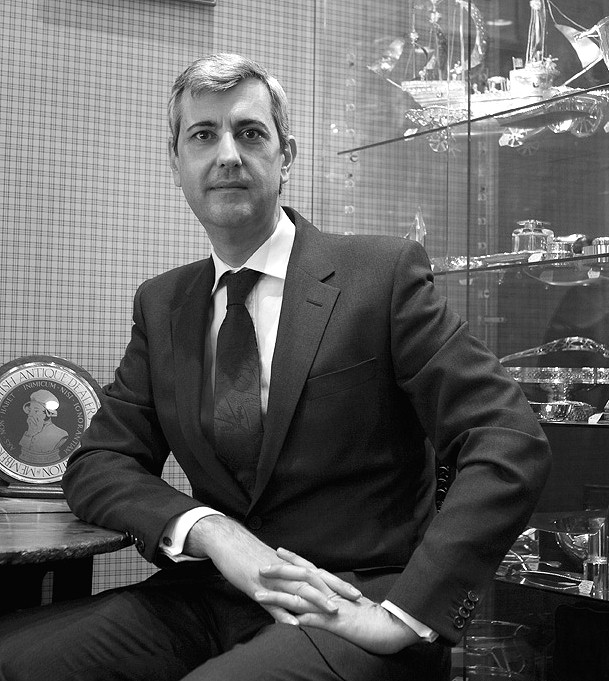
We are having a busy few weeks with the Oral History Interviews – as well as our recent interview with Lennox Cato, we’ve also completed an interview with the well-known Antique Silver specialist Daniel Bexfield. The interview was conducted by our Project Lead Volunteer, Chris Coles, at Daniel’s shop in London.

DANIEL01

Daniel Bexfield. Photograph courtesy and copyright of Daniel Bexfield. 2015.

Daniel and Chris had a fantastically interesting discussion on life as an antique silver dealer – and Daniel recalled his early career as a dealer in the antique markets at Bermondsey and Portobello Road, before he established his first permanent shop in the famous Burlington Arcade in the West End of London. The interview, as with all our project interviews, will soon be available via the project website – just need to edit them etc….

We now have an expanding range of interviews with specialist dealers – antique furniture dealers, antique textile dealers, antique silver dealers, antique glass specialists, wine antiques specialists….we’re on the hunt for an antique ceramics specialist at present!

Thanks again to Daniel, and to Chris, for such an interesting interview.

Mark

August 15, 2015

Oral History Interviews – Lennox Cato

We did another of our growing corpus of antique dealer project Oral History interviews the other week – and with another ‘BBC Antiques Roadshow‘ presenter – this time with Lennox Cato of Lennox Cato Antiques in Edenbridge, Kent.

Lennox cato 1

Lennox Cato. Photograph courtesy and copyright of Lennox Cato Antiques, 2015.

In a fascinating and wide-ranging interview, recorded at his antique galleries in Edenbridge, Lennox told us of his very early introduction to the antiques trade – he was adopted at an early age by the well-known Brighton based antique dealer ‘Dicky’ Compton and his wife – as well as the history of his own time in the business since he opened his first shop in The Lanes, Brighton, in 1978.

As many of you will know, Lennox has become a regular expert (especially on antique furniture) on the popular BBC programme ‘Antiques Roadshow’, as well as being a very active member of the British Antique Dealers’ Association.

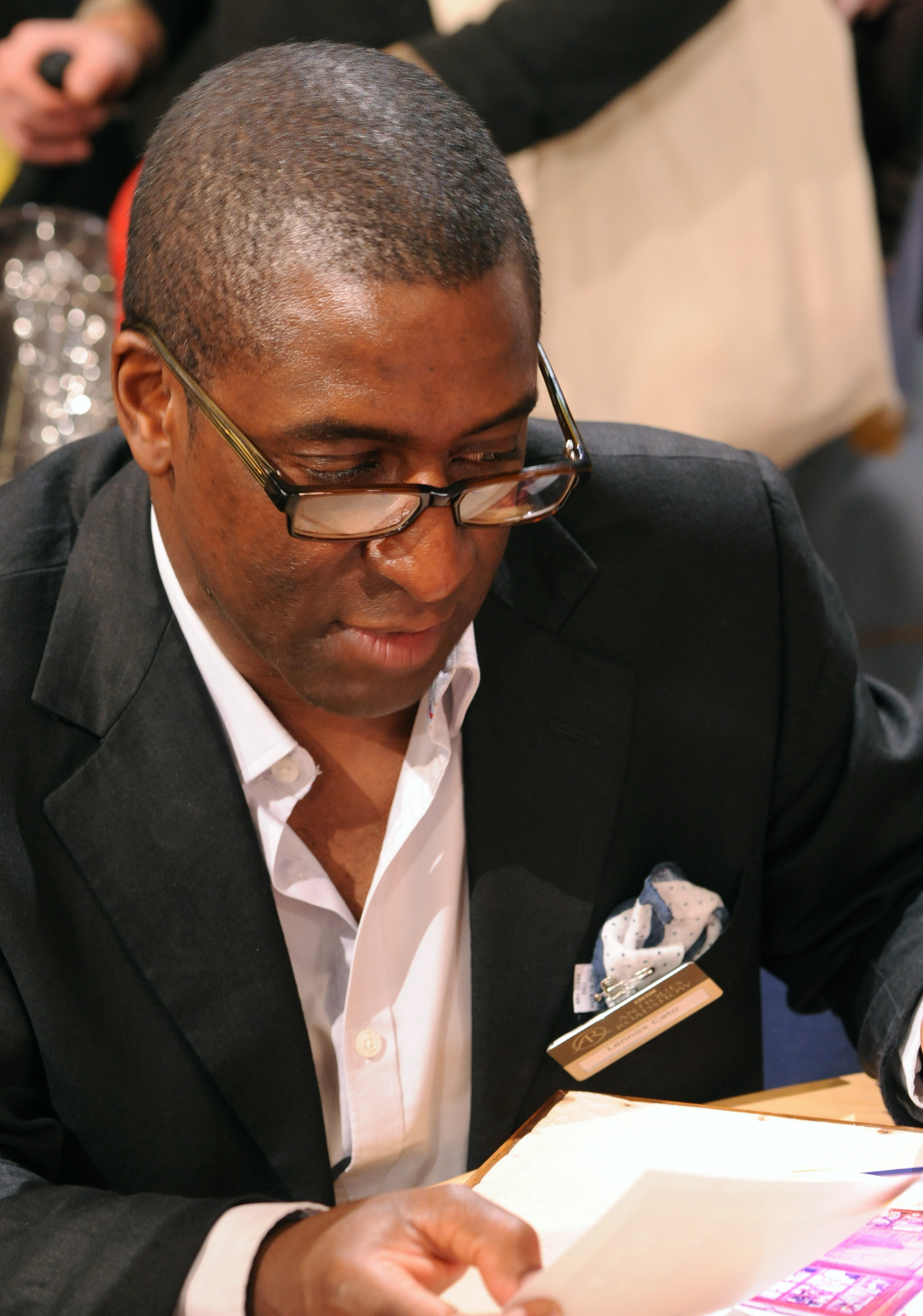
Lennox Cato

Lennox Cato in investigative mood. Photograph courtesy and copyright of Lennox Cato Antiques, 2015.

In our interview Lennox reflected on his 35+ years in the trade, and had some enlightening observations of the structure of the antique trade and his perspectives on being one of the very few (the only?) Black ethnic members of the antique trade (at least at this senior level of the trade).  This, for us involved in the research project, is particularly interesting; our study is of what one might call the ‘ecology’ of the antique trade, and is one of the key research themes within the AHRC funded project. Indeed, whilst we are not explicitly tracing the quantitative metrics of the Black and other ethnic demographics of the trade (we’ll leave that for an extension to the current research project), our interactive website is tracking the shifting gender composition of the antique trade over the course of the 20th century – so we will have some data on the changing patterns of men and women dealers 1900-2000.

But anyway, our interview with Lennox has yet to be edited, but will, like all of our oral history interviews, be available for everyone to listen to through our project websites – keep your eyes on the ‘News’ from the ‘Antiques Dealers’ project.

Thank you again to Lennox for taking time out of his very busy schedule to do our research interview.

Mark


August 2, 2015

A Summer COMPETITION – the top Towns in UK for Dealers in 1976

We have been doing some preliminary work of the changing demographics of the antique trade in the 20th century, looking, initially, at the shifting locations in British cities, towns and villages occupied by antique dealers – this will be something that is much easier to do once the Antique Dealer Project Interactive Website has greater concentrations of data (we are working on that!).

We thought however, as it’s the summer and many of us are winding down, having a holiday or generally relaxing (supposed to be anyway), we would have a little SUMMER COMPETITION – based on hard academic research of course!

So we have devised a Competition, and everyone can join in –

THE COMPETITION: You must correctly LIST the TOP THREE town/cities in Britain in 1976 that had the MOST NUMBER of ANTIQUE DEALERS. Please exclude CAPITAL CITIES of the COUNTRIES making up the UNITED KINGDOM. So do not include LONDON (which had 1,233 dealers in 1976); or EDINBURGH (which had 105 dealers in 1976); or CARDIFF (which had 21 dealers in 1976); or BELFAST (which had 8 dealers in 1976).

We even have a PRIZE for the WINNER. A copy of ‘A Biographical Dictionary of 19th Century Antique & Curiosity Dealers’ (written by our own Project Lead, Mark – published by the Regional Furniture Society (2009; republished 2011) – this copy is unsigned, and they are the rare ones!

Cover

The COMPETITION is open all – anyone, anywhere in the WORLD – it is OPEN NOW (1st August 2015) and closes on 6.00pm on FRIDAY on 21st August 2015.

RULES of COMPETITION

You need to email your entries to antiquedealers@leeds.ac.uk  -please include your name and address in the email.

Only ONE prize is available, so it will be on the FIRST CORRECT ENTRY LISTING THE TOP THREE LOCATIONS FOR DEALERS IN 1976 drawn at random from all correct entries received by the closing date. If there are no correct entries the submitted entry that is nearest to the correct answer will be given the PRIZE. We will post the Dictionary to the WINNER on MONDAY 24th AUGUST.

We will reveal the TOP TEN towns/cities with concentrations of dealers in Britain in 1976 on FRIDAY 21st AUGUST 2015.

GOOD LUCK!

HAVE FUN!

Mark

July 29, 2015

Antique Dealers Project Conference April 2016

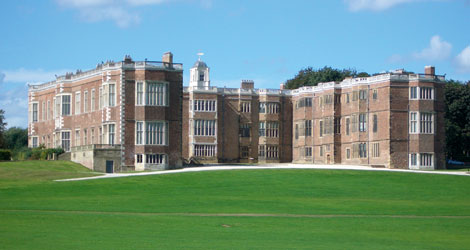
We now have the dates for the Antique Dealers Project conference – it will take place on Thursday 14th April and Friday 15th April 2016, at Temple Newsam House, Leeds.

temple_newsam

Temple Newsam House, Leeds

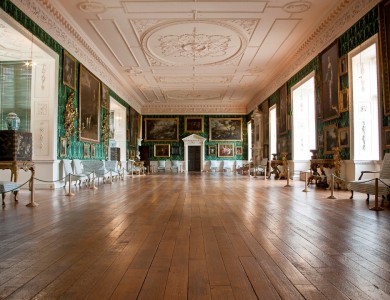
We hope to use the fabulous, and famous, Long Gallery at Temple Newsam, as the conference space. If you have never been to TN, then the venue itself is a reason to come!

Picture-Gallery_s-686437_390x300

The Long Gallery, Temple Newsam House, Leeds.

We will be posting a ‘Call for Papers’ shortly – We intend the conference to be an interactive, discussion-based, ideas laboratory for the Antiques Trade/Antiques Market, drawing from the rich history of the British Antiques Trade in the 20th century. So do keep following the project blog and the project websites for more detail as we work towards April 2016!

Mark

July 17, 2015

The Antique Business (in 1966).

In amongst the archive materials that our friend Robin Butler kindly donated to the research project (thank you again Robin!) I discovered something I’d been searching for for the last 3 years – Howard Coutts (curator at The Bowes Museum) mentioned an interesting Sunday Times Supplement from the 1960s, which was, so Howard remembered, devoted to the ‘Antique Trade’.  I’d been struggling to find a copy of the Supplement since Howard mentioned it to me, as they were not part of the extensive (and so useful) digitization project of The Times online (which I have access to at the University). Anyway, I’d almost given up ever finding a copy of this elusive, but potentially fascinating, publication.

And then….Robin had kept a copy of it in amongst the ephemera in his archive! And it was worth saving. Here’s the front cover of the Sunday Times Supplement, August 14th 1966. Sunday Times 1966 ‘Special Insight Analysis: The Antique Business’ – it does not appear to have named authors and appears to have been composed by a team of Sunday Times journalists over a period of 6 months of investigation. It’s structured around a kind of ‘how to deal with dealers’ series of short articles, starting with ‘Plain Man’s Guide to the Dealers and the Deals’, with ‘buying guides’ and ‘How to Sell’ etc etc.

It also, inevitably I suppose, has a salacious tale of fakes and forgeries – ‘A Cautionary Tale of Two Blackamoors’; supposedly a cache of ’18th century’ figures, which were, according to the reporters, recently made in some studios in Homer Street, London W1 – I’m very interested in this trope of the ‘antique dealer’ associated with fakery and forgery….and keen to unpack this cultural stereotype further – I’ve been working on a text on the social and cultural identity of the antique dealer in the 19th and 20th centuries for a number of years…..

Anyway….if you are interested you can read that part of the Sunday Times Supplement here:  Sunday Times 1966 1 and here: Sunday Times 1966 2

What is also interesting, for us, on the project, is that the journalists also interviewed a small number of then prominent members of the antique trade in the 1960s; including, Lionel Geneen, Edward Nowell, Charles Thornton, and Claude Bornoff. As you know, we are also undertaking interviews with a wide range of antique dealers as part of the current research project – see our ‘Oral History’ pages on the project website. For your interest, here’s a copy of the fascinating interview that the Sunday Times journalists did with Claude Bornoff – he used to trade in Westbourne Grove, London, and sadly died only recently. Sunday Times 1966 3

We will be making more use of the Sunday Times Supplement as part of out research, but it was such a brilliant thing for Robin Butler to keep safe….thanks again Robin!

Mark


July 11, 2015

New Project Volunteer Researchers

We’ve had a great response to our renewed call for project volunteer researchers – thank you again to the Antique Trade Gazette and the Press Team at the University of Leeds for their help in promoting the project. Our latest volunteer researcher is Patricia Walsh, who is helping to gather information on Antique Dealers from the historic trade directories in the North West of England. These research activities are invaluable to the project and will help to contribute to the massive amount of data we need for the interactive project website….so thank you Patricia!

As well as helping with the research on the project Patricia is also a multi-media artist, working with audio, video and photography. She creates atmospheric and reflective art-works, that feature music, voice, found sounds, texts or composite imagery, all of which attempt to bridge the shifts of time. Her works often suggest the possibility of other dimensions, unseen presences and immeasurable distances, and have resonance too with unruly, fractured or discordant recollections. Most recently she contributed to and curated a Circuit Bridges/Vox Novus sound-event in Preston, which brought together new works from selected audio artists based in the USA, UK and Europe. The culminating creative exchange concert will also be presented at MC Gallery, New York, in September 2015.

patricia walsh

Patricia is also a graduate of the University of Central Lancashire, in Preston, and has a BA in Fine Art. She is currently studying on the MA Antiques course, at UCLan, where her fascination with the world of antiques, dealers and collectors finds connections with her interest in archives and the documenting and recording of history.

Thank you again to Patricia…we could not make progress on the project without this very generous help.

Mark

Home Subjects

a working group dedicated to the display of art in the private interior, c. 1715-1914

The Period Room: Museum, Material, Experience

An International Conference hosted by The Bowes Museum and The University of Leeds

H. Blairman & Sons Ltd

A research project investigating the history of the antiques trade in Britain in the 19th & 20th centuries

Museum Studies Now?

'Museum Studies Now?' is an event which aims to discuss and debate museum and heritage studies education provision.

The Burlington Magazine Index Blog

art writing * art works * art market

East India Company at Home, 1757-1857

A research project investigating the history of the antiques trade in Britain in the 19th & 20th centuries