Posts tagged ‘Preston Park Museum’

July 30, 2023

Antique Shops in Visual Culture I

As readers of the antique dealers Blog will know, we’ve been acquiring antique dealer ephemera for many years now – dealer catalogues, photographs and archives, as part of the on-going research project into the history of the antique trade in Britain. Much of this material, including the extraordinary collection of antique dealer archives, is housed at the Brotherton Library Special Collections at the University of Leeds.

More recently, we’ve been seeking out paintings depicting antique shops – we recently acquired, for example, a naïve painting (oil on canvas, c.1880, signed ‘M. Davis’) of the shop of Mr Deadman at an auction in The Netherlands of all places – ‘Ye Old Beckenham Curio Shoppe’ (see below). The shop depicted in the painting was in High Street, Beckenham in Kent (the building, which appears to be 16th century, was demolished by the 1930s). Frederick William Deadman (either the same dealer or perhaps a relative) was still trading as an antique dealer in the late 1930s – from a shop in Station Road, Freshwater on the Isle of Wight.

M. Davis ‘Ye Old Beckenham Curio Shoppe’, oil on canvas 24 in x 17 in; c.1880. Private Collection.

This painting has been added to our growing collection of paintings of antique shops, all of which demonstrate how important the idea of the antique shop has been in British cultural life. An earlier acquisition, of an equally naïve painting, illustrates this point. The painting, a watercolour, (10.5 in x 15 in, by H. Middleton-Holding, c.1910) of an antique shop in York Street, London, was acquired at auction in Shaftesbury, Dorset in 2019. It’s also a rather naïve work, but is charmingly rendered (see below):

H. Middleton-Holding, ‘York Street, Westminster, London’ watercolour, (10.5 in x 15 in), c.1910. Private Collection.

The artist has copied an engraving of the same scene, much more competently rendered and published in The Daily Chronicle on Tuesday September 27th in either 1904 or 1911, a copy of which is pasted to the backboard of the painting (see below) – (unfortunately, the actual year of the publication is obscured by some brown paper tape). The newspaper article outlines the history of the buildings in York Street, London and their occupiers, including the political philosopher Jeremy Bentham (1748-1832) and the highwayman Dick Turpin (1705-1739).

Backboard of the watercolour by H. Middleton-Holding. Private Collection.

The main shop in the scene, No. 32 York Street, was the location of a well-known female antique dealer, Mrs Amelia Jane Hardingham, who owned several antique shops in York Street (nos. 28-32), and began trading as an antique dealer in about 1900, in Waterloo Road, London. According to the article in The Daily Chronicle no.32 York Street was famous as the home of the artist George Morland (1763-1804) – perhaps that is why H. Middleton-Holding painted the scene again?

Amelia Hardingham’s shop was also captured in a photograph in c.1910 (see below).

A. Hardingham, Dealer in Works of Art, 32 York Street, London, c.1910. Photograph, The Victoria & Albert Museum, copyright V&A Museum.

Amelia Hardingham’s antique shop was swept away when the buildings on York Street were demolished in 1923 to create ‘Petty France’, but the shop front of her shop was saved. It was gifted to the Victoria & Albert Museum by the Army Council (which owned the buildings) as a fine example of a late 18th century shop front. In fact, as those who visited the exhibition, ‘SOLD! The Great British Antiques Story‘ at The Bowes Museum in 2019, may remember we used an image of Amelia Hardingham’s shop front as part of the introductory interpretation at the exhibition. Indeed, when the 18th century shop front was put on display at the V&A in 1924, it was set up as a display reproducing Amelia Hardingham’s antique shop (see below).
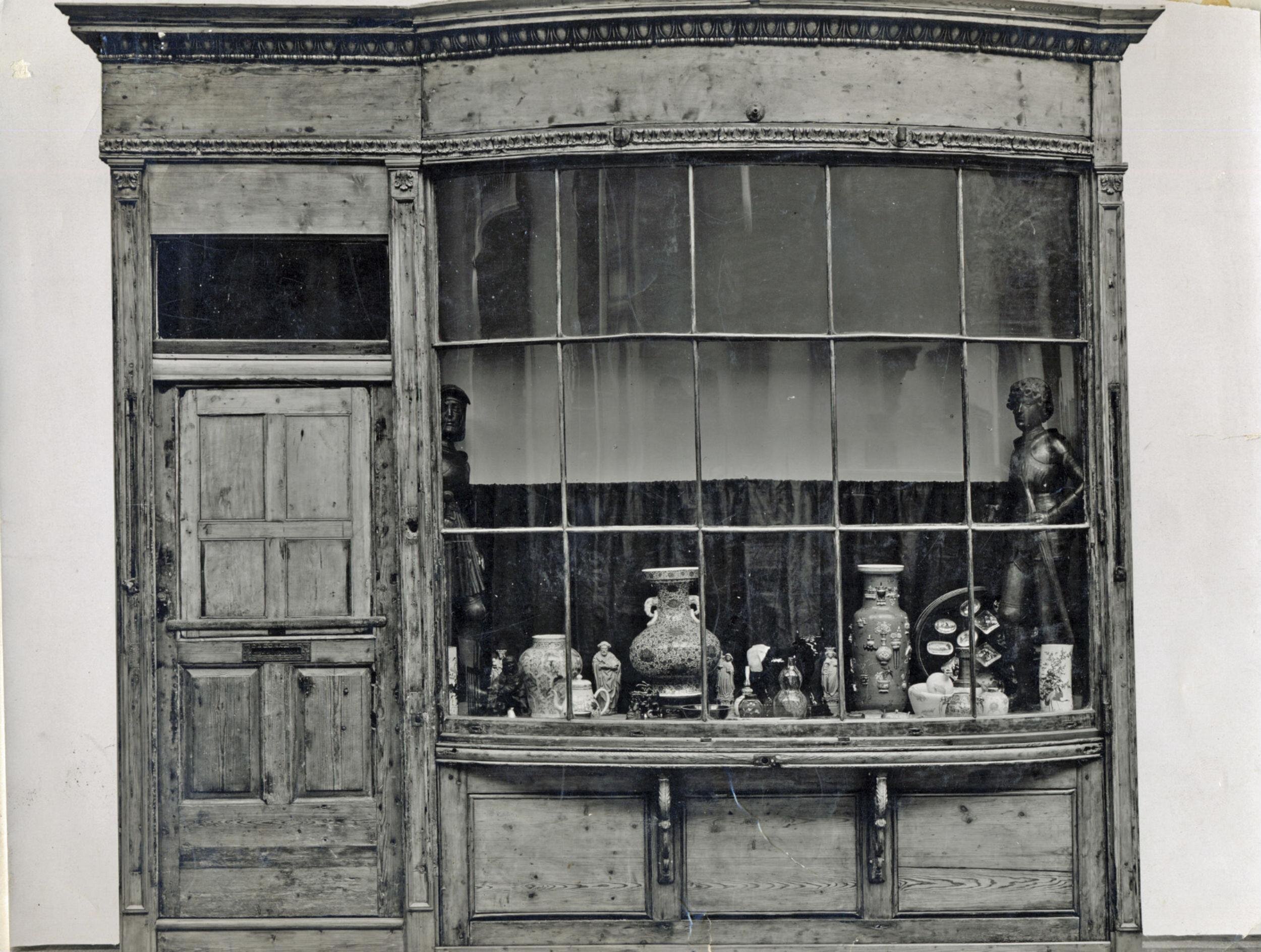
18th century shop front on display at the V&A Museum, 1924 – W.88-1923. Photograph, The Victoria & Albert Museum. Copyright V&A Museum.

The antique shop display at the V&A Museum caused some consternation in the Press at the time, with some commentators questioning if it was appropriate that an antique shop display should be in a museum!
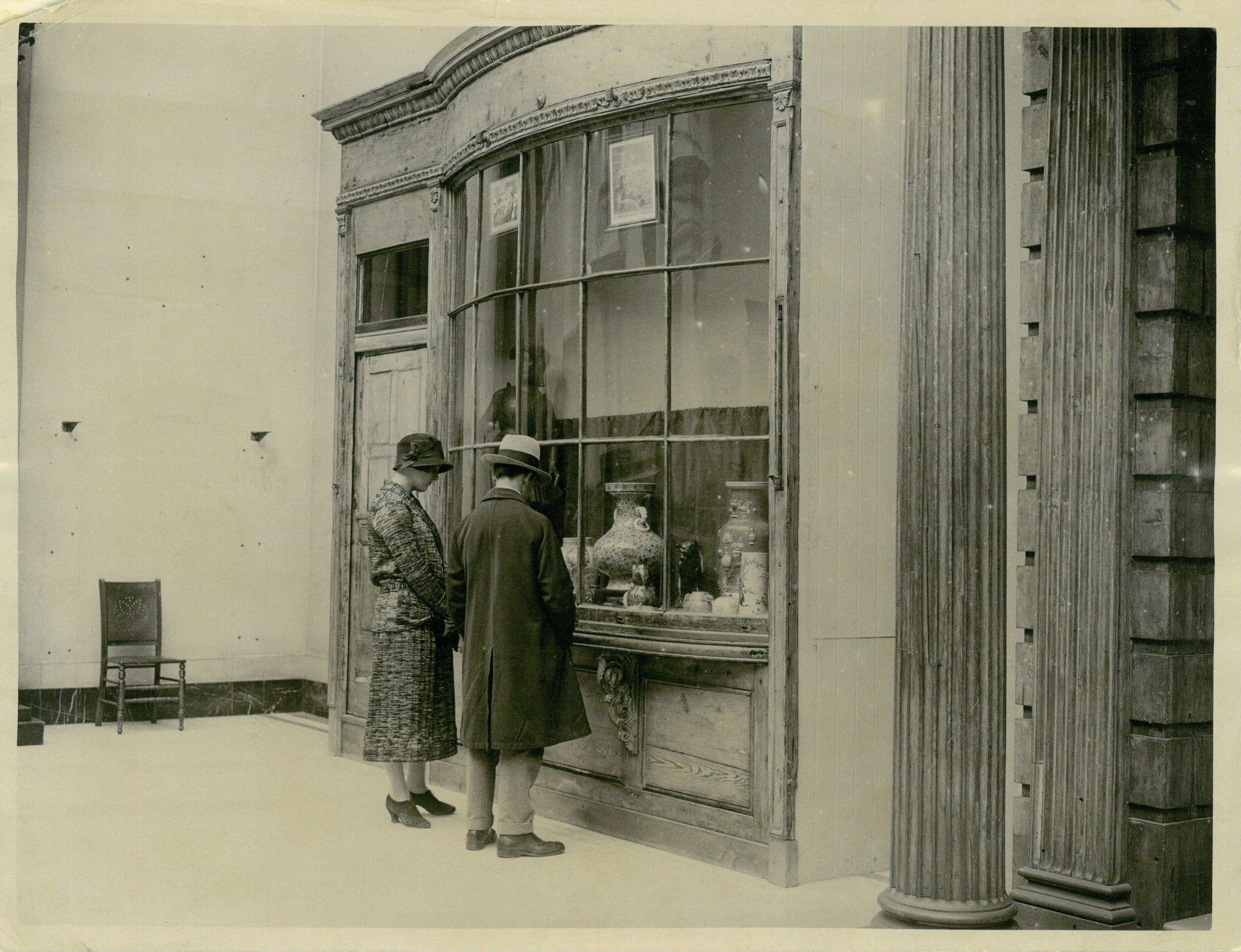
18th century shop front, displayed as an antique shop, at the V&A Museum in 1924. Photograph, The Victoria & Albert Museum. Copyright V&A Museum.

Readers of the Blog may also be interested to hear that women antique dealers (including Amelia Hardingham) are also the focus of some of our ‘Year of the Dealer‘ digital trails – we have ‘women antique dealer’ themes in our Trails at The Victoria & Albert Museum, The Bowes Museum and at Preston Park Museum as part of this project – so do keep your eyes open for our Year of the Dealer Trails public launch in September. As for paintings of representations of antique shops, we have acquired several other paintings over the last few years and will create another Blog post illustrating those in the next few months, so keep you eye on the Blog!

Mark

June 26, 2019

Year of the Dealer starts!

We are very excited to announce that the ‘Year of the Dealer’ project has officially started – the new project website is being constructed (thanks to Peter Edwards in University of Leeds, Arts, Humanities & Cultures Faculty IT team) – you can see the new website here – Year of the Dealer website 

The ‘Year of the Dealer’ project is a collaboration between the University of Leeds, the University of Southampton, 7 major national and regional museums (The Victoria & Albert Museum, The National Museum, Scotland, The Ashmolean Museum, The Lady Lever Art Gallery, The Bowes Museum, Temple Newsam, Preston Park Museum and the Stanley & Audrey Burton Gallery), together with a regional community theatre (The Witham, Barnard Castle) and one of the UK’s leading antique dealing businesses (H. Blairman & Sons). The project runs from 1st June 2019 until 31st May 2020 and is an ‘Impact and Engagement’ project funded (£100,000) by the Arts and Humanities Research Council (AHRC). Over the next 12 months  the Year of the Dealer will be organizing a series of events, activities and museum object trails, using the research arising from the AHRC funded (£231,592) research project ‘Antique Dealers: the British Antique Trade in the 20th century’ AH/K0029371/1 (2013-2016).

C. Charles, Brook Street shop interior, c.1903. Photograph, Connoisseur 1903.

Through these events and activities the project aims to draw attention to the relationships between the art market and public museums and to share expertise, experience and perspectives among stakeholders and to increase public engagement with the significance of the history of the antique trade in British cultural life.

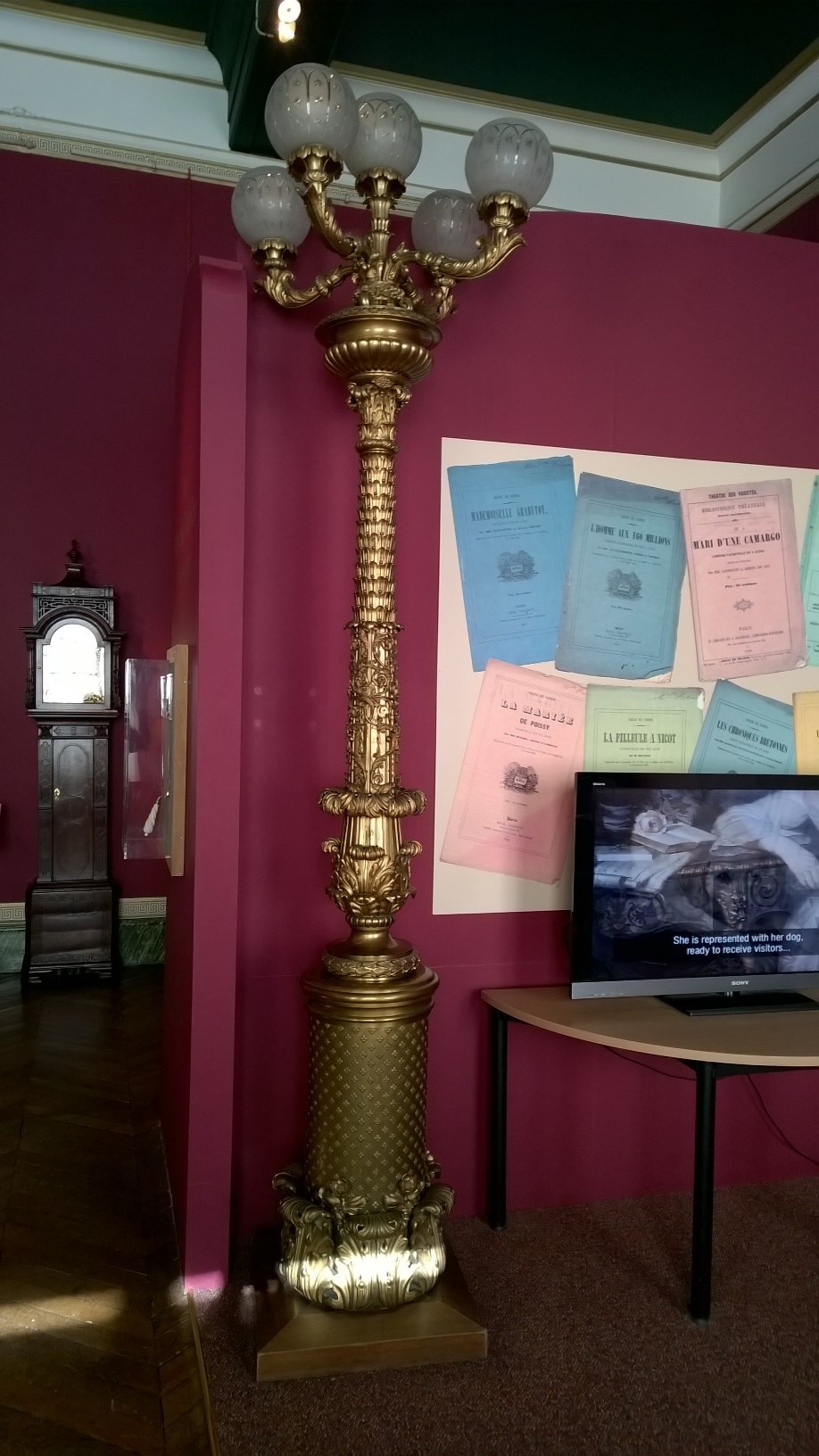
The Year of the Dealer will reveal new and previously marginalised stories of world-renowned and familiar museum objects through the co-production of a series of 7 museum ‘hidden history’ trails; each trail will have a curated selection of up to 20 museum objects foregrounding the history of antique dealers in the biography of the museum object.  So, for example, at The Bowes Museum, we will be drawing renewed attention to some of the museum objects by telling the story about the antique dealers who sold the object to the museum – this rare pair of gilded bronze lamps, made by William Collins in 1823………..

One of a pair of gilded bronze lamps at The Bowes Museum. Photograph, antique dealers project 2018.

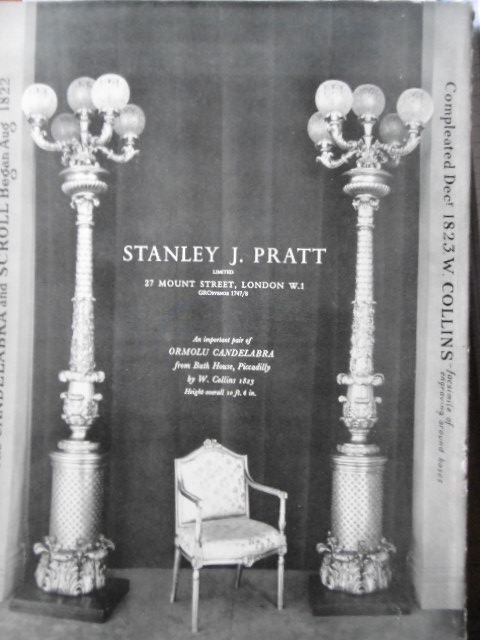
…………………..will be reinterpreted through the Year of the Dealer trail in the museum as a pair of lamps sold to the Bowes Museum in 1960 by Stanley J. Pratt, a leading antique dealer then trading in ultra-fashionable Mount Street, London.  How Pratt acquired the lamps and how they ended up at The Bowes Museum will be key elements in the ‘story’ about the objects. Stanley Pratt came from a well-known family of antique dealers dating back into the 19th century; indeed the Pratt family of dealers were established, according to their own publicity, in 1860, and so sold the lamps to The Bowes Museum in their centenary year!

Advertisement by Stanley J. Pratt illustrating the pair of gilded bronze lamps. Connoisseur, June 1960.

Besides the 7 museum trails, the project will also stage 4 art market themed knowledge exchange workshops and 3 public engagement ‘In Conversation’ events, hosted by the partner museums. The workshops will consider the relationships between the art market and public museums, drawing in historical and contemporary perspectives and will also consider the challenges and future opportunities for the relationships between museums and the art market.  The ‘In Conversation’ events invite key art market professionals, museum professionals, academics and commentators to discuss and debate the subject of the art market and public museums – all the events will be free, thanks to the Arts and Humanities Research Council (AHRC) funding.

Other activities as part of the Year of the Dealer project include museum front of house staff and volunteer training workshops at each of the 7 partner museums to ensure that the project research and objectives are disseminated and cascaded to the front-line interface with the public.

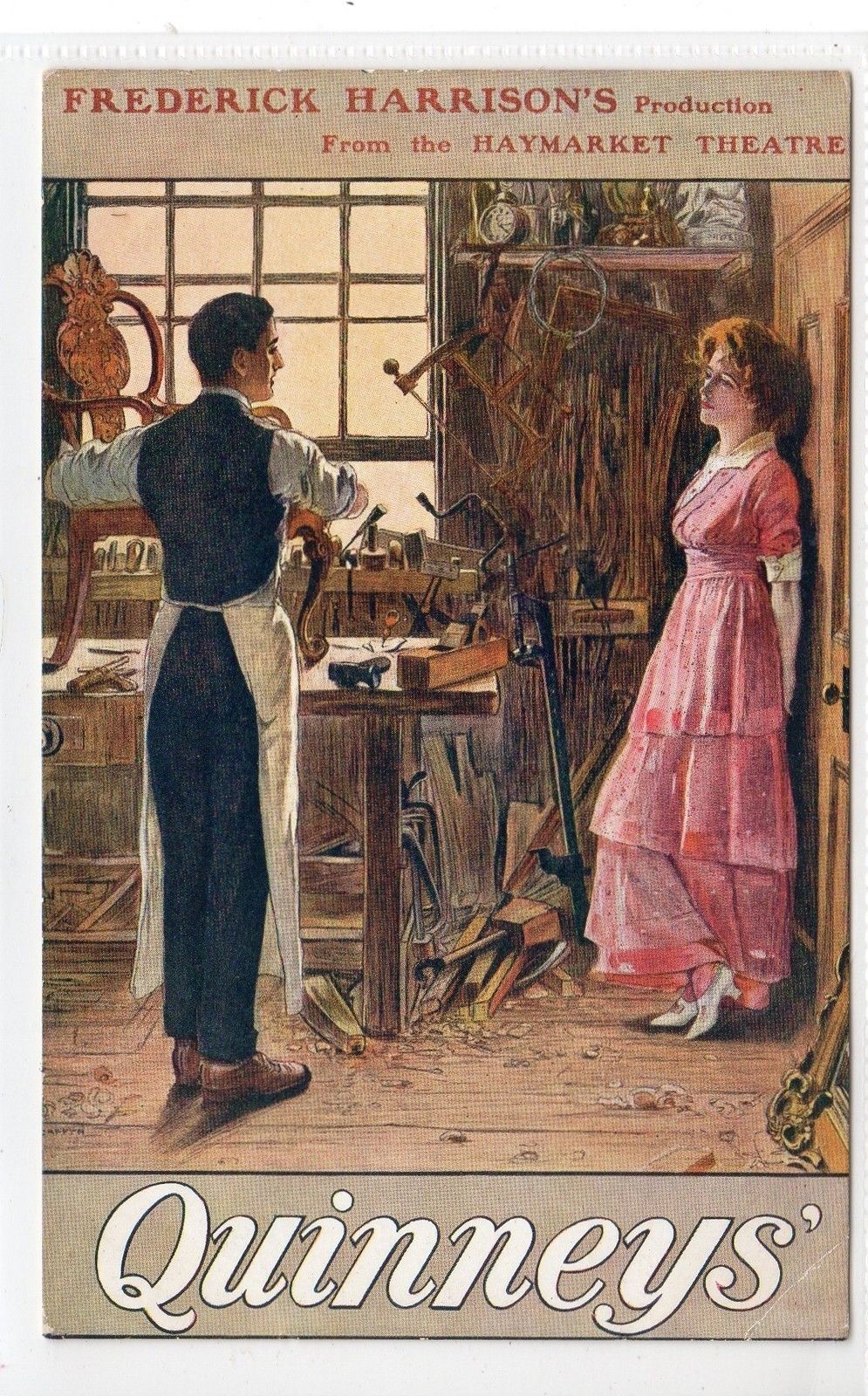
We will also be re-staging the play ‘Quinney’s (1915) at the Witham Theatre, Barnard Castle, and are organizing an associated workshop, ‘Dealing with Authenticity’ at The Bowes Museum, Barnard Castle.

Poster for Quinney’s production at Birmingham Theatre, 1925.

‘Quinney’s’ is the story of the fictional antique dealer Joseph Quinney. The play and the workshop aim to critically engage the general public with the central role that ‘authenticity’ has played in the art market, and to explore and critique the trope of the antique dealer as a problematic character, often associated with fakes and forgeries and the ‘love of money’. The workshop will be interdisciplinary in scope, drawing on theatre and performance studies and material culture studies as well as the history of antique dealers.

As you can see, there are plans for a very rich series of events, activities and collaborations over the course of the Year of the Dealer project – but we have a great team to help deliver the project – my colleague from University of Southampton, Dr Eleanor Quince, and Vanessa Jones, our project administrator, and my colleagues at the University of Leeds, Professor Jonathan Pitches and Dr George Rodosthenous, and of course all of the curators and staff at the all 10 collaborating partners and a small team of PhD research students to help keep the project on track!……it’s no doubt going to be exhausting, but we hope it will also be a really engaging project…and one that will have real Impact!

We hope to see you at some of the events – we already have some events fixed in the project calendar…so do keep an eye on the project website and the antique dealers research blog.

Mark

Home Subjects

a working group dedicated to the display of art in the private interior, c. 1715-1914

The Period Room: Museum, Material, Experience

An International Conference hosted by The Bowes Museum and The University of Leeds

H. Blairman & Sons Ltd

A research project investigating the history of the antiques trade in Britain in the 19th & 20th centuries

Museum Studies Now?

'Museum Studies Now?' is an event which aims to discuss and debate museum and heritage studies education provision.

The Burlington Magazine Index Blog

art writing * art works * art market

East India Company at Home, 1757-1857

A research project investigating the history of the antiques trade in Britain in the 19th & 20th centuries