Posts tagged ‘portobello road’

November 27, 2023

Antique Shops in Visual Culture III

Our thread on ‘Antique Shops in Visual Culture’ seems to be very popular with readers of the Antique Dealers Research blog, so here’s the third instalment (the last for a little while at least). If you have missed Parts I, & II of this thread, you can catch up in Blog posts July 30th 2023 and September 30th 2023.

Our first image in this third instalment of the ‘antique shop’ in visual culture is by the artist John Watkins Chapman (1832-1903) and dates from about 1880.
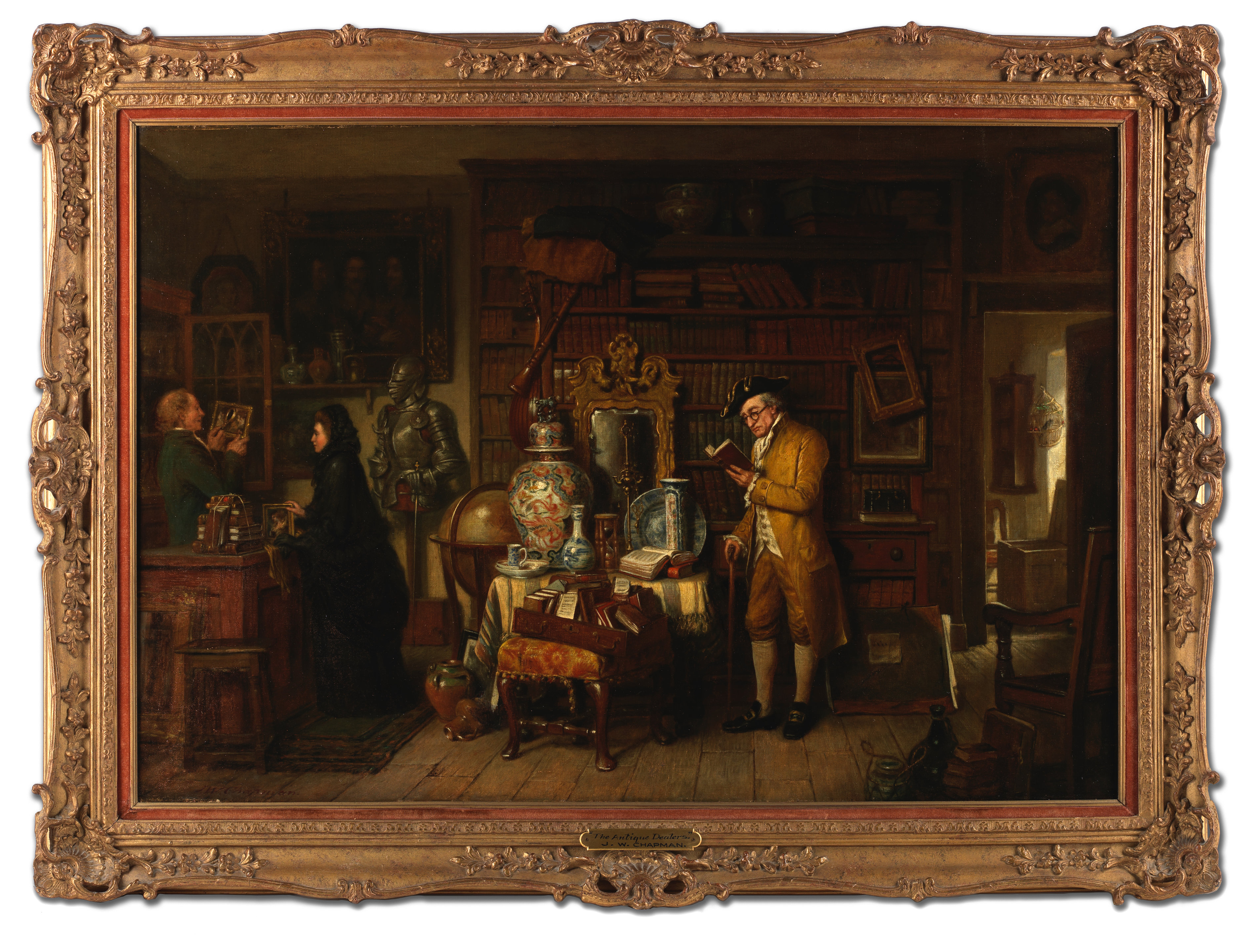
John Watkins Chapman (1832-1903), ‘The Antique Dealers’, c.1880. Oil on canvas. Private collection. Photograph Antique Dealers Research Project, University of Leeds.

Chapman’s painting, which is quite large, about 2 feet by 3 feet, is typical of his work. In the painting Chapman seems to be rehearsing common visual and literary tropes of the antique and curiosity shop – the shop piled high, cluttered with curious things. Chapman also presents the viewer with a quintessential Victorian sentimental narrative; the woman to the left, dressed in black is evidently a widow and in need of funds. She appears to be trying to sell some small paintings to the antique dealer, who is examining them carefully with his magnifying glass in an act of obvious connoisseurship. I’m not sure what the character reading a book in the centre is supposed to represent; he appears to be dressed, deliberately, in antiquarian style as an 18th century gentleman – perhaps he is a poetic memory of the life of the array of objects surrounding him? The painting was previously sold at auction at Christie’s in London in 1948 but we are pleased to say that it is now part of the collections of the antique dealer research project.

John Watkins Chapman is well-known for his representations of ‘The Old Curiosity Shop’, made famous through Charles Dickens’ story in 1840-41. Chapman painted dozens of examples in the second half of the 19th century. Perhaps Chapman’s most well-known and accomplished painting of this subject is his superbly detailed ‘The Old Curiosity Shop’ (also dating from c.1880), which was sold at Christie’s in 1991 – I think it remains in a private collection in Italy? But one of our readers may know otherwise?

John Watkins Chapman (1832-1903) ‘The Old Curiosity Shop’, c.1880. Photo © Christie’s Images.

This painting also formed the visual basis for our own contribution to the theme of the antique shop in visual culture, with our recreation of ‘The Old Curiosity Shop’ at the exhibition ‘SOLD! The Great British Antiques Story’ at The Bowes Museum (January to May 2019) – see various blog posts on the Antique Dealers Research blog from December 2018. You can still download a PDF copy of the SOLD! exhibition catalogue (for free!) here https://antiquedealers.leeds.ac.uk/research/sold-the-great-british-antiques-story/

SOLD! The Great British Antiques Story, exhibition install of ‘The Old Curiosity Shop’. The Bowes Museum, Jan-May 2019. Photograph, Antique Dealers Research Project, University of Leeds.

However, whilst both of Chapman’s paintings have a common theme, that of the antique and curiosity shop, Chapman’s representation of ‘The Old Curiosity Shop’ is much more anchored in the narrative of Dickens’ story. ‘Little Nell’ sits front and centre, and one can also see her Grandfather, the curiosity dealer, tucked away at the back of the shop, worrying over his mounting debts, and which will eventually lead to their escape from the shop and ultimately to the death of Little Nell.

What is also interesting about Chapman’s paintings is the representation of curious and antique objects. All of them will, I guess, be representations of real antique objects; some are iconic – the suits of armour in both paintings are emblematic objects of both the (generally) earlier ‘curiosity shop’ and the (generally) later ‘antique shop’. Although it’s clear that the suits of armour are not exactly the same example in each painting. However, the 18th century giltwood mirror (in the centre of ‘The Antique Dealers’, facing outwards; and just to the right, side-on, in ‘The Old Curiosity Shop’) is clearly the same ‘antique’ mirror. Perhaps this was an antique object from Chapman’s own collection?

As I say, Chapman’s visual representation of ‘The Old Curiosity Shop’ draws heavily from the literary description of Charles Dickens. In Dickens’ by now iconic description of ‘The Old Curiosity Shop’, he writes, it was:

”one of those receptacles for old and curious things which seem to crouch in every corner of this town, and hide away their musty treasures from the public eye in jealousy and mistrust. There were suits of mail standing like ghosts in armour, here and there, fantastic carvings brought from monkish cloisters; rusty weapons of various kinds; distorted figures in china, and wood, and iron, and ivory; tapestry. and strange furniture that might have been designed in dreams.” (Dickens, The Old Curiosity Shop (1841) p.3)

As I have written elsewhere, ”Dickens’ interior descriptions of the shop are well known and rehearse the trope of the shop as problematic space, one that is retentive with its knowledge and in which the dis-ordered objects in its interior provided the antithesis to the ordered collections assembled by the collector.” (Westgarth, The Emergence of the Antique & Curiosity Dealer 1815-1850: the commodification of historical objects (2020, p.28).

Two further visual representations of the history of the antique trade in Britain offer both a continued visual tradition (one is an image of a cluttered interior of an antique shop) and a contrast (one is not an image of an interior of an antique shop but of an open air second-hand market stall). This pair of watercolour paintings, (also now part of the collections of the antique dealers research project) date from c.1940s; they are about 12 inches by 8 inches. They are obviously by an amateur hand, but are charmingly naïve in the representations.
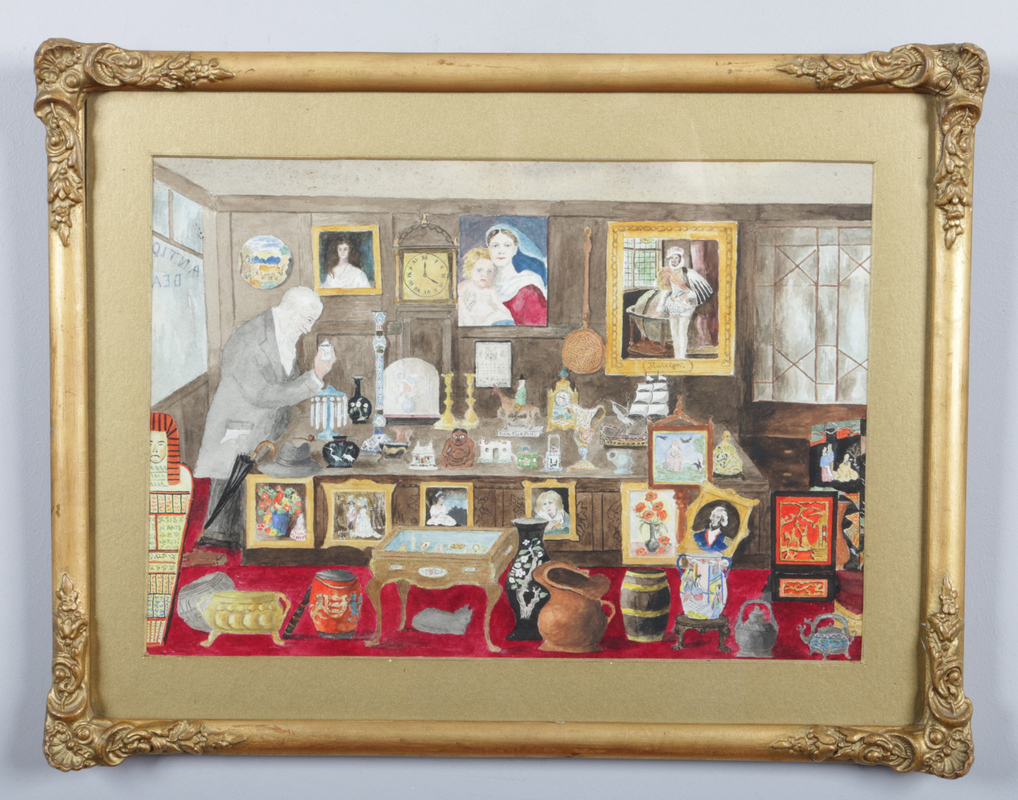
Anon. ‘An interior of an antique shop’, c.1940s. Watercolour. Photograph Antique Dealer Research Project, University of Leeds.
Anon. ‘A view of Portobello Road market’, c.1940s. Watercolour. Photograph Antique Dealers Research Project, University of Leeds.

The painting of the antique shop interior (you can just see the remaining letters forming the words ‘Antique Dealer’ in the window), illustrates the wide range of antique objects that one might expect to see in an antique shop in the period. There’s also a clear sense of British nationalism in the choice of items represented – a portrait of Sir Walter Raleigh; a portrait of Horatio Nelson; the various British paintings displayed along the front of the display table. As well as objects from across the world – an Egyptian mummy, Chinese porcelains.

By way of contrast, the street market scene in the other painting illustrates a typical range of objects from second-hand cultures. Old but still usable pots and pans, bags, shoes, alongside the odd piece of broken pottery. As in the other painting, there’s a strong sense of British nationalism; the Second World War was probably taking place, or was a very recent memory, when these paintings were produced. As if to emphasise this, the small painting/photograph? to the right in the street market scene, depicts Charlie Chaplin in the famous American anti-war film ‘The Great Dictator’, which came out in 1940.

The shop behind the central figure is named ‘J. Bodger’ (certainly a fictional name – a ‘bodger’ is a wood-turner, someone who makes chair legs and turned parts of chairs and furniture). ‘J. Bodger’ is named as a ‘furniture dealer’, but seems to be buying and selling all sorts of second-hand material. The relationships between second-hand dealers and antique dealers has always been very close, but here, by the 1940s, there’s a very clear distinction between the two practices, as articulated in the pair of paintings. Indeed, Portobello Market (located in Portobello Road, as the street sign in the painting illustrates), which had developed as an open air market in the late 19th century, became associated with the second-hand trade by the 1920s, and became famously associated with the antiques trade in the 1940s, when these paintings were created.

The 19th century paintings by John Watkins Chapman and the anonymous pair of 20th century paintings of Portobello Road antique and second-hand markets, offer fascinating insights into the visual culture of the antique trade, and it’s rich potential as a research resource for the history of antique dealing.

Mark
July 31, 2022

Charles Morse Antiques

Our corpus of material on the histories of antique dealers continues to increase – thanks to the many, many individuals who very generously send us information about their antique dealing businesses, or information about antique dealers they have known. But of course our richest seam of information on antique dealers from the past comes directly from the relatives and families of antique dealers. And it’s thanks to Charlotte Morse (and her son Ben, and her half-sister Michal), that we have a whole raft of information on her father, the well-known specialist dealer in antique oak furniture and early objects, Charles Morse (1913-1980).

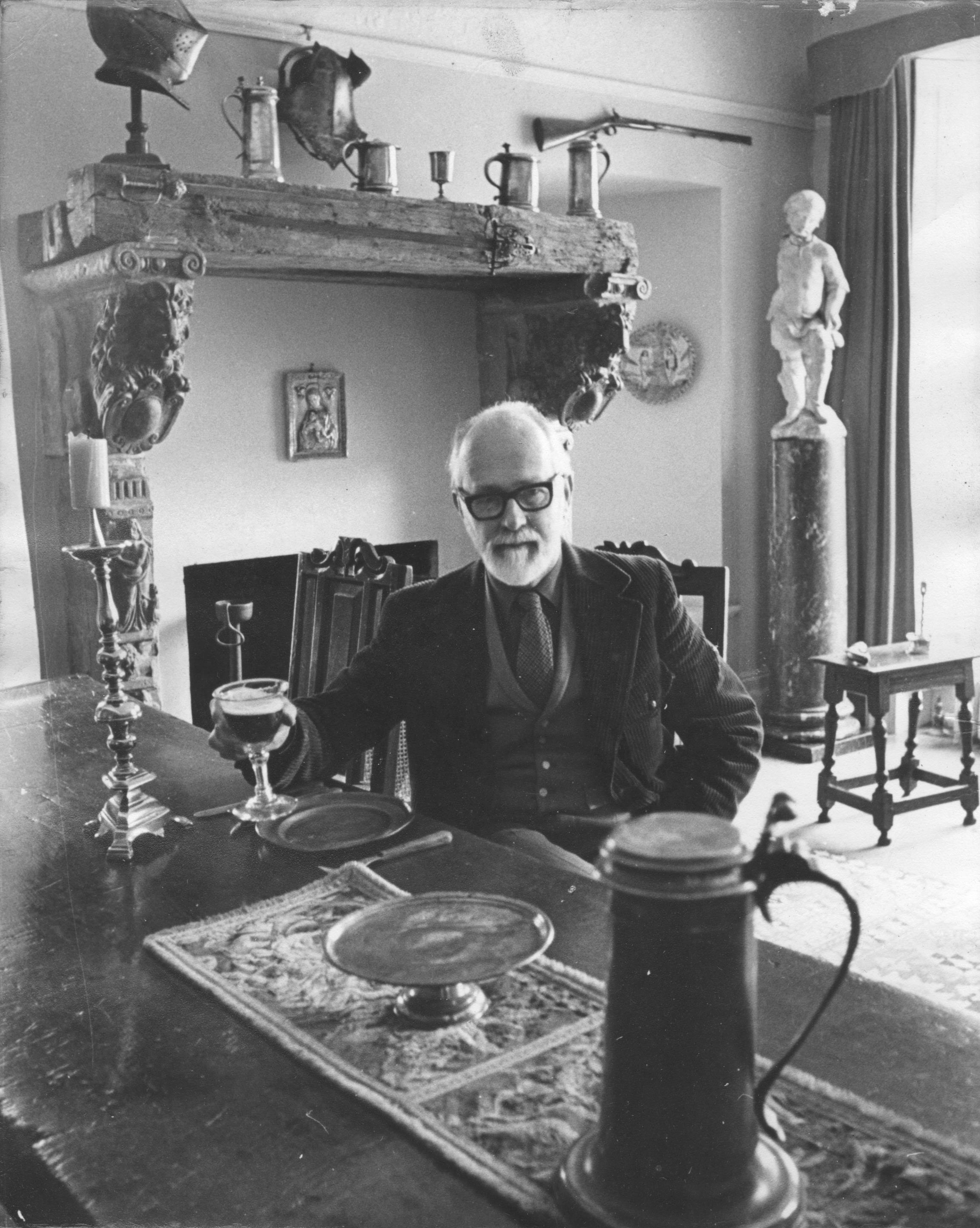
Charles Morse at Colne Priory, Essex, in 1975. Photograph courtesy of Charlotte Morse.

Charlotte very kindly donated some ephemera, photographs, and a couple of the last remaining ‘stock books’ (dating from the 1970s) from her father’s antique dealing business, all of which make fascinating reading and will help the antique dealers’ research project enormously.

Charles Morse became one of the leading dealers in ‘Early Oak’ in the 1960s and 1970s, trading from very grand country house premises in Essex. He sold some spectacularly rare objects, many of which must remain in leading collections (if anyone recognises any of the objects in the photographs and knows more about them, or where they are, do let us know!). Morse began his life as an antique dealer in the years after the Second World War. He was trained as a journalist, and worked as a War Correspondent during the War, before getting a job with the Glasgow Express in the years immediately after WWII. Charlotte tells us that her father met the Belgian antique dealer George Baptiste during the War, and this must have been the catalyst for his interest in being an antiques dealer.

Morse opened his first antique shop, called, ‘Mr Pickwick’s Antiques’ in Connaught Avenue, Frinton-on-Sea, Essex in 1946. Below is an advertisement calendar produced by Morse in 1947, illustrative of the general business marketing strategies adopted by some antique dealing businesses in the decades after WWII.

Advertisement Calendar, ‘Mr Pickwick’s Antiques’ (Charles Morse) 1947. Courtesy of Charlotte Morse.

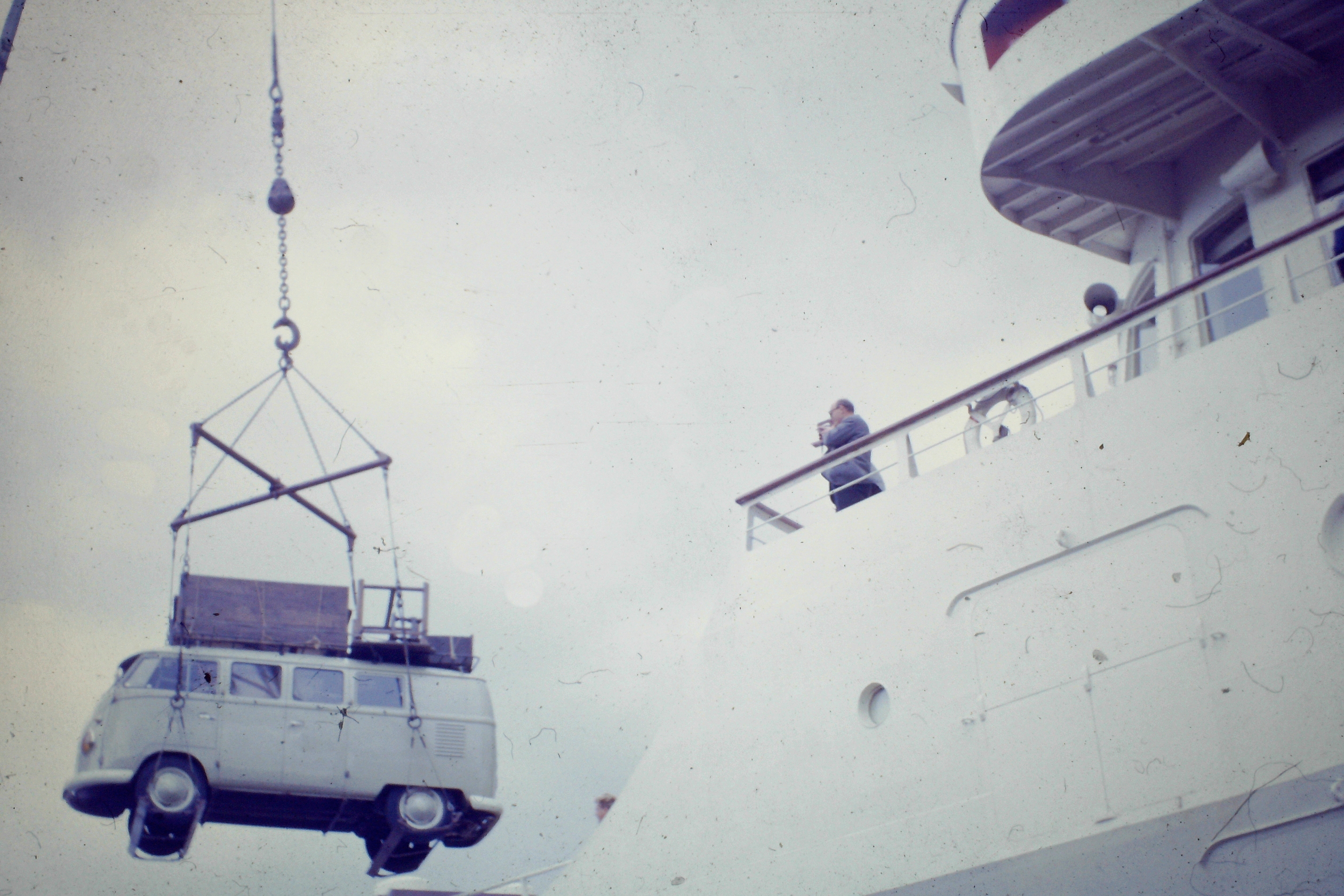
Morse appears to have developed his antique dealing business very rapidly – Charlotte tells us he did good business with the American export trade at the time. He was trading from his home, Groton Manor, Suffolk by 1950, as well as operating a small shop in the village of Boxford, near Sudbury, Suffolk and opening a shop in Great Portland Street, London by the mid 1950s. By 1961 Morse had been elected to the British Antique Dealers’ Association and had a shop in the famous Portobello Road. Throughout the 1960s he was making regular buying trips to Europe, especially to Holland and France, buying early oak furniture and sculpture. Charlotte very kindly shared this photograph of Charles Morse’s VW camper van, loaded up with antique oak furniture, being craned down from the ferry from Amsterdam in 1962.

Charles Morse’s VW camper van, on a buying trip to Holland, 1962. Photograph courtesy of Charlotte Morse.

But Morse is perhaps most famous for trading from a number of historic properties that he owned in the 1960s and 1970s. He acquired ‘The White House’, Colne, Essex in about 1960, before buying Colne Priory, Essex in about 1967.

Colne Priory, Essex, home and ‘antique shop’ of Charles Morse, c.1967. Photograph courtesy of Charlotte Morse.

Colne Priory was rebuilt in 1825, incorporating elements of an 18th century house and was built in the grounds of a Benedictine Priory dating back to the 12th century. It was a highly appropriate historic property from which to deal in antiques. Indeed, the tradition of antique dealers trading from historic properties can be traced back to the 1920s and continued throughout the 20th century – the tradition also continues to this day of course.

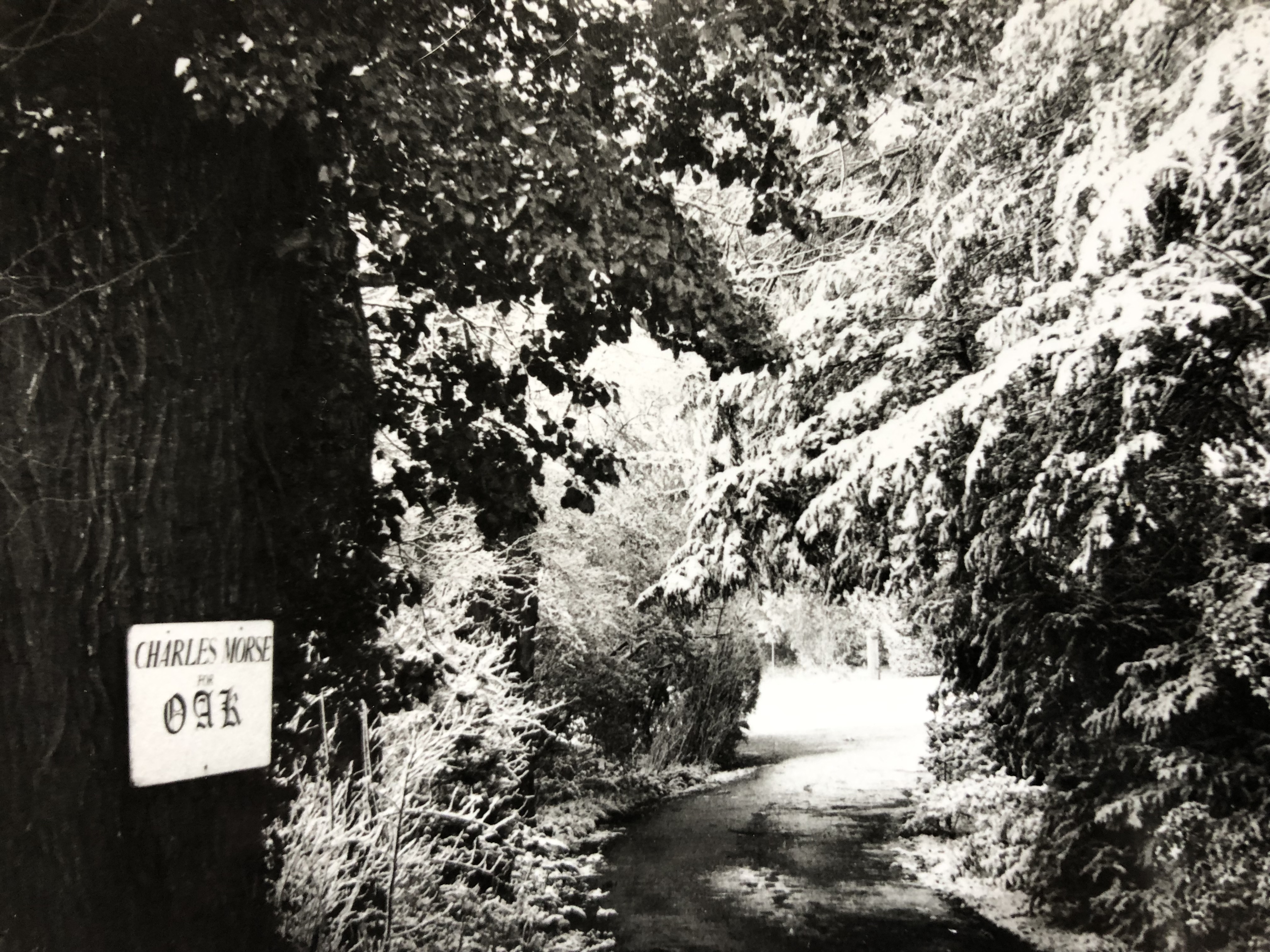
Charles Morse Antiques, Colne Priory, entrance, c.1970. Photograph courtesy of Charlotte Morse.

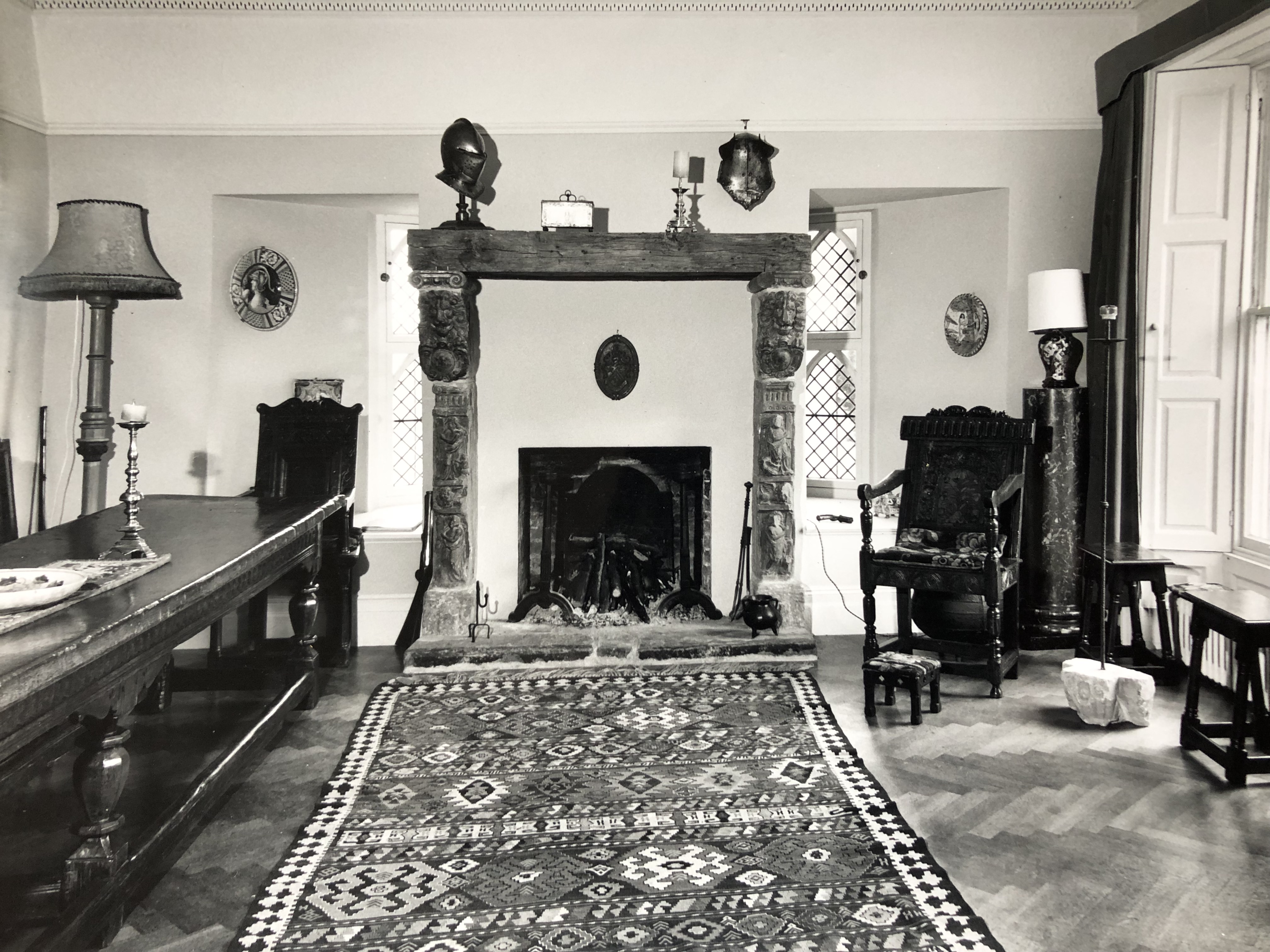
Morse no doubt saw Colne Priory, and it’s historic interiors, as an effective marketing tool for selling antiques, but also, as Charlotte informed us, the house keyed into his love of history and the material culture of the past. Colne Priory was also a home of course, and below is a photograph the private dining room at Colne Priory, filled with antiques – the borderline between antique collecting and antique dealing has always been porous.

Colne Priory, private sitting room, c.1970. Photograph courtesy of Charlotte Morse.

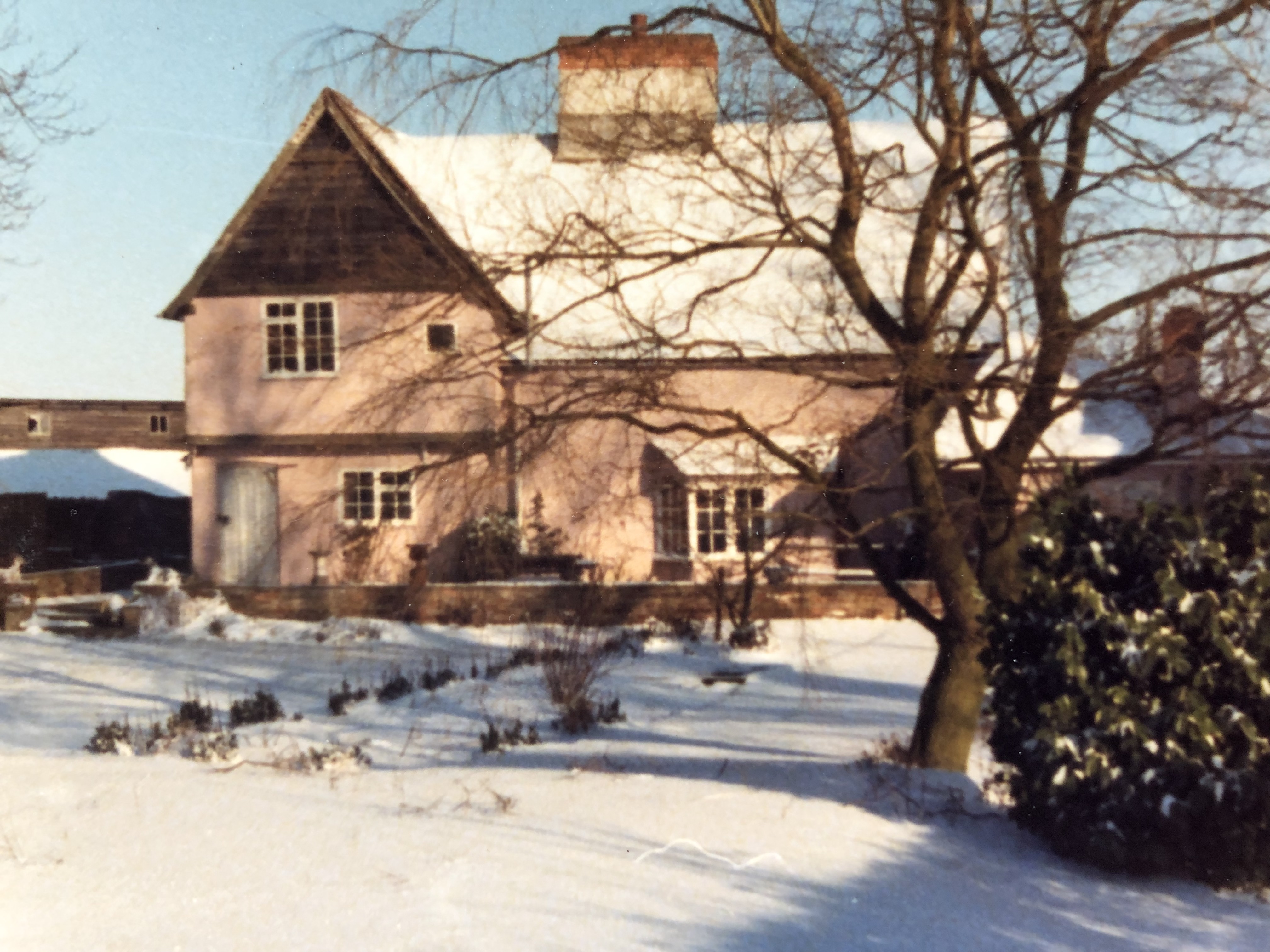
Morse sold Colne Priory in 1977, moving his home, and business, to Larks-in-the-Wood at Pentlow, Essex. Here, Morse continued to deal in oak furniture and early objects right up to his death in February 1980.

Charles Morse, ‘Larks-in-the-Wood’, Pentlow, Essex. Photograph courtesy of Charlotte Morse.

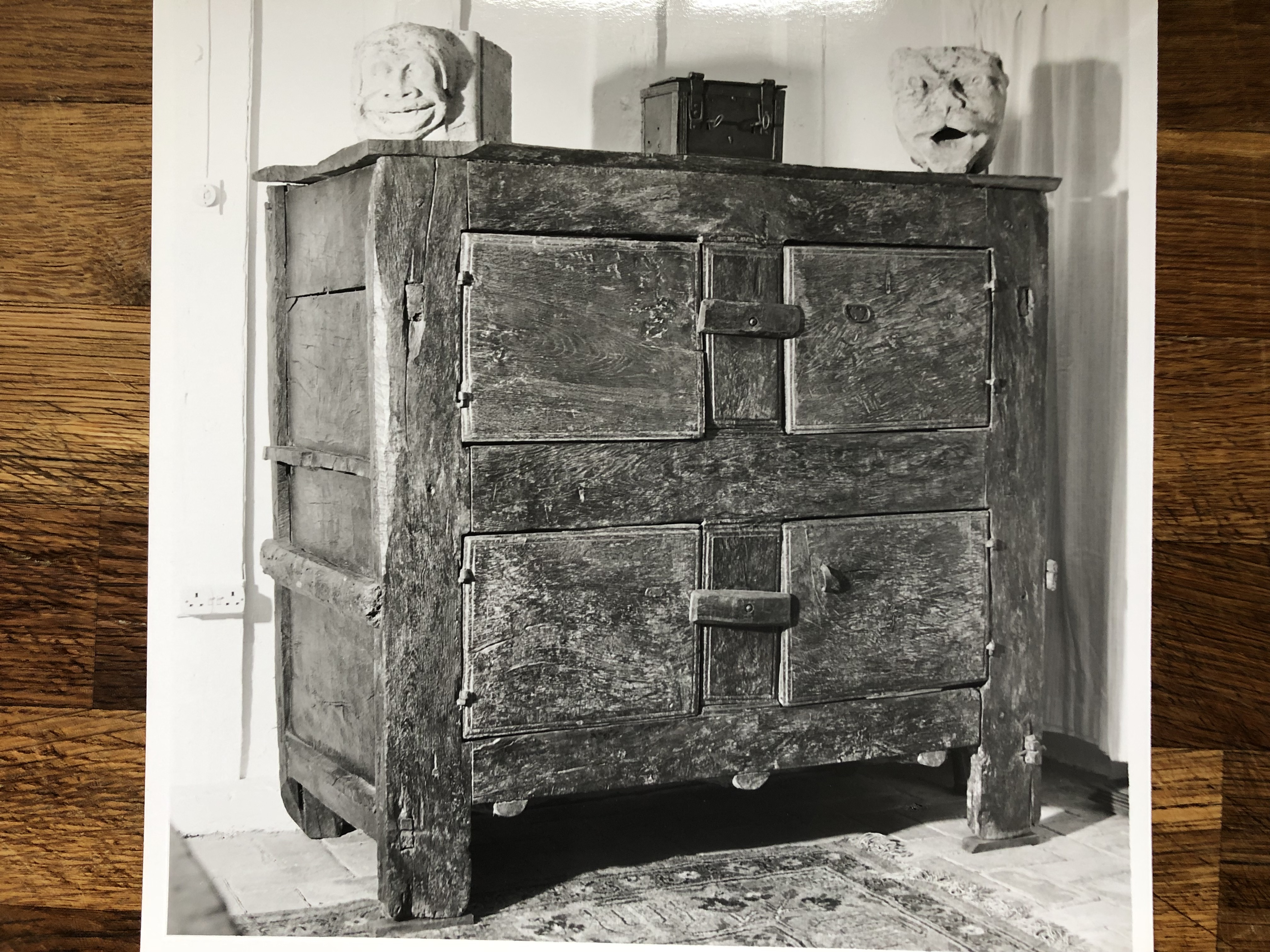
Morse sold many spectacularly rare pieces of early oak furniture and early sculpture and objects – this early oak hutch for example; the stone head corbel on the top, left, was, so Charlotte tells us, discovered in the lake in the grounds of Colne Priory, and must have come from the Benedictine Priory itself.

Early oak hutch, Charles Morse Antiques. Photograph courtesy of Charlotte Morse.
16th century Hammer Beam End, Charles Morse Antiques. Photograph courtesy of Charlotte Morse.

And (above) this 16th century oak Hammer Beam End, is typical of the quality of the stock of Charles Morse. As is this (below) 15th century Italian wooden painted and gilded Corpus Christi.

Charles Morse, 15th century Italian Corpus Christi. Photograph courtesy of Charlotte Morse.

Charles Morse offered the sculpture for sale at the Northern Antique Dealers’ Fair in Harrogate in 1979, for the sum of £3,000. One does not get a sense of the size of the sculpture, until one sees Charlotte (then aged 22) carrying the sculpture into the fair.

Charlotte Morse, carrying the 15th century sculpture into the Northern Antique Dealers’ Fair 1979. Photograph courtesy of Charlotte Morse.

We are so grateful to Charlotte and her family for sharing this material, and her memories of her father, Charles Morse.

Mark

June 15, 2014

Oral History Interviews – Peta Smyth and Kate Thurlow

The oral history interviews are gathering pace!…Emma Slocombe, curator at the National Trust, at Knole and a member of the Advisory Board for the Antique Dealers project very kindly helped out with an interview for the project last week.  Emma interviewed the dealers Peta Smyth and Kate Thurlow about their memories of the trade.  Both Peta and Kate started their antique dealing careers in Portobello Road (just like Kathleen Skin, one of our other interviewees!), before moving through various shops in Kensington Church Street, Kings Road and Pimlico, in London. Emma’s interview with Peta and Kate will be apart of the growing archive of dealer memories and will be available via the project website over the coming months.

Mark


May 24, 2014

Oral History Interviews – Kath’s Button Box

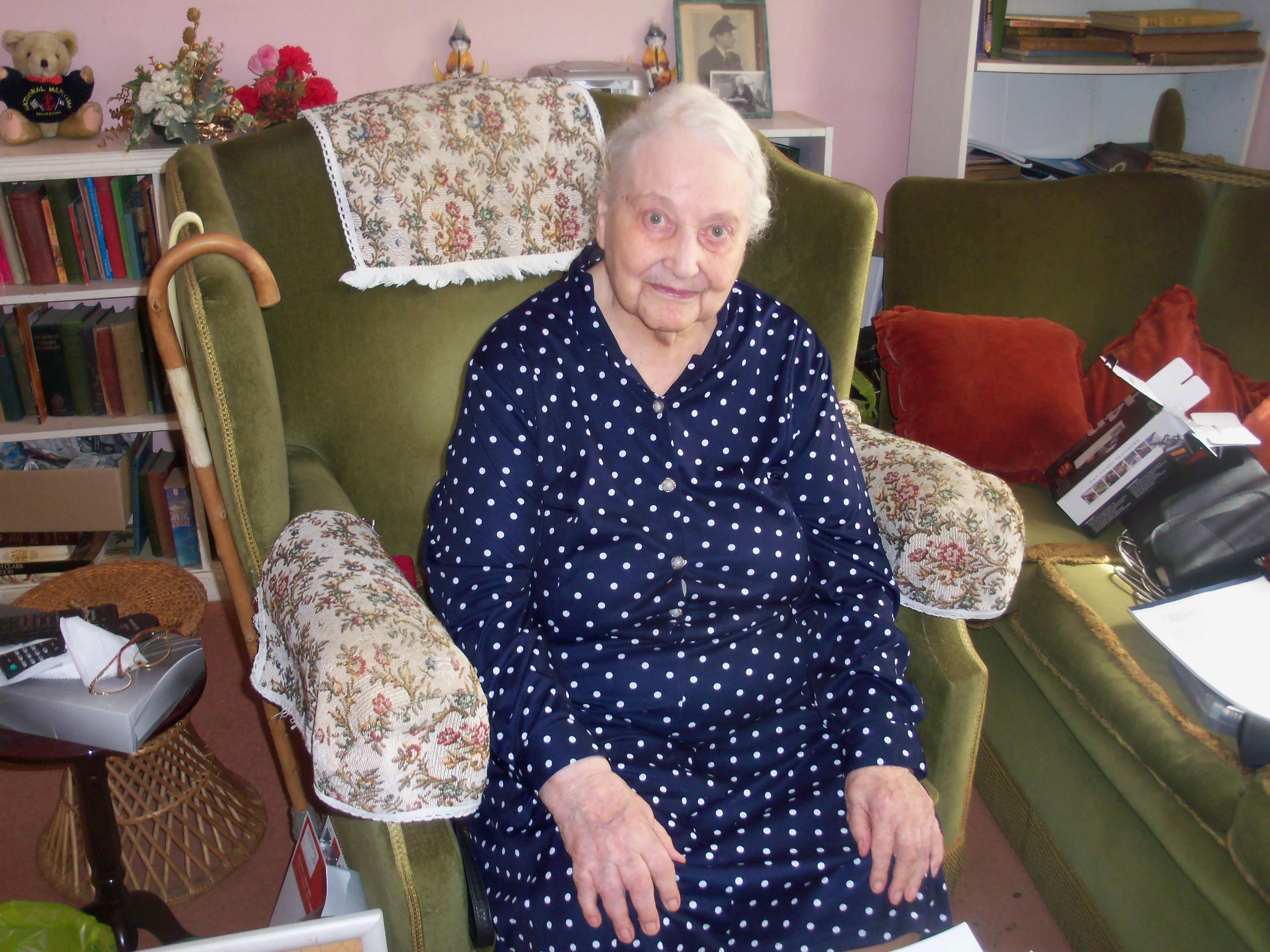
We’ve started the oral history interviews for the Antique Dealers project.  This week I interviewed Kathleen Skin, about her time at Portobello Road antiques market during the 1950s and 1960s; and her time at Grays Antiques market in the 1980s. Kathleen is 93 years old, and has absolutely fascinating memories about buying and selling a whole range of things. Here’s Kathleen, in her home at Cambridge.

Kathleen Skin May 2014

Kathleen Skin, 2014

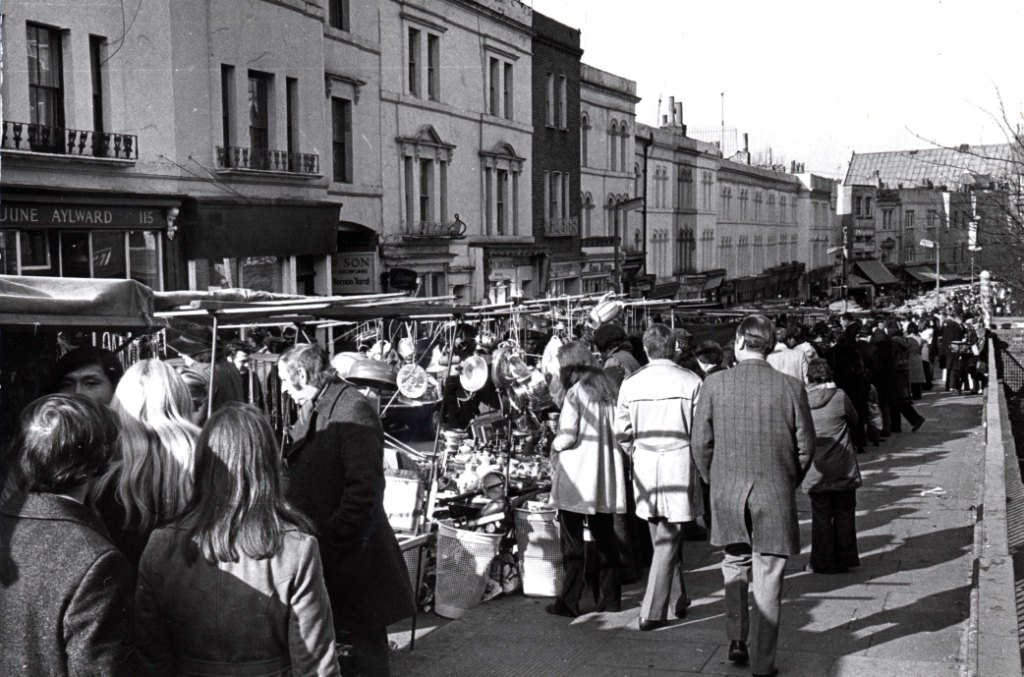
Kathleen told us about life on Portobello Road, antique dealing for ‘fun’, and some extraordinary things she bought – including a silver belt with Wedgwood ‘Jasperware’ plaques and a rare 18th century doll (which she sold to the Bethnal Green Museum of Childhood now the V&A Museum of Childhood). Kathleen began to specialize in buttons, (she still loves buttons!), and continued her trading at Grays Antiques Market in the 1980s, as ‘Kath’s Button Box’. Here’s some of the shops and stalls in Portobello Road in the mid 1970s……

Portobello Road in the 1970s

Portobello Road in the 1970s

All of the project interviews we are collecting , including the interview with Kathleen, will be archived and made available via the project website as the project develops.

Mark

March 27, 2014

Portobello Road

We were very interested to read the letter from Kathleen Skin (aged 93)! published in the letters column of the Antiques Trade Gazette this week. See ATG 22nd March 2014. Kathleen briefly outlined her memories of her time as a dealer trading in the famous Portobello Road during WWII, with some absolutely fascinating reflections – we’re hoping to interview Kathleen as part of the oral history parts of the Antique Trade research project.

And thanks to Editor of the ATG, Ivan Macquisten for sending us the PDF of the letters page, and for writing to Kathleen on our behalf to try to set up a meeting (Thanks Ivan!)

here’s the PDF of the letter – Kathleen Skin letter ATG

As part of the project we will be investigating the history of Portobello Road Antiques markets in more detail, so keep your eye on the developments.

Mark


Home Subjects

a working group dedicated to the display of art in the private interior, c. 1715-1914

The Period Room: Museum, Material, Experience

An International Conference hosted by The Bowes Museum and The University of Leeds

H. Blairman & Sons Ltd

A research project investigating the history of the antiques trade in Britain in the 19th & 20th centuries

Museum Studies Now?

'Museum Studies Now?' is an event which aims to discuss and debate museum and heritage studies education provision.

The Burlington Magazine Index Blog

art writing * art works * art market

East India Company at Home, 1757-1857

A research project investigating the history of the antiques trade in Britain in the 19th & 20th centuries