Posts tagged ‘French & Co’

June 28, 2025

The 1932 Art Treasures Exhibition, London

A couple of months ago my friend and colleague Diana Davis very kindly sent me a link to a short black & white film of the 1932 Art Treasures Exhibition (thank you Diana!), and which obviously pricked my interest as it is full of objects that were being sold by antique dealers. You can watch the film in YouTube (it’s only 2 minutes 49 seconds long) HERE – the original film is part of the wide range of historic films and TV archives held by British Pathe (link HERE).
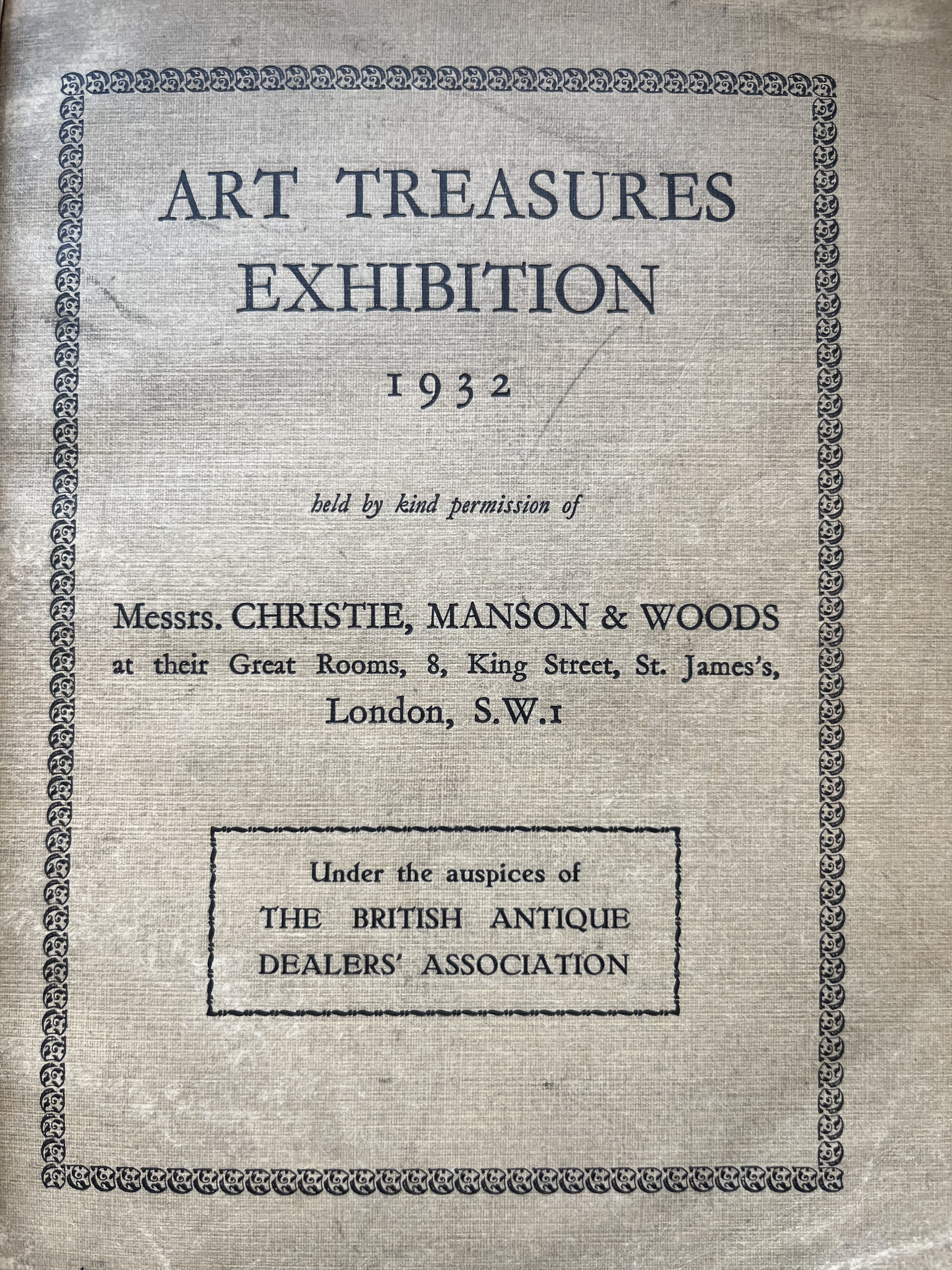
Art Treasures Exhibition 1932 catalogue, front cover. Photo Antique Dealers Research Project, University of Leeds.

The Art Treasures Exhibition, held at Christie’s auction rooms, King Street, London, 12th October to 5th November 1932 and organised by The British Antique Dealer’s Association (BADA) is fairly well-known amongst historians and those interested in the history of the art market. The 1932 exhibition followed on the success of the earlier BADA organised exhibition at Grafton Galleries, London in 1928. Both exhibitions prefigured the establishment of the Grosvenor House Antiques Fair (also known as ‘The Antique Dealers’ Fair’) which began in 1934 – (see also some older blog posts on The Grosvenor House Fair etc in January 31st 2021 and April 23rd 2015).

Fortunately, we have a copy of the 1932 Exhibition catalogue, so it’s possible to match up some of the objects in the film to those in the catalogue and find out which dealers are behind the objects, so I thought it would be an interesting exercise to do that!

The film of the 1932 Exhibition is a fascinating period piece from the early 1930s, obviously created as a publicity newsreel for the exhibition. The narrator (unknown), guides the viewer to some of the highlights of the exhibition at the time, telling the background stories of some of the objects offered for sale by various antique dealers, but also offering a visual insight into the displays at the exhibition. Below, for example, is a screenshot of a general panning shot (do watch the YouTube film for effect) of one of the stands which appears to have a mixture of dealers’ objects – the large pair of urns are certainly item No.237 in the catalogue, ‘A pair of satinwood knife boxes, c.1790, originally made for Lord Northesk’ (the family seat is Ethie Castle, near Arbroath) and offered by the antique dealer Rice & Christy, Wigmore Street, London; the tapestry behind looks like it is No.285 ‘A Beauvais Tapestry, c.1790’, offered by The Spanish Art Gallery, Conduit Street, London; and the display cabinet to the left is certainly No.182 ‘A Chippendale China Cabinet, c.1765′ offered by M. Harris & Sons. So I guess this panning shot was of a collection of various dealers’ objects at the entrance to the exhibition, indicating the sheer range of things offered for sale?
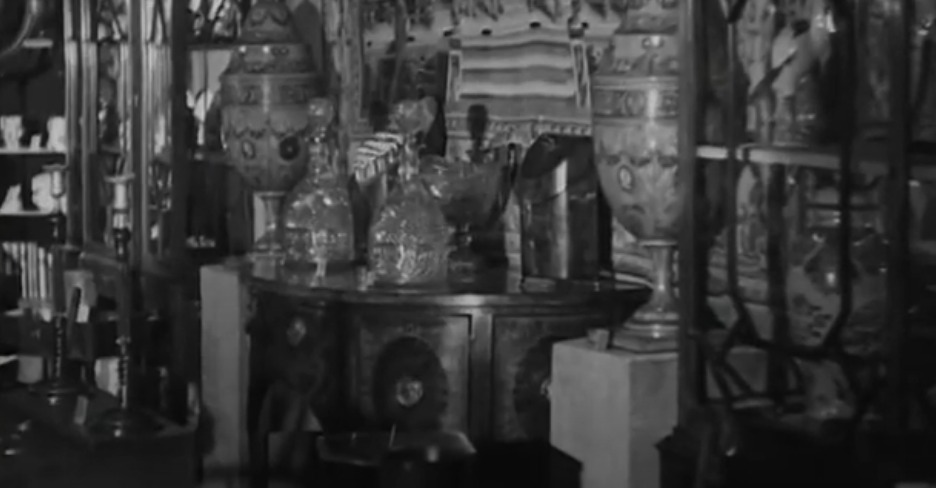
Art Treasures Exhibition 1932, screenshot of general view.

The Exhibition had 1,380 objects, and the film obviously does not cover all of them, but there are 13 objects highlighted in the film, so for those that watch the film, here’s some information on the dealers who were behind the objects (and a little bit of information on where the objects are now, if it has been possible to trace them) – I’ll do this in the sequence of the objects highlighted in the film by the narrator:

1st object – (see below) in the film the narrator spends a few moments on this object; it is also object No.1 in the catalogue: ‘An embroidered Throne used Queen Elizabeth, English 1578’; this was offered by the well-known London antique dealers Acton Surgey Ltd & Mallett & Son. Thanks to our friends William DeGregorio and Chris Jussel (in the USA) we know that the embroidered throne made its way into the collection of Sir William Burrell (1861-1958) and remains in the Burrell Collection in Glasgow (it is currently in storage at The Burrell – see below).
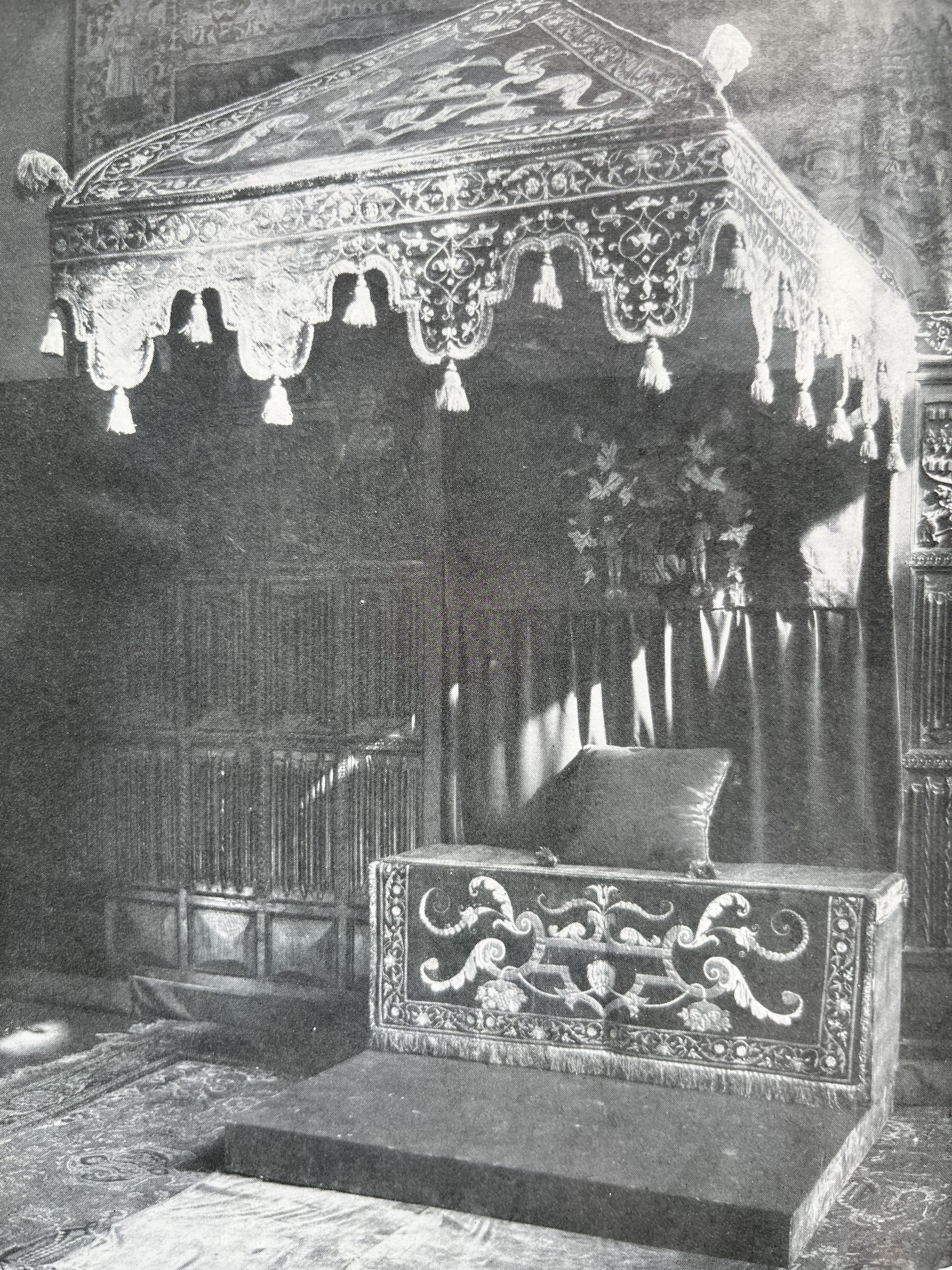
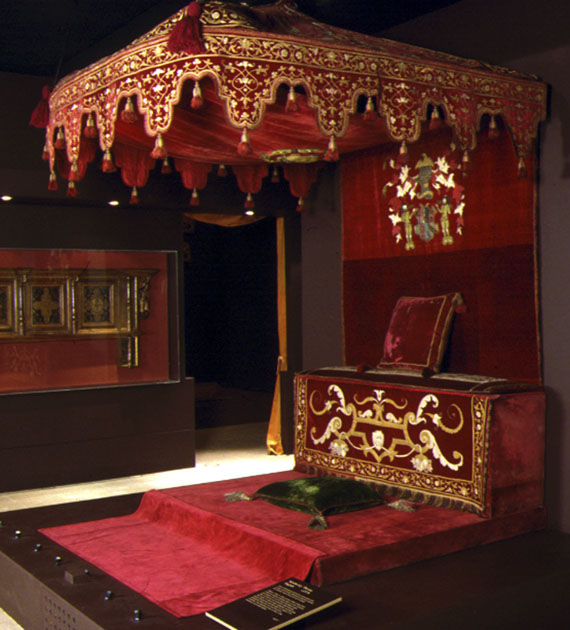
Art Treasures Exhibition catalogue 1932 – ‘An embroidered Throne used by Queen Elizabeth, English 1578’. Photograph, Antique Dealers Research Project, University of Leeds.
The ‘Kimberley Throne’, c.1554-1578, (14.217). The Burrell Collection, Glasgow. Photograph, The Burrell Collection, Glasgow.

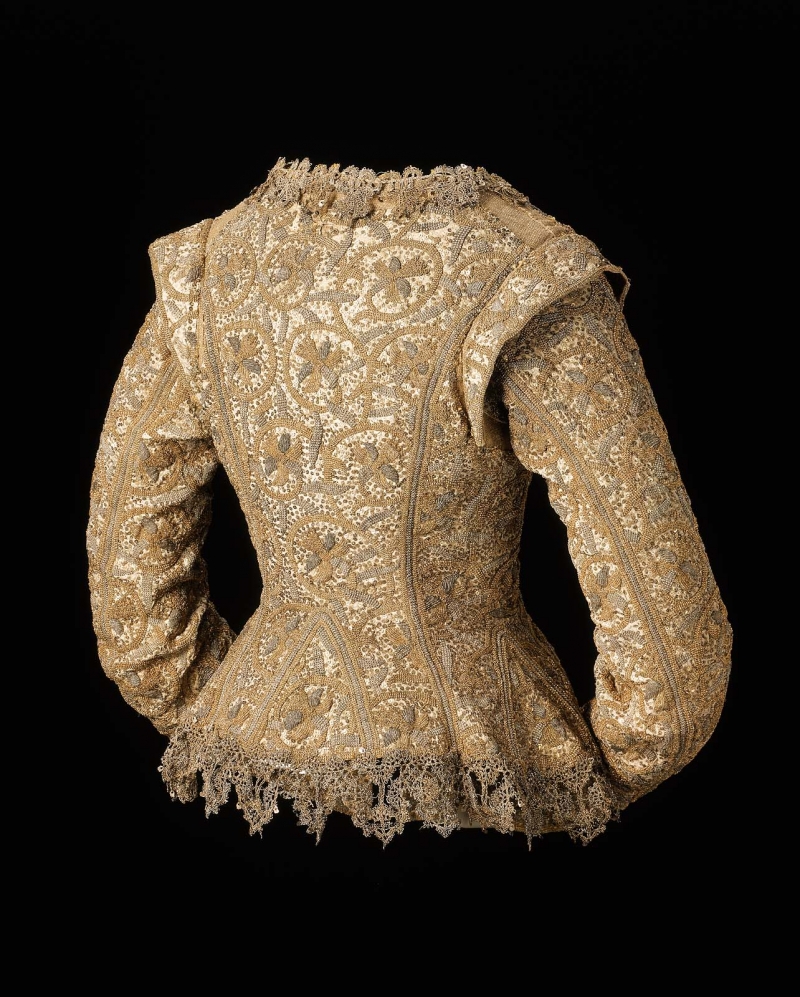
2nd object – (see below) mentioned by the narrator is No.2 in the exhibition catalogue, ‘A gold embroidered jacket, lace shirt, and gloves, English, late 16th century’; it was also offered by Acton Surgey Ltd; the jacket is now in the collections of Boston Museum of Fine Arts in the USA. It was purchased from Acton Surgey by the collector Elizabeth Day McCormick (1873-1957) in 1943 and gifted to the Boston MFA. It is not known what happened to the shirt or the gloves; and it has not also been possible to identify the ‘gold and enamelled jewel set with diamonds and rubies’ that the Narrator also mentions.
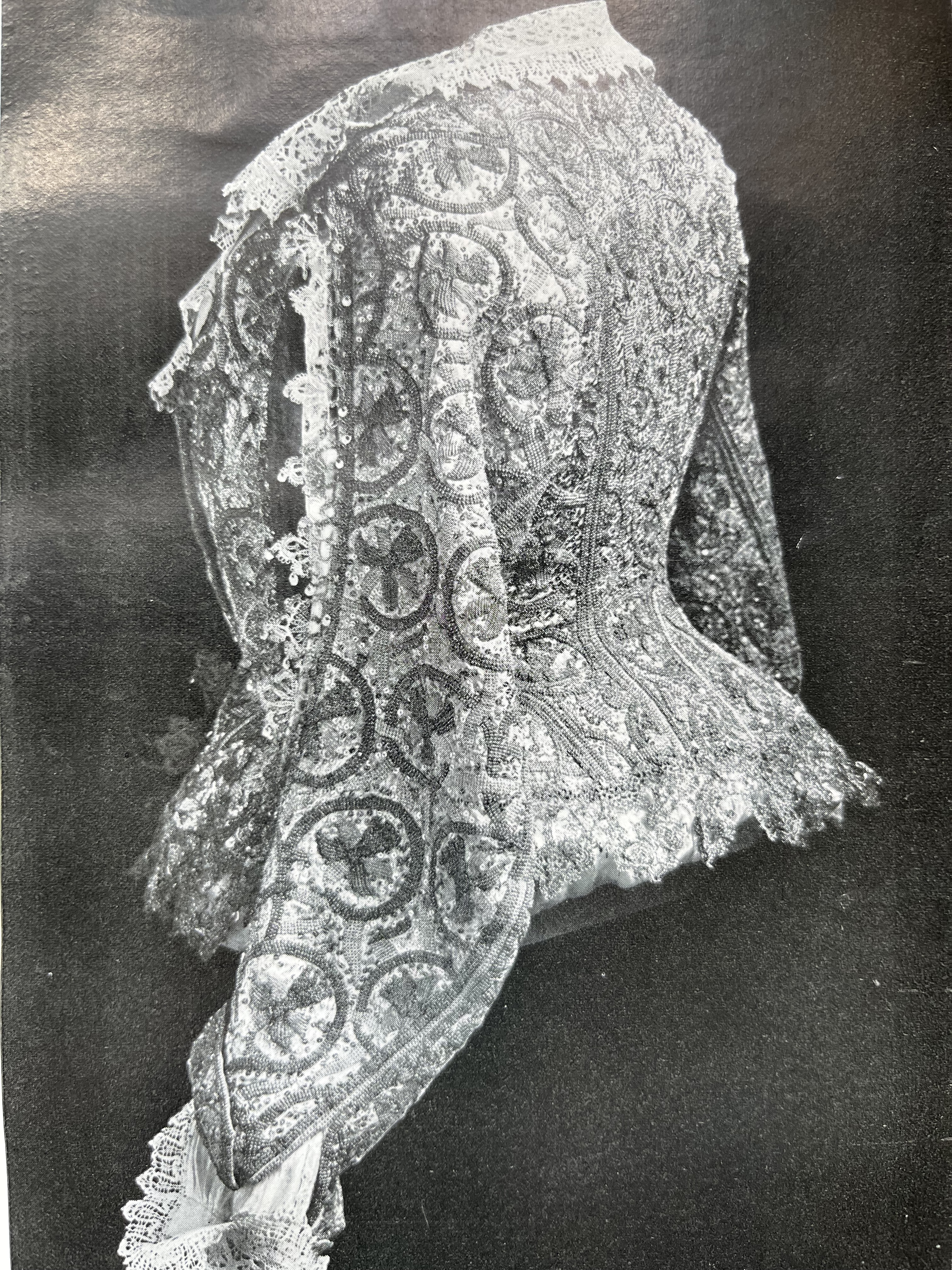
Art Treasures Exhibition catalogue 1932 – ‘A gold embroidered jacket, English, late 16th century’. Photograph, Antique Dealers Research Project, University of Leeds.
‘Women’s Jacket, English about 1610-15 with later alterations’. The Elizabeth Day McCormick Collection, Boston Museum of Fine Arts. 43.243. Image copyright Boston MFA.

3rd object – (see below) the narrator describes a ‘Gothic tapestry, over 400 years old’, this is either No.270 or No.271 in the catalogue. Neither are illustrated in the catalogue, but are both described in the catalogue as ‘A panel of Gothic tapestry, Franco-Flemish, circa 1500’ and both are offered by The Spanish Art Gallery Ltd, Conduit Street, London. It has not been possible to trace the present whereabouts of the tapestry.
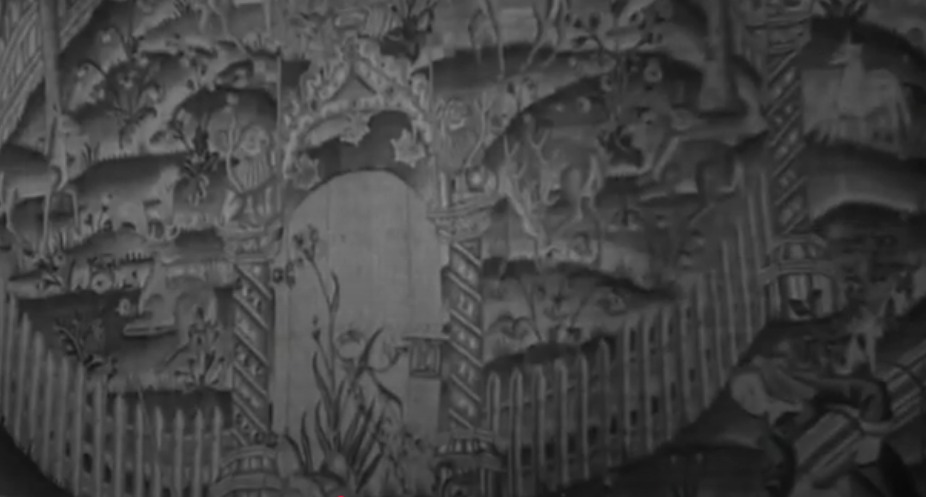
Art Treasures Exhibition 1932 film, screenshot of ‘Gothic tapestry’.

4th object – (see below) this is described by the narrator in the film as ‘a fine specimen of a Henry VII salt-cellar in hour-glass form’. This is No.445 in the catalogue; ‘A Henry VII silver-gilt standing salt, London 1505’. It is also illustrated in the catalogue, and was offered by the antique silver dealers Crichton Brothers, then trading at 22 Old Bond Street, London. It has not been possible to trace the Henry VII salt – the narrator in the film suggested that it was the only known piece of silver with the date 1505, so I guess if it does still exist, it must be easily identifiable? (our friend Chris Coles spotted the salt in a 1969 exhibition catalogue produced by The Goldsmiths Company….so perhaps the salt is in the collections of The Goldsmiths – thanks Chris!)
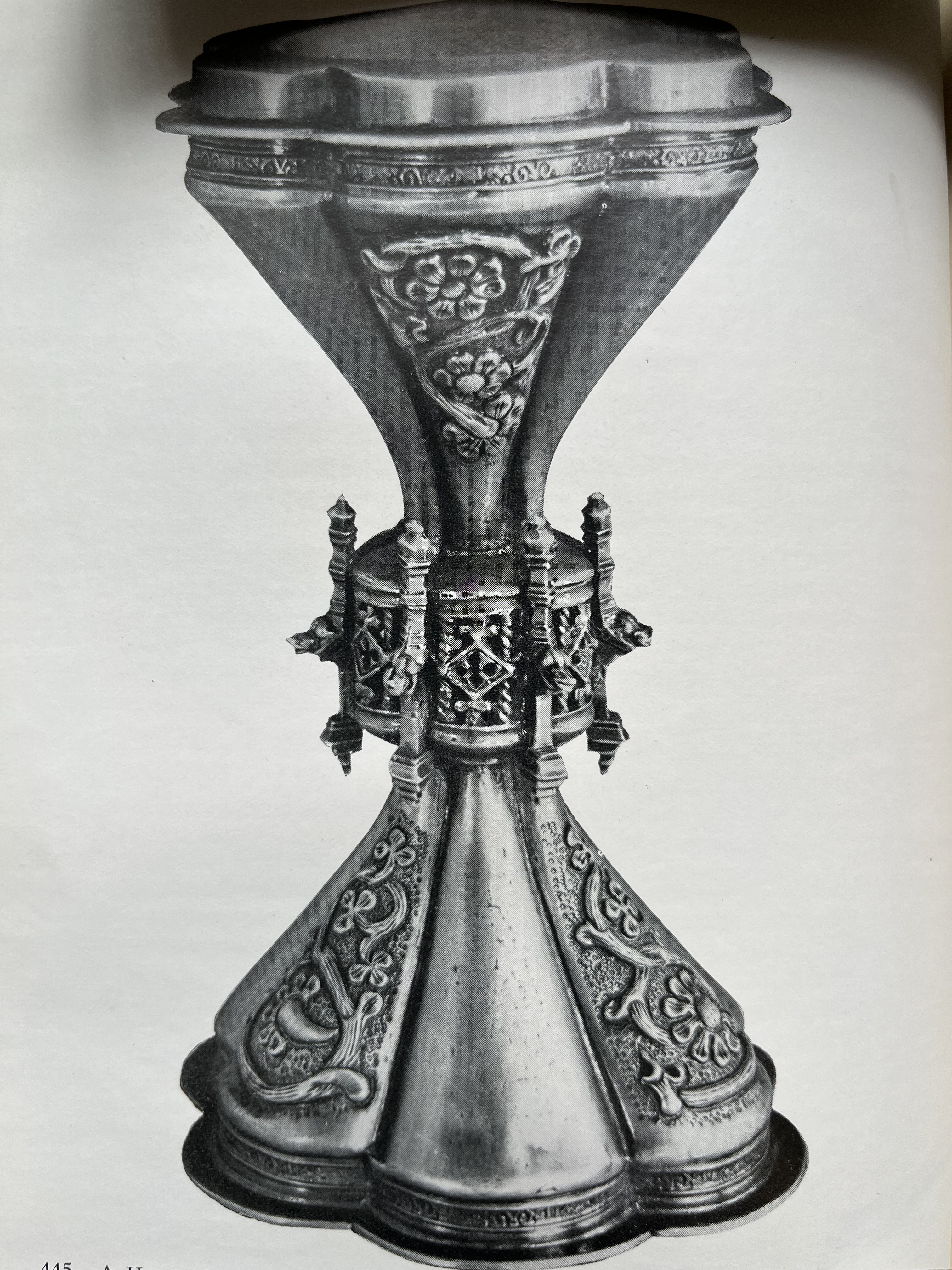
Art Treasures Exhibition catalogue 1932 – ‘A Henry VII silver-gilt standing salt, London 1505’. Photograph, Antique Dealers Research Project, University of Leeds.

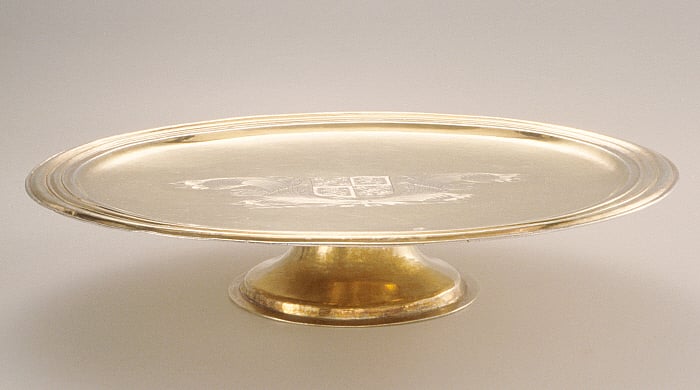
5th object – (see below) the narrator describes a ‘stand for a porringer or tankard….previously owned by the diarist Samuel Pepys’. This is No.618 in the catalogue – ‘The Charles II silver-gilt ‘Pepys’ tazza, London 1678′. It is not illustrated in the catalogue, but was also offered by the antique silver dealer Crichton Brothers. The ‘tazza’ is now in the collections of The Clark Institute in Massachusetts in the USA. It was commissioned by Samuel Pepys (1633-1703) in 1678 and was sold at Sotheby’s on 1st April 1931 (Lot 3) to Crichton Brothers, who appear to have sold it to the American silversmith and art curator Peter Guille of New York, who sold it to Robert Sterling Clark in 1946.
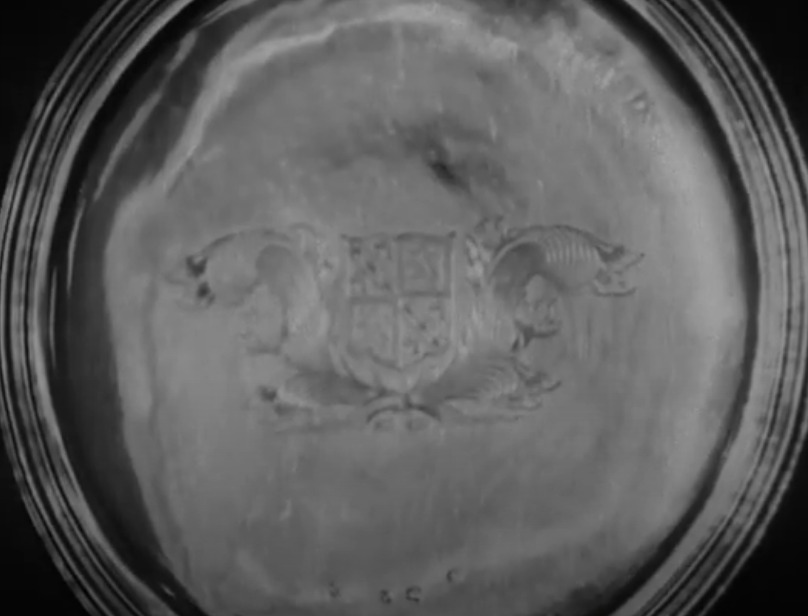
Art Treasures Exhibition 1932 film, screenshot of ‘Pepys’ ‘tazza”.
Footed Salver, silver-gilt, 1678/79. Clark Institute, 1955.298. Image copyright Clark Institute.

6th object – (see below) described by the narrator as a ‘Chippendale chair’, but I can’t find this chair (or even a set of them) listed in the exhibition catalogue; perhaps it was a late edition to the exhibition?
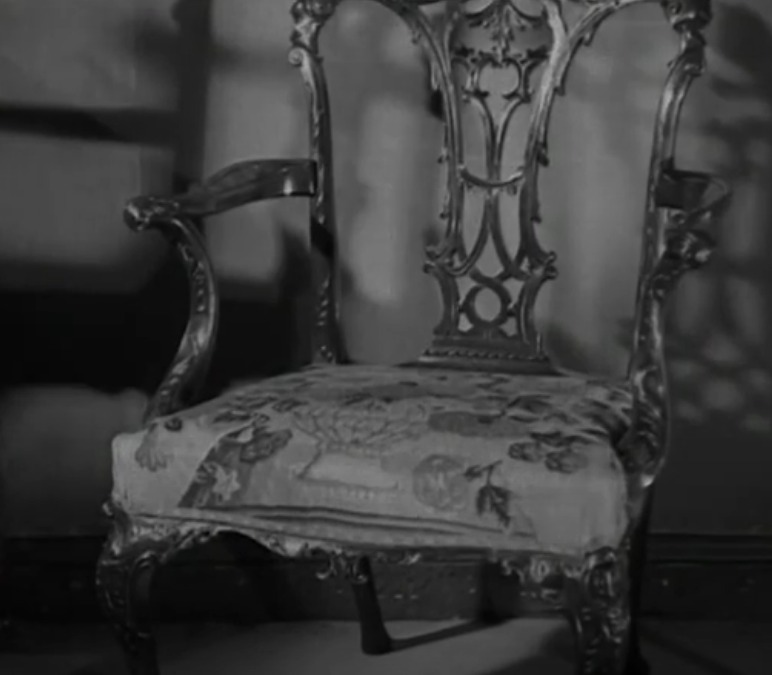
Art Treasures Exhibition 1932 film, screenshot of ‘Chippendale chair’.

7th object – (see below) the narrator describes 3 walnut chairs, ‘made about 1690’. There are a number of such chairs in the exhibition catalogue, but without a photograph of them from the catalogue it has not been possible to identify which of the chairs the narrator is referring too? However, the centre chair, could be No.50 in the catalogue, ‘A William and Mary armchair of small size, circa 1690’, and said to have ‘traditionally been used by Queen Anne’; it was offered for sale by the well-known dealers Moss Harris & Sons.
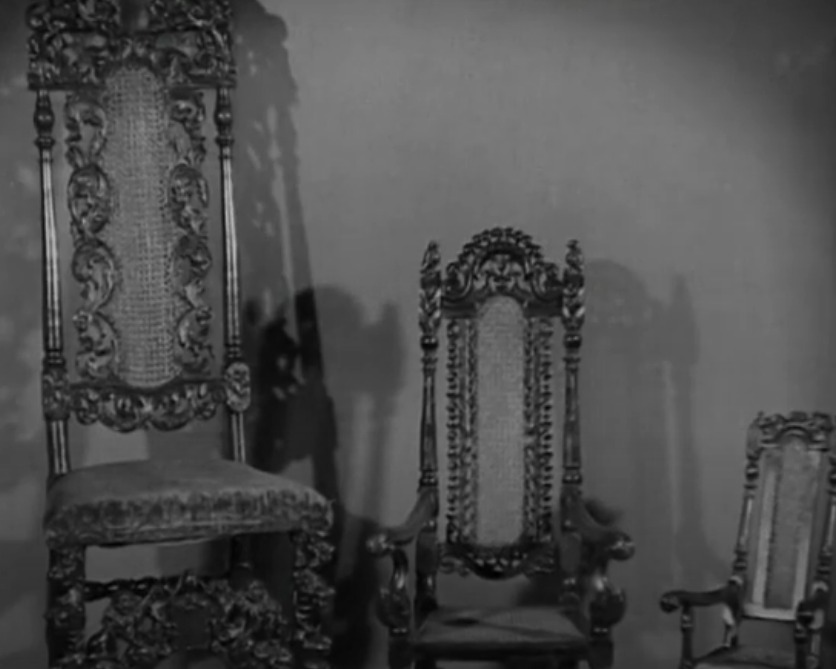
Art Treasures Exhibition 1932 film, screenshot of ‘Walnut chairs’.

8th object – (see below) is described by the narrator as ‘a fine gesso table, formerly at Stowe’, is certainly No.121 in the Exhibition catalogue; it is illustrated and described as ‘A George II gilt side table…formerly at Stowe’ and was offered for sale by the antique dealer and interior decorator Gregory & Co., then trading at 27 Bruton Street, London. The table was originally sold at the auction sale of the contents of Stowe House in 1848, following the bankruptcy of the Duke of Buckingham.
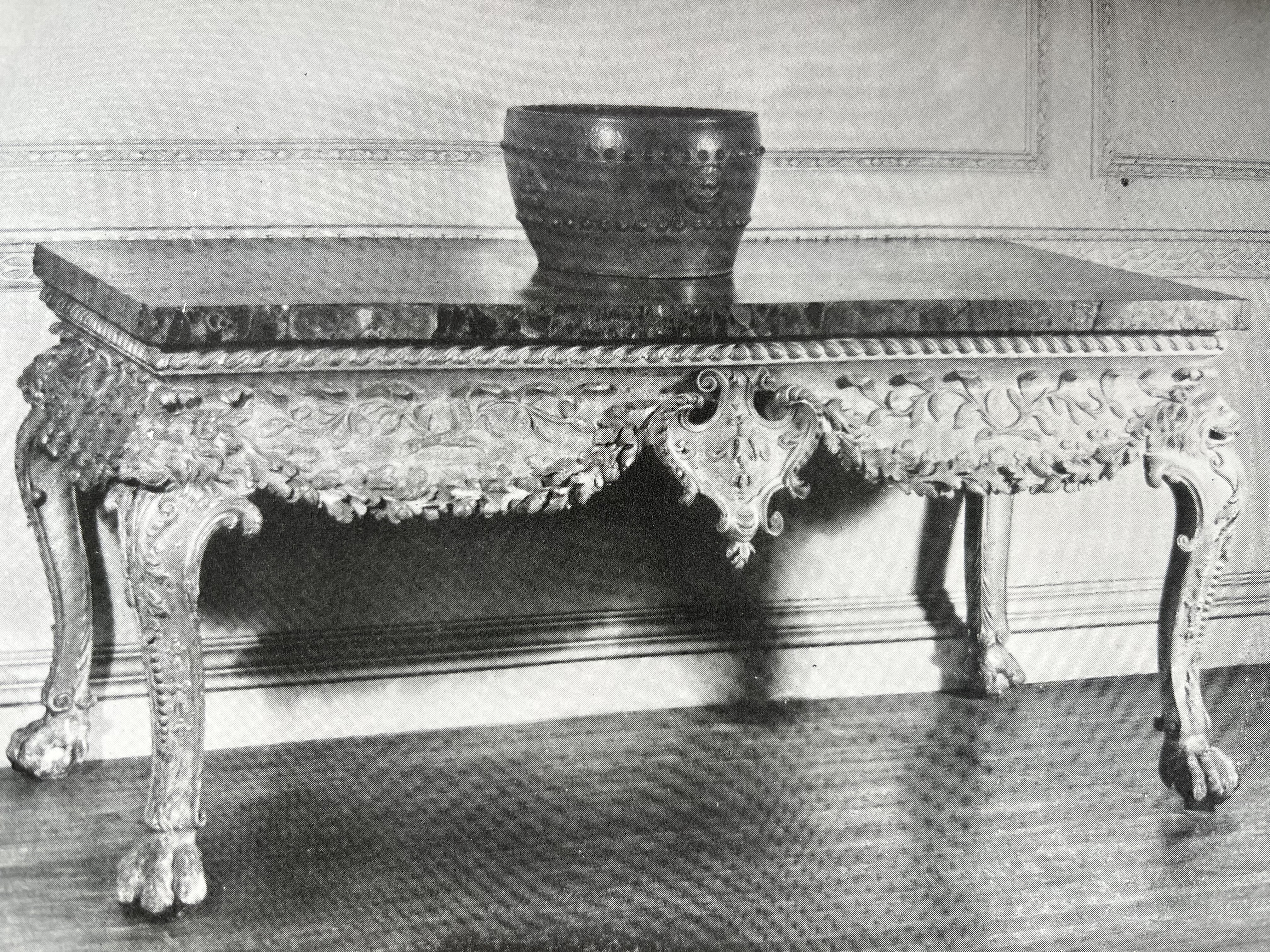
Art Treasures Exhibition catalogue 1932 – ‘A George II gilt side table’. Photograph, Antique Dealers Research Project, University of Leeds.

It has not been possible to trace the whereabouts of the side table, but interestingly, another giltwood side table from Stowe was on display at the 1932 Exhibition; No.98, ‘A George I gilt gesso table, circa 1715’, and offered for sale by the antique dealer A.G. Lewis, Brompton Road, London. This table (see below) is one of a pair (possibly three?) side tables associated with Stowe. In 1930, one table, (perhaps the same one in the 1932 exhibition?) was in the stock of the antique dealer Kent Galleries, Conduit Street (Kent Gallery are associated with The Spanish Gallery who offered the ‘Gothic tapestry’ at the 1932 Exhibition). One of the tables (perhaps the same one?) is now in the V&A Museum (see below too). The V&A table was sold to the V&A by the antique dealer Phillips of Hitchin in 1947, having been through the hands of a number of other antique dealers, including John Bly of Tring and Edinborough of Stamford. All of this highlights the significance of inter-dealer trading that sustained the antique trade for much of the 20th century.
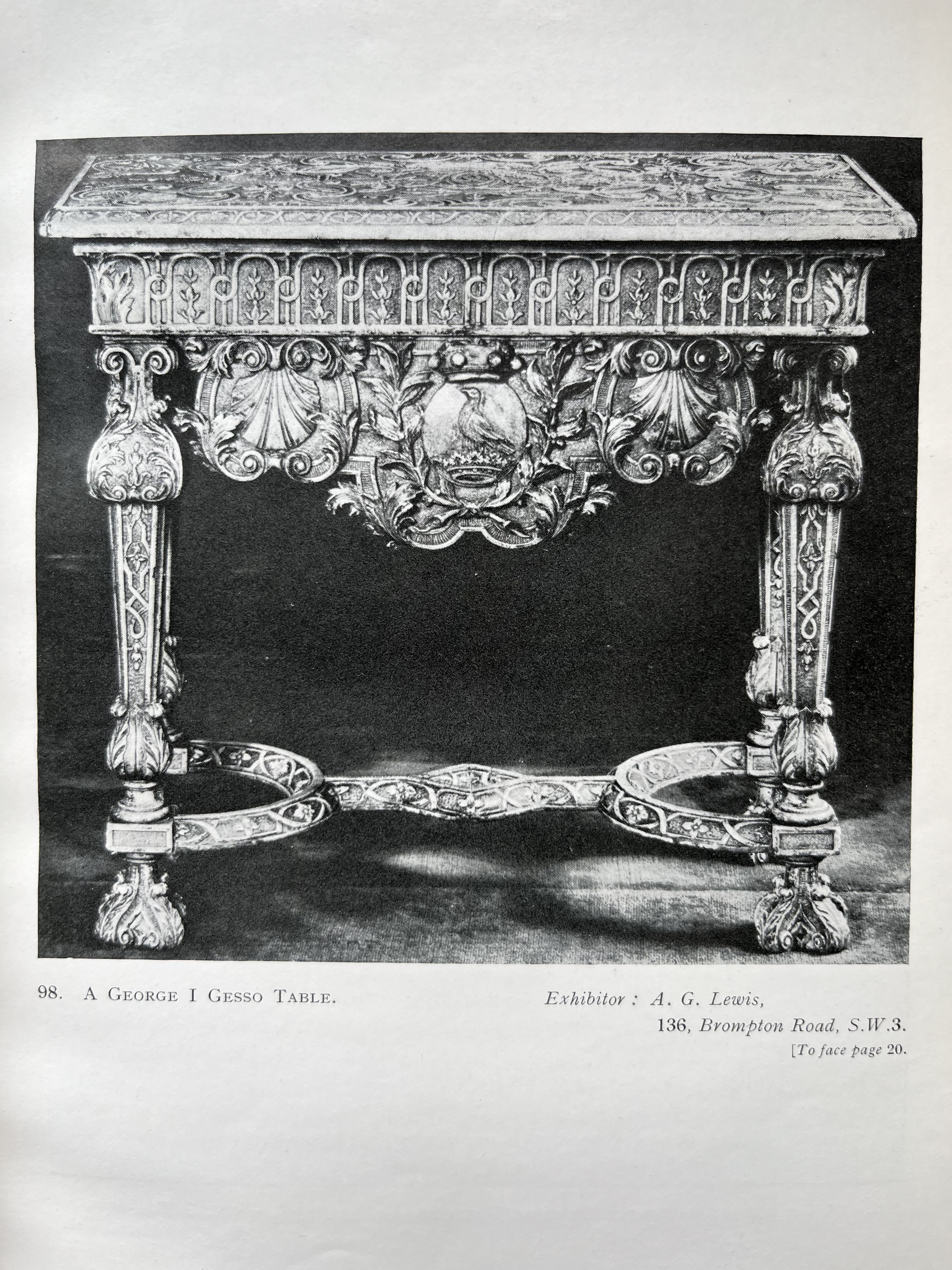
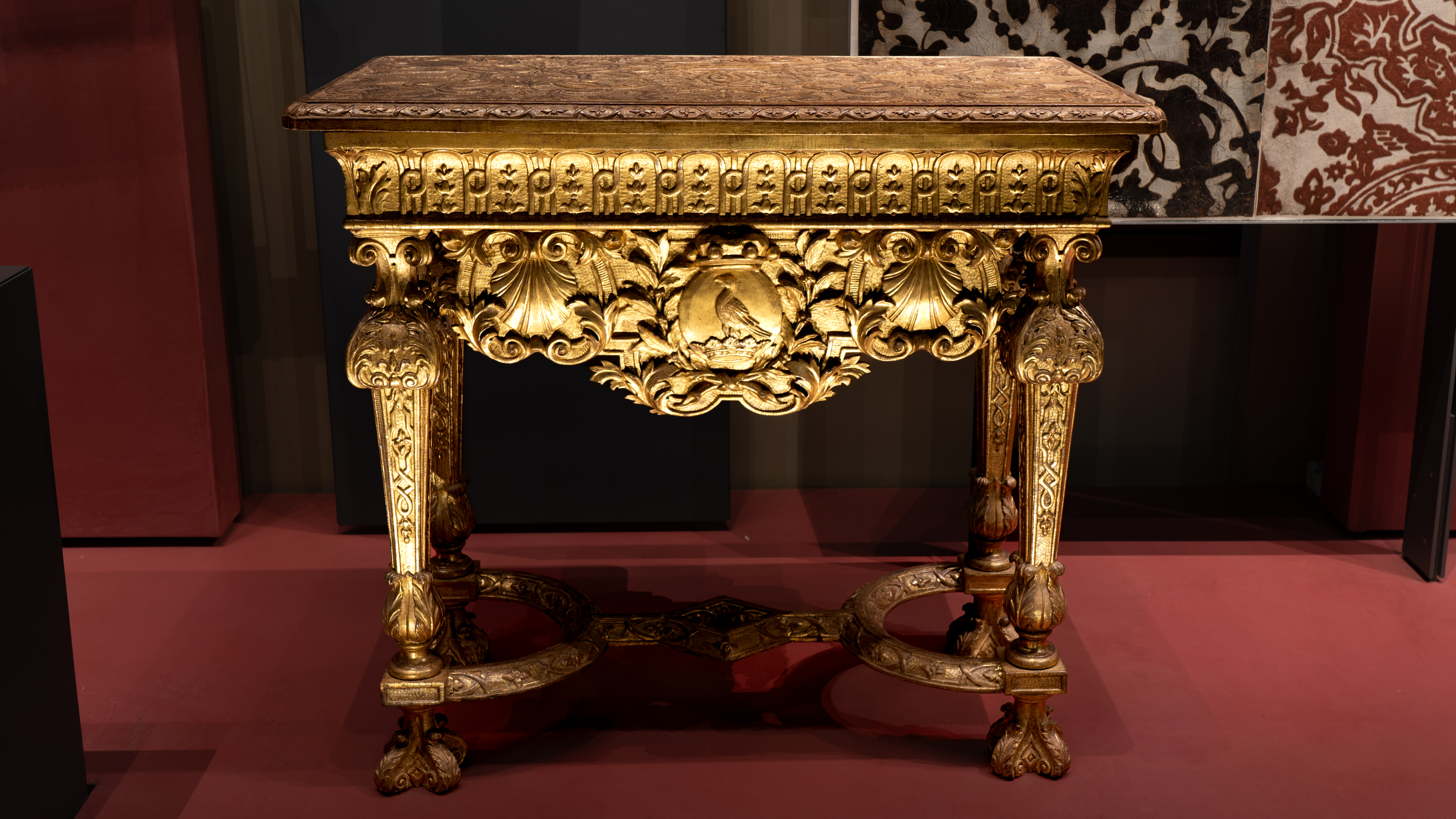
Art Treasures Exhibition catalogue 1932 – ‘A George I gilt gesso table’. Photograph, Antique Dealers Research Project, University of Leeds.
The Stowe side table at the V&A Museum. Photograph, Year of the Dealer project, University of Leeds.

9th object – (see below) the narrator describes a ‘spinning wheel, perfectly usable today’ as the next object. It is a ‘Sheraton spinning wheel, circa 1790….made by John Planta, Fulneck’; it was No.231 in the catalogue and was illustrated and offered for sale by the antique dealer Law, Foulsham & Cole, South Molton Street, London. There are several such spinning wheels by Planta, who was based in Leeds in the late 18th century – one example (although not the one in the 1932 Exhibition), remains in the collections at Temple Newsam, near Leeds.
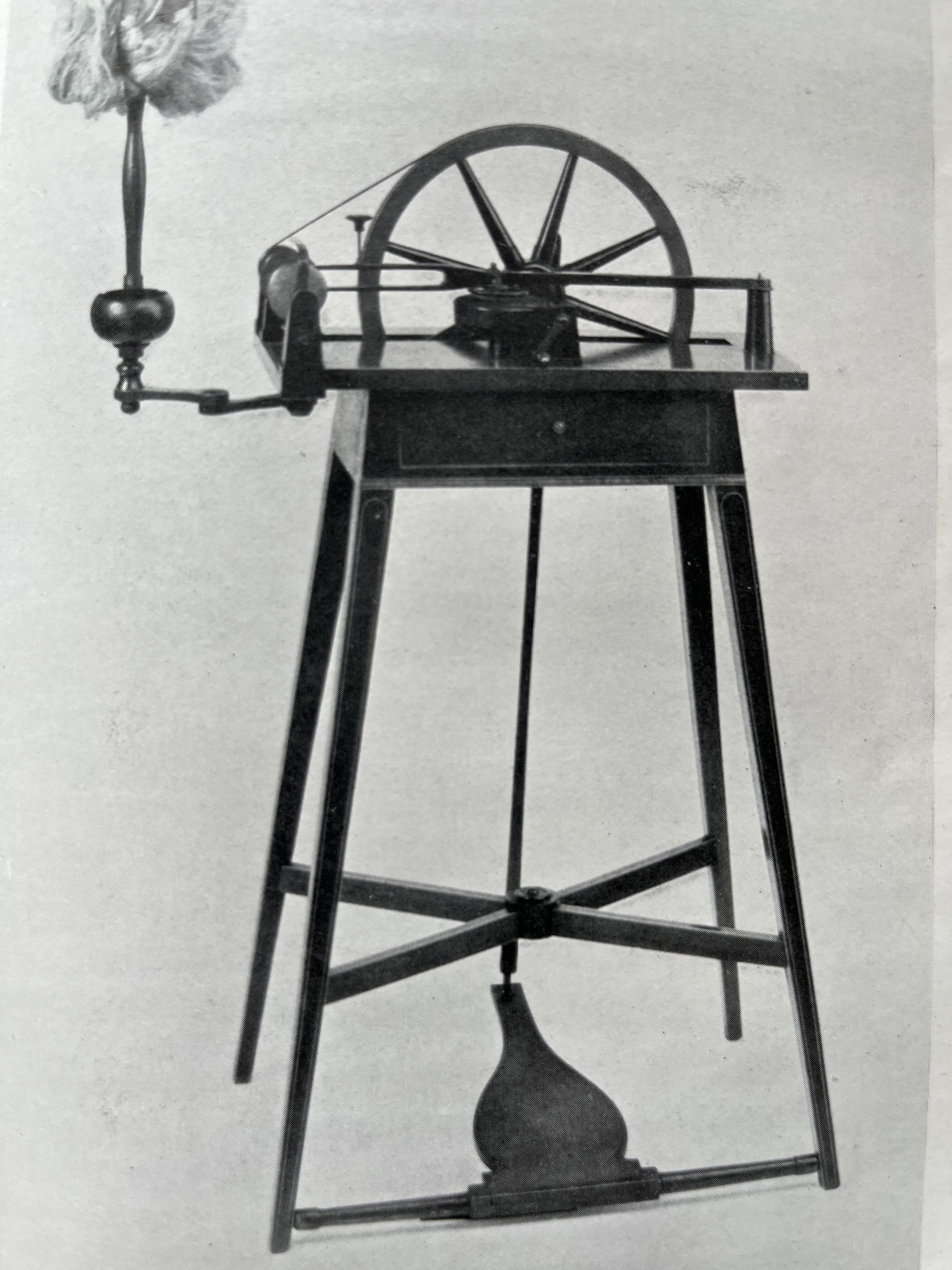
Art Treasures Exhibition catalogue 1932 – ‘A Sheraton spinning wheel, circa 1790’. Photograph, Antique Dealers Research Project, University of Leeds.

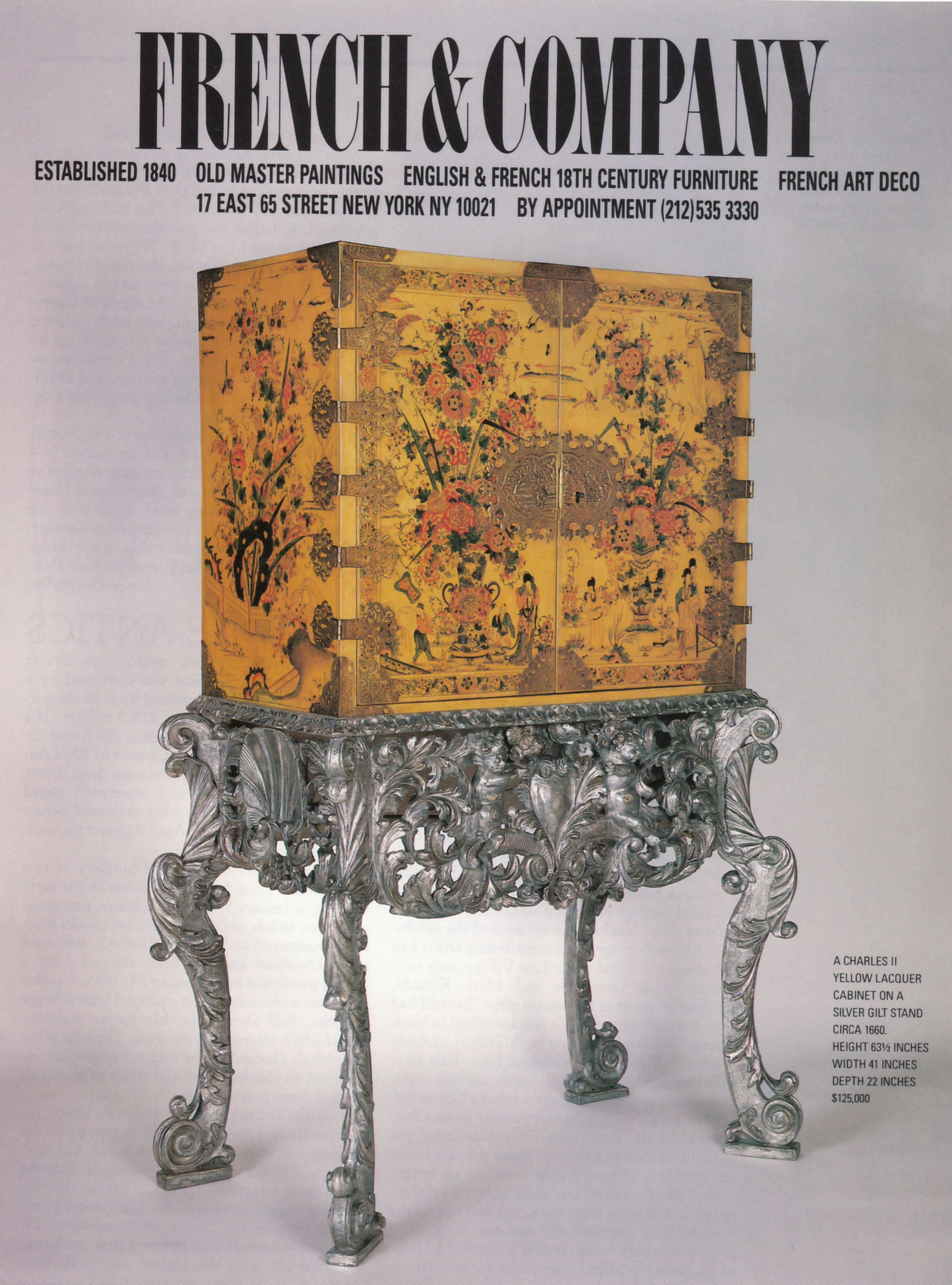
10th object – (see below) the narrator describes as a ‘rare cream lacquer cabinet, made towards the end of the 17th century’. This was No.31 in the catalogue, ‘a Charles II lacquer cabinet, circa 1680’ and was offered for sale by the dealer E.H. Benjamin, 39 Brook Street, London. White lacquer cabinets are the rarest of lacquer furniture, but even so it has not been possible to trace the cabinet – perhaps it has been lost? (Chris tells us that the cabinet on stand was in stock with the American antique dealers’ French & Co in 1987 (see below), so perhaps the cabinet is still in the USA?)
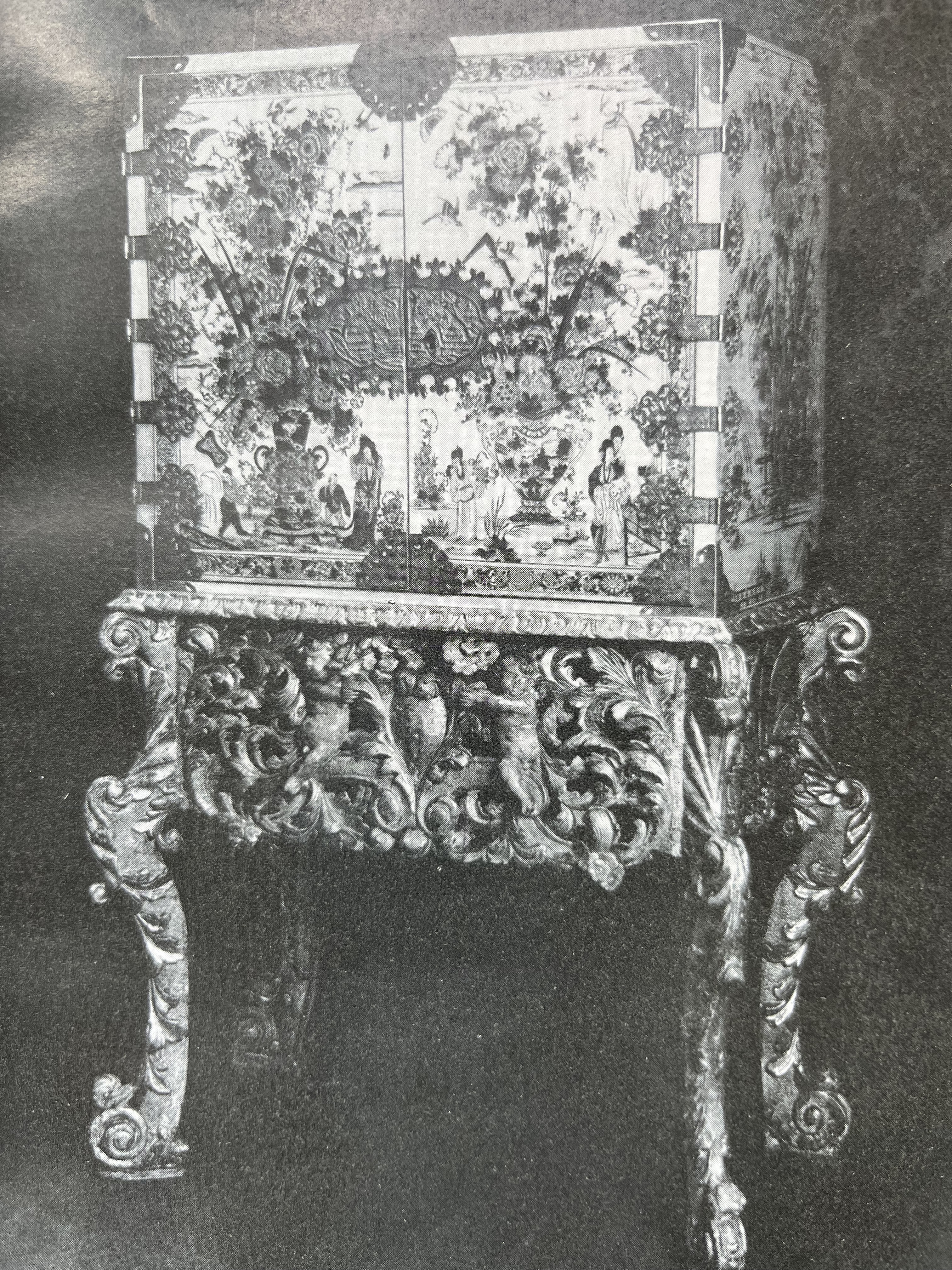
Art Treasures Exhibition catalogue 1932 – ‘A Charles II lacquer cabinet, circa 1680’. Photograph, Antique Dealers Research Project, University of Leeds.
French & Co advert, 1987. Image from Chris Coles.

11th object – (see below) the narrator describes another cabinet, this time ‘a fine Adam satinwood example’ – he mentions that ‘it was purchased by the Queen at her recent visit to the exhibition’ (this would be Queen Mary, a very well-known collector of antiques). The cabinet is No.205 in the catalogue, described as ‘an Adam satinwood cabinet, circa 1780’, but is not illustrated; it was offered for sale by the antique dealer Mallet & Sons, one of Queen Mary’s favourite antique dealers. I can’t find the cabinet in Royal Collections, so perhaps the cabinet was sold from the collections or given away or was destroyed?
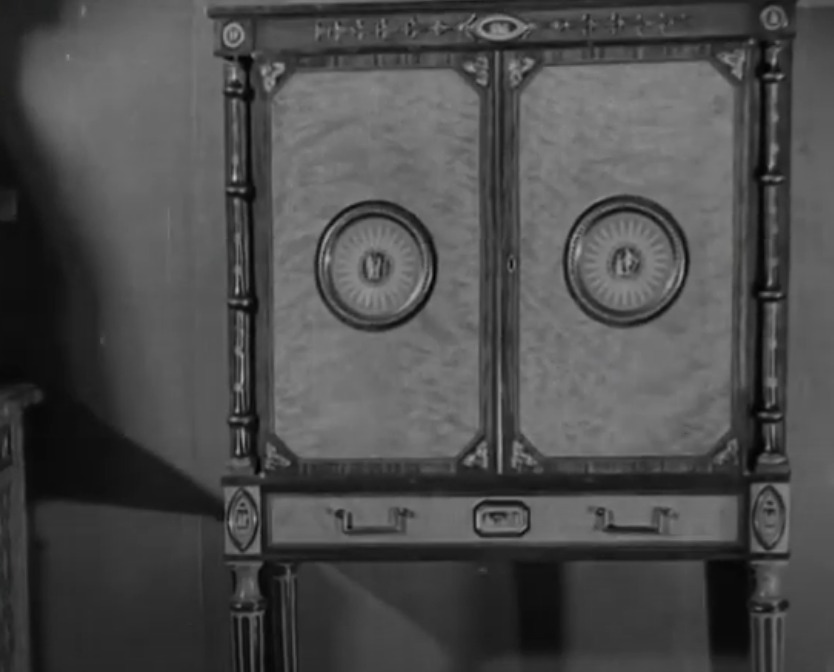
Art Treasures Exhibition 1932 film, screenshot of ‘Adam satinwood cabinet’.

12th object – (see below) the narrator describes ‘a lovely satinwood side table’, ‘one of Lord Nelson’s gifts to Lady Hamilton’. This is one of 3 tables on display at the exhibition, No.241, ‘a set of three satinwood tables, circa 1795’; they were illustrated and were offered for sale by the dealer A.G. Lewis. Like the film, the catalogue mentions that the tables were presented by Lord Nelson to Lady Hamilton. Given the provenance, it’s surprising I can’t find them anywhere? Two of the tables were in the collection of Arthur Sanderson (1846-1915), the well-known collector in Edinburgh; they are listed in the auction sale catalogue of Sanderson’s collection sold by Knight, Frank & Rutley, Hanover Square, London, June 14th-16th 1911 as Lot 540 ‘A PAIR OF SHERATON SHAPED FRONT SIDE-TABLES, which (together with Lot 541 A SHERATON BOOKCASE) were ‘said to have been made by Sheraton for Lord Nelson and given by him to Lady Hamilton at Naples’; (our friend Chris Coles tells me that the Nelson tables were in the collection of the antique dealer George Stoner (of Stoner & Evans) in 1912; and that one of the tables was in the stock of Moss Harris & Sons in 1935; Chris rightly suggests that as the three tables don’t exactly match, they are more likely to have been separated – thanks again Chris!)
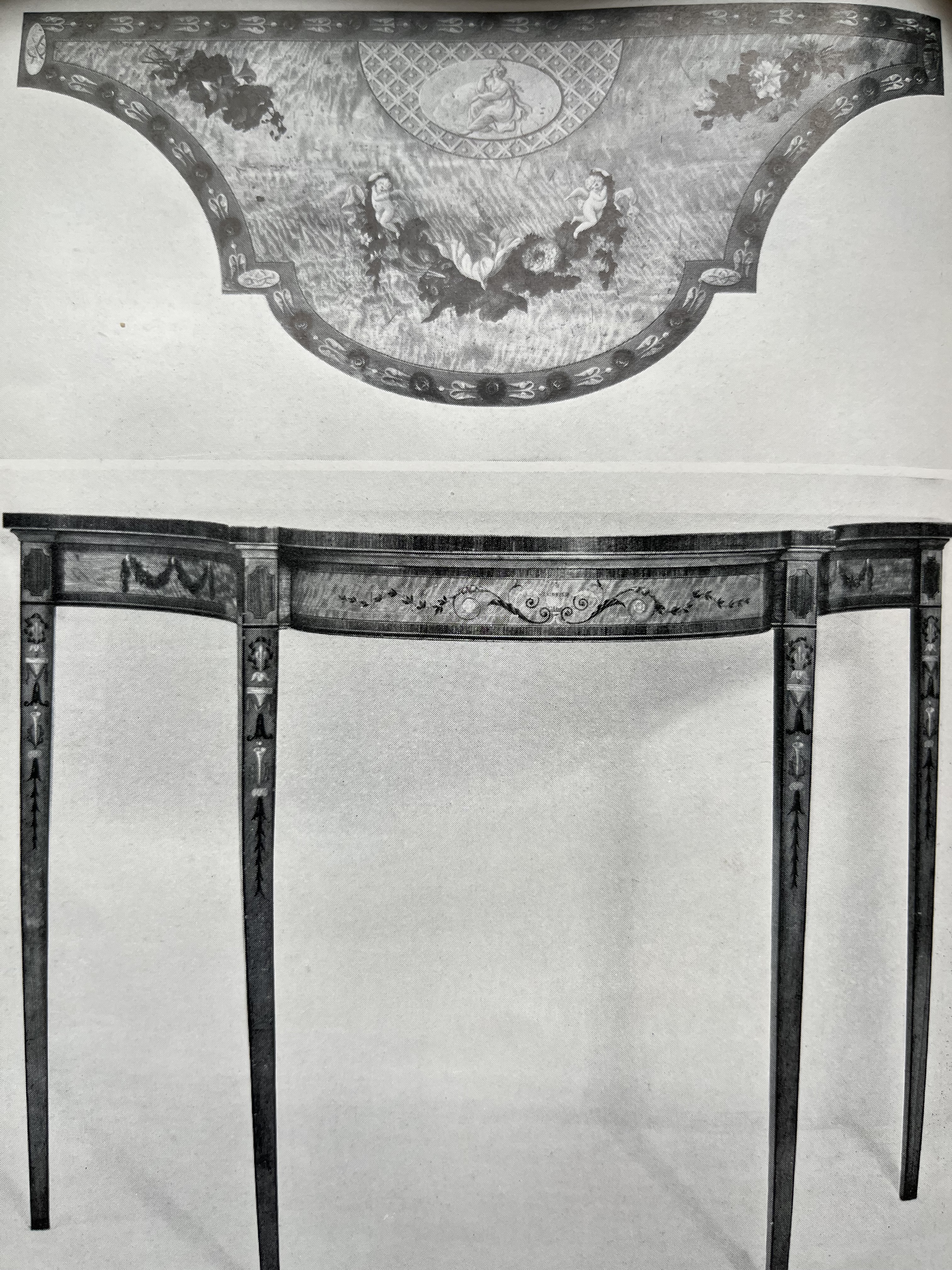
Art Treasures Exhibition catalogue 1932 – ‘A set of three satinwood side tables, circa 1795’. Photograph, Antique Dealers Research Project, University of Leeds.

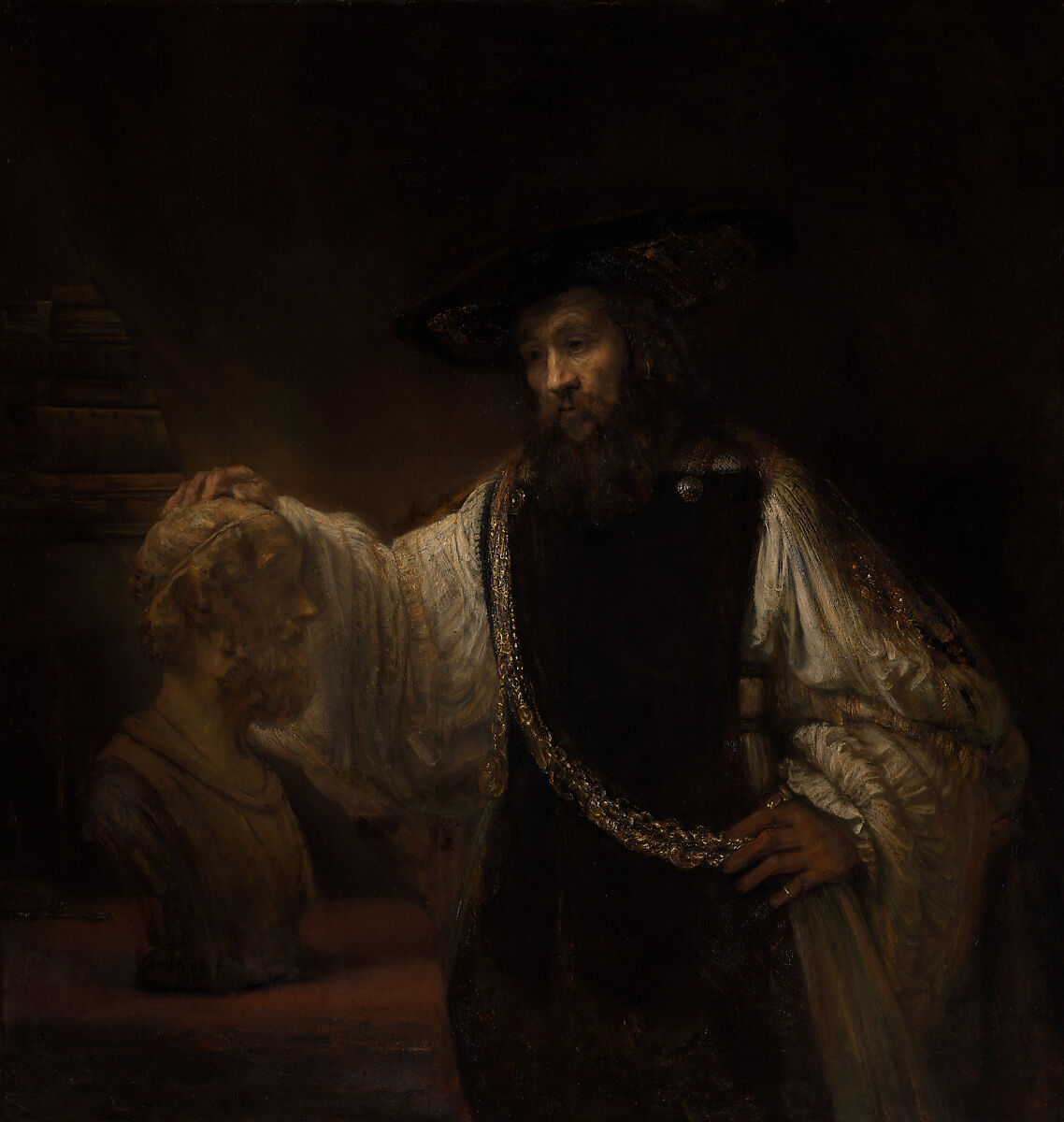
Finally, 13th object – the narrator highlights that this object (a painting by Rembrandt) is ‘the most valuable object here’. It is No.1355 in the exhibition catalogue, ‘Rembrandt van Rhyn (1606-1669), ‘Aristotle’, signed and dated 1653′. It was offered for sale by the world-famous art dealer Joseph Duveen (1869-1939). Duveen bought and sold the painting several times in the decades before the 1932 exhibition. He sold it to the art collector Alfred W. Erickson (1876-1934) in 1928 for $700,000, before buying it back and selling it to Erickson again in the mid 1930s for $590,000. It is now in the collections at the Metropolitan Museum of Art in New York, where it has been since 1961.
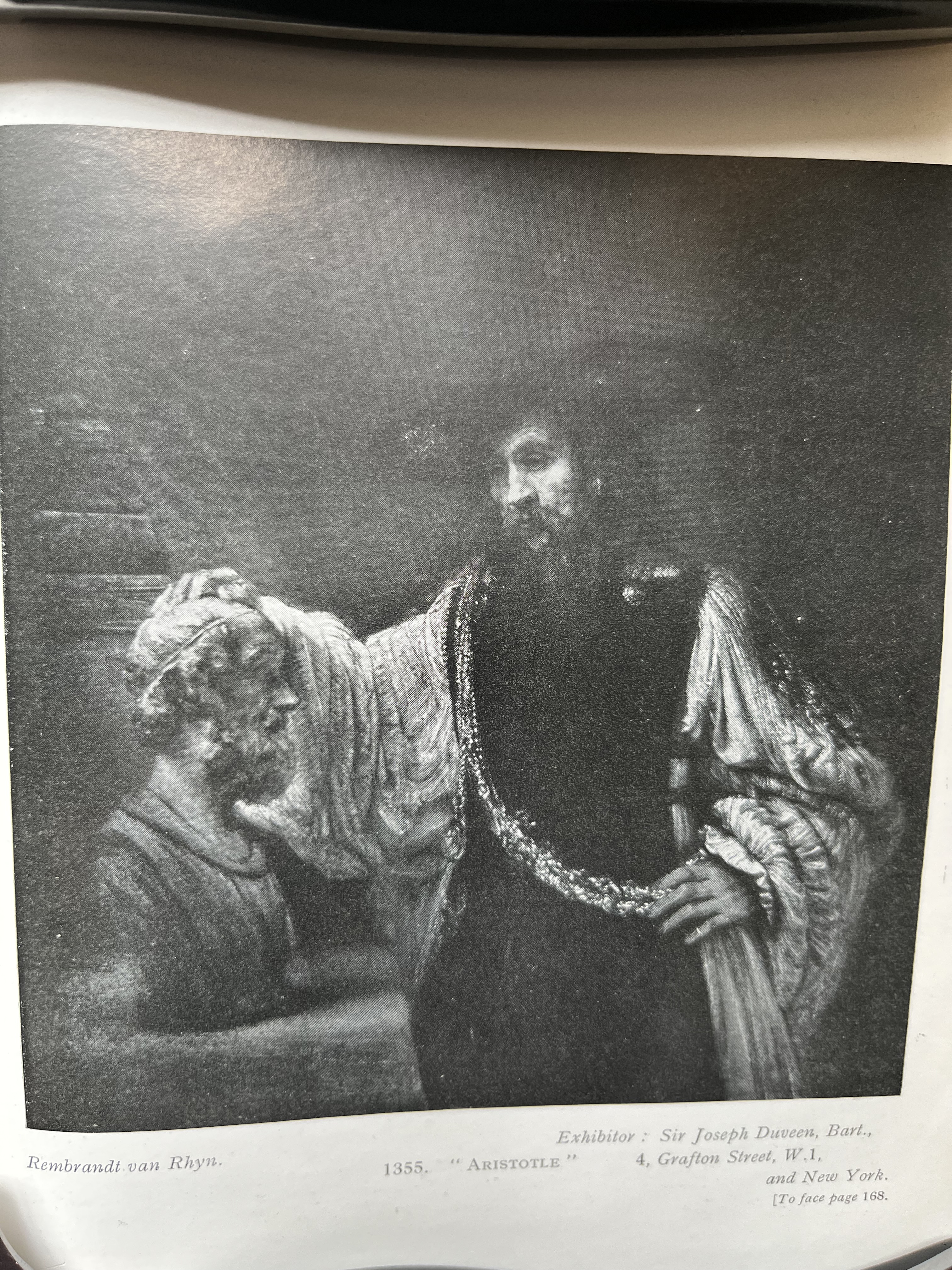
Art Treasures Exhibition catalogue 1932 – ‘Rembrandt van Rhyn….’Aristotle’. Photograph, Antique Dealers Research Project, University of Leeds.
Rembrandt (Rembrandt van Rijn) Aristotle with the bust of Homer (1653). Metropolitan Museum of Art, New York. 61.198. Image copyright Metropolitan Museum of Art, New York.

The film of the Art Treasures Exhibition 1932, together with the catalogue of the exhibition, gives a fascinating insight into the publicity for one of the major commercial art exhibitions of the period and is a further demonstration of the significance of the antique trade in the circulation and consumption of antiques (and paintings) and their role in the development of public museum collections – and thanks again to Diana for sending on the link to the film!

Mark

July 6, 2019

Year of the Dealer – Antiques Trade Gazette and the Harewood Library Table and ‘Raynham’ Commodes

Thank you to Frances Allitt and the team at the Antiques Trade Gazette (ATG) for the news piece on the launch of the SOLD! The Year of the Dealer project. Frances composed a short promotional piece in the ATG this week – See – ATG Year of the Dealer. We have been busy in planning meetings the last few weeks, at the V&A Museum, Lady Lever Art Gallery, Temple Newsam and at the University of Leeds, settling on final dates for some of the planned events and activities – you can follow updates on the Year of the Dealer project website – Click Here.

In the coming weeks we are planning further project meetings with the rest of the project partners. There’s still a lot of work to do, but the Year of the Dealer is beginning to take shape and the final lists of the 20 objects that will form each of the proposed curated ‘dealer trails’ through the galleries at the 7 major museum partners are coming together.  We can give you an exclusive preview of just one of the 20 key objects identified for the ‘Year of the Dealer’ antique dealer trail for Temple Newsam in Leeds –

Library Table, c.1770, by Thomas Chippendale; formerly at Harewood House, near Leeds, now at Temple Newsam, Leeds. Photograph courtesy of Leeds Museums & Galleries

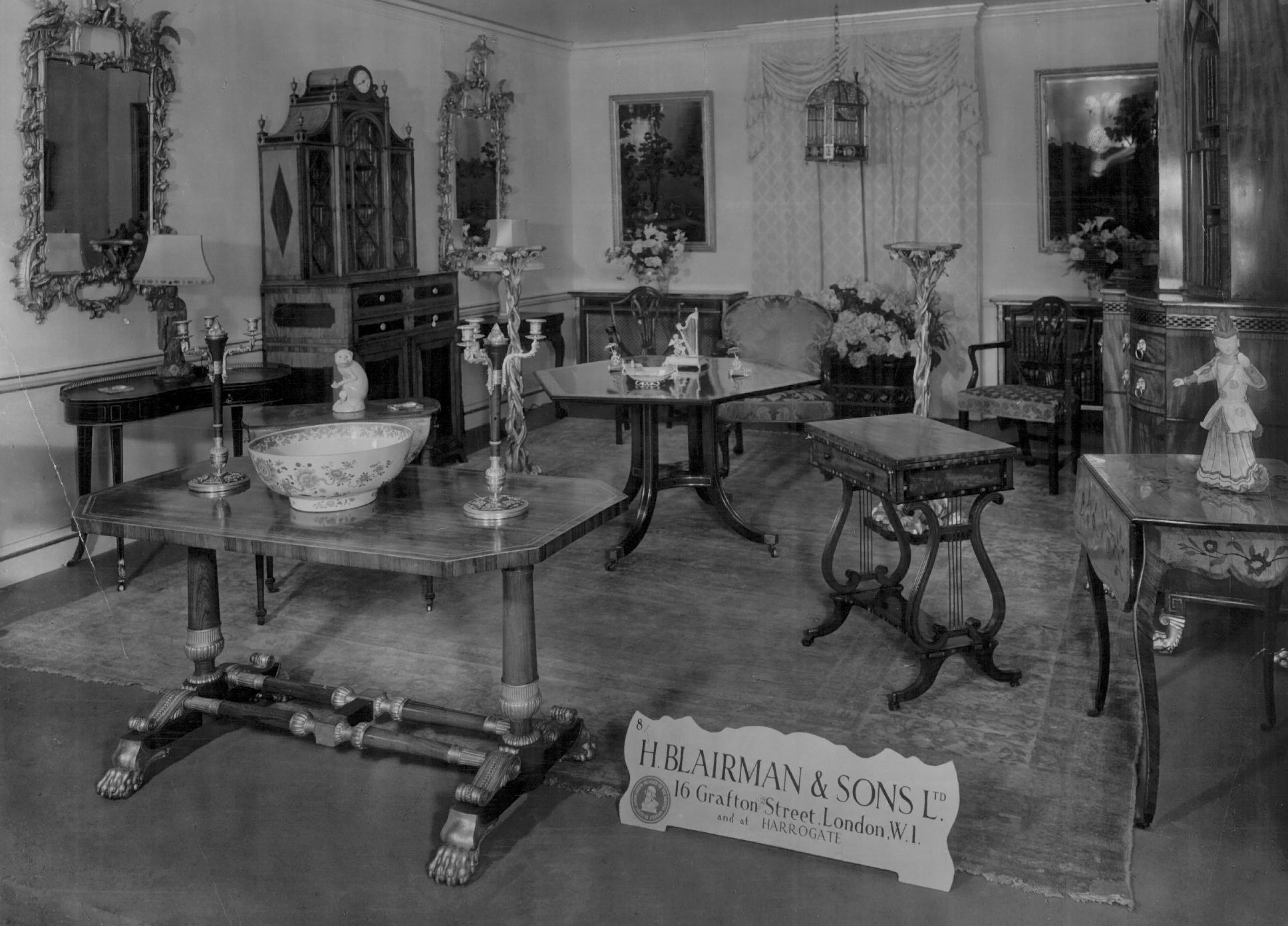
And here it is –  the famous Library Table made by Thomas Chippendale, c.1770 for Harewood House, near Leeds.  The ‘Year of the Dealer’ trail will obviously mention Chippendale in the story about the Library Table but the main focus of the trails will be the stories about the antique dealers that lie behind the acquisition of the objects by the museums.  For the Harewood Library Table the story we will be foregrounding is how it was acquired by Temple Newsam through the antique dealers’ H. Blairman & Sons in July 1965.   The Library Table was purchased by the antique dealer George Levy, Director of H. Blairman & Sons, at Christie’s auction sale of artworks from Lord Harewood’s estate in London on 1st July 1965 (the table was lot 57).  Blairman’s were established in 1884 and George Levy had joined the business in 1949 – here’s the H. Blairman & Sons stand at the famous Grosvenor House Antiques Fair, London, in June 1950, the year after George Levy joined the business.

H. Blairman & Sons stand at the Grosvenor House Antiques Fair 1950. Photograph courtesy of H. Blairman & Sons.

The 1965 auction sale of the Harewood Library Table generated a great deal of interest at the time – one anonymous reporter writing in Tatler 30th June 1965, the day before the auction, wrote, ‘There is little doubt that such an item will cause a lively stir in the saleroom and I shall be surprised if it does not eventually reach five figures.’  Martin Levy (the son of George Levy), and who remains the owner and director of H. Blairman & Sons, recalls that his father persuaded the group of Yorkshire businessmen who had agreed to support the acquisition of the Harewood table for Leeds Museums & Galleries, that he should bid the agreed limit of 40,000 guineas ‘plus one’ at the Christie’s auction – this was to ensure that if Blairman entered the bidding on the ‘wrong foot’ so to speak – i.e. if they entered the bidding at say 20,000 guineas and their maximum bid was 40,000 guineas, they may end up with a bid at 39,000 guineas, with the opposition having the bid of 40,000 guineas…so a bid of ‘plus one’ would potentially secure the object – indeed, George Levy’s suggestion proved prescient, as the final and successful auction bid was 41,000 guineas!

41,000 guineas (a guinea is £1 + 1 shilling) equated to £43,050 in 1965 and was at the time acknowledged as a world record price for a piece of English furniture. This was indeed an enormous sum for a piece of antique furniture; the equivalent value today would be about £2,450,000 (see Measuring Worth.com).  It’s always difficult to work out relative values of course, and the notion of a ‘world record price’ is no less complex – Gerald Reitlinger (The Economics of Taste, volume 3, 1963 and which was obviously published slightly before the auction sale of the Harewood Library Table) cites several ‘world record’ prices for English furniture – (Reitlinger’s data is derived from artworks circulating on the auction market of course…we don’t know about any values from private treaty sales…).  Reitlinger cites 10,000 guineas (£10,605) in at an auction in 1928, paid for a Queen Anne console table with matching mirror and torcheres (what is often called a ‘trio’), and sold from the collections of Earl Howe, as the world record auction price for English furniture in the 1920s; although Reitlinger also notes the sale, in 1921, of one of the famous ‘Raynham Commodes’, (also attributed to Chippendale) which made £3,900 (equating to £1,721,000 today).

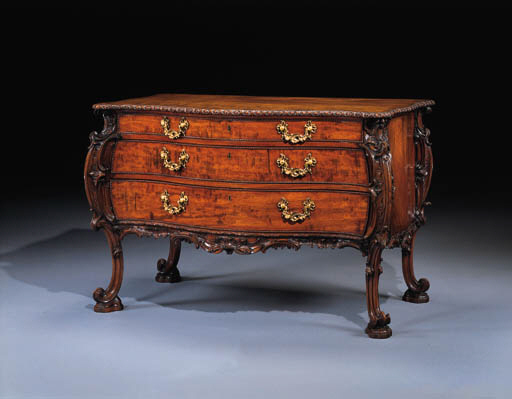
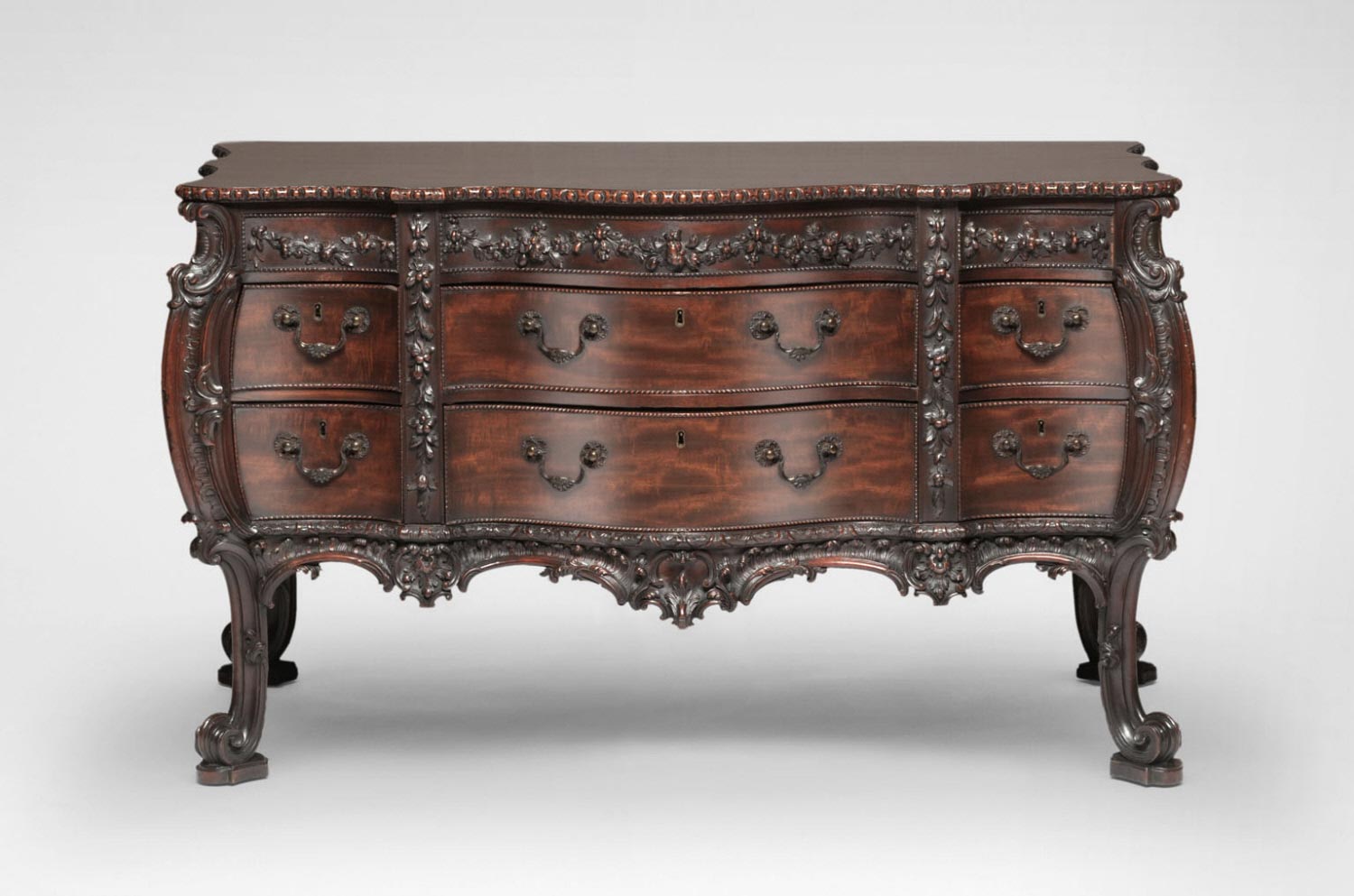
According to Reitlinger the ‘world record’ of £10,605 of 1928 stood until 1961 when he recorded that one of the famous ‘Rainham Commodes’  (also called ‘Raynham’) was sold in New York for £25,000 – I’m not so sure about this?…According to the newspaper reports at the time (30th June 1961) the piece that sold for £25,000 in New York was, and I quote, ‘an Adam-Chippendale satinwood and mahogany marquetry serpentine-front commode in the French taste.  A masterpiece of design probably executed by Chippendale himself.’  The ‘Rainham Commode’ is, as many of you will know, a mahogany commode (sans marquetry) – here’s a couple of illustrations of ‘Rainham/Raynham’ model commodes – left is an 18th century mahogany commode, described as ‘possibly supplied to…Raynham Hall, Norfolk’ and which was sold at Christie’s New York in 1998 (for c. $1,500,000) at the auction sale of the stock of the New York antique dealer French & Co.  This commode incidentally was previously in the stock of the antique dealer Walter Waddingham, of Harrogate, in 1955, and was shown by Waddingham at the famous Grosvenor House Antiques Fair in the same year.  On the right is an acknowledged ‘Raynham Hall’ commode – this one is now at the Philadelphia Art Museum in the USA, and was acquired in 1941 having been in the collections of both H.H. Mulliner (1861-1924) and William Randolph Hearst (1863-1951).

18th century commode, sold at the auction sale of the stock of the dealer French & Co. – Christie’s New York 1998. Photograph copyright Christie’s New York.
18th century commode, from Raynham Hall, Norfolk. Philadelphia Museum of Art, USA. Purchased with the John D. McIllhenny Fund, 1941. Photograph copyright Philadelphia Museum of Art.

The history of the ‘Rainham’ and ‘Raynham’ commodes is also complicated by the fact that the well-known collector of English furniture, H. H. Mulliner, purchased Rainham Hall, which is in Essex, in 1920 as a suitable home for his extraordinary collection of antique English furniture; Mulliner’s collection is said to have included a commode from Raynham Hall, Norfolk  – so maybe there is more unravelling to do on these ‘Raynham’ and ‘Rainham’ commodes?

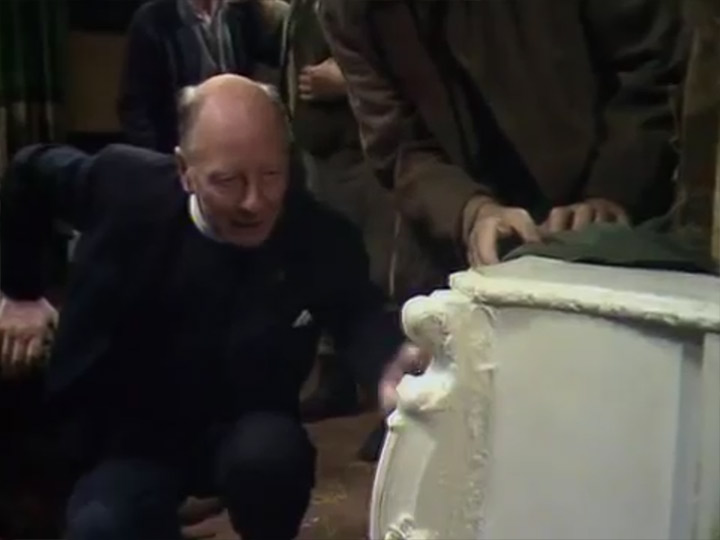
The Norfolk Raynham Commode was actually made much more famous in the popular television series’ Tales of the Unexpected (1980), in a version of Roald Dahl’s short story ‘Parson’s Pleasure‘ (1959). In the TV version, in which John Gielgud plays the crooked antique dealer ‘Cyril Boggis’, Mr Boggis stumbles across a piece of Chippendale furniture in an old farmhouse – and the model for the piece of Chippendale furniture is the ‘Raynham Commode’ – you can just see the commode, painted white, in this film still from the episode of Tales of the Unexpected.

Still from ‘Parson’s Pleasure’ in Tales of the Unexpected (1980).

Roald Dahl was a very keen collector of antique furniture himself, and specifically mentions the Raynham commode in his short story – as Dahl writes; ‘He knew, as does every other dealer in Europe and America, that among the most celebrated and coveted examples of eighteenth-century English furniture in existence are the three famous pieces known as ‘The Chippendale Commodes’….coming out of Raynham Hall, Norfolk.’ (Parson’s Pleasure, in Kiss, Kiss, p.78). Dahl mirrors the real-life history of the Raynham commode in his story – during the negotiations between ‘Mr Boggis’ and the farmers who own the commode, one of the farmers (‘Bert’) asks his fellow farmer to fetch ‘that bit of paper you found at the back of one of them drawers’ (Parson’s Pleasure, in Kiss, Kiss, p.82) – this proved to be the original bill for the commode, supplied by Thomas Chippendale; mimicking an article by the furniture historian Herbert Cescinsky published in Burlington Magazine in June 1921 which highlighted the presence, then as now, lost, of the original bill for one of the ‘Raynham’ commodes.

But anyway, besides this fascinating interweaving of fact and fiction in the history of the Raynham Commodes, what we hope that the Year of the Dealer trails will draw attention to is the complex relationships between cultural value and economic value.  Indeed, if we take the Measuring Worth.com calculations for these auction sale values of English furniture we can see that the notion of a ‘World Record price’ is a notoriously difficult thing to nail down.  For example, the economic value of the Queen Anne ‘trio’ sold in 1928 of 10,000 guineas (£10,605) was the equivalent of c.£5,000,000; and the ‘Rainham Commode’ sold in 1961 for £25,000 (if indeed it was the ‘Rainham Commode) was the equivalent of just £1,881,000.  So technically the Queen Anne ‘trio’ sold in 1928 still holds the ‘world record’ for a piece of English furniture sold at auction, even surpassing the auction sale of the Harewood Library Table in 1965 (equivalent of £2,450,000).

But then again, there’s more to ‘World Records’ that merely economic calculations; they are complex cultural and social signifiers that both transcend and complexify the blunt instrument of economic value.

Mark

April 25, 2015

Defining ‘Antique Dealers’ – in 1916.

For those of you that have been following the Antique Dealer Project blog, you’ll know that the question of how one draws the defining line around ‘antique dealers/antique dealing’ has been something that has been a consistent focus in the development of the project.  Indeed, one of the objectives of our forthcoming ‘interactive antique dealer’ website (YES…it’s on its way very soon!..at last!) is precisely to allow us to further reflect on the changing parameters of ‘antique dealing’, as a set of social, cultural, economic, and political practices. For earlier blog posts on these changing parameters, see reflections on the changing definitions of ‘antique dealers’ and the richly patterned semantic shifts in the classifications in the antique trade, in posts on ‘Semantics’; ‘Connell & Sons’; ‘the architecture of the trade’; and ‘antique dealing and other practices’.

Anyway, whilst at The Getty Research Institute for the History of Art and the Humanities, (The GRI) in the Special Collections and Visual Resources room as part of the USA research trip, I came across a newspaper clipping in the French & Company papers (ref. 990051, Box 9) –  French & Co were mentioned in the newspaper article, hence the inclusion of the clipping in the archive.

The clipping was from The New York Herald, (Saturday 8th July, 1916, p.3); it is a fascinating, and somewhat provocative, article entitled ‘Art and Junk are One under French Law and Junkmen and Antiquaries are Equal‘, which was composed by one of the Herald’s (unnamed) journalists. One could write an essay on the rich series of semantic meanings in the article – and it’s also interesting (to me anyway) that the writer tries (desperately) to separate ‘art’ from ‘junk’…but there’s no space here to deal with the implications of this dichotomy.

The article itself reports on a French legal case, brought against a collector/dealer named Kelekian, who was, according to the Herald, a ‘racing stable proprietor and owner of Art Galleries in Paris, Cairo and New York.’  Essentially it seems that in 1916 the French courts had ruled that art and antique dealers must be classed as 2nd hand dealers, and comply with the requirement that they should make their stock books accessible to the Police and also should be required to ‘wear tags’ to indicate their ‘profession’.  There’s a clear rational for this of course, relating to the historical propensity of 2nd hand dealers being the (often unwitting) recipients of stolen goods, hence the introduction of laws that often required dealers in 2nd hand material to hold on to goods for 7 days before selling them on; and the requirement that stock books be open to scrutiny. It is worth mentioning here that the marginal practices of the second-hand trade have often reduced to stereotypes/tropes – Dickens’ ‘Fagin’ is just one of numerous literary constructions that play to those notions.

However, the implications of the French Court ruling, as the writer of the article expressed it, would be that ‘dealers inspired productions of Great Artists are required to Classify themselves with Buyers of Old Junk.’  The writer opined, ‘if junk is art to a Paris Court, specimens of Gothic religious inspiration in sculpture, a Renaissance Poignard hilt, carved by Cellini, and Chippendale furniture are all junk – merely junk!’….and continued ‘the comparison between junk and art is “strange” no matter how the imagination is stretched’, concluding, somewhat hyperbolically, that ‘The End of the World must be at hand’.

You can read the full article, thanks to Fulton History, who have scanned and uploaded the full texts of the New York Herald – see Fulton History – and here’s the scan of the article itself: New York NY Herald 1916 – 6110

BTW – I defy anyone’s eye not to drift towards the contiguous article, entitled ‘Bites Golf Ball; boy may die’ (how could you resist!)…the final paragraph in that article suggests a rather disturbing value structure of the market/economy and that of a human life (if one believes the reporter of course)…………now that must tantalise you to read the PDF?…

The article also contains fascinating interviews (kind of ‘vox pop’) on the French Court ruling with various dealers in New York, including, Stephen Bourgeois, Raymond Guille (of the antique silver dealers, Critchen Brothers) and the famous Joseph Duveen, who, like the gatekeeper to the art market that he was, gave a terse ‘no comment!’……

What is particularly interesting is that the writer in 1916 directs attention to the ambiguity of how, and where, and when, one defines the ‘dealer’.  ‘Where is one to draw the line?’, states the writer, emphasising this ‘problem’ by posing the question, would ‘a collector’, ‘selling part of a collection’, be a ‘junkman?’….(in the eyes of the French Law, at least).

It is precisely these shifting frameworks, and the mutability in the notion of the ‘antique dealer’, that is the focus of the current research project.

Mark.


April 1, 2015

The semantics of the antique trade

One (just one) of the research objectives of the Antique Dealers project is to map, analyse and contextualise the changing language of description and classification used by the antique trade over the period 1900-2000 – and our interactive website (soon to be officially launched) will begin the process of tracking the huge variety of classifications and descriptions that reflect, as well as act as catalysts for, the specialist marketing practices deployed by, and developed by, the trade.  So, for example, some of the questions we are thinking about are when, and where, did antique dealers begin to call themselves ‘Old English Furniture Dealers’, and when/where did ‘antique furniture dealers’ emerge to be a dominant trade classification/description…or when/where did ‘Old Chelsea Porcelain’ emerge as a description deployed by antique dealers…or ‘Old Irish Glass’….?

The language of description and layering of classifications suggest subtle (and sometimes less so subtle) positioning within the complex collecting and classificatory structures of the antique markets over time.

Within the archives of the Metropolitan Museum are some interesting examples of the changing landscape of antique dealer descriptions –

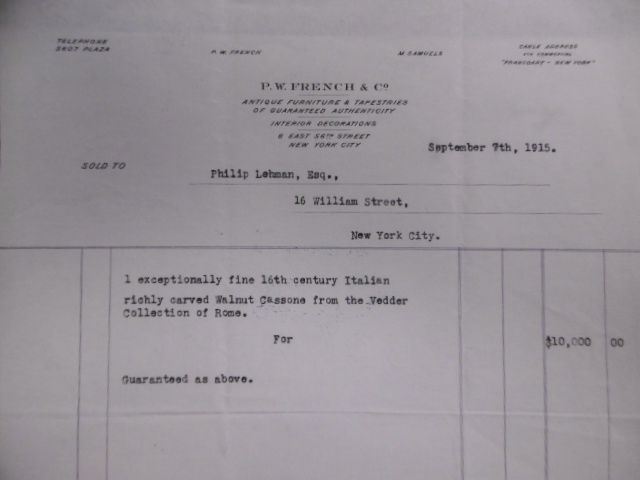
french invoice 7.9.15 det

Invoice from French & Co, 1915, Box 37 Folder 40, Robert Lehman papers, The Metropolitan Museum of Art Archives. Courtesy of the Metropolitan Museum of Art Archives.

Here, (above) in 1915, the well-known dealers, French & Co, describe themselves as selling ‘Antique Furniture and Tapestries of Guaranteed Authenticity’, and also list ‘Interior Decorators’ as a practice.  Later letterheads and invoices issued by French & Co., in the 1950s, for example, classify them as selling ‘Works of Art’.

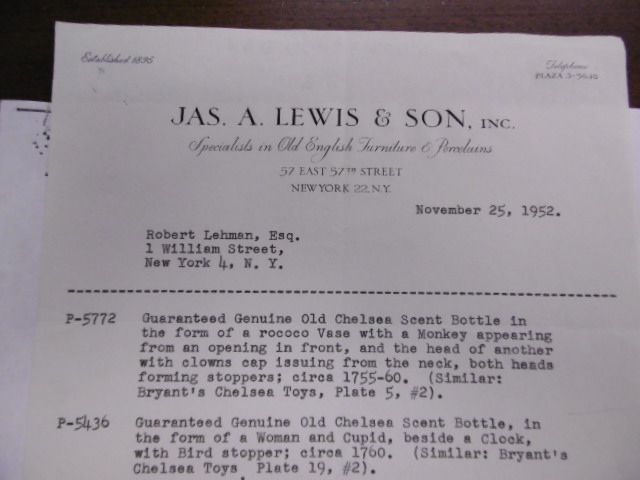
By contrast, an invoice issued in 1952 by James A. Lewis & Son Inc., the American branch of the London antique dealers, indicated that they were ‘Specialists in Old English Furniture & Porcelains’ –

lewis inv 25.11.52 det

Invoice from James Lewis & Son, 1952, Box 38 Folder 15, Robert Lehman papers. The Metropolitan Museum Archives. Courtesy of The Metropolitan Museum Archives.

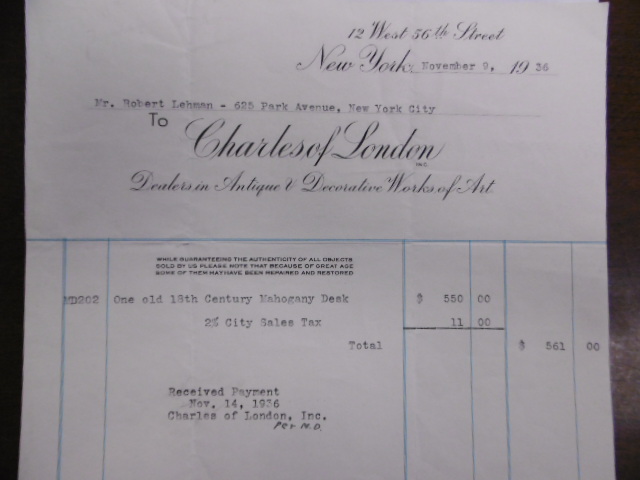
Whereas ‘Charles of London’ (Charles Duveen, we encountered in previous blog entries) described themselves as ‘Dealers in Antique & Decorative Works of Art’ in 1936 – (see below) –

charles inv 9.11.36

Invoice from Charles of London, 1936, Box 37 Folder 12, Robert Lehman papers. The Metropolitan Museum of Art Archives. Courtesy of The Metropolitan Museum Archives.


And the specialist ceramics (as we might say today) dealer H.R. Hancock described themselves in an invoice of 1934 as dealers in ‘Old Chinese Porcelain, Furniture and Works of Art’ – (see below) –

hancock inv 9.10.34 det

Invoice, H.R. Hancock, 1934, Box 38 Folder 2, Robert Lehman papers. The Metropolitan Museum of Art Archives. Courtesy of The Metropolitan Museum Archives.

An investigation of the framework of meanings behind these changes and shifts are a key part of the antique dealer research project.

Mark

March 29, 2015

More on early 20th century antique dealers in New York

Following the blog post on ‘searching for Duveen’ in the streets of New York I thought it would be interesting to find the former locations of some of the other antique dealers I encountered in the archives at the Metropolitan Museum of Art in New York – it’s also the opportunity to share some of the fascinating archive documents in the archives (thanks again to Melissa Bowling, one of the archivists at the Met Museum for helping with the research for the Antique Dealer project!) Most of the dealer galleries dating from the early part of the 20th century seem to have been demolished in the continual processes of renewal of the architectural landscape of New York city, (as you’ll see in the comments below) – but I did find one building that still remains (although no longer the premises of an antique dealer).

Some of you may know of the dealership ‘C.Charles’ – he was a brother of the famous Joseph Duveen; he was, apparently, not allowed to use the trading name of ‘Duveen’ (there’s only ONE Duveen I guess), so began trading as ‘C. Charles’ in London in the opening decades of the 20th century, and by the 1930s was trading as ‘Charles of London’ in the USA. Here’s a fascinating invoice from ‘Charles of London’ dated November 9th 1936, for an ‘Old 18th Century Mahogany Desk’, sold to the famous American collector Robert Lehman for $550 – (I couldn’t trace this object in the Met Museum collections….).

charles inv 9.11.36

Invoice ‘Charles of London’ November 9th, 1936. Box 37, Folder 12, Robert Lehman Papers, The Metropolitan Museum of Art Archives. Courtesy of the Metropolitan Museum Archives.

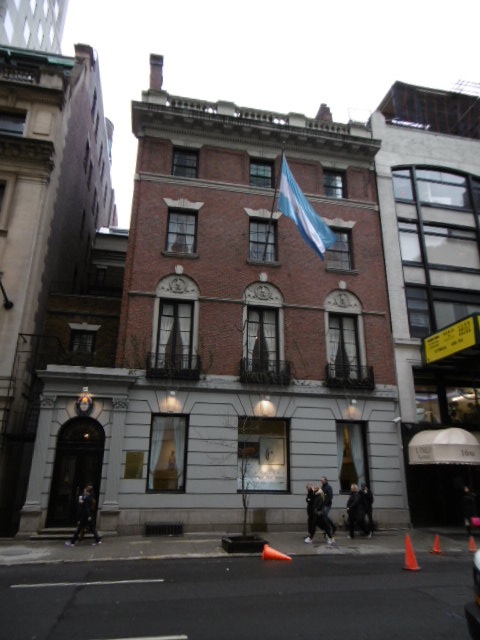
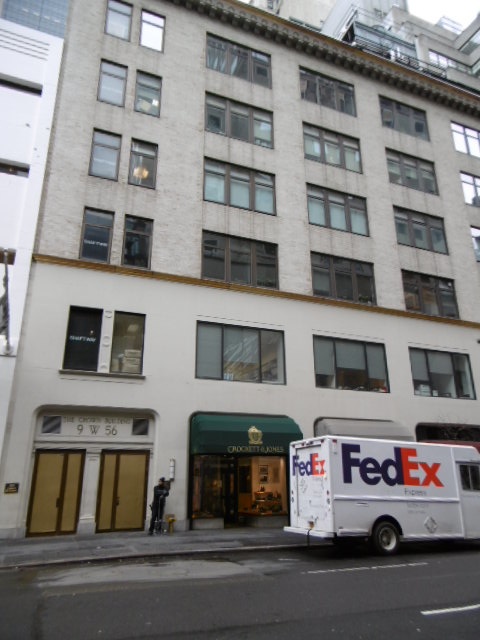
In my walks around New York searching for the locations of former antique dealer galleries I found Charles Duveen’s gallery at 12 West 56th Street – a very elegant (as one might expect) building, designed in a similar vein to Joseph Duveen’s spectacular purpose built gallery on 5th Avenue (see previous blog post).

Charles 12 west 56th  st NY

Charles of London former gallery at 12 West 56th Street New York. Photo MW March 2015.

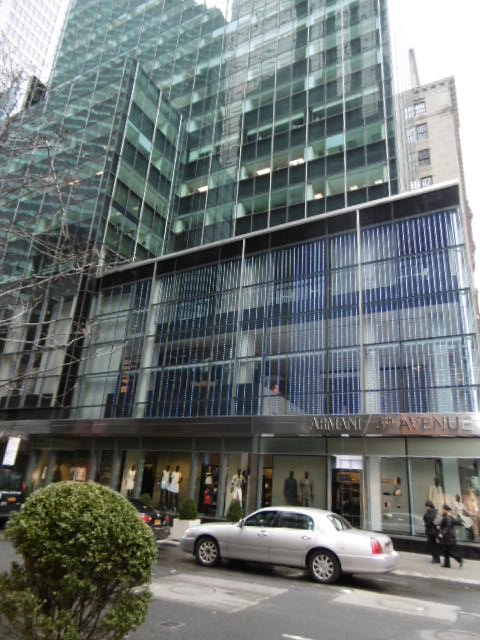
There were a few other letters and invoices from dealers I found in the archives, and I managed to find the former locations of the dealers – as I say, sadly the buildings themselves no longer exist. The location of the galleries of the famous antique dealers French & Co at 6 East 56th Street are now (maybe appropriately!) occupied by Armani –

former French and Co 6 East 56th st NY

Former location of French & Co (1916). Photo MW March 2015.

French and Co were at 6 East 56th Street, New York by 1916, as this invoice (again photographed by kind permission of the Metropolitan Museum Archives) demonstrates –

french invoice 7.9.15 det

Invoice, French & Co., 1916. Box 4, Folder 16, Durr Friedley Records, 1906-1918 (1917-1918) The Metropolitan Museum of Art Archives. Courtesy of the Metropolitan Museum Archives.

(I’ll come back to the contents of the invoice itself in another blog post…).

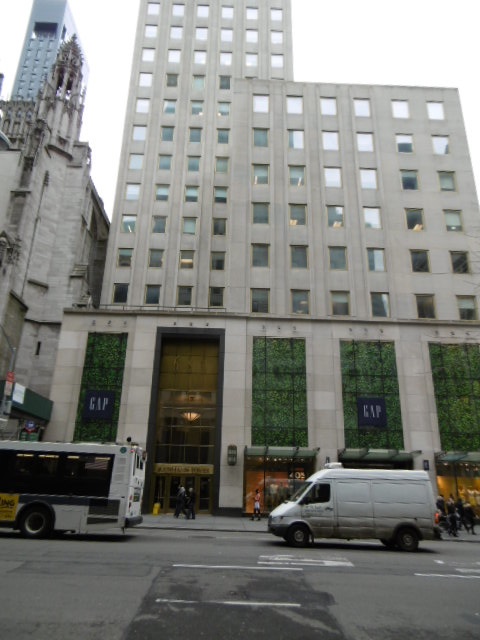
French & Co had moved to 210 East 57th Street by the 1930s, but again the building they occupied no longer remains…..

former French and co 210 East 57th st NY

Former location of French & Co, 210 East 57th Street, New York in the 1930s. Photo MW March 2015.

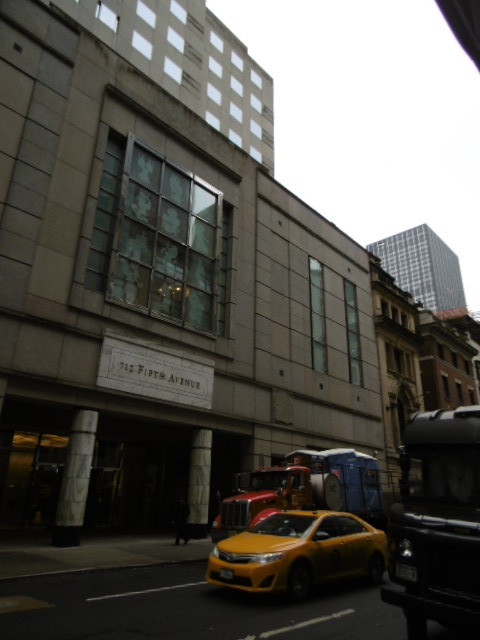
And here’s the former location of the dealer A.S. Drey, ‘Antique Paintings and Works of Art’, who, according to a note in the Metropolitan Museum of Art Archives moved to 680 5th Avenue, New York in 1929. The location is now occupied by shops and offices.

former Drey 680 5th Ave NY

Former location of A.S. Drey, 680 5th Avenue, New York in 1929. Photo MW March 2015.

And, just for the record, I also found the former New York locations at 6 West 56th Street for Frank Partridge & Sons (they were at this address from at least the early 1920s until at least the late 1960s – Partridge & Sons, like many of the dealers highlighted in this blog, are no longer trading).

former Partridge shop 6 West 56th st NY

Former location of Frank Partridge & Sons, 6 West 56th Street, New York. Photo MW March 2015.


And the locations of ‘Arnold Seligmann, Rey & Company Incorporated’ trading at 7 West 36th Street, New York in 1916, are now shops and offices….

former Seligmann shop 7 West 36th st NY

Former location of Arnold Seligmann, Rey & Co., 7 West 36th Street, New York. Photo MW March 2015.

Likewise the former location of the antique dealer and interior decorators ‘White Allom’ (led by Sir Charles Allom) at 19 East 52nd Street, New York in 1914, are now occupied by an hotel.

former White Allom 19 East 52nd st NY

Former location of the galleries of White Allom, 19 East 52nd Street, New York in 1914. Photo MW March 2015.

As you can see, the archives at the Met Museum were a catalyst for a fruitful perambulation around a (very cold) New York….
Mark


Home Subjects

a working group dedicated to the display of art in the private interior, c. 1715-1914

The Period Room: Museum, Material, Experience

An International Conference hosted by The Bowes Museum and The University of Leeds

H. Blairman & Sons Ltd

A research project investigating the history of the antiques trade in Britain in the 19th & 20th centuries

Museum Studies Now?

'Museum Studies Now?' is an event which aims to discuss and debate museum and heritage studies education provision.

The Burlington Magazine Index Blog

art writing * art works * art market

East India Company at Home, 1757-1857

A research project investigating the history of the antiques trade in Britain in the 19th & 20th centuries