Archive for ‘Uncategorized’

March 22, 2015

Project Research in the USA

Just arrived in New York, for the first leg of a mammoth research field trip to the USA, as part of the AHRC Antique Dealer project. We’ll be investigating museum archives at the Metropolitan Museum of Art, here in New York, before heading up to Boston Museum of Fine Arts on Saturday 28th March for similar research. From there I head to Philadelphia, then Wilmington, to The Winterthur on 31st March to look at the dealer archives held at The Winterthur (Vernay, Needham and Koopman – all British-related antique dealers of course). Then on Saturday 4th April off to Chicago, to look at the Chicago Institute of Art archives; then on Wednesday 8th April I’m heading across to Minneapolis and the Minneapolis Institute of Art for a few days to investigate their archives. And finally, on this exhausting tour, ending up in Los Angeles at the Getty Research Institute during 11th-18th April to consult the dealer archives there (French & Co and Durlacher…as well as Duveen of course).

The rationale for this extensive research trip to USA is to investigate the relationships between the British Antique trade and the development of public museums in America – the connections are considerable. We’re also planning do undertake some oral history interviews whilst we’re here in USA, and have some very significant figures in the history of the antique trade lined up for interview!

I’ll be posting updates on the blog on the discoveries (research-wise), so do keep an eye on the Blog!
Mark

February 22, 2015

More on Connell & Sons, Glasgow – and BADA

We’ve discovered a bit more about James Connell & Sons (the ‘Art Dealers’) in Glasgow (see earlier blog post on Connell).  Thanks to Mark Dodgson, Secretary General, and Riley Grant, membership Secretary, at The British Antique Dealers’ Association (BADA) who very kindly emailed us a PDF copy of the full catalogue for the ‘Art Treasures Exhibition 1932’. The exhibition, ‘under the auspices of The British Antique Dealers’ Association’, was held at Christie’s auction rooms in King Street, London, October 12th to November 5th, 1932.

There are lots of fascinating things in the catalogue itself, not least the kind of stock that antique dealers sold in the 1930s – but there’s too much to outline here in a short blog post! However, amongst the exhibitors was our friend ‘James Connell & Sons’ – at this date trading at 26 Old Bond Street, London, and also at 75 Vincent Street, Glasgow.

As readers of this Blog will know, we regularly highlight the overlapping trading practices of the ‘Antique Trade’, and drew attention to the fact that James Connell & Sons, were, conventionally at least, classified as ‘Picture Dealers’ – and you’ll know that we disrupted the smoothness of such classificatory parameters in our earlier Blog post on an exhibition catalogue of ‘A Few Examples of Old Furniture of Fine Character and Quality’ that Connell & Sons staged at their Glasgow gallery in c.1915 (see earlier blog post).

In the ‘Art Treasures’ exhibition of 1932 Connell also exhibited objects…but again, not paintings, but ‘antiques’ – including ‘A George II stool c.1745’; See image here – sorry about the poor quality- connell

They also exhibited ‘A George II mahogany chest of drawers, c.1755’, and ‘A Balloon bracket clock, c.1790’ – and despite there being a small section at the exhibition devoted to pictures, Connell & Sons did not contribute to that section of the exhibition. So, it seems, on this evidence at least, that Connell & Sons continued to trade in antique furniture from at least c.1915, up to the 1930s, and whilst all the time classified at ‘art dealers’.

This is not to say of course that other ‘picture dealers’ did not also sell ‘antiques’, nor of course that ‘antique dealers’ did not sell pictures….but maybe it points towards a more complex network of overlapping practices that are not captured by the trading classifications of ‘art dealer’, ‘antique dealer’ and etc…and, as you know, part of the objective of the current research project is to explore these shades of grey (there’s an up to date allusion for you!) –  the umbra, penumbra and antumbra of the antique trade…

Mark


February 15, 2015

More on the changing landscape of the antique trade

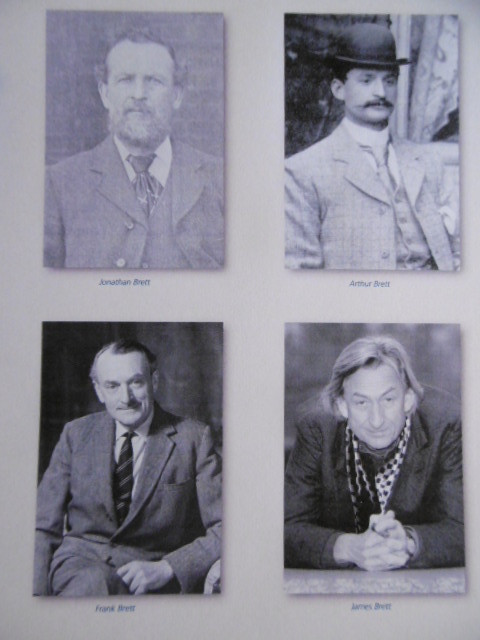
More news on the changing landscape of the antique trade (see blog posts on ‘Bullard’ October 2014, and the changing face of Mount Street in London, October 2014, as well as a post on the ‘Changing Landscape’ in November 2013). Yet another well-known, and long established dealership, has withdrawn from the high street. Arthur Brett & Sons, Norwich, who were established in 1860, are finally closing their shop at 42 Giles Street, Norwich.  James Brett, the great-grandson of Jonathan Brett, the founder of the firm, is the third generation of the family business, and is finally giving up the shop – although James is not actually retiring.  He will continue to trade, but not from retail premises – this, as readers of this blog will know, rehearses a pattern of changing practices in the antique trade that began in the opening decade of the 21st century.

brett 2

The Brett family of antique dealers. Copyright Brett family & Sworders Auctioneers, courtesy of Sworders.

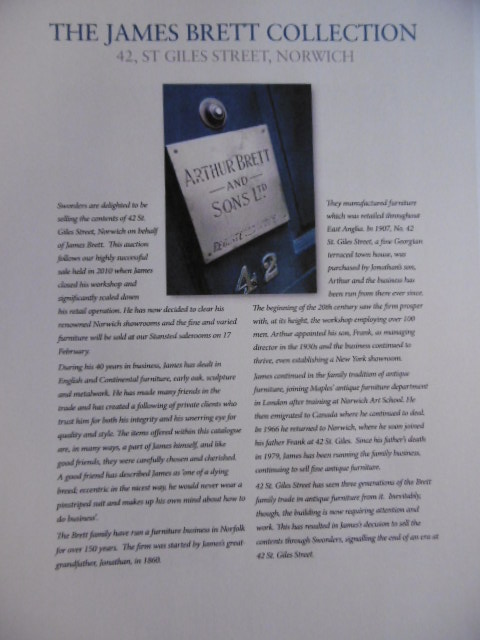
This picture (above) of the Brett family is from the forthcoming auction sale of the contents on 42 Giles Street, undertaken by Sworders at their Standsted auction room on Tuesday 17th February 2015 – (and thanks to Diane Baynes for very kindly emailing a PDF of the introductory pages to the auction catalogue!) There is also an interesting report on the forthcoming auction and the history of the Brett family of dealers, with some comments from James Brett, by Anna Brady in the ‘Dealers’ Diary’ pages in the Antique Trade Gazette this week – see ATG.

brett 1

Sworders auction catalogue of the Brett Collection, 17th Feb 2015. Copyright Sworders. Courtesy of Sworders.

Sworders sold the contents of the workshops of Brett & sons in 2010, and this final ‘clearing out’ of the showrooms is symptomatic of the changes to the practices of certain parts of the trade; the ‘End of an Era’?…maybe, but ‘change’ has, as this research project is discovering, always been part of the history of the antique trade.

Mark

February 14, 2015

Mallett & Son Antiques – dealer ephemera from the 1890s and 1990s.

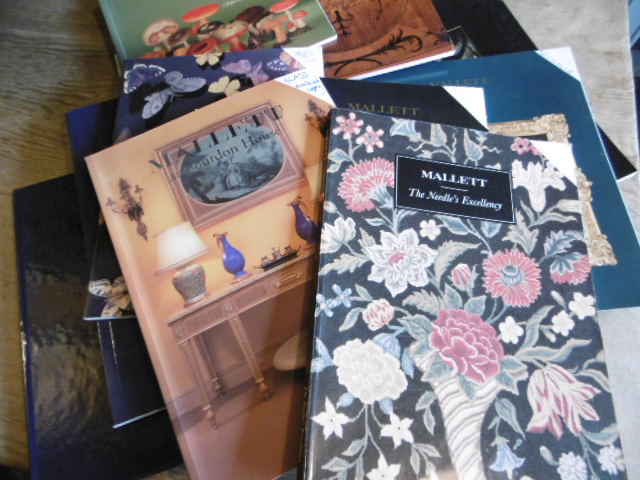
Mallett cats

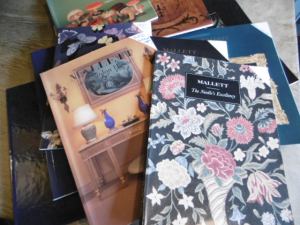
A collection of Mallett Antiques sales catalogues, 1990s.

Materials related to the antique trade continue to be donated to the project – thank you again dealers! John Smith, a very good friend to the project, posted us a stack of old dealership catalogues – from the leading London antique dealers Mallett & Sons, and dating from the 1990s. The catalogues are, of course, relatively common, and can be picked up at second-hand book shops (and indeed charity shops) anywhere in the country – BUT, what makes the catalogues that John has kindly posted to us unique is that these are marked and annotated staff copies, with prices marked (and whether the objects were sold) of the objects illustrated. These are a fantastic resource on pricing structures (in the 1990s) for a leading dealership – there are also cost prices and suggested sale prices in some of the catalogues (I’m not revealing those here of course….the analysis of that is part of the research into the history of the discrete (and discreet!) practices of the antique trade itself).
Mallett cats 2

Mallett catalogue, 1990s.

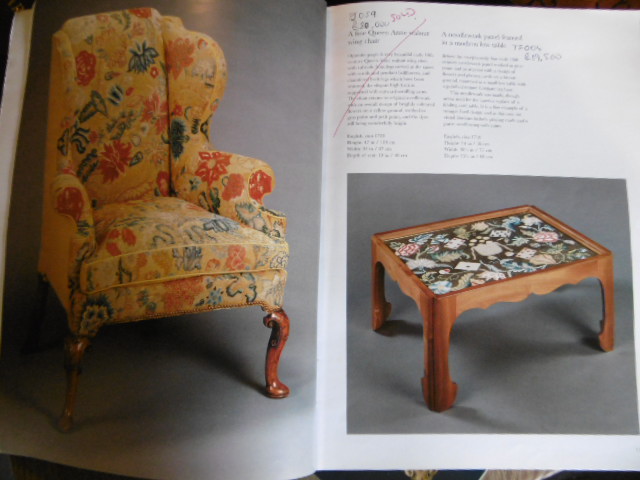
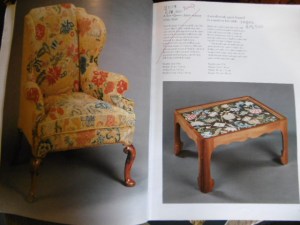
The pages in the catalogues are fascinating though – here’s a page from one of the catalogues (dated 1997), and labelled in pen, in the top right-hand corner on the cover as ‘Nicholle’s’) – which illustrates as ‘Queen Anne walnut wing chair, c.1710’, and priced at £80,000 – marked in red ‘SOLD’; and a ‘needlework panel, c.1710, framed in a modern low table’, priced at £19,500.
mallett cats 1

Mallett catalogue, 1990s.

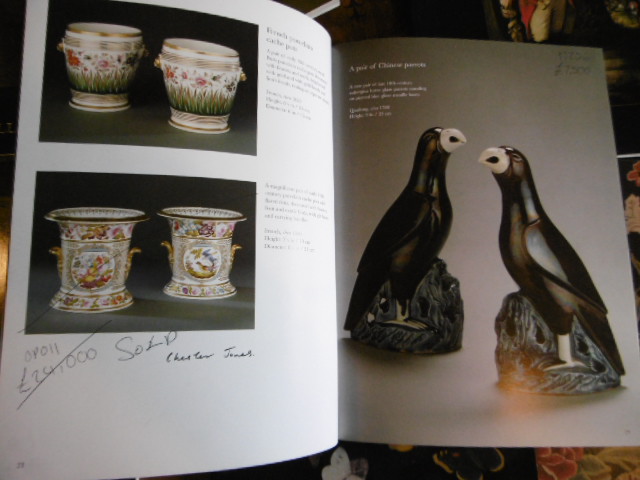
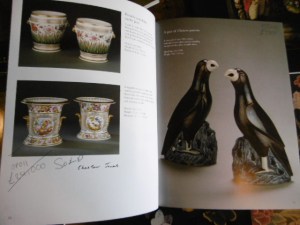
And, another (above) – left page – ‘French, early 19th century cache pots, 1800/1820’, priced at £15,000 (top) and £24,000 (bottom) – the bottom pair are marked ‘SOLD’; and (right page) a ‘pair of 18th century Chinese parrots’ at £7,500. Changing fashions in antiques, even in so short a time ago as the 1990s, may have made some of these prices look quite ambitious, and some look like bargains…..

Mallett of course are still trading (see Mallett Antiques) – they were established in 1865, in the West Country (in Bath, Avon….Mallett’s are now, as many readers will know, owned by Stanley Gibbons Group, and celebrate 150 years this year!…I hope there’s a party?) – anyway, I thought it would be interesting to show some early ephemera associated with Mallett.

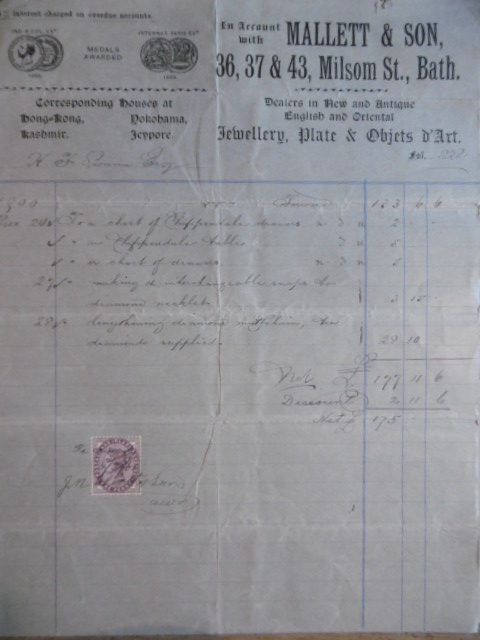
Here’s an invoice (below) from ‘Mallett & Son’, dated 1900, to ‘H.F. Swann Esq.’ The invoice describes, amongst other things, a ‘Chest of Chippendale drawers’, sold for ‘£2’, together with ‘a Chippendale table’, (£5). Mallett were at this date trading from 36, 37 & 43 Milsom Street, Bath, and described themselves as ‘Dealers in New and Antique English and Oriental Jewellery, Plate & Objets d’Art’.
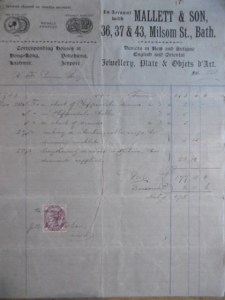
Mallett inv 1901

Invoice from Mallett & Son, dated 1900. Copyright Private collection.
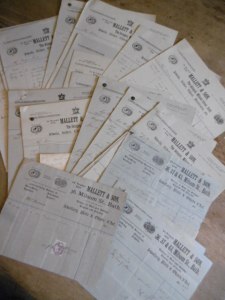
Mallett invoices

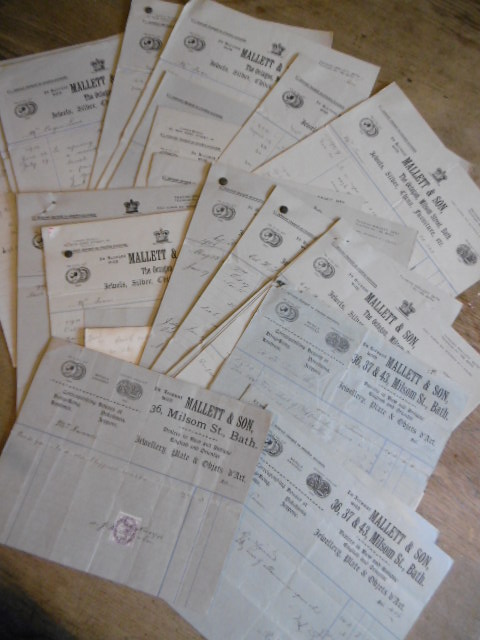
Invoices from Mallett & Son, c.1899-1920. Copyright Private collection.

The invoice is one a small cache of invoices (see above) from Mallett dating from c.1899 to c.1920 that are currently part of a private collection – but will be donated to the antique dealer project in due course. This small collection also gives a fascinating insight into the early history of one of the world’s most important ‘Antique Dealers’.

Mark
January 27, 2015

Art Dealers & Antique Dealers – James Connell & Sons, Glasgow

As followers of the Antique Dealers Project blog will already know, one of the problems we’ve encountered as the project has developed is where to draw the line around ‘antique dealers’ as a practice (or profession).  Earlier posts have pointed towards the overlaps between the antique trade and the second-hand trade – the shift between ‘antique’ and ‘second-hand’ is always a moveable feast!

One of the decisions we took early on in the development of the research questions for the project was that we were not going to focus on the ‘Fine Art’ trade – the history of the Picture Dealer is already a well mapped out research area, and we thought we would leave to other scholars – (many of which, I count as good friends and colleagues actually!)

Anyway, as we already knew, things are complicated! This was brought into sharper focus when I recently acquired a little catalogue of an exhibition held at James Connell & Sons, in Glasgow.

Connell cover

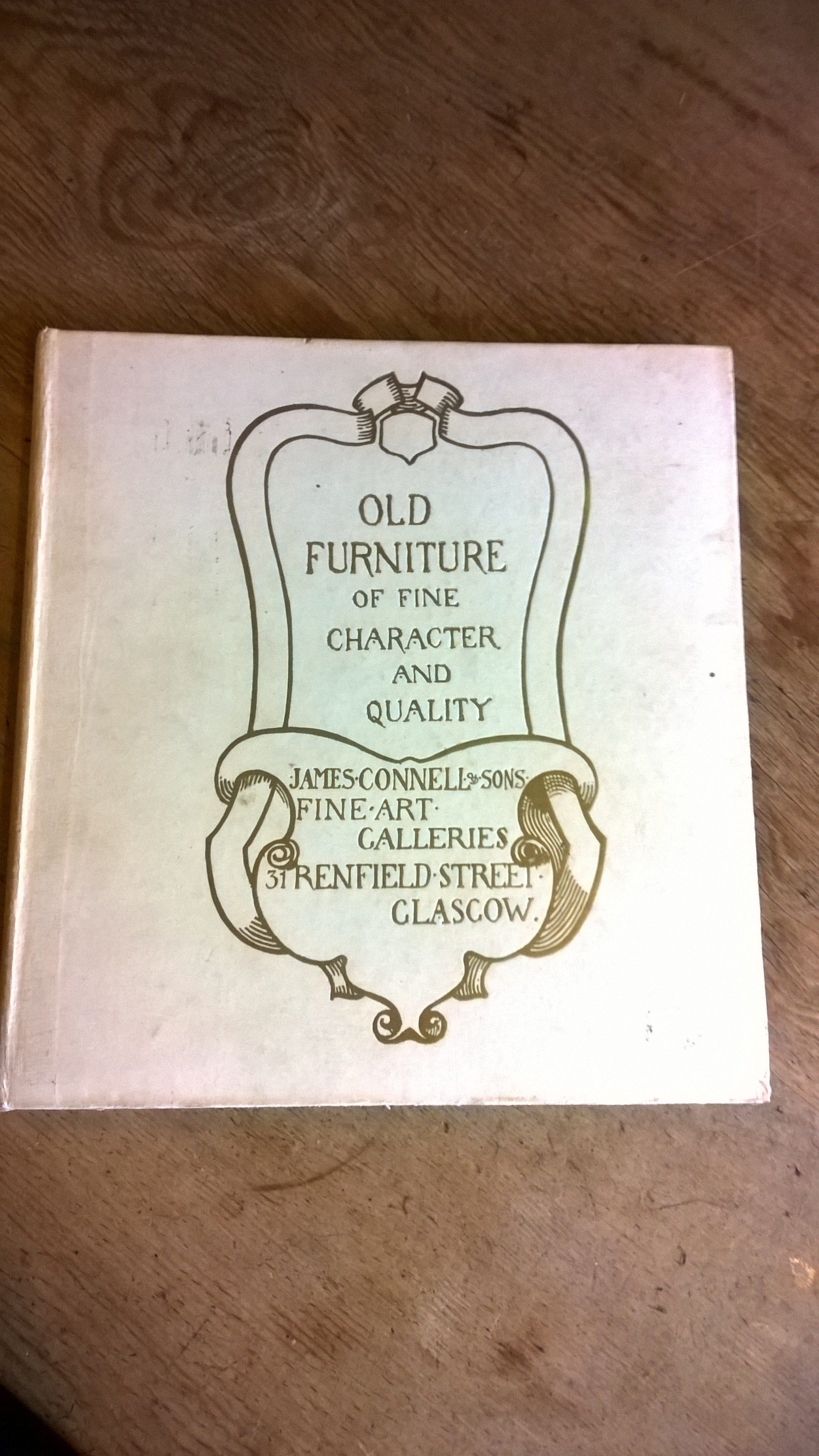
James Connell & Sons, Exhibition Catalogue. c.1910

Connell is well known amongst art historians as a ‘Fine Art’ dealer – one who emerged from the picture frame making trades in the middle decades of the 19th century – for more specific detail on Connell do take a look at the excellent research projects on the Art Trade (Dr Pamela Fletcher’s fab site at Bowdoin College) The London Gallery Project

Or the large research project ‘Mapping the Profession and Practice of Sculpture in Britain and Ireland 1851-1951

Connell in these projects is located in the boundaries of the picture trade – and I expect that is where they properly reside – however, as you’ll see by the title of the little exhibiton catalogue (above) Connell also, occasionally I imagine, sold ‘Antique Furniture’ (or ‘Old Furniture’ as their catalogue suggests) – which (for us, at least) further complicates the boundaries of the antique trade – not that they are ever defined so clearly anyway, we know that!

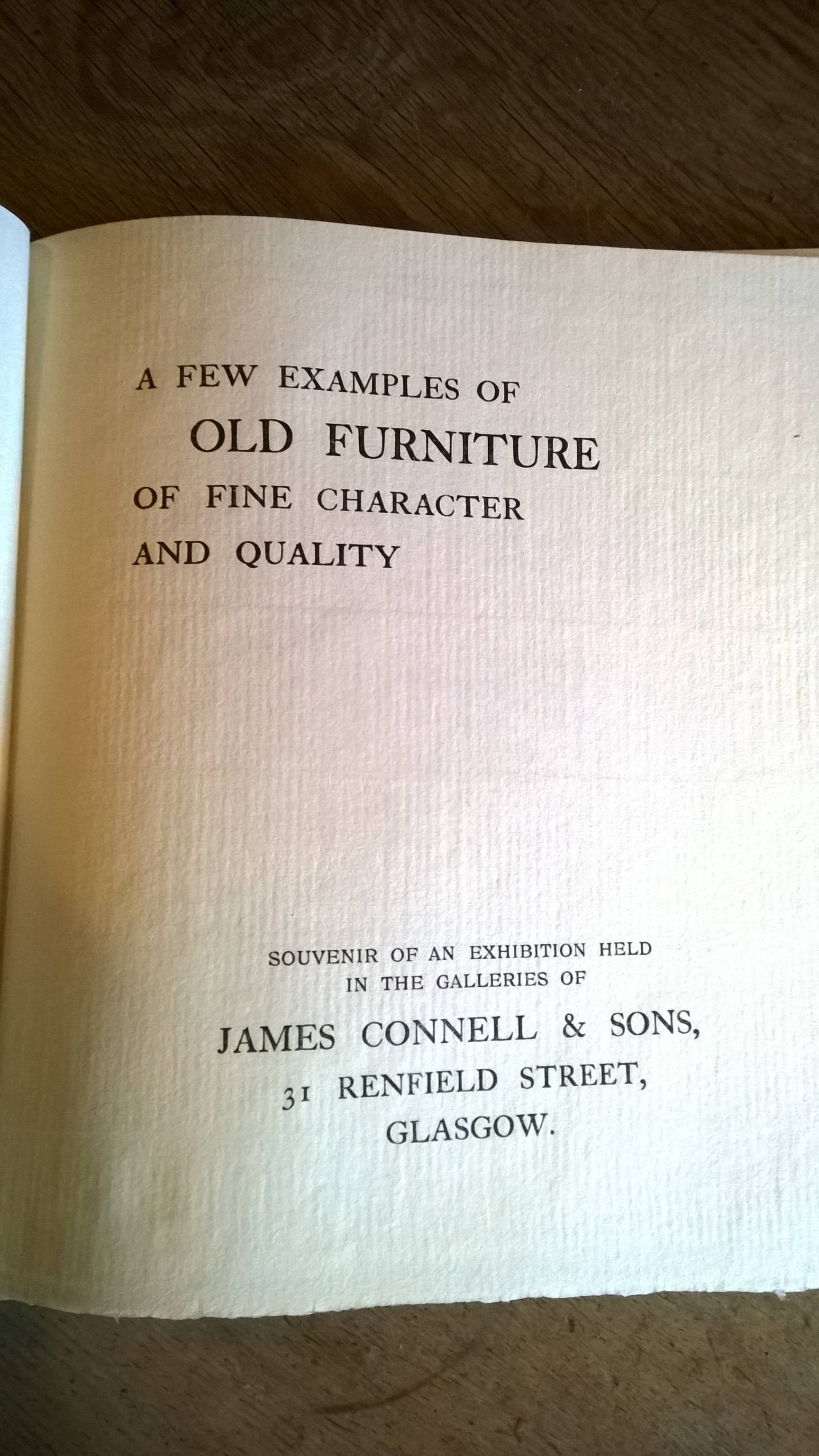
Anyway, I thought it would be interesting to show the Connell catalogue – it’s a small ‘souvenir’ (as they state) of an undated exhibition, but certainly seems to date from c.1910.

connell frontis

Connell catalogue, c.1910

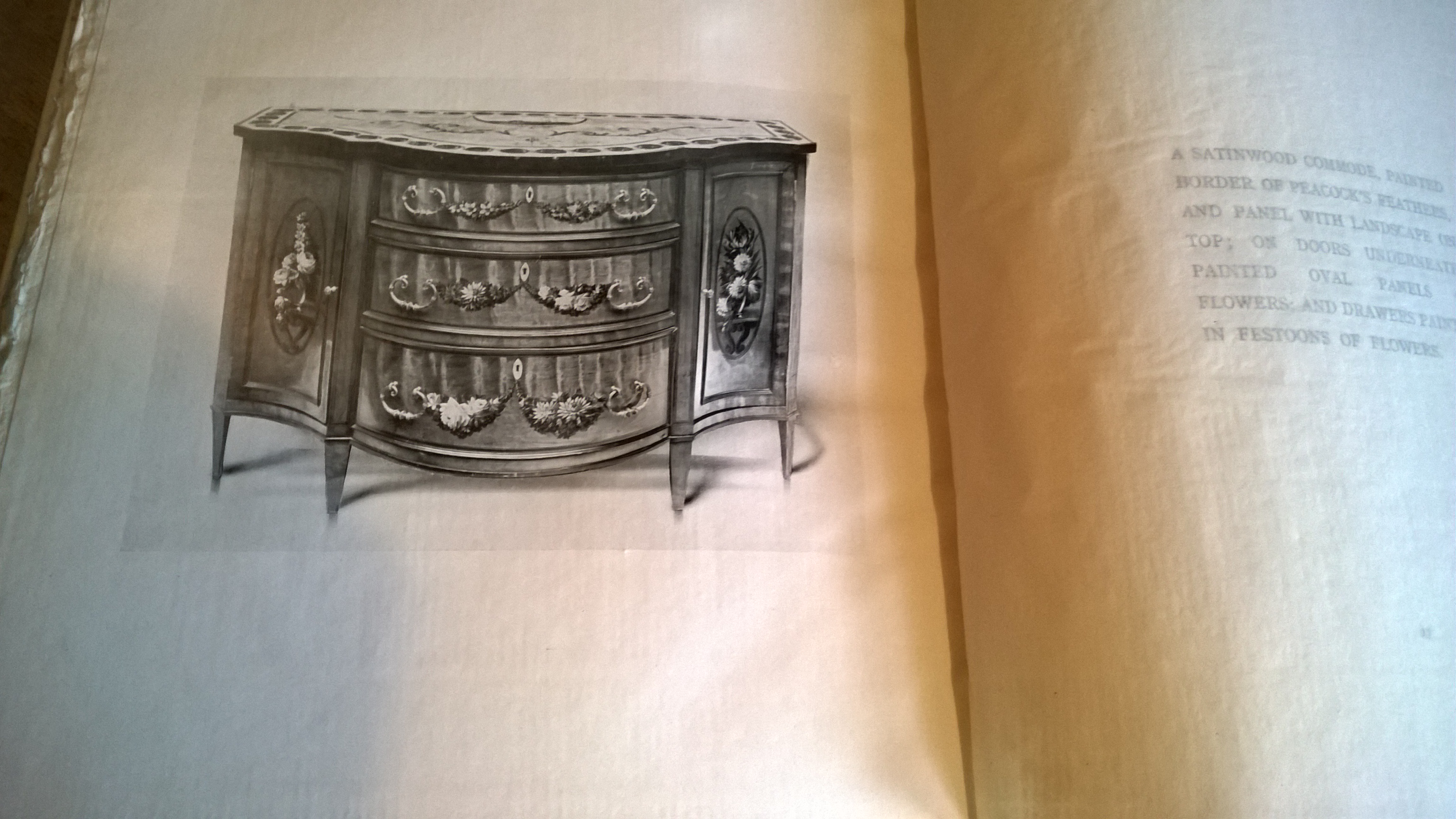
The introductory page states that Connell ‘have been fortunate in acquiring recently superb examples of Chippendale, Adam, Sheraton, and Hepplewhite furniture from well-known collections. Those beautiful specimens form a most interesting exhibition. which is presently being held at their galleries, 31 Renfield Street, Glasgow.’

Connell chest

‘Satinwood Commode’ from Connell catalogue, c.1910

There are perhaps a dozen individually photographed pieces of furniture, ranging from 16th/17th century oak, to late 18th century satinwood furniture – not sure that some of the pieces would pass the ‘authenticity test’ today, but that’s beside the point.  The real interest here, as far as the current research project in the ‘antique trade’ in concerned, is that catalogues such as Connell’s demonstrate the blurred boundaries of the history of the ‘art’ market.

Mark


December 31, 2014

Even more on Thomas Rohan!

The blog posts on the antique dealer and author Thomas Rohan (see previous posts) are becoming quite a theme – thanks again to John Cresswell who very kindly posted photocopies of some newspaper clippings reporting the death of Rohan in 1940, as well as some photos of the house that Rohan lived in during his time in Bournemouth in the 1930s.

This Christmas, one of my presents (thank you Clara!) was a small (tiny actually!) booklet entitled ‘The Origin of Quinneys’ (by E. Montefiore) – it is undated, but perhaps c.1940 when Rohan died? The little booklet, which came all the way from a book dealer in the USA, rehearses the story of Rohan being the basis for the character of ‘Joe Quinney’ in Horace Vachell’s novels (see earlier blog entries for details on this).


quinneys booklet 1quinneys booklet 2

The booklet, as you can see, really is a tiny thing – here photographed next to a UK pound coin.

One thing that is interesting to note about Rohan is that for his first shop, located in High Street, Southampton, from c.1903, Rohan traded as ‘Thomas Rudd’. He tells us, in his autobiographical book Confessions of a Dealer (1924) how he came to trade as ‘Rudd’, and how he eventually renamed the business (actually called A. Rohan – after his wife Alice Rohan) by 1919. As Rohan writes;

‘How I took the trading name of Rudd was in this fashion. For family reasons I was asked not to use my own name as a dealer. I rather resented this, but for peace and quietness agreed. Just before opening my little shop, I went to a sale, and bought a grandfather clock. The auctioneer asked, “What name?” I called out my own name of Rohan. He said, “Rudd?” I said, “Yes, put it down R U double D” and from that time for fifteen years I was known as Rudd.’ Confessions of a Dealer, p.71.

Newspaper reports on the death of Rohan in 1940 suggest that he was ‘the scion of the noble family of France, the Prince and Ducs de Rohan’ (Bournemouth Echo, 27.1.1940) – so it may have been that associations with the ‘trade’ were not seen to be appropriate when Rohan first set up as a dealer in 1903. Whatever the reason, Thomas Rohan is a fascinating example of an early 20th century antique dealer!

Mark

December 31, 2014

Oral History Interviews – Tony Lumb

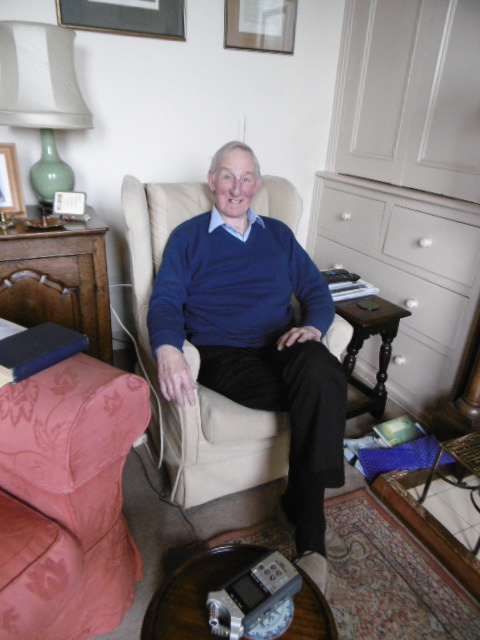
We continue with our Oral History Interviews – the latest dealer to be in the spotlight is Tony Lumb, 3rd generation antiques dealer of the firm Charles Lumb & Sons, of Harrogate.

Tony Lumb (Dec 2014)

Tony Lumb (Dec 2014)

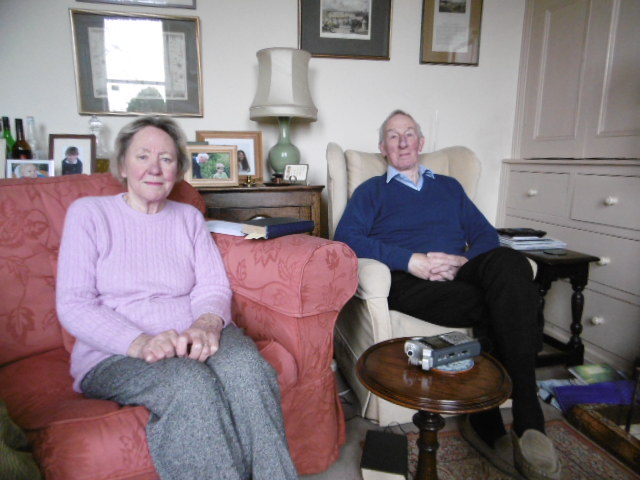
P1000121

Mary Lumb, with Tony Lumb, 2014

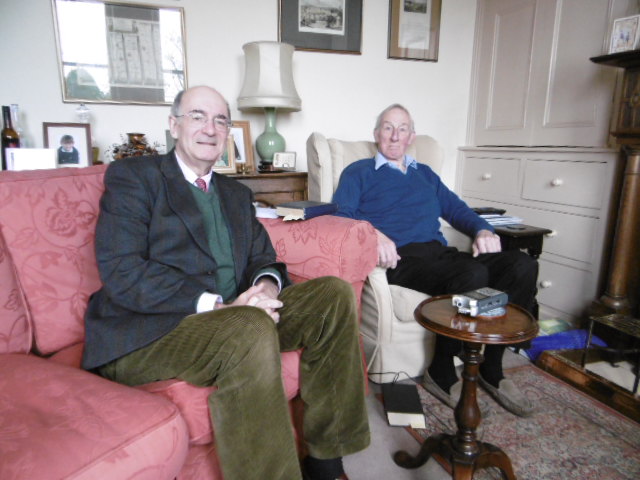
P1000120

James Lomax and Tony Lumb. 2014

For this interview Tony was also joined by his wife Mary Lumb who worked with Tony at their antique shop in Harrogate. We also had excellent help for the interview by James Lomax, curator emeritus, Temple Newsam House, Leeds, who acted as 2nd interviewer.  James posed some great questions and also had fascinating memories of the relationships between Temple Newsam House museum and the antique trade.

During the interview Tony recalled the history of the firm of Charles Lumb & Sons, from the early beginnings of his grandfather, Charles Lumb, who established the business in Harrogate in 1907, to when his father (Frank Lumb) and his uncle (Reg Lumb) joined the business before WWII, and when Tony first joined the business in 1956, aged just 20. We learnt that Tony’s grandfather trained as a cabinetmaker in Dewsbury, Yorkshire, and started a furniture making and restoration business in Harrogate in 1907, in a workshop in what is now Montpellier Mews, before opening an antique shop at 34 Montpellier Parade in 1947 – the firm expanded into further premises in Montpellier Parade in the 1960s and remained in Harrogate for the whole history of the firm.

The interview provided fascinating insights into the history of Charles Lumb & Sons, the changing practices of the antique trade, and Tony’s memories of other antique dealers, and the long list of international clients, collectors and museums that the firm supplied. Charles Lumb & Sons eventually closed their Harrogate business in 2012 – after over 100 years of trading in Harrogate – and as Tony said – ‘in 100 years, they moved 100 yards’! – they must have enjoyed Yorkshire!

As with the other oral history interviews, once we get around to editing and etc., the interview with Tony, Mary and James, will be made available via the project websites, sometime during early 2015.

Mark


December 6, 2014

More news on Thomas Rohan

100_3709

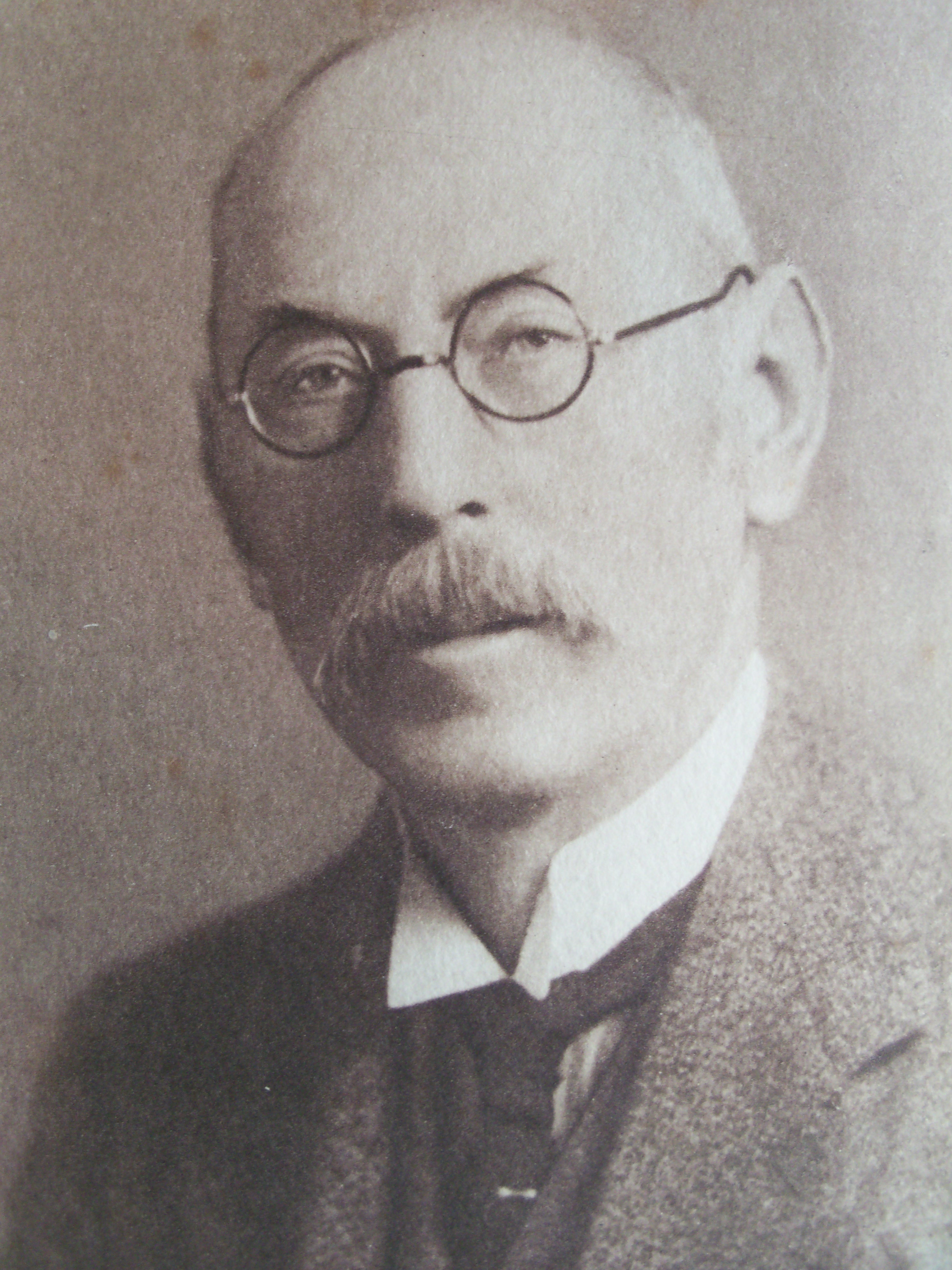
Thomas Rohan (1860/1-1940)

Thanks to the generosity of John Cresswell, we know quite a lot more about the early 20th century antique dealer Thomas Rohan (1860/1-1940). John very kindly sent us the fruits of his own research into Rohan, including the fascinating fact that Rohan appears to have had a role in the design of his own house, in Bournemouth – John actually lived there for a time.

Rohan, as previously indicated in earlier posts in the project blog, has been suggested as the model for the antique dealer ‘Joe Quinney’ in Horace Annesley Vachell’s novel Quinneys (1914), and was also the author of several books on collecting, and on the antique trade itself – Confessions of a Dealer (1924); Old Beautiful (1926); In Search of the Antique (1927); Old Glass Beautiful (1930); and Billy Ditt, the romance of a Chippendale chair 1760-1925 (1932) – but John also tells us that Quinneys was made into a film, twice – in 1919 and 1927 – we are currently trying to find copies of these rare films, so if anyone knows of a copy do let us know!

John also tells us that Rohan married twice – and one of his wives was the daughter of William Robertson, J.P. D.L. of Pembrokeshire, and that he had three children (2 sadly died early), and was survived by his son Robert Rohan. Thomas himself died on 13th January 1940 and was buried at Westbury in Bristol. There are many other details on the life of Thomas Rohan that John shared with the project, and we are populating Rohan’s biography on the interactive project website, so keep your eye on that when we launch the site.

In the meantime we would like to say a big thank you to John Cresswell for his generosity!

Mark

December 6, 2014

Camilla steps down from Advisory Board

Our project Advisory Board member Camilla Nichol, formerly Head of Collections at Leeds Museums and Galleries, has a new job – she is now the Chief Executive of the Arctic Heritage Trust in Cambridge – well done Camilla! This means though that she has had to very regrettably step down from her role as a member of the project Advisory Board.  We are very sorry to see Camilla leave the AVB, but obviously very much wish her well in her new role – we’re told she is at the moment (November/December 2014) on her way to Antarctica to see Shackleton’s shed!

Camilla was a member of the project AVB right from the start of the project in September 2013, and officially stepped down from the AVB in November 2014 – we would like to thank Camilla for all her help and advice during the first year of the project – Thank you Camilla!

We hope that the new incoming Head of Collections at Leeds Museums and Galleries will join the Advisory Board – we will keep you posted.

Mark

November 30, 2014

Project Presentation at Furniture History AGM

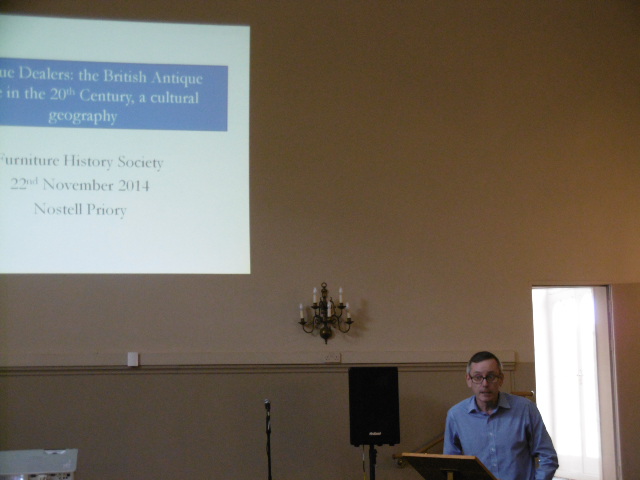
The project team (Mark, Eleanor and Lizzy) attended the Furniture History Society AGM at Nostell Priory, Wakefield, on Saturday 22nd November. Thank you to the FHS for inviting us! We presented a project overview, and an update on the progress to date; the response from the FHS members was fantastic – loads of enthusiastic congratulations, loads of interest, and lots of new leads for further research activities – thank you to all that offered help and further avenues of exploration.

FHS AGM

FHS President, Sir Nicholas Goodison, addressing the AGM

P1000111

EQ at FHS AGM

P1000114

Lizzy at FHS AGM

Eleanor, Lizzy and I only had 30 minutes to outline our HUGE project, so we decided to divide the presentation into 3 sections, 10 mins on the oral history interviews (Eleanor), 10 mins on project archives (Lizzy), and 10 mins on project overview (me).

MW FHS

MW at the FHS AGM

We also had a really fabulous lunch….with wine! (not too much though), courtesy of the FHS, and members, and us, had an amazing private ‘open house’ tour of Nostell Priory under the guidance of the National Trust team at Nostell and the very rich range of expertise in the FHS membership itself – it was a fantastic opportunity to ‘get up close’ to some of the Chippendale furniture in the house.

Thank you to Christopher Rowell (FHS Chair) and the rest of the FHS Board for such a brilliant opportunity to spread the word about the Antique Dealer project

Mark


Home Subjects

a working group dedicated to the display of art in the private interior, c. 1715-1914

The Period Room: Museum, Material, Experience

An International Conference hosted by The Bowes Museum and The University of Leeds

H. Blairman & Sons Ltd

A research project investigating the history of the antiques trade in Britain in the 19th & 20th centuries

Museum Studies Now?

'Museum Studies Now?' is an event which aims to discuss and debate museum and heritage studies education provision.

The Burlington Magazine Index Blog

art writing * art works * art market

East India Company at Home, 1757-1857

A research project investigating the history of the antiques trade in Britain in the 19th & 20th centuries