Archive for ‘Uncategorized’

July 3, 2015

Information from the Public!

Following the publicity about the interactive project website launch on 15th June we’ve had scores of messages of support…Thank you all who sent us a note, it was very much appreciated!

And a few very generous individuals sent us specific information about antique dealers to help build the website – thank you!

Jason West sent us some fascinating information and detail on his great grandfather, Charles Clayden, an antique dealer trading in London between 1919 and 1926. Here is Charles Clayden (below) in the entrance to his antique shop at 320 Euston Road, London – thank you again to Jason for also emailing us this photograph.
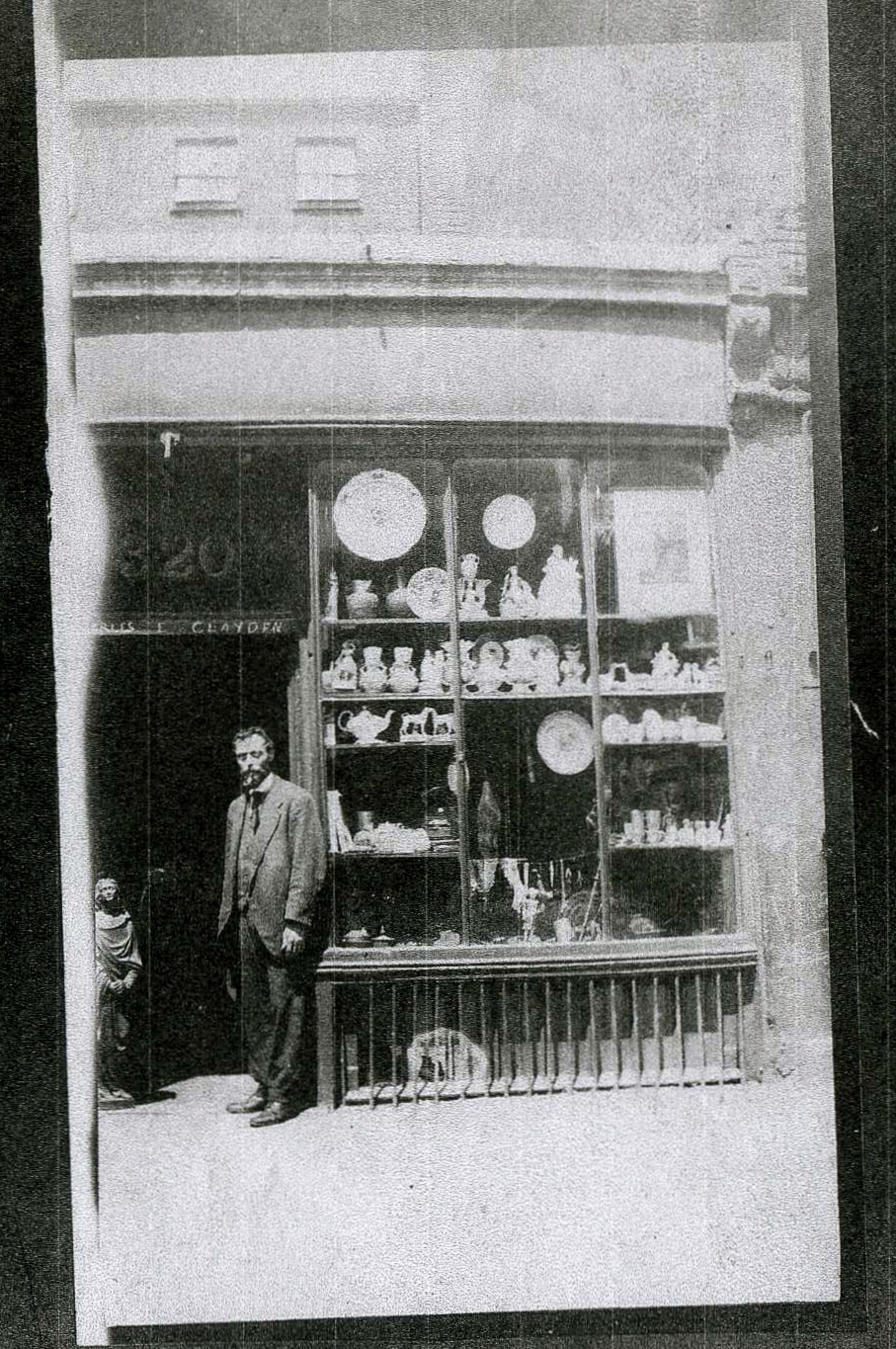
Charles Clayden's Shop - 320 Euston Road

Charles Clayden, 320 Euston Road London, c.1920. Photograph Copyright Jason West.

The shop window is packed with a wide variety of antique (and, it looks like, some modern/2nd hand) ceramics…I’m sure someone will be able to identify some of the objects? The figure of the the female Saint(?) is intriguing too….perhaps a carved oak Flemish piece, which were so popular amongst the 19th century curiosity trade?….how old it actually is, who knows?

As well as helping to identify the other addresses at which Charles Clayden traded (24 & 55 Park Crescent West, London) Jason also provided Charles’ place of birth (Saffron Walden, in 1871) and his full name, Charles Ernest Thomas Clayden, and some information on his great grandfather and his business culled from the memoirs of his great grandmother, Molly Mulford. Jason tells us that Molly died in the 1980s, and composed her memoirs as notes, which were typed up by her son Bill in 2013. Molly’s reminiscences give a fascinating insight into the life and business practices of an early 20th century antique dealer.

Molly writes:

‘My father was an antique dealer who had a shop in Euston Road, Marylebone, London. My mother kept the shop whilst my father was attending sales. He also had a weekly store (Friday) in the Caledonian Market and another one (Saturday) in Blandford Street, Marylebone. The shop had a room off from the shop in which we lived and upstairs there were two bedrooms – boys in one and I shared my parents’ bedroom.I can see it now – the big double bed took up all the room with a small cupboard and my small bed alongside.Step out of bed and you were on the landing. Every Saturday morning we had to clean the brass and silver ready for the evening trade in the shop. Those days shop would remain open until 10pm. There were a lot of items to do. My father would make chests and belt them with chains. We children could jump on them in our boots. The chests would be sold as antiques. One thing my father could be sure of making money at was from the ladies of the night (prostitutes) who would come in with their man.The men would buy them whatever took their fancy and the next day the ladies would return the goods and my father would buy back the goods at a discount. The police were a great nuisance. They would come and ask for something and if my father refused, they would stand outside the shop and then the customers would not come in. Before I started school I used to go to the auctions with my father.He had a Tin Lizzie, one of the first Fords.He taught himself to drive and was not a good driver. Everyone else on the road was wrong but him! One day I was playing in the shop, which I was forbidden to do, when a customer came in. I hopped in an Egyptian Mummy to hide when it feel over with me inside. The customer fled from the shop and I was given a hiding.
My life changed dramatically when I was ten years of age. My brothers, except one, had left home. My father went into the shop one night and a picture had fallen from the wall.Glass from the picture pierced his leg right through his pants.Septicaemia set in and he was taken to Middlesex Hospital, London, where he died in seven days.’

Jason tells us that the business was continued after the death of Charles in 1926 by his wife Mary Elizabeth Clayden; the business ceased trading by 1928.

We would like to thank Jason for so generously sending this information to us….it’s a major help to have new locations for dealers in the interactive website and so interesting to have such a rich description of Charles Clayden.

Mark
June 27, 2015

Publicity for the Project

We’ve had some great publicity for the project in the last week or so, following the launch of the project interactive website on 15th June – thanks again to Gareth and the Press Team at University of Leeds, and Peter and the Press Team at the University of Southampton, and to Ivan Macquisten at Antiques Trade Gazette, and to Christopher Wilk at the V&A, Mark Dodgson at BADA, and Chris Jussel…..

Here are some of the avenues through which the project was disseminated – (as Director of Impact in our School at the University of Leeds it’s always good practice to capture who is saying what about our research!)….and so, in no particular order…

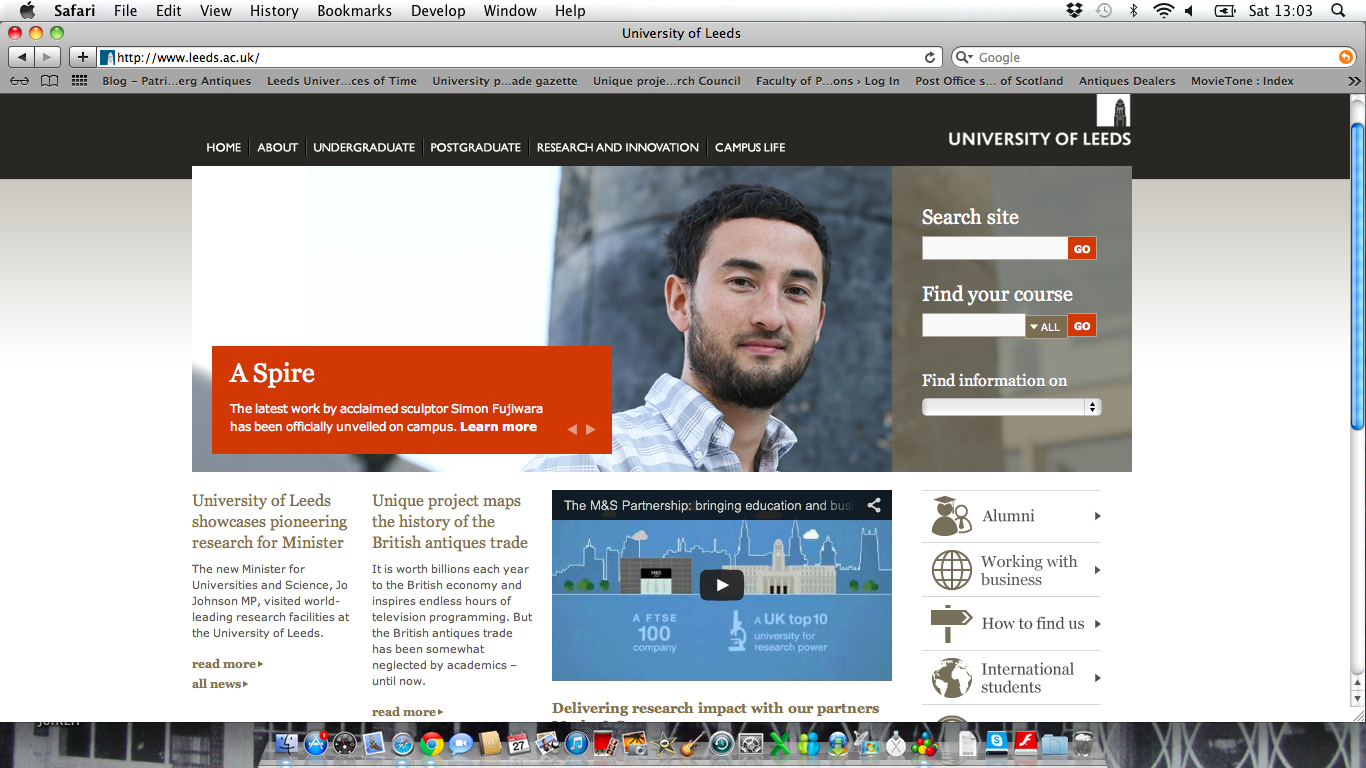
We made FRONT PAGE of the University of Leeds on 15th June:

Screenshot 2015-06-27 13.03.19

Screenshot 2015-06-27 13.04.22

We made FRONT PAGE of the University of Southampton website on 25th June:

Screenshot 2015-06-27 14.16.42

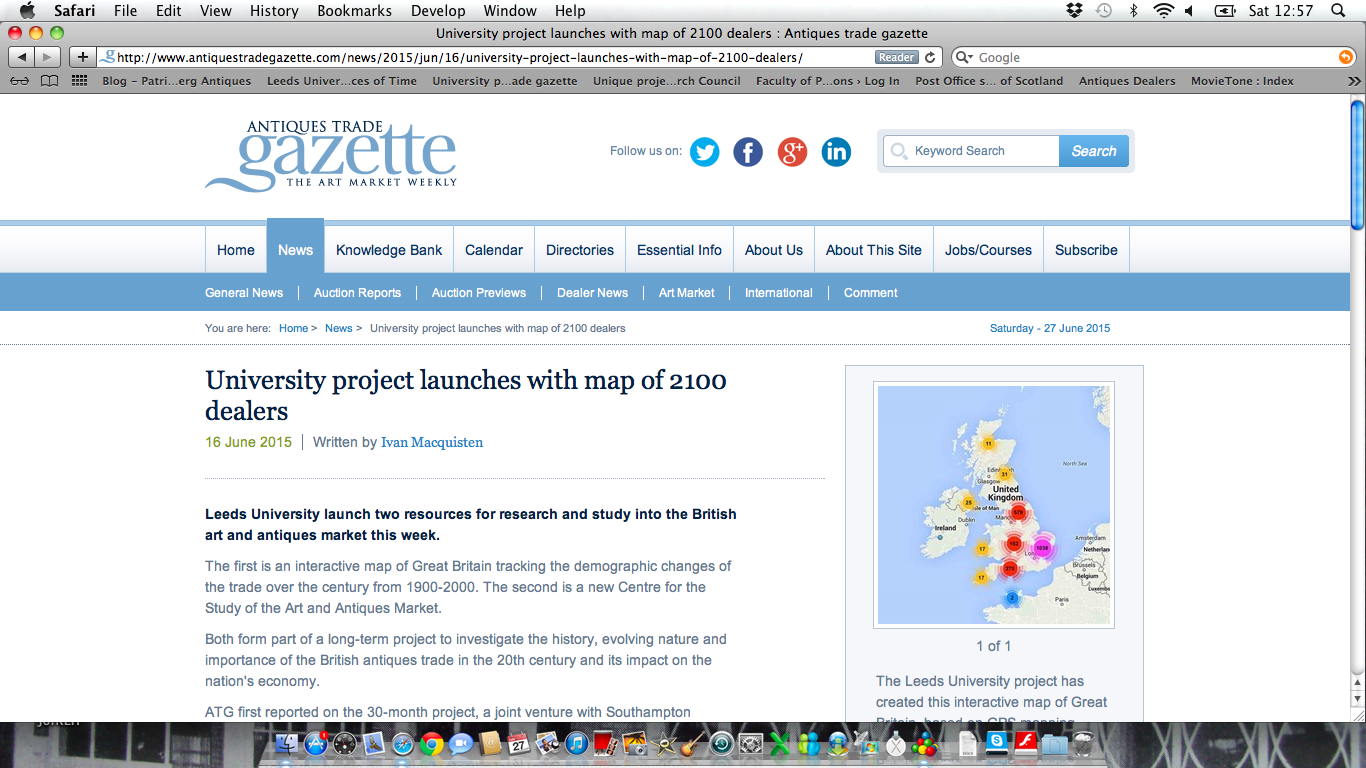
We made PAGE 3 of the Antiques Trade Gazette on 16th June:

Screenshot 2015-06-27 12.57.55

We made FRONT PAGE of the AHRC website on 15th June:

Screenshot 2015-06-27 13.02.04

We made PAGE 3 of the Yorkshire Post on 16th June:

Yorkshire Post 16 6 15

We made FRONT PAGE of the School of Fine Art, History of Art & Cultural Studies at University of Leeds on 20th June:

Screenshot 2015-06-27 13.05.42

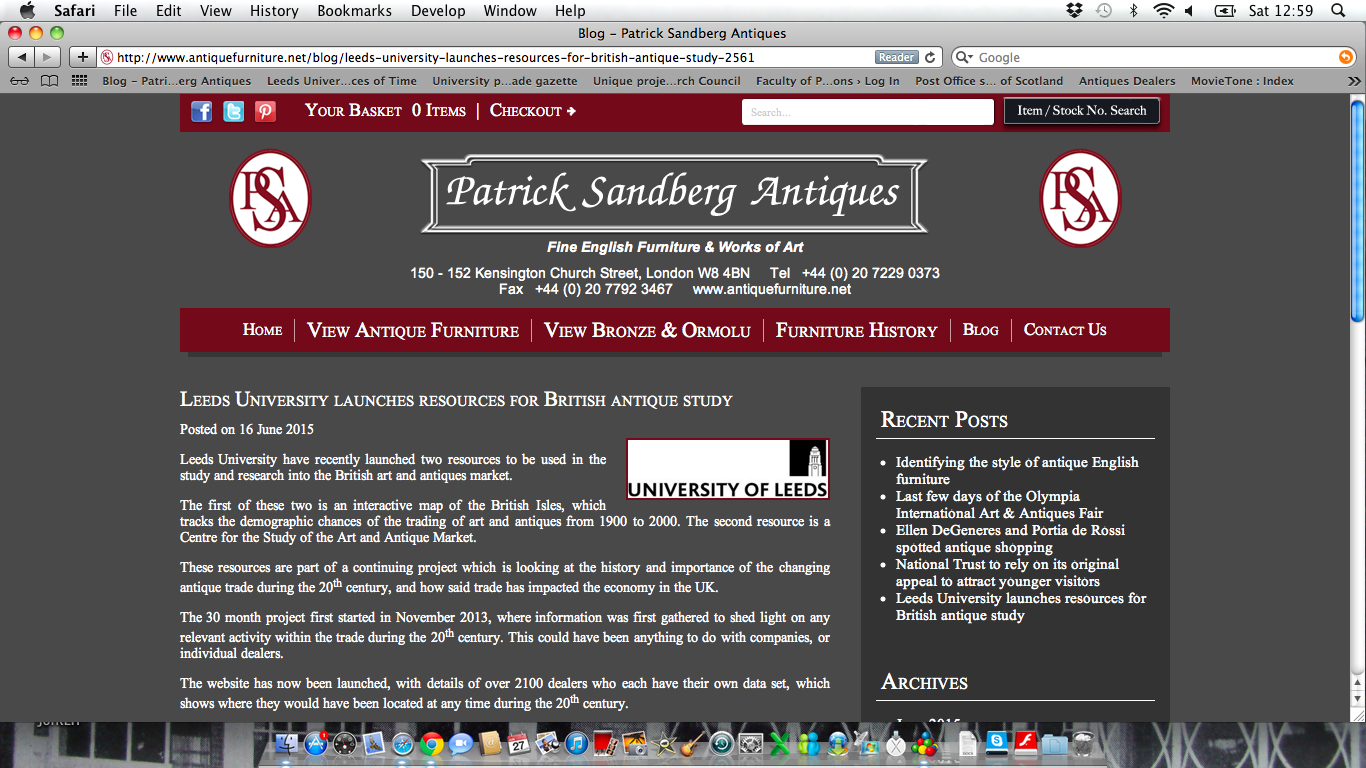
We made the BLOG PAGE of Patrick Sandberg Antiques website on 16th June:

Screenshot 2015-06-27 12.59.45

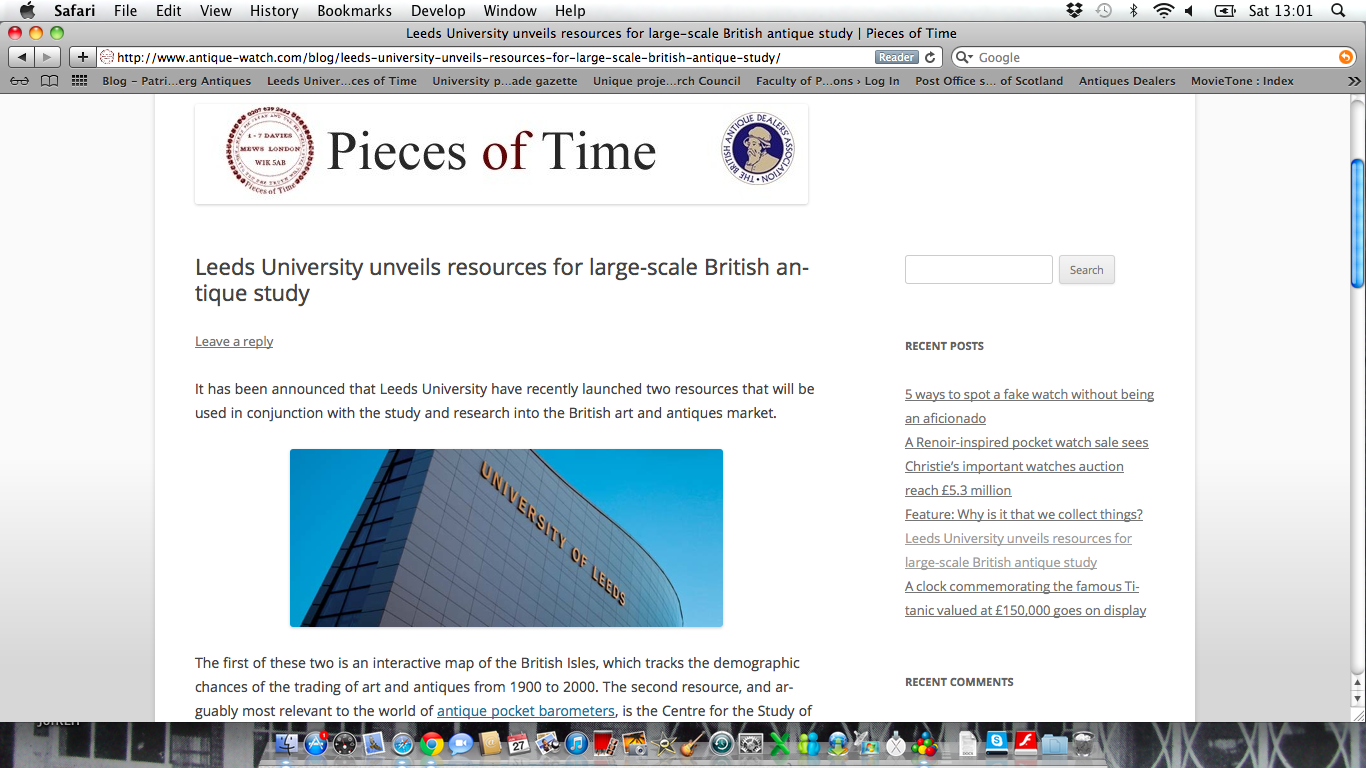
We made the BLOG PAGE of Pieces of Time website on 16th June:

Screenshot 2015-06-27 13.01.04

We were also mentioned on BBC Radio Leeds on 20th June, by auctioneer Gary Don in an interview on the Nick Ahad Show – ‘Leeds is at the centre of the antiques trade again’, as they said…

As well as various Tweets and ReTweets into the ether!…

Thank you all for raising awareness of the project!

Mark

June 15, 2015

Project Interactive Website Launched

The project Interactive Website has finally been officially launched!

On Monday 15th June, with a major publicity push from the University of Leeds and the University of Southampton, the two collaborating universities involved in the Antique Dealers project, and with a forthcoming announcement in the Antiques Trade Gazette – we’ve made the interactive website available to the wider public. You can read the University of Leeds Press Release here – Mapping%20the%20history%20of%20antiques%20dealers%20FINAL Thanks to Gareth Dant, Press Officer at University of Leeds for composing the Press Release.

And the University of Southampton Press Release here –Mapping%20the%FINAL SOTON

The Interactive website is one of the 3 main outputs of the AHRC funded Antique Dealers research project – the other outputs will be an edited book (edited by Westgarth, Quince and Jamieson), and the end of project Conference, (and for which we thank again the support from Leeds Museums & Galleries), which will take place next Spring at Temple Newsam House, Leeds (keep your eye on the blog for more details on the conference).

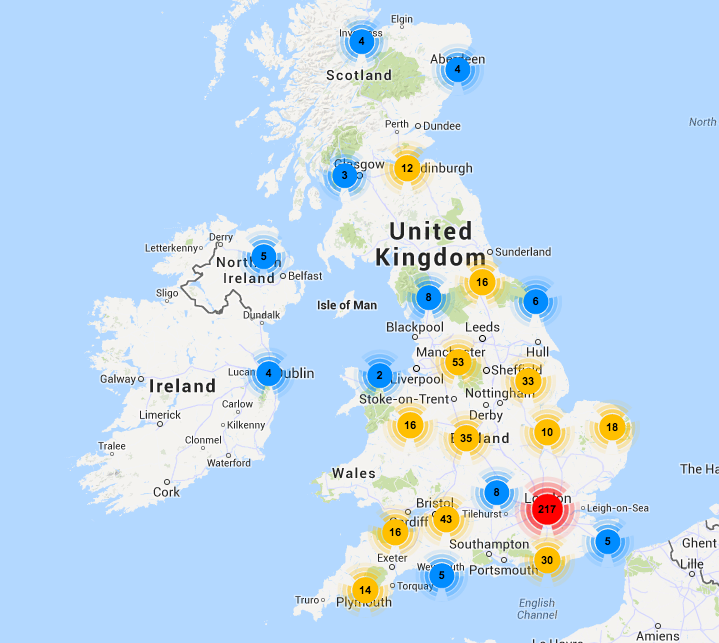
Screenshot 2014-01-30 15.10.18

Screen Shot of the Interactive Website. Copyright, University of Leeds 2015.

The website has been long in development and thanks to Mark Wales (‘Sparky’) of Small Hadron Collider, who has been working on the software programming for the site for the past 18 months, we now have an amazing research database, and research resource, for future investigations into the history of the Antique Trade in Britain, in the 20th century.

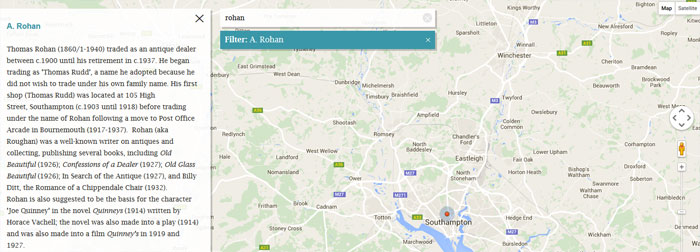
Using the search engine embedded within the site, or clicking on the DOTS on the map, you can find information on Antique Dealers trading in the 20th century. Below is a screen grab for a dealer trading in Southampton (see little red dot on the map) – Thomas Rohan, who was trading at 105 High Street, Southampton in the period c.1903-1918.slide700-3

The interactive website is still in development, and we’ve launched it as BETA version (i.e. we are testing it for feedback and suggestions on functionality and ease of use etc). At present, at least, there’s not that much data in the site…only c.2,100 entries…and we reckon there should be, eventually, about 100,000 entries in the site.  But we hope that the site will give people a sense of the amazing possibilities that emerge when one thinks about what it COULD do.

We eventually hope that each Dealership will  have a mini-biography, such as that in the Rohan entry already in the site – see below:

rohan-bio-screengrab


The site uses GPS (Google Maps) technology to track the changing locations of Antique Dealers, based in Britain, over the period 1900-2000 – but it is more, much more, than just a geographical mapping site.  We have built a temporal-spacial tracking system in the site that will trace the genealogy of not just Antique Dealers, but also the objects that they sold, and which, at the same time, establishes a whole series of spacial-temporal networks and relationships between, people, things, and ideas – this, we think, is the uniqueness of the website resource!…

We’ve had fantastic support from various people and organisations as we have developed the project and the interactive website; here are just a few examples of messages of support:

Project Advisory Board member, Christopher Wilk, Keeper of Furniture, Textiles and Fashion at The Victoria & Albert Museum, said “This is an important and innovative project which points the way towards a serious consideration of modern antique dealing. The methodology of the project is innovative, not least in its mixture of oral history, archival research and cultural geography.”

And Chris Jussel, an interviewee of the Oral History part of the Antique Dealer project (see earlier posts) and formerly of the major international antique dealers, Verney & Jussel, and well-known as a former Presenter for the US version of the Antiques Roadshow, said: “Throughout most of the 20th century the British Antiques Trade was the driving force in presenting what were originally termed ‘old things’ to the public. Collectively the appreciation for, the collection of, the scholarship and knowledge of antiques largely emanated from the trade. That was where the expertise resided. No major private or museum collection of antiques was formed without the trade. This long overdue academic study is a testament to that era.”

And finally, Mark Dodgson, Secretary General of The British Antique Dealers’ Association, said: “The concept of an interactive website charting the historical locations of antiques shops and the movement of beautiful objects from collectors to dealers and into museum collections should prove fascinating for anyone interested in the history of the decorative arts.
“The UK has always been one of the world’s most significant locations for the trade in antiques, whether English furniture or Chinese ceramics. It is therefore fitting that a British university should have undertaken a study into this important aspect of our national life.
“I know that antiques dealers are often keen to check the historical ownership of important items they sell – referred to in the trade as the “provenance” – to back up their own judgements about the age and origin of pieces. The new website will provide them with an excellent tool for checking where and when dealers were trading in the past, so adding to the information they can provide to antique collectors about their purchases.”

We hope that you will enjoy using the Interactive Website – (click HERE to go to the site)

Do send us feedback on what you think about the site, and any teething problems.

Mark


June 5, 2015

Busy two weeks for Oral History interviews!

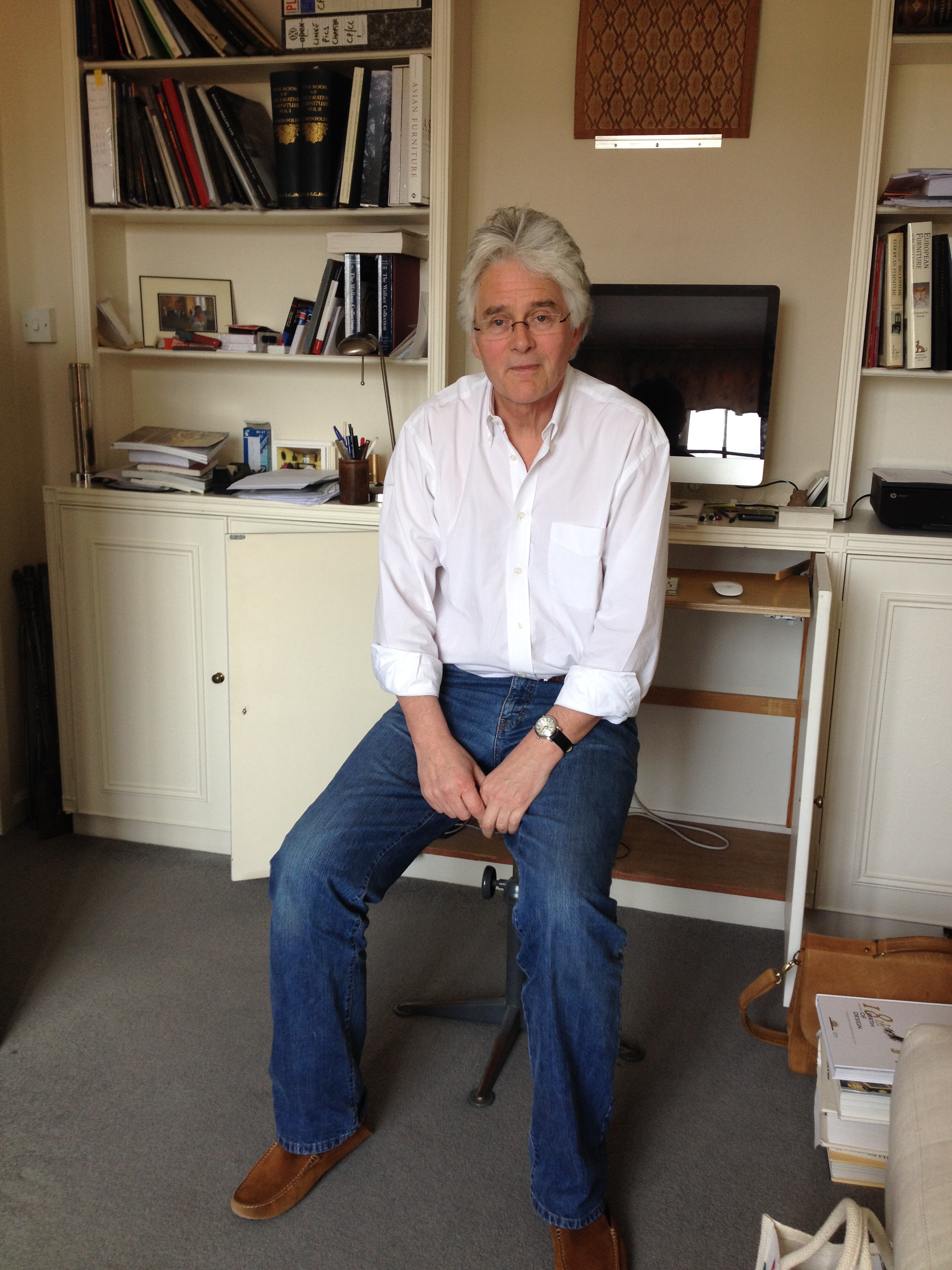
As part of this packed week or so of oral history interviews (see previous blog posts) we managed to track down Christopher Payne and he very generously gave us some time out of his own very busy schedule. Lizzy Jamieson, our Project Research Fellow interviewed Christopher in London a couple of weeks ago. As you probably know, Christopher has been a regular presenter on the BBC Antiques Roadshow since 1985 – our project can now boast two Antiques Roadshow presenters…Chris Jussel, who we interviewed in March (see earlier blog post), also fronted the USA version of the Antiques Roadshow for many years!

Christopher Payne1

Christopher Payne. 2015. Photo EJ Antique Dealer Project.

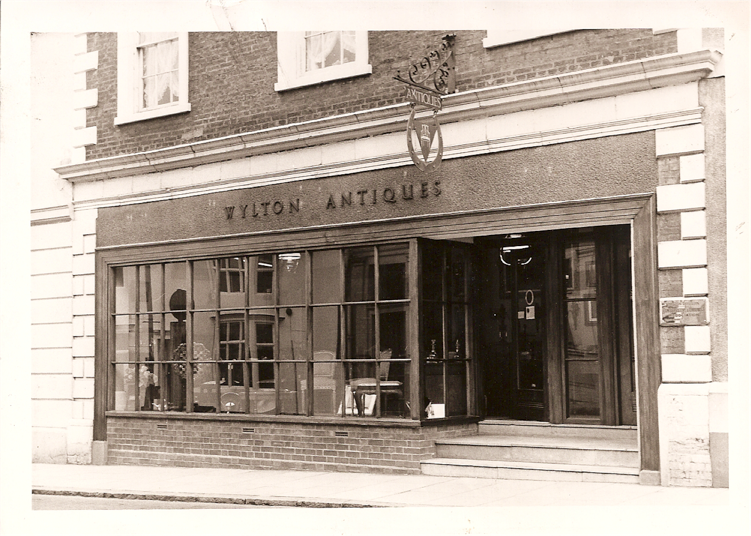
In an absolutely fascinating interview, Christopher told us about his grandfather’s Antiques and Modern furniture business, which began in the 19th century, and by the 1960s was employing 100 people. The business was continued by Christopher’s father, Tony Payne, who in 1968, decided to close the furniture-making and retail business and concentrate on the antiques side of the business, focused at ‘Wylton Antiques’ in Melton Mowbray.


wylton antiques

Wylton Antiques, Melton Mowbray, late 1960s. Photograph courtesy of Christopher Payne. Copyright Christopher Payne.


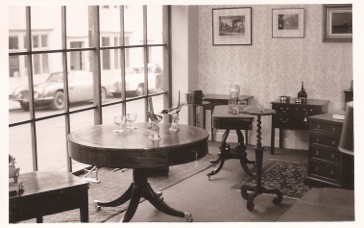
wylton antiques int 2

Wylton Antiques, Melton Mowbray, shop interior, late 1960s. Photograph courtesy of Christopher Payne. Copyright Christopher Payne.

Christopher also told us about his own history; his first job at Sotheby’s in 1970, and had some fascinating observations on the auction world more generally, and on insights into the ‘vetting’ processes whilst he sat on the vetting committees of many of the major antique fairs.  As you also may know, Christopher is author of the definitive book on the furniture designer and maker Linke. The interview provides us with a very rich series of memories, illustrative of more than 50 years of experience in the ‘world of antiques’.

Mark

May 31, 2015

Antique Dealers Project presented at BADA Regional Meeting

I forgot to mention, due to the increased activities on the oral history interviews front, that we were very kindly invited by The British Antique Dealers’ Association to give a presentation about the various initiatives of the AHRC Antique Dealers Project at the BADA Northern Regional Meeting of BADA in Yorkshire on Friday 15th May.

Mark Dodgson, the BADA Secretary General, has been following the project with considerable interest – and indeed has been very supportive, he even provided us with a copy of BADA catalogue of the Art Treasures Exhibition (1932), which has been a valuable resource for our ongoing research into the history of the British Antiques Trade. We were also very warmly received by members of the BADA meeting, which included Tony & Mary Lumb (with whom we have already undertaken a fascinating oral history interview – thanks again Tony & Mary!); present were also Louise Phillips (of Elaine Phillips Antiques); Holly Johnson & Benjamin Aardewerk (of Holly Johnson Antiques); Simon Myers (of the old established dealers R.N. Myers & Son); Philip Carrol; Paul Beedham (of Paul Beedham Antiques); Helen Sutcliffe (Sutcliffe Galleries); and Chairman of the Council, Michael Cohen (together with his wife Ewa, of Cohen & Cohen Antiques).

After a fabulous lunch, I presented a short(ish) presentation, outlining the project and it’s objectives, and demonstrated the (still in development, but very soon to be launched…really…within weeks now!) interactive project website.

It was great to have such a keen interest in the project from members of the trade, and the premier trade body – thank you for the lunch, and for your ears!

Mark

May 29, 2015

Oral History Interviews continue…..

Our Oral History interviews with members of the antique trade are gathering pace – besides the notices of recently completed interviews (see previous blog posts), we’ve also undertaken two further interviews in the last weeks – One with Philip Astley-Jones, who, amongst other things, formerly worked with the famous dealer Roger Warner, in Burford – for those that know these things, as well as those that don’t, The Regional Furniture Society published ‘Roger Warner: memoirs of a twentieth century antique dealer’ in 2003 (RFJ, Volume XVII, 2003). Our other was with Leon Sassoon, of the well-known antique carpets and rugs dealers C. John

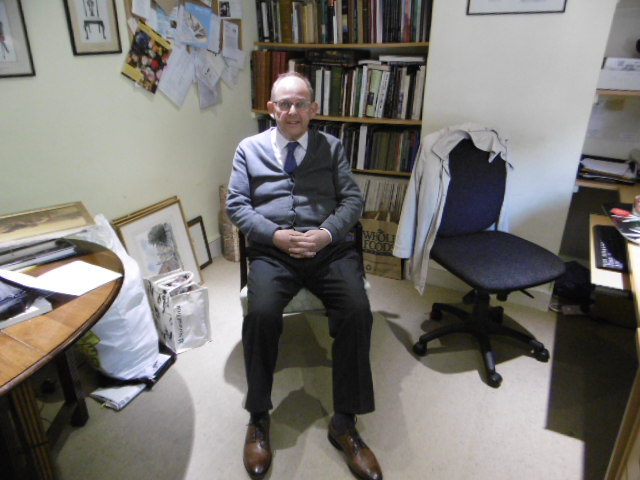
Our interview with Philip Astley-Jones was undertaken by our research fellow Lizzy Jamieson – Philip gave us some absolutely fascinating memories of his time with Roger Warner in his shop in Burford, Oxfordshire.

Philip Astley-Jones photo

Philip Astley-Jones, 2015. Photograph EJ (Antique Dealers Project, Leeds University).

Philip started with Roger Warner in 1965, and he gave us amazingly vivid descriptions of the day-to-day life in the shop, and the buying activities of Roger. As you may know, Roger Warner was famous for his acquisitions of the historic and the curious, and in the interview we heard of buying objects from great Country Houses such as Chastleton, in Oxfordshire – (now a National Trust House). Philip regaled us with lots of fascinating stories of other buying trips – including the amazing story of how Roger found the original Capability Brown map of Moccas Court, rolled up in a long tin canister on top of a bookcase at the house.

Philip left Roger Warner in 1976, moving to Los Angeles, then Amsterdam, before returning to London and taking over the well-known antique restorers, Hatfields.  In a wide ranging interview, Philip also reflected on the potential future for the antique trade – it’s a lovely interview, full of detail, and you will soon be able to listen to it via our project websites – so do keep an eye on developments.


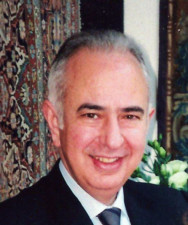
Our other interview was undertaken by one of our most active project volunteer researchers, Chris Coles. Chris interviewed Leon Sassoon, of the specialist textiles and antique carpets and rugs dealer C. John who are now trading in South Audley Street, Mayfair, London.

Leon Sassoon

Leon Sassoon

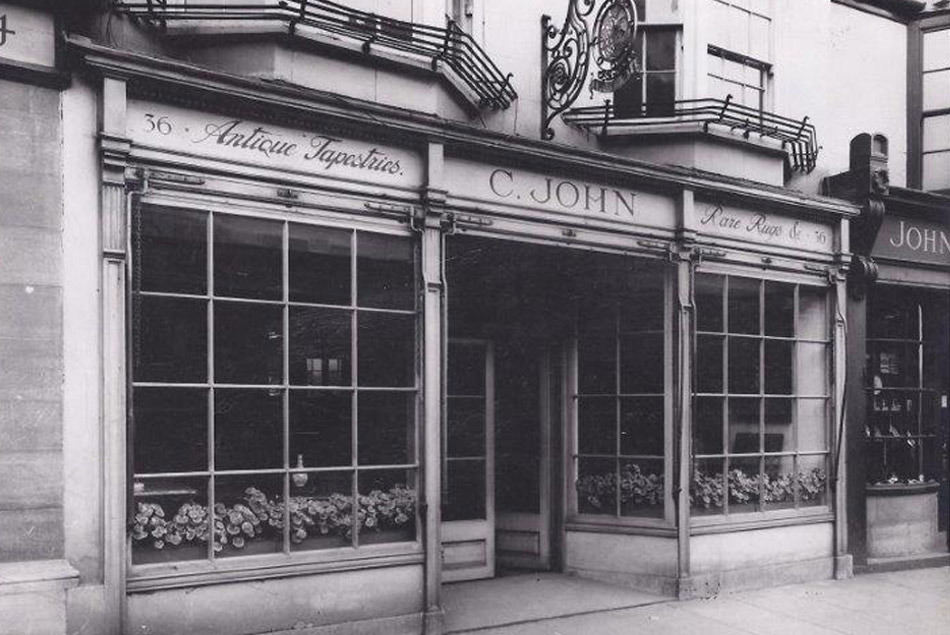
In an absolutely fascinating interview Leon told us about the beginnings of the firm of C. John, which was started by Leon’s uncle in Oxford in 1933; see below for a photograph of the premises at 36 High Street, Oxford in the 1930s. Their shop in Oxford was eventually closed in 1976, to allow concentration on their shop in London.

C John rugs

C. John, 36 High Street, Oxford, 1930s. Photograph copyright C. John .

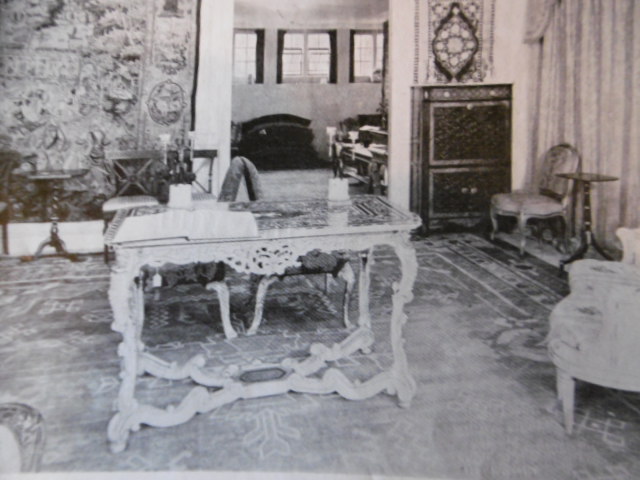
The business of C. John is world famous for antique carpets and rugs of course, but it was intriguing to hear that when the firm was initially set up by Mr John he was just as interested in antique furniture as he was in antique carpets – indeed, this interior photograph of the Oxford shop from 1945 illustrates the stock of furniture then held by C. John – as well as the firm’s well-known interest in carpets, tapestries and rugs.

C John Oxford 1945

C. John, interior of shop in Oxford, 1945. Image from ‘Antiques Yearbook’ 1945.

Leon also told us about his memories of the antique carpet trade since he started with his uncle in the late 1960s; during his time in the business many great carpet and textile dealers have gone – Mayorcas, Arditti, Vigo Galleries, Sternberg, Benardout, all great names in the history of the antique trade, are no longer with us. Indeed, C. John, along with S. Frances (est 1909) as Leon said, are the last of the great tapestry and antique carpet dealers. Leon tempered that by emphasizing that a new generation of carpet and textiles dealers have also emerged over the last years…so it’s not all doom and gloom!

In our interview, Leon also reflected on the changing landscape of the antique trade, and on his relationships with some major collectors of carpets, and with museums, over the last 50 years. The interview is a fascinating insight into a very specialist area of the antique trade, and we ‘re sure our interview with Leon will be a fantastic addition to the range of antique dealer interviews we are assembling as a result of the AHRC Antique Dealer project.

Mark.


May 25, 2015

Even more oral history interviews

Martin Beazor 2015

Martin Beazor, 2015. Photo MW (Antique Dealers Project).

One of our latest oral history interviews with members of the British antique trade is with Martin Beazor, of John Beazor Antiques in Cambridge. Martin is the third generation of his family to run the antique business, which was established in Great Yarmouth in 1875.

Beazor antiques Hall Quay great yarmouth

John Beazor Antiques, Hall Quay, Great Yarmouth, c.1900. Photograph courtesy of Martin Beazor. Copyright Martin Beazor.

In a very wide-ranging interview (lasting 2 hours!) Martin told us about the start of the firm, by his great-grandfather John Martin Beazor, in a shop at Hall Quay in Great Yarmouth – the shop is on the left-hand side of the photograph (c.1900) looking up Hall Quay – apparently King Edward VII was once a visitor.

The Beazor family may have started in the carriage trade, before moving on to become antique dealers; they are one of a small number of dealers still trading that were established in the 19th century. Martin’s grandfather, John Beazor continued the business, moving to their current location in Regent Street, Cambridge in 1940 – taking with them, so Martin recalls, a very smart 18th century grand entrance door salvaged from a merchant’s house in Great Yarmouth.

Martin also showed us a rare interior photograph of the Beazor antique shop in Great Yarmouth….a fascinating illustration of the taste for antiques in c.1910.

John Beazor antiques great yarmouth c.1910

John Beazor Antiques – interior of Great Yarmouth shop, c.1910. Courtesy of Martin Beazor. Copyright Martin Beazor.

And here is John Beazor, Martin’s grandfather –

John Beazor martins grandfather

John Beazor, Martin Beazor’s grandfather. Photograph courtesy of Martin Beazor. Copyright Martin Beazor.

Martin had very fond memories of working with his father, Keith Beazor, during the 1970s and 1980s – Martin joined the firm in 1973, when he was in his early 20s – including a fascinating anecdote about how his father managed to acquire an important ‘Hepplewhite’ partner’s desk from another dealer, which was eventually sold by Keith Beazor to Asprey in London.

The interview with Martin also includes reflections on the changing structure and practices of the antique trade over the past 40 years, and recollections on several well known dealers. As with all of the interviews we are undertaking as part of the research project, the interview with Martin will be available via the project websites.

Mark

May 24, 2015

More Oral History Interviews

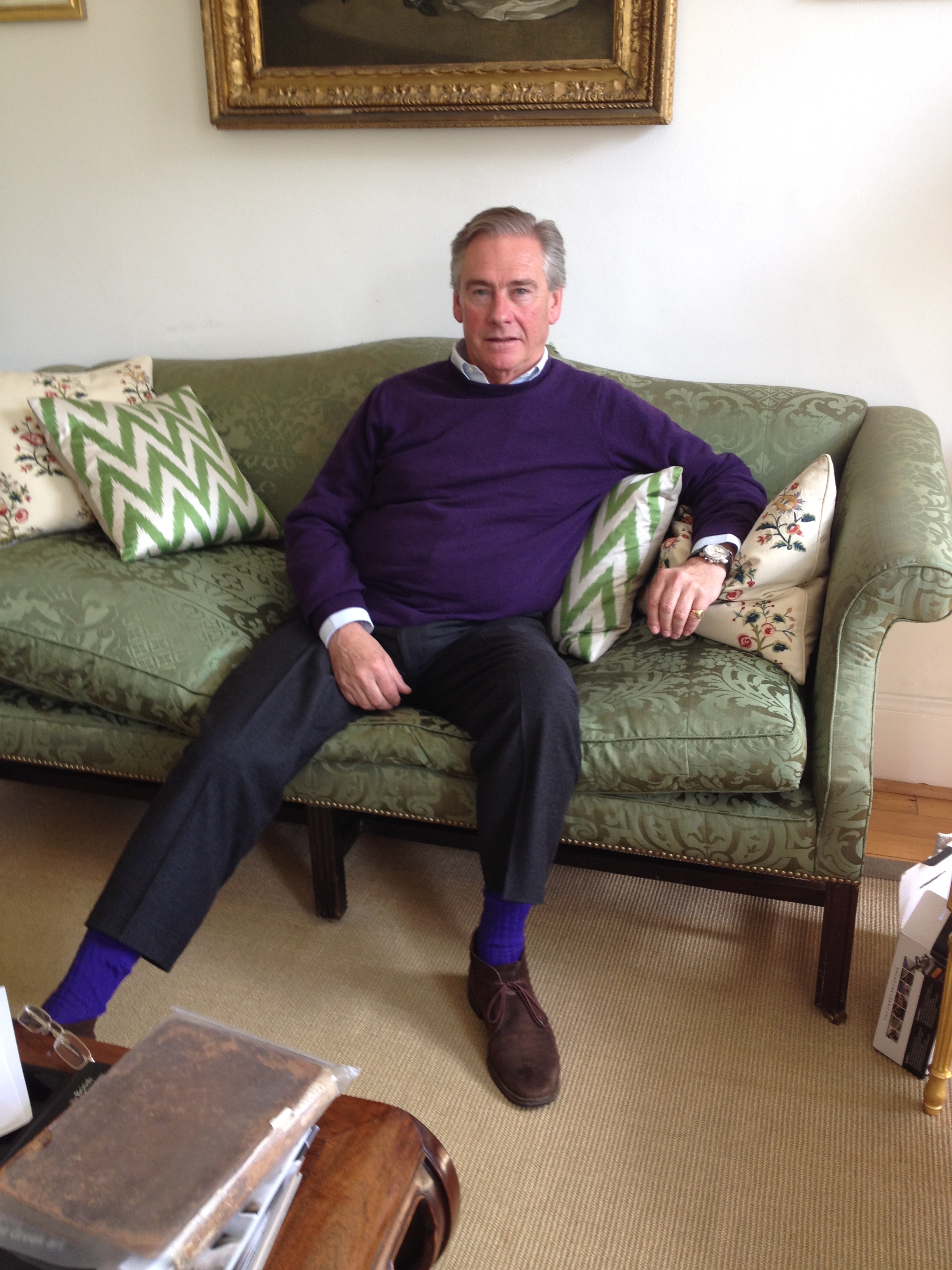
Our oral history interviews are gathering pace – we’ve completed 4 more interviews in the last few weeks….and we’ll post details of all of the interviews in the next few days…but in the meantime, one of our latest interviews was with Christopher Claxton Stevens, late of the leading dealers in Antique English Furniture, Norman Adams, of Hans Road in London. Christopher was interviewed by our Research Fellow, Lizzy Jamieson.

Christopher Claxton Stevens photo 1

Christopher Claxton Stevens. Photograph courtesy of Christopher Claxton Stevens.

Christopher joined Norman Adams Antiques in 1981, after beginning his career at Christie’s – and joined Stewart Whittington in running the business, which was then, unusually, a trust, following the death of Norman Adams in 1979.  Norman Adams (established in 1923) was well known for his ‘eye’ for colour and the patina of antique furniture, and this concentration on the aesthetic, over the privileging of provenance or history of antique furniture, placed Norman Adams in a particular tradition of dealers – and it was pleasing to hear that this particular tradition was continued by Christopher and Stuart.

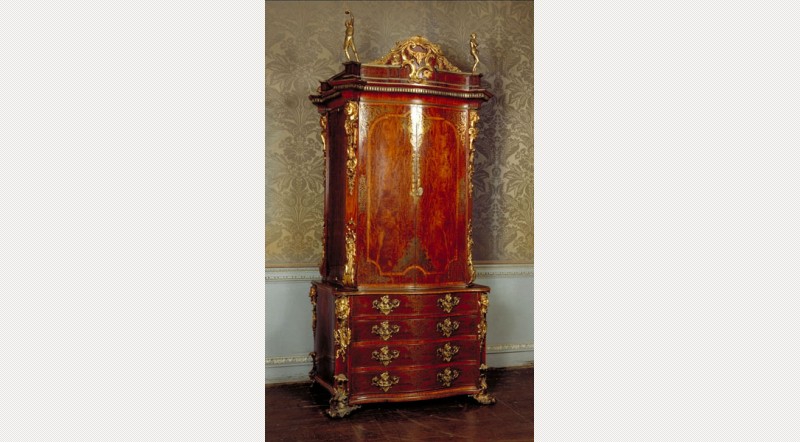
Our interview with Christopher provided a personal insight into the history of the firm and included a fascinating range of first person perspectives on the business, including Christopher’s role in the sale of the famous ‘Murray Cabinet’ to Temple Newsam House, Leeds, in 1986 – the Murray Cabinet had already been through the hands of Norman Adams in 1950, when it was sold by Adams to the collector Arthur Ball; it was then re-purchased by the firm following the death of Ball and was subsequently sold by the firm to Temple Newsam House – here is the magnificent cabinet, still on display in Leeds:

murray

The Murray Cabinet, Temple Newsam House. Courtesy of Leeds Museums & Galleries.

Our interview with Christopher is part of a fascinating series of interviews with antique dealers, all of which will soon be available via the project websites – so do watch this space for updates!

Mark

May 3, 2015

Oral Histories making progress – interview with Andrew Burne

The oral history research strand in the Antique Dealers research project continues to make progress – we still have a HUGE list of people to talk to though!

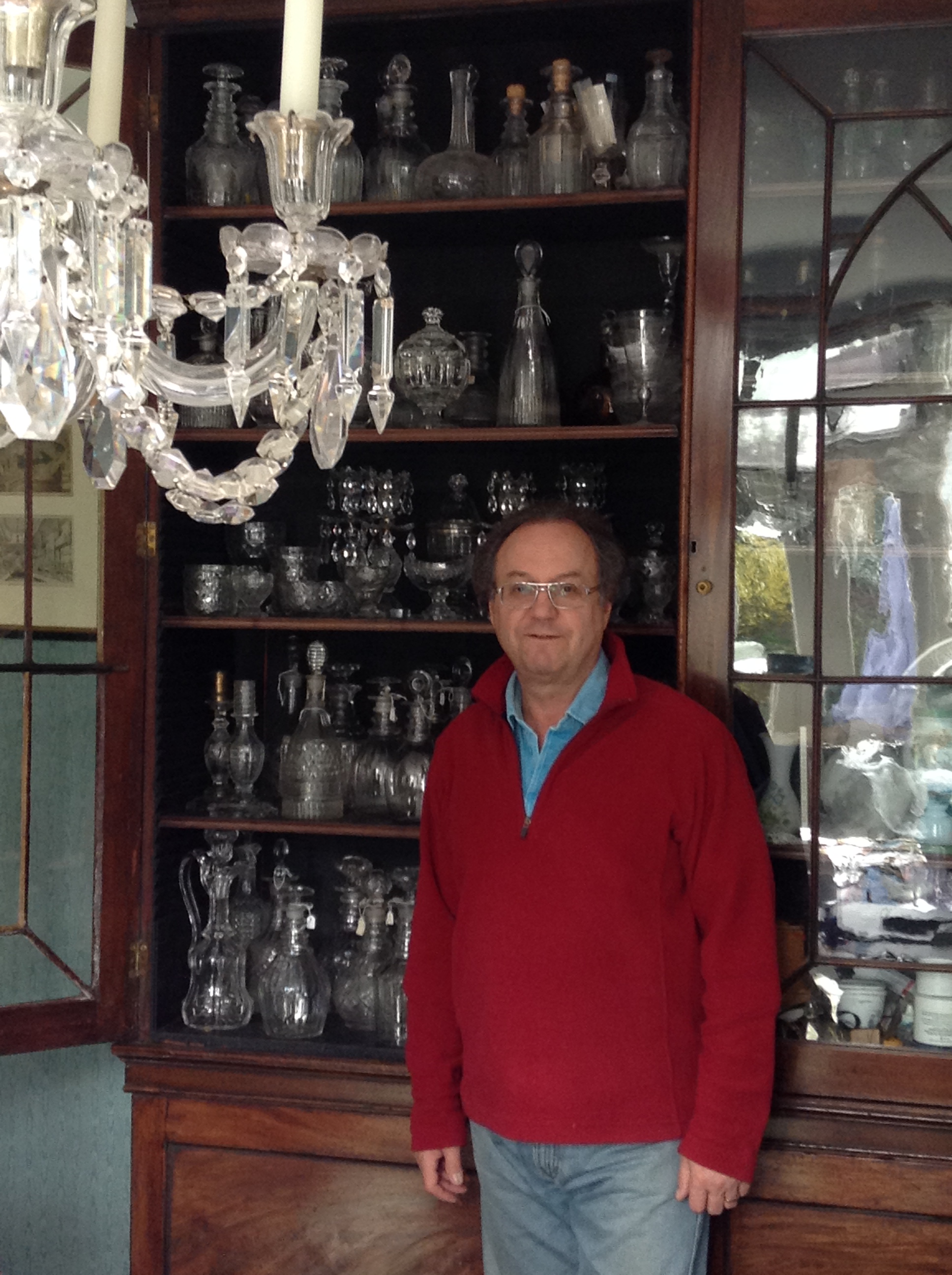
In January, Chris Coles, one of our most active and supportive volunteer researchers, undertook an oral history interview recording with Andrew Burne, of the antique glass specialists W.G.T. Burne (Antique Glass) Limited. W.G.T. Burne are based in London, and were established by Andrew’s father in 1936.

Andrew Burne

Andrew Burne, of W.G.T. Burne (Antique Glass) Limited. Photo courtesy of Andrew Burne.

In a wide-ranging interview, Andrew told us about the early history of W.G.T. Burne – his father initially worked for the well-known specialist glass dealer, and author, Arthur Churchill, before setting up on his own in 1936. Andrew also shared his memories of other specialist glass dealers, including Delomosne and Maureen Thompson. There were also fascinating stories about buying trips taken with his father, and the early morning starts to buy in the antique markets at Bermondsey and Portobello in London….as well as an occasion when the actor and singer Dean Martin came into the shop. W.G.T. Burne sold many things to major collectors and museums, and also sold chandeliers to The White House, and Buckingham Palace.

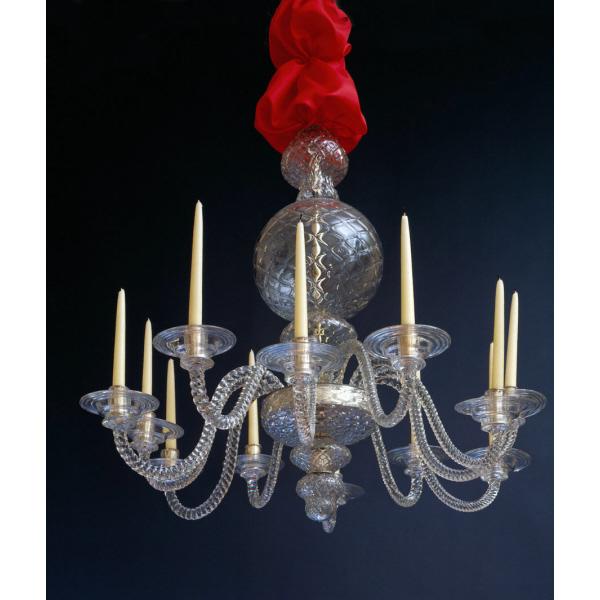
Amongst the ‘good finds’ that Andrew remembered was one of a set of early 18th century glass chandeliers, originally from Lincoln Assembly Rooms, which were bought from an auction at Christie’s South Kensington – the chandelier is now in the collections of Saint Louis Art Museum, in the USA. In the interview, Andrew recalled that the chandelier was sold by W.G.T. Burne to Hotspur, but it seems that the eventual dealer who sold the object to Saint Louis Art Museum (in 1993) was H. Blairman & Sons (see provenance information on the chandelier on the Saint Louis Art Museum Collections online).  Here’s a photograph of the chandelier from the museum website – and it’s a spectacular thing!

lincoln assembly room chandelier

Glass Chandelier, c.1740, from Lincoln Assembly Rooms. Saint Louis Art Museum. Funds given by Mr and Mrs Joseph Pulitzer and museum purchase, 1993. Image from Saint Louis Art Museum website.

An edited version of the oral history interview with Andrew (and all of the oral history interviews) will be available soon via the Antique Dealer project website.

Mark

May 2, 2015

New member of the Project Advisory Board

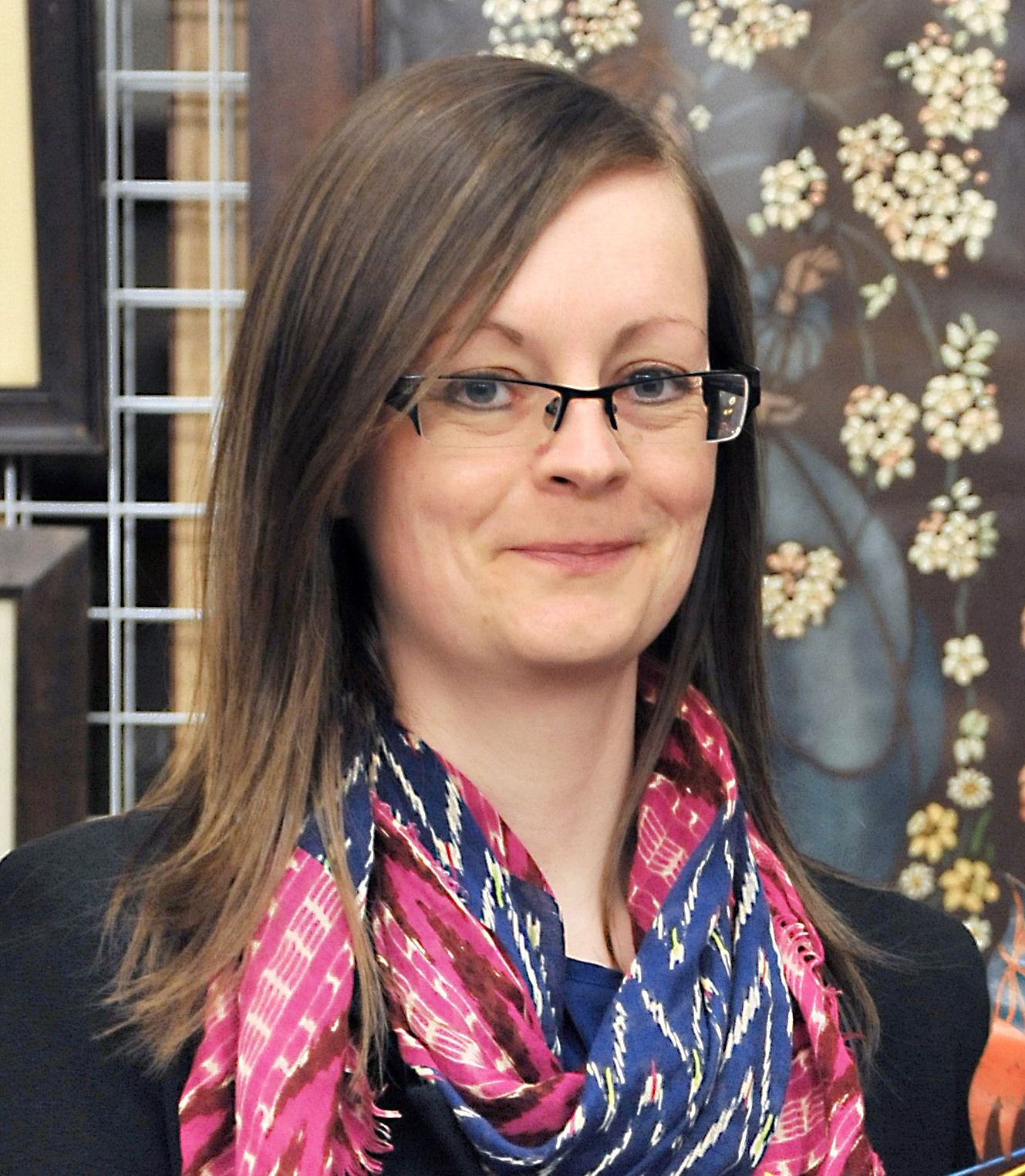
We are very pleased to welcome Yvonne Hardman, the new Head of Collections and Programmes at Leeds Museums & Galleries, to the Antique Dealer project Advisory Board.  Yvonne has recently, and very generously, stepped into the Advisory Board vacancy left by our friend and colleague Camilla Nichol, the former Head of Collections at Leeds Museums & Galleries (Camila, as you may know, left Leeds Museums to take up a position in Cambridge).

yvonne hardman

Yvonne Hardman, Head of Collections and Programmes at Leeds Museums and galleries

Yvonne’s role at Leeds Museums is to manage the team of curators, registrars, conservators, community engagement and digital media staff – so quite a job!….the Advisory Board role, by comparison, will be a doddle!

Until March 2015 Yvonne was the Art Gallery Officer at Touchstones Rochdale, where she had been for ten years, and prior to this she held posts at the Atkinson Art Gallery, Southport and the Grundy Art Gallery, Blackpool. From 2003-2009 she was on the board of directors at Manchester Craft & Design Centre and has been an Artistic and Quality Assessor for Arts Council England since 2009. She brings a wealth of museum-related experience to the Advisory Board, and we very much look forward to formally welcoming Yvonne to the project at future meetings.


Home Subjects

a working group dedicated to the display of art in the private interior, c. 1715-1914

The Period Room: Museum, Material, Experience

An International Conference hosted by The Bowes Museum and The University of Leeds

H. Blairman & Sons Ltd

A research project investigating the history of the antiques trade in Britain in the 19th & 20th centuries

Museum Studies Now?

'Museum Studies Now?' is an event which aims to discuss and debate museum and heritage studies education provision.

The Burlington Magazine Index Blog

art writing * art works * art market

East India Company at Home, 1757-1857

A research project investigating the history of the antiques trade in Britain in the 19th & 20th centuries