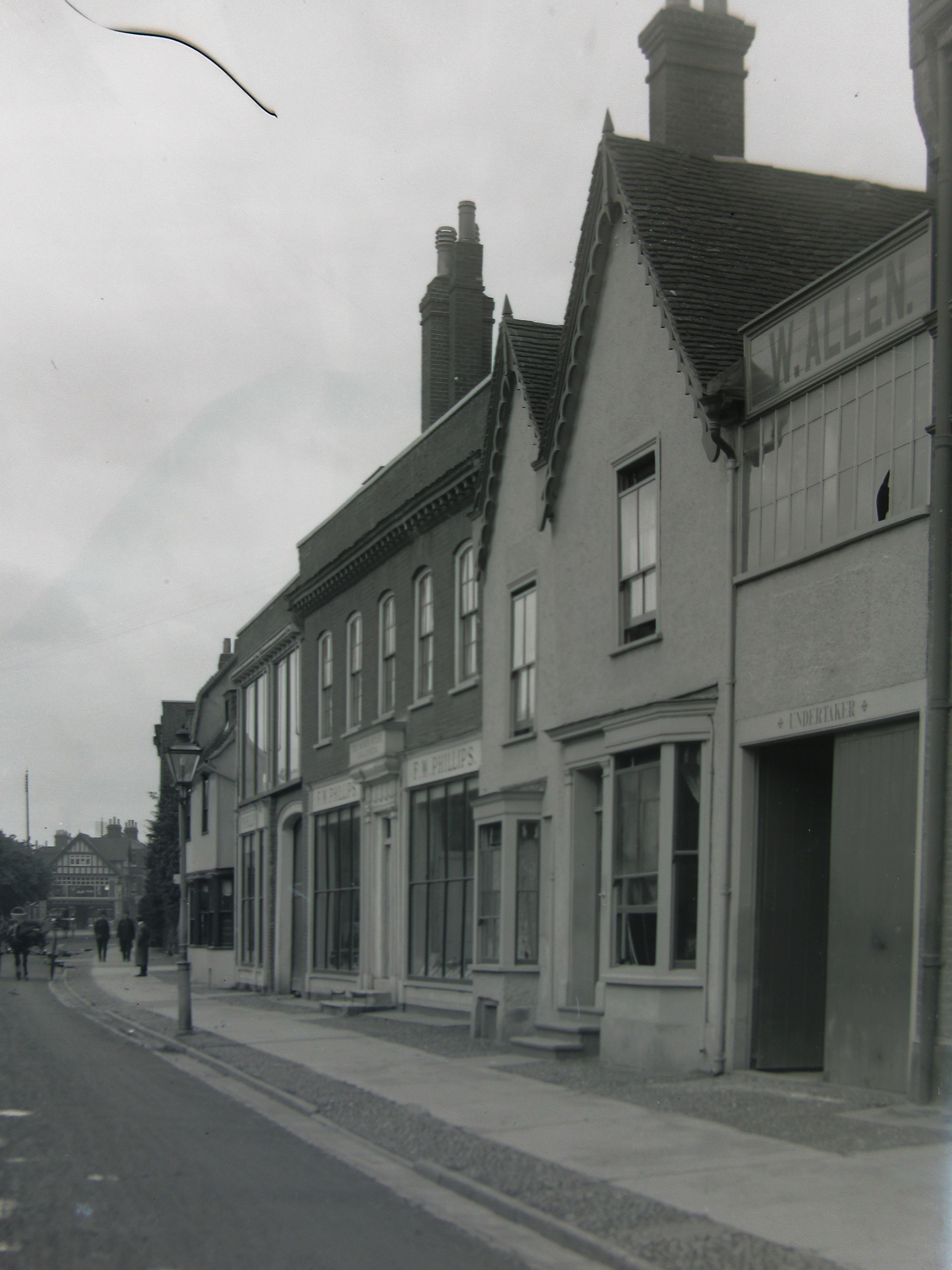
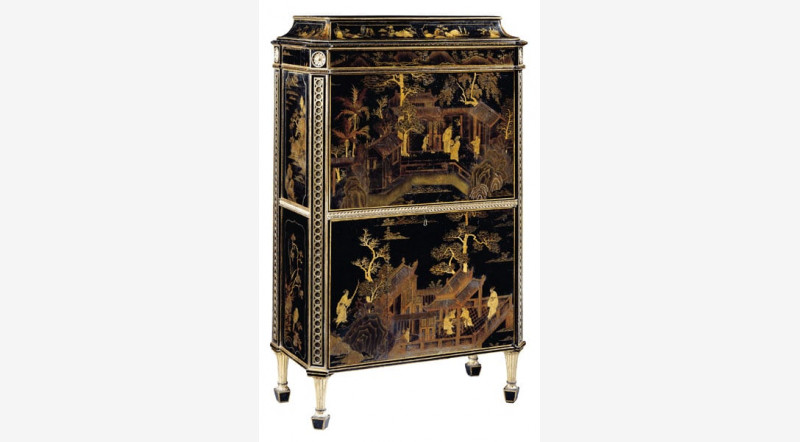
On behalf of everyone associated with the Antique Dealers Research Project we wish all of our blog readers and followers a Very Merry Christmas and a Happy and Healthy New Year!
Merry Christmas
Mark
A research project investigating the history of the antiques trade in Britain in the 19th & 20th centuries
I recently acquired a rare copy of the auction sale catalogue of the collection of antiques of the antique dealer and antiquary James Munro – all part of the growing body of historic antique dealer ephemera we are building at the University of Leeds. Munro traded from ‘The Old Curiosity Shop’ in Castle Street, Inverness during the period c.1870 to the opening decade of the 20th century. The catalogue dates from 1910 and includes a wide selection of antique objects that would have been of interest to collectors in the period. Like many Scottish collectors, Munro appears to have had a particular interest in Scottish antiquarian objects and especially anything associated with the Jacobite Rebellion. Munro is listed in the Trade Directory for Inverness in 1899 as ‘Antiquarian’, at 3 North Church Place, Inverness – I’ve yet to find out when Munro died, but the sale is a posthumous auction, so he certainly died a short time before 1910.

Title page, ‘A Catalogue of the Valuable Collection of Antiques…belonging to James Munro Esq. 1910. Private Collection.
The catalogue contains some fascinating photographs of the stock of objects that would have been on sale in Munro’s shop. The collection amounts to 1,398 lots at the auction; although it seems this was not the full extent of the collections of Munro. Indeed, the ‘Introductory Note’ to the catalogue, penned by the ‘auctioneer’ R. Noble, of ‘The White House’ Inverness (who also appears to have been working as a cabinetmaker – (or at least there is an R. Noble listed as ‘cabinetmaker’ at the White House in the 1909 Trade Directory for Inverness) states that a ‘Mr F. Maciver, of the Highland Bazaar, has pleasure in intimating that he has purchased the entire stock belonging to the estate of the late Mr James Munro and he is now issuing this catalogue of the articles to be sold by auction…..(and he) intends to dispose of the remainder by auction on a future date.’ I wonder if there is another catalogue of the other auction, if it took place?
There are some wonderfully interesting objects in the auction sale – lot 377a, for example – ‘AN OLD DIRK with ivory handle inlaid with gold.’ The catalogue states that this dirk was allegedly the same dirk that was used by Alexander Fraser, the ‘Young Master of Lovat (born 1677)’ to kill the piper at ‘the wedding at Teawig’ – a story that at the time had also been rehearsed in the recently published book, The Clan Fraser in Canada by Alex Fraser (1895). The dirk is a little hard to see in the photograph on the title page of the catalogue, but it’s the small dagger, just to the left of the rifle on the right hand side of the photograph (above).
The auction also included ‘A RARE OLD HIGHLAND TARGE, an excellent example of the XVII, Century…’ (lot 812 – and is the small, circular shield in the centre of the photograph of the title page of the auction catalogue – there is a very similar Targe in the National Museum of Scotland and we are checking to see if this might be related to that Targe?)
Munro’s collection must have been well-known in Scotland – he had earlier loaned a number of ‘Highland Curios’ and ‘Jacobite Relics’ from his collections to the Highland and Jacobite Exhibition, held at the Inverness Free Library and Science and Art Building in 1903 – these two photographs of the displays at the 1903 exhibition are from the ‘Exhibitions Study Group‘ website.
The Highland and Jacobite Exhibition took place between 14th July and 20th September 1903 and was one of a number of similar exhibitions that took place throughout the 19th century and into the opening decades of the 20th century throughout Britain.
The auction sale of Munro’s ‘Old Curiosity Shop’ took place at the ‘Music Hall, Inverness’ on Wednesday 28th, Thursday 29th and Friday 30th September 1910, and as well as the famous collections of ‘Highland Curios and Jacobite Relics’ also included a wide range of objects that were symptomatic of an antique dealers’ stock at the time – here’s a photograph of a selection of ‘Old Furniture’ as it was described at the time, from the auction catalogue –
The chairs appear to be a selection of 18th and mid 19th century examples, as well as some evidently of more recent date, supplemented by some antique mirrors and pole firescreens. The small corner chair in bottom left is especially interesting – it was described as ‘an Old Laburnum Corner Chair from Orkney, supposed to have belonged to the Bishop of Orkney’ (Lot 937).
Whether the chair actually had this illustrious provenance is, I guess, not really the point – as with many of these ‘relics’, it was the object’s role as ‘story teller’ that was central to their interest to collectors. As the commentary of Mr Noble suggests in the ‘Introductory Note’ to the catalogue – ‘Anyone visiting his Old Curiosity Shop in Castle Street and looking around could not help feeling as if transported back into the times of clan feuds, and even into Druidical and Pictish ages.’
Mark
Our ‘Voices from the Trade’ oral history interviews continue to make progress, thanks again to the BADA for their generous support towards the Oral History project. 
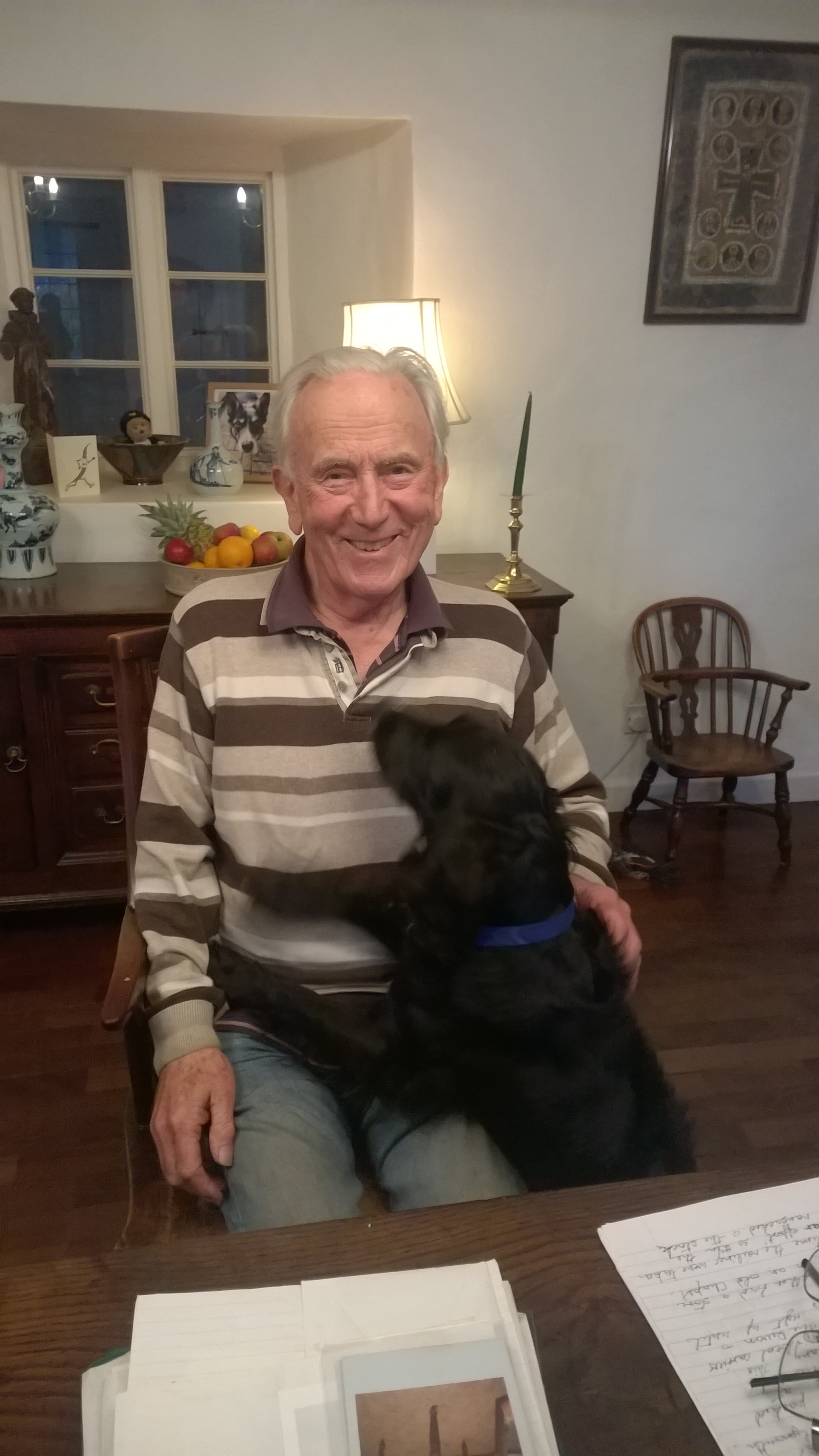
Our most recent interview was with John G. Morris (and his wife Lorraine). John established his own business, John G. Morris Limited, in Petworth, West Sussex, in March 1963, and will be very well known to many readers of the antique dealers blog. John was a specialist in antique English Furniture and his shop in Petworth was a regular feature in the country antique trade for more than 35 years, until his eventual retirement in 1996.

John G. Morris, photographed for the Voices from the Trade research theme, as part of the Antique Dealers Research project. Photograph copyright Antique Dealers Project, University of Leeds, 2017.
John is now 87 years of age, and as well as some fascinating reflections on his own antiques business, he also had some astonishingly vivid memories of the time he began his career in the antiques trade, starting with the world-famous antique dealers M. Harris & Sons on 4th November 1946. During this enthralling interview, peppered with delicious anecdotes of his time at Moss Harris, John recalled with amazing clarity the characters he encountered during an astonishing 70 years experience of the antique trade!
John started with Moss Harris & Sons, aged just 16 years of age – working in workshops at M. Harris, at 27 Little Russell Street, near the British Museum. The main showrooms for M. Harris were in New Oxford Street (shown below, in c.1921); John recalled a different shop front when he joined the firm in 1946 – and thinks that the shop front was changed sometime in the late 1930s, just before World War II.
M. Harris were perhaps the leading antique furniture dealers in the world and when John joined the firm in 1946 they had been trading for 80 years. The business had roots back to 1868, with the firm of D.L. Isaacs. Moss Harris, who made his first fortune as a dealer in horsehair, recycling this material back into the furniture trades for upholstery work, acquired the D.L. Isaacs business around the time of World War I and established M. Harris & Sons. They published a celebratory publication in their centenary year 1968. When John worked at the firm, he recalled that they still had more than 100 rooms filled with antique furniture.
John initially worked under the then office manager, Harold Dawson, and was tasked with booking in goods that constantly arrived in the yard behind the New Oxford Street shop – he remembered that in those days there was often so much stock that they had trouble getting it into the store rooms in time before closing the yard. John was paid £2.0.0 per week when he started, but obtained a pay rise of 5 shillings a week within a few months.
John’s memories of the business in the 1940s and 1950s will, I’m sure, be a rich resource for future scholars; he remembers, for example, one of the old retainers from the D.L. Isaacs business deal (there was an agreement, apparently, that a member of the Isaacs family was to be attached to the business until the last member of the family died out) – and John remembers ‘Old Ick’, resplendent in top hat, walking the floor of the M. Harris galleries. John also remembered the sad day when George Harris (one of two sons of Moss Harris) died suddenly of a heart attack; George was found dead in his Bugatti in Mecklenberg Square at 4am. John recalls having to steer George’s Bugatti back into the yard at M. Harris as the police removed the car back to the shop. One of the lighter memories John recalled, was the time in 1947 when Sidney Harris (the other son of Moss Harris), was entertaining some important clients at the Grosvenor House Antiques Fair, but had inadvertently left the shop without his wallet. John was immediately dispatched to the Grosvenor House Hotel with £100 in crisp £5 notes, and was allowed by Sidney to wander the stands at the Grosvenor House Fair during the afternoon – the first time that John had seen Grosvenor House, which was then the premier event in the antiques calendar.
John also recalled that in 1946, when John joined the firm, business was booming, but after John did his National Service in 1948, and returned to M. Harris in the Spring of 1950, he remembered that the business had changed; George had died in 1947, and Sidney, his brother, also died in the late 1940s, leaving the firm with significant Death Duties to pay.
There are many other more amusing, and illuminating anecdotes of John’s time at Moss Harris – memories of visits by Queen Mary and the Princess Elizabeth in the early 1950s (Moss Harris were granted Appointment to Queen Mary as ‘Dealers in Antique Furniture & Works of Art’), as well as many other well known personalities and V.I.P.s.
John’s memories of his own business, which he started, with his wife Lorraine, in 1963, were equally fascinating. He recalled the antiques scene in Petworth – which when he opened his shop in 1963, had just 4 antique businesses; 2 of which were cabinetmakers and antique dealers (Ron Denman and Mr Collingham)….

Lorraine Morris, wife of John Morris. Photograph 2017. Photograph copyright Antique Dealers project, University of Leeds.
…. and 2 antique dealers proper (Bill Boss, and Miss Streeter, of Streeter & Daughter). As the antique business boomed during the 1960s, 1970s and 1980s, Petworth became home to at least 15 dealers, eventually becoming a key location for the trade. During the interview John also recalled his memories of some of the ‘old characters’ of the antique trade, now long gone – people such as Sam Wolsey, Claude Partridge, J. Rochelle Thomas, and ‘Jippy’ Botibol (J. M. Botibol), as well as more recently departed dealers such as the legendary Dick’ Turpin.
Our interview with John makes an absolutely fascinating addition to our corpus of interviews with members of the antique trade, and like all of our interviews, will, once edited, be available on the project website in due course.
Mark
Thanks again to the generosity of our wide community of friends and supporters we have accepted the donation of the partial archive of the well-known antique furniture dealer M. Turpin. Maurice ‘Dick’ Turpin (1928-2005) established his business in the early 1950s, initially in Old Brompton Road, Knightsbridge, London, before gravitating towards the Mayfair area and settling in Bruton Street by the 1990s – a street which at that date was also the location of R.A. Lee & Sons, whose archive is also now part of the collection of Dealer archives at Leeds. Indeed, the M. Turpin archive is a great addition to the growing number of antique dealer archives now at the Brotherton Library Special Collections at the University of Leeds.
We have many people to thank for the M. Turpin archive coming to Leeds University – the archive has been very generously donated through the auspices of Bonhams Auctioneers (and special thanks to the help of the Bonhams team at Leeds Office, Jane Winfrey, Jackie Brown, and Simon Mitchell; and Alison Hayes in their London office). The initial donation to Leeds was facilitated by Sally Stratton and Guy Savill, whilst they were at Bomhams London office (and they are now heading up the new auction business The Pedestal). I understand, from Sally, and from our previous project Research Fellow, Elizabeth Jamieson, that the original donation was through Jackie Mann, Maurice’s partner – so there are quite a few people to thank for ensuring that this important archive is saved for future generations of researchers – thank you all!
The M. Turpin archive itself mainly consists of a large series of fascinating photographs of stock sold by the firm; there are literally 1000s of B/W and colour photographs. Unfortunately there are no stock book or business records, but that said, the material donated to us gives a fascinating insight into a major antique furniture business over the course of 30+ years of trading. There are, for example, photographs of the stands that M. Turpin took at various antiques fairs in the period. Here’s a B/W photograph of the stand of M. Turpin at the Maastricht antique fair in 1979.

M. Turpin, Maastricht Antique Fair 1979. Photograph courtesy of the Brotherton Library Special Collections, University of Leeds.
And another photograph, this time in colour, of M. Turpin’s stand at the same fair in 1988 – a much larger stand, with many more objects, indicative of the success of the business no doubt.

M. Turpin, stand at Maastricht Antiques Fair, 1988. Photograph courtesy of the Brotherton Library Special Collections.
Amongst the many wonderful and historically significant objects that passed through the firm of M. Turpin was this flamboyant Regency period polychrome penwork cabinet – probably well-known to many people.

Regency Penwork Cabinet – M. Turpin archive, Brotherton Library Special Collections, University of Leeds. Original photograph copyright P.J. Gates, London.
The cabinet was purchased by Maurice Turpin in the 1980s, and seemed to have remained with him until it was sold at the auction sale by Christie’s of the M. Turpin Collection in 2006, after his death – (see Christie’s The Legend of Dick Turpin 9th & 14th March 2006), where it sold for £78,000. This history is, of course, well known in many circles, but what is perhaps less well known, and revealed in some of the discrete sections in the M. Turpin archive, is the history of the restoration of the cabinet. The Turpin archive contains a large number of restoration records for a wide range of objects that were either part of stock/collection of M. Turpin, as well as, it seems, records of restorations to many other objects belonging to collectors and dealers. These make fascinating reading. The penwork cabinet, for example, appears to have suffered minor damage to the cornice at some stage – here’s a photograph of the record in the archive.

Restoration Record – Penwork Cabinet: M. Turpin Archive, Brotherton Library Special Collections. Photograph copyright Brotherton Library Special Collections.

Restoration Record – Penwork Cabinet. M. Turpin Archive, Brotherton Library Special Collections, University of Leeds. Photograph copyright Brotherton Library Special Collections.
Other restoration records provide valuable insight into the processes of restoration and the changing taste and fashion for the presentation of antique objects – here, for example is the record of the cleaning and minor restoration to an early 18th century walnut stool.

Restoration Record – M. Turpin Archive. Brotherton Library Special Collections, University of Leeds. Photograph copyright Brotherton Library Special Collections.
It is a great pity that the actual business records and stock books for M. Turpin do not survive (unless someone knows where they are?), but this very extensive photographic archive, and the fascinating series of restoration records, will, I’m sure, be invaluable for future research into the history of the antique trade. The M. Turpin archive will soon be catalogued and made available for research, so keep your eyes on the Brotherton Library Catalogue online.
Mark
Our Oral History Interviews with key members of the antique trade continues – thanks to the energy and enthusiasm of Chris Coles, our Lead Volunteer Researcher; and thanks again to the BADA, who so generously support these new ‘BADA Voices’ extensions to the Oral History research theme for the Antique Dealers project. 
Our new interview is with Michael Pick, who for many years worked at the well-known English Furniture dealers Stair & Company – Michael also worked at Frank Partridge & Co., so his experience at the top of the antique trade is very considerable indeed.
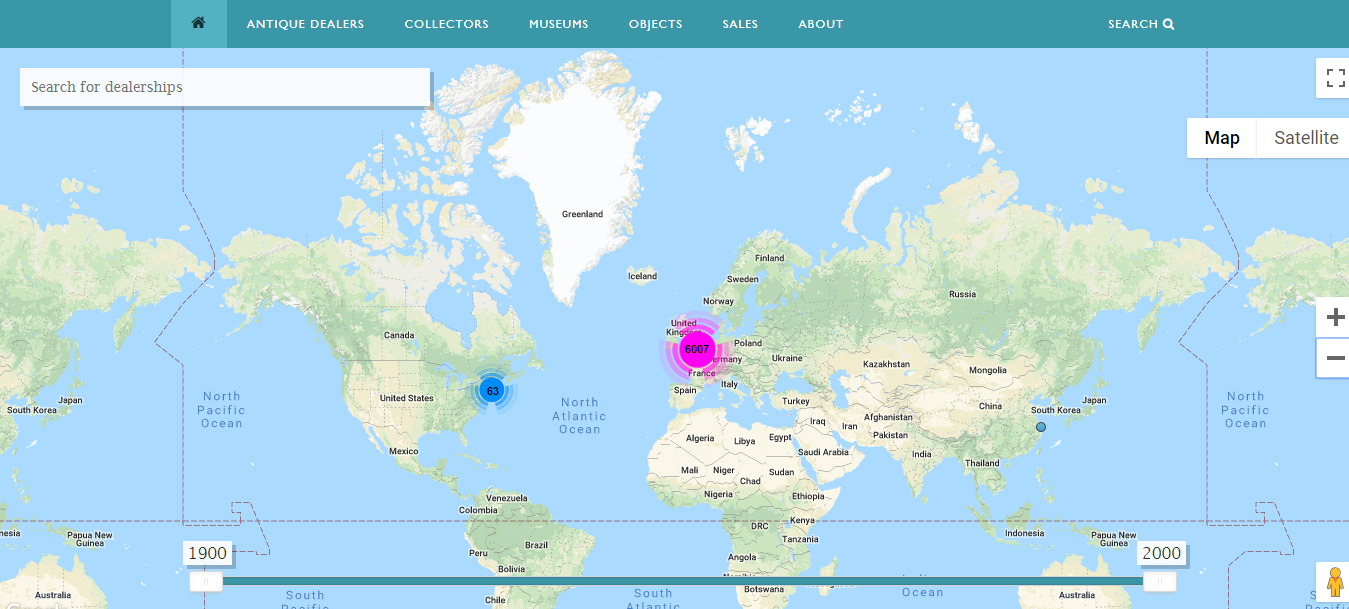
Michael started his career in the antique trade in 1978, joining the firm of Stair & Co (established as Stair & Andrew in 1911) under the care and tutelage of Mary Holder, who had formerly worked for the dealership R.L. Harrington, which Stair & Co purchased in 1968. Michael stayed with Stair until 2000, when he joined Frank Partridge & Co., staying until 2006. For more information on Stair & Co., and Partridge & Sons, and many other dealers, please see our research project interactive website antiquetrade.leeds.ac.uk
During this highly engaging interview Michael told us how he was introduced to the world of antiques by the well-known writer on collecting, Bevis Hillier (who was at the time at Connoisseur Magazine) before he eventually obtained a position with Stair & Co in 1978. Michael reflected on his time at Stair & Co., recalling the regular buying trips with Mary Holder around the other London dealers, in the Fulham Road and Kensington Church Street in the 1970s and 1980s. As Michael suggested during the interview, the importance of American collectors to many British antique businesses, not least Stair & Co., was a key theme. Stair had opened shops in Palm Beach and Williamsburg in the USA after WWII, expanding their American operations that had been established by Stair & Andrew in New York in 1911. Michael highlighted how crucial the UK-USA market was to the Stair business, recalling that Alastair Stair came to London 2 or 3 times a year with his wife Phyllis, buying 300 or so pieces on each trip to feed the appetite for American collectors and decorators.
As many of the followers of the Antiques Dealer project will be aware, Stair & Co was bought by the music mogul and antique collector Jules Stein (1896-1981) (owner of MCA, Music Corporation of America and film star agent), in 1952; the business was sold to the financier David Murdoch in 1981 after the death of Stein. Michael tells us that the Stair business shifted slightly with the acquisition by Murdoch, moving to a much more eclectic look, a mixture of old and new, that is now so fashionable. Indeed it seems that David Murdoch preferred this look, exemplified, as Michael tells us, in the collections that Murdoch assembled at his home ‘Casa Encantada’ in Bel Air, Los Angeles. This was a property originally built in the 1930s for the Hylda Boldt Webber, before being bought by the hotelier Conrad Hilton (1887-1979) who sold the house to Murdoch in 1979, shortly before Murdoch bought the Stair & Co business. And here’s a an early photograph of ‘Casa Encantada’ (taken in 1939), when it was then owned by Mrs Boldt Webber.

Casa Encanada, Bel Air, Los Angeles, in 1939, the home of Mrs Boldt Webber. Photograph copyright University of California.
Murdoch apparently purchased the Bel Air mansion fully furnished from Conrad Hilton, before selling the contents and refurnishing the property with, then, very fashionable ‘English Antiques’. These recollections from Michael certainly reinforce the historical significance of the transatlantic trade in antiques, not just in the opening decades of the 20th century (as many people will know), but also how these significant exchanges continued throughout the 20th century.
Our interview with Michael continued with his reflections on his move to Frank Partridge & Sons in 2001; Michael recalled that the most significant change was not so much in the quality of the objects that Stair & Co and Partridge sold, but more in the sheer scale of the operations – Michael tells us that Stair & Co had just 3 members of staff, whilst Partridge had as many as 32 members of staff when he joined the firm.
There are many other fascinating observations on the history of the antique trade in our interview with Michael, from the changing taste in antiques, the presentation (and sales ticketing) of objects, to the increasing significance of Antique Fairs.
Like all of our other Oral History interviews with members of the antique trade, our interview with Michael will be available via the project websites, once our team have had a chance to edit the interview. Our thanks go to Michael and Chris for all their help with the ‘Voices from the Trade’ oral history interviews project.
Mark
As part of my UGRLS project, I’ve been researching purchases made by Charlotte Shaw, the wife of George Bernard Shaw, which led me to take a research trip to the British Library in London. Through my work with the stock books held in the Brotherton Library Special Collections I came across a number of purchases made by a person named Shaw, thus the research trip was to corroborate these findings by locating these purchases in the diaries and chequebook stubs of Charlotte. I was aided greatly in this endeavour by Alice McEwan from Shaw’s Corner, a National Trust property I’ll be visiting shortly to gain a deeper insight into the Shaw’s.
I had neither been to the British Library before, nor undertaken a research trip before, so I found the two days I spent there greatly beneficial in developing my research skills and introducing me to one of the most valuable resources an historian can access. Perhaps the most striking thing I encountered upon my first visit was the King’s Library, which is impossible to miss and personally, I found it amazing that such a range of material is stored in one place. Especially when one considers the material stored within this, such as some of the earliest examples of the printing press and rare copies of the Bible. I have included some photographs I took on my visit below, which to me help to convey the size and scale of the British Library.

Photograph of the exterior of the British Library

Photograph of the King’s Library within the British Library
Whilst the quantity of references Alice and I found was far less than we had anticipated, I still found the trip to be successful to myself in other ways. For example, through reading Charlotte’s diaries and chequebook stubs I gained a further insight into her tastes for interior decorating. This allowed me to remove the purchase of some pink carpet from my research on purchases made by a Shaw in the Phillips of Hitchin stock books, as it seemed highly unlikely this was bought by Charlotte. Furthermore, we discovered another item for me to research further through discovering a reference to chair covers. Within Shaw’s corner, there is a chair cover and several pieces of fabric in the Nonesuch pattern offered by Phillips (see photograph below), which led us to believe there is the possibility that these items of fabric were purchased from Phillips of Hitchin. This will require further research on my behalf, as I have encountered a reference to the sale of the Nonesuch pattern previously. There is also the possibility that the purchaser of said fabric was not noted down, making the task that Charlotte purchased this from Phillips slightly more difficult.

Photograph of the Nonesuch pattern offered by Phillips of Hitchin.
I also found the fact that we failed to find more references in Charlotte’s documents to Phillips to be helpful, as it was the first time I have encountered this issue. Research can often lead to disappointment, when the documents you are looking for may no longer exist or you encounter evidence that mostly contradicts your theory, and so learning how to manage this and create new solutions is a valuable skill to learn. I also found it highly beneficial to learn how to utilise the British Library before I begin more in-depth research as part of my degree, and the insights I gained from Alice regarding post-graduate study were incredibly valuable. To that end, I am greatly looking forward to visiting Shaw’s Corner to learn more about both the items within the house and the Shaw’s themselves, as well as continuing my research in the Phillips of Hitchin archives to locate the sale of several items of furniture and the Nonesuch fabric.
Liv
Following the blog post highlighting the recent donation of the H.M. Lee and R.A. Lee archives (see previous blog post), we discovered that mixed in with the material that Georgina Gough so kindly donated to the University of Leeds was some material related to the well-known antique dealers Stair & Andrew. Its not known how this material ended up in the Lee archive, perhaps one of the directors at Stair gave Ronald Lee the material when the firm of Stair & Co (as the business was then called) closed in the early 2000s?
The material is relatively small, comprising just three albums of press cuttings, advertisements and some brochures, dating mainly for the period from the 1940s onwards; it includes a folder devoted to the firm of R.L. Harrington (formerly known as Christy’s of Kent), trading from 120 & 125 Mount Street, London, which Stair & Co acquired in 1968
The firm of Stair & Co were highly significant dealers, having been established in London as Stair & Andrew in 1911, before opening a branch in New York in 1914. The business was founded by Arthur Stair and Valentine Andrew, who met at the furniture makers Waring & Gillow, before working for the decorating department at Crawford Company, New York.
The actor-manager and collector Sir George Alexander and the furniture historian and collector Percy Macquoid were directors of the firm in the early days of the business; Arthur Stair bought Percy Macquoid’s ‘Yellow House’ in London in the 1920s, retaining some of Macquoid’s furniture collection. Alastair Stair (1913-1993), the son of Arthur Stair, joined the firm in 1935. They traded as Stair & Co after WWII, and was 50% owned by the collector Jules C. Stein (of Music Corporation of America) from 1952. David Murdock, the Los Angeles financier, bought the firm in 1981.
The Stair & Co material will, eventually, be supplemented by some other Stair & Andrew material already promised to the archive – see an early blog post on the antique dealer blog (post July 2014) – here’s an image of one of the two scrapbook albums promised to the Brotherton Library Special Collections.
This small collection of Stair & Co material will soon be available for research in the Brotherton Library Special Collections.
Mark
Our corpus of antique dealer archives continues to expand – this week we accepted delivery of the archive of the world famous antique dealers Henry Morton Lee and Ronald A. Lee, generously donated to the Brotherton Library Special Collections at the University of Leeds by Georgina Gough, the daughter of Ronald Lee. The archive (shown below before deposit in the Special Collections) comprises a selection of stock books, sales ledgers, press cuttings and photographs of stock, together with what appears to be a complete run of stock cards, dating from the 1920s to the 1990s.
The Lee family antique dealing business began in Kingston on Thames just after WWI (Henry Morton Lee began as a hairdresser in London, counting King Edward VII as a customer); Ronald Lee joined his father in the business in 1931 before eventually setting up on his own in 1949 – the business closed in the 1990s.
During the 1920s and 1930s Henry Lee sold a vast array of objects to many of the most important dealers of the day, including Joseph Duveen (1869-1939), the son of Joseph Joel Duveen of the world-renowned Duveen dynasty of dealers – here’s just one page of sales to Duveen, in 1927 – Henry sold him, amongst other things, ‘a Double Dome Walnut Bureau Bookcase..£161.0.0’ and a ‘Walnut armchair £55.0.0.’ – very fashionable, and very expensive, objects in the 1920s and 1930s.

Lee Archive, sales ledger – entry for Duveen, 1927. Brotherton Library Special Collections, University of Leeds.
Ronald Lee, like his father Henry, was a highly successful dealer, and was also an expert on clocks – especially the clockmaker Joseph Knibb and family (Ronald wrote the biography of the Knibb family of clockmakers in 1965 – still a key work on the subject). Ronald sold an astonishingly wide range of objects, to collectors and museums all over the world – a key driver for Lee appears to have been the historical significance of objects (as well as their beauty of course); he was clearly an antiquarian dealer, demonstrated by the historical importance of many of the objects he sold –
The Savernake Horn for example – sold (in partnership with the well-known silver dealer S.J. Phillips) to the British Museum in 1975.
And the so-called ‘Katherine Parr Pott’, (see below) sold to the Museum of London in 1967 – this glass tankard, with silver mounts dated 1546-47, emblazoned with the arms of Sir William Parr, was bought by Ronald Lee from Sudeley Castle – the glass body is now believed to be an 18th or 19th century replacement. The tankard has an illustrious history, having been acquired by the collector Horace Walpole in 1758 (cost £2.19.0) and sold at the dispersal of the Collections at Strawberry Hill (Walople’s house) in 1842 and bought by John Dent for £3.13.6 – the Dent-Brocklehurst family, at Sudeley Castle, Gloucestershire, sold the Parr Pot to Ronald Lee in 1967, before Lee sold the tankard to the Museum of London for £18,214.00 in the same year. The tankard was subject to an Export Stop because of its historical significance; according to the archive it seems that Lee had initially and successfully negotiated a sale to the Boston Museum of Fine Art in the USA, but funds were raised through the British Government, The Art Fund, The Pilgrim Trust and the Goldsmiths Company to save the tankard for the Nation.
The ‘Parr Pot’ is just one of a wide range of fascinating stories about the acquisitions made by Ronald Lee in the Lee archive…there are far too many to recount in a short blog post, but it is worth retelling the story of the acquisition, and subsequent sale, of one of the most interesting objects that Ronald Lee sold – the story demonstrates the significance of ‘Object Biographies’ in the conceptualization (and reconceptualization) of objects – it is also a story that re-embeds the significance of the narrative of the personal into these now very public objects.
Anyway, in 1966 Ronald Lee negotiated the sale of what was then considered to be an exceptionally rare 13th century Limoges enamel Ciborium to the (then) Royal Scottish Museum (now National Museum of Scotland).

Ciborium, in the 13th century style – probably 19th century. Photograph copyright National Museum of Scotland.
Lee spotted the bowl of the Ciborium, then lacking it’s foot at an auction sale at Sotheby’s in April 1965.
He had, a few years earlier, again it seems at a Sotheby’s auction, acquired the stem/foot from a similarly dated object, and which (so Georgina Gough, Ronald Lee’s daughter tells us) Ronald had given to his wife as a little present –

Ciborium Foot; Photograph, Lee Archive, Brotherton Library Special Collections, University of Leeds.
Seeing the bowl at Sotheby’s presented the opportunity of reuniting the foot and bowl and Ronald Lee had to do the right thing – (it must be a common practice in all antique dealer families that objects are inherently unstable….and always subject to potential future sale…). The story was reported in the Press at the time, recounting the breathless moment when the foot and bowl fitted together as one – rather like the story of Cinderella and the glass slipper!
But anyway, Lee offered the Ciborium, now with its foot, to the Royal Scottish Museum in 1966, and the then Keeper of Art, Cyril Aldred, approved the acquisition and the object entered the collections in Edinburgh. The Ciborium was lauded as a major acquisition, it was one of the most expensive objects ever acquired by sale by the museum at that time – costing £8,500 – an enormous sum in 1965. It was related to the Master Alpais, the creator of the 13th century Ciborium in the collections of the Louvre Museum in Paris, and to a similiar Ciborium in the collections at the British Museum in London; the world renowned scholar and curator at the Victoria and Albert Museum, John F. Hayward considered these comparisons and the significance of the Ciborium in an extensive article ‘A Newly discovered Limoges ciborium’ in Connoisseur (vol CLIX, pp.240-1). So consensus at the time, from leading experts, curators, and one of the leading antique dealers, was that the Ciborium was of the 13th century, and possibly associated with the workshop of the Master Alpais.
But authenticity is also an unstable concept – indeed, if we can borrow, and slightly amend, a phrase from Georg Simmel (1858-1918), the philosopher and critic, and founder of the discipline of anthropology, (he writes that ‘value is not a property of objects, but a judgement by a subject’), then perhaps we can say that authenticity is also not a property of an object, but a judgement by a subject – Time, and, more importantly, new knowledge structures have repositioned the Ciborium, and it now considered to be a 19th century copy – for a full, and excellent account of the art historical and scientific analysis of the Ciborium at NMS and a comparison with that at the British Museum see ‘The Heritage of ‘Maitre Alpais’ edited by Susan La Niece, Stefan Rohrs and Bet McLeod, (British Museum Press, 2010).
There is no moral to this story as such – I hesitate to rehearse the notion ‘caveat emptor!’, especially as I am writing about antique dealers, and I’m conscious that to rehearse this story is also to further embed the trope of the dealer as ‘problematic’ in the cultural consciousness – but it remains a fascinating story about an object, and how its meaning, and significance, is reframed as it moves between discrete, but intimately interconnected realms. As this story recounts, the meaning of the Ciborium shifted as it moved between the realms of objects of commerce and economic value to those of heritage and museums, but, crucially, it retained its commodity status, and its status shifted again as new approaches and methods established, (indeed constituted) the authenticity of the object.
But for me, being an old Romantic, the enduring story about the Ciborium is the very human story of Georgina’s recalling that the foot of the Ciborium was a present (albeit temporary) for Mrs Lee.
All the while these objects acquire significant status in museums, they remain as catalysts for innumerable personally situated memories, of the private, intimate relationships we have with things.
Mark
a working group dedicated to the display of art in the private interior, c. 1715-1914
An International Conference hosted by The Bowes Museum and The University of Leeds
A research project investigating the history of the antiques trade in Britain in the 19th & 20th centuries
'Museum Studies Now?' is an event which aims to discuss and debate museum and heritage studies education provision.
art writing * art works * art market
A research project investigating the history of the antiques trade in Britain in the 19th & 20th centuries