Our first in this new series of Behind the Scenes of the Year of the Dealer is on one of the films at the V&A South Kensington – Frank Partridge & Sons and The Great Bed of Ware – here’s the film
This film is about average in terms of the length of all the YoD films at films at 3 minutes 40 seconds, but it was planned to be a bit longer at nearly 5 minutes. This was too long for a trail; we thought that about 4 minutes was the longest we should make the films – this was to factor in that some viewers may watch the films on their phone in front of the object in the museum – so we cut quite a lot of information about the more recent history of Frank Partridge & Sons out of the film and moved that information to the Frank Partridge films at The Bowes Museum, Preston Park Museum, Temple Newsam, and Lady Lever Art Gallery (Partridge is the only dealer represented in all 5 museum film trails). We edited the script to reduce the running time of the V&A Partridge film; there were also too many images as well, which meant they appeared and disappeared on screen too rapidly, so we removed some of the images to allow the images that remained a little more time on screen.
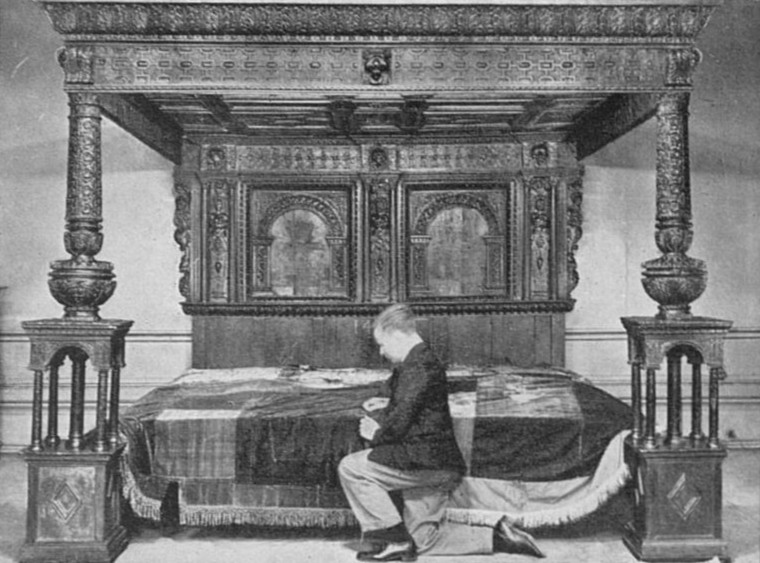
One of the images we removed was this photograph of the Great Bed of Ware at Frank Partridge’s shop at 26 King Street, St. James’s in London in 1931 (see below). The photograph shows a man kneeling in front of the bed – perhaps this is Frank Partridge, but we couldn’t be sure and as we had other images of the bed in Partridge’s shop we included those instead.
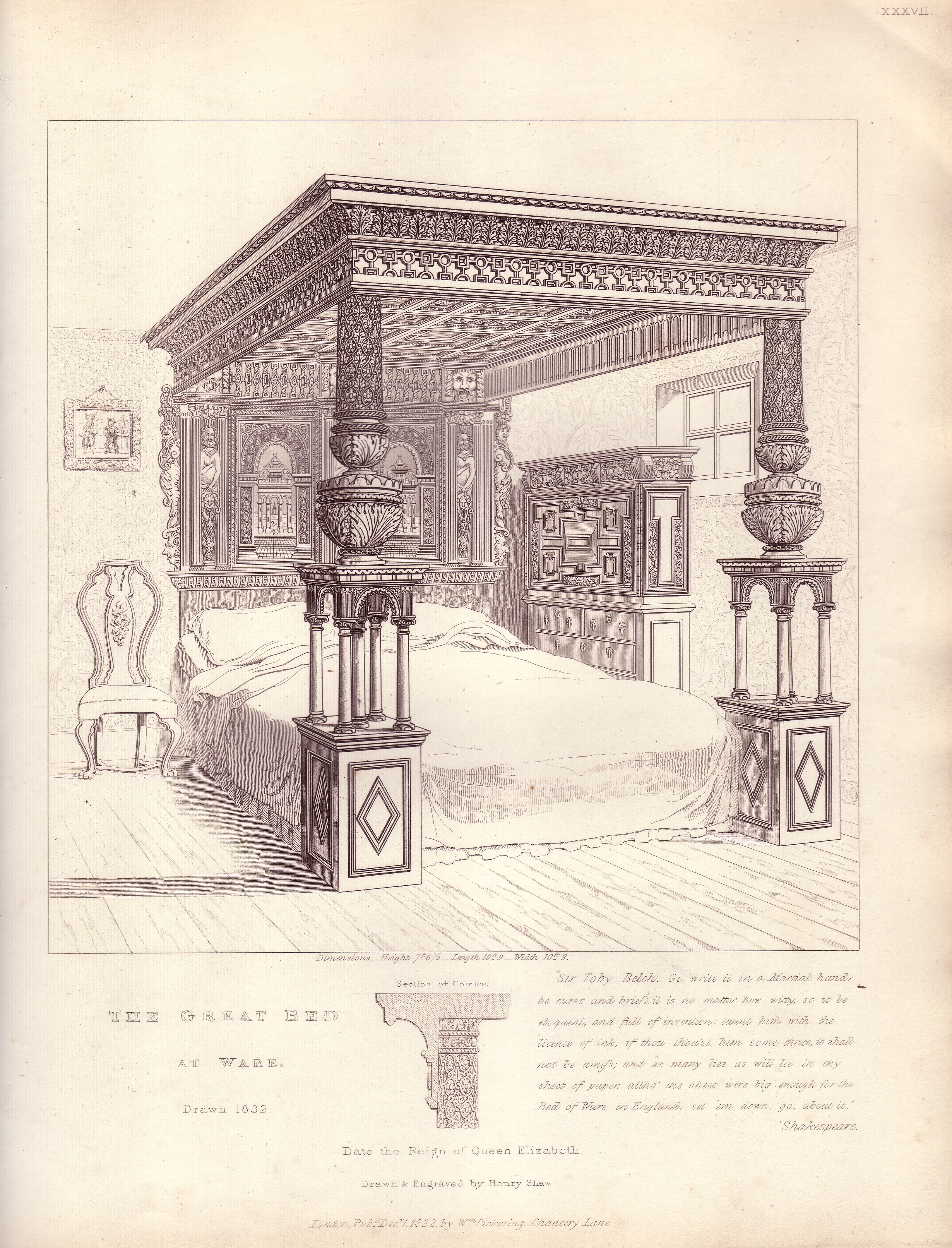
We also wondered about telling more of the story about the Great Bed of Ware – it has a long history, including being illustrated in Samuel Meyrick and Henry Shaw Specimens of Ancient Furniture (1836) (see below), one of the earliest depictions of the bed. But we really wanted to focus on the dealer, Frank Partridge, so decided not to include a more fulsome history of the bed. Such information is more commonly highlighted when the Great Bed of Ware is discussed anyway, and is available at the V&A and elsewhere.
One of the other changes we made was the representation of the house (the equivalent of the price of the antique to the price of a house at the time the antique was acquired by the museum is the common theme throughout all the YoD films) – we didn’t like the first attempt…the house looked too modern and a bit too ‘American’ (see below) (not that we have anything against Americans!), so we swapped the image for the more appropriate looking 1930s house (the bed was sold to the V&A in 1931) in the final version of the Frank Partridge & Sons digital film trial. We also decided that all the images of houses in the films should be images of houses dating from around the time that the dealer sold the object (the antique) to the respective museum, rather than this generic house image (below).
There were several other changes and edits to the film. I think we must have made at least 6 or 7 versions of each of the YoD films before we settled on the final versions – so that’s 50 films x 7…and enormous amount of work! For the V&A Partridge film one thing we debated about for a while was the use of what I called ‘the Monty Python Hand’ as a way of highlighting the carved initials ‘F.P.’ in the frame of the bed (see below).
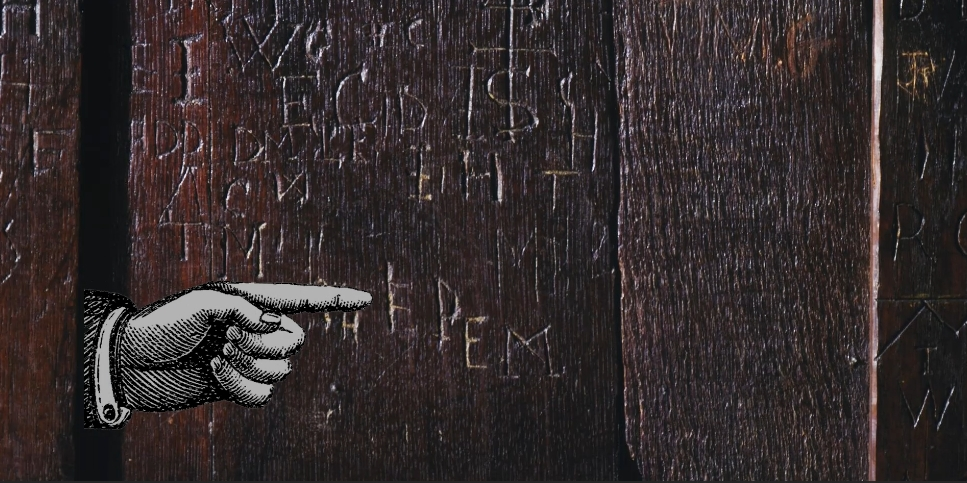
We tried various ways of highlighting the initials but we quite liked the quirky-ness of the Victorian hand – we used the hand in some of the other YoD films too. Patrick Bannon, who made all the films for us, also voiced the script for the extract from Frank Partridge’s memoirs in the V&A Partridge film – Partridge was originally from Hertfordshire, rather than the Wirral though (where Patrick is from)…so a bit of artistic license (as well as questions of economy) was needed!
See next week for more Behind the Scenes of the Year of the Dealer 2.
Mark


Leave a comment