Posts tagged ‘War-time dealers’

August 13, 2014

Oral History Interviews – Bill Beaton

We completed another of our oral history interviews on Monday 11th August – up at Kinross in Scotland, with William (Bill) Beaton.  Bill is in his 80s and retired from antique dealing about 25 years ago!  He started his antique dealing activities with his father, Walter Beaton, in about 1946 just after WWII, at his father’s shop at 37 Albert Square, Dundee.  Walter had opened his shop in c.1930, following 10 years working for an antique dealer in Dundee named Norries, and Bill continued the business in Dundee until his father retired in 1963, when Bill took over and subsequently moved the shop to Perth in 1970. Both Walter and Bill were members of BADA – Bill acted as Vice President at one stage.
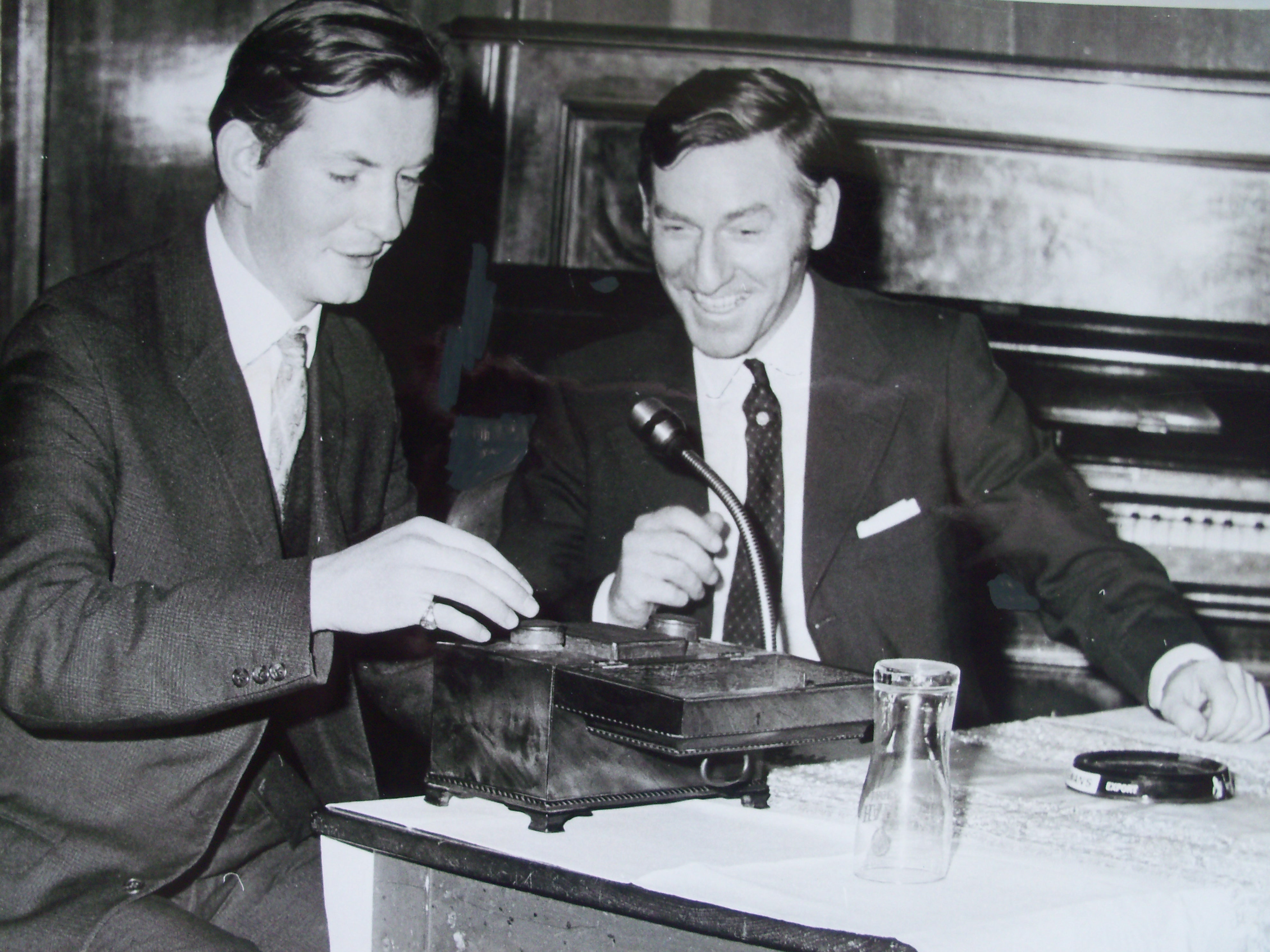
Bill Beaton (right) with Henry Fotheringham, c.1965. Copyright Perthshire Advertiser.

Bill Beaton (right) with Henry Fothringham, c.1965. Copyright Perthshire Advertiser. Courtesy of Bill Beaton.

Here is Bill (on the right), in c.1965, with his friend and colleague Henry Fothringham (a member of the Angus family, who also traded as an antique dealer, under the trading name of Grantully Castle Antiques), at the ‘Scottish Antiques Fair’.  Incidentally Bill was one of the founders of the Scottish Antiques fair, which was held in Edinburgh between 1964 and the mid 1970s. Here’s Bill’s stand at the fair, in c.1965.
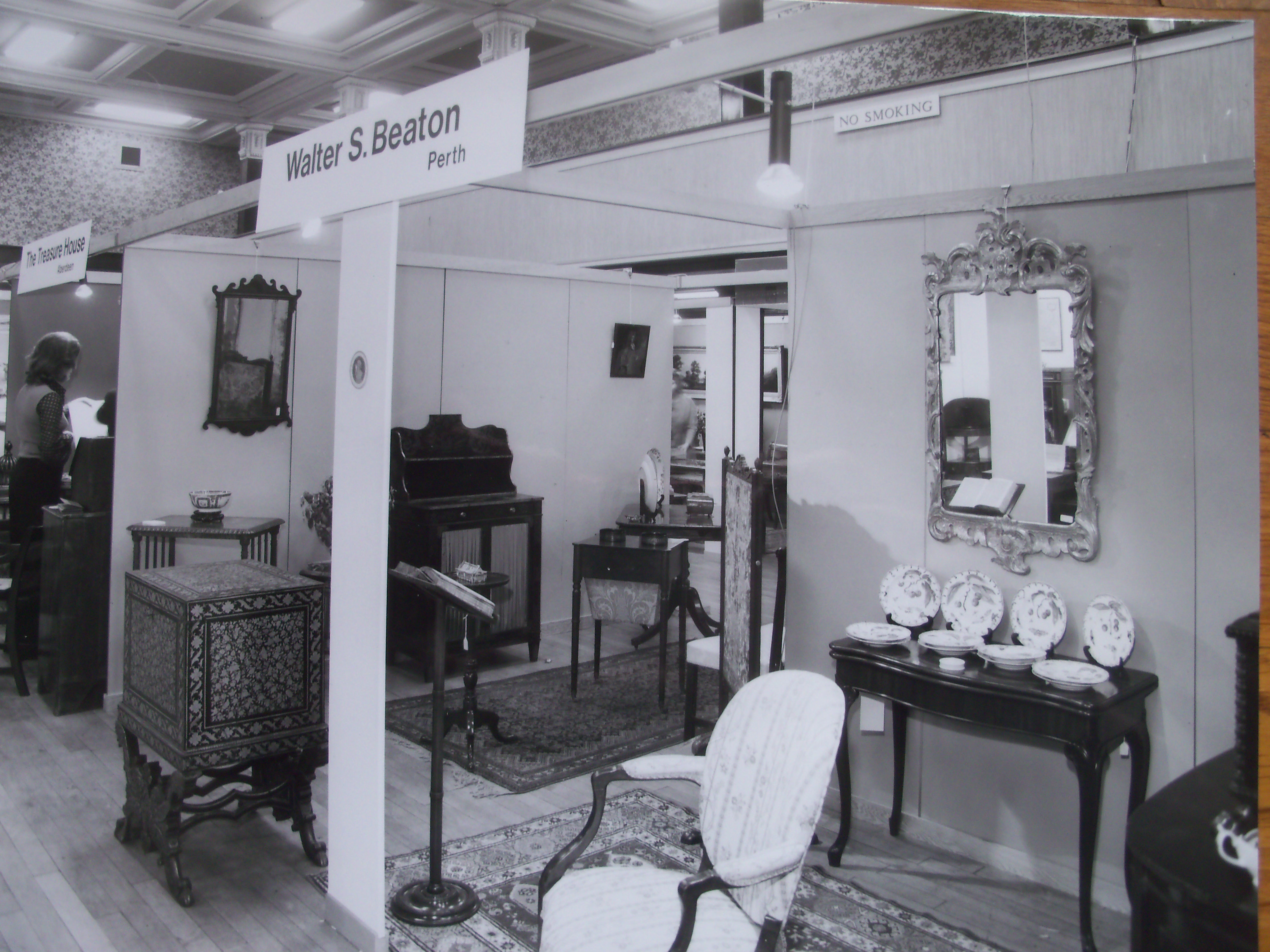
Courtesy of Bill Beaton.

Courtesy of Bill Beaton.

Bill and I talked for a few hours and he recalled his first country house auction sale, (Cusworth Hall, near Doncaster, in the 1950s – where his father had put him under the watchful guidance of the well-known dealer Walter Waddingham of Harrogate) and memories of fellow dealers, and objects that passed through his hands – including a rare painting by the 17th century artist Melchoir de Hondecoeter (bought from a furniture dealer in Harrogate in the 1960s) and a ‘Chippendale’ double partners desk from a well-known (Royal) Scottish country house!

Amongst the many interesting things that Bill’s father sold was an 18th century  French clock by Jacques Droiz Leschot, which was also noticed by the writer of the Antique Yearbook for 1950 – who writes;

‘We found in the main Albert Square [in Dundee], number 37, the shop of Mr. W.S. Beaton [Bill’s father], where the 18th century mahogany furniture, the fine silver, the glass and Chinese porcelain were polished and in splendid condition, where a collection of snuff boxes was up to Bond Street standard, and where a gold and enamelled singing-bird clock by Jacques Droiz Leschot was one of the most precious works of art we had seen for many a month. You must visit Dundee and Beaton.’ (Antiques Yearbook, 1950, p.557).

Bill still remembered the clock after all those years, and actually found a B&W photograph of it!
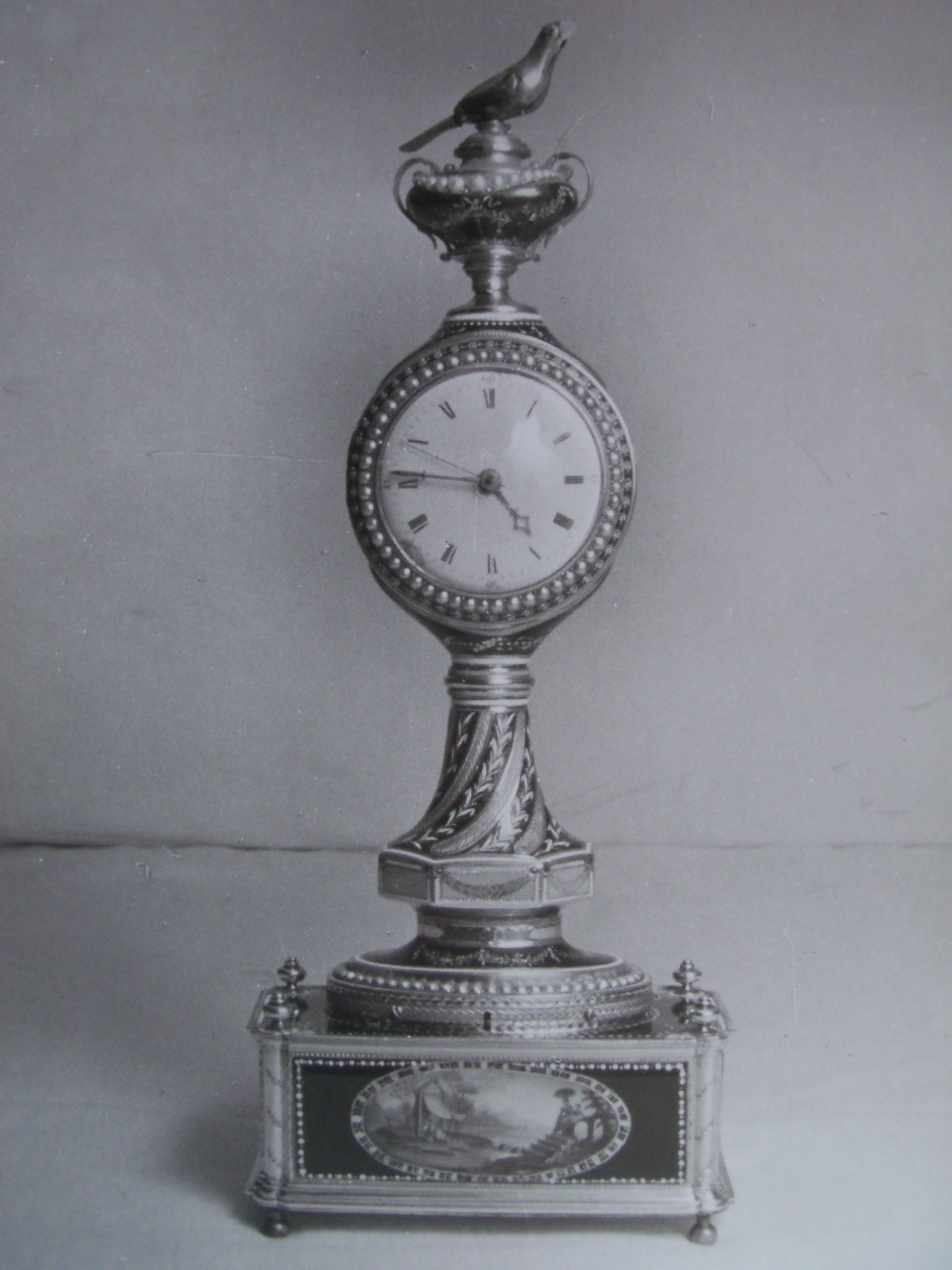
Photograph courtesy of Bill Beaton.

Photograph courtesy of Bill Beaton.

You will be able to listen to the interview with Bill in a few weeks, once we’ve edited it and uploaded it to the project website.

Mark
May 4, 2014

Wartime and the antiques trade

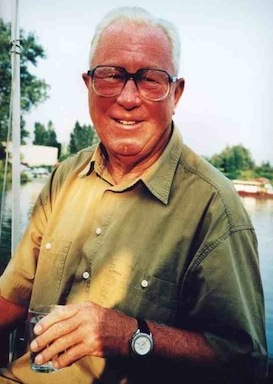
Geoffrey Hill, courtesy of the Hill family

Geoffrey Hill, courtesy of the Hill family

Working through the Kelly’s directories for Essex has revealed a small but rather stable group of dealers plying their trade in the county thus far but, having started work on the directory for 1914 this morning, I started to think about the more unusual links between the trade and the two world wars. Obviously many shops went out of business in this period both as a result of the huge numbers of casualties and the resulting loss of expertise and also the dire economic conditions that resulted from both periods of conflict. However the wartime periods also led to a number of determined young men and women returning from active service and wondering whether the antiques trade might offer them the chance to start afresh in what must have seemed like a brave new world.

Geoffrey Hill joined the RAF reserve forces in late 1938, becoming a full-time pilot in 1939 and serving in 65 squadron throughout the battle of Britain. Whilst flying a mission in February of 1941 he was shot down and forced to abandon his aircraft, leading to his capture by German forces. Mr Hill was sent to Stalag Luft 111. He promptly escaped from the prison camp on three occasions, leading to his imprisonment in Colditz for the rest of the war. Whilst in Colditz, Mr Hill made use of his German language skills and the availability of what was presumably a well-stocked prison library, reading all he could about antiques and antique furniture in particular.

When hostilities ended, Geoffrey Hill, now an MBE due to his bravery during the war, set up in business in London as Jeremy Ltd, soon moving to the Kings Road and, many years later, to Lowndes Street in Belgravia. His hours of study at Colditz had clearly been time well-spent as he soon built up a reputation as one of the world’s leading experts in English and continental furniture and objets d’art, helping to form many major collections in the process. Amongst his many achievements, he served as president of the British Antique Dealers Association and was a long time exhibitor and member of the vetting committees at the Grosvenor House fair. By the time of his death in 1997 his two sons Michael and John had taken over the running of the business and John Hill continues to run the business as a consultancy to this day. It is remarkable to think that, however indirectly, the horrors of the second world war led to the discovery and sale of some of the finest works of art from the 18th and 19th centuries.

For a fuller account of Geoffrey Hill’s wartime career, please see this link

If anyone has other stories about the activities of members of the trade during the wars then please get in touch.


Chris Coles

Volunteer project research assistant


Home Subjects

a working group dedicated to the display of art in the private interior, c. 1715-1914

The Period Room: Museum, Material, Experience

An International Conference hosted by The Bowes Museum and The University of Leeds

H. Blairman & Sons Ltd

A research project investigating the history of the antiques trade in Britain in the 19th & 20th centuries

Museum Studies Now?

'Museum Studies Now?' is an event which aims to discuss and debate museum and heritage studies education provision.

The Burlington Magazine Index Blog

art writing * art works * art market

East India Company at Home, 1757-1857

A research project investigating the history of the antiques trade in Britain in the 19th & 20th centuries