Posts tagged ‘Stoner & Evans’

January 30, 2025

Antique Dealers and Museums

The relationships between the antique trade and public museums is an expansive and complex subject, and there’s not really enough space in a short blog post to do the subject any real justice at all. But a recent addition to the antique dealer project archive of antique dealer ephemera is worth highlighting as it is further evidence of the fascinating dialogue between antique dealers and the public museum. The ephemera in question is a rare survival, an exhibition catalogue of the exhibition ‘In the Days of Queen Charlotte‘ held at Luton Public Museum in May to June 1939.
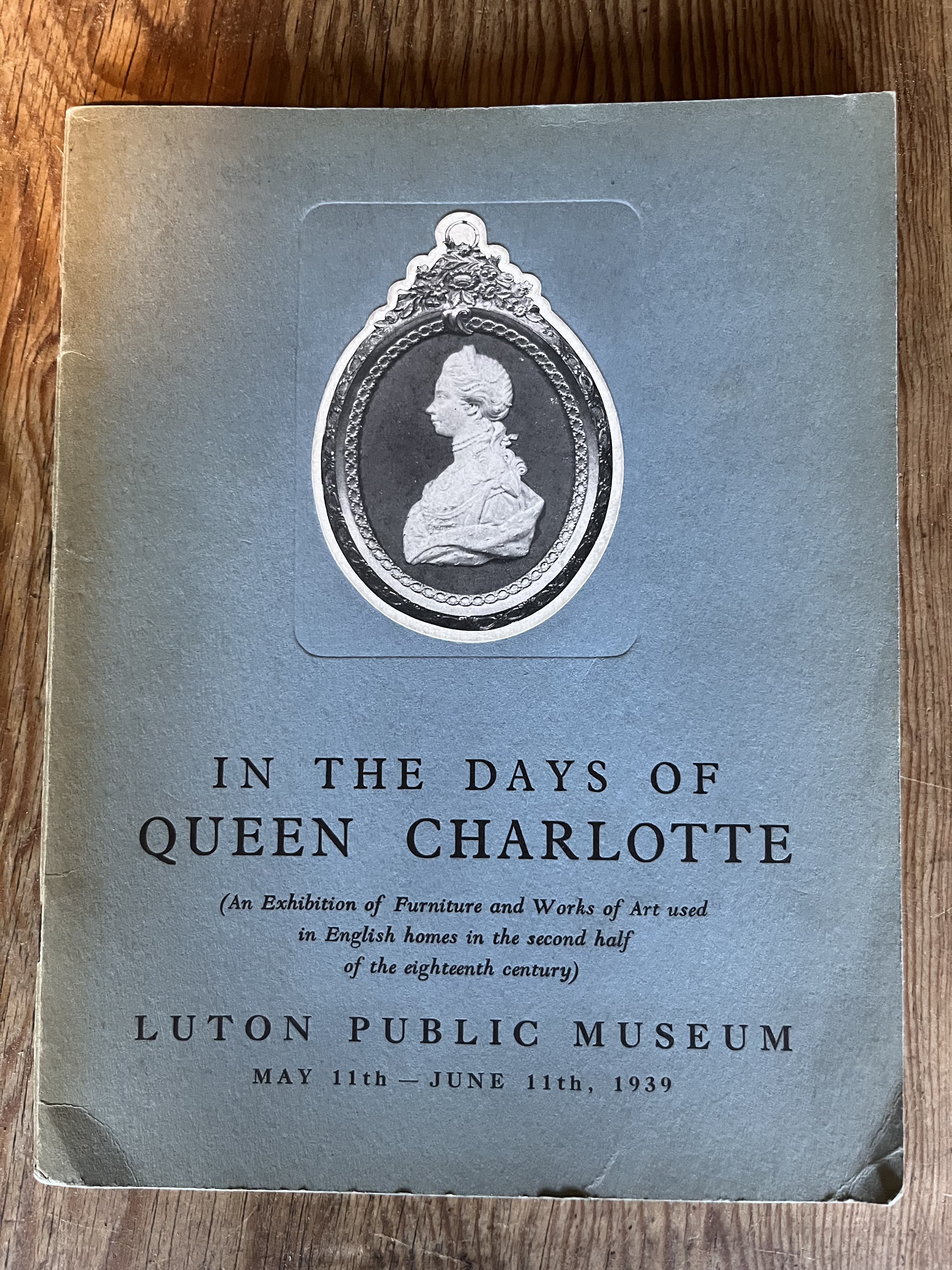
Exhibition catalogue, Luton Public Museum, ‘In the Days of Queen Charlotte’, May-June 1939. Image, Antique Dealer Research Project, University of Leeds.

The exhibition was organised in collaboration with the British Antique Dealers’ Association and exhibitors included most of the leading antique dealers of the day, such as H. Blairman & Sons, Frank Partridge & Sons, M. Harris & Sons, H. M. Lee, Mallett & Son, S.J. Phillips, S. W Wolsey, Stoner & Evans, J. Rochelle Thomas, and many more. It built on the success of the famous ‘Art Treasures‘ exhibition held at Grafton Galleries in 1928 (also under the auspices of the BADA) and the antique dealers exhibition at Christie’s auction rooms in 1932. However, there was a key distinction between these earlier exhibitions and the Luton Museum exhibition, which was of course that the 1939 exhibition was held in a public museum. I believe this was one of the earliest of what one might call hybrid exhibitions (those staged by the antique trade in public museums) that took place in Britain, and was a catalyst for the much more ambitious collaborations between the antique trade and public museums in the form of public exhibitions that took place later in the 20th century, at The Victoria & Albert Museum in 1962 (organised by CINOA, the International Confederation of Dealers in Works of Art), and again at the V&A Museum in 1968 (organised by the BADA as part of the celebrations of the Golden Jubilee of the establishment of the BADA (1918)). There was also similar dealer exhibitions in public museums in Europe, all organised by CINOA, the earliest of which appears to have been held at the Rijksmuseum in Amsterdam in 1936, with similar exhibitions at the Musee des Arts Decoratifs in Paris in 1954 and at the Historisch Museum in Amsterdam in 1970. And perhaps the most ambitious of these initiatives was the exhibition, ‘The Grand Gallery‘, staged at the Metropolitan Museum of Art in New York in 1974 (again organised by CINOA) and which was partly staged to celebrate the additions to the Metropolitan Museum collections acquired through or gifted by, the New York based antique dealers Joseph and Ernest Brummer.

The exhibition at Luton Public Museum, like the other later exhibitions at the various museums, was partly for public education – the exhibitions often had antiques loaned by influential collectors for example. At the Luton Public Museum exhibition, Queen Mary (an avid collector of antiques) loaned a pair of 18th century Wedgwood & Bentley jasper plaques (c.1780), and the Duke of Kent loaned a collection of 20 stipple engravings of members of the Royal Family (published in 1806).
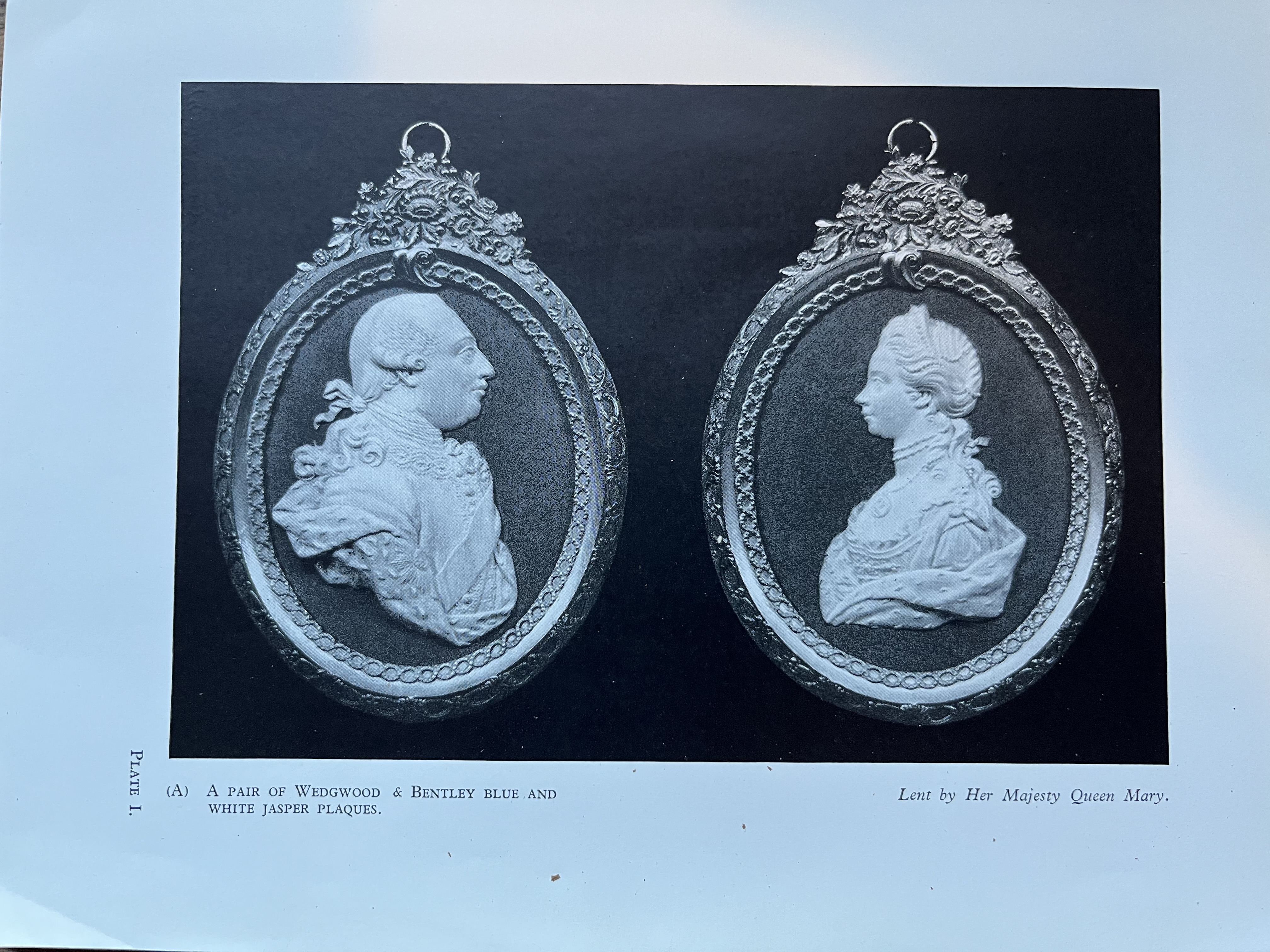
Plate from Luton Public Museum exhibition catalogue, 1939. Photograph, Antique Dealers Research Project, University of Leeds.

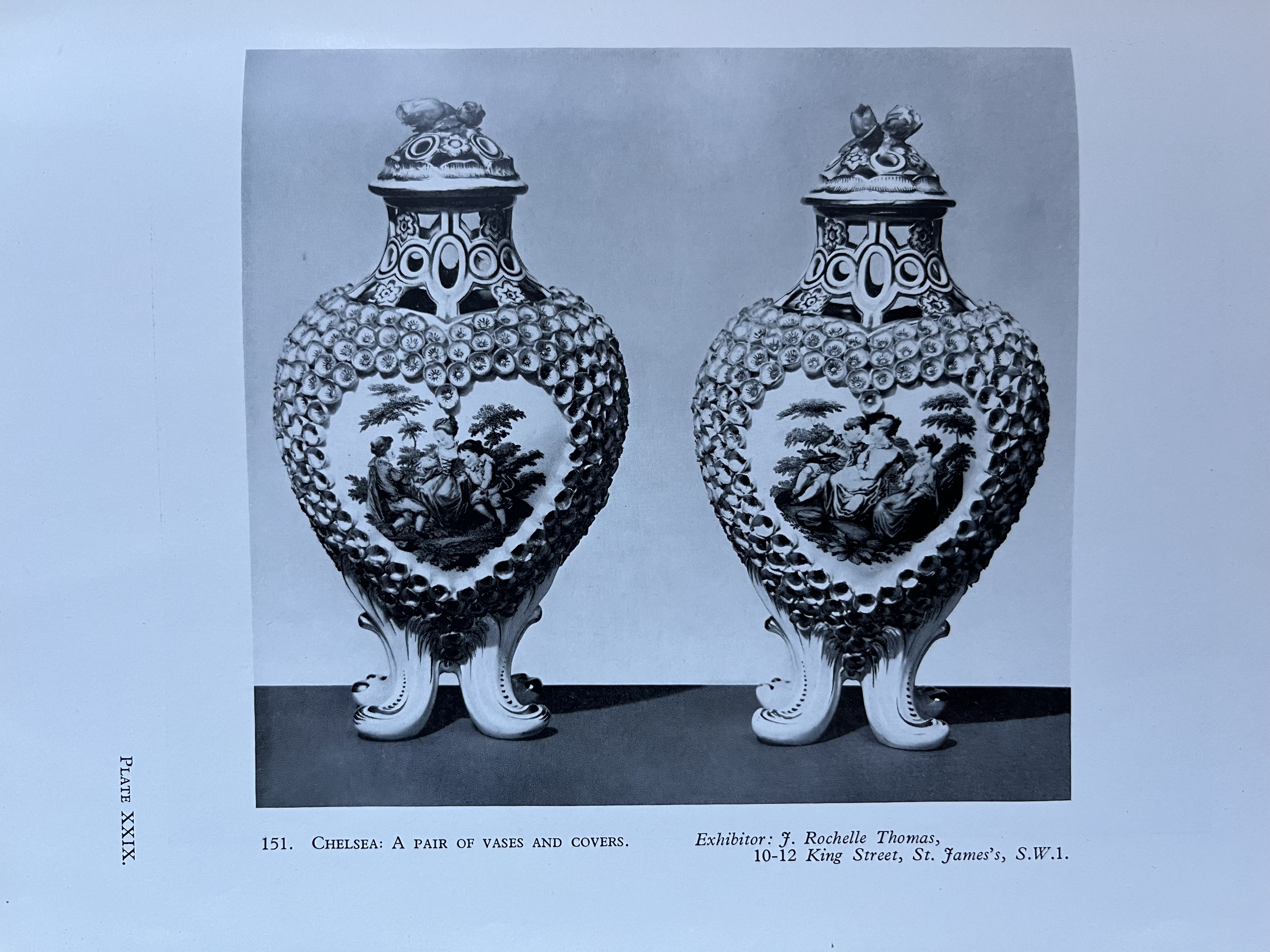
Of course one of the main purposes of these antique dealer organised public museum exhibitions was to showcase, and sell, antiques displayed by antique dealers. Indeed, at the Luton Public Museum exhibition all the objects on display, apart from the loans by Queen Mary and the Duke of Kent, were offered for sale – Moss Harris & Sons offered this 18th century wine cooler (see below) and J. Rochelle Thomas, a pair of 18th century vase and covers (see below).
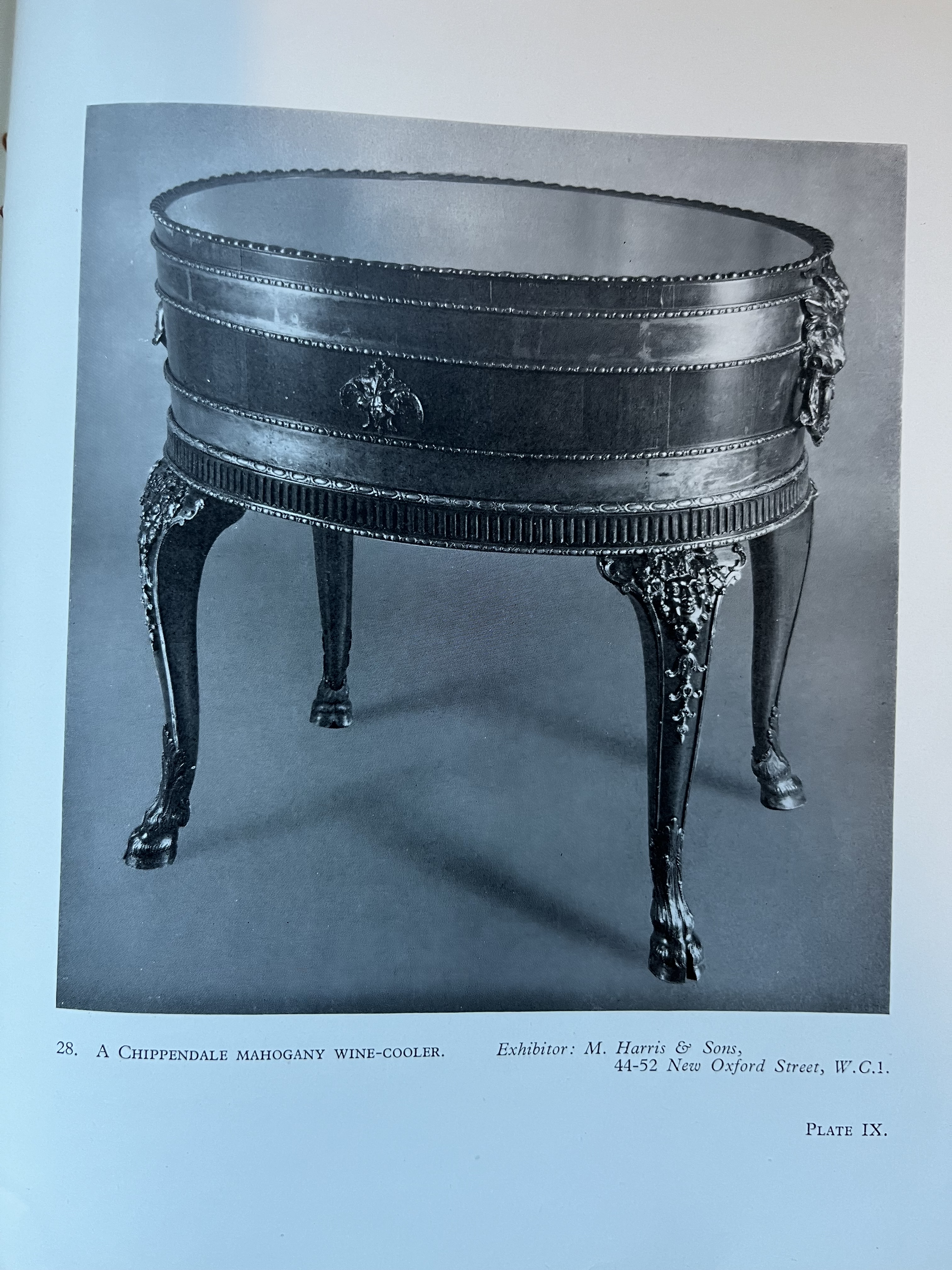
‘A Chippendale Mahogany Wine-cooler’, exhibited by M. Harris & Sons at the Luton exhibition, 1939. Photograph, Antique Dealer Research Project, University of Leeds.
‘A Pair of Chelsea vases and covers’, exhibited by J. Rochelle Thomas at the Luton Public Museum exhibition, 1939. Photograph, Antique Dealer Research Project, University of Leeds.

The arrangement of the exhibits at the museum also seemed to mirror the displays of antiques at major antique fairs at the time – such as those at the Antique Dealers Fair held at the Grosvenor House Hotel from 1934 – as one might expect of course – the overlap between modes of display in the worlds of commerce and in the public museum are often much closer than one thinks.
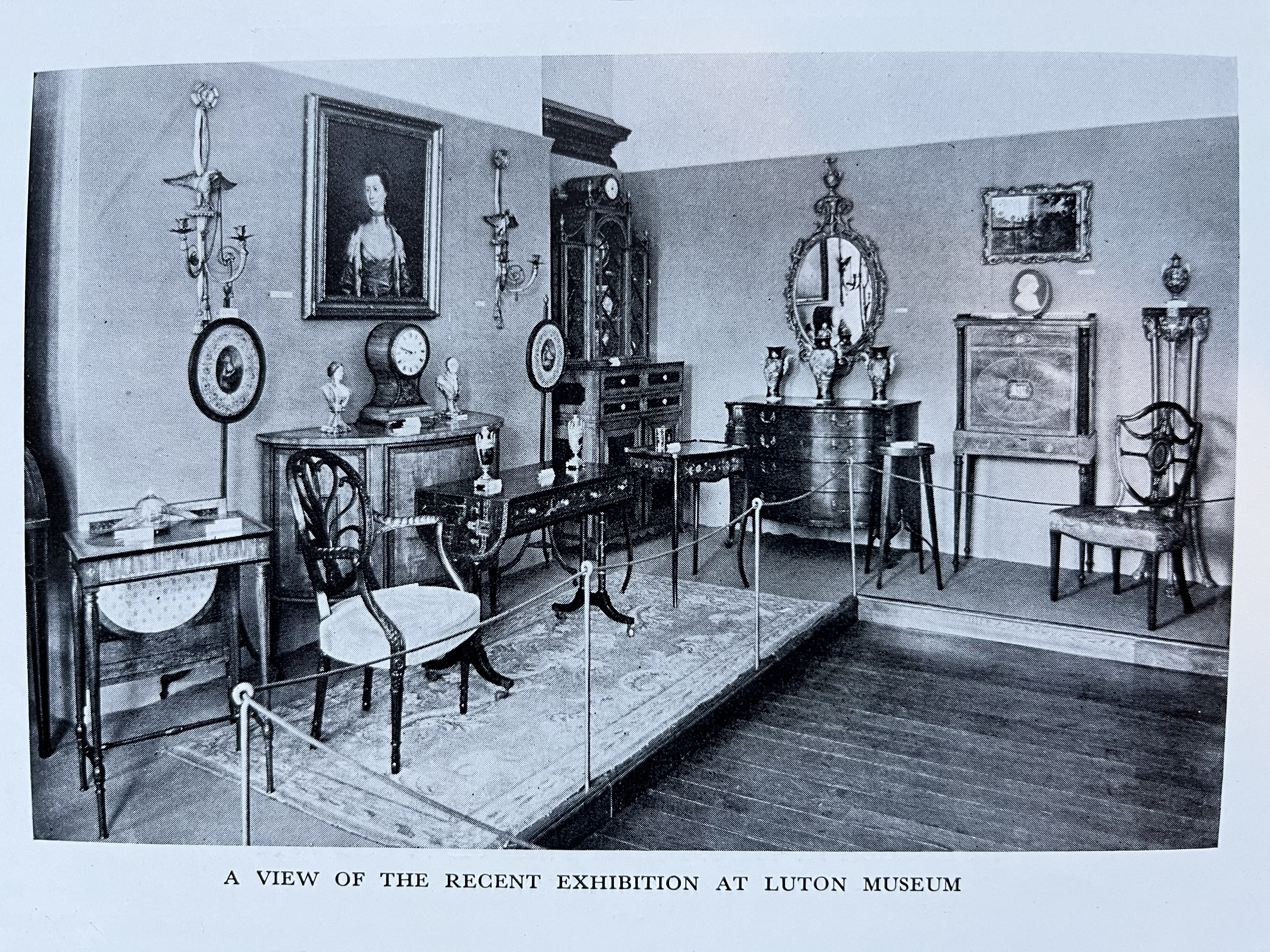
The Luton Public Museum ‘In the Days of Queen Charlotte‘ exhibition, 1939, from Connoisseur, September 1939. Photograph, Antique Dealer Research Project, University of Leeds.

Indeed, all of these antique dealer organised exhibitions draw further attention to the close relationship between the market for antiques (as figured in the presence of antique dealers) and the role of the public museum as a frame for ‘decorative art’ (also known as ‘antiques’ of course). The exhibition I curated at The Bowes Museum back in 2019 – ‘SOLD! The Great British Antiques Story‘, was partly an attempt to draw the attention to the symbiotic relationship between the realm of the art market and the so-called ‘disinterested’ realm of the public museum. If you are interested, you can read more about this in the SOLD! exhibition catalogue – still available, for FREE, as a PDF download via the Antique Dealer Research Project Website HERE.

Mark
November 3, 2015

BADA Commemorative Plates 1919

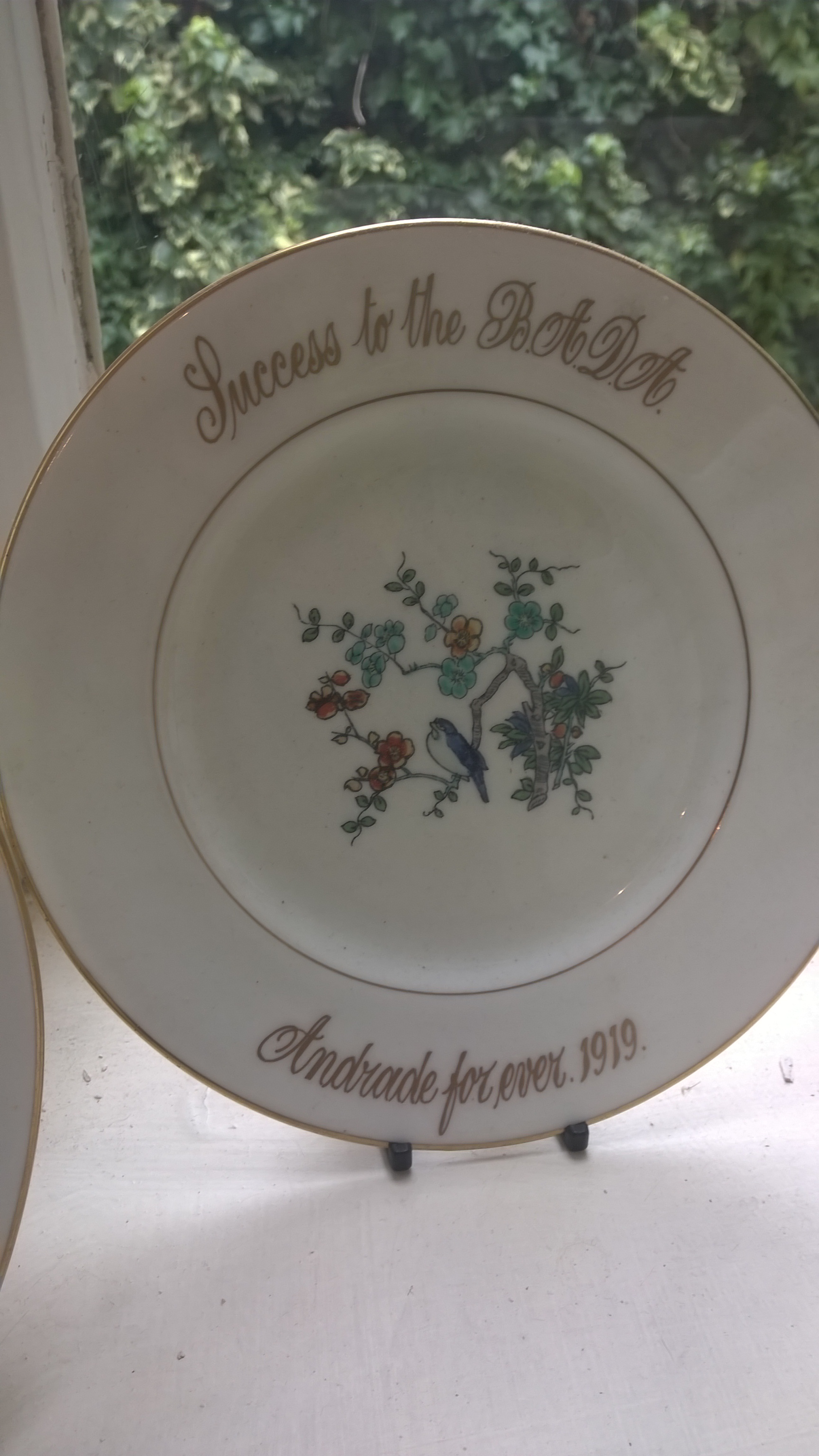
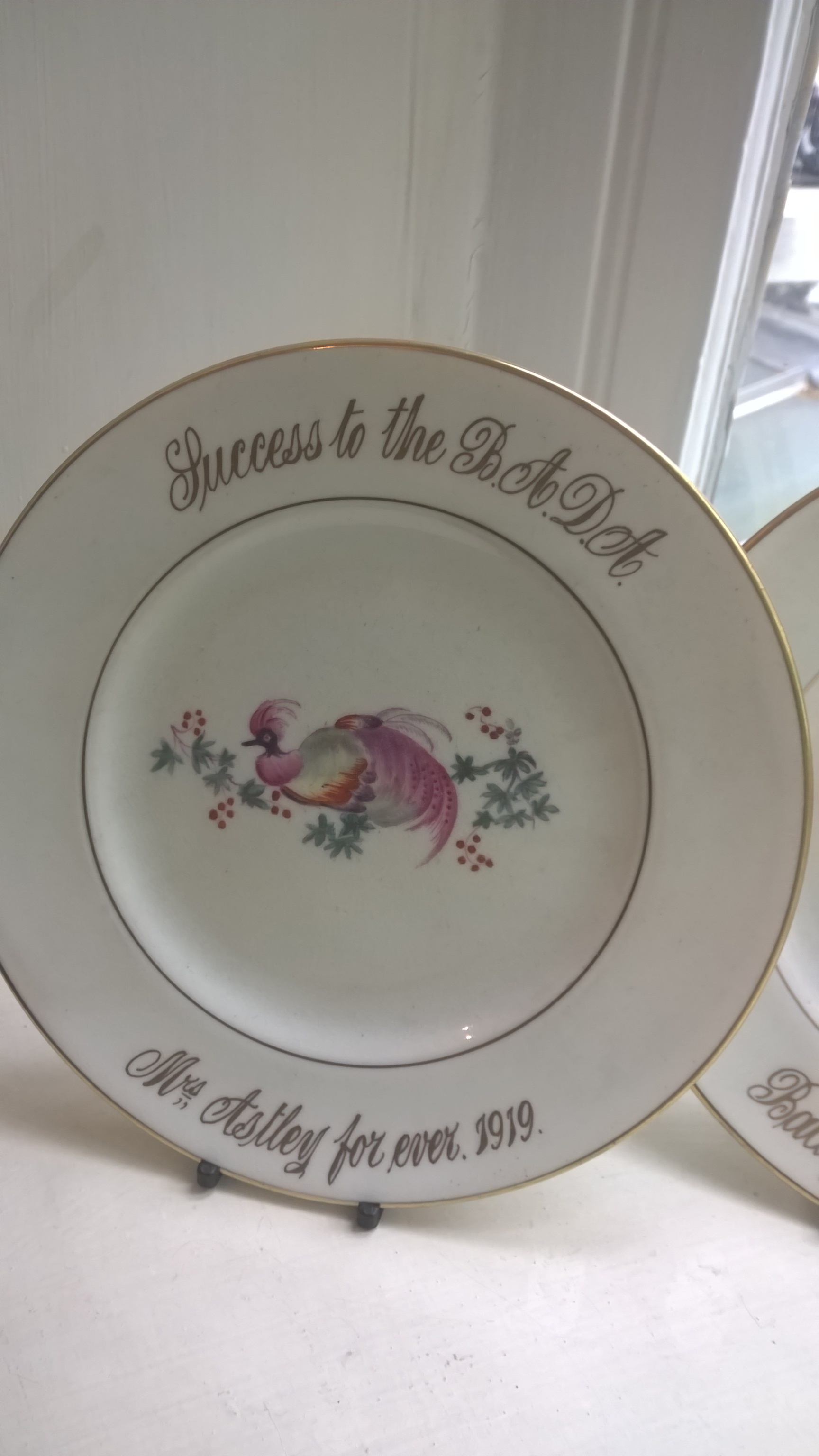
Whilst having a meeting with Mark Dodgson, Secretary General of the British Antique Dealers’ Association, on Friday last week (regarding the Antique Dealer project conference in April, amongst other things), I noticed a small display of 6 plates on the windowsill of Mark’s office.

Stoner plate 1919

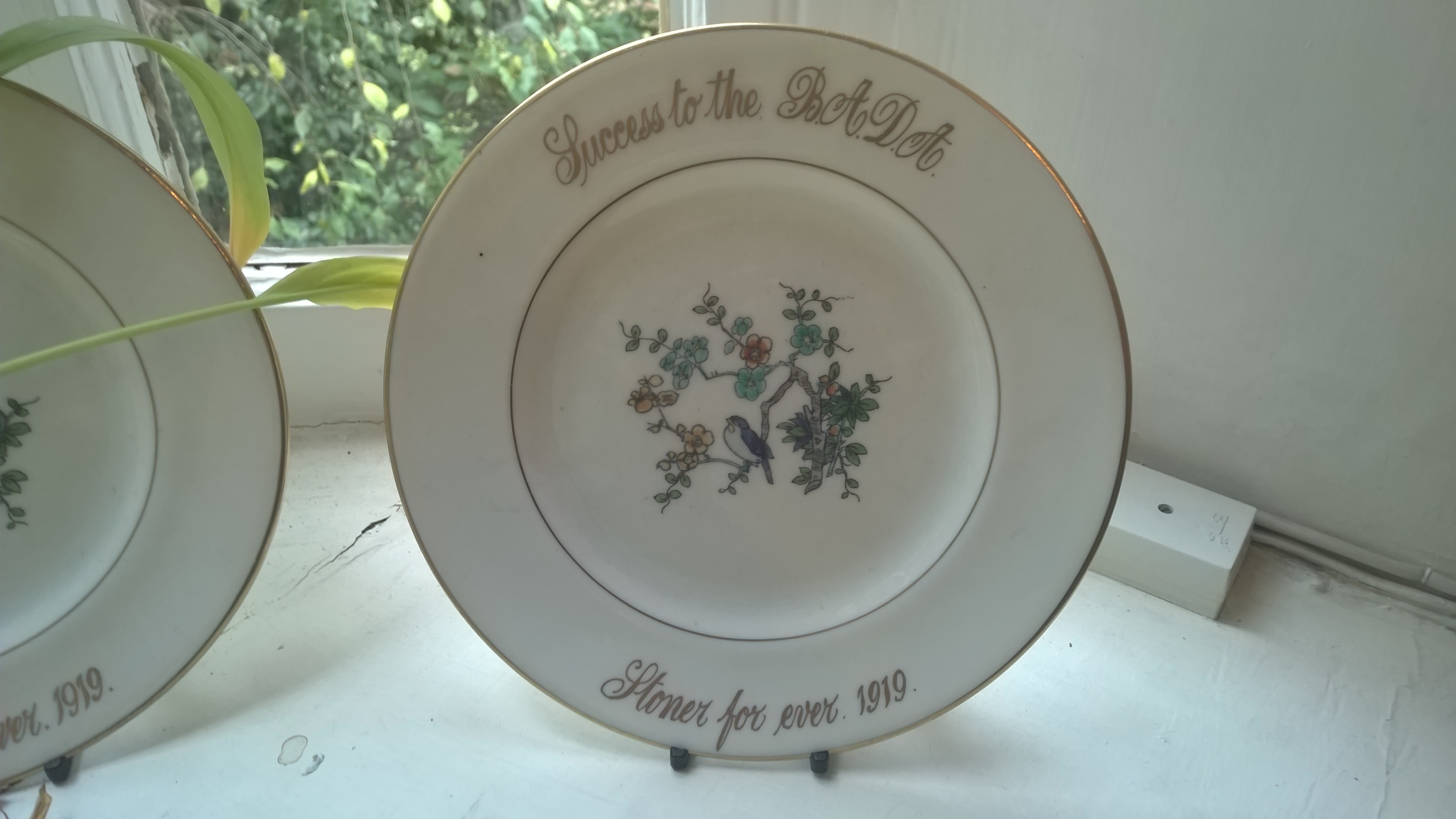
BADA Commemorative Plate, c.1918-19. Photograph copyright AHRC Antique Dealer project, University of Leeds.

All of the plates had the same painted inscription ‘Success to the BADA’ at the top edge, and each had a separate, individual inscription on the lower edge.  This one (above) has ‘Stoner for ever. 1919.’ on the bottom edge.  The plates themselves are relatively inexpensive, mass-produced objects – (Mark kindly told me they have a printed mark ‘Crown Staffordshire’ on the back) – so they are pretty common everyday ware. Three of the plates have printed decoration of a small bird in a branch of a tree – the style keys into the Chinoiserie revival of the 1910s and 1920s; the other three had similar, but hand-painted, decoration.

Andrade plate 1919

‘Andrade for ever 1919’. Comemmorative plate. Photography copyright AHRC Antique Dealer project, University of Leeds.

The inscriptions on the plates refer to the foundation of the BADA, which began just a year earlier, on May 7th 1918. The story of the founding of the BADA is by now very well known I guess, but one of the reasons for the founding of the Association was as a response to the proposed Luxury Duty that was to be introduced in the Finance Act of 1918.

The plates are variously inscribed – the one above is inscribed ‘Andrade for ever. 1919.’ Other plates are inscribed ‘Mrs Astley for ever, 1919.’ (below); ‘Thomas for ever. 1919’; ‘Law for ever. 1919.’; and ‘Evans for ever. 1919’.

Astley plate 1919

‘Mrs Astley for ever. 1919.’ Commemorative plate c.1919. Photograph copyright AHRC Antique Dealer project, University of Leeds.

The plates obviously celebrate founding members or early members of the BADA – Stoner, for example, probably refers to George Stoner, who was one of founder members of the BADA in 1918.  Sadly George Stoner, a Vice-President of the BADA, and the father of Frank and Malcolm Stoner, died aged 50 in 1920, shortly after the foundation of the Association – the dealership was named ‘Stoner & Evans’, and was trading at 3 King Street, St. James’s, London at the time.

‘Andrade’ would be Cyril Andrade, then trading in Duke Street, St. James’s, London; ‘Mrs Astley’ would be Florence Astley, also trading in Duke Street, St. James’s in the same period. There were three further plates – one inscribed ‘Evans for ever. 1919.’ – probably for the Mr Evans who was partner in Stoner & Evans, although there was also a silver dealer, ‘Evans & Co’, but I’d think it was for the chap from Stoner & Evans.

The other plates were inscribed ‘Law for ever. 1919’ for Charles Law, of the dealers ‘Law, Foulsham & Cole, then trading from 7 South Molton Street, London, and ‘Thomas for ever. 1919.’ – Thomas was the formidable dealer C. Rochelle Thomas, the President of the BADA for 1919, and then trading at ‘The Georgian Galleries’ 10, 11 & 12 King Street, St. James’s, London, along with his sons, Victor Joseph Rochelle Thomas and Alfred William Rochelle Thomas.

The plates are fascinating pieces of ephemera associated with the founding of the British Antique Dealers’ Association – I just wondered if there were any more of these plates surviving?…there appear to have been 16 founder members of BADA in 1918, so maybe there are at least another 12 plates somewhere?… but the 6 plates here also include members who were not listed as founders, such as Florence Astley, who must have joined sometime after March 1918 and before the plates were inscribed in 1919…..so perhaps there are scores of them out there!

Mark


Home Subjects

a working group dedicated to the display of art in the private interior, c. 1715-1914

The Period Room: Museum, Material, Experience

An International Conference hosted by The Bowes Museum and The University of Leeds

H. Blairman & Sons Ltd

A research project investigating the history of the antiques trade in Britain in the 19th & 20th centuries

Museum Studies Now?

'Museum Studies Now?' is an event which aims to discuss and debate museum and heritage studies education provision.

The Burlington Magazine Index Blog

art writing * art works * art market

East India Company at Home, 1757-1857

A research project investigating the history of the antiques trade in Britain in the 19th & 20th centuries