Posts tagged ‘S.J. Phillips’

January 30, 2025

Antique Dealers and Museums

The relationships between the antique trade and public museums is an expansive and complex subject, and there’s not really enough space in a short blog post to do the subject any real justice at all. But a recent addition to the antique dealer project archive of antique dealer ephemera is worth highlighting as it is further evidence of the fascinating dialogue between antique dealers and the public museum. The ephemera in question is a rare survival, an exhibition catalogue of the exhibition ‘In the Days of Queen Charlotte‘ held at Luton Public Museum in May to June 1939.
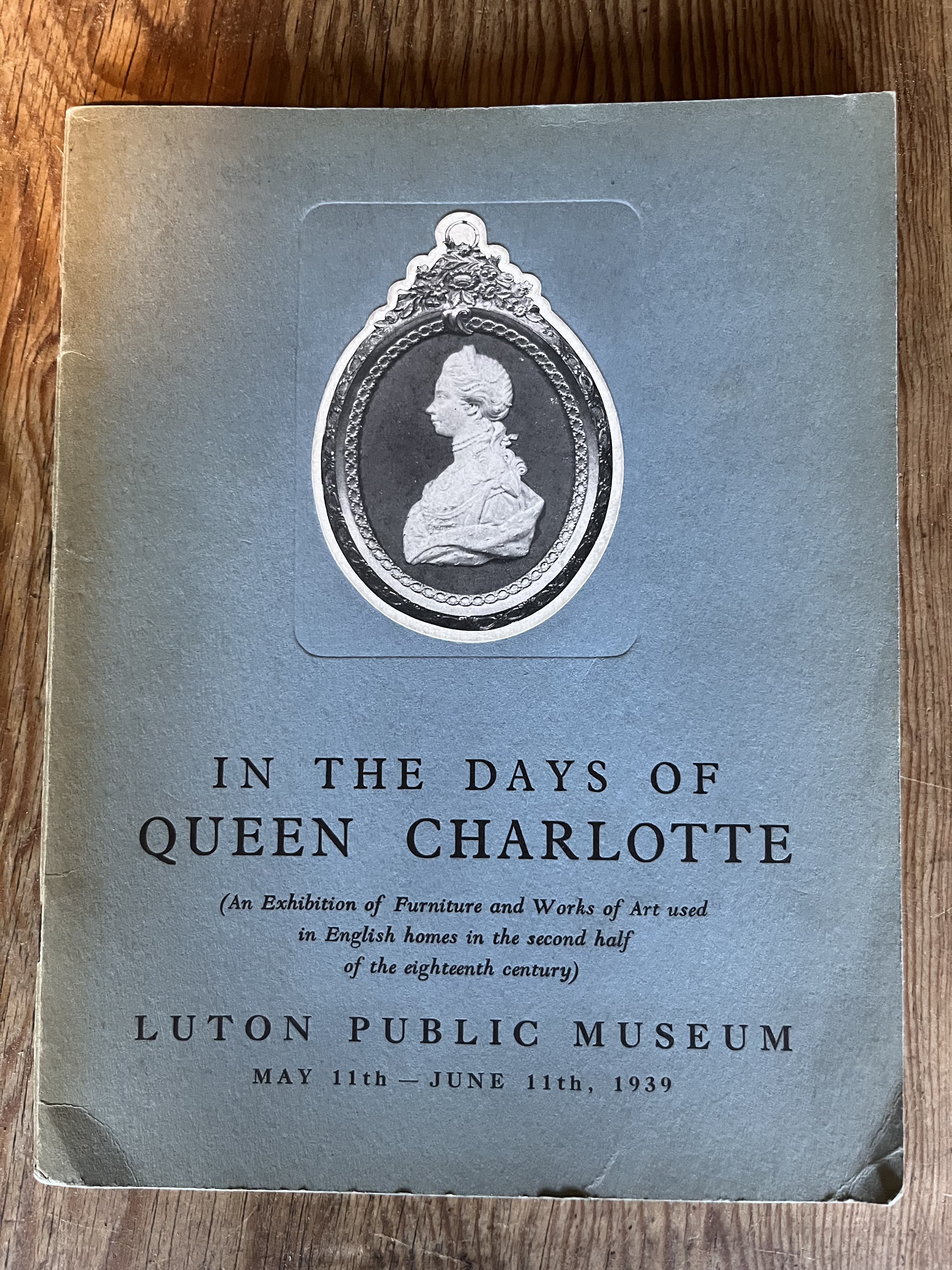
Exhibition catalogue, Luton Public Museum, ‘In the Days of Queen Charlotte’, May-June 1939. Image, Antique Dealer Research Project, University of Leeds.

The exhibition was organised in collaboration with the British Antique Dealers’ Association and exhibitors included most of the leading antique dealers of the day, such as H. Blairman & Sons, Frank Partridge & Sons, M. Harris & Sons, H. M. Lee, Mallett & Son, S.J. Phillips, S. W Wolsey, Stoner & Evans, J. Rochelle Thomas, and many more. It built on the success of the famous ‘Art Treasures‘ exhibition held at Grafton Galleries in 1928 (also under the auspices of the BADA) and the antique dealers exhibition at Christie’s auction rooms in 1932. However, there was a key distinction between these earlier exhibitions and the Luton Museum exhibition, which was of course that the 1939 exhibition was held in a public museum. I believe this was one of the earliest of what one might call hybrid exhibitions (those staged by the antique trade in public museums) that took place in Britain, and was a catalyst for the much more ambitious collaborations between the antique trade and public museums in the form of public exhibitions that took place later in the 20th century, at The Victoria & Albert Museum in 1962 (organised by CINOA, the International Confederation of Dealers in Works of Art), and again at the V&A Museum in 1968 (organised by the BADA as part of the celebrations of the Golden Jubilee of the establishment of the BADA (1918)). There was also similar dealer exhibitions in public museums in Europe, all organised by CINOA, the earliest of which appears to have been held at the Rijksmuseum in Amsterdam in 1936, with similar exhibitions at the Musee des Arts Decoratifs in Paris in 1954 and at the Historisch Museum in Amsterdam in 1970. And perhaps the most ambitious of these initiatives was the exhibition, ‘The Grand Gallery‘, staged at the Metropolitan Museum of Art in New York in 1974 (again organised by CINOA) and which was partly staged to celebrate the additions to the Metropolitan Museum collections acquired through or gifted by, the New York based antique dealers Joseph and Ernest Brummer.

The exhibition at Luton Public Museum, like the other later exhibitions at the various museums, was partly for public education – the exhibitions often had antiques loaned by influential collectors for example. At the Luton Public Museum exhibition, Queen Mary (an avid collector of antiques) loaned a pair of 18th century Wedgwood & Bentley jasper plaques (c.1780), and the Duke of Kent loaned a collection of 20 stipple engravings of members of the Royal Family (published in 1806).
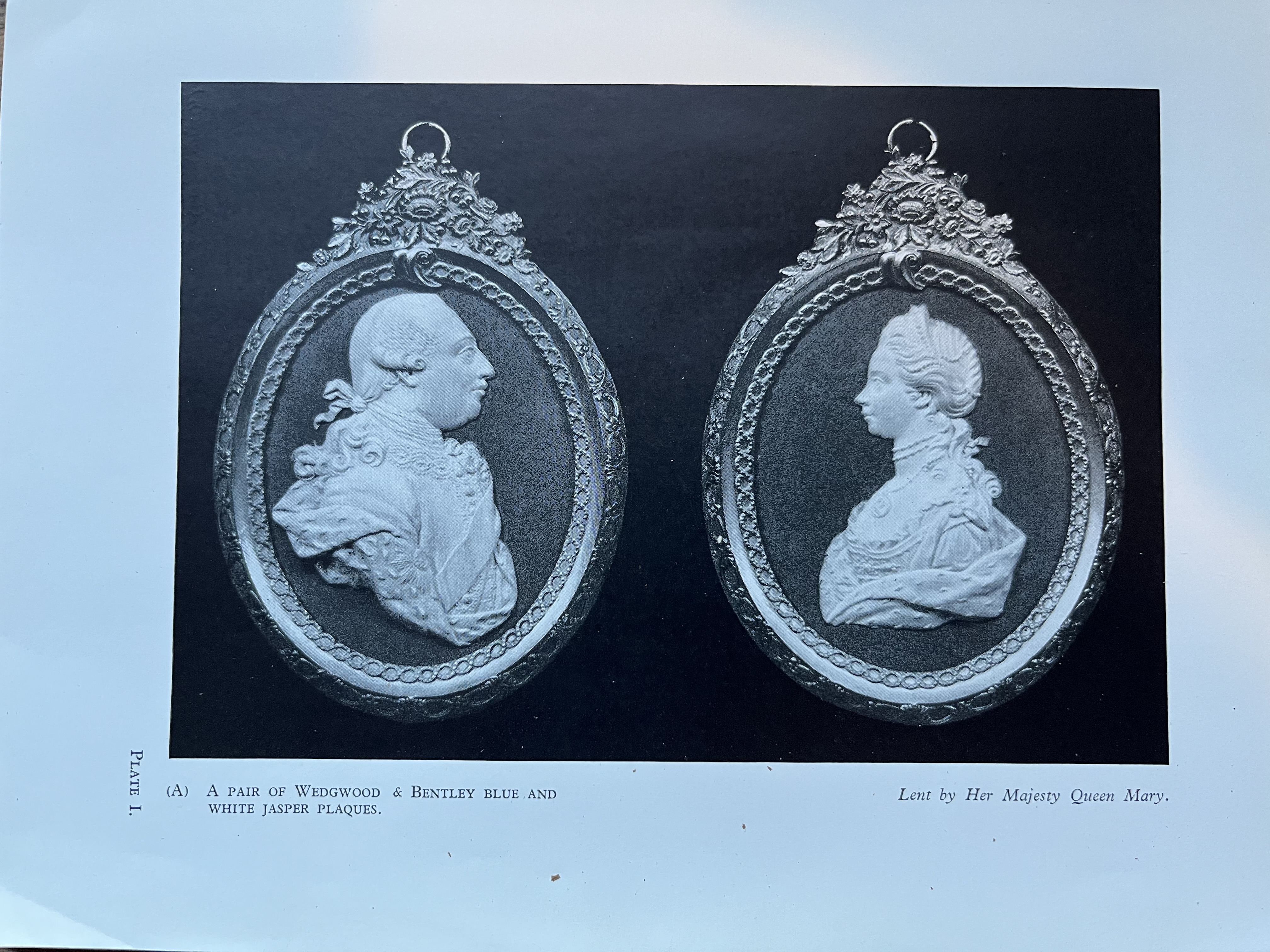
Plate from Luton Public Museum exhibition catalogue, 1939. Photograph, Antique Dealers Research Project, University of Leeds.

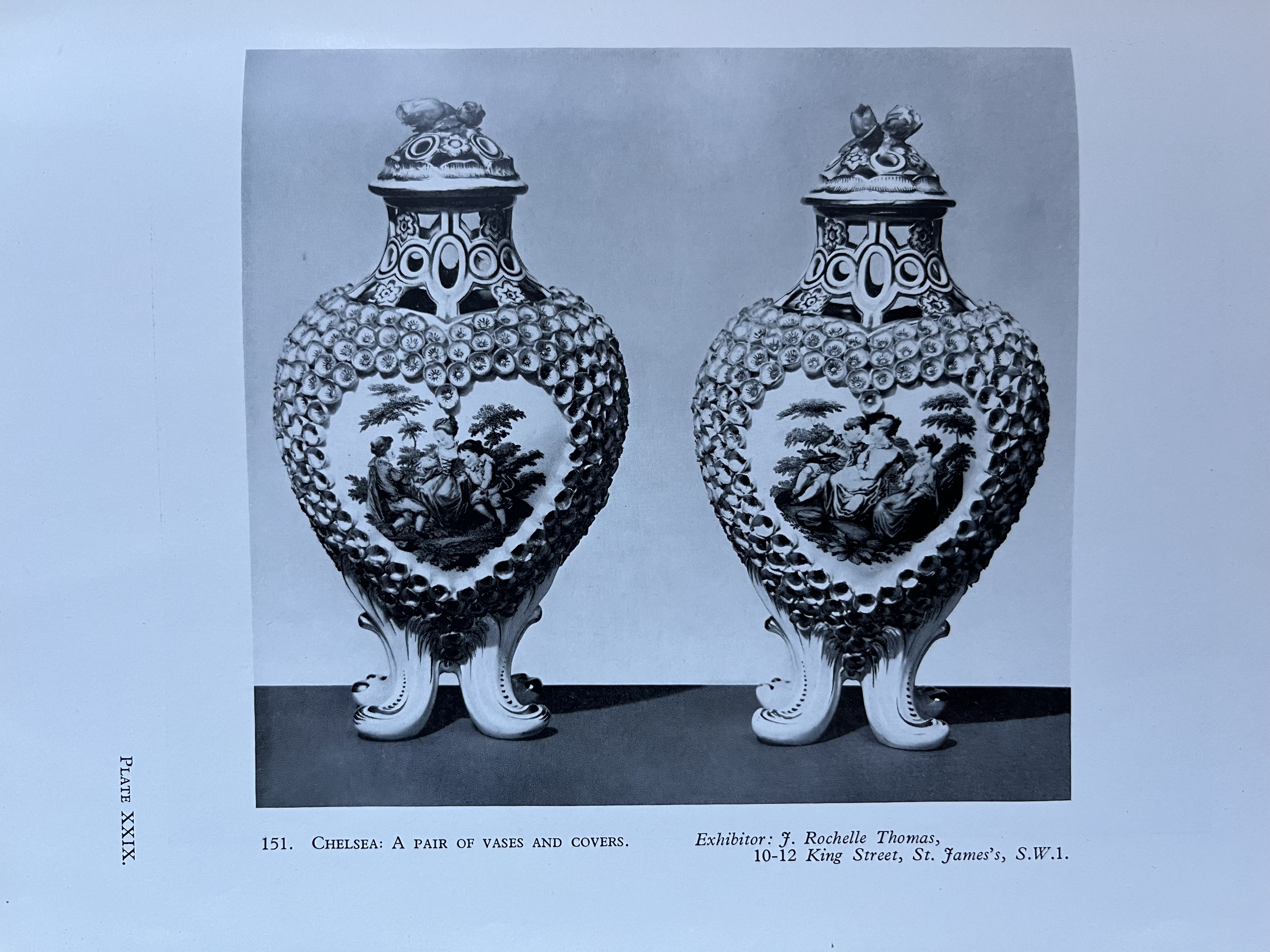
Of course one of the main purposes of these antique dealer organised public museum exhibitions was to showcase, and sell, antiques displayed by antique dealers. Indeed, at the Luton Public Museum exhibition all the objects on display, apart from the loans by Queen Mary and the Duke of Kent, were offered for sale – Moss Harris & Sons offered this 18th century wine cooler (see below) and J. Rochelle Thomas, a pair of 18th century vase and covers (see below).
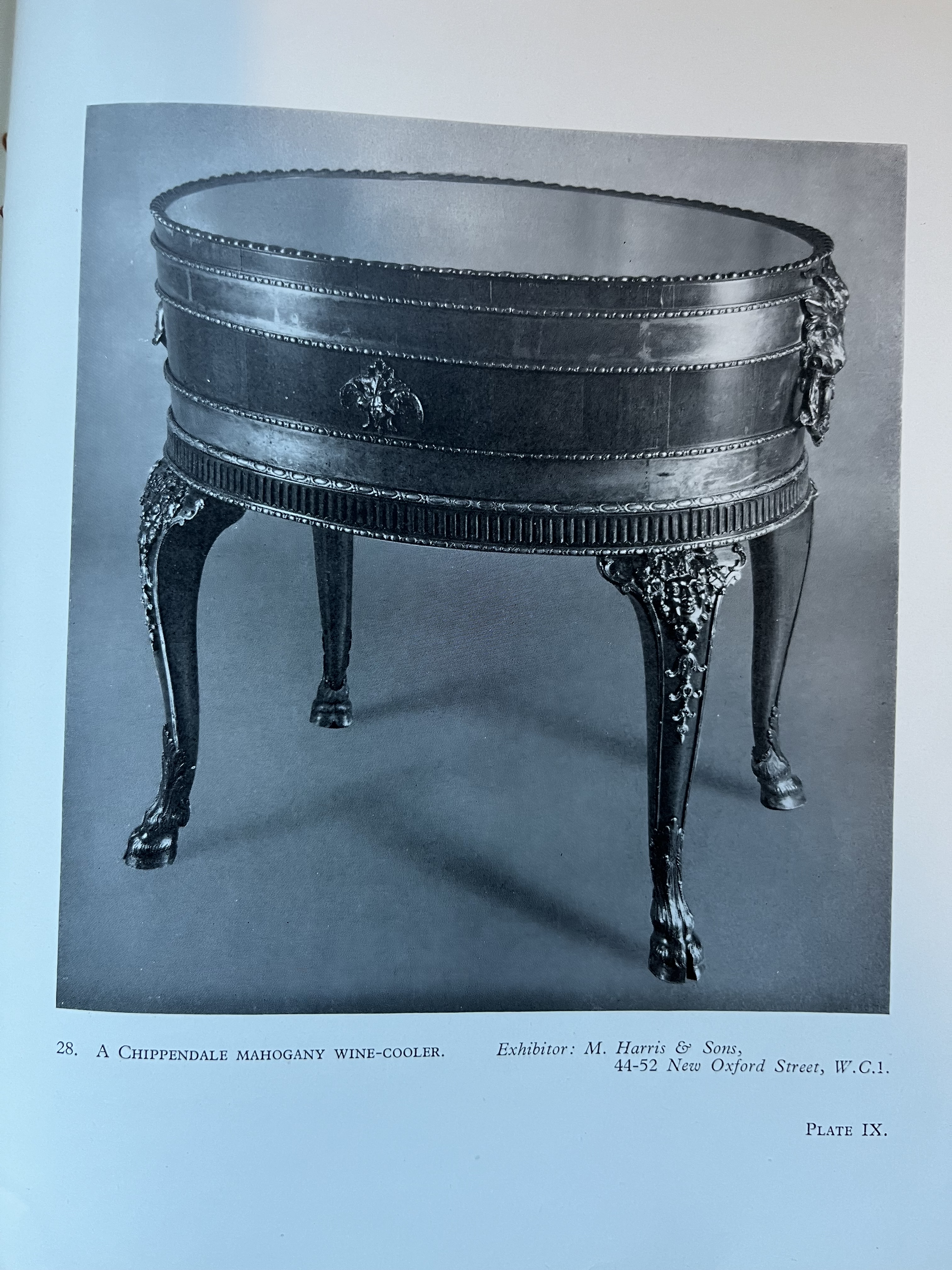
‘A Chippendale Mahogany Wine-cooler’, exhibited by M. Harris & Sons at the Luton exhibition, 1939. Photograph, Antique Dealer Research Project, University of Leeds.
‘A Pair of Chelsea vases and covers’, exhibited by J. Rochelle Thomas at the Luton Public Museum exhibition, 1939. Photograph, Antique Dealer Research Project, University of Leeds.

The arrangement of the exhibits at the museum also seemed to mirror the displays of antiques at major antique fairs at the time – such as those at the Antique Dealers Fair held at the Grosvenor House Hotel from 1934 – as one might expect of course – the overlap between modes of display in the worlds of commerce and in the public museum are often much closer than one thinks.
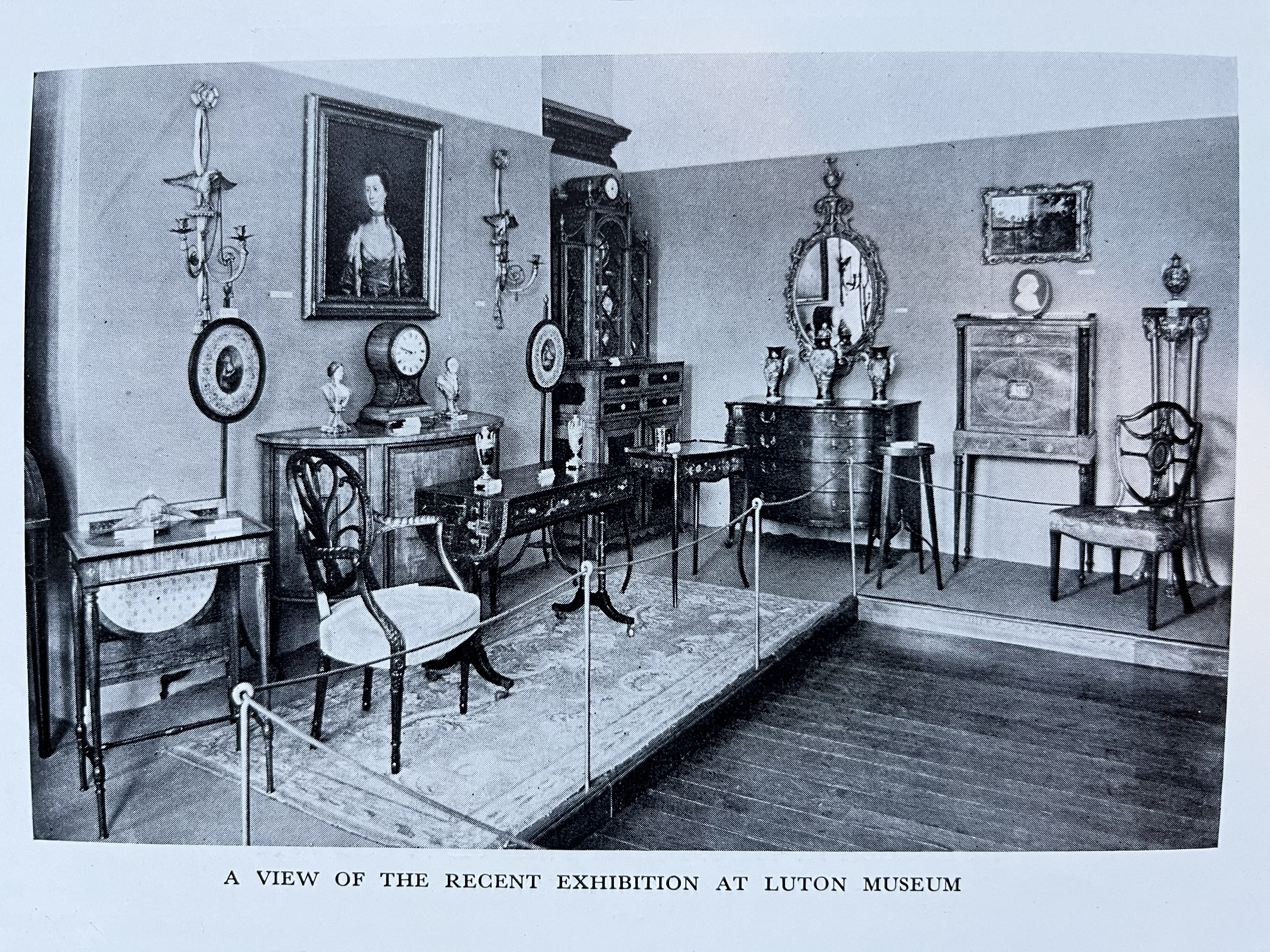
The Luton Public Museum ‘In the Days of Queen Charlotte‘ exhibition, 1939, from Connoisseur, September 1939. Photograph, Antique Dealer Research Project, University of Leeds.

Indeed, all of these antique dealer organised exhibitions draw further attention to the close relationship between the market for antiques (as figured in the presence of antique dealers) and the role of the public museum as a frame for ‘decorative art’ (also known as ‘antiques’ of course). The exhibition I curated at The Bowes Museum back in 2019 – ‘SOLD! The Great British Antiques Story‘, was partly an attempt to draw the attention to the symbiotic relationship between the realm of the art market and the so-called ‘disinterested’ realm of the public museum. If you are interested, you can read more about this in the SOLD! exhibition catalogue – still available, for FREE, as a PDF download via the Antique Dealer Research Project Website HERE.

Mark

May 23, 2020

Antique Silver Dealers – Jay, Richard Attenborough & Co. archive

It’s amazing what turns up at auction sometimes – during ‘Lockdown’ I seem to have ‘saleroom.com’ constantly running in the background whilst I’m writing on my PC; last week, at Keys Fine Art in Aylsham, Norfolk, a rather dishevelled old album caught my eye. Lot 217, described as ‘Vintage Album containing various photographs of hallmarked silver and other artworks’ sounded rather intriguing, and I recognised the type of photographs and that it was probably a silver dealer’s album – so I had to buy it of course; it was a bargain I think, just £12 plus commissions and postage, so cost about £24 all told (and thank you to Keys Fine Art Auctions for packaging the lot so well and posting it so promptly!).


‘Vintage Album’, Keys Fine Art Auctions, Norfolk.

The album arrived in the post this week. I guess the album itself dates from c.1900 – it has an old title on the original red leather spine ‘Photographs & Records of Cups and Presentation Plate’ – although it has been recovered in plain brown paper at some stage, and as you can see it is in a very distressed condition.

The album turned out to be a fascinating record of the well-known London-based silversmiths and antique silver dealers ‘Jay, Richard Attenborough & Co Ltd‘.  In some business letters, dating from the 1920s and which have been pasted into the album, Attenborough described themselves as ‘Goldsmiths, Diamond Merchants and Watchmakers’; they traded from 142-144 Oxford Street, London, from c.1905 until the late 1950s, although like many 20th century antique silver dealers (such as Harman & Lambert, or Birch & Gaydon), Attenborough can trace their genealogy into the 18th century – their business letterhead states that they were established in 1796. The Attenborough business was acquired by the silversmith James Charles Jay in 1887 and by 1904 had become Jay, Richard Attenborough & Co Ltd – the business seems to have closed sometime in the 1960s? They were listed as ‘antique silver dealers’ in the London Trade Directories in the 1920s-1950s. As silversmiths, Attenborough also sold antique silver and indeed the album exemplifies the continued tradition within silversmithing of buying and selling second-hand and antique silver. The famous firm of S.J. Phillips, for example, began as silversmiths and jewellers in the 19th century and many other antique silver dealers can trace their origins as silversmiths.

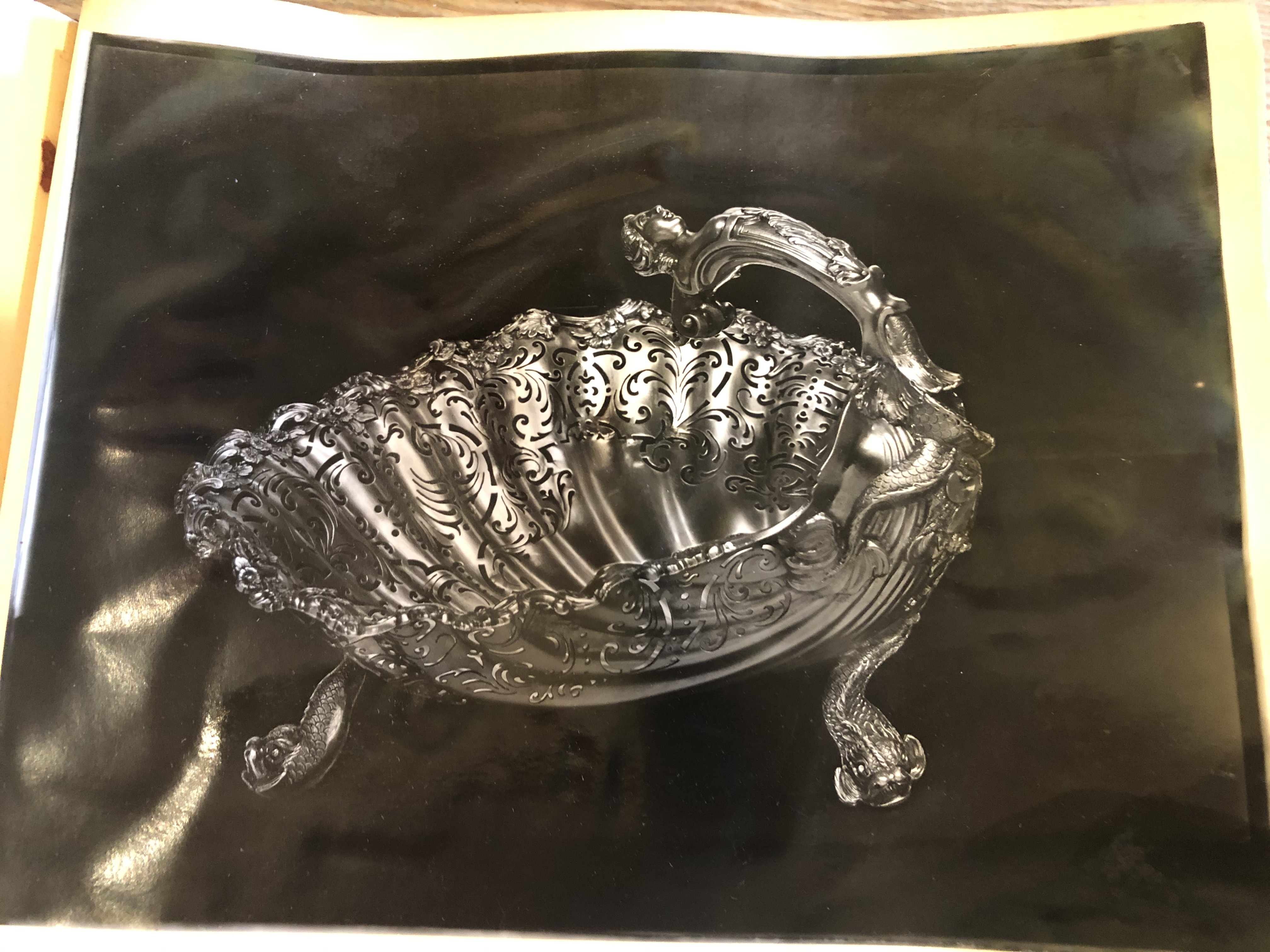
The contents of the album are mainly photographs of modern silver made by Attenborough in the 1920s to the 1950s, but there are also many photos of 18th and 19th century antique silver, including this amazing George II silver basket – in the style of Paul de Lamerie (1688-1751).

George II Silver Basket; Jay, Richard Attenborough & Co Ltd album, photograph c.1930s?

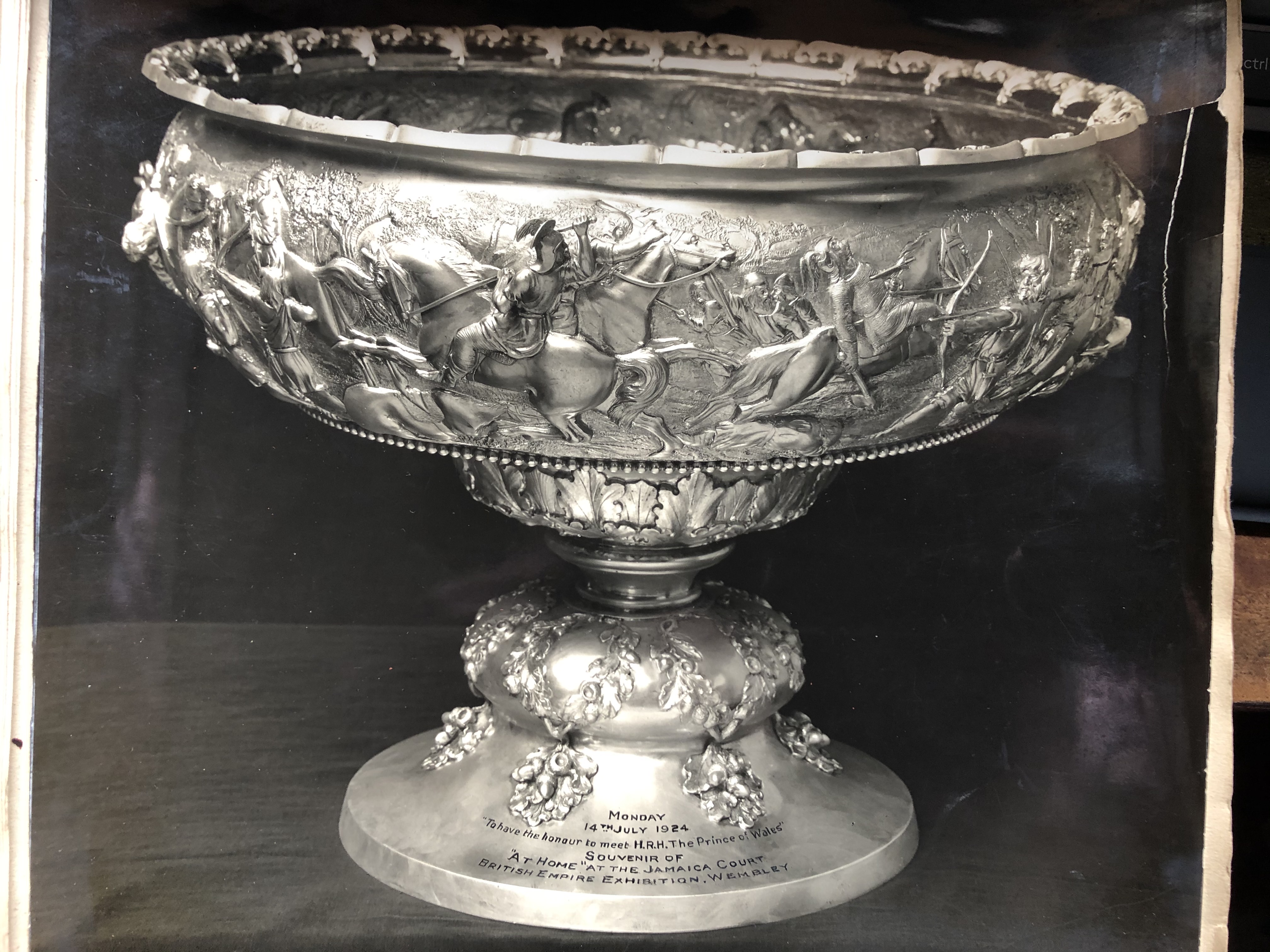
Some of the most interesting photographs in the album illustrate pieces of antique silver that have been remounted as presentation pieces by Jay, Richard Attenborough & Co in the 1920s and 1930s.  This silver punch bowl dating from 1870 has been remounted for presentation in 1924.  There is a long description of the object in the album; ‘Silver Punch Bowl, weighing 144 ounces, standing 14 inches high, and measuring 18 inches across. It is entirely wrought and chased by hand, and bears the Victorian Hall mark for the year 1870. The body of the bowl is decorated with repousse work in high relief of figures of horsemen and footmen in armour, symbolising battle scenes from early English history. The pedestal foot is ornamented with a series of wreathed designs of oak leaves and acorns; the whole forming a remarkable and unique specimen of the silversmith’s art. It was originally on [sic] the collection of the late Viscount Chaplin, who was a great patron of the turf, and a thorough sportsman, also a political associate of the Rt. Hon. Joseph Chamberlain. The inscription engraved on the foot is as follows:- Monday, 14th July, 1924 ‘To have the honour to meet H.R.H. The Prince of Wales’ Souvenir of ‘At Home’ at the Jamaica Court. BRITISH EMPIRE EXHIBITION, WEMBLEY.’

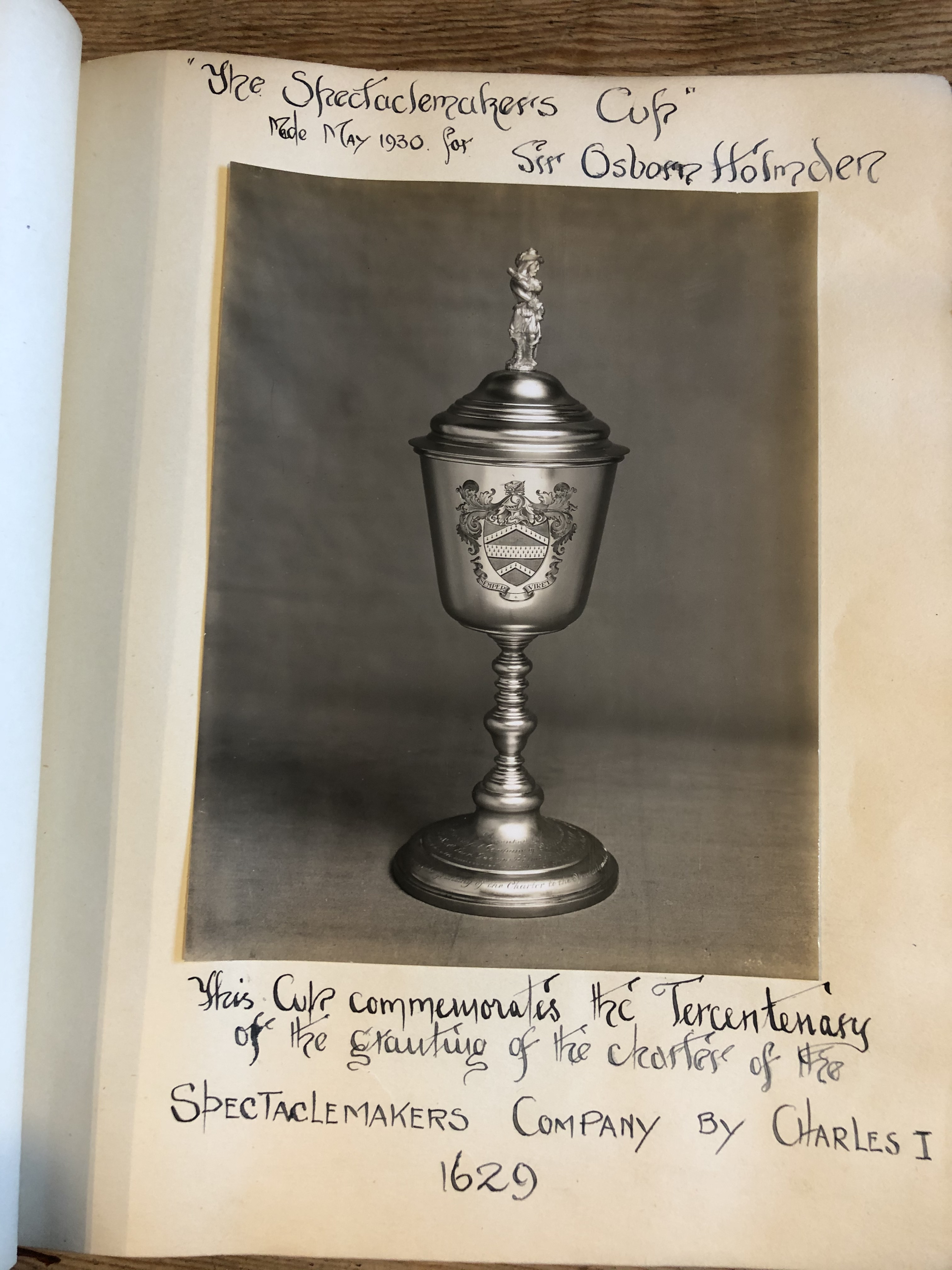
The album also contains dozens of photographs of commissions for presentation cups and plate that the firm created in the early and mid 20th century. Here, for example, is ‘The Spectaclemakers Cup’, made to commemorate the tercentenary of the granting of the Royal Charter by Charles I in 1629; ‘made in May 1930 for Sir Osborn Holmden’ – who was made Master of the Worshipful Company of Spectaclemakers in 1928.

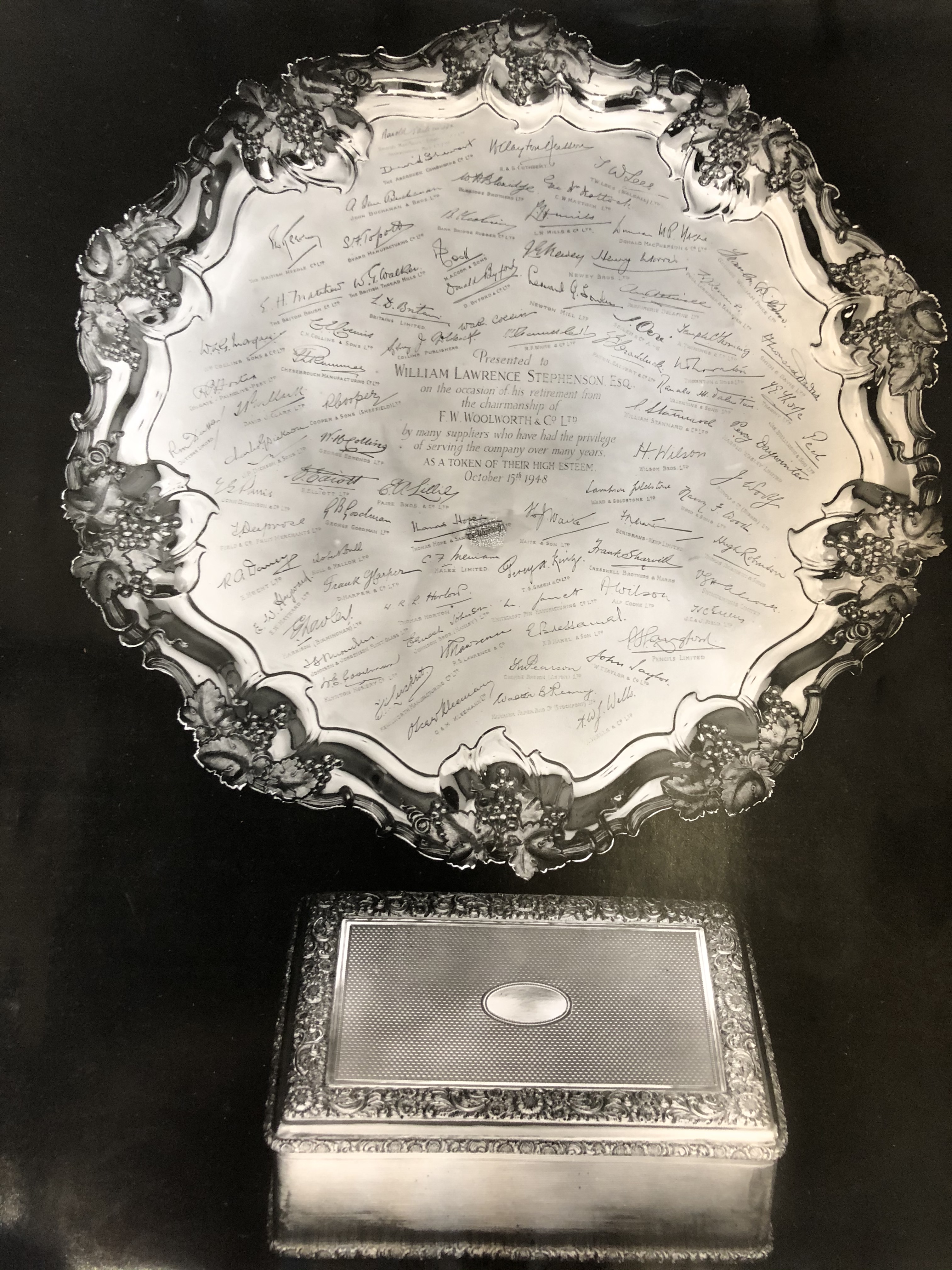
The wide range of commissions for silver that the firm undertook is illustrated by these two further examples – a large silver presentation salver, made as a gift to William Lawrence Stephenson Esq. on his retirement as chairman of F.W. Woolworth & Co. Ltd. in 1948.

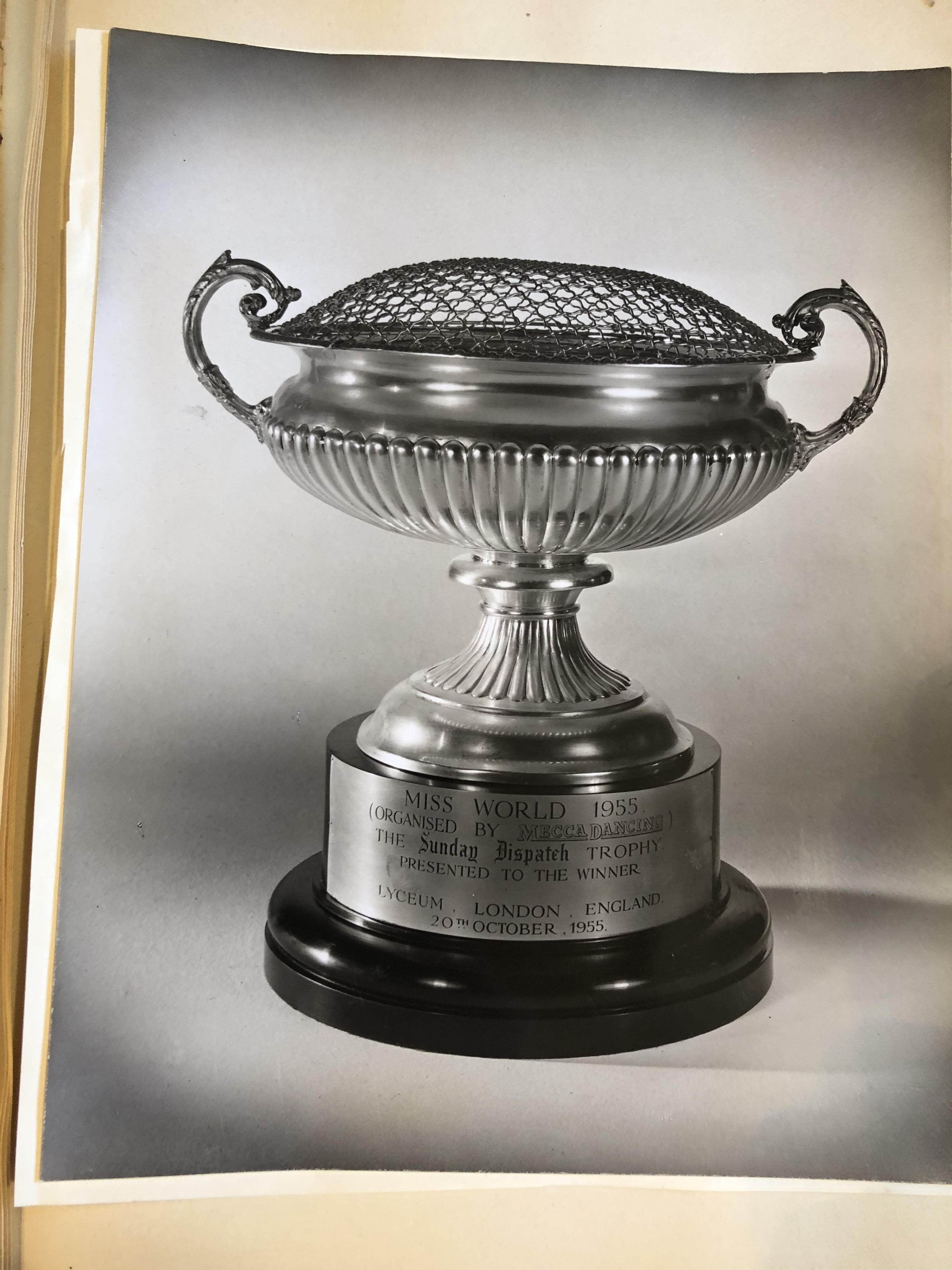
And the winner’s trophy for the Miss World Competition in 1955, which that year was held in London.

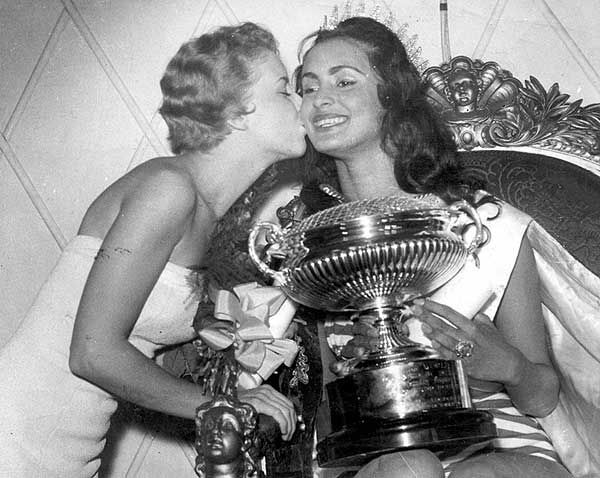
That year, the fifth edition of the now highly contentious and outdated competition, Miss Venezuela, Susanna Duijm, won the competition; here she is, holding the trophy made by Jay, Richard Attenborough & Co Ltd.

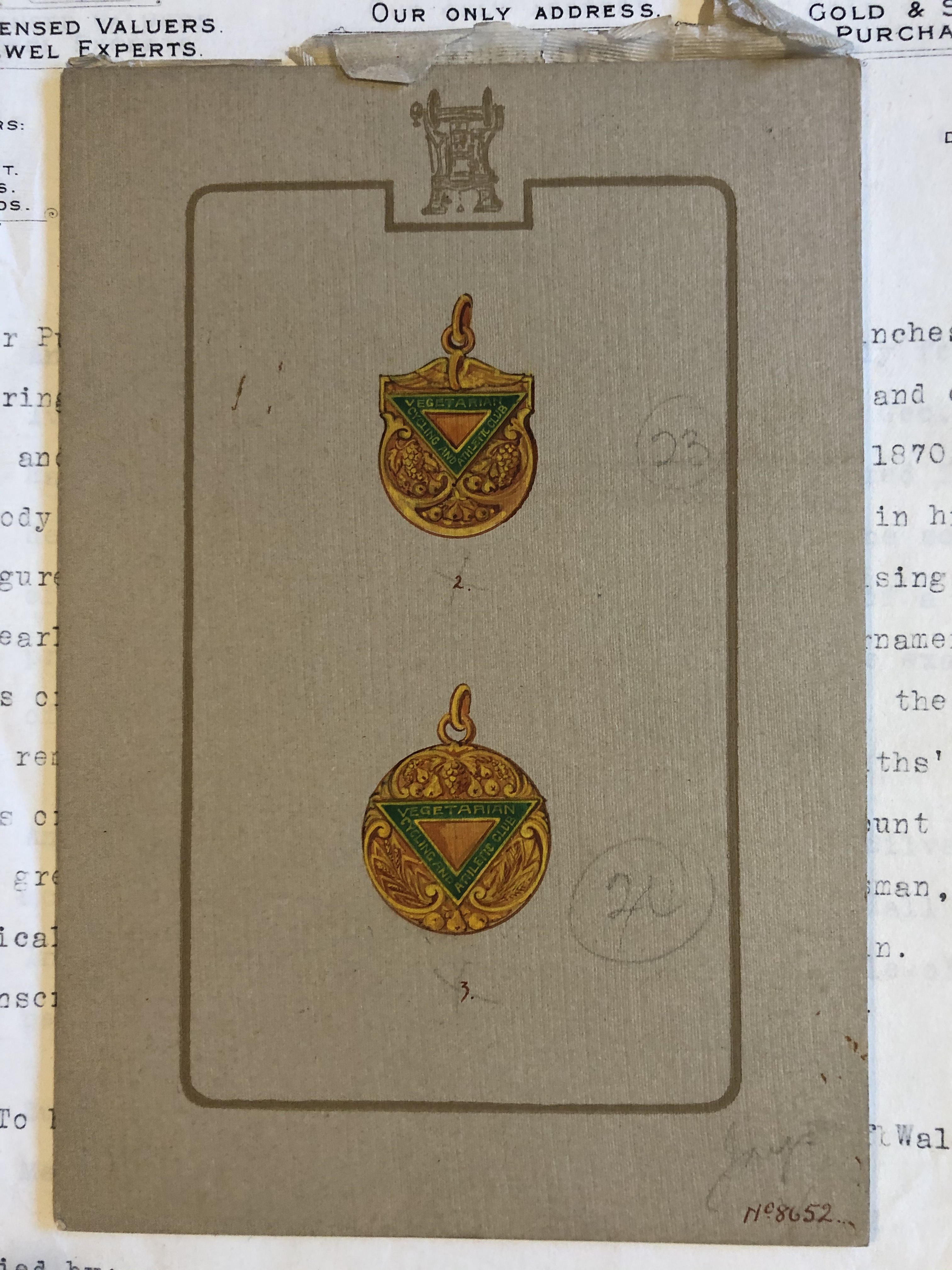
As well as the photographs of modern and antique silver, the album also contains a small number of fascinating watercolour designs for cups and medals, including these beautiful watercolours for designs for a medal for the Vegetarian Cycling and Athletic Club, dating from the 1930s.  The Club was established in 1888 and is still going.

The Attenborough album is an amazing document, one that clearly demonstrates how the practices of antique dealing, and those of contemporary design, have been in continuous flux.  The album will be making its way to the Special Collections at the Brotherton Library at the University of Leeds in due course!

Mark

Home Subjects

a working group dedicated to the display of art in the private interior, c. 1715-1914

The Period Room: Museum, Material, Experience

An International Conference hosted by The Bowes Museum and The University of Leeds

H. Blairman & Sons Ltd

A research project investigating the history of the antiques trade in Britain in the 19th & 20th centuries

Museum Studies Now?

'Museum Studies Now?' is an event which aims to discuss and debate museum and heritage studies education provision.

The Burlington Magazine Index Blog

art writing * art works * art market

East India Company at Home, 1757-1857

A research project investigating the history of the antiques trade in Britain in the 19th & 20th centuries