Posts tagged ‘Phillips of Hitchin’

March 6, 2017

‘Where is it Now?’ – we found the first one!

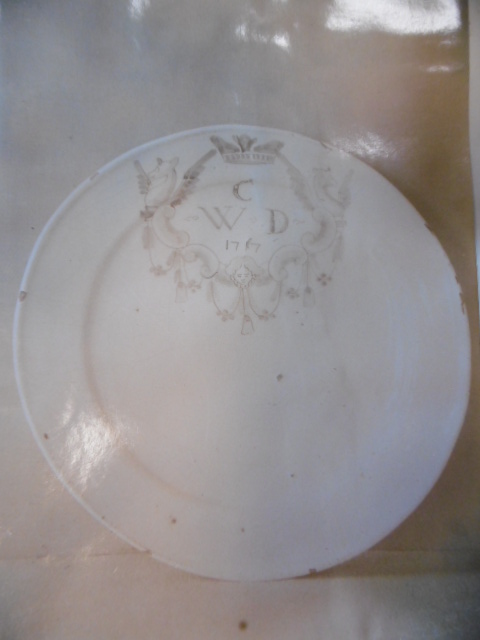
Thanks to Simon Spier, one of our Centre for the Study of the Art & Antiques Market PhD students, we have found the first of the ‘Where is it Now?’ objects. The object in question is a ‘Lambeth’ Delftware plate, dated 1717, with the initials ‘W D C’ painted on the top rim.

ms1999-4-1-52-plaque

Delftware plate, dated 1717. Phillips of Hitchin Archive MS1999/4/1/52. Photograph courtesy of the Brotherton Library Special Collections, University of Leeds, 2017.

The plate was in the stock of the antique dealers Phillips of Hitchin in c.1900, shown above in one of the photograph albums of stock that are part of the Phillips archive at the Brotherton Library Special Collections at the University of Leeds.

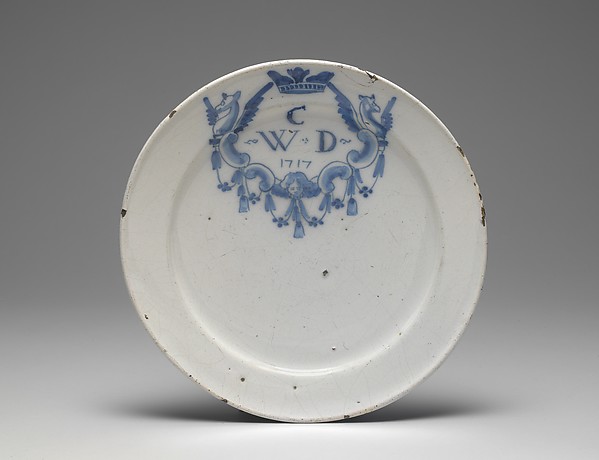
We have discovered that the delftware plate is in the Metropolitan Museum of Art in New York, USA. The plate is currently part of the Met Museum’s collections of European Sculpture and Decorative Arts – here’s a link to the Met Museum collections online for the PLATE 

And here’s the plate itself, in full, glorious colour! The plate is on display in Gallery 710 in the Met Museum if you want to go and see it for yourself.

delftware-plate-1717

Lambeth delftware plate, dated 1717, diameter 9 inches.. Metropolitan Museum of Art, New York, 12.279.9 Rogers Fund, 1913. Photograph copyright The Metropolitan Museum of Art.

The Metropolitan Museum acquired the plate in 1913 (via the Rogers Fund), through the well-known antique dealer Frederick Rathbone (1837-1919). Rathbone was, by 1913, trading at 20 Alfred Place, South Kensington, London, and would have been in his mid 70s when he sold the plate to the Met Museum. He was an acknowledged expert on antique ceramics, especially on Wedgwood and ‘Old English Pottery’; he was famous for helping to assemble the collections of William Hesketh Lever (1851-1925) 1st Viscount Leverhulme, and the extensive collections of 18th century Wedgwood ceramics assembled by Lord Tweedmouth (1820-1894).

It’s not known when, for how much, or to whom, Phillips of Hitchin sold the plate – it may have been sold direct to Rathbone, we have yet to discover that information, but it will be buried in the extensive archives at the Brotherton Library Special Collections.  What we do know is that Phillips bought the plate from the collection of the well-known collector W.H. Booth of Ipswich in Suffolk sometime around 1900.

Anyway, we are pleased at least to have found the first of the ‘Where is it Now?’ objects, and to have provided a little more provenance information to the delftware plate in the collections at the Metropolitan Museum, New York.

Mark


February 6, 2017

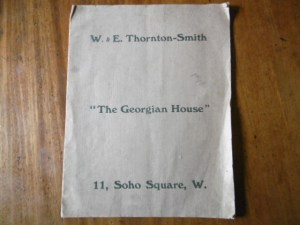
Thornton-Smith Antiques – ‘The Georgian House’.

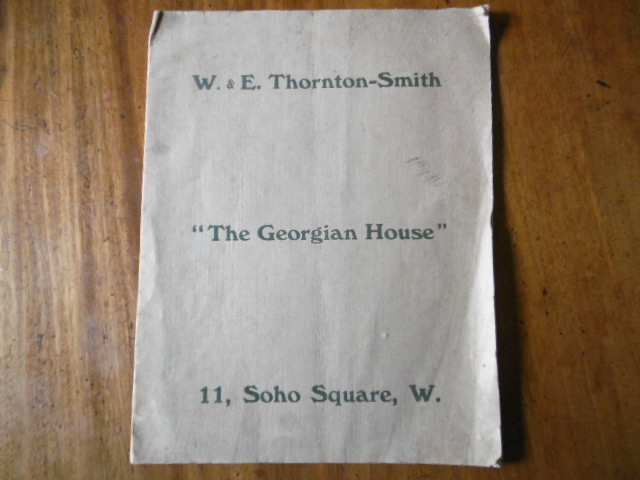
thornton-smith-cover

‘The Georgian House’ – W.& E. Thornton-Smith. c.1910.

Following the very kind donation of antique dealer ephemera by Tim Turner at Sworders Auctioneers we thought we should compose a fuller account of our investigations of the catalogue of the antique dealers W.& E. Thornton-Smith.
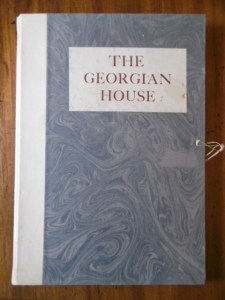
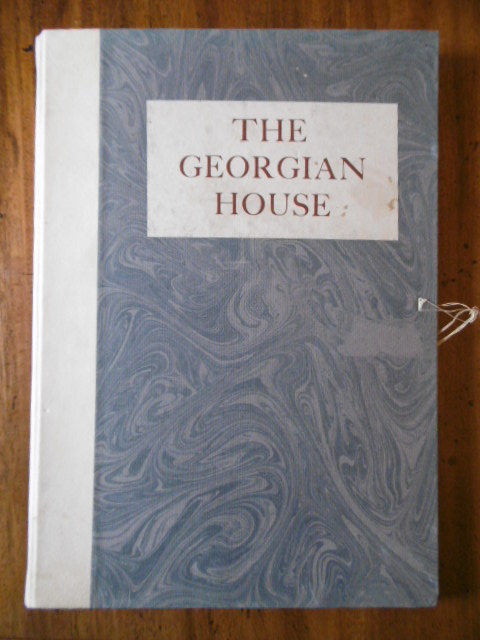
phillips-of-hitchin-1920

Phillips of Hitchin, ‘The Georgian House’, catalogue, c.1920.

The catalogue is a type that was produced by many antique dealers during the early 20th century.  A key comparison is the catalogue produced by Amyas Phillips, of the firm of Phillips of Hitchin, who also produced a catalogue of stock titled ‘The Georgian House’ (this one c.1920).  The Thornton-Smith’s catalogue appears to date from c.1910, given the suggested information on the back of the catalogue (i.e. that Thornton-Smith had ‘New Premises’ at 11 Soho Square, London); they appeared to have moved to 11 Soho Square in c.1910.
thornton-smith-verso

Thornton-Smith catalogue, c.1910.

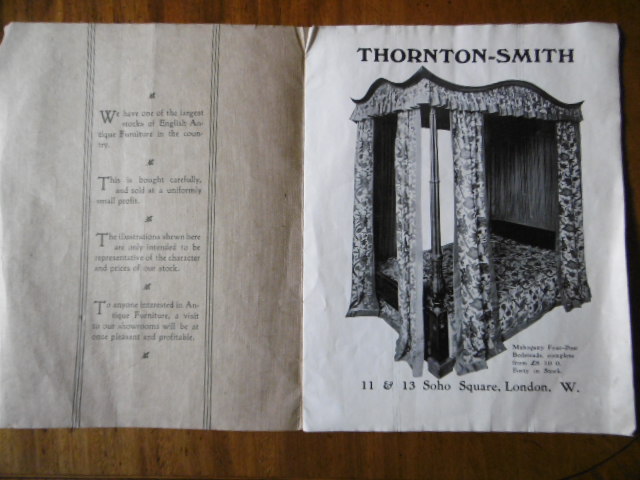
It must have been quite an extensive business; they state that they had ‘one of the largest stocks of English Antique Furniture in the country’ (but then, many dealers also suggested that at the time, and since). If we are to believe the information in the catalogue, they had 40 four-post beds in stock, all on show ‘in an historic Georgian House, decorated in the manner of that period.’
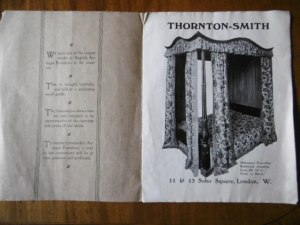
thornton-smith-cat

Thornton-Smith catalogue, c.1910.

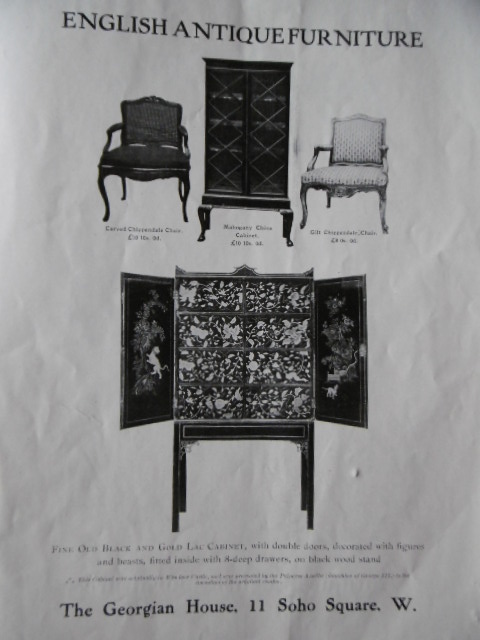
thornton-smith-cat-2

Thornton-Smith catalogue, c.1910.

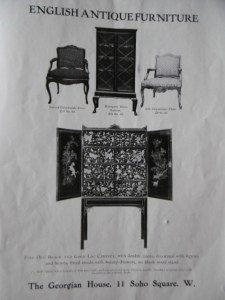
The catalogue also contains an extensive number of black & white photographs illustrating the range of stock held by Thornton-Smith in the period.

Walter George Thornton-Smith (d.1963) established his antique dealing business in c.1906, with Ernest Thornton-Smith. Like many antique furniture businesses at the time, Thornton-Smith also provided a full interior decoration service for their clients.  Indeed, such was the reputation of Thronton-Smith as decorators that they started the careers of two of the most well-known interior designers of the 20th century – Syrie Maugham (1879-1955), wife of the writer W. Somerset Maugham, and interior decorator par excellence during the 1920s and 1930s (famous for her interior schemes made entirely with shades of white) began her training with Walter Thornton-Smith in the early 1920s, before setting up ‘Syrie Limited’ at 85 Baker Street, London in 1922.  It seems that Thornton-Smith was introduced to Syrie when he was commissioned to decorate her home at York Terrace; she was at the time recovering from her recently failed marriage to the Industrialist Henry Wellcome (1853-1936).

The other key interior decorator associated with Thornton-Smith was John Fowler (1906-1977), of Colefax & Fowler, who briefly trained at Thornton-Smith in the late 1920s.

Thornton-Smith was a highly successful businessman and, like many dealers and collectors of antiques at the time, he also took a keen interest in ‘ancient buildings’. He developed a number of historic architectural projects, often recreating ‘historic homes’ by recycling architectural elements from demolished buildings.  One of the earliest of his projects was the dismantling and re-siting of a 16th century half-timbered building ‘Kingston Hill’, near Woodbridge in Suffolk (it’s not known where he re-sited the building?).  His major project however was Shoppenhangers Manor, Maidenhead, Berkshire.
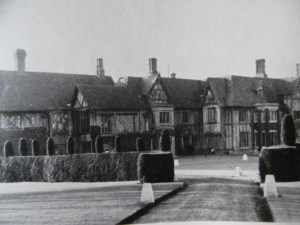
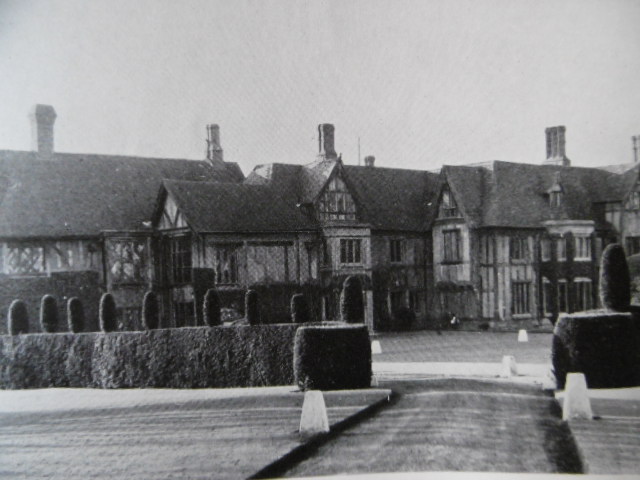
shoppenhangers-manor

Shoppenhangers Manor, Maidenhead, as seen in c.1950. Photograph from Apollo Magazine, August 1956.

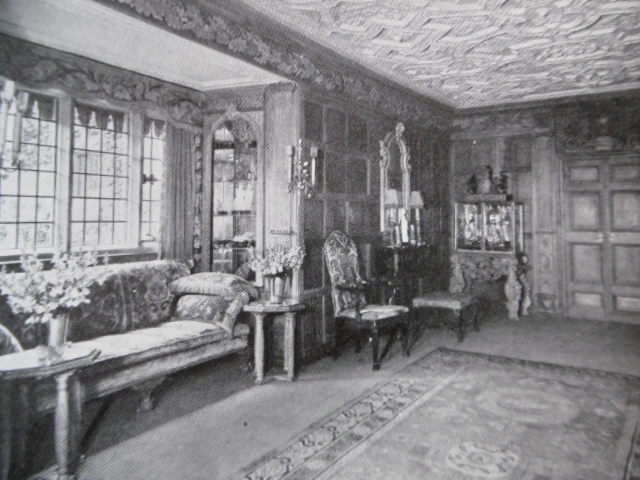
Thornton-Smith bought the site of the original manor house at Shoppenhangers (the site had already been cleared of the remains of the original manor) in 1914 and set about recreating a 16th century manor house on the foundations of the original house.  The project seems to have taken 4 years to complete, and was assembled, recreated, using an astonishing range of architectural elements, from a wide geographical area, and made available through a variety of opportunities and events.  Painted glass from Selby Abbey, for example, made available following the major fire at Selby Abbey in 1906, was installed in the ‘Long Room’ at Shoppenhangers; there were ceilings from an ‘ancient inn at Banbury’, and panelling from an ‘old house’ at Faversham, as well as that ‘removed from a Venetian Palace’. Other materials apparently came from West Wycombe Park and from ‘an ancient house in Spain’.  One of the most important rooms in Shoppenhangers Manor, the ‘drawing room’ was lined with panelling from Billingbear Park, Wokingham.
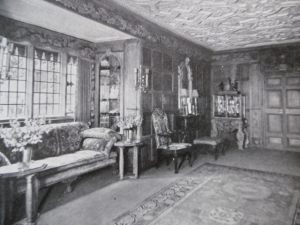
shoppenhangers-manor-int

Shoppenhangers Manor, the drawing room. Photograph from Apollo Magazine, August 1956.

It’s not actually clear how Thornton-Smith acquired the panelling from Billingbear Park – given that the house was still occupied until a devastating fire in 1924 (some 6 years after Thornton-Smith supposedly completed his house), but it may be that Billingbear Park was refurbished/remodelled sometime in the 1910s, or that Thornton-Smith acquired the panelling in 1924 and continued to construct his ‘new-old’ house? If you are interested in reading more about Thornton-Smith’s project at Shoppenhangers, it was the subject of a short essay by Horace Shipp, in Apollo Magazine in August 1956, pp.41-45 – ‘A Home and it’s Treasures, Shoppenhangers Manor and the Collection of Walter Thornton Smith’.  After Thornton-Smith died, Shoppenhangers Manor was sold to the Esso Petroleum Company in 1965, when there was also an auction sale of the contents; it was converted into an hotel in the late 1960s, and was eventually demolished in 2007.

Which brings us back to the Phillips of Hitchin ‘The Georgian House’ catalogue.  The antique dealers Frederick W. Phillips and Amyas Phillips have been the subject of earlier blog posts in the antique dealers blog (see Phillips of Hitchin posts), but one of the interesting aspects about the Phillips family business is also their architectural projects, which are in direct correlation with those of Walter Thornton-Smith (they must have known each other I’m sure!).  Phillips’ major project (one of many, that also included the dismantling and sale of the London home of Sir Isaac Newton in the 1910s) was the reconstruction of Baliffscourt in Sussex.
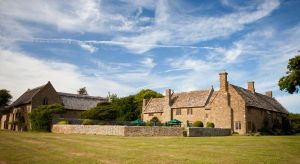
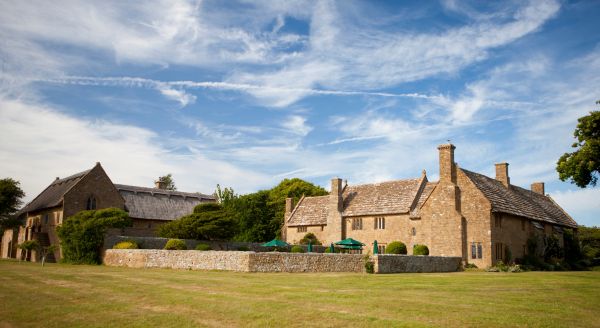
bailiffscourt-hotel-spa-exterior-photo

Baliffscourt, West Sussex. Wikicommons.

Amyas Phillips was engaged by Lord Moyne in 1927 to recreate a late Medieval manor house, and, like Thornton-Smith, he began assembling the ‘ancient manor house’ by scouring the country for historic architectural elements, creating a house that is a poem of romantic architectural fragments.

Whatever the real stories behind the provenance of the architectural elements that eventually made their way to these ‘new-old’ homes, these architectural projects illustrate the significance of the key roles that the antique trade played in these romantic recreations of the past, providing the perfect back-drop for the assemblage of antique furniture and objects that the dealers also supplied.

Mark
December 17, 2016

‘Where is it Now?’

As part of developing the rich potential of the wide variety of Antique Dealer archives that we now have at the Brotherton Library Special Collections at the University of Leeds we have developed a ‘Where is it Now?’ project. The project aims to reconnect some of the objects in the archives with their current owners, if they still exist in public museums or private collections anywhere.  We are choosing objects that are relatively easy to identify, and objects that we believe are (still) of some historical significance.

The photographs of the objects will be initially from the Phillips of Hitchin archive photograph albums, which appear to date from c.1900.  Phillips of Hitchin were established in 1882 at the Manor House, Hitchin, and remained there for over 120 years. The business sold antique objects to museums and collectors from all over the world, so we are hoping that some of the objects will speak of their travels!

The first of the ‘Where is it Now?’ objects is this Lambeth (London) delftware plate, dated 1717, and with the initials ‘C W D’ painted on it. If you know where it is now do let us know by emailing antiquedealers@leeds.ac.uk

ms1999-4-1-52-plaque

Lambeth delftware plate, 1717. Phillips of Hitchin archive, Brotherton Library Special Collections, MS1999/4/1/52. Photograph courtesy Brotherton Library Special Collections, University of Leeds, 2016.

Happy Hunting!

Mark

December 15, 2016

Another ‘BADA Voices’ oral history interview

We’ve been busy this last month with our Oral History interviews with members of the antique trade – and the latest in our continuing series of ‘BADA Voices’ was with one of the leading members of the Antique English Furniture trade, Robin Kern, of Hotspur Limited.  We would like to thank Robin, and Chris Coles, our Lead Volunteer for the Antique Dealers Research project, for undertaking the interview. Print

And continued thanks to BADA for their support!

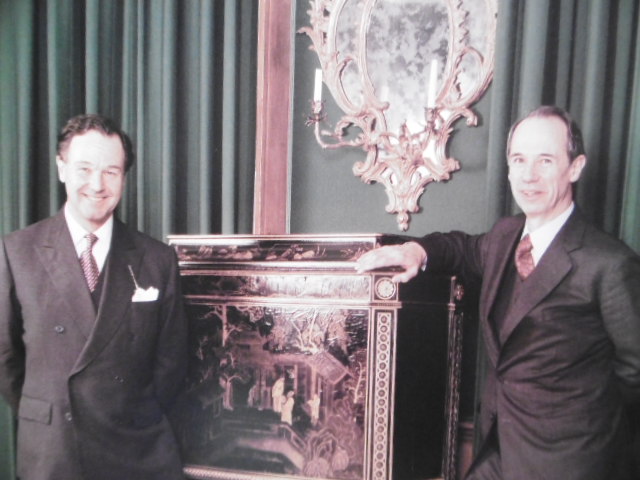
robin-and-brian-kern-1999

Robin and Brian Kern, of Hotspur Limited, standing next to the famous black lacquer secretaire, made by Thomas Chippendale for Harewood House in the 1770s (now at Temple Newsam House, Leeds). Photograph courtesy of Robin Kern, 1999.

The business of Hotspur began in 1924 in Buckingham Palace Road, London, established by Frederick Kern, before moving to Frith Street in Soho, London just before the Second World War, then Streatham Lodge, Twickenham during the War, and finally to Lowndes Street, London from 1951.  The business was continued by Robin Kern’s father, Rob Kern, before Robin and his brother Brian joined the firm in 1957 and 1963 respectively.

Our interview with Robin adds critical mass to the wide range of complementary oral history interviews we have already completed – including those with Jerome Phillips, of Phillips of Hitchin, who was, as Robin tells us in his own interview, a key travelling companion during their formative years in the antique trade in the 1950s and 1960s.

We have move oral history interviews planned for 2017, so do keep an eye on developments.

Mark


August 28, 2016

Final Day in ‘Action Week’ on Phillips of Hitchin archives

‘Action Week’ at the Brotherton Library Special Collections came to a close on Friday – it was an exhausting, but very productive week of cleaning and cataloguing – and thank you again to everyone that helped out with the Phillips of Hitchin archives – to the team at Brotherton Special Collections – Sharon, Francis, Tim and Joanne, (and everyone else!); and to the volunteers in the archives Helen, Matt and Riza, and our Antique Dealer project volunteers, Heather, Pauline, Sue and Yiwen – it was such a great team effort!…. here’s four of the happy volunteers (see also pictures of the volunteers in previous blog posts) –

archive action week

Action Week volunteers – L-R, Yiwen, Pauline, Heather & Sue.

There’s still an awful lot of cleaning and cataloguing to do, but we made great progress on the Phillips of Hitchin archives – and made some new discoveries…the archive is certainly beginning to reveal the rich potential that we always knew it had. And from the huge variety of materials (sales ledgers, day-books, photograph albums, correspondence files, etc etc) some fascinating stories are emerging.

One of  the tasks we undertook was the cleaning and cataloguing of some of the scores of small (6 inch high) ‘photograph albums’; they appear to date from the early 20th century, and contain a huge variety of black & white photographs of antiques – the condition of the albums is mostly fair, but many of them need a little bit of care and attention; see below for an image of the cover of one of the albums –

photo album c1910

Photograph Album, c.1900, Phillips of Hitchin archives MS/1999/4/1. Photograph courtesy of The Brotherton Library Special Collections, University of Leeds.

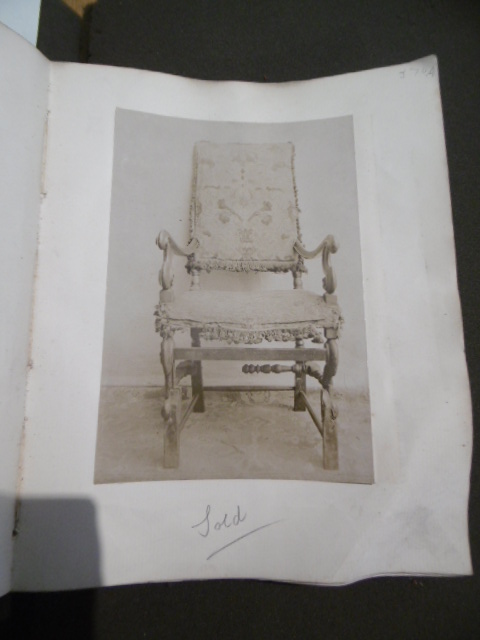
They contain fascinating images of the type of stock that Phillips of Hitchin traded in during  the late 19th and early 20th centuries; and there are some interesting objects – such as this late 17th century armchair, seemingly still with it’s original upholstery, but with a fascinating repair-job to the feet, which appears to have been added in the late 18th or early 19th century?

PoH MS1999.4.1.15

Photo Album, Phillips of Hitchin archives, MS1999/4/1/15. Photograph courtesy of The Brotherton Library Special Collections.

The pencil annotation below the photograph states ‘Sold’, but I wonder how long the chair retained it’s subsequent, practical, additions…and how long before it had a much more historically ‘sympathetic’ repair – if I’m honest, I quite like the old repair, it is, after all, a testimony to the history of the object.

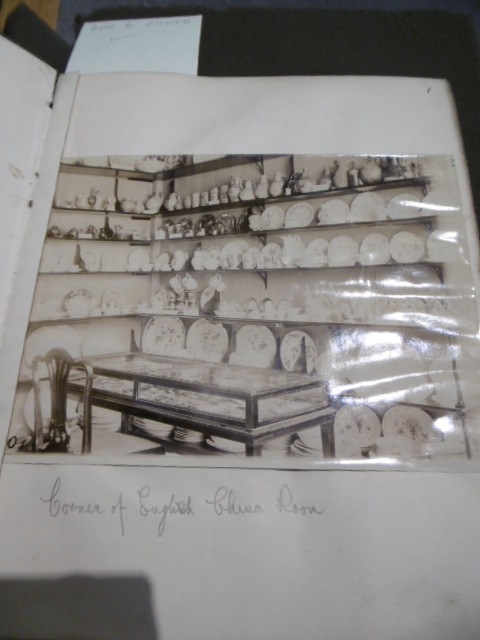
Within the Phillips of Hitchin archives, as one would expect, there are thousands of transactions with hundreds of other antique dealers – including the most high-profile dealers at the time – as well as all the major collectors and museums one could think of……..the archive also contains a wide range of photographs of the interior displays at Phillips of Hitchin. The especially interesting images are those taken during the late 19th and early 20th centuries – including this amazing image of the ‘Corner of the English China Room’ (c.1900), showing a wide range of antique ceramics, including some (now) seemingly exceptionally rare things!

PoH English Ceramics room MS1999.4.1.17

Phillips of Hitchin archives, photo of ‘Corner of English China Room’. MS1999/4/1/17. Photograph courtesy of The Brotherton Library Special Collections.

As I say, there is an exceptionally rich potential for further research into the Phillips of Hitchin archives – and, as followers to the Antique Dealer Research Project will know, we also have an oral history interview with Jerome Phillips, the 3rd generation of the family business, and donator of the archive to the Brotherton Library Special Collections; if you would like to hear about the history of the firm from the person that really knows about it do have a listen to the interview Here’s a link to the interview –

Interview with Jerome Phillips

We are continuing to clean and catalogue the Phillips of Hitchin archives in the coming months, and will post information on any interesting discoveries, so do keep your eye on the Research Blog.

Mark


August 25, 2016

More ‘Action Week ‘ work on the Phillips of Hitchin archives

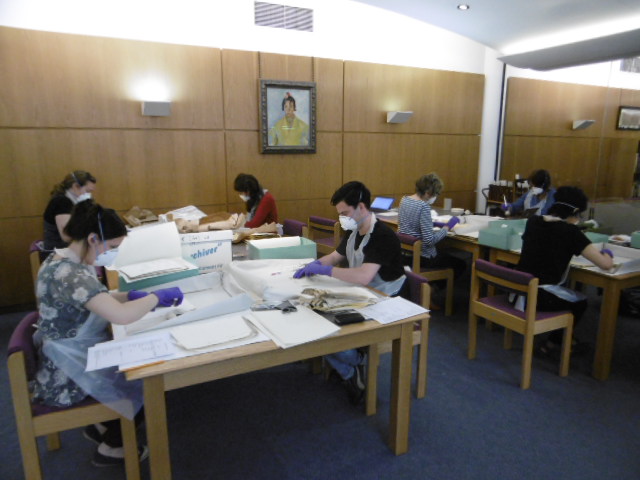
We are making steady progress this week on the enormous task of cleaning and cataloguing the Phillips of Hitchin archives at the Brotherton Library Special Collections at the University of Leeds. The Brotherton Library drafted in their Special Collections team, and extra volunteers, for the rest of the ‘Action Week’ project on the archive – special thanks to the hard work of Francis (conservator at the Brotherton Library), together with Sharon, (head conservator) and our team of volunteers, Sue, Pauline, Heather, Matt, Helen and Riza – we are getting through the masses of material now. Here’s the team in the Special Collections archive room at the Library, busy cleaning, all masked-up – it’s dangerous work!

action week volunteers new

Cleaning the Phillips of Hitchin Archives. L-to-R, Helen, Pauline, Heather and Matt (left-hand table) and Riza, Sue and Francis (right-hand table).

Considering that the archive had been stored in a garage in Hitchin for most of it’s life, (it dates from c.1880s-to present) the archive arrived at the Brotherton in generally good condition, although parts of the archive had been subject to damp and mould and pest – hence the need for masks and gloves for the cleaning.  The process of cleaning and cataloguing is a huge task though, and at present we are only able to undertake brief cataloguing – we’re hoping for some funding to extend and complete the task!

As one would expect, given the significance of the history of the business of Phillips of Hitchin, the archive is absolutely packed with fascinating information on high profile transactions – all yet to be discovered!…but we thought we’d give you a flavour of the kinds of material that is buried in the archive –

The client lists of Phillips of Hitchin is a veritable ‘who’s-who’ of major collectors of antiques, and hundreds of sales of museums world-wide.

The archive of Phillips of Hitchin covers over 120 years of antique dealing, and we are so grateful to Jerome Phillips, the last surviving member of this famous antique-dealing dynasty, for generously donating the archive to the Brotherton Library Special Collections, and the Centre for the Study of the Art & Antiques Market at the University of Leeds. It will, once we’ve finished cleaning and cataloguing it, be an astonishingly valuable resource for future researchers and scholars.

Mark

August 22, 2016

Phillips of Hitchin archives – action week at the Brotherton

At long last, we have started to catalogue and clean the Phillips of Hitchin archives – the archives, as you know, have been very generously donated to the Brotherton Library Special Collections at the University of Leeds by Jerome Phillips, the last owner of the world-famous antique dealers ‘Phillips of Hitchin’.  The business was established in the early 1880s, and remained at the Manor House, Hitchin since that time.

The archives will be a tremendous resource for scholars and researchers, but we have to get them catalogued and cleaned before we make them accessible – and that all takes time and funds!…We are making a start though, and this week The Brotherton Special Collections have devoted a whole week, and significant resources, to begin to clean and catalogue the extensive archives – there are at least 50 archive boxes to clean and catalogue…with thousands of individual items.

We have a team of archive specialists (including Sharon and Karen, the conservation and cataloguing experts) and a few eager volunteers working on the project – here are the volunteers (Yiwen, Pauline, Heather & Sue), working away, cleaning the materials –

archive action week 4

Archives Volunteers – L-R, Yiwen, Pauline, Heather and Sue.

As you can see, this is dangerous work!…the archives had been stored in a garage at The Manor House for decades, and require delicate cleaning and conservation – once this task is done, they are passed over to the cataloguers for basic level cataloguing – we are hoping for some funding for item level (i.e. individual letter/invoice/item) cataloguing…but at least we are making a start!

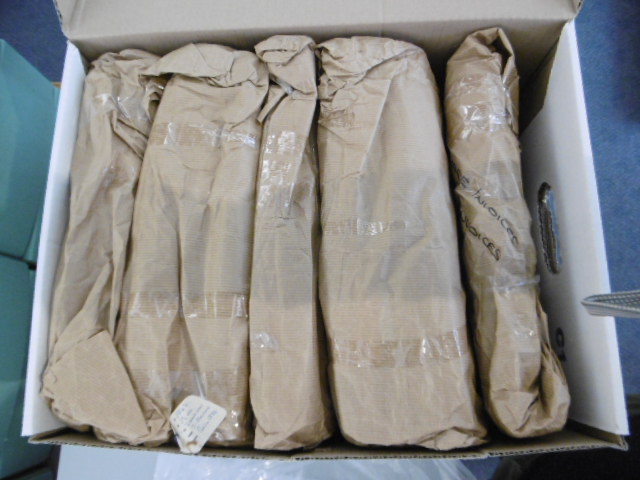
Even on this first day of cleaning and cataloguing the sheer quality of the Phillips of Hitchin archive is being revealed…and from these brown paper packages, treasures are emerging!

box 19 complete

Phillips of Hitchin Archive


packet corr 1960

A parcel of letters from the Phillips of Hitchin archive


We’ll update on progress and discoveries during this exciting ‘Archive Action Week’

Mark


May 2, 2016

3 New Oral History Interviews – plus ONE goes LIVE!

Following the very positive comments from the conference delegates about our oral history interviews, we have now had time to update the Oral History Interview pages on the Antique Dealer project website – see Antique Dealers Website

Our updates include three recent interviews -first, we interviewed Andrew Jenkins, of Avon Antiques, Bradford-on-Avon.  Andrew came up to Leeds to see us, and we unusually conducted the interview in our offices at the University of Leeds.  Avon Antiques was established by Andrew in 1963; in a fascinating interview Andrew gave us his reflections on his considerable experience of over 50 years in the antique trade.

Andrew and Vibeke Jenkins, Avon Antiques.

Andrew and Vibeke Jenkins, Avon Antiques.

Our next interviewee was Tim Corfield, formerly of Corfield of Lymington, Hampshire, which was established by Tim’s father in 1966.  Tim told us about his life in the antique trade and of his work as an art and antiques agent through his new business of Corfield Morris Limited.

Tim Corfield, of CorfieldMorris. Photograph courtesy of Tim Corfield.

Tim Corfield, of Corfield Morris Ltd. Photograph courtesy of Tim Corfield.

And our third interviewee as part of our recent activities was with Dominic Jellinek.  Dominic, as some of your will know, worked at the world-renowned Chinese Works of Art dealers Bluett & Sons, London.  Dominic started with Bluett & Son in 1978, and stayed with them until they business eventually closed in the mid 1990s.

Dominic Jellinek, of Bluett & Sons, pictured with the Bluett archive.

Dominic Jellinek, of Bluett & Sons, pictured with the Bluett archive.

Dominic gave us a thoroughly detailed account of the history of Bluett, based on his extensive knowledge of the Bluett archive, as well as his many memories of the antique trade in the 1970s, 80s and 90s.

As usual, all of these interviews will be available to hear, once we have edited them and formatted them, so do keep your eye on the project websites.

ONE piece of GREAT NEWS, is that we have (thanks to the brilliant work of Matt Robson and Peter Edwards at the University) edited and formatted our interview with Jerome Phillips, of the famous dealership Phillips of Hitchin……the first of MANY!….do take a look at the ORAL HISTORY pages on the project website and have a listen…!

Mark

September 28, 2014

Oral History Interview – Jerome Phillips

We interviewed Jerome Phillips earlier this month – of the well-known dealers ‘Phillips of Hitchin’, established in the 1880s, and still trading from the same address at the Manor House in Hitchin.  Jerome, photographed below is sitting in the main entrance hall at the Manor House.  P1000018

The firm of Phillips of Hitchin was begun by Jerome’s grandfather, F.W. Phillips in c.1884, and Jerome told us about the history of the business, and his experiences since he joined the firm in the early 1960s.  The interview with Jerome will form part of the oral history archive of the antique trade and will be available via the project websites later this year, so keep your eye on the developments as the project progresses.

Mark

March 23, 2014

Phillips of Hitchin – more images of dealer shops

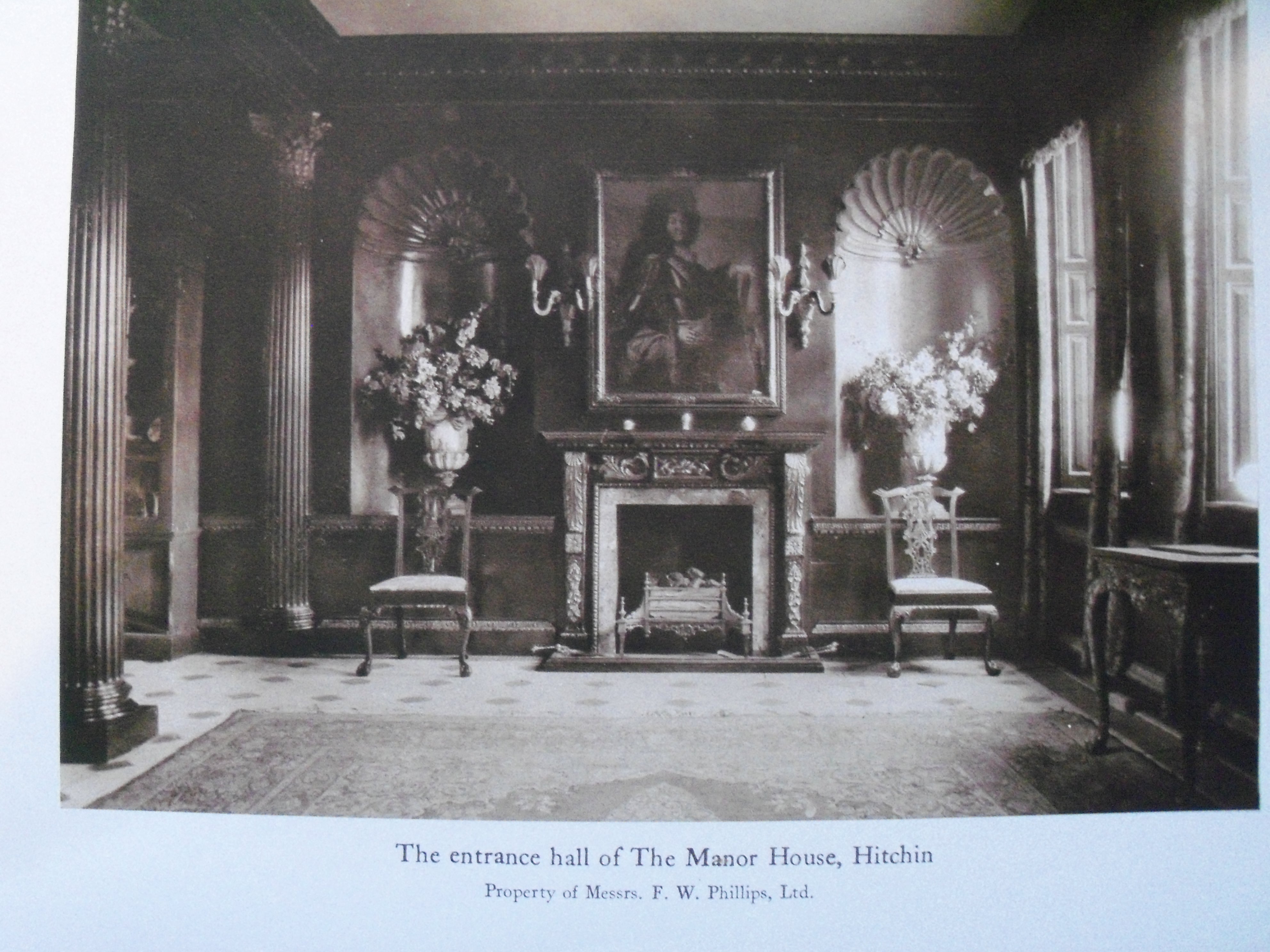
In anticipation of my visit tomorrow to speak to Jerome Phillips, of Phillips of Hitchin – (founded by Jerome’s grandfather Frederick William Phillips in 1884) I thought I’d post an image of the interior of Phillips’ ‘shop’….The Manor House, Hitchin….

Image

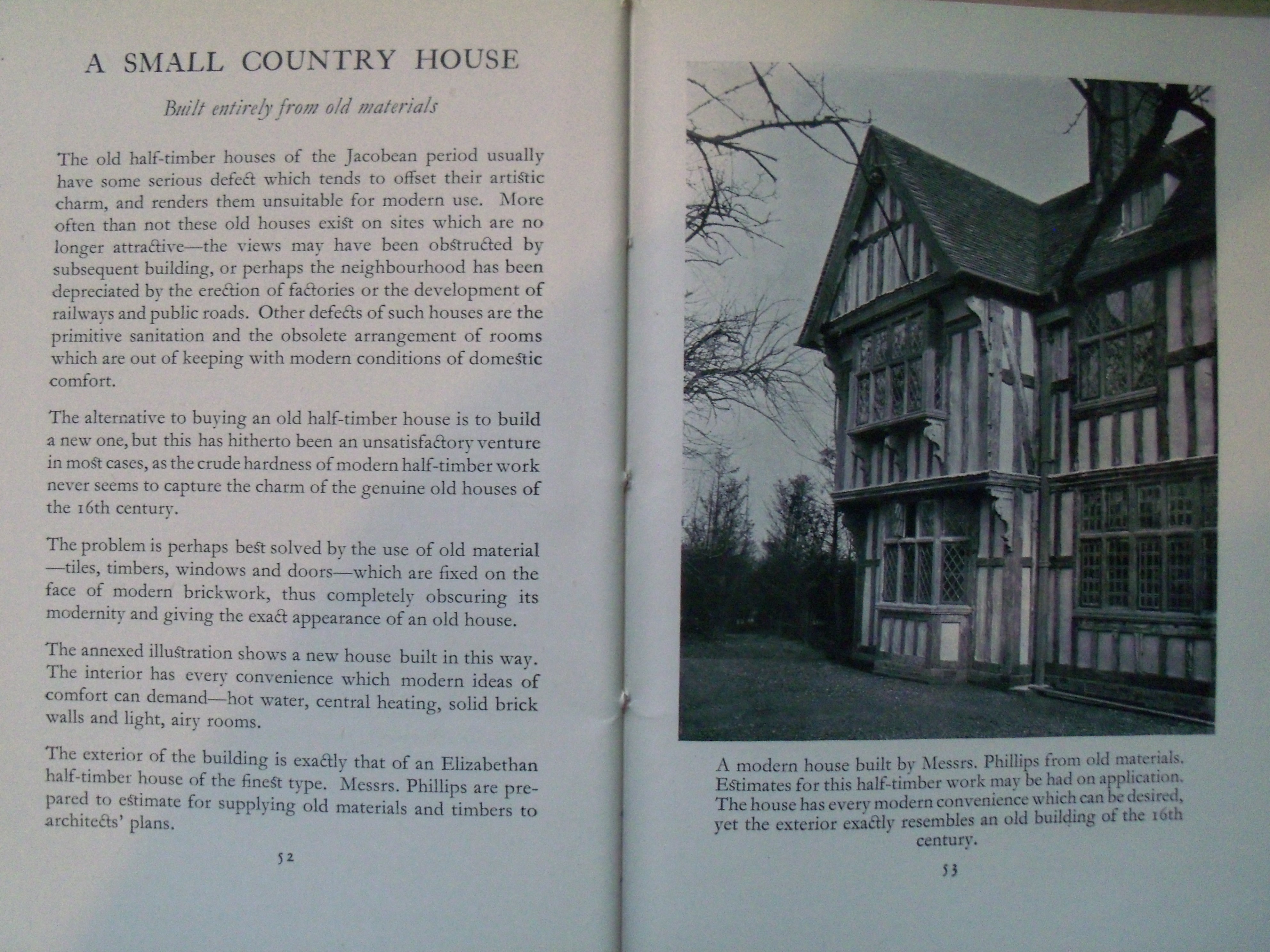
….which they have occupied since the 1880s – this photograph dates from c.1910. Phillips had (still have) the advantage of course of being able to display their antique furniture etc in an appropriately historic setting. In the early decades of the 20th century such strategies also keyed into the increasing numbers of publications on historic houses (Muthesius etc) and furniture history (Macquiod, Edwards, Cescinsky etc etc) and the fashion for recreated interiors. Indeed F.W. Phillips could not only furnish your home with appropriate antiques, they could also build an ‘antique’ home for you…as this advertisement from c.1910 suggests…

Image

…as the caption states…’A modern house built by Messrs Phillips from old materials. Estimates for this half-timber work maybe be had on application…’……A very ‘Modern Antique’.

Mark

Home Subjects

a working group dedicated to the display of art in the private interior, c. 1715-1914

The Period Room: Museum, Material, Experience

An International Conference hosted by The Bowes Museum and The University of Leeds

H. Blairman & Sons Ltd

A research project investigating the history of the antiques trade in Britain in the 19th & 20th centuries

Museum Studies Now?

'Museum Studies Now?' is an event which aims to discuss and debate museum and heritage studies education provision.

The Burlington Magazine Index Blog

art writing * art works * art market

East India Company at Home, 1757-1857

A research project investigating the history of the antiques trade in Britain in the 19th & 20th centuries