Posts tagged ‘New York’

November 29, 2025

J. Rochelle Thomas – The Georgian Galleries, London (and New York)

Our friend Chris Coles very kindly sent me a photograph of the antique dealer J. Rochelle Thomas (thank you Chris!), and as it’s quite unusual to have photos of historical antique dealers I thought I’d make a blog post about Rochelle Thomas – as you’ll see, he was a very important dealer, but appears (like most of the important dealers of the past) to have been lost to history! Anyway, here’s the photo from Chris:
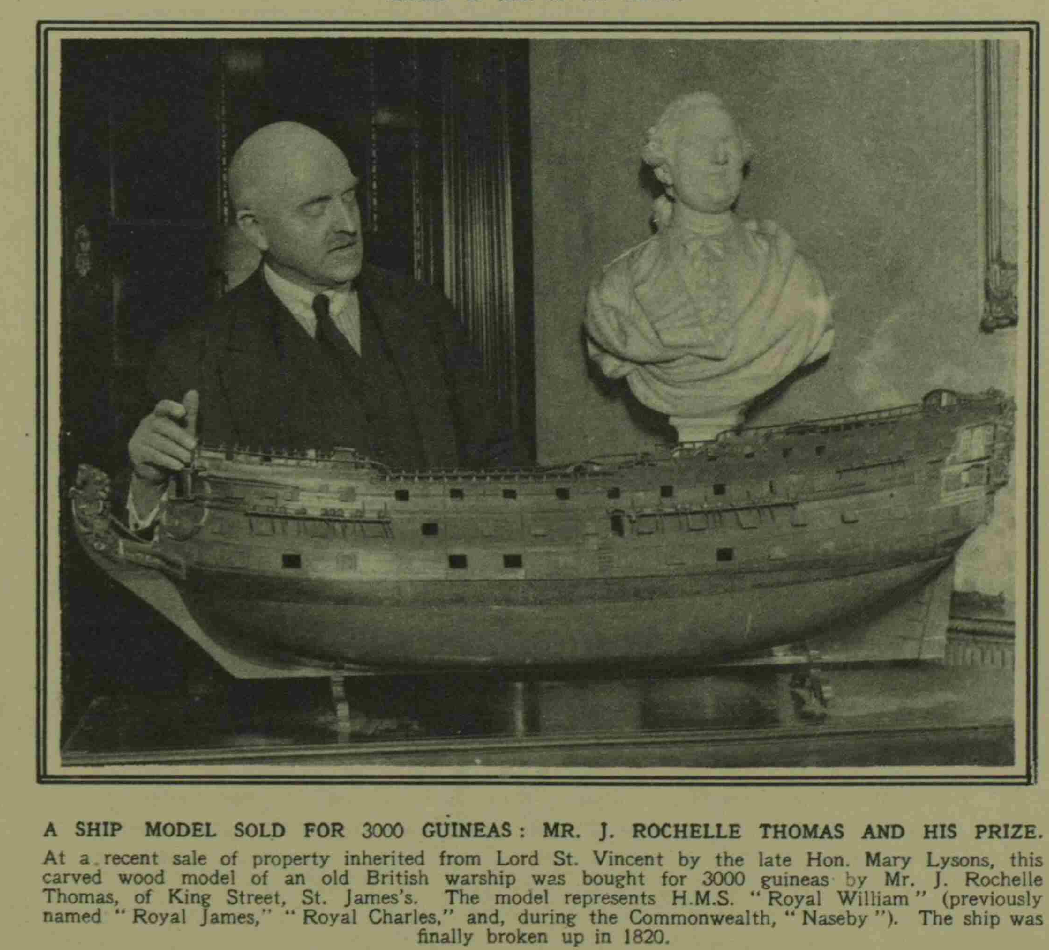
J. Rochelle Thomas with a model ship, from Illustrated London News, April 21st 1928, p.675. Kind thanks to Chris Coles.

The photograph shows Joseph Rochelle Thomas (1865-1938) with a wooden model of the warship ‘Royal William’ (1719) scale 1.48, and made in 1719. As the report states, Rochelle Thomas bought the ship model (I guess in 1928) for 3,000 guineas (£3,150), an enormous sum (hence the newspaper report), which would have been as much as £1.3m at the time – in relative income value – see measuring worth.com The model is now in the National Maritime Museum at Greenwich (not on display); it seems to have been acquired by the museum through the antique dealer J.M. Botibol, who had a well known antique shop in Hanway Street in London in the period. Chris tells me that the ship was advertised as ‘seen by appointment at Mr. Botibol’s shop’. It may be that Rochelle Thomas and Botibol bought the ship model in partnership with one another (this was, and still is, a common practice in the antique trade).
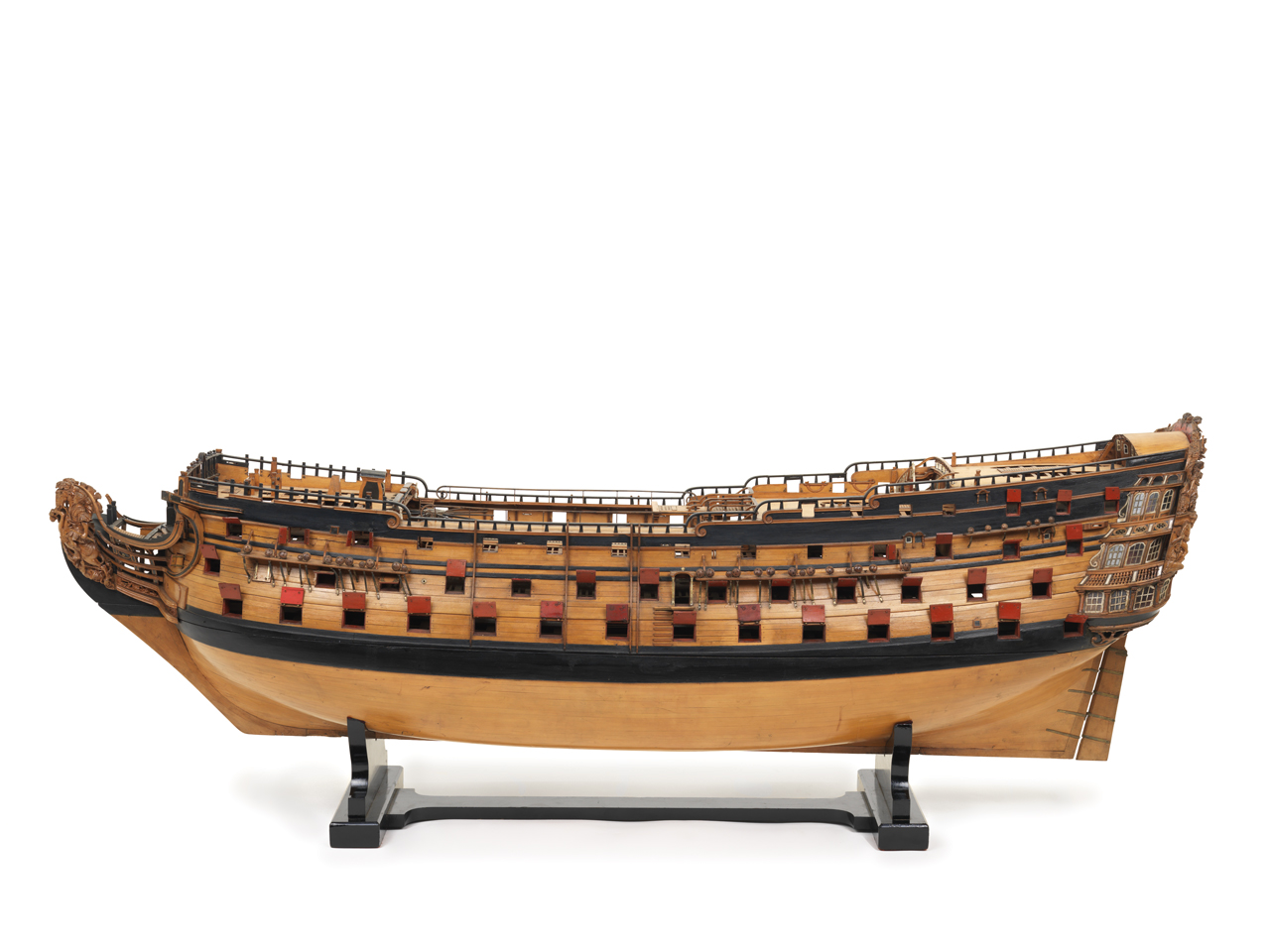
Royal William (1719) wooden ship model 1.48 scale. 440mm x 1365mm x 320mm. National Maritime Museum, Greenwich, London. Image National Maritime Museum, Greenwich.

J. Rochelle Thomas was a very well established antique dealer by the 1920s; the business would later expand to New York selling to many wealthy American collectors, including scores of English antiques to Henry Francis du Pont (1880-1969); du Pont’s collections of American antiques remain at Winterthur Museum in Delaware, USA. Indeed, here’s an image of J. Rochelle Thomas’ London shop from a letter sent to du Pont in 1931, which was right next door to Christie’s King Street auction rooms. The premises occupied by Rochelle Thomas are now part of Christie’s auction rooms.
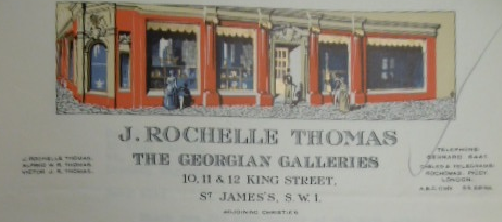
Letterhead, J. Rochelle Thomas, King Street, St. James’s, London, 1931. Photograph Antique Dealers Research Project, University of Leeds.

By this date (the 1930s), the J. Rochelle Thomas business was run by Joseph and his two sons Victor Joseph Rochelle Thomas (1887-1958) and Alfred William Rochelle Thomas (1886-1965). By the early 1950s Rochelle Thomas had opened a shop in New York, at 1166 Second Avenue – our friend Chris Jussel (formerly of Verney & Jussel, leading antique dealers in the USA) and a fount of knowledge about ‘old’ dealers, tells us that J. Rochelle Thomas’ shop in New York was run by Peter Thomas, (Joseph’s grandson), and that it occupied the former warehouse premises of Day, Meyer, Murray & Young; they had no shop window and so, as Chris says, it was an unusual move but the business continued to be a success given Rochelle Thomas’ reputation. Chris remembers visiting the Rochelle Thomas shop in the 1970s, when there were stacks of dinner services all over the floor. By the 1970s Rochelle Thomas opened a branch in Palm Beach, Florida, which, as Chris Jussel tells us, was run by Peter Thomas’ sons (Peter retired to Bermuda in the 1970s); the Palm Beach business traded into the 1980s but sadly Peter’s 2 grandsons died very young and the business closed in the 1980s – as Chris says, the end of a very important dealership. J. Rochelle Thomas sold many antiques to Francis du Pont (and many other American collectors) throughout the 20th century.

The Rochelle Thomas business began in 1859 (they celebrated a centenary year in 1959, according to some of their business letterheads) in Birmingham in the UK. It was started by Henry Thomas, who appears to have been born in about 1815 – the 1861 Census records Henry as aged 48 and working as an ‘ironmonger’ in Birmingham; by 1871 he was working as a ‘cutler’. His son, Joseph Rochelle Thomas (the man in the photograph) was born in 1865 and by the 1890s was described in the Census (1891) as ‘Dealer in Old Bank Notes’; by the 1911 Census Rochelle Thomas was describing himself as ‘Dealer in Pictures, Furniture and Porcelain’, and by 1921 he was ‘Dealer in Works of Art’. His sons, Victor and Alfred, both started working for their father’s antique dealing business from an early age and ran the business following Joseph Rochelle Thomas’ death in 1938. The business was also known as ‘The Georgian Galleries’. J. Rochelle Thomas was elected first President of the British Antique Dealers’ Association in 1918 as well as being a member of several international dealer associations (in Paris, Brussels and New York); so he was a highly respected dealer in the opening decades of the 20th century.

J. Rochelle Thomas appears to have been fascinated by objects that had interesting historical associations – in this sense he was certainly an antiquarian – and often advertised such objects in his sales advertising campaigns in magazines such as Apollo and The Connoisseur. One example (of many!) is an advert for a chair made from the famous (infamous!) mulberry tree wood from Shakespeare’s house in Stratford-on-Avon – if you’re interested in Shakespearian mulberry tree ‘relics’ do have a look at my essay on the subject (see – Mark Westgarth, ‘Well Authenticated Blocks’ in Shakespeare’s Afterlife in the Royal Collections edited by Sally Barnden, Gordon McMullan, Kate Retford and Kirsten Tambling, (Oxford University Press, 2025), pp.103-111)
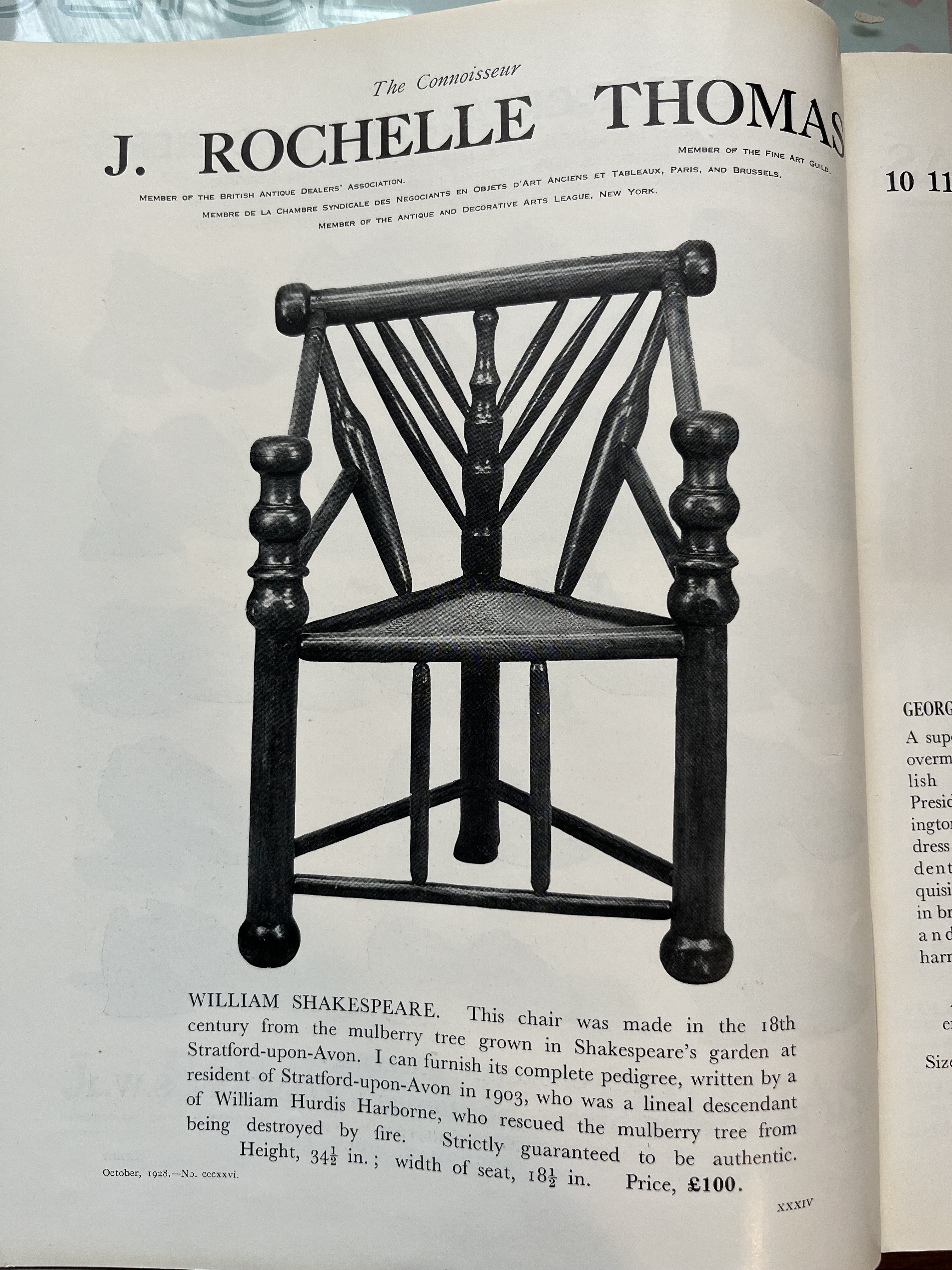
Advertisement for J. Rochelle Thomas, The Connoisseur October 1928. Photograph Antique Dealer Research Project, University of Leeds.

The advert in The Connoisseur October 1928 illustrates an 18th century triangular chair, allegedly made from the wood of the famous mulberry tree – it was priced at £100. Not sure where the chair is now, but if anyone recognises it, do let me know!

Coincidently a while ago I acquired an old sales catalogue produced by J. Rochelle Thomas in 1923 which also contains several items for sale with significant historical associations. The catalogue was issued to facilitate a ‘Clearance Sale’ that Rochelle Thomas undertook in 1923 as part of a refurbishment of his shop in King Street, St. James’s. As the catalogue states, ‘To my customers, as I am about to make extensive alterations to my premises I find it necessary to hold a Clearance Sale of the greater portion of my stock, and I am doing so at 50 per cent. in every case below the original marked prices in order to realise promptly.’ Here’s the cover of the catalogue:
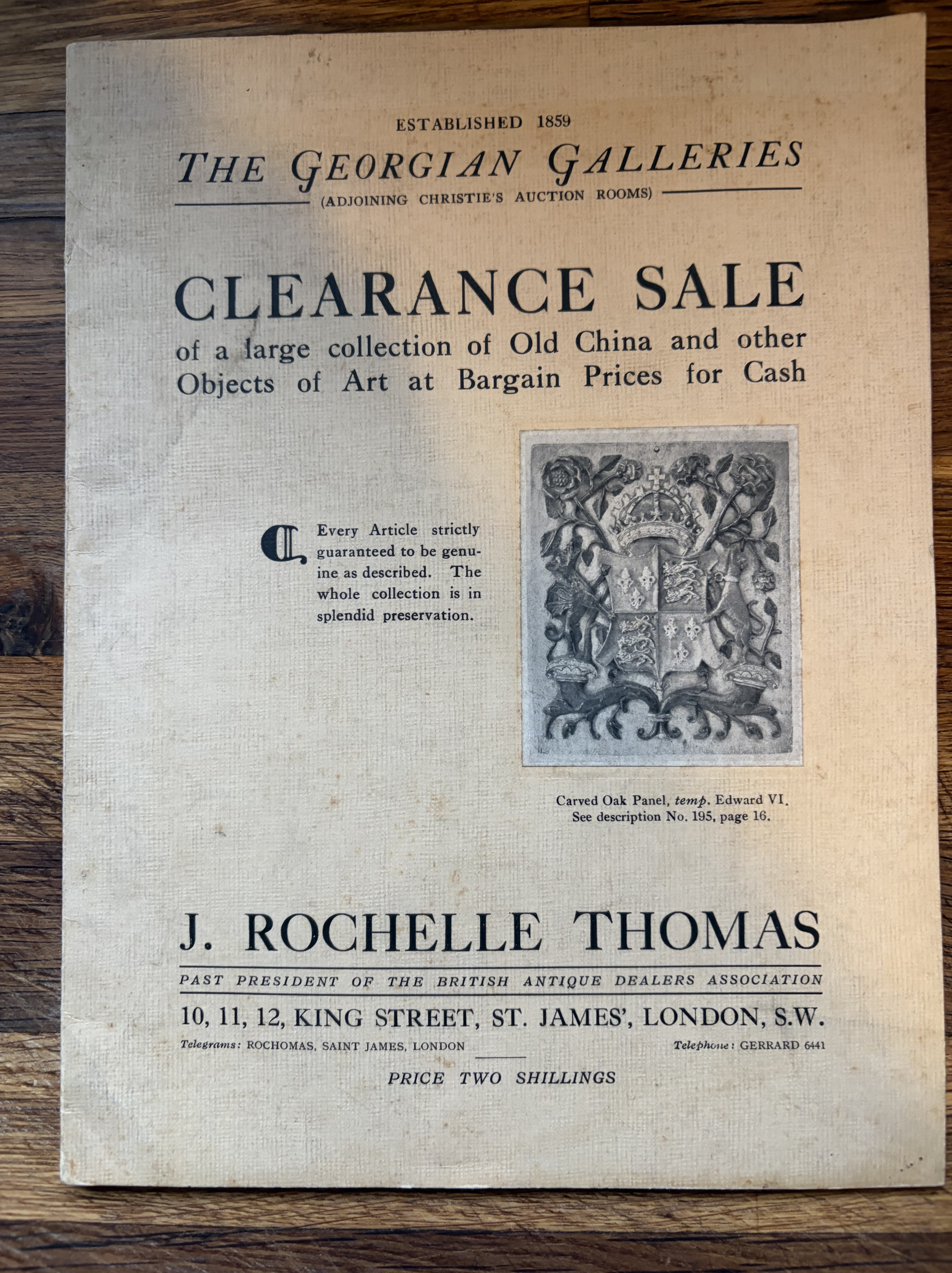
J. Rochelle Thomas sales catalogue, 1923. Photograph Antique Dealers Research Project, University of Leeds.

Sadly the catalogue does not have any photographs of the items for sale except the front cover image of what is described as ‘Carved English Royal Coat of Arms, Period Edward the 6th; fine preservation. A great rarity’ (priced at £37.10.0s, reduced from £75). The catalogue has more than 750 antiques for sale at 50% discount, including some important historical ‘relics’. Item 198 for example (see below) ‘The renowned Shakespearian Relic ‘The Boar’s Head’ at Eastcheap, carved in boxwood and set in two natural tusks’ and priced at £60 (reduced from £120). This was a famous object in the 19th century, having been in several collections, including that of the antiquary Thomas Windus FSA (1778-1854).
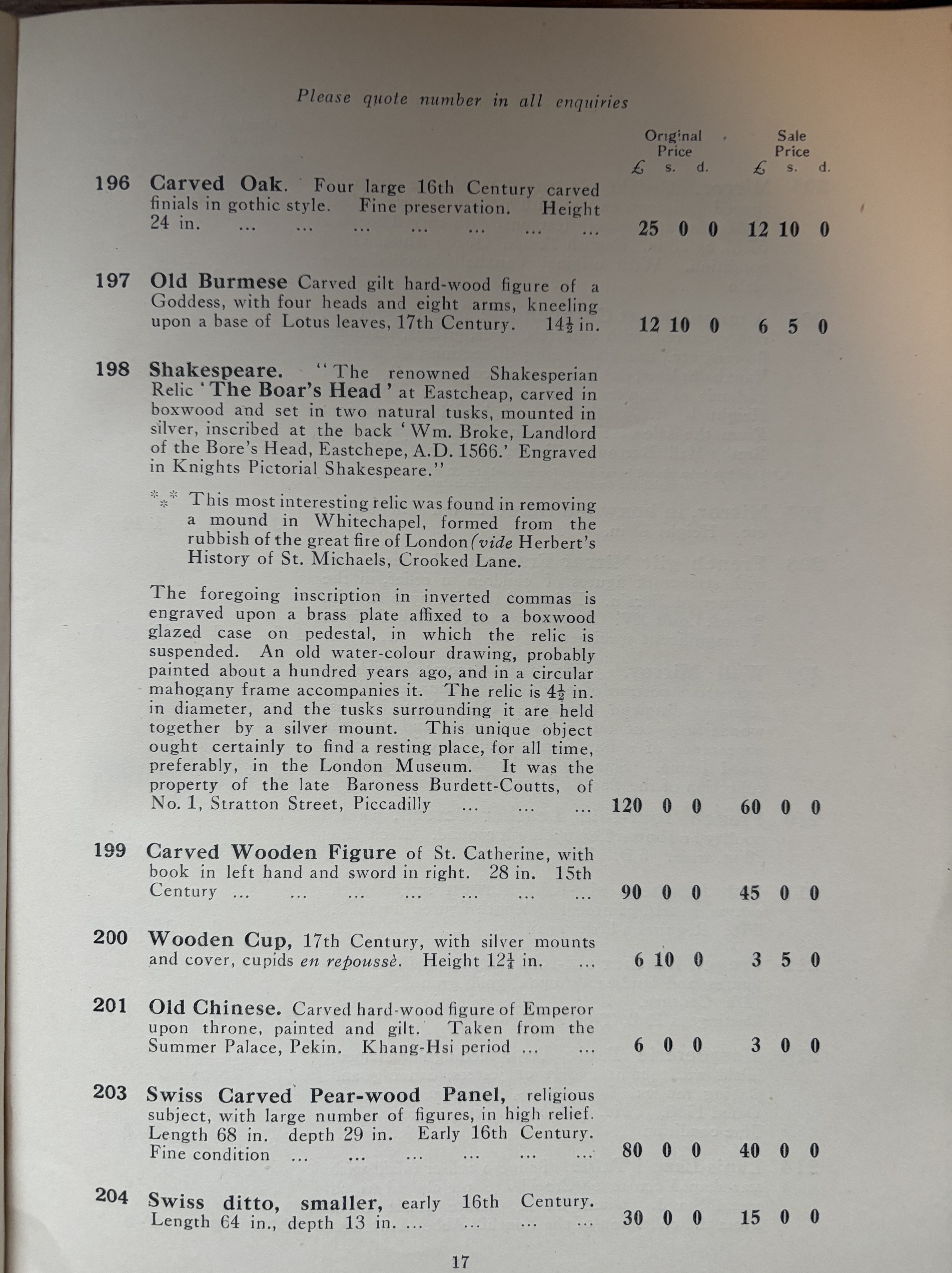
J. Rochelle Thomas sales catalogue, 1923. Photograph Antique Dealers Research Project, University of Leeds.

The ‘Boar’s Head’ was offered for sale at the auction of the collection of Thomas Windus in 1855 where it was reportedly sold for £25 and 4 shillings to the Shakespeare scholar James Halliwell-Phillipps (1820-1889), editor of a lavish Shakespeare Folio edition at the time. It was illustrated in The Pictorial Edition of the Works of Shakespeare edited by Charles Knight (volume 1, 1839-42) – (see below).
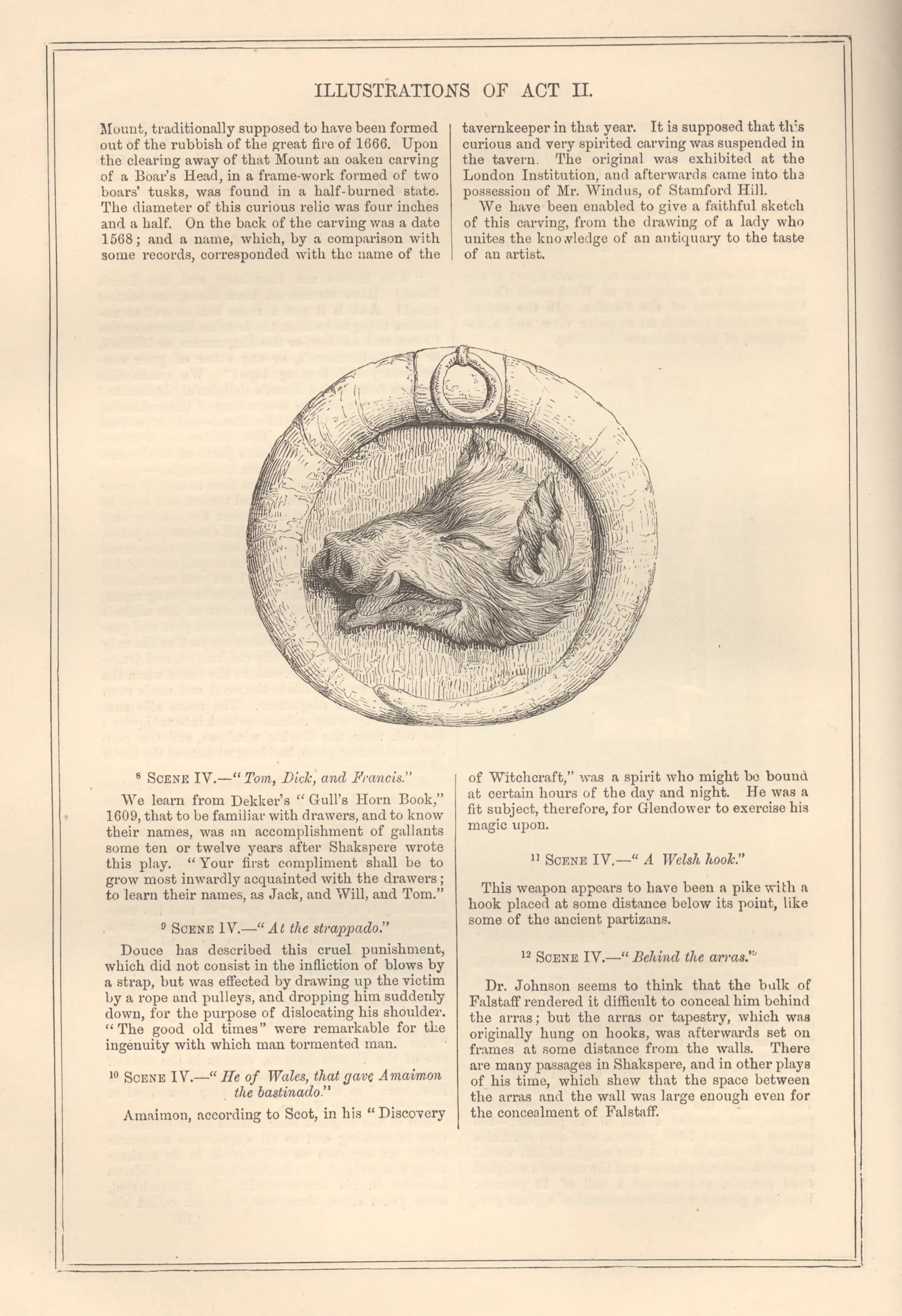
The Pictorial Edition of the Works of Shakespeare edited by Charles Knight (volume 1, 1839-42).

However, the ‘Boar’s Head’ also appeared in the auction of the Windus collection sold by Ansley Windus (Thomas Windus’ son) in 1868, so perhaps it remained unsold at the 1855 auction or was retained by the family. According to the 1923 J. Rochelle Thomas catalogue the ‘Boar’s Head’ was the ‘property of the late Baroness Burdett-Coutts’ (1814-1906); it was offered for sale at £60 (discounted from £120). This important historical object has also subsequently disappeared so if anyone knows where it is, do let me know!

Another object offered for sale in the J. Rochelle Thomas catalogue has been easier to trace – Item 741 – ‘The original carved marble portrait bust, by the great Sculptor Roubilliac, of Jonathan Tyers the proprietor of Vauxhall Gardens. Purchased at Brandon House, Suffolk, from the sale of the effects of Tyers descendants.’ (£50, discounted from £100) – (see below):
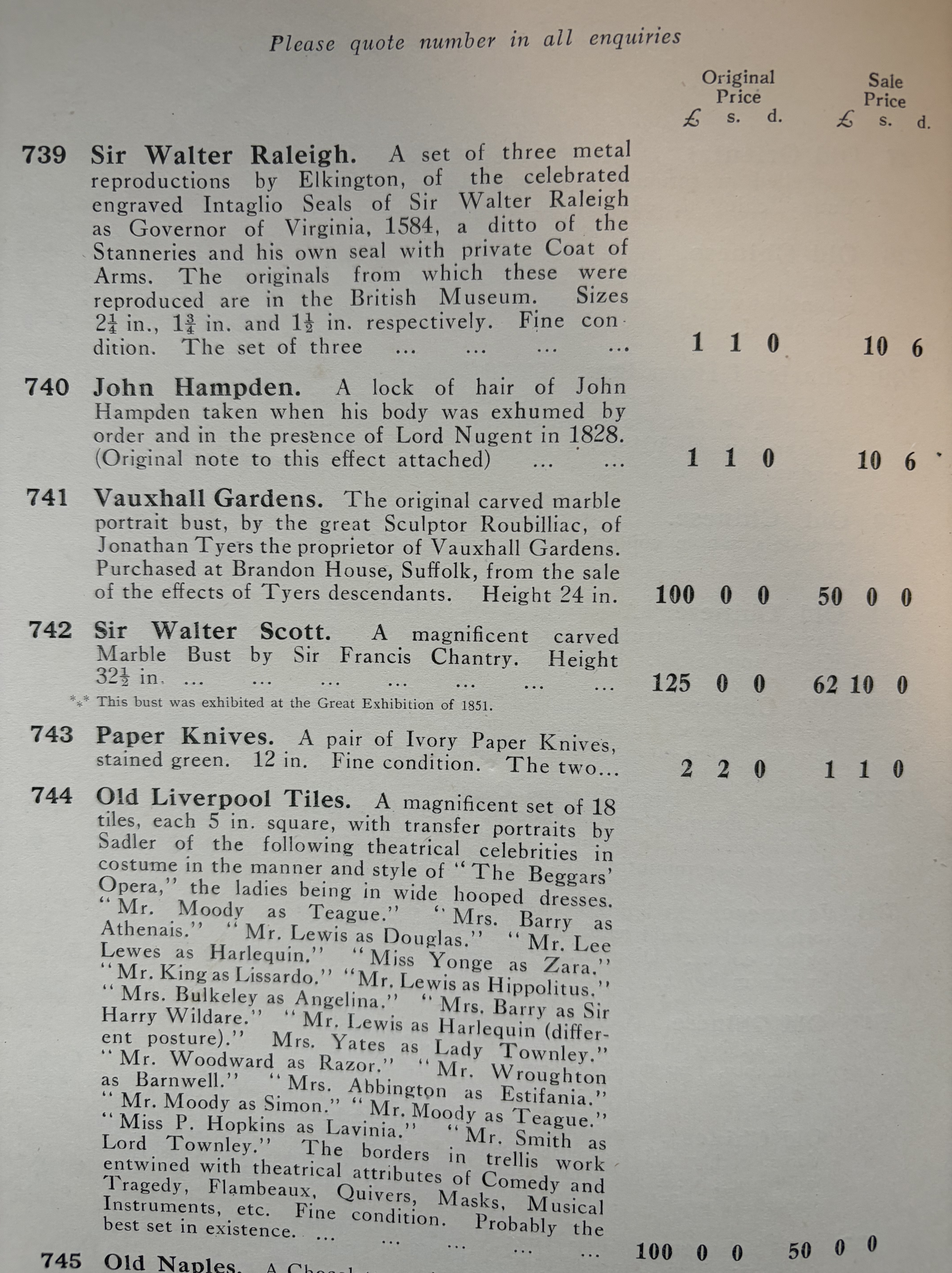
J. Rochelle Thomas sales catalogue, 1923. Photograph Antique Dealers Research Project, University of Leeds.

Here’s the sculpture (thanks to a photograph by David Bridgwater – see his blog HERE):
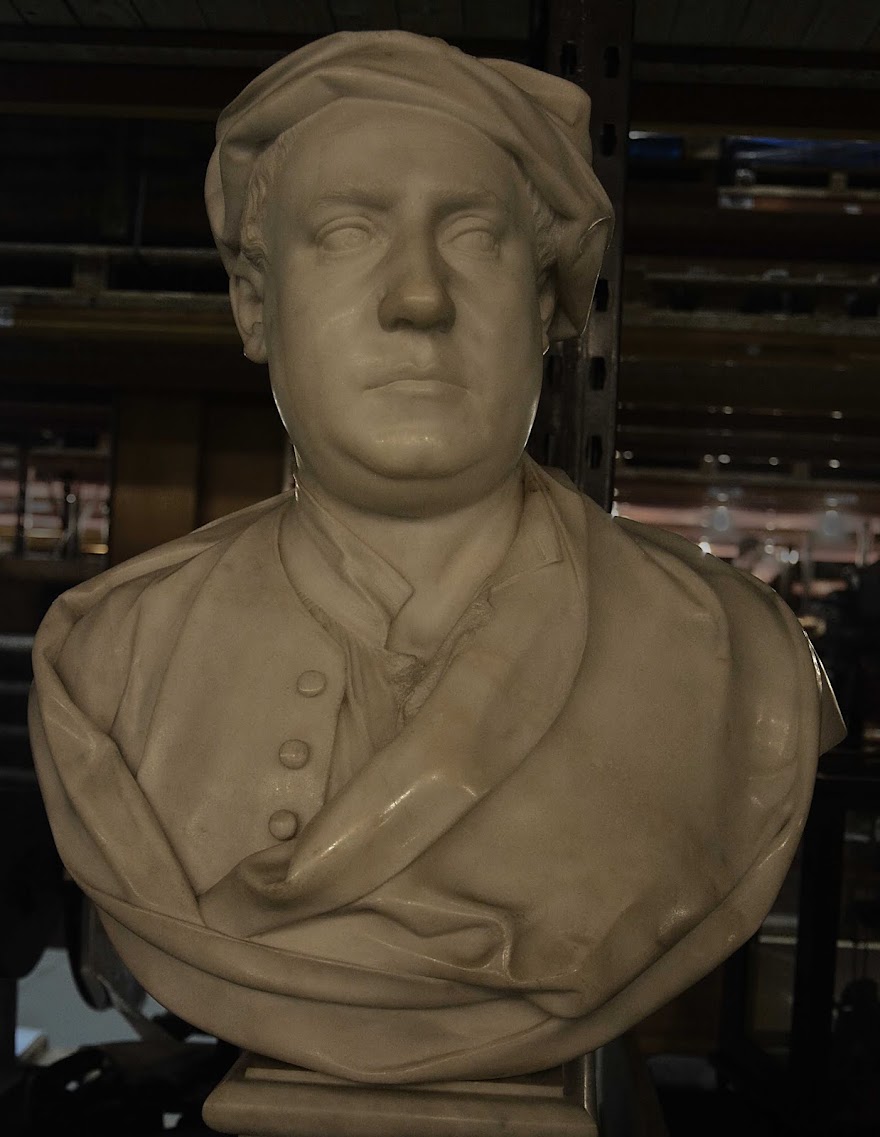
Louis F. Roubiliac (1702-1762) bust of Jonathan Tyers (1702-1767), c.1738. Birmingham Museums. Photograph David Bridgwater.

The marble bust is in the collections of Birmingham Museums, who acquired it in 1956 from the art dealer Frank Sabin. It has an illustrious antique dealer history though. It was acquired (it seems together with a terracotta bust of the same subject) by the well-known Norfolk-based antique dealer Rueben Levine (1865-1927) at the Brandon House auction sale in 1919 (see my blog post on the Levine family of dealers (27th July 2025) HERE. The terracotta bust was sold by G. Levine to the Victoria & Albert Museum in 1927 for £50 and remains in the V&A (see HERE). The marble version of the bust was sold at auction at Sotheby’s in 1927 (24th June 1927, Lot 77), and may have passed through several collections before it was eventually acquired by Birmingham Museums in 1956.

And so, a little photograph of Joseph Rochelle Thomas, kindly sent to us by Chris Coles, opened up a rich seam of research into one of the leading antique dealers of the 20th century – thank you Chris & Chris!

Mark
September 30, 2022

American Antique Dealers – Francis Bannerman & Sons, New York, 1929

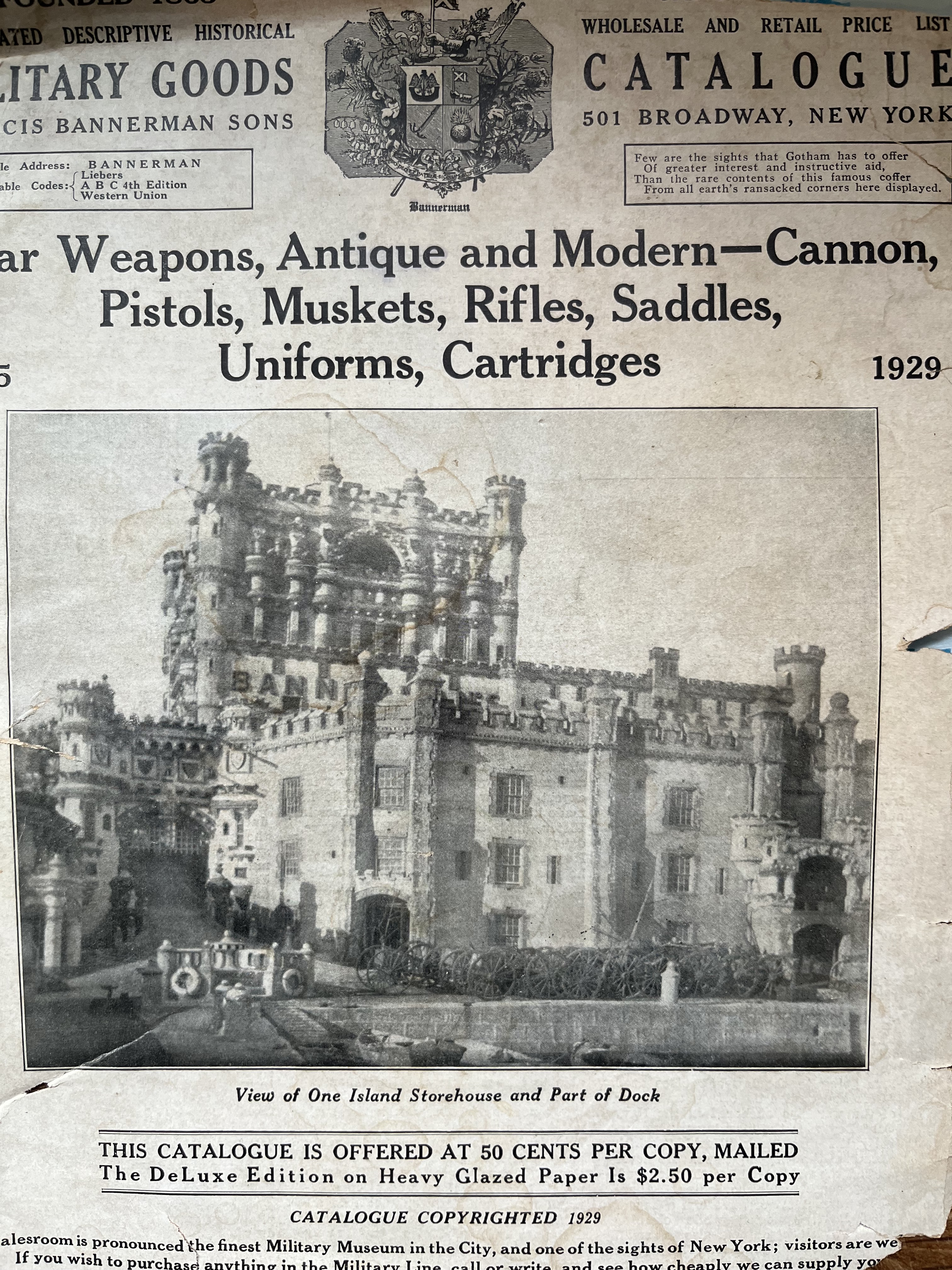
Our collection of catalogues produced by antique dealers had another fascinating addition in the last few weeks – a catalogue from Francis (Frank) Bannerman & Sons, dating from 1929. The catalogue is in quite a fragile condition (the paper used for the catalogue is rather thin) but it’s also quite thick, with more than 370 pages, and thousands of objects listed for sale throughout – it’s certainly one of the largest and most extensive antique dealer stock catalogues we’ve seen (so far).

Francis Bannerman & Sons, catalogue, 1929. Photograph Antique Dealers Research Project, University of Leeds.

The catalogue is titled, ‘War Weapons, Antique and Modern – Cannon, Pistols, Muskets, Rifles, Saddles, Uniforms, Cartridges’. The front cover, (shown above), has a photograph of one of the ‘Island Storehouses’ that Bannerman had in New York – and which was, as the catalogue description suggests, ‘one of the sights of New York’ and ‘the finest Military Museum in the City’. It’s certainly a very impressive building, in a ‘Romantic’ Gothic style, obviously deemed appropriate for the stock of antique and modern weapons.

Francis Bannerman (b.1851 in Dundee in Scotland) came to the USA with his parents in 1854 and began in business working with at his father’s ‘junk shop’ in New York, trading in ‘ship chandlery’ and ‘naval auction goods’ (as Appleton’s Cyclopedia of American Biography described it), which had been established in 1865. Bannerman developed the business further, opening his own stores selling antique weapons alongside the naval and army surplus stores he acquired from Government auction sales. Here (below) is Francis Bannerman, photographed in the 1920s.

Francis (Frank) Bannerman, c.1920s. Photograph, Antique Dealer Research Project, University of Leeds.

As a dealer in antique arms and armour, Bannerman continued a tradition that one can trace back into the early 19th century, with famous antique dealers such as Samuel Pratt (d.1849) and his brother Henry, who together with Samuel’s son, Samuel Luke Pratt (1805-1878), who ran a highly successful business trading in ‘ancient armour’ in New Bond Street, London, in the 19th century. Bannerman’s business in the 1920s draws from these traditions, but his business also seems to have acted as a wholesaler and supplier to several National Government’s during times of conflict. Hence, I guess, the large storehouses that Bannerman built in New York. Indeed, the images of the storerooms suggest a wide mixture of antique weapons and objects of antiquarian interest, alongside row upon row of rifles, many from Army and Navy stock from World War I; the weapons were sold for military re-use at the time. Here’s two images of the stores (apologies – the original photographs are very grainy):

Bannerman stores, New York, 1929. Photograph, Antique Dealer Research Project, University of Leeds.

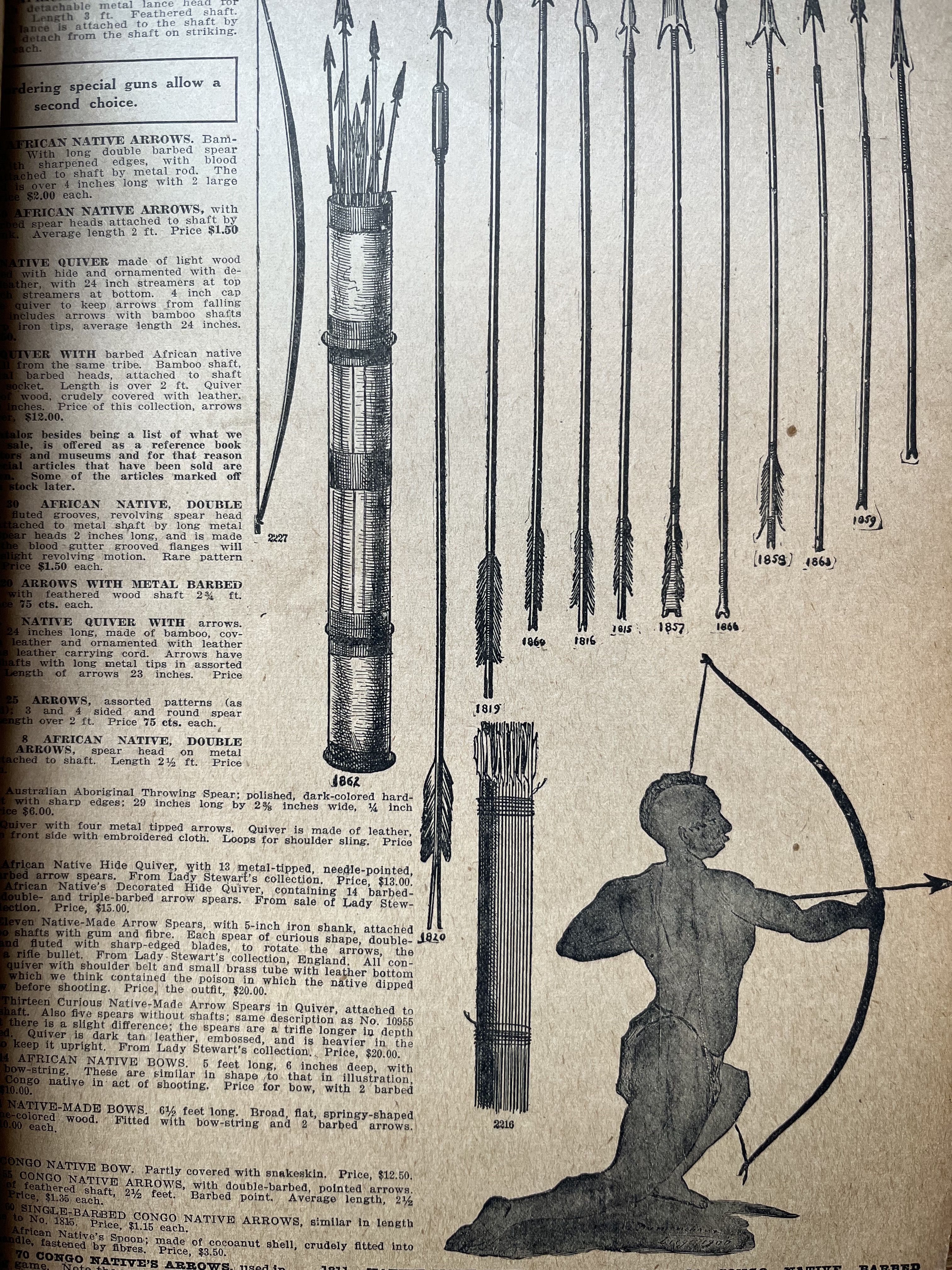
The catalogue itself contains a mixture of ex-Government rifles, swords, clothing, tents, cannon etc., alongside some fascinating antique weapons, many of European origin from the Medieval Period onwards, including 16th century armour, spears and crossbows. The business also seems to have bought and sold weapons from indigenous (‘native’) populations from both the USA and around the world. Here, for example, is a rather problematically described series of ‘Bows and Arrows from Savage Tribes’:

Bannerman catalogue, 1929. Photograph Antique Dealer Research Project, University of Leeds.

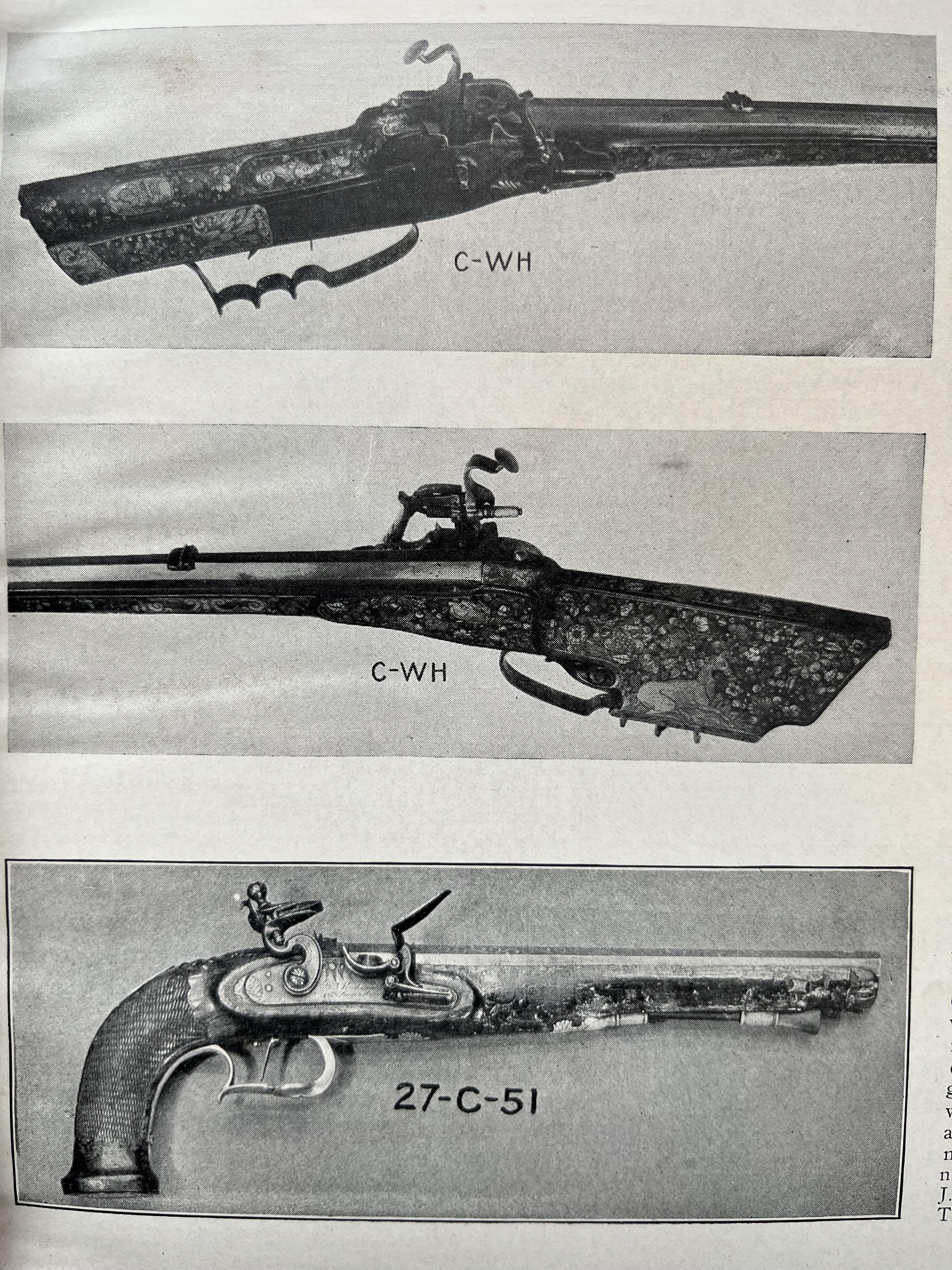
There are also many rare collector’s pieces in the catalogue, some of which, the catalogue suggests, had been exhibited by Bannerman at the ‘British Empire Exhibition 1924’ at Wembley in London. Here (below) are some early wheelock and flintlock pistols from the 1924 Wembley Exhibition. The top image (‘C-WH’) is described in the catalogue as ‘Wheelock Sporting Gun, mid 17th century German’…’from Marquis of Ripon Collection’ and priced at $500.00.

Bannerman catalogue, New York, 1929. Photograph Antique Dealer Research Project, University of Leeds.

As well as photographs, the catalogue has hundreds of line drawings of arms and armour. This powder horn, priced at $250, from the 1812 War between Britian and the USA (1812-1815) is described as ‘Showing engagement June 29, 1813, between the British frigate, Junon, 30 guns, Capt. Sanders, and the Martin, 18 guns, Capt. Stenhouse.’ It was also described as ‘the only illustration known showing the engagement.’ The powder horn was apparently pawned by the descendants of the original owner, but never redeemed, and was sold to Bannerman by the heirs of the pawnbroking business.

Bannerman catalogue, New York, 1929. Photograph, Antique Dealer Research Project, University of Leeds.

The Bannerman catalogue is a rare survival, although I’m aware of the existence of a small number of other editions of the catalogue, and provides a unique insight into some of the intriguing overlaps between ‘antique dealing’ and other commercial operations.

Mark

July 2, 2017

New Phillips of Hitchin archive material – recording a trip to New York in c.1920 by Amyas Phillips

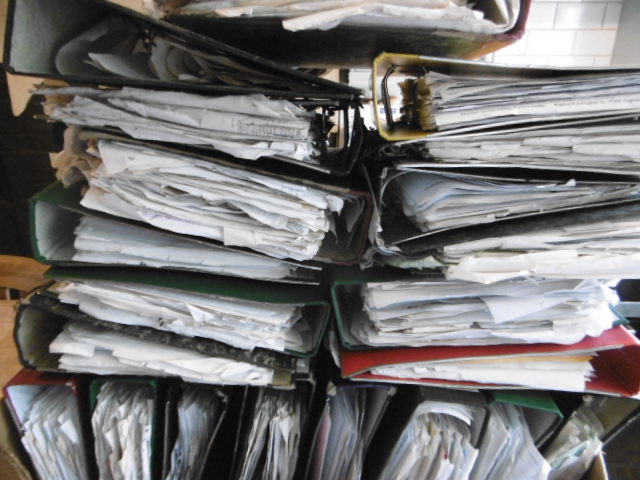
Thanks to Jerome Phillips, of Phillips of Hitchin Antiques, we have some new additions to the Phillips of Hitchin archives at the Brotherton Library Special Collections.  Jerome found a few more boxes of archive material and files of business records during a recent clear-up at Manor House in Hitchin – it was quite a bit of material actually….as this stack of lever-arch files suggests!..

New PoH archive material, ready to catalogue!

The new material comprises 21 lever-arch files of business records, a folder with new information on the restoration to the historic clock at Durham Cathedral (a project undertaken by Phillips of Hitchin in 1936), and  boxes of photographs and associated ephemera;  we’d like to thank Jerome Phillips again for these very generous donations to the PoH archives held at the Brotherton Library Special Collections.

Whilst making an initial assessment of the material we came across a little notebook, detailing, it seems, a trip to New York in the period around 1920.

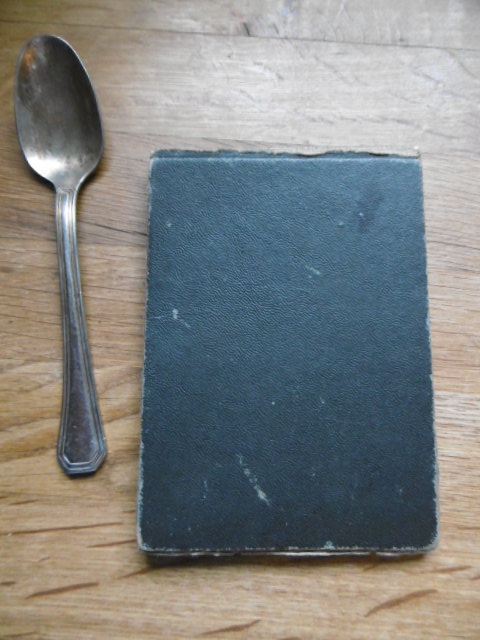
Phillips of Hitchin archive, notebook, c.1920; with teaspoon for scale. Photograph, Antique Dealer Project, University of Leeds 2017.

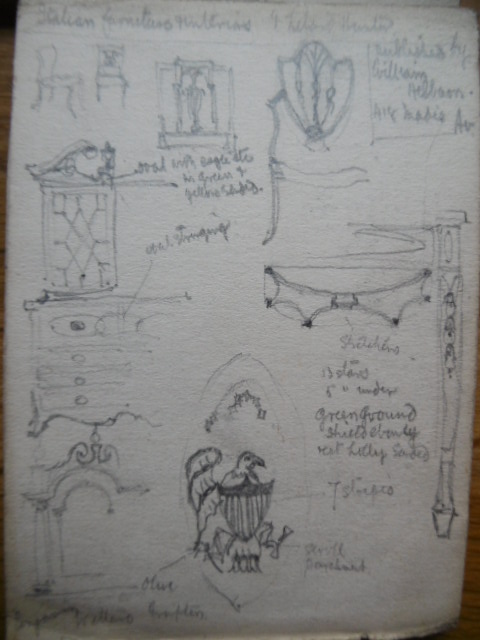
The notebook is a small pocket-size booklet, measuring just 5 inches (125mm) long by 3.5 inches (90mm) wide, and is packed with notes about meetings with individuals, aide memoires, and some beautiful little drawings on things that the person who composed the notebook had seen in New York.  It provides a fascinating insight into the activities of an antique dealer in the opening decades of the 20th century.

Page of drawings of details of antique furniture. PoH notebook, c.1920; uncatalogued. Brotherton Library Special Collections, University of Leeds.

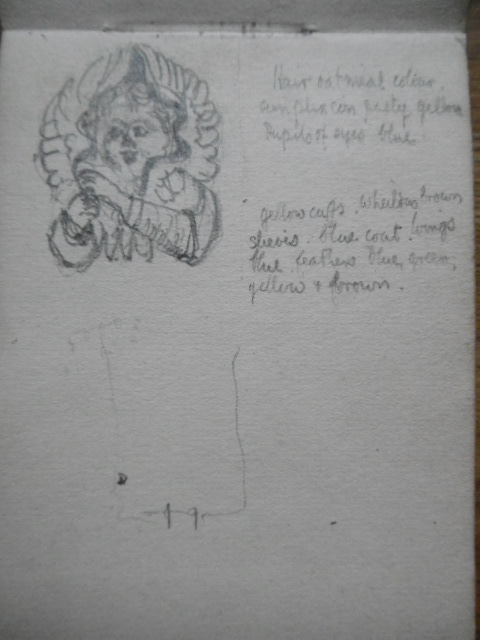
Page of a drawing of a carved figure?, with annotations on colours. PoH archive notebook, c.1920 uncatalogued. Brotherton Library Special Collections, University of Leeds, 2017.


The notebook appears to date from c.1920 (it is undated) and (so Jerome informs us) would have been composed by Aymas Phillips (Jerome’s father) who joined the business in 1910.  Amyas’s brother, Hugh Phillips took over the business of Phillips of Hitchin following the death of his father Frederick W. Phillips in 1910; F.W. Phillips was the founder the firm in 1884; Hugh Phillips retired in 1935.

Amyas would have been very young man in 1910, and was called back from his studies at Oxford to help run the business following the death of his father. Hugh must have had great confidence in the young Amyas in sending him to New York, given that notebook mentions meetings with some very well connected individuals.

The notebook itself is a commercially produced ‘Sketch Book’, ‘Series 30’, by the art materials suppliers Windsor & Newton, and cost 1/- (one shilling). Each page remaining in the notebook (there were originally 24 pages, with 22 surviving in whole or part) has annotations and/or drawings, with details of ‘Travelling Expenses’, a hand written list of dollar/pound currency exchange rates, and various notes on places to visit, people to see and things purchased etc.

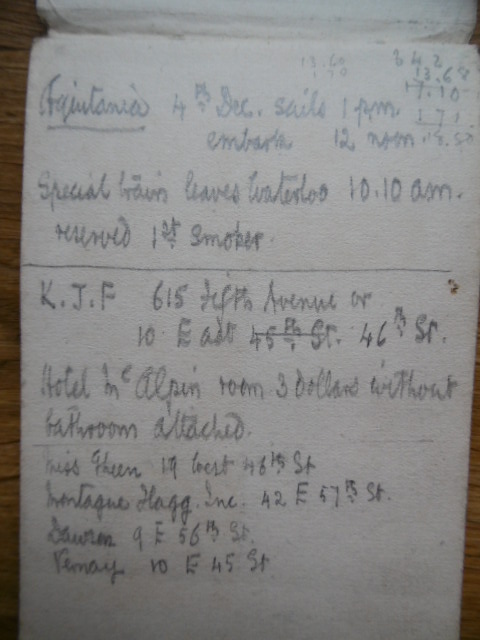
The notebook begins with a note suggesting that Amyas was to begin his travels to New York on the ‘Aquitania’, on ‘4th Dec.’ – ‘sails 1pm, Embark 12 noon’; with another note mentioning that a ‘special train leaves Waterloo 10.10am’ – it seems that Amyas had also reserved a First Class, Smoking, train cabin.

PoH Archives, notebook c.1920; uncatalogued. Brotherton Library Special Collections, University of Leeds. 2017

The opening page gives us a first clue to the earliest date for the notebook; the famous ocean liner Aquitania had a maiden voyage to New York on 30th May 1914, making only 3 further round trips before being requisitioned in Spring 1915, during the early stages of World War I.  Aquitania returned to service as a passenger liner in June 1919, and this, together with several other clues in the notebook point towards a date of c.1920 for the annotations.  One further clue to its date is that Amyas notes a visit to The American Art Association at 6 East 23rd Street;  the AAA was established in 1884 as an art gallery and auction house at the address given in the notebook, moving to the corner of Madison & 56th Street in 1922. Amyas also notes that he would be returning to England on either the Baltic (launched 1904) or the Olympic (maiden voyage 1911) – so he was travelling in some style!

The page illustrated above also indicates that Amyas stayed at the Hotel McAlpin in New York (in a room costing 3 Dollars, ‘without bathroom attached’) – the McAlpin was at the time the largest hotel in the world, having been completed in 1912 and designed by the architect F. Mills Andrews (1867-1948). Other well-known venues are mentioned in the annotations – The Belasco Theatre (opened in 1907 as the Stuyvesant Theatre, and renamed the Belasco in 1910) and the famous bookstore Brentano’s (opened in New York in 1853); and various museums, including the Metropolitan Museum of Art and the Cooper Union Museum (as it was called then…now known at the Cooper Hewitt Museum (renamed in 1968).

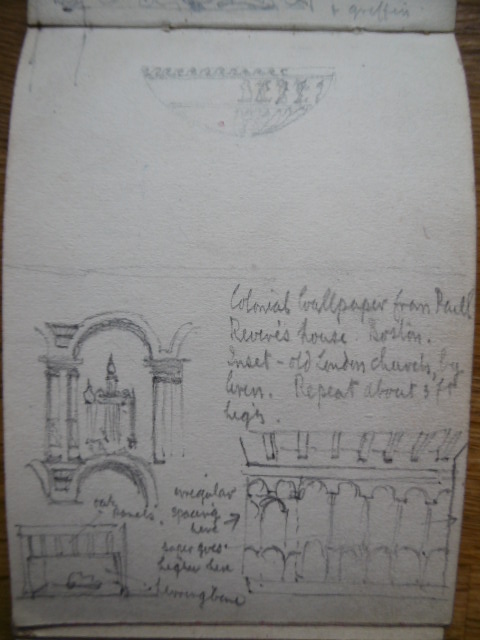
Amongst the most fascinating pages is this page detailing a visit to Paul Revere’s House in Boston, (which had opened as a museum in 1908 and remains one of the earliest Historic House Museums in the USA).

PoH Archive, notebook c.1920; uncatalogued. Brotherton Library Special Collections, University of Leeds. 2017.

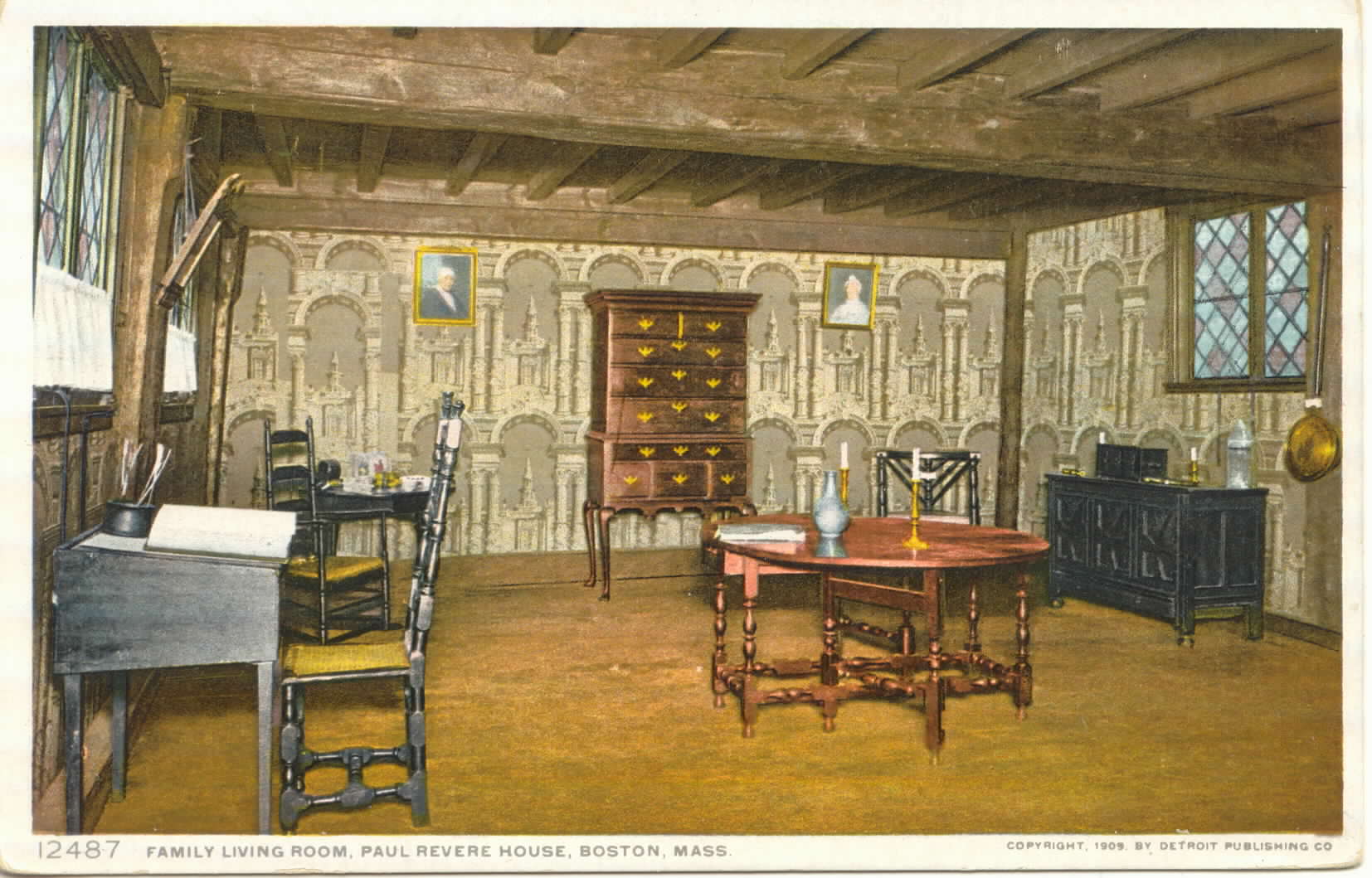
The annotation reads – ‘Colonial Wallpaper from Paul Revere’s house, Boston. Inset – old London churches by Wren. Repeat about 3ft high.’ The note is perhaps suggesting that the design would be a good model for the reproduction of a wallpaper (or a fabric?), which was something that the firm of Phillips of Hitchin were well-known for in the period; they were, in effect, Interior Decorators, as well as antique dealers, as were many other antique dealer firms in the period (see earlier blog posts on Thornton for example).  The annotation also demonstrates the keen and attentive eye of Amyas; the drawing is, as one might expect, an accurate illustration of the view encountered by the compiler of the notebook at Paul Revere’s House – here’s a colour postcard from c.1909 of the interior of the house captured in the drawing in the notebook.

Postcard, 1909, ‘Paul Revere’s House’. Wikicommons.

Jerome tells us that he remembers when he was young that his father’s house in Bedfordshire had replica wallpaper based on the wallpaper at Paul Revere’s House!

Other pages in the notebook record meetings, or potential meetings, with several antique dealers, including ‘Stair & Andrew’ (the business was established in London in 1911, and opened a branch in New York by 1914); Vernay (established in New York in 1906, and at the address recorded in the notebook (10 East 45th Street) by 1914); and the interior decorators and antique dealers’ Lenygons.

There are also several annotations recording meetings with some very well-connected individuals – Amyas jots down a lunch meeting with ‘Mrs Hazel Goepper’ of 859 7th Avenue, on ‘Thurs 6th at 12.30’, and other pages have names of other New York socialites – ‘Mrs Lionel Stahl’ for example.

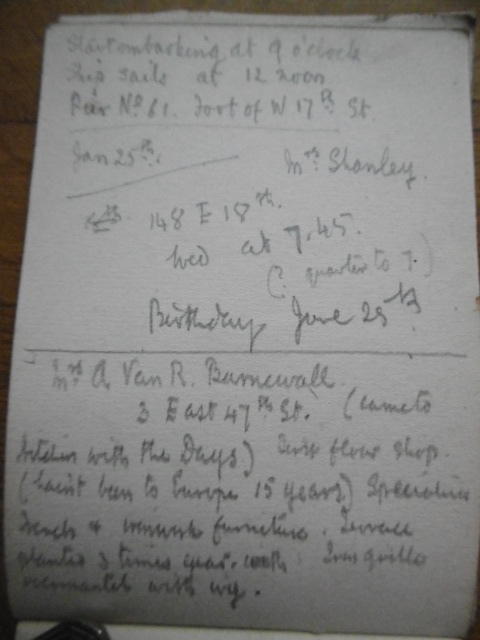
One annotation records a note about ‘Mrs A Van R. Barnewall’ of ‘3 East 47th Street’ (see below).

PoH Archive, notebook c.1920; uncatalogued. Brotherton Library Special Collections, University of Leeds. 2017.

The note reads – ‘Mrs A  Van R. Barnewall 3 East 47th St. (came to Hitchin with the Days) best flow(?) shop (hasn’t been to Europe 15 years) Specialist French and (?) furniture…’. Mrs Barnewall was a well-known interior decorator in the period; she wrote an essay on ‘A Modern Bathroom’ published by House & Garden ‘Book of Interiors’ in 1920. Given the kind of business operated by Frederick Phillips and his sons Hugh and Amyas in the early decades of the 20th century it’s perhaps not surprising that they are making contact with leading American interior decorators at the time. We have yet to discover who the ‘Days’ were?…(and thank you to Karen Sayers at the BLSC for helping to decipher the annotations!)

The notebook is a rare survival, recording the day to day business of a leading firm of antique dealers and their relationships with some key protagonists in the USA during the key moment of the American ‘Gilded Age’. This tiny notebook, and all the other fascinating Antique Dealer material donated to the Brotherton Library Special Collections, will provide a rich vein of research, and will soon be available for researchers and scholars.

Mark


April 6, 2015

Vernay Archives at Winterthur

The antique dealer related archives at The Winterthur are an amazing resource, and the archive team there, led by Jeanne Solenksy, are simply great; they are certainly the most accommodating of archive teams (thank you to all!). And thanks again also to Chris Jussel (see previous blog posts) for donating the archive of Vernay & Jussel, and that of J.J. Wolff, to Winterhur archives – it was such a generous, and insightful, thing to do….without such ‘blue sky’ thinking we would not have such rich resources to investigate the history of the antique trade. As you probably know, antique dealer archives in public archive collections are very rare indeed.

Anyway, as readers of the blog may also know (see previous blog posts), the dealer Arthur Stannard Vernay (c.1877-1960) was one of the most important dealers operating in the USA in the period prior to WWI and up to the 1960s. He was born in Weymouth, in the UK, and Chris Jussel tells us, (in the oral history interview we did last week) that Arthur Vernay was originally called Arthur Avant, but changed his name to ‘Vernay’ in about 1903 or 1904 when he came to the USA. Vernay eventually had shops in New York, and in Boston, Massachusetts, but he also had a shop in London, at 217 Piccadilly, probably in the late 1910s-20s, (217 Piccadilly may also be the same location as Vernay’s address at Trafalgar House, 1 Waterloo Place?); Vernay also took a house at 51 Berkeley Square in the late 1920s, which also possibly operated as a showroom too.  So whilst he is primarily an antique dealer with associations in the USA, he qualifies as a suitable subject for the present ‘Antique Dealers in Britain in the 20th century’ project by virtue of his shop in London.

FYI – Vernay is also famous for his interest in collecting animal specimens, many of which he donated to the American Museum of Natural History, in New York – indeed the ‘Vernay-Faunthorpe Hall of South Asiatic Mammals‘ named in 1930 after Vernay and his friend and fellow explorer Colonel John Faunthorpe, remains at the AMNH.

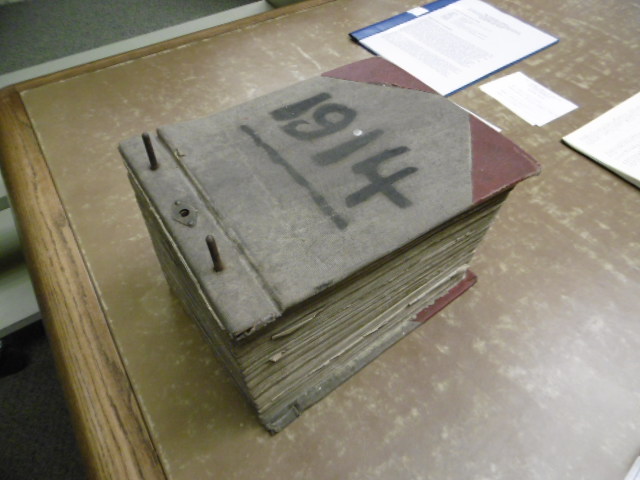
The sales ledgers at Wintherthur contain all the sales made by Arthur Vernay from 1914 until the 1960s; from 1940 the business was continued by Chris Jussel’s father, Stephen Jussel, (Chris took over the business in 1972). The business records prior to 1914 were destroyed by fire, but the remaining early business records are a fascinating research resource, and contain detailed stock books and sales ledgers as well as other ephemera.  This example (below) is the 1914 sales ledger, and the copy invoice (image below) is to ‘Mrs J. P. Morgan’ wife of the famous collector; it is dated December 1914 and describes ‘One Chippendale pole screen with petit point frame, circa 1760’…sold for the princely sum of $450.

Vernay 1914 2

Vernay sales ledger, 1914. Coll 739 04×126.37. Courtesy, The Winterthur Library: Joseph Downs Collection of Manuscripts and Printed Ephemera.

vernay dec 1914 sale

Vernay copy invoice, December 1914. Coll. 739 04×126.37. Courtesy, The Winterthur Library: Joseph Downs Collection of Manuscripts and Printed Ephemera.

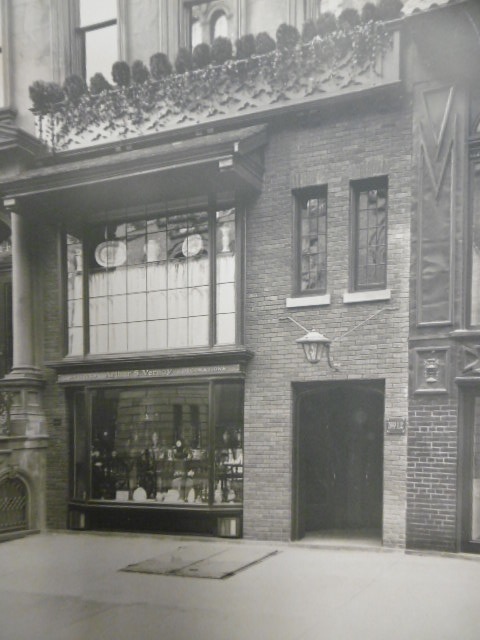
Vernay opened his first shop at East 45th Street, in New York in 1906 (the archives at Winterthur have a printed announcement dated March 1906) – his first premises are shown below.

vernay shop e 45th st ny 1910?

Arthur Vernay, first shop (1906) at East 45th Street, New York. Image c.1910. Coll. 739 07×56 Series IV. Courtesy, The Winterthur Library: Joseph Downs Collection of Manuscripts and Printed Ephemera.

The archives also have some photographs of one of the rooms in the interior of Vernay’s first shop, probably taken in c.1910 – which show what must have been a typical assembly of ‘antique’ objects of interest to collectors and furnishers in the period.

vernay 1st int 1910

Vernay shop interior, East 59th Street, New York, c.1910. Coll. 739 07×56 Series IV. Courtesy, The Winterthur Library: Joseph Downs Collection of Manuscripts and Printed Ephemera.

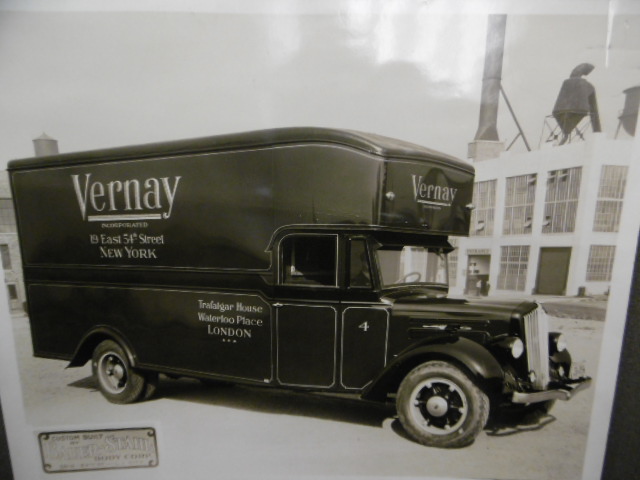
The archives also have a photograph of Vernay’s first delivery van, with it’s own livery! – (Chris Jussel tells me that the van was a Packard type, and was a bespoke model, and quite expensive) – as befitting the culturally significant goods that Vernay sold!

vernay van

Vernay delivery van c.1930s. Coll. 739 04×56 Series IV. Courtesy, The Winterthur Library: Joseph Downs Collection of Manuscripts and Printed Ephemera.

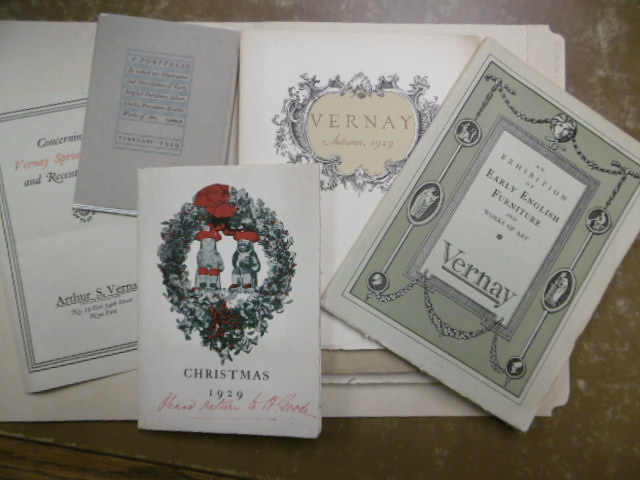
Like many other antique dealers we are studying, (and as previous entries on the Antique Dealer blog have highlighted) Vernay regularly produced catalogues of his stock of antiques, and staged temporary exhibitions to generate interest in particular kinds of objects, or periods/styles and etc. The archive also contains examples of this ephemera, and they clearly demonstrate how sophisticated an operation the Vernay business was. Here’s a selection from the late 1920s –

vernay 1929

Vernay catalogues, 1920s. Coll. 739 04×126.77. Courtesy, The Winterthur Library: Joseph Downs Collection of Manuscripts and Printed Ephemera.

And a selection from the 1940s –

vernay 1944

Vernay catalogues from the 1940s. Coll. 739 04×126.123. Courtesy, The Winterthur Library: Joseph Downs Collection of Manuscripts and Printed Ephemera.

There’s so much more to say about the Vernay, Vernay & Jussel, and the Wolff archives at Winterthur, they are an astonishing survival, and an amazing resource. We certainly hope to do further research on Vernay, and develop this as a potential ‘case study’ for the forthcoming edited book on the ‘British Antique Trade in the 20th Century’ which will be one of the outputs for this AHRC funded research project.

Mark


March 30, 2015

Oral History Interview with Chris Jussel

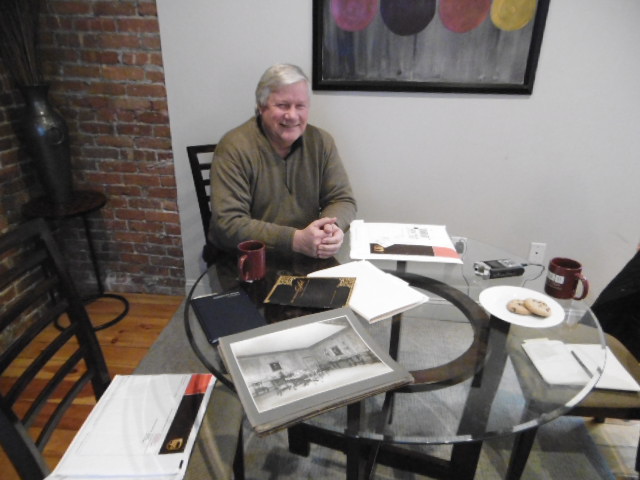
Thanks to Chris Jussel, formerly of Vernay & Jussel, and J.J. Wolff Antiques in New York, for coming to meet me in Boston MA to do an oral history interview as part of the Antique Dealers research project. The interview with Chris will be part of the growing archive of oral history interviews with members of the antique trade that will be made available via the project websites soon. As well as being one of the most prominent antique dealers in America, Chris, as you probably know, was also formerly the presenter on the USA version of ‘Antiques Roadshow’, as well as Vice President of Sotheby’s Trust and Estates Division (1999-2003) and Vice President of Samuel T. Freeman & Co auctioneers between 2007-2009 – he is currently a private art and antiques consultant. Here’s Chris, in the little apartment I’ve rented for my short stay in Boston –

Chris Jussel March 2015

Chris Jussel, in Boston, March 2015.

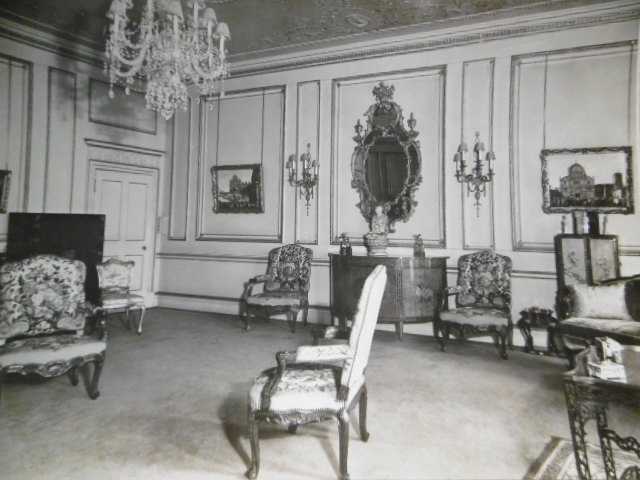
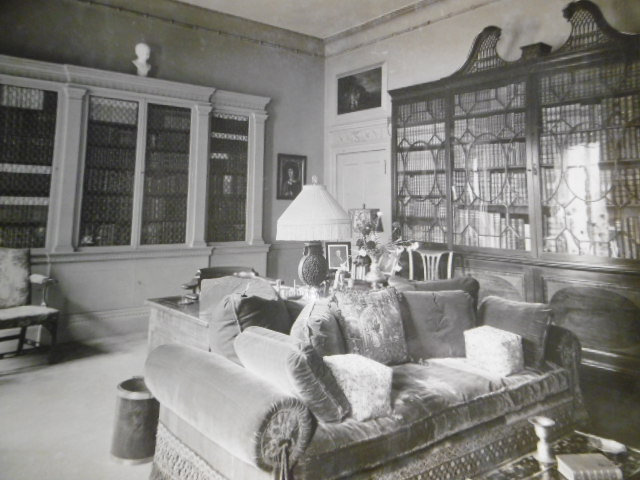
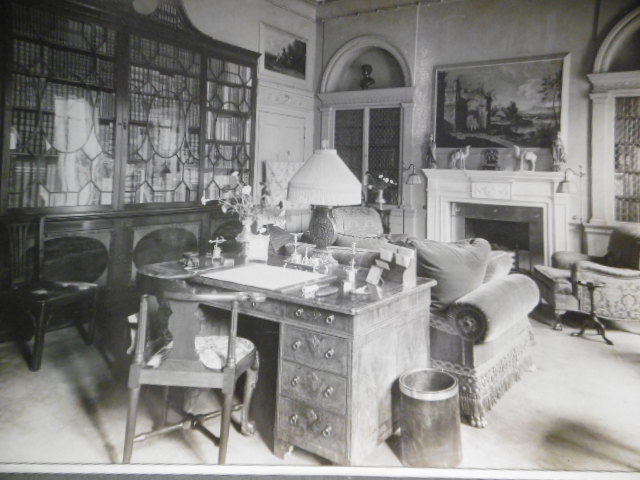
Chris told us about the early beginnings of Arthur Vernay, who opened his antique gallery in New York in c.1906; by 1925 Vernay had a 5 storey building filled with antiques and was one of the most important dealers in New York in the period.  Vernay, was actually born in England, in Weymouth we believe, so the links to the British trade here are important.  Chris also allowed me to copy a set of fabulous B&W photographs of the interiors of Arthur Vernay’s house at 51 Berkeley Square, London, taken during the late 1920s – the images are a potent illustration of the taste for furnishing with antiques in the 1920s. Here’s some of the photographs –

Vernay 1927-29 7

Arthur Vernay, 51 Berkeley Square, London house interior, c.1929. Image courtesy of Chris Jussel.

Vernay 1927-29 6

Arthur Vernay, 51 Berkeley Square, London house interior, c.1929. Image courtesy of Chris Jussel.

Vernay 1927-29 8

Arthur Vernay, 51 Berkeley Square, London house interior, c.1929. Image courtesy of Chris Jussel.

The interview with Chris was fascinating and wide ranging – he told us about the history of his father joining the firm of Arthur Vernay in 1928, and then how the business was continued by his father after Vernay retired in 1940 – before Chris joined the firm in 1972 and renamed the business Vernay & Jussel. Chris consolidated the business in 1978 with the purchase of the then well established dealership J.J. Wolff.  Chris closed the business in 1994 to develop other extensive business interests.

Amongst other antique dealers that Chris recalled were Partridge & Sons, French & co and Stair – some of the most important English furniture dealers in the history of the antique trade.  Chris also told us about the complex practices and processes of the antique trade in the period – including some fascinating anecdotes about dealers such as ‘Charles of London’ (Charles Duveen – see previous blog post for some further info on Charles) and many other characters in the trade. The interview will be a very valuable contribution to the evolving history of the antique trade!

Mark


March 29, 2015

More on early 20th century antique dealers in New York

Following the blog post on ‘searching for Duveen’ in the streets of New York I thought it would be interesting to find the former locations of some of the other antique dealers I encountered in the archives at the Metropolitan Museum of Art in New York – it’s also the opportunity to share some of the fascinating archive documents in the archives (thanks again to Melissa Bowling, one of the archivists at the Met Museum for helping with the research for the Antique Dealer project!) Most of the dealer galleries dating from the early part of the 20th century seem to have been demolished in the continual processes of renewal of the architectural landscape of New York city, (as you’ll see in the comments below) – but I did find one building that still remains (although no longer the premises of an antique dealer).

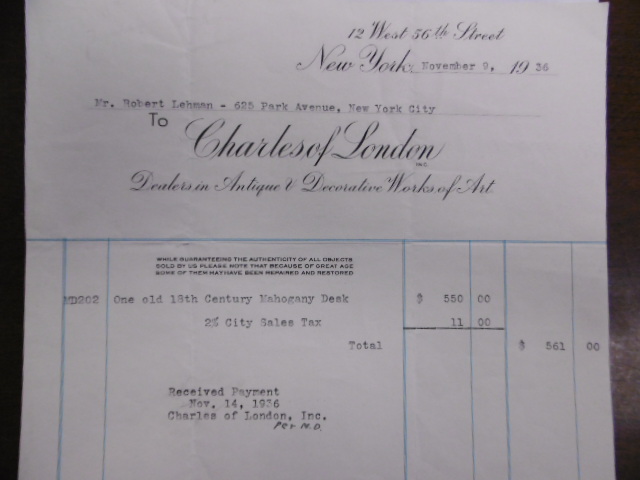
Some of you may know of the dealership ‘C.Charles’ – he was a brother of the famous Joseph Duveen; he was, apparently, not allowed to use the trading name of ‘Duveen’ (there’s only ONE Duveen I guess), so began trading as ‘C. Charles’ in London in the opening decades of the 20th century, and by the 1930s was trading as ‘Charles of London’ in the USA. Here’s a fascinating invoice from ‘Charles of London’ dated November 9th 1936, for an ‘Old 18th Century Mahogany Desk’, sold to the famous American collector Robert Lehman for $550 – (I couldn’t trace this object in the Met Museum collections….).

charles inv 9.11.36

Invoice ‘Charles of London’ November 9th, 1936. Box 37, Folder 12, Robert Lehman Papers, The Metropolitan Museum of Art Archives. Courtesy of the Metropolitan Museum Archives.

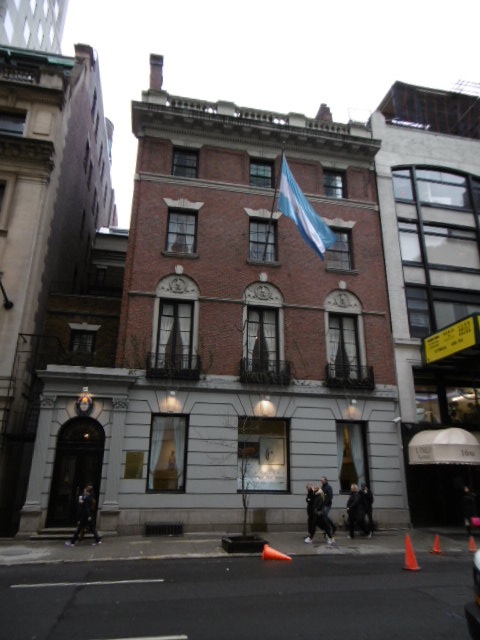
In my walks around New York searching for the locations of former antique dealer galleries I found Charles Duveen’s gallery at 12 West 56th Street – a very elegant (as one might expect) building, designed in a similar vein to Joseph Duveen’s spectacular purpose built gallery on 5th Avenue (see previous blog post).

Charles 12 west 56th  st NY

Charles of London former gallery at 12 West 56th Street New York. Photo MW March 2015.

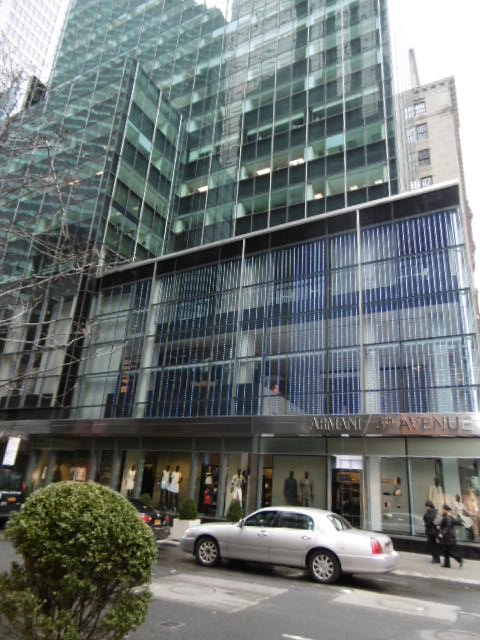
There were a few other letters and invoices from dealers I found in the archives, and I managed to find the former locations of the dealers – as I say, sadly the buildings themselves no longer exist. The location of the galleries of the famous antique dealers French & Co at 6 East 56th Street are now (maybe appropriately!) occupied by Armani –

former French and Co 6 East 56th st NY

Former location of French & Co (1916). Photo MW March 2015.

French and Co were at 6 East 56th Street, New York by 1916, as this invoice (again photographed by kind permission of the Metropolitan Museum Archives) demonstrates –

french invoice 7.9.15 det

Invoice, French & Co., 1916. Box 4, Folder 16, Durr Friedley Records, 1906-1918 (1917-1918) The Metropolitan Museum of Art Archives. Courtesy of the Metropolitan Museum Archives.

(I’ll come back to the contents of the invoice itself in another blog post…).

French & Co had moved to 210 East 57th Street by the 1930s, but again the building they occupied no longer remains…..

former French and co 210 East 57th st NY

Former location of French & Co, 210 East 57th Street, New York in the 1930s. Photo MW March 2015.

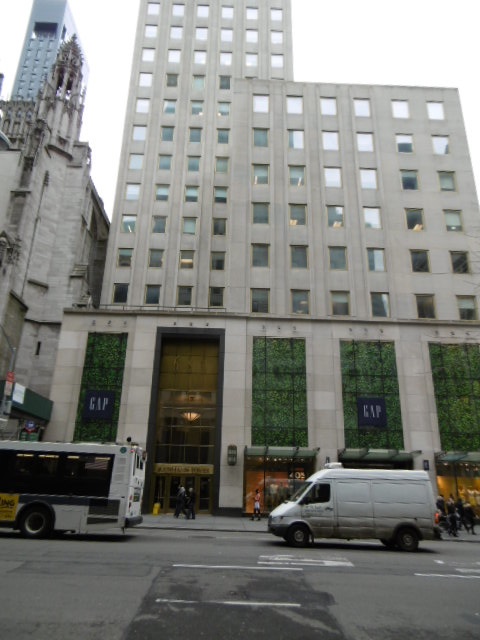
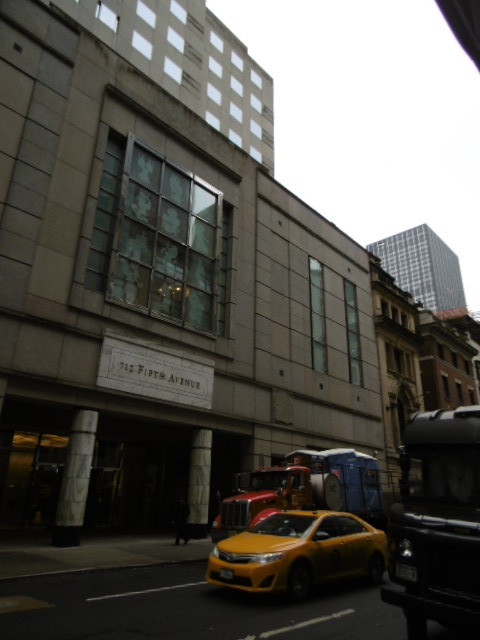
And here’s the former location of the dealer A.S. Drey, ‘Antique Paintings and Works of Art’, who, according to a note in the Metropolitan Museum of Art Archives moved to 680 5th Avenue, New York in 1929. The location is now occupied by shops and offices.

former Drey 680 5th Ave NY

Former location of A.S. Drey, 680 5th Avenue, New York in 1929. Photo MW March 2015.

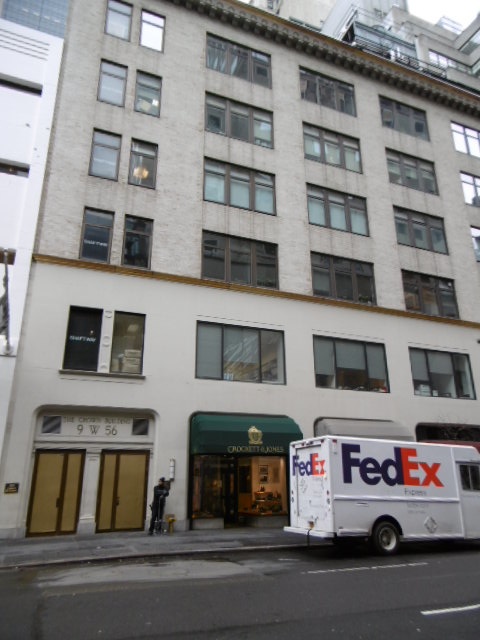
And, just for the record, I also found the former New York locations at 6 West 56th Street for Frank Partridge & Sons (they were at this address from at least the early 1920s until at least the late 1960s – Partridge & Sons, like many of the dealers highlighted in this blog, are no longer trading).

former Partridge shop 6 West 56th st NY

Former location of Frank Partridge & Sons, 6 West 56th Street, New York. Photo MW March 2015.


And the locations of ‘Arnold Seligmann, Rey & Company Incorporated’ trading at 7 West 36th Street, New York in 1916, are now shops and offices….

former Seligmann shop 7 West 36th st NY

Former location of Arnold Seligmann, Rey & Co., 7 West 36th Street, New York. Photo MW March 2015.

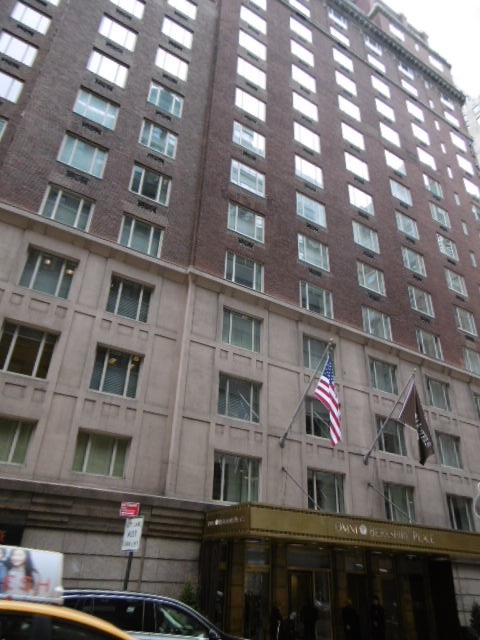
Likewise the former location of the antique dealer and interior decorators ‘White Allom’ (led by Sir Charles Allom) at 19 East 52nd Street, New York in 1914, are now occupied by an hotel.

former White Allom 19 East 52nd st NY

Former location of the galleries of White Allom, 19 East 52nd Street, New York in 1914. Photo MW March 2015.

As you can see, the archives at the Met Museum were a catalyst for a fruitful perambulation around a (very cold) New York….
Mark


Home Subjects

a working group dedicated to the display of art in the private interior, c. 1715-1914

The Period Room: Museum, Material, Experience

An International Conference hosted by The Bowes Museum and The University of Leeds

H. Blairman & Sons Ltd

A research project investigating the history of the antiques trade in Britain in the 19th & 20th centuries

Museum Studies Now?

'Museum Studies Now?' is an event which aims to discuss and debate museum and heritage studies education provision.

The Burlington Magazine Index Blog

art writing * art works * art market

East India Company at Home, 1757-1857

A research project investigating the history of the antiques trade in Britain in the 19th & 20th centuries