Posts tagged ‘Mallett & Sons’

June 28, 2025

The 1932 Art Treasures Exhibition, London

A couple of months ago my friend and colleague Diana Davis very kindly sent me a link to a short black & white film of the 1932 Art Treasures Exhibition (thank you Diana!), and which obviously pricked my interest as it is full of objects that were being sold by antique dealers. You can watch the film in YouTube (it’s only 2 minutes 49 seconds long) HERE – the original film is part of the wide range of historic films and TV archives held by British Pathe (link HERE).
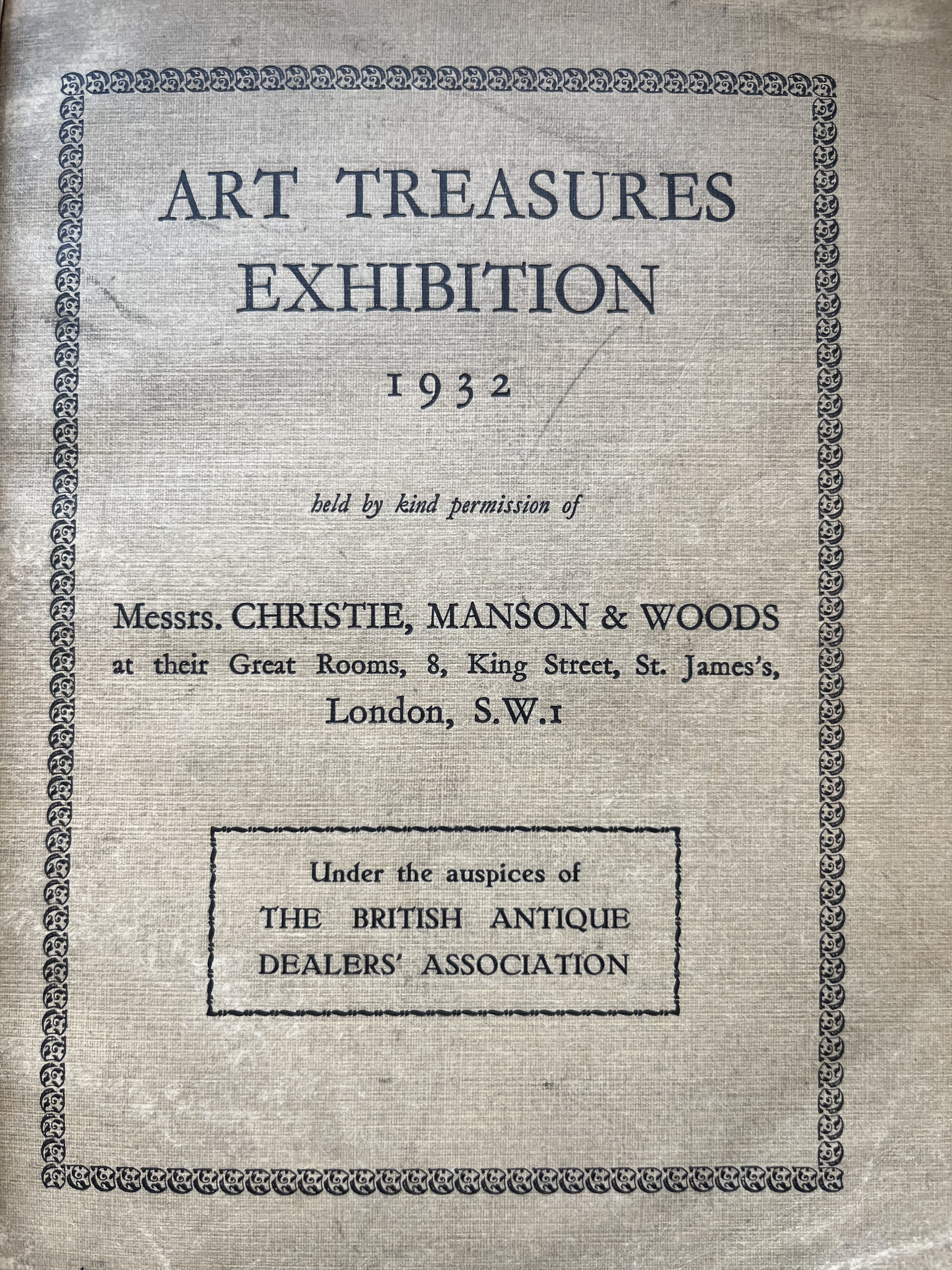
Art Treasures Exhibition 1932 catalogue, front cover. Photo Antique Dealers Research Project, University of Leeds.

The Art Treasures Exhibition, held at Christie’s auction rooms, King Street, London, 12th October to 5th November 1932 and organised by The British Antique Dealer’s Association (BADA) is fairly well-known amongst historians and those interested in the history of the art market. The 1932 exhibition followed on the success of the earlier BADA organised exhibition at Grafton Galleries, London in 1928. Both exhibitions prefigured the establishment of the Grosvenor House Antiques Fair (also known as ‘The Antique Dealers’ Fair’) which began in 1934 – (see also some older blog posts on The Grosvenor House Fair etc in January 31st 2021 and April 23rd 2015).

Fortunately, we have a copy of the 1932 Exhibition catalogue, so it’s possible to match up some of the objects in the film to those in the catalogue and find out which dealers are behind the objects, so I thought it would be an interesting exercise to do that!

The film of the 1932 Exhibition is a fascinating period piece from the early 1930s, obviously created as a publicity newsreel for the exhibition. The narrator (unknown), guides the viewer to some of the highlights of the exhibition at the time, telling the background stories of some of the objects offered for sale by various antique dealers, but also offering a visual insight into the displays at the exhibition. Below, for example, is a screenshot of a general panning shot (do watch the YouTube film for effect) of one of the stands which appears to have a mixture of dealers’ objects – the large pair of urns are certainly item No.237 in the catalogue, ‘A pair of satinwood knife boxes, c.1790, originally made for Lord Northesk’ (the family seat is Ethie Castle, near Arbroath) and offered by the antique dealer Rice & Christy, Wigmore Street, London; the tapestry behind looks like it is No.285 ‘A Beauvais Tapestry, c.1790’, offered by The Spanish Art Gallery, Conduit Street, London; and the display cabinet to the left is certainly No.182 ‘A Chippendale China Cabinet, c.1765′ offered by M. Harris & Sons. So I guess this panning shot was of a collection of various dealers’ objects at the entrance to the exhibition, indicating the sheer range of things offered for sale?
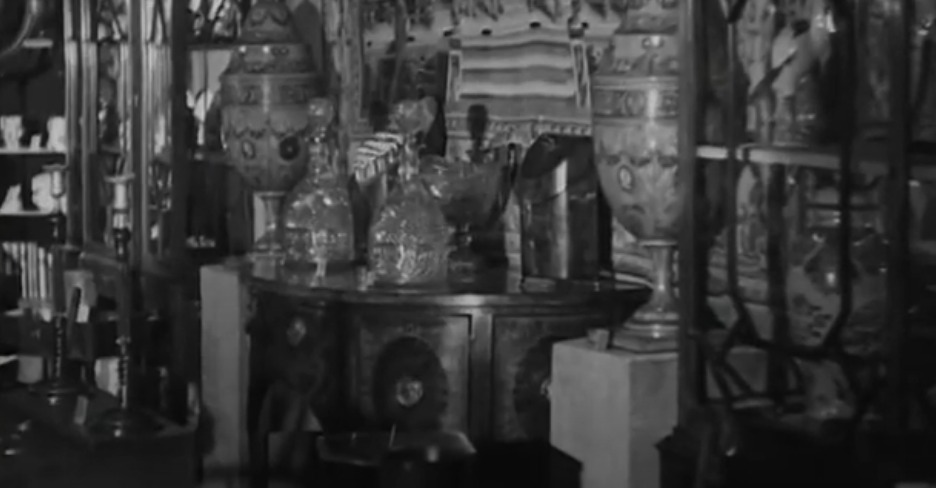
Art Treasures Exhibition 1932, screenshot of general view.

The Exhibition had 1,380 objects, and the film obviously does not cover all of them, but there are 13 objects highlighted in the film, so for those that watch the film, here’s some information on the dealers who were behind the objects (and a little bit of information on where the objects are now, if it has been possible to trace them) – I’ll do this in the sequence of the objects highlighted in the film by the narrator:

1st object – (see below) in the film the narrator spends a few moments on this object; it is also object No.1 in the catalogue: ‘An embroidered Throne used Queen Elizabeth, English 1578’; this was offered by the well-known London antique dealers Acton Surgey Ltd & Mallett & Son. Thanks to our friends William DeGregorio and Chris Jussel (in the USA) we know that the embroidered throne made its way into the collection of Sir William Burrell (1861-1958) and remains in the Burrell Collection in Glasgow (it is currently in storage at The Burrell – see below).
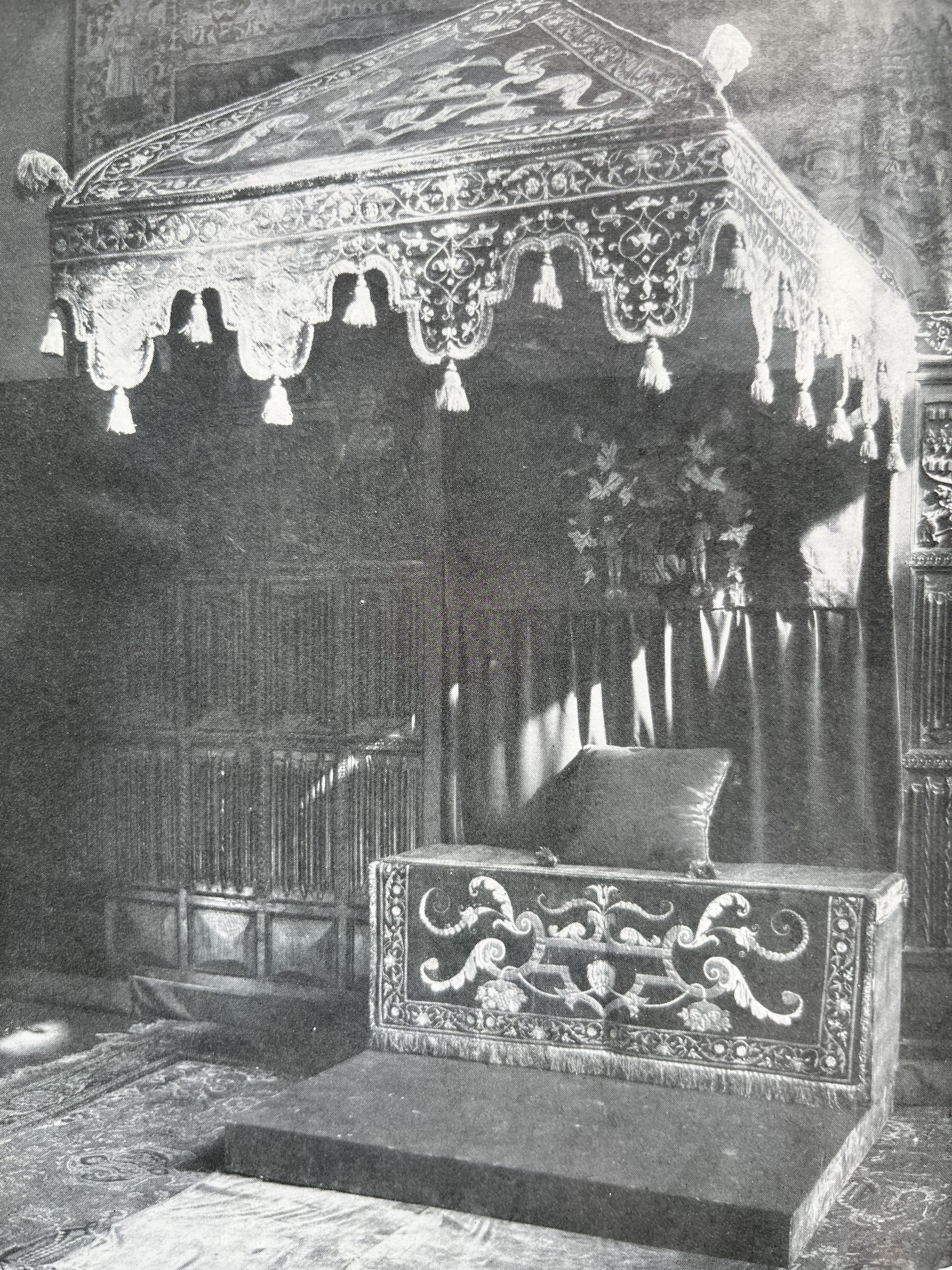
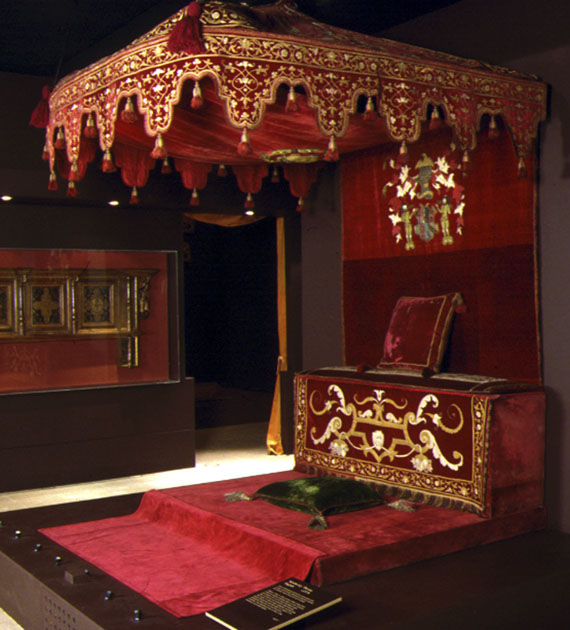
Art Treasures Exhibition catalogue 1932 – ‘An embroidered Throne used by Queen Elizabeth, English 1578’. Photograph, Antique Dealers Research Project, University of Leeds.
The ‘Kimberley Throne’, c.1554-1578, (14.217). The Burrell Collection, Glasgow. Photograph, The Burrell Collection, Glasgow.

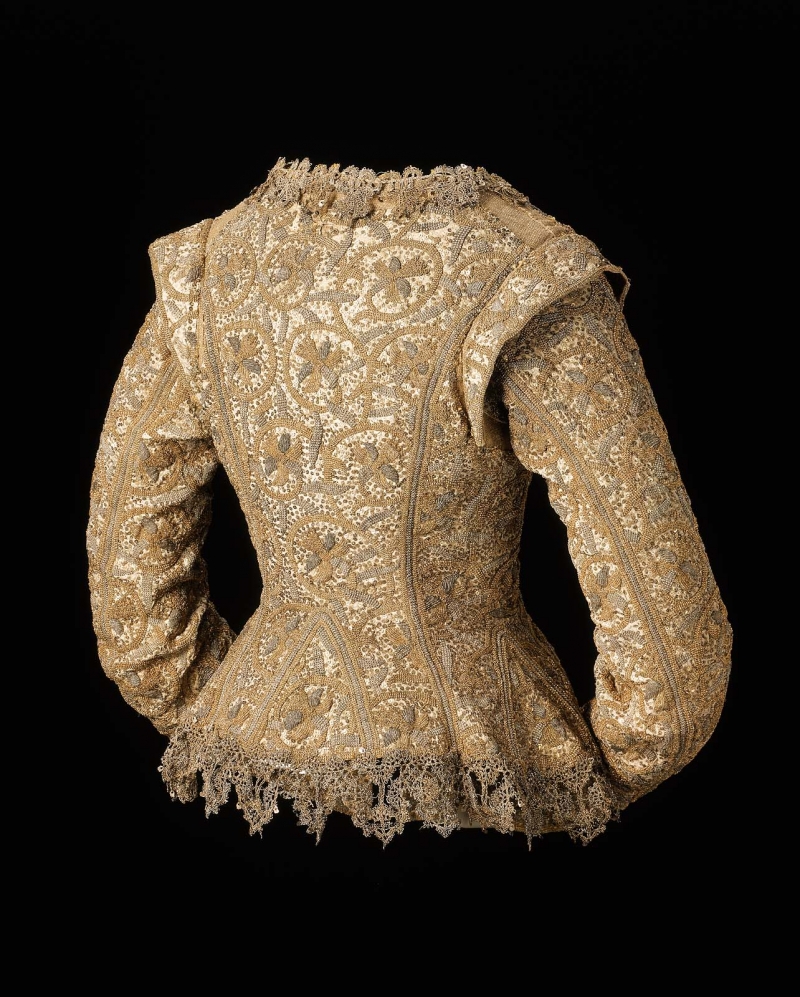
2nd object – (see below) mentioned by the narrator is No.2 in the exhibition catalogue, ‘A gold embroidered jacket, lace shirt, and gloves, English, late 16th century’; it was also offered by Acton Surgey Ltd; the jacket is now in the collections of Boston Museum of Fine Arts in the USA. It was purchased from Acton Surgey by the collector Elizabeth Day McCormick (1873-1957) in 1943 and gifted to the Boston MFA. It is not known what happened to the shirt or the gloves; and it has not also been possible to identify the ‘gold and enamelled jewel set with diamonds and rubies’ that the Narrator also mentions.
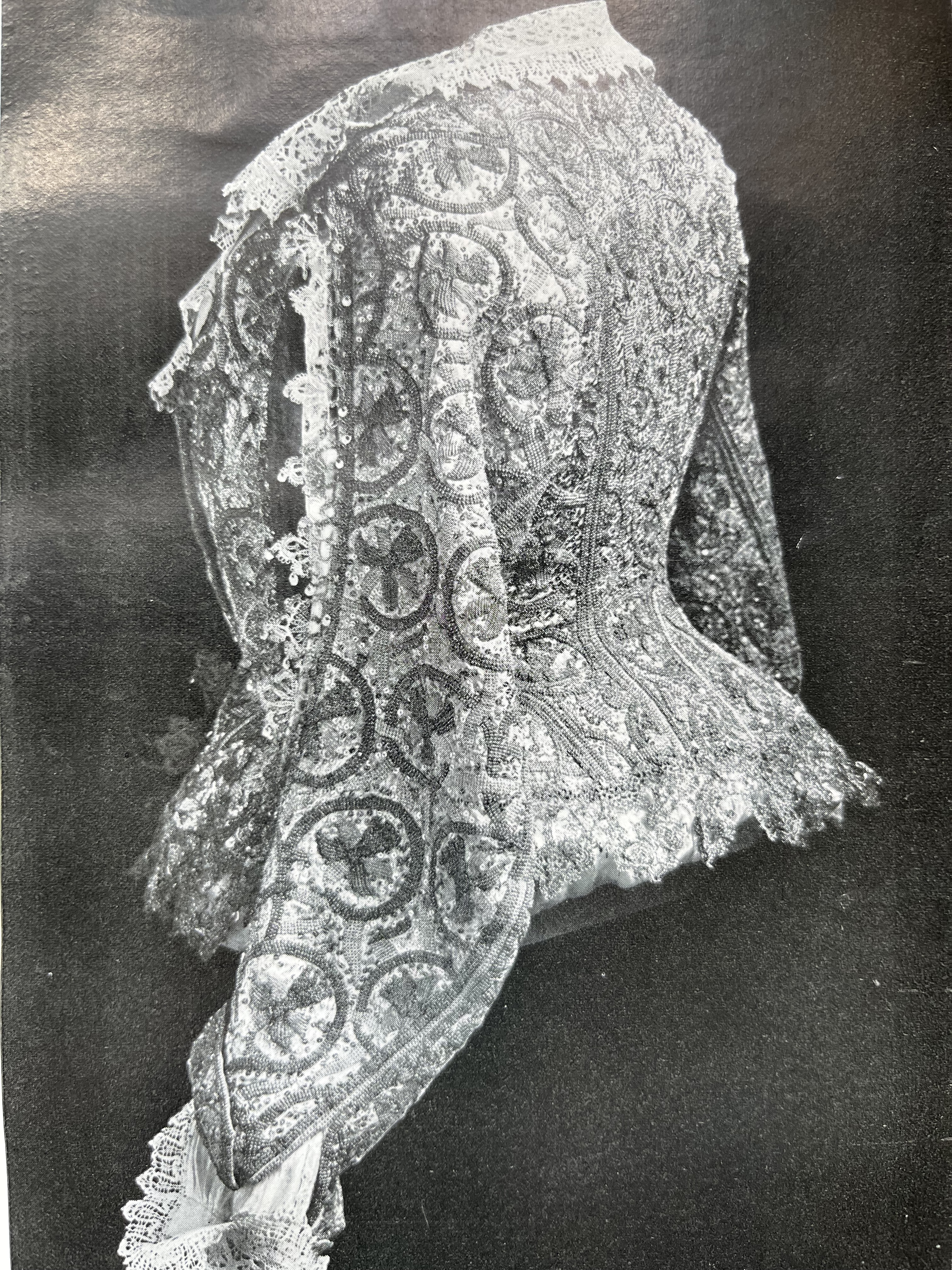
Art Treasures Exhibition catalogue 1932 – ‘A gold embroidered jacket, English, late 16th century’. Photograph, Antique Dealers Research Project, University of Leeds.
‘Women’s Jacket, English about 1610-15 with later alterations’. The Elizabeth Day McCormick Collection, Boston Museum of Fine Arts. 43.243. Image copyright Boston MFA.

3rd object – (see below) the narrator describes a ‘Gothic tapestry, over 400 years old’, this is either No.270 or No.271 in the catalogue. Neither are illustrated in the catalogue, but are both described in the catalogue as ‘A panel of Gothic tapestry, Franco-Flemish, circa 1500’ and both are offered by The Spanish Art Gallery Ltd, Conduit Street, London. It has not been possible to trace the present whereabouts of the tapestry.
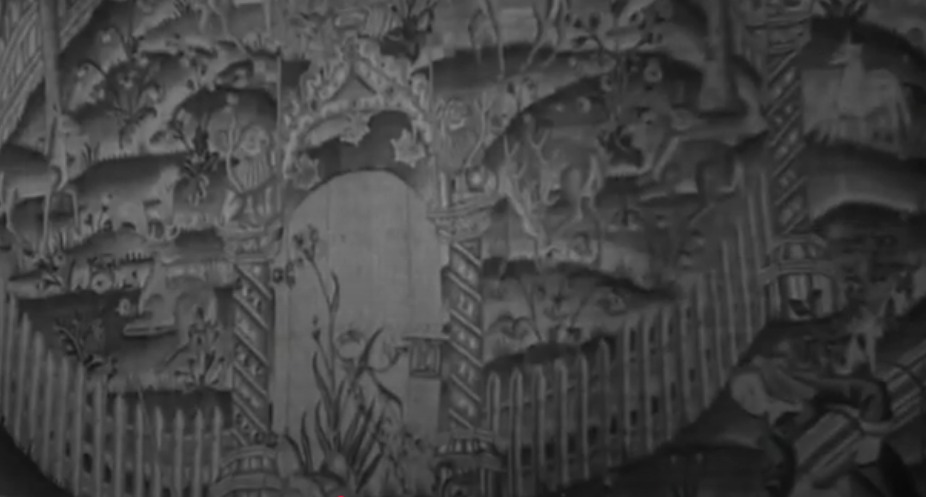
Art Treasures Exhibition 1932 film, screenshot of ‘Gothic tapestry’.

4th object – (see below) this is described by the narrator in the film as ‘a fine specimen of a Henry VII salt-cellar in hour-glass form’. This is No.445 in the catalogue; ‘A Henry VII silver-gilt standing salt, London 1505’. It is also illustrated in the catalogue, and was offered by the antique silver dealers Crichton Brothers, then trading at 22 Old Bond Street, London. It has not been possible to trace the Henry VII salt – the narrator in the film suggested that it was the only known piece of silver with the date 1505, so I guess if it does still exist, it must be easily identifiable? (our friend Chris Coles spotted the salt in a 1969 exhibition catalogue produced by The Goldsmiths Company….so perhaps the salt is in the collections of The Goldsmiths – thanks Chris!)
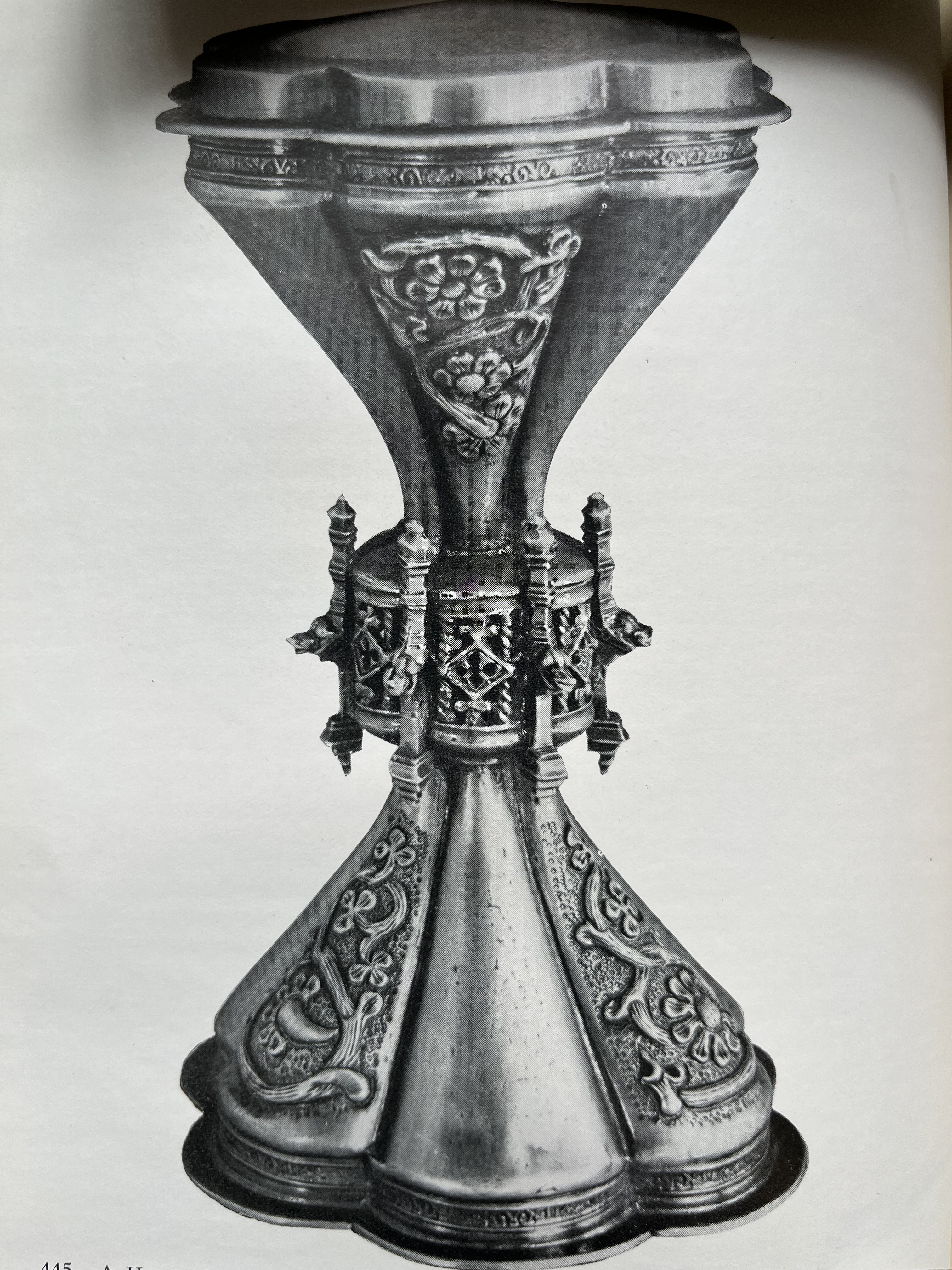
Art Treasures Exhibition catalogue 1932 – ‘A Henry VII silver-gilt standing salt, London 1505’. Photograph, Antique Dealers Research Project, University of Leeds.

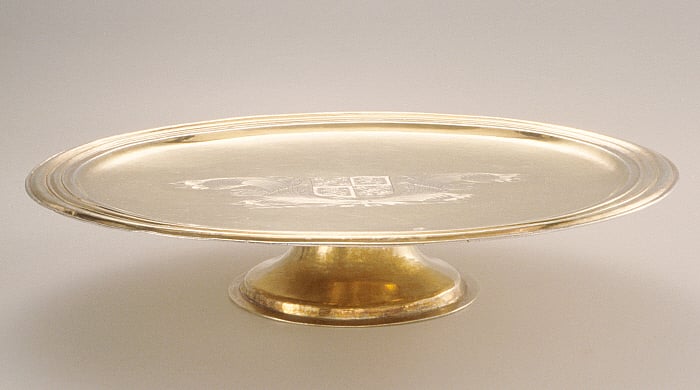
5th object – (see below) the narrator describes a ‘stand for a porringer or tankard….previously owned by the diarist Samuel Pepys’. This is No.618 in the catalogue – ‘The Charles II silver-gilt ‘Pepys’ tazza, London 1678′. It is not illustrated in the catalogue, but was also offered by the antique silver dealer Crichton Brothers. The ‘tazza’ is now in the collections of The Clark Institute in Massachusetts in the USA. It was commissioned by Samuel Pepys (1633-1703) in 1678 and was sold at Sotheby’s on 1st April 1931 (Lot 3) to Crichton Brothers, who appear to have sold it to the American silversmith and art curator Peter Guille of New York, who sold it to Robert Sterling Clark in 1946.
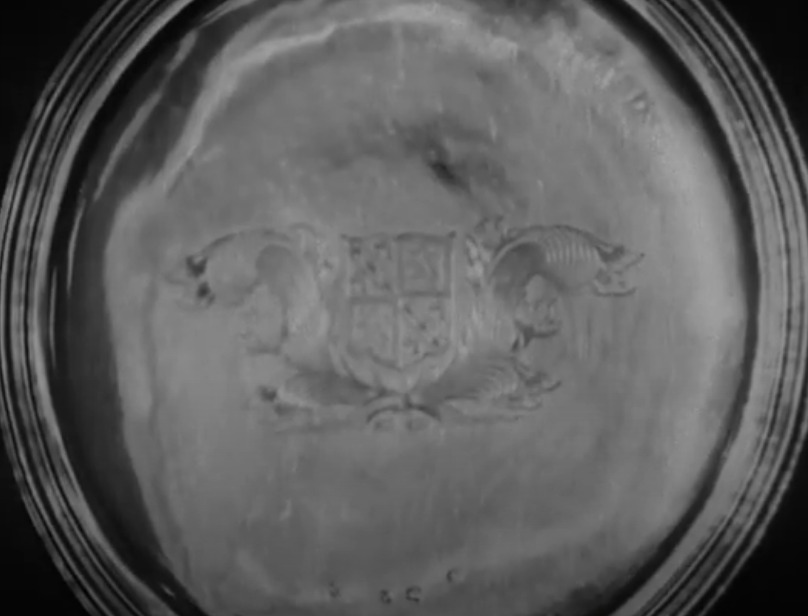
Art Treasures Exhibition 1932 film, screenshot of ‘Pepys’ ‘tazza”.
Footed Salver, silver-gilt, 1678/79. Clark Institute, 1955.298. Image copyright Clark Institute.

6th object – (see below) described by the narrator as a ‘Chippendale chair’, but I can’t find this chair (or even a set of them) listed in the exhibition catalogue; perhaps it was a late edition to the exhibition?
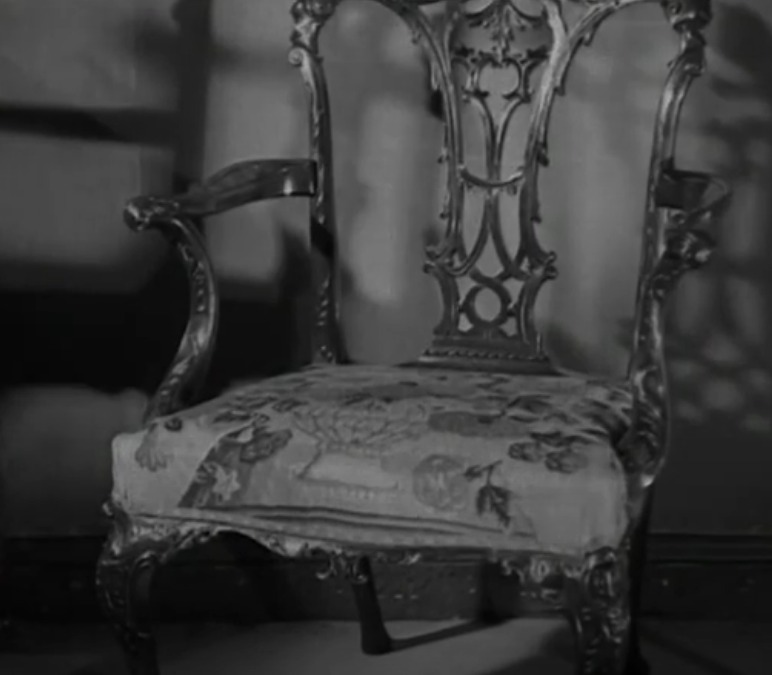
Art Treasures Exhibition 1932 film, screenshot of ‘Chippendale chair’.

7th object – (see below) the narrator describes 3 walnut chairs, ‘made about 1690’. There are a number of such chairs in the exhibition catalogue, but without a photograph of them from the catalogue it has not been possible to identify which of the chairs the narrator is referring too? However, the centre chair, could be No.50 in the catalogue, ‘A William and Mary armchair of small size, circa 1690’, and said to have ‘traditionally been used by Queen Anne’; it was offered for sale by the well-known dealers Moss Harris & Sons.
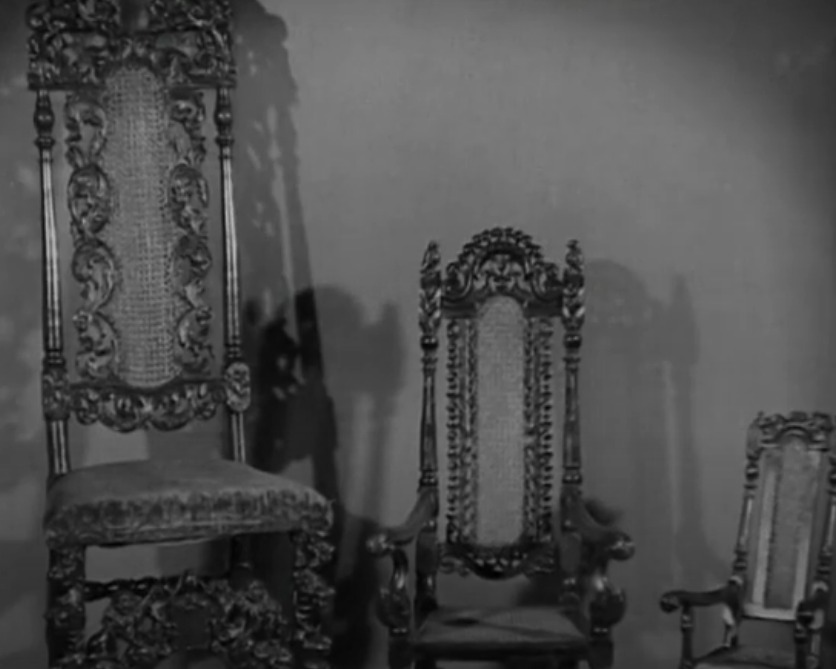
Art Treasures Exhibition 1932 film, screenshot of ‘Walnut chairs’.

8th object – (see below) is described by the narrator as ‘a fine gesso table, formerly at Stowe’, is certainly No.121 in the Exhibition catalogue; it is illustrated and described as ‘A George II gilt side table…formerly at Stowe’ and was offered for sale by the antique dealer and interior decorator Gregory & Co., then trading at 27 Bruton Street, London. The table was originally sold at the auction sale of the contents of Stowe House in 1848, following the bankruptcy of the Duke of Buckingham.
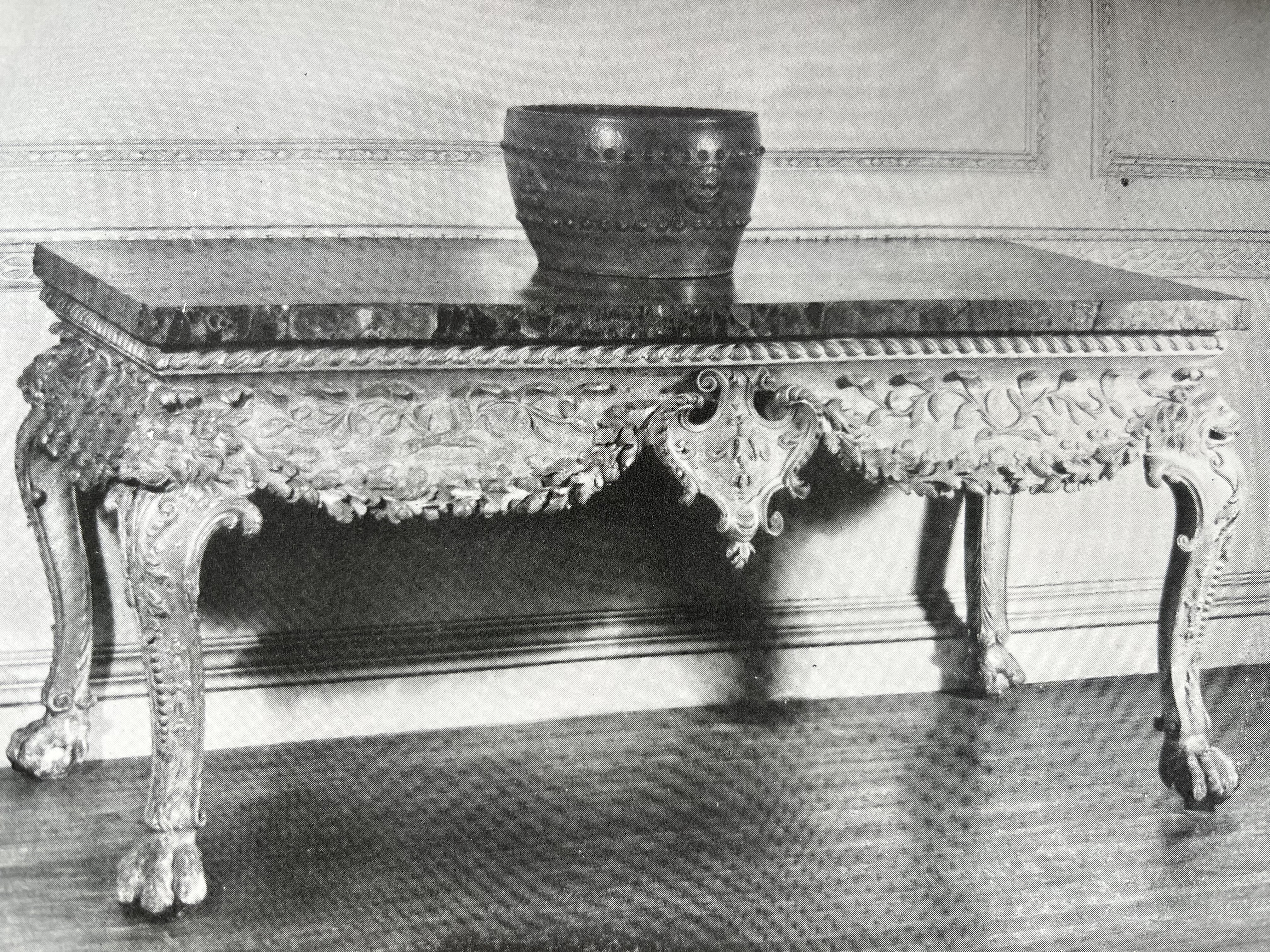
Art Treasures Exhibition catalogue 1932 – ‘A George II gilt side table’. Photograph, Antique Dealers Research Project, University of Leeds.

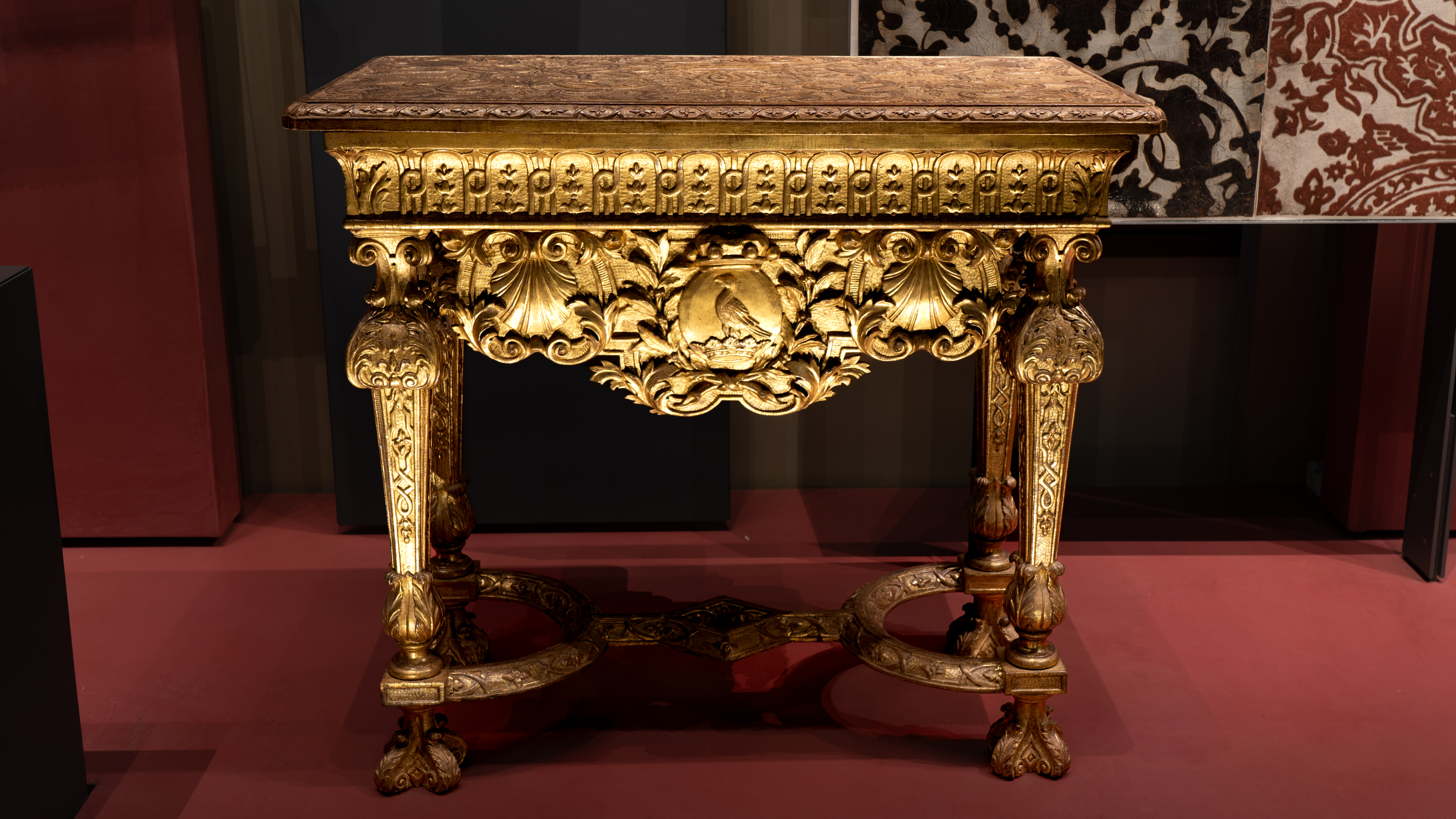
It has not been possible to trace the whereabouts of the side table, but interestingly, another giltwood side table from Stowe was on display at the 1932 Exhibition; No.98, ‘A George I gilt gesso table, circa 1715’, and offered for sale by the antique dealer A.G. Lewis, Brompton Road, London. This table (see below) is one of a pair (possibly three?) side tables associated with Stowe. In 1930, one table, (perhaps the same one in the 1932 exhibition?) was in the stock of the antique dealer Kent Galleries, Conduit Street (Kent Gallery are associated with The Spanish Gallery who offered the ‘Gothic tapestry’ at the 1932 Exhibition). One of the tables (perhaps the same one?) is now in the V&A Museum (see below too). The V&A table was sold to the V&A by the antique dealer Phillips of Hitchin in 1947, having been through the hands of a number of other antique dealers, including John Bly of Tring and Edinborough of Stamford. All of this highlights the significance of inter-dealer trading that sustained the antique trade for much of the 20th century.
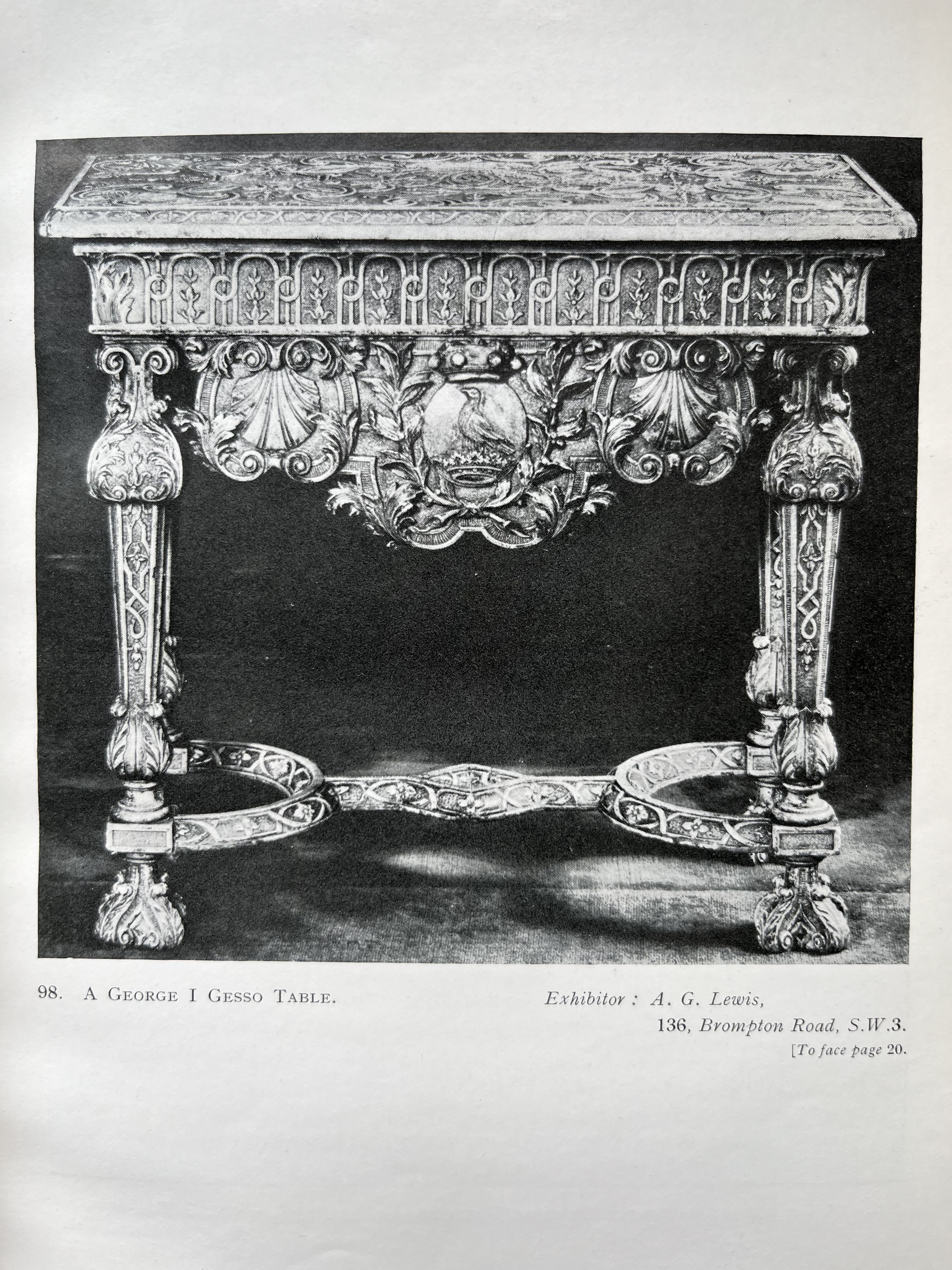
Art Treasures Exhibition catalogue 1932 – ‘A George I gilt gesso table’. Photograph, Antique Dealers Research Project, University of Leeds.
The Stowe side table at the V&A Museum. Photograph, Year of the Dealer project, University of Leeds.

9th object – (see below) the narrator describes a ‘spinning wheel, perfectly usable today’ as the next object. It is a ‘Sheraton spinning wheel, circa 1790….made by John Planta, Fulneck’; it was No.231 in the catalogue and was illustrated and offered for sale by the antique dealer Law, Foulsham & Cole, South Molton Street, London. There are several such spinning wheels by Planta, who was based in Leeds in the late 18th century – one example (although not the one in the 1932 Exhibition), remains in the collections at Temple Newsam, near Leeds.
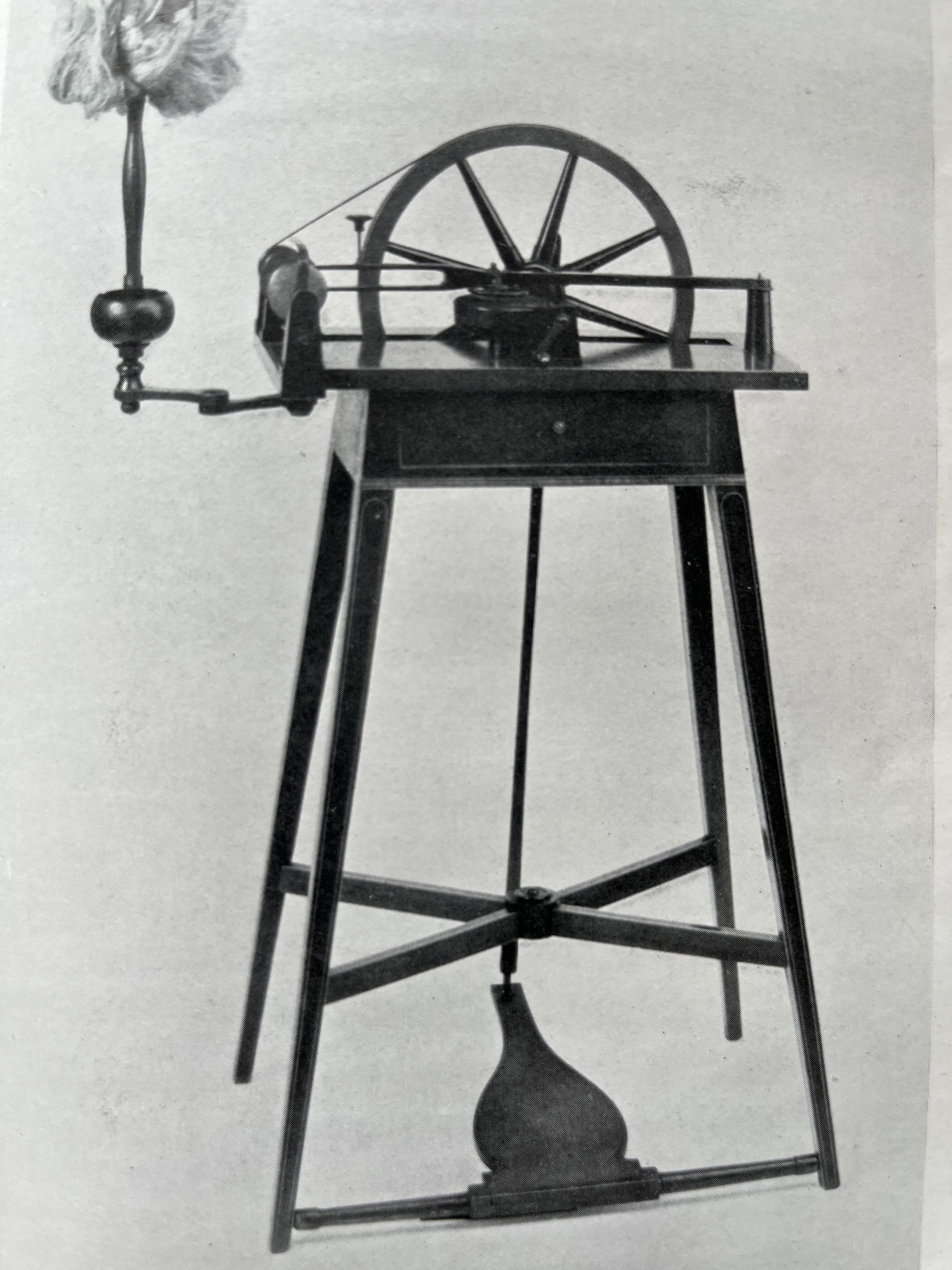
Art Treasures Exhibition catalogue 1932 – ‘A Sheraton spinning wheel, circa 1790’. Photograph, Antique Dealers Research Project, University of Leeds.

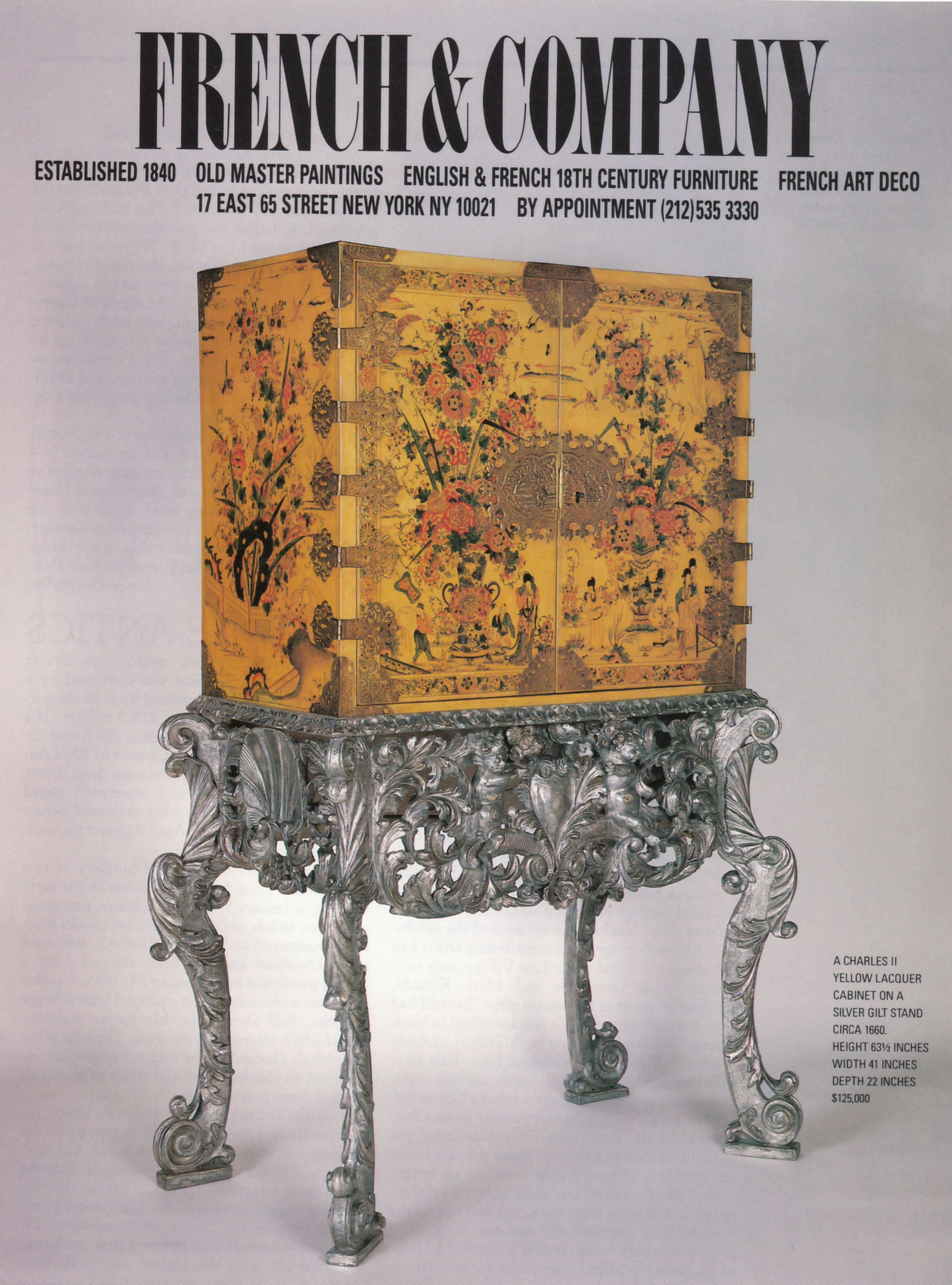
10th object – (see below) the narrator describes as a ‘rare cream lacquer cabinet, made towards the end of the 17th century’. This was No.31 in the catalogue, ‘a Charles II lacquer cabinet, circa 1680’ and was offered for sale by the dealer E.H. Benjamin, 39 Brook Street, London. White lacquer cabinets are the rarest of lacquer furniture, but even so it has not been possible to trace the cabinet – perhaps it has been lost? (Chris tells us that the cabinet on stand was in stock with the American antique dealers’ French & Co in 1987 (see below), so perhaps the cabinet is still in the USA?)
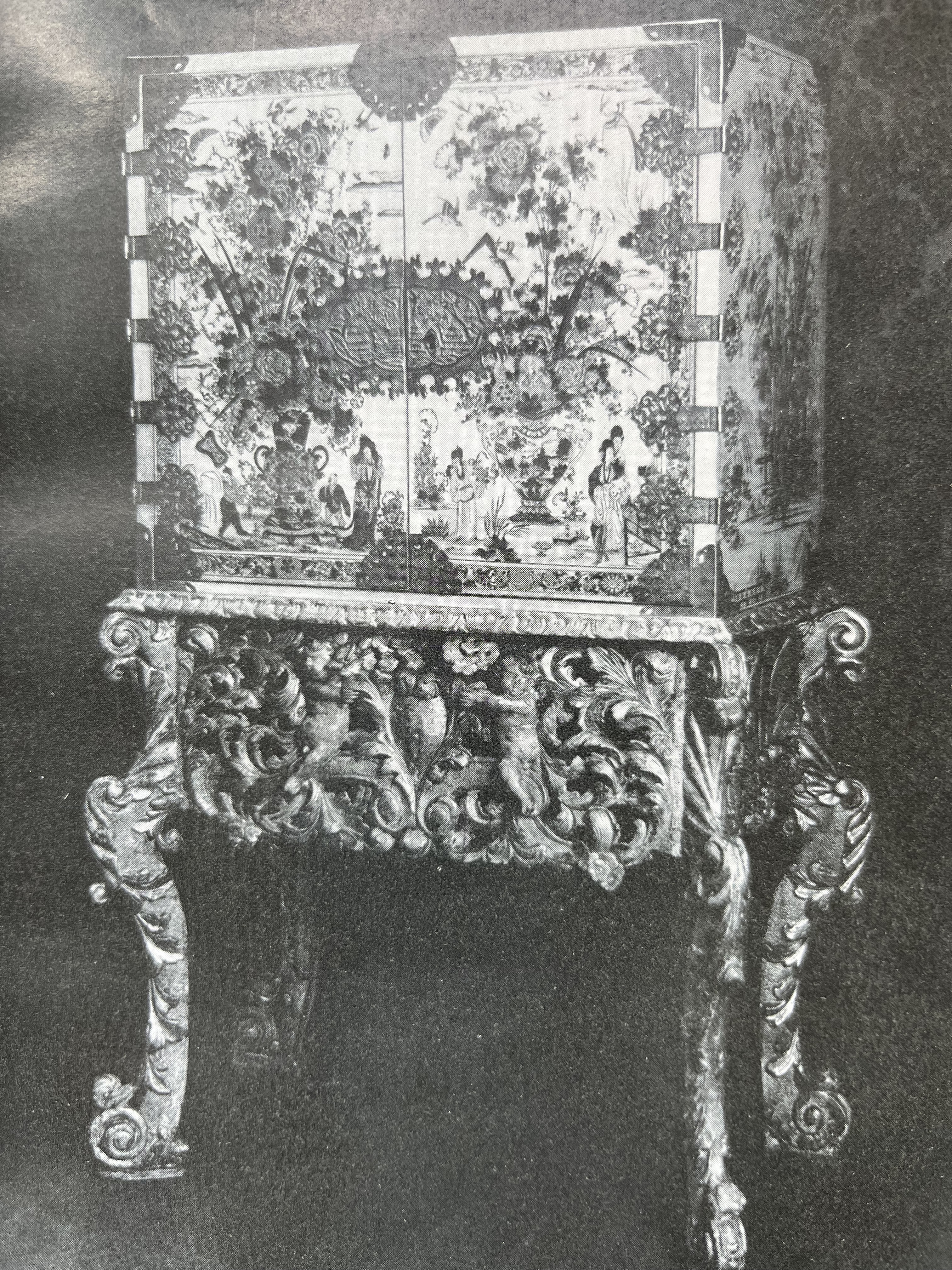
Art Treasures Exhibition catalogue 1932 – ‘A Charles II lacquer cabinet, circa 1680’. Photograph, Antique Dealers Research Project, University of Leeds.
French & Co advert, 1987. Image from Chris Coles.

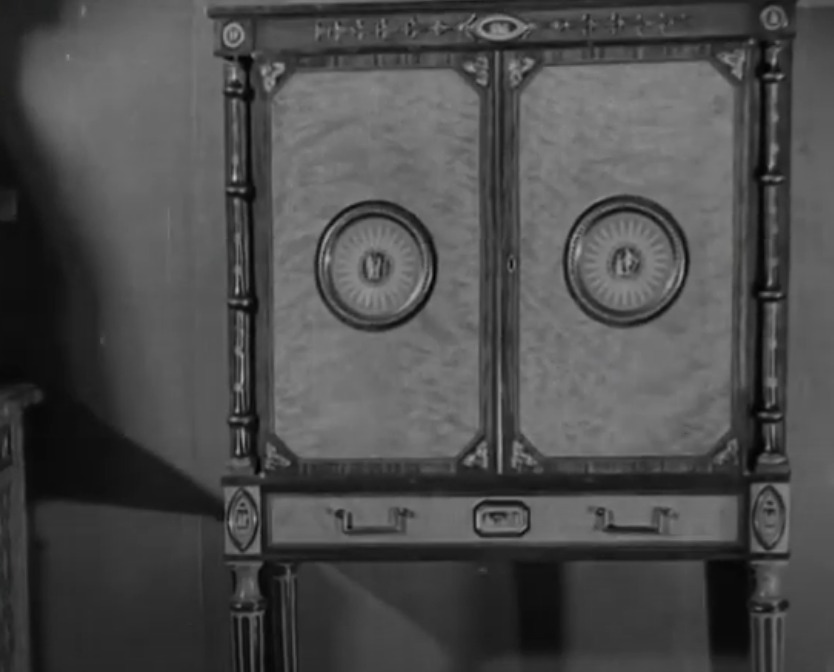
11th object – (see below) the narrator describes another cabinet, this time ‘a fine Adam satinwood example’ – he mentions that ‘it was purchased by the Queen at her recent visit to the exhibition’ (this would be Queen Mary, a very well-known collector of antiques). The cabinet is No.205 in the catalogue, described as ‘an Adam satinwood cabinet, circa 1780’, but is not illustrated; it was offered for sale by the antique dealer Mallet & Sons, one of Queen Mary’s favourite antique dealers. I can’t find the cabinet in Royal Collections, so perhaps the cabinet was sold from the collections or given away or was destroyed?
Art Treasures Exhibition 1932 film, screenshot of ‘Adam satinwood cabinet’.

12th object – (see below) the narrator describes ‘a lovely satinwood side table’, ‘one of Lord Nelson’s gifts to Lady Hamilton’. This is one of 3 tables on display at the exhibition, No.241, ‘a set of three satinwood tables, circa 1795’; they were illustrated and were offered for sale by the dealer A.G. Lewis. Like the film, the catalogue mentions that the tables were presented by Lord Nelson to Lady Hamilton. Given the provenance, it’s surprising I can’t find them anywhere? Two of the tables were in the collection of Arthur Sanderson (1846-1915), the well-known collector in Edinburgh; they are listed in the auction sale catalogue of Sanderson’s collection sold by Knight, Frank & Rutley, Hanover Square, London, June 14th-16th 1911 as Lot 540 ‘A PAIR OF SHERATON SHAPED FRONT SIDE-TABLES, which (together with Lot 541 A SHERATON BOOKCASE) were ‘said to have been made by Sheraton for Lord Nelson and given by him to Lady Hamilton at Naples’; (our friend Chris Coles tells me that the Nelson tables were in the collection of the antique dealer George Stoner (of Stoner & Evans) in 1912; and that one of the tables was in the stock of Moss Harris & Sons in 1935; Chris rightly suggests that as the three tables don’t exactly match, they are more likely to have been separated – thanks again Chris!)
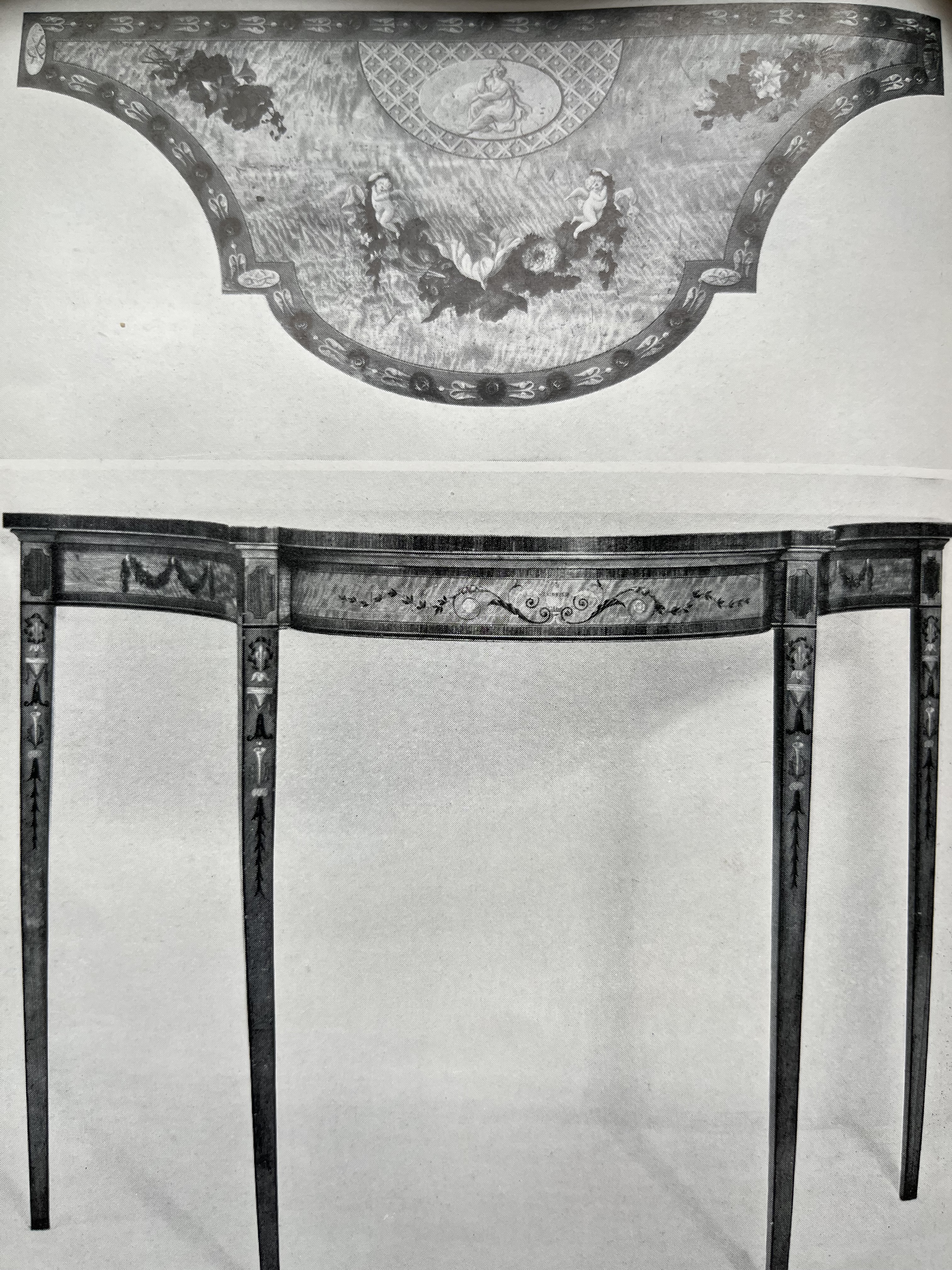
Art Treasures Exhibition catalogue 1932 – ‘A set of three satinwood side tables, circa 1795’. Photograph, Antique Dealers Research Project, University of Leeds.

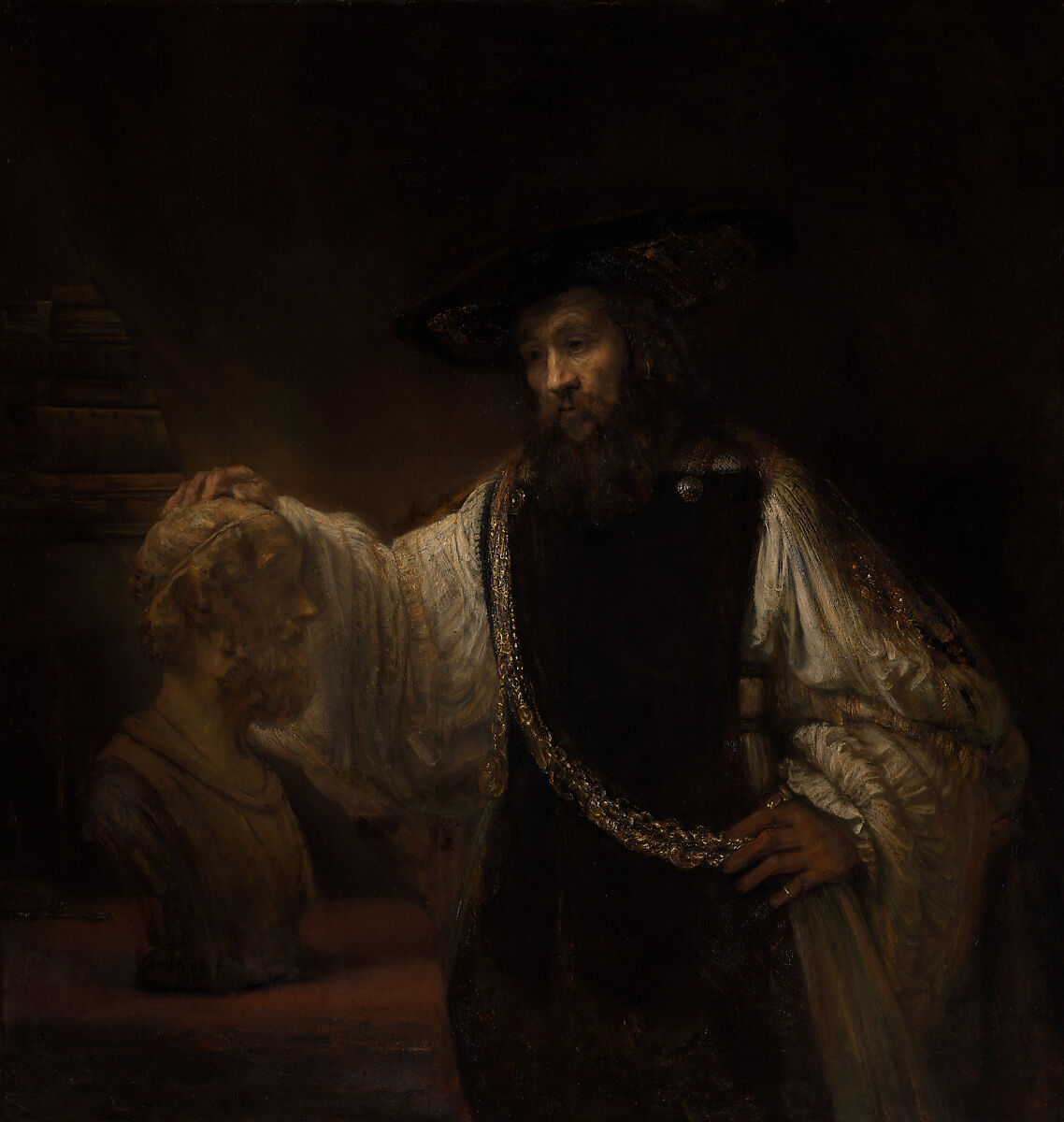
Finally, 13th object – the narrator highlights that this object (a painting by Rembrandt) is ‘the most valuable object here’. It is No.1355 in the exhibition catalogue, ‘Rembrandt van Rhyn (1606-1669), ‘Aristotle’, signed and dated 1653′. It was offered for sale by the world-famous art dealer Joseph Duveen (1869-1939). Duveen bought and sold the painting several times in the decades before the 1932 exhibition. He sold it to the art collector Alfred W. Erickson (1876-1934) in 1928 for $700,000, before buying it back and selling it to Erickson again in the mid 1930s for $590,000. It is now in the collections at the Metropolitan Museum of Art in New York, where it has been since 1961.
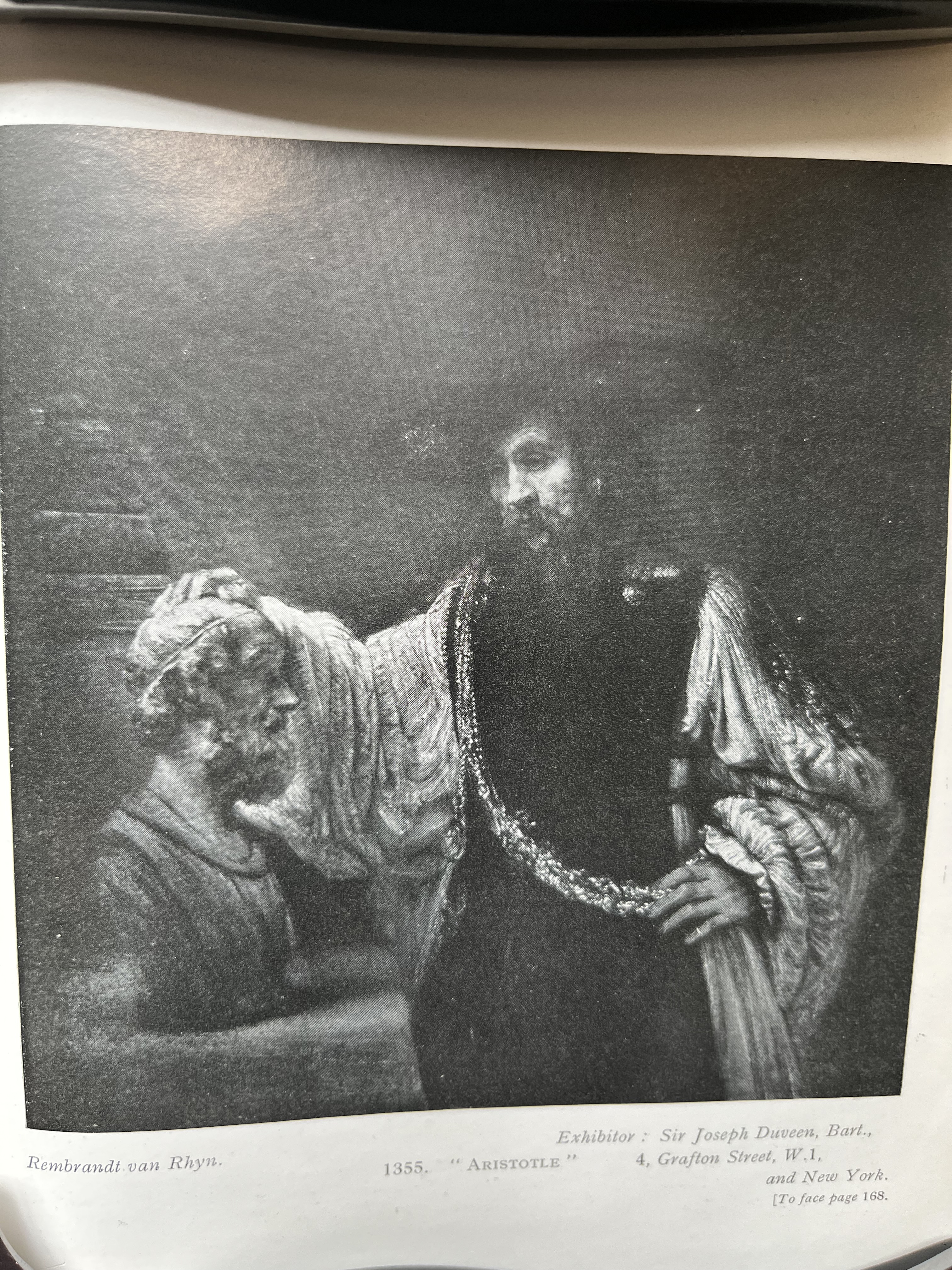
Art Treasures Exhibition catalogue 1932 – ‘Rembrandt van Rhyn….’Aristotle’. Photograph, Antique Dealers Research Project, University of Leeds.
Rembrandt (Rembrandt van Rijn) Aristotle with the bust of Homer (1653). Metropolitan Museum of Art, New York. 61.198. Image copyright Metropolitan Museum of Art, New York.

The film of the Art Treasures Exhibition 1932, together with the catalogue of the exhibition, gives a fascinating insight into the publicity for one of the major commercial art exhibitions of the period and is a further demonstration of the significance of the antique trade in the circulation and consumption of antiques (and paintings) and their role in the development of public museum collections – and thanks again to Diana for sending on the link to the film!

Mark

February 19, 2021

Solving the puzzle: Unexpected findings inside A History of English Furniture

We have a guest blogger for this blog-post in the antique dealers blog – a fascinating investigation of the photographs of antique furniture published in A History of English Furniture (1904-08) by Dr Clare Taylor (Open University), one of my friends and colleagues (and collaborators).  You might know Clare from the BBC TV programme Secrets of the Museum: Behind the Scenes at the V&A, where she was academic consultant. Thank you to Clare for taking the time to compose a blog post for us – we hope you enjoy the read!

Mark

Clare Taylor’s blog-post:

‘Remember those heady pre-covid times when you could physically visit a library or a second-hand bookshop without an appointment, or indeed visit one at all? Reading the catalogue to the SOLD! exhibition recently reminded me about studying the four volumes of Percy Macquoid’s monumental History of English Furniture (1904-08) in the Sackler library in Oxford. They contained a puzzle which, at the time, I could not solve, but now SOLD! gave me some clues.

The volumes had revealed some unexpected contents. Three of the four contained loose black and white photographs of sets or individual items of furniture, and one sword. None were dated, but many had the photographer’s stamp on the reverse for Cooper and Humphrey of 71, Newman Street, with a pencilled 5-digit number. Others were stamped A. C. Cooper & Co, Fine Art Photographers of 10, Rose & Crown Yard, King Street, St James and one by F.A. Swaine, 146, New Bond Street, W.1 and Southsea.

Set of chairs upholstered in cut velvet, printed ‘Mallett 40 New Bond Street, London and The Octagon, Bath’, photographed by Cooper and Humphrey, inscribed in pencil ‘38763’. Photograph, Clare Taylor.

All the photographs looked as if they were taken for stock, as objects were seen against neutral backgrounds and carefully lit. Glazed cabinets were photographed with garnitures on top and more ceramics inside, while a lacquer cabinet was pictured both open and closed. Some, at least, were associated with Mallett’s. A set of chairs with fringed cut velvet seats, and a burr walnut bureau, were printed with the firm’s name and locations on the front; and an ‘Indian armchair’ with entwined splats, and a walnut card table, both had ‘Mallett’ pencilled on the reverse.

‘Indian armchair’, photographed by A.C. Cooper & Co, pencilled ‘Mallett’ and neg.6409. Photograph, Clare Taylor.

But there were more parts to this puzzle. As well as the photographs, tucked into volume II, with a few in volume III, were torn pages from auction catalogues, The Cabinet Maker, and Country Life including a settee pencilled ‘Mr[s] Astor’s’.

Torn page from Country Life, inscribed ‘Mrs Astor’s’. Photograph, Clare Taylor.

Other annotations were made on illustrations in the volumes themselves, often noting when and for how much the item pictured had been sold. For example, in the Age of Mahogany a ‘Bureau and China Cupboard’ illustrated as owned by H. Percy Dean was marked in ink ‘Bought and sold to H. Palmer Esq £200’. The annotations sometimes recorded condition, too; the same object was pencilled ‘The top and bottom of this piece have been made to go together’, and indicated with an arrow the location of a ‘secret drawer’. Yet other annotations recorded notes from eighteenth-century sources, for example references to Chippendale from the Gentleman’s Magazine next to an illustration of another Mallett’s chair.

Annotated page from the Age of Mahogany. Photograph, Clare Taylor.

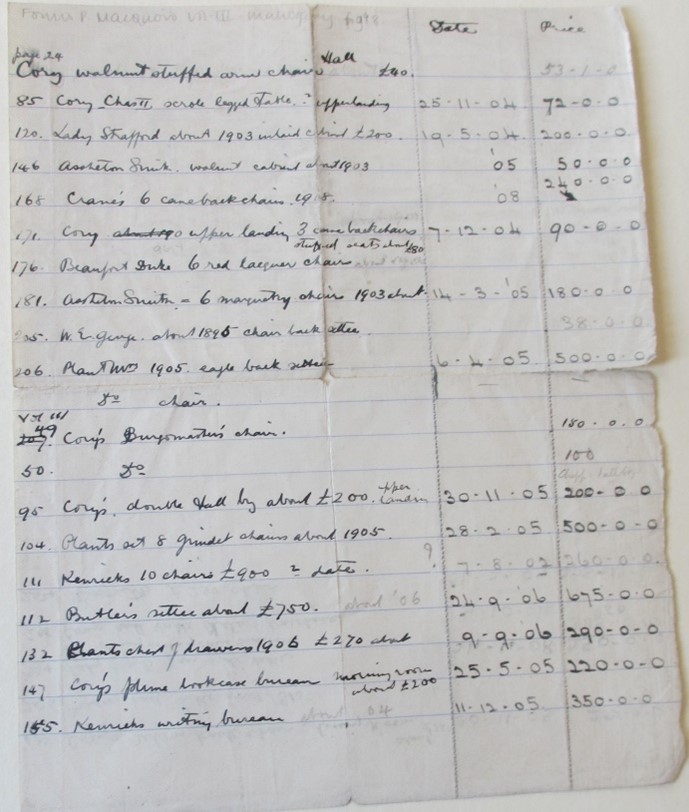
A later cataloguer had helpfully compiled a list of all these loose items and photographs including ‘on exercise paper- a list of items, dates and prices’. This turned out to be a double-sided ruled sheet, tucked in next to Figure 98 in the Age of Mahogany. In a single hand, it listed twenty-five objects, followed by a name and a brief description. The numbered entries on the sheet matched up with the illustrations of the same objects in the Ages of Walnut and Mahogany, and many of these were also annotated in pencil or ink. For example, next to a bureau-bookcase listed as sold to Campbell Cory (147 in the list) was pencilled ‘Crest Surtees family for whom it was made’.

Sheet from exercise book listing some objects illustrated in volumes II (the Age of Walnut) and III (the Age of Mahogany), c.1904-08. Photograph, Clare Taylor.

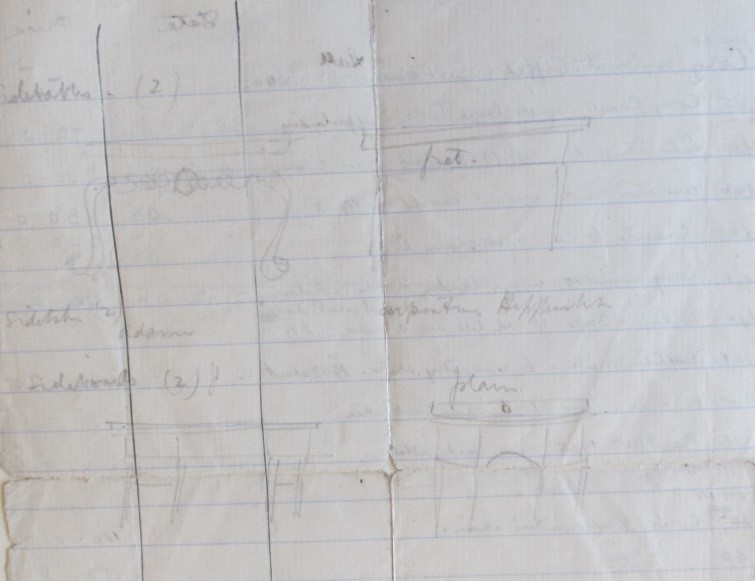
Two final columns on the sheet marked ‘Date’ and ‘Price’ were written in a different hand. Whereas the (earlier?) left-hand entries seemed to be someone trying to recall owners, prices and dates, the hand which recorded the dates and prices from 1904-08 was much more precise and the prices recorded sometimes differed from the earlier writer’s, suggesting either gaps in records or possibly different sales. On the reverse, the earlier writer had also drawn in pencil the shapes of side-tables, perhaps as an aide-memoire.

Annotated drawings on reverse of sheet from exercise book, showing designs of ‘Adam’, ‘Hepplewhite’ and ‘plain’ side-tables, c.1904-08. Photograph, Clare Taylor.

Who then were the authors of the list and the annotations in the volumes? Unfortunately we do not know who the volumes belonged to before they came into the library’s possession. Nor are there any clues on the exercise book sheet. However, they evidently weren’t much interested in early oak, if the numbers of photographs had anything to do with it since the Age of Oak contained none, the Age of Satinwood just three, Walnut nine, but Mahogany thirty-eight (including one oak table, perhaps mis-placed?).

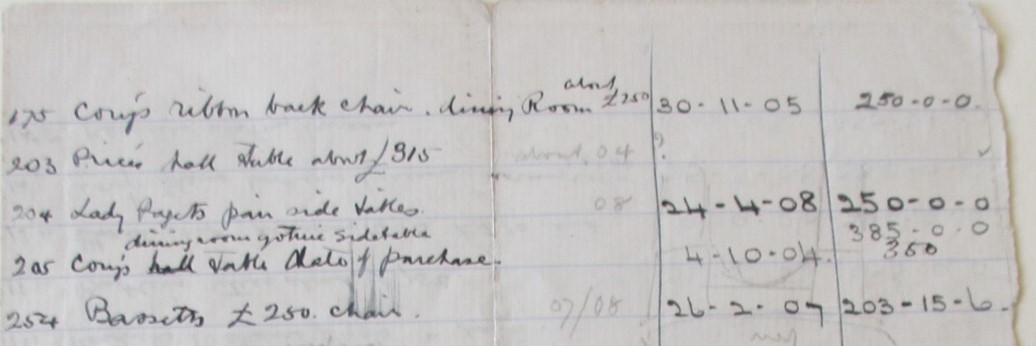
What we can tell is that both the volumes and the list were being used to track objects and sales. At least some of the names listed were aristocratic: ‘Lady Stafford about 1903 inlaid cabinet £200’ was sold on 19th May 1904, while ‘Lady Paget’s pair side tables’ cost £250 on 24th April 1908. Other entries including two against Ralph Assheton-Smith’s name in 1905 (a walnut cabinet, £50, and six marquetry chairs, £180), while ten entries for Campbell Cory dating from 1904-05 listed objects by room including the upper landing (Charles II table, three cane back chairs and a tallboy), hall (walnut stuffed armchair), morning room (the bookcase mentioned above), and dining room (Gothic side table and ribbon-back chair) and finally two ‘Burgomaster’s chairs’ at £150 and £100 respectively. It’s also tempting to speculate that the entry for ‘Crane’s six cane back chairs’ for £240 in 1908 referred to the artist and designer Walter Crane.

Reverse of sheet from exercise book listing some objects illustrated in volume III (the Age of Mahogany), c.1904-08. Photograph, Clare Taylor.

So, what does all this information tell us? I think it shows that keeping in touch with current scholarship was important to those who bought and used these volumes soon after they were published, a point reinforced by the inclusion in the Age of Satinwood of a flyer for the latest volume (by Margaret Jourdain) in Batsford’s ‘Lenygon Series’, English Decoration and Furniture from 1750-1820. It also reminds us that building up knowledge over time mattered just as much at the beginning of the twentieth century as it does now. And, of course, that it’s always worth checking for any loose papers. When you can get back in a library or bookshop, that is.

Clare Taylor

clare.taylor@open.ac.uk

May 16, 2017

New Oral History Interview – Lanto Synge, from Mallett & Sons

Our latest Oral History Interview took place last week, with Lanto Synge in the interviewee chair. The interview was conducted by our lead project volunteer, Chris Coles (thank you again Chris!) and is part of our continued efforts to capture the Voices from the Trade as part of the ‘BADA Voices’ extension to the Oral History project (thanks again to the BADA for their support). 

Lanto, as many of you will know, worked at the world-famous antique dealers Mallett & Sons for almost 40 years, after joining the firm in 1969, rising through the ranks to ultimately become Chief Executive of the firm in 1997; Lanto eventually retired in 2009.

Lanto Synge, formerly of Mallet & Sons (Antiques). Photograph courtesy of Lanto Synge.

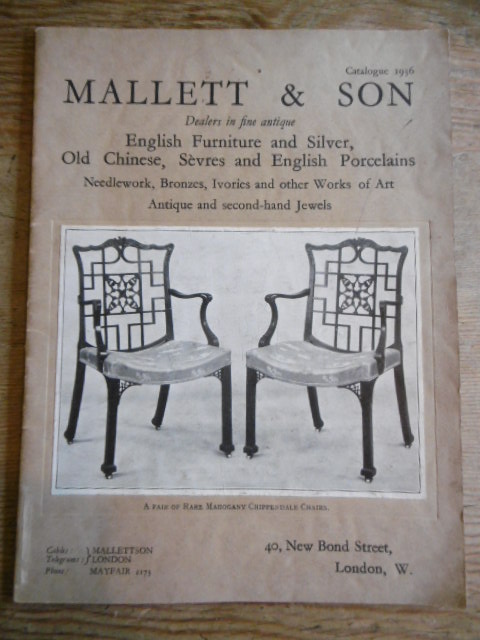
Catalogue from Mallett & Son, 1930s.

In this absolutely absorbing interview Lanto recalls the history of Mallet & Sons – they are one of the oldest antique dealing firms in the world, established in 1865 by John Mallett in Milsom Street, Bath, Somerset. During the interview Lanto reflected on his memories of working at the firm during the 1960s-1990s and describes the changes in marketing practices, the displays in the galleries (there were 28 rooms of antique furniture and objects in Mallett’s Bond Street showrooms by the time Lanto retired in 2009); he also recalls the various individuals involved in the business over the period he worked at Mallett.

Lanto was also instrumental in the development of Mallett’s antique business in Australia and during the interview he reflects on the expanding business for antiques in the 1980s.  There are some fascinating memories on many leading dealers and collectors, as well as observations on the role of the antique fair (especially The Grosvenor House Fair) in the developing antique trade.

Lanto is also a leading expert and author on the subject of antique textiles, and his enthusiasm, and expertise, is clearly expressed in a series of engaging reflections on the development of his interest in antique textiles and tapestries.  Our interview with Lanto, as with all of the other Oral History interviews we have undertaken for the Antique Dealers Research Project, will be edited and made available in due course.

Thank you again to Lanto and Chris Coles for taking the time to expand our Oral History strand of the research project.

Mark


October 21, 2016

The Generosity of Auctioneers – more archive material from Sworders

Tim Turner from Sworders Fine Art Auctioneers, Stansted Mountfitchet, very kindly donated some antique dealer related material to the Antique Dealer research project – and thanks to Jacqueline Travell, also from Sworders, for bringing the package of materials all the way from Essex to Leeds last week (Jacqueline was up North to see her son, who coincidently is studying at the University of Leeds).

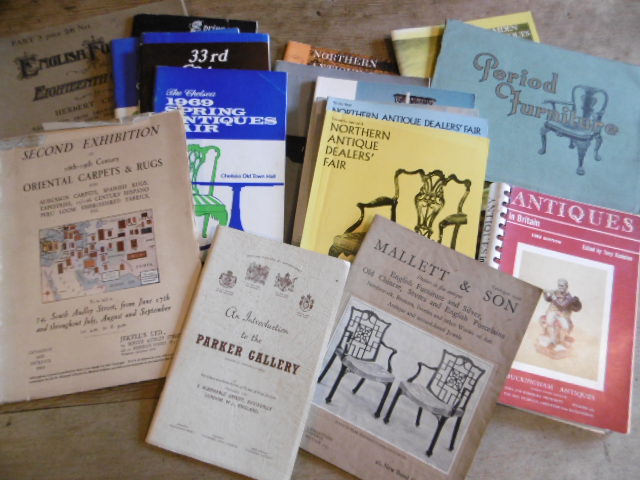
It is through the exceptionally generous nature of people like Tim and Jacqueline that the research project at the University of Leeds continues to progress – thank you Tim, Jacqueline, and Sworders. The material that has been donated ranges from a selection of Antique Fair handbooks, dealer catalogues, and antique collecting publications – dating from 1909 to the 1970s.sworders

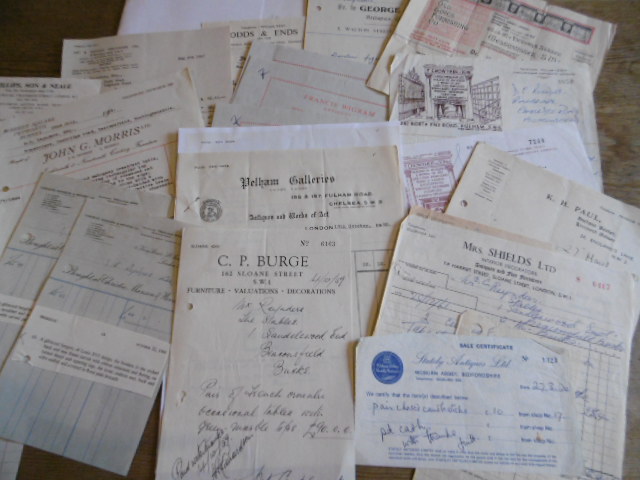
The materials also include an amazing selection of invoices (dating from the 1940s-1970s) from a wide variety of Antique Dealers; these are invaluable to the research project – they give us, for example, key self-designated descriptions of the dealers themselves, dealer addresses, as well as often having detailed information on the people involved in the various businesses, not to mention the fascinating ways in which a variety of ‘antiques’ are described in the old invoices. dealer-invoices-sworders

Included in the materials are also some early antique dealer catalogues – one from Mallett & Son, dating from the 1930s – mallett

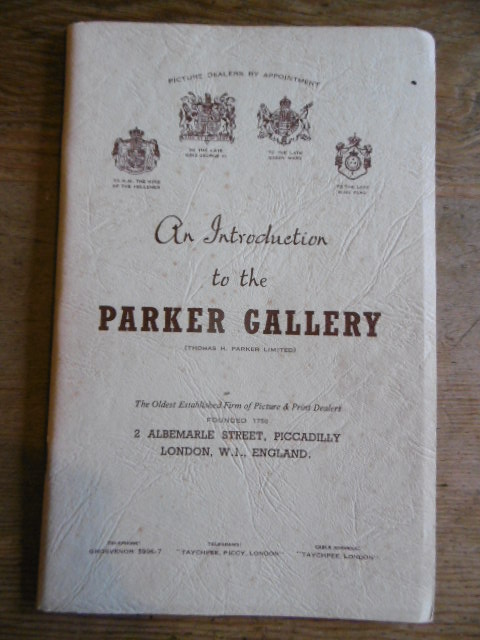
and one from The Parker Gallery (print dealers, rather than antique dealers per se), which seems to have been produced as a booklet celebrating 200 years of trading – The Parker Gallery was established in 1750, so the booklet suggests. parker-gallery


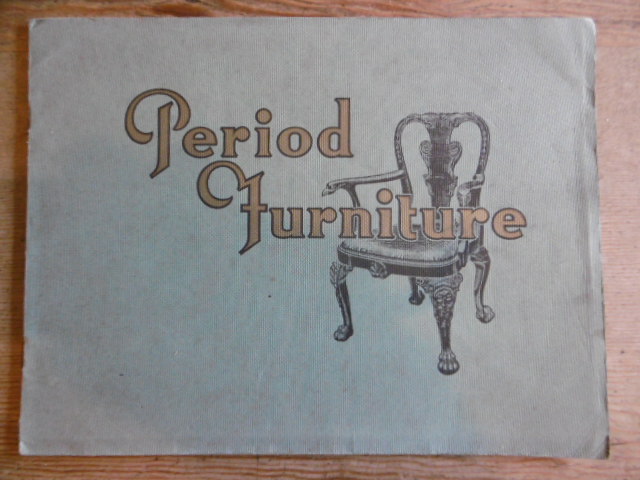
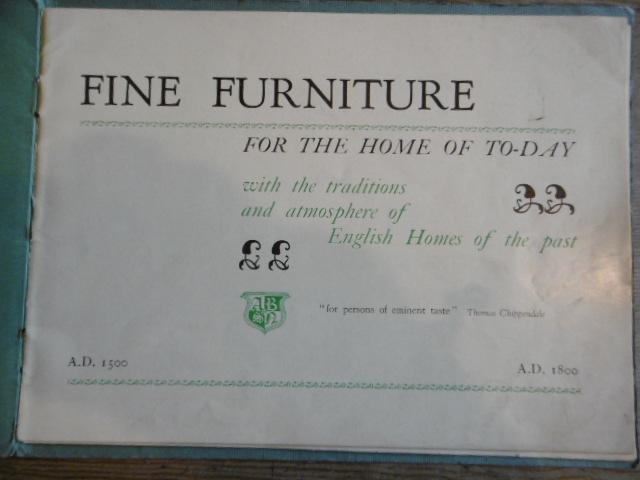
One of the most interesting documents in the parcel of archive material, is a very early (probably 1920s?) furniture catalogue produced by the antique dealers and reproduction furniture makers, Arthur Brett & Sons – trading from Norwich. The booklet, titled, ‘Period Furniture’ contains a very wide range of reproduction furniture that Brett & Sons were manufacturing in the 1920s and 1930s.

brett

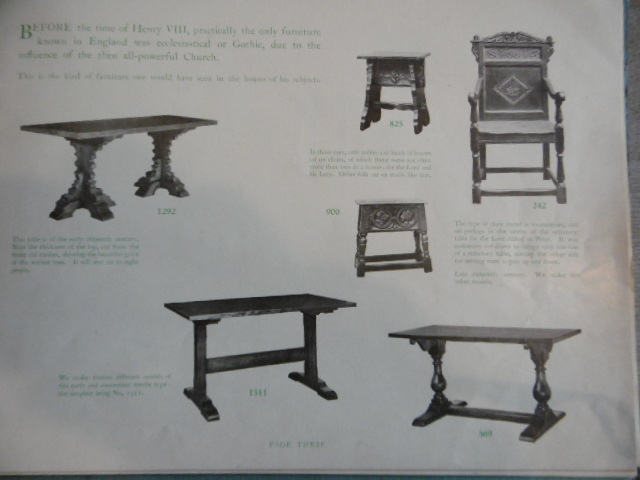
The catalogue is ordered chronologically, with ‘Tudor’ oak furniture in the opening pages, and includes reproductions of virtually every kind of antique furniture that was fashionable in the period. brett-1 brett-2


The Brett catalogue demonstrates how popular furnishing with antique furniture was during the period between the Wars, with demand outstripping supply to the extent where reproductions filled the gap, satisfying the look of the old. It’s quite striking when one reflects on this today, with the rapid shift to the contemporary in the last decade or so – no doubt there are now masses of reproductions of Charles Eames chairs, instead of Thomas Chippendale – tastes change, but everything stays the same!

Anyway, thanks again to Tim and Jacqueline, and Sworders – the archive materials are already proving useful to the research project as we add more and more antique dealer data to the Project Interactive Map.

Mark

February 14, 2015

Mallett & Son Antiques – dealer ephemera from the 1890s and 1990s.

Mallett cats

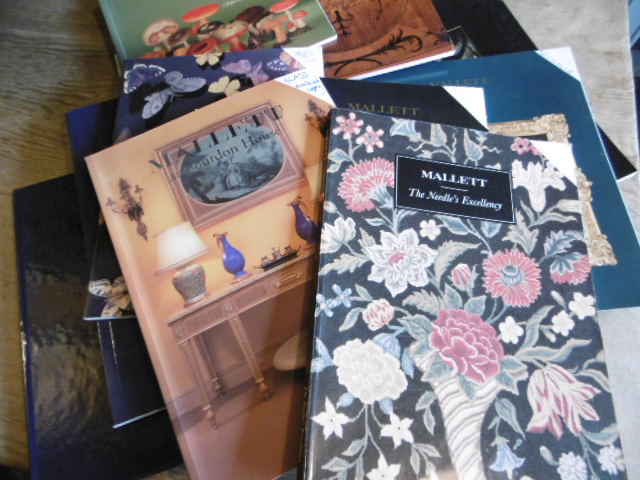
A collection of Mallett Antiques sales catalogues, 1990s.

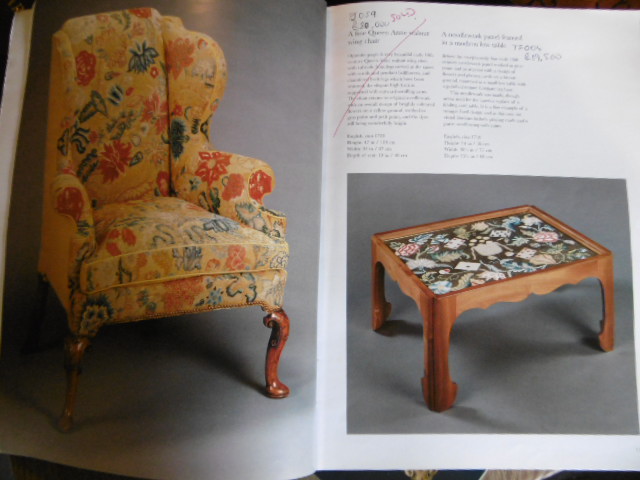
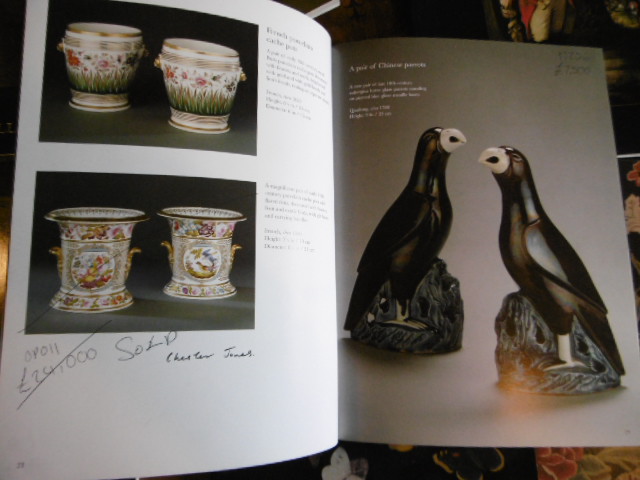
Materials related to the antique trade continue to be donated to the project – thank you again dealers! John Smith, a very good friend to the project, posted us a stack of old dealership catalogues – from the leading London antique dealers Mallett & Sons, and dating from the 1990s. The catalogues are, of course, relatively common, and can be picked up at second-hand book shops (and indeed charity shops) anywhere in the country – BUT, what makes the catalogues that John has kindly posted to us unique is that these are marked and annotated staff copies, with prices marked (and whether the objects were sold) of the objects illustrated. These are a fantastic resource on pricing structures (in the 1990s) for a leading dealership – there are also cost prices and suggested sale prices in some of the catalogues (I’m not revealing those here of course….the analysis of that is part of the research into the history of the discrete (and discreet!) practices of the antique trade itself).

Mallett cats 2

Mallett catalogue, 1990s.

The pages in the catalogues are fascinating though – here’s a page from one of the catalogues (dated 1997), and labelled in pen, in the top right-hand corner on the cover as ‘Nicholle’s’) – which illustrates as ‘Queen Anne walnut wing chair, c.1710’, and priced at £80,000 – marked in red ‘SOLD’; and a ‘needlework panel, c.1710, framed in a modern low table’, priced at £19,500.

mallett cats 1

Mallett catalogue, 1990s.

And, another (above) – left page – ‘French, early 19th century cache pots, 1800/1820’, priced at £15,000 (top) and £24,000 (bottom) – the bottom pair are marked ‘SOLD’; and (right page) a ‘pair of 18th century Chinese parrots’ at £7,500. Changing fashions in antiques, even in so short a time ago as the 1990s, may have made some of these prices look quite ambitious, and some look like bargains…..

Mallett of course are still trading (see Mallett Antiques) – they were established in 1865, in the West Country (in Bath, Avon….Mallett’s are now, as many readers will know, owned by Stanley Gibbons Group, and celebrate 150 years this year!…I hope there’s a party?) – anyway, I thought it would be interesting to show some early ephemera associated with Mallett.

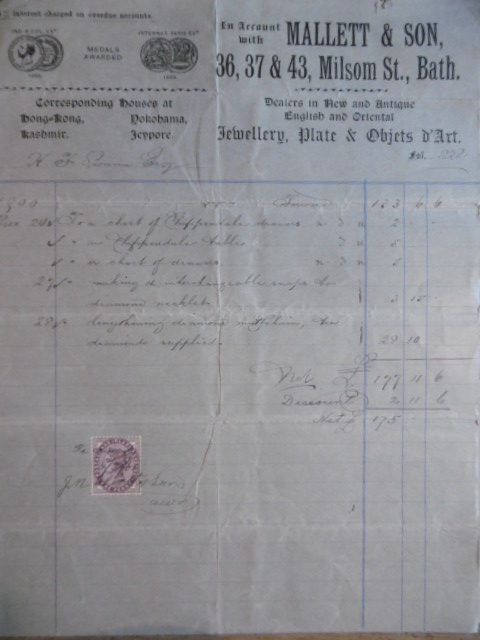
Here’s an invoice (below) from ‘Mallett & Son’, dated 1900, to ‘H.F. Swann Esq.’ The invoice describes, amongst other things, a ‘Chest of Chippendale drawers’, sold for ‘£2’, together with ‘a Chippendale table’, (£5). Mallett were at this date trading from 36, 37 & 43 Milsom Street, Bath, and described themselves as ‘Dealers in New and Antique English and Oriental Jewellery, Plate & Objets d’Art’.

Mallett inv 1901

Invoice from Mallett & Son, dated 1900. Copyright Private collection.

Mallett invoices

Invoices from Mallett & Son, c.1899-1920. Copyright Private collection.

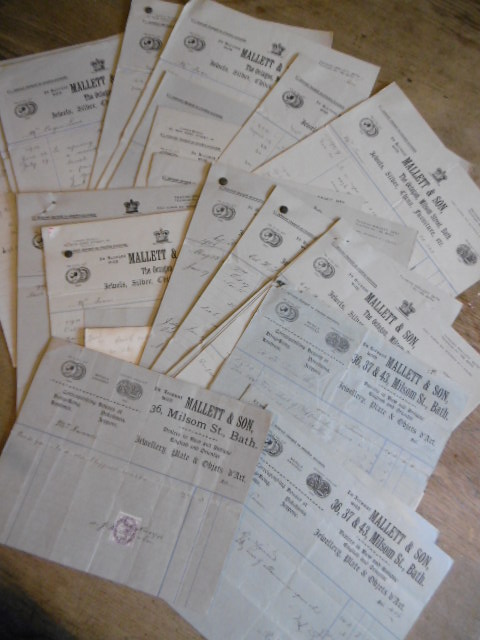
The invoice is one a small cache of invoices (see above) from Mallett dating from c.1899 to c.1920 that are currently part of a private collection – but will be donated to the antique dealer project in due course. This small collection also gives a fascinating insight into the early history of one of the world’s most important ‘Antique Dealers’.

Mark

Home Subjects

a working group dedicated to the display of art in the private interior, c. 1715-1914

The Period Room: Museum, Material, Experience

An International Conference hosted by The Bowes Museum and The University of Leeds

H. Blairman & Sons Ltd

A research project investigating the history of the antiques trade in Britain in the 19th & 20th centuries

Museum Studies Now?

'Museum Studies Now?' is an event which aims to discuss and debate museum and heritage studies education provision.

The Burlington Magazine Index Blog

art writing * art works * art market

East India Company at Home, 1757-1857

A research project investigating the history of the antiques trade in Britain in the 19th & 20th centuries