Our friend Chris Coles very kindly sent me a photograph of the antique dealer J. Rochelle Thomas (thank you Chris!), and as it’s quite unusual to have photos of historical antique dealers I thought I’d make a blog post about Rochelle Thomas – as you’ll see, he was a very important dealer, but appears (like most of the important dealers of the past) to have been lost to history! Anyway, here’s the photo from Chris:
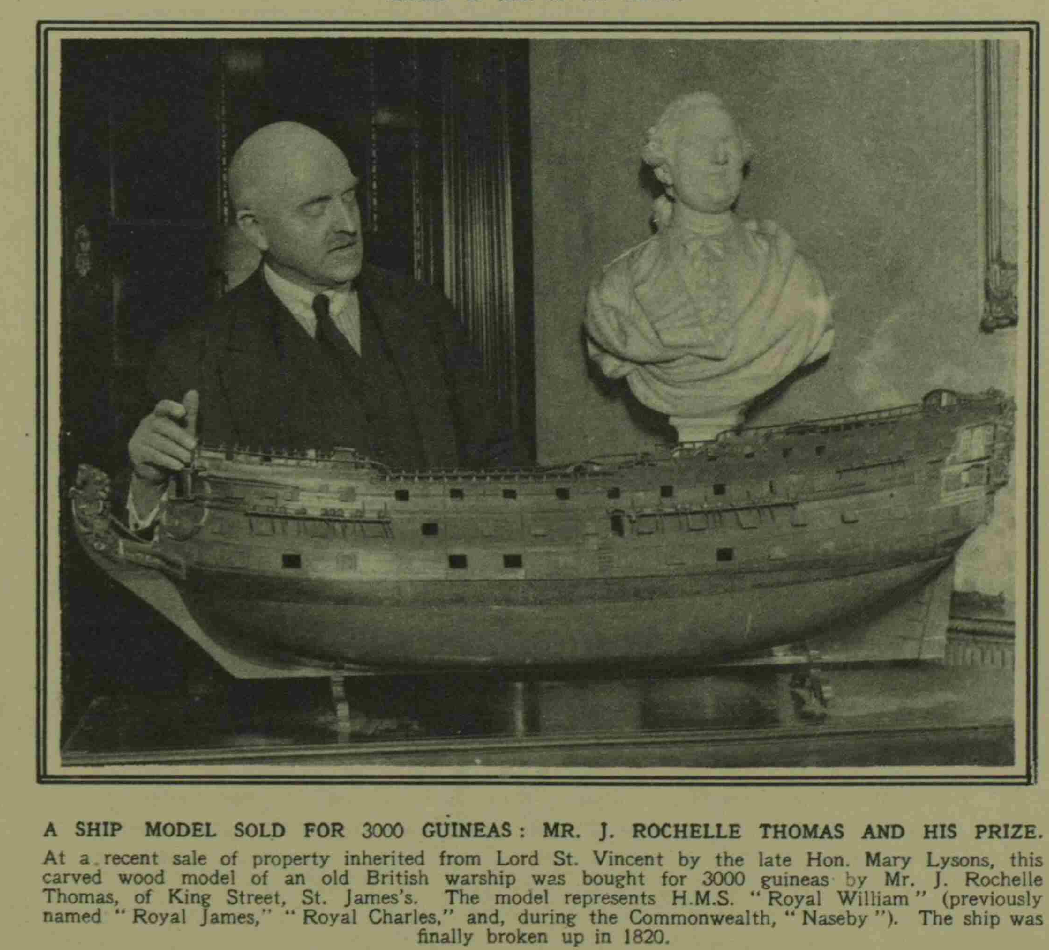
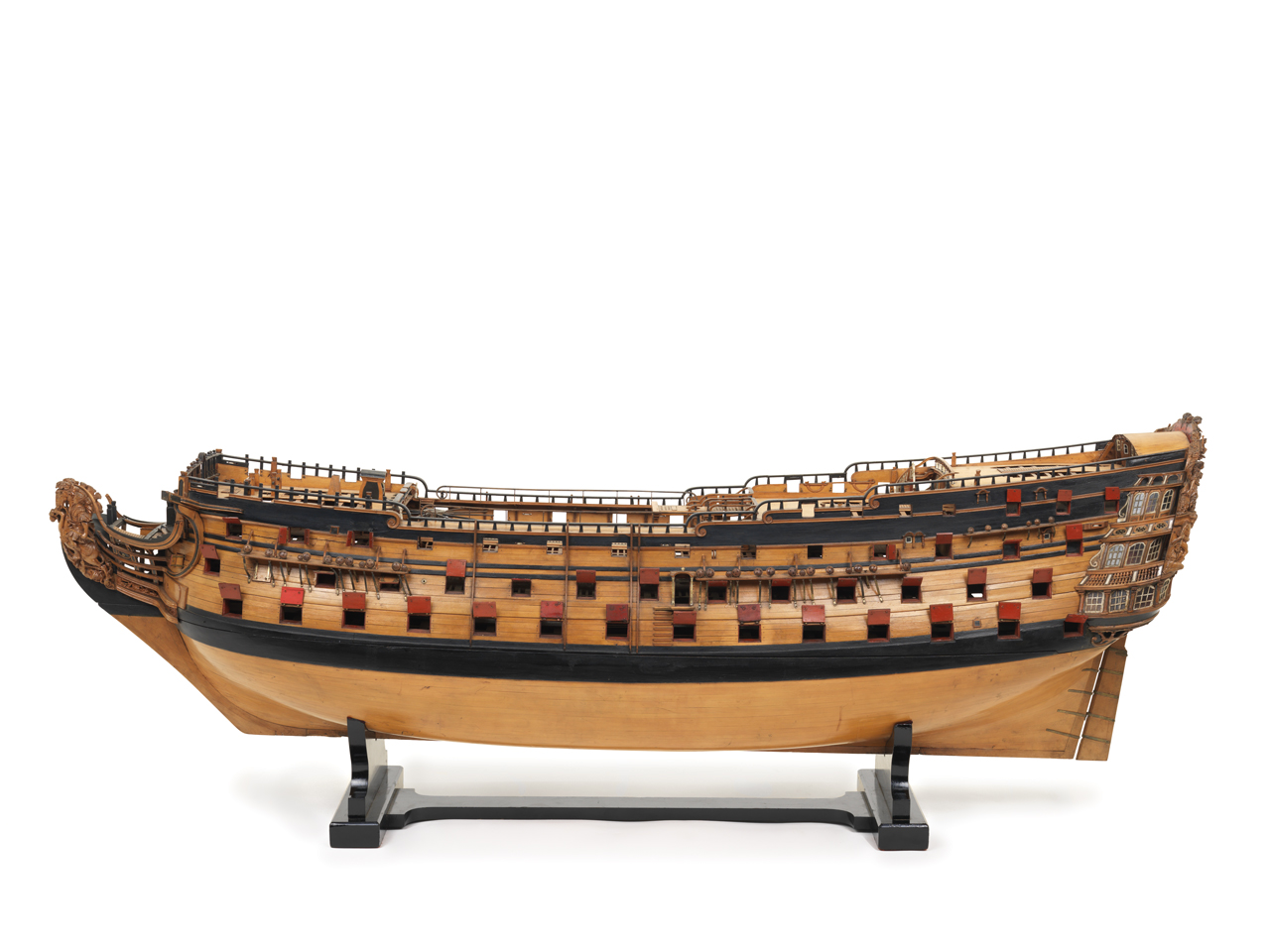
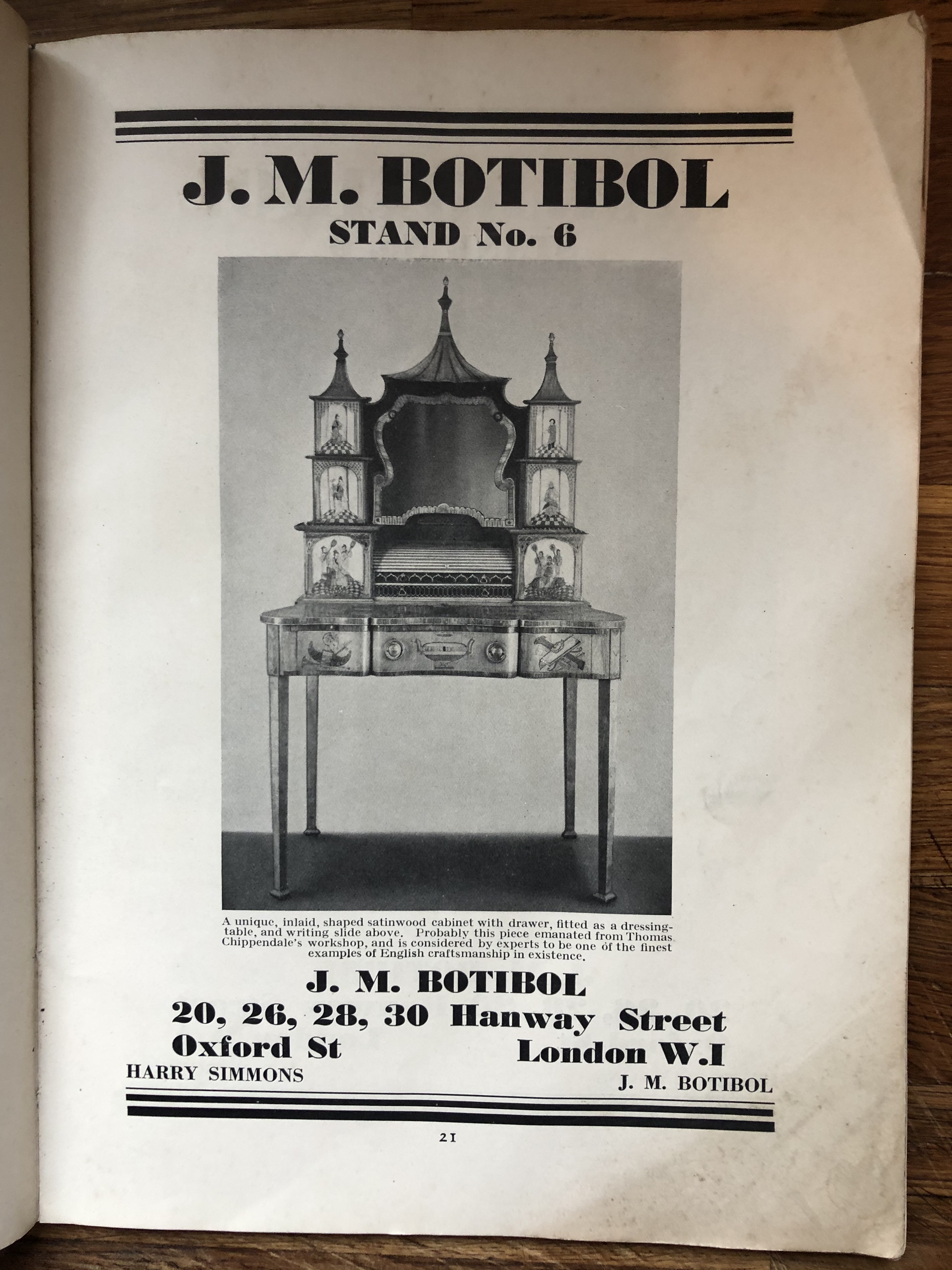
The photograph shows Joseph Rochelle Thomas (1865-1938) with a wooden model of the warship ‘Royal William’ (1719) scale 1.48, and made in 1719. As the report states, Rochelle Thomas bought the ship model (I guess in 1928) for 3,000 guineas (£3,150), an enormous sum (hence the newspaper report), which would have been as much as £1.3m at the time – in relative income value – see measuring worth.com The model is now in the National Maritime Museum at Greenwich (not on display); it seems to have been acquired by the museum through the antique dealer J.M. Botibol, who had a well known antique shop in Hanway Street in London in the period. Chris tells me that the ship was advertised as ‘seen by appointment at Mr. Botibol’s shop’. It may be that Rochelle Thomas and Botibol bought the ship model in partnership with one another (this was, and still is, a common practice in the antique trade).
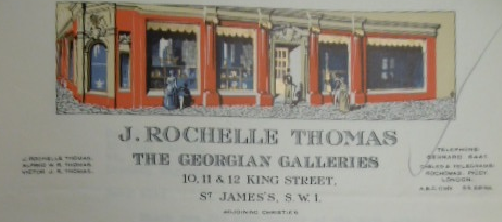
J. Rochelle Thomas was a very well established antique dealer by the 1920s; the business would later expand to New York selling to many wealthy American collectors, including scores of English antiques to Henry Francis du Pont (1880-1969); du Pont’s collections of American antiques remain at Winterthur Museum in Delaware, USA. Indeed, here’s an image of J. Rochelle Thomas’ London shop from a letter sent to du Pont in 1931, which was right next door to Christie’s King Street auction rooms. The premises occupied by Rochelle Thomas are now part of Christie’s auction rooms.
By this date (the 1930s), the J. Rochelle Thomas business was run by Joseph and his two sons Victor Joseph Rochelle Thomas (1887-1958) and Alfred William Rochelle Thomas (1886-1965). By the early 1950s Rochelle Thomas had opened a shop in New York, at 1166 Second Avenue – our friend Chris Jussel (formerly of Verney & Jussel, leading antique dealers in the USA) and a fount of knowledge about ‘old’ dealers, tells us that J. Rochelle Thomas’ shop in New York was run by Peter Thomas, (Joseph’s grandson), and that it occupied the former warehouse premises of Day, Meyer, Murray & Young; they had no shop window and so, as Chris says, it was an unusual move but the business continued to be a success given Rochelle Thomas’ reputation. Chris remembers visiting the Rochelle Thomas shop in the 1970s, when there were stacks of dinner services all over the floor. By the 1970s Rochelle Thomas opened a branch in Palm Beach, Florida, which, as Chris Jussel tells us, was run by Peter Thomas’ sons (Peter retired to Bermuda in the 1970s); the Palm Beach business traded into the 1980s but sadly Peter’s 2 grandsons died very young and the business closed in the 1980s – as Chris says, the end of a very important dealership. J. Rochelle Thomas sold many antiques to Francis du Pont (and many other American collectors) throughout the 20th century.
The Rochelle Thomas business began in 1859 (they celebrated a centenary year in 1959, according to some of their business letterheads) in Birmingham in the UK. It was started by Henry Thomas, who appears to have been born in about 1815 – the 1861 Census records Henry as aged 48 and working as an ‘ironmonger’ in Birmingham; by 1871 he was working as a ‘cutler’. His son, Joseph Rochelle Thomas (the man in the photograph) was born in 1865 and by the 1890s was described in the Census (1891) as ‘Dealer in Old Bank Notes’; by the 1911 Census Rochelle Thomas was describing himself as ‘Dealer in Pictures, Furniture and Porcelain’, and by 1921 he was ‘Dealer in Works of Art’. His sons, Victor and Alfred, both started working for their father’s antique dealing business from an early age and ran the business following Joseph Rochelle Thomas’ death in 1938. The business was also known as ‘The Georgian Galleries’. J. Rochelle Thomas was elected first President of the British Antique Dealers’ Association in 1918 as well as being a member of several international dealer associations (in Paris, Brussels and New York); so he was a highly respected dealer in the opening decades of the 20th century.
J. Rochelle Thomas appears to have been fascinated by objects that had interesting historical associations – in this sense he was certainly an antiquarian – and often advertised such objects in his sales advertising campaigns in magazines such as Apollo and The Connoisseur. One example (of many!) is an advert for a chair made from the famous (infamous!) mulberry tree wood from Shakespeare’s house in Stratford-on-Avon – if you’re interested in Shakespearian mulberry tree ‘relics’ do have a look at my essay on the subject (see – Mark Westgarth, ‘Well Authenticated Blocks’ in Shakespeare’s Afterlife in the Royal Collections edited by Sally Barnden, Gordon McMullan, Kate Retford and Kirsten Tambling, (Oxford University Press, 2025), pp.103-111)
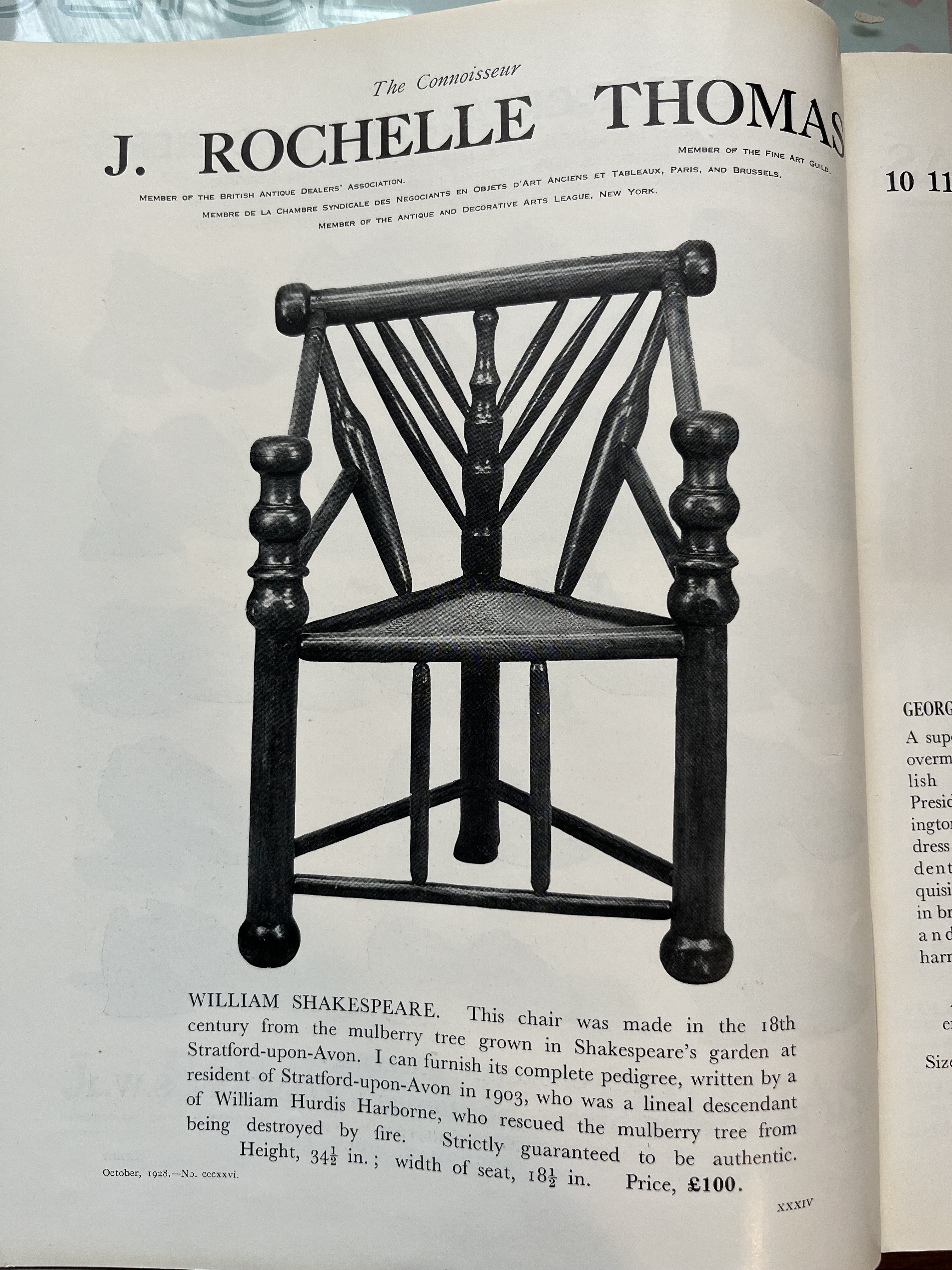
The advert in The Connoisseur October 1928 illustrates an 18th century triangular chair, allegedly made from the wood of the famous mulberry tree – it was priced at £100. Not sure where the chair is now, but if anyone recognises it, do let me know!
Coincidently a while ago I acquired an old sales catalogue produced by J. Rochelle Thomas in 1923 which also contains several items for sale with significant historical associations. The catalogue was issued to facilitate a ‘Clearance Sale’ that Rochelle Thomas undertook in 1923 as part of a refurbishment of his shop in King Street, St. James’s. As the catalogue states, ‘To my customers, as I am about to make extensive alterations to my premises I find it necessary to hold a Clearance Sale of the greater portion of my stock, and I am doing so at 50 per cent. in every case below the original marked prices in order to realise promptly.’ Here’s the cover of the catalogue:
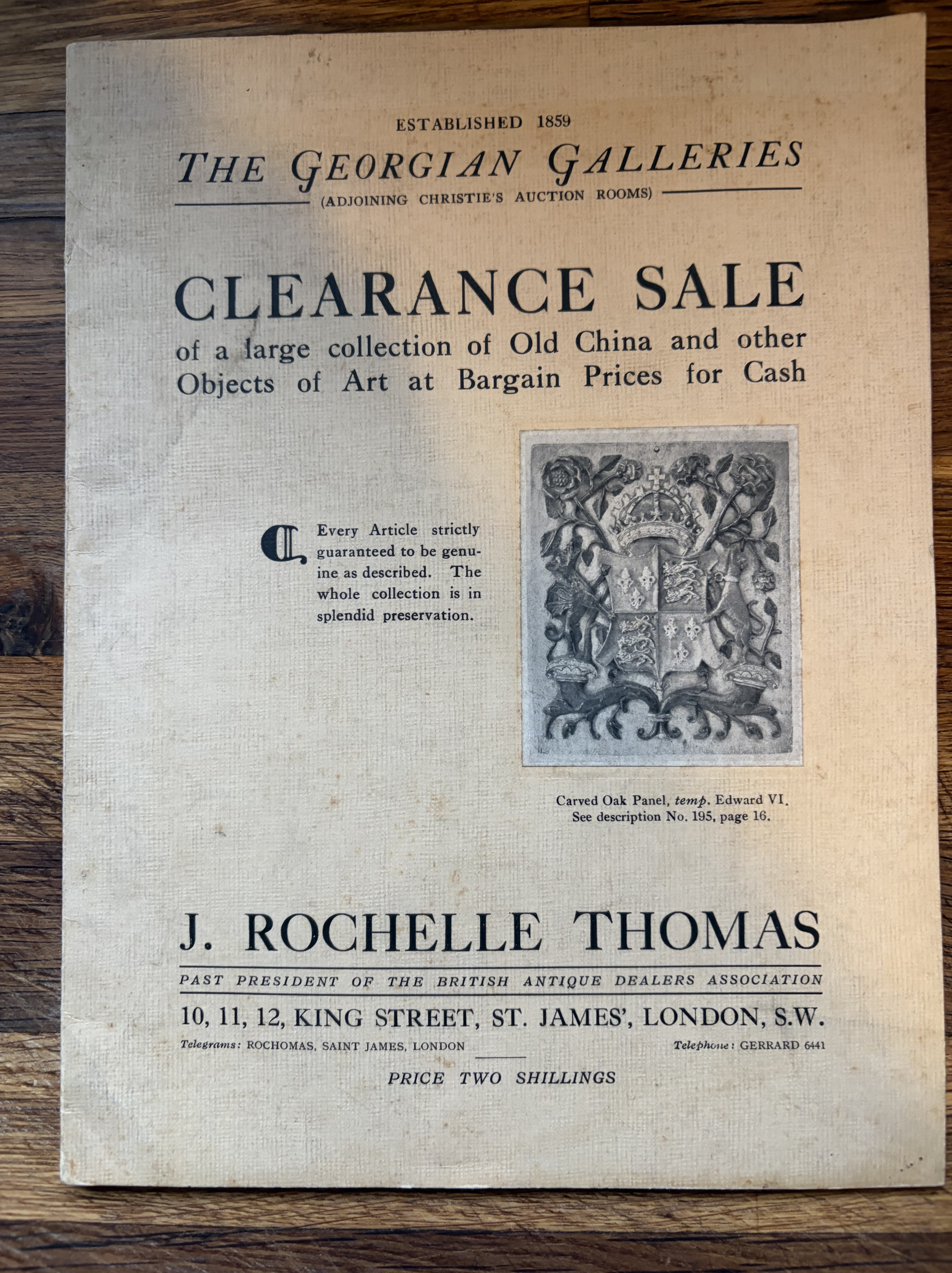
Sadly the catalogue does not have any photographs of the items for sale except the front cover image of what is described as ‘Carved English Royal Coat of Arms, Period Edward the 6th; fine preservation. A great rarity’ (priced at £37.10.0s, reduced from £75). The catalogue has more than 750 antiques for sale at 50% discount, including some important historical ‘relics’. Item 198 for example (see below) ‘The renowned Shakespearian Relic ‘The Boar’s Head’ at Eastcheap, carved in boxwood and set in two natural tusks’ and priced at £60 (reduced from £120). This was a famous object in the 19th century, having been in several collections, including that of the antiquary Thomas Windus FSA (1778-1854).
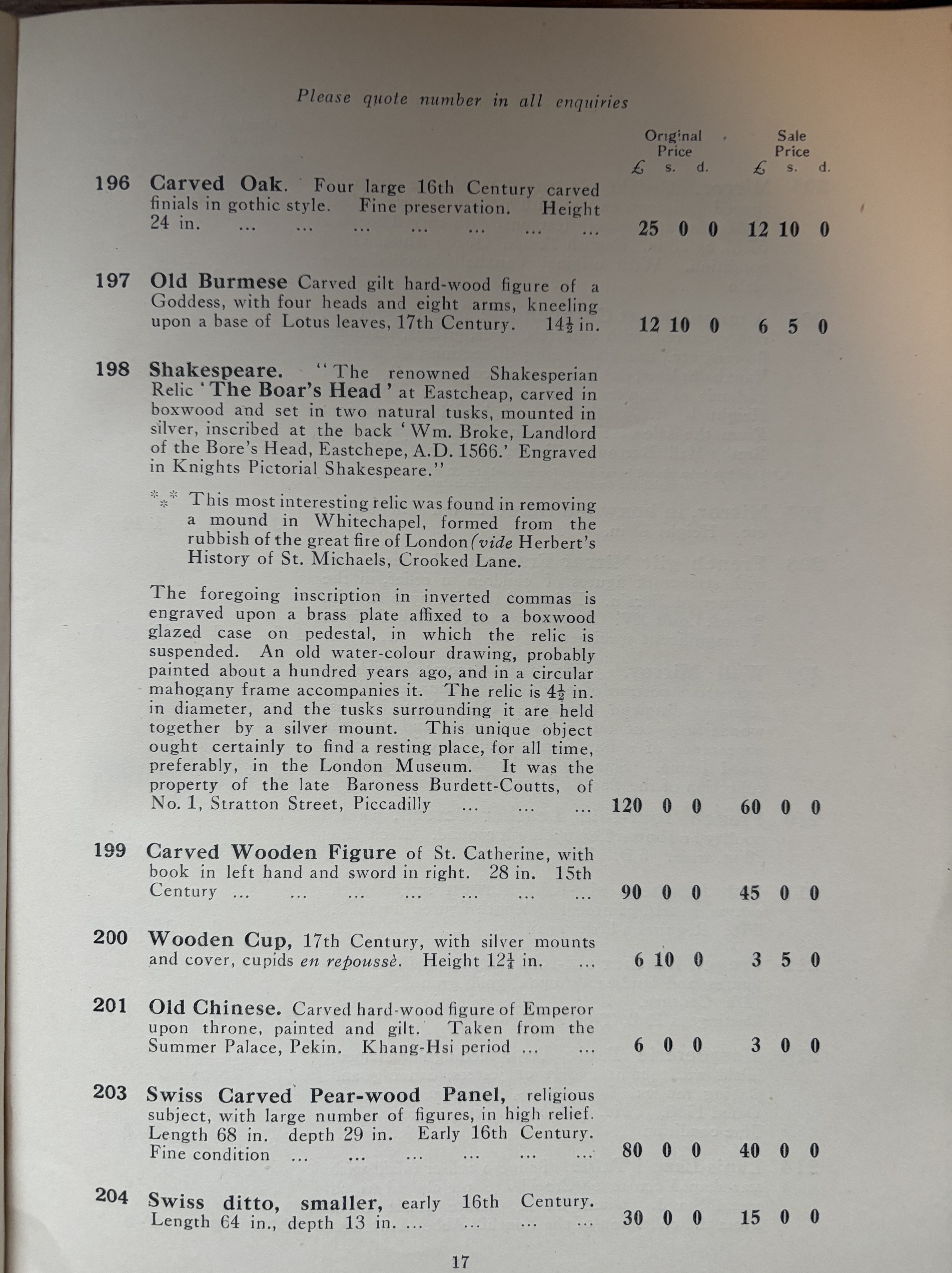
The ‘Boar’s Head’ was offered for sale at the auction of the collection of Thomas Windus in 1855 where it was reportedly sold for £25 and 4 shillings to the Shakespeare scholar James Halliwell-Phillipps (1820-1889), editor of a lavish Shakespeare Folio edition at the time. It was illustrated in The Pictorial Edition of the Works of Shakespeare edited by Charles Knight (volume 1, 1839-42) – (see below).
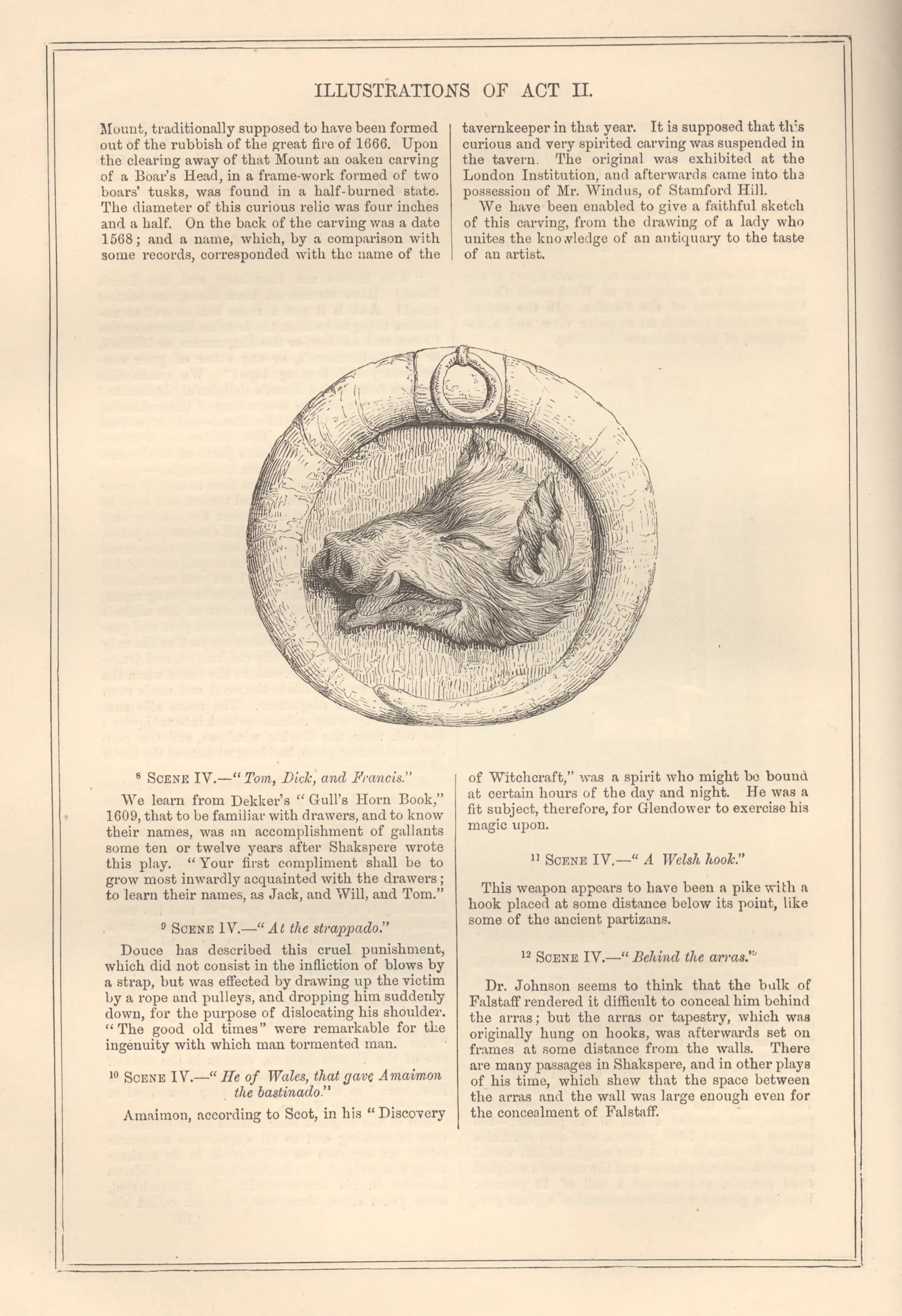
However, the ‘Boar’s Head’ also appeared in the auction of the Windus collection sold by Ansley Windus (Thomas Windus’ son) in 1868, so perhaps it remained unsold at the 1855 auction or was retained by the family. According to the 1923 J. Rochelle Thomas catalogue the ‘Boar’s Head’ was the ‘property of the late Baroness Burdett-Coutts’ (1814-1906); it was offered for sale at £60 (discounted from £120). This important historical object has also subsequently disappeared so if anyone knows where it is, do let me know!
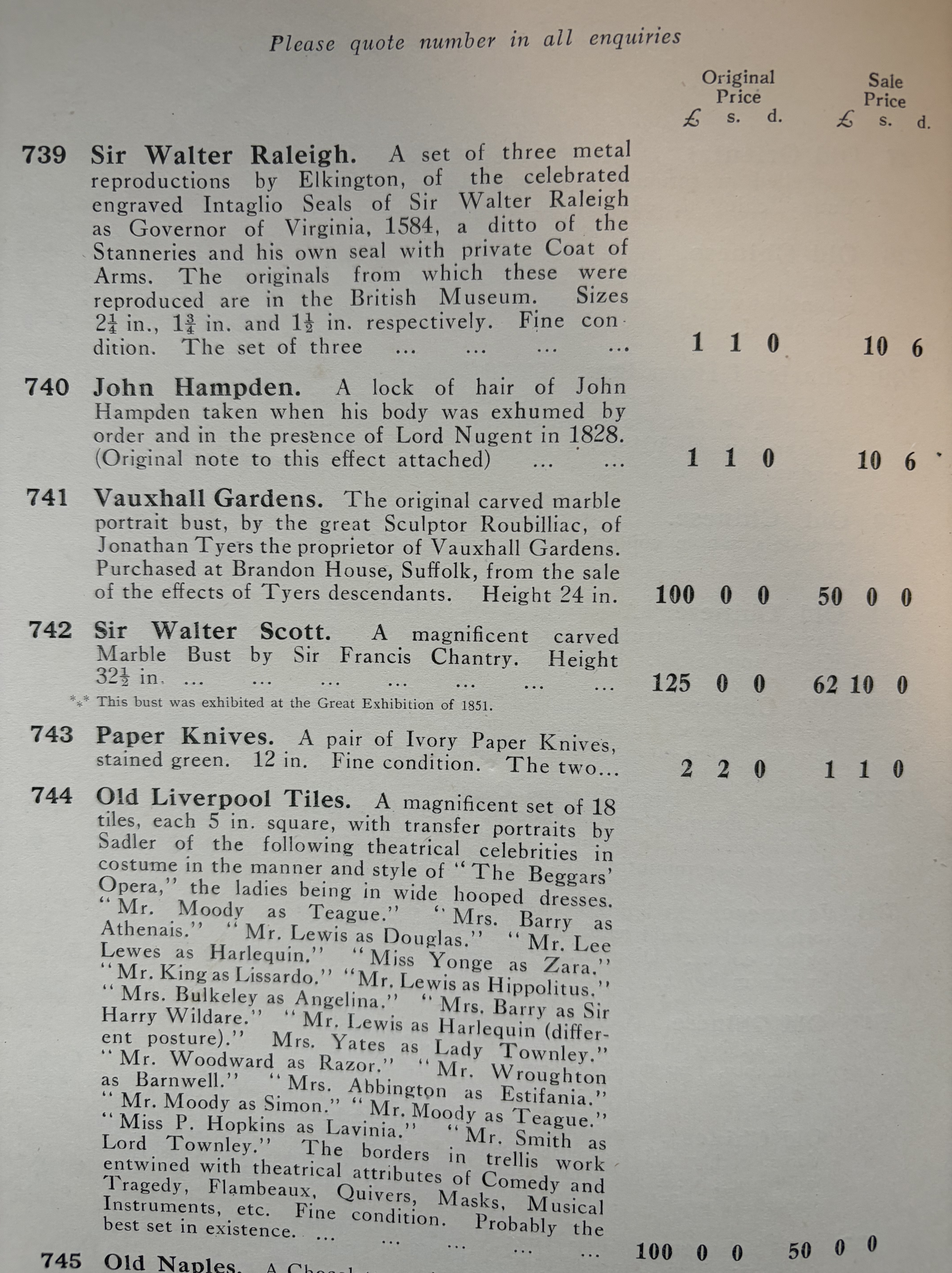
Another object offered for sale in the J. Rochelle Thomas catalogue has been easier to trace – Item 741 – ‘The original carved marble portrait bust, by the great Sculptor Roubilliac, of Jonathan Tyers the proprietor of Vauxhall Gardens. Purchased at Brandon House, Suffolk, from the sale of the effects of Tyers descendants.’ (£50, discounted from £100) – (see below):
Here’s the sculpture (thanks to a photograph by David Bridgwater – see his blog HERE):
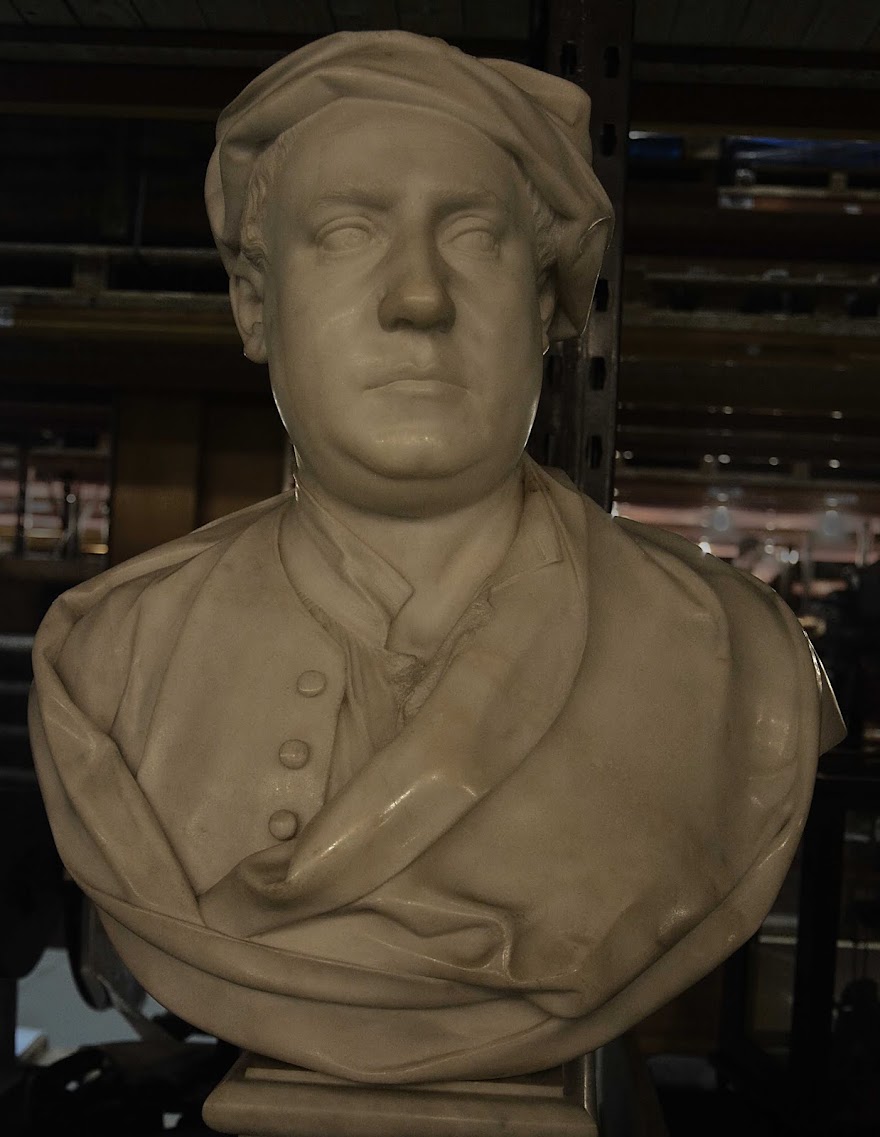
The marble bust is in the collections of Birmingham Museums, who acquired it in 1956 from the art dealer Frank Sabin. It has an illustrious antique dealer history though. It was acquired (it seems together with a terracotta bust of the same subject) by the well-known Norfolk-based antique dealer Rueben Levine (1865-1927) at the Brandon House auction sale in 1919 (see my blog post on the Levine family of dealers (27th July 2025) HERE. The terracotta bust was sold by G. Levine to the Victoria & Albert Museum in 1927 for £50 and remains in the V&A (see HERE). The marble version of the bust was sold at auction at Sotheby’s in 1927 (24th June 1927, Lot 77), and may have passed through several collections before it was eventually acquired by Birmingham Museums in 1956.
And so, a little photograph of Joseph Rochelle Thomas, kindly sent to us by Chris Coles, opened up a rich seam of research into one of the leading antique dealers of the 20th century – thank you Chris & Chris!
Mark



 antiquedealersblog