Posts tagged ‘Grosvenor House Antiques Fair’

June 28, 2025

The 1932 Art Treasures Exhibition, London

A couple of months ago my friend and colleague Diana Davis very kindly sent me a link to a short black & white film of the 1932 Art Treasures Exhibition (thank you Diana!), and which obviously pricked my interest as it is full of objects that were being sold by antique dealers. You can watch the film in YouTube (it’s only 2 minutes 49 seconds long) HERE – the original film is part of the wide range of historic films and TV archives held by British Pathe (link HERE).
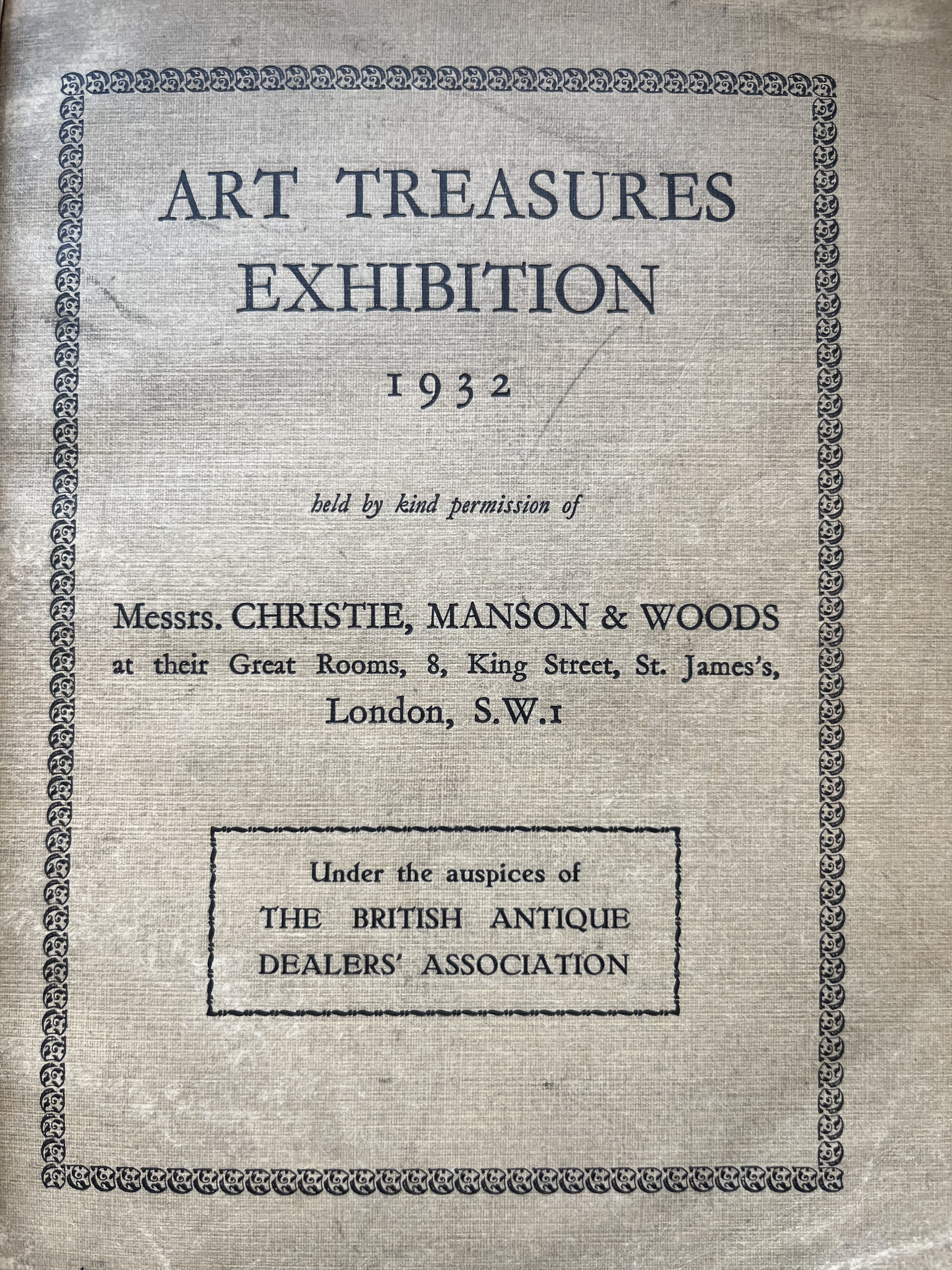
Art Treasures Exhibition 1932 catalogue, front cover. Photo Antique Dealers Research Project, University of Leeds.

The Art Treasures Exhibition, held at Christie’s auction rooms, King Street, London, 12th October to 5th November 1932 and organised by The British Antique Dealer’s Association (BADA) is fairly well-known amongst historians and those interested in the history of the art market. The 1932 exhibition followed on the success of the earlier BADA organised exhibition at Grafton Galleries, London in 1928. Both exhibitions prefigured the establishment of the Grosvenor House Antiques Fair (also known as ‘The Antique Dealers’ Fair’) which began in 1934 – (see also some older blog posts on The Grosvenor House Fair etc in January 31st 2021 and April 23rd 2015).

Fortunately, we have a copy of the 1932 Exhibition catalogue, so it’s possible to match up some of the objects in the film to those in the catalogue and find out which dealers are behind the objects, so I thought it would be an interesting exercise to do that!

The film of the 1932 Exhibition is a fascinating period piece from the early 1930s, obviously created as a publicity newsreel for the exhibition. The narrator (unknown), guides the viewer to some of the highlights of the exhibition at the time, telling the background stories of some of the objects offered for sale by various antique dealers, but also offering a visual insight into the displays at the exhibition. Below, for example, is a screenshot of a general panning shot (do watch the YouTube film for effect) of one of the stands which appears to have a mixture of dealers’ objects – the large pair of urns are certainly item No.237 in the catalogue, ‘A pair of satinwood knife boxes, c.1790, originally made for Lord Northesk’ (the family seat is Ethie Castle, near Arbroath) and offered by the antique dealer Rice & Christy, Wigmore Street, London; the tapestry behind looks like it is No.285 ‘A Beauvais Tapestry, c.1790’, offered by The Spanish Art Gallery, Conduit Street, London; and the display cabinet to the left is certainly No.182 ‘A Chippendale China Cabinet, c.1765′ offered by M. Harris & Sons. So I guess this panning shot was of a collection of various dealers’ objects at the entrance to the exhibition, indicating the sheer range of things offered for sale?
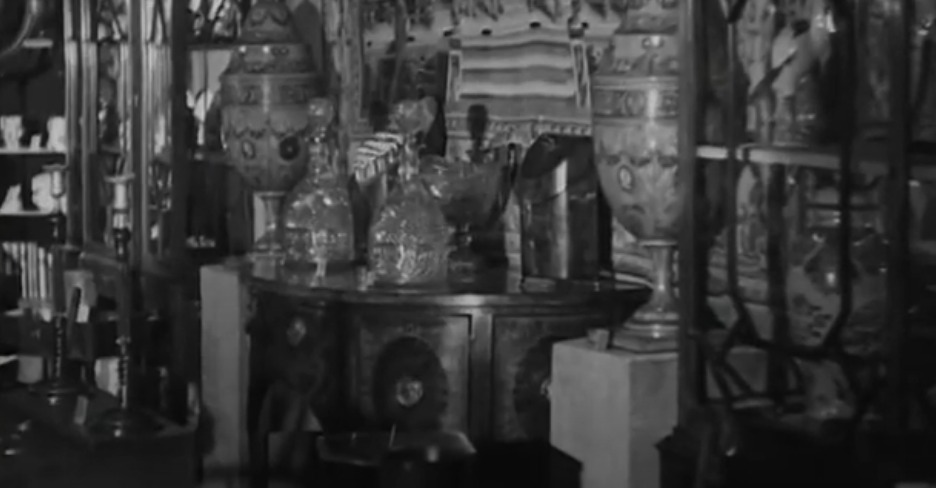
Art Treasures Exhibition 1932, screenshot of general view.

The Exhibition had 1,380 objects, and the film obviously does not cover all of them, but there are 13 objects highlighted in the film, so for those that watch the film, here’s some information on the dealers who were behind the objects (and a little bit of information on where the objects are now, if it has been possible to trace them) – I’ll do this in the sequence of the objects highlighted in the film by the narrator:

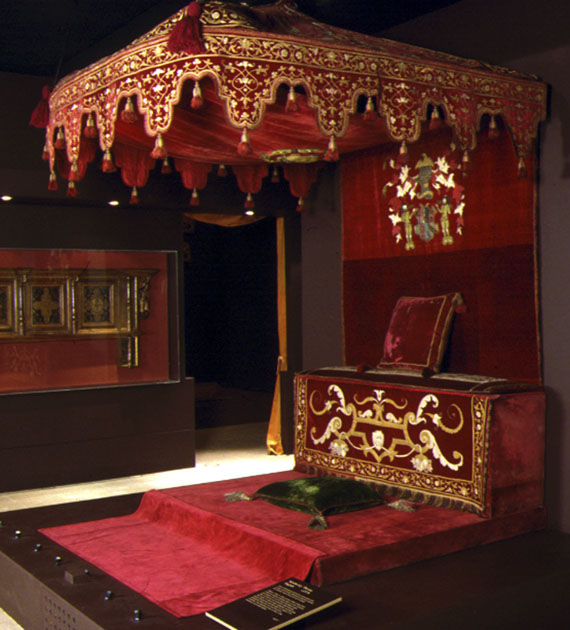
1st object – (see below) in the film the narrator spends a few moments on this object; it is also object No.1 in the catalogue: ‘An embroidered Throne used Queen Elizabeth, English 1578’; this was offered by the well-known London antique dealers Acton Surgey Ltd & Mallett & Son. Thanks to our friends William DeGregorio and Chris Jussel (in the USA) we know that the embroidered throne made its way into the collection of Sir William Burrell (1861-1958) and remains in the Burrell Collection in Glasgow (it is currently in storage at The Burrell – see below).
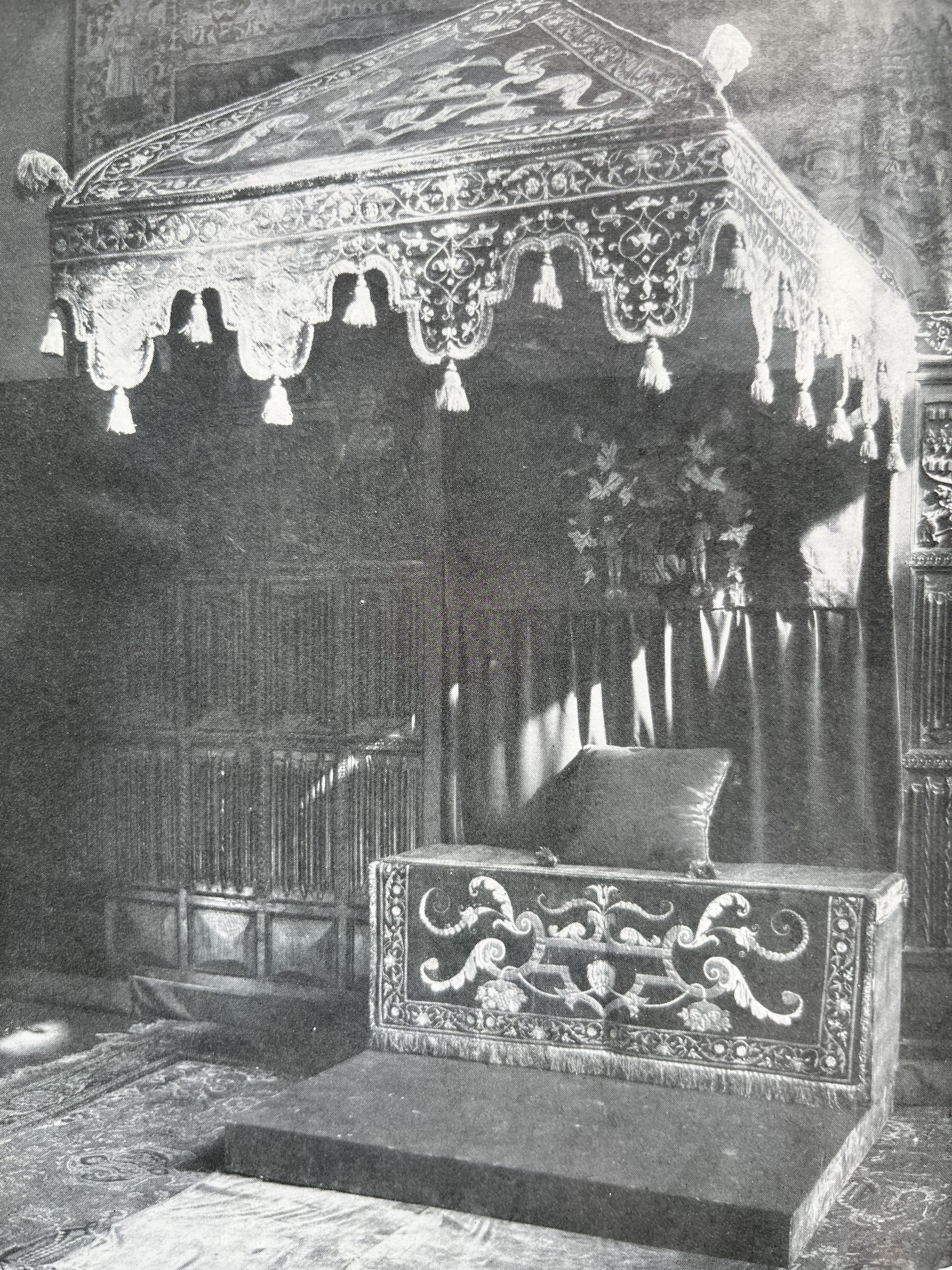
Art Treasures Exhibition catalogue 1932 – ‘An embroidered Throne used by Queen Elizabeth, English 1578’. Photograph, Antique Dealers Research Project, University of Leeds.
The ‘Kimberley Throne’, c.1554-1578, (14.217). The Burrell Collection, Glasgow. Photograph, The Burrell Collection, Glasgow.

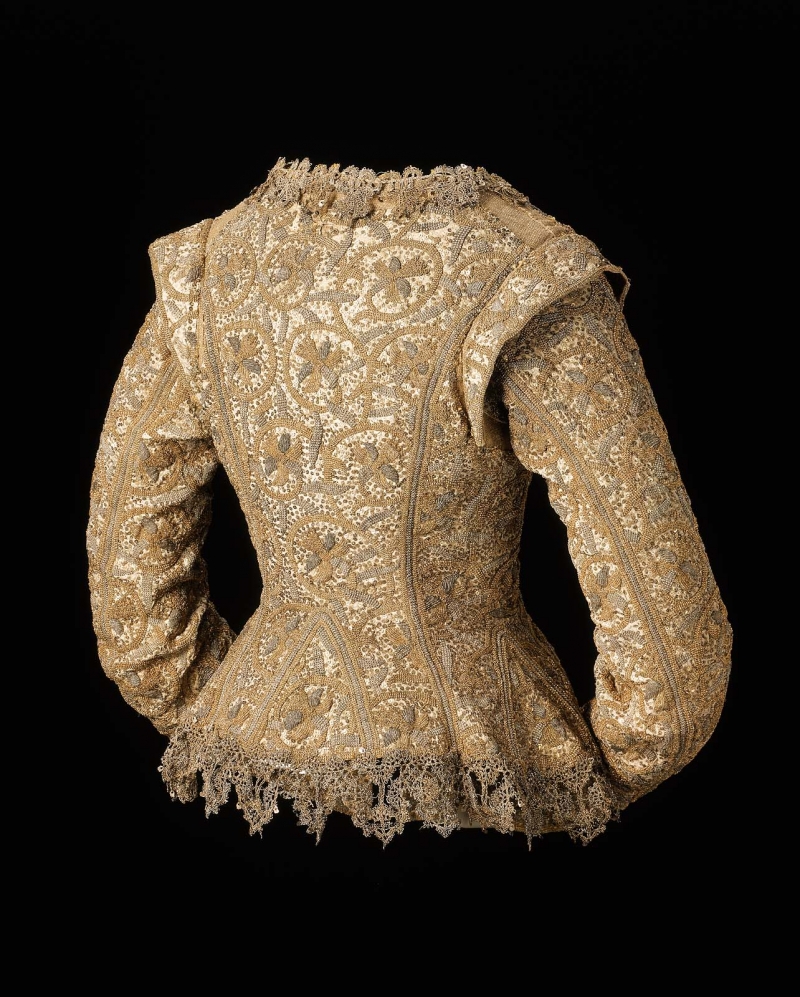
2nd object – (see below) mentioned by the narrator is No.2 in the exhibition catalogue, ‘A gold embroidered jacket, lace shirt, and gloves, English, late 16th century’; it was also offered by Acton Surgey Ltd; the jacket is now in the collections of Boston Museum of Fine Arts in the USA. It was purchased from Acton Surgey by the collector Elizabeth Day McCormick (1873-1957) in 1943 and gifted to the Boston MFA. It is not known what happened to the shirt or the gloves; and it has not also been possible to identify the ‘gold and enamelled jewel set with diamonds and rubies’ that the Narrator also mentions.
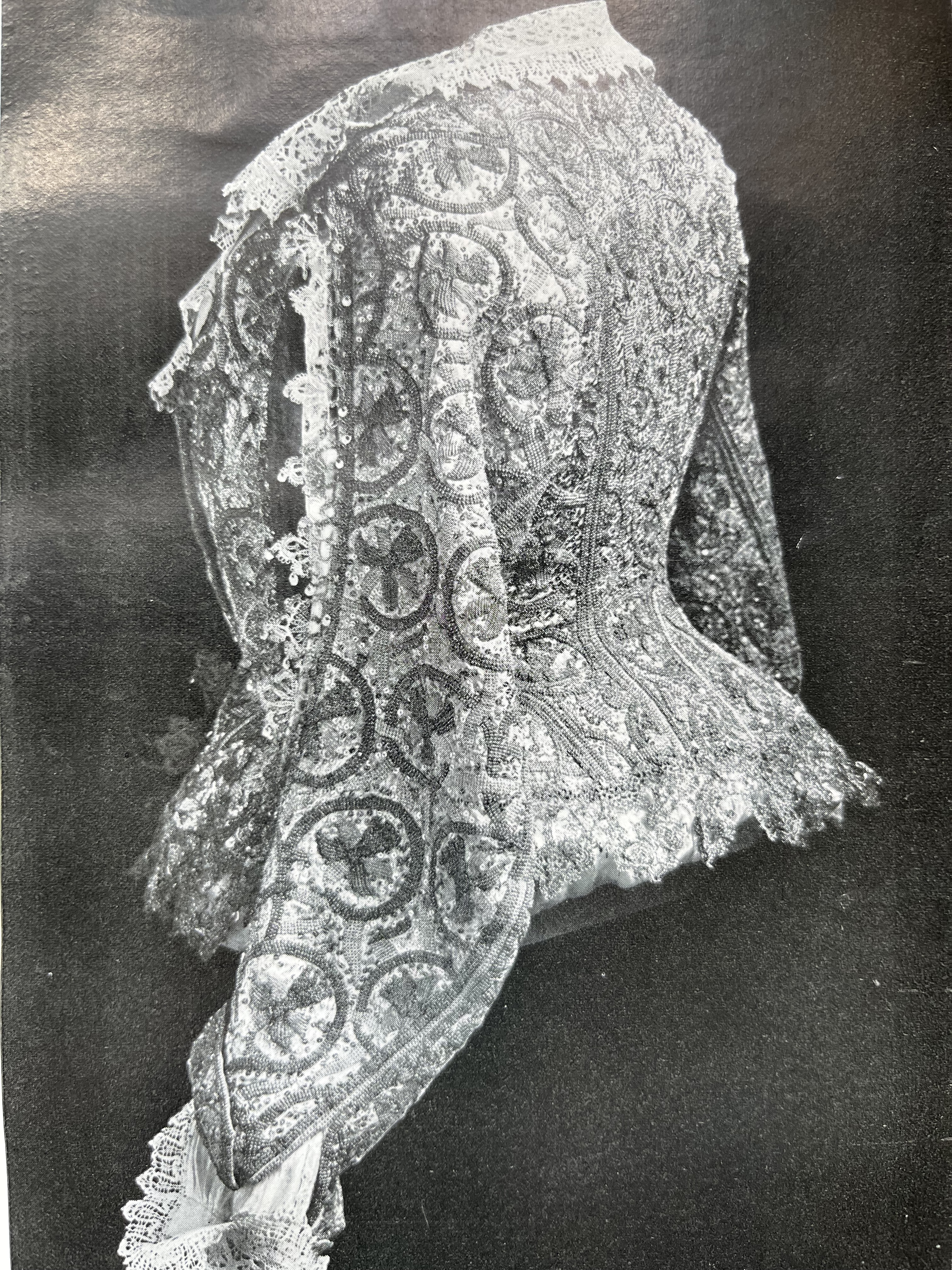
Art Treasures Exhibition catalogue 1932 – ‘A gold embroidered jacket, English, late 16th century’. Photograph, Antique Dealers Research Project, University of Leeds.
‘Women’s Jacket, English about 1610-15 with later alterations’. The Elizabeth Day McCormick Collection, Boston Museum of Fine Arts. 43.243. Image copyright Boston MFA.

3rd object – (see below) the narrator describes a ‘Gothic tapestry, over 400 years old’, this is either No.270 or No.271 in the catalogue. Neither are illustrated in the catalogue, but are both described in the catalogue as ‘A panel of Gothic tapestry, Franco-Flemish, circa 1500’ and both are offered by The Spanish Art Gallery Ltd, Conduit Street, London. It has not been possible to trace the present whereabouts of the tapestry.
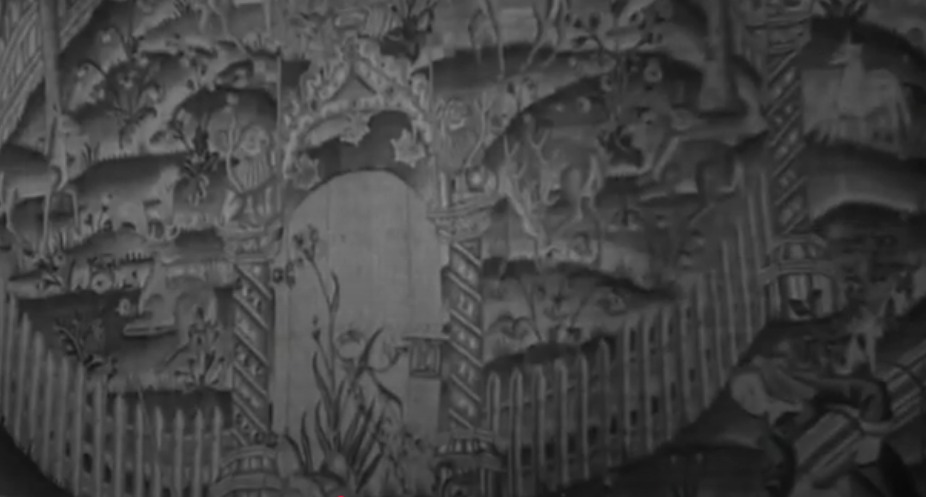
Art Treasures Exhibition 1932 film, screenshot of ‘Gothic tapestry’.

4th object – (see below) this is described by the narrator in the film as ‘a fine specimen of a Henry VII salt-cellar in hour-glass form’. This is No.445 in the catalogue; ‘A Henry VII silver-gilt standing salt, London 1505’. It is also illustrated in the catalogue, and was offered by the antique silver dealers Crichton Brothers, then trading at 22 Old Bond Street, London. It has not been possible to trace the Henry VII salt – the narrator in the film suggested that it was the only known piece of silver with the date 1505, so I guess if it does still exist, it must be easily identifiable? (our friend Chris Coles spotted the salt in a 1969 exhibition catalogue produced by The Goldsmiths Company….so perhaps the salt is in the collections of The Goldsmiths – thanks Chris!)
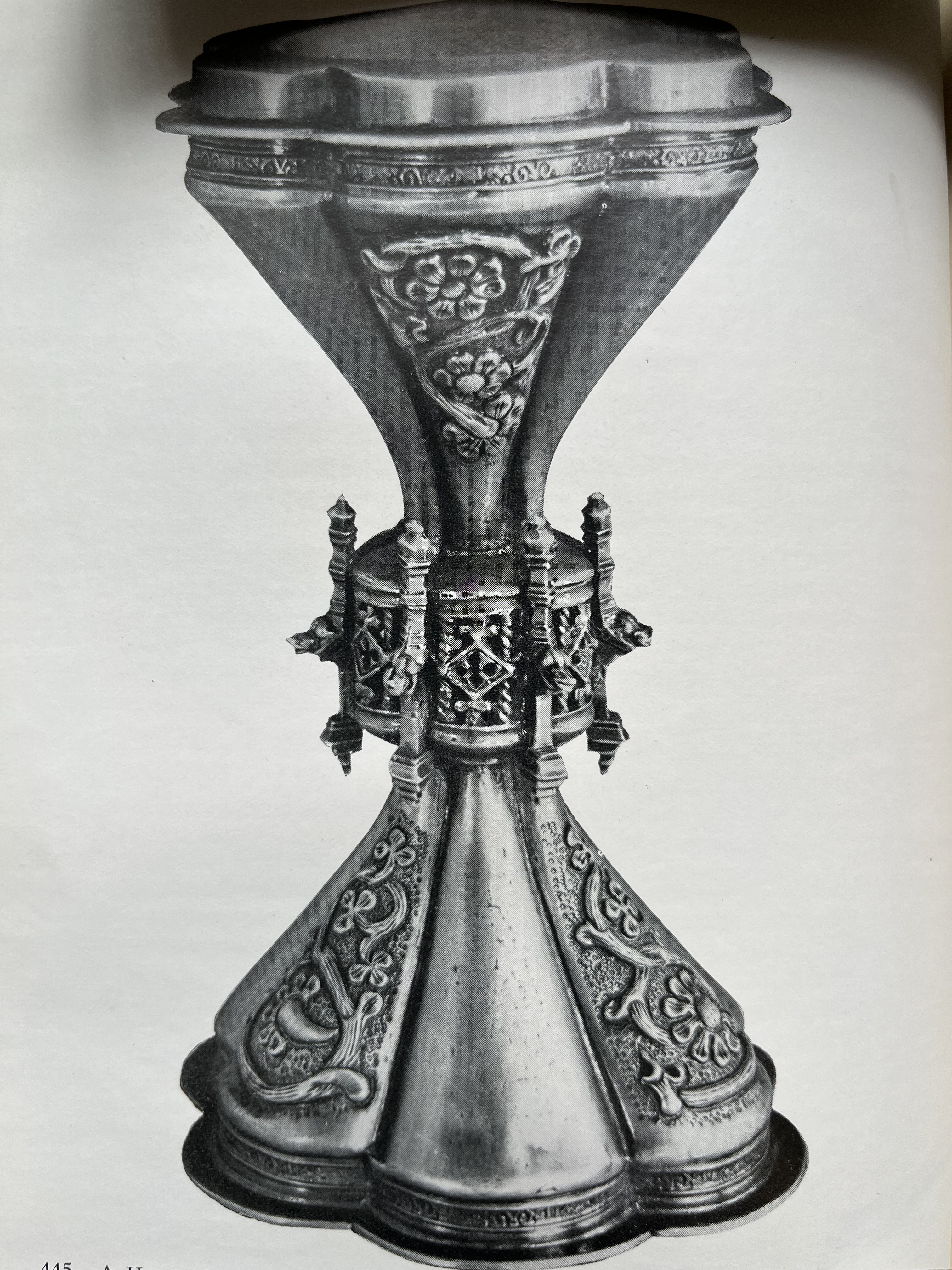
Art Treasures Exhibition catalogue 1932 – ‘A Henry VII silver-gilt standing salt, London 1505’. Photograph, Antique Dealers Research Project, University of Leeds.

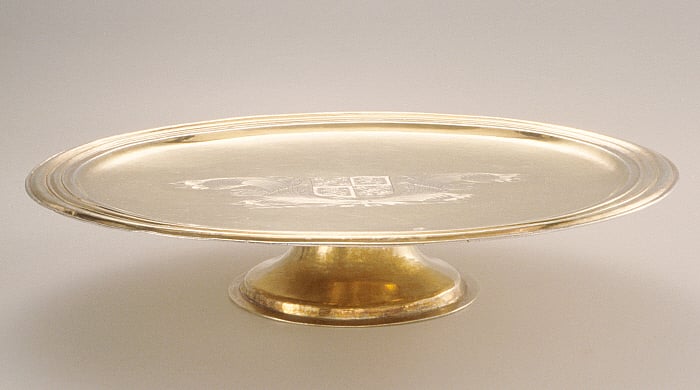
5th object – (see below) the narrator describes a ‘stand for a porringer or tankard….previously owned by the diarist Samuel Pepys’. This is No.618 in the catalogue – ‘The Charles II silver-gilt ‘Pepys’ tazza, London 1678′. It is not illustrated in the catalogue, but was also offered by the antique silver dealer Crichton Brothers. The ‘tazza’ is now in the collections of The Clark Institute in Massachusetts in the USA. It was commissioned by Samuel Pepys (1633-1703) in 1678 and was sold at Sotheby’s on 1st April 1931 (Lot 3) to Crichton Brothers, who appear to have sold it to the American silversmith and art curator Peter Guille of New York, who sold it to Robert Sterling Clark in 1946.
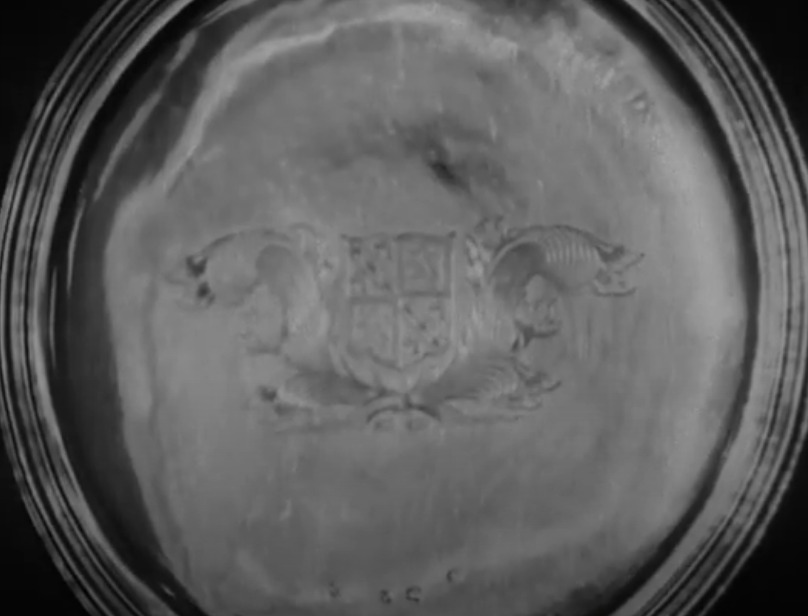
Art Treasures Exhibition 1932 film, screenshot of ‘Pepys’ ‘tazza”.
Footed Salver, silver-gilt, 1678/79. Clark Institute, 1955.298. Image copyright Clark Institute.

6th object – (see below) described by the narrator as a ‘Chippendale chair’, but I can’t find this chair (or even a set of them) listed in the exhibition catalogue; perhaps it was a late edition to the exhibition?
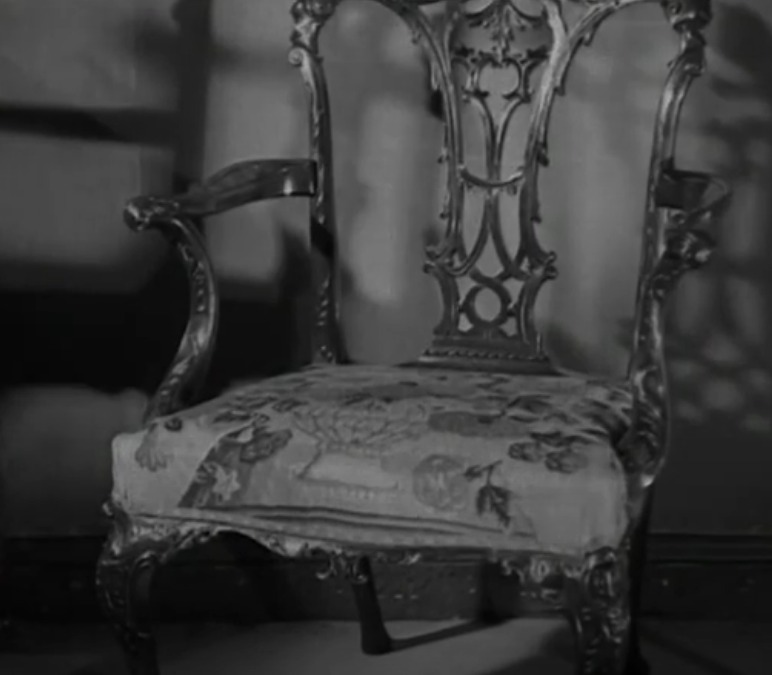
Art Treasures Exhibition 1932 film, screenshot of ‘Chippendale chair’.

7th object – (see below) the narrator describes 3 walnut chairs, ‘made about 1690’. There are a number of such chairs in the exhibition catalogue, but without a photograph of them from the catalogue it has not been possible to identify which of the chairs the narrator is referring too? However, the centre chair, could be No.50 in the catalogue, ‘A William and Mary armchair of small size, circa 1690’, and said to have ‘traditionally been used by Queen Anne’; it was offered for sale by the well-known dealers Moss Harris & Sons.
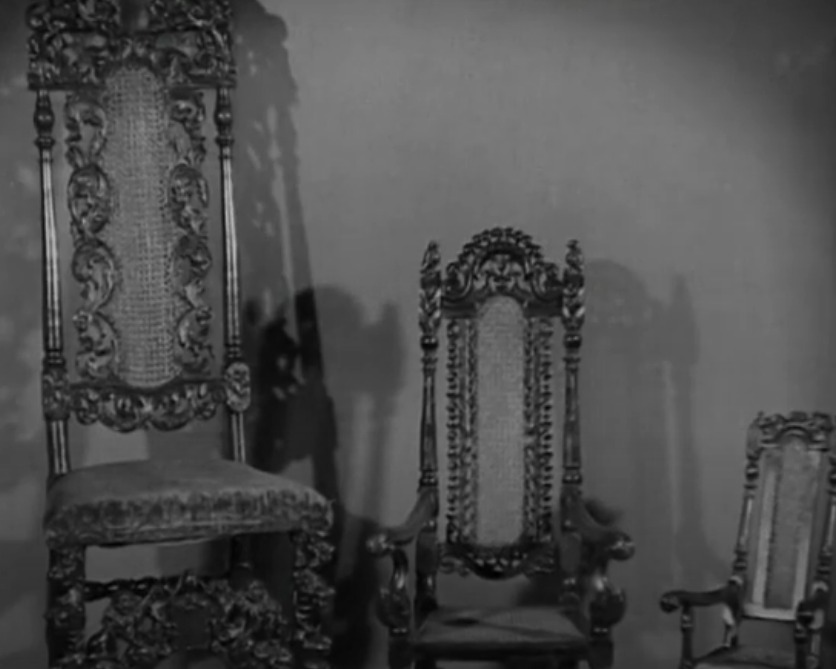
Art Treasures Exhibition 1932 film, screenshot of ‘Walnut chairs’.

8th object – (see below) is described by the narrator as ‘a fine gesso table, formerly at Stowe’, is certainly No.121 in the Exhibition catalogue; it is illustrated and described as ‘A George II gilt side table…formerly at Stowe’ and was offered for sale by the antique dealer and interior decorator Gregory & Co., then trading at 27 Bruton Street, London. The table was originally sold at the auction sale of the contents of Stowe House in 1848, following the bankruptcy of the Duke of Buckingham.
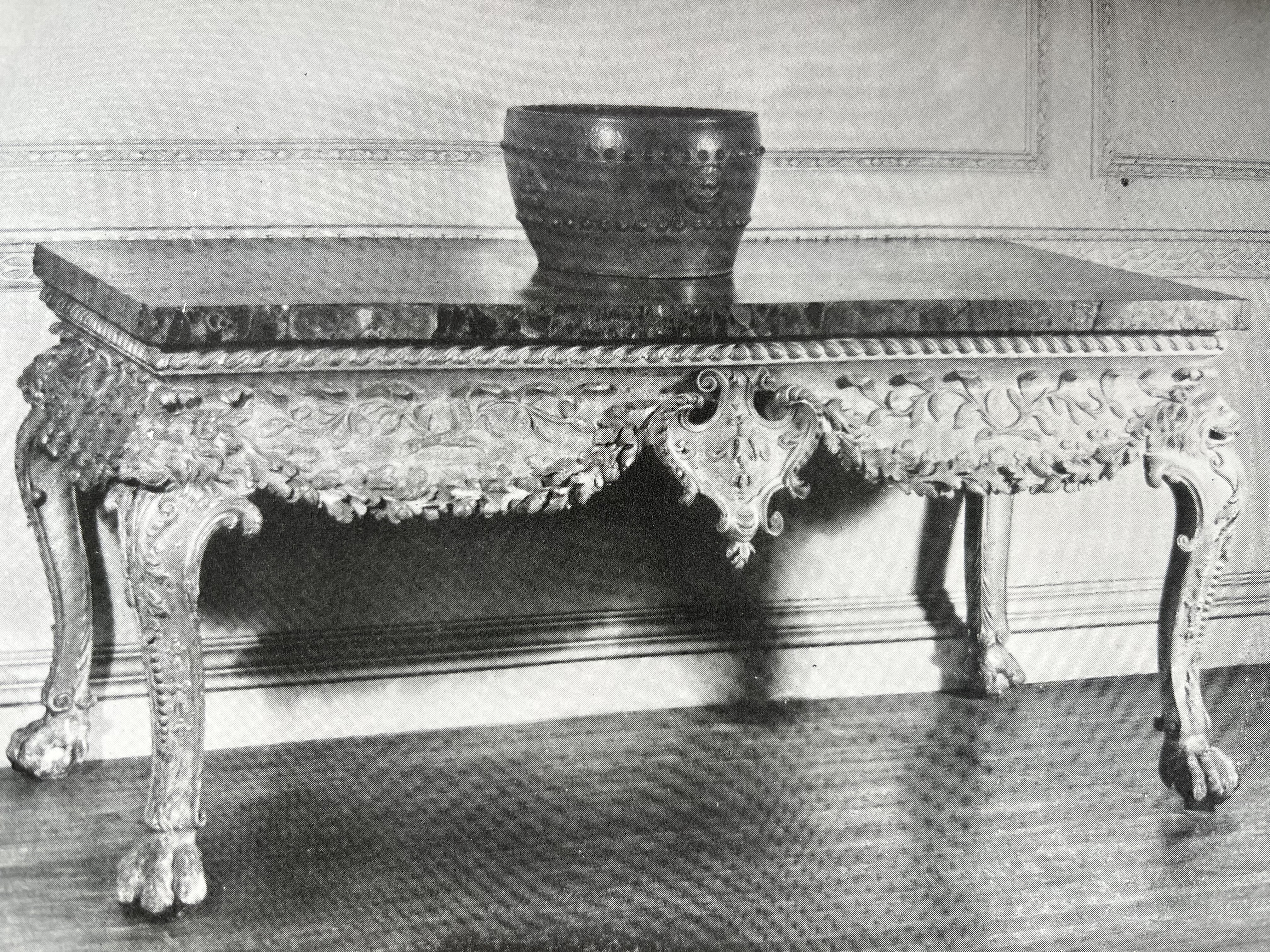
Art Treasures Exhibition catalogue 1932 – ‘A George II gilt side table’. Photograph, Antique Dealers Research Project, University of Leeds.

It has not been possible to trace the whereabouts of the side table, but interestingly, another giltwood side table from Stowe was on display at the 1932 Exhibition; No.98, ‘A George I gilt gesso table, circa 1715’, and offered for sale by the antique dealer A.G. Lewis, Brompton Road, London. This table (see below) is one of a pair (possibly three?) side tables associated with Stowe. In 1930, one table, (perhaps the same one in the 1932 exhibition?) was in the stock of the antique dealer Kent Galleries, Conduit Street (Kent Gallery are associated with The Spanish Gallery who offered the ‘Gothic tapestry’ at the 1932 Exhibition). One of the tables (perhaps the same one?) is now in the V&A Museum (see below too). The V&A table was sold to the V&A by the antique dealer Phillips of Hitchin in 1947, having been through the hands of a number of other antique dealers, including John Bly of Tring and Edinborough of Stamford. All of this highlights the significance of inter-dealer trading that sustained the antique trade for much of the 20th century.
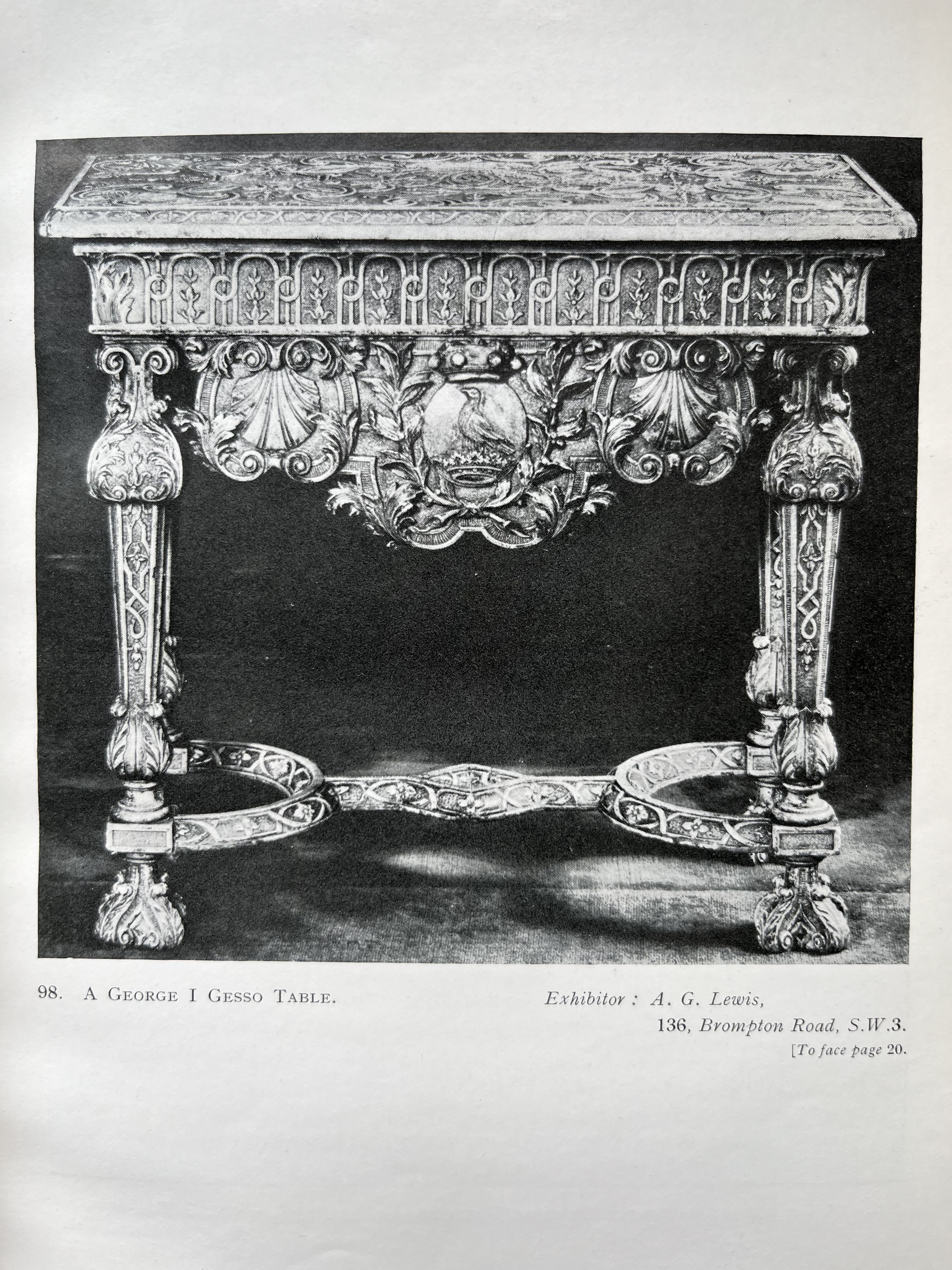
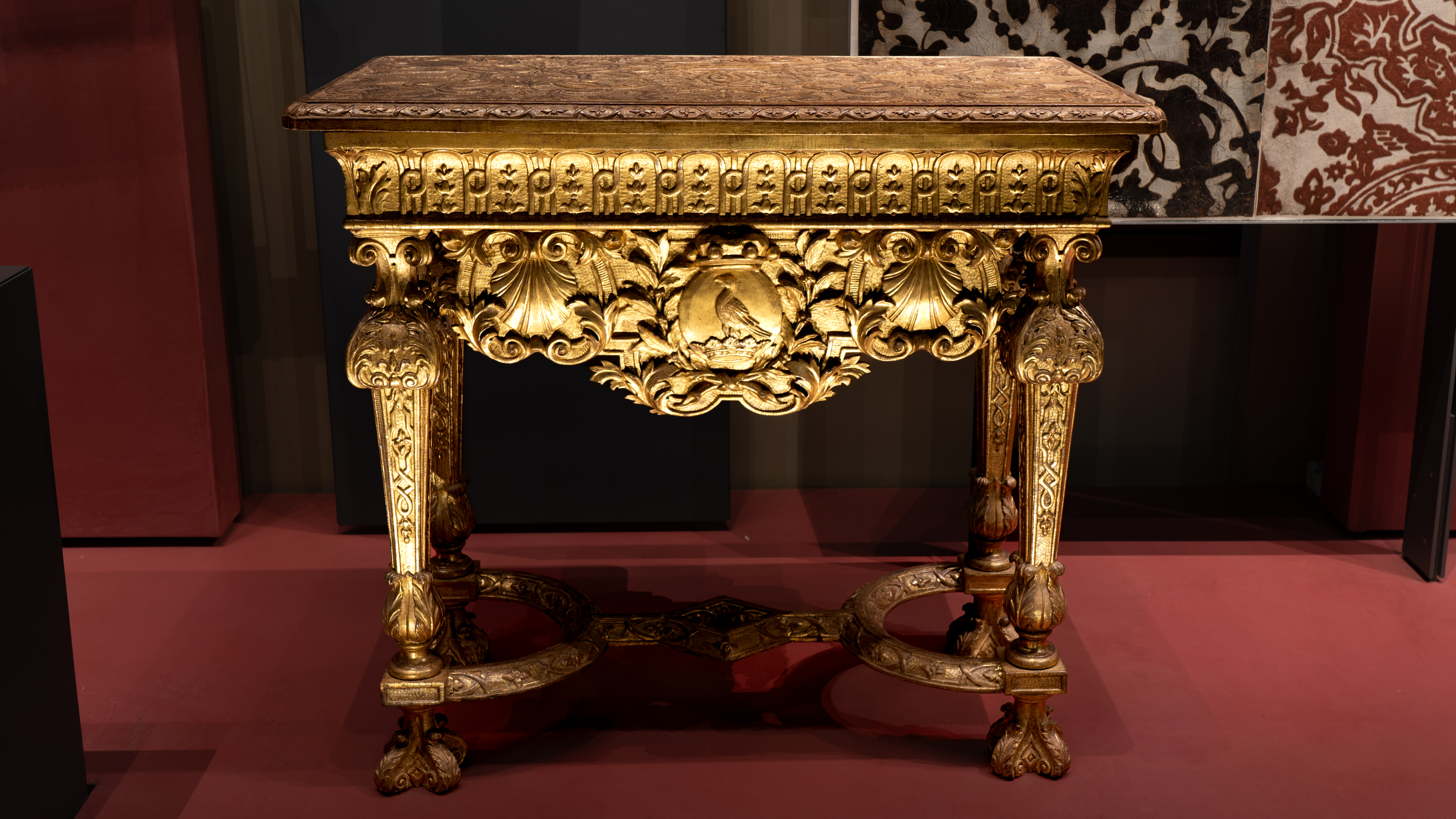
Art Treasures Exhibition catalogue 1932 – ‘A George I gilt gesso table’. Photograph, Antique Dealers Research Project, University of Leeds.
The Stowe side table at the V&A Museum. Photograph, Year of the Dealer project, University of Leeds.

9th object – (see below) the narrator describes a ‘spinning wheel, perfectly usable today’ as the next object. It is a ‘Sheraton spinning wheel, circa 1790….made by John Planta, Fulneck’; it was No.231 in the catalogue and was illustrated and offered for sale by the antique dealer Law, Foulsham & Cole, South Molton Street, London. There are several such spinning wheels by Planta, who was based in Leeds in the late 18th century – one example (although not the one in the 1932 Exhibition), remains in the collections at Temple Newsam, near Leeds.
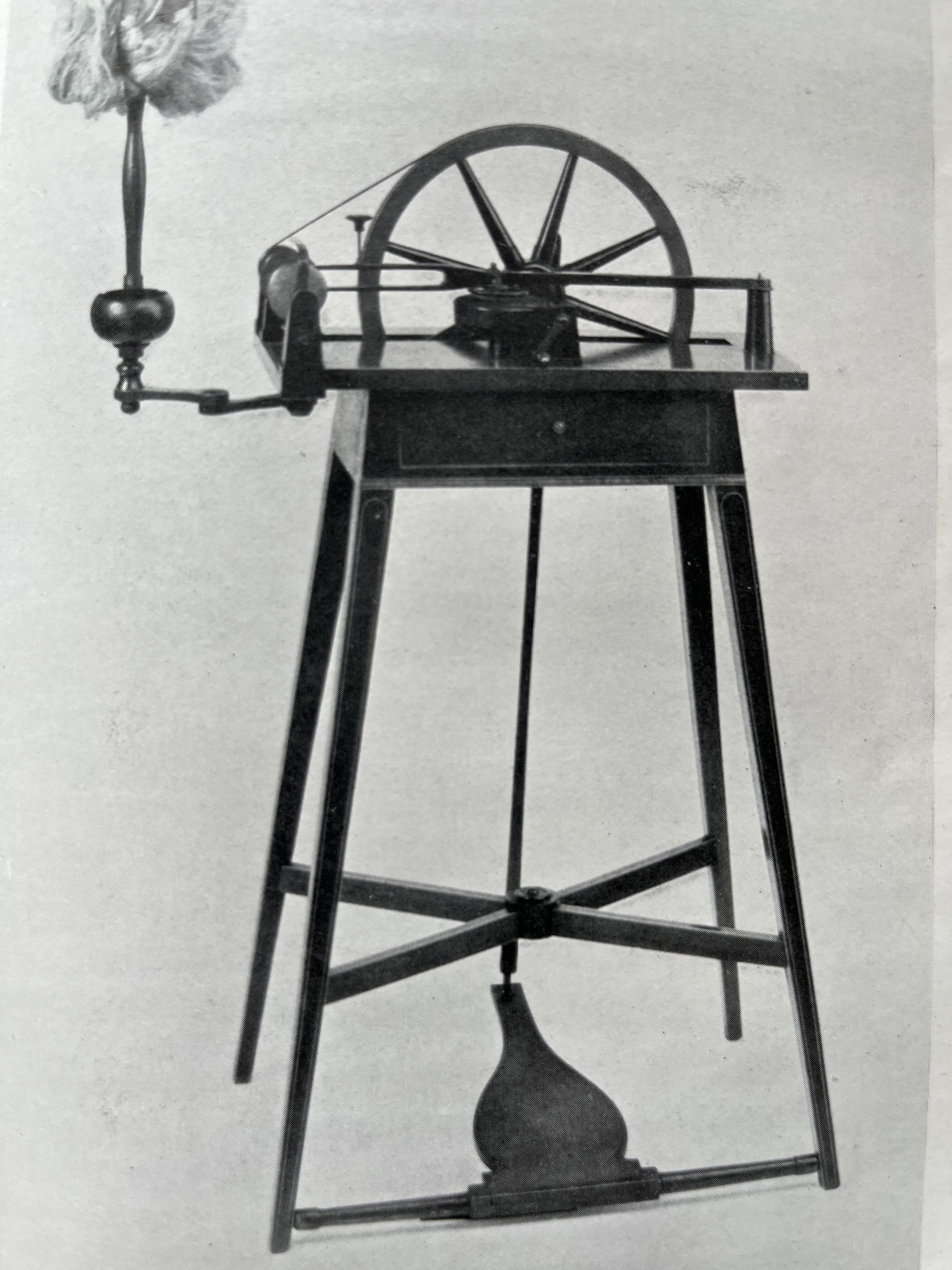
Art Treasures Exhibition catalogue 1932 – ‘A Sheraton spinning wheel, circa 1790’. Photograph, Antique Dealers Research Project, University of Leeds.

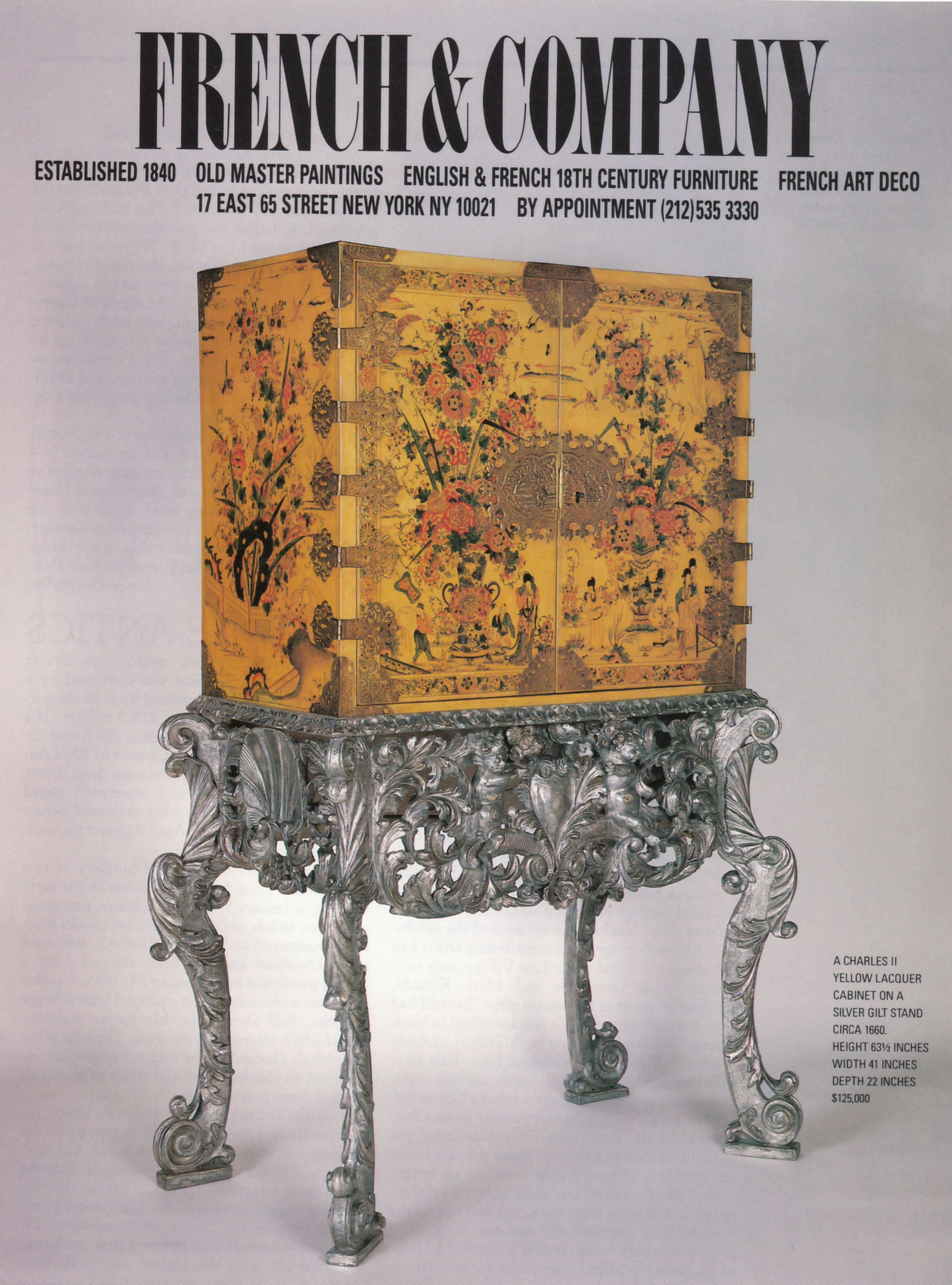
10th object – (see below) the narrator describes as a ‘rare cream lacquer cabinet, made towards the end of the 17th century’. This was No.31 in the catalogue, ‘a Charles II lacquer cabinet, circa 1680’ and was offered for sale by the dealer E.H. Benjamin, 39 Brook Street, London. White lacquer cabinets are the rarest of lacquer furniture, but even so it has not been possible to trace the cabinet – perhaps it has been lost? (Chris tells us that the cabinet on stand was in stock with the American antique dealers’ French & Co in 1987 (see below), so perhaps the cabinet is still in the USA?)
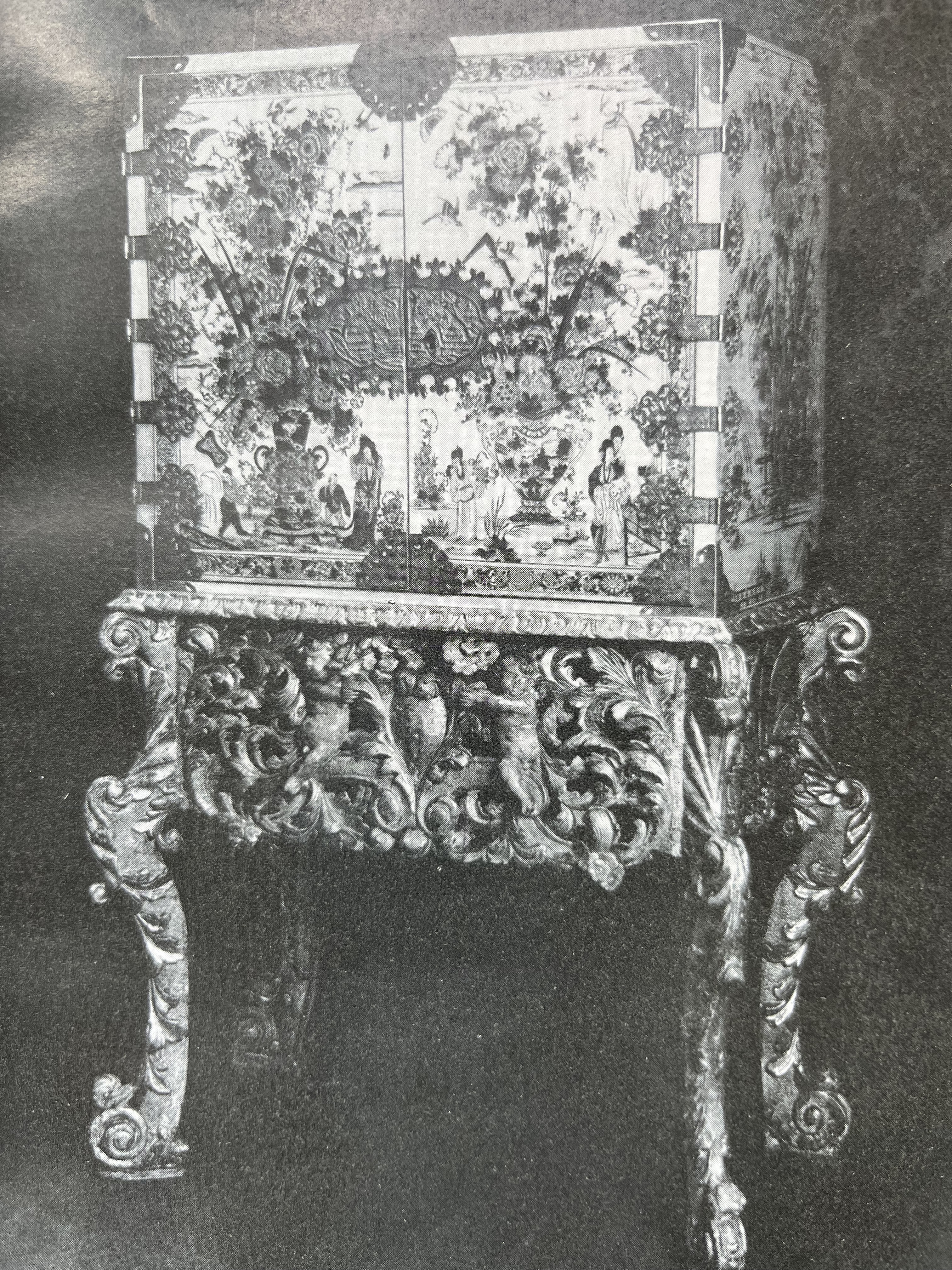
Art Treasures Exhibition catalogue 1932 – ‘A Charles II lacquer cabinet, circa 1680’. Photograph, Antique Dealers Research Project, University of Leeds.
French & Co advert, 1987. Image from Chris Coles.

11th object – (see below) the narrator describes another cabinet, this time ‘a fine Adam satinwood example’ – he mentions that ‘it was purchased by the Queen at her recent visit to the exhibition’ (this would be Queen Mary, a very well-known collector of antiques). The cabinet is No.205 in the catalogue, described as ‘an Adam satinwood cabinet, circa 1780’, but is not illustrated; it was offered for sale by the antique dealer Mallet & Sons, one of Queen Mary’s favourite antique dealers. I can’t find the cabinet in Royal Collections, so perhaps the cabinet was sold from the collections or given away or was destroyed?
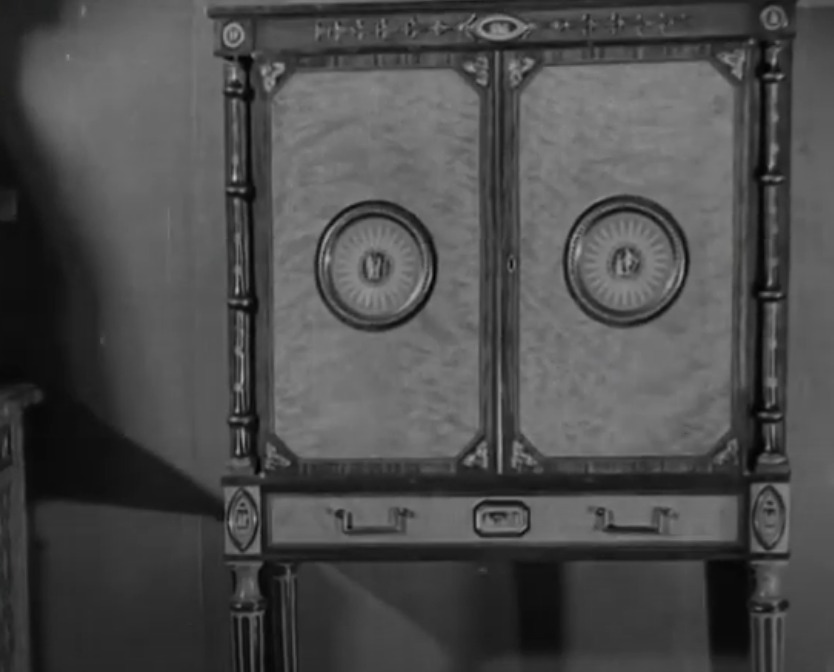
Art Treasures Exhibition 1932 film, screenshot of ‘Adam satinwood cabinet’.

12th object – (see below) the narrator describes ‘a lovely satinwood side table’, ‘one of Lord Nelson’s gifts to Lady Hamilton’. This is one of 3 tables on display at the exhibition, No.241, ‘a set of three satinwood tables, circa 1795’; they were illustrated and were offered for sale by the dealer A.G. Lewis. Like the film, the catalogue mentions that the tables were presented by Lord Nelson to Lady Hamilton. Given the provenance, it’s surprising I can’t find them anywhere? Two of the tables were in the collection of Arthur Sanderson (1846-1915), the well-known collector in Edinburgh; they are listed in the auction sale catalogue of Sanderson’s collection sold by Knight, Frank & Rutley, Hanover Square, London, June 14th-16th 1911 as Lot 540 ‘A PAIR OF SHERATON SHAPED FRONT SIDE-TABLES, which (together with Lot 541 A SHERATON BOOKCASE) were ‘said to have been made by Sheraton for Lord Nelson and given by him to Lady Hamilton at Naples’; (our friend Chris Coles tells me that the Nelson tables were in the collection of the antique dealer George Stoner (of Stoner & Evans) in 1912; and that one of the tables was in the stock of Moss Harris & Sons in 1935; Chris rightly suggests that as the three tables don’t exactly match, they are more likely to have been separated – thanks again Chris!)
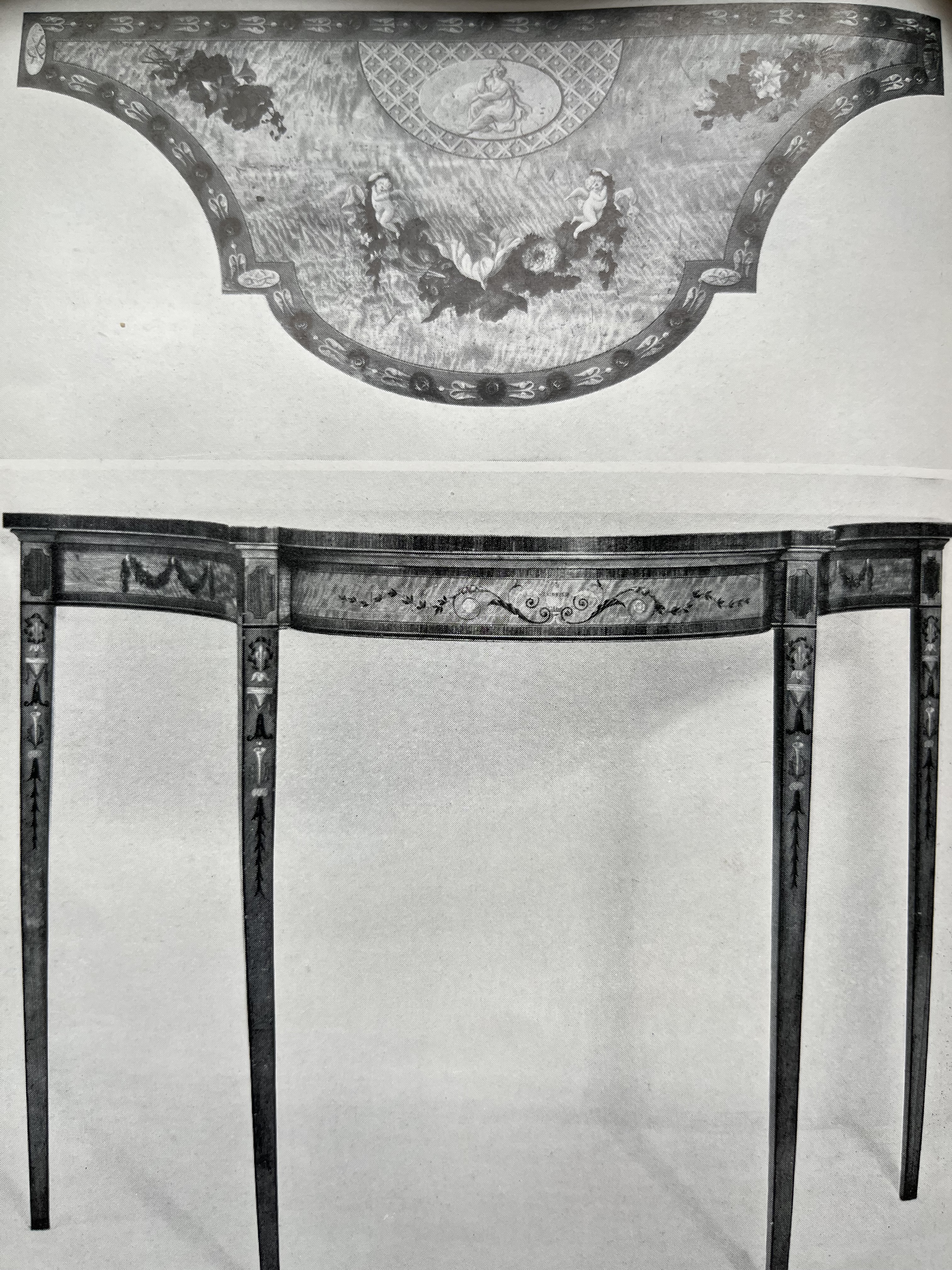
Art Treasures Exhibition catalogue 1932 – ‘A set of three satinwood side tables, circa 1795’. Photograph, Antique Dealers Research Project, University of Leeds.

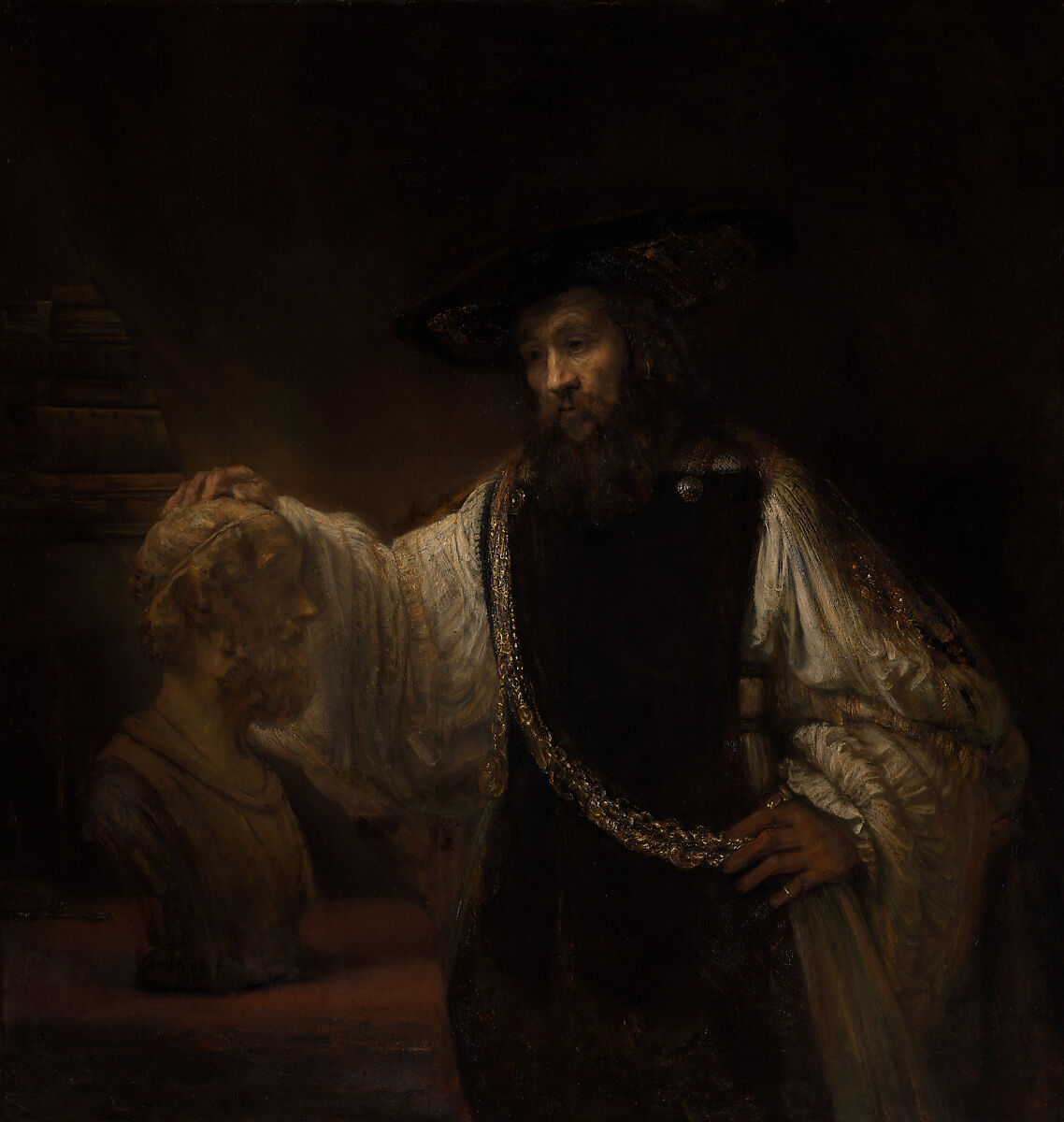
Finally, 13th object – the narrator highlights that this object (a painting by Rembrandt) is ‘the most valuable object here’. It is No.1355 in the exhibition catalogue, ‘Rembrandt van Rhyn (1606-1669), ‘Aristotle’, signed and dated 1653′. It was offered for sale by the world-famous art dealer Joseph Duveen (1869-1939). Duveen bought and sold the painting several times in the decades before the 1932 exhibition. He sold it to the art collector Alfred W. Erickson (1876-1934) in 1928 for $700,000, before buying it back and selling it to Erickson again in the mid 1930s for $590,000. It is now in the collections at the Metropolitan Museum of Art in New York, where it has been since 1961.
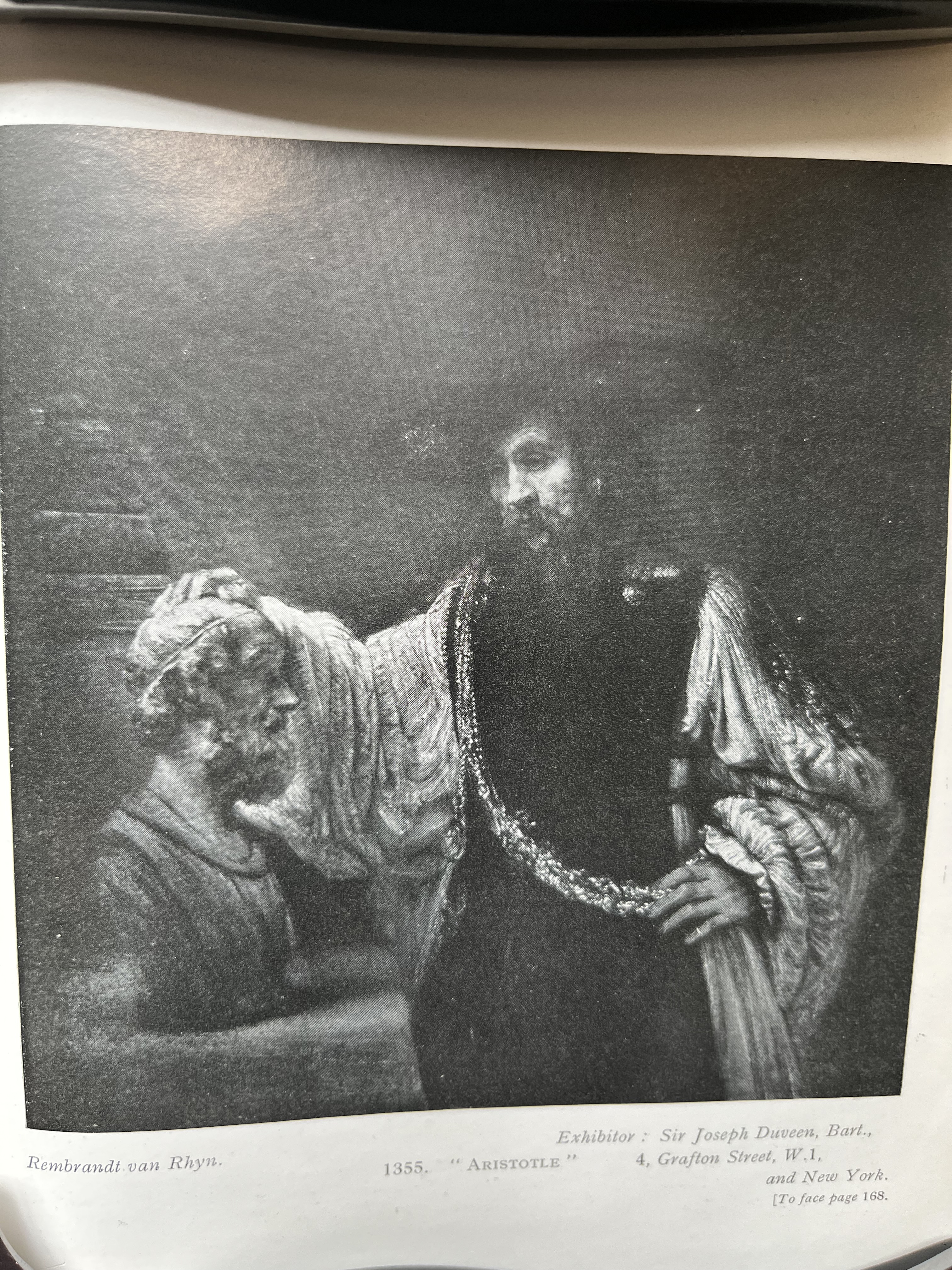
Art Treasures Exhibition catalogue 1932 – ‘Rembrandt van Rhyn….’Aristotle’. Photograph, Antique Dealers Research Project, University of Leeds.
Rembrandt (Rembrandt van Rijn) Aristotle with the bust of Homer (1653). Metropolitan Museum of Art, New York. 61.198. Image copyright Metropolitan Museum of Art, New York.

The film of the Art Treasures Exhibition 1932, together with the catalogue of the exhibition, gives a fascinating insight into the publicity for one of the major commercial art exhibitions of the period and is a further demonstration of the significance of the antique trade in the circulation and consumption of antiques (and paintings) and their role in the development of public museum collections – and thanks again to Diana for sending on the link to the film!

Mark
October 30, 2022

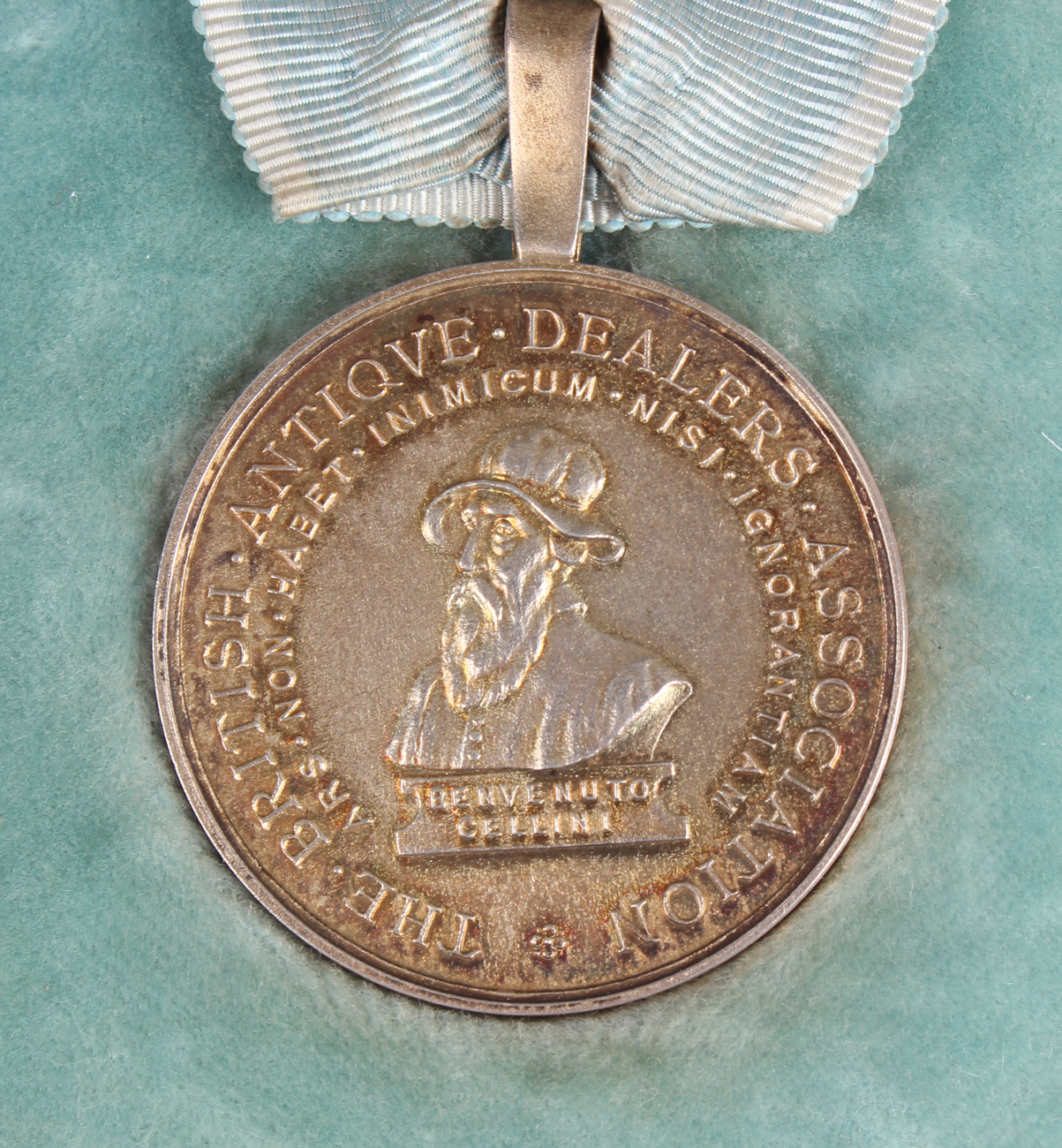
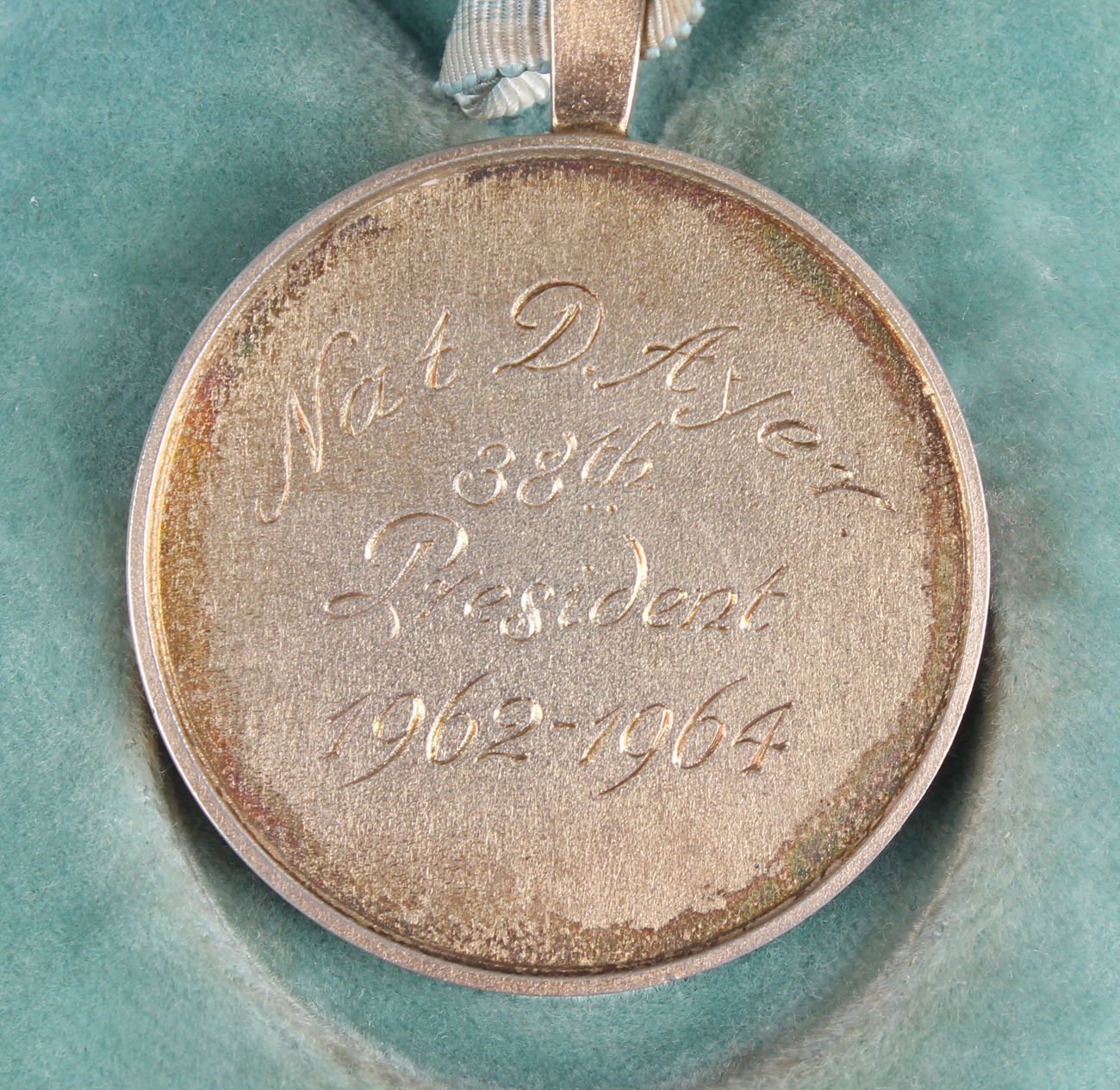
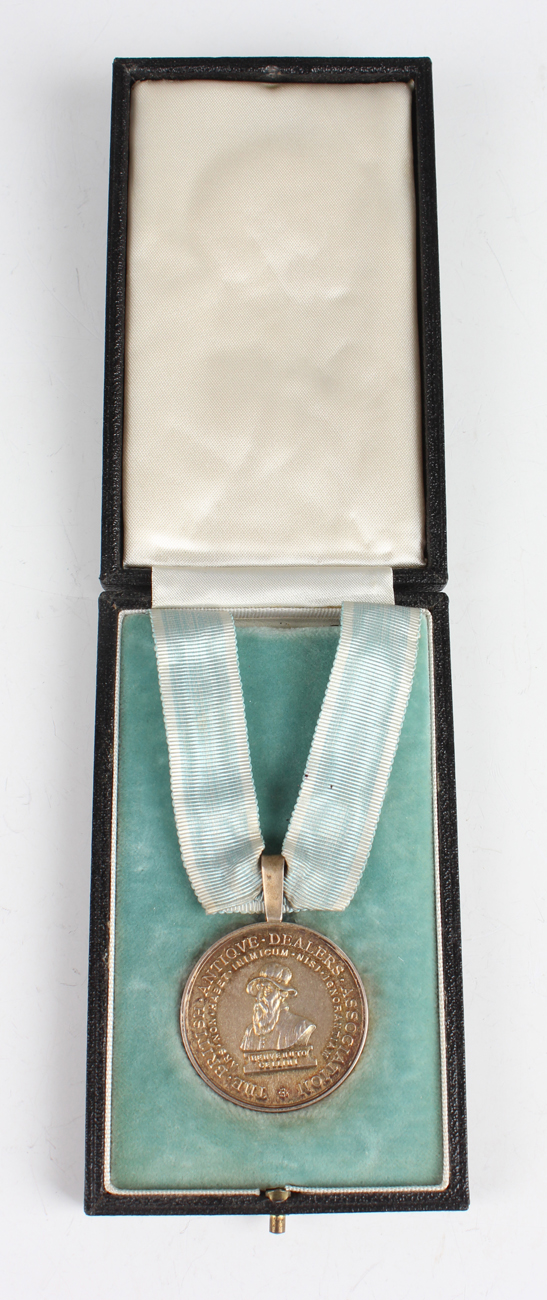
A BADA President medal 1962-1964

As part of the Antique Dealer’s research project at the University of Leeds, we are constantly on the look out for rare ephemera and items associated with the history of antique dealing in Britain. Often material is very generously donated to us, but sometimes things appear on the market which we just have to acquire. One such object was this medal (see below), which turned up at auction in August.

The medal is silver-gilt, about 34mm in diameter, and has a pale blue and white silk ribbon attached. I’d never seen one of these medals before, so asked Mark Dodgson, Secretary General of the British Antique Dealers Association (BADA) about it – he tells me that they were awarded to BADA Presidents to acknowledge their work as Presidents of the organisation. The BADA, as many of you will know, was established in 1918. This particular medal was awarded to the antique dealer Nat D. Ayer by the BADA in 1964 in recognition of Ayer’s Presidency of the BADA between 1962 and 1964. The Verso of the medal has the inscription ‘Nat D. Ayer 38th President 1962-1964’.

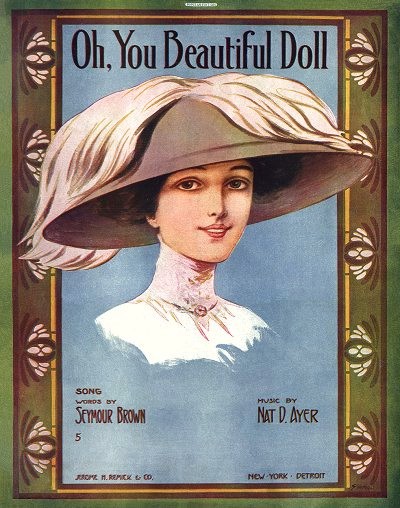
Nat Ayer was a very well-known character in the British antiques trade in the Post WWII period. He appears to have begun trading in antiques immediately after the end of the Second World War, opening a shop in Quiet Street, Bath by 1946. Nat Ayer is perhaps also well-known as the son of the famous composer Nathanial Davis Ayer (1887-1952) who was also known as Nat D. Ayer; composer of such famous songs as ‘Oh, You Beautiful Doll’ (1911) and ‘If you were the only Girl in the World’ (1916), with the lyricist Seymour Brown (1885-1952), and for his work on the Ziegfeld Follies. Below is a cover for a music sheet for ‘Oh, You Beautiful Doll’.

Nat Ayer Snr. was born in Boston in the USA – below is a photograph of Nat Ayer in 1916. He settled in the UK, becoming very successful in the Music Hall and theatre scene in London in the 1910s and 1920s. Ayer appears to have been less successful in the 1930s; he was eventually declared bankrupt in 1938; he sadly passed away in 1952 aged 65, in Bath, Somerset. Perhaps Nat Ayer Snr was also instrumental in his son Nat Ayer Jnr. opening an antiques shop in Bath in the 1940s?

Nat Ayer Jnr. went on to be a highly successful antique dealer, and as well as being elected the President of the BADA, he moved his business Mount Street in London in about 1964, which was at the time one of the most important locations for high-end antique shops in London. It may have been when Nat Ayer opened his new shop in Mount Street that he met his long-term partner, H. Gustave, who worked as the manager of the Connaught Hotel located in Mount Street.

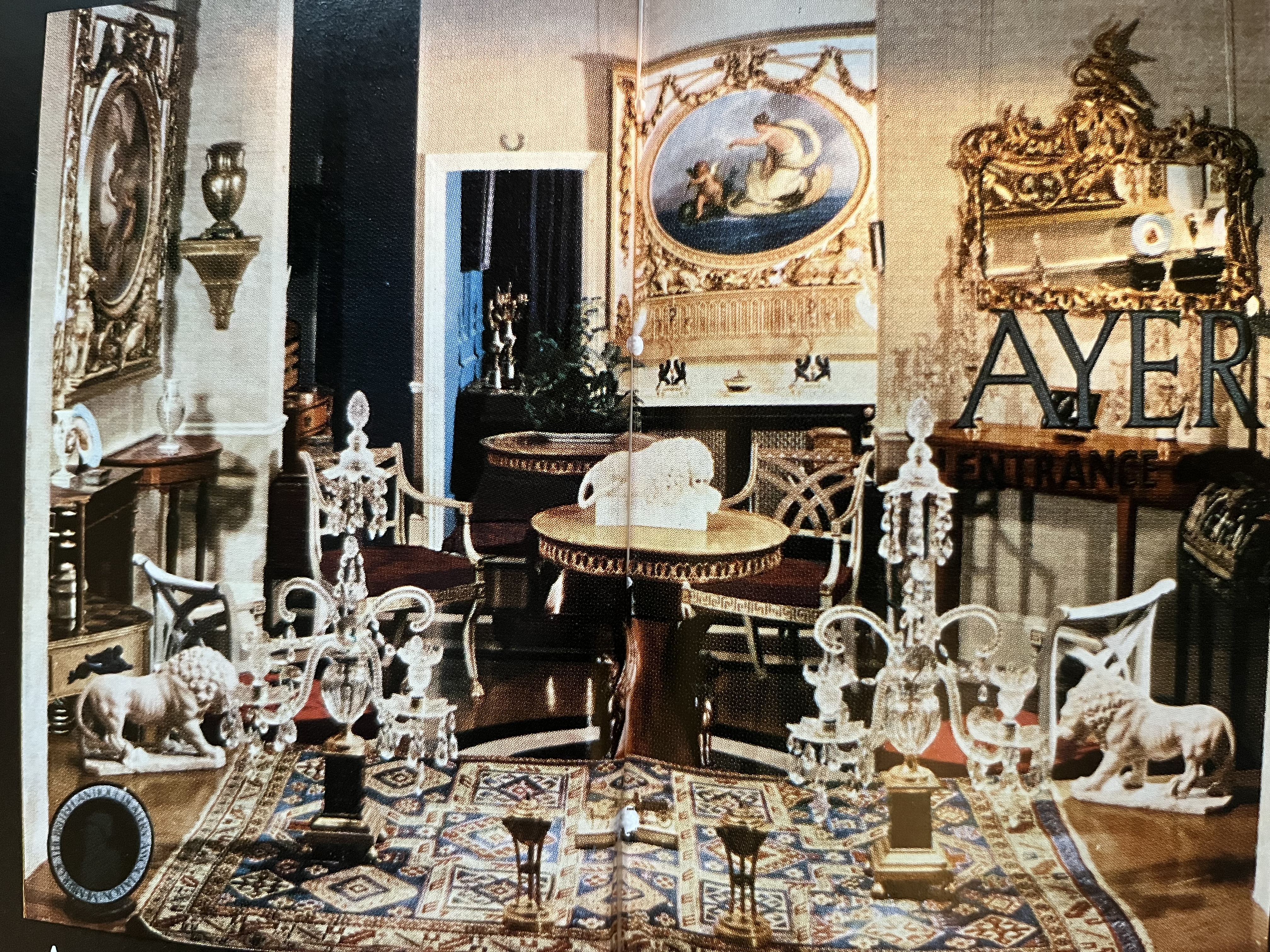
Nat Jnr., like his father, was also a composer and an accomplished pianist. Indeed, in one of our many Oral History interviews with member of the antique trade – in our interview with the antique dealer John Bly (see Oral History pages on the project website) – John recalls encountering Nat Ayer whilst viewing an auction sale in Bath with his father Frank Bly. John remembers the auction was on view in a cinema building and seeing a tall man with a smart fur collar on his coat, playing a piano – his father Frank told him – ‘that’s Nat Ayer’. And as part of his introduction to the antique trade, John Bly also worked for Nat Ayer, helping him on his stand at the world-famous Grosvenor House Antiques Fair in the 1960s. John recalls that Nat was famous for introducing stage settings on his stand at the GH Fair – in 1969, for example, Nat Ayer backed his stand with a huge photograph of the New York skyline, and created trompe l’oeil effects on the floor, creating diminishing perspective effects like in theatre sets. The result, John tells us, caused a sensation at the Fair. Here’s a photograph of Nat Ayer’s shop window in Mount Street from 1966, demonstrating the flamboyant stock, typical of Nat Ayer’s ‘look’.

Nat Ayer became well-known as an interior decorator as well as a leading antique dealer. ‘Ayer & Co’, as the business became known, continued trading until the mid 1970s, moving his shop to 26 Bruton Street in about 1972, a shop now occupied by one of the leading specialists in antique furniture, Ronald Phillips.

It’s not known how or why Nat Ayer’s BADA medal ended up for sale at auction, but it has now joined the growing collections of antique dealer ephemera at the University of Leeds.

Mark

January 31, 2021

The Grosvenor House Antiques Fair

This blog post is inspired by one of my Christmas gifts – (thanks to my wife Mo!) – an early edition (1935) of the handbook of exhibitors at ‘The Antique Dealers’ Fair’ (known, from 1970, as ‘The Grosvenor House Antiques Fair’ and from 1994 as ‘The Grosvenor House Art & Antiques Fair).  As you may know, The Antique Dealers’ Fair was staged from 1934, with the final edition of the fair in 2009.  A copy of the 1935 handbook is quite a rare thing – I don’t yet have a copy of the handbook for 1934, (I have a copy of the list of exhibitors though – but if anyone does know of the whereabouts of a copy of the 1934 handbook I would be very interested to hear).

  There was an obvious break in staging the fair during the period around the Second World War (1938-1947) and the event in 1979 was cancelled due to the ‘chambermaids’ strike at The Grosvenor House Hotel, but other than these breaks The Antique Dealers’ Fair was considered to be the premier antiques fair in the world and attracted an international elite of dealers, collectors and museum curators.  The Fair came under the Patronage of H.M. Queen Mary from 1937, and Queen Elizabeth the Queen Mother from 1954. The Grosvenor House Hotel opened in Park Lane, London in 1928, on the site of the former London residence of the Earls Grosvenor; the chairman and builder of the hotel, Alfred Edwards, was involved with the Fair right from the start, helping with the financing and organisation of the Fair.

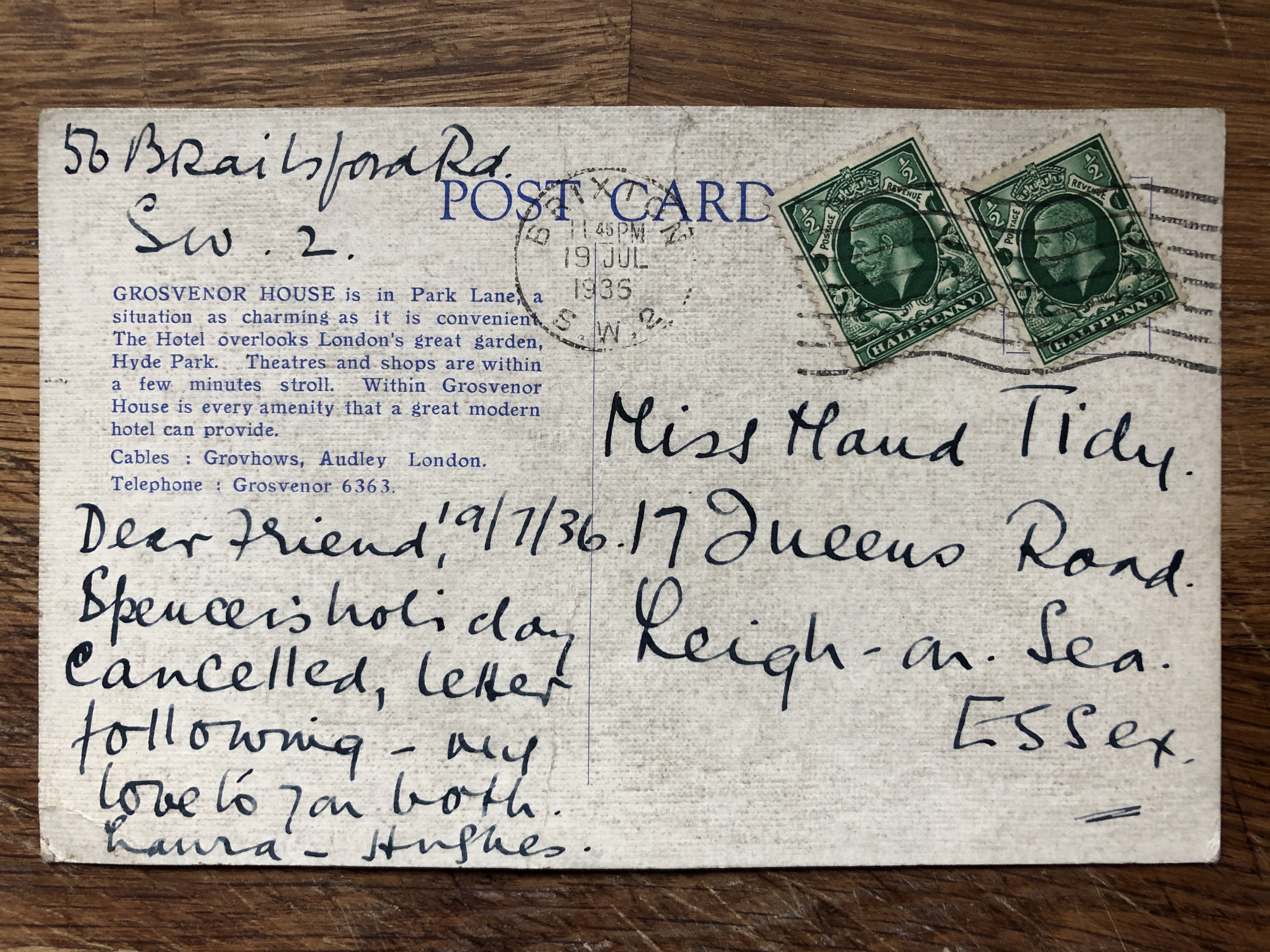
Verso of postcard with message to ‘Miss Maud Tidy’ 19th July 1935. Antique Dealers Research Project, University of Leeds.

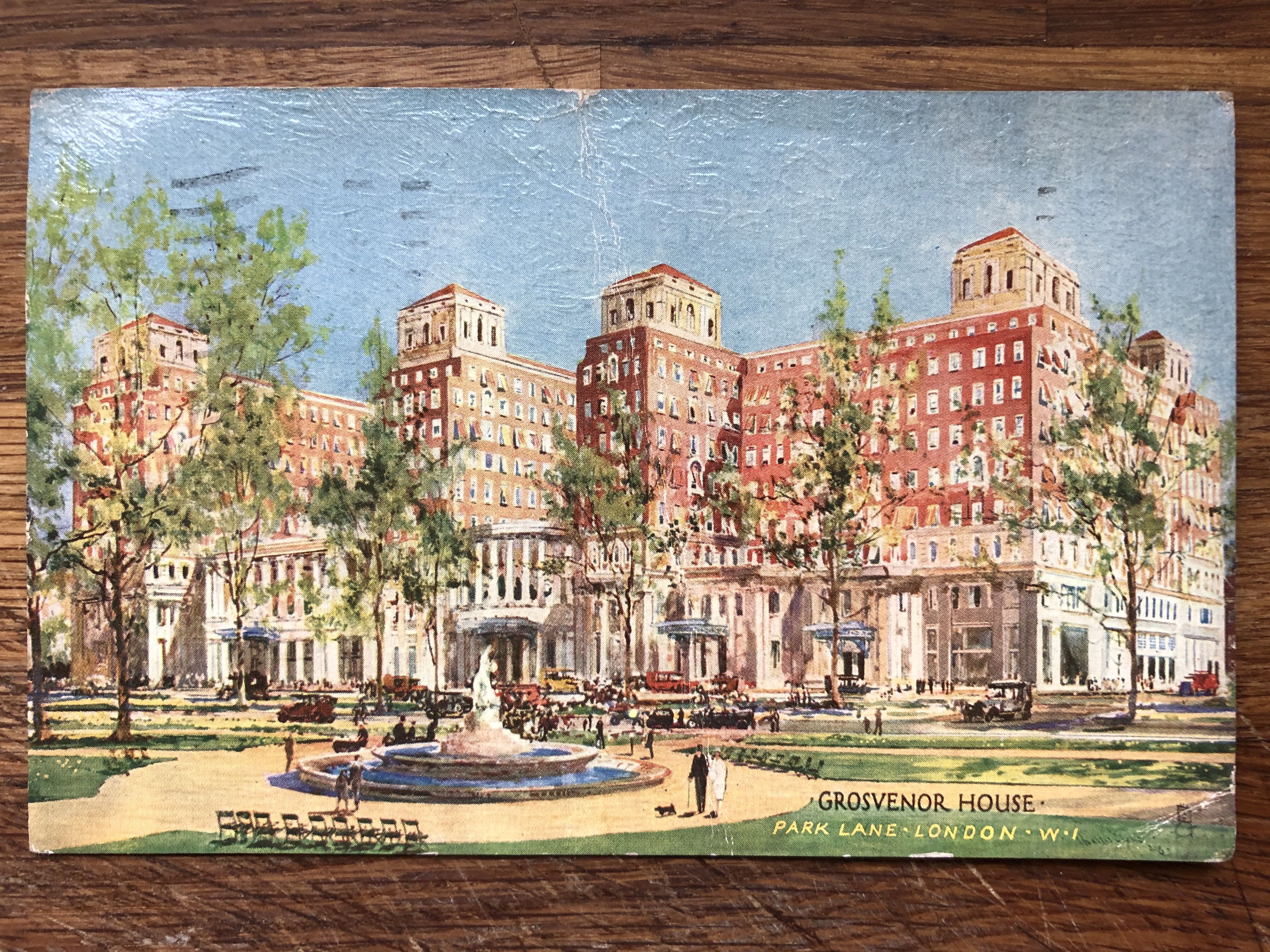
Postcard, Grosvenor House Hotel, c.1935. Antique Dealers Research Project, University of Leeds.

Above is a postcard (also a Christmas gift from Mo!) showing the Grosvenor House Hotel, which was sent to ‘Miss Maud Tidy’ in July 1935, the same year for the date of the catalogue for The Antique Dealers’ Fair, and gives you a sense of how opulent the hotel was at the time. 

The idea for The Antique Dealers’ Fair was that of the dealers Alex Lewis and Cecil Turner.  Lewis was a partner in the antique furniture dealers James A. Lewis & Sons (established in c.1895), who in the 1930s were trading in fashionable Brompton Road, London, with a branch in New York – here is a photograph of the interior of James Lewis & Sons shop in Brompton Road in 1935, and from the 1935 Antique Dealers’ Fair Handbook.

James A. Lewis & Sons, Brompton Road, London. Photograph, Antique Dealers Fair Handbook 1935.

Lewis was a member of the Executive Committee for the Fair, acting as Chair of the Committee in 1938, but does not appear to be listed in the Fair Committees after the Second World War.  Cecil Francis Turner (1889-1959), who was elected President of the British Antique Dealers’ Association (BADA) in 1935, was trading as Stuart & Turner (established in 1919) in Soho Square, London; here’s a photograph of Stuart & Turner’s shop, also from the 1935 Antique Dealers’ Handbook.  Turner was the first Chair of the Executive Committee and continued in that role (excepting 1938) until 1953.

Stuart & Turner, Soho Square, London. Antique Dealers’ Fair Handbook 1935.

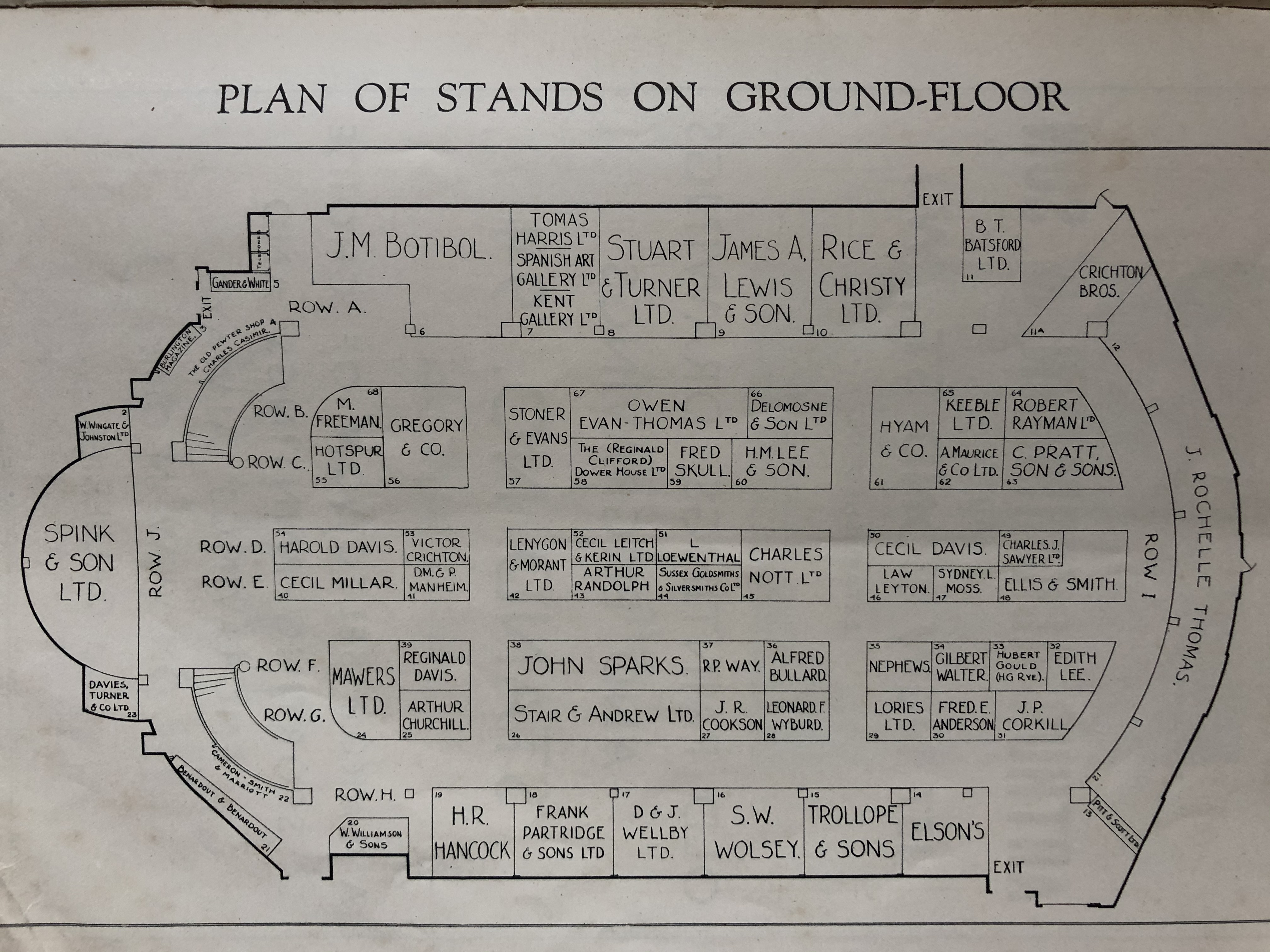
The 1935 edition of the Antique Dealers’ Fair handbook (like all editions) contains a floor-plan of the Fair, with the names of the antique dealers, and gives a fascinating insight into the ambitions of the dealers at the Fair. Below is the floor-plan of the stands on the ground-floor of the Fair in 1935, with the stands of James A. Lewis & Son and that of Stuart & Turner, side-by-side at the top of the floor-plan. 

Floor-plan of The Antique Dealers’ Fair, 1935. Photograph, Antique Dealers Research Project, University of Leeds.

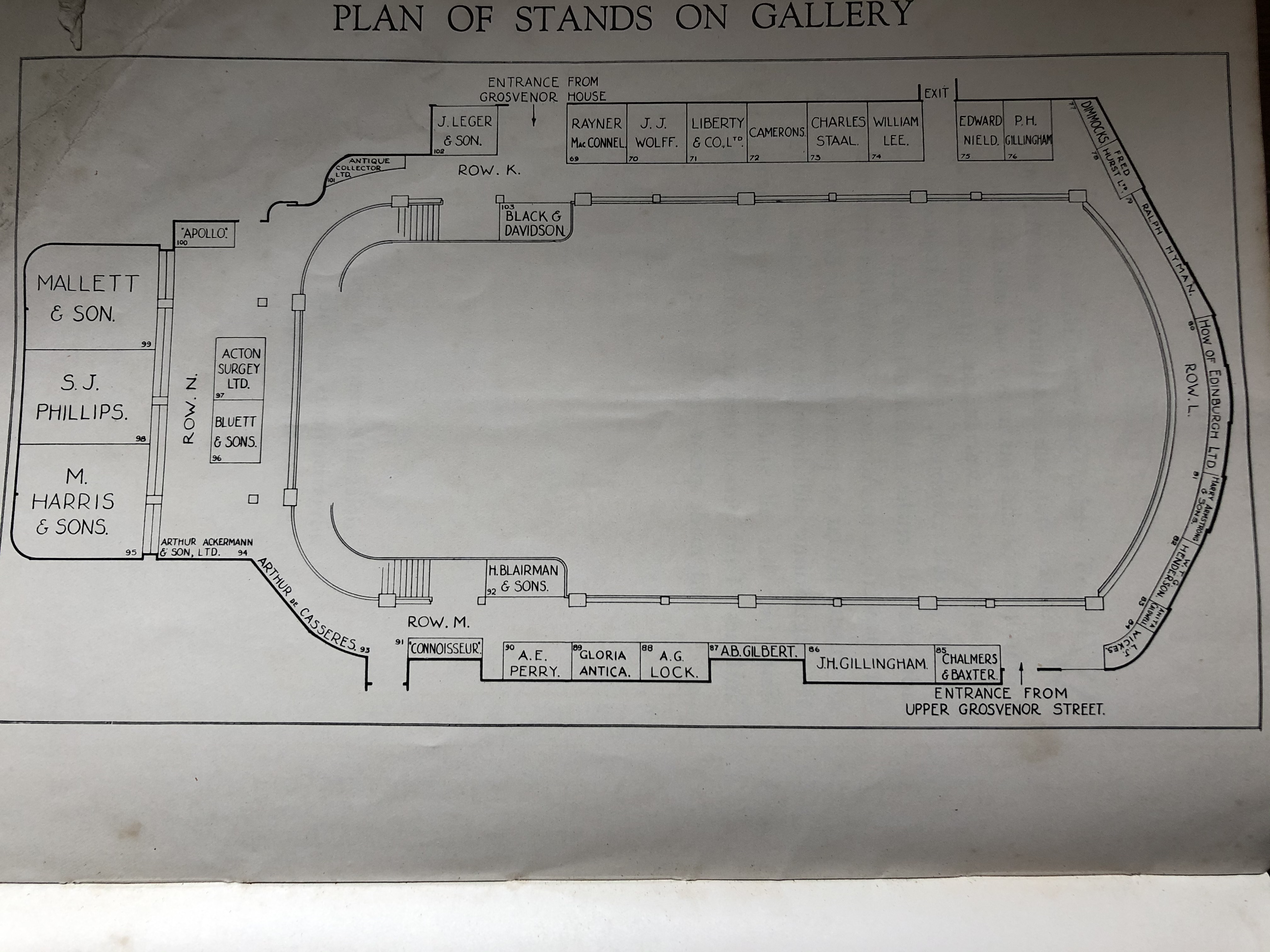
The floor-plan for the stands on the Gallery in the 1935 handbook illustrates the large stands taken by leading dealers such as Mallet & Sons, Moss Harris & Sons and the antique silver dealers S. J. Phillips (left side of the gallery).

Floor-plan for the Gallery, The Antique Dealers’ Fair Handbook, 1935. Photograph, Antique Dealers Research Project, University of Leeds.

According to the arts journalist Frank Davis, former saleroom correspondent of The Times and later Country Life, some members of the antique trade were initially a little resistant to participate in the Fair.  As Davis wrote, ‘I remember very well how opinions differed when the idea of a great fair in the heart of London was first mooted, many regarding the scheme as decidedly infra dig, presenting an honourable trade to a wide public as if it were a mere market in the souk of Algiers.’ (F. Davis, ‘High Standards from the Start’, The Grosvenor House Antiques Fair Handbook, 1983, pp.8-9, p.8).  And it is striking that there were a number of leading antique dealers absent in the very first iteration of The Antique Dealers’ Fair in 1934 – Frank Partridge & Sons, Mallet & Son, Norman Adams, H. Blairman & Sons, Moss Harris & Sons, for example, are all absent from the first Fair in 1934, but appear to have embraced the Fair by 1935. 

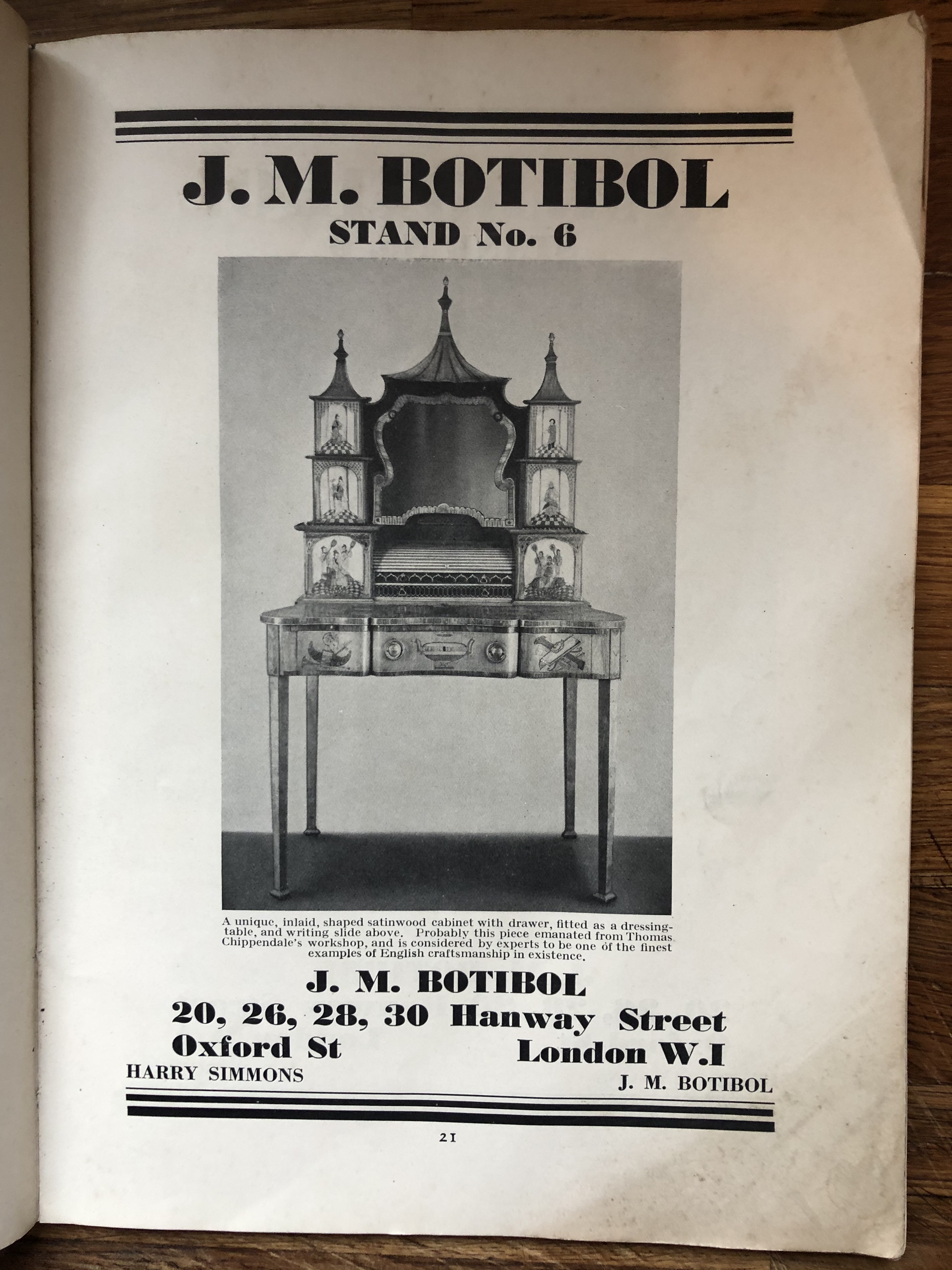
  The other interesting aspect in the pages of the Antique Dealers’ Fair handbooks is in the presentation of information by the antique dealers.  In the first handbooks, in the 1935 and 1936 editions, the dealers seem to merely use the pages in the handbooks to reproduce magazine advertisements – they look like any dealer adverts of the period in magazines such as The Connoisseur or Apollo – here’s an example from the 1935 Antique Dealers’ Fair handbook for the well-known dealer Jessie M. Botibol. Indeed, many of the dealer advertisements in the 1935 handbook do not even illustrate any objects at all, and merely list the addresses and specialisms (antique silver, or ceramics, for example) of the dealer.

Advertisement for J.M. Botibol from The Antique Dealers’ Fair handbook 1935. Photograph, Antiques Dealers Research Project, University of Leeds.

Just two years later, from 1937, the pages of the handbooks shift format, and focus much more on objects that the particular dealer will have on display and for sale at the fair.  Here’s one example from the 1937 handbook, from the famous dealers Hotspur, then trading from Frith Street, Soho Square, London – as the caption at the bottom of the page states, ‘the above are displayed by Hotspur’.

Advertisement for Hotspur, Frith Street, London, in The Antique Dealers’ Fair handbook 1935. Photograph, Antiques Dealers Research Project, University of Leeds.

This is a minor change of course, but directs attention to how the handbooks for the Antique Dealers’ Fair began to act more like catalogues of an exhibition, rather than as commercial advertisements for the trade – and in this sense this shift also perhaps reflects the desires of those organising and participating in the fair to successfully blend the discourse of private and public value, positioning the fair as much for public education as for private profit.

The handbooks for The Antique Dealers’ Fair provide fascinating insights into the history of the antique trade in Britain, and I hope to compose some more blog posts on these important resources over the coming months.

Mark


Home Subjects

a working group dedicated to the display of art in the private interior, c. 1715-1914

The Period Room: Museum, Material, Experience

An International Conference hosted by The Bowes Museum and The University of Leeds

H. Blairman & Sons Ltd

A research project investigating the history of the antiques trade in Britain in the 19th & 20th centuries

Museum Studies Now?

'Museum Studies Now?' is an event which aims to discuss and debate museum and heritage studies education provision.

The Burlington Magazine Index Blog

art writing * art works * art market

East India Company at Home, 1757-1857

A research project investigating the history of the antiques trade in Britain in the 19th & 20th centuries