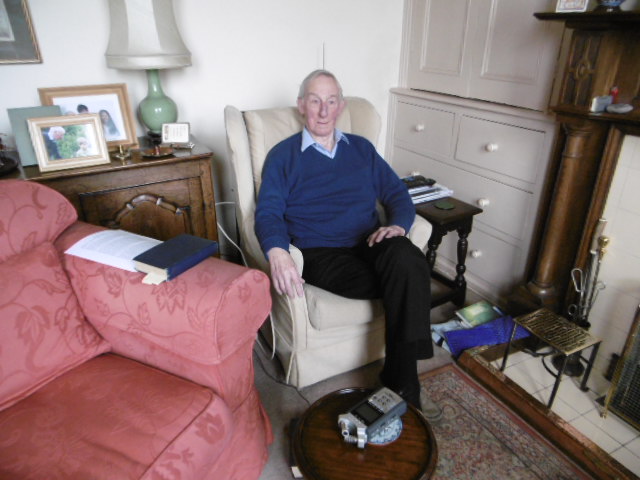
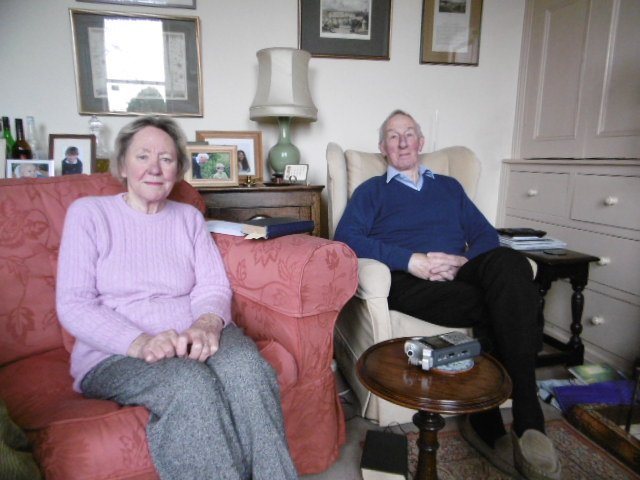
We were very sad indeed to hear that Tony Lumb, of the very well-known antique dealers Charles Lumb & Sons of Harrogate, Yorkshire, passed away over the Christmas period. Tony, together with his wife Mary, was a great supporter of the Antique Dealers Research Project at the University of Leeds – in fact we conducted an oral history interview with Tony and Mary (and James Lomax, former curator at Temple Newsam, Leeds) back in 2014 and we have very fond memories of Tony and Mary – they both came along to the premier of our film of the play ‘Quinneys’ (1915) which we made in 2021, screened at York Picture House in November 2021.
Tony Lumb at home in Knaresborough, 2014. Photograph, Antique Dealers Research Project, University of Leeds.
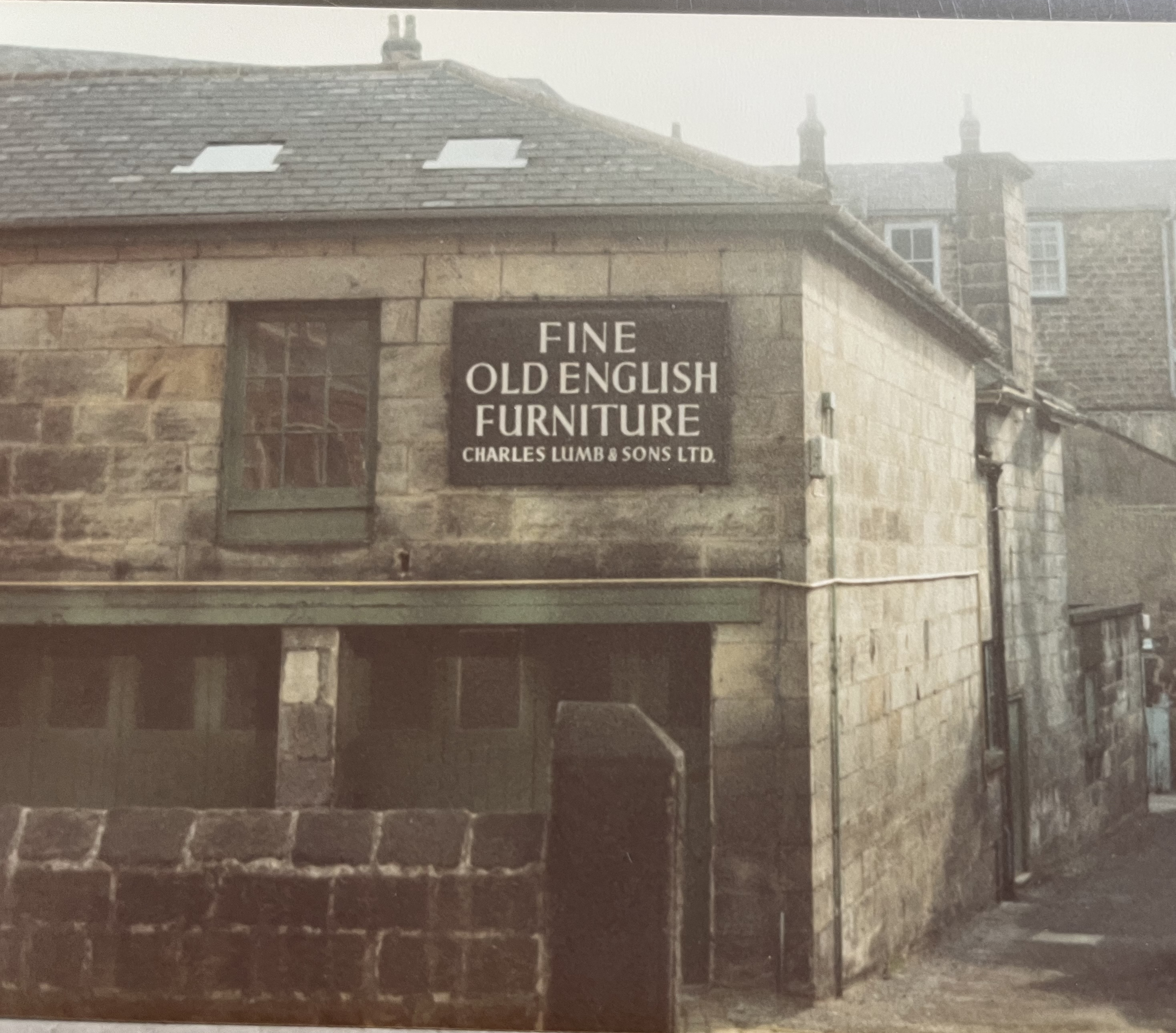
Tony was born in 1935 and joined his family antique dealing business, Charles Lumb & Sons, in 1956 after completing his National Service. The business had been started by Tony’s grandfather, Charles Lumb (1878-1963), who was born in Dewsbury, Yorkshire in 1878 and trained as a cabinetmaker; he established Charles Lumb & Sons as antique dealers in Harrogate in 1907. Below is a photograph of one of the early business premises of Charles Lumb, a small 19th century workshop where Charles Lumb traded from just after the end of the First World War in 1918 or 1919 – the photograph is from the 1980s, when Charles Lumb & Sons still owned the property and used it as a store for their stock of antiques.
Charles Lumb & Sons, Montpellier Street/Montpellier Mews, Harrogate; shop/workshop opened in about 1918/19. Photograph courtesy of Tony and Mary Lumb.
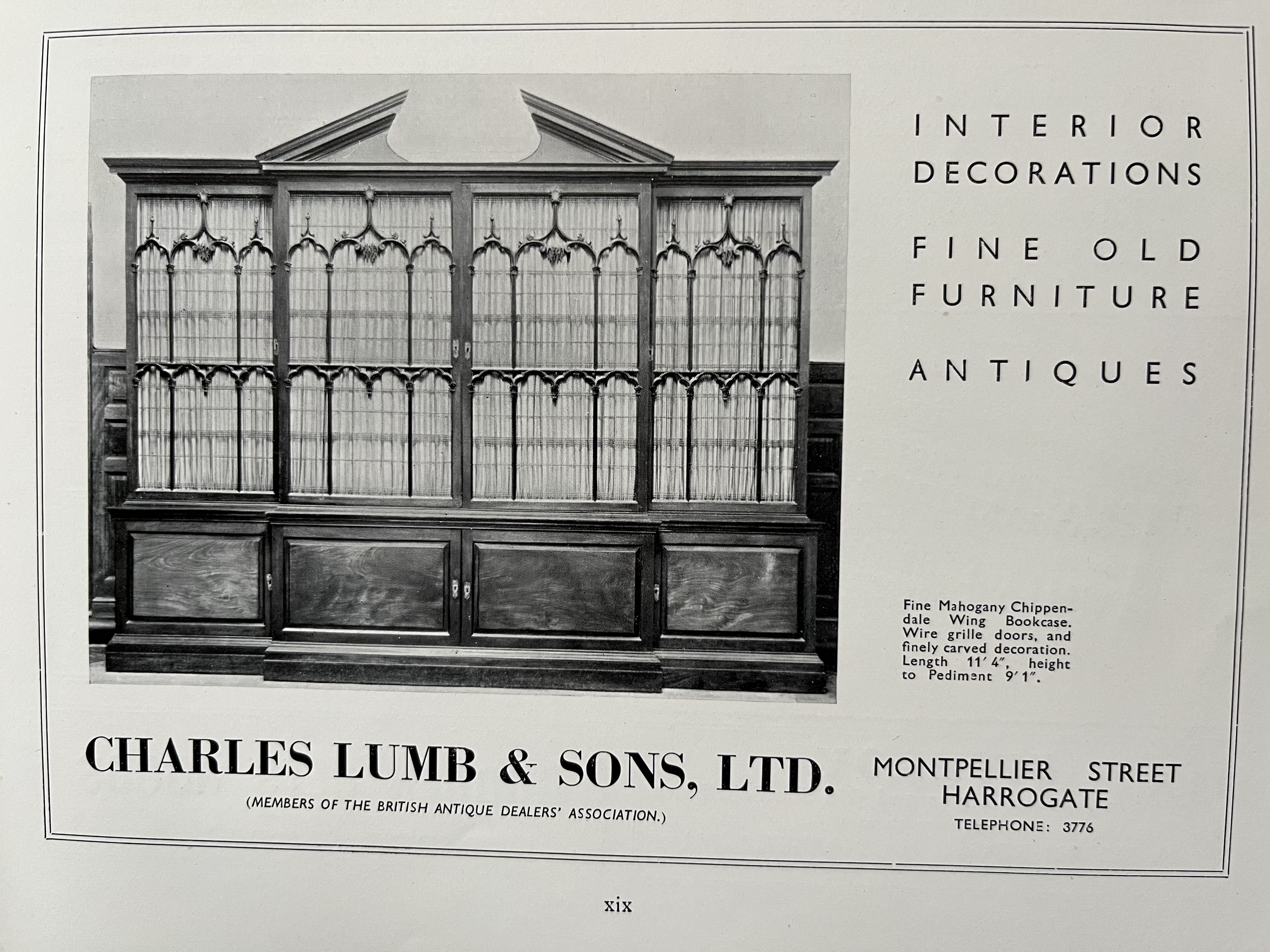
Charles Lumb opened a shop in Swan Road in Harrogate in the early 1920s, before moving to larger premises in Montpellier Street, Harrogate in the 1930s. Below is an advertisement produced by Charles Lumb & Sons in 1938, trading from their Montpellier Street address.
Charles Lumb & Sons, advertisement, Apollo, August 1938. Photograph, Antique Dealers Research Project, University of Leeds.
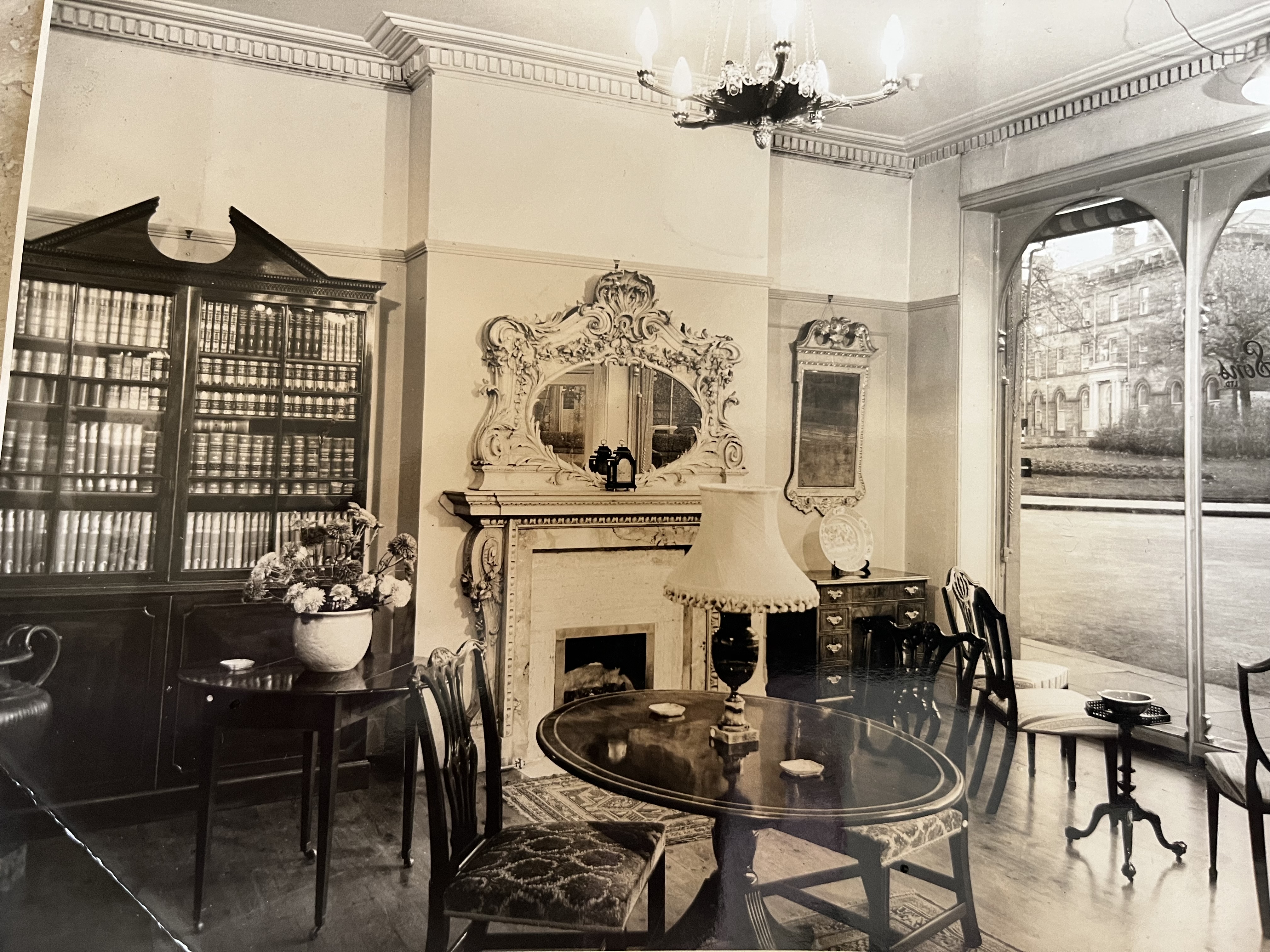
Tony’s father, Frank Lumb and his uncle Reg, together with Tony, ran the antique business after Charles Lumb died in 1963. By then they had moved the business, opening a new shop at 34 Montpellier Parade, Harrogate in 1947, and were one of the most important antique dealers in the UK. Below is a photograph of Charles Lumb’s shop at Montpellier Parade in 1954, just a couple of years before Tony Lumb joined the business in 1956.
Charles Lumb & Sons, Montpellier Parade shop interior, 1954. Photograph courtesy of Tony and Mary Lumb.
When Reg Lumb died in 1976 Frank, with Tony and Mary, continued to run the antique dealing business; Frank Lumb was working in the antique shop until his early 90s; he died aged 97 in 1993. Tony and Mary finally closed Charles Lumb & Sons in 2012.
Mary and Tony Lumb, 2014. Photograph, Antique Dealers Research Project, University of Leeds.
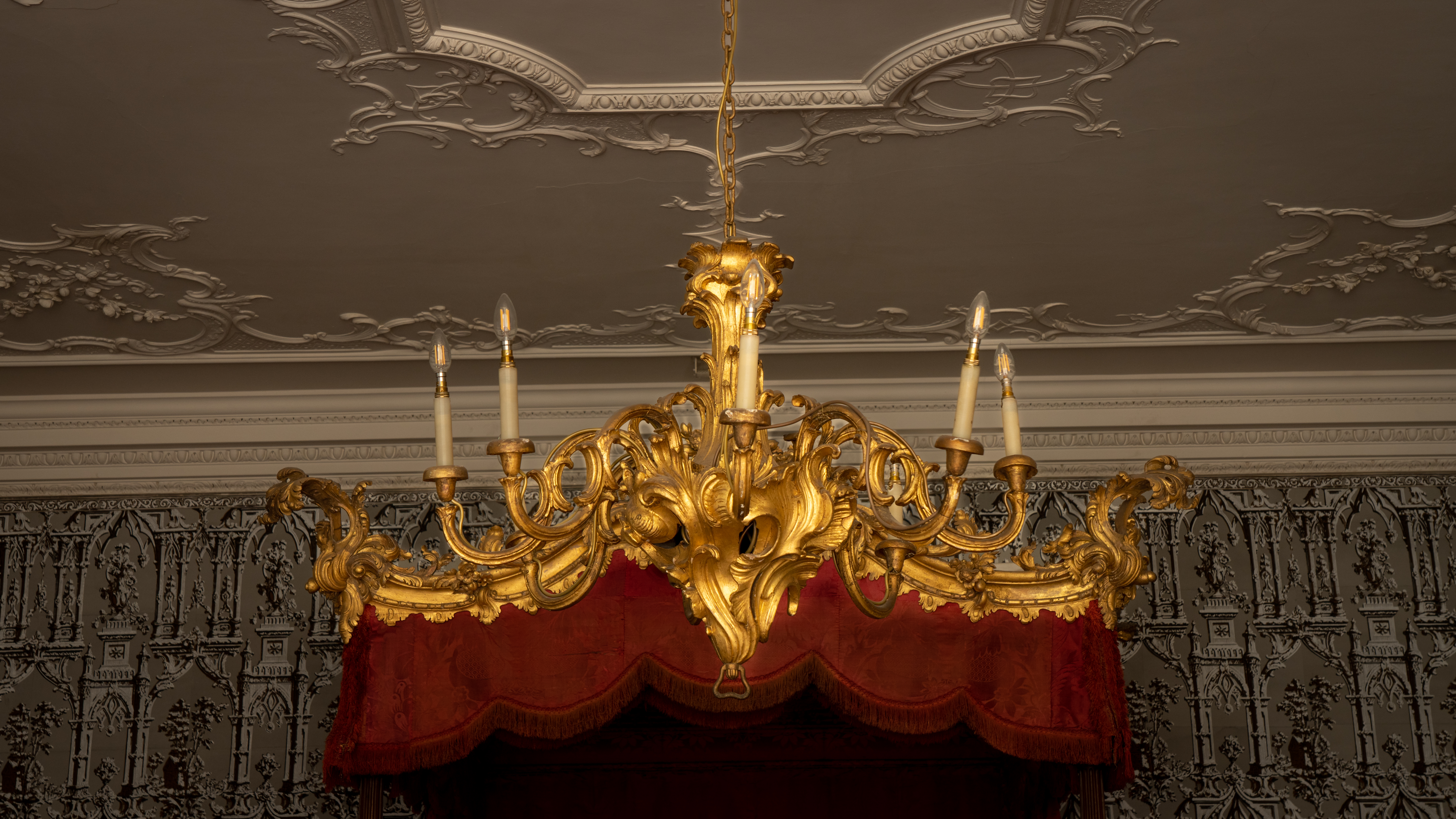
Tony served on the Council of the British Antique Dealers Association (BADA) in the 1970s, and served as Vice President of the BADA during the early 1980s. He was always interested in the developments of the Antique Dealers Research Project at the University of Leeds, and were so sorry to hear that he had passed away. We were particularly sorry that Tony will not see the launch of the Year of the Dealer project (which launches on 1st March 2026) – Charles Lumb & Sons are the subject of one of the ‘dealer trails’ films at Temple Newsam, the country house museum near Leeds. This wonderful 18th century Dutch giltwood chandelier (see below) is featured in the short film focused on Charles Lumb & Sons – (the chandelier was sold to Temple Newsam by Charles Lumb & Sons in 1950, for £159 and 10 shillings).
18th century Dutch giltwood chandelier at Temple Newsam, Leeds. Photograph, Antique Dealers Research Project, University of Leeds and Leeds Museums & Galleries.
We send our sincerest condolences to Mary and the Lumb family.
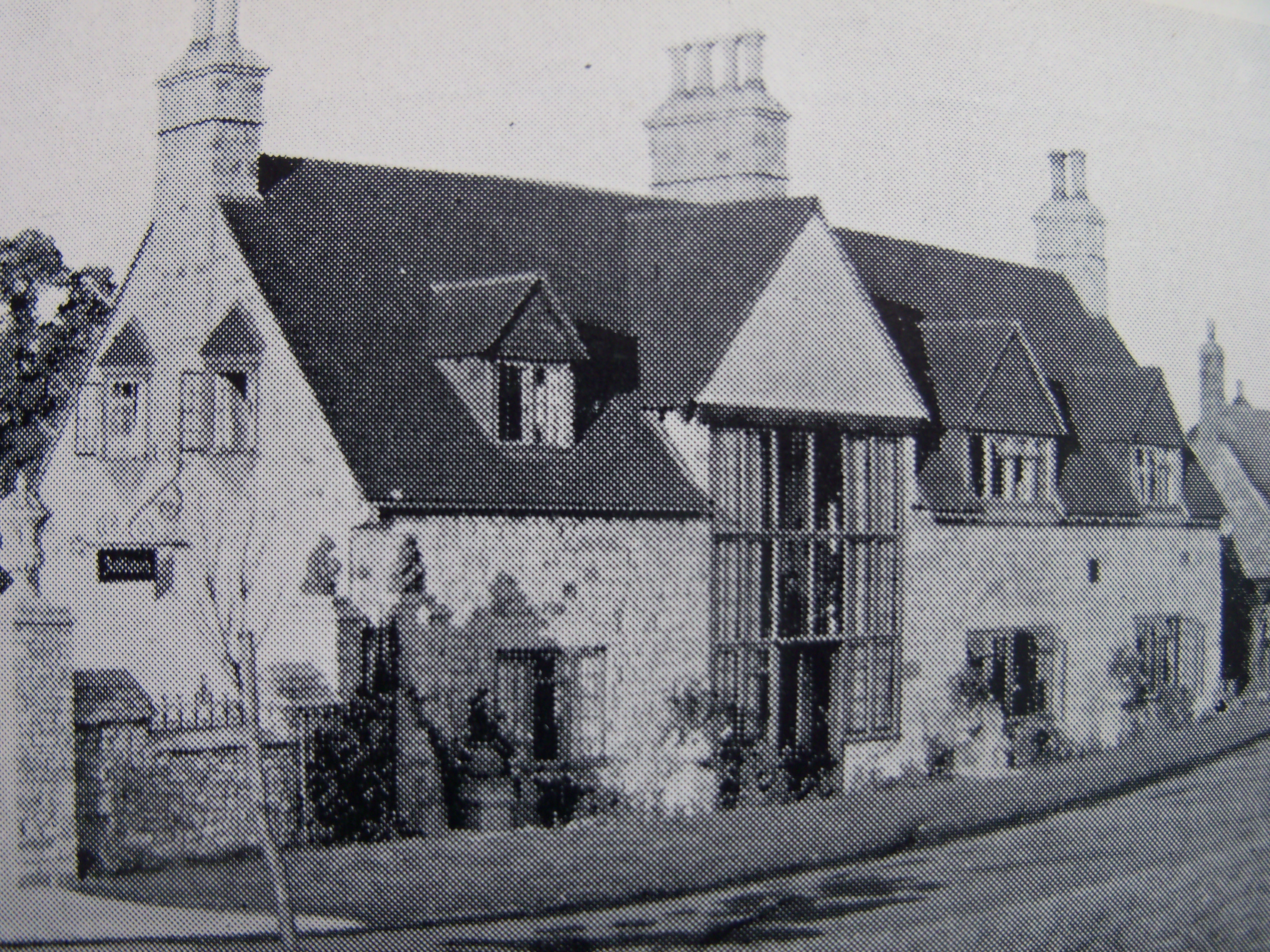
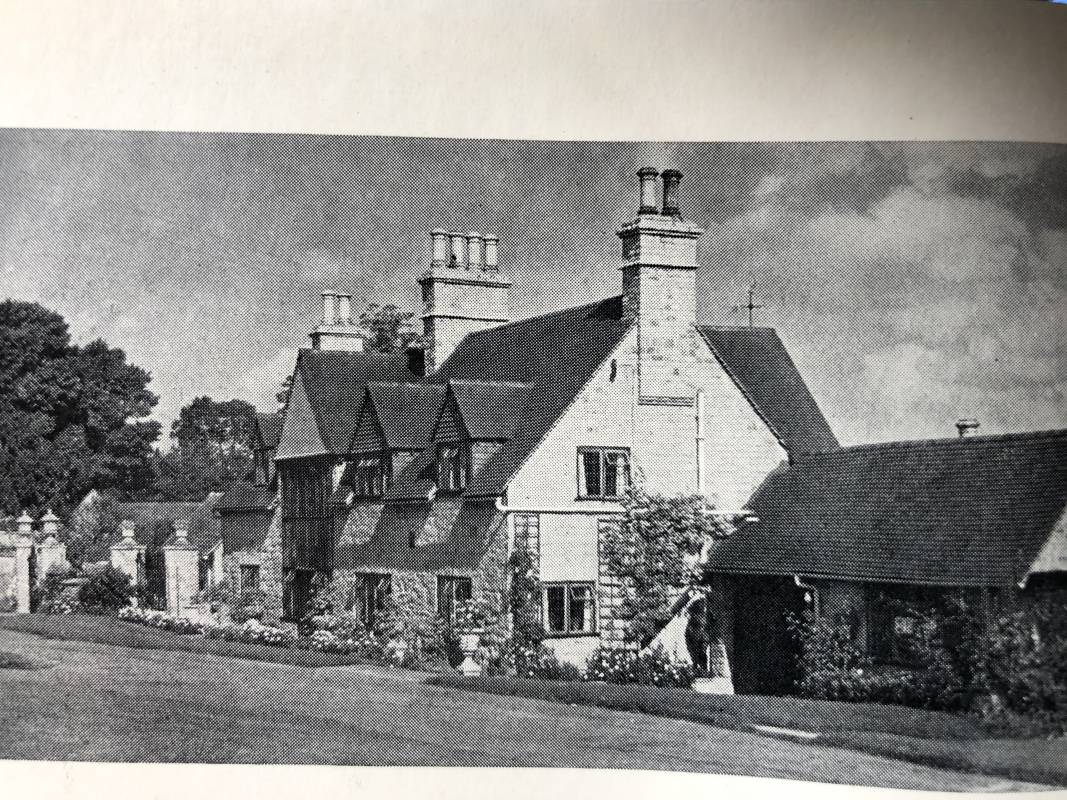
Our theme of ‘Antique Shops Then and Now’ continues with part III. The main antique shop ‘Then and Now’ focus is ‘Shirley Brown’ – an antique shop in Tredington, Warwickshire. Shirley Brown was established in 1923 in Shirley in the West Midlands. Our friend, the antique dealer David Love of Harrogate, who initially worked in his mother’s antique shop, Araxie Love in Shipston-on-Stour, near Tredington, tells us that the business was actually owned by the antique dealer Joseph Brown but Joseph called it ‘Shirley Brown’ as there was another dealer called Brown trading in Shirley at the time. Shirley Brown moved to Tredington in 1948, opening his business in a large historic house – here’s Shirley Brown’s shop in the 1950s.
Shirley Brown antique shop, Tredington, Warwickshire, 1953. Photograph, Antiques Year Book 1953 (Tantivy Press).Shirley Brown antique shop, Tredington, Warwickshire, 1955. Photograph, Antiques Year Book 1955 (Tantivy Press).
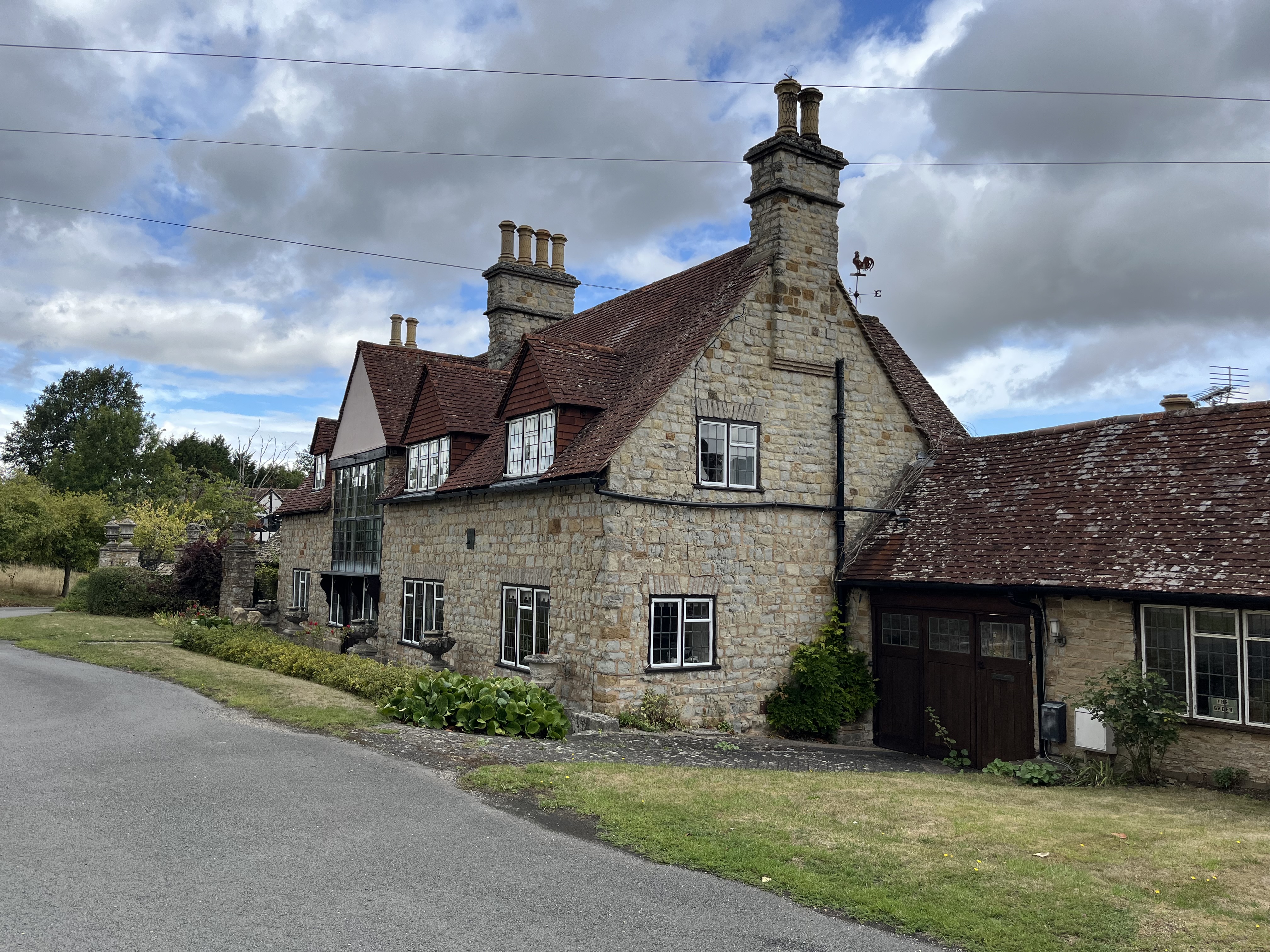
Here is the building (no longer an antique shop; it’s now a private home), in 2025 – it’s remained remarkably the same over the past 70 years (even the weather vane remains!)
House in Tredington, Warwickshire, formerly Shirley Brown antique shop. Photograph Antique Dealer Research Project, University of Leeds, 2025.
The building that ‘Shirley Brown’ chose for their antique shop is a typical historic house antique shop business and continued a trend for antique shops trading from historic buildings that goes back to at least the 1920s in Britain – see numerous blog posts on this theme (if you search ‘historic house’ in the Blog search function you’ll see them all).
Shirley Brown was elected to the British Antique Dealer’s Association (BADA) in 1933 and traded from Tredington until the mid 1980s when the business closed, after almost 40 years in Tredington and 60 years trading overall. Tredington is a quiet village rather than a bustling commercial centre, but was obviously a profitable location for an antique shop – it also had ‘The Thursday Shop’, owned and run by Margaret Jameson, who established her antique shop there in 1940 (and also was still trading in the early 1980s). Margaret is more famous as the author of ‘The Thursday Shop’ an autobiographical account of her life as an antique dealer, published in 1969 under the pseudonym of ‘Anne Summers’. Her shop was only open to retail shoppers on a Thursday (hence the title of her book).
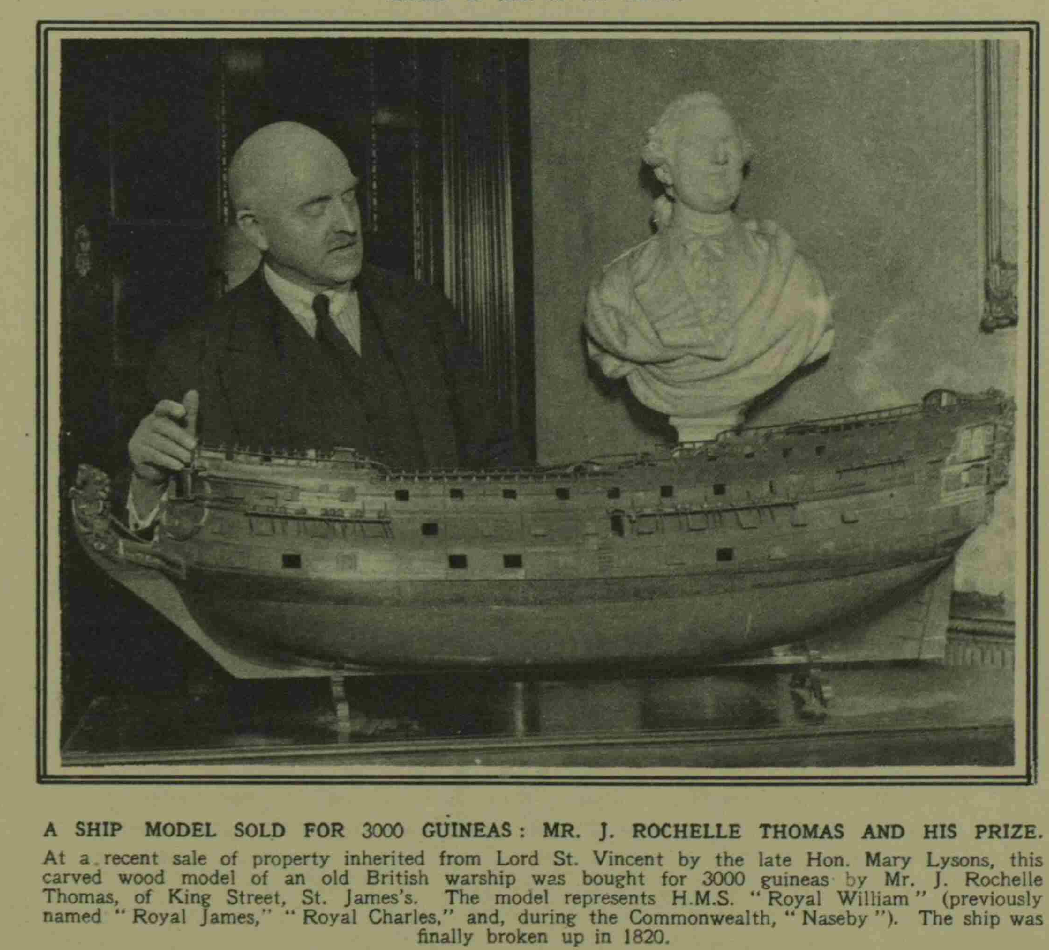
Our friend Chris Coles very kindly sent me a photograph of the antique dealer J. Rochelle Thomas (thank you Chris!), and as it’s quite unusual to have photos of historical antique dealers I thought I’d make a blog post about Rochelle Thomas – as you’ll see, he was a very important dealer, but appears (like most of the important dealers of the past) to have been lost to history! Anyway, here’s the photo from Chris:
J. Rochelle Thomas with a model ship, from Illustrated London News, April 21st 1928, p.675. Kind thanks to Chris Coles.
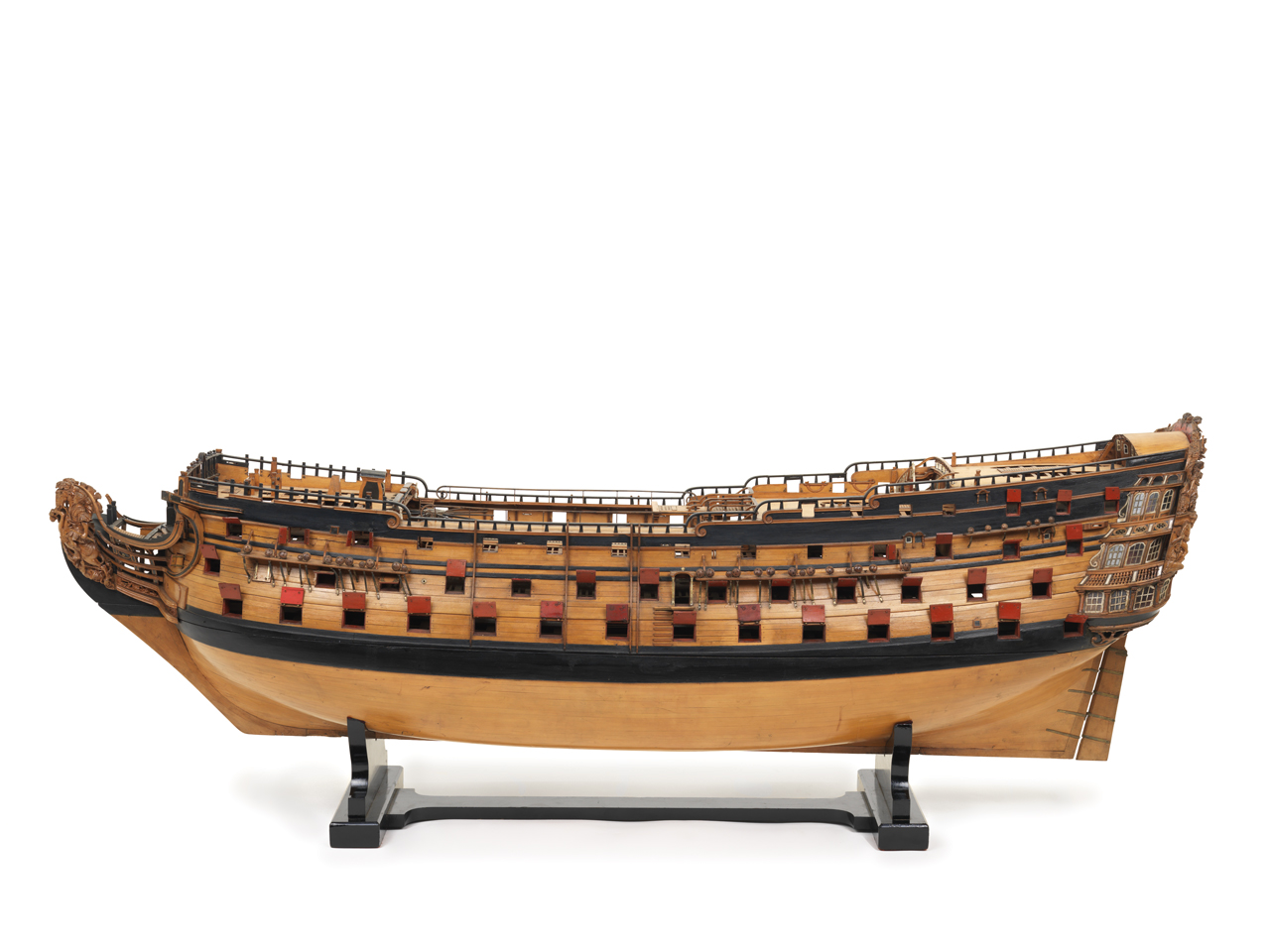
The photograph shows Joseph Rochelle Thomas (1865-1938) with a wooden model of the warship ‘Royal William’ (1719) scale 1.48, and made in 1719. As the report states, Rochelle Thomas bought the ship model (I guess in 1928) for 3,000 guineas (£3,150), an enormous sum (hence the newspaper report), which would have been as much as £1.3m at the time – in relative income value – see measuring worth.com The model is now in the National Maritime Museum at Greenwich (not on display); it seems to have been acquired by the museum through the antique dealer J.M. Botibol, who had a well known antique shop in Hanway Street in London in the period. Chris tells me that the ship was advertised as ‘seen by appointment at Mr. Botibol’s shop’. It may be that Rochelle Thomas and Botibol bought the ship model in partnership with one another (this was, and still is, a common practice in the antique trade).
Royal William (1719) wooden ship model 1.48 scale. 440mm x 1365mm x 320mm. National Maritime Museum, Greenwich, London. Image National Maritime Museum, Greenwich.
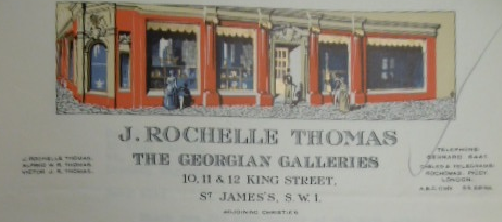
J. Rochelle Thomas was a very well established antique dealer by the 1920s; the business would later expand to New York selling to many wealthy American collectors, including scores of English antiques to Henry Francis du Pont (1880-1969); du Pont’s collections of American antiques remain at Winterthur Museum in Delaware, USA. Indeed, here’s an image of J. Rochelle Thomas’ London shop from a letter sent to du Pont in 1931, which was right next door to Christie’s King Street auction rooms. The premises occupied by Rochelle Thomas are now part of Christie’s auction rooms.
Letterhead, J. Rochelle Thomas, King Street, St. James’s, London, 1931. Photograph Antique Dealers Research Project, University of Leeds.
By this date (the 1930s), the J. Rochelle Thomas business was run by Joseph and his two sons Victor Joseph Rochelle Thomas (1887-1958) and Alfred William Rochelle Thomas (1886-1965). By the early 1950s Rochelle Thomas had opened a shop in New York, at 1166 Second Avenue – our friend Chris Jussel (formerly of Verney & Jussel, leading antique dealers in the USA) and a fount of knowledge about ‘old’ dealers, tells us that J. Rochelle Thomas’ shop in New York was run by Peter Thomas, (Joseph’s grandson), and that it occupied the former warehouse premises of Day, Meyer, Murray & Young; they had no shop window and so, as Chris says, it was an unusual move but the business continued to be a success given Rochelle Thomas’ reputation. Chris remembers visiting the Rochelle Thomas shop in the 1970s, when there were stacks of dinner services all over the floor. By the 1970s Rochelle Thomas opened a branch in Palm Beach, Florida, which, as Chris Jussel tells us, was run by Peter Thomas’ sons (Peter retired to Bermuda in the 1970s); the Palm Beach business traded into the 1980s but sadly Peter’s 2 grandsons died very young and the business closed in the 1980s – as Chris says, the end of a very important dealership. J. Rochelle Thomas sold many antiques to Francis du Pont (and many other American collectors) throughout the 20th century.
The Rochelle Thomas business began in 1859 (they celebrated a centenary year in 1959, according to some of their business letterheads) in Birmingham in the UK. It was started by Henry Thomas, who appears to have been born in about 1815 – the 1861 Census records Henry as aged 48 and working as an ‘ironmonger’ in Birmingham; by 1871 he was working as a ‘cutler’. His son, Joseph Rochelle Thomas (the man in the photograph) was born in 1865 and by the 1890s was described in the Census (1891) as ‘Dealer in Old Bank Notes’; by the 1911 Census Rochelle Thomas was describing himself as ‘Dealer in Pictures, Furniture and Porcelain’, and by 1921 he was ‘Dealer in Works of Art’. His sons, Victor and Alfred, both started working for their father’s antique dealing business from an early age and ran the business following Joseph Rochelle Thomas’ death in 1938. The business was also known as ‘The Georgian Galleries’. J. Rochelle Thomas was elected first President of the British Antique Dealers’ Association in 1918 as well as being a member of several international dealer associations (in Paris, Brussels and New York); so he was a highly respected dealer in the opening decades of the 20th century.
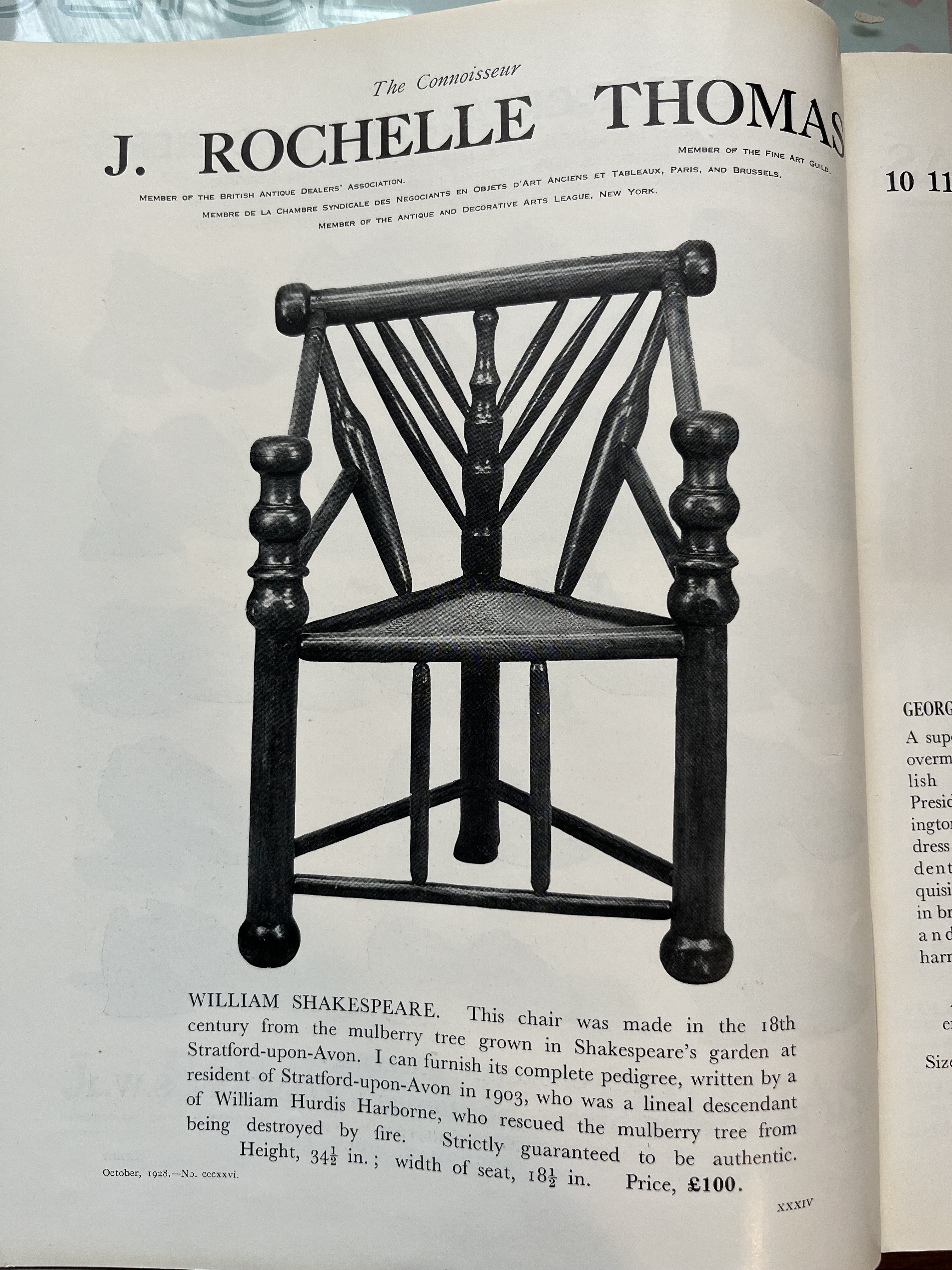
J. Rochelle Thomas appears to have been fascinated by objects that had interesting historical associations – in this sense he was certainly an antiquarian – and often advertised such objects in his sales advertising campaigns in magazines such as Apollo and The Connoisseur. One example (of many!) is an advert for a chair made from the famous (infamous!) mulberry tree wood from Shakespeare’s house in Stratford-on-Avon – if you’re interested in Shakespearian mulberry tree ‘relics’ do have a look at my essay on the subject (see – Mark Westgarth, ‘Well Authenticated Blocks’ in Shakespeare’s Afterlife in the Royal Collections edited by Sally Barnden, Gordon McMullan, Kate Retford and Kirsten Tambling, (Oxford University Press, 2025), pp.103-111)
Advertisement for J. Rochelle Thomas, The Connoisseur October 1928. Photograph Antique Dealer Research Project, University of Leeds.
The advert in The Connoisseur October 1928 illustrates an 18th century triangular chair, allegedly made from the wood of the famous mulberry tree – it was priced at £100. Not sure where the chair is now, but if anyone recognises it, do let me know!
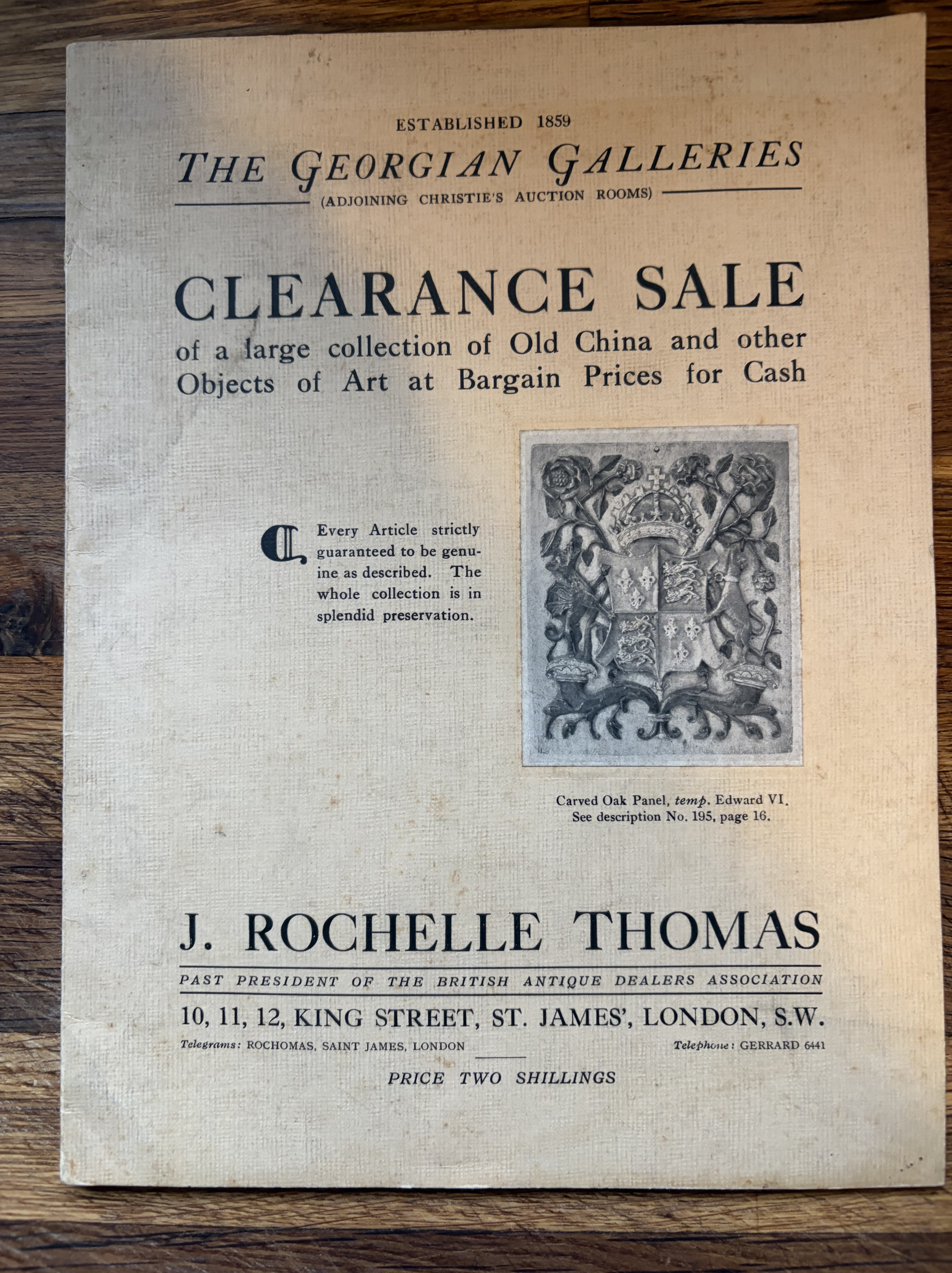
Coincidently a while ago I acquired an old sales catalogue produced by J. Rochelle Thomas in 1923 which also contains several items for sale with significant historical associations. The catalogue was issued to facilitate a ‘Clearance Sale’ that Rochelle Thomas undertook in 1923 as part of a refurbishment of his shop in King Street, St. James’s. As the catalogue states, ‘To my customers, as I am about to make extensive alterations to my premises I find it necessary to hold a Clearance Sale of the greater portion of my stock, and I am doing so at 50 per cent. in every case below the original marked prices in order to realise promptly.’ Here’s the cover of the catalogue:
J. Rochelle Thomas sales catalogue, 1923. Photograph Antique Dealers Research Project, University of Leeds.
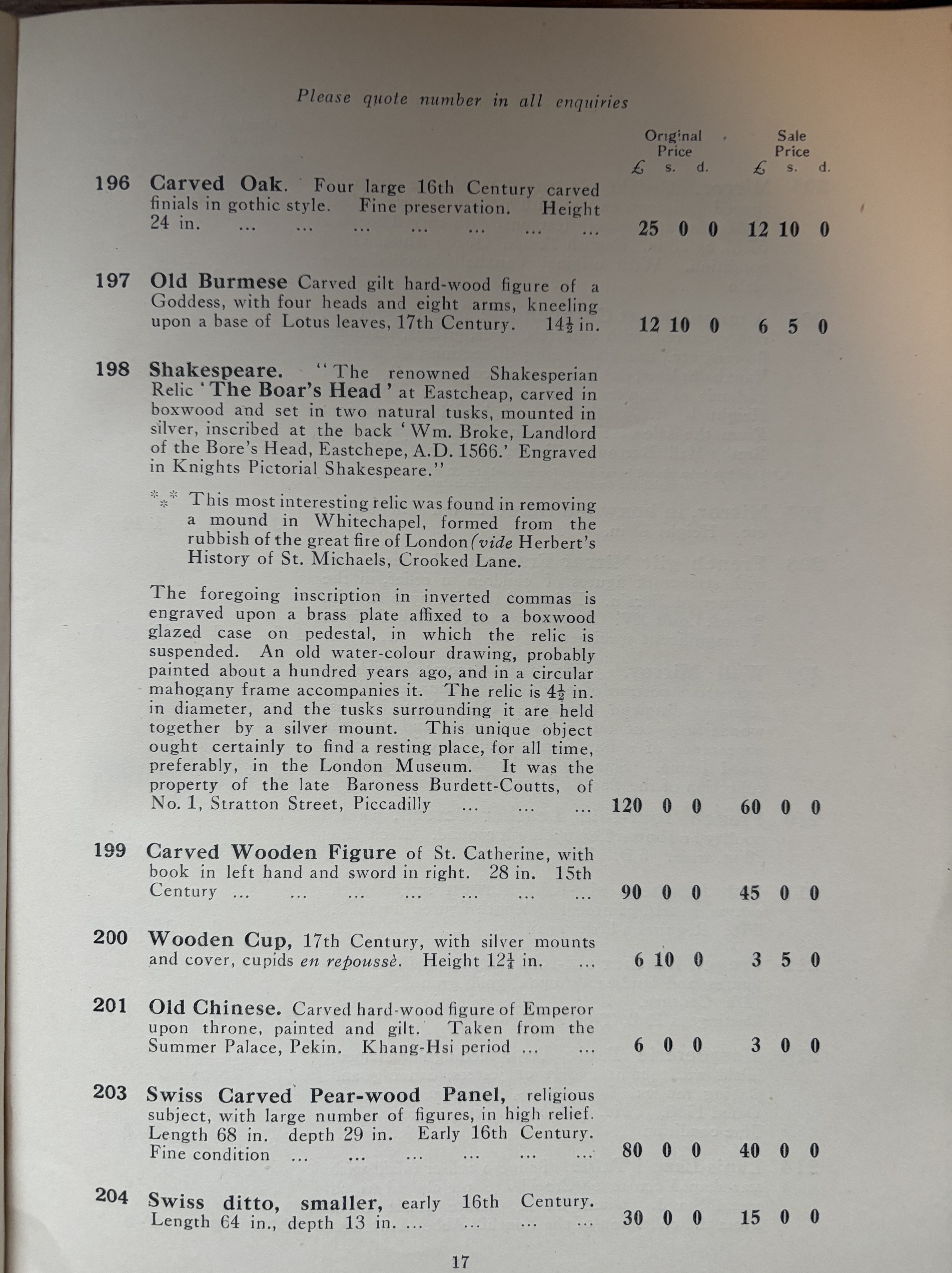
Sadly the catalogue does not have any photographs of the items for sale except the front cover image of what is described as ‘Carved English Royal Coat of Arms, Period Edward the 6th; fine preservation. A great rarity’ (priced at £37.10.0s, reduced from £75). The catalogue has more than 750 antiques for sale at 50% discount, including some important historical ‘relics’. Item 198 for example (see below) ‘The renowned Shakespearian Relic ‘The Boar’s Head’ at Eastcheap, carved in boxwood and set in two natural tusks’ and priced at £60 (reduced from £120). This was a famous object in the 19th century, having been in several collections, including that of the antiquary Thomas Windus FSA (1778-1854).
J. Rochelle Thomas sales catalogue, 1923. Photograph Antique Dealers Research Project, University of Leeds.
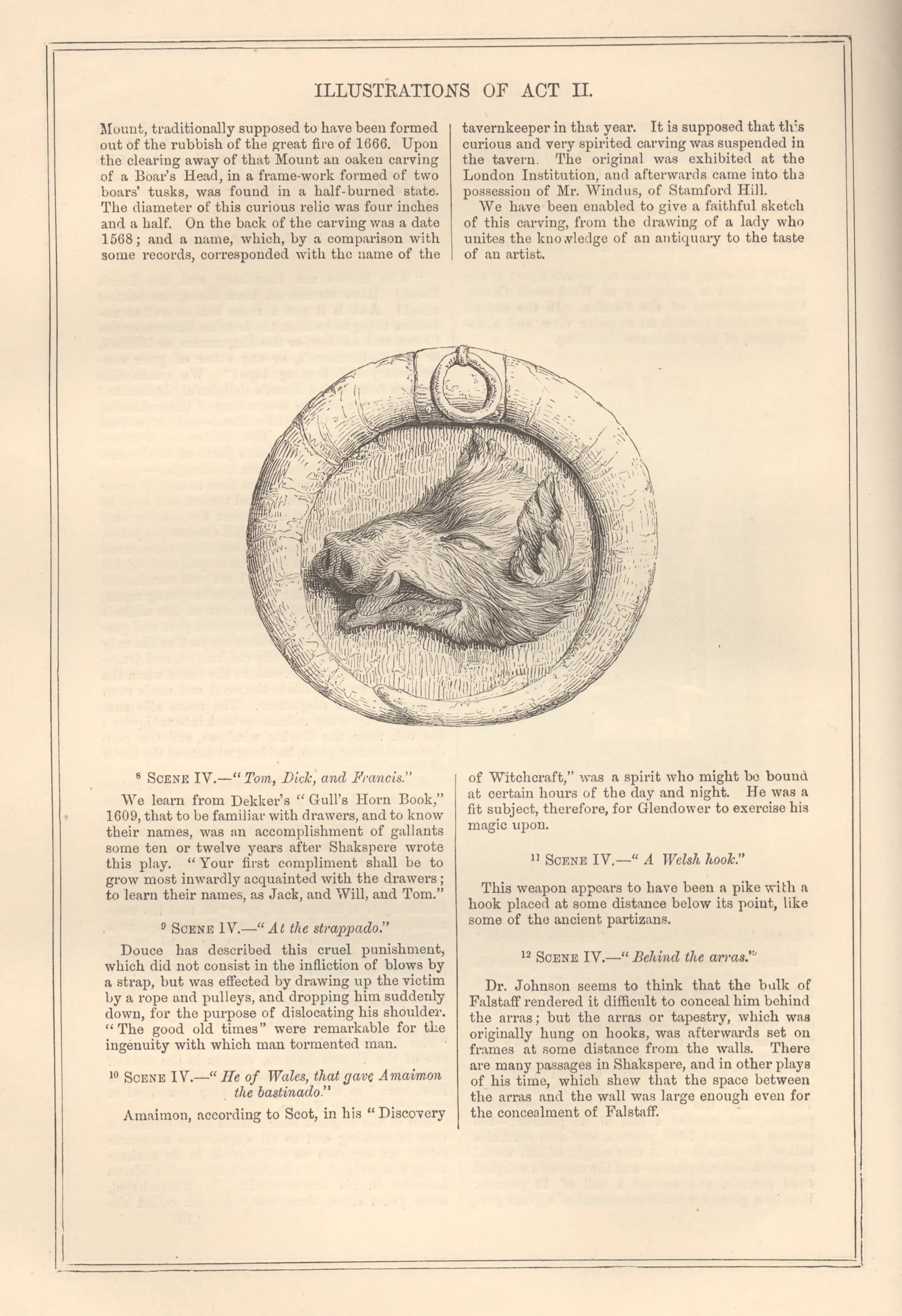
The ‘Boar’s Head’ was offered for sale at the auction of the collection of Thomas Windus in 1855 where it was reportedly sold for £25 and 4 shillings to the Shakespeare scholar James Halliwell-Phillipps (1820-1889), editor of a lavish Shakespeare Folio edition at the time. It was illustrated in The Pictorial Edition of the Works of Shakespeare edited by Charles Knight (volume 1, 1839-42) – (see below).
The Pictorial Edition of the Works of Shakespeare edited by Charles Knight (volume 1, 1839-42).
However, the ‘Boar’s Head’ also appeared in the auction of the Windus collection sold by Ansley Windus (Thomas Windus’ son) in 1868, so perhaps it remained unsold at the 1855 auction or was retained by the family. According to the 1923 J. Rochelle Thomas catalogue the ‘Boar’s Head’ was the ‘property of the late Baroness Burdett-Coutts’ (1814-1906); it was offered for sale at £60 (discounted from £120). This important historical object has also subsequently disappeared so if anyone knows where it is, do let me know!
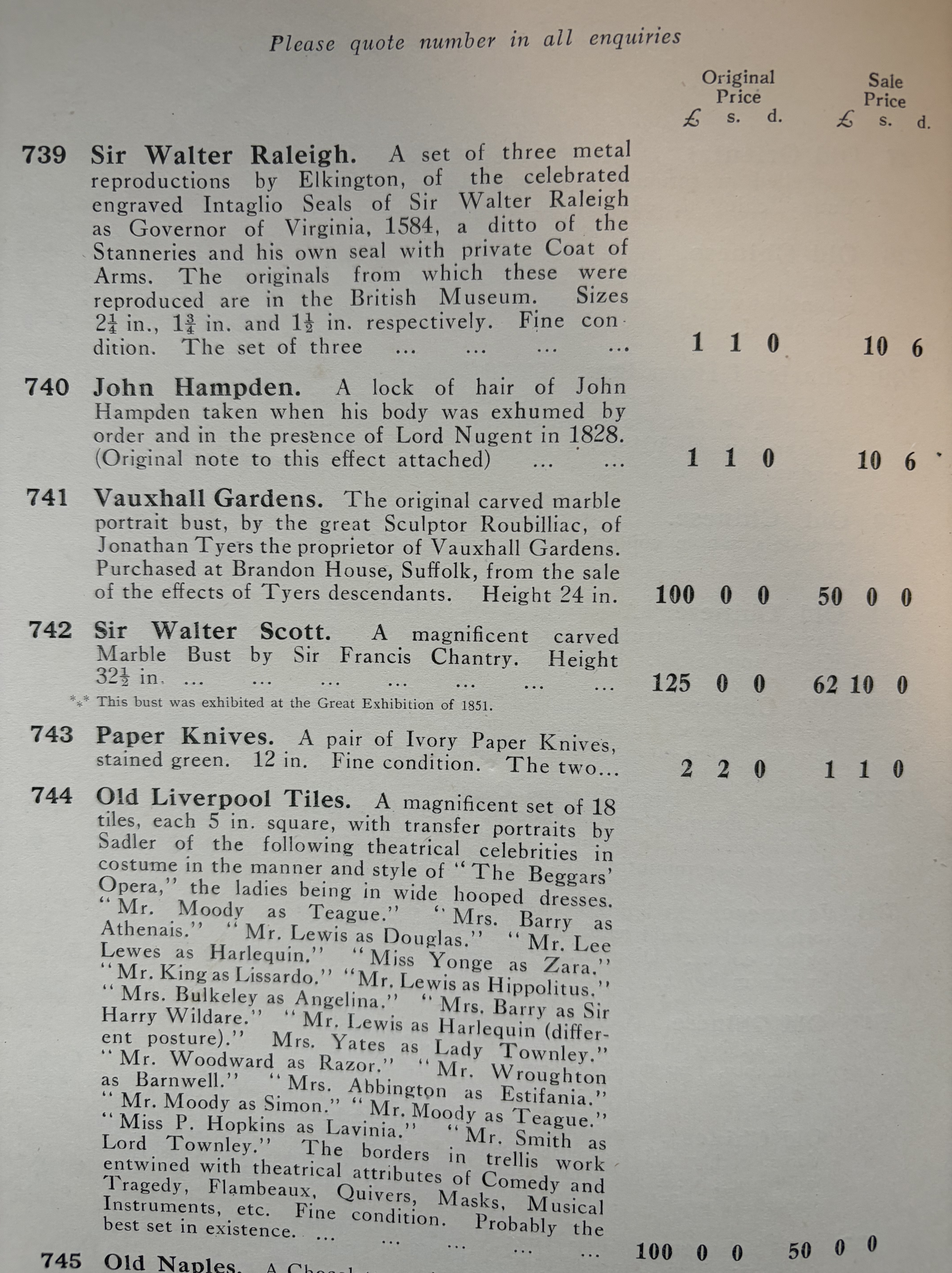
Another object offered for sale in the J. Rochelle Thomas catalogue has been easier to trace – Item 741 – ‘The original carved marble portrait bust, by the great Sculptor Roubilliac, of Jonathan Tyers the proprietor of Vauxhall Gardens. Purchased at Brandon House, Suffolk, from the sale of the effects of Tyers descendants.’ (£50, discounted from £100) – (see below):
J. Rochelle Thomas sales catalogue, 1923. Photograph Antique Dealers Research Project, University of Leeds.
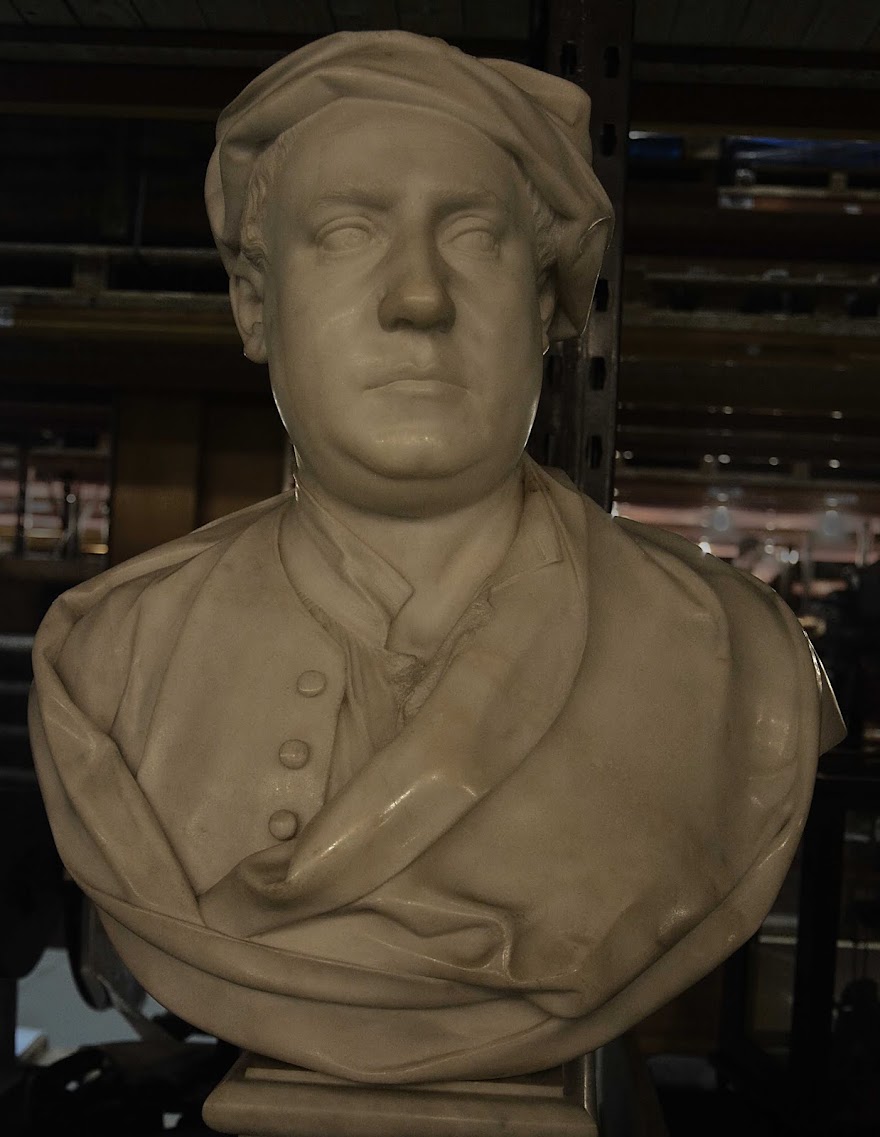
Here’s the sculpture (thanks to a photograph by David Bridgwater – see his blog HERE):
Louis F. Roubiliac (1702-1762) bust of Jonathan Tyers (1702-1767), c.1738. Birmingham Museums. Photograph David Bridgwater.
The marble bust is in the collections of Birmingham Museums, who acquired it in 1956 from the art dealer Frank Sabin. It has an illustrious antique dealer history though. It was acquired (it seems together with a terracotta bust of the same subject) by the well-known Norfolk-based antique dealer Rueben Levine (1865-1927) at the Brandon House auction sale in 1919 (see my blog post on the Levine family of dealers (27th July 2025) HERE. The terracotta bust was sold by G. Levine to the Victoria & Albert Museum in 1927 for £50 and remains in the V&A (see HERE). The marble version of the bust was sold at auction at Sotheby’s in 1927 (24th June 1927, Lot 77), and may have passed through several collections before it was eventually acquired by Birmingham Museums in 1956.
And so, a little photograph of Joseph Rochelle Thomas, kindly sent to us by Chris Coles, opened up a rich seam of research into one of the leading antique dealers of the 20th century – thank you Chris & Chris!
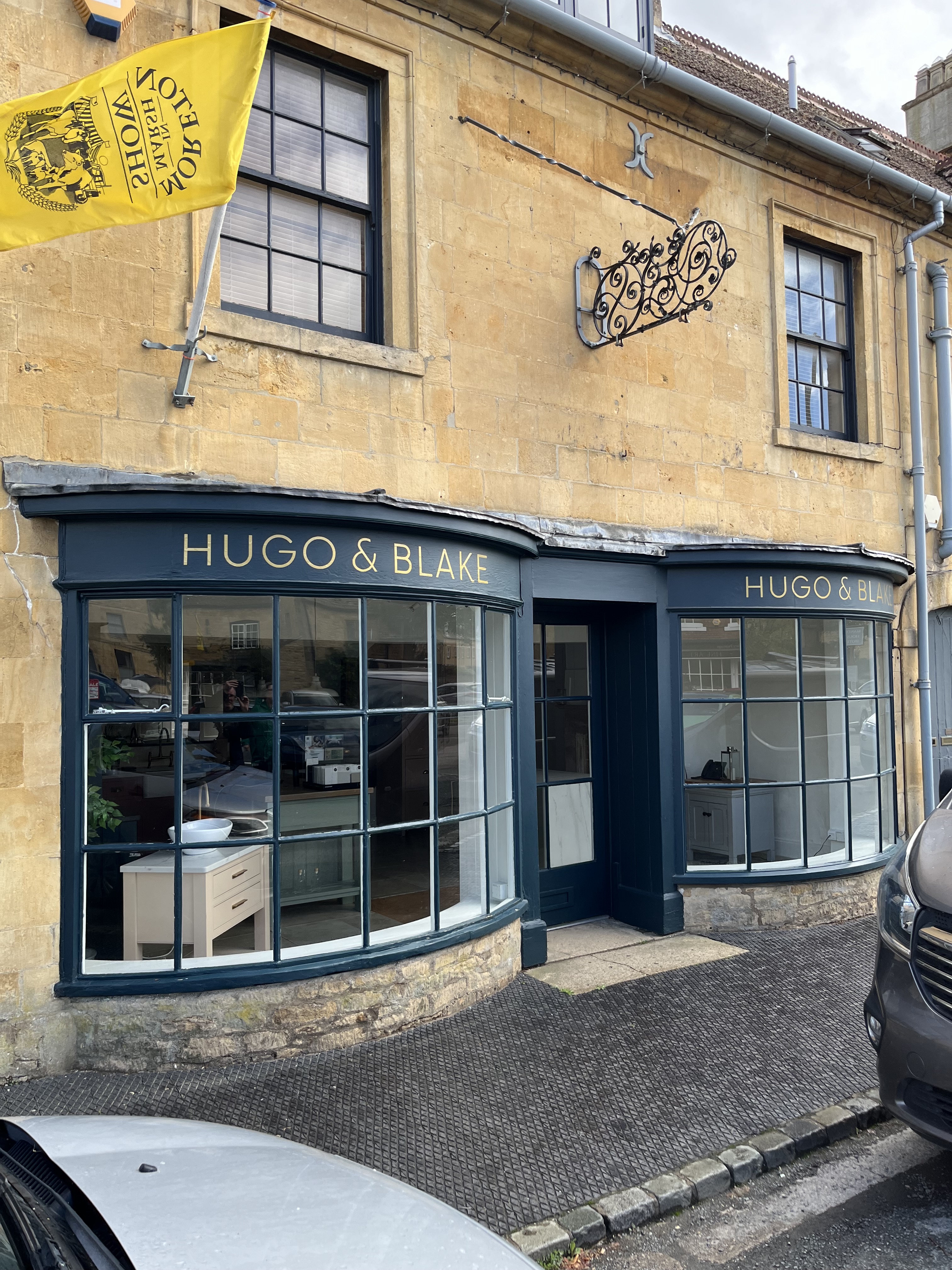
Our new theme of Antique Shops Then and Now (see Part I HERE) seems to have been quite popular, so here’s the second in the theme – with Crewsyke House, Moreton-in-Marsh, Gloucestershire and St. John’s House, Knaresborough, Yorkshire, in the frame. Crewsyke House (see below) is fine 18th century building, currently (as of September 2025) occupied by Hugo & Blake, ‘bespoke Kitchen and Furniture Makers’, and was recently also a holiday let, but was for the most part of the second half of the 20th century an antique shop; St. John’s House, Knaresborough, (see further below) an important 15th century building, formerly an antique shop in the 1950s, is now a private residence.
Crewsyke House, Moreton-in-Marsh. Photograph, Antique Dealer Research project, University of Leeds, 2025.
The new lives of these former antique shops is perhaps emblematic of the decline of the antique trade in Britain since the Millennium, at least in terms of the previously ubiquitous antique shop. Indeed, Moreton-in-Marsh, like many of the picturesque towns and villages in the Cotswolds, was once packed with antique shops in the Post-Second World War period, rising from about 5 or 6 antique dealers in the 1950s and 1960s, to at least 12 antique shops by the 1970s and 1980s, and 16 antique shops by the early 2000s. Knaresborough, perhaps surprisingly, has much a longer association with the antique shop; it already had 6 antique dealers by the early 1920s, rising to 15 in 1949, and 21 by the mid 1960s. Since then of course there has been a rapid decline in the numbers of antique shops in both Moreton-in-Marsh and Knaresborough, as well as across Britain more generally.
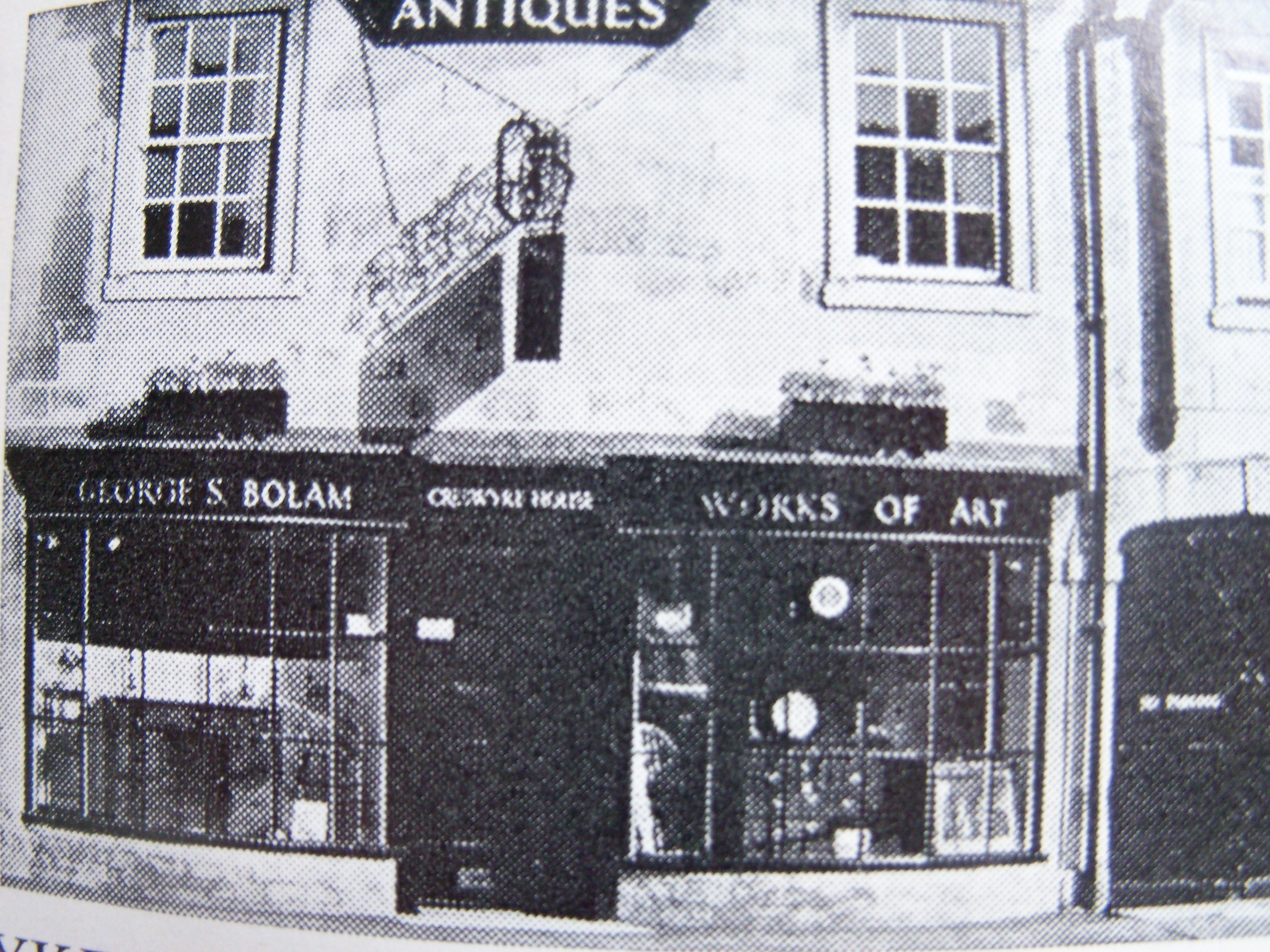
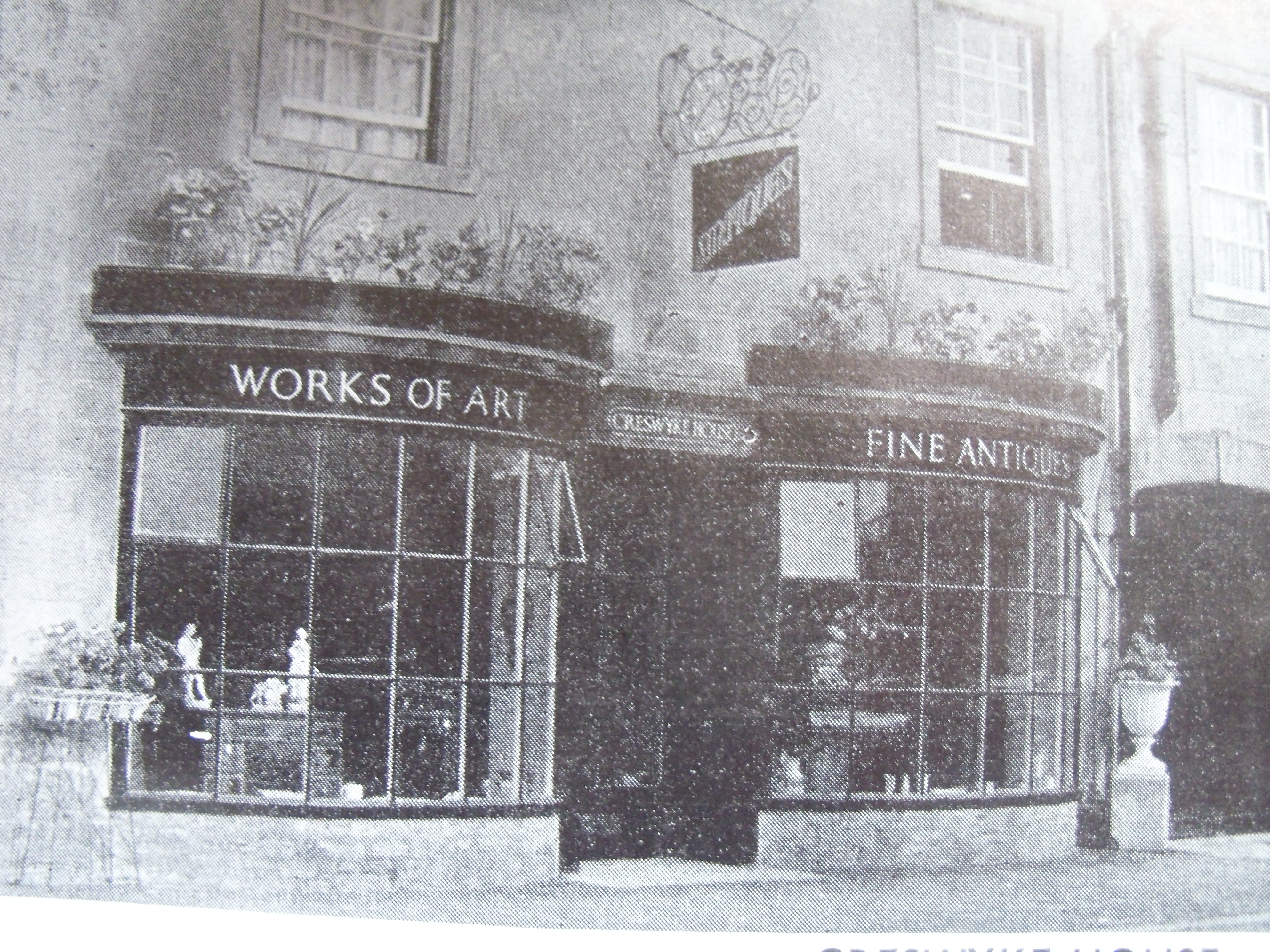
The last antique shop to operate out of Crewsyke House was the well-known dealer Simon Brett, who established an antique dealing business with his wife Edwina in 1972 and ran an antique shop at Crewsyke House from 1980 until the mid-2000s. But Crewsyke House had some other well-known antique dealers trading from the building prior to Simon Brett – George Bolam, for example, ran his antique business from Crewsyke House from about 1963 until 1979 (see below), when Brett took over the shop.
George Bolam’s antique shop, Crewsyke House, Moreton-in-Marsh, 1969. Antiques Year Book 1969, Tantivy Press Ltd.
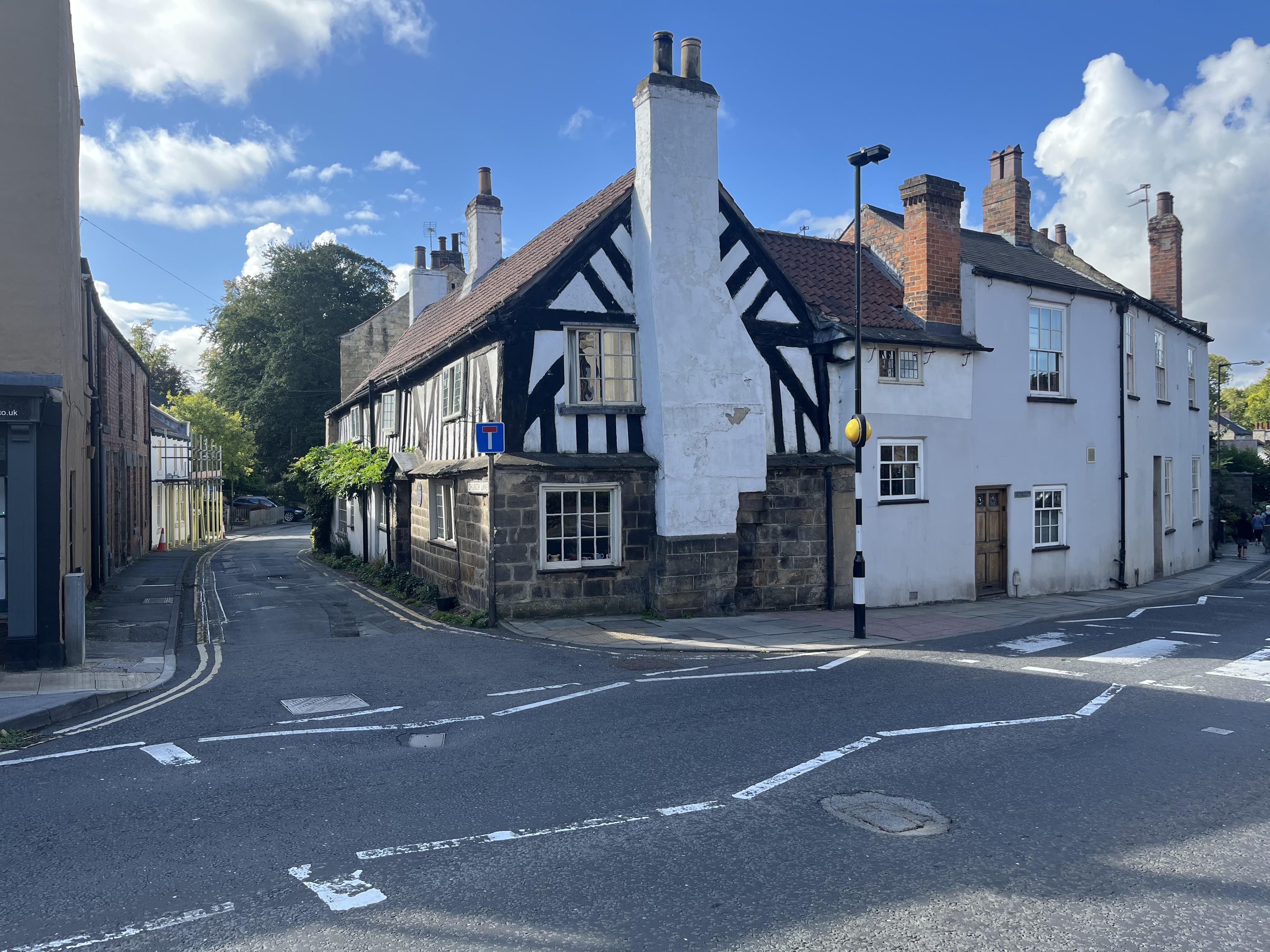
Bolam started his antique dealing business in 1946 immediately after the Second World War, like many more antique dealers who were demobbed following the war. Bolam began with a shop at 17 Albert Road in in Harrogate, Yorkshire, moving to Parliament Street in Harrogate by 1950; he was elected a member of the British Antique Dealers’ Association in 1951, before moving the business to St. John’s House, a 15th century historic building, in Knaresborough, North Yorkshire in 1957.
George Bolam’s antique shop, St. John’s House, Knaresborough, 1957. Antiques Year Book 1957, Tantivy Press Ltd.
Here is St. John’s House today – now a private house.
St. John’s House, Knaresborough, Yorkshire. Photograph, Antique Dealer Research project, University of Leeds, 2025.
Like many antique dealers Bolam seems to have liked trading from historic buildings and moved his business to the Manor House in Somerton, Somerset, a 17th century Listed Building in 1960. Shortly afterwards Bolam moved the business to Crewsyke House and seemed to have been more settled in Moreton-in-Marsh, staying there until 1979. He moved his antique business again in 1980 to 1 The Chipping, Tetbury, Gloucestershire, about 35 miles south of Moreton-in-Marsh.
Prior to George Bolam’s antique shop at Crewsyke House the property was also an antique shop, run by R. Holford Bailey, who traded at Crewsyke House from the mid-1950s until 1962 when Bolam took over the shop (see below). Holford Bailey moved to ‘Holdford House’, High Street, at nearby Bourton-on-the-Water, another picturesque location in the Cotswolds.
R. Holford Bailey’s antique shop, Crewsyke House, Moreton-in-Marsh, 1961. Antiques Year Book 1961, Tantivy Press Ltd.
So, Crewsyke House was an antique shop for over 50 years before the decline of the antique shop in Britain. Do look out for more blog posts in the series ‘Antique Shops Then & Now’ – I’ll see if I can find the shop with the longest continuous life as an antique shop in Britain – my hunch it that is will be Phillips of Hitchin, who were trading from The Manor House, Hitchin from 1884 until 2015, a total of 131 years!…. but I’ll see there are any other candidates.
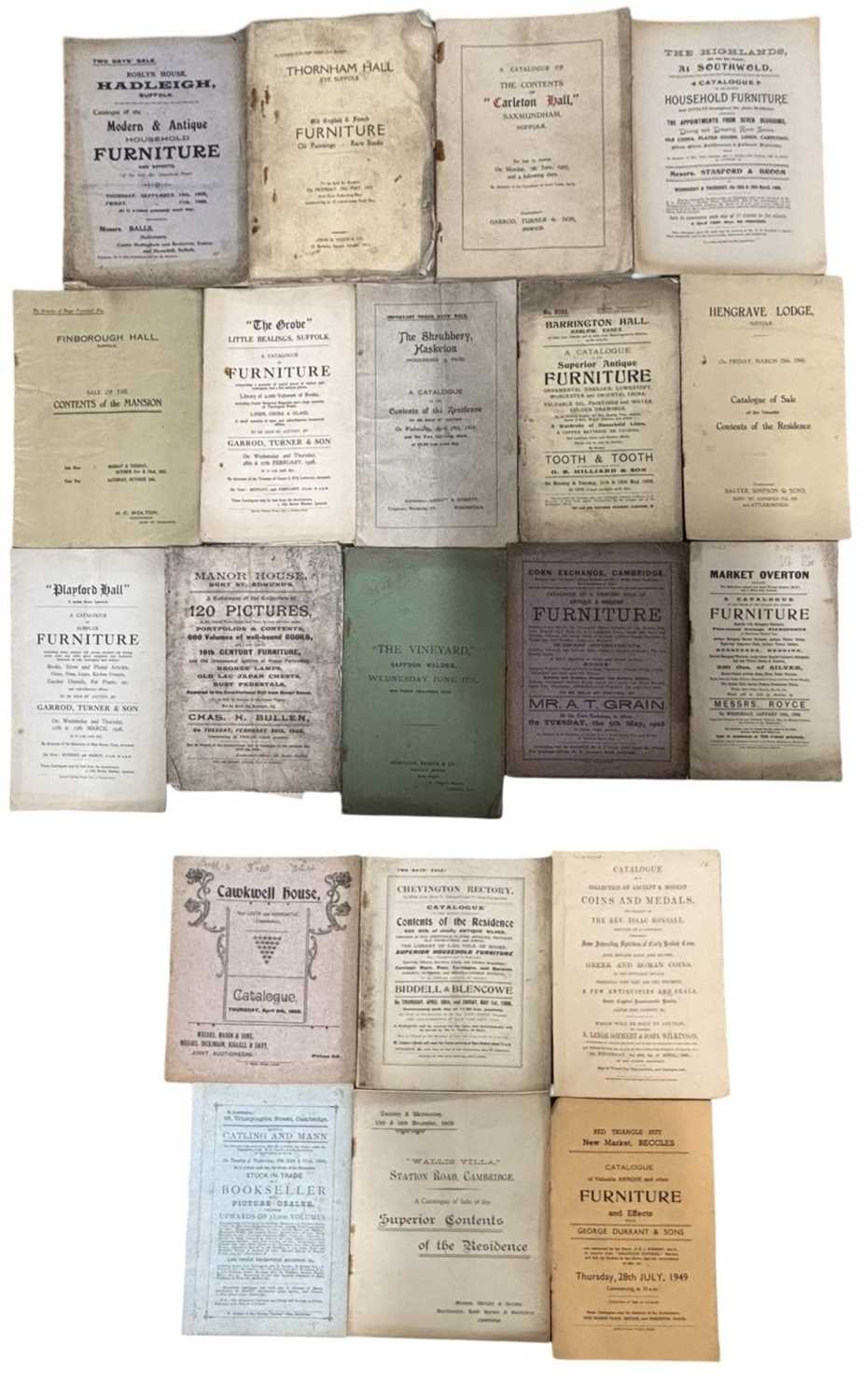
We were fortunate to acquire a small cache of old auction catalogues at auction last week (thank to Keys Auctioneers in Norfolk for the careful packing and posting!). I normally look out for old auction catalogues anyway as they are increasingly rare (especially small local auction sales of country house contents), but this set of catalogues has proved to be especially interesting as they had previously belonged to members of the well-known Levine family of antique dealers based in Norfolk. They give us a fascinating insight into early-and-mid 20th century antique dealing.
19th and 20th century auction catalogues sold by Key Auctioneers 16th-17th July 2025. Photograph, Keys Auctioneers.
The Levine family started as antique dealers in Norfolk in the 1860s with shops in Norwich and Cromer. Levine became specialists in antique silver, becoming a member of the British Antique Dealer’s Association (BADA) in 1920. Louis Levine (1865-1946) established Louis Levine & Son in the late 19th century and had shops in Prince of Wales Road, Norwich in 1900 – he was described as ‘Dealer in Plate, Jewels and etc.’ and as ‘Dealer in Antiquities’ in the 1901 and 1911 Census; he also had a shop in Church Street, Cromer and a shop in London (192 Finchley Road) from the mid 1920s. Rueben Levine (1865-1927), the son of a jeweller Moses Levine, was another member of the Levine family of antique dealers, establishing his business in 1891. Another family member, Edward David Levine (1906-1984) established an antique dealing business in 1931, employing his brothers Victor Jacob Levine (1896-1934) and Henry Levine (1904-1978); Henry established his own antique dealing business in 1935. It’s not unusual for a family to generate multiple antique dealing businesses – see our ‘guest’ blogpost in May 2025 by Andy King on the Lock family of dealers.
The auction catalogues range in date from the 1870s to the 1940s and relate to some significant country house auctions in Norfolk, Suffolk and the surrounding area, including Playford Hall, Ipswich (contents sold by Garrod, Turner & Son in March 1936); Finborough Hall, Suffolk (contents sold by H.C. Wolton in October 1935); Hengrave Hall, Suffolk (contents sold by Salter, Simpson & Sons in March 1946), Carelton Hall, Saxmundham, Suffolk (contents sold by John D. Wood in June 1937) and which was destroyed by fire in 1941, and Thornham Hall, Eye, Suffolk (contents sold by Garrod, Turner & Son in May 1937), which was partially demolished following the auction of the contents and finally destroyed in a fire in 1954.
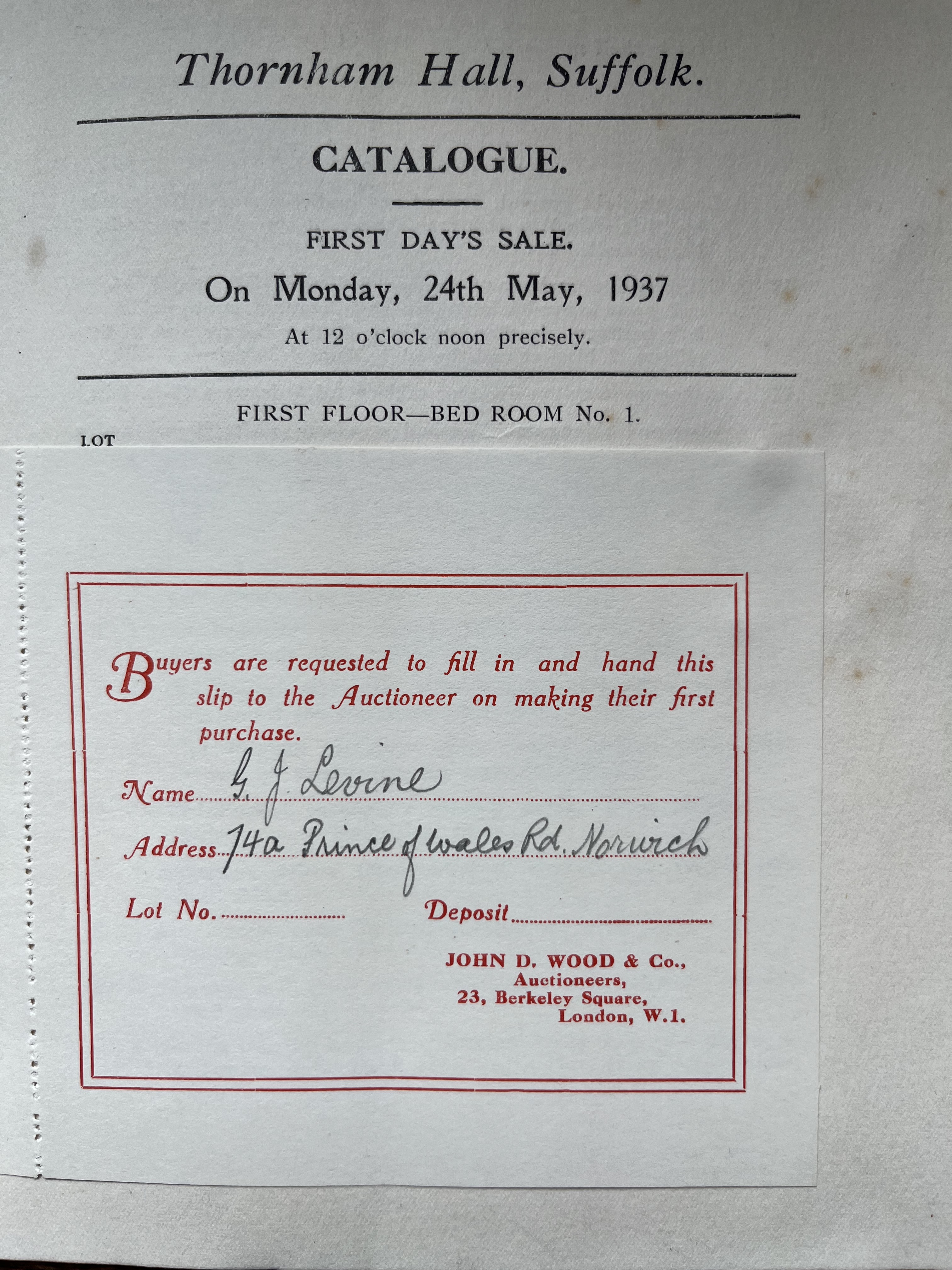
These 1930s and 1940s auction catalogues seem to relate to the Levine antique dealing business at 74a Prince of Wales Road, Norwich run by ‘R. Levine’, (Rueben Levine) established in 1891. A signature in an auctioneers slip that still remains in the Thornham Hall catalogue is that of ‘G. J. Levine’ (not quite sure who this is in the Levine family?) and an address 74a Prince of Wales Road, Norwich.
Thornham Hall auction catalogue with auctioneers slip. Photograph, Antique Dealer Research Project, University of Leeds.
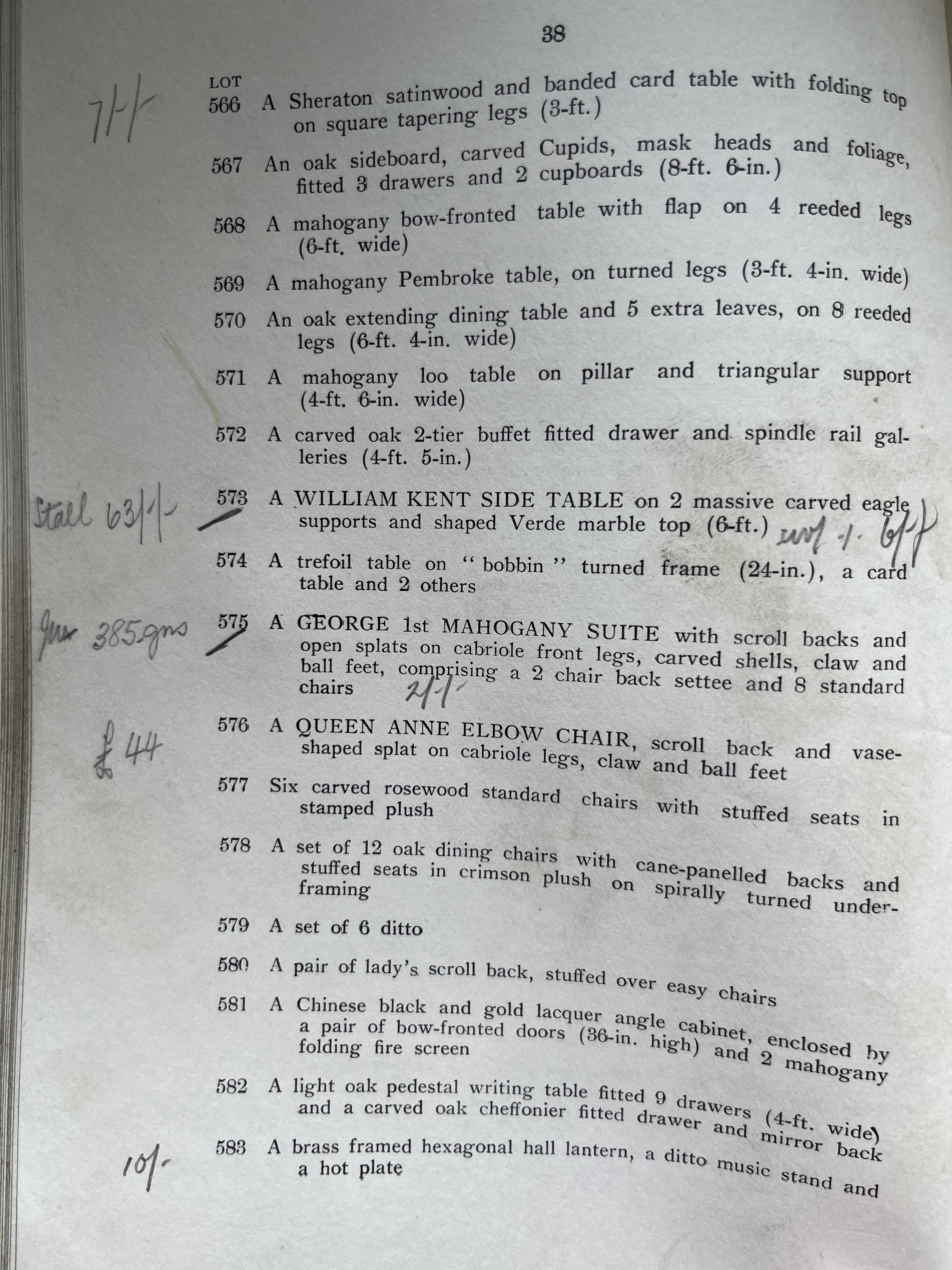
The Thornham Hall catalogue also contains annotations made by Levine, indicating maximum bids and some prices realised (in pounds, shillings and pence) with the names of other antique dealers who had bought important lots. Below (see picture), Lot 573, ‘A WILLIAM KENT SIDE TABLE’ was bought for £63 by the London dealer Isaac Staal & Sons (Levine writes it as ‘Stall’) important dealers in antique furniture with a smart shop in Brompton Road, London at the time. Lot 575, ‘A GEORGE 1ST MAHOGANY SUITE’ made the enormous sum of 385 guineas (£404 and 5 shillings – equivalent to about £148,000 at the time). Unfortunately there are no illustrations of the Lots in the catalogue.
Thornham Hall auction catalogue with Levine’s annotations. Photograph, Antique Dealer Research Project, University of Leeds.
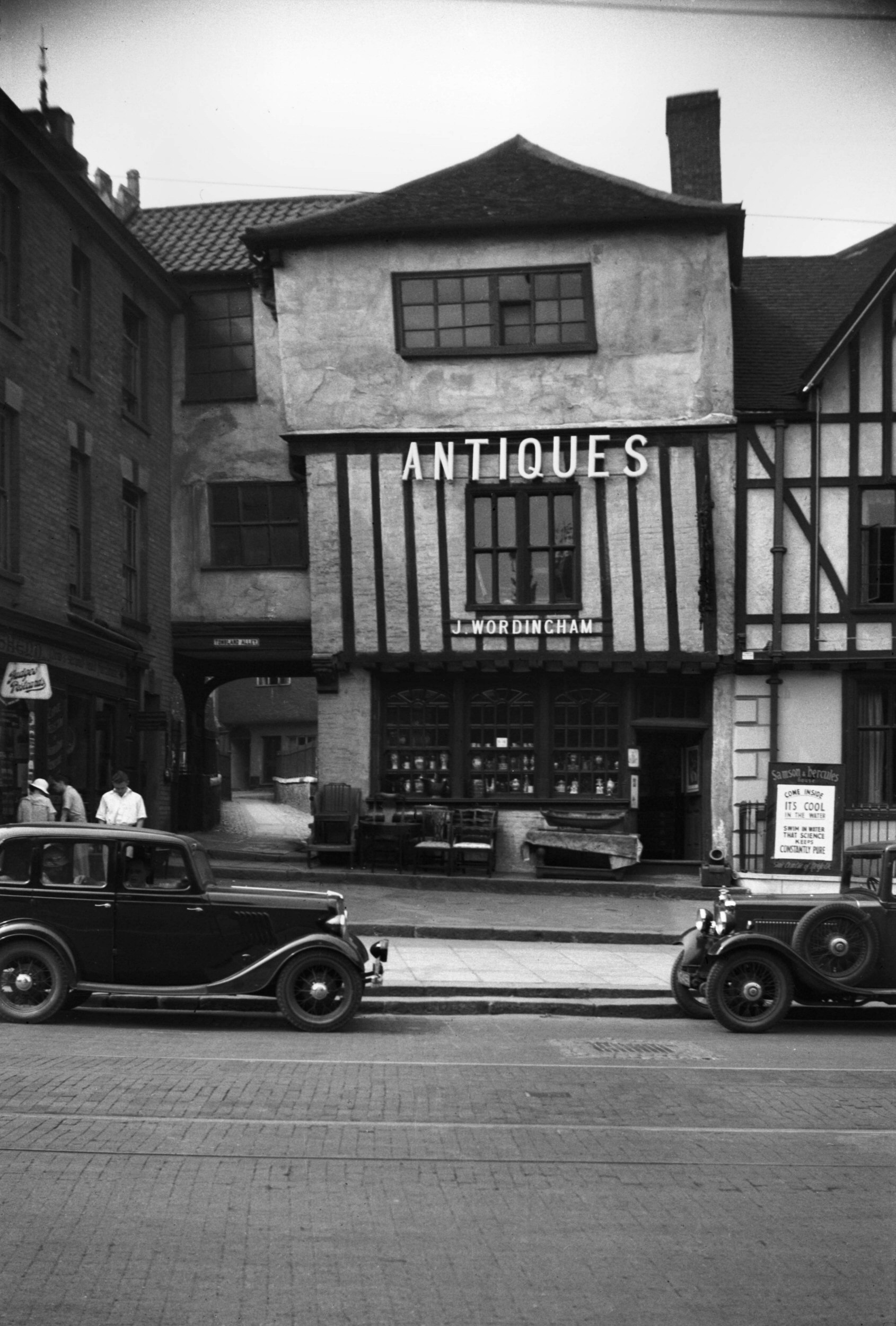
Levine tends to write out dealer names in full next to the Lot numbers and there are some familiar dealers listed as buyers – Rixon, Lee, Mannheim, Cohen etc. The buyer of Lot 575 is noted as ‘JW’, listed by Levine as the buyer of many Lots at the Thornham Hall auction. ‘JW’ is obviously someone familiar to Levine and is almost certainly the dealer John Wordingham. Wordingham established his antique dealing business in 1908 and was a member of the BADA. He had been a neighbour of Levine at 74 Prince of Wales Road in the 1920s, but by the 1930s (at the time of the auction) he was trading from the famous 16th century ‘Augustine Stewards House’, Tombland, Norwich. Below is a photograph of Wordingham’s shop in 1935 just a couple of years before the Thornham Hall auction.
J. Wordingham antique shop, Augustine Steward House, Tombland, Norwich. Photograph George Plunkett.co.uk.
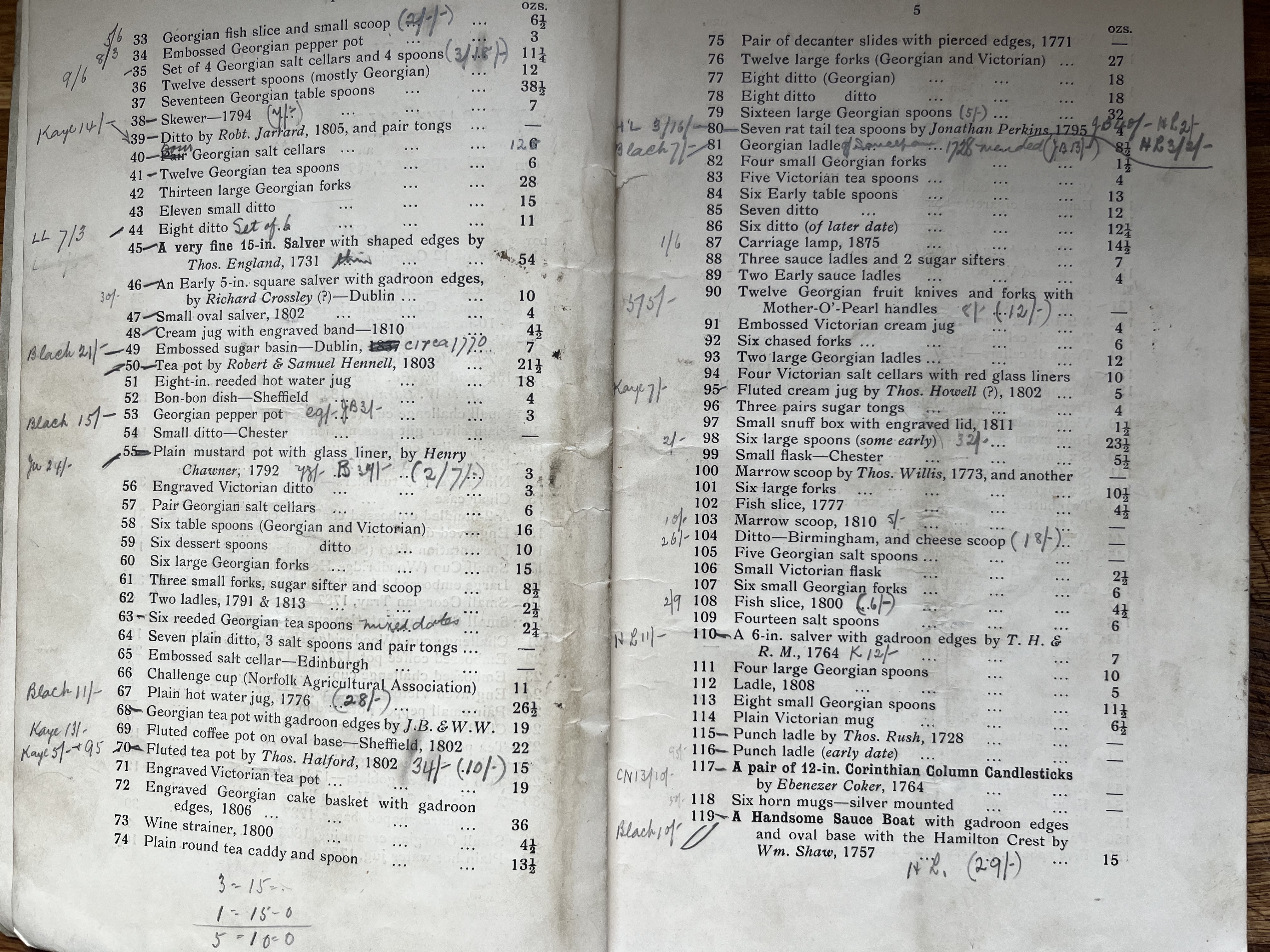
The auction catalogue of ‘The Shubbery, Hasketon, Woodbridge, Suffolk’ (contents sold by Arnott & Everett in April 1939) clearly illustrates the specialist interest of the Levine family as antique silver dealers. In the sections of antique silver in the catalogue (see below) there are lots of annotations and prices with names of various well-known London-based antique silver dealers as buyers – ‘Kaye’ (Angel & Kaye, silver dealers established in the 1930s); ‘Black’ (David Black, silver dealer established in 1915).
The Shubbery, Hasketon, auction catalogue, 1939. Photograph, Antique Dealer Research Project, University of Leeds.
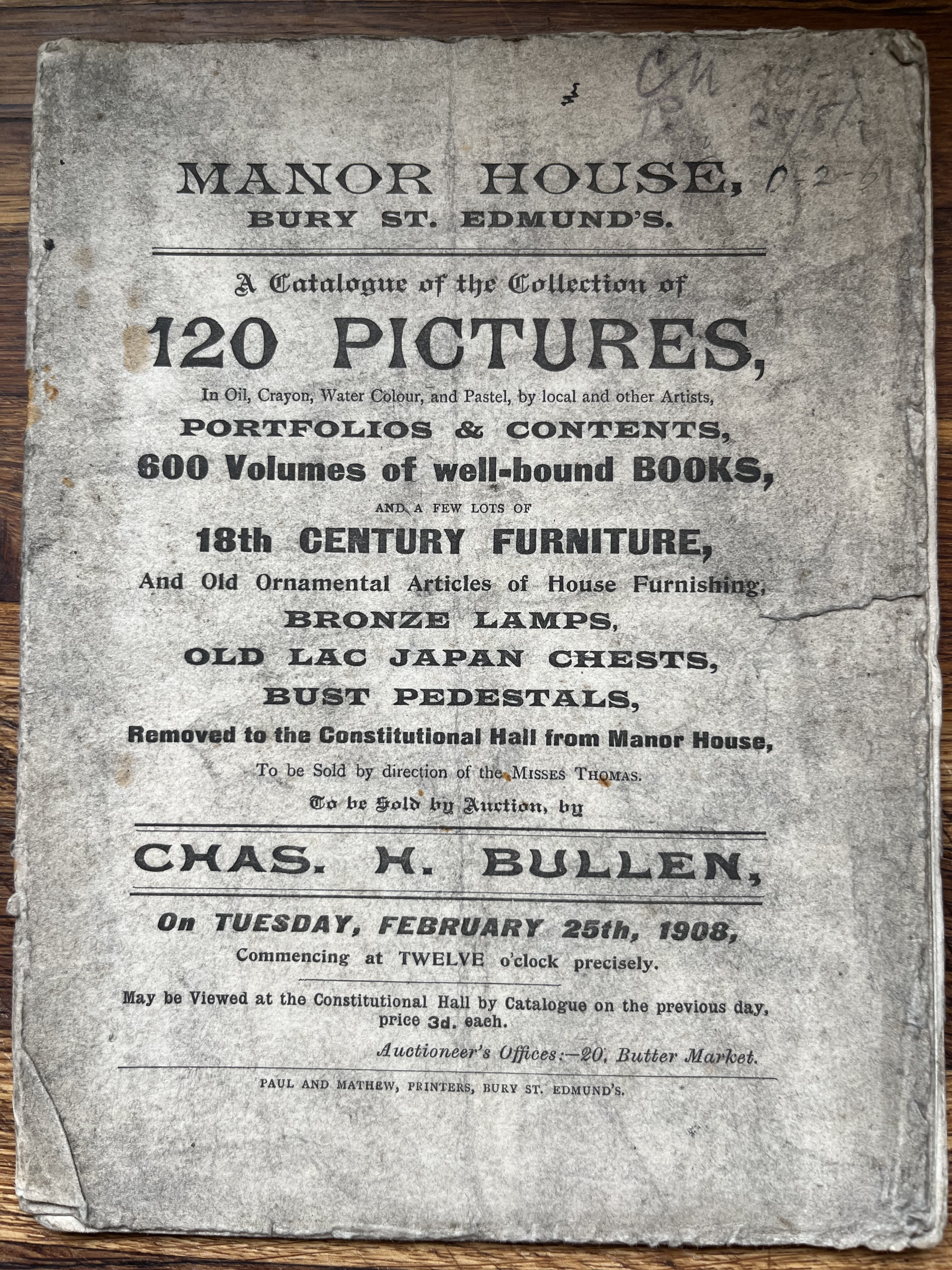
As well as the catalogues from the 1930s and 1940s, six of the catalogues date from 1908 and have various annotations signed by ‘R. Levine’ so maybe by Rueben Levine (1865-1927) himself? The catalogue of the contents of ‘Manor House, Bury St. Edmunds’ (sold by Charles Bullen in February 1908) is particularly interesting.
Manor House, Bury St. Edmunds, auction catalogue, 1908. Photograph, Antique Dealer Research Project, University of Leeds.
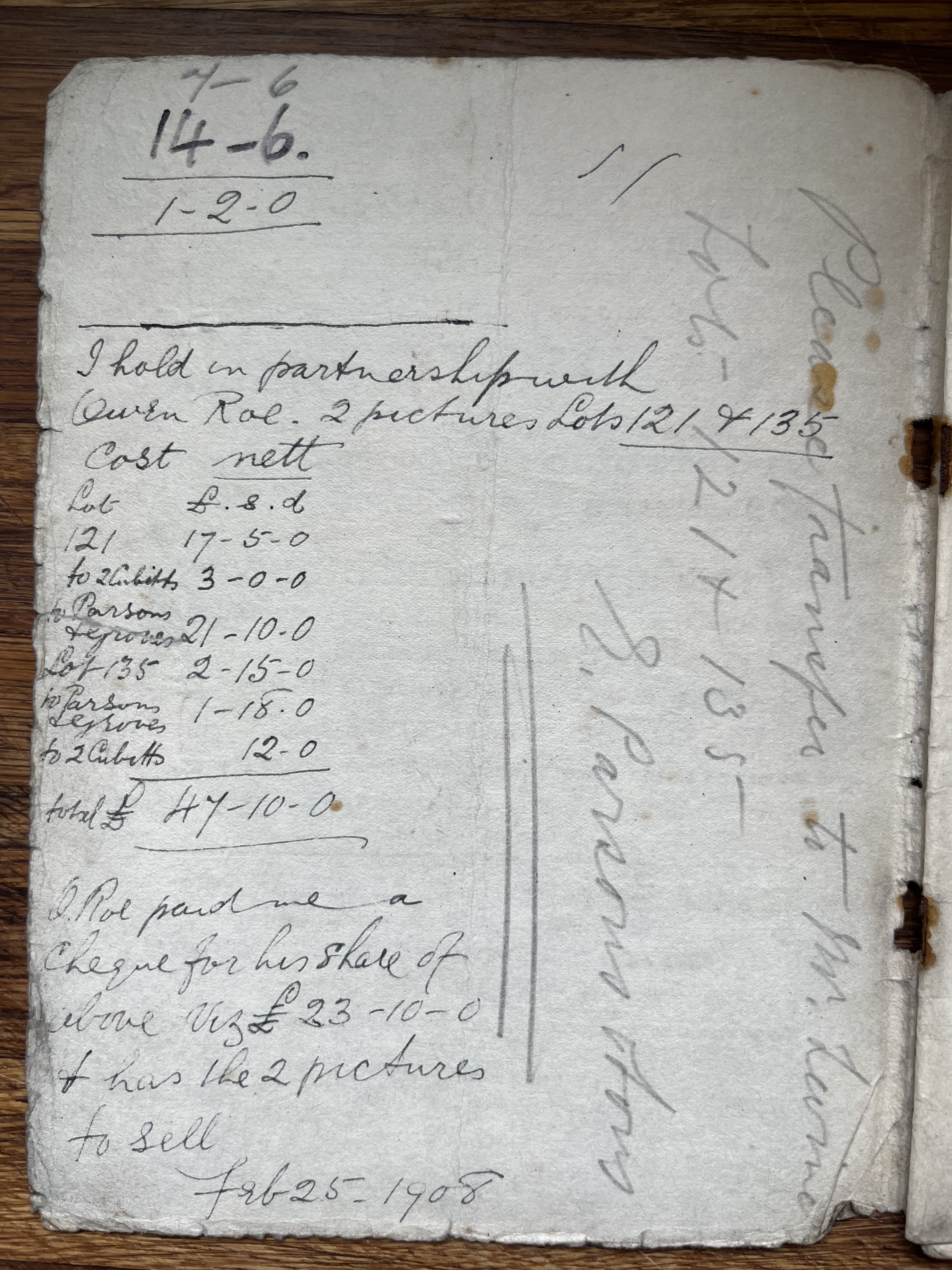
The Manor House catalogue has two intriguing hand written notes on the verso of the front cover (see below). The notes relate to 2 paintings sold at the auction. The note written in pen (to the left in the photograph) states ‘I hold in partnership with Owen Roe. 2 pictures Lots 121 & 135’, which cost a ‘total of £47-10-0’. It also has a note at the bottom stating ‘O. Roe paid me a Cheque for his share of above Viz £23-10-0 & has the 2 pictures to Sell. Feb 25-1908’. Owen Roe was an antique dealer trading from various shops in Cambridge, the business began in the late 19th century and continued in the family until the mid 1970s.
Manor House, Bury St. Edmunds, auction catalogue, 1908. Photograph, Antique Dealer Research Project, University of Leeds.
What is really interesting about the note is the list of sums of money to the left, which state: ‘Lot 121’ ‘£17-5-0’, and then below, ‘to 2 Cubitts £3-0-0’; ‘to Parsons & Sons £21-0-0’; then ‘Lot 135’ ‘£2-15-0’, and then below, ‘to Parsons & Sons £1-18-0’; ‘to 2 Cubitts 12-0’; ‘total £47-10-0’ – (I seem to make it £46-10-0, but maths is not my best subject!). Now this all looks somewhat opaque until one notices the other handwritten note in pencil (at 90 degrees) to the right. Here it states ‘Please transfer to Mr Levine lots 121 & 135, E. Parsons & sons’.
What these handwritten notes seem to point towards is an auction ‘ring’. ‘Please transfer to Mr Levine’ indicates that ‘E. Parsons’ was the buyer of the paintings at the auction but for some reason transferred his purchases to Levine. This is classic ‘ring’ activity – indeed one of the key aspects of attempts to stop the ‘ring’ is that auctioneers now specifically disallow transfers between buyers.
For those that are not aware – the ‘ring’ is where dealers would agree amongst each other not to bid against one another at an auction; one dealer was designated by the other dealers to bid for the Lot or Lots at the auction. The dealers would then re-auction any Lots bought in the ‘ring’ in a private auction (known as the ‘knockout’) after the auction (often in the local pub or other venue). The resulting price difference between the object sold at the public auction and the price eventually realised at the private auction was distributed amongst the participants of the ‘ring’. The practice was legal throughout the 19th century, although it was highly criticized. Indeed, it was not until the 1920s that the legitimacy of the practice became more formally and legally questioned, and not until 1927 that the practice was made a criminal offence (The Auctions (Bidding Agreements) Act 1927). So in 1908, when Levine, Roe, Parsons and Cubitt bought/sold the 2 paintings at the Manor House auction, the practice was frowned upon, but not yet illegal.
You can read a little more about the auction ring in the exhibition catalogue ‘SOLD! The Great British Antiques Story’ (exhibition at The Bowes Museum in 2019) – the catalogue for the exhibition is freely available online via White Rose Depository.
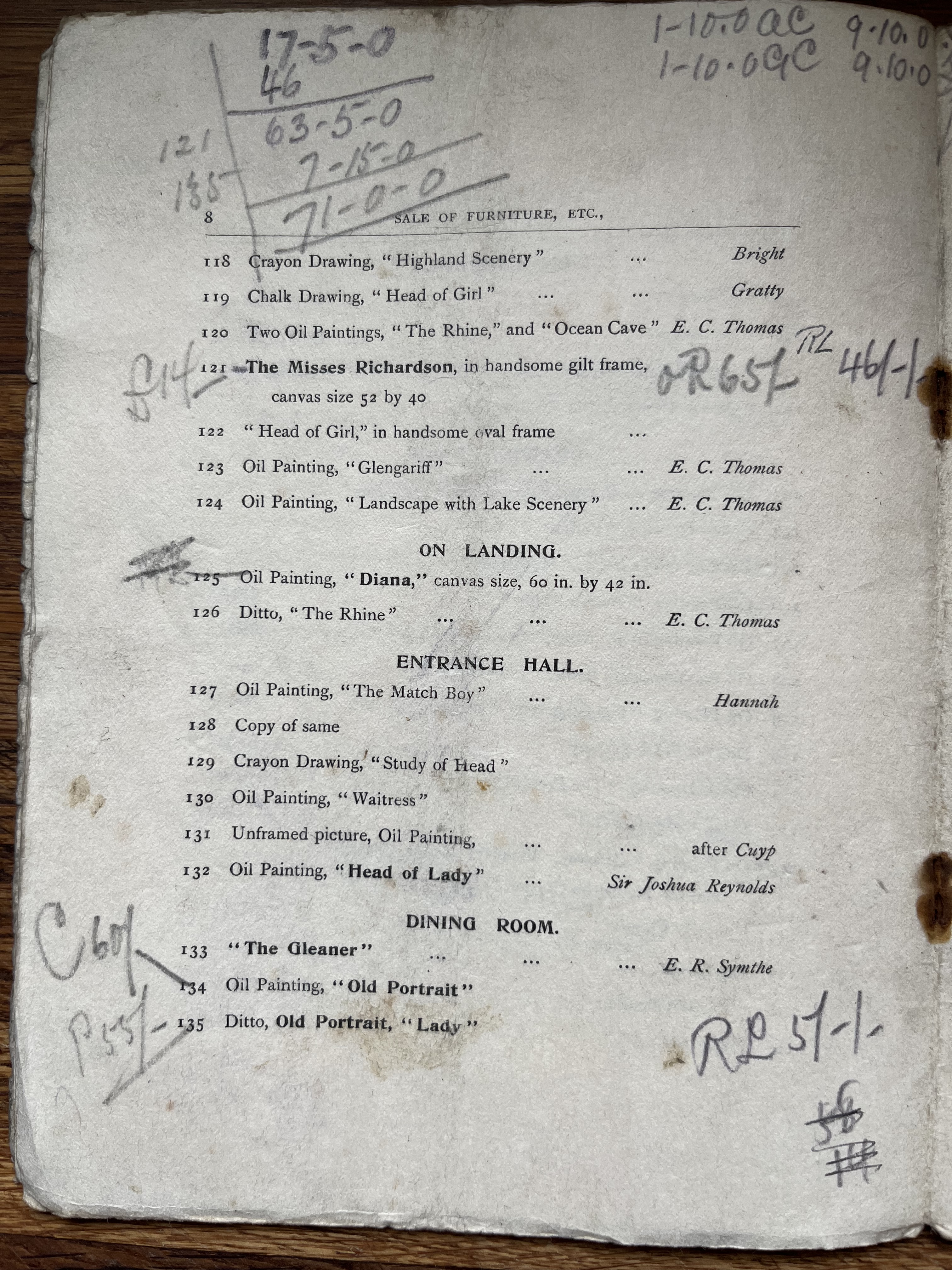
There is further evidence of the operation of an auction ‘ring’ at the 1908 Manor House sale when one looks at the catalogue entries for Lot 121 and Lot 135 (see below). There are a number of annotations associated with the Lots – Lot 121, for example, has a note stating ‘£14’, but also has ‘OR’ (Owen Roe) ’65/-‘ (65 shillings, which was £3-5-0); and ‘RL’ (Rueben Levine) ’46/-‘ (46 shillings, which was £2-6-0). For Lot 135, there are similar annotations – ‘C60/-‘ (which I guess refers to Cubitt and 60 shillings, which was £3); ‘P55/-‘ (which I guess refers to Parsons and 55 shillings, which was £2-15 shillings), and ‘RL 5/-/-‘ (which I guess refers to Reuben Levine and 5 pounds). Above this in the top left is another list of sums of money ‘£17-5-0’ with ‘£46’ beneath it, and then [lot]121 ‘£63-5-0’ and [lot]135 ‘£7.15-0’, with a sum total of ‘£71-0-0’. These notes seem to indicate bids or commitments by Parsons, Cubitt, Roe and Levine for the 2 paintings.
Manor House, Bury St. Edmunds, auction catalogue, 1908. Photograph, Antique Dealer Research Project, University of Leeds.
But who were Parsons & Sons and Cubitt? Parsons & Sons were antique dealers who by the 1920s were trading in the then ultra-fashionable Brompton Road, London. Cubitt & Sons were also well-known antique dealers, trading in Norwich and London – in fact at the time of the auction sale in 1908 they occupied the building next door to what would become John Wordingham’s shop in Tombland in Norwich, the famous ‘Hercules House’ (see the building below – you can just see what would become Wordingham’s shop in the 1930s to the left). George Cubitt also operated as an auctioneer in the same period, also trading from Hercules House (also known as ‘Hercules and Samson House’); in fact George Cubitt took the famous auction at Walsingham Abbey, Norfolk in September 1916.
Hercules House, Tombland, Norwich, c.1900.
So, this little cache of country house auction catalogues contain fascinating insights into the workings of the antique trade in the early-to-mid 20th century and are a really significant acquisition for the antique dealer archives and ephemera we are assembling at the University of Leeds. They will, of course, be joining the other dealer material at the Brotherton Library Special Collections at the University of Leeds in due course.
A couple of months ago my friend and colleague Diana Davis very kindly sent me a link to a short black & white film of the 1932 Art Treasures Exhibition (thank you Diana!), and which obviously pricked my interest as it is full of objects that were being sold by antique dealers. You can watch the film in YouTube (it’s only 2 minutes 49 seconds long) HERE – the original film is part of the wide range of historic films and TV archives held by British Pathe (link HERE).
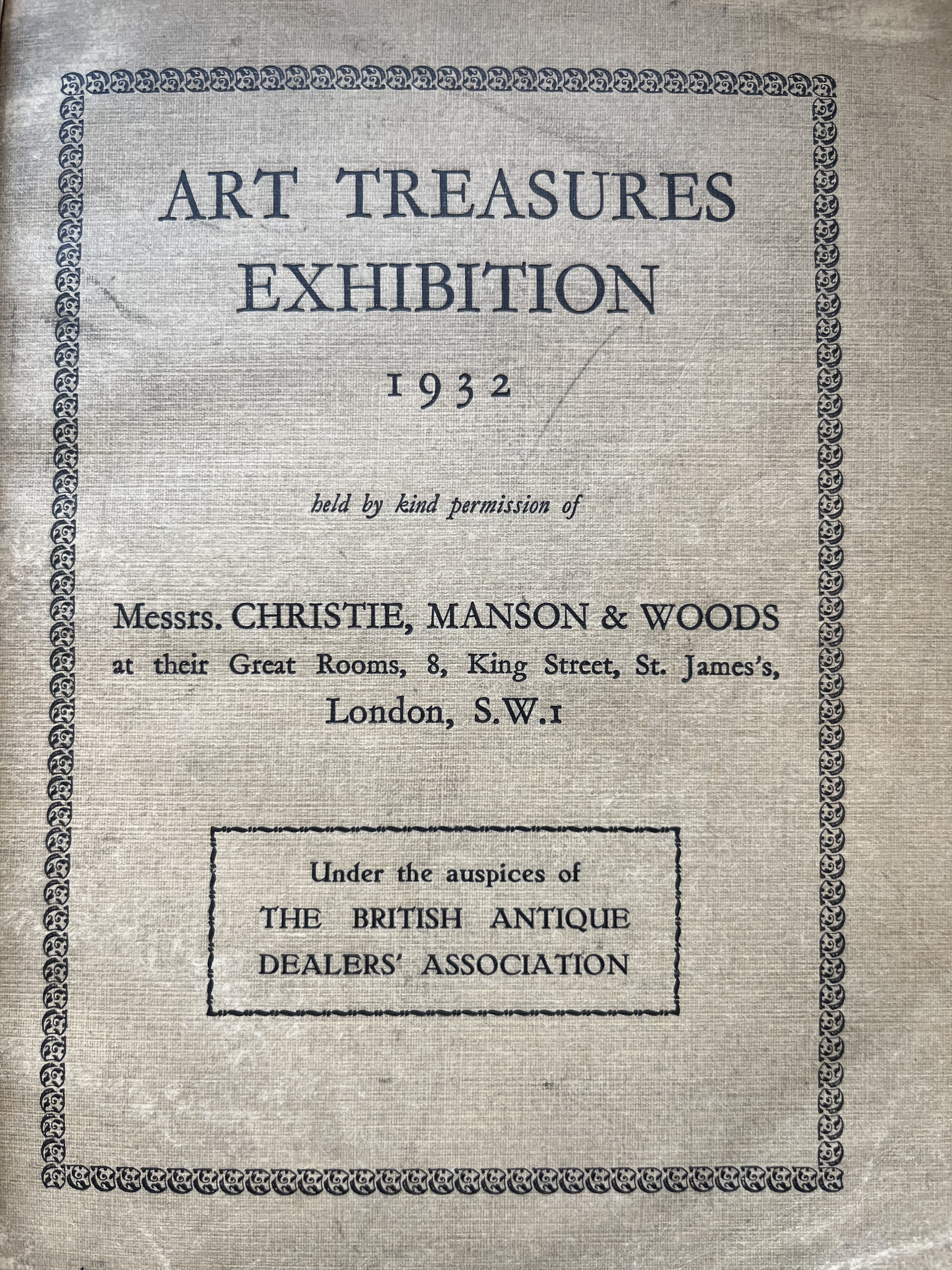
Art Treasures Exhibition 1932 catalogue, front cover. Photo Antique Dealers Research Project, University of Leeds.
The Art Treasures Exhibition, held at Christie’s auction rooms, King Street, London, 12th October to 5th November 1932 and organised by The British Antique Dealer’s Association (BADA) is fairly well-known amongst historians and those interested in the history of the art market. The 1932 exhibition followed on the success of the earlier BADA organised exhibition at Grafton Galleries, London in 1928. Both exhibitions prefigured the establishment of the Grosvenor House Antiques Fair (also known as ‘The Antique Dealers’ Fair’) which began in 1934 – (see also some older blog posts on The Grosvenor House Fair etc in January 31st 2021 and April 23rd 2015).
Fortunately, we have a copy of the 1932 Exhibition catalogue, so it’s possible to match up some of the objects in the film to those in the catalogue and find out which dealers are behind the objects, so I thought it would be an interesting exercise to do that!
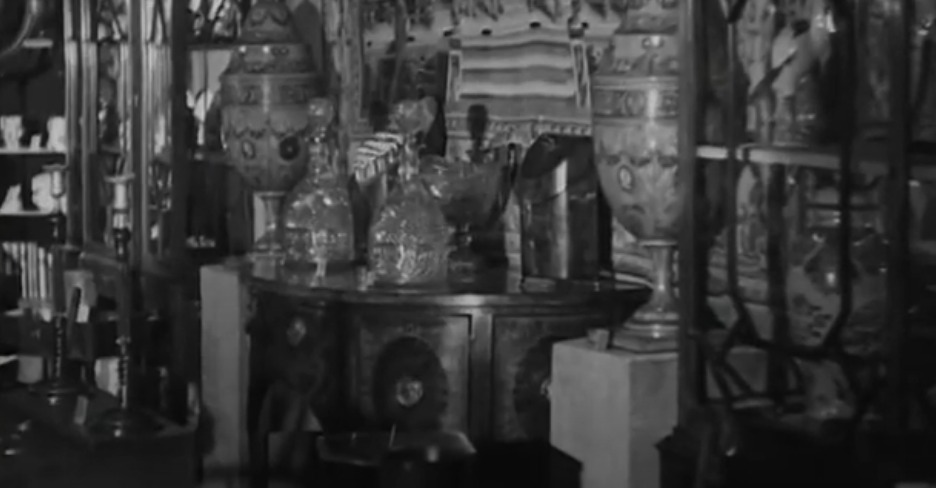
The film of the 1932 Exhibition is a fascinating period piece from the early 1930s, obviously created as a publicity newsreel for the exhibition. The narrator (unknown), guides the viewer to some of the highlights of the exhibition at the time, telling the background stories of some of the objects offered for sale by various antique dealers, but also offering a visual insight into the displays at the exhibition. Below, for example, is a screenshot of a general panning shot (do watch the YouTube film for effect) of one of the stands which appears to have a mixture of dealers’ objects – the large pair of urns are certainly item No.237 in the catalogue, ‘A pair of satinwood knife boxes, c.1790, originally made for Lord Northesk’ (the family seat is Ethie Castle, near Arbroath) and offered by the antique dealer Rice & Christy, Wigmore Street, London; the tapestry behind looks like it is No.285 ‘A Beauvais Tapestry, c.1790’, offered by The Spanish Art Gallery, Conduit Street, London; and the display cabinet to the left is certainly No.182 ‘A Chippendale China Cabinet, c.1765′ offered by M. Harris & Sons. So I guess this panning shot was of a collection of various dealers’ objects at the entrance to the exhibition, indicating the sheer range of things offered for sale?
Art Treasures Exhibition 1932, screenshot of general view.
The Exhibition had 1,380 objects, and the film obviously does not cover all of them, but there are 13objects highlighted in the film, so for those that watch the film, here’s some information on the dealers who were behind the objects (and a little bit of information on where the objects are now, if it has been possible to trace them) – I’ll do this in the sequence of the objects highlighted in the film by the narrator:
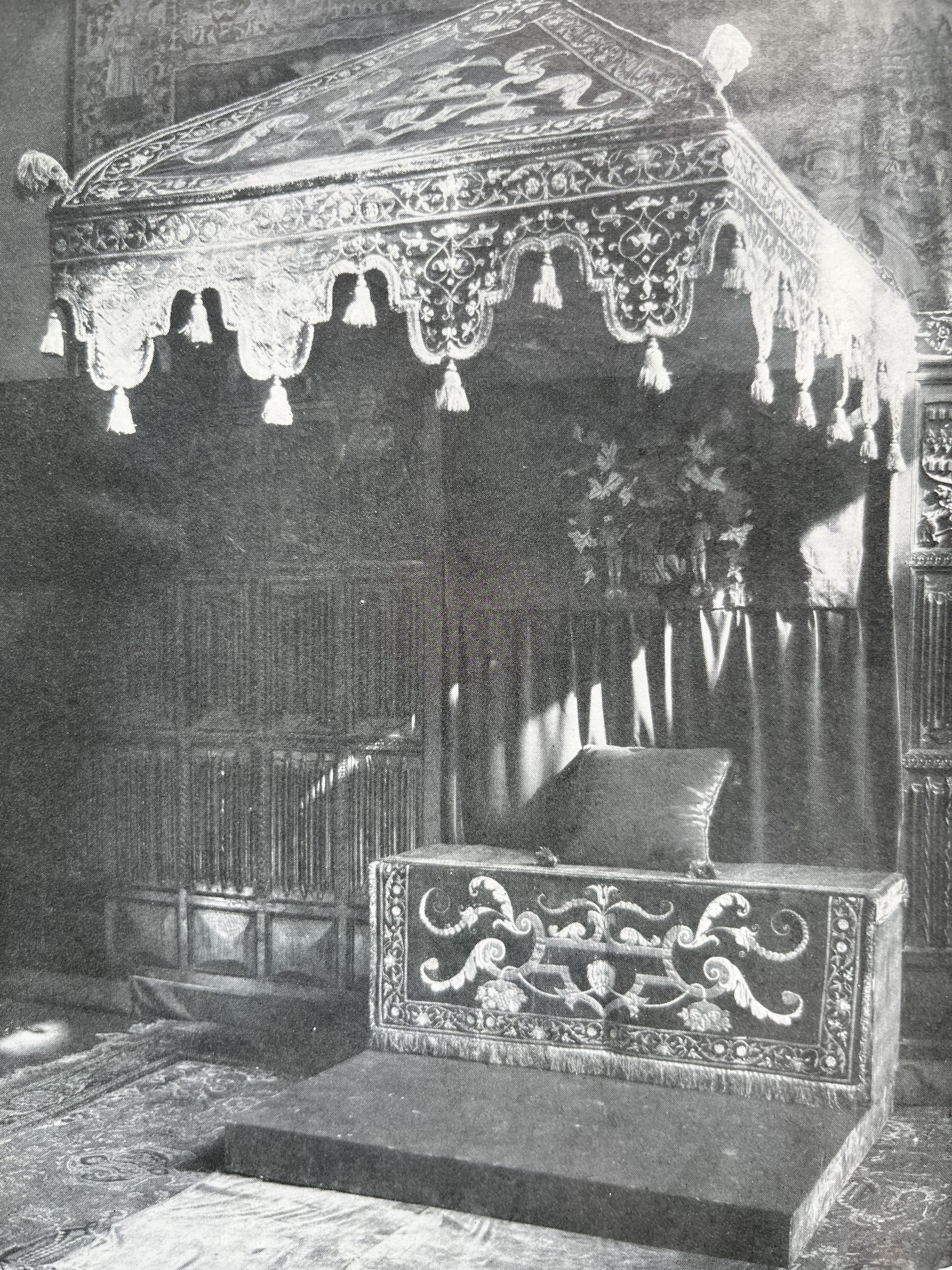
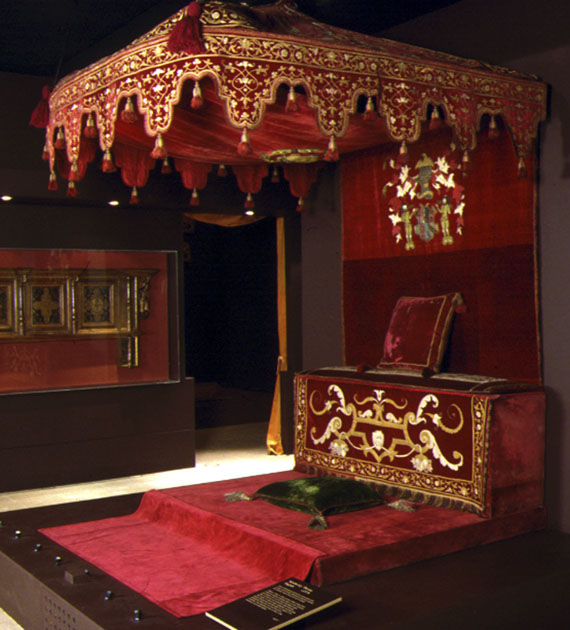
1st object – (see below) in the film the narrator spends a few moments on this object; it is also object No.1 in the catalogue: ‘An embroidered Throne used Queen Elizabeth, English 1578’; this was offered by the well-known London antique dealers Acton Surgey Ltd & Mallett & Son. Thanks to our friends William DeGregorio and Chris Jussel (in the USA) we know that the embroidered throne made its way into the collection of Sir William Burrell (1861-1958) and remains in the Burrell Collection in Glasgow (it is currently in storage at The Burrell – see below).
Art Treasures Exhibition catalogue 1932 – ‘An embroidered Throne used by Queen Elizabeth, English 1578’. Photograph, Antique Dealers Research Project, University of Leeds.The ‘Kimberley Throne’, c.1554-1578, (14.217). The Burrell Collection, Glasgow. Photograph, The Burrell Collection, Glasgow.
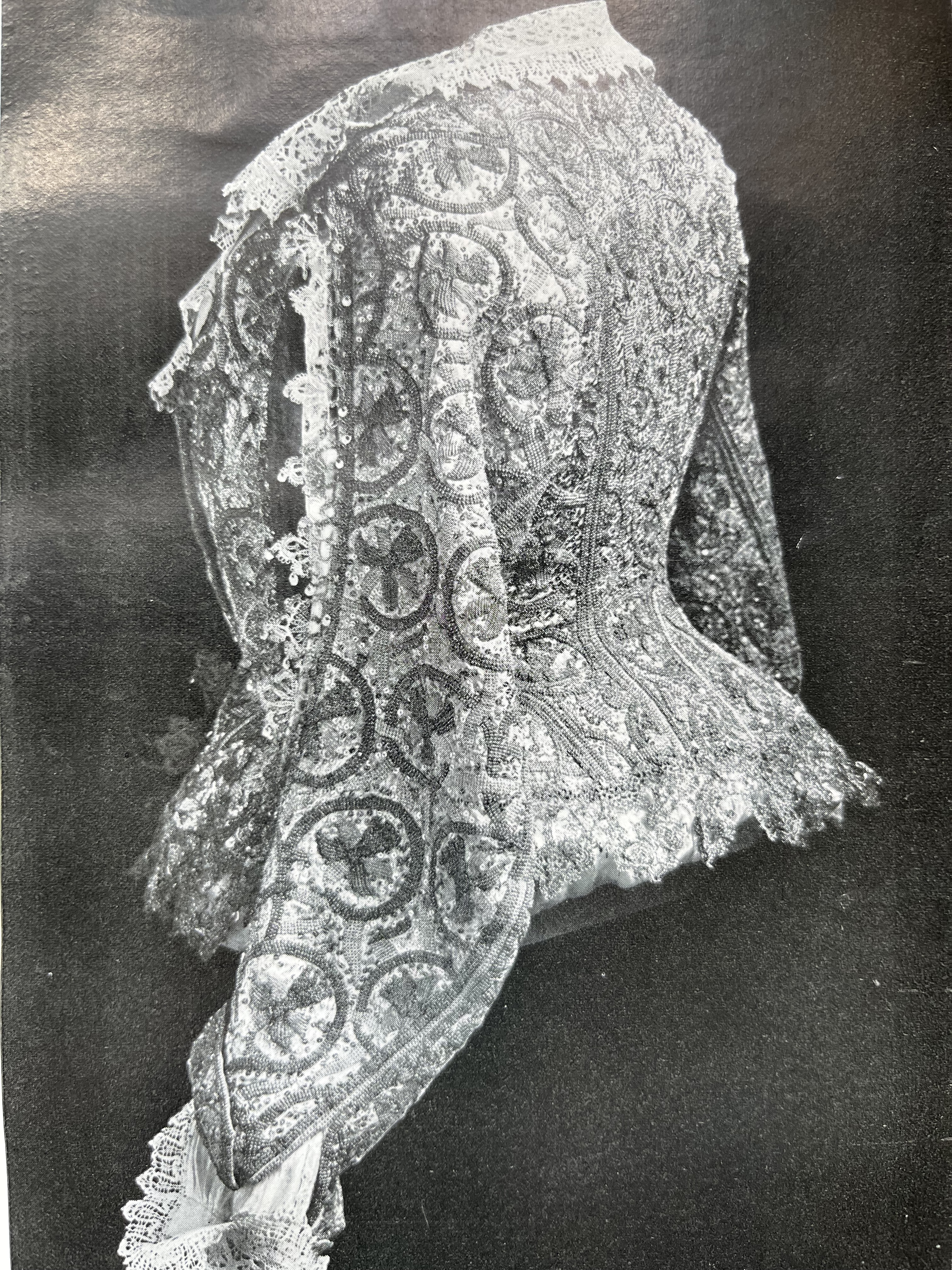
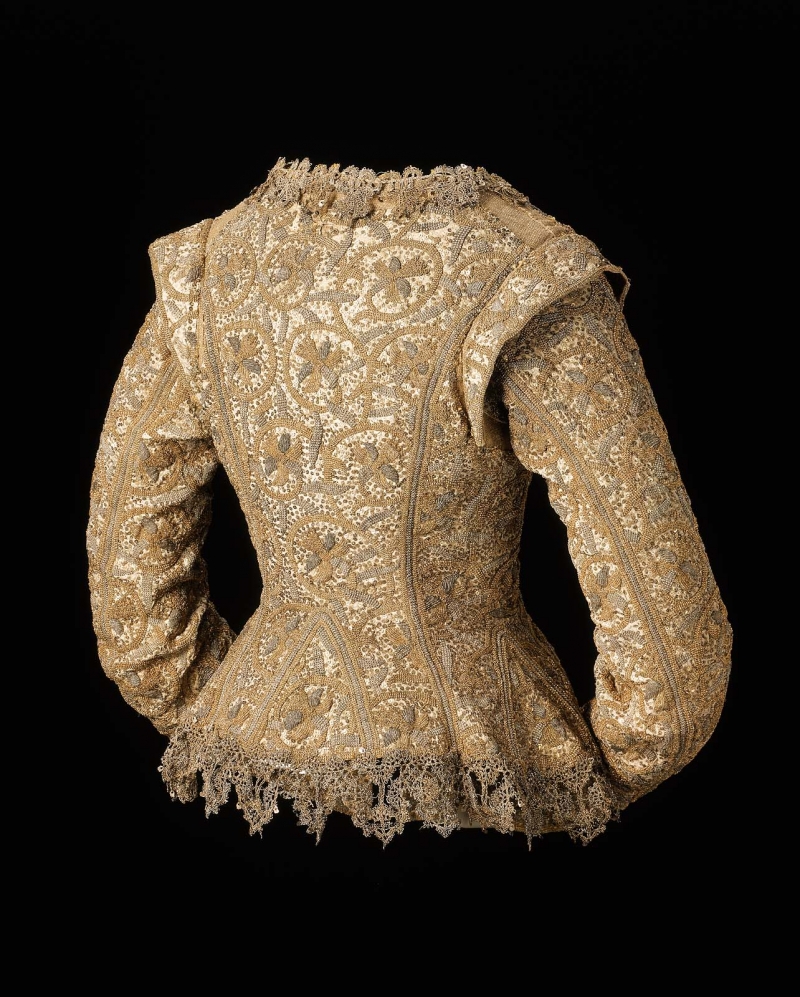
2nd object – (see below) mentioned by the narrator is No.2 in the exhibition catalogue, ‘A gold embroidered jacket, lace shirt, and gloves, English, late 16th century’; it was also offered by Acton Surgey Ltd; the jacket is now in the collections of Boston Museum of Fine Arts in the USA. It was purchased from Acton Surgey by the collector Elizabeth Day McCormick (1873-1957) in 1943 and gifted to the Boston MFA. It is not known what happened to the shirt or the gloves; and it has not also been possible to identify the ‘gold and enamelled jewel set with diamonds and rubies’ that the Narrator also mentions.
Art Treasures Exhibition catalogue 1932 – ‘A gold embroidered jacket, English, late 16th century’. Photograph, Antique Dealers Research Project, University of Leeds.‘Women’s Jacket, English about 1610-15 with later alterations’. The Elizabeth Day McCormick Collection, Boston Museum of Fine Arts. 43.243. Image copyright Boston MFA.
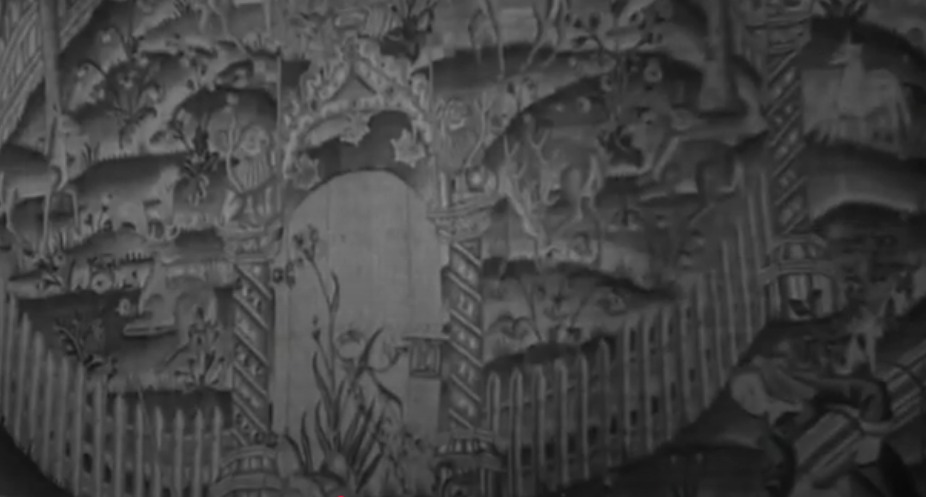
3rd object – (see below) the narrator describes a ‘Gothic tapestry, over 400 years old’, this is either No.270 or No.271 in the catalogue. Neither are illustrated in the catalogue, but are both described in the catalogue as ‘A panel of Gothic tapestry, Franco-Flemish, circa 1500’ and both are offered by The Spanish Art Gallery Ltd, Conduit Street, London. It has not been possible to trace the present whereabouts of the tapestry.
Art Treasures Exhibition 1932 film, screenshot of ‘Gothic tapestry’.
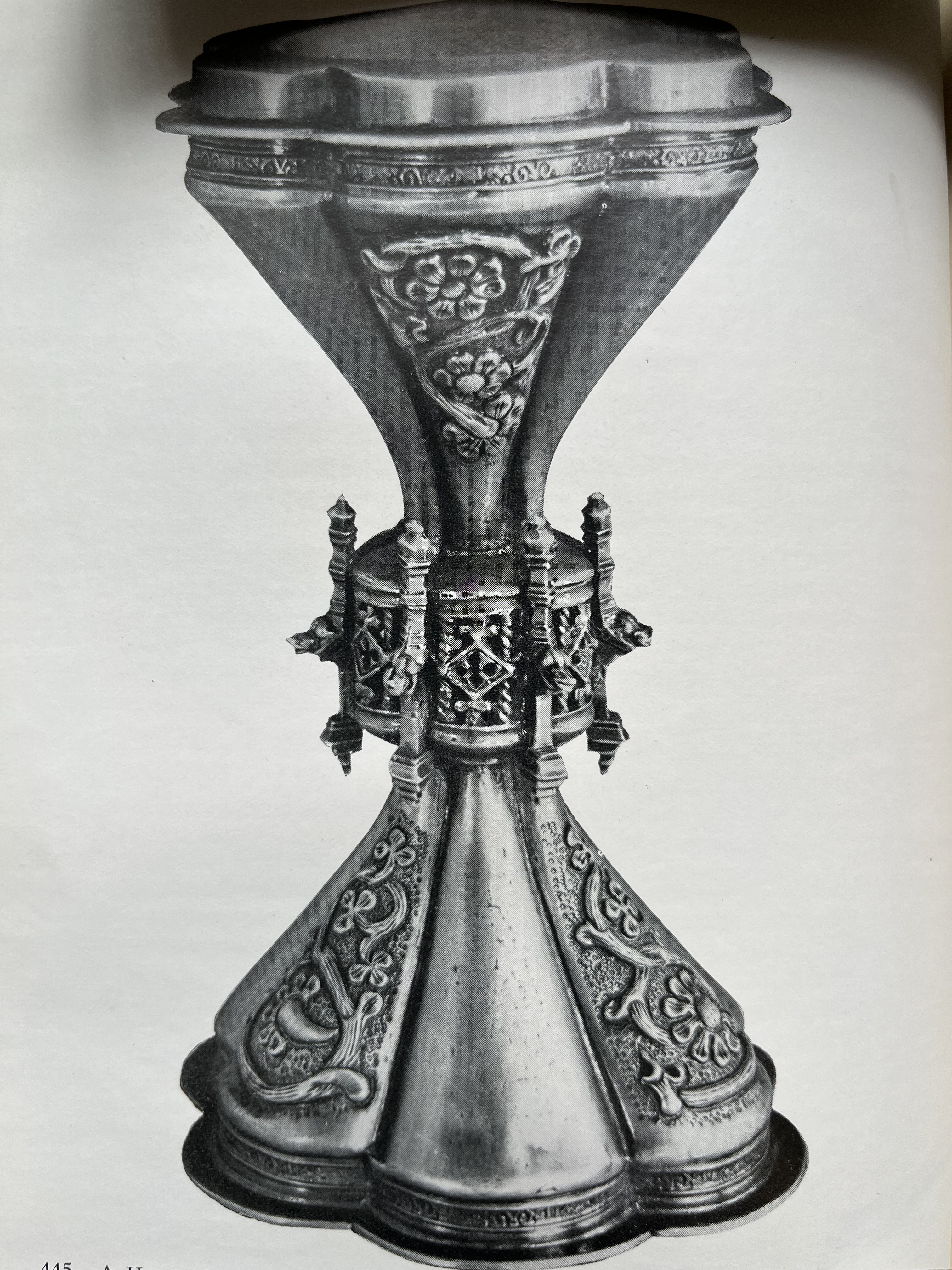
4th object – (see below) this is described by the narrator in the film as ‘a fine specimen of a Henry VII salt-cellar in hour-glass form’. This is No.445 in the catalogue; ‘A Henry VII silver-gilt standing salt, London 1505’. It is also illustrated in the catalogue, and was offered by the antique silver dealers Crichton Brothers, then trading at 22 Old Bond Street, London. It has not been possible to trace the Henry VII salt – the narrator in the film suggested that it was the only known piece of silver with the date 1505, so I guess if it does still exist, it must be easily identifiable? (our friend Chris Coles spotted the salt in a 1969 exhibition catalogue produced by The Goldsmiths Company….so perhaps the salt is in the collections of The Goldsmiths – thanks Chris!)
Art Treasures Exhibition catalogue 1932 – ‘A Henry VII silver-gilt standing salt, London 1505’. Photograph, Antique Dealers Research Project, University of Leeds.
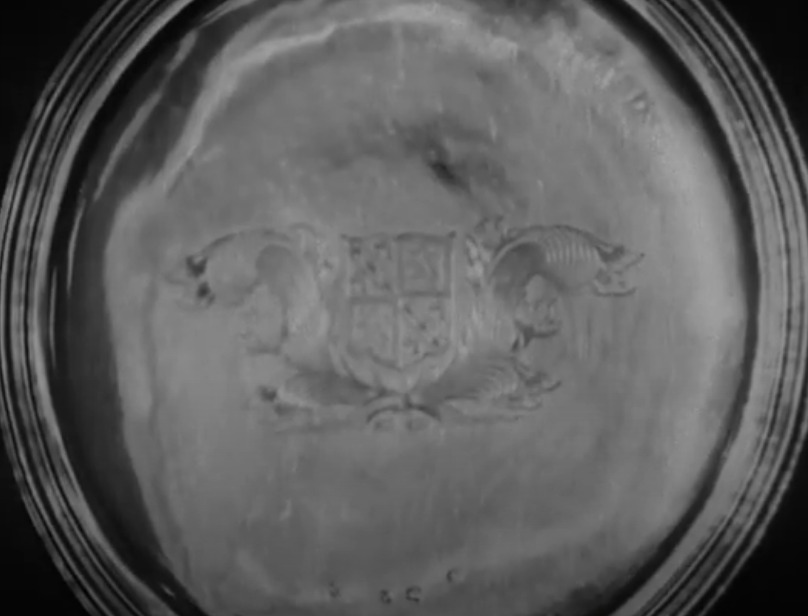
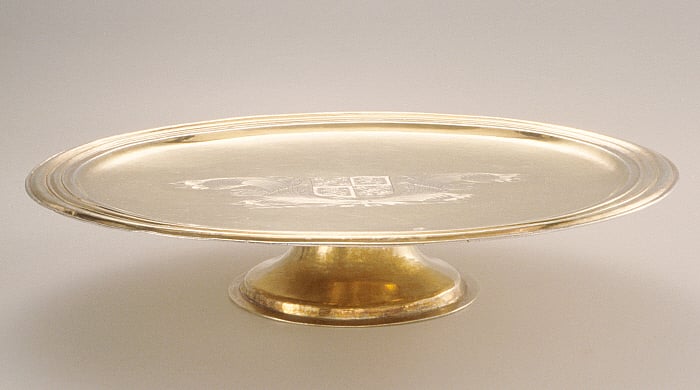
5th object – (see below) the narrator describes a ‘stand for a porringer or tankard….previously owned by the diarist Samuel Pepys’. This is No.618 in the catalogue – ‘The Charles II silver-gilt ‘Pepys’ tazza, London 1678′. It is not illustrated in the catalogue, but was also offered by the antique silver dealer Crichton Brothers. The ‘tazza’ is now in the collections of The Clark Institute in Massachusetts in the USA. It was commissioned by Samuel Pepys (1633-1703) in 1678 and was sold at Sotheby’s on 1st April 1931 (Lot 3) to Crichton Brothers, who appear to have sold it to the American silversmith and art curator Peter Guille of New York, who sold it to Robert Sterling Clark in 1946.
Art Treasures Exhibition 1932 film, screenshot of ‘Pepys’ ‘tazza”.Footed Salver, silver-gilt, 1678/79. Clark Institute, 1955.298. Image copyright Clark Institute.
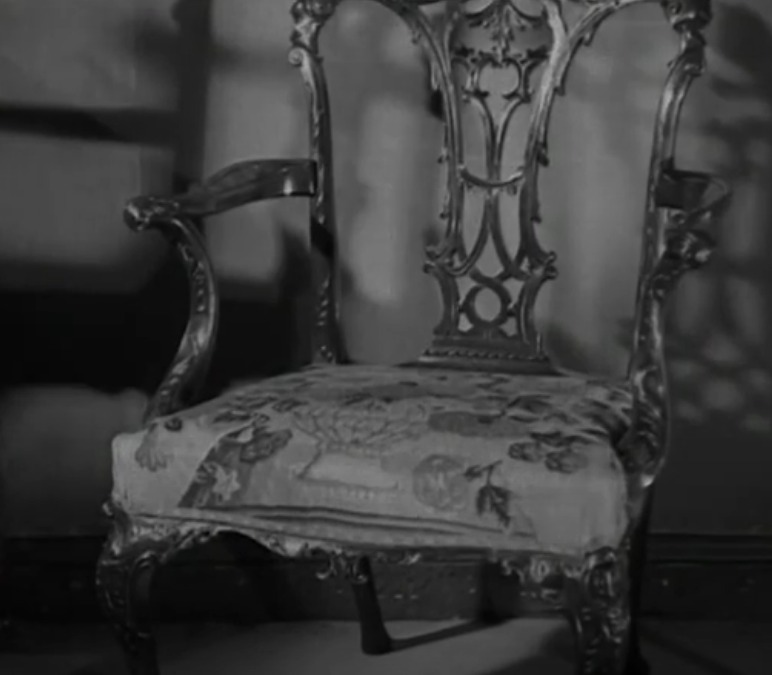
6th object – (see below) described by the narrator as a ‘Chippendale chair’, but I can’t find this chair (or even a set of them) listed in the exhibition catalogue; perhaps it was a late edition to the exhibition?
Art Treasures Exhibition 1932 film, screenshot of ‘Chippendale chair’.
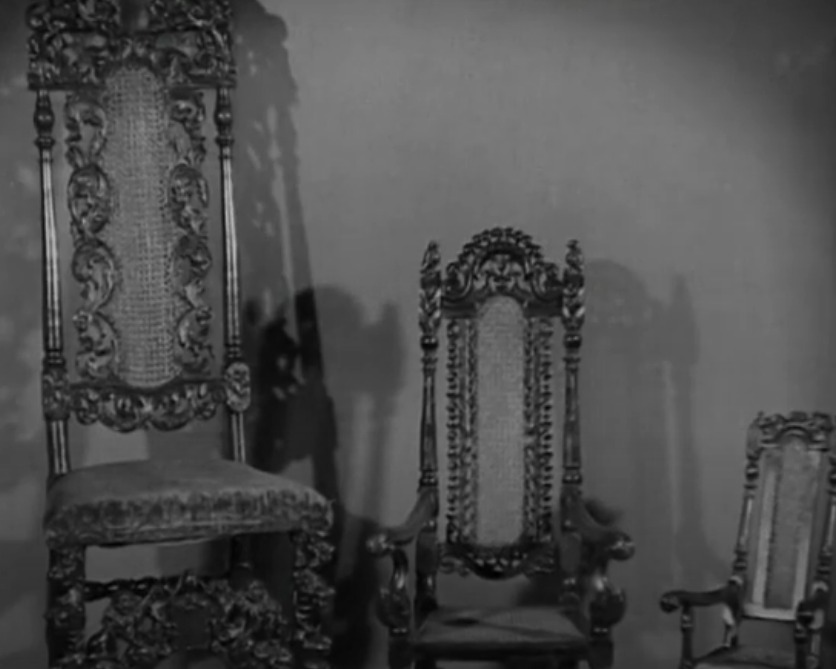
7th object – (see below) the narrator describes 3 walnut chairs, ‘made about 1690’. There are a number of such chairs in the exhibition catalogue, but without a photograph of them from the catalogue it has not been possible to identify which of the chairs the narrator is referring too? However, the centre chair, could be No.50 in the catalogue, ‘A William and Mary armchair of small size, circa 1690’, and said to have ‘traditionally been used by Queen Anne’; it was offered for sale by the well-known dealers Moss Harris & Sons.
Art Treasures Exhibition 1932 film, screenshot of ‘Walnut chairs’.
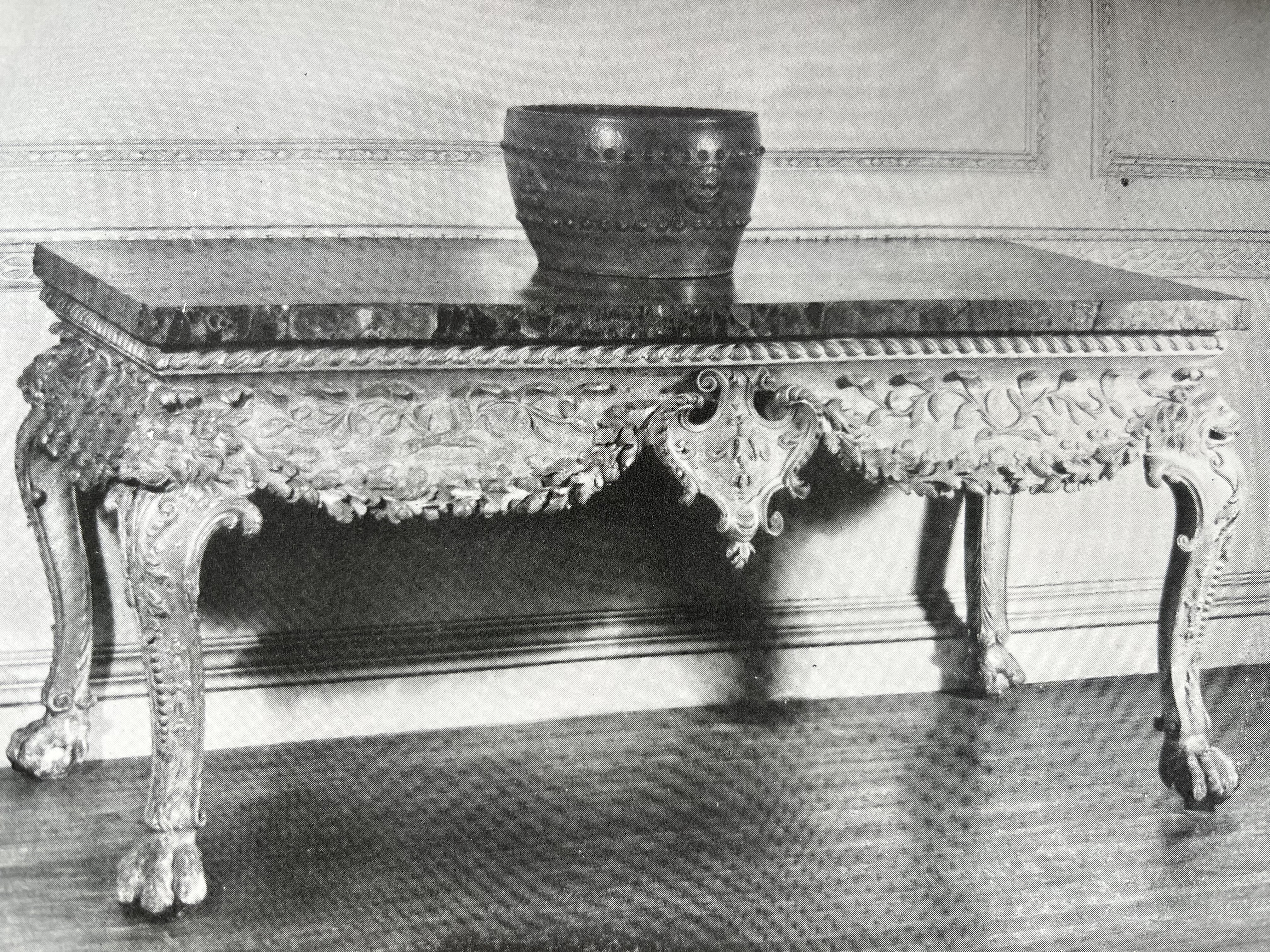
8th object – (see below) is described by the narrator as ‘a fine gesso table, formerly at Stowe’, is certainly No.121 in the Exhibition catalogue; it is illustrated and described as ‘A George II gilt side table…formerly at Stowe’ and was offered for sale by the antique dealer and interior decorator Gregory & Co., then trading at 27 Bruton Street, London. The table was originally sold at the auction sale of the contents of Stowe House in 1848, following the bankruptcy of the Duke of Buckingham.
Art Treasures Exhibition catalogue 1932 – ‘A George II gilt side table’. Photograph, Antique Dealers Research Project, University of Leeds.
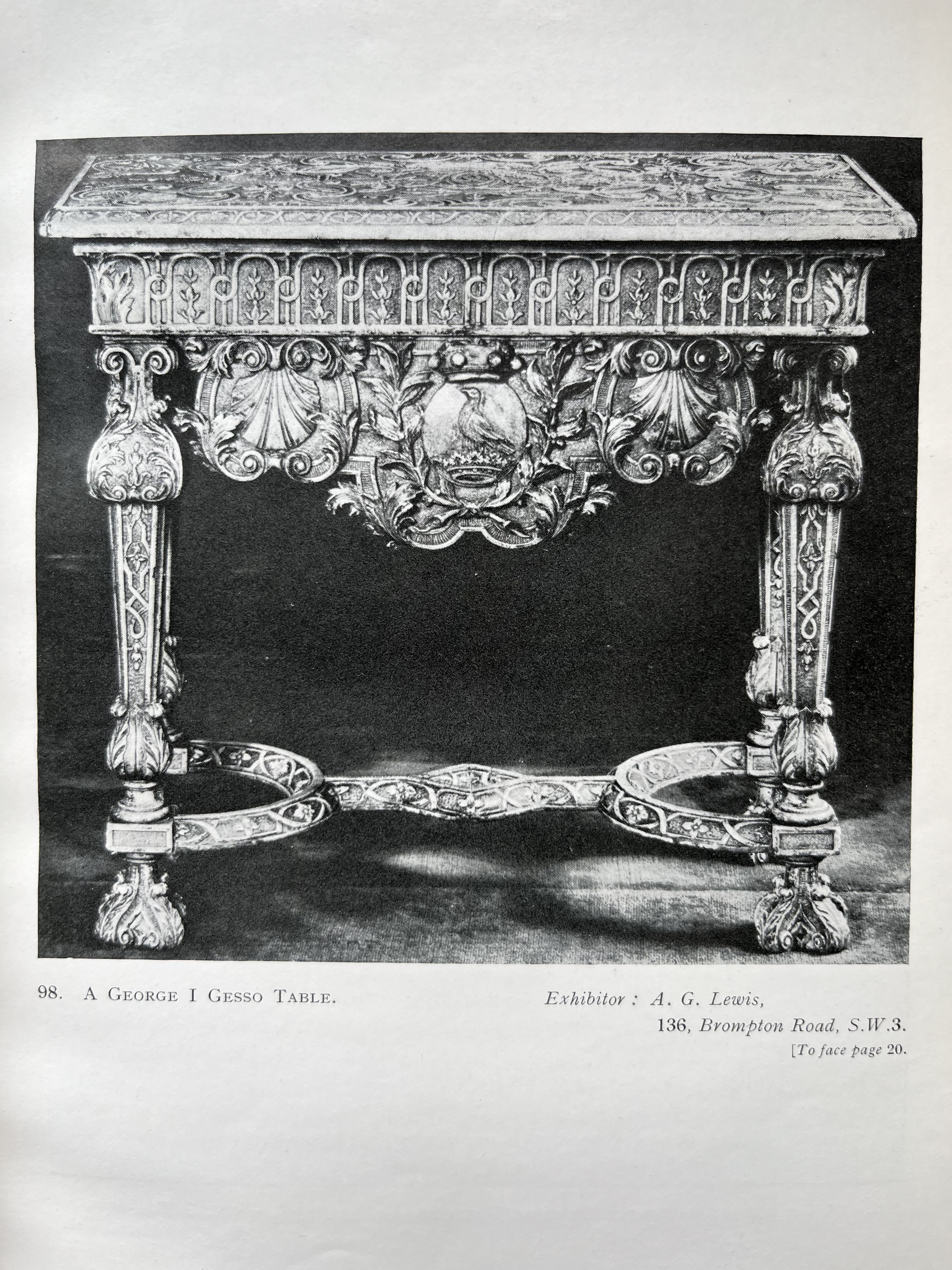
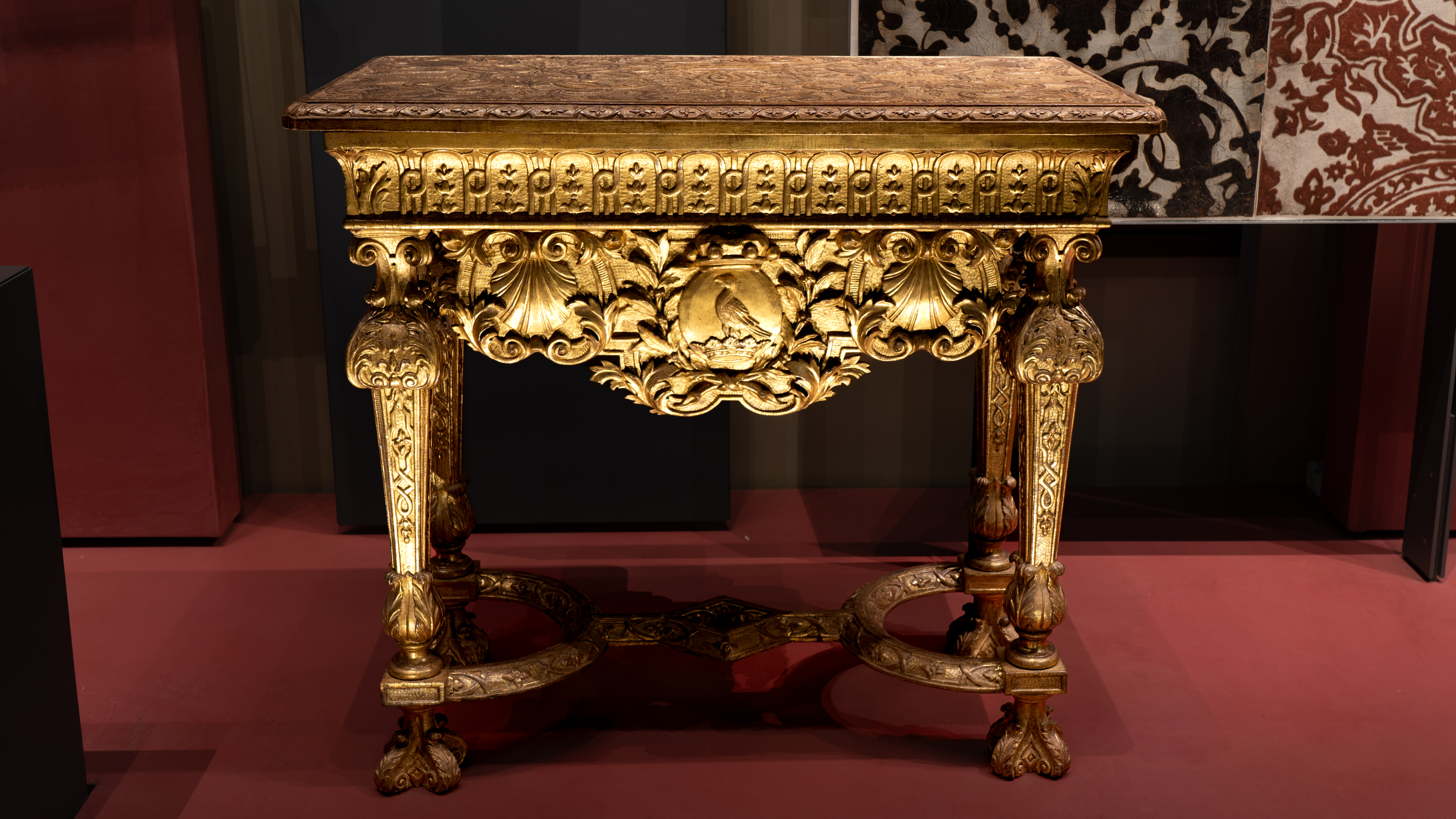
It has not been possible to trace the whereabouts of the side table, but interestingly, another giltwood side table from Stowe was on display at the 1932 Exhibition; No.98, ‘A George I gilt gesso table, circa 1715’, and offered for sale by the antique dealer A.G. Lewis, Brompton Road, London. This table (see below) is one of a pair (possibly three?) side tables associated with Stowe. In 1930, one table, (perhaps the same one in the 1932 exhibition?) was in the stock of the antique dealer Kent Galleries, Conduit Street (Kent Gallery are associated with The Spanish Gallery who offered the ‘Gothic tapestry’ at the 1932 Exhibition). One of the tables (perhaps the same one?) is now in the V&A Museum (see below too). The V&A table was sold to the V&A by the antique dealer Phillips of Hitchin in 1947, having been through the hands of a number of other antique dealers, including John Bly of Tring and Edinborough of Stamford. All of this highlights the significance of inter-dealer trading that sustained the antique trade for much of the 20th century.
Art Treasures Exhibition catalogue 1932 – ‘A George I gilt gesso table’. Photograph, Antique Dealers Research Project, University of Leeds.The Stowe side table at the V&A Museum. Photograph, Year of the Dealer project, University of Leeds.
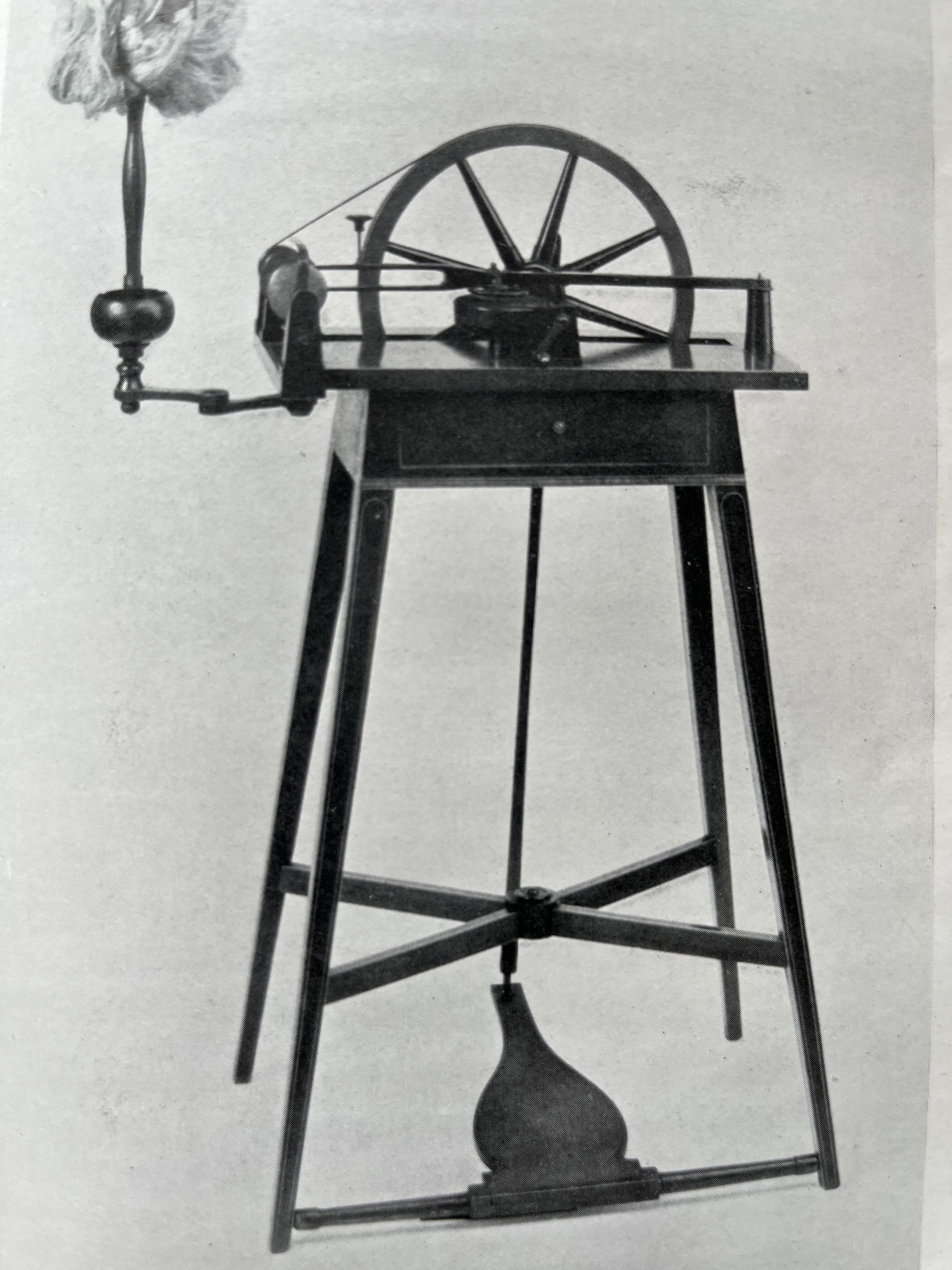
9th object – (see below) the narrator describes a ‘spinning wheel, perfectly usable today’ as the next object. It is a ‘Sheraton spinning wheel, circa 1790….made by John Planta, Fulneck’; it was No.231 in the catalogue and was illustrated and offered for sale by the antique dealer Law, Foulsham & Cole, South Molton Street, London. There are several such spinning wheels by Planta, who was based in Leeds in the late 18th century – one example (although not the one in the 1932 Exhibition), remains in the collections at Temple Newsam, near Leeds.
Art Treasures Exhibition catalogue 1932 – ‘A Sheraton spinning wheel, circa 1790’. Photograph, Antique Dealers Research Project, University of Leeds.
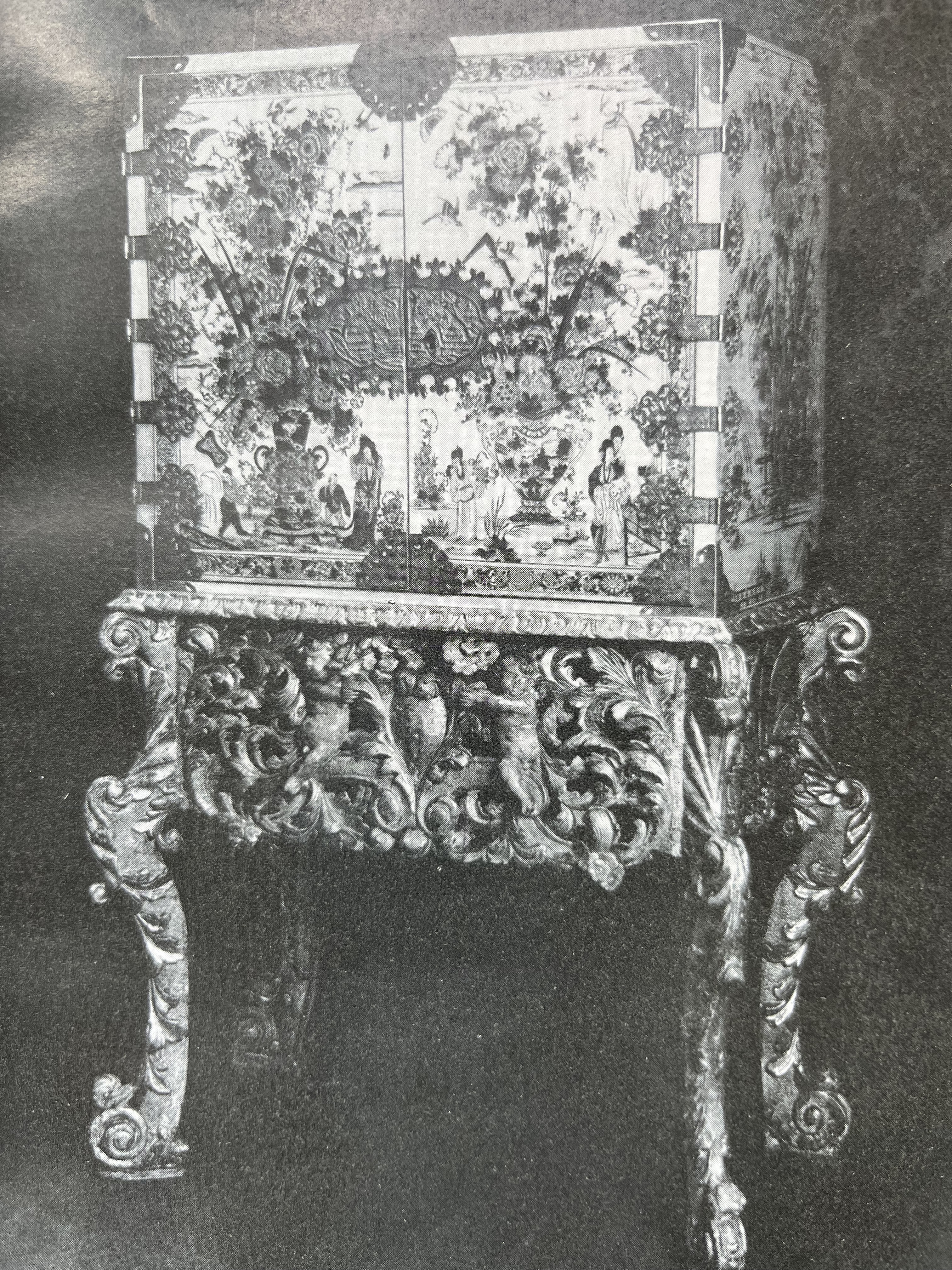
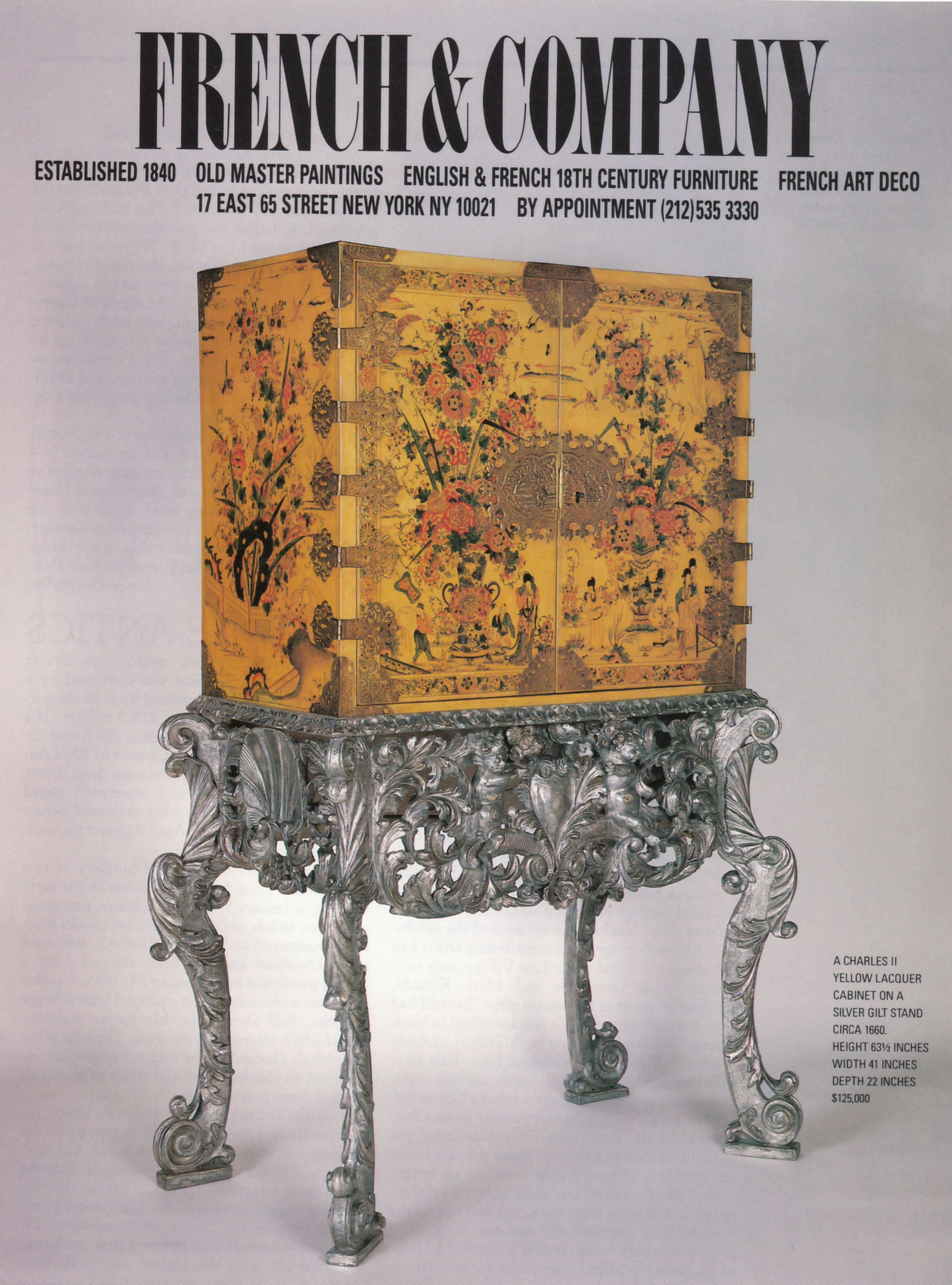
10th object – (see below) the narrator describes as a ‘rare cream lacquer cabinet, made towards the end of the 17th century’. This was No.31 in the catalogue, ‘a Charles II lacquer cabinet, circa 1680’ and was offered for sale by the dealer E.H. Benjamin, 39 Brook Street, London. White lacquer cabinets are the rarest of lacquer furniture, but even so it has not been possible to trace the cabinet – perhaps it has been lost? (Chris tells us that the cabinet on stand was in stock with the American antique dealers’ French & Co in 1987 (see below), so perhaps the cabinet is still in the USA?)
Art Treasures Exhibition catalogue 1932 – ‘A Charles II lacquer cabinet, circa 1680’. Photograph, Antique Dealers Research Project, University of Leeds.French & Co advert, 1987. Image from Chris Coles.
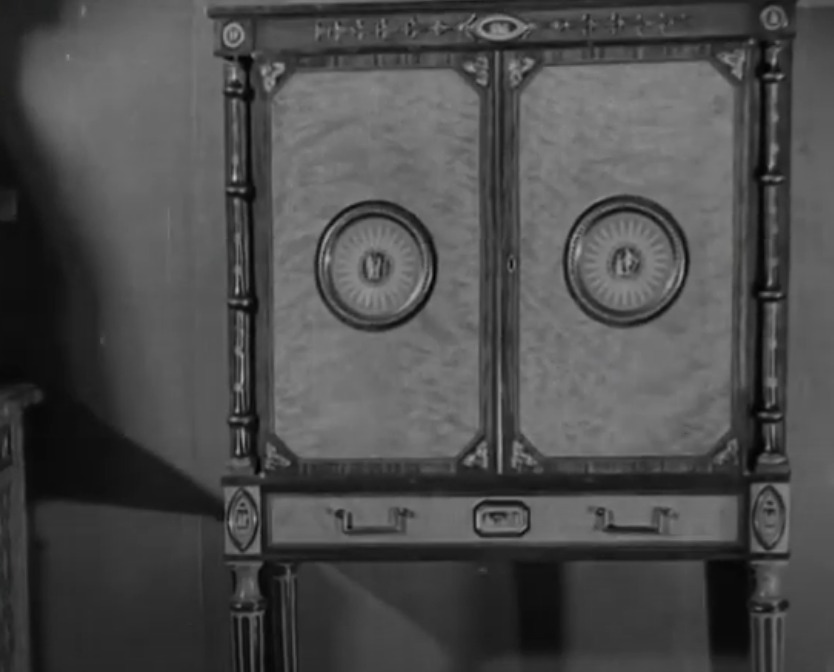
11th object – (see below) the narrator describes another cabinet, this time ‘a fine Adam satinwood example’ – he mentions that ‘it was purchased by the Queen at her recent visit to the exhibition’ (this would be Queen Mary, a very well-known collector of antiques). The cabinet is No.205 in the catalogue, described as ‘an Adam satinwood cabinet, circa 1780’, but is not illustrated; it was offered for sale by the antique dealer Mallet & Sons, one of Queen Mary’s favourite antique dealers. I can’t find the cabinet in Royal Collections, so perhaps the cabinet was sold from the collections or given away or was destroyed?
Art Treasures Exhibition 1932 film, screenshot of ‘Adam satinwood cabinet’.
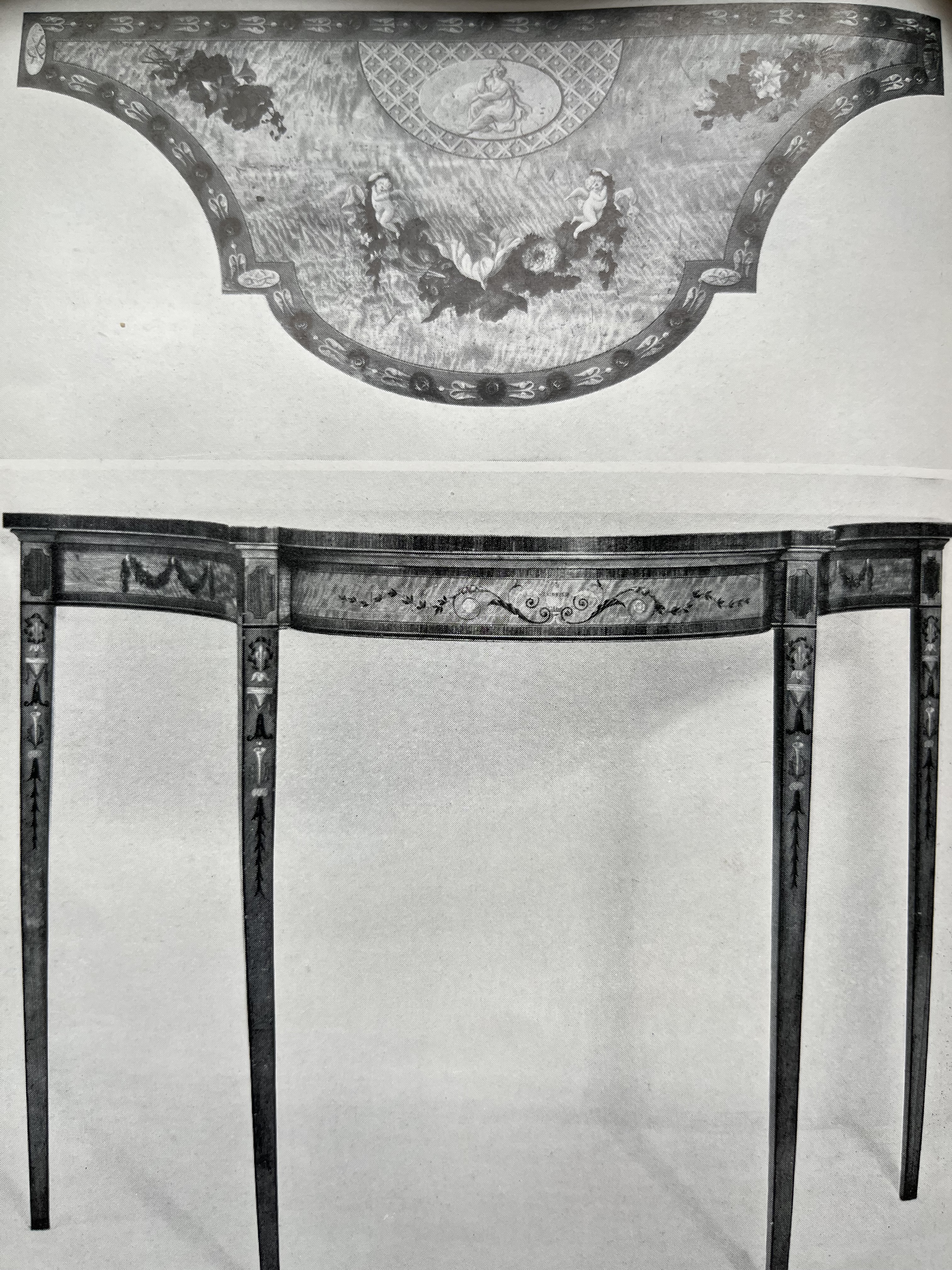
12th object – (see below) the narrator describes ‘a lovely satinwood side table’, ‘one of Lord Nelson’s gifts to Lady Hamilton’. This is one of 3 tables on display at the exhibition, No.241, ‘a set of three satinwood tables, circa 1795’; they were illustrated and were offered for sale by the dealer A.G. Lewis. Like the film, the catalogue mentions that the tables were presented by Lord Nelson to Lady Hamilton. Given the provenance, it’s surprising I can’t find them anywhere? Two of the tables were in the collection of Arthur Sanderson (1846-1915), the well-known collector in Edinburgh; they are listed in the auction sale catalogue of Sanderson’s collection sold by Knight, Frank & Rutley, Hanover Square, London, June 14th-16th 1911 as Lot 540 ‘A PAIR OF SHERATON SHAPED FRONT SIDE-TABLES, which (together with Lot 541 A SHERATON BOOKCASE) were ‘said to have been made by Sheraton for Lord Nelson and given by him to Lady Hamilton at Naples’; (our friend Chris Coles tells me that the Nelson tables were in the collection of the antique dealer George Stoner (of Stoner & Evans) in 1912; and that one of the tables was in the stock of Moss Harris & Sons in 1935; Chris rightly suggests that as the three tables don’t exactly match, they are more likely to have been separated – thanks again Chris!)
Art Treasures Exhibition catalogue 1932 – ‘A set of three satinwood side tables, circa 1795’. Photograph, Antique Dealers Research Project, University of Leeds.
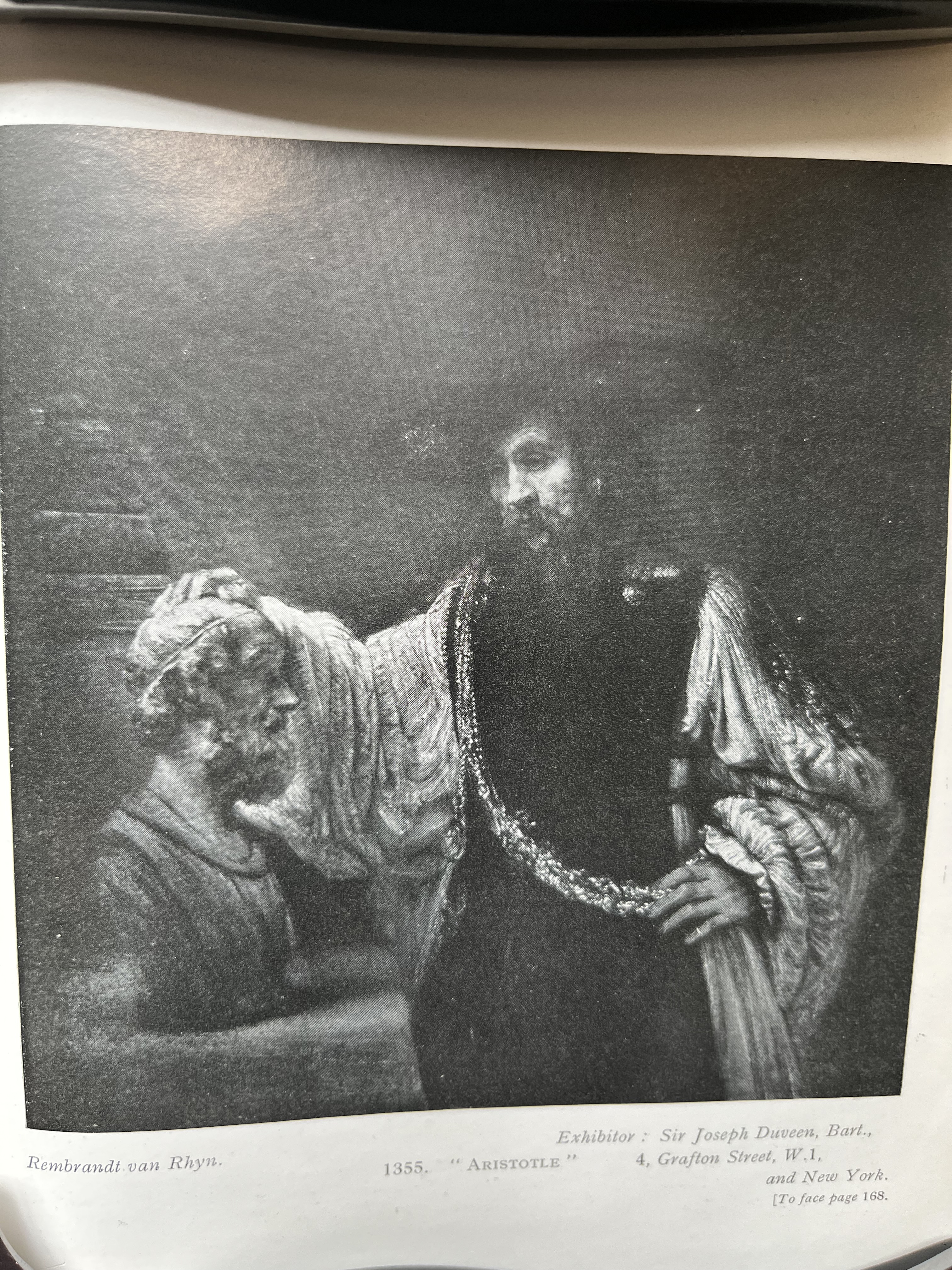
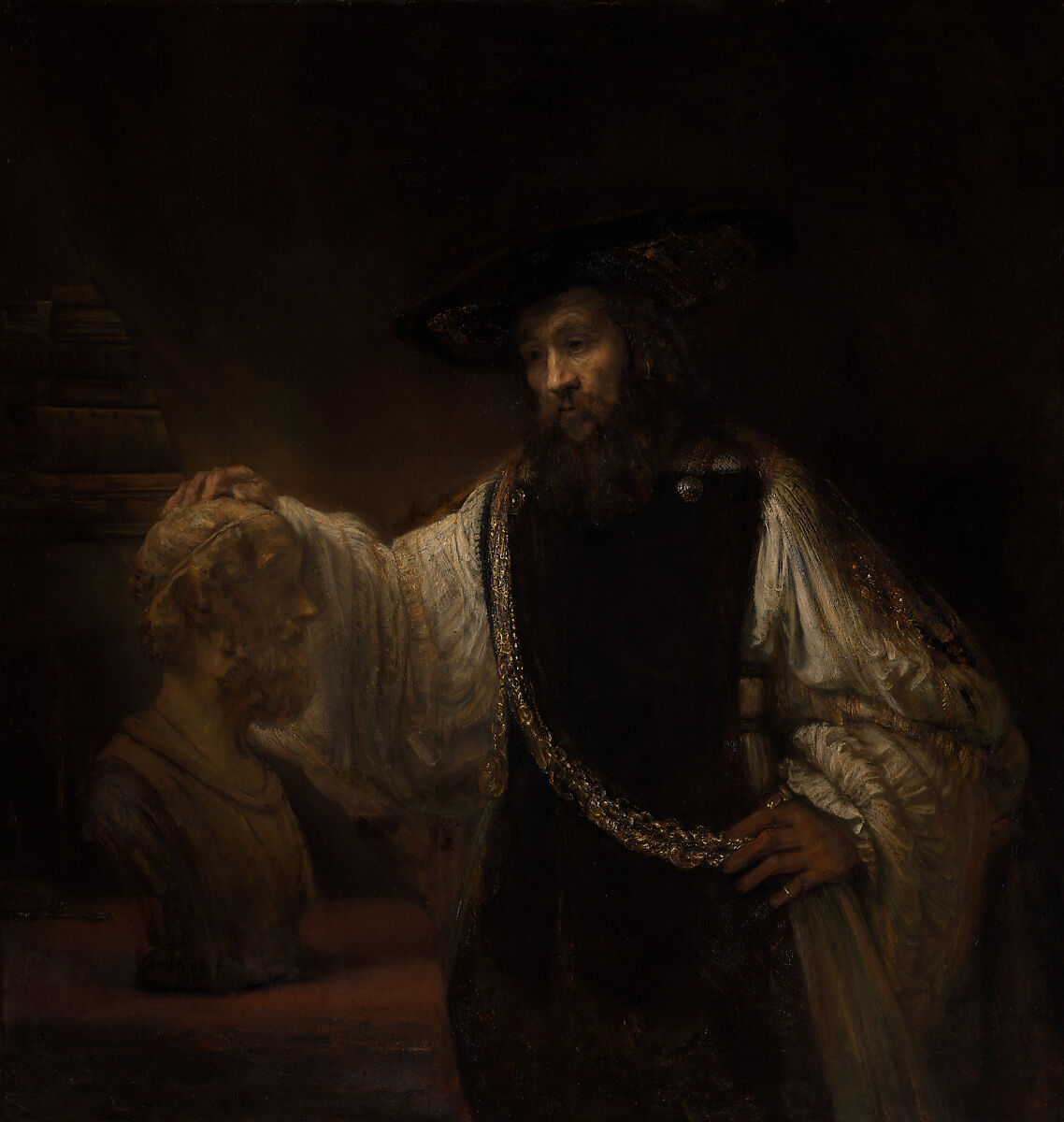
Finally, 13th object – the narrator highlights that this object (a painting by Rembrandt) is ‘the most valuable object here’. It is No.1355 in the exhibition catalogue, ‘Rembrandt van Rhyn (1606-1669), ‘Aristotle’, signed and dated 1653′. It was offered for sale by the world-famous art dealer Joseph Duveen (1869-1939). Duveen bought and sold the painting several times in the decades before the 1932 exhibition. He sold it to the art collector Alfred W. Erickson (1876-1934) in 1928 for $700,000, before buying it back and selling it to Erickson again in the mid 1930s for $590,000. It is now in the collections at the Metropolitan Museum of Art in New York, where it has been since 1961.
Art Treasures Exhibition catalogue 1932 – ‘Rembrandt van Rhyn….’Aristotle’. Photograph, Antique Dealers Research Project, University of Leeds.Rembrandt (Rembrandt van Rijn) Aristotle with the bust of Homer (1653). Metropolitan Museum of Art, New York. 61.198. Image copyright Metropolitan Museum of Art, New York.
The film of the Art Treasures Exhibition 1932, together with the catalogue of the exhibition, gives a fascinating insight into the publicity for one of the major commercial art exhibitions of the period and is a further demonstration of the significance of the antique trade in the circulation and consumption of antiques (and paintings) and their role in the development of public museum collections – and thanks again to Diana for sending on the link to the film!
We are delighted to present another of our occasional series of guest blog posts on the history of antique dealing in Britain – and welcome Andy King as author of this wonderfully detailed post on the Lock family of antique dealers; Thank you Andy!
Andy King I never knew my grandfather, Stanley Harry Lock, as he died before I was born – but knew that he was an antique dealer. I have been researching my family tree for over 25 years and have discovered that it was not just him and his brothers who were in the antiques trade, but his father, grandfather and uncles were too, operating over a dozen antique shops over the course of over seventy years. Thank you to Mark for allowing me to share some of their stories and add to research on the history of the antique trade.
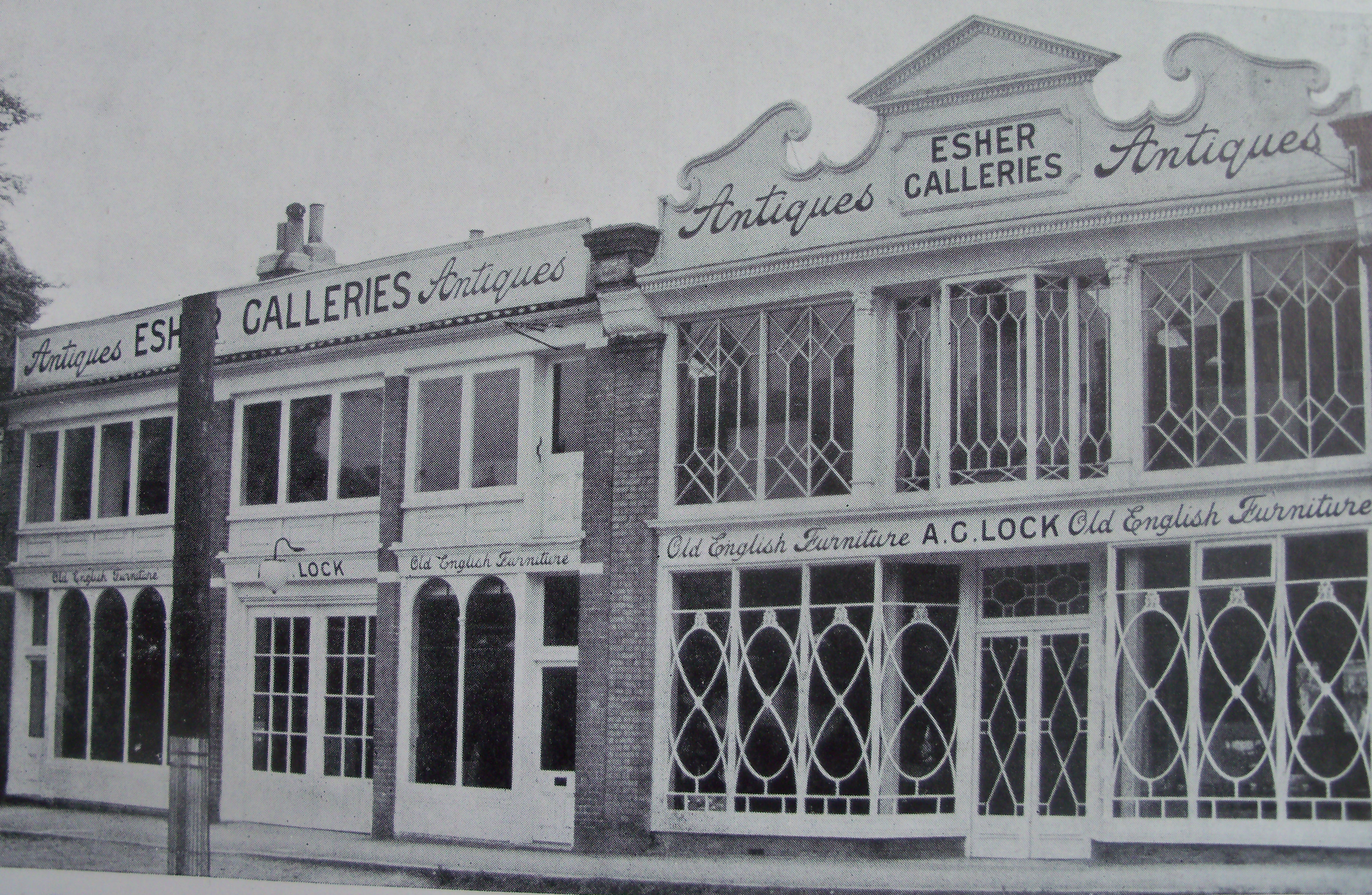
A.G. Lock, Esher Galleries, Esher, Surrey, c.1936. Photograph, Antique Dealer Research Project, University of Leeds.
The first of my Lock family with connections to the antique trade was Charles, born c1811 in Taunton, Somerset. He was a Cabinet Maker. I don’t know how he got into this trade as his parents were farmers and his siblings’ occupations varied from dairyman to hairdresser. He and his wife Matilda (daughter of a Waterloo veteran) had six children, including Walter (born 1848) and Frederick (born 1857). By the 1881 census Walter and Frederick were in London, both upholsterers, living together at 9 The Mall, Kensington with Walter’s wife Jessie, their five children, Frederick’s recently married wife, two of Jessie’s brother’s (also upholsterers), a boarder who was a cabinet maker, also from Taunton, and a governess, quite a household.
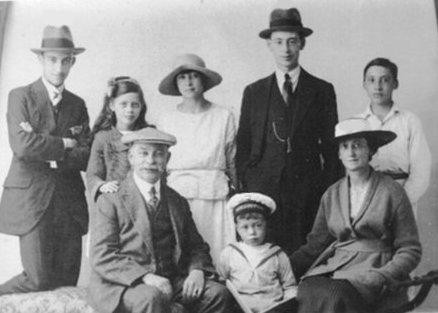
The Lock family in 1920; From left to right – Ronald, Mabel, Arthur George, Doris, Frank, Arthur Walter, Harriet, Stanley. Photograph courtesy of Andy King.
The first mention of them in business is the 1887 Post Office Directory where there is an entry for “Lock, Wltr. & Fredk., Upholsterers, 17 Devonshire Terr, Notting Hill Gate, E” (later renamed as 34 Pembridge Road). The family changed premises and business names a few times in the 1880s and 90s – A second entry appears in 1888 for “Lock, W & F, Upholsterers” at 12, The Mall, Kensington as well as one for Devonshire Terrace. By 1895 the shop at 12 The Mall was in Walter’s own name, and the following year later the listing is “Lock, Walter and Son, Upholsterers, 12 The Mall & 44 High St”. 1899 sees the first mention of a change in the nature of the business, which now shows as “Lock, Walter and Son, Antique Furniture Dealers, 29 & 44 High Street, NH”.
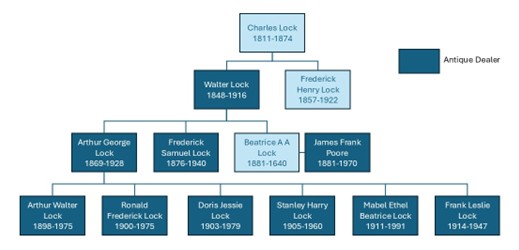
Walter and Jessie had five children, three boys and two girls: Arthur George, Ernest, Frederick Samuel, Mabel and Beatrice. Arthur and Frederick followed their father into the antiques trade, and Beatrice married into it.
The Lock Family Tree – courtesy of Andy King.
The family clearly maintained links with Taunton, and with antique dealers there, as an 1899 newspaper article tells how the Locks were sued by Esau Winter of Winter & Son, furniture and antique dealers of Bridge Street and Station Road, Taunton to recover £23 (around £2,500 today) for a set of 12 “Gothic Chippendale” chairs which the Locks had bought but then returned as they were allegedly not to be what they were claimed to be. The case went against the Locks, and the judge told them that they should “have sold the goods and then sued for the balance in damages for breach of implied warranty” – I wonder if they ever had cause to use that advice?
They faced a second court case only four years later – this time it was they who were selling things were not what they claimed to be. They were summonsed by the Worcester Royal Porcelain Company Limited charged with “infringing the Merchandise Marks Act by exposing for sale, as old Worcester ware, two vases to which the Worcester trade mark had been falsely applied”. The vases were marked up at £65, but if genuine would have been “worth a thousand guineas”. The vases had apparently been “taken by one of the sons from a customer in exchange for a couple of Louis XIV cabinets”. I wonder whether they thought he had made a good deal on the exchange, or whether they did not know the genuine value of the vases. They were given a penalty of £5 plus three guineas costs.
Despite the court cases the family were clearly making a good living from the business as they moved into two large properties in Campden Hill Road – one occupied by Arthur George and his family, with Frederick Samuel and his wife next door. My grandfather was born here in 1905. The applications for the houses to be connected to mains drainage under the Metropolis Management Act were submitted under the name of “W. Lock & Sons” in September 1903. In 1911 there were three shops listed: “Lock, Walter and Sons, Dealers in Antiques: 44 High St, Notting Hill Gate: & 37 Queens Road, Bayswater: & 147 Brompton Road, SW”.
The London Gazette of 16th January 1914 reports that the partnership between Walter Lock, Arthur George Lock, and Frederick Samuel Lock, trading as Walter Lock and Sons was dissolved by mutual consent on Christmas Day 1913. I wonder what triggered the decision? Interestingly, Walter’s will, dated 21st April 1914, shortly after the marriage to his second wife Sophia (the widow of his first wife Jessie’s brother Henry) explicitly names the “four” children by his first wife, omitting Arthur George. A codicil dated June the following year states that “in the event of any beneficiary…raising any question or dispute…then his or her interest…shall immediately and entirely cease”! Clearly, Arthur George was not in Walter’s good books.
In 1915, 44 High Street is now listed as “James F. Poore, Antique Furniture Dealer”. James, or Frank as he was more commonly known in the family, had married Beatrice Alice Augusta Lock, daughter of Walter, in 1909. He too had started out as an upholsterer before becoming a furniture salesman for a London store. Frank Poore moved to premises at 5 Wellington Terrace, Bayswater. An article in The Kensington News and West London Times from 14th May 1965 gives a portrait of him still in business there at the age of 84 saying “I’ll not retire yet!”. He died in 1970 leaving no children.
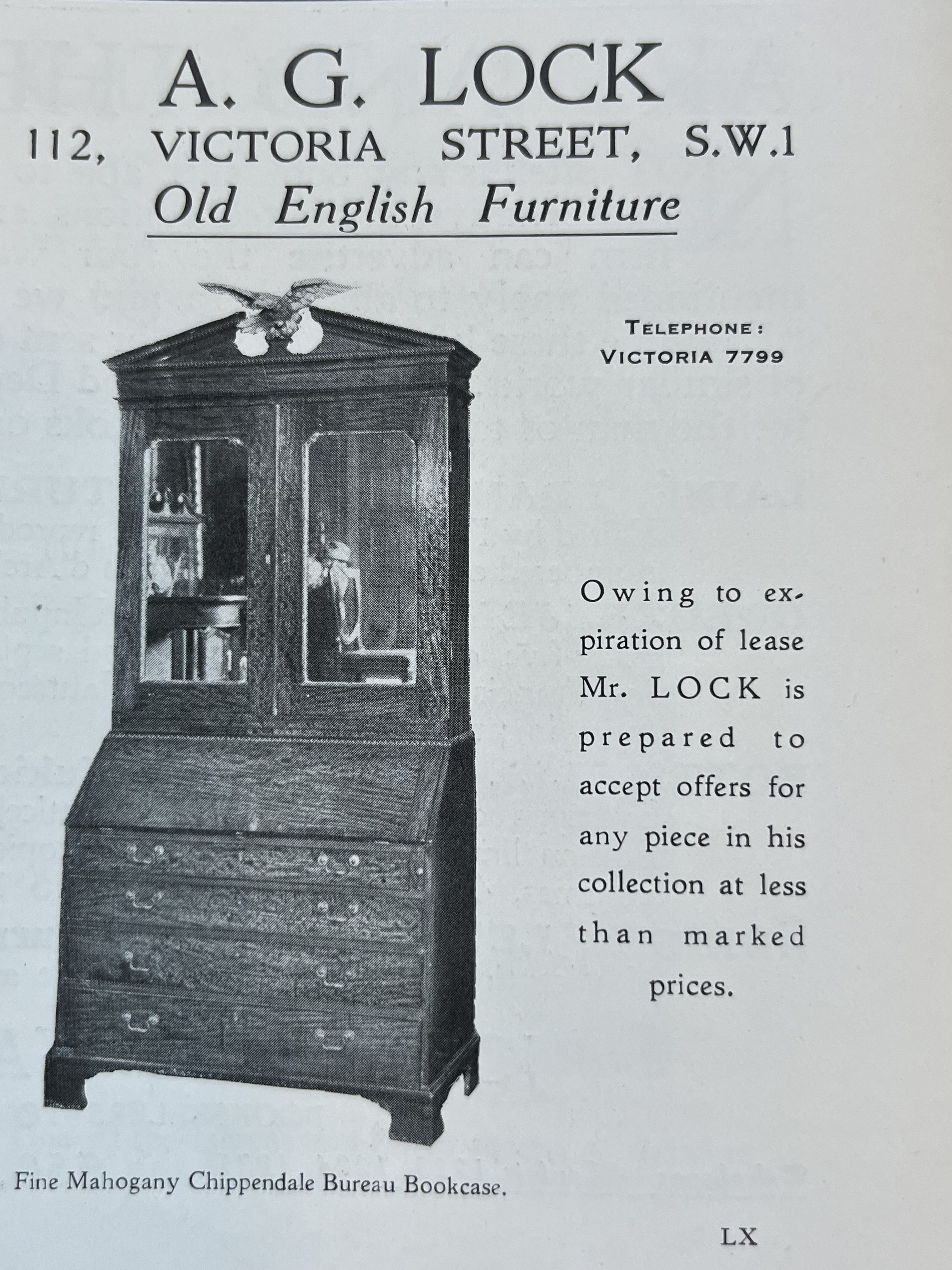
Also in 1915 Arthur George was listed at 112 Victoria St., SW1 – where he remained until 1927 when the end of the lease saw him move to new premises at Esher Galleries, High Street Esher. He regularly advertised in collectors magazines such as The Connoisseur, Country Life, and Apollo, and was an exhibitor at the annual Grosvenor House Antiques Fair.
A.G. Lock advertisement, Connoisseur December 1928. Photograph, Antique Dealer Research Project, University of Leeds.
Arthur George had married Harriet Illsley in 1897. Harriet was the daughter of a bricklayer from Brixton. I have often wondered how they met as their worlds were so far apart, both physically and socially. They had six children, four boys and two girls, all of whom were in the antiques trade, albeit some rather briefly. In the 1921 census, Arthur George was listed as an employer at 112 Victoria Street, SW1, and the eldest three children Arthur, Ron and Doris were employed as assistants.
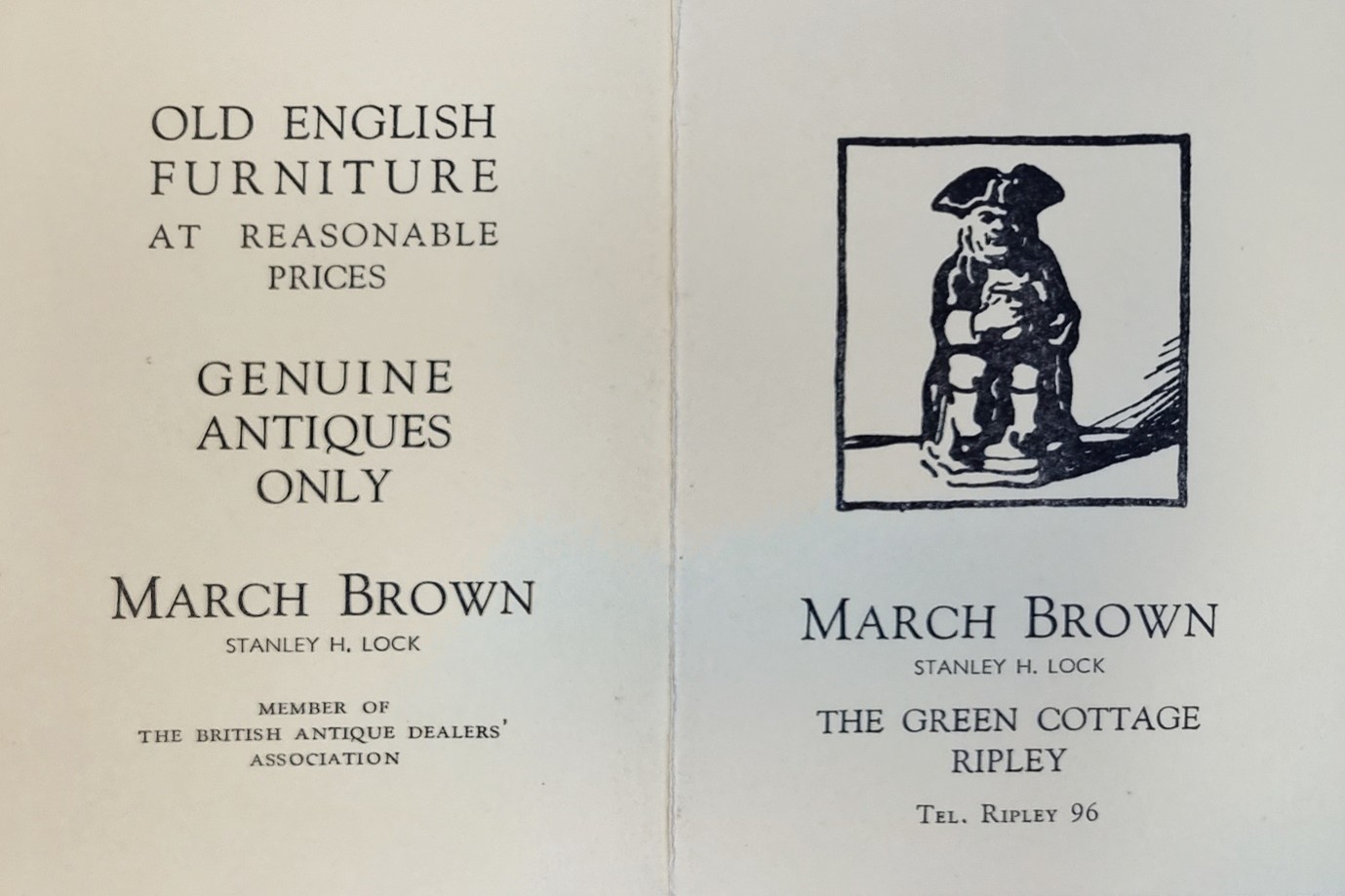
Arthur and Ron, the eldest two children opened their own shop at 88-91 Petty France in 1922. Sadly, Arthur George died soon after opening the shop in Esher, and the remaining four children ran it in partnership until 1937 when Doris and Mabel left, and then a year later Frank too left the business, leaving just Stanley, who also bought a second business, “March Brown” of Green Cottage, Ripley, Surrey in December 1937, and continued under the same name.
Publicity material, March Brown, c.1937. Image courtesy of Andy King.
Frank served in the Royal Engineers during WWII but was discharged in 1944 on health grounds. He ran the Weybridge Furniture Mart, but sadly died in 1947 at the age of 33. Stanley ran both businesses until early in the war, when he left the antiques trade and went to work for the Board of Trade War Damage Commission as a valuer where he remained until his death at the early age of 55 in April 1960. When Stanley left the trade the shop at 91 High Street, Esher became H.E. Marsh, Antique Dealer. Arthur took over Esher Galleries and the business continued trading as A.G. Lock. He also had a furniture repair workshop linked to the shop. A 1950-51 antiques year book has two entries under Provincial Dealers in Esher, one for H.E. Marsh at 91 High Street, and one for A.G. Lock Esher Galleries.
A.G. Lock, Esher Galleries, Esher, Surrey, c.1936. Photograph, Antique Dealer Research Project, University of Leeds.
Arthur and Ronald were in business together in Petty France until 1930 when Arthur moved to Vine House, Cobham, where he remained until retirement in the 1960s. Ron continued in Petty France until 1936 before moving to 152 Brompton Road. Ron regularly exhibited at the annual Antique Dealers’ Fair at Grosvenor House and was on the fair’s advisory council on furniture. He advertised in magazines such as Apollo, The Connoisseur and Country Life, and by the 1950s the advertisements show that he was specialising in bookcases. Ron was also president of the British Antique Dealers Association (BADA) in 1952-3. Ron sold up and retired to Florida in the mid 1960s. Arthur and Ron both died in 1975 leaving no children, and the Lock involvement in the antiques business came to an end.
However, the Lock business names continue to turn up even now, last year a set of chairs were sold at auction by Dreweatts of Newbury, the description reading “A SET OF TEN GEORGE III MAHOGANY DINING CHAIRS THIRD QUARTER 18TH CENTURY AND LATER ADAPTED Comprising two arms chairs, the arms a later addition and eight chairs with drop-in seats, each with plaque to seat rail for ‘A. G. LOCK, OLD ENGLISH FURNITURE, ESHER, SURREY’
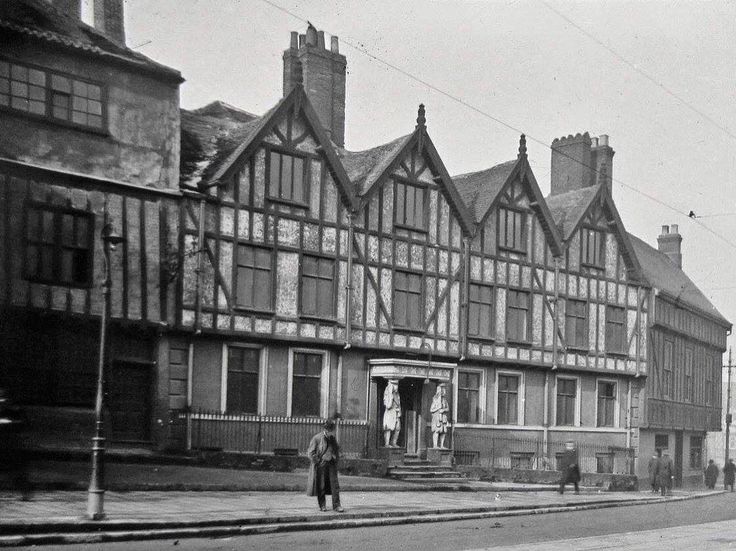
We have a new occasional theme for the Antique Dealer Research Blog – ‘Antique Shops Then and Now’ (it’s really just an excuse to travel the UK in search of locations of interesting antique shops, some inevitably long gone of course). Anyway, the first antique shop in this occasional theme is that of Edgar H. Burrows and family – who ran an antique shop from King Richard III house, 24 Sandgate, Scarborough, on the North East coast of England from 1915 until 1964.
Burrows bought the house and associated shop next door from the estate of another antique dealer, E. Booth Jones (who was originally from Manchester) in 1915; Booth Jones sadly drowned when the Lusitania was sunk by a German torpedo on May 7th 1915 – incidentally, the well known antique dealer Edgar Gorer, a leading specialist in Chinese ceramics based in New Bond Street in London, was also lost when Lusitania was sunk. The antique dealing business operated by Edgar Burrows was inherited by his son, C.H. Burrows, who ran the business with his wife until they eventually sold the property in 1964 and closed the antique shop. The antique dealing business was very successful it seems – the Burrows were elected to the BADA (British Antique Dealers Association). Scarborough was not such an unusual place to run an antique shop in the period – indeed Scarborough already had at least 25 antique dealers by 1930, and by the 1970s this community of antique dealers had doubled to more than 60, so it seemed to have been a very popular location for antique collectors.
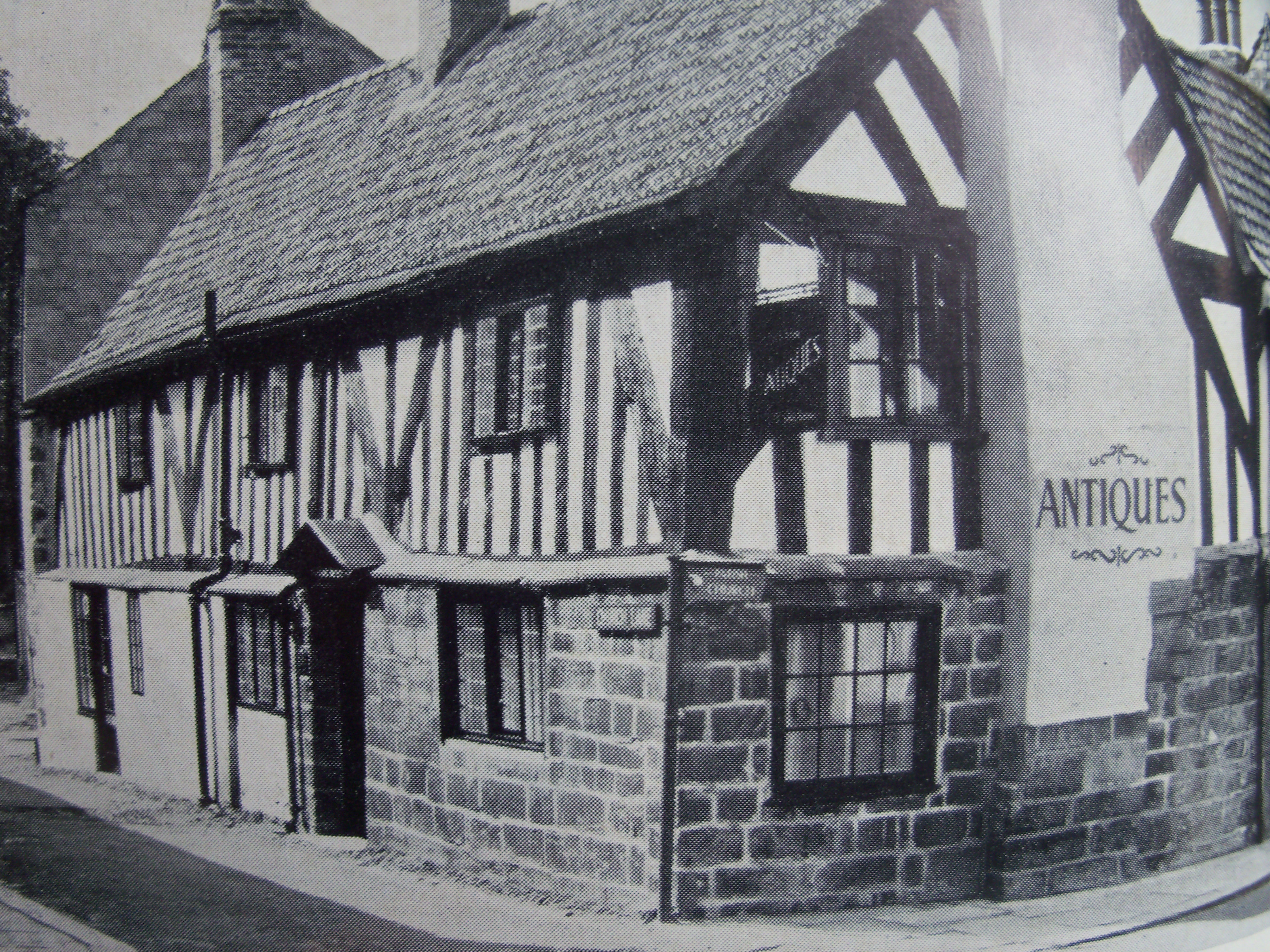
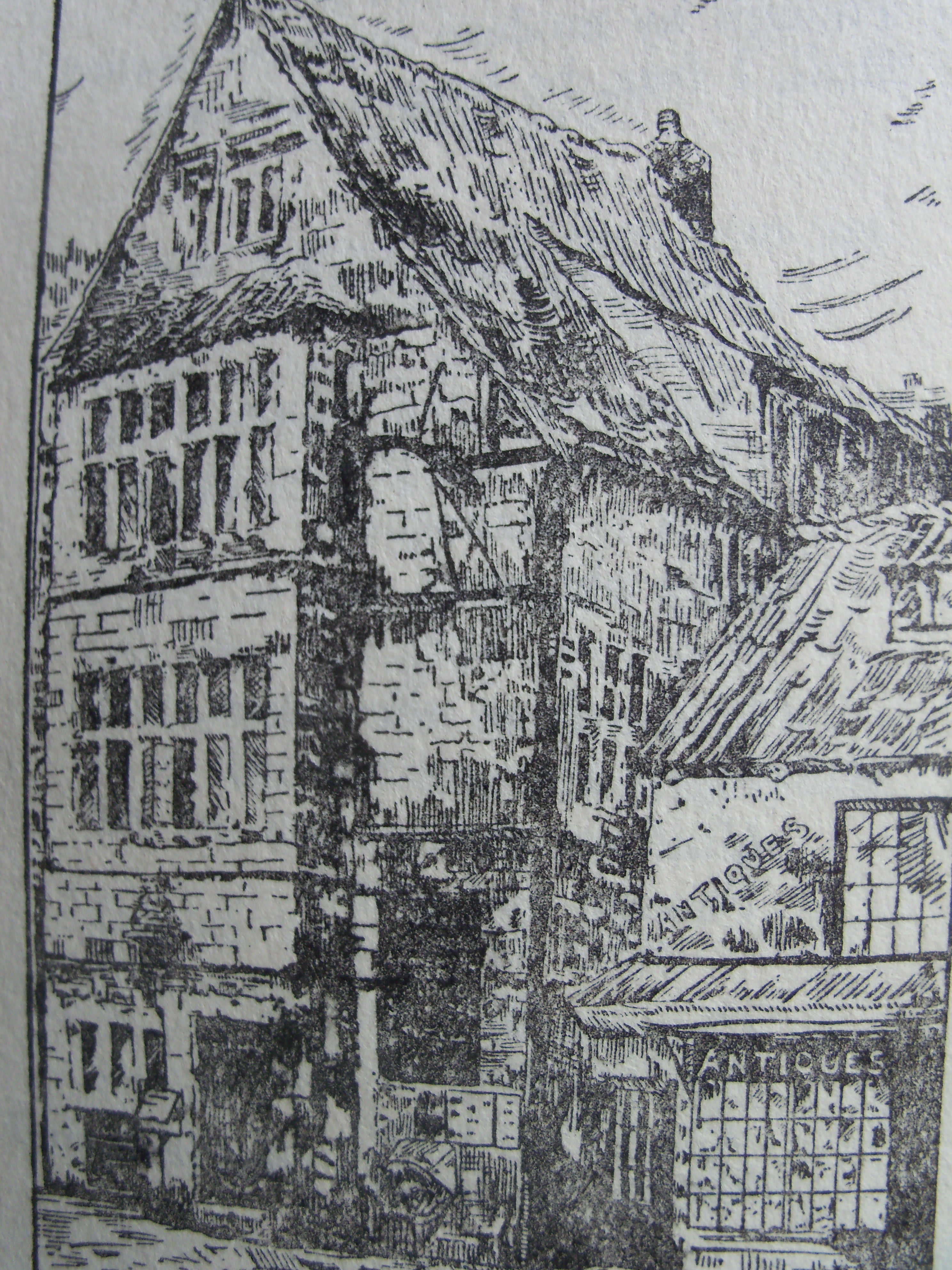
Here (below) is Burrows antique shop as it was in the 1950s (in anonymous line drawing of the late 1940s). It was called ‘King Richard III House’ because it was said that Richard stayed in the house in 1484.
E.H. Burrows Antiques, King Richard III House, 24 Sandgate, Scarborough. Photograph Antique Dealer Research Project, University of Leeds.
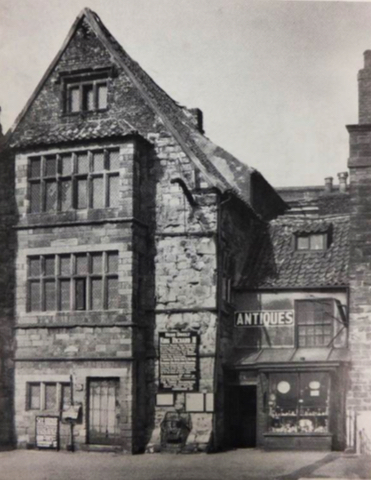
And here (below) is a photograph of the building, also from c.1950. Burrows operated a museum/shop in the Richard III building, with an associated antique shop next door, but it seems that the antique dealing business eventually took over the spaces of the museum and the shop – a useful hybrid model, blending ‘for public education’ with ‘for private profit’, which must have been very effective.
E.H. Burrows antique shop, King Richard III house, Scarborough, c.1950.
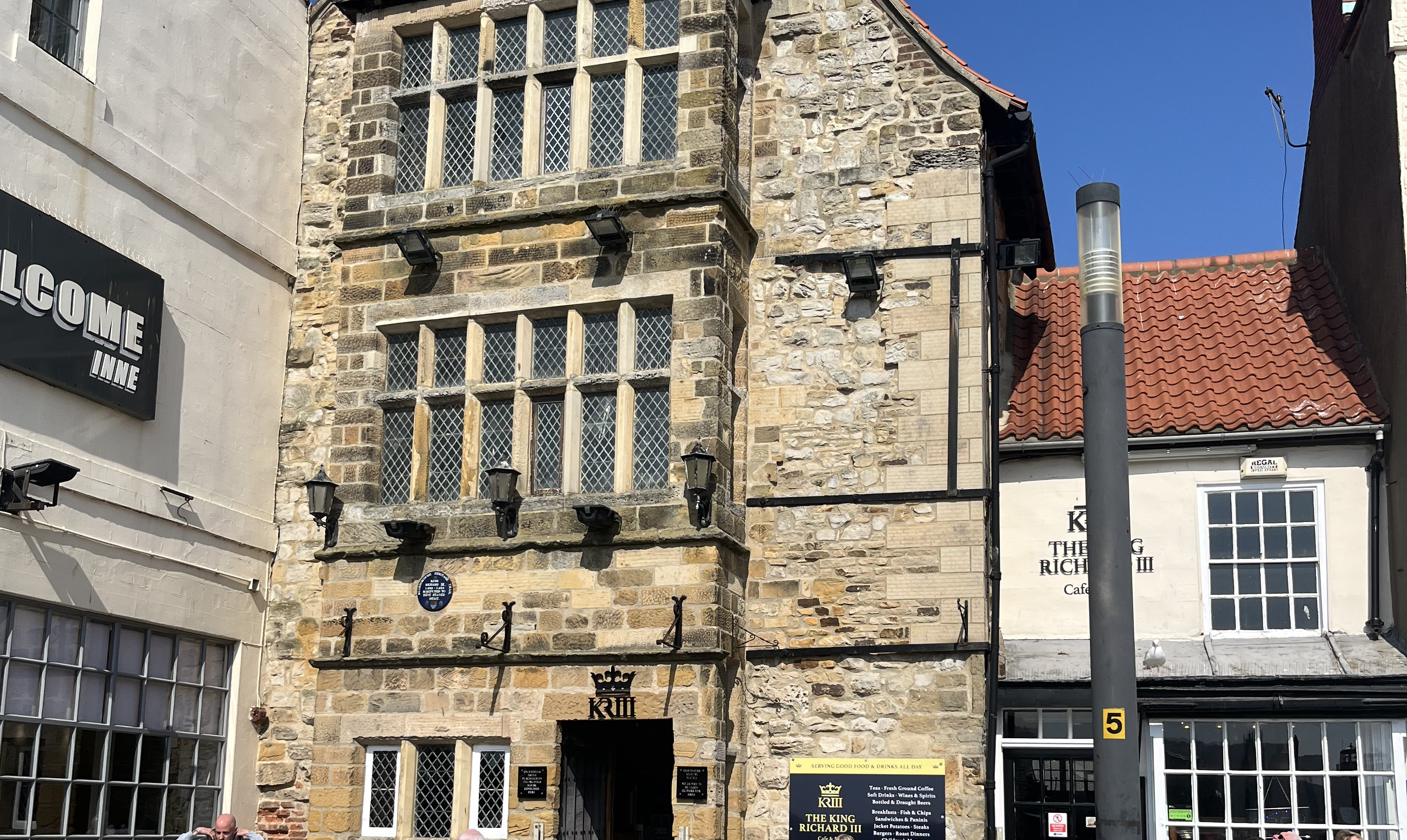
The building in 2025 (see below) looks much the same, but is no longer an antique business of course (it’s now a cafe).
King Richard III House, Scarborough, 2025. Photograph, Antique Dealer Research Project, University of Leeds.
Anyway, keep an eye on the Blog for more posts in this ‘Antique Shops Then and Now’ theme.
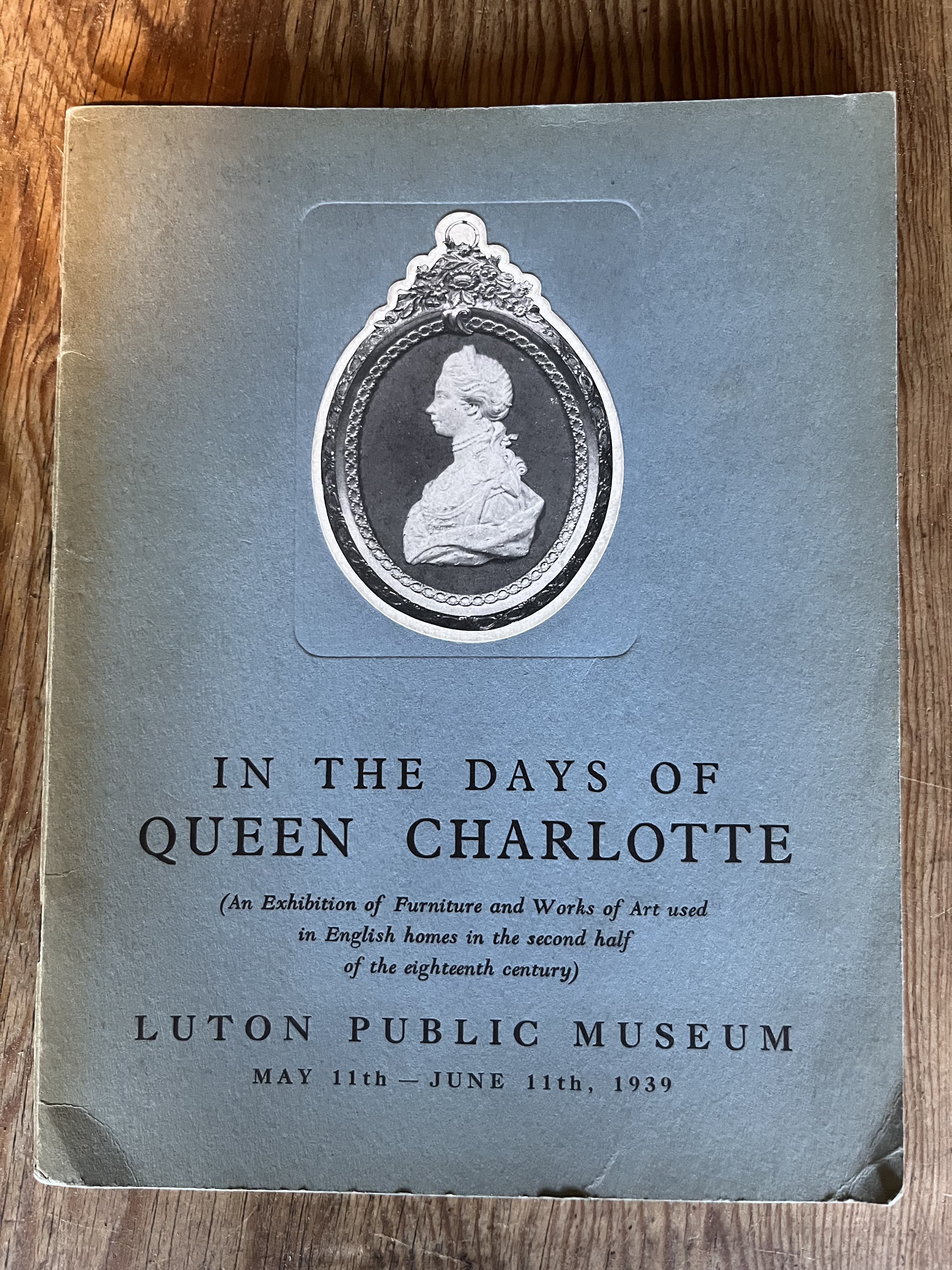
The relationships between the antique trade and public museums is an expansive and complex subject, and there’s not really enough space in a short blog post to do the subject any real justice at all. But a recent addition to the antique dealer project archive of antique dealer ephemera is worth highlighting as it is further evidence of the fascinating dialogue between antique dealers and the public museum. The ephemera in question is a rare survival, an exhibition catalogue of the exhibition ‘In the Days of Queen Charlotte‘ held at Luton Public Museum in May to June 1939.
Exhibition catalogue, Luton Public Museum, ‘In the Days of Queen Charlotte’, May-June 1939. Image, Antique Dealer Research Project, University of Leeds.
The exhibition was organised in collaboration with the British Antique Dealers’ Association and exhibitors included most of the leading antique dealers of the day, such as H. Blairman & Sons, Frank Partridge & Sons, M. Harris & Sons, H. M. Lee, Mallett & Son, S.J. Phillips, S. W Wolsey, Stoner & Evans, J. Rochelle Thomas, and many more. It built on the success of the famous ‘Art Treasures‘ exhibition held at Grafton Galleries in 1928 (also under the auspices of the BADA) and the antique dealers exhibition at Christie’s auction rooms in 1932. However, there was a key distinction between these earlier exhibitions and the Luton Museum exhibition, which was of course that the 1939 exhibition was held in a public museum. I believe this was one of the earliest of what one might call hybrid exhibitions (those staged by the antique trade in public museums) that took place in Britain, and was a catalyst for the much more ambitious collaborations between the antique trade and public museums in the form of public exhibitions that took place later in the 20th century, at The Victoria & Albert Museum in 1962 (organised by CINOA, the International Confederation of Dealers in Works of Art), and again at the V&A Museum in 1968 (organised by the BADA as part of the celebrations of the Golden Jubilee of the establishment of the BADA (1918)). There was also similar dealer exhibitions in public museums in Europe, all organised by CINOA, the earliest of which appears to have been held at the Rijksmuseum in Amsterdam in 1936, with similar exhibitions at the Musee des Arts Decoratifs in Paris in 1954 and at the Historisch Museum in Amsterdam in 1970. And perhaps the most ambitious of these initiatives was the exhibition, ‘The Grand Gallery‘, staged at the Metropolitan Museum of Art in New York in 1974 (again organised by CINOA) and which was partly staged to celebrate the additions to the Metropolitan Museum collections acquired through or gifted by, the New York based antique dealers Joseph and Ernest Brummer.
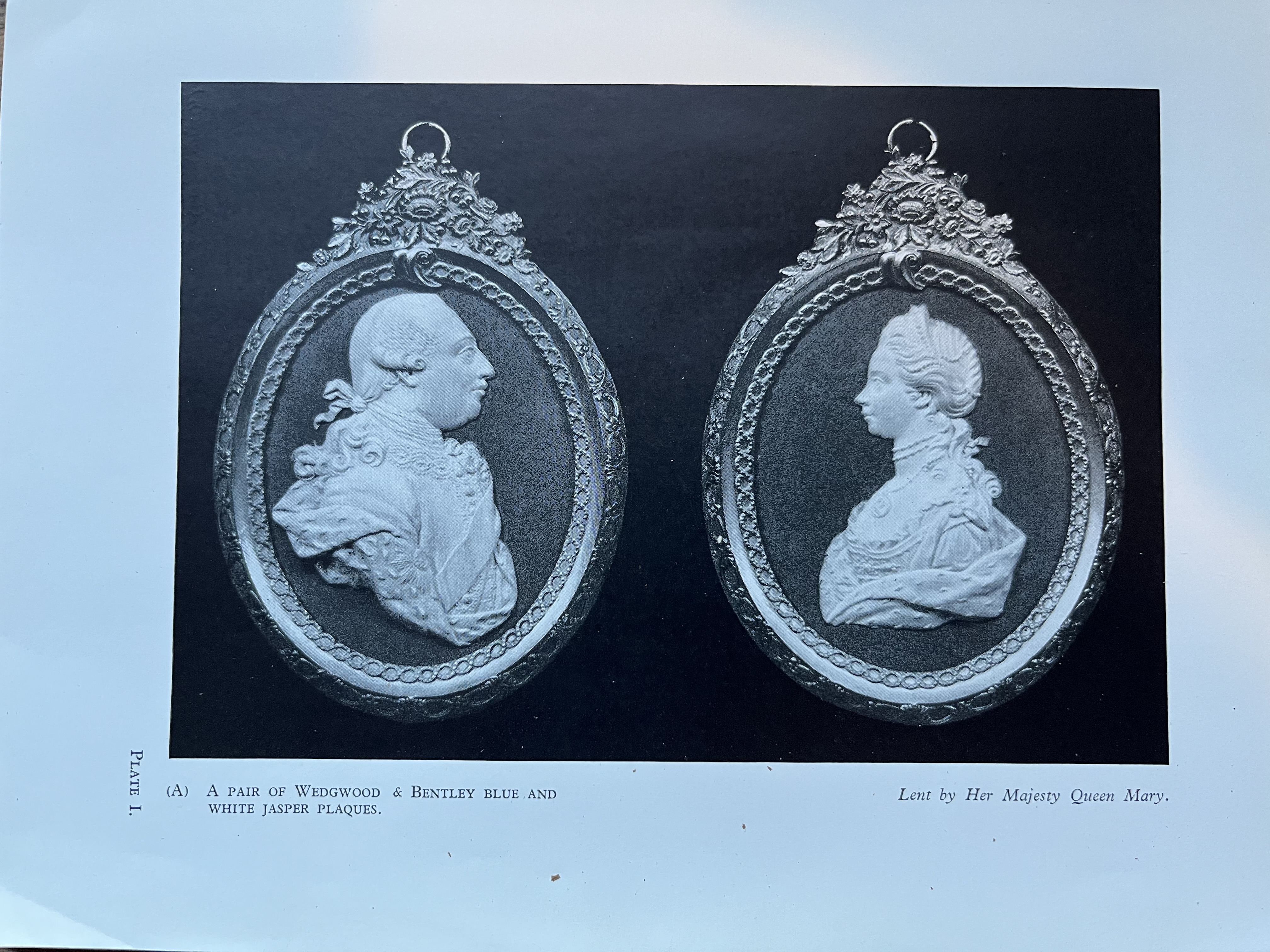
The exhibition at Luton Public Museum, like the other later exhibitions at the various museums, was partly for public education – the exhibitions often had antiques loaned by influential collectors for example. At the Luton Public Museum exhibition, Queen Mary (an avid collector of antiques) loaned a pair of 18th century Wedgwood & Bentley jasper plaques (c.1780), and the Duke of Kent loaned a collection of 20 stipple engravings of members of the Royal Family (published in 1806).
Plate from Luton Public Museum exhibition catalogue, 1939. Photograph, Antique Dealers Research Project, University of Leeds.
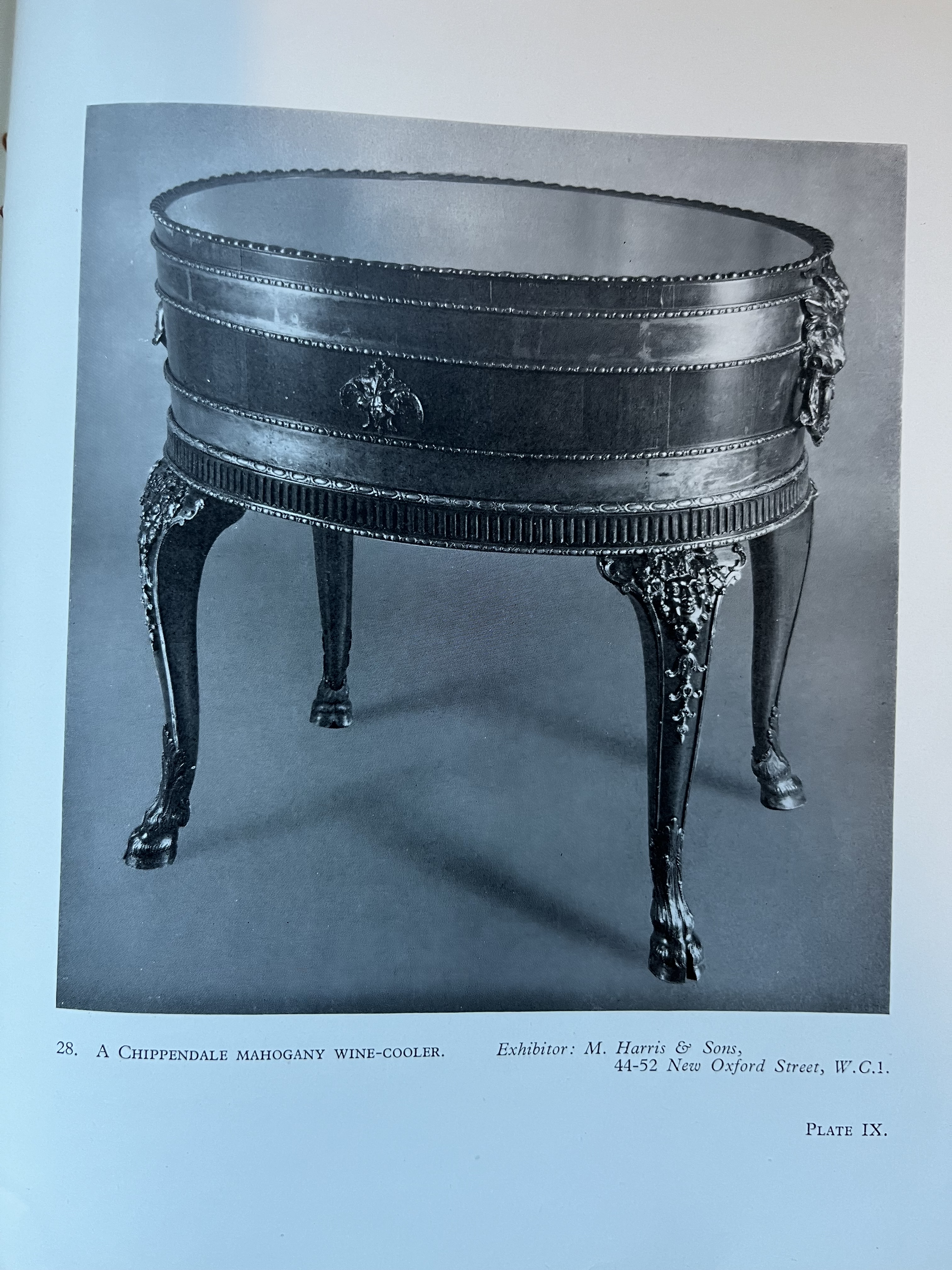
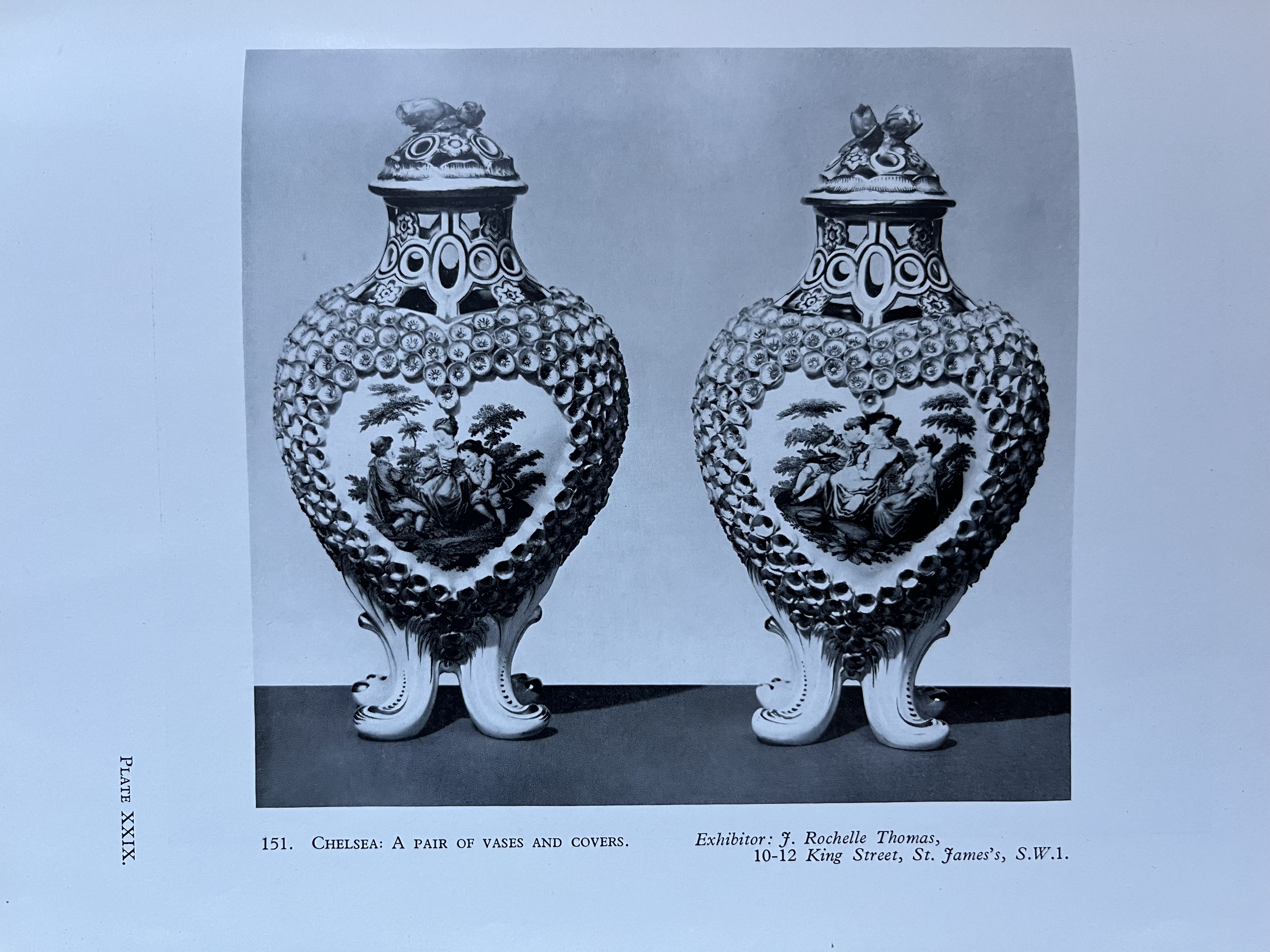
Of course one of the main purposes of these antique dealer organised public museum exhibitions was to showcase, and sell, antiques displayed by antique dealers. Indeed, at the Luton Public Museum exhibition all the objects on display, apart from the loans by Queen Mary and the Duke of Kent, were offered for sale – Moss Harris & Sons offered this 18th century wine cooler (see below) and J. Rochelle Thomas, a pair of 18th century vase and covers (see below).
‘A Chippendale Mahogany Wine-cooler’, exhibited by M. Harris & Sons at the Luton exhibition, 1939. Photograph, Antique Dealer Research Project, University of Leeds.‘A Pair of Chelsea vases and covers’, exhibited by J. Rochelle Thomas at the Luton Public Museum exhibition, 1939. Photograph, Antique Dealer Research Project, University of Leeds.
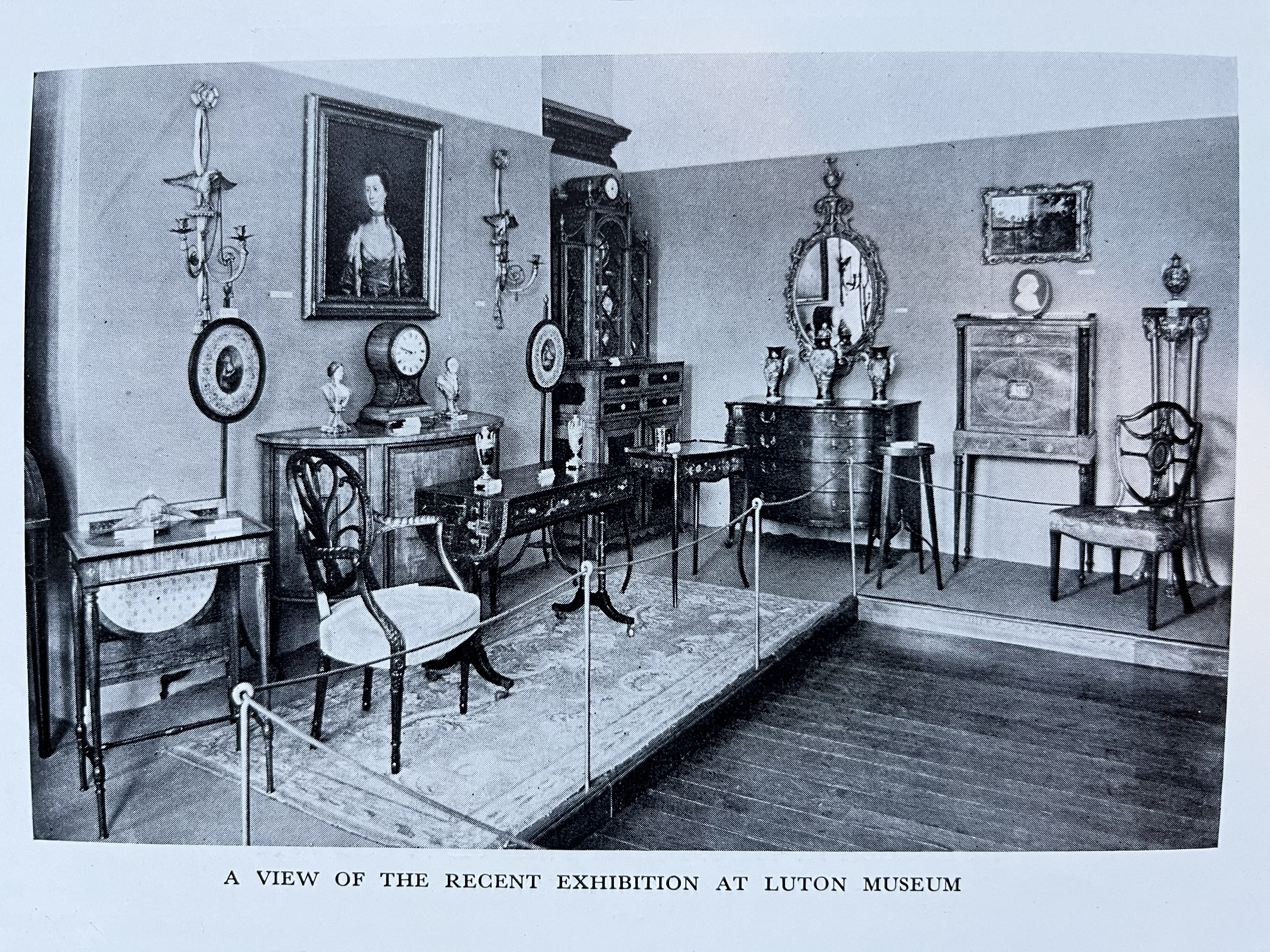
The arrangement of the exhibits at the museum also seemed to mirror the displays of antiques at major antique fairs at the time – such as those at the Antique Dealers Fair held at the Grosvenor House Hotel from 1934 – as one might expect of course – the overlap between modes of display in the worlds of commerce and in the public museum are often much closer than one thinks.
The Luton Public Museum ‘In the Days of Queen Charlotte‘ exhibition, 1939, from Connoisseur, September 1939. Photograph, Antique Dealer Research Project, University of Leeds.
Indeed, all of these antique dealer organised exhibitions draw further attention to the close relationship between the market for antiques (as figured in the presence of antique dealers) and the role of the public museum as a frame for ‘decorative art’ (also known as ‘antiques’ of course). The exhibition I curated at The Bowes Museum back in 2019 – ‘SOLD! The Great British Antiques Story‘, was partly an attempt to draw the attention to the symbiotic relationship between the realm of the art market and the so-called ‘disinterested’ realm of the public museum. If you are interested, you can read more about this in the SOLD! exhibition catalogue – still available, for FREE, as a PDF download via the Antique Dealer Research Project Website HERE.
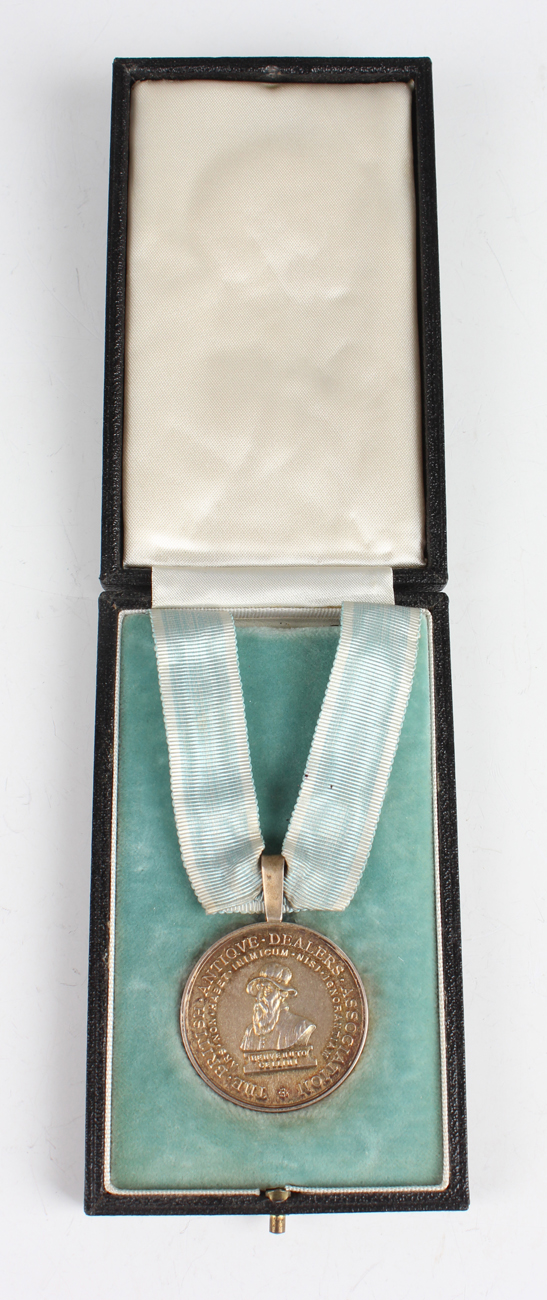
As part of the Antique Dealer’s research project at the University of Leeds, we are constantly on the look out for rare ephemera and items associated with the history of antique dealing in Britain. Often material is very generously donated to us, but sometimes things appear on the market which we just have to acquire. One such object was this medal (see below), which turned up at auction in August.
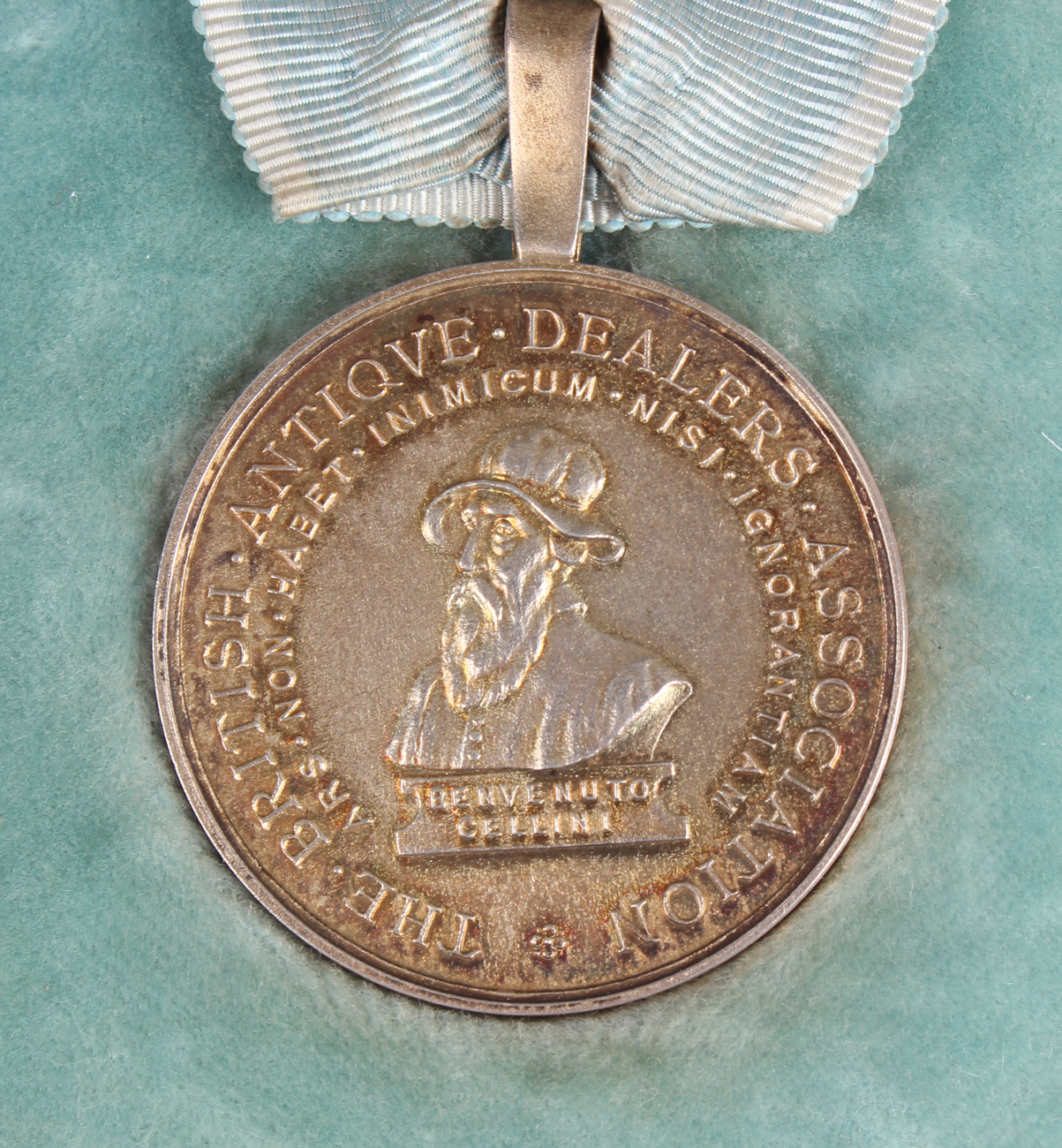
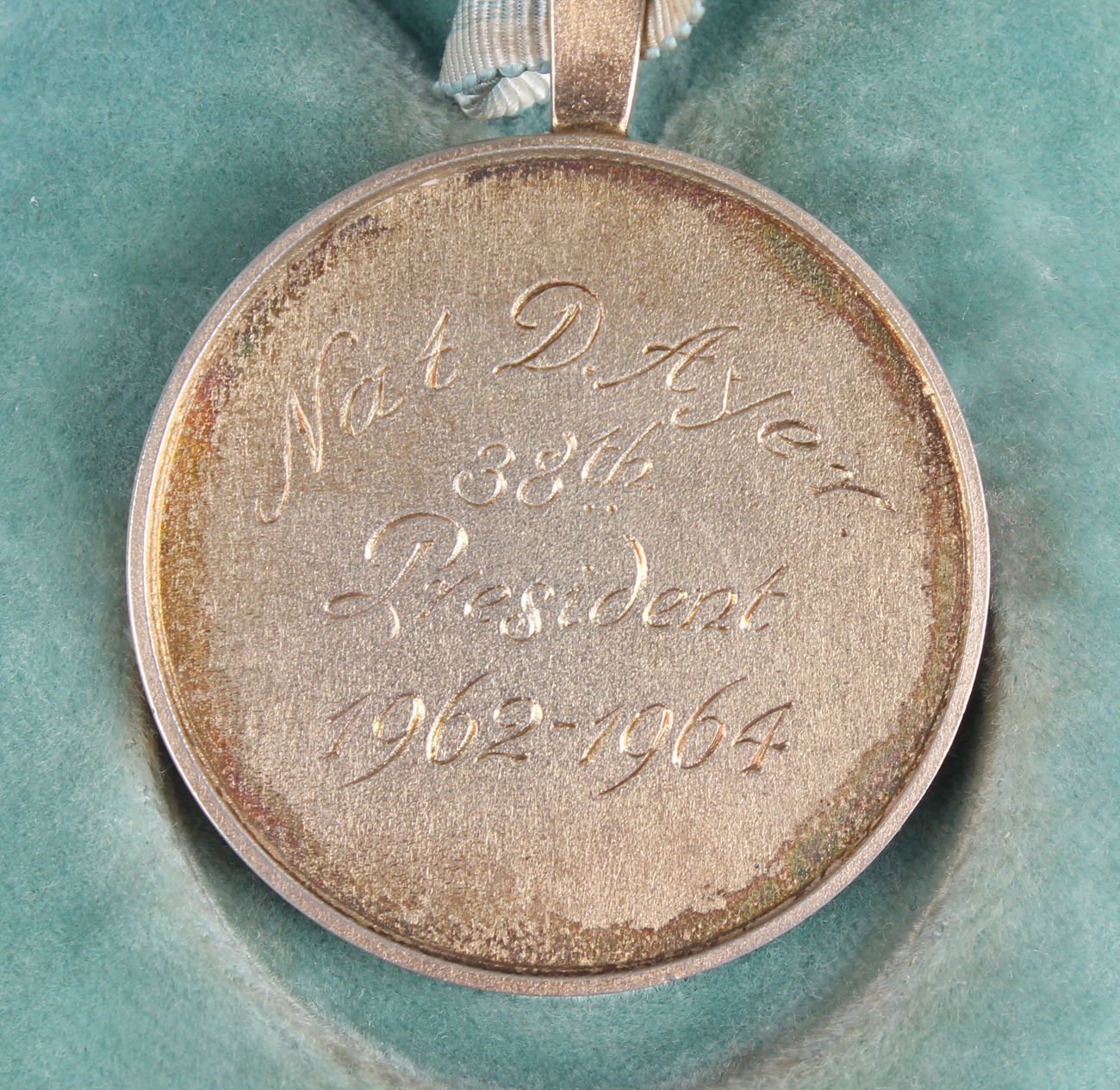
The medal is silver-gilt, about 34mm in diameter, and has a pale blue and white silk ribbon attached. I’d never seen one of these medals before, so asked Mark Dodgson, Secretary General of the British Antique Dealers Association (BADA) about it – he tells me that they were awarded to BADA Presidents to acknowledge their work as Presidents of the organisation. The BADA, as many of you will know, was established in 1918. This particular medal was awarded to the antique dealer Nat D. Ayer by the BADA in 1964 in recognition of Ayer’s Presidency of the BADA between 1962 and 1964. The Verso of the medal has the inscription ‘Nat D. Ayer 38th President 1962-1964’.
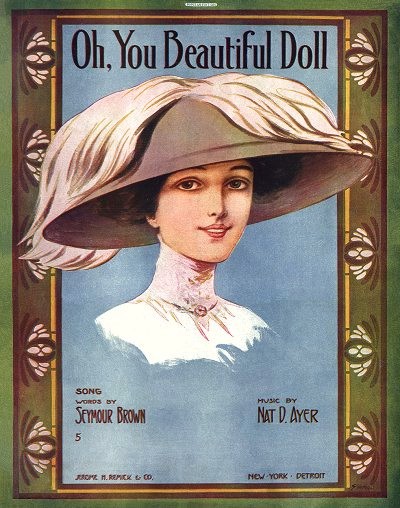
Nat Ayer was a very well-known character in the British antiques trade in the Post WWII period. He appears to have begun trading in antiques immediately after the end of the Second World War, opening a shop in Quiet Street, Bath by 1946. Nat Ayer is perhaps also well-known as the son of the famous composer Nathanial Davis Ayer (1887-1952) who was also known as Nat D. Ayer; composer of such famous songs as ‘Oh, You Beautiful Doll’ (1911) and ‘If you were the only Girl in the World’ (1916), with the lyricist Seymour Brown (1885-1952), and for his work on the Ziegfeld Follies. Below is a cover for a music sheet for ‘Oh, You Beautiful Doll’.
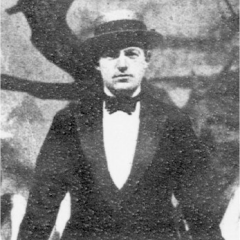
Nat Ayer Snr. was born in Boston in the USA – below is a photograph of Nat Ayer in 1916. He settled in the UK, becoming very successful in the Music Hall and theatre scene in London in the 1910s and 1920s. Ayer appears to have been less successful in the 1930s; he was eventually declared bankrupt in 1938; he sadly passed away in 1952 aged 65, in Bath, Somerset. Perhaps Nat Ayer Snr was also instrumental in his son Nat Ayer Jnr. opening an antiques shop in Bath in the 1940s?
Nat Ayer Jnr. went on to be a highly successful antique dealer, and as well as being elected the President of the BADA, he moved his business Mount Street in London in about 1964, which was at the time one of the most important locations for high-end antique shops in London. It may have been when Nat Ayer opened his new shop in Mount Street that he met his long-term partner, H. Gustave, who worked as the manager of the Connaught Hotel located in Mount Street.
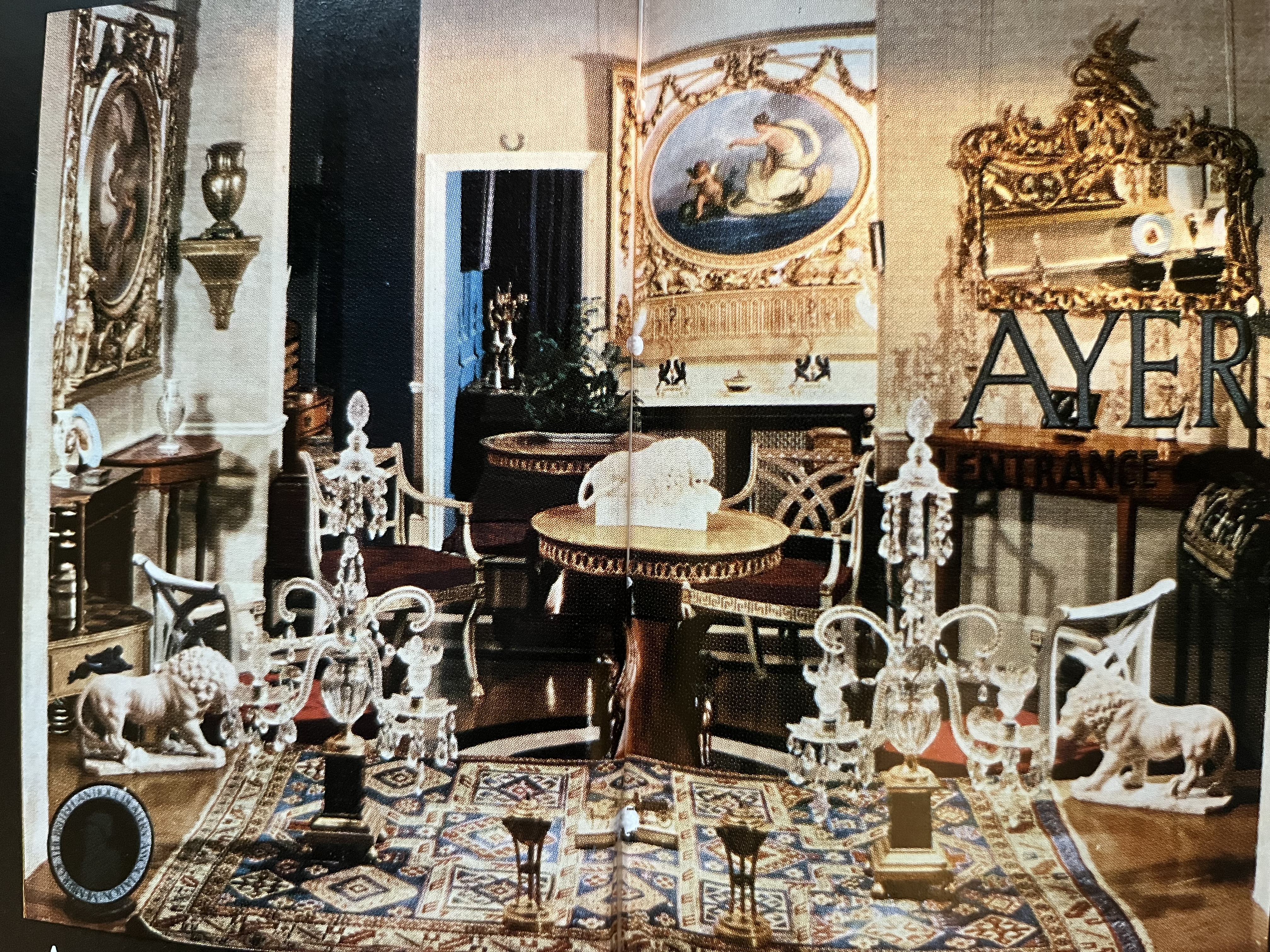
Nat Jnr., like his father, was also a composer and an accomplished pianist. Indeed, in one of our many Oral History interviews with member of the antique trade – in our interview with the antique dealer John Bly (see Oral History pages on the project website) – John recalls encountering Nat Ayer whilst viewing an auction sale in Bath with his father Frank Bly. John remembers the auction was on view in a cinema building and seeing a tall man with a smart fur collar on his coat, playing a piano – his father Frank told him – ‘that’s Nat Ayer’. And as part of his introduction to the antique trade, John Bly also worked for Nat Ayer, helping him on his stand at the world-famous Grosvenor House Antiques Fair in the 1960s. John recalls that Nat was famous for introducing stage settings on his stand at the GH Fair – in 1969, for example, Nat Ayer backed his stand with a huge photograph of the New York skyline, and created trompe l’oeil effects on the floor, creating diminishing perspective effects like in theatre sets. The result, John tells us, caused a sensation at the Fair. Here’s a photograph of Nat Ayer’s shop window in Mount Street from 1966, demonstrating the flamboyant stock, typical of Nat Ayer’s ‘look’.
Nat Ayer became well-known as an interior decorator as well as a leading antique dealer. ‘Ayer & Co’, as the business became known, continued trading until the mid 1970s, moving his shop to 26 Bruton Street in about 1972, a shop now occupied by one of the leading specialists in antique furniture, Ronald Phillips.
It’s not known how or why Nat Ayer’s BADA medal ended up for sale at auction, but it has now joined the growing collections of antique dealer ephemera at the University of Leeds.
 antiquedealersblog