Archive for ‘Uncategorized’

November 23, 2016

New ‘BADA Voices’ Oral History Interview – Georgina Gough, of R.A. Lee

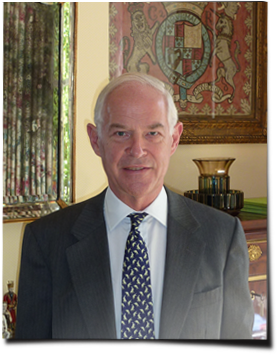
Our latest in the series of ‘BADA Voices’ Print Oral History interviews took place last month, and in the chair was Georgina Gough, daughter of the world-famous antique dealer Ronald A. Lee (d.2000).

ggough

Georgina Gough. Photograph courtesy of Georgina Gough, 2016.

In this fascinating interview, Georgina tells us about the history of the family business, which started in the 1920s with her grandfather, Henry Morton Lee, a former hairdresser to King Edward VII, who opened an antique shop in Kingston-on-Thames.  By 1931 the business expanded and was renamed as H.M. Lee & Sons – and one gets a sense of the high quality antique furniture sold by H.M. Lee in this photograph of the stand of H.M. Lee at the Grosvenor House Antiques Fair in the 1930s. Fine quality late 17th and early 18th century English furniture was at the height of taste during the second quarter of the 20th century.

h-m-lee-1930s-gh

Stand of H.M. Lee & Sons at the Grosvenor House Antiques Fair during the 1930s. Photograph courtesy of Georgina Gough.

Georgina’s uncle, Morton Henry Lee (‘Uncle Mo’, as Georgina tells us in the interview) joined his brother, Henry, during the early 1930s, and by the late 1930s Ronald Lee, Henry’s son, had joined the family business. ‘Uncle Mo’ eventually opened a separate antique shop in Chichester, specializing in French furniture – something that H.M. Lee was less interested in. And by 1949 Ronald A. Lee had established his own antique business at 1 The Terrace, Richmond Hill, Twickenham (where Georgina was born) – here again, is a photograph illustrating the high quality stock that was synonymous with the Lee family of antique dealers.

r-a-lee-gh-1950s

The stand of R.A. Lee at The Grosvenor House Antiques Fair – c.1950. Photograph courtesy of Georgina Gough.

As many of you will know, Ronald Lee was a leading expert on English clocks, and indeed was the author of what still remains a key reference work on Knibb clocks – The Knibb Family of Clockmakers (1964). During the interview Georgina provides some fascinating insights into the antique trade during the period after WWII, as well as her personal memories of her father and other well known dealers at the time such as Roger Bluett, Ronnie Lock and Bob Williams.  Georgina also reminds us that as well as working with her father, she also worked for a number of other leading antique dealers a various points during her career in the antique trade, including the silver specialist Brand Inglis, and at one of the other leading English furniture specialists, Stair & Company – a firm that, like the Lee family of dealers, had roots back into the early decades of the 20th century.

As with all our Oral History interviews, we hope to make our interview with Georgina available on the project websites as soon as we are able.

Mark


November 19, 2016

More student volunteer researchers…

Thanks to our enthusiastic students at the University of Leeds we have another 4 student volunteers working on adding data to the Antique Dealer project Interactive Map. Students from the undergraduate module ‘The Art Market: Moments, Methodologies and Meanings’, in the School of Fine Art, History of Art & Cultural Studies, have signed up as volunteer data entry researchers – Katie Bone, Olivia Dobson and Hannah Buckingham are all now official researchers for the project – and another of our Art Market PhD students has also signed up – Simon Spier, who is currently researching the formation of the collections at The Bowes Museum as one of our PhD Collaborative Doctoral Award students (University of Leeds & The Bowes Museum, and supervised by me…)

project-volunteers-nov-16

Our latest student volunteers – Simon, Hannah, Olivia and Katie.

Here are our latest recruits!

Thank you to our 4 latest volunteers, and thank you too to the continuing work that our other volunteers are doing – I’ve been noticing that the interactive map has been increasing in data the last few weeks…it’s great to see the map grow!

Mark

November 7, 2016

The Real ‘Clara Millard’!

Thanks to some really amazing detective work by Laurence Worms, of Ash Rare Books, for unmasking the real ‘Clara Millard’ (see our entry on ‘Clara Millard’ in the blog post on the Antique Dealer project blog).  It seems that Millard was in fact Georgetta Elizabeth Dance (1862-1926), the ‘most successful book-huntress in the world’ it’s quite a story, so do read Laurence’s blog post on ‘The Book Hunter on Safari’.

Thanks too to Heidi Egginton for re-tweeting this in her Twitter feed too!


October 21, 2016

The Generosity of Auctioneers – more archive material from Sworders

Tim Turner from Sworders Fine Art Auctioneers, Stansted Mountfitchet, very kindly donated some antique dealer related material to the Antique Dealer research project – and thanks to Jacqueline Travell, also from Sworders, for bringing the package of materials all the way from Essex to Leeds last week (Jacqueline was up North to see her son, who coincidently is studying at the University of Leeds).

It is through the exceptionally generous nature of people like Tim and Jacqueline that the research project at the University of Leeds continues to progress – thank you Tim, Jacqueline, and Sworders. The material that has been donated ranges from a selection of Antique Fair handbooks, dealer catalogues, and antique collecting publications – dating from 1909 to the 1970s.sworders

The materials also include an amazing selection of invoices (dating from the 1940s-1970s) from a wide variety of Antique Dealers; these are invaluable to the research project – they give us, for example, key self-designated descriptions of the dealers themselves, dealer addresses, as well as often having detailed information on the people involved in the various businesses, not to mention the fascinating ways in which a variety of ‘antiques’ are described in the old invoices. dealer-invoices-sworders

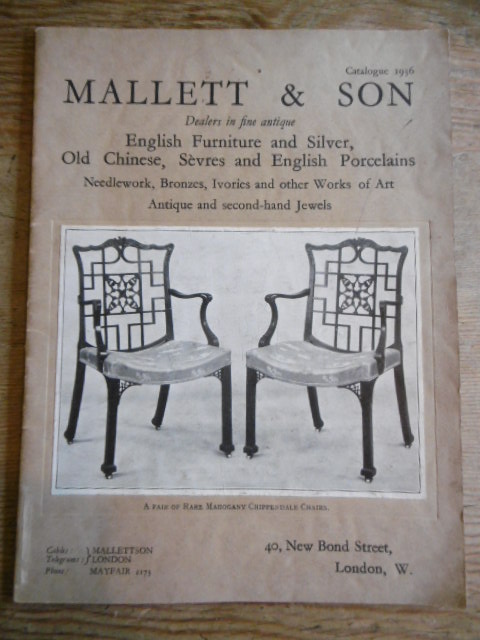
Included in the materials are also some early antique dealer catalogues – one from Mallett & Son, dating from the 1930s – mallett

and one from The Parker Gallery (print dealers, rather than antique dealers per se), which seems to have been produced as a booklet celebrating 200 years of trading – The Parker Gallery was established in 1750, so the booklet suggests. parker-gallery


One of the most interesting documents in the parcel of archive material, is a very early (probably 1920s?) furniture catalogue produced by the antique dealers and reproduction furniture makers, Arthur Brett & Sons – trading from Norwich. The booklet, titled, ‘Period Furniture’ contains a very wide range of reproduction furniture that Brett & Sons were manufacturing in the 1920s and 1930s.

brett

The catalogue is ordered chronologically, with ‘Tudor’ oak furniture in the opening pages, and includes reproductions of virtually every kind of antique furniture that was fashionable in the period. brett-1 brett-2


The Brett catalogue demonstrates how popular furnishing with antique furniture was during the period between the Wars, with demand outstripping supply to the extent where reproductions filled the gap, satisfying the look of the old. It’s quite striking when one reflects on this today, with the rapid shift to the contemporary in the last decade or so – no doubt there are now masses of reproductions of Charles Eames chairs, instead of Thomas Chippendale – tastes change, but everything stays the same!

Anyway, thanks again to Tim and Jacqueline, and Sworders – the archive materials are already proving useful to the research project as we add more and more antique dealer data to the Project Interactive Map.

Mark

September 25, 2016

BADA Voices Interviews

Our project to capture the reflections and memories of antique dealers and people involved in the British Antique trade is one of the central research themes in the Antique Dealer project.  And thanks to the British Antique Dealers’ Association, who have very kindly given the project financial support, we are able to continue the oral history interviews – do check out the Oral History pages in the project website for more information of the support from the BADA and the new interviews that we have undertaken as part of the ‘BADA Voices’ initiative, see – Antique Dealer Project Oral History

PrintOf the two most recent interviews we have completed, one focused on the history of the BADA itself, in our interview with Mark Dodgson, Secretary General of the BADA.  The other interview, with the former antique dealer, agent, Forensic Appraiser and Expert Witness, Nicholas Somers, allowed us to capture some of Nicholas’ memories of the history of that most famous of antique furniture dealers, M. Harris & Sons, amongst many other things.


mark-dodgson-14a

Mark Dodgson, Sec Gen of the BADA. Photo courtesy of the BADA.

Mark Dodgson started at the BADA in 1989, as an assistant to the then Secretary General, Elaine Dean, before succeeding Elaine as Secretary General in 2008.

In this engaging interview Mark tells us about the history of the BADA – which was founded in 1918, and has the exciting prospect of their centenary celebrations coming up in 2018. Mark outlined the wide range of activities and projects that the BADA have been involved with over the years – as many of you will know, the BADA was initially founded by members of the antique trade in 1918 to lobby Government as a response to the proposed introduction of the so-called ‘luxury tax’, and the organisation has continued that tradition.  The BADA has been a central player in many of the most high-profile issues affecting the antique trade, from the introduction of Valued Added Tax and ‘margin scheme’ in the 1970s, the (still contentious) issue of the introduction of auction sales buyers premium in the 1970s, to the lively debates surrounding the restrictions on the sales of elephant ivory – currently animating (excuse the pun!) the art world at present.

Mark also talked about his role as Secretary of the Art Trade Liaisons Committee (The British Art Market Federation), and the history of the Grosvenor House Antiques Fair (founded in 1934 as an initiative by some key BADA members), as well as the more recent BADA Fair (established in 1991) and the BADA relationship with, and support for, the conservation courses at West Dean College. With the centenary of the BADA coming up in 2018, I’m sure the interview will be a valuable resource in those celebrations.

Our other interview in the BADA Voices series was with the retired antique dealer, agent, auctioneer, and Expert Witness, Nicholas Somers.

n-somers-2016

Nicholas Somers, at his home in London. Photo Antique Dealer project, University of Leeds, 2016.

richard-grose-8-exhibition-rd-london-sw7-ayb1950

Richard Grose, 8 Exhibition Road, London, c.1950.

Nicholas, currently the Master of the Worshipful Company of Turners (he has also been collecting treen for decades!) and has over 50 years experience of the antique trade.  Nicholas started his career in the world of antiques with the dealer Paul Smith (a BADA member) in 1965, before moving to work for Richard Grose at Exhibition Road in London.

In 1967 Nicholas left Richard Grose and became one of the sales team at the world-famous antique furniture dealers M. Harris & Sons, staying with Harris until 1971, when he set up his own antiques business in Worcester  – ‘Somers at the Sign of the Chair’.

Nicolas had some fascinating memories of working at Moss Harris – with some wonderfully evocative descriptions of the showrooms – the business was already contracting somewhat when Nicholas joined Robert Harris in 1967, and, as Nicholas tells us, the showrooms had been reduced by half, but it still had 80 rooms packed with museum-quality English furniture and objects when he joined the firm. Here is the gallery of Moss Harris, in New Oxford Street, London, in the early 1920s, soon after Moss Harris had taken over the firm of D.L. Isaacs, who established the business in 1868.

M Harris 40 54 New Oxford Street Feb 1921 Conn

M. Harris & Sons, New Oxford Street, London, c.1924.

Nicholas has an exceptionally wide ranging experience of the antique and art world, having been part of the management buy-out at the auctioneers Bearnes in Torquay, from the then parent company Sotheby’s, in 1981, and as a ‘forensic appraiser’  and Expert Witness in legal disputes in the art world.

Both interviews make rich contributions to the growing archive of antique trade interviews that we are assembling as part of the Antique dealer project.

Mark


August 29, 2016

New Volunteer Researcher – Harriet Beadnell PhD student

We have a new student volunteer, working on adding data to the Antique Dealer Project Interactive Map website – see the Map here

Harriet Beadnell, is a PhD student from University of York, researching the role and representation of World War Two Veterans, Post 1945 – Harriet is an AHRC White Rose PhD student – i.e. her PhD is funded through the White Rose Consortium (Leeds, Sheffield & York universities) – and we are so pleased that she has joined the Antique Dealer project as a project volunteer.

Harriet Beadnell photo 4

Harriet Beadnell – PhD student, University of York, and project volunteer.

Harriet also has antique dealer DNA in her blood – her maternal grandfather, Jim Phillips, had a number of antique shops in and around Saltburn and Middlesborough after WWII; and her paternal grandfather was an antiques  collector and later worked as a stamp & coin dealer post WWII – so Harriet comes with a great antique dealing pedigree!

We are currently seeking more project volunteers to add data to the Project Interactive Website, so if you think you might be able to help do email the project – antiquedealers@leeds.ac.uk – we offer short training sessions on adding data to the website, and once you are set up, you can add data from anywhere!…all you need is basic computer skills….so nothing too complicated!

Thank you to Harriet for her enthusiastic help on the project – we could not deal with the masses of data still to add into the Interactive Map website without such help and support!

Mark


August 28, 2016

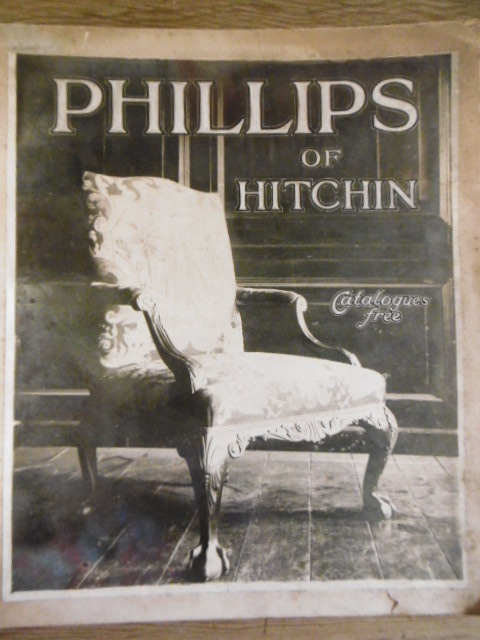
Final Day in ‘Action Week’ on Phillips of Hitchin archives

‘Action Week’ at the Brotherton Library Special Collections came to a close on Friday – it was an exhausting, but very productive week of cleaning and cataloguing – and thank you again to everyone that helped out with the Phillips of Hitchin archives – to the team at Brotherton Special Collections – Sharon, Francis, Tim and Joanne, (and everyone else!); and to the volunteers in the archives Helen, Matt and Riza, and our Antique Dealer project volunteers, Heather, Pauline, Sue and Yiwen – it was such a great team effort!…. here’s four of the happy volunteers (see also pictures of the volunteers in previous blog posts) –

archive action week

Action Week volunteers – L-R, Yiwen, Pauline, Heather & Sue.

There’s still an awful lot of cleaning and cataloguing to do, but we made great progress on the Phillips of Hitchin archives – and made some new discoveries…the archive is certainly beginning to reveal the rich potential that we always knew it had. And from the huge variety of materials (sales ledgers, day-books, photograph albums, correspondence files, etc etc) some fascinating stories are emerging.

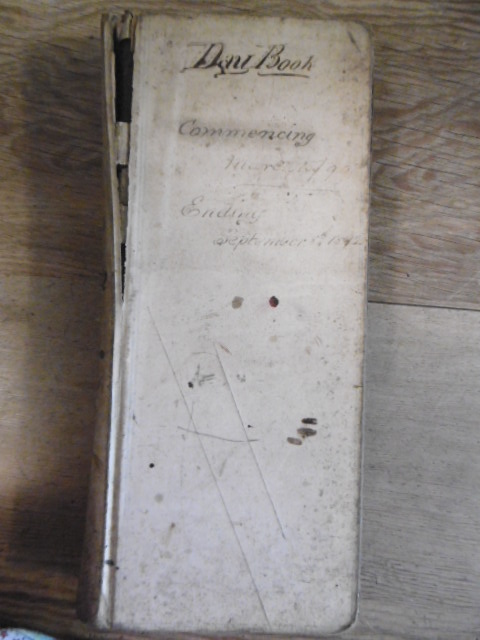
One of  the tasks we undertook was the cleaning and cataloguing of some of the scores of small (6 inch high) ‘photograph albums’; they appear to date from the early 20th century, and contain a huge variety of black & white photographs of antiques – the condition of the albums is mostly fair, but many of them need a little bit of care and attention; see below for an image of the cover of one of the albums –

photo album c1910

Photograph Album, c.1900, Phillips of Hitchin archives MS/1999/4/1. Photograph courtesy of The Brotherton Library Special Collections, University of Leeds.

They contain fascinating images of the type of stock that Phillips of Hitchin traded in during  the late 19th and early 20th centuries; and there are some interesting objects – such as this late 17th century armchair, seemingly still with it’s original upholstery, but with a fascinating repair-job to the feet, which appears to have been added in the late 18th or early 19th century?

PoH MS1999.4.1.15

Photo Album, Phillips of Hitchin archives, MS1999/4/1/15. Photograph courtesy of The Brotherton Library Special Collections.
The pencil annotation below the photograph states ‘Sold’, but I wonder how long the chair retained it’s subsequent, practical, additions…and how long before it had a much more historically ‘sympathetic’ repair – if I’m honest, I quite like the old repair, it is, after all, a testimony to the history of the object.

Within the Phillips of Hitchin archives, as one would expect, there are thousands of transactions with hundreds of other antique dealers – including the most high-profile dealers at the time – as well as all the major collectors and museums one could think of……..the archive also contains a wide range of photographs of the interior displays at Phillips of Hitchin. The especially interesting images are those taken during the late 19th and early 20th centuries – including this amazing image of the ‘Corner of the English China Room’ (c.1900), showing a wide range of antique ceramics, including some (now) seemingly exceptionally rare things!

PoH English Ceramics room MS1999.4.1.17

Phillips of Hitchin archives, photo of ‘Corner of English China Room’. MS1999/4/1/17. Photograph courtesy of The Brotherton Library Special Collections.

As I say, there is an exceptionally rich potential for further research into the Phillips of Hitchin archives – and, as followers to the Antique Dealer Research Project will know, we also have an oral history interview with Jerome Phillips, the 3rd generation of the family business, and donator of the archive to the Brotherton Library Special Collections; if you would like to hear about the history of the firm from the person that really knows about it do have a listen to the interview Here’s a link to the interview –

Interview with Jerome Phillips

We are continuing to clean and catalogue the Phillips of Hitchin archives in the coming months, and will post information on any interesting discoveries, so do keep your eye on the Research Blog.

Mark


August 25, 2016

More ‘Action Week ‘ work on the Phillips of Hitchin archives

We are making steady progress this week on the enormous task of cleaning and cataloguing the Phillips of Hitchin archives at the Brotherton Library Special Collections at the University of Leeds. The Brotherton Library drafted in their Special Collections team, and extra volunteers, for the rest of the ‘Action Week’ project on the archive – special thanks to the hard work of Francis (conservator at the Brotherton Library), together with Sharon, (head conservator) and our team of volunteers, Sue, Pauline, Heather, Matt, Helen and Riza – we are getting through the masses of material now. Here’s the team in the Special Collections archive room at the Library, busy cleaning, all masked-up – it’s dangerous work!

action week volunteers new

Cleaning the Phillips of Hitchin Archives. L-to-R, Helen, Pauline, Heather and Matt (left-hand table) and Riza, Sue and Francis (right-hand table).

Considering that the archive had been stored in a garage in Hitchin for most of it’s life, (it dates from c.1880s-to present) the archive arrived at the Brotherton in generally good condition, although parts of the archive had been subject to damp and mould and pest – hence the need for masks and gloves for the cleaning.  The process of cleaning and cataloguing is a huge task though, and at present we are only able to undertake brief cataloguing – we’re hoping for some funding to extend and complete the task!

As one would expect, given the significance of the history of the business of Phillips of Hitchin, the archive is absolutely packed with fascinating information on high profile transactions – all yet to be discovered!…but we thought we’d give you a flavour of the kinds of material that is buried in the archive –

The client lists of Phillips of Hitchin is a veritable ‘who’s-who’ of major collectors of antiques, and hundreds of sales of museums world-wide.

The archive of Phillips of Hitchin covers over 120 years of antique dealing, and we are so grateful to Jerome Phillips, the last surviving member of this famous antique-dealing dynasty, for generously donating the archive to the Brotherton Library Special Collections, and the Centre for the Study of the Art & Antiques Market at the University of Leeds. It will, once we’ve finished cleaning and cataloguing it, be an astonishingly valuable resource for future researchers and scholars.

Mark

August 22, 2016

Phillips of Hitchin archives – action week at the Brotherton

At long last, we have started to catalogue and clean the Phillips of Hitchin archives – the archives, as you know, have been very generously donated to the Brotherton Library Special Collections at the University of Leeds by Jerome Phillips, the last owner of the world-famous antique dealers ‘Phillips of Hitchin’.  The business was established in the early 1880s, and remained at the Manor House, Hitchin since that time.

The archives will be a tremendous resource for scholars and researchers, but we have to get them catalogued and cleaned before we make them accessible – and that all takes time and funds!…We are making a start though, and this week The Brotherton Special Collections have devoted a whole week, and significant resources, to begin to clean and catalogue the extensive archives – there are at least 50 archive boxes to clean and catalogue…with thousands of individual items.

We have a team of archive specialists (including Sharon and Karen, the conservation and cataloguing experts) and a few eager volunteers working on the project – here are the volunteers (Yiwen, Pauline, Heather & Sue), working away, cleaning the materials –

archive action week 4

Archives Volunteers – L-R, Yiwen, Pauline, Heather and Sue.

As you can see, this is dangerous work!…the archives had been stored in a garage at The Manor House for decades, and require delicate cleaning and conservation – once this task is done, they are passed over to the cataloguers for basic level cataloguing – we are hoping for some funding for item level (i.e. individual letter/invoice/item) cataloguing…but at least we are making a start!

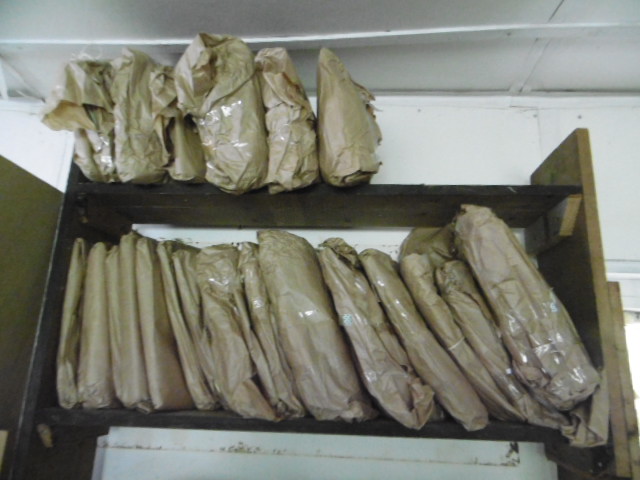
Even on this first day of cleaning and cataloguing the sheer quality of the Phillips of Hitchin archive is being revealed…and from these brown paper packages, treasures are emerging!

box 19 complete

Phillips of Hitchin Archive


packet corr 1960

A parcel of letters from the Phillips of Hitchin archive


We’ll update on progress and discoveries during this exciting ‘Archive Action Week’

Mark


July 25, 2016

‘BADA Voices’ Oral History Interview – John Bly

Print We did our 2nd in the new ‘BADA Voices’ Oral History interviews last week – this time in the interviewees’ chair was John Bly, of John Bly Antiques. John Bly Antiques was established by 1891, but the business itself has roots into the early 19th century, begun by John’s Great-Grand father William Bly, in Tring, Hertfordshire.  John’s grandfather, also called John Bly, operated as a cabinet-maker, house furnisher and dealer in antique furniture at 22 High Street, Tring by the early 1890s – and here’s an early photograph of the shop of ‘J.Bly’ at 22 High Street in 1907.

John Bly 22 High St Tring 1907

J. Bly, 22 High Street, Tring, 1907. Photograph from John Bly.

In a wonderfully engaging and fascinating interview, John tells us of the history of the Bly businesses, and of how he started in the antique trade over 50 years ago! John left school to work at Sotheby’s in Bond Street, London, where he was employed in the Silver Department, marking up lots for sale; he left Sotheby’s at the age of 19 to work for his father, Frank Bly, in 1960, and continues to run the business, with his son James, from locations in Tring and in the Kings Road, London.

john bly 2016

John Bly, in London, 2016.

John’s infectious enthusiasm for the antique trade is evident in the conversation – he tells us of his first job, driving the Northampton-based antique dealer Jack Roberts’ around auctions and dealerships in the early 1960s; and of the importance of his two ‘mentors’, Michael Brett (then of Broadway, Worcestershire) and the Nat Ayer, of Bath and London – who was, so we learn, the son of the famous songwriter Nat D. Ayer (1887-1952) – writer of, amongst other songs, ‘If you were the only girl in the world…’ (1916)

John also tells us of his life as a T.V. personality – he is famous, as many of you will know, as one of the experts on the BBC ‘Antiques Roadshow’ – but he began his career as T.V. antiques expert as long ago as 1969/1970 on a show for Thames Television called ‘Looking at Antiques….’, before moving on to a programme in the mid 1970s called ‘Heirlooms’.  He has been on the ‘Antiques Roadshow’ since the 2nd series, in 1980.

John’s father, Frank Bly, is perhaps most well-known for the sale of the famous ‘Kimbolton Cabinet’ to the Victoria & Albert Museum in 1949. John rehearses the fascinating tale of the acquisition, and eventual sale of the cabinet to the V&A, during the interview – it is, by now, quite a well-known story, but John’s regaling of how the cabinet was loaded on to the flat-bed truck, and covered in a tarpaulin sheet, is still worth hearing again.


kimbolton

The Kimbolton Cabinet, c.1775. Photograph, copyright the Victoria & Albert Museum, London.

John obvious positive energy comes across strongly in the interview, as he talks about the changes to the antique trade in the past few years, and the prospects for the future of ‘antiques’.  And as with all our other interviews, our interview with John will, once edited, be made available via the Antique Dealer project websites – keep you eye of the sites for updates.

Mark

Home Subjects

a working group dedicated to the display of art in the private interior, c. 1715-1914

The Period Room: Museum, Material, Experience

An International Conference hosted by The Bowes Museum and The University of Leeds

H. Blairman & Sons Ltd

A research project investigating the history of the antiques trade in Britain in the 19th & 20th centuries

Museum Studies Now?

'Museum Studies Now?' is an event which aims to discuss and debate museum and heritage studies education provision.

The Burlington Magazine Index Blog

art writing * art works * art market

East India Company at Home, 1757-1857

A research project investigating the history of the antiques trade in Britain in the 19th & 20th centuries