As promised in our Blog Post on Antique Shops in Visual Culture IV, we have an update on our theme of paintings of antique shops (see previous Blog Posts on this theme – Antique Shops in Visual Culture I (Blog post 30th July 2023); Antique Shops in Visual Culture II (blog post 30th September 2023); Antique Shops in Visual Culture III (blog post 27th November 2023); Antique Shops in Visual Culture IV (blog post 25th June 2024)
The latest additions to the growing corpus of paintings of antique shops includes our first image of a shop that is not located in Britain (but is by a British artist) – This pencil drawing (see below) by the artist Frank Lewis Emanuel (1865-1948) of an ‘Old Curiosity Shop in Grand Avenue, Dinan’.
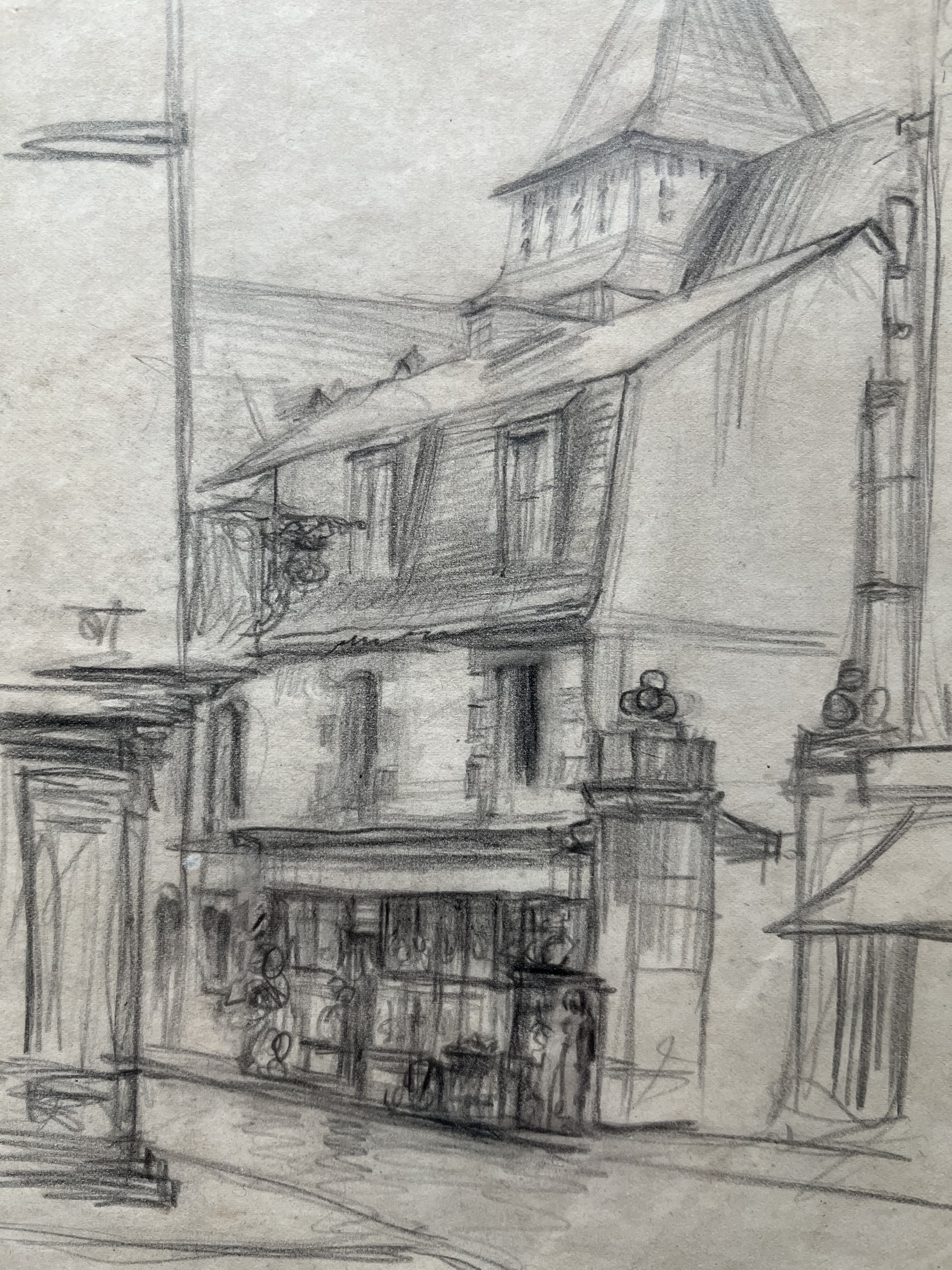
Emanuel was born in London and studied at the Slade School of Art under the French artist Alphonse Legros (1837-1911); he first exhibited at the Royal Academy in London in the 1880s and at the Paris Salon in 1886. The pencil drawing of the ‘Old Curiosity Shop’ dates from the 1880s or 1890s and records a real antique shop in the town of Dinan in north west France. In this sense it is both an historical document and a work of art.
There is of course a very rich tradition of paintings and drawings of antique & curiosity shops in Europe dating back into the 19th century, especially in France and Italy, 2 key hunting grounds for antique collectors. Emanuel’s drawing of a ‘curiosity shop’ in Dinan is emblematic of the important role that antique and curiosity dealers played in the consumption of the past. Lewis’s drawing also reminds us of the relationship between buying and selling ‘antiques’ and historic urban environments – in the 19th century Dinan still retained much of it’s medieval historic fabric, a castle, city walls and many half-timbered buildings – ideal backdrops for antique and curiosity shops and curio hunters.
This practice of antique shops layered into the historic fabric, and indeed shops occupying historic buildings, is a recurring theme in the history of antique dealing. Here’s another example, this time an antique shop in Italy, a painting by the American artist William Merritt Chase (1849-1916) ‘The Antiquary’s Shop’ (1879).
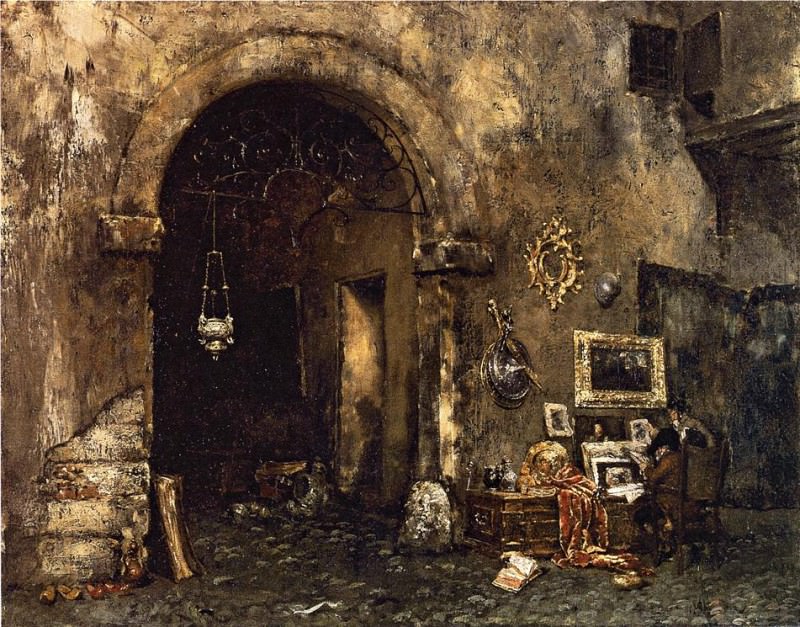
The shop in Chase’s painting was located in Venice, the home of many leading antique dealers in the 19th century. Perhaps the shop that Chase portrayed is that of ‘Mr Zen’, a well-known dealer who had extensive dealings with the art historian and art dealer Otto Mundler (1811-1870) in the 1850s, when Mundler was working as an agent for the National Gallery in London.
But to return to our key focus on antique shops in visual culture in Britain and further additions to the corpus of paintings and drawings of antique shops. Another new addition to the archive of paintings is a contemporary example – emphasizing the point of the enduring interest of antique shops in visual culture. This painting (below) by the artist Deborah Jones (1921-2012) of a ‘curiosity shop’.
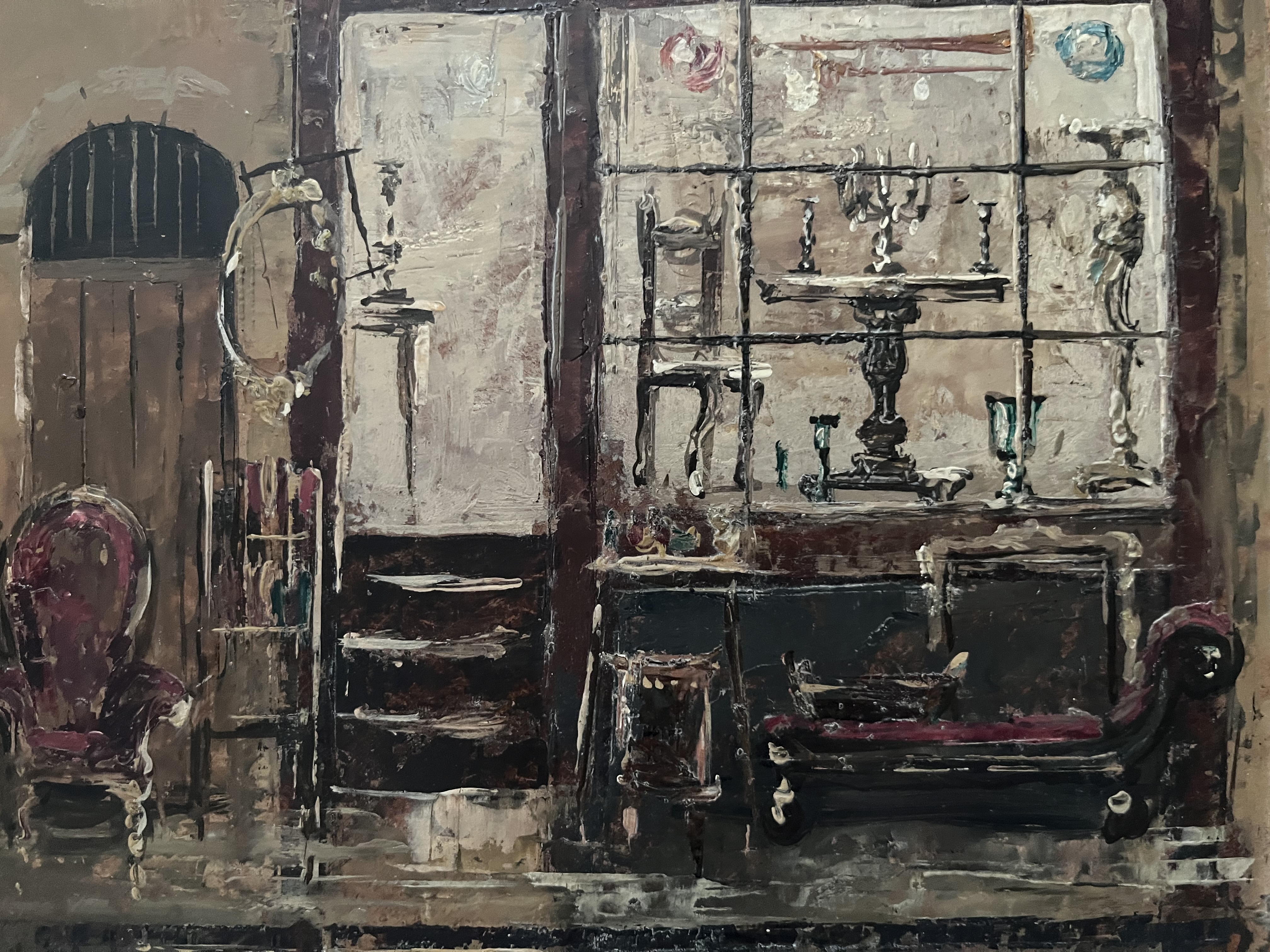
Jones was born in Wales and worked as a theatre and set-designer for The Royal Opera House, Glyndebourne and the Royal Shakespeare Company in Stratford-upon-Avon. Her artworks tend to reflect this practice and can be a little formulaic (at least for my taste) – see below – Jones’ oil on canvas, ‘Mrs Dabbs Antique Shop’.
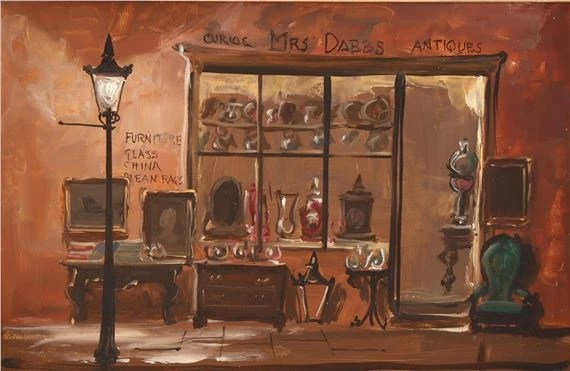
Deborah Jones’ painting of the ‘Curiosity Shop’ (above) by contrast, seems more vibrant, more impressionistic perhaps, and reminded me of some of the earlier traditions in the depictions of ‘curiosity shops’, that started with George Cattermole (1800-1868) and his representation of Charles Dickens’ ‘Old Curiosity Shop’ in 1840 (see below).
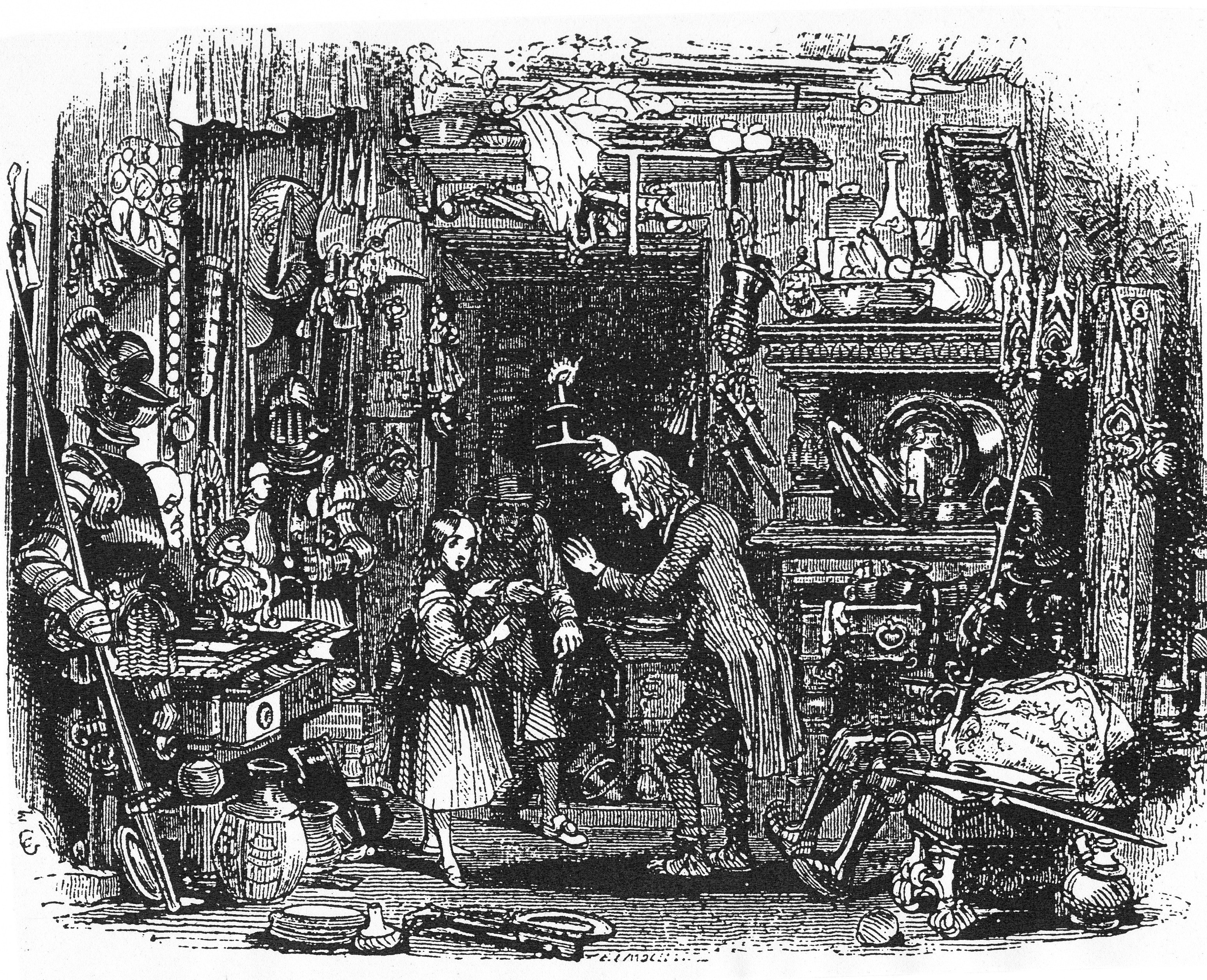
Hence Jones’s oil on panel was acquired for the project as an interesting contemporary example of the enduring legacy of the antique shop in visual culture.
Mark
 antiquedealersblog