Our collection of paintings of historic antique shops (exteriors and interiors) has had a few additions over the last few months, so I thought I would share a few more of the images and continue the thread of Antique Shops in Visual Culture by adding a 4th post in this theme. You can also follow the theme in earlier blog posts (Antique Shops in Visual Culture I (Blog post 30th July 2023); Antique Shops in Visual Culture II (blog post 30th September 2023); and Antique Shops in Visual Culture III (blog post 27th November 2023).
The most recent addition to the archive of paintings of antique shops is this beautifully rendered painting of an antique shop in St. Ives, Cornwall by the artist Cuthbert Crossley (1883-1960) (see below).
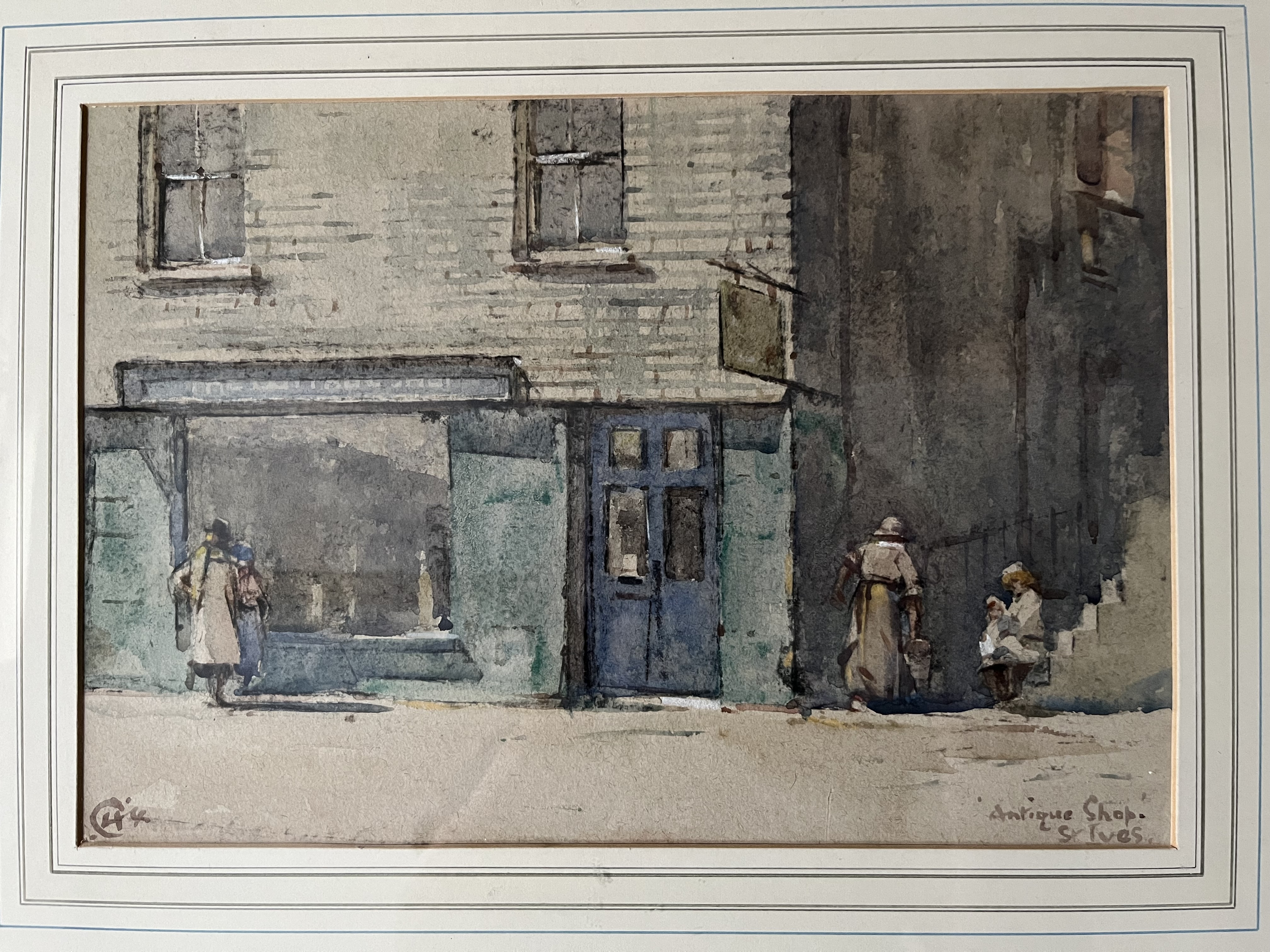
I’ve unfortunately not yet been able to identify the actual antique shop, but it’s dated 1944 and at that time there were 12 dealers in St. Ives. The signboard over the shop in the painting just reads ‘The Antique Shop’, but the location looks like it may be near the harbour, perhaps The Wharf, which at the time had the shops of Andrew Glover and The Misses Hugo Habbijam and Marshall; Fore Street (F. Netteinghame; Andrew Armour; Basil Foulds Ltd; Kenneth Foulds); High Street (Charles Jackson), or Tregenna Place (John Vaughan) – you can of course take a look at the antique dealers interactive Map website if you are interested too – see www.antiquetrade.leeds.ac.uk – but if anyone does recognise the building in St. Ives I would be very interested to know.
Crossley was trained at the Halifax School of Art in Yorkshire before the First World War and became a professional painter in the 1920s. He exhibited the painting at the Royal Institute of Painters in Water Colours in Pall Mall, London (I’m guessing in c.1944 – it was priced at £8. 8 shillings at the time). Crossley moved to St. Ives in the 1940s, so I guess he painted the antique shop whilst he was living in St. Ives. The painting certainly has a ‘St. Ives School’ impressionism look about it.
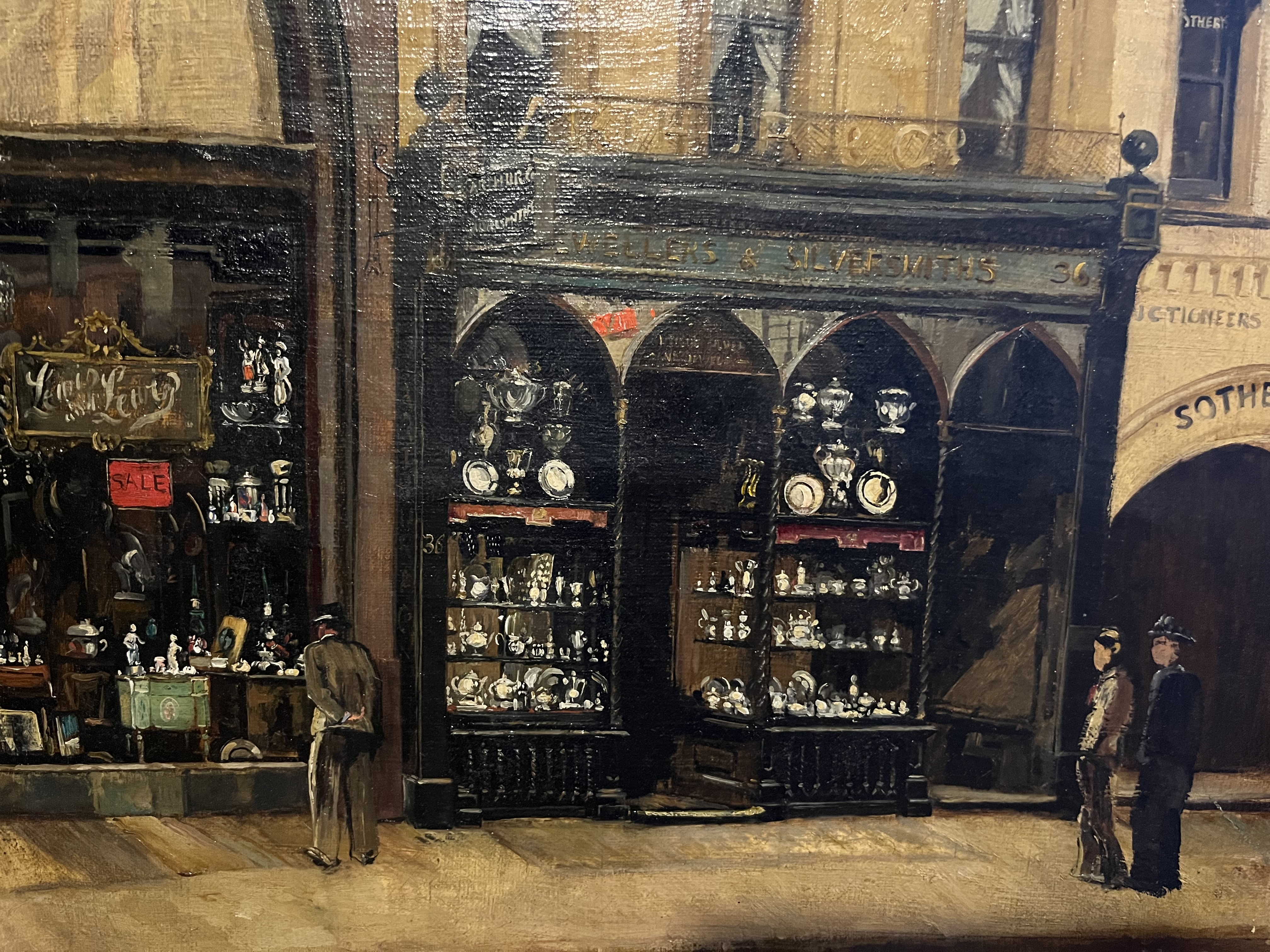
The 1940s and 1950s seem to have been a fruitful period for artists’ paintings of antique shops and one of the most well-known artists for painting antique shops is John Cole (1903-1975). Cole’s painting of the antique shops of Arthur & Co, and Lewis and Lewis in New Bond Street, London (see below) was the subject of the blog post Antique Shops in Visual Culture II (30th September 2023).
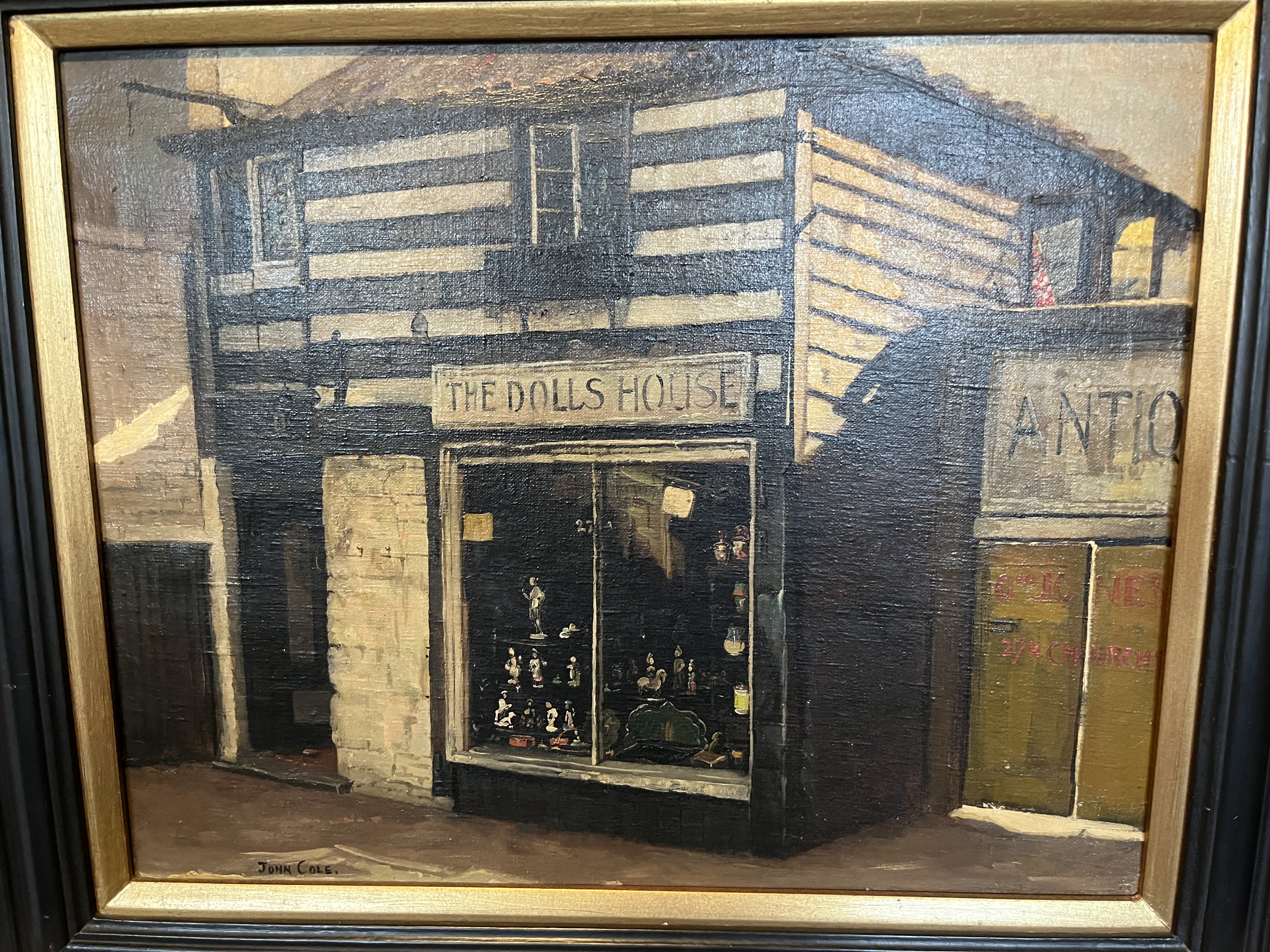
We are fortunate to have recently acquired (thanks to Sarah Colegrave Fine Art) another of Cole’s paintings of antique shops (he painted dozens of antique shops in the 1940s to 1970s). His painting of ‘The Dolls House’ (see below) is a much more well-known image. It was part of the exhibition The Cole Family: painters of the English Landscape 1838-1975, curated by Tim Barringer for Portsmouth City Museums in 1988, when it was then owned by the banking firm Morgan Grenfell. The Dolls House was at 27a Kensington Church Street, London, a very important street for antique shops from the 1920s right up to today (notwithstanding the decline in the number of antique shops in Kensington Church Street from the late 1990s). The Dolls House was owned by the antique dealer William Williams, beginning in the 1920s. Cole’s painting is typical of his style and his practice of recording old shops fronts; as Tim Barringer writes, ‘Through these shop front pictures, Cole achieved for the first time wide publicity and began to gain a public following’ (Tim Barringer, The Cole Family: painters of the English Landscape 1838-1975, (1988), p.175).
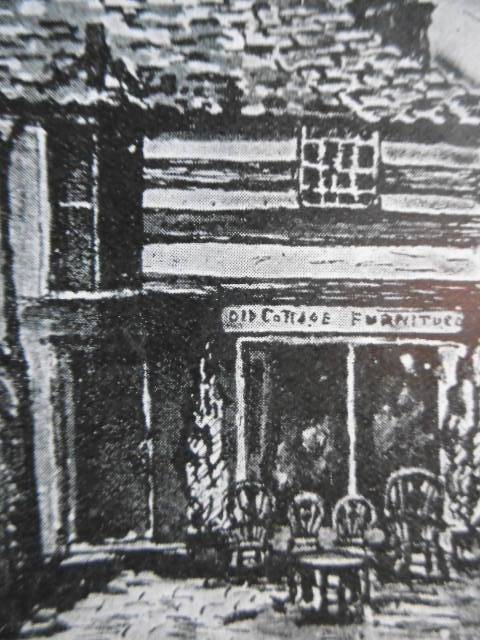
We have another image of The Dolls House, a pencil drawing from 1927. The drawing depicts the same black & white painted shingles to the front of the shop, but the signboard over the front states ‘Old Cottage Furniture’, which was a very popular description in the period for what we now describe as Regional Furniture. There are a few antique ‘Windsor Chairs’ outside the shop, for sale on the pavement.
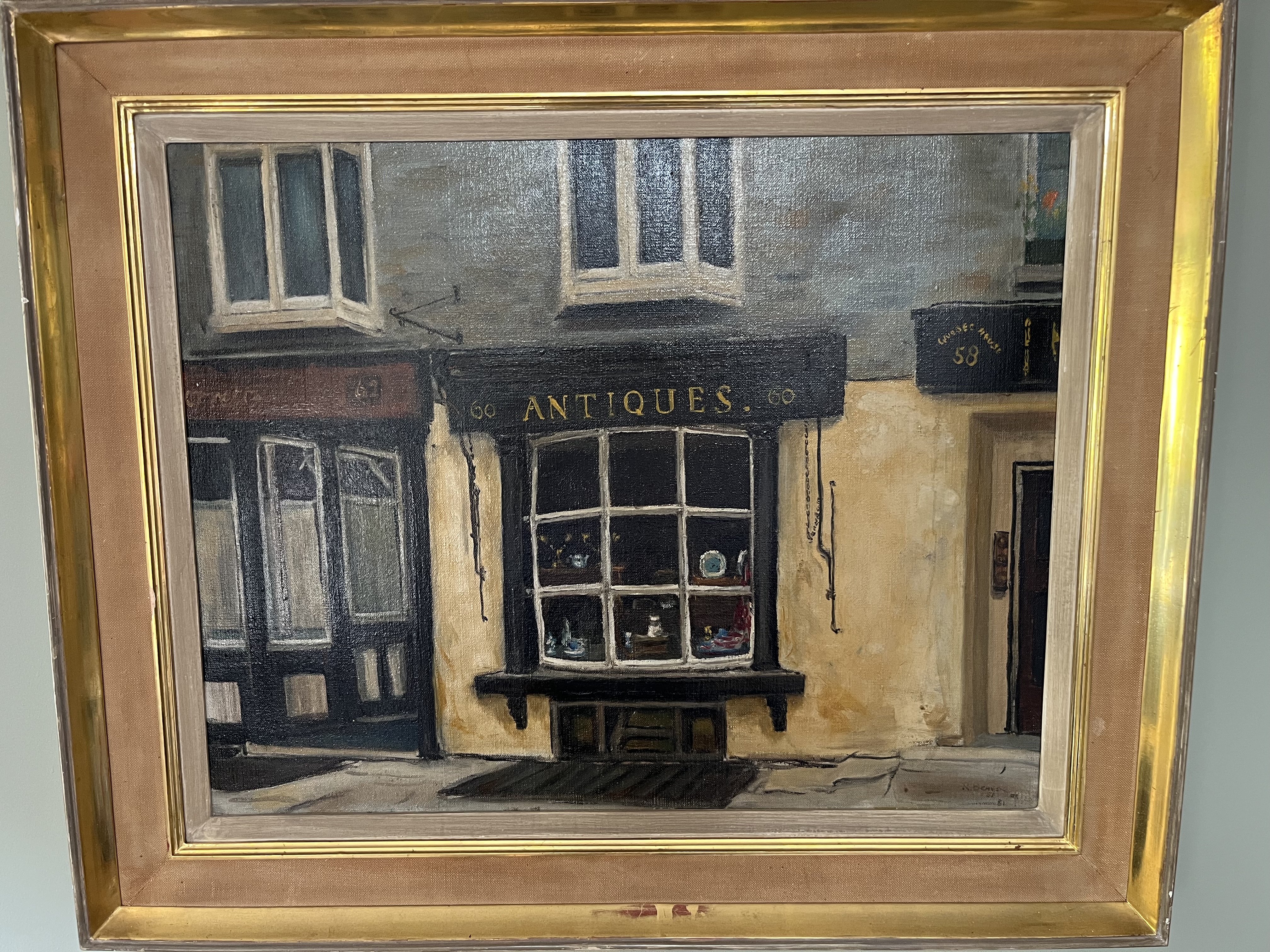
Another painting of an antique shop recently added to the archive of paintings is also from the same period as the paintings produced by John Cole. A painting titled ‘The Antique Shop’ by Robert Atwood Beaver (1906-1975), whose dates align almost precisely with those of John Cole (1903-1975); indeed his painting seems to owe a lot to Cole’s aesthetic as well. Beaver was an anaesthetist (he invented the famous ‘Beaver Respirator’) and a talented amateur painter. The painting is undated but seems to date to the 1950s; it’s not known which antique shop is depicted in Beaver’s painting, but it is known that he painted in and around London, although the particular shop depicted seems to be a country antique shop; perhaps a shop on the Isle of Wight, to which Beaver retired.
One of the key objectives of gathering an archive of paintings of antique shops is to consider the significance of the presence of the antique shop in British cultural life. Some of the paintings are fascinating, evocative artist’s impressions (like the Crossley and the Cole paintings), but some are more of what one might call ‘documents’. Our last painting of an antique shop in this Blog Post fits to that category I think. It is a work by the artist Hilary Bray, undated but probably 1980s (see below). It’s a competent work, but perhaps lacks the feeling present in the other paintings of antique shops? Nonetheless, the painting depicts a very famous antique dealing business, and perhaps amongst the longest -lived businesses in Britain.
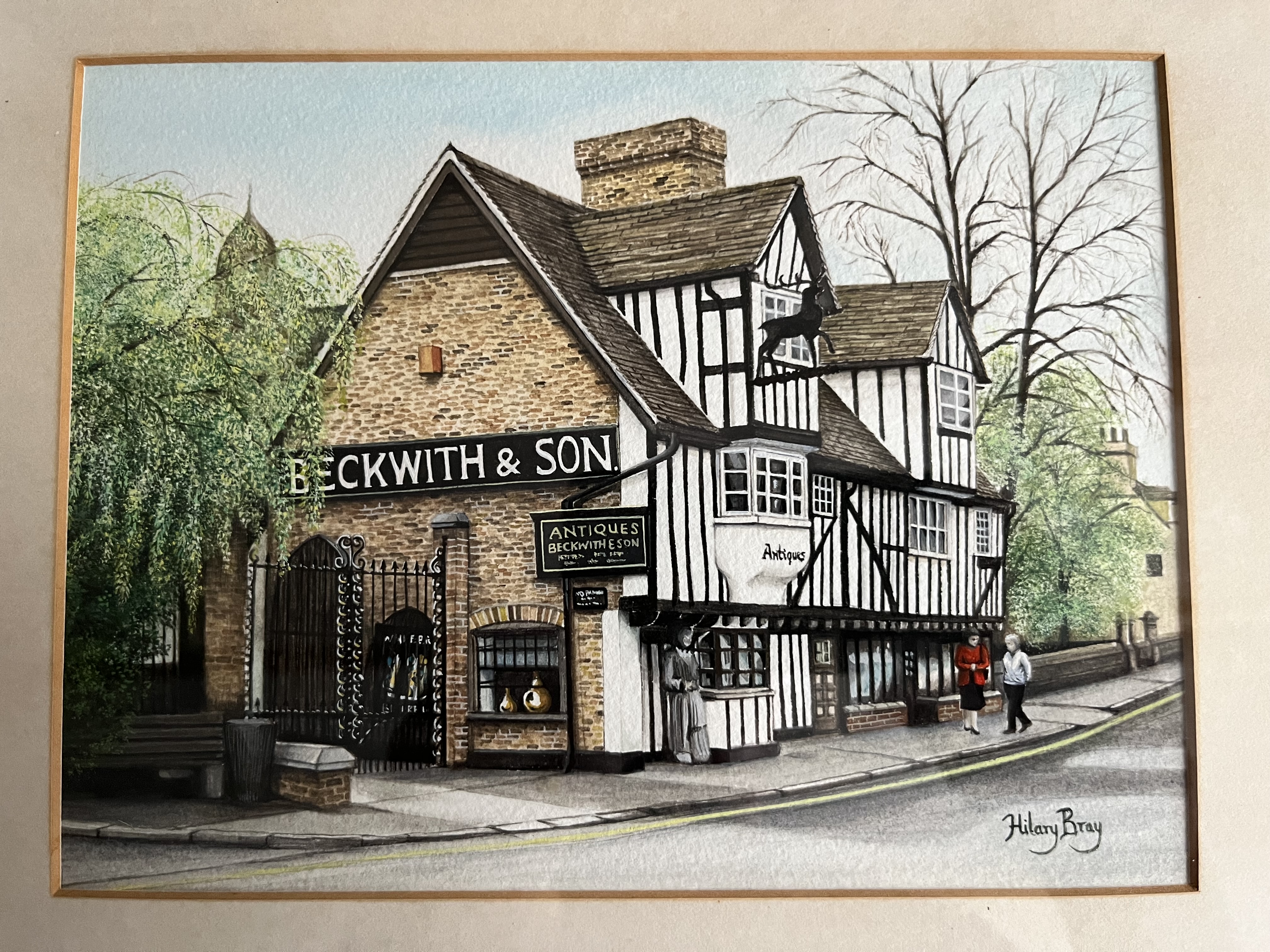
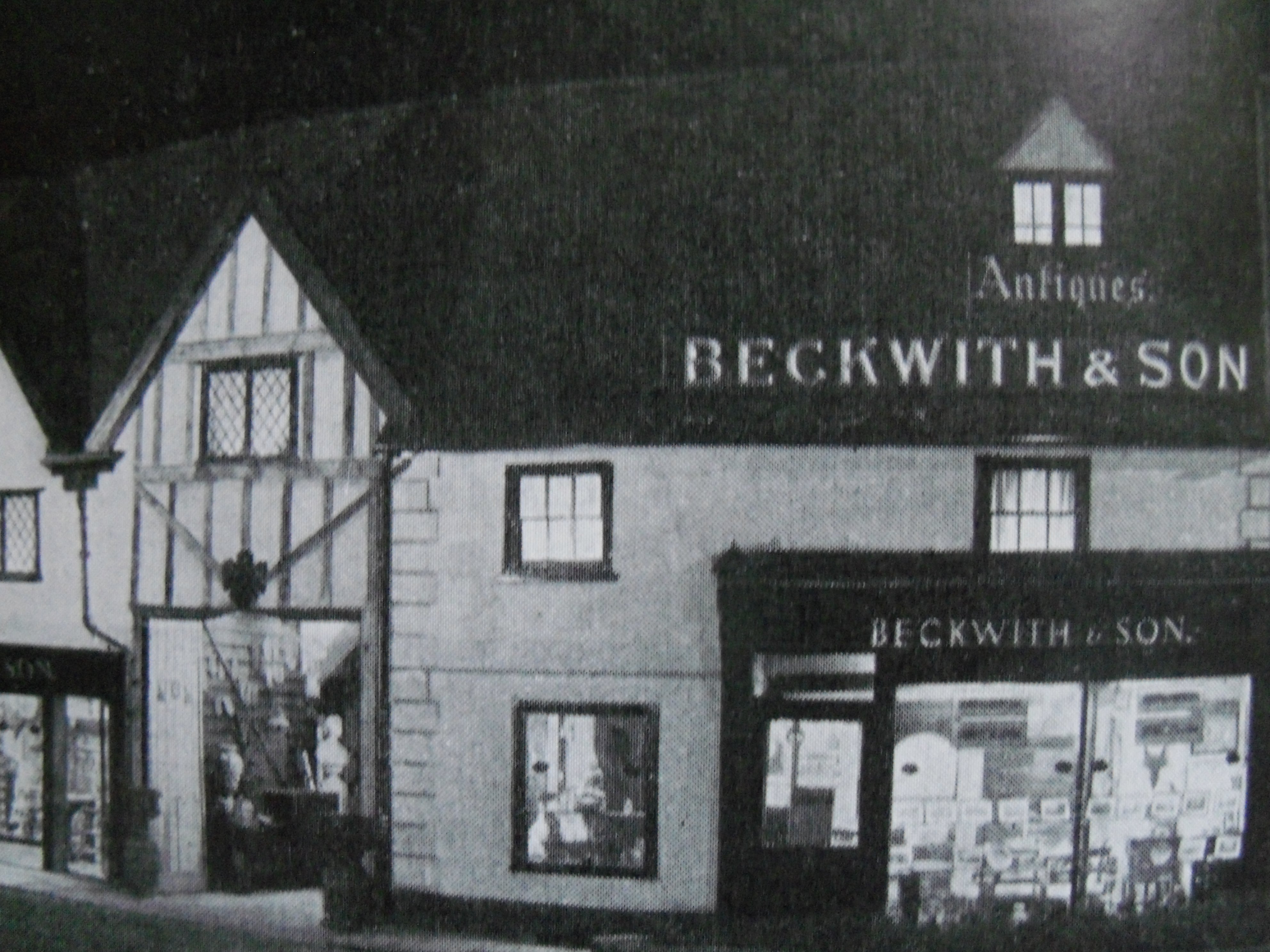
The shop is that of Beckwith & Sons, Old Cross in Hertford, who, according to their own publicity, trace their business back into the 18th century, to the Royal Cabinetmaker Samuel Beckwith (1740-1804). When the business became antique dealers is not known, but it’s likely to have been sometime towards the end of the 19th century. By the 1940s Beckwith & Son was owned by the antique dealer A. Knight Loveday. We have several photographs of the shop of Beckwith & Son at Old Cross in Hertford; this photograph (below), from 1963, seems to depict the shop from a different angle, or perhaps another premises they had in Old Cross, Hertford?
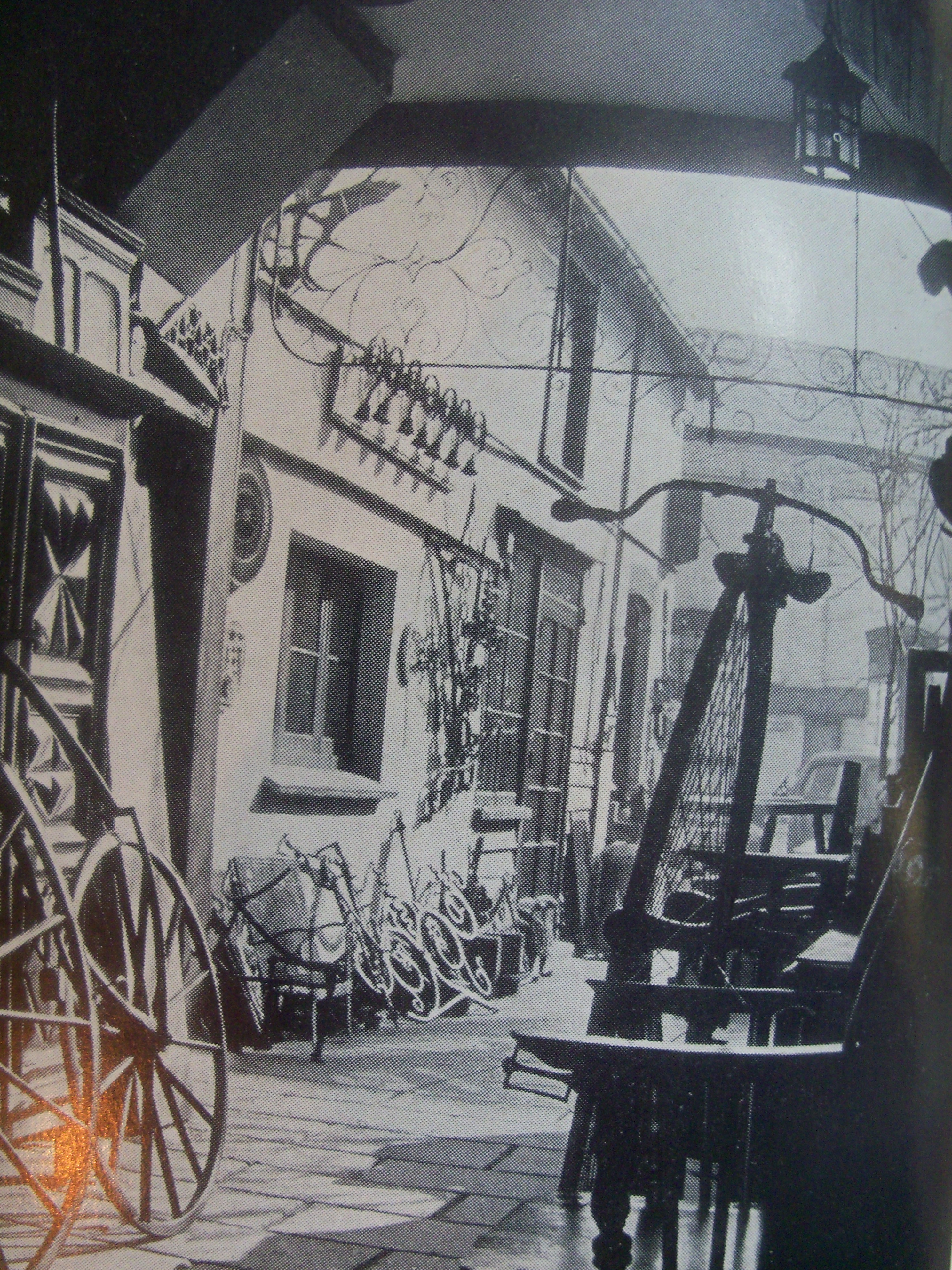
And below, this very evocative photograph (from 1957) of the passage leading to one of the entrances to the Beckwith & Son’s antique shop exemplifies the visual trope of the antique shop as a place for treasure hunters.
We have few more paintings of antique shops, and no doubt will acquire more still, so keep your eye of the antique dealers blog for ‘Antique Shops in Visual Culture V’ at some stage this year.
Mark
 antiquedealersblog