Archive for ‘Uncategorized’

December 30, 2015

Early 20th century women antique dealers

I recently came across a fascinating little article published in The Sketch on the female antique dealer Clara Millard – The Sketch, in case you were not aware, was a British weekly illustrated newspaper which focused on high society and the aristocracy (it ran from 1893 until 1959).  The article, written by a journalist/writer named only as ‘F.E.A.’, was published on March 14th 1894 and focused on an interview with Clara Millard – here is Miss Millard aged about 25, in a photograph published in the article (see below):
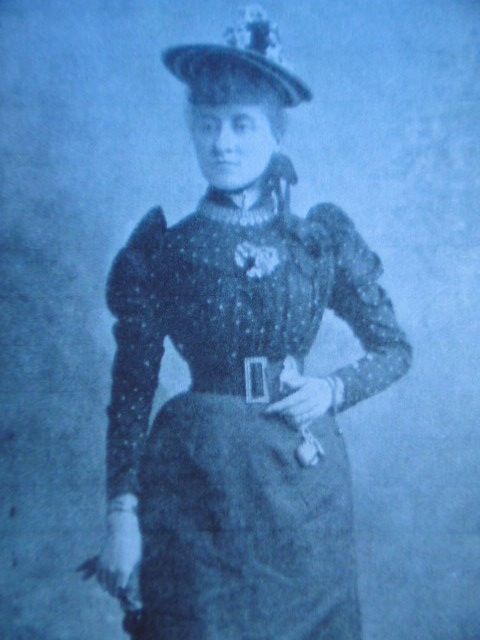
Clara Millard 1894 The Sketch

Miss Clara Millard, c.1894. Photograph by Jones & Co., Surbiton. Image from ‘The Sketch’, March 14th 1894, p.348.

Clara Millard, as far as we know at present, traded from the 1890s until the 1920s, first at Vicarage Road, Teddington, and later at Milford-on-Sea, Hampshire; she was also an early member of the British Antique Dealers’ Association (certainly a member by 1920) – see also our interactive project website map for information on Clara Millard – www.antiquetrade.leeds.ac.uk

The article was entitled ‘A Curio Collector, a visit to Miss Clara Millard’ and gives us an insight into the social demographic of women curiosity/antique dealers in the period (it is evident, for example, that Clara was from a well-to-do family), and the kinds of objects that circulated in the trade in the late 19th and early 20th century.  Millard mentions a few objects that she had sold in her shop in Teddington, including ‘a set of seven spa diamond buttons worn by Garrick at the Stratford Jubilee’ – The Shakespeare Jubilee took place in September 1769, and was organised, and partly financed, by the actor-manager David Garrick (1717-1779).

She also mentioned that she also sold the library table used by Napoleon when in exile at Longwood House, St. Helena. The effects of Longwood House were sold in 1822 and there were several library tables in that sale – for an exemplary description and analysis of Napoleon’s furniture at Longwood House see Martin Levy, Napoleoon in Exile, the houses and furniture supplied by the British Government for the Emperor and his Entourage on St. Helena (Furniture History Society, 1998). Perhaps the library table that passed through Clara Millard’s stock was the famous table that was also subsequently sold at the auction sale of the library and effects of John Copling in 1867, who seems to have acquired a number of Napoleonic relics.  The table in question was described in 1867 as ‘A 6ft LIBRARY TABLE of mahogany and yew, banded with ebony…..constantly used by Napoleon himself in his cabinet’ (see Levy, p.66) – this table certainly appears to have been the most famous of the library tables dispersed at Longwood House in 1822. One wonders how Millard obtained the table, and to whom she sold it?

Besides these interesting details on the objects that Millard sold, the interview also provides a fascinating insight into the social networks of Millard, and how she came to become a dealer. The interviewer ‘F.E.A.’ asked her ‘What made you become a dealer in curios?’ – and she gave a comprehensive response, stating;

‘ When I was sixteen I had to decide upon some way of earning my own living….I had always lived with people who liked nice things, and I understood a little about curios, so I started a sale of china and curiosities.  I prepared a catalogue, and sent it round to collectors and wealthy people. The catalogue was a happy thought; it attracted notice and the whole transaction was so successful that I went on as I had begun. I must not forget to tell you that I owe a great deal to the kind help and teaching given to me by Lady Charlotte Schreiber, Lady Currie and Baron Rothschild.  Thanks to them, I made fewer mistakes that I should otherwise have done. Then, I have had a larger share of good luck than falls to the lot of most people’ (The Sketch, p.348).

Millard’s connections to Lady Charlotte Schreiber (1812-1895), daughter of the 9th Earl of Lindsey, and a major collector of ceramics, as well as to Baron Rothschild (1840-1915) and Lady Currie (1843-1905), is indicative of the intimate relationships between dealing and collecting, and of the significance of social and cultural networks in the history of the antique trade.

It’s also worth mentioning that Clara Millard was also well known, in the 1890s, as an antiquarian book dealer – which also draws further attention to the overlapping practices that constitute the ‘antique trade’ (see earlier blog posts on these notions).

Mark
December 23, 2015

And even more on Quinneys

I’ve been undertaking some further research on the play ‘Quinneys’  – as readers of the project blog now know, I hope – it’s the fictional story of the life of an antique dealer, Joe Quinney, composed as a play by Horace Annesley Vachell in 1915, based on Vachell’s novel of the same name of 1914 – see previous blog posts on ‘Quinney’ and on Thomas Rohan. In a recent post I posted about the playbill for Quinneys, at the Theatre Royal, Haymarket, which was staged in 1915 (see blog entry for December 2015), and drew attention to the fact that the London antique trade had supplied much of the antique furniture and etc for the stage-set.

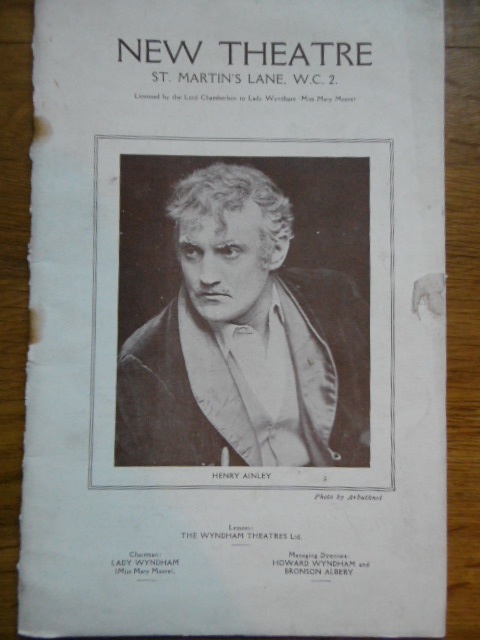
I recently found another playbill for Quinneys, this time from 1925, for a staging of the play at the New Theatre, St. Martin’s Lane, London.

Quinneys New Theatre 1925

Playbill, ‘Quinneys’, New Theatre, St. Martin’s Lane, London, 1925. Image, copyright Antique Dealers project 2015.

henry ainley

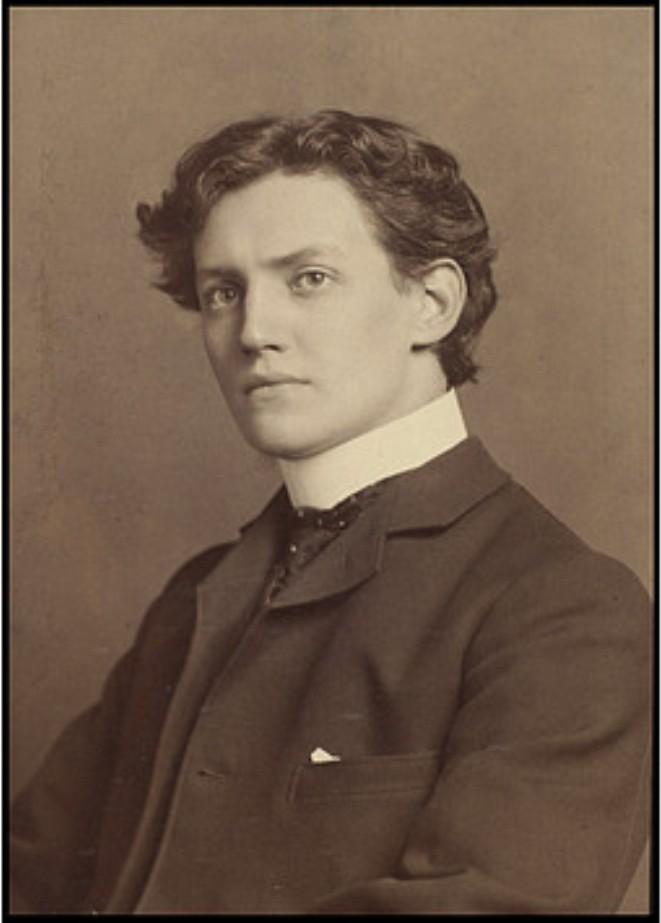
Henry Ainley as ‘Quinney’, c.1915.

As in the 1915 play, the lead (Joe Quinney) is still played by the Shakespearian actor Henry Ainley (looking much older, as one would expect, to his youthful self in the 1915 photograph – see above, and in our earlier blog post).

There are a few other photographs of Ainley as the character ‘Quinney’ in the 1925 playbill – here’s one with the aged Ainley suitably posed as the ‘connoisseur’ inspecting an antique cup –

Henry Ainley as Quinney 1925

Henry Ainley as ‘Quinney’, 1925; ‘Camera Portrait by Dorothy Wilding’. Image copyright Antique Dealer project 2015.

The 1925 playbill is a much more extensive document than the 1915 one (which was effectively just a single, folded, page), and amounts to 12 pages, mostly of advertisements. The adverts, as one might expect, included many of the leading antique dealers of the day; including the antique glass specialist Arthur Churchill (then in Dover Street); Joe Sale, of Kensington Church Street; John Sparks; Dreyfous of Mount Street; Frank Partridge; Charles J. Pratt; M. Harris & Sons; Hotspur Ltd; Stoner & Evans, the ceramics specialists, as well as lesser know dealers such as C. Rose, Edith Lee, C. Griffiths, Mrs. Mellor, and H. Fisher.

And, just as the 1915 play had antique furniture and objects loaned by dealers, (in 1915 it was Keeble, Parkenthorpe and Spillmans), in 1925 the antique furniture for the stage-set was supplied by leading antique furniture dealers Moss Harris & Sons, New Oxford Street.

If anyone knows anything else about the staging of the play ‘Quinneys’ we would be very interested to hear!

Mark..

Oh and Merry Christmas to all our readers of the project blog!

December 12, 2015

New Oral History Interview – Simon Spero

Our lead volunteer, Chris Coles, interviewed the antique ceramics specialist dealer Simon Spero in London the other week – thank you both to Simon and to Chris for taking the time to do the interview!

Simon-Spero-shop 2

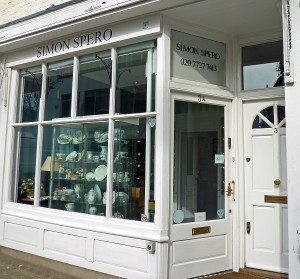
Simon Spero’s shop, London, c.2010. Image, wikicommons.

Here’s Simon’s shop in London (above) – the interview gives us a fascinating insight into the world of the specialist dealer.  During the interview Simon told us that he’s always been a collector, from his earliest age, and his dealing activities are clearly networked into personal conversations with collectors – he eschews the internet, for example.  Many of you will also know Simon as an author, and his published books on 18th century English ceramic factories are regarded as key reference works for collectors.

The interview includes Simon’s reflections on his first shop (in Kentish Town, London) and his recollections on influential dealers in ceramics such as Reg Andrade in Plymouth, and Robert Williams from Winifred Williams (London), as well as some of the major ceramics collectors he has sold to over the years.  It’s an amazingly detailed account of the world of the ceramic specialist dealer-scholar-collector and will be of considerable interest to those interested in the history of the antiques trade.

And, like all of the other interviews we are undertaking as part of the Antique Dealers research project, a version of the interview will be available via the project websites in the coming months.

Mark


December 2, 2015

More Student Volunteers

Four more of our undergraduate students, studying on the Art Market module, have signed up as volunteers to add data to the interactive map website – great news, as the map website is now picking up speed on the number of dealer entries etc!

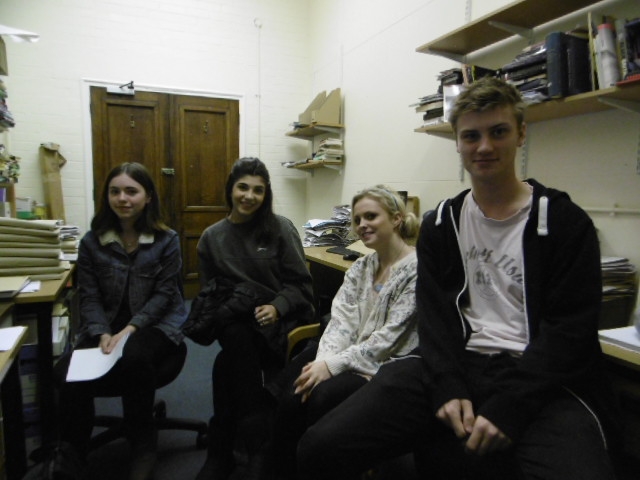
Here are our new volunteers, Angharad-Lambourne-Wade, Lydia Haines, Miranda Carins and Oliver Getley, all in my office at the University of Leeds after an intensive induction session on how to add data to the website – it’s actually a bit easier than one thinks, after getting used to the sequences of data input!

oliver g etc

Angharad, Lydia, Miranda and Oliver – new student volunteers on the Antique Dealer research project.

Thank you again to all our volunteers on the Antique Dealer research project – all the help you offer is invaluable to the project!

Mark

November 28, 2015

Yet more on ‘Quinneys’

Following some earlier blog posts on ‘Quinney’ and the dealer Thomas Rohan (see blog posts December 31st 2014; December 6th 2014; July 27th 2014), I recently came across some more information associated with this fascinating conflation of fact and fiction – as you’ll know, the real antique dealer Thomas Rohan (trading in Bournemouth and Southampton in the period 1903-1937) was the basis for the famous fictional antique dealer ‘Joe Quinney’ in the novel by Horace Vachell (first published in May 1914) – see our interactive research project map site for the entry on Rohan:

www.antiquetrade.leeds.ac.uk/dealerships/34852

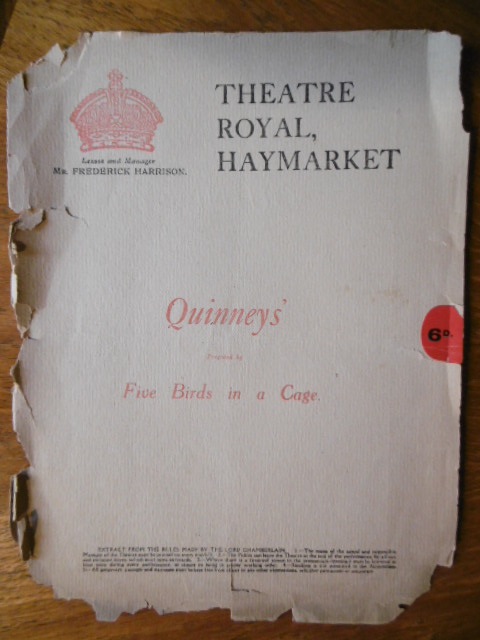
Anyway, recently in a couple of antiquarian book dealers I found two further pieces of ephemera associated with the play ‘Quinneys’ (1915) and the novel ‘Quinneys’ (1914). Firstly, I found a rare copy of the playbill for the first staging of the play ‘Quinneys’ on April 20th 1915, at the Theatre Royal, Haymarket, London – see cover picture:

Quninneys 1915 play

Playbill, ‘Quinneys’, Theatre Royal, Haymarket, 1915. Image copyright, AHRC Antique Dealers Project, 2015.

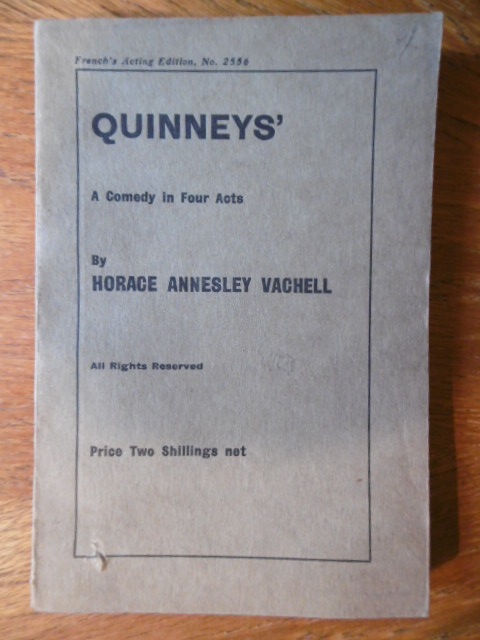
And secondly a copy of the published script of the play (a later copy, probably from the 1950s?) –

Quinneys play script 1915 reprint

‘Quinneys’, play script (1915) – 1950s edition. Image copyright AHRC Antique Dealers project 2015.

henry ainley

Henry Ainley (1879-1945), British Actor. Image Wikicommons.

The playbill lists the actors in the play – ‘Joe Quinney’ the eponymous antique dealer, was played by the well-known Shakespearian actor Henry Ainley (1879-1945) (see above); incidentally he also played ‘Quinney’ in the 1919 film version of the play…and interesting (as far as we are concerned) Ainley was born in Morley, Leeds, West Yorkshire!. Quinney’s wife, Susan, was played by the British film actress Syndey Fairbrother (1872-1941).

What is also interesting, for the antique dealers project, is that a number of (then) high profile London antique dealers and interior decorators supplied the antique furniture for the play. The dealers listed in the playbill were the interior decorators ‘Thornton Smith Limited, 31 Soho Square’; antique dealers ‘Keeble Limited, 10 Carlisle Street’, ‘Parkenthorpe, Ebury Street’, and ‘Spillmans, St. Martin’s Lane’, who are all listed as supplying the ‘furniture’ and acknowledged for their ‘expert advice in this regard’.

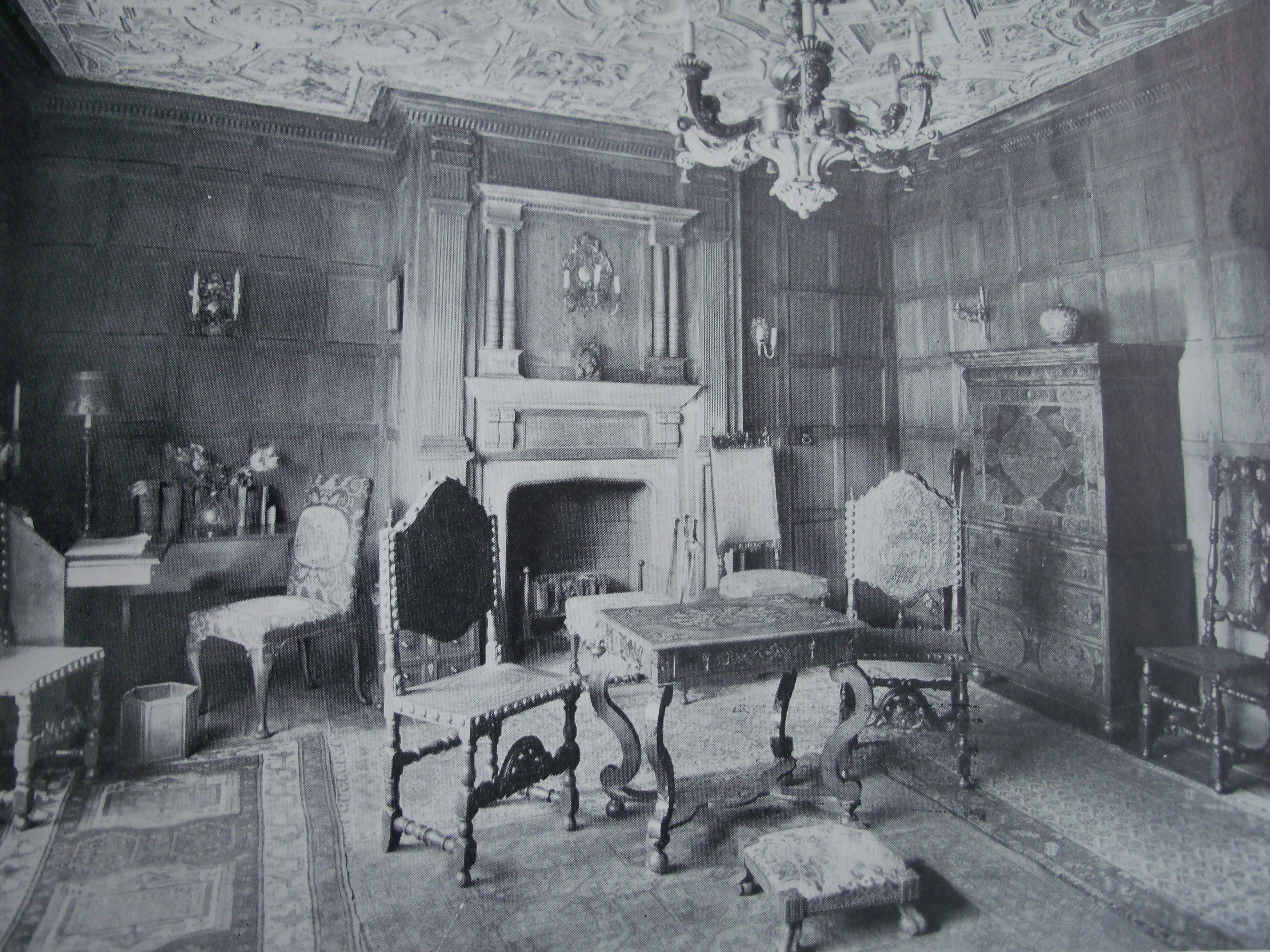
The project interactive map website, at present, includes entries for ‘Keeble’ – and trading at 10 Carlisle Street, indeed we even have an image of the interior of their shop, dated 1927.

Keeble Carlisle House Carlisle Street London Oct 1927 Conn The Oak Room at Carlisle House

Keeble (1914) Ltd, Carlisle Street, ‘Oak Room’, 1927.

Parkenthorpe were trading at the time at 79 Ebury Street, as ‘dealers in antiquities’ – see again our project interactive map.

We can get a sense of the attention to authentic detail in the room settings for the play ‘Quinneys’ from the stage directions in the play script; the play opens in ‘The Sanctuary in Quinney’s house in Soho Square’ (one can note here that there is an extra layer of authenticity here, as the antique dealers Thornton Smith, in real life, also had premises in Soho Square)…and the stage directions continue:

‘The rise of the curtain discloses a beautiful room, filled with rare and costly furniture, prints in colour, miniatures and tapestry. Obviously the room belongs to a collector who is a connoisseur….between the windows is a magnificent Chinese lacquer cabinet, standing on a Charles II gilded and carved stand. On the cabinet is a Kang He mirror-black bottle about twenty inches high. An Adam’s mantelpiece, with dog grate, in which logs are burning….an incised lacquer screen, with a gilded Carolean chair in front of it. Upon the mantelpiece are a set of five blue-and-white jars, Oriental china of the eighteenth century. An old Aubusson carpet is on the parquet floor…..there is not much furniture, but it is of the finest Chippendale period….’

The description suggests a display of all of the most fashionable antiques of the period…the ‘Kang He mirror-black bottle’ was of the, then, hugely expensive, so-called famille-noir Chinese ceramics, collected by major figures such as Lord Lever during the opening decades of the 20th century.

Quinney/Rohan is certainly becoming a fascinating case-study of the evolving social and cultural identity of the antique dealer!

Mark


November 23, 2015

New student volunteers for the interactive map

We are very lucky to have some new volunteers for the Antique Dealer project – 5 of our year 2 undergraduates at the University of Leeds have stepped forward to offer help on inputting data into the Interactive Map website for the project.

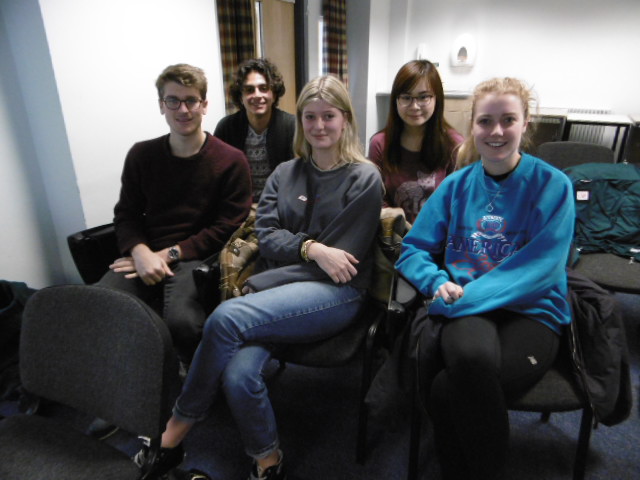
Leeds Uni UG volunteers

University of Leeds student volunteers – left to right – Henry, Konstantinos, Matilda, Wing, and Minty.

All of the students are taking the undergraduate module ‘The Art Market: Moments, Methodologies and Meanings’ as part of their BA (Hons) programmes in the School of Fine Art, History of Art and Cultural Studies at the University of Leeds – so they have specific expertise in the history of the art market!

It’s great to welcome Henry Dowson, Konstantinos Michailidis, Matlida Humphreys, Wing Li, and Araminta Martin to to the project – they will be adding new dealerships and locations into the interactive website, as well as editing existing locations and correcting incorrect locations of dealerships – so really, really important work!

Thank you to the extraordinary generosity of our UG students at Leeds…they join a growing band of volunteers on the AHRC Antique Dealers project!

Mark

November 3, 2015

BADA Commemorative Plates 1919

Whilst having a meeting with Mark Dodgson, Secretary General of the British Antique Dealers’ Association, on Friday last week (regarding the Antique Dealer project conference in April, amongst other things), I noticed a small display of 6 plates on the windowsill of Mark’s office.

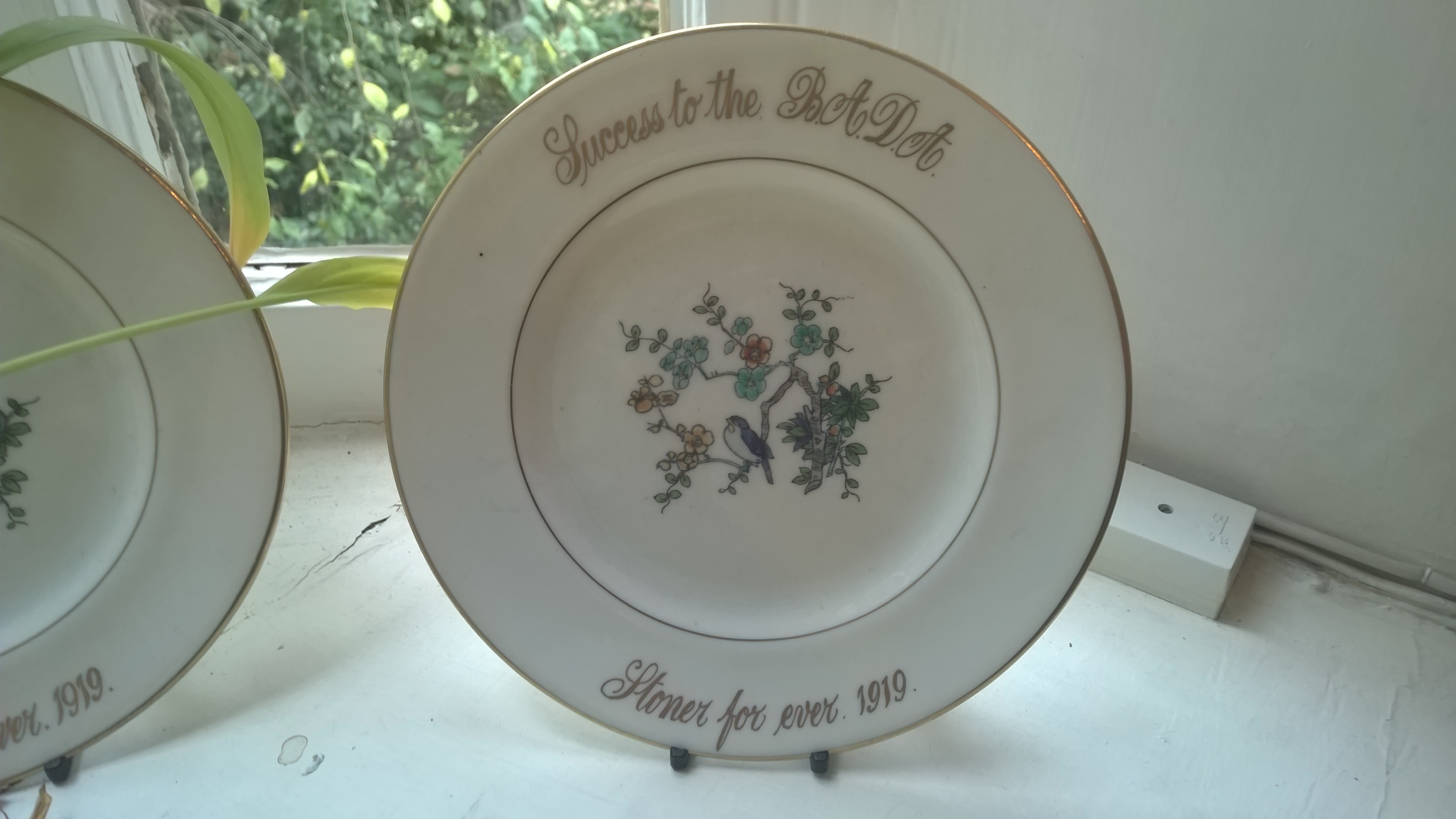
Stoner plate 1919

BADA Commemorative Plate, c.1918-19. Photograph copyright AHRC Antique Dealer project, University of Leeds.

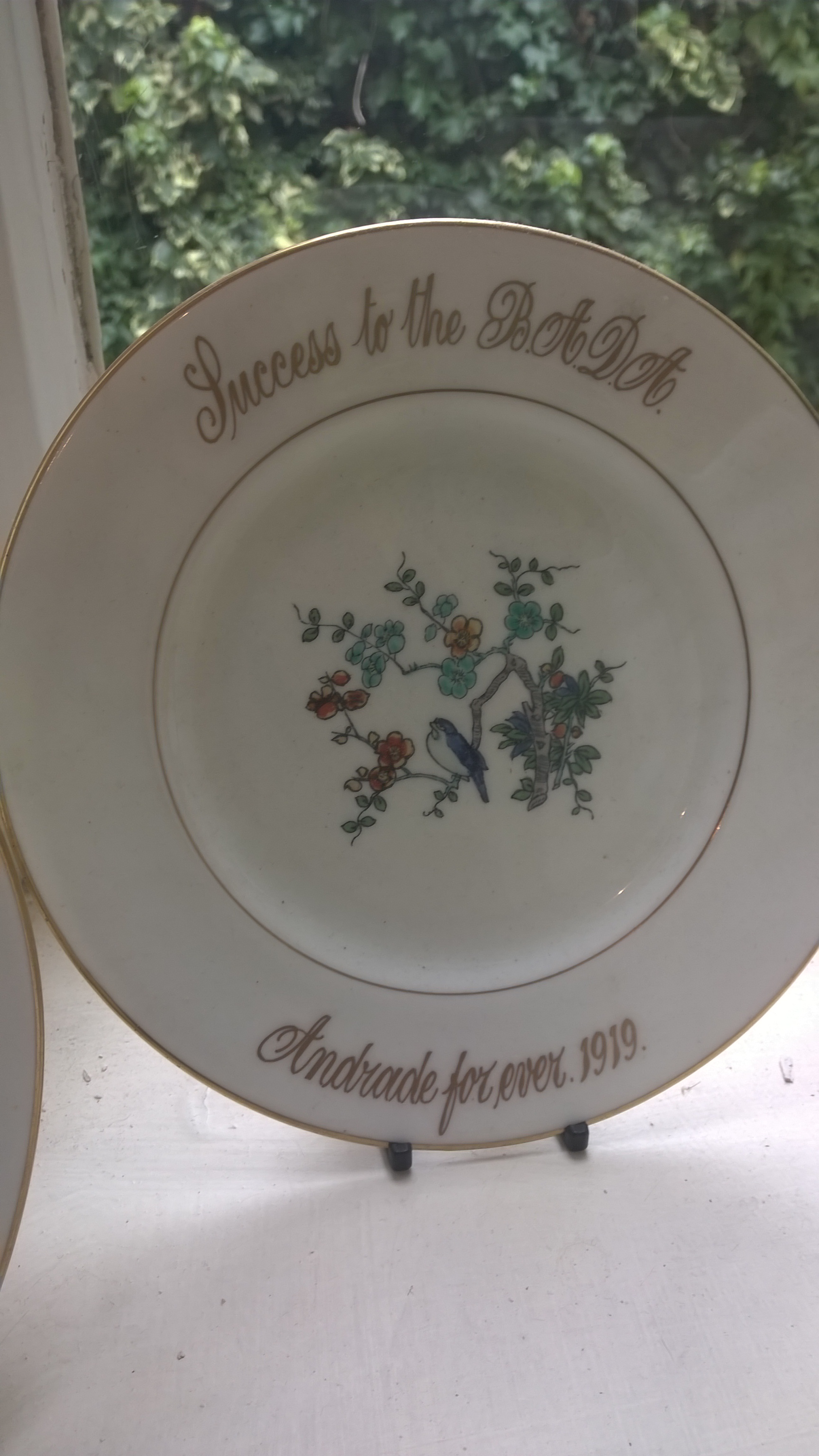
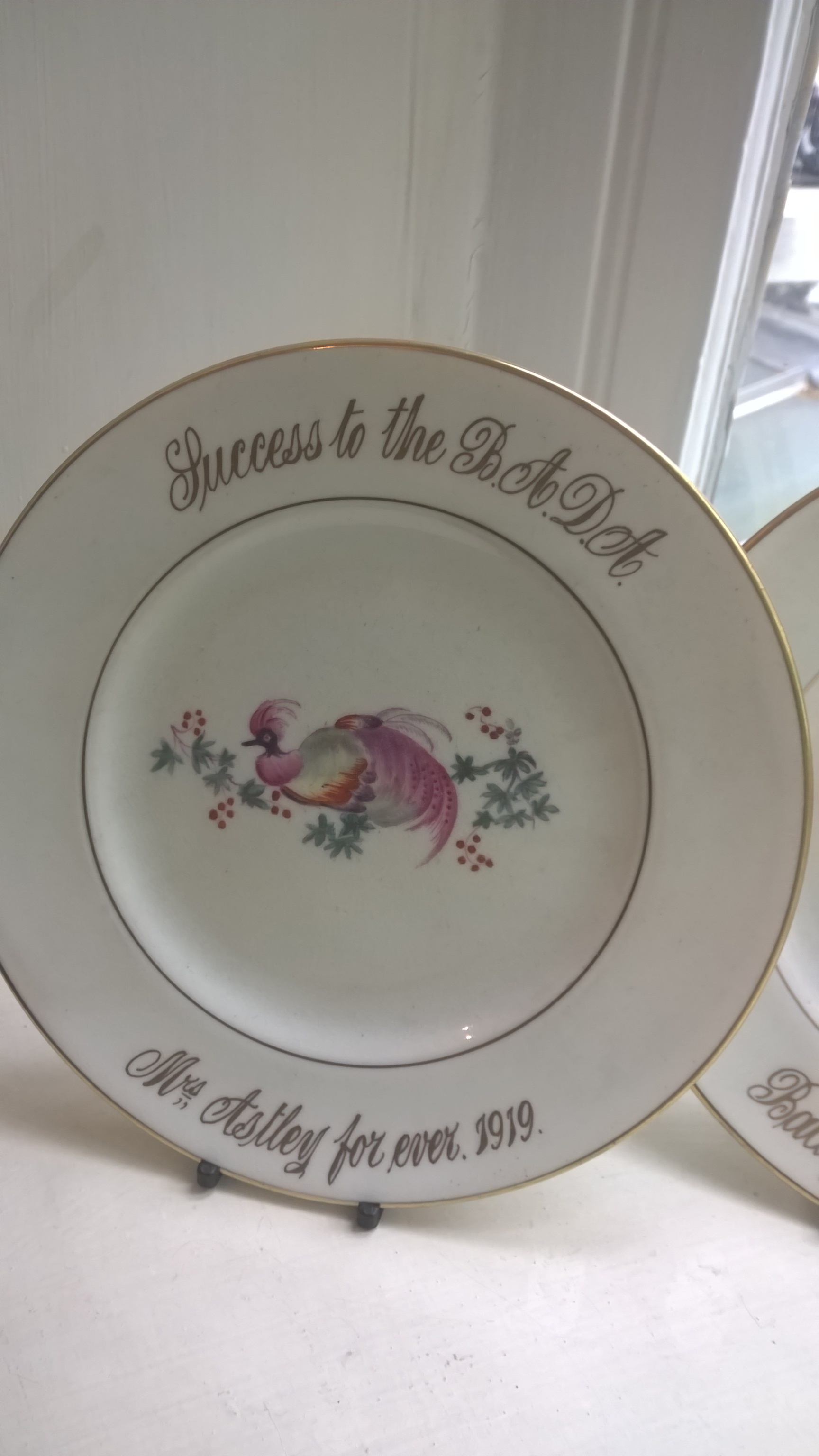
All of the plates had the same painted inscription ‘Success to the BADA’ at the top edge, and each had a separate, individual inscription on the lower edge.  This one (above) has ‘Stoner for ever. 1919.’ on the bottom edge.  The plates themselves are relatively inexpensive, mass-produced objects – (Mark kindly told me they have a printed mark ‘Crown Staffordshire’ on the back) – so they are pretty common everyday ware. Three of the plates have printed decoration of a small bird in a branch of a tree – the style keys into the Chinoiserie revival of the 1910s and 1920s; the other three had similar, but hand-painted, decoration.

Andrade plate 1919

‘Andrade for ever 1919’. Comemmorative plate. Photography copyright AHRC Antique Dealer project, University of Leeds.

The inscriptions on the plates refer to the foundation of the BADA, which began just a year earlier, on May 7th 1918. The story of the founding of the BADA is by now very well known I guess, but one of the reasons for the founding of the Association was as a response to the proposed Luxury Duty that was to be introduced in the Finance Act of 1918.

The plates are variously inscribed – the one above is inscribed ‘Andrade for ever. 1919.’ Other plates are inscribed ‘Mrs Astley for ever, 1919.’ (below); ‘Thomas for ever. 1919’; ‘Law for ever. 1919.’; and ‘Evans for ever. 1919’.

Astley plate 1919

‘Mrs Astley for ever. 1919.’ Commemorative plate c.1919. Photograph copyright AHRC Antique Dealer project, University of Leeds.

The plates obviously celebrate founding members or early members of the BADA – Stoner, for example, probably refers to George Stoner, who was one of founder members of the BADA in 1918.  Sadly George Stoner, a Vice-President of the BADA, and the father of Frank and Malcolm Stoner, died aged 50 in 1920, shortly after the foundation of the Association – the dealership was named ‘Stoner & Evans’, and was trading at 3 King Street, St. James’s, London at the time.

‘Andrade’ would be Cyril Andrade, then trading in Duke Street, St. James’s, London; ‘Mrs Astley’ would be Florence Astley, also trading in Duke Street, St. James’s in the same period. There were three further plates – one inscribed ‘Evans for ever. 1919.’ – probably for the Mr Evans who was partner in Stoner & Evans, although there was also a silver dealer, ‘Evans & Co’, but I’d think it was for the chap from Stoner & Evans.

The other plates were inscribed ‘Law for ever. 1919’ for Charles Law, of the dealers ‘Law, Foulsham & Cole, then trading from 7 South Molton Street, London, and ‘Thomas for ever. 1919.’ – Thomas was the formidable dealer C. Rochelle Thomas, the President of the BADA for 1919, and then trading at ‘The Georgian Galleries’ 10, 11 & 12 King Street, St. James’s, London, along with his sons, Victor Joseph Rochelle Thomas and Alfred William Rochelle Thomas.

The plates are fascinating pieces of ephemera associated with the founding of the British Antique Dealers’ Association – I just wondered if there were any more of these plates surviving?…there appear to have been 16 founder members of BADA in 1918, so maybe there are at least another 12 plates somewhere?… but the 6 plates here also include members who were not listed as founders, such as Florence Astley, who must have joined sometime after March 1918 and before the plates were inscribed in 1919…..so perhaps there are scores of them out there!

Mark


October 10, 2015

Yet More Oral History Interviews! – Martin Levy, of H. Blairman & Sons

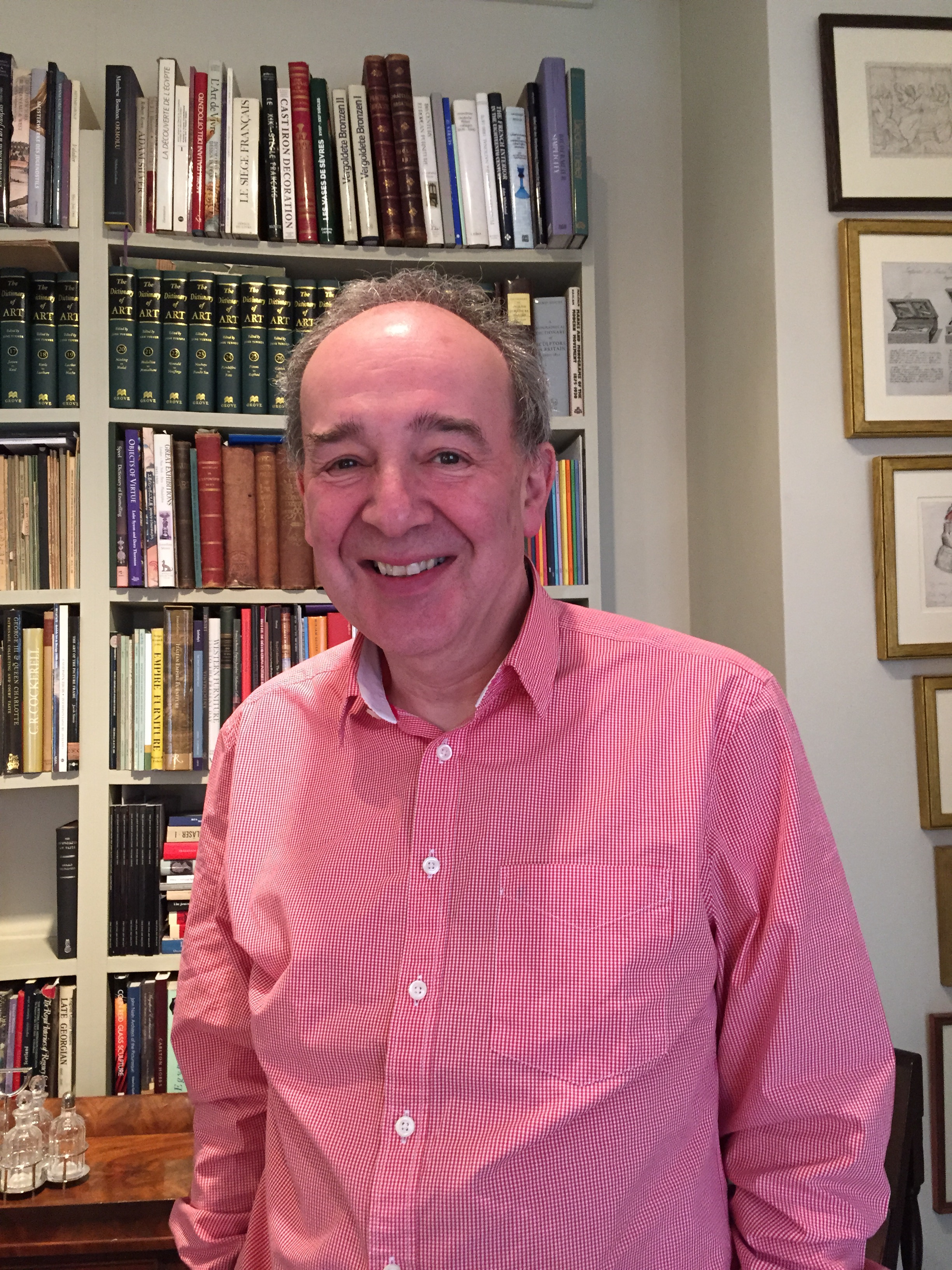
Our oral history research is really gathering pace now – yet another one ‘in the bag’ – this time with Martin Levy, of the old established antique dealers H. Blairman & Sons (established 1884) – very well known to those interested in the history of the antique trade.

M Levy

Martin Levy, 2015. Image copyright H. Blairman & Sons.

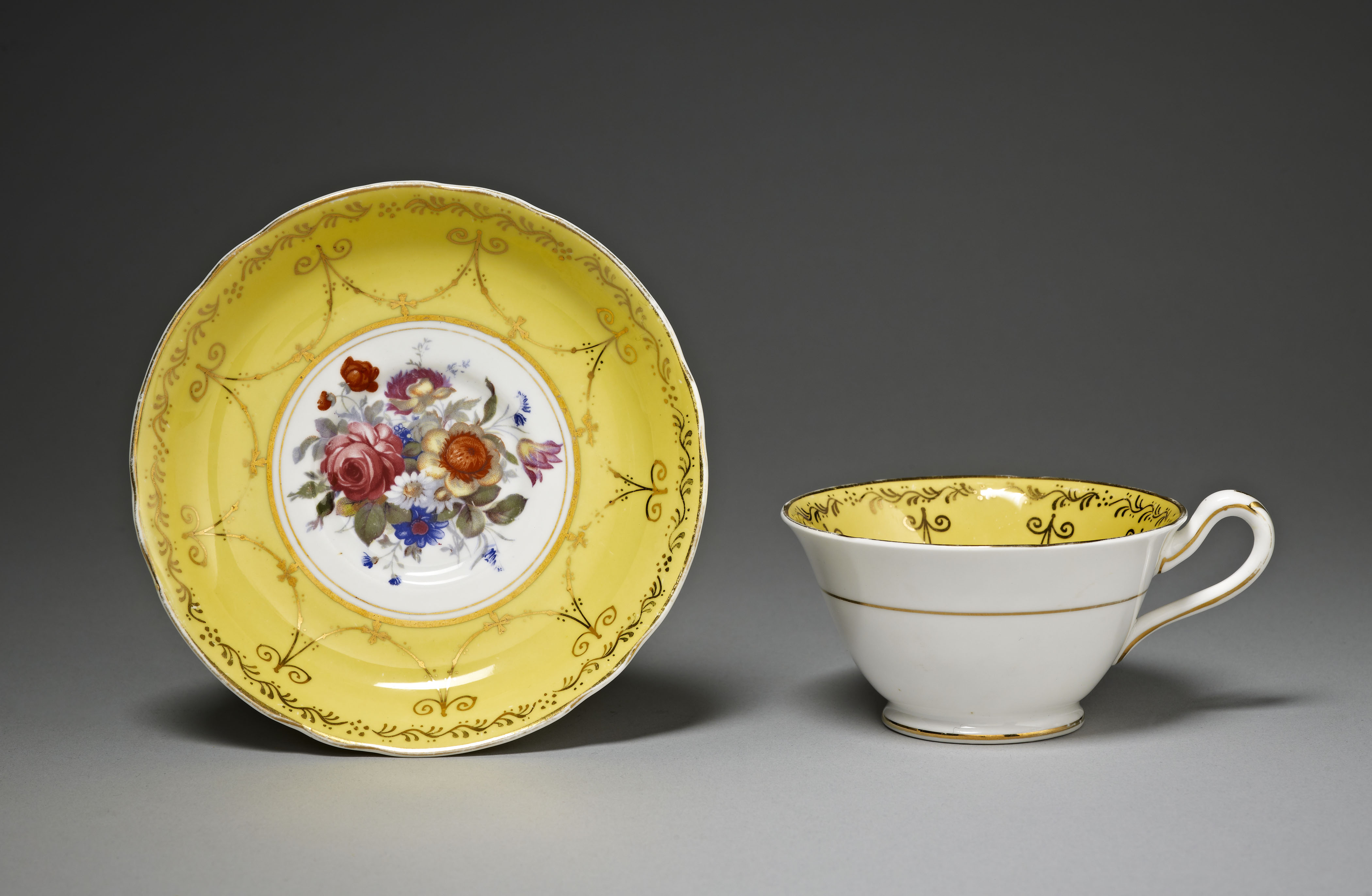
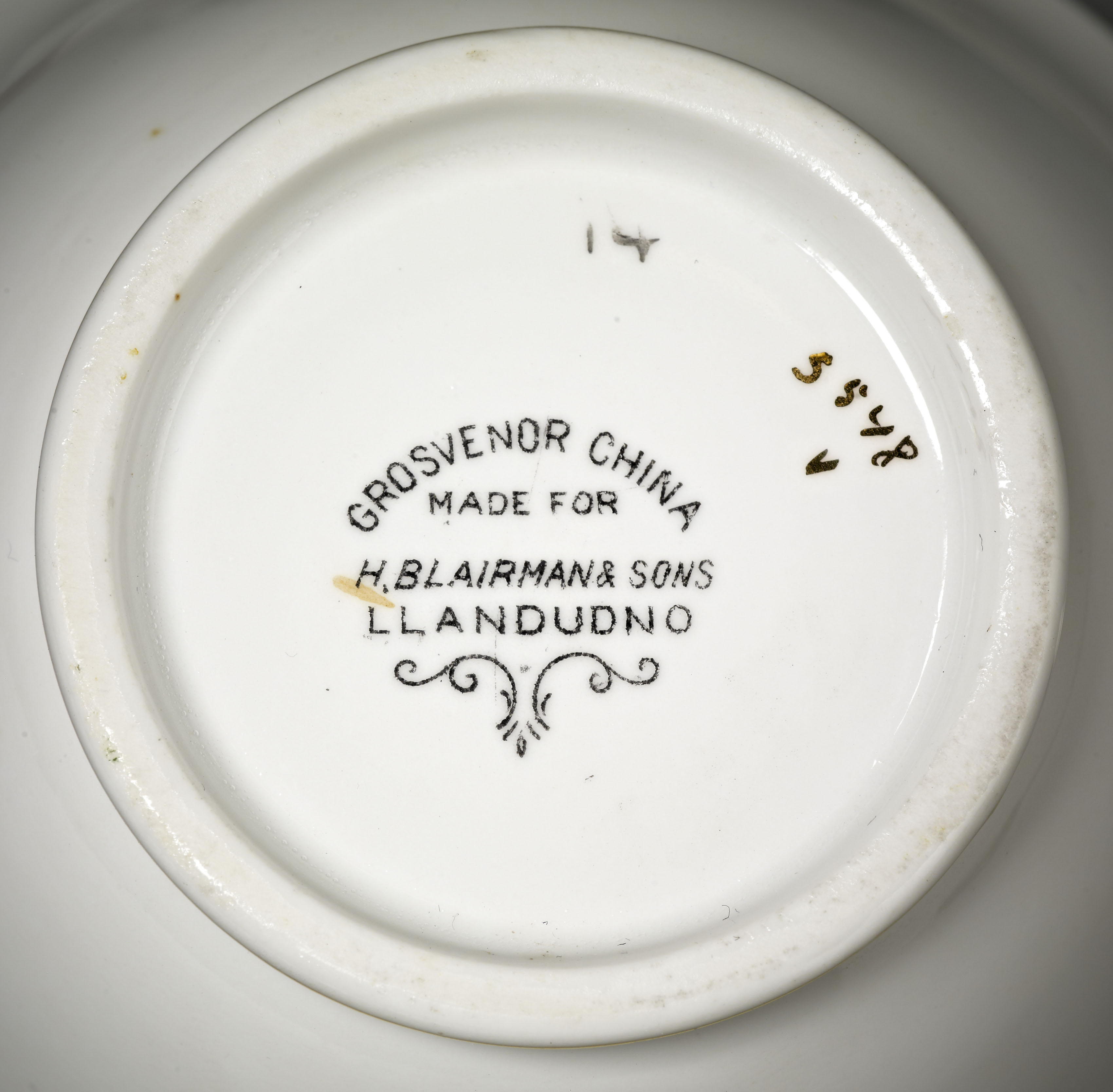
During a fabulously interesting interview Martin outlined the early history of H. Blairman & Sons, from their beginnings in a shop in Llandudno, where, as Martin recently discovered, the business also sold contemporary ceramics alongside antiques – this 19th century cup and saucer, with a back-stamp indicating that it was retailed by H. Blairman is a testament to those trading practices (see our earlier blog entry on these practices too – blog entry for MAY 2014 – and Blairman & Sons website H.Blairman & Sons Limited.

Photograph copyright, Blairman & Sons, London.

Photograph copyright, Blairman & Sons, London.


Photograph copyright Blairman & Sons, London

Photograph copyright Blairman & Sons, London

The Blairman family were originally emigres from Poland in the late 19th century, and initially Harris Blairman (Martin Levy’s great-grandfather) entered into a partnership with a dealer in Birmingham, before establishing the business in Llandudno. For some further detail on the history of H. Blairman & Sons do look at the history of Blairman, composed by Martin, on the Blairman website.

Martin also told us of his interest in 19th century and early 20th century designed objects – in which he has also been something of a pioneer in more recent times – and his memories of working with his father, George Levy (who joined the firm in 1949), as well as Martin’s memories of his own early days after joining the business in the mid 1970s.  Martin also has some wonderfully engaging reflections on the changing taste in antiques, on people that influenced his development as a dealer, and on his passion for objects and their history.

The interview will be soon be made available via the project websites – once we get it edited and etc.

Mark

October 7, 2015

More Oral History Interviews – Frank Partridge

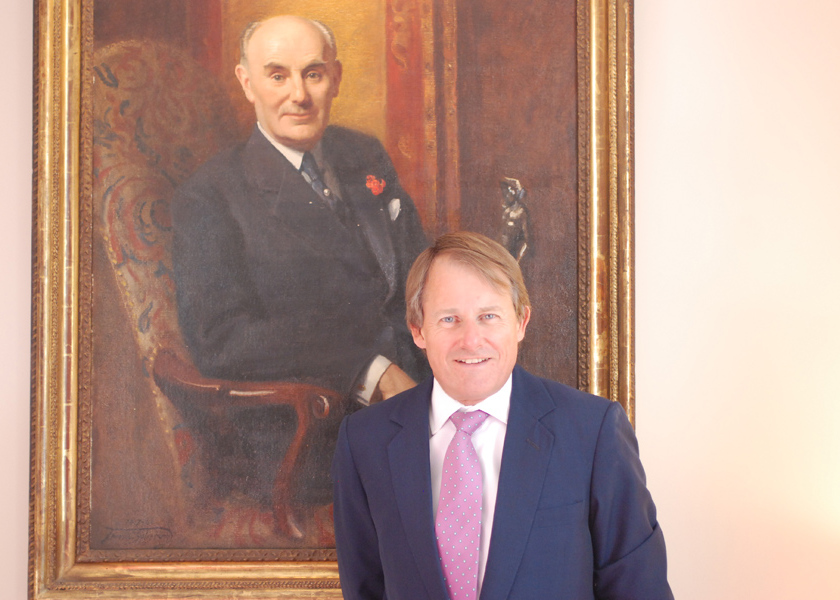
We are gathering quite a collection of Oral History interviews for the Antique Dealers project – we now have 19 interviews in our database…with more still to come! Our latest interviewee was Frank Partridge, the great-grandson of the founder of perhaps one of the world’s most famous antique dealing firms, Frank Partridge & Sons, of London and New York. In a really engaging interview, Frank told us about the early history of Partridge & Sons – the family were originally Cobblers in Hertford apparently, before moving into the antique trade in the late 19th century. Here, below, is Frank Partridge, standing in front of a portrait of his great-grandfather – Frank is a very experienced antique dealer, having been in the antique business for almost 40 years….

Frank Partridge

Frank Partridge. Image copyright Frank Partridge Limited.

Robert Partridge, the brother of Frank’s great-grandfather, was the first to set up in business as an antique dealer, in c.1900 – and here’s an image of R.W. Partridge’s shop in c.1910 – ‘Top Red Gallery’ in King Street, St. James’s, London. Robert was one of four Partridge brothers, all involved in the antique trade; Frank senior set up the eponymous firm in c.1905.

Partridge Top Red Gallery

R.W. Partridge, Top Red Gallery. c.1910.

Frank joined the family business in c.1981, before leaving to set up his own antique business in 2004. As readers of the blog will probably know, Frank Partridge & Sons was sold in 2006, and eventually ceased trading shortly afterwards.   During the interview, Frank offers some fascinating reflections of the changes to the antique trade over the last 40 years – as well as observations on the conditions and networks of the various antique markets in Britain, the USA and in France. He also told us about Partridge’s relationships to major collectors, such a J.Paul Getty, and other international dealers such as French & Company, of New York.

As with all of the other interviews we have completed, we are in the process of editing the interview, ready for uploading into the project websites for future generations of researchers and interested parties, to enjoy.

Mark


September 29, 2015

Oral History Interviews – Harry Apter

Our Oral History interviews continue apace – we recently interviewed Harry Apter, of Apter-Fredericks, the Antique English Furniture Dealers in Fulham Road, London. In a very engaging interview, Harry told us about when he joined the firm of Apter-Fredericks aged 18 and how his father, Bernard Apter, taught him about antique furniture.

Harry Apter Photo

Harry Apter, of Apter-Fredericks, London. Photograph copyright Antique Dealer project, University of Leeds.

Harry also described the significance of Fulham Road as part of the London antique 18th century furniture trade – indeed with so many antique furniture shops in one street it was known as the ‘Brown Mile’ (after ‘Brown Furniture’….the, now rather disparaging, term for 18th century mahogany furniture). Harry also told us about the buying trips he made to Yorkshire and the West Country, of his work on the Vetting Committee at Masterpiece Fair, and his reflections on the future of the antique trade.

Thank you again to Harry for taking the time to talk to the project team.

Mark

Home Subjects

a working group dedicated to the display of art in the private interior, c. 1715-1914

The Period Room: Museum, Material, Experience

An International Conference hosted by The Bowes Museum and The University of Leeds

H. Blairman & Sons Ltd

A research project investigating the history of the antiques trade in Britain in the 19th & 20th centuries

Museum Studies Now?

'Museum Studies Now?' is an event which aims to discuss and debate museum and heritage studies education provision.

The Burlington Magazine Index Blog

art writing * art works * art market

East India Company at Home, 1757-1857

A research project investigating the history of the antiques trade in Britain in the 19th & 20th centuries